Saturday Night FEVAR, or a vascular extravaganza

Over the past two weeks I’ve had the chance to sample the joys of a British National Health Service hospital for the second time in eighteen months. The first was a cardiac episode that put me in St Bartholomew’s Hospital in central London, described in loving detail here.
This time it was Frimley Park, in Surrey, which is a centre of excellence for vascular surgery. Unlike the Bart’s episode, my visit was scheduled. The problem to be sorted was an abdominal aortic aneurism, also known as an AAA, which an NHS screening programme first identified eight years ago, when I was 65. This delightful condition is when your aorta (the artery that runs down your chest from the heart) loses its flexibility and begins to widen. When it gets to a certain width things start getting dangerous, so surgery is recommended. Otherwise you’re living under a Sword of Damocles – at any time the blood vessel can burst, leaving you to die in a welter of gore. Not nice.
The solution? The old-school approach is to be cut open, have the offending length of blood vessel cut out and replaced with an artificial graft. A bit like a heart bypass. Highly invasive and with a long recovery period. But generally speaking, when you’re fixed, you’re fixed for good.
If for whatever reason you’re not a suitable candidate for such butchery, you can get a stent which is inserted into the artery by keyhole surgery. This was the option prescribed for me, with the complication that my aneurism was close to where the artery branches off to serve the kidneys, the spine, the guts and the legs. So something called a Fenestrated Endovascular stent – or a FEVAR – was required. It looks a bit like a ginseng root (hence the photo), with bits coming out of it to mirror the shape of the blood vessels. Because everyone’s aorta is different, it has to be custom built, which is expensive. The all-up cost of the procedure, including surgeons, facility and aftercare, is around £50k. By NHS standards that rates as one of the high-cost options. Frimley Park does about fifty of them a year.
God knows how much the same operation would cost in the US. By way of comparison, my former business partner in North Carolina had a hip replacement ten years ago, which cost over £150k. That for a straightforward procedure far less complicated and expertise-intensive than mine. But then, in the States, if the surgeon scratches their back, you pay for their time.
The more complication, the greater the risk, it seems. The vascular surgeon who assessed my condition spelt it out in a letter to my GP: “He is aware of the mortality risk of 5% to 10% and the pros and cons of both open and endovascular repair”.
Now back in the day, on a visit to the races, I would cheerfully put money on a horse at 10-1, not expecting it to win, but still fancying its chances. Often it would. Scary odds, only underlined by the consent form, which listed an absurdly long litany of risks ending with a single word: death.
So after six months of waiting, with one eye on the Sword of Damocles that might at any moment cause me to perish in a mess of flapping artery and gushing blood, the day of the operation finally arrived. Given the apocalyptic language of the consent form, I was fully prepared not to wake up, which would have been a bit of a non-event, since I would have missed the moment of oblivion.
Four hours later, with the surgeon hovering over me, I woke. I’m sure he’ll confirm that my first words were “I’m alive”. A bit knackered, lower back aching through spending the operation on a hard surface, but alive after a complex piece of equipment had been threaded through the arteries of the abdomen, there to be the bulwark against the dreaded rupture.
Then the fun started. 24 hours in recovery listening to a woman with a better grasp of swearwords than me howling like a banshee at the ever-patient staff. Anger? Pain? Dementia? Who knows, but a very impressive display of invective that went on through the day and night. So much for a nice calm recovery environment.
Then into the ward, only to discover that the same woman had followed me. She was joined down the corridor by a truly unhinged male patient who eventually had to be moved to a single room until the sedation took hold. My room-mates and I lay quiet as mice as bedlam raged beyond.
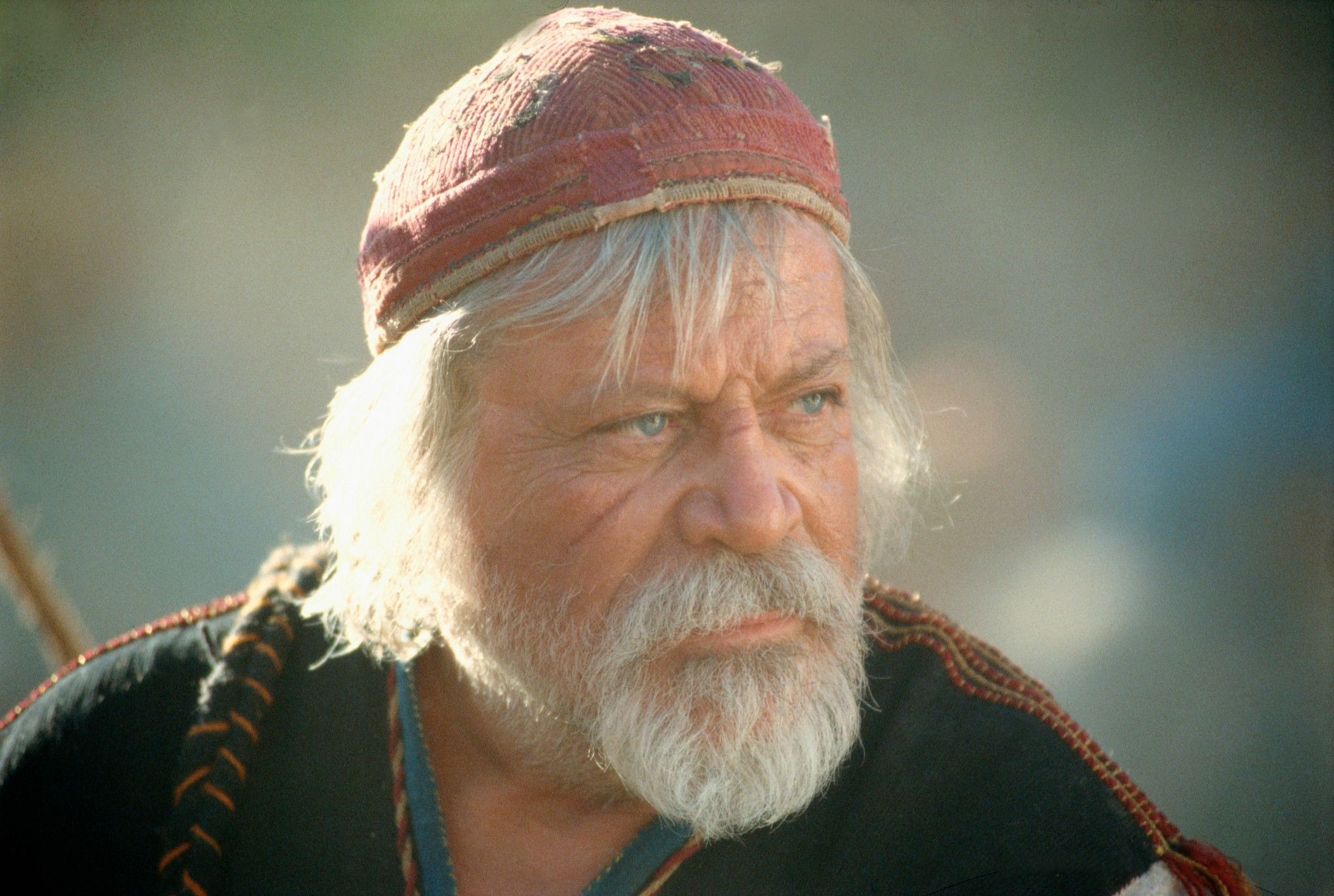
The highlight of the stay was when a gentleman who I think was the ranter decided that he owned the bed next door to me. When the occupant went for a pee, came in and sat down with a thunderous look that brooked no argument. He bore a distinct resemblance to Oliver Reed as Proximo in Gladiator. What made him all the scarier was the bloodstained tunic he was wearing. I looked in vain for his gladius, but none was visible. Eventually some quiet persuasion extracted him.
Nights were quieter, interrupted only by multiple pee breaks and distant howling at the moon by Proximo. One feature of the male ward was that, as at Bart’s, nobody seemed remotely inhibited from letting rip with what appeared to be coordinated volleys of farting that would be well-received in a rugby club. One night it was almost as if the inmates had decided to stage a simulation of the Battle of Jutland or possibly to create the explosive accompaniment for Handel’s Fireworks Music. It could only have been more exciting if they had pulled the blankets back and treated us to a pyrotechnic display. A bit dangerous with all that oxygen around, mind. Given that a windy digestive system is a sign of normal activity, I’m pretty sure I could also hear quiet sighs of relief.
The staff were kind and professional. On the nursing side the proportion of women to men was around five to one. Among the doctors and anaesthetists, the observable ratio was the other way round, which I found quite surprising. Why? No doubt some expert NHS watcher can explain. I’m just mentioning it in passing. Another distinctive feature of Frimley is the ethnic makeup of the workforce. Most of the usual ethnicities were represented, but there were many more Nepalese among the care and nursing staff than in any other UK hospital I’ve visited – perhaps the result of the neighbouring Sandhurst Military Academy hosting the UK headquarters of the Brigade of Gurkhas. And lucky we are to have them too – smart, cheerful, attentive and with excellent language skills.
The hospital itself is fifty years old. It was built as a joint-use military-civilian facility. The military bit perhaps explains why you need orienteering skills at the highest level to find your way around it. Some human factors designer decided to create a system of streets distinguished by colour – blue street, yellow street, green street etc. The result is bewilderingly unintuitive. One expected to find the mummified remains of little old ladies who failed to reach their destination in remote corners of the building. A joke, of course. The staff more than make up for the navigational chaos by going out of their way to help stragglers get their bearings.
One charming little quirk amid all the science was that in Recovery, there was no Bed 13. Nor is there a Ward 13. Very reassuring for the patients!
The buildings are also in danger of falling apart because of the prevalence of RAAC beams in their construction. Since 2022, this concrete, which crumbles with age, was used in public construction all across Britain in the sixties and seventies. It turned out to have a shorter lifespan than originally estimated. Hence collapsed beams and all manner of perils. The bill for repair or replacement of affected buildings is huge. In the case of Frimley, the solution is replacement, but the project appears to be proceeding at a snail’s pace. So the hospital’s capacity has been cut back. It’s also notorious for its overcrowded accident and emergency department, which has resulted in rows of patients waiting for attention stretching down corridors.
The unfortunate impression you get as a visitor begins with a nightmarish car park in which at peak times is so full that it often takes fifteen minutes to find a space. Unless of course you arrive by ambulance, in which case you will at least get through the front door reasonably quickly.
And how did it go for me?
I’m now home – extracted from the sea of bugs. A bit battered, not much energy and not much enthusiasm for the next four weeks of “taking it easy”. But alive, thank goodness. My thoughts on the experience can be best summarised by this extract from a thank-you note I sent to those who looked after me:
I don’t take for granted the efforts of all the staff (not forgetting those who work in the wards) in the NHS to keep me alive and comfortable. The NHS may be going through many problems (when did it not?), but for sure it’s kept alive and kicking by the efforts of its people. Long may that continue.


Hi Steve, all your comments and observations are spot on and I have a little understanding of what you’ve been through but can’t remember quite so much farting!
I was there 5 years ago-post heart attack- and I believe that, thanks to the care and treatment I had, am now I hope, ok.
Best wishes , Paul
Good stuff Paul. One can put up with most things for a positive outcome. S
Steve delighted your op was a success; good old NHS. Happy new year to you and Paula. Roddy
Many thanks Roddy, and the same to you all. We live to fight another day!