Freedom – sure, and then what?
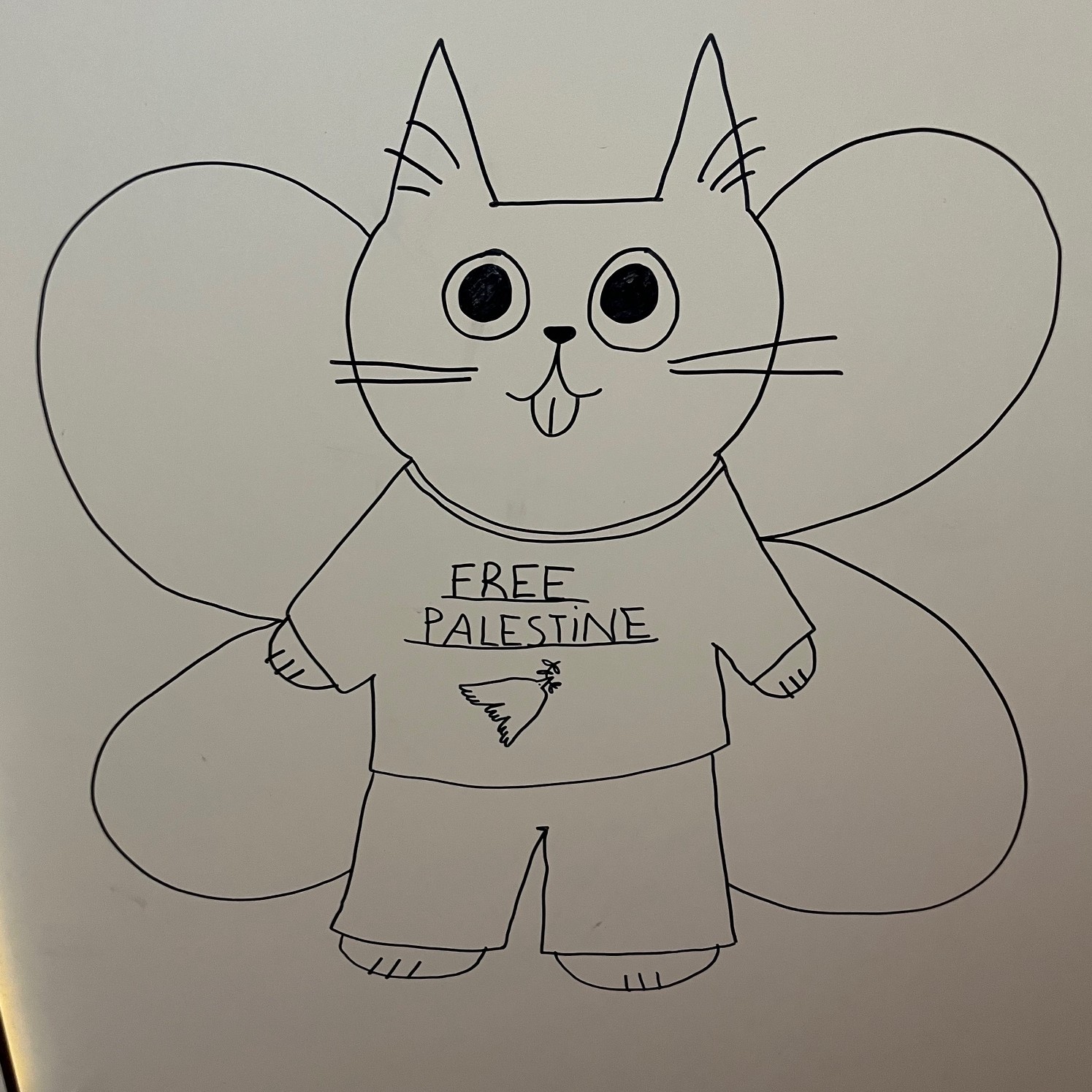
This is a post inspired by a cartoon on a lavatory wall. No, not that sort of cartoon, as I shall explain shortly. Actually, the one above.
But first, those of you kind readers who wondered if the reason why my posts have dwindled from weekly to monthly to almost never, might be forgiven for thinking that this writer is incapable or dead. Though far be it for me to assume that you actually noticed my voice in the first place and thus my subsequent silence. Happily, I’m neither deceased nor dribbling. But one of the curses of advancing years is a tendency to repeat oneself, something I do my best to avoid. I struggle to find anything to say about Donald Trump, for example, that hasn’t already been said, by me or by others. And so it is with a host of other subjects, though many of my pet obsessions have faded into obscurity (such as Boris Johnson), though not unfortunately the odious Nigel Barrage (as I like to call Britain’s favourite demagogue these days).
But Trump lashes on and out like a dystopian android whose circuitry has been toasted, taking full advantage of the ultimate platform. I shan’t write about him again unless he breathes his rancid last before I do, in which case I shall rouse my shaky old hand to craft a suitably admiring obituary.
There’s plenty of other stuff to write about, though much of it is about issues that are unlikely to be resolved in my lifetime. Though I hope that those who will live longer than me can resolve the perils of climate change, AI and meteorites barrelling their way towards us, I’m not inclined to sacrifice myself for the sake of future generations as one might in some soppy Netflix series.
Which leads me to one subject, seemingly eternal to those of us born after 1948, that has always baffled me: the future of Palestine and, for that matter, Israel.
This is where the cartoon comes in. It was in the public loo of a small French village. Given that in this area there are plenty of native English speakers, there’s a fair chance that it was one of them who, perhaps during a bout of constipation, decided to share their artistry with us. Had they been French, they would have written Palestine Libre, or the imperative thereof.
In Britain, the cause of the people of Palestine, who suffer unspeakably from the relentless cruelty of Binyamin Netanyahu and his legions, has gained massive traction across a diverse range of people of different ages and political persuasions. I have friends of my age who have felt impelled to risk their personal safety by going to demos. I wouldn’t be surprised if it’s the first time they’ve taken to the streets since the sixties or seventies, when many of us did our bit in protesting against The Bomb, Apartheid, the Vietnam war and the Neo-Nazis (who these days, incidentally, seem rapidly to be becoming fashionable again).
Much as I line up in spirit alongside those who are outraged by the appalling violence inflicted on Palestinians since October 7th 2023, I find Hamas’s assault on the elderly, women and children in Israel equally abhorrent, even if Israel’s response was, statistically speaking, utterly disproportionate to the original act.
Yet as I watch the old and the young shout themselves hoarse on the streets of London and other cities, I wonder what they mean by “Free Palestine”, and how many have even thought the question through at all. Calling for the freedom of an individual, a group of people or a population is the easiest and most effective rallying cry for those who believe that they themselves live in a state of freedom. On the other hand, I suspect that many of those who accuse others of “genocide”, a word that appears on endless placards and tee shirts, have never explored in any depth what genocide actually means, let alone witnessed it. Both words, I would argue, started life as technical terms. They have now become emotional rallying cries with infinitely mutable meanings.
Or to put it another way, these are easy words with which to manipulate, because they are simple and can mean what the user wants them to mean.
Parking genocide for a moment, what do we think freedom means to the chanting thousands?
Does it mean a democracy whose leaders can be elevated or cast aside by popular vote? Which enacts laws approved by popular referendum or elected representatives? In whose laws human rights are enshrined and protected by an impartial judiciary? Whose military and law enforcement are under the control of a directly or indirectly elected executive?
Perhaps. Or would they think of freedom as a finite slice of time following the casting off of the yoke of oppression?
Which is where the opinions of the oppressed come in. What does freedom mean to them? Replacement of a conquering oppressor with a home-grown strong man – a Saddam or a Gaddafi? A theocracy, with generous funding from Iran or the Gulf? The appearance of democracy, wherein an entrenched oligarchy makes all the important decisions – as in Xi’s China and Putin’s Russia? Or do they yearn for the “democracy” imposed on Iraq by George W Bush and his proconsuls? Or something we in the West haven’t had the imagination to conceive?
That’s for them to decide, I hear you say. Meaning, the cynic might reply, that the newly free are free to decide their method of future oppression and enslavement.
Even after fifteen years’ experience of living and working in the Middle East, I couldn’t begin to volunteer a solution to the future of Palestine. As for freedom, which of fifteen variants might satisfy the majority of stakeholders?
And what of Israel? What does freedom look like for those who did not fall victim to the attack of October 7th? Would it be freedom from rocket attacks, car bombs, condemnation abroad, antisemitic abuse, economic boycotts and the necessity to be constantly in a state of tension in anticipation of attack? Freedom to live without the protection of an iron dome, perhaps? Or from the worry of losing sons and daughters called to battle at a moment’s notice?
As I promised earlier, I have no answers – only questions.
While I was writing this I happened upon two movies, one that I watched for the first time and the other that I knew well. The first was Operation Finale, about how Adolf Eichmann, the architect of the Final Solution in World War Two, was kidnapped in Argentina and smuggled to Israel. As the team of Israeli kidnappers prepare for their operation, they’re visited by Ben Gurion, the Prime Minister of the time. He urged them not to fail, because putting Eichmann on trial would show the world the horror of the Holocaust.
Would Netanyahu have refrained from killing Eichmann on the spot? I doubt it. Would Ben Gurion have agreed to the total destruction of Gaza and the killing of 60,000 occupants? I also doubt it. Different times, different mores.
And then there’s the famous scene from Apocalypse Now in which Marlon Brando as Colonel Kurtz, the renegade special forces officer fighting his own brutal war against the Viet Cong, shares a story with the man sent to kill him. He tells of how he and his company go to a village and inoculate the children. Shortly afterwards, the Viet Cong come and cut off each inoculated arm. To him this act shows the power of an opponent without moral scruples, and whose overriding objective is to defeat the enemy. “If I had ten divisions of those men,” he says, “then our troubles here would be over very quickly.”
At that point I thought of the defenceless families in the border settlements, and of bomb craters filled with the bodies of children. The horror never seems to go away.
Which leads me to genocide. Once again, questions, not answers. Though when thinking about the term I find it helpful to have read East West Street, a multi-layered examination of the origins of the word interleaved with the story of his own family, by Phillipe Sands, a distinguished international lawyer. My review of the book is here.
In determining what constitutes genocide, I read once that lawyers tend to focus on intent, but historians on the result. So, applying a legal test, has it ever been the intent of Netanyahu and his subordinates to destroy, as defined by the UN Genocide Convention “…in whole or in part, a national, ethnical, racial or religious group”?
And from a historian’s perspective, at what point is it justifiable to declare an event a genocide? And in the case of Gaza, where, between zero and 60,000, is the tipping point reached after which such a declaration can be made?
Difficult questions, possibly not considered by all of the protesters accusing the object of their fury of genocide. Far simpler to ignore the definitions (of which are are more than one) and embrace the term as an emotional rallying cry.
By questioning the thought processes of the thousands who are utterly sincere in their condemnation of the violence in Gaza, I fear I might lose a few friends. But I write through doubt, not conviction. And I ask myself on what streets did the righteously indignant demonstrate when Putin took the children from the occupied territories of Ukraine to be re-educated as Russians? And who is standing up for the displaced Syrians living in Turkey? Or the Rohingyas of Burma? Or the Uigurs of Xinjiang? And so on.
Real life is murky, ambiguous and nuanced. Most people who take to the streets with their banners and shout about freedom and genocide surely know this. By protesting, they are using their voices to gain the attention of a wider audience. Yet whether or not they care to admit it, I suspect that the simplicity inherent in slogans, and yes, pictures on lavatory walls, is a comforting antidote to the maddening complexity of events on the ground.
So by all means we should continue to condemn inhumanity wherever we find it. But we should never forget that simplicity is also the demagogue’s ladder to tyranny.

