
I’ve started to adopt a standard response to end conversations on some matters related to the pandemic that I’m beginning to find rather tedious.
For example, there’s a time and a place to discuss theories about the origin of the virus, and as far as I’m concerned it’s not now. The former head of Britain’s intelligence service, MI6, thinks that it might have been artificially created and accidentally released. The current head of the security service, MI5, thinks it wasn’t. It’s of natural origin, he suggests. There are thousands of idle minds that have lined up behind the artificial origin theory. My response is simple:
How does this help us move forward?
If we thought that nuking China to punish them for their misdeeds would magically stop the virus, I would understand. Or if we thought that the Chinese had a secret formula for turning it off, I would also understand.
But unless someone can convince me otherwise, no useful purpose is served by idle speculation on a matter that might never be settled beyond reasonable doubt. Unless, of course, the virus has provided a convenient club with which to beat China, which still doesn’t help us move forward. Unless of course we want to beat ourselves as well, which is one of the main reasons why the idea that a country might develop something that might wipe them out as easily as it might destroy its enemies is somewhat implausible.
A desire to disengage also came to me yesterday while I was playing golf. When I made a snarky remark about my eyesight being as defective as that of Dominic Cummings, my opponent launched into a passionate defence of Cummings, citing the Durham police assertion that he “might” have broken the law as proof that he had not broken the law. I was so pissed off at the prospect of having to go into all the “eyesight test with wife and child on trip to Barnard Castle” stuff, that I refrained from further discussion, especially as I stuffed my next shot into the long grass, and continued to do so on a regular basis until the end of the round. And yes, it was my bloody fault for mentioning Cummings in the first place. Lesson learned.
I’m happy to debate anything with anyone, within reason. Generally, I don’t get cross with someone who holds an opposite view to mine. But there comes a point at which there’s no point. And that’s usually when a subject is chewed into an unrecognisable grey bolus that bears little resemblance to the original ingredients. Or when the people debating hold views so entrenched that even Socrates would have a problem exposing the contradictions. And I’m no Socrates.
This is why, in more “polite” times, sex, politics and religion were subject to an unspoken embargo. If after a couple of bottles of wine George got fruity, or launched into one of his political hobby horses, he would get a sharp kick under the table from his long-suffering wife.
These day we can’t have dinner parties. For risqué conversation we have to rely on Zoom, or Twitter bombast in front of a potentially unlimited audience.
But right now, there’s risqué, and there’s plain boring. And when we start getting together with our friends in restaurants and at dinner parties, perhaps we should change the terms of the embargo. Take sex off the list, because that’s a subject of universal interest, and add conspiracy theories. Because they’re boring.
As far as I’m concerned, if that’s what turns us on, we can talk about lizards, 9/11, Kennedy and the evil deeds of George Soros and the CIA until the cows come home. After all, we’re consenting adults.
But when we’re discussing the current situation, which is so painful for some and worrying for many, perhaps we should keep returning to the question that separates idle speculation from conversation that actually has a constructive purpose:
How does this help us move forward?
This is probably not a bad time to dust down something I wrote three years ago about racism. The point I was trying to make at the time was that racism is not binary. It’s multi-dimensional. It exists in many parts of the world where people are not protesting or rioting because for one reason or another they can’t. I have seen it in action in South-East Asia, where I’ve travelled extensively, in Saudi Arabia, where I lived for several years, in parts of Africa, and, of course in my own country and the US.
Here’s the piece, which appears under the heading of Racism in the UK – let he who is without sin cast the first stone? Sorry, not good enough.
It speaks for itself, and I still stand by everything I said at the time:
“So let’s talk about racism, particularly in the light of the row Sarah Champion, Member of Parliament for Rotherham, ignited when she published an article about the recent criminal prosecutions of gangs of Asian origin for grooming and sexually abusing young white girls.
She was accused by many in the Labour Party of making a racist comment, and fired from her position in the Shadow Cabinet. In yesterday’s London Times she defends herself, making the point that provincial towns and cities in Britain are very different from London, which she claims is Labour’s centre of gravity. In towns like Rotherham, which she represents, there are cultural and ethnic enclaves far more pronounced than any in London, and it’s in those enclaves that such criminality has sprung up. There have been no prosecutions of gangs of abusers in the capital.
We’ll stop there for a moment. Either now or later please visit Margo Catts’ blog, in which she writes about racist attitudes in the United States. Timely really, in the light of the comment by a policeman in Georgia who was attempting to reassure a white woman whose companion he was arresting for drink driving: “don’t worry, we only shoot black people”.
Margo, like me, spent time in Saudi Arabia, a country where a multitude of nationalities earn their living side by side. You want to see racism in action? Go to Saudi Arabia, where just about every ethnic group looks down on another.
If you’re British, you might remember a sketch from the sixties lampooning the class system, in which there are three guys lined up, one tall, one medium height and one short. The tall one says “I’m upper class. I look down on him because….” And so on.

In Saudi Arabia, you’d need a three-dimensional version. Whites call the Arabs ragheads. Arabs call whites kuffurs. Egyptians think Saudis are stupid. Pakistanis think Arabs are stupid. Arabs think Bangladeshis are dishonest. And people from just about every ethnic group dump their prejudices on those at the bottom of the pay scale: Yemenis, Somalis, Filipinos, Baluchis – the folks who build their tower blocks, clean the streets, change the children’s nappies and kill the cockroaches.
Note that I’m not saying “the whites” and “the Arabs”. That would be a gross generalisation, and unfair to a lot of people who respect their neighbours regardless of their ethnicity and occupation. But racism is there, in attitude and behaviour. And it’s so prevalent that if you’ve lived there for a while you don’t notice it until you stop and think.
Which brings us back to Margo’s article. She makes the point that we are not born racist. Racism is learned behaviour. She goes on to say:
Accepting racism is racist. Refusing to talk about racism is racist. Pushing racism off as a problem that happens in some other segment of society or geography is racist. It’s way past time for white people to stop telling people of other races that we’re not racist, and start talking honestly with each other about how we actually are. Start making it clear that we won’t accept it from each other. In exactly the same way we ask Muslim communities to police themselves for potential radicals, it’s time for polite, don’t-be-political white people to start making it clear that we won’t tolerate racist thinking or expression in our own ranks.
Absolutely right, in my opinion. But she’s not just talking about whites. She tells the story of her bus in Riyadh, full of white women, being stoned by a bunch of Saudi kids just out of school. Racism isn’t a one-way street. It’s not just about the most socially and economically powerful discriminating against the less powerful. It happens between peer groups. It happens up and down whatever scale you chose to use.
Is Britain any different? We all, to a greater or lesser extent, have learned prejudices, gained from childhood or from our experiences – or other people’s experiences – later in life.
I don’t consider myself to be racist, yet in Margo’s terms, I probably am. One of my earliest memories is of sitting in nursery class at the age of five. A black guy came into the classroom, and the teacher told us not to be afraid. It was the first time I had ever seen a black person. I was fascinated, not afraid. But looking back, being told not to be afraid might have made me afraid. Might the teacher’s concern have instilled the first germs of racism in me?
Maybe, but twenty-five years later, the experience of Saudi Arabia actually did the opposite. Far from shutting myself away from contact with other ethnic groups, and calling my hosts ragheads, I went the other way. I took an interest in those around me who didn’t share my culture, religion and skin colour. I talked to Saudis, Pakistanis, Indians, Sudanese and Filipinos about themselves, their lives in their home countries, their likes and dislikes. And the more I talked and listened, the more I found I had in common with them.

When I came home to the British workplace, I felt I was far better equipped than some of my colleagues to function effectively in a multinational workplace. Yet I’d be lying if I said that I’d never, perhaps in a moment of irritation, generalised about a race or a nationality. It’s when we start thinking or talking in a disparaging way about “the Germans”, “the Pakistanis” and “the Japanese”, that we stray into racist territory. It’s a short step from there to “the Jews” and “the Muslims”, except that those who hold a grudge against them are accused of being anti-Semitic or Islamophobic. But for me, it’s the same currency.
So was Sarah Champion being racist when she was referring to gangs of sex abusers of Pakistani origin? If she was failing to highlight gangs of white people – Latvians, Brits and Albanians perhaps – who have also been prosecuted for similar organised crimes, then possibly yes, by singling out a specific ethnic group and ignoring others. But to my knowledge, no other gangs predominantly from a different ethnic group have been prosecuted in recent years.
Were her remarks a slander against the entire British-Pakistani community? No more, I believe, than singling out white football hooligans who chant racist slogans at football matches is a slander against the entire white English population, from the Archbishop of Canterbury through to the fishermen of Cornwall.
Likewise, is it a slander on our Egyptian, Sudanese and Somali communities to allege that female genital mutilation is still widespread within those groups?
As for the gangs of abusers in Rotherham, Oxford and other British cities, would we not describe them as racist if their excuse for their behaviour – behaviour, by the way, that might be considered by some of their peers as an honour crime if they tried to practise it on women within their own ethnic group – was that white girls were “easy meat”, “fair game” or “have loose morals”?
My point is that we live in a racist, phobic society, just as do the Saudis. None of us is entirely immune. Not Guardian readers in the home counties, not taxi drivers in Rotherham, not little old ladies in Cheltenham, not fruit-pickers in Norfolk. Racism is not just vertical. It’s horizontal. It’s diagonal. And it’s pervasive.
It’s easy to say “let he who is without sin cast the first stone”. But that won’t do, I’m afraid. Recognising our own prejudices, be they mild or extreme, should not stop us from calling out gross criminal behaviour such as grooming, drugging and gang-raping young teenage girls, and – if it helps us better understand and deal with the problem – from identifying the ethnic origin of the perpetrators.
When Sarah Champion said “Britain has a problem with British Pakistani men raping and exploiting white girls”, she was referring to a specific phenomenon that occurred in her city and several others. If she had said, “Britain has a problem with men sexually exploiting women”, she would have been immune to criticism by her own party, but open to ridicule for stating the obvious.
Yes, she may have strayed close to the line of generalisation that she could have avoided if she’d said “gangs of British Pakistani men…”. But was she wrong in identifying the phenomenon, even if her concern was awkwardly expressed? That’s for you to judge.
I for one believe that, as a woman who spent four years as the chief executive of a children’s hospice in Rotherham, and as the leading light behind a website (www.dare2care.org.uk) dedicated to fighting child abuse in all of its forms, Sarah Champion deserves the benefit of the doubt.
As for the rest of us, we need to recognise the awful truth about the world in front of us, including the world we see when we look in the mirror.
Perhaps when we stop saying “I’m not a racist, but…” we will be making progress.”
So back to the present. For me, it goes without saying that Black Lives Matter. But while we’re focused on what’s happening on the streets of Washington DC, Minnesota, London and Paris, let’s also remember that the problem is much, much bigger. Let’s not forget the Rohingya in Burma, the Uyghurs in China and the aborigines in Australia, as well as the construction workers, housemaids and street cleaners in the Middle East. Them, and many more who are discriminated against on grounds of ethnicity.
It’s a global problem, folks.

The corona saga in the UK is becoming so outrageously dumb that I’m reduced to trivialities in order to maintain my good humour. And what trivialities are more charming than roses?
If you visit this blog on a regular basis, you might recall that a couple of weeks ago I made a significant discovery. My patio roses have personalities. So much so that I named them Boris, Theresa, Dominic, Matt and Keir.
Since then, they haven’t had the easiest time. A week ago I found that they were infected with the dreaded black spot. This required removing the infected leaves, and then spraying those that remained with an anti-fungal remedy. While doing this treatment I sprayed myself for good measure. Actually it was a windy day, so I had little say in the matter. But I’m sure it did me some good. Must tell Donald about it.
I also dead-headed them, which has left some of them considerably less flowery and loaded with promise than they were before. Anyway, here’s a brief update on their progress.
Thus far, unfortunately, my attempt to engender a herd immunity has not been entirely successful. Shorn of spotty leaves, all but Keir look a little more threadbare than they were.
Boris is on his last two blooms, and when they’re gone he will look like the floral equivalent of a headless chicken. Branches all over the place, with nothing new to celebrate.
Theresa is devoid of blooms, which makes her seem even more retiring than before. However, there are a few buds in sight, and at least she’s not as encroached upon by her noisy neighbours as she was before.
Dominic is also looking a little sad. His branches have been much reduced, and there are few blooms in sight. Matt, on the other hand, still has plenty of flowers, but when they’re gone, the purge of the black spots will leave him pretty flowerless for a while.
Keir, on the other hand, is continuing in his own quiet way. He’s a smaller plant, and his blooms are less frequent. But when they arrive they’re both fragrant and spectacular, changing over time from a deep crimson to a paler pink complexion. He’s the one least affected by black spot. All the indications are that he’s set to have a good summer.
All in all, Keir excepted, they look somewhat chastened, or diminished, you might say.
Perhaps the time has come to re-name them in the hope that they might be invigorated by more positive associations. England cricketers, perhaps, or leading immunologists.
What was I thinking of when I named them after the deadheads in Westminster in the first place?
Unless I’m reviewing a book, I very rarely devote a post to other people’s writing. In this one, I’m going to do both.
We’re living through the most interesting of times, both in the Chinese sense and in the normal meaning of the word. But without the contributions of journalists, my perception of these times would be far narrower than it is today. I suspect that many others would, if they stopped to think about it, would say the same thing.
This morning I’ve read some outstanding writing on a subject close to my heart: Trump’s America. Whether you love Trump or despise him, whether you live in Kyrgyzstan, Britain, Bahrain or Cambodia, what happens in America, and the decisions that leaders in America make, will have an effect on you, in some way, great or small.
So, without much adornment, I’d like to call your attention to three articles in the so-called mainstream media that make me grateful for the efforts of writers whose work illuminates rather than obscures, even if I don’t always agree with what they say.
The first article is in the Washington Post. It’s by Patrick Skinner, a former CIA agent who is now a police officer in Savannah, Georgia. In it, he talks about the militarisation of police forces in the US and explains how, in contrast, he sees his role – as a neighbour to those he serves. He offers what in my view is a lesson not just for the police in America, but in my country too.
Here’s the article: I’m a cop. I won’t fight a ‘war’ on crime the way I fought the war on terror. I managed to read it without being challenged by the paywall. Hopefully you will too.
The second piece is by Susan Glasser in the New Yorker. She writes as a witness to the protests in Washington DC that led to the clearing of demonstrators from Lafayette Square in order that Trump could pose in front of a church, bible in hand, for a photo-opportunity as the “law and order President”.
The piece is here: It’s called #Bunkerboy’s Photo-op War.
And finally there’s a long read by Anne Applebaum, of whom more later. In The Atlantic magazine she writes about different forms of collaboration with those in power. It’s a powerful piece in which she discusses France under Petain during the Second World War, East Germany and the Stasi in the 1950s and finally those in America, including leading politicians, who claimed before his election to despise everything Trump stood for and yet became his willing enablers.
As I said, it’s a long article, but well worth the time and effort. Here it is: History Will Judge the Complicit
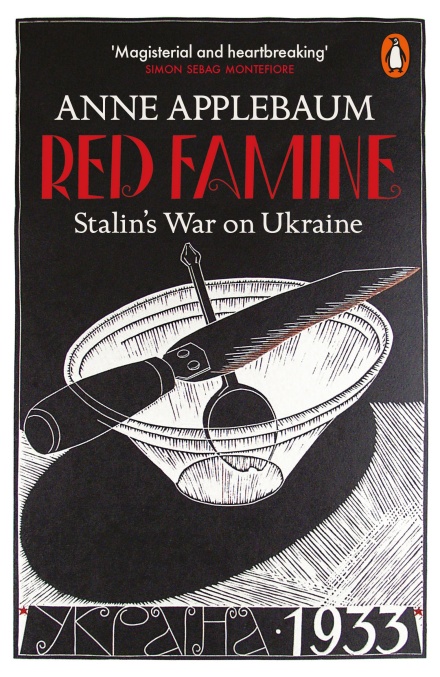
Anne Applebaum has also written a book that I’ve just finished. Red Famine: Stalin’s War on Ukraine tells the story of an episode in the history of the Soviet Union that Stalin and his successors spent fifty years covering up.
After the Russian Revolution, Ukraine’s loyalty to the new regime in Moscow was far from assured. There was a strong nationalist movement in the country, although it had been part of the tsar’s domain for centuries. At one stage, shortly after the First World War, the nationalists declared an independent republic. Only after the intervention of the Red Army were the various nationalist groups suppressed and a Soviet government installed.
The origins of the famine of 1932-3 lay in the USSR’s urgent need for foreign currency to pay for industrialisation. The currency came largely from grain exports. The fertile plains of Ukraine were major contributors of that grain.
Stalin’s efforts to extract ever more grain from the country were stymied by passive resistance from the peasant farmers. In response he began a system of collective farming. in which the peasants were “encouraged” to pool resources into huge farms ran by the state.
The main resistance came, understandably by the wealthier peasants, who typically has livestock and hired others to cultivate the land. They were commonly know by the state as kulaks. In a campaign of repression, hundreds of thousands of kulaks were dispossessed, relocated and in many cases imprisoned in the gulags.
By 1932, with shortfalls in the harvest further impacting exports, Stalin embarked on a systematic effort to deprive the peasantry of all the food they owned, including grain seed for the following season. The result was a man-made famine that accounted for up to four million deaths (the precise figure is still not known) by starvation.
After the famine, Ukraine underwent a process of eradication of the cultural symbols of nationality. The Ukrainian language was no longer taught in schools. Writers whose work celebrated nationality were banned. All mention of the famine was strictly forbidden. Even Western journalists in the USSR, many of whom knew perfectly well about the famine, colluded in the cover-up, reflecting in their reports the party line that yes, there had been food shortages, but no famine. Britain and America, both of which for various reasons were seeking closer relations with the Soviets, did not intervene.
Ukraine’s suffering didn’t end when Stalin took measures to stop further starvation. The Nazi invasion in 1941 was welcomed by many, until they realised that the occupiers were only interested in the country’s resources, including food, as a means of supporting the invading forces. A programme of mass starvation planned in order to provide land for German migrants was only averted by the defeat of the Wehrmacht in 1944-5.
And then, in 1986, came Chernobyl, a disaster that affected millions of Ukrainians and is widely considered to be the tipping point that led to the end of the Soviet Union.
It was only after Ukraine gained independence that the full story of the famine emerged, both through official archives and the long-hidden written accounts of survivors.
Applebaum’s narrative of an event that was no less horrific in its way than the Nazi holocaust that followed a few years later, yet was conveniently forgotten for half a century, is compelling and heartrending.
As she also points out in the Atlantic article, these events didn’t come out of the blue. They were the result of a slow process of infringements of liberty, an accumulation of measures that arrived at their climactic outcome only after each step had conditioned the population for the next stage. The boiling frog syndrome, if you will.
The story of the Holodomor, as the famine is known in Ukraine, is relevant to today as governments in many parts of the world, including the US, the UK, Poland, Turkey, Hungary and Russia slowly, bit by bit, move their countries down the authoritarian road. So slowly, in fact that many of us don’t notice or, with so many other things to worry about in a pandemic, don’t care.
We should care, which is why we need journalists to call out the infringements, the encroachments and invention of alternate truths. In the US and the UK, we’re not so far down the road as Russia, where journalists are routinely intimidated and sometimes murdered, or Turkey, where thousands are languishing in jail. But the arrests of TV crews during the US riots, and the banning of journalists from an area of one city, are ominous signs that the free speech we take for granted is by no means guaranteed, whatever a constitution might decree.
Even if we don’t always like what we read we should never take journalism for granted, By and large, it’s an honourable profession. It’s still populated by people of integrity, curiosity and often courage.
I for one would be lost without them.
It rained around here this morning for the first time in weeks. Not convincingly though. It’s almost as though the clouds are thinking twice about whether to pour forth their bounty without permission of the scientists. A bit like our government trying to decide whether we’re at Level 4 or Level 3 in the virus stakes.
The truth is that unlike the rain, we’re all over the place. Our track and trace efforts, minus the app which is still not ready, are failing to identify more than 60% of contacts. Our Health Minister is accused by the Office of National Statistics, as impartial a body as you’re likely to find, of producing misleading statistics on testing. When questioned by the press about it, he replies with his usual blatherous deflection.
At the same time we’re presented with two faces of British patience, equally ludicrous. A queue of people stretching almost to eternity who are waiting to shop at IKEA. And a similarly long queue of Members of Parliament snaking in and out of Westminster and many other parts of Inner London on their way to cast their votes in the House of Commons – in support of a measure that makes such queues a fixture for the foreseeable future.
I can’t imagine what unmet need prompts people to wait for hours to shop at IKEA, unless it’s a craving for Swedish meatballs. I suppose it’s possible that a thousand home improvement projects are incomplete without a flat-packed book case, but surely gratification could be delayed until it’s no longer necessary to form the equivalent of a bread queue in Aleppo?
As for our MPs, I suspect that their enthusiasm for travelling hundreds of miles to London in order to queue in the rain might soon diminish, even among the idiots who voted for the measure instead of leaving their colleagues to participate in debates from home.
So it’s all going really well, isn’t it? We don’t seem to have much consensus on anything. Especially among those who run our schools, and those who present their children to be educated.
The rest of us, who either don’t have kids or whose little darlings have left home, are left either dreaming of flat-packs or wondering exactly what we are or aren’t allowed to do. It seems as though lockdown has been replaced with lockout. On my occasional rides out in the car, I see the same traffic as I normally would on a Wednesday morning. But where are they going and what are they doing?
I imagine that some of them are resuming their daily work activities as they did pre-lockdown – fixing drains, delivering stuff and so on. But with shops only tentatively coming back to life, why are the ladies who lunch circulating around town in their SUVs like Apaches waiting to strike a wagon train? Perhaps for some it’s the joy of just driving around again. And perhaps there are secret tea parties in people’s gardens, to which, fortunately, I haven’t been invited. Sorry if this sounds elitist, but you have to remember that I live in Surrey.
Those of us who haven’t got tea parties to go to are starting to think about getting away. We’re spitting with fury at the prospect of having to go into lockdown again if we’re bold enough to take a holiday in some foreign land that will have us, which isn’t many at the moment. Those in the know are yabbering on about air bridges, an imaginary construct over which we can travel without being imprisoned upon our return.
Others are talking about a world organised around bubbles. A green one in which all the well-behaved countries can freely exchange their citizens. An orange one, consisting of countries that don’t have “it” under control, and therefore have to put up with all manner of hassle if they allow their citizens to travel. And finally a red bubble, which is the equivalent of the seventh circle of hell, in which people are free to fly back and forth because they’re just as likely to get infected and die in one country as in another.
According to the article that puts forth this idea, the EU countries are a green bubble, and we, humiliation to end all humiliations, are in an orange one. Take that, Brexiteers, and keep your plague to yourselves.
Oh well, we still have Cornwall, if the locals will have us, and failing that we can always run out into the glowing beaches around Sellafield or any of the other nuclear establishments that sit in such beautiful locations.
Speaking of Brexit, now that Boris and his team are running out of dazzling initiatives and undeliverable promises and are therefore reducing the frequency of coronavirus updates, our thoughts will slowly turn towards the end of the year. This will be the moment, as things stand, when our beleaguered economy takes a second hit as it enters the paradise of no deal with the EU.
So, perhaps the plan goes, we’ll still be so wound up by the rigours of social distancing and quarantine periods that we don’t notice yet more queues – of lorries waiting to come and go from the EU as their cargoes of perishable goods slowly rot. Not fish, apparently, because according to Nigel Farage, the French will be reviving their long-held antipathy by sending their navy against us if we try to enforce our maritime limits and prevent their trawlers from grabbing our cod.
But there’s no turning back, because Dominic Cummings, our Prime Minister, says so. And worse still, Nigel Farage is threatening to form yet another political party if we dare to ask the EU for an extension to the transition period. This despite the EU being willing to consider an extension of up to two years, which theoretically would give us enough time to get over the current economic shock before we fall over the cliff again.
You have to hand it to Nigel though. He’s come up with the perfect political innovation for our age – the pop-up party. All you need is a few followers on Twitter, an endorsement from Donald Trump and a little help from a Russian bot farm. You can sit on a cliff and do videos of inflatables laden with migrants, while you watch the contributions rolling in. More fun than smarming around Westminster any day. Then when an election comes up, you have a good moan about your fellow-travellers, resign in disgust and start all over again. Perfect!
But as we mill around like worried sheep unexpectedly let out of the pen, we shouldn’t concern ourselves with what hasn’t happened yet. No riots, no maddened grannies looking for babies to hug and we haven’t ran out of meat for our barbecues.
And rejoice! According to multiple reports, Boris is “taking control” of the fight against the coronavirus. Sounds splendid, though you wonder what he’s been doing up to now, and whether he can persuade Dominic to hand over the reins.
But we must have faith. All will be well. The sunlit uplands await. I couldn’t think of a better country in which to sit out a pandemic.
Advance Britannia!
It didn’t take the gift of prophecy to work out that sooner or later the protests in forty cities in the United States would reach London and other parts of the UK. But I was surprised that they came only an hour or two after I posted this on Sunday:
And what if we followed the example of our cousins in the United States, and took to the streets in an orgy of rioting over a perceived act of institutional racism? It’s happened before, most recently in 2011, and it could happen again, especially given the pent-up energy that’s built up during lockdown.
No rioting fortunately, or at least not yet and hopefully not at all. I learned about these protests through one of my staple sources of news: the BBC website. It was a fairly sloppy piece of reporting that provided little information about protests in Cardiff and Manchester other than that they’d happened. It also mentioned in the same piece that there had been a protest in Peckham the day before. No context other than that the protests were an echo of what was happening in the US. No word about who had organised it. Just a few photos and the fact that five people had been arrested and a member of the clergy had expressed concern over breaches of the lockdown rules.
Not that one would expect a detailed analysis so soon after what, judging by the lowly position of the story on the BBC website, seemed to be small beer compared to what’s happening in America.
There are several reasons why I’m interested in this little (so far) outbreak in the UK, and in the far larger events in the US. Do we ever stop to think about how we learn about them? About what information reaches us? And when people do take to the streets, to what extent, how, and with whom, do they communicate?
I’m also interested in who, if anyone, is behind the protests. Especially so when I access a subset of reporting from the US suggesting that there are shadowy organisations involved. Gun-toting Trump supporters (of course). People dressed all in black whom the media, and (of course) Donald Trump identify as Antifa. In most cases, there’s little effort to explain who Antifa are other than that Donald Trump (of course) is labelling them as a terrorist organisation. And then, seemingly stuck in the middle, are those who identify with the Black Lives Matter movement (or is it a movement?), many of whom, as evidenced by video clips, were doing their best to get in the way of people trying to burn and loot.
If that scenario seems complex, it’s actually far too simple. For every video of people standing in front of stores to protect them from looting, there’s one of a policeman kicking a protester, and another of a policeman doing his best to defuse the situation by talking to the protesters, and another of someone chipping away at paving stones to use as ammunition (apparently) and being carted over to the police, not by the MAGA crowd but by protesters.
Confusing? To add to the mix, reporters are being arrested by the police, and one police department has declared an area of their city out of bounds to reporters. So what does this mean? A concerted effort to damp down the coverage and thereby calm things down, or a desire to cover up acts of illegal violence by law enforcement officials? Tiananmen Square, as one tweet suggested? In America???
Then there’s the President inserting himself into the story. First allegedly hiding in a bunker, then yesterday having the police clear a path to a nearby fire-damaged church where, in front of boarded-up windows he declared himself to the the law and order president and announced that he was sending the regular army against the protesters. Howls of outrage from his opponents, and a senator relishing the prospect of the 82nd Airborne Division getting to grips with a rag-tag bunch of anarchists.
So where do we go for reliable, dispassionate reporting that will help us understand what the hell’s going on? What organisation is out there that has no political agenda and is interested only in reporting enough aspects of the same story that might enable us to arrive at our own version of the truth? Who still believes in a style of reporting that used to be called balanced?
In the UK, that might be the BBC, but what if the BBC is assailed on all sides for partiality and is therefore too intimidated to go out on a limb? And what if the lockdown and budget cuts have hollowed out the organisation so that it no longer has the bandwidth to analyse, as opposed merely to report the surface phenomena of events that you and I might consider important?
And in case we in the United Kingdom watch the events across the Atlantic with horror tempered by a sense that such things are unlikely to happen here, we should remind ourselves of the murder of Stephen Lawrence and the claims that “institutional racism” marred the subsequent police investigation. And we should remember that that the 2011 riots started after Mark Duggan, a black man, was shot dead by police in London.
In the US, most TV networks and major newspapers seem to have abandoned any pretence of impartiality. This enables Trump to label every outlet that doesn’t see things his way as fake news.
And if we rely on the social media for our news, how on earth do we ensure that we escape our reality bubbles by going for the widest possible spectrum of opinion and reporting without being totally consumed by the effort?
And how do we tell the difference between information and disinformation, between real people and bots from Russia, Iran and China? Between organically-grown conspiracy theories and those deliberately implanted? Between real conspiracies and imaginary ones?
Who do we trust? Who’s trying to manipulate us, and how can we tell?
If you’re not paralysed by uncertainty at this stage, you then have to ask yourself what view to take, if any. Do you care about being manipulated? And are you prepared to take some action, donate to an organisation, fire off an intemperate tweet or take to the streets on the basis of what you see, which in turn is what you allow yourself to be presented with?
That could depend on whether you have a grievance that can be stoked and amplified. In other words, your reaction is based on an emotion – anger, grief, resentment – that’s waiting to be aroused. On the other hand you could be cold and calculated, waiting for an opportunity to advance an agenda. In other words, you could be one of the manipulators.
Nothing new in any of this. It’s human nature to jump to conclusions when presented with a reality you see as mapping on to your own. Only when the whole event has played itself out is it usually possible to come to any dispassionate conclusions about who were the main actors responsible for organising the chaos, if indeed there were any actors at all. If there are clearly identifiable actors, you then ask yourself what was their agenda.
Were they local, or did they come from somewhere else? If the Trumpian gun enthusiasts were involved, were they funded by some right-wing pressure group, or did they come of their own accord? And why didn’t they use their weapons instead of posing with them? It shouldn’t be impossible to determine from their social media activities whether there was some motivating entity.
The same same questions should be asked about Antifa. Is it an organisation or a bunch of random anarchists who find common cause in certain situations? Did Donald Trump call them a terrorist organisation because he had intelligence about their agenda and intentions, or was he merely making political capital out of the riots by stirring up paranoia? If the former, why doesn’t he share his evidence?
As for Black Lives Matter, can they be called an organisation? Perhaps a movement is a better way to describe them. Of all the groups said to be involved, they seem to be by far the most transparent. There are websites, identifiable organisers and recognised communications channels. According to the prime movers, they believe in non-violent protest. So that being the case, would it be fair to say that any acts of violence carried out under their banners are the work of provocateurs or opportunists?
And what of the police, whose actions have been at the centre of incidents such as the death of George Floyd in Minneapolis that sparked off the protests in the first place? Is one police force or another institutionally racist? Is there a common thread of racism, perhaps with some organisation encouraging and enabling it, that runs across different cities and states? Or are there just a few “bad apples”? Has Donald Trump, with his divisive rhetoric, encouraged racist elements within the forces of law and order? Or are we just witnessing the latest manifestation of an age-old problem?
These are the kind of questions we need to ask if we’re to get anything close to a nuanced understanding of the events in the United States and, possibly, those to come in the UK.
Will we ever get answers? As ever, probably not from a single source. We’ll have to work our way through multiple stories and opinions. Some of them will be way beyond the attention spans of most of us. Perhaps we’ll have to wait for people to write books on the subject. It may be weeks, months or perhaps even years before we get the whole picture, by which time the world will have moved on, and the traumas of 2020 will be viewed as history.
The same can be said of the concurrent event that has dominated the year – the pandemic.
Making sense of the world around us has never seemed harder.
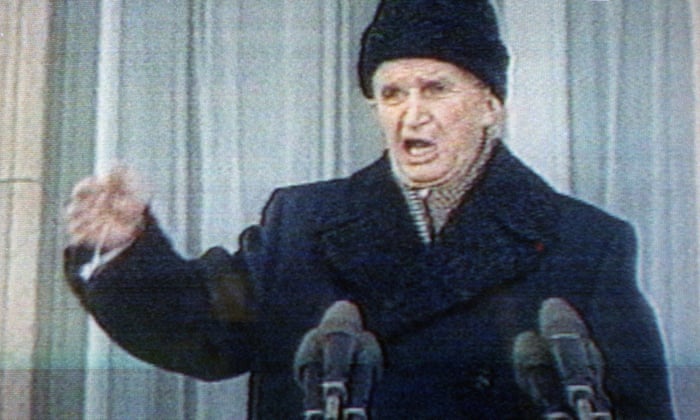
I sense that the British government is going through a Ceaucescu moment. Not in the form of a set-piece speech from a balcony met by jeers from a normally compliant audience, but in a thousand small acts of rebellion.
Yesterday I asked who Boris Johnson listens to before he makes decisions about the easing of the lockdown. An equally important question would who is now listening to Boris.
When driving through my town yesterday, I couldn’t but notice crowds of people on the cricket green, folks thronging the streets and a tailback of cars trying to get on to the main trunk road between London and the south coast. The shops weren’t open, of course, but if I didn’t know otherwise I would imagine that this was a normal bank holiday, not a Saturday under lockdown. Social distancing? Some, but by no means all. Face masks? Likewise.
Back home that evening, we learned that another 8,000 people tested positive on the last day counted, and more than 300 died.
Then, this morning, we were treated to a tweet from Matt Hancock telling a grateful nation that:
Now we’ve flattened the curve & reduced new infections, from tomorrow, the 2.2 million people who have been shielding can safely go outside
I know how much those shielding have sacrificed. Thank you to everyone who has protected our NHS & saved lives
Underneath his words was a photo of a woman waving to a relative in a care home whose windows are festooned with patriotic bunting, presumably taken on VE Day.
Then I asked myself a question. If we turned the clock back to the beginning of March, and suddenly thousands were being infected and hundreds were dying, how would I feel about some government official telling me that was safe to go out and about, even if I had underlying conditions that made me vulnerable to the virus? I suspect I would be horrified.
It’s all about perspective, isn’t it? Against the backdrop of an ongoing disaster, we’re being persuaded that things are much better than they were, that three hundred deaths a day is better than a thousand. So go forth into the sunlight, you vulnerable, beleaguered people, and rejoice.
But is anybody listening? Not many, I suspect. It’s not Dominic Cummings who gave Boris his Ceaucescu moment. It’s an accumulation of mind-numbing statistics, the R-fetish, mixed messages, broken promises and false optimism that has flowed out of the government like an ever-flowing stream of Prozac-laced effluent.
The government has lost the initiative, is behind the curve and is taking measures in response not to “The Science” but to other voices about whom I talked yesterday. Its efforts to moderate our behaviour are crumbling before the thousand little rebellions. It can still control some things, such as when the shops can open and sporting events can take place. But in other respects it’s lost the dressing room, as footballers would say.
On the evidence of the stuff I’ve read today, it would seem that Boris himself is in danger of losing his own dressing room, as MPs and cabinet ministers carp both publicly and anonymously at his lack of grip.
I don’t for a moment expect him to end up in front of a firing squad, like the Romanian dictator and his wife, or to undergo some less extreme British equivalent like a visit from the men in grey suits. But the derision that greeted his Health Minister’s chirpy tweet about the vulnerable being allowed out while the epidemic continues to rage suggests that his demise in the foreseeable future is not impossible.
And what if we followed the example of our cousins in the United States, and took to the streets in an orgy of rioting over a perceived act of institutional racism? It’s happened before, most recently in 2011, and it could happen again, especially given the pent-up energy that’s built up during lockdown.
Who knows? At that stage he would perhaps be relieved to shuffle off the stage.

Back to politics, then.
Here’s what appears to be happening within the British government, led by a man whose previous distinction was to be London Mayor when Britain came third to the US and China in the Olympic medal table in 2012, and whose current claim to fame is go one better by leading our country to the second place, behind the US again, in the coronavirus death league.
There appear to be four voices vying for Boris’s attention.
First the scientists, who argue that we’re easing back from the lockdown too early. Not collectively, but there are a number of people breaking ranks from the collective opinion of SAGE, and several who sit outside the government’s advisory group. They say that while there are thousands of infections and hundreds still dying every day, the government’s easing of the lockdown is risking a second wave in short order. Or, to put it another way, the second wave is about to come crashing over the remnants of the first. The leading scientists, Vallance and Whitty, after being prevented from speaking about Cummings, are arguably retreating into sullen passivity. “Don’t say we didn’t tell you,” might be their message to Johnson.
Second, there are the economists, who are telling Boris that every month of lockdown deepens the financial hole we find ourselves in, and lengthens the time it will take to dig ourselves out of it. They will be saying that the certainty of financial catastrophe, of jobs lost, companies destroyed, tax revenues plunging, outweighs the risk of a second wave. At this stage, especially as we’ve had time to buy the PPE, ramp up the testing and create spare hospital capacity, the financial well-being of the nation is more important than another 50,000 deaths. We need to think of the 65,950,000 before all the old folks, the obese, the diabetics, and the cancer patients whose end might be imminent anyway.
Third, we have the political “strategists”, who are telling Boris that the political consequences of another wave of deaths are less harmful to his standing than an economic collapse that will leave us still in recovery, millions unemployed and cash strapped for the next three years at least, which would take us dangerously close to the next election.
So let them die. After all, the dead can’t vote. Do you, Boris, want to be known as the Prime Minister who turned the nation into a chronic invalid, or do you want to take credit for restoring our well-being after a global disaster for which you are not responsible? Those who survive will soon forget the cock-ups provided they quickly regain their former lifestyles. If after a year or two they can afford their meals out, their sport, their beer and their brand new sixty-inch TVs, you will have their vote again in 2024.
And finally there’s us. Or, should I say, those of us who haven’t lost grannies, or who are grannies themselves, living in fear that sooner of later we’ll end up prone on ventilators in blissful ignorance about whether or not the doctors will pull the plug on us. We, the ones who haven’t lost grannies, mums or dads, and who maybe know one or two people who’ve had the virus but got through it without too much discomfort, can’t understand what the fuss is all about.
Yes the virus is pretty shit if you’re unlucky enough to get a bad dose, but we’re in the low-risk category. Perhaps we’ve already had it. So why the hell can’t we sit on the beaches, party at home and snog in the park? Why can’t we go to the pub, send the kids back to school and go off on holidays without a bloody quarantine period when we get home again? OK, we don’t mind a bit of social distancing, but we’ve had nearly three months cooped up at home and we’re not standing it for anymore. And anyway, if everyone else is out and about having a good time, why not us? The cops don’t seem bothered, the rules are confusing, so bugger Boris, turn off the news and let’s have at it. Time to make money, babies and burgers.
The rest of us, who remember a time when governments seemed to know what they were talking about, who respect the rules and see the grim reaper with his corona-cloak hovering close to us, are no less frustrated. But our focus is to live long enough to see our grandkids go to uni, maybe go on a far-flung holiday or two before we’re no longer able, and see a few more glorious springs like the one we’re living through now.
We’re not quite ready to go yet, and we’re going to be as careful as hell until the damned pandemic dies down or the scientists develop a vaccine. For us it’s a deadly game of chance, and we know the odds far better than the feckless young who bump into us in the street and smear their dirty hands on surfaces we also touch. If we have to be careful for a bit longer, fair enough. Better than an early appointment at the crematorium.
That’s where we seem to be at the moment. Many voices, some sensible, some callous, some stupid and some caring. Do we really have a clue what comes next, whichever way we go? Not with any certainty.
To whom is Boris listening? And is he actually capable of listening? That’s for you to judge.
Never let it be said that there’s a single road ahead, or, in the words of Margaret Thatcher, that there’s no alternative. There are plenty of roads. But if you can see clearly past the next bend of any of them, you’re either deluded or vested in prophetic powers unavailable to the rest of us.
Onwards and upwards – while there’s life there’s hope.

I realise now that my big Book Project early in lockdown was futile and misguided. How do I know this? Because over the past couple of months I’ve been watching very carefully how other people, mostly famous, have arranged their books. I never realised that there were so many people out there as erudite and boring as me.
Don’t tell me that they haven’t done precisely what I did: to make sure that when the camera is on them, the backdrop displays to the best possible effect the image they hope to portray.
Some wish to overwhelm us with their intellectual superiority by appearing at a desk dwarfed by a warehouse of books – unending shelves so large that the titles couldn’t be read – thus leaving the impression that the person must have spent twenty-three hours a day since the age of eighteen months reading the great literature of the world. The message is clearly “resistance is futile, for I am too wise”
Others, who don’t live in a book depository, make sure that the volumes on display are mainly hardback, so that the spines can easily be read. Quirky juxtapositions of subjects are designed to portray the owner as a person of immaculate taste and eclectic interests. A bit like me, really.
But where I went wrong was to separate everything into genres, and distribute them around the house. History, pop psychology (stuff that real psychologists suffused with jealousy think is superficial bollocks), economics and Middle East in the study. Geography and non-chronological history in the hall. Biographies, medical, travel, theatre, music and poetry in the lounge. Fiction, alphabetically arranged by author, in the back lounge. Coffee table monstrosities in the conservatory. Cookery books, impressive in their scope but largely unused, in the kitchen.
The idea was that depending on who wanted to interview me, I could select the backdrop best suited to the subject of the interview. Talking to the world about spies and wizards in front of endless Robert Harris, John Le Carre or JK Rowling sends a different message than pontificating on history and politics in front of row after row of books about World War 2, Byzantium and Saudi Arabia.
There are two flaws in this approach. First, of the stuff I read, I forget far more than I remember, so if you were to ask me about this or that particular book, the chances are that I’d have to bullshit, and unconvincingly at that. And second, there isn’t the remotest chance that anyone is going to want to interview me anyway.
So the whole exercise was actually a colossal vanity project. Not that I regret doing it, because one of the sublime pleasures of being male is making a mess and having to clear it up, arrange it according to intricate logic, create exhaustive lists and then stand, speechless in self-admiration, inspecting the result. Then calling upon one’s spouse to inspect the results and share the admiration. And then making a mess again.
But I do love the fact that lockdown has accelerated a process that was well underway before the virus arrived. People no longer dress for success, or if they do so it’s in subtle ways that send a message about how special they are, as in Dominic Cummings showing up for work at 10, Downing Street looking like a teenager who’s been up all night gaming.
But they do dress their libraries for success.
Books everywhere, some horizonal, some diagonal some vertical, no particular order? The owner is mad, wild, creative, interesting. Worthy of being interviewed by Melvin Bragg.
Arranged carefully by genre, not an inch of space and nothing out of place? The mind of a law professor or a philosopher. Or possibly a dentist.
Mein Kampf sitting next to Das Kapital and biographies of Bismarck, Lloyd George and Lyndon Johnson? Surely a politician, or an illiterate like Donald Trump who’s hired an image consultant to populate his bookshelf with volumes he’ll never read.
So on reflection, how would I rearrange my books, should I do or say something that leads the world to my doorstep, or more likely these days to my webcam?
Well, I would probably want to give the impression that I don’t give a monkey’s what the world thinks about me. Which would be untrue, because I wouldn’t want to be thought of as a mass murderer, a paedophile or a rugby fan. But a random selection of weird titles would probably be enough send people off the track and portray me as fascinating, mysterious and unknowable.
I’d start by retrieving one of my offspring’s My Little Pony albums from the attic and placing it next to an obscure German autobiography from my father’s library, such as Aus Meinem Leben 1859-1888 by Kaiser Wilhelm II. Then The Joy of Sex next to the Holy Bible, followed by a coffee table book called The Ubiquitous Pig next to a tome about Donald Trump. Or possibly the entire Flashman series interspersed with books about knitting. Or even The Love Affairs of Pixie (by Mrs George De Horne Vaisey, 1921 edition) next to a biography of Rasputin. And so on. Enough to make you wonder from which institution this psycho was released.
One thing’s for sure. Lockdown has created an entire new source of idle pleasure. Forget people-watching. Library-watching’s now the thing, and will remain so until the poseurs of the world go back to doing their interviews, TikToks and vlogs from bars, sacred mountains or in front of their cute little collections of Picasso cartoons.
Nowt as queer as folk, as they say down in Buenos Aires.

Since I’ve been rumbling on about British politics for the past three days, let me offer an antidote, in the form of something very far from the gloomy present: a Norwegian TV series with a happy ending. No Nordic gloom – well, at least not much. No murders, psychos, eviscerations or conspiracies. And no bloody super-heroes.
State of Happiness, if you haven’t seen it, starts in 1969, just as the North Sea oil boom is about to transform Stavanger, a small, God-fearing fishing town.
The main characters are from two families. The Nymans are the wealthy owners of a fishing and cannery company. The Helleviks, by contrast, scratch out a living as farmers on the headland above the town. As the first major oilfield starts producing, the oilmen make their presence felt, both in business and in their pursuit of the local girls.
Norway is at a crossroads. Should it join the European Community? Which town should it make the capital of the oil industry? And should it establish a state oil company, or rely on royalties from the likes of Shell and Phillips Petroleum?
Put this way, the story sounds rather dry. But actually it’s far from it. It’s about how people and communities come to terms with far-reaching change that happens within a generation.
The Norway it portrays is a patriarchy. The men make the decisions. The women are the wives, secretaries and factory workers. Yet as the series progresses, you sense that even in the deeply conservative community of Stavanger, that dynamic is changing, both in personal relationships and in the role of women in society.
As with all such series, it’s the characters that bring life to the story. Anna, the sparky secretary in the mayor’s office who’s engaged to Christian, the wayward heir to the Nyman business. Toril, who gets pregnant with one of the oilmen, and, for the sake of maintaining the family’s respectability in the eyes her local congregation, has to marry Bengt, a gawky fisherman years older than her. And Jonathan, the brash Texan lawyer who falls in love with Anna.
State of Happiness is just the latest in a series of Norwegian dramas that have come to British TV in recent years. Most recently we’ve had Twin, featuring Kristofer Hivju, the fearsome-looking guy with the red beard who had a major role in Game of Thrones. He plays twin brothers who have a disastrous falling out. Before then was Occupied, a political thriller set in the near future, in which the country is annexed by Russia. None of them fall into the classic gloomy and gruesome Scandi Noir genre.
There was also The King’s Choice, a fine feature film that told the story of Haakon VIII, the King of Norway who defied the Nazi invaders in World War 2 and eventually made his way to exile in Britain.
What made me a little sad watching State of Happiness is that it’s the product of a vibrant film and TV industry in a small country. It could just as easily have been set in Aberdeen or the Shetlands, since the north of Scotland underwent a similar transformation as Norway.
Maybe I haven’t been paying attention, but there doesn’t seem to have been much output from Scotland to match that coming from Norway – at least not since Trainspotting and Braveheart. Years ago, there were a couple of well-regarded low-budget movies set away from the major cities – Gregory’s Girl and Local Hero, but not much since. Or at least, nothing that has caused me to seek it out.
The Scots might argue that they don’t have the benefit of Norway’s massive oil wealth. Investors are perhaps far and few between. But the same goes for Wales, which has produced some excellent drama over the past three years, of which Hinterland and Keeping Faith stand out.
Perhaps someone in Scotland should produce a series about an alternative present, in which the country has gained independence early enough to have enjoyed more control over the oil wealth off its shores. Would it look more like Norway? I doubt it. It would probably have squandered the wealth in its own sweet way, unlike the Norwegians. But it might make an interesting story.
Speculation aside, if you’re bored of nature programmes, sick of news coverage of the pandemic and crave some entertainment that doesn’t involve angst, blood, guts and retribution, you might want take a look at State of Happiness, which can be downloaded in the UK from the BBC iPlayer. Not sure how you get to see it from elsewhere, but where there’s a will there must be a way.

I’ve written about Dominic Cummings only once before the current row blew up. It was at the time when Boris Johnson first employed him to be his senior adviser. I took a deliberately contrary view, which I continue to hold. Unlike him, I don’t amend my blog pieces to “correct the record”, except to fix the occasional grammatical or spelling howler.
In the light of the current furore, I think the post I wrote in September last year deserves a revisit. Under the heading of Why we need more people like Dominic Cummings, even if we can’t stand them, here’s what I wrote:
Depending on your political persuasion, Dominic Cummings is a genius (with evil as an optional qualifier), a political visionary or special adviser to the devil. What most people agree upon is that he has an unfortunate manner. I’ve never met him, so it’s not for me to comment on his personality. Others who have say that in his dealings with people he’s as subtle as a flying mallet. That’s certainly the impression you got from his portrayal by Benedict Cumberbatch in Brexit: The Uncivil War. And his behaviour in No 10 Downing Street would appear to bear out his reputation as a man who doesn’t suffer fools gladly – a fool being anyone who doesn’t see things his way.
This is a shame, because we need people like Cummings in politics. Spiky, contrary, full of ideas. Grit in the oyster. If you look at his website, as I have, you will find that nestling within the acres of self-justifying blather, there are some good ideas. Red teams, for example, specifically established to challenge conventional thinking and knock over ill-conceived projects; more diversity in combined honours university degrees; the use of interactive technology to aid decision-making; introducing technology-assisted data modelling into the schools curriculum. And that’s just stuff gleaned from two or three of his voluminous blog posts.
What is unfortunate is that most of his opinions are rinsed with contempt – particularly for politicians, the civil service, the educational establishment. Anyone, in fact, with the power to prevent his ideas from coming to fruition. Not unusual, because these days contempt seems to be the only common currency in our public discourse.
What’s also evident from the blog posts I’ve read is the absence of any evidence of personal values, morality or empathy, as displayed by Nicholas Soames who, when interviewed about his expulsion from the Conservative ranks in Parliament at Cummings’ behest, said that his executioner, the Chief Whip, was a “nice man and a personal friend”.
It’s not for me to suggest Boris Johnson’s powerful adviser sits somewhere on the autism scale. As I said, I don’t know him. But judging by the number of enemies he has made in a very short time, he can hardly be described as a people person, and surely not someone with the leadership skills to bring people with him through persuasion rather than compulsion.
And isn’t democratic politics the business of persuasion, even if decisions made through democratic processes require a measure of compulsion at the end of the line? Unfortunately for Cummings and Johnson, we have not reached the end of the line, and their attempts to short-circuit the process appear to have failed, unless, of course – as some have claimed – this was part of the cunning plan to win the next election without the stigma of having failed to deliver Britain’s exit from the EU by October 31st.
Either way, much as I reject the political wagon to which Cummings has hitched himself, I do believe that there should be a place in politics for people like him, however disagreeable he may appear to those who have to interact with him. But I would no more put him in a leadership role than I would appoint Dr Strangelove as my chief of staff. He belongs in one of his beloved Red Teams, employed to challenge the unchallengeable, demolish the consensus and force those who control our destinies to justify their proposals – publicly.
I’ve no idea whether he will stay or go. Boris has bet his personal prestige and authority on keeping him. But it isn’t just the usual suspects in the media who are howling for his head, despite the concerted avalanche of tweets heading their way under the hashtag of media scum. The animus against him is widespread.
My guess is that there will be some kind of fudge. An apology perhaps, or even a re-assignment that keeps him within the Prime Minister’s orbit. If there is a resignation, it could be designed so that he can return once “a decent period” has elapsed, has happened with previous favourites of a Prime Minister, such as Peter Mandelson, who blotted his copybook under Tony Blair. But Mandelson at the time was a cabinet minister. Cummings is an adviser.
He’ll be fine whatever the outcome. He does have valuable skills which some corporation or think tank will find useful, quite possibly in the US.
But of this I am certain. While Boris Johnson’s authority, which he never deserved in the first place, is rapidly dissolving, we have more important things to be concerned about. And the scary thing is that not a single member of his cabinet appears to have the ability or leadership skills to take up the slack should Boris prove incapable of weathering the storm.
Not an encouraging thought.

I was wrong about Dominic Cummings. A couple of days ago I suggested that “while Boris feels that he needs him, the feeling isn’t necessarily mutual”.
Yes, it clearly is. Cummings really wants to keep his job. Why otherwise would he go through a humiliating, lawyered-up charade in which he matched every sighting in Durham and Barnard Castle with a narrative seemingly designed in excruciating detail to fit the known facts?
If he is the arrogant prick he’s made out to be in some quarters, it must have taken every ounce of self-control to go through his “I did not have sexual relations with that woman” gambit without telling his inquisitors to piss off and die.
Bill Clinton could attempt to carry off the argument that technically oral sex with Monica Lewinsky didn’t amount to sexual relations because of his charisma, authority and mastery of communications. But faced as he was with impeachment, Clinton surely wouldn’t have tried a story about driving twenty miles with Hillary and Chelsea in the car to test his eyesight. Apart from anything else, Hillary would have filleted him for his gross irresponsibility in even suggesting the idea.
There was another reason why Clinton got away with it and Cummings might not. Clinton was President of the United States, and Cummings is a mere adviser.
Anyway, either Cummings was telling the truth, in which case he’s an idiot (which also reflects on his wife, whose reputation will equally suffer for letting him drive to Barnard Castle), or he’s a liar. Being a liar doesn’t necessarily disqualify him from working in government – especially for the current lot. But there are lies, and then there are stupid, implausible lies that reveal the idiocy of those who tell them. And if the narrative was constructed with the advice of lawyers and the approval of his boss, that makes them idiots as well.
As I was watching him go though his litany, I thought to myself that never in my wildest dreams would I put myself through such an exercise under the guise of “explaining myself”. Unless, of course, I was on trial for murder, in which case I would have hired a far better lawyer than the one who advised Cummings.
What really amazes me is that they ignored a get-out-of-jail-free card waiting to be played.
If I was his communications adviser – which I accept I could never be because the man sees himself as the ultimate master of communications – I would come up with the diminished responsibility argument, which goes like this:
I know now that I was suffering from the coronavirus. Many of those who have been infected have as a result suffered from cognitive impairment. Looking back, I’m convinced that my poor judgement in taking the actions that I did was the result of my illness.
I accept that what I did was irresponsible, but I hope that those who are concerned about my behaviour will understand that my actions were the result of an impaired state of mind. I am now fully recovered, and thankfully so are my wife and son.
I offered my resignation to the Prime Minister. He declined to accept it.
The result? No need for a detailed explanation of his itinerary, of walks in the woods and toilet breaks for his son. A blanket insurance against further revelations. By this statement Cummings would have portrayed himself as a victim of a very scary illness. A sufferer, worthy of public sympathy, not an arrogant rule-breaker.
By offering his resignation to Boris, without having to say so he would have reminded his audience that the Prime Minister was a fellow-sufferer who would have instantly understood the effects of the illness, and was not prepared to let his adviser go because of a mistake made while struggling with the same condition. From which, by the way, he has fully recovered, but only after a spell of convalescence at Chequers.
A written statement to that effect might well have put the issue to bed there and then. Even if there had been questions about why he didn’t go to hospital or otherwise seek medical advice, he would have been able to say that he was in denial – further evidence of cognitive impairment. A perfect defence, because whether it was true or not would have been unknowable.
Thus his extended family would have been spared the intrusive scrutiny they subsequently underwent. He would have been able to continue in his job without the current shadow hanging over him.
But perhaps the one thing I haven’t considered is the power of the ego. To admit to an error of judgement, even one made under the duress of an illness, might have been a step too far for a person who, on the evidence of his blog, is clearly someone with strong opinions, especially about his own abilities.
I may be getting him wrong. He may have been reluctantly dragged into yesterday’s set-piece. But I suspect that he was happy to go along with it on the grounds that it was his opportunity to bask in the sunlight and “set the record straight”.
I also suspect that Boris’s minions in parliament, who have been tweeting with identikit phrases their pious hopes that the whole episode can now be laid to rest, are wrong.
The story is not dead yet.

There must be a word for it in German: malicious pleasure at seeing friends who have put on weight in a time of plague. Not really malicious, but I’ve noticed one or two people we haven’t seen for a couple of months looking a bit jowly, and walking with a waddle that wasn’t noticeable before the lockdown.
I can say this because I haven’t put on any weight. Actually, thanks to sessions on our cross-trainer, I feel fitter than I was nine weeks ago. I noticed this when I played my first game of golf. I didn’t exactly skip back home afterwards like a March hare, but I certainly felt far less tired than I normally would after a long break away from the fairways.
I have no right to be smug, however, because I’m just as likely to succumb to some deadly illness as I was before. But at least the job of hauling me around in a coffin would be marginally easier than it would have been at the beginning of this year. A month in Asia, and then the lockdown, made sure of that. I’m one of those strange people who always loses weight on holiday, probably thanks to swimming twice a day and because the places we visit usually lack the toxic eating pleasures to be had in the UK.
Because we don’t zoom with friends and relatives on a regular basis, and therefore miss out on witnessing their gradual transformation, it’s a shock to see people suddenly turned from Dapper Dan into Desperate Dan, hair all over the place and four days of stubble.
It’s almost as if Britain’s well-groomed men have adopted “We are all Boris Johnson” as their motto. As for the women, best to refrain from comment in case I’m accused of some gender crime.
The other thing I’ve noticed is how many amateur hairdressers have been proudly pointing out their handiwork. This is also a sensitive issue, so I won’t talk about grey hair where none was previously evident and jagged fringes that look like the coast line of Madagascar
Again, at the risk of sounding smug, I don’t have that problem. I have no need to impress anyone with shaggy silver fox locks, which is a relief, because I don’t have much in the hair department. I avoid the Gorbachev look – hair sprouting out in plumes either side of a shiny pate – by using a shaver, set at Number 4, every couple of months.
Though I’m slightly ashamed of the secret pleasure in watching the physical deterioration of others, it’s actually a welcome relief from watching (and writing about) the mental deterioration of prominent leaders upon whom we depend for our health and well-being.
At least my friends can do something about their paunches. I very much doubt if there’s any easy return for the likes of Donald Trump and Boris Johnson from the heart of darkness that’s fast enveloping both of them.
PS, in case you’re not sure who Dapper Dan is or was, it’s a pomade beloved by George Clooney’s character in the Coen Brothers’ superb movie O Brother Where Art Thou? Some smart Brits subsequently marketed a product by that name.

Dominic Cummings hasn’t murdered anyone, at least as far as I know. Nor has he raped anyone, robbed a bank, swindled old ladies or plotted the downfall of Her Majesty.
Yet to judge by the cascade of sewage that’s been showering on his head since The Trip to Durham, you would think he’d done all these things and more. Manipulating the result of a critical referendum on his country’s future also comes to mind, but at the moment that falls under the heading of “other offences to be taken into consideration”.
What I find extraordinary is how much energy is being expended on preserving or wrecking the career of who is basically a courtier. Someone with no power in his own right, who serves at the pleasure of the Prime Minister, who should ordinarily be faceless, expendable and interchangeable.
The Affaire Cummings has been worked up by the media into a lengthy charge sheet. It’s a demonstration of lackeydom on the part of ministers who allegedly can’t stand him and yet take to the social media with one voice to defend him. It’s an unforgivable act of hypocrisy – that what’s good enough for Neil Ferguson isn’t good enough for Cummings – that undermines the entire government lockdown strategy. The government’s defence of Cummings is an insult to those who have stuck to the letter of the lockdown rules despite the severe emotional cost. And so on.
I have no view on the alleged offence, and I don’t really care whether or not he falls on his sword. If you’re not familiar with the story, here’s the Guardian’s take. I do find it interesting that this quirky individual should have become so indispensable that Boris Johnson and his colleagues should be prepared to risk arguably the entire credibility of the government in order to retain him.
Politicians and monarchs have always had courtiers whose favoured status has aroused jealousy among others competing for power and influence. Even before Tony Blair, who effectively institutionalised the role of the special political adviser, there were kitchen cabinets, inner cabals and trusted influencers. But before Blair, most of them were “encouraged” to work within the traditional system, either through elevation to the peerage or by being found safe seats in the House of Commons.
Nowadays the SPADs, as they are known, are in practice a third arm of government, alongside the civil service and elected MPs. Cummings himself is the primus inter pares in this shadow executive of powerful influencers.
I like to think I know how this works, because I’ve seen something similar evolve.
During the Eighties, I spent most of the decade in Saudi Arabia. I was working for an American contractor that was responsible, it thought, for managing a critical sector of the country’s infrastructure. An assertive Saudi executive, who was nominally part of the civil service, had other ideas. So he set about establishing a group of trusted individuals, some Saudi, some foreign, who functioned as the “real organisation” alongside the notional organisation put in place by the Americans. He, and his group, made all the key decisions. I became part of his team.
I remember well how uncomfortable some of the American executives were when asked to put someone who was not a career employee into an executive position at the insistence of the Saudi boss whom they expected to be a mere figurehead. The discomfort was made worse by the fact that many of these executives were former military officers, for whom the chain of command was sacred.
So I can understand why senior civil servants and ministers must mutter “who the hell are you?” under their breath when some arrogant SPAD like Cummings starts telling them what to do.
For Boris Johnson and his predecessors, having advisers they can trust, who are not potential competitors, must seem essential. Politics is a vicious game. Within every cabinet there are a potential backstabbers, to the outside world loyal and supportive, but in reality waiting for the prime minister to make a fatal mistake. In the mind of a paranoid leader, their advice is potentially tainted by self-interest.
The civil service, on the other hand, is supposed to be politically impartial. This makes it not much use when a leader deems that self-preservation takes precedence over the interests of the country.
So how is a leader expected to govern without a team of political shock troops loyal only to him or her – the political equivalent of the Roman emperor’s Praetorian Guard and the Ottoman sultan’s Janissaries, if you like?
As for Cummings, I don’t know the man, so I don’t pretend to understand his motivation. But I suspect that while Boris feels that he needs him, the feeling isn’t necessarily mutual. That he’s not a fanatical loyalist. And that he’s a hired gun whose reputation, bolstered by his recent track record in the 2016 referendum and the 2019 election, would surely guarantee him another project if his current job goes away.
So perhaps he can easily afford to sit tight without worrying too much about what comes next.
Whatever becomes of Cummings, or Boris for that matter, in a decade or two the courtier will be a footnote. Some courtiers are long remembered, like Piers Gaveston, King Edward II’s favourite, who ended up decapitated by powerful noblemen whom he had pissed off once too often. Others, like Peter Mandelson, made respectable if occasionally chequered careers for themselves. But most of them merit little more than a biography in Wikipedia.
As with many political scandals – if this is what the Affaire Cummings turns out to be – it won’t take that long for us to look back and wonder what the fuss was all about.
Whether he stays or goes, we have far more important things on our collective plates right now.

One consequence of spending a large amount of time in the house and, thanks to the warm weather, in my garden, is that I’m paying attention to different species like never before.
I have learned, for example, that my roses have personalities
Towards the end of last summer, I got the idea that the patio needed brightening up. We has a couple of potted rhodadendrons that flowered once – around now actually – and then contributed nothing to the garden thereafter apart from requiring regular watering from our slop bucket.
I’ve always loved roses. We have one or two rather bedraggled plants that are either coming to the end of their lifespans or are the victims of atrocious husbandry. Probably the latter, because as a gardener I don’t even deserve the distinction of being called amateur.
My wife is a cut above me, but she’s more interested in summer bedding plants – geraniums that last until late autumn cascading from hanging baskets and pots around the patio. Generally though, you could say that we’re both fair-weather gardeners. The subtleties of horticulture tend to escape us, though we appreciate the results.
Anyway, last summer I bought five medium-sized patio rose plants, along with some big ceramic pots and plenty of compost. This was around August, so we got a decent amount of flowers to brighten up our autumn.
Now that the this year’s growing season’s in full swing, the roses are busy flowering. Yet the odd thing is that each of them, despite being planted in the same compost and getting much the same amount of sun every day, is behaving differently. They’re separate varieties, but I didn’t expect them to produce such divergent results.
From which I can assume that they have personalities. The first in the row is a bully. Its branches are invading its neighbour’s space with glorious abandon. I reckon there are at least twenty blooms either out or on the way. I call this one Boris. He’s so all over the place that we had to inset a bamboo cane to give him a bit of backbone. I’ll say this though: his flowers are seriously, well, florid.
Boris’s next-door neighbour, on the other hand, whom I’ve named Theresa, is a bit of a wimp. She seems to be intimidated by the bullies on both sides. She’s produced way less buds. The ones that have flowered have lasted far less than those of the alpha male next door. An epitome of underachievement.
Then there’s Dominic, the wimp’s other neighbour. He’s second only to Boris in terms of the beauty of his blooms. They’re big, assertive and lean to the right. Like those of Boris, his flowers also cut across those of his neighbours in rather a chaotic manner. But I get the feeling that he doesn’t care.
Moving down the line we have Matt, who hasn’t actually managed to produce a single bloom, though some of his buds show promise. Will he deliver what he promises, or will he be all mouth and no trousers? Or possibly all buds and no buddies? I fear that with him it might be a case of too little, too late.
And finally we have Keir, who is another late developer. But he’s actually starting to deliver, in the form of a single, gorgeous dark red bloom, with many more to come, you would think. I expect great things of him later this summer
Yes, I know it’s a bit silly to name my little beauties after British politicians. But each of them does seem to have a distinct personality, and I find myself worrying about them, because the branches are quite spindly and blow about in the wind, which isn’t good for the flowers.
I should have pruned them a couple of months ago.
Next week, if I get the time, I’ll tell you about Donald the Giant Hogweed, who poisons everything he touches, Xi the prickly Pyrocanthus and Vladimir the creeping Convolvulus, whose speciality is slow strangulation.
Only one of the three is resident in my garden. I’ll leave you to guess which one.

The Thursday Clap-In has turned into a national institution. Last night, the BBC produced live coverage of the event in a number of locations around the country. People on streets, the emergency services standing to socially-distanced attention and Boris, making his customary appearance, looking like Harpo Marx without the curls and wearing an ill-fitting suit worthy of Leonid Brezhnev, on the steps of 10 Downing Street. The Queen has yet to make an appearance on the battlements of Windsor Castle, but that must only be a matter of time.
On my road, a few people stuck their noses out from behind their hedges, had a sniff and a clap, and retired again. Some of the familiar faces, people who ordinarily we wouldn’t meet from one month to the next, didn’t show. I don’t judge them. There were a couple of Thursdays when we almost forgot to step outside, only to be alerted by the banging of pots and pans.
It’s now nine weeks of Thursdays, and I sense that for some the exercise is no longer a genuine expression of gratitude. It has become something of a social obligation. In fact I’m reminded of the call to prayer in Saudi Arabia, which rings out simultaneously from neighbouring mosques.
Pots and pans are not as pleasant-sounding as muezzin, and it would insulting to compare the obligation to pray with social expectations on a population that is more often than not embarrassed by displays of emotion on occasions other than football matches, elections and birthday parties. But in both cases, it’s a matter of what society demands that you do, regardless of your own personal inclinations.
I continue to be grateful for the NHS staff who are keeping people alive, but my feelings towards the organisation that employs them and the politicians to whom they are responsible, are less warm. But sorting out systemic failure and exposing human shortcomings is for later. For now, we have to make do with what we have.
As we come out of lockdown, we’re in a bind.
What’s the point in quarantining people arriving in the country when so many exemptions – of agricultural workers for example – are being contemplated? How is it fair that bus drivers, who can’t work from home, will only be able to take holidays in this country, while those who can work from home can take off for a foreign holiday, after which they can come back and work in their own homes during the quarantine period?
What to do about schools when we have no firm grasp of the dynamics of the virus, and track-and-trace appears less feasible every day?
And if the result of widespread abuse of social distancing rules is a second wave, how easy will it be for the government to impose a second lockdown? Almost impossible, I would guess, except in clearly delineated hotspots.
It’s little wonder that faced with such questions, the politicians are huffing and puffing, sending mixed messages, making U-turns on the spur of the moment and working themselves up into a frenzy of confusion over divergent scientific advice.
Are there any silver linings coming out of all this? Possibly yes and possibly no.
The received wisdom is that in times of crisis people crave for Big Leaders with the authority, decisiveness and courage to lead us safely through the hard times. Big Leaders with simple answers and an inclination towards authoritarian rule have not prospered in this pandemic. Bolsonaro in Brazil, Trump in the US, Putin in Russia and our own would-be Big Leader have all presided over disaster. Their authority is greatly diminished.
Could it be that far from ushering in an era of dictators who routinely ignore the rule of law, the pandemic will remind us that in the long-term the only viable form of rule is by consensus? Or will we find the bumbling authoritarians being replaced by people who don’t mess around – like generals?
Then there are the dinosaur bosses who insist that their staff can’t work effectively unless they’re where they can see them – stuffed in an office. Habits of decades are being cast aside as people are realising that yes, workers are just as productive at home as they are in the office. Yet what will be the cost of reduced human interaction to information-sharing and creativity, especially if every conversation is potentially recorded?
There’s also the possibility that many of us will emerge from lockdown fitter than we were before. I certainly will. And if we continue with new habits such as walking and cycling instead of driving cars, not only will our health improve but carbon emissions will decline. Or is this just a pause, after which we will resume out former habits?
Finally, and this is something that applies particularly to Brexit Britain, will more of us have learned to rejoice in our ethnically diverse society, now that we’ve seen how much we depend on people from other countries for our well-being? And will our immigration policy reflect a new-found respect for them? Not if Priti Patel, our Home Secretary, has anything to do with it. But if the winds of opinion are changing, she’ll soon change her mind or be swept away.
One thing’s for sure. If we’re to emerge from this tunnel a better-adjusted and happier society, we’re going to have to do far more than step into the street and bang a drum every Thursday. And I do mean us, not some ever-culpable them.

Some people will do anything to get a little attention, even if their talents are hardly worthy of notice. I know very little about Henry Smith, the Member of Parliament for Crawley, other what his Wikipedia biography says about him. It suggests that his career achievements are modest, to say the least.
But this little missive on Twitter will surely get the attention of his famously workaholic leader, one Boris Johnson:

The response to his ringing endorsement of the work ethic of his colleagues in other parties has ranged from contemptuous to unprintable.
He clearly senses that Boris is missing the baying mob that shrieks their approval of every bumbling reply he makes at Prime Minister’s Question Time. In return for his support to our beleaguered leader, no doubt Mr Smith is heading for minor ministerial post in Johnson’s government, from where I’m prepared to hazard a guess that he will sink without a trace.
But what do I know? Perhaps he has hidden talent, and is destined to become our next-but-one prime minister. Somehow I doubt it.
The point he makes is that some MPs oppose Parliament gathering into its usual raucous rabble from June 2, as opposed to continuing virtually. No doubt there are some lazy MPs who are currently isolating in some remote Scottish island which they happen to represent. Mr Smith, on the other hand, can demonstrate his relentless energy by hopping on the Gatwick Express for a 30-minute ride into London.
How the House plans to manage a fully populated session without having some members do handstands to avoid a dangerous proximity to their buddies is beyond me. And what example does a seething mass of MPs crowding on to the benches for an important debate set to the rest of us who are being told not to do likewise on Brighton Beach? That’s not for me to judge, since I shall be going nowhere near a beach or the Houses of Parliament in the coming weeks.
All I can say about Mr Smith is cometh the hour, cometh the loudmouth. My only sadness is that when he next enters the House of Commons, his smug expression will most likely be hidden by a face mask.
He does have some redeeming features. He once tweeted that Vladimir Putin was “a tosser”, though that was rather like calling Josef Stalin a prat. He is also an animal rights campaigner, which is a Good Thing, especially if you’re a badger.
I’m thinking about asking him to demonstrate his concern for animals by coming to my house and removing the squirrels that continue to make merry in my loft before I find a way of braining them.
But that would be silly, just as I was silly in emailing my local MP, who in a previous life was a mental health doctor, asking about what measures are in place to assure the sanity of his colleagues, who at the time seemed to be fraying at the edges somewhat. I was promised a reply by the email auto-response. That was in December last. I’m still waiting.
Thank goodness for politics. A source of endless amusement.

The Roman emperor Vespasian, a pragmatic and cynical man according to his biographers, is famous for his last words: “I think I’m becoming a god”. If he was on his deathbed today, I suspect he might have said “I think I’m becoming a statistic”.
One thing I’ve learned from the coronavirus is that the whole idea of life expectancy is, to put it bluntly, a bollocks. I appreciate that it was never designed for the benefit of you or me. Our life expectancy is a matter of personal decisions and the vagaries of fortune rather than averages dreamed up by actuaries in some dusty old insurance company back office.
No doubt after the pandemic has died down there will be some report showing that life expectancy in various countries has changed. Mostly down I would imagine. But will it matter to us mortals that the mathematical models expect us to live to 83, not 85? And should we be worried about that downward trend?
National life expectancy trends are often quoted as a measure of the extent to which one society is better than another. An upward trend signifies better health, better health systems, perhaps even gross national happiness. If the number goes down, it’s a cue for hand-wringing and “what’s become of us?”.
For those of us who are inching closer towards becoming statistics, it means nothing beyond how much we might have to pay for our life insurance and when we can draw on our pensions.
But what the coronavirus has taught us is how fragile is our confident expectation that our kids will live longer, healthier lives, and that those of us who are approaching old age will actually satisfy the actuarial predictions.
When statistics show that the people being scythed down by the virus are mostly elderly, with “pre-existing conditions” – diabetes, heart and lung problems – we’re reminded that we’re not living longer than our forbears because we’re inherently healthier. It’s because we had our jabs when we were young, because we take antibiotics when we get pneumonia and because we’re being kept alive by medication that wasn’t available to our parents and grandparents.
In fact, all things being equal, you would probably find that provided you didn’t work down a mine or live in a smog-filled city, you would have been as healthy if not more so than your modern counterparts. You wouldn’t be addicted to sugar, you would have been far less likely to be a lard-arse and you would have been more likely to take exercise because you wouldn’t have owned a car.
The other day I watched a fascinating documentary on the death of Stalin. No, not Armando Iannuci’s comic masterpiece, but footage of the actual event. If you looked at the people mourning him all over the Soviet Union, you would have been hard put to find a fattie amongst them. Except, that is, among the leaders who were vying to succeed him. Bulganin, Beria, Malenkov and Khruschev were all lard-arses, sweating away in their heavy overcoats while keeping vigil over the fallen leader. Life was clearly good for the nomenklatura, even if for different reasons their life expectancy was hardly assured, as Beria discovered in front of a firing squad shortly thereafter.
When we look at the reasons why many of us are living longer, I suspect that it’s not so much a matter of “because of”. Rather, “in spite of”. Not because we’re busy jogging, eating the right foods, drinking our one glass of red wine a day and doing all the other things that the doctors tell us will help us to live long lives. Actually, a large number of us, despite the obesity, alcohol abuse and other bad habits that turn us into waddling, oxygenated caricatures of humanity, are being propped up by medication. We rattle. And if it were not for pharmaceutical support and the genius of surgeons, we would fall over much earlier.
So all it takes is a virus for which there is no cure to remind us that life expectancy isn’t an endless upward curve. Our increasing resistance to antibiotics is a more insidious reminder, as bacterial infections that could once have been treated by penicillin are now wickedly difficult to shake off.
The virus not only shows us that life expectancy is nothing more than a comforting illusion. It also shatters another illusion. We’ve learned to assume that economies, and by implication our personal prosperity, will inevitably grow. Far from it. If we didn’t learn that from the 2008 crash, we’re learning it now as we face one of the most dramatic recessions in recorded memory.
It will be interesting – though that’s probably not the right way to put it – to see what effect a prolonged recession will have on the chances that a child born today will to reach a hundred. And also interesting to see how – speaking of Britain now – our diminished national finances will impact on our ability to fund the National Health Service. For how long will our much-loved NHS remain politically sacrosanct? And if cuts should come, will they affect those of the oldest generation being kept alive who might otherwise have faded away?
Those who live in parts of the world that are habitually ravaged by war, famine and natural disaster will be well aware that nothing in life should be taken for granted. But for some of us in the soft, sappy west, such a prospect might come as a surprise.
The conclusion to draw from all this is that none of us sits more easily on this mortal plane than those who came before us, for all the efforts of doctors, scientists and politicians.
Vespasian could have told you that. Three of his predecessors died in the course of one year. And they didn’t even get to be gods.

It’s hardly surprising that some of us might be suffering from a touch of corona-fatigue. No, not from the virus itself, but from the stream of information, opinions, contradictory facts, statistics and out-and-out bullshit that flits across the eye-line no matter where we look for our news.
It’s almost as if the coverage is the result of a deliberate disinformation strategy designed to reduce us from shock, confusion and anxiety to blanked-out apathy. The sort of thing that was once a KGB speciality is now a tradition carried on with enthusiasm by Vladimir Putin. Not that I’m accusing Putin, Xi or any of the other usual suspects on this occasion. Nothing will convince me that this pandemic is anything but a natural phenomenon.
Until recently I devoured coronavirus news from multiple sources. The London Times and the New York Times, to which I subscribe, the BBC website and a host of other publications either through email prompts or Twitter.
Now I ignore much of the stuff and focus on a few stories. The search for a vaccine and anti-viral treatments, for example. The political implications of the pandemic in various countries. The stupidity and lies of Donald Trump and a host of other leaders, including our own.
These days I often pass by the individual stories of suffering, death and grief, and the counter-balancing inspirational tales of courage, selflessness and sacrifice. It’s not that I don’t care. It’s more a lack of bandwidth.
There was a time when I would lament the fact that the death of a hundred people in a car-bombing in Kabul or Baghdad would attract less attention in my country than a fire in a London tower block. Now that a thousand tower blocks are on fire, I find it no easier to mourn the victims than to experience more than a frisson of shock when gunmen spray bullets into an Afghan maternity ward. Near or far, death is death.
My political light relief comes mainly from the United States. There’s little to laugh about in my government’s behaviour, but Donald Trump and his administration is a gift that keeps on giving. Every day there’s a new story that launches a thousand memes. The State Department inspector-general who was fired after investigating Pompeo’s use of his minions to walk his dog is a case in point. The idea of a high official interviewing dog walkers is curious, to say the least.
Then there’s Trump’s claim that he takes hydroxychloroquine to ward off the virus. This is a drug whose side effects include paranoia, hallucinations and delusions. It’s hard not to be amused by a tweet like:
In the last ten minutes Donald Trump has said that all inspector generals should be fired because “they may be Obama people,” revealed that he is taking hydroxychloroquine and that the doctors who warn against it should be ignored because they are probably Democrats
And then there’s Nancy Pelosi’s delicious twist of the knife when she says:
“He’s our president and I would rather he not be taking something that has not been approved by the scientists, especially in his age group and in his, shall we say, weight group — morbidly obese, they say”
Yes, the Trump Show is truly a laugh a minute, until you remember that he’s a man who can wipe out half the planet with the press of a button. You’d hope, though, that there’s someone in the background sensible enough to apply the straitjacket before the president’s finger wanders close to Armageddon.
In the UK, on the other hand, we are regaled with cheerful headlines like this selection from yesterday’s Times:
Tough quarantine plan scuppers holiday hopes
UK wants 30m doses of vaccine in four months
Academies warn of irreparable harm if schools remain closed
BMA accused of poor science over return to classes
Blood-thinning drugs offer hope to beat clots
Half of doctors fear for their health
Vitamin D deficiency linked to risk
Advisers cast doubt on the official range of symptoms
Scandal firm given tests job
It’s little wonder that the normally sedate readers of The Times might be oscillating from rhapsody to despair. The good news? We’re ordering millions of doses of a vaccine. The bad news? We don’t know whether it works or not. And that’s just the domestic pages. Look at the world news, the opinion columns, the business pages and the sports stories, and you might be tempted to go into terminal decline.
Not me though. There are plenty of small pleasures to relish. Golf to be played, cakes to be baked, squirrels to be ejected, books to be read, a video about the new excavations at Pompeii to be enjoyed, the company of my beloved and the knowledge that each day of health leads to another day. My blood pressure’s normal, the oximeter readings are good and all the people I know are still alive.
If anyone were to ask me for a prescription for coping with the pandemic, it would be to husband your bandwidth, keep an eye on the important stuff and take your comfort and joy when you can.
Oh, and if you have any spare hydroxychloroquine lying around, go out and find some giant hogweed and feed it to them. The Times recently claimed that they’re spreading almost as fast as the virus. With a bit of luck, they’ll start eradicating each other.

A couple of nights ago an extraordinary thing happened. There we were, watching our favourite Italian TV series, and downloading the next series, when a little message appeared on the information screen. This programme will be deleted at 12am on 15th May. Sure enough, at 11pm, all the new stuff plus a whole bunch of other content disappeared in front of our eyes.
It was as if an electronic hand had reached down our satellite dish and zapped half of our downloads. I felt violated. Not in the same way as if a real burglar had been through the house, but I was still left thinking how dare you? You could at least have left the stuff we downloaded even if you removed it from your bloody channel.
On further reflection, I imagine what happens is that each download has a time-triggered auto-destruct code. But that doesn’t explain why the channel – Walter Presents on All 4 – has other stuff that seems of have been around much longer. Something to do with the licence agreement with the production company, perhaps.
Anyway, I’m extremely pissed off with Walter, who is a nerdish character of indeterminate origin with the look of a frightened rodent. To give him his due, he still has some stuff worth watching, but from now onwards, I will never be sure that what we download won’t suddenly disappear mid-series in a puff of smoke.
Another problem with Walter is that you have to download each episode individually rather than by series. Not only that, but you only know which episode and which series the episode belongs to once you’ve done the download, so you risk clogging up your box’s hard drive with stuff you’ve already. And episodes seem to appear in random order in amongst stuff from other series.
So I’m beginning to see him as bandit disguised as a hamster. A bit like our beloved politician Michael Gove, in fact.
Anyway, Walter has graciously left in place one of our favourite series of the moment, which fits into the strange category of “light-hearted murder”. Other members of the species include shows like Killing Eve, in which we’re supposed to be amused by the creative ways in which Villanelle manages to dispatch her victims. Then there’s NCIS, which has a grinning pathologist who surveys the crime scene with unashamed glee, and makes silly jokes while filleting bodies on the slab.
But Professor T is different, and perfect for the age of coronavirus. He’s a Belgian criminology professor who gets called in by the local murder squad to help them solve a new murder each week. His unique selling proposition is that he’s autistic. He sees things that his colleagues don’t see, and solves crimes that leave them floundering. He has a ghastly mother who makes the occasional appearance, a psychiatrist whom he drives demented, and a romance that isn’t a romance with the head of the murder squad.
His most obvious eccentricity is his obsession with anti-bacterial wipes and sprays, which he applies every time anyone comes near him. His colleagues at the university are well used to him, and religiously wipe the door handle when they leave his office. They include the long-suffering dean who recognises his brilliance. He does his utmost to indulge his employee while sheltering him from the less tolerant members of faculty. The professor also has hallucinations, which usually involve other characters in unusual scenarios. The whole thing’s a blast. On a more serious note, it’s good to see people with autism, and their rare talents, taking centre stage in a TV series.
Life isn’t always easy for the good professor, though. He’s full of phobias, one of which is about public transport. The irony is that someone wearing surgical gloves having a meltdown on a bus would nowadays appear quite normal.
I haven’t forgiven Walter, but I thank him for Professor T, who ranks alongside Donald Trump and Howard Hughes as one of the great germophobes. What a pity Trump isn’t a fictional character as well. Walter would be welcome to delete him.

If our leaders, most notably Donald Trump and Boris Johnson, are allowed to ramble on about subjects they know little about, then so are you. And so am I.
Therefore take what I’m going to say about what might happen next in the countries whose economies are likely to be worst affected by the pandemic with a pinch of salt. Also bear in mind when you’re consulting oracles that experience is not the same as knowledge, and knowledge is not the same as wisdom.
The economic projections for the UK look pretty grim. One in three small businesses, says one survey, will shut for ever. Millions of jobs will be lost. But that doesn’t mean a decade of doom.
How many of us remember previous recessions? 1990-91? The dotcom collapse? 2008? It depends on how badly we were affected. Or possibly the extent to which we thrived. I say the latter because in recessions there are opportunities as well as disasters. And I’m not just talking about hedge fund owners adding to their billions by betting on a downturn.
I do have some personal experience to draw upon when saying this. Thirty years ago, a partner and I started a business. At the time, the UK was in a recession. Not as big as this one looks. But bad enough to put a number of businesses under severe strain. Some ceased to trade.
We flourished. Why? Because our business was designed for the current conditions, and those of some of our competitors were not. What that meant was that we had low overheads, owners who worked their backsides off and finance when we needed it, not when we didn’t.
Others in our field had high overheads and found themselves stuck with fixed costs they couldn’t easily reduce – big offices for example. They also had staff they didn’t need, whereas we had only who we needed to keep growing.
We did OK, and ended up selling the original business to a large American company ten years later.
Let’s think about now. In the UK, shareholders in large businesses will suffer significant losses. Some of these firms will go bust, others will be taken over by stronger competitors. Will the jobs of all the employees of failed companies also disappear? Not necessarily.
Take the airline business. If one of the major airlines that serves passengers in and out of Heathrow goes under, the slots that they rent off the airport operator will be up for grabs. Should we expect those slots to sit unused? Of course not. Some other airline will take them over. Perhaps a new airline.
Each slot, which entitles an airline to make a landing and departure, represents a number of jobs: aircrew, ground staff, security staff and so on. The travel industry might recover more slowly than other sectors, but recover it will, because we are unlikely to lose the desire to look beyond our local horizons even if options are limited today.
In our high streets, in the short term we will likely see many empty shops and business premises. Will they remain empty? Unlikely. Over the past twenty years charities filled the void and opened shops selling used stuff. In my high street one of my favourite shops is a second-hand bookshop ran by a hospice.
I’m not saying there will be twice as many charity shops tomorrow that there are today, just that you might be surprised at what emerges. For example, if we’ve all become used to walking again, as opposed to taking our cars to the superstores, how many new entrepreneurs might be tempted to open on the high streets as butchers, bakers and candlestick makers? Will we become used to pop-up shops taking empty spaces? How about a shop selling fancy French produce one week, and a hundred brands of coffee or cheese the next? Elitist examples, I know, but hopefully you get the point.
How have restaurants stayed in business? Some by providing a takeaway and delivery service. How will they operate in the near future, when half of their capacity is gone because of the need for their customers to socially distance? They might diversify. One restaurant in my high street has remained open during the lockdown because it’s not just a restaurant. It sells high-end Italian food products, from fresh pasta to pannetone, from prosciutto to dried porcini. You can still buy takeaway coffee, and sooner or later you will be able to sit down again for your favourite Italian dish.
I suspect that new businesses will thrive by doing one of two things. First by becoming even more niche than they already are. Take plumbers, electricians and heating engineers. If they become centres of excellence on smart homes, they will be able to capitalise on the demand for green technologies, both as contractors to builders and in their own right.
Second, by diversifying. Who would have imagined that Amazon would be delivering testing kit and PPE? Jeff Bezos perhaps, but not those of us who think of them as a retail company.
Equally, who would have imagined the armed forces running the drive-in test centres? What other public services can they provide that will help them keep their numbers high enough to provide for the nation’s defence needs? A good example of a multi-purpose military is the role of the US Army Corps of Engineers, who repaired the levees in New Orleans after Katrina. This was not just disaster recovery. They built many of them in the first place.
In my last post I wrote briefly about three normals: the old normal, the current normal and the new normal. The current one is almost too volatile to be considered normal at all. But there is a common thread: people sitting at home wondering what the hell they’re going to do next.
Whereas in the old normal, change was a matter of evolution. Yes, new technologies have developed at a relatively rapid pace, but the vacuum created by a destructive bang is an entirely different dynamic.
When the physical world starts re-connecting, we shall have to cope with life after the shock. And if our economies are to recover, some of us will have to start from scratch. Businesses will have to be able to repurpose, and fast.
If James Dyson, just crowned as Britain’s wealthiest individual, can design and build a new ventilator in a matter of weeks as opposed to years, what can your company do? If we’ve suddenly discovered that a large portion of the workforce can easily and effectively work online, what will your new offices look like, and what will the property company that leased you your old office do with all the unwanted space on their hands?
If you’re a school leaver wondering what to do with your life, are your safe choices – perhaps leisure, retail, sport, accountancy or law – safe anymore? And if you’re in mid-career and suddenly find yourself out of a job because there’s no longer a demand for what you do, do you settle for long-term unemployment or try and reinvent yourself by learning new skills, as thousands of people did in the seventies and eighties by moving into IT?
There’s nothing new in any of this, except perhaps in the scale and urgency of the repurposing required. The speed of recovery will depend on two things: the availability of investment finance and the willingness and ability of people to spend money. If we simply sit around in the next few months expecting governments to provide all the answers, we’ll be waiting a long time.
Financial institutions will need to play their part in coming up with imaginative new ways of investing. Educators will need to re-think their curricula. Businesses will need to think of the new normal as a blank canvas, or as a landscape full of open spaces, just as planners looked at London after the Great Fire of 1666 or the Blitz in 1945.
And we, those of us of working age, will need to think about how to repurpose ourselves. What new skills will we need and how will we acquire them? An opportunity for businesses in training and education, or maybe even for the state education sector.
Perhaps there will be new opportunities arising out of a move towards national self-sufficiency. You might think that globalisation failed its biggest test when faced with the pandemic. The scramble for equipment and materials needed to cope with COVID-19 has led to voices asking why PPE can’t be made in our home countries. Will we still trust international supply chains after seeing bidding wars for equipment sitting on airport tarmac in China?
Or perhaps we’ll think differently if an international effort to develop a vaccine produces results in months where previous efforts took years.
I have no idea how long it will take us to emerge from the current economic shock. I’m inclined to be optimistic. Perhaps our new normal will stop being a matter of pain rather than prosperity within two, maybe three years.
But what I do know is that recovery will only happen quickly if governments, institutions, businesses and individuals focus on three tasks, not as a response to a crisis but as a continual process:
Reimagine, Repurpose, Reinvent
When I was hiring new people in the business I co-owned thirty years ago, I made them one promise: that if they stayed with us, the company they would be working for in a year’s time would not be the one they joined today.
Hyperbole, perhaps, but certainly a statement of intent. If I was starting a business today, the three Rs above would not only serve as my mantra, but would be written on every home screen, every office wall and in every job description.
To hell with missions, vision, values and all the other corporate bullshit. This is what the new normal should be about.
None of these three processes imply revolution that might first bring more pain in its wake. Evolution is still possible. But it needs to be urgent and rapid. A return to the old normal is not an option.
There is, however, one big proviso: that we can resist another outcome that looks distinctly possible under the current leaders who control most of the world’s economies: more corruption, more cronyism and the further consolidation of power and resources.
Things are finely balanced, for sure. But I’m inclined to imagine on the bright side.
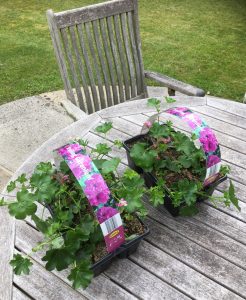
Out on the fairways for the first time in eight weeks! Suddenly everything feels different, though a five o’clock start and racing down empty roads to make six o’clock tee-off is normal fare for this time of the year.
Good to see some old faces, even at a distance. Though not everything is “normal”, there’s enough normality to make you feel as if this visit to the old normal was a dream from which you just woke up.
Then home by ten, to find a quietish house. In another room some way from where I am, my beloved is talking to a friend. Again, pretty normal.
After a nap I come down and see what’s hitting the fan around Twitter. Hah! A demo in Hyde Park. A florid-faced middle-aged man being escorted to a police van mouthing off as he goes. Hoaxes, 5G conspiracies, placards demanding freedom and police not wearing masks. A kind of corona group hug. Just the sort of event you need to spark off a second wave.
On to the newspapers, where I learn that at least 30% of corona victims suffer blood clots, which lead to thrombosis, embolisms, strokes, heart attacks and death. No shit, I say to myself. A good job I take a daily aspirin. Then I learn that normal blood-thinning treatment doesn’t work. Not good.
Then I read criticism of Hapless Hancock the Health Minister for saying that early in the outbreak the government put a protective ring around our care homes. Not true, it turns out. He’ll be on special measures soon enough. Or possibly promoted.
So up in the heavens and then down to earth again, all in the space of a few hours. Back in my own protective ring, there are geraniums freshly procured from the garden centre, a fish pie to be cooked and an evening of Italian subtitles, to be interrupted only by the avian evensong and an occasional squirrel trying to find a new way into the house.
New normal, much like the current normal, to be punctuated by a visit to the old normal at the golf course again on Monday.
Tomorrow, I’ll have a stab at thinking about what an economic recovery might look like. Not all as grim as we think, I suspect.
Until then, happy Saturday.

A new dawn awaits. On Saturday I will be out on the golf course for the first time in eight weeks. It will also be the first time I’ve driven my car since February. I normally play golf three days a week, and I shall start doing that again now that Boris says I can. Or doesn’t say I can’t.
My beloved expects me to be fibrillating with excitement at the prospect of my first real foray into the world outside our home beyond the regular walk around town. She’s a bit disappointed when I say I’m not, and that actually I haven’t really missed golf too much.
The reason I’m not jumping for joy is that I’m well on my way to becoming institutionalised. Lockdown with one other person in a largish house with a decent-sized garden under the sunny skies of the past couple of months has hardly been a penance. We’ve settled into a routine in which we give each other plenty of space. Plenty of us-time too.
There’s comfort in an ordered life that’s well-known to people who’ve been in hospitals, prison and boarding schools. I’ve experienced two out of three. The difference, of course, is that it’s our routine, not something imposed on us.
On typical day I’ll be up early browsing and writing, fortified by plenty of coffee, followed by breakfast mid-morning, daily chores, a book, a nap, a walk round town, more boring stuff, a cross-trainer session and dinner. Then a bit more browsing, a bit more writing, some telly, another book and sleep.
You may have noticed that we do without lunch. Two meals a day is our way of avoiding turning into pumpkins.
I make the odd phone call to friends and relatives. We say hello to our grandson every day. No tedious Zoom meetings because I have no reason to chat with 20 people all at once, thank God.
And that’s more or less that, unless we have a squirrel emergency or some other unscheduled event. It’s a bit like living in one of those well-appointed prisons where the Mafia used to hang out in Italy. Not very exciting, hardly worth writing about and certainly not worth complaining about.
Except that it’s only now that the routine is about to be broken that I realise how institutionalised I’ve become. The reason I have mixed feelings about breaking out is that I don’t feel anything has changed. Hundreds of people are still dying every day. The consequences of catching the virus are still potentially dire.
When the pandemic started, I resolved to write off this year. No foreign travel, largely housebound, largely isolated. I told myself that if that’s what it takes to have a decent chance of staying alive until there’s a vaccine or effective anti-viral drugs, then so be it.
I’m lucky. I don’t have an employer urging me back to work, asking me to risk infection in a bus, train or tube. I’m not worrying about running out of money, especially now when our only expenditure is on food and normal household bills. I feel almost guilty writing this when I know so many people are living through really stressful times – no money, no job, uncertain future.
Every day you read optimistic stuff about game changers. The latest is that an antibody test that appears to be 100% reliable has been approved for use in the UK. The Oxford vaccine seems to be doing well in trials. Great, so we’ll soon find out whether 5% or 50% of the population has been infected. And at some stage, many months ahead, maybe we’ll get the chance to have a jab that gives us immunity for a while.
All fine and dandy, except that in the meanwhile the virus is still out there, no less virulent and no less deadly than before. So if it hasn’t changed, why should I?
Then I say to myself: What the hell? You’re in your sixties. You could die at any time from a stoke or a heart attack. Maybe you have some cancer you don’t know about that will end up killing you. The older you get, the riskier life becomes. For God’s sake, you’ve been living with risk all your life. What’s different now?
And I reply yes, you may be right. Perhaps the difference is in the magnitude of the risk, or at least what appears to be the magnitude. Maybe if every day we were regaled with the horror of living after a stroke, hardly able to speak let alone lift a cup of coffee to our lips, or if we saw endless videos of people in the terminal stages of cancer, the stuff that we’re seeing and reading about the effects of the coronavirus would not seem so pitifully awful.
And then I see the sun coming up, the flowers blooming and some infernal machine doing its horticultural thing and deafening everyone within half a mile, Down the road our neighbours are strapping the brandy barrels on their St Bernards, and I say to myself this is not all about you. Remove your head from your backside and live your bloody life.
So I set about redesigning the government’s new slogans, and come up with:
It’s not over. Stay apart. Be sensible.
Or perhaps, on a more spiritual level:
Don’t be afraid. Love your neighbour. Love life
And with that, I toddle off to clean the golf clubs in readiness for my own little Great Escape.

Those of us who have watched our parents grow decrepit and die might, if we have nobody older then them left to lose, support the idea that the elderly have had their time, and that we shouldn’t worry if the coronavirus helps them on their way. This is not new thinking. Flu has long been called the old man’s friend.
It’s both arrogant and unthinking to take this view. If you have a parent who is lying in a care home curled up in an insensible ball of dementia, I can understand the desire to let nature take its course. Likewise if an elderly person – or someone of any age for that matter – is struggling with an intolerable condition that sucks all the joy out of life, then their wish not to be resuscitated should be respected.
But not everyone sails slowly through Shakespeare’s Seventh Age of Man, “second childhood and mere oblivion, sans teeth, sans eyes, sand taste sans everything”.
My father died at 81. He was sharp as a pin. Had he lived another ten years I’m sure he would have remained so. He would have continued to practice law, go to the theatre and devote much time to his arcane reading interests. As well as speak the German he learned at 60. He drew a short straw called acute myeloid leukaemia.
My mother, on the hand, soldiered on into her nineties. Her world slowly shrunk into the four walls of her room in her care home. When she went, a lifetime’s interests had died before her. She no longer recognised her children and lived from meal to meal.
But it doesn’t have to be this way. Which is why I absolutely adore watching interviews with older folks, especially those in their nineties and beyond. Captain Tom, the centenarian who was the focus for an effort that raised over £35 million for the NHS, is one example.
Then there was a lady in her nineties who featured in a documentary on the emergency room in one of the London hospitals. We discovered little about her life, except that her husband had died of dementia and her only daughter of breast cancer. She was, to use the cliché, fiercely independent. She was also as fluent and articulate as someone thirty years younger, yet she possessed the stoic reticence of someone who was not given to dwelling on life’s misfortunes, though she’d clearly seen a few.
And if you think that those who have reached a hundred are barely capable of stringing one sentence after another, there’s Owen Filer, who was first interviewed on ITV in January, and then in a follow-up during the current lockdown. If you haven’t seen the interview, I urge you to watch it.
I’m writing this in the middle of a huge row over the British government’s decision in March to send elderly people from hospitals to care homes without requiring them to be tested for COVID. In many of these care homes the staff were not provided with the necessary protective equipment. Many staff fell sick themselves, and many thousands of elderly residents have subsequently died of the disease.
My purpose is not to bash the Government. There are plenty of people, most notably Sir Kier Starmer, the new Leader of the Opposition, who are doing that far more effectively and with greater authority than I ever could.
I simply feel that we unfairly place this section of the population into a basket that we would never dare to use when thinking about other generations. “The elderly” are no less diverse than “the young”, the baby boomers, Gen X and all the other catch-all phrases we use to describe people of different age groups.
Some live in care homes, some live in their own houses, some are dependent, some play sports, tend gardens, write books, play music. Matathir Mohammed, a 95-year-old for goodness sake, was prime minister of Malaysia until this March.
Not all the elderly have the gift of wisdom any more than they had when they were young or middle-aged. Not all have nice, cuddly unthreatening personalities. Some are loved by their offspring, others loathed.
That’s because they’re individuals. Not an age group, not a demographic, not Conservative or Labour voters, rich or poor or just getting by. They may no longer be influential, except when politicians seek their votes every few years. They may be, to use that hateful phrase, “economically inactive”, in that they no longer work in offices, factories and fields.
But they are us, and we are them. They don’t have “Expiry Date” or “Best Before” written all over them. They’re just further down an uncertain track than the rest of us.
I don’t believe that old people automatically deserve our respect any more than people from any other generation. But those who are vulnerable, of any age, in a society that places a premium on quality of life, should be protected, not written off. Those who can look after themselves should be encouraged and helped to do so. We should not condescend to them, tell them how marvellous they are and treat them as oddities.
I love listening to old people not because they’re wonderful or special, but because they show me that individuality doesn’t end once we start drawing our old-age pensions.
The other day there was a story in the media about a Spanish woman of 105 who survived a coronavirus infection. She said that she was just an ordinary person, and she didn’t understand why she was getting so much attention. So there it is in a nutshell. The world thinks of her as a living miracle. She thinks of herself as just an individual.
Perhaps if we stopped shrugging our shoulders and taking the view that people whose voices have gone quiet no longer deserve to be thought of as individuals, we wouldn’t be in such a shameful mess as we are today.

Instant name recognition is a wondrous thing. How many politicians are universally known by their first names? Hillary, I suppose. But she didn’t win. And Enoch (Powell), whose name was mainly used since his career disintegrated by those who declaimed that “Enoch was right” when they talked about rivers of blood. Perhaps the last British Prime Minister to be instantly recognised as such was Winston.
And now, whether by accident or design, we have Boris. If you ask anyone in the country who our Prime Minister is, they’ll be able to tell you. It’s Boris. Which is a double-edged sword, because whereas Theresa May, David Cameron and Gordon Brown were relatively anonymous figures to many, everyone knows who Boris is. So for better or for worse, everyone knows who’s in charge and, by implication, who’s to blame when things go wrong. Now being a case in point.
Such is the confusion in the midst of this pandemic that the most frequent refrain I’ve heard over the past few days is “Boris says….”, which is used to justify each and every decision people are taking about how to behave from hereon. There’s even confusion about what we’re permitted to do and what we actually should do.
Perhaps we’d be better off summoning a council of religious scholars to advise us on such matters. They’re usually very good at pronouncing on all the minutiae of life about which we lost souls cry out for guidance. The trouble is, we’d have to wait several centuries for them to come up with a definitive set of rules, and even then we couldn’t be sure that they wouldn’t end up tearing out each other’s beards over the finer points of doctrine and dissolving into schismatic sects.
Instead, we follow the religion of science. We have bodies of scholars who advise the leader, just as the bishops guided the Emperor Constantine at the First Council of Nicaea. We have a government-appointed committee of scientists called SAGE, and now an unofficial SAGE, consisting of equally eminent scientists, who present a contrary view. We also have our voices in the wilderness, scantily-dressed heretics who wander round the country urging us to destroy 5G masts and gobble down chloroquinine, or those who think we should let the weak die off and the strong inherit the earth.
No wonder, like Constantine at Nicaea, Boris at Westminster is dazed and confused. And no wonder we, like lost sheep, cling to the idea that we have a sheepdog who knows best even if the evidence suggests to some that he’s leading us into a ravine.
Perhaps we intone “Boris Says” because some guidance is better than none, and we have less chance of being arrested if we use as our defence that we did what we did because we thought that was what Boris said.
Anyway, later this week I’m going to play golf with a friend because Boris said it was OK. No he didn’t, you might reply, he said you could only do it with a member of your household. Nonsense, I would reply, one of his Companions said that it was OK to play with one other person, and the rest of my household, ie my wife and our squirrels, wouldn’t be seen dead on the golf course. Besides, Boris was referring to the Greater Household. The Household of Humanity. God’s Household in fact.
Or I might say that he used the word household in the context of the time, which was three days ago. Things change fast. Nowadays, household means something different, and we can’t be stuck with a literal interpretation for all time.
OK, you might reply, don’t blame me if the police show up in a golf buggy demanding to see evidence that your opponent lives in the same house as you, and rewards you with a £100 fine if you can’t produce it. After which I would mutter to myself bloody hell, Boris hasn’t even departed yet, but they’re already taking his name in vain.
Or I might just wrap up the argument by declaring that actually he’s not the Prime Minister. He’s just a very naughty boy.
To which you would be quite within your rights to say just shut up and go and play golf, you silly old bugger.

I’m currently learning Italian. Not because we’re in lockdown and I’m running out of constructive things to do. Far from it. The list of tasks stretches long into the future. When I’ve finished, it will be time to revisit the first one. A bit like painting the Forth Bridge, you might say.
No, I’m learning Italian because it’s one of the most beautiful languages in the world. Not for nothing were Handel’s early operas in Italian, and the Imperial Court in Vienna was dominated by Italian composers until Mozart broke the mould by writing a German opera. Its long vowels are made for song. It’s a lover’s language. A language of light and shade, of passion and persuasion.
Actually, it’s perhaps fairer to say than I’m not so much learning it from scratch but revisiting it with intent. My first serious encounter was in 1969, when I travelled around Italy on my own. I didn’t have the funds, the courage nor the inclination to go backpacking to Kabul, Kathmandu and Calcutta. And besides, I’d just spent my school years studying Latin and Greek, so what better places to go before university than to Rome, Naples and Pompeii?
Since I was familiar with Latin, I didn’t think its successor would be too much of a problem. I got hold of an Italian grammar, learned some words and phrases, and away I went. Most of what I learned then I’ve forgotten, like much else besides. But a love of Italy and all things Italian has remained.
Since then I’ve visited many parts of the country. I’ve done business in Rome, Piedmont and Naples. And I’ve shown my family the wondrous ruins of Pompeii and Herculaneum. Our last visit was to Puglia. The next will probably be to Sicily.
But despite our frequent forays into Italy, through fiction, history and music as well as physical travel, I’ve never dipped further beneath the surface of the language, despite appreciating its beauty.
Now is the time.
Actually to say I’m learning it is somewhat Trumpian, though he would no doubt say he’s fluent already, coming from New York. Perhaps it would be better to say that I’m absorbing it. I was always amazed to meet people in the Middle East and Asia who would say that they’ve learned their English through watching TV. That would also be a very Trumpian thing to do, though I doubt he has the capacity to remember anything that doesn’t relate to him for more than five minutes.
Be that as it may, TV is helping me. My beloved and I are both addicted to foreign language TV dramas. Not just the Scandi stuff, but Belgian, French, German and, of course, Italian. We’re great fans of the Sicilian detective, Inspector Montalbano, about whom I’ve written before. My wife loves Gomorrah, a Camorra horror set in Naples. I don’t – too violent. Recently though, we’ve found a couple of series that we both enjoy.
The first is Non Uccidere (Thou Shalt Not Kill). It’s set in a gloomy, wintry Turin. The main character is the equally gloomy Valeria, a beautiful young police inspector who has good reason to be miserable. Her mum was jailed for killing her dad, who turns out not to have been her dad. After a decade in jail, mum is released, only to be murdered herself. Understandably, Valeria hits the Prozac.
The family saga runs through the series, though, being a brilliant detective, she still manages to solve a number of murders while struggling to keep herself together. The series is suffused with a melancholy that I don’t normally associate with Italy, but which surely chimes with feelings in the region at the moment, as it struggles with the coronavirus outbreak.
Then there’s a very different bowl of olives. Mafia Only Kills in Summer is a black comedy set in Palermo, close to Montalbano’s Sicilian stamping ground. But whereas the Mafia lurks in the background in the Inspector’s Vigata, in this series, as the title suggests, it’s centre stage.
It’s the late Seventies. Salvatore, the narrator, is a pre-teen member of a small family – eccentric dad, ambitious mum whose heart is set on getting a job for life in teaching and sister whose teenage love affairs nearly consume her. The boy watches as dad, who’s a mid-ranking civil servant, does his utmost to avoid the clutches of the Mafia and mum battles furiously with the corrupt bureaucracy that denies her rightful tenancy.
Meanwhile Tore battles with his schoolmates for the affections of Alice, the femme fatale of Year Six.
The whole thing, despite the serious subject of the Mafia and its hold on Palermo, is as sweet and light as Thou Shalt Not Kill is gloomy. Like Montalbano, the narrative is rich in humour. Despite their comic pretensions, the character never lose their dignity. It’s a joy.
While watching these series, I find the subtitles merging with the language itself. Whether I’m really picking up more – other than familiar words and phrases – without the aid of translation I’m not sure. But I definitely feel the water wings slowly deflating as I learn to swim again in this gorgeous language.
I’m not sure of the precise way forward, whether through books, online tutorials or even finding people to talk to on Skype. But I’m hoping my new project will outlast the virus. More than anything I want to be able to revisit a country that’s close to my heart. The more I can speak the language, the greater will be the joy.
I suspect that our forays further afield will have to wait for a while, but when Italy’s ready, we will be too.

The BBC is very cruel. On Saturday, the night before Boris Johnson’s address to the nation, it chose to screen The Darkest Hour. I happened upon the last thirty minutes of the movie, in which Gary Oldman’s Winston Churchill struggles to hold himself and the country together during the fall of France.
Mussolini has offered to mediate a peace deal with Hitler. Leading members of the War Cabinet persuade him to accept Il Duce’s offer. Winston, barely coherent, agrees that they should draft a response.
There follows a dark night of depression, in which Clemmie, his wife, tries to boost his spirits and the King, who arrives unexpectedly, succeeds. The next morning, on his way to Parliament, he escapes from his car, hops on to the Tube and asks his fellow passengers if they think he should give in to Hitler. Never, comes the resounding response.
Duly strengthened by the will of the people (at least those in one carriage of the Metropolitan Line), he marches into the House of Commons with the speed of an Olympic walker. He addresses a group of MPs with a blood-curdling speech in which he vows to die choking on his own blood fighting the Nazi invaders. He walks into the War Cabinet meeting, tears up the letter to Mussolini and stalks off to address the House, his opponents trailing in his wake and muttering about a vote of no confidence.
He then delivers his “We Shall Fight Them on the Beaches” speech to a rapturous reception. As the armada of little boats makes its way towards Dunkirk, the film ends.
For me the most telling line in the movie comes at the end. With order papers cascading to the floor of the House, Halifax, Winston’s main rival and proponent of the peace talks, is asked “what just happened?”. He replies “he just mobilised the English language – and sent it into battle.”
It’s stirring stuff, even if Winston never actually came anywhere near a tube train at the time.
And now, alas poor Boris, struggling in the footsteps of a giant he adores. No Empire to come to his aid. No visible enemy at the gates. No fleet to protect our shores. A worthy successor to Mussolini in the White House. No packed House of Commons to rally and rouse. Just baby steps and new slogans that appear to have been written by committee.
Alas also for the English language. The soaring rhetoric of Churchill replaced by a recitation of rules that might have excited a convention of council librarians, but is unlikely to have inspired a nation whose resolve is crumbling amidst mixed messages and unchallenged outbreaks of civil disobedience.
Unfair of course. They don’t make ‘em like Winston any more. Nowadays, anyone attempting to sway an audience with Churchillian rhetoric is likely to be laughed off as a pompous buffoon.
The most effective political language today is delivered in simple staccato bursts. It’s fashioned for short attention spans. When the politician delivering it goes off script, often enough they collapse into incoherence. The ability to think on one’s feet seems to have atrophied as steadily as education standards have risen beyond the preserve of the elite.
So instead of blood sweat and tears, we’re faced with R-numbers, conditional measures, stay alert and control the virus. Even a former journalist like Boris, who delights in florid phrases, looks like Gulliver pinned to the ground by an army of bureaucrats and advisers who argue about every phrase, every nuance.
Margaret Thatcher’s best efforts at Churchillian style fell flat when, after one of her election wins, she intoned “Where there is discord, may we bring harmony; where there is error, may we bring truth; where there is doubt, may we bring faith, and where there is despair, may we bring hope.” Unfortunately she spoke in the monotone of a schoolgirl who had stayed up all night to learn her lines in a poetry competition.
In 2020, she might have said “Where there’s a virus, may we bring vaccines; where there’s a lockdown, may we bring cybersex; where there’s testing, may we bring targets, and where there is Italy, may we bring South Korea.” On second thoughts, that wouldn’t work either, not even from the mouth of Winston.
So now we have a choice. Across the Atlantic we can listen to Donald Trump whining away about American Carnage and Make America Great Again. Over here we have Take Back Control, Get Brexit Done and Save the NHS, and Boris Johnson addressing the nation with all the authority of a puppy that has just pissed on the floor.
On the other hand, we can still rejoice in novels, films, poetry and plays that remind us what the English language is really about.
Alongside writers such as Hilary Mantel, Lee Child, Seamus Heaney, Jonathan Franzen, Susan Sontag, Armando Iannuci, Tom Holland and Jez Butterworth, poor Boris, desperate Donald and their armies of semi-coherent acolytes don’t stand a chance.
Advance Britannia, God Bless America and all the other English-speaking nations! There’s still hope for our beloved mother tongue.

A new threat seems to have reared its ugly head. I’m now quivering with terror at the prospect of being cornered by a swarm of savage hornets from, you guessed it, Asia. What did we do to Asia to deserve this? Lots, as it happens, but we won’t go into that right now.
Just as the virus has caught us in a pincer movement, going west across Europe to the UK, the other way to America and then all over the place, it seems that the Asian Giant Hornet, now known to the world as the murder hornet because of it’s liking for decapitating and then devouring bees, is following the same path.
One of these delightful creatures showed up on the south coast of Britain last year, and now it seems that it’s arrived on the Pacific coast of the US. It took the American genius for hyperbole for it to acquire its colourful new name. So now President Trump now has another reason to blame China for something. If it’s Asia, it must be China, right?
Blame or otherwise, he would be right to be worried. After all, the murder hornet is a threat to European and American honey bee species. If we lose the bees, crops go unpollinated and we starve. No matter that the bees are already in serious decline because they’re being killed by pesticides, this could be the coup de grace.
Aside from the danger to bees, their stings are so venomous that if we get stung enough times, we can die.
So how long do we have to wait before the conspiracy theories start going viral? It’s been genetically modified in a lab somewhere in China and sent to the West to weaken our economies and put us further in thrall to President Xi. And how long before that theory comes to the attention of President Trump, who casually airs it in a press conference?
Yes, the murder hornet is a nasty piece of work. But before Mr Trump goes to DEFCON 1 and aims his nukes at Beijing, he should understand that he’s going to have to nuke most of the countries in South-East Asia in the process. It’s all over the region. We’ve seen them in Thailand, Cambodia and Vietnam.
Like other species of wasp, they’re not out to get you. It’s the bees they’re after. Despite their fearsome reputation as bee killers, native bees have learned to live with them by evolving defences. Other bee species are more vulnerable, so we have reason to be concerned.
What to do about them?
Destroy their nests, basically, if you can find them. Years ago in our untrammelled youth, my elder brother and I did some experimentation on zapping wasp nests. We prepared a bomb out of a bit aluminium piping and blew up a nest in our rockery. Since we nearly decapitated our mother and a friend as they were taking tea by the swimming pool, we weren’t encouraged to move on to Nagasaki, so to speak. There wasn’t much left of the nest, though, let alone the rockery.
So I was heartened to see some boys in Raleigh, North Carolina gathering for a quick snack at Subway before they went off to demonstrate over the right to go out and hunt hornet nests. Their weaponry was clearly more sophisticated than ours. The guy with the really big gun definitely knows how to terminate hornets with extreme prejudice. The bazooka might also come in handy.
There seems to have been plenty of research into more subtle ways of eliminating the murder hornet, as witness a video I saw of a preying mantis devouring one. It’s too gross to show, but it’s fascinating to see how the victim continues to struggle even after its head has been eaten off.
Though they’re clearly effective at mandible-to-mandible combat, I suspect that training armies of preying mantises to go after hornets might have unintended consequences, as they would probably polish off every other insect in their paths, including ones we don’t want them to eat, such as bees.
Now that the public is fully aware through the social media of the hornet’s murderous habits, no doubt our leaders will find a way to beat back this latest threat. For Messrs Trump and Johnson, victories are hard to find at the moment. Every little win will help.
After spending a bit of time reading about these scary insects, I began to feel rather sorry for them. After all they’re just doing what comes naturally. I’m sure they have redeeming features, and anyway, who said that humans should have a monopoly on genocide?

The VE Day celebrations have been a welcome distraction for many of us in Britain. We’ve been busy looking back with a mixture of sadness and nostalgia back to an event that took place seventy-five years ago. The media has been interviewing veterans. Videos of school kids singing “We’ll Meet Again” are circulating. Across the country there’s been an abundance of flag-waving and socially distant street parties.
More than on any other day, in the streets and park near me I’ve noticed what you could describe as a quiet rebellion against the lockdown. There have been cars pulled up outside houses, presumably for discreet visits, and groups of people sunbathing in the park. So much for self-isolation and thirty minutes of exercise.
This leads me to think that with a population of sixty six million it would be very hard for the police to enforce the regulations if a sizeable slice of that population decided that enough is enough. Even an authoritarian state with armed police finds it hard to control a popular surge of civil disobedience.
My own limited experience of such an event came in 2011, when I was living in Bahrain. As the Arab Spring was in full tilt, demonstrators gathered at a major roundabout to protest against social and political inequity perpetuated by the regime. It quickly turned ugly. Police fired on some demonstrators nearby. Some died.
From then on what had started as a non-sectarian protest quickly turned on to a full-on campaign of civil disobedience by the Shia majority of the population against the Sunni minority – and specifically members of the royal family – that controlled the wealth and the political power in the country. For a while there was a stand-off as protesters went into permanent occupation of the Pearl Roundabout.
A Bahraini friend took me to the encampment. Each Shia village had its own tents, with cooks handing out free food. There was a clinic, exhibitions of pictures showing the unequal wealth distribution. Next to them, autopsy photos of the bodies of demonstrators who had been shot. In the middle of the roundabout was a stage, where people read poetry, performed makeshift plays and delivered political speeches. It was rather like a political Glastonbury.
It all ended one morning when a Saudi detachment of its National Guard came across the causeway between the two countries and assisted in the clearance of roundabout, guns at the ready to shoot anyone who resisted.
Bahrain is a small island. Much of the violence took place while we were listening from our apartment balcony two miles away. We could hear gunfire and ambulance sirens. Outside the apartment, funeral marches snaked through the streets.
For weeks afterwards we crossed patches of scorched tarmac on the main highways. In some areas you could see burning tyres as local protests continued.
Bahrain is a tiny country compared with Britain and America. Yet living though its period of turbulence showed me how quickly normal becomes abnormal. Nine years on, you could argue that both in both in the UK and the US the equality gap is wider than that in Bahrain at that time, even if the social fault lines are not based on religious belief.
We are now living though our own version of abnormal. In Britain, our little acts of civil disobedience are modest and barely noticeable. In America they’re more open and aggressive, as groups protest at the lockdown regulations and individuals gather in large numbers as if no regulations were in place.
The social discipline that largely held together during World War 2 did so because the threat was clear and visible. Also there was no dissent in the media, be it radio, newspapers or public information films. By and large, the people believed the government and supported the war effort, even if there were grumbles about the fairness of measures such as food rationing.
Things are vastly different in our new period of abnormal. Despite the efforts of the government and its sympathisers in the media to keep us on message, I sense that the barrage of off-message information we receive via the social media and public figures with axes to grind is beginning to fracture what started as widespread support for the lockdown.
If we get to the point where we don’t believe the science that the government is feeding us because we have seen other views that we think more credible, then public obedience is bound to fray. Also if we think the regulations defy common sense, we are more likely to follow our instincts rather than the government’s exhortations.
For example, is there a reason why we can buy plants in a DIY shop and not in a garden centre? Is there a reason why (as I mentioned yesterday) we can’t play golf, a sedate game that naturally lends itself to social distancing, yet we have to run for cover on our roads when a sweating jogger races past us? Is there a reason why we can’t entertain family members who aren’t living with us, so long as they stay in the garden and keep the prescribed distance from us, when family members get together in parks?
Equally, when the lockdown eases, will we be allowed to crowd on to tubes, trains and buses because it’s safe to do so, or is the government giving in to the lobby that believes in saving the economy more than saving lives?
Boris Johnson and his crew, being electioneers at heart, will know when he’s losing the public because opinion polls and focus groups will tell him so. If the government is to avoid further erosion of confidence, it will need to improve its communications. You can sloganize a lockdown fairly easily because the message is simple and uncompromising. But when we’re looking at more subtle gradations of freedom, it will become harder to encapsulate the new message in equally simple terms.
It will also need to come clean about its shortcomings, rather than give the impression that it’s constantly attempting to cover up for past mistakes and current problems. Though we’re only halfway up the Trump scale of obfuscation, getting public admissions of failure is like forcing blood out of a stone.
For some onlookers, the charade over the “100,000 tests a day by the end of April” may turn out to be the last straw, not because of the childish deceit in counting tests that had been sent but not carried out, but because of the limitations of the testing programme itself. It’s one thing having a stated capacity to test 100,000 people a day, but quite another matter if some of those tested have to wait for ten days to hear the result.
Nine years on, Bahrain still lives with the memory and, for some, the consequences of the unrest. There are still prisoners in jail for their part, real or perceived, in the events of 2011. All of us who survive this pandemic will have vivid memories of the experience. Many, like the survivors of 1939-1945, will know people who don’t make it through. What’s yet to be seen is whether Boris Johnson and Donald Trump allow their countries to slide into patches of anarchy because of incompetence, complacency or just bad luck.
Wherever we are on the curve, the next six months should provide the answer.

A bit of special pleading here.
Please, please Boris, let me play golf again. I know Eton is not renowned for its star golfers, even though Bertie Wooster was partial to the odd foray onto the fairways. I also know you might be worried that those whom you think of as the lower classes, and whom you spent so much time and effort wooing in December, will resent a load of crusty old gammons being able to hit a white ball around wide open spaces when everyone else only has shit-strewn parks and grubby pavements on which to exercise their dogs.
But believe me, it’s not only gammons who play golf. I play with all sorts: builders, taxi drivers, electricians, lawyers, retired colonels, hot tub salespeople, clergymen, gravediggers and bog-snorkellers. No Old Etonians. Sorry.
If you’re worried that people might think it unfair that I’m allowed to traipse around a golf course while others are not permitted to spend a few hours sunbathing in parks, let them play croquet, petanque and bowls. Let them practice their knife-throwing, or do socially-distanced yoga classes and other outside activities that don’t involve people slobbering all over each other. In fact, if they can’t be arsed to exercise, let them eat cake.
We won’t infect anyone, honest. Where I play, we had a trial run of corona-golf just before the lockdown. The clubhouse was closed, you picked up your scorecard from a desk, you went straight out to the course with no prior congregation. There was no rakes in the bunkers and the flag-sticks were fixed in the holes so you didn’t need to remove them to retrieve your ball.
The only chance of catching the virus was if one of the players got a coughing fit and died on the spot, in which case the instruction was to leave them where they were until the paramedics arrived. Anyone hitting their ball near a corpse was allowed to drop the ball elsewhere without penalty.
With all these measures, we had a COVID-safe environment. This will continue if you let us out. We promise not to shake hands, not to do high fives and not to touch each other’s balls, so to speak. And definitely not to have discreet assignations with dog-walkers in the rhododendrons near the seventh tee.
We’ll wear face masks if you ask us nicely. Our hearts will be lifted as we commune with the birds, the bees, the foxes and the crocodiles. The oldies will get decent bouts of exercise that will keep them out of care homes. Nobody who goes out to play golf will feel the urge any longer to kick their dog, send their cat into orbit or speak ill of their spouse, at least not in the latter’s presence.
Besides, you owe us. The vast majority of members of my club voted for your infernal Brexit and then for your party last December. Not me on either occasion, but I’m still looking out for all those old codgers who knew not what they did. And if Nigel Farage is allowed to stand for hours in the cliffs of Dover watching out for boatloads of illegal immigrants, do you really want my lot to join him for a little afternoon entertainment? Surely the last thing you want is videos of police vans filled with elderly insurgents all over News at Ten.
I know golfers who are fed up playing online bridge, who never want to talk on Zoom to their simpering children again. They’re driving their neighbours to distraction by peppering them with golf balls miscued over garden hedges. They’re ripping up their lawns as their muscle memories fade and their chip shots become ever more inept. Their long-suffering spouses are on the verge of banishing them to the outer darkness because they’re frustrated at the sight of them as they waddle like basking walruses from dinner table to armchair and settle in for endless afternoons watching re-runs of The Masters.
So if you’re really planning to let us live a little, bear in mind that there are many people who don’t want to go to the hairdressers, go clothes shopping, climb Ben Nevis or sit on pavements at socially-distanced tables getting pissed.
We just want to hit a stupid white ball into a few gorse bushes. Not too much to ask, surely. I’ll never vote for you, especially after the mess you and your lot have made of the last three months. But at least you can go some way towards redeeming yourself by applying a touch of much-needed common sense.
If the po-faced Science permits, of course, because we crusty old gammons are the last people to want to rock the boat. Aren’t we?
 59steps
