
If I sound less than enthusiastic about today’s VE Day celebrations, it’s perhaps because so many of the generation that experienced the end of the Second World War are currently languishing in care homes, or are dropping like flies because we have failed to look out for them.
I know nobody who is more interested in that conflict than I am. I have read many books and spoken to many people on the subject. But it’s not my experience and I find it hard to share in the outbreak of nostalgia.
I don’t want to stop people celebrating. After all, we have little enough to cheer about at the moment
But to an extent I share the perspective of a friend, Andrew Morton, who posted this on Facebook:
For me, this VE Day is going into Room 101. WW2 was a very nasty scrap and there are many lessons to be learnt for those who care to get a proper historical perspective. The problem is that it has all become massively mythologised – by the Russians, Germans. French, Americans, Polish but most of all, and probably worst of all, by the British, and the British establishment at that. Or should I say “Great British”. My dad played an active part, and many of my older relatives were involved, fought and died, in both wars. However, I’m sure their version was not the Boris Johnson, Mark Francois, flag-waving Vera Lynn fest that is being foisted on us all. It is a sad fact about the British that, apart from the 66 World Cup, they have so little to celebrate that they have to delve 75 years into a past that 90% of them never experienced to feel good about themselves. Anyway, count me out.
Like Andrew, I have relatives who fought and died in both wars. Both my parent were in uniform. I’ve posted several extracts of my grandfather’s diary from the Western Front in the First World War. We should remember those who died and be happy for those who survived.
I don’t take such a negative view of my country and its post-war achievements as my friend. We should reflect, though, that many of our achievements have been those of individuals – scientists, engineers, musicians and writers – rather than the result of what you could call national effort.
Whatever we have become over the past seventy-five years, today should not be a day for flag-waving, socially-distant tea parties and old songs.
It should be one of solemn commemoration. By all means we should wheel out the Spitfires, gather by the war memorials and observe the one-minute silence.
But this is no time for jollity.
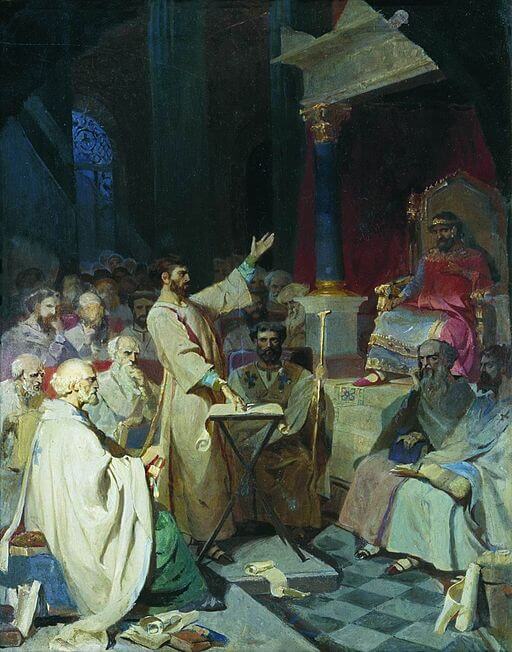
Yesterday, in Would you let a dancing bear mind your sheep? I suggested that one of the reasons for the delay in the British government’s taking action to deal with the coronavirus was that its main skills are in winning elections rather than governing the country that elected it. But that’s only part of the story. The brouhaha over Professor Neil Ferguson is another.
I can see both sides of the argument over whether Ferguson should or should not have been allowed to resign from SAGE, the British government’s advisory committee over his breaking of the lockdown rules.
On the one hand, he’s a valuable contributor to the scientific effort to defeat the coronavirus. To let him go without a warning or a reprimand is a self-defeating act at a time of national crisis.
On the other hand, he of all people, given that his model predicted dire consequences unless the government imposed the lockdown, should have set an example. Therefore he’s guilty of unpardonable hypocrisy.
Yet beneath the simple question of expediency versus morality, it seems to me that there’s something rather grubby going on. At best, grubby, at worst, tending towards deep-stateish.
To deal with the grubby first. Why is it relevant to the debate on his indiscretion that his visitor happened to be female. Not just female, but his “married lover”? Would the reaction have been the same if The Telegraph, the paper that broke the story, had simply reported that he had a visitor?
If the person visiting him had been his mum, his therapist, his sister or a minister of the church giving him spiritual sustenance, would he have been fired, or even outed in the first place?
If the answer is probably not, then we’re dealing with a common-or-garden sex scandal, the kind of story the Telegraph normally leaves to Rupert Murdoch’s tabloids. Or, to put it in Sun-speak, it’s the sex wot did for him.
Then it gets darker. According to a number of sources, the Telegraph had the story some time ago. The indiscretion happened in March. Why did it wait until now to out the professor? Why did it out him at all? Surely a quiet word from Boris Johnson to the publisher of the newspaper, citing the national interest and so forth, would have killed the story. And don’t tell me that the government didn’t know what was about to break.
Further, why did the Telegraph follow up with a report casting doubt over the efficacy of his model? Is this new news, or did they deliberately save it until the week in which the government is preparing a plan for easing the lockdown? The Telegraph’s article is paywalled, so here’s a Daily Mail piece that references it and summarises the argument.
At this point you could start trotting out the investigating reporter’s clichés: follow the money, and cui bono?
If you’re a deep-statist, you might leap to the conclusion that the Telegraph was acting at the behest of the substantial group of lobbyists, donors and politicians who want the lockdown to end because they’re terrified of the impact on their personal finances. Or if you were of a less dark disposition, you may think that these same people are public-spirited citizens who fear for the country’s economic future if the current restrictions are allowed to continue.
By squashing Professor Ferguson, and then using other professors to trash his reputation, you cast doubt on the whole premise of the lockdown, and damage the credibility of the government in the process (as if its credibility isn’t damaged enough already).
Alternatively, did the government, prompted by shadowy figures unknown to us, acquiesce in Ferguson’s outing because it knew his model was flawed, and his misstep gave them an opportunity to get rid of him without having to admit it screwed up by taking his advice in the first place?
Very nasty stuff, and a juicy conspiracy theory in the making, especially if the lockdown is eased, thousands more people die in a second wave, and we’re looking around for people to blame.
Then, while digging around trying to find out more about the flaws in the good professors’ model, I happened on a conversation that sent me temporarily insane. It was on a website called Lockdown Sceptics. I immediately sensed that I was straying into a room full of Martians, somewhere in which – due to my ignorance of the subject – I had no place.
But I read on anyway. The conversation began with a software engineer who used to work for Google comprehensively trashing the Imperial College software. It was old, not fit for purpose, full of bugs and written by amateurs. It was followed by others who supported her opinion, and yet more people who disagreed. Most of them preceded their input by rising up to their full online height and stating their credentials, as in “I have thirty years’ experience of writing software etc etc”.
Try this for size as an example of the content:
“Stochastic” is just a scientific-sounding word for “random”. That’s not a problem if the randomness is intentional pseudo-randomness, i.e. the randomness is derived from a starting “seed” which is iterated to produce the random numbers. Such randomness is often used in Monte Carlo techniques. It’s safe because the seed can be recorded and the same (pseudo-)random numbers produced from it in future. Any kid who’s played Minecraft is familiar with pseudo-randomness because Minecraft gives you the seeds it uses to generate the random worlds, so by sharing seeds you can share worlds.
It reminded me (and forgive me if you’ve heard this analogy from me before) of the interminable arguments in the early centuries of Christianity over the nature of Christ’s divinity. It was said that in the equivalent of pubs in Constantinople, fights would break out between ordinary people over the meaning of the Holy Trinity.
I’m not sure that ordinary people like me are likely to start throwing lattes over each other in Starbucks over stochastic models. But a dive into that website took me into a deep hole of specialist opinion that left me none the wiser, and, had they been available, would have required a couple of prozacs for me to escape with my sanity after delving any further.
The point of this diversion is that if I, a classicist by education, struggle to understand a tenth of what these people are saying, what are the chances that Boris Johnson, also a classicist, but unlike me caught in the middle of a shitstorm, had any option other than to rely on what his scientists were telling him in plain English?
Which opens up an alternative to a conspiracy theory – that the whole episode was just one in a series of cock-ups.
Given that the scientists all had their own interpretations of what was going on, was the problem that Boris and his political advisers had to choose between one interpretation and possibly several others, and chose the “wrong” one?
Further, did the Telegraph out Ferguson for the usual reasons: it’s a newspaper struggling to sell its product and grasping any opportunity to maximise its subscriber base?
And finally, when we look back at this whole mess, will we conclude that one of the main reasons why we got here is because something, to quote the movie title, was lost in translation?
Only time will tell.
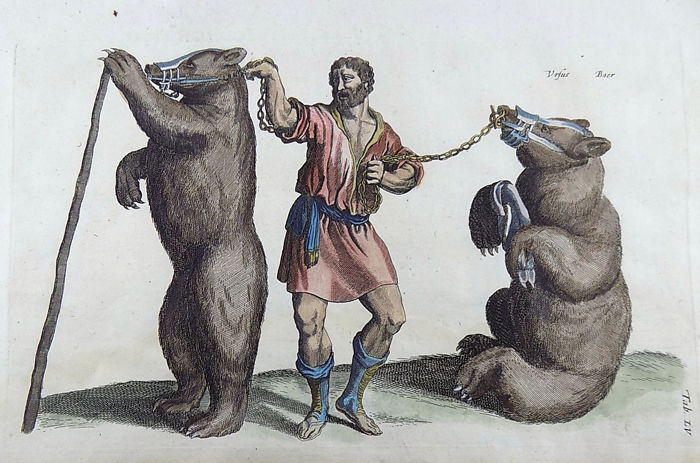
Forgive me if I throw a theory out there that has already occurred to those with more sophisticated political instincts than mine. But it’s what everybody else seems to be doing, so why not me?
When we look back on the reasons why the two world leaders in COVID deaths failed to act quickly enough to suppress their outbreaks, one of the main causes will be that both in the UK and the US, perceived opinion mattered more than science.
The United States is perpetually in election mode. Nothing new there, except that two things have amplified the focus on elections.
First, it has a president obsessed more than any other about what he calls ratings. Since there is an election of critical importance every other year – be it the mid-terms or the general election – Trump never stops campaigning. It is his highest priority. Therefore he pays attention to opinion polls and those who influence opinion before all else.
Second, through the social media and the TV networks, the population has been focused on elections and election data more than ever before. Forecasters like Nate Silver, who accurately predicted the outcome of the 2008 and 2012 elections, have become gurus. The media fed Trump. Trump fed them.
It wasn’t just Trump. When hard decisions needed to be made on social measures to contain the virus, every politician with what Nassim Taleb calls skin in the game – including the president and all the governors, senators and house representatives who are up for election this year – asked themselves how their decisions would play in November.
You wouldn’t want to jump into a swimming pool if you’re not sure it’s full of water. At worst you injure yourself, at best you make yourself look like an idiot. In February and early March, as far as Trump and Johnson were concerned, lockdown was that swimming pool.
It’s still going on. Many state governors, with honourable exceptions, are playing a game of chicken. Who dares to reverse the lockdown, and to what extent? Pay lip service to science and give full attention to public opinion. Politics comes before science, unless you can find some science that suits your purpose. I may be wrong, but it seems to me that the thinking is not economy first, but election first.
Now let’s look at the UK. It’s not quite the same story, because we’ve just had an election and we don’t have a head of government who spends hours every day watching opinion-formers on networks and cable TV, glowering at twitter feeds and spinning every positive opinion poll that comes his way. Boris Johnson is not a mini-Trump, though he shares some of the president communications liking for bluster and hyperbole.
But we do have a government that has come into being after a critical referendum and two general elections in the four years. A government to whom the opinions of the opinion-shapers seem to matter more than the facts on the ground. For whom facts are there to be ignored, distorted and re-interpreted. In other words, it’s a government that may be assured of another four years in power, yet is still in election mode. Those who helped to win the last election – campaign managers, political advisers – are still at centre stage.
You only have to look at the use of slogans in the government communications on COVID to know that. Those who brought you “Take Back Control” are now telling you to “Stay at Home, Protect the NHS, Save Lives”. Slick, succinct and memorable.
Call me a cynic, but I suspect that the government’s electioneering muscle memory contributed as much to the initial hesitation as did what it calls “the science”.
In both cases – the US and the UK – you have to ask the same question: are the skills required to win elections the same as those required to govern effectively? Doing and saying what’s necessary to be liked, versus doing stuff you think necessary regardless of the effect on your popularity?
Of course not. The best leaders and governments manage both. Some, such as Gordon Brown in the UK with his management of the 2008 financial crisis, managed one but not both. Whether Donald Trump manages both, one or neither remains to be seen. History will judge his executive decisions. As for his ability to win elections, we will know more after November.
In countries that are bitterly divided and have huge constituencies of discontent, the temptation is always to go down the route least unpopular among those who shout loudest, especially if governments rely on the opinions of those who are tried and tested in winning elections rather than those who are capable of making and implementing effective policy decisions, however difficult and however unpopular.
Dancing bears don’t easily turn into sheep dogs. Whatever structural difficulties both countries faced in the first few months of this year, I suspect we’ll end up pointing at the dancing bears when we look back at the hard times we’re enduring today.

Two diary entries today. This one on a personal note. A bit later, you guessed it, back to politics.
Yesterday I had a George W Bush moment. You might remember the scene after the invasion of Iraq when Dubya lands on an aircraft carrier and, decked out in a flying suit, announces “Mission Accomplished”. We all know what happened afterwards.
If you’re a regular reader of this blog, you will know that over the past few months we’ve been fighting a losing battle against squirrels that have made a temporary home in our loft.
We’ve tried many stratagems to get them to leave and thereby spare us from being woken up by scratching in our bedroom ceiling at two in the morning or at other equally inconvenient times.
In this time of plague, it’s hard to find anyone prepared to come over, seal the eaves, plant landmines on the rafters or sell us a ghetto-blaster with movement-activated Led Zeppelin tracks.
As I mentioned before, I’ve been tempted to buy an air rifle. But up to now we’ve resorted to non-lethal methods of persuading the squirrels to go forth and multiply elsewhere. They include external and internal ultrasound rodent repellants and an infrared camera intended to help us understand our enemy more clearly. Not to mention my wife banging on the ceiling and screaming Celtic curses at them whenever she hears a noise (apart from at two in the morning of course)
All efforts failed until we installed the camera. In itself it was useless. We thought we were installing the equivalent of military-grade night vision goggles (too many episodes of Homeland I guess). But what we got was a foggy darkness in which nothing could be seen other than a few grey smudges which were not moving, so they couldn’t have been squirrels. In retrospect, what more should you expect for twenty-five quid?
So we decided to put a light up there. It’s not a usable space, so we didn’t have one before. We’ve left it on day and night for the past three days.
And breakthrough. Not a sound of little feet scampering back and forth. No scratching. No nothing.
From which we concluded that these are vampire squirrels. They don’t like the light. Could it be that we’d accidentally stumbled on the ultimate deterrent? If so, it would have been surprising that it was something as simple as a light bulb.
But then, as I’ve also mentioned before, my little town was wiped out by the Martians in HG Wells’ War of the Worlds. And was it not the introduction of the common cold – a coronavirus – that sent the invaders and their lethal handling machines crashing to the ground?
So perhaps the fact that accidental discoveries led to defeat of squirrels and Martians might point the way towards an end of our current battle with COVID-19? Unlikely, but you never know.
Alas, as Dubya also discovered, my moment of triumph was premature. The bastards are back. Presumably this is the second wave.

Since lockdown took over our lives we’ve taken to using a new measurement of time: how long it takes to get from one episode of Homeland to the next. Nominally it’s a week, yet despite the acres of unstructured time stretching in front of us, the next episode has always seemed imminent.
Homeland Time is faster than a normal week not because we’re desperate to see what disasters befall Carrie Mathison next Sunday, but because so much seems to be happening in between that we forget about her until she’s ready to go manic on us again. Time is really flying, in this household at least.
Now we have to find a new unit. Homeland is no more. Carrie’s chin has wobbled its last. At this point, on the advice of a friend who is planning to binge watch the entire series, I should issue a Spoiler Alert, although I’m revealing no details of the final episode.
In the final series, peace with the Taliban, brokered by Saul Berenson, Carrie’s grizzled CIA mentor, is about to break out. Carrie returns from the fray after a few months in the nuthouse recovering from her Russian imprisonment. Saul sends her to Kabul, where the local CIA boss gives her a less than enthusiastic reception because he thinks she’s now a Russian agent. Her Russian tormenter, GRU officer Yevgeny Gromov, turns up and sends her wobbly again.
The US president arrives in Afghanistan to sign the Taliban deal. His helicopter goes down, killing him and the Afghan president. All hell breaks loose, with Carrie, naturellement, in the middle of the chaos. Before you know it, the US is ready to go to war with Pakistan, which brandishes its nukes in response. Only Carrie can ward off World War Three by finding the flight recorder and proving that the president’s helicopter wasn’t shot down. She finds it, but Gromov steals it, and uses it to prise out the identity of a long-time US spy in the heart of the Kremlin.
I only joined Homeland in the series that ended with Damian Lewis swinging on a rope in Tehran. Since then I’ve been hooked. I know it’s not cool. I doubt if the Queen watches it, and probably not David Hockney. Some of the plot lines are a tad tenuous, and Carrie’s bipolar episodes take centre stage in every series except, interestingly, the last, which is better for the lack of them. You know a wobbly chin moment is coming way before it arrives.
And yet there’s a nobility in some of the characters, Carrie included, that keeps you watching for fear that they might fall off their perches. Which mostly they do. And there’s that magical moral ambiguity you so often find in the best spy stories. The goodies are flawed. The baddies are capable of redemption. Even Haqqani, the Taliban leader responsible for so many American deaths, with whom Saul negotiates the peace deal, acquires an almost Mandela-like aura before he too meets his maker.
Homeland also has the magical ability to build a parallel universe that reflects stuff going on in the real world at or around the time of transmission. In the final example, the Taliban deal came together just as Trump’s negotiators were wrapping up an agreement with the real McCoy.
Where Claire Danes and her fellow-producers fell down in the latter series was in not imagining that a jackass like Trump could be elected president. They do go some way down the road as the dead president’s weak successor falls under the influence of a jackass adviser. But they can be forgiven for not casting the main man as a raving nutcase. Scenes featuring a fictional president musing in public over the injection of disinfectants to treat a deadly virus would have been a scenario too far for the Homeland team.
Never mind. If you can cast the real world aside (would Carrie really be allowed out on bail after being accused of assassinating the president?) and if you can ride with the patriotic overtones that flow through the lifeblood of the show, Homeland has been compelling drama. It’s created a new market for domestic defibrillators and plucks the heartstrings every time a protagonist hits the dirt.
Has the show really come to an end? The the final episode left plenty of opportunities to build on for a new series. Perhaps China should come into the reckoning. Although it’s a bit late for her to save America from a pathogen cooked up in a lab, it shouldn’t be difficult to craft a juicy crisis in the South China Sea for Carrie to be pitched into.
Who knows? Since the pandemic has probably left Hollywood short of a dollar or two, perhaps it’ll be considering hoiking one of its most successful products out of retirement.
Whether or not we’ve seen the last of the redoubtable Ms Mathison, the end of the current series means that we’ll have to select a new unit of time. Nothing springs to mind, so I guess we’ll have to revert to boring old weeks and months.
PS: Incidentally, if you’re interested in autistic or bipolar characters in TV drama, you might want to look at a piece I wrote a while ago comparing Carrie with Saga Noren of The Bridge and Sherlock Holmes in Elementary. Also seek out the excellent Professor T, the eponymous hero in the current Walter Presents series.

One of the more interesting aspects of the current flurry of interpretations of “the science” around the coronavirus is that in the UK a new group of scientists is being formed to provide advice independently of the government’s SAGE committee of experts. They will, apparently, report their findings to the parliamentary select committee on health.
Will they shed light where currently there are only murky shades of grey? Maybe, though they may simply add to the bewildering spectrum of opinion that seems to be proliferating on a daily basis.
What I find interesting is that the new group is – informally at least – a classic Red Team. A devil’s advocate. A second team that questions the assumptions and conclusions of the first one. This is just the sort of decision-making tactic advocated by Dominic Cummings in his voluminous blog. Any set of advisers and experts that stays together long enough is in danger of developing groupthink. They no longer think independently or challenge the precepts that the majority have agreed upon as a group. It’s also known as confirmation bias. Once you believe something it can be very difficult for you to unbelieve it.
Because of Cummings’ liking for red teams, I’m surprised he didn’t set up his own from the beginning of the crisis. Perhaps the government scientists don’t believe in the concept. Perhaps that also explains his participation in SAGE meetings, as the representative of a one-man red team (aided and abetted by his proudly weird data buddies). A contrary voice, in other words.
Whether this new bunch of scientists, who appear to be as eminent as the ones on SAGE, will exert any influence on official thinking remains to be seen. I’m sure I’m not alone in finding it a bit disturbing there are so many experts, each with their own opinions, popping up out of nowhere like religious sects in the Reformation, being given a voice somewhere in the media.
Read yesterday’s Sunday Times, for example, and you will not only learn about the new red team, but you will be regaled with a long article about all the things we don’t know about the virus. Enough to send you into a decline, because how the hell can you contemplate moving on from the lockdown when you know so little about the thing that caused it?
To add to the anxiety, there was a harrowing piece in the magazine section by a photographer whose wife is a doctor. She arranged for him to spend three weeks in the intensive care unit of one of London’s major hospitals. The pictures and his accompanying narrative are terrifying enough to spook even the most dedicated gun-toting Trump supporter out of complacency.
Then, further on into the paper, we have a piece co-written by a former Downing Street advisor and an epidemiologist from Stanford University. The headline reads “The science is becoming clear: lockdowns are no longer the right medicine” The gist of the article is that we know lots about the virus, that millions of people in the UK have probably already been infected without knowing it, that hospitals and care homes are lethal places because medics are passing the virus to patients, that contact tracing is futile on a mass scale…BUT “the latest evidence and data all points in a favourable direction”, and now “policy-makers can shift to the next phase and start to bring the lockdown to an end”.
You would have to read the article to work out whether or not my summary is misleading. But that’s not the point.
The point, for me at least, is that you can read one newspaper and pick out content that you either pooh-pooh or use as evidence that things are better or worse than you previously imagined. Your conclusion may well be based on a pre-existing opinion. Confirmation bias, in other words.
I don’t criticise any newspaper for presenting contrary views. Far from it. In fact, if papers like the Daily Mail had been a little less doctrinaire on the subject of Brexit, perhaps we wouldn’t be facing the second whammy of a further hit to the economy after the end of this year. And Americans shouldn’t despise Fox News for becoming less universally adoring of Donald Trump now that his shortcomings have become undeniable by all but a dwindling base of fanatics. They should welcome the change in emphasis.
The miasma of uncertainty, and the explosion of conflicting scientific opinion is surely causing us to grow ever more unsure about the information we are getting, whether from official sources or in the media.
What worries me is not that we’re becoming even more sceptical about what we read than before the pandemic. That’s fine. We should question what we read. We should be looking to discover the motive behind the opinion or the presentation of the “facts”. But if, because we can’t bear a state of unknowing, we cling to one “truth” and, under the guise of being sceptical, reject any contrary view, we aren’t really being sceptical at all.
What in my opinion is dulling our critical faculties is fear. Concern for our personal safety and for our economic well-being makes a powerful addition to all our other fears – the ones that push us towards populism and strong men who tell us that they have the answers to all our problems.
What we instinctively know, yet find hard to accept, is that fear is part of the price we pay for being human. And the most terrifying time of all is when Donald Rumsfeld’s “unknown unknowns” become “known unknowns”. That’s the time when fresh devils of uncertainty are let loose, and we cling to life-rafts of belief, whether misguided or not.
Another article in the Sunday Times was about a chap who has made zillions by betting on disaster and specifically on the adverse consequences of this pandemic. He’s a follower of Nassim Nicholas Taleb, the guru of the Black Swan theory. What I found most interesting about Mark Spitznagel is that he’s also a part-time goat farmer. He has assembled a herd of alpine goats, from which he makes award-winning cheeses. I don’t know this guy, but I’d wager a bet that he gets as much if not more pleasure from his goats as he does from sitting in a room full of computers and PhD mathematicians, working out how he can profit from the next global disaster.
The lesson I learn from people like Spitznagel is that fear is only a distraction that prevents us from doing what enhances our lives. We should give it a place, because it often drives us to make decisions that allow us to navigate past danger. But if at all possible, we should focus at a time like this on things that make our lives worth living, even if they’re the equivalent of herding goats. From small things we can derive great pleasure. Even in the worst of times, most of us can find joy if we know where to look.
Whatever horrors await us in the months to come, I suspect that when this is over, there will be a raft of self-help books with titles like How the Pandemic Changed My Life, or Learning through Adversity. The authors will make a fortune.
Many of us will emerge with new passions, new hobbies and perhaps even new careers. But only if we keep our fear in its rightful place, open our minds and embrace joy when we find it.
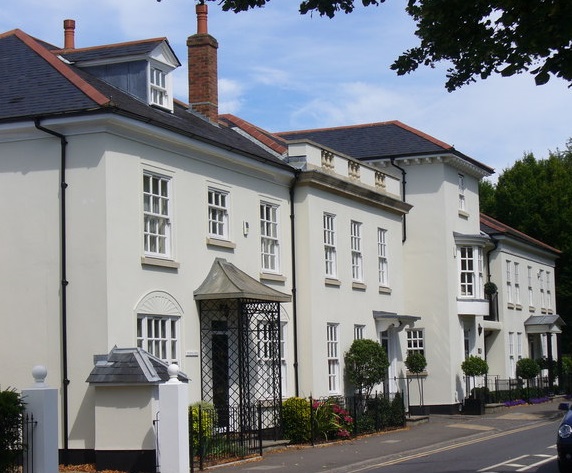
Here’s how my town in Surrey feels on a Sunday morning.
A Waitrose, with freshly-minted paving stones outside. A smattering of old people’s homes at roundabouts and intersections. Charity shops, Domino’s Pizza. A park full of dogs and well-trained owners, normally. Pavements with little tufts of grass starting to peep through the cracks. Pedestrian crossings blinking to no purpose.
A couple of surviving banks, staffed by a single person for a few hours a day. Plenty of restaurants with notices of regret in the windows. A museum full of civic pride. A stumpy little rock that once sat in the middle of a medieval London street. A cricket field enclosed by roads lined by parked Range Rovers, usually populated at this time of years by kids in whites and the inevitable dogs that fertilise the square when no-one’s looking. No cricketers now.
Shoppers in their ones and twos can see others coming from afar and change course with shy smiles, slightly embarrassed. After you. No, please. Thank you.
An allotment where middle-aged diggers stop for tea parties beside someone’s shed. Distanced, of course. Always tea, and maybe a little thimble of something else.
On your way through the park, past the church and down a little alleyway next to the sixties-built library, now closed, you come to the high street. A few big cars with Mums and little kids. An ambulance, occasionally. Occado wagons, rushing to fill their slots. White vans on their way to tend gardens or to fix a broken cooker.
Not many civic monuments in my town. Just a war memorial and a crumbling column erected in honour of a now-obscure Georgian princess. Plenty of water, though not so much at the moment, as a month of drought has depleted our little tributary to the Thames. The ducks and swans don’t notice. There are still a few collections of mums and kids feeding them chunks of white bread. Time out from home schooling. Nobody fishing. That wouldn’t do.
The dead round here rarely get buried in the cemetery next to the church. It’s pretty full. Mostly they’re cremated, or laid to rest in a bigger graveyard out of town. Next to a golf course. A good progression, you might reflect, and far enough away from the main streets with their new apartment blocks springing up (much to our disgust) for us not to have to think of those who don’t need armchairs and gardens anymore.
The schools are empty. The clothes shops have windows full of fashion but nobody to sell it. There’s even a chocolate shop with elaborate creations suitable for an oligarch’s birthday party. The pharmacies are open, a few customers studiously avoiding each other and hoping not to encounter other people’s symptoms. The assistants looking very medical in face masks.
Police? Not many round here. We’re a well-behaved crowd. The odd burglary, a bit of cybercrime and the occasional rash of car thefts by people who breeze in and steal to order.
We don’t have much in the way of wildlife, apart from the birds, the squirrels and the foxes. An occasional swan sails over. There are deer in the woods, waiting to colonise us.
We have our share of celebs who live up on the hill. They occasionally descend upon us to take coffee in Café Nero. Not now though.
At this time of year we have church and school fetes where we can buy bedding plants and cakes, where the kids can throw wet sponges at adults in stocks, and we can congratulate ourselves on our charity. Not this year.
To the back of the high street, in front of the medical centre, there are old walls that suggest a bit of history, which there is if you dig for it. Fictional as well. We were destroyed by the Martians during the War of the Worlds. And if you walk through the woods near the banks of the old motor racing track, you can still hear the screams of a dying racer. Or so people say.
And that’s my little town. The population in the 2011 census was around fifteen thousand. A good deal more now. But still less than twenty-eight thousand.
Which is why as I sit at home on a Sunday morning I think of what twenty-eight thousand deaths means. The population of an entire town like mine wiped out. A football stadium full of people. A Saturday crowd at The Oval for a cricket match against Australia. The Centre Court at Wimbledon, two days in a row.
All gone, not in some Martian massacre on a single day, nor spread out over a year so we don’t notice. Instead, a rising crescendo over weeks, subsiding only now, but with some way to go before the conductor can rest his baton and turn to face the survivors, with every possibility that he’ll come back for a lengthy encore.
Best not to dwell too long about such things, I suppose. We’re still alive, and we should make the most of it. But the dead shouldn’t be allowed to slip away without our thinking about them, even if we don’t know them personally. We’ve been here before, as the names on the war memorial attest. No doubt we’ll be here again.
We’re the lucky ones, those of us who haven’t died. Our population isn’t densely packed. We don’t see neighbours wheeled off to hospital gasping for breath. We hardly see our neighbours at all. What we see is mostly empty space.
But just as those who lived here seventy-five years ago must have felt in the last months of war, we think to ourselves please let this be over. Soon.
After my gross impertinence yesterday in commenting on spittle-flecked militias in the United States, back to the latest in my own dear Britain.
I don’t want to bash the government for falling short on its testing target. 80,000 tests performed, as opposed to the 100,000 promised, is no bad achievement considering the starting base. But claiming another 40,000 because the test kits have been sent out is a bit fly.
The numbers Matt Hancock, our Health Secretary, announced seem to be based on the assumption that a) all the people to whom the tests were sent receive them, b) they all take the test, c) they all send them back, d) that all the kits arrive at the testing centre and e) that they all turn out to have been properly carried out.
That would seem a bit of a stretch. It’s a shame, because the government doesn’t need to gild the lily. Tweaking numbers creates loss of confidence in all the numbers. We’re not in the old Soviet Union, where apparatchiks would jack up production numbers for combine harvesters to save face, or possibly their necks. We in Britain respect, and sometimes celebrate, heroic failure.
Next, to the measures the government is planning to announce next week in an effort to prevent turning the lockdown into a meltdown.
I have no idea what they’re going to come up with, because they haven’t asked me to participate in the SAGE meetings, even though just about everybody else with half an opinion seems to have been involved.
I will only make a couple of points:
South Korean scientists have announced that contrary to earlier evidence, nobody they’ve re-tested after infection has come up positive again. The confusion arose because the second test treated bits of de-activated RNA floating around the body as positive readings.
That’s not to say that you can’t get infected again. Just that it hasn’t been demonstrated to have happened yet.
Back in the days of smallpox, survivors bore the scars on their faces, so there would have been no difficulty in telling who had suffered the disease. Not so with coronavirus.
That being the case, wouldn’t it be great if everyone lucky enough to have survived the virus was awarded a nice little badge, which entitled them to mix with each other without social distancing, go back to work and live normal lives? Something like a Blue Peter badge, or a Scout patch. I was going to say Jim’ll Fix It, but we Brits know that doesn’t go down well these days.
It probably won’t happen of course, because “the science” will not decree that people who have had the virus are immune until some study, no doubt taking years, determines the average length of immunity. Taking a chance, or making an intelligent guess, is where the politicians come in. What ours might decide is anybody’s guess.
Besides, anyone sporting a shiny new Blue Peter virus badge might be shunned by the rest of us as “unclean”. And if the conspiracy theorists got working, they would be treated as vectors for new infections. Oh, and wearing badges might be a little too close for comfort to those coloured stars people were forced to wear not so long ago. Perhaps a laminated card would do the trick, as well as a special app for survivors to find others and commune without being hassled by the viruspolizei. Tinder for Zombies?
As for the rest of us, particularly the 12 million over-65s and the umpteen millions with diabetes, heart problems, lung problems and obesity, there must come a point at which we get to decide for ourselves whether we re-enter the world. In other words, being fully cognisant of the risk, take responsibility for our lives. Or, as we in Britain are fond of saying, take back control.
When the government determines that we’re adult (or Swedish) enough to make our own decisions about managing risk without much chance of the house crashing down again, I don’t think age should play any part in that determination. If I were a fit and healthy 80-year-old, I would fancy my chances over a waddling, wheezy 60-year-old any time. Yes, those who are unable to look after themselves should be shielded. But for the rest, to exclude anyone over a certain age from participating in the new normal would be misguided.
I eagerly await Boris Johnson’s pronunciamento next week.
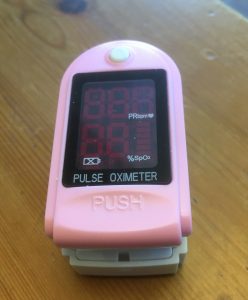
Meanwhile, back at the ranch, we’ve taken advice from “the science” and bought an oximeter. It enables us to tell whether our lungs are about to pack in without obvious symptoms. Hence, we can make a more reasonable determination on whether to call 111 and raise the alarm.
It’s a shiny little pink thing (see above). You clamp it over a finger and by some miracle it tells you your pulse and whether your blood oxygen is at normal levels. When it arrived we whipped it out of the bag and took turns in sticking our fingers in it. And whoopee! We’re both normal. Well, normal in terms of blood oxygen, if not in other ways. Even after intense exercise – me at the cross-trainer, my beloved with Joe Wicks and some unhinged woman who wants to turn her into a contortionist – we’re still normal.
But if you get one of these gizmos, beware. It can become an obsession. You don’t need to test yourself after you’ve been to the loo, watched a Donald Trump video clip or sat at a table drumming your fingers, wondering whether to vacuum. All of which I’ve done. That said, any of those circumstances could be good reason to measure your blood pressure, if you have that kit as well.
Moderation in all things. And that includes the amount of hummus you chuck at the TV.
Have a nice day!
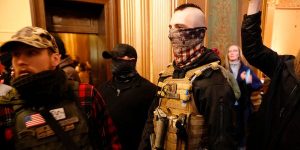
The images of the latest incursion into the Michigan State House by a group of armed men protesting about the extension of the lockdown has resulted in howls of outrage from many quarters in the United States.
The repeated refrain is that it’s Trump’s fault. He’s empowered the extremists, encouraged the militias and shown contempt for the rule of law. And so on.
Their contention of the president’s critics is neither true nor untrue. It’s a matter of opinion.
It’s easy for me, living in a country where the kind of weapons these guys were brandishing are banned, to think that if we were allowed to carry rifles in the streets there wouldn’t be similar people looking to storm Parliament.
Just as for the past seventy years many of us have watched Holocaust commemorations with the smug belief that if the Nazis had conquered Britain we wouldn’t have enthusiastically participated in the rounding up of the country’s Jews.
We would be wrong on both counts, in my opinion. And I can opine all I like, because my view can never be tested. I can only point to our history of violence, riots and insurrection and civil war over the past ten centuries, and to our sporadic outbreaks of anti-Semitism over a similar period, as evidence. And in the end, who cares?
In America, even if you can’t be bothered to look too deeply into the country’s history, you can point to two hundred and fifty years of similar civil turbulence. But, as everybody knows, with one critical difference: that the right to bear arms was enshrined in the constitution more or less from the outset.
So are the good ole boys in Michigan just Americans doing what Americans always do? Or is there really something different about the antics of these people?
Yes and no. Cultures might differ, but basic human traits crop up wherever there are humans. These guys do what they do because they can.
What is different is the speed and ease of communications that enable them to organise or be organised. I posted about this after the initial demonstrations in the US, so I’m not about to go through the argument again.
Another difference I would phrase in the form of a question. Is life imitating art, or the other way round?
For as long as cinema has been one of the main modes of cultural expression in America, movie makers have offered a consistent stream of moral absolutes – goodies versus baddies. From Wyatt Earp to Rambo to Captain America, vanquishing bank robbers, commies and Thanos. Moral ambiguity has also always been there as the sauce that spices up the narrative. But over the past twenty years mainstream movies have become increasingly unambiguous. Good prevails over evil, in blockbusters, Marvel movies and so on. By the way, I include TV in the movie basket.
To supplement, and in some cases rival the movies in popularity, we now have games. So these days you don’t have to sit passively watching the bad guy get his just deserts. You can dispatch him yourself.
I’m not saying that computer games turn people into murderers, vigilantes and armed militiamen. There are plenty of kids who will become law-abiding delivery drivers, musicians and accountants who sit in their bedrooms, night after night, killing the bad guys.
But where did this stuff come from? Are the movie makers and games designers creating role models, or are they simply reflecting morality in the real world? Or are they building on a century of art imitating life which then imitates art which imitates life? In other words, a spiral of myth that becomes real, inspires more myth that turns into new realities?
It seems so to me. Perhaps the Michigan militias are just playing out their fantasies. Just as Trump opponents claim that he’s playing the role of president rather than doing the actual job, maybe the brave boys with guns are following in the footsteps of Ronald Reagan and Clint Eastwood.
I have no idea how many of these guys have experience of real war, but I suspect that most of them would shit themselves if they ended up staring down a Taliban barrel in Afghanistan. Veterans of wars such as Vietnam came home with mental and physical scars so traumatic that the last thing they would contemplate was brandishing weapons in a statehouse. The sad reality is that more likely they would turn those weapons on themselves.
The same goes for veterans in my country. Most of them are reluctant to talk about their experiences unless the stories are prised out of them. Apart from those who use their exploits for commercial gain, such as the macho SAS types who have turned special forces legend into an industry, most would spit in derision at the poseurs who prance around in uniforms at far-right rallies.
The other key difference – and this applies to the US, the UK and many other parts of the world – is that those of us who have grown up during the past seventy years have become acutely aware of our rights. They’re codified in laws and the most fundamental of them have been placed in an overarching basket that we refer to as human rights.
But what of responsibilities? There is no civil law setting out our responsibilities as human beings. Obligations, yes. All countries have laws that describe the norms of behaviour that if breached result in some form of punishment. But an obligation is not the same as a responsibility.
There is no universal code of responsibility other than those enshrined in religions, and these also often take the form of obligations, rather than acts carried out in free will. Since we’re becoming decreasingly religious, even if we carry the DNA of religious thought in our cultures, responsibility is becoming a matter of personal preference, or even convenience.
Perhaps it takes a unifying event such as a pandemic for people en masse to remember a sense of responsibility to other humans, to future humans and to other species. And yet if rights are seen as immutable, and responsibilities as matters for individuals or self-regulating peer groups, where you have differences in attitudes among individuals and between different groups, then you have a recipe for fractured societies.
No doubt the boys in Michigan have their own codes of responsibility, but if they’re not aligned with those of other groups who believe that their responsibility is to self-isolate so as not to pass the virus on to others, then further conflict is inevitable, especially when they’re inspired by a sociopath with his own warped sense of responsibility, principally to himself.
So yes, America seems to have come a long way from “We hold these truths to be self-evident, that all men are created equal, that they are endowed by their Creator with certain unalienable Rights, that among these are Life, Liberty and the pursuit of Happiness.”
Perhaps it’s time also for a Declaration of Universal Human Responsibilities. Or maybe I’m just pissing in the wind.
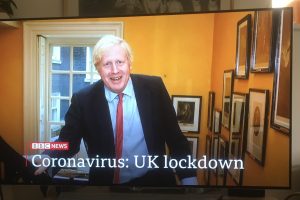
Yesterday was a bit of a ratty day. I started to shout at the TV. It happened during the Downing Street briefing. I then fired off two intemperate tweets, which is rare for me. In the first I said:
I do wish that the “health advisors” at the Downing St briefings would, for once, say what they really mean: “it’s complex. You don’t understand. You will never understand. Now shut up and f**k off.”
In the second:
We are reviewing. We are considering. We are thinking. This is the sound of bureaucracy at prayer.
Which just about sums up my jaundiced view of the government’s efforts to communicate with us at this time of crisis. I actually think that the time has come to consider whether these daily briefings are helpful. Do we really need to be told the same stuff, day in, day out by an assortment of mediocre politicians and health advisers who are clearly under orders to say nothing that suggests that the government’s performance has been anything other than optimal?
Am I suffering from lockdown fatigue, or has the government run out of things to say? Either way, perhaps these briefings should take place every two or even three days. At least then there might be something new to say other than the steady thud of death statistics.
Another example of my COVID-related bile is that after repeatedly swearing that I would never consider terminating with extreme prejudice the squirrels that are scratching away in my loft and waking us up at 6am, I actually went so far as to look on the web for air rifles. That’s as far as it went, and I still don’t think that I could kill an animal in cold blood, even though I happily eat those that have been terminated with equal prejudice.
But the fact that I even thought of the nuclear option was telling. Perhaps it would be OK if we ate the squirrels that we shot, but then the task of skinning and disembowelling them would also be beyond me, metropolitan wimp that I am. Cooking them would be no problem though, because the other day one of the readers of this blog very kindly sent me link to a website that had a recipe for squirrel stew. No so benign was the picture that accompanied it of a teenager with a very powerful-looking rifle.
It was clearly a bad no-hair day, at least on my part. What it suggests is that I’ve been watching too much TV coverage of the pandemic. And possibly too many movies featuring men with weapons who take out the bad guy with a single shot.
One upside is that overdosing on TV has given me a fresh insight into the mind of Donald Trump. It’s been reported that he spends hours every day in his bedroom searching for TV news stories about, for and against him. I imagine that the White House has cleaners who on a regular basis have to come in and wipe down his multiple screens after he’s pelted them with cheeseburgers and ketchup.
I’m reminded of the scene in Downfall in which the Fuhrer is ranting at his generals, and outside his office aides are weeping and cowering at the fearsome racket. The Trump scenario also brings to mind the last days of Robert Maxwell, and the lurid tales about the state of his bedroom before he jumped, was pushed or fell from his boat in the Mediterranean.
Fortunately we don’t live on a boat or in a bunker. And if I were to start throwing hummus or porridge at our TV I would have to do the cleaning myself or face the consequences.
Why, you might ask, do I not comfort myself with those nice natural history programmes, or shows about gardens? Because these days they rarely end without warnings that the gorillas are doomed, or that Japanese knotweed is taking over the world.
Another insight that came to me yesterday is that the dog population has multiplied during the lockdown. What’s more, they all seem to be hanging out in the park near us. In our little town we don’t have much of a problem with joggers, cyclists and sunbathers. But we do have all manner of strange dogs. Labradors with tiny sausage dog legs. Wolfpoos (or should they be called Woodles?). Saint Bernards the size of grizzly bears.
It’s as if somewhere in Surrey, the sedate English county where I live, there’s been a radiation leak nobody’s told us about. Or possibly there’s a Dr Mengele at work at the National Veterinary Laboratory, which happens to be a few miles away. Is it me, or have dogs always looked this odd?
Their owners seem normal enough. They congregate in socially-distanced groups and chat, presumably about doggy things, while the mutts bound around with a freedom unavailable to their minders, trying to eat each other. If only there were groups of squirrel owners who could tell me what to do about the renegades in my loft.
Ah well. Today is a glorious new day. There are no pee patches on the lawn (our dog passed away last year, which probably explains the emboldened squirrels). The lilac in the garden is in full flower, as are the rhodies. The rosebuds are on their final push, and so far there have been no scammers knocking on our door asking for their iPhone back (see previous post). Kim Jong Un is still alive, Trump is still trumping and from Downing Street comes the mewling of a hungry infant.
Nothing to complain about. All’s well with the world, n’est pas? Comfortably numb is a good place to be.
Yesterday was notable for a flurry of excitement in our household. Normally, or at least new normally, there are few things that cause our hearts to miss a beat or two. Relentless daily sessions on the cross-trainer or other instruments of torture is one of them. The intensifying battle against the squirrels that have infiltrated our loft and wake us early in the morning with their demented scratching is another.
And then there are the deliveries. For me, the pleasure in receiving a parcel, even if you know what’s in it, is undiminished since childhood. At the moment most of them are related to insurgent squirrels or COVID. The latest squirrel-related delivery is an infrared camera that will help us carry out covert surveillance on the little bastards as they make merry in the rafters. We shall soon discover their purpose. Procreation? Drawing on a nut stockpile? Or perhaps just fun.
The latest COVID delivery, which is scheduled for the next day or so, is an oximeter. We already have face masks, a blood pressure monitor, antiseptic gel and a couple of rocket-propelled grenade launchers to repel starving intruders. But apparently some people are being diagnosed with critically low blood oxygen levels without even realising that they have a problem.
I should have thought that gasping for air after ten minutes on the cross-trainer would also provide some indication that there’s a problem, but we’re taking no chances, especially as the media medics are telling us that an oximeter is a useful piece of kit. Apparently it’s possible to go from feeling OK to being very dead in a matter of hours if the lungs decide to collapse. So an early warning is no bad thing.
I’ve no idea how an oximeter works. Google tells you that you can measure your blood oxygen by putting your finger on the camera of a mobile phone, provided you have the app and the right phone. It seems that some Samsung phones can do this for you. Sounds great, but I wouldn’t switch over to Android even if the phone offered me a full body scan. I’m afraid I’m set in my Apple ways.
Which brings me to the cause of yesterday’s excitement.
At around midday, there was a knock on the door, which was a sure indication that there was a courier waiting to deliver good things. We thought that Amazon was exceeding our expectations and delivering the oximeter three days early. But no, it was a DHL courier with a chunky package.
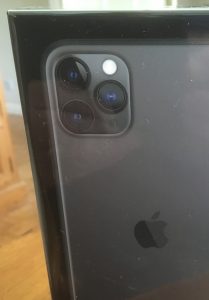
We opened it to discover that it was an unexpected gift. Or so it seemed. Inside the bag was a big, sexy, top-of the-range Apple iPhone 11 Pro Max, with a SIM card from one of the UK’s leading mobile phone companies. On the delivery note my name was listed as the intended recipient.
At first we thought that my beloved, who occasionally responds to surveys which offer such devices in prize draws, had hit the jackpot. But there were no emails to tell us we’d won a new iPhone. And anyway, you would have expected her to be the recipient, not me.
Then we thought it might be a mistake. Some weird computer glitch. We did a Google search on “I’ve received a mobile phone I didn’t order”. Answers to similar queries suggested that one option was to say nothing and hang on to the phone. I can’t say that a little inner devil didn’t try and tempt me, but such “gifts” rarely come without consequences, as recipients of large sums of money arriving accidentally in their bank accounts often discover. And this was no cheapo phone. It retails on Amazon for £1,400, three times as much as my laptop.
More searching revealed that apparently there’s a scam going round. Cyber-criminals order the phone using stolen bank account details. Once it’s delivered to the named recipient, they contact them posing as the phone company, telling them there was a mistake, and could they send the phone back to a given address, which, of course, isn’t that of the phone company.
We decided to check with the provider. Perhaps these scamsters are relying on the fact that the mobile phone companies make it very difficult for you to contact them by phone, or, at the moment, even by chatline. However, we did manage to get through to a human by saying fraud often enough to the answering system.
It turned out that whoever ordered the phone had set up an account in my name, using my bank details and my address. Though we’d checked our account before the call, the reason why there had been no fishy transactions was because the phone company wasn’t due to take a payment for another two weeks. So if all had gone according to plan, the scamster would have been away with a brand new phone, and we would have been left with the bill. Nice huh?
I have no idea where our bank details came from, but probably from one of those well-publicised mega-hacks that have taken place in recent years. Or possibly through one that hasn’t yet been uncovered – or disclosed.
So if one of you hopeful dunderheads is reading this, I’m sorry to disappoint you, but the phone is already on its way back to the phone company, and our bank has cancelled the relevant cards. Not that an all-singing-all-dancing phone would have been of much interest to me. A phone should be a phone, not a bloody supercomputer.
You often read of these data hacks, and rarely expect that you will be affected. We’re pretty familiar with scams and how to deal with them. How many other people, especially in our generation (over-60s), are falling victim to them, especially at a time when it can take ages to speak to a human who can help you?
Such excitement reminds me of another aspect of lockdown. Somewhere in my house there’s something called a wallet. In it you would find a couple of pieces of paper with the Queen’s head on them. Elsewhere we have a few bits of metal that we normally use for parking charges. They sit, untouched for weeks, reminders of simpler times.
How long before they suddenly become relevant again?
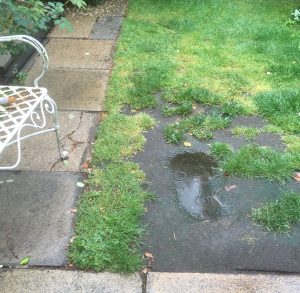
Today the rains have come in my part of the United Kingdom. They will likely be with us for the next week. Which causes me to reflect that the rain is an equaliser. When it rains, we don’t want to go out.
Over the past month, the outside has been largely warm and sunny. For millions who have no access to outdoor space other than public areas, and for whom any attempt to enjoy the weather is greeted by passing police, sometimes polite, sometimes officious, warm and sunny is a mixed blessing. If not the police, you have to deal with neighbours and passers-by, who swerve away if you’re jogging, give you dirty looks if you sit on a park bench and tut-tut if you take out a ball and start throwing it to your kids. Not normal.
For those, like me, who have gardens, be they the size of a postage stamp or rolling acres, life can almost seem normal, especially if you’re not particularly gregarious and you’re not in the habit of hosting large gatherings week in, week out.
Did anyone imagine that dystopia might look like this? Hollywood’s dystopia is Mad Max, The Handmaid’s Tale, marauding gangs, the rule of the gun. Or, in a time of plague, the walking dead, bodies on the street, puke and pus everywhere.
Ours is a quiet dystopia, perhaps more of the mind than the physical form. Before the pandemic, we thought of the haves and have-nots in terms of money, and what we can do with it. Right now, owning a Chelsea tractor, a yacht and two country homes is irrelevant. So is having the time and money to go trekking around Vietnam or even camping on the coast of Cornwall.
Right now, the biggest difference in experience is having a garden – your private space outside – or not. That, at least for now, is the new equality gap.
You might tell me that money still matters. Of course it does. It determines how you eat, what distractions you can buy online, whether you sleep on the streets or in a bed and where your booze or weed or heroin are coming from.
Of course it does, but the vast majority of Britain’s population have a place to stay and are not going hungry. I suspect that for most of us, worries about the future have gone from an initial explosion of shock to a continuous low hum as we incorporate uncertainty into our daily reality.
What makes a difference to our ability to deal with the worry is our access to the outside. Sunlight brightens the heart. And those of us who have our own outside are lucky indeed. Except when it rains. If we have gardens, we might be looking on the bright side, and saying to ourselves well we needed the rain, and the farmers will welcome it. But when it’s pissing down we’re reduced to looking out of the window. Just like everyone who lives in a first floor flat or at the top of a tower block.
It’s a strange kind of equality in a strange, quiet, dystopia.
That’s not to say that even in our orderly little country, other more dramatic dystopias aren’t raging. The daily pandemonium in hospital ICUs – as doctors and nurses struggle to keep people alive – is as Hollywood as you can get. So, in a grimier, even more distressing way, because it doesn’t have an upside, is the increase in domestic violence. So also, though quieter and more insidious, is depression.
When we imagine dystopia, we often think of it as a universal condition. A wrecked world as opposed to patches of broken society. Our little corner, for most of us, is utopia compared with others, where civil war rages, sectarian bigotry rips the fabric of living apart and poverty provides an open invitation for the virus to wreak havoc.
But we each have our own realities. When stuff happens our outlook changes along with our reality. I expect a darkening of the national mood over the next week or so.
Who would have thought that rain might make such a difference? That it would be the great equaliser?
As Boris Johnson, Britain’s Prime Minister, gets back to work after his near-death experience at the hands of the coronavirus, he must have a full in-tray.
No doubt there will Dominic Cummings and a stream of ministers whispering in his ear about the shortcomings of their colleagues. No doubt he will wish he could assassinate various journalists or at least lock them up in a place where they will be cruelly tortured. And no doubt he will have to deal with a phalanx of Members of Parliament, wealthy donors and industry lobbyists who believe, or are paid to believe, that saving the economy is more important than saving the lives of the elderly.
Concerning the donors and those who employ the lobbyists, I would like to think that they’ve come to their opinions after balancing humanitarian with financial concerns. But it’s a sad reflection on the state of British politics that I, and no doubt many others who are no fans of the ruling party, should be suspicious of their motives.
Wealthy donors are presumably donating to the Conservatives because they think that they will benefit financially from their support for a government they believe is more business-friendly than its opponents. And presumably these are people who have the most to lose in a pandemic.
I will say no more. Since the garden centres are closed, I have no nasturtiums to cast on their motives.
As for his ministers, he will want to congratulate Priti Patel for the most Trumpian statement since the epidemic began – as she delivered the impressive news that shop-lifting has declined dramatically since the lockdown, which is hardly surprising since most of the shops are closed. It would have been more interesting and more meaningful if she could have shared with us statistics on cyber-fraud and domestic violence. And it would be helpful if our Health Minister could tell us of any increases in hospital admissions on grounds of mental illness.
Mr Johnson’s to-do list is long. He must give us some sense of understanding as to the plan for lifting restrictions. Whether the government is waiting for him to decide on a roadmap, or the roadmap is already in place and his minions are waiting for him to be able to demonstrate his leadership by announcing, where we go from here is a question that may be answered before long.
But since he’s turned us into a nation of chart-watchers through the daily briefings that feature a bewildering array of ministers and chiefs of health organisations most of us never knew existed before the crisis, he owes it to us to bang heads together and give us information we can trust.
Why it’s beyond the power of our huge and expensive bureaucracy to capture deaths at home and in care homes at the same time as those in hospitals is a mystery. If there’s a lag between NHS reporting and ONS statistics (the source of care home deaths) it should be fixed, should it not? Otherwise we’re bumbling on with incomplete information.
There’s a further layer of analysis that we, the consumers of the NHS, should be made aware of, even if there’s no need for the information in real time. It’s this:
If, as I understand it, there’s a pathway, once a patient has been admitted to hospital, from nebulised oxygen, pressurised oxygen (CPAP) to ventilator, is there an entirely consistent treatment protocol being practised in every hospital and trust in the NHS? Given that the survival rate once a patient has been placed on a ventilator is 34.6% (as reported in a study by the Intensive Care National Audit and Research Centre), how quickly are patients moved to the ventilator stage – which, in other words, in the majority of cases, results in death?
If there’s a difference in practice between hospitals, I would certainly want to go to one whose results show that they offer me the best chance of surviving. And if there are differences, would it not be another example of the infamous postcode lottery, wherein I get different treatment depending on where I live?
I appreciate that I’m straying into ground on which I’m not remotely qualified to comment, hence the questions. Nevertheless, the government must be aware that its own announcements, as well as the blanket media coverage on the dynamics of the disease, the treatment, the technology and the data, have made many of us lay people better informed on medical matters than ever before. A little knowledge may be a dangerous thing. But equipping us with that knowledge and then expecting us to ignore its implications is also dangerous.
Every week we pour on to the streets to shower praise, even adulation, over the NHS for the job it’s doing to keep us alive. But surely that doesn’t make it immune to rational questions about the consistency of its clinical practice.
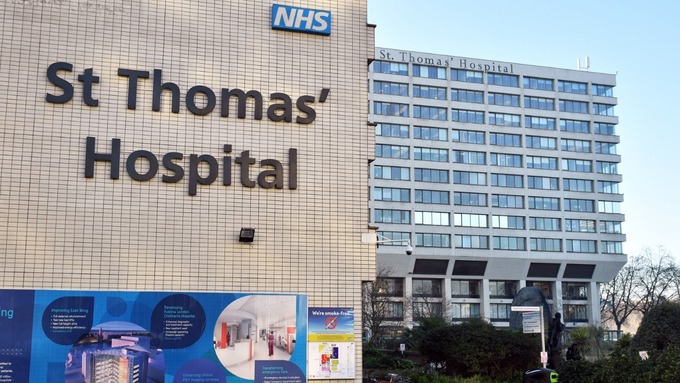
Of one thing you may be sure. If my wife developed severe symptoms, and statistics show that she would have a better chance of survival at St Thomas’ Hospital, where Boris was treated, rather than our local hospital, I might not wait for an ambulance. I would be sorely tempted to get her into the car, drive at top speed and deposit her, gasping for air, outside St Thomas’. Which is one reason why the government probably wouldn’t want to share that information too widely.
You might say, well if everyone did that, where would we be? And I would reply, convince us that there’s a level playing field for survivability, and the question wouldn’t even arise.
Anyway, I wish Boris all the best, and I hope he can make a positive impact on the government’s efforts. Though judging by observations of people who have recovered from the virus of the toll it takes on cognitive ability as well as physical fitness, I hope he’s fully recovered his marbles.
He will need them.
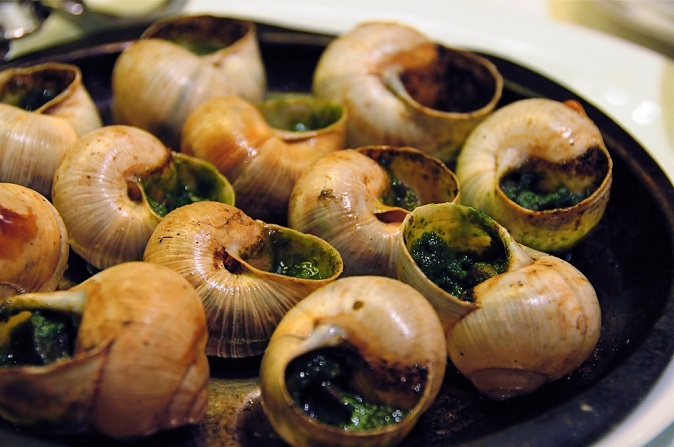
I don’t know about you, but in our home, food has assumed a central role in our lives during lockdown.
Perhaps it’s a good thing that we no longer have teenagers around the house who would graze throughout the day and then spurn the lovingly-prepared communal meal. Not surprising, I suppose, since in those days mealtimes were not so much an opportunity to refuel but an attempt on our part to communicate with offspring who might as well have been on Mars.
Since, in keeping with government guidelines, we only go food shopping twice a week on average, the freezer has become a key worker. Nor that it ever wasn’t. Now, though, it’s gone from tactical to strategic.
If we ever get to the bottom of our freezer I will rejoice. Because then I’ll have no option but to capture and eat the squirrels that have made their home in our loft. But it’ll take an L-shaped economy as long as the line of space characters produced by my grandson when he starts playing with my laptop for that to happen.
The freezer is one of the major spheres of spousal influence into which I’m reluctant to wander. It’s a Tardis, vast and packed with good things. Yet I find it hard to reach beyond the outer portal. As far as I know, the little sister of Otzi the Iceman might be hiding in its furthest recesses.
If I attempt to search for stuff I either get shooed away because I’m disrupting the sacred order of things, or I’m covered in ridicule because I can’t find what’s staring me in the face. Not surprising really, because all I see when I open the door is ice. And then, when I find what I’m looking for, everything around it falls to the floor with a cacophonous clatter that alerts my beloved not only to my intrusion but to my rank clumsiness.
Every so often, the boss retrieves a strange icy object and puts it in a tray, muttering that “we really must start clearing the freezer”. If it’s a haggis I’m happy. If it’s some strange concoction with many vegetables known only to the patrons of Waitrose, I’m less enthralled. I find it strange that these periodic purges seem to liberate no space whatsoever. All that’s happening is that the space is mysteriously filled in short order.
I say mysterious because I’m rarely allowed into supermarkets. The reason for this is that I have a habit of making whimsical purchases alongside the essentials. Things like custard creams, pains aux raisins from the bakery and obscure bits of animal from the deli. And now, under lockdown, is no time be buying stuff that won’t be of use in a time of starvation. In this house, as in the wild, it’s the lioness who goes hunting.
Although I have no involvement in the supply chain, I’m happy to say that we have the perfect regime of harmony and cooperation when it comes to cooking. Stuff I do, such as baking cakes, she doesn’t. Preparing veggies, her department. Making elaborate and sometimes disastrous sauces usually involving cream, my job, provided I remember to insert garlic. Doing the pasta, the rice and the spuds, her role, and much else besides
As the result each meal is a celebration of marital success, bathed in mutual congratulation, and unsullied by our elder daughter’s complaints about our overcooking the Sunday joint (no vegans here, I’m ashamed to admit). She, by the way, is a better cook than either of us. But for now, we are alone with our backward culinary habits.
Food is not generally a political issue, unless there’s a shortage of it. But here’s an interesting development. We all know that in the UK, Waitrose is the preferred outlet for the powerful and well-connected, including our revered Royal Family. Could it be that the store is trying to nudge its patrons towards a union with France, just as Winston Churchill proposed in the darkest hours of World War 2?
I ask this because yesterday my beloved came back with a bilingual tub of coleslaw. On one part of the container it says Red Cabbage. On another, in spidery fin de siècle writing, it proclaims Salade de Chou Rouge. As it happens, it’s not a Waitrose product, but I do wonder whether, in this our darkest hour, we are witnessing the beginning of a campaign.
If so, I heartily endorse it. Imagine tariff-free cognac, the seamless flow of camembert in our direction and custard creams in theirs, and the gorgeous cuisine of France just a visa-free train ride away.
Although we no longer have any say in political decisions in our country, most of us would surely acquiesce in a partial sharing of sovereignty if that meant unity with our nearest neighbour, provided of course that the other side agreed to the supremacy of our gracious Queen, who would thereby recover the territories lost by her feckless ancestors. Even the Brexiteers would be happy with that.
It’s time for bold decisions. Such a thought alone makes the lockdown more tolerable. That, and the pleasure of watching Rick Stein eating his way through France while I trudge away on my cross-trainer.
And since we’ve just realised that the squirrels in our loft appear to have been joined by pigeons, unity with France, given their imaginative methods of cooking both animals, seems to be ever more desirable.
And now I’ve just realised it’s Sunday. Oh joy! Roast lamb awaits…..
Today there will be a gap in my life, and most likely in that of millions of Americans. Donald Trump, apparently, will not be appearing at the daily White House coronavirus briefing. But at least we now know why the president comes out with his series of innovative cures for the disease. It seems that he obsessively watches obscure TV channels that run ads and interviews with people who have come up with these cures. They also send emails, which his dutiful minions print out and shove under his nose just as he’s about to speak to the nation.
Then he turns up at the briefings, unbriefed, with the latest idea. He runs them past his medical advisers live on prime-time TV, giving us the supreme entertainment of watching Doctors Fauci and Birx putting themselves into an altered state in order to avoid the slightest micro-expression that might betray their amusement or exasperation.
The spectacle reminds me of the famous Biggus Dickus scene in Monty Python’s Life of Brian, in which Brian’s guards struggle to maintain their composure as Pontius Pilate discusses his friend’s interesting name. Not to mention that of his friend’s wife.
Anyway, in Mr Trump’s absence, I’ve been working on a set of flash cards that I shall be sending to the White House with the suggestion that one should be shown to him every day before his briefings. On each card, in very large lettering and with as few words of more than one syllable as possible, will be written a Cure of The Day.
I’m down to a short list of ten, from which I shall select the final deck of cards. These are:
- Broccoli
- Viagra
- Carbon Monoxide
- Radium
- Hypnosis
- Magnets
- Hair spray
- Cigarettes
- Bat’s urine
- Camembert
The last, by the way, is my favourite. I’ll leave it to your imagination to work out the scientific basis of these cures. But suffice it to say, I have some wealthy and powerful backers, including members of the president’s own family, encouraging me with my research.
I’m also working on a new prophylactic device that will dramatically cut down infections. It’s called a fart filter. I designed it after reading recent research suggesting that flatulence spreads the virus. I referred to this theory in an earlier post a few weeks ago:
The best one I saw was that if you’re infected and you have diarrhoea, if you fart you leave a plume of virus-laden gas 200 feet long. You mean people are out there measuring the coverage area of farts now? I find this one somewhat hilarious. In my experience, anyone suffering from the runs is aware of the necessity never to ignore a wet fart, and heads for the nearest convenience post haste.
I appreciate the possibility that faecal matter may spread the bug, but surely that means that you should be very careful where you go to the loo, wear a face mask and wash your hands, not that you should run a mile when someone sends forth a trumpet blast. Also, if farts spread the virus, anyone in a confined space, such as a lift or, worse still, an aircraft, is effectively done for. In which case, should the theory be proven correct, expect the temporary shutdown of air transportation across the planet.
I posted that on February 25th, long before air transportation ground to a halt. I’d like to say that my prophetic skills equal my scientific and engineering expertise, but I won’t.
Now, it seems, the evidence has become compelling (or repelling, depending on your point of view). So I’ve been working on the fart filter day and night. It comes in two variants – one for when the user is wearing clothes, and the other for when they aren’t. Once it’s perfected I will be sending a consignment free of charge to the White House and to my home equivalent, 10 Drowning Street.
Hopefully I will be more fortunate than my fellow inventor, James Dyson, whose engineers have been toiling around the clock to build a new type of ventilator, only for the British government to tell him that it’s surplus to requirements. It’s a decision that will be likely to deter other inventor-entrepreneurs, but I am undeterred, because I have witchcraft on my side.
Speaking of witchcraft, I hear that Dominic Cummings, the government’s chief Boris-whisperer, has been attending the SAGE meetings. As far as I’m aware, sage is not one of the cures proposed to Donald Trump, but it’s quite popular here in Britain. It’s the code name for a secretive cabal of scientific advisors who tell Boris what he should or shouldn’t do to combat the virus. The two options – should or shouldn’t – appear to be interchangeable, which might explain the government’s frequent change of priorities.
Be that as it may, there have been expressions of horror among the scientific community that Mr Cummings, a political adviser, has been participating in these gatherings. I have some sympathy for him. Surely, at this time of crisis, science can’t be divorced from politics. Just as it would be wrong to ignore alternative solutions such as mine, but also more established techniques such as homeopathy, faith healing and praying to ancestors, there must be a place for witchcraft in the deliberations of the great and the good.
If he finds that his input is spurned, my advice to Mr Cummings is that he should head straight to the White House, where no doubt he will be warmly received.
And if he does, I’ll make sure he brings my flash cards with him. Hope springs eternal.
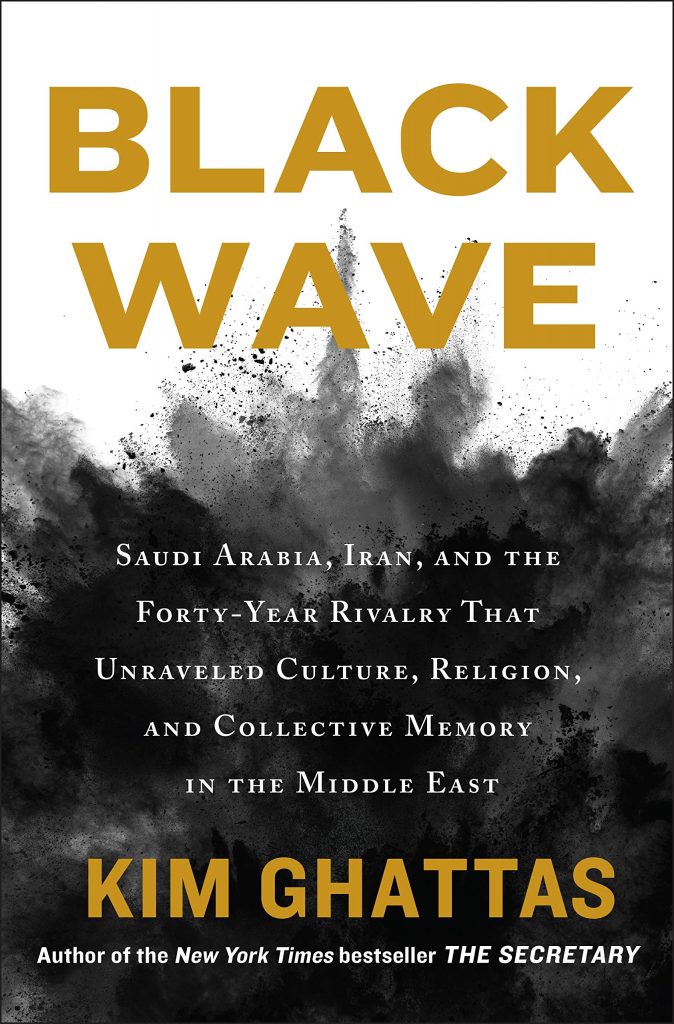
As we in Britain lament the closure of garden centres, and the matrons of America sob because they can’t go to the hairdresser, this is not a bad time to remember that there still are people in other parts of the world who would be grateful for the quiet lives we are living.
In China, there are Uyghurs in camps. In Burma, the Rohingya continue to be harassed by government forces. And in India millions of Muslims are fearing for their lives in the face of an onslaught by Hindu nationalist thugs. Not to mention millions of displaced people in the Middle East: in Syria, Iraq, Turkey, Lebanon and Yemen, all living in fear of diseases far more deadly than the coronavirus.
Which brings me to a book that seeks to provide answers to an agonised question asked all across the Middle East: “what happened to us?”
I’m recommending it because it’s probably the most eloquently written and concise study I’ve come across of how the world, not just the Middle East, has changed over the past forty years. It’s called Black Wave. It’s written by Kim Ghattas, a journalist who was born in Lebanon, one of the counties most affected by the political and social earthquakes that have shook the region since 1979.
She frames the events in the book in terms of the regional rivalry between two countries with ambitions way beyond their borders: Iran and Saudi Arabia.
For some of us, everything changed in the Middle East after the Yom Kippur War in 1973, followed by the oil shock which dramatically accelerated Saudi Arabia’s wealth. That event, together with the Palestinian uprisings and attacks on Israel and the West caused us to keep an ever-wary eye on developments in the region.
But for Ghattas, the starting point was 1979, when three key events, two well known and the other less so, took place.
The first was the overthrow of the Shah of Iran and the establishment of a theocratic state under Ayatollah Khomeini. A country that had been an ally of the West suddenly became, in the eyes of many, a constant threat to the stability of the world order.
The second was the Soviet invasion of Afghanistan. This triggered an insurgency, funded by the oil-rich monarchies of the Gulf and aided by covert assistance from the West, that was a major contributing factor in the downfall of the Soviet Union.
The third was the armed insurrection in Mecca by a group of ultra-conservative Sunni fanatics who believed that Saudi Arabia – and especially the royal family – were straying too far from the strict religious principles on which the Kingdom had been founded. As the price for the clergy’s support in putting down the rebellion, any moves towards social reform in that country abruptly ended.
In Iran, decades of relative social freedom, especially of artistic expression and most especially among women, ended just as abruptly. It seemed that the two countries, divided by a narrow strip of sea, were competing for the honour of being the true keepers of the flame of Islamic purity.
There was a difference, though. The regime in Tehran was Shia. Saudi Arabia’s rulers were Sunni. Although in the past there had been tensions between the two main schools of Islamic thought, nothing in living memory prepared the region for the sectarian strife that the rivalry between the two counties triggered. And that rivalry, according to Ghattas, was at the heart of almost all the conflict that has burned in the Middle East and its immediate vicinity ever since.
She focuses on events in the countries most affected by the struggle for supremacy. Lebanon, her homeland, Egypt, Pakistan, Iraq, Syria and, of course, the two main protagonists.
There’s little doubt where her sympathies lie. Not with Khomeini, or Zia-ul-Haq, the brutal military dictator of Pakistan, who turned his country away from its rich tradition of cultural and religious diversity and imported the religious ethos and practices of its main sponsor, Saudi Arabia. Not with the conservative influencers in Egypt who had returned to their country fattened by the wealth of Saudi Arabia and inculcated with the same austere intolerance of diversity.
Not with Qasem Soleimani, Iran’s proconsul who sought to extend his country’s influence and power across Iraq, Syria and, through Lebanon, to the Mediterranean. Not with the Saudi ruling family, who sought to compensate for their military weakness through alliances with the West and, predominantly, with the USA. The same rulers who, while the West turned a blind eye, at the same time used their oil wealth to extend their influence throughout the Muslim world by funding mosques and schools which served to spread their fundamentalist ethos, even in countries that previously had no such narrow traditions of worship.
In Pakistan, Zia instigated the first instances of persecution by Sunnis of the Shia minority since Pakistan came into being. They were not to be the last. Fuelled by the wealth of Iran and Saudi Arabia and through well-armed surrogates, Sunni-Shia sectarian conflict became endemic. At various times in the past forty years Syria, Iraq, Bahrain, Afghanistan, Yemen, Egypt and Pakistan have been ravaged by sectarian bigotry and war.
The heroes for Ghattas are the free thinkers. Not necessarily those who sought to emulate the ways of the West, but people who celebrated diversity of thought, the spirit of reason, inquiry and creativity that has always coexisted with turbulent political change among Arabs and Iranians. Many of them have ended up dead – assassinated or caught up in conflict. Some are still alive, but exiled from their home countries. And others are mouldering away in jails like Evin in Tehran and Hair in Riyadh.
For me, this book is personal. I spent much of the eighties in Saudi Arabia. And in 2007 I returned to the region for five years, first once again in the Kingdom and then in Bahrain. I willingly experienced the austere norms that Saudi Arabia imposed after the Mecca siege, though for me, as a privileged Westerner, much of that life went on outside the walls of the compounds that were my home. In Bahrain I lived through the Arab Spring protests, heard the bullets from my apartment balcony and visited the square where thousands of protesters were gathered.
Over those years of interaction with the Middle East I have met many people of various nationalities who identify as Sunni or Shia. Few of them were bigots or fanatics. Nor did they harbour deep-seated hatred for their fellow Muslims. They were and still are people who love their families, their language, their poets, their food and the rest of their rich cultural heritage. Above all, they want to live in peace. Some I’m still proud to call friends.
It still amazes me that their fellow-citizens could condone or actively participate in the repression and slaughter. But there are many factors that cause societies to shatter into mayhem. Kim Ghattas eloquently describes them, not just through the events that have caused so much shock and despair, but through the lives of the people who inspired them, caused them or rowed against the tide.
Much of what we in the West read about the Middle East is written by observers from without. Kim’s is a voice from within.
Muslims are not the only victims in her story. Christians in particular have seen the destruction of their homes and places of worship. A religious tradition that pre-dated Islam has few protectors in the region. It has been reduced to small enclaves. Those shrines which survive are ones that even the fiercest fanatics would fear to destroy.
I don’t think of myself as particularly religious, though, as Tom Holland maintains in Dominion, his magnificent study of Christian belief and its legacy, I accept that my culture and values are profoundly shaped by religious thought. Perhaps that’s why I couldn’t imagine living in a world without faith, and without the music, the art, the literature and the architecture that have been inspired by faith. And why my lukewarm feelings about religious dogma has never stopped me from respecting and often loving friends whose lives are defined by their faith.
In that spirit, at the beginning of a month that unites all Muslims, and as we all face a virus that doesn’t care a jot about which God we worship, I wish my Muslim friends Ramadan Mubarak.
One of the strange effects of lockdown is the repetitive behaviour it induces, in me at least. You might call it obsessive-compulsive, but I prefer obsessive-repulsive, since any new activity I start to perform without giving much thought as to why I’m doing it seems pretty repellent to my rational self.
Let me give you one or two examples.
Having spent a couple of days sorting out my books into subject categories and in order of author’s names I anxiously look at books that escaped the great reconfiguration, such as those in our bedroom, which sit in a nice little bookshelf. I work out where each book should be, and have to force myself to leave them where they are, because an empty bookcase is not only unattractive but suggests an empty mind. Then I curse myself for being an incorrigible book snob.
Next is the patio burner, which is an evil little tool my beloved brought me last year for the purpose of burning off the weeds that grow between paving stones on our patio. It’s basically a small flame thrower to which you attach a canister of butane gas. When you light it, it gives off a satisfying hiss. You point it at the offending dandelions, moss and grass, and it incinerates them, with an equally satisfying crackle, in seconds.
She bought it on the basis that it was less environmentally harmful than weed killer, which I suppose it is, though whether the burning butane does more harm to the environment than killing the earth is debatable. I love it, but the point at which love has turned into obsession was when I started to prowl around the patio, burner in hand, ready to zap the smallest green shoot that had the impudence to raise its leaves in the twenty-four hours since my last patrol.
Worse still, I’ve taken to zapping the places where the ants hang out in the hope that I can stop them visiting our kitchen, which they often do at this time of year. Deforestation is one thing, but incinerating the habitats of small creatures feels well beyond the pale.
Then there’s the roses. Last year I bought several rose plants from the local garden centre. They produced magnificent flowers right through until October, when the leaves started dropping off. This spring, as you would expect, they’ve produced gorgeous green foliage. The rosebuds are busy swelling in the sun. BUT, dark spots have appeared on some of the leaves. They’re turning yellow and dropping off. Not fast enough for my liking, so I’m out there with my clippers cutting them away because I want PERFECT ROSES. I haven’t gone so far as watering them every day, because that would be the last step before full-blown insanity. But really….
I guess most of us have hands red from incessant washing. I’ve taken things a stage further. No, I’m not microwaving the newspaper, but I am waiting for three hours before reading it. And I leave any deliveries for twenty-four hours before opening them.
And there’s the cross-trainer. I’ve managed to survive a decade without using the bloody thing. Now I go upstairs every evening and pound away for thirty minutes. That’s 300 calories, or a large piece of cake in old money. Now I’ve got into the routine, I find it hard to break it. If I miss one night, I feel stricken with guilt, even after doing the obligatory half-hour walk around town.
Next, boiled eggs. We get our eggs where and when we can. Small and large, white and brown. I’m good at boiled eggs, but I’m having to be obsessively agile in order to get the timing right depending on the size. I’ve developed a finely-tuned sense of the right time for boiling each size variant. I stand over the eggs looking at my watch. I’m acutely aware that in the time it takes to spoon the eggs out of the water, the last egg will be harder than the first one. Doctor, why does this bother me? I must be ill.
Oh yes, and I almost forgot. In the time between putting the eggs on the hob and the water reaching boiling point, I have just enough time to empty the dishwasher. Such brilliant use of empty time! After all, there’s no time to waste in a lockdown, is there?
Then finally, there’s this blog. When things started getting serious, I decided that I would post something every day. Not a single paragraph and some pretty photos, nor someone else’s video, but a proper piece of original prose around the theme of the coronavirus. So far I’ve managed to stick to my resolution, though it’s for you, my reader, to decide whether I’m producing a stream of drivel or something worth reading. A bit of both perhaps. But the point is that I now feel that if I fail to come up with a daily post, I’ve let myself down. For in this moment when everything is turning upside down, there’s surely something worth saying every day.
So is this collection of tics, foibles and fads the beginning of a mental illness that will afflict me for years to come? Nah. Put it down to a bout of temporary insanity. When I finally emerge, blinking and faltering, back into the crowded streets, I shall be just as haphazard and disorganised as I always was.
Though I call these corona-inspired obsessions repulsive, in some ways they’re a throwback to an earlier age. Back to boarding school, in which the daily routine, from dawn to dusk, was pre-ordained and immutable. Even if the daily tasks are self-imposed rather than dictated by an institution, there’s a certain comfort to endless routine.
Perhaps without knowing it, I’m even preparing for the day, hopefully a couple of decades away, when I sink into the routine of a care home from which I never emerge. But that would be fine, because most likely I wouldn’t even realise that I’m in a routine.
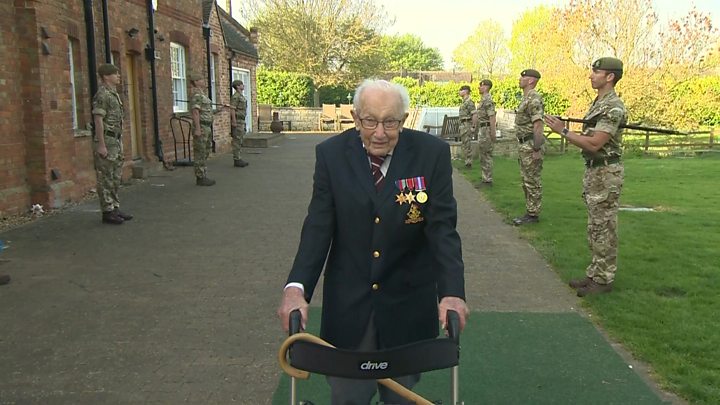
Mary Beard, my favourite professor (apart from my brother, of course) came up with an interesting observation in her blog piece in yesterday’s Times Literary supplement.
What if the government, in its anxiety to get the nation working again, decides that there are “more important things than living”, as a Texas politician has famously said? As a result, everyone over seventy must stay at home until further notice, and everyone else is free to flounce around infecting each other?
Mary’s own situation – she is under 70 and her husband is past that point – leads her to ask by what logic she should be allowed out, only to come home and infect him.
Both my beloved and I are under 70. I am forever 59, as my blog title suggests, but if I happened to be 69, would I suddenly face internment on my next birthday? Perhaps I would get another letter from Boris Johnson, or more likely a stern letter from the local constabulary telling me to get my arse back home.
And should I be bold enough to venture out, will there an Oldie Squad scanning the motorways looking for geriatric drivers? Will I have to duck behind a hedge to avoid tut-tutting joggers?
As Mary says, we’re very confused about the elderly at the moment. One minute we praise them. Captain Tom raises millions for the NHS. The oldest man in the world is British, and we marvel at his ability to string together a few meaningful sentences. And as the oldies die of COVID-19, grandchildren tell us what wonderful people they were.
The next moment they’re bed blockers. They’re a burden on the state. We might worry about the over-70s being allowed to die in the pandemic, but the over-90s? Let’s not waste oxygen, ICU beds and PPE kit on them. They’ve had their time.
Even 99-year-old Captain Tom might get it in the neck. You could argue that he’s been manipulated, though goodness knows by whom. A captain is a junior officer in the army. He would surely not use that title when referring to himself. Even someone calling themselves major, the next rank up, comes over as slightly ridiculous. Someone else has given it to him for branding purposes. He most likely wouldn’t know how to set up a Just Giving page. Someone else set it up for him. All he’s done is repeatedly walk up and down a garden. He’s probably bewildered at all the fuss, even though I’m sure he’s enjoying the attention.
Back in the land of the under-seventies, I wouldn’t be surprised if the good captain isn’t making a few people feel rather jealous. I might run a marathon a day for 60 days, climb the ten highest mountains in the world or walk from Alaska to Tierra del Fuego to raise money for charity, and what do I raise? A few thousand, a few tens of thousands? Then this doddery old chap comes along, slides his zimmer frame up and down his garden, and he’s raised £20 million! He’s feted as a champion and will probably get a gong from the Queen. Where’s the justice in that?
I don’t share such churlish thoughts, of course. He’s a symbol, a focus for our generosity, a virus of hope.
In terms of acclaim if not achievement, he’s the Francis Chichester of our age. Anyone remember him, by the way? The world’s first solo round-the-world yachtsman. His voyage, completed in 1967, took him nine months. He was so famous that he made it on to a postage stamp, a rare honour at the time. One of the reasons why he was so feted in Britain was that he was seen as a shining example of what the elderly could achieve. Which shows what low expectations we had of the elderly – both in terms of lifespan and vigour – back then. He was 66 when he came sailing back to England.
Different times, different circumstances.
But it does seem sad that we can adore Captain Tom and yet sigh with regret as the 90-year-olds are allowed to die in care homes. Needs must, it seems.
Needs must also when we’re told that we shouldn’t wear face masks, even if they stop us spreading the virus, because the science isn’t conclusive. Whereas the real reason is that there aren’t enough masks to go round because it has failed to procure them, and it doesn’t want to deprive NHS staff of their much-needed equipment.
Needs must also that we should keep the vibrant, lively, energetic elderly locked away while the rest of us bound happily out into the streets again, should things turn out that way.
Needs must means do the expedient thing. I’m not about to call out this or that government for mistakes they have made during this pandemic (well, not in this post anyway), even if I have the heartiest contempt for the people we in the UK – and our cousins in the US for that matter – have elected.
Governments make mistakes because they’re made up of human beings. But if I make a mistake, it’s far less likely to affect the lives of millions of people than if our leaders screw up. Whether they’re forgiven or excoriated, their mistakes can’t be unmade.
But what sticks in my throat is when those governments fail to admit that they’re driven by expediency, and try to dress up grim necessity with platitudes and pious expressions of principle.
But is it right to demand total honesty of governments in extreme situations? Would we British have thanked Winston Churchill for telling us how dire things were in 1940? Or, in that scenario beloved of disaster movies, if the asteroid is heading towards us and promising certain death, should we be told of our fate and left to make our peace with our maker, at the risk of mass panic and civic chaos, or should we be left in blissful ignorance until the end?
Surely there’s a balance to be struck in the information that needs to be released. But where that balance is laced with untruths, as Donald Trump, America’s demented cheerleader, has discovered, the result can be toxic.
I suspect that when The Recriminator puts the current crop of leaders on trial for their missteps in the current crisis, it will not just be their mistakes for which they’re damned for posterity, but also their obvious, frightened and stupid lies.
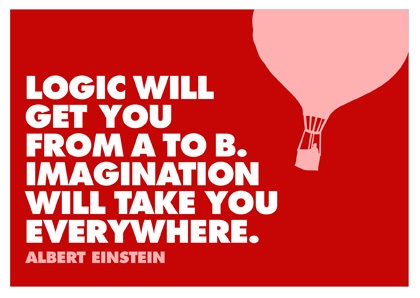
“Mummy, Daddy, what’s a pandemic?”
“Hush child, Mummy and Daddy are enjoying a nice quiet glass of wine. If you’re really interested, here’s a good book about the last time this happened. It’s called Pale Rider. Come to think of it, here’s another good book called The Tipping Point. It explains why everyone in your class loves Peppa Pig.”
That might be the script for one of those talking baby videos, or some insane cartoon along the lines of The Simpsons. I only mention it because I had an equally insane thought the other night. I was thinking about how tough it must be for locked-down mums and dads to assist in the education of their kids at home.
To maintain some semblance of the national curriculum must involve chaining them to a table for those online classes, and wracking brains to retrieve some memory of Henry VIII, algebraic expressions, adverbs and cloud formations.
But what if we did something different?
The idea is this. If we have engineers who are capable of designing medical equipment from scratch in a few days, and scientists who can develop vaccines in one hundredth of the time it normally takes, surely there are enough fertile brains around who could rapidly develop a Pandemic Curriculum that would help kids to make sense of the economic, scientific and political dimensions of an event that in a few short months has changed their world.
You could argue that there are plenty of adults who would also benefit from such an education. All the more reason to develop something that would engage both kids and grown-ups.
Given that for most students there will be no exams this summer, we have an unprecedented opportunity to chuck out the normal curriculum and replace it with something that doesn’t just help kids understand how the new world works, but gives them some of the life skills they will need when the doors open again.
So here are a few things we could focus on:
How do viruses spread? And by extension, how do trends, fashions and fads go mainstream? Which of course is where Gladwell’s Tipping Point comes in. Get students to design a simple mathematical model that shows what it takes for something to “go viral”. Learn about assumptions, and how they can derail predictions.
Design your own vaccine. This could be a puzzle in which you set out to stop a virus in its tracks. Could be on a computer (good for gamers?) or with physical objects depending on the age group.
Create a video public health campaign. Home-made rainbows are only a starting point. Students could collaborate online with their friends, pets and parents to create stuff far more effective than endlessly repeated government slogans. There could be a competition for the best video per age group, and tutorials from furloughed film producers on video techniques.
Spot the fake news. Use the blizzard of online information on COVID-19 to analyse and sort the results into probable, possible and fake. In the process, learn about provenance, motivation and propagation. Who’s behind this shit, and why?
Create a pandemic budget. Learn about debt, what governments pay for, how they raise money and how they spend it. Then create your own budget.
Design the re-entry. How would you get things back to normal? What would you open first, and why? How would you avoid a new lockdown? Work with your classmates to develop your own plan.
Create a charity. Think about how the world will be different after the pandemic. What sort of charities will be needed when there’s not so much money around? Design a new one that will deal with different needs – perhaps loneliness, staying healthy, self-sufficiency, community cooperation, green issues.
Those are just a few ideas based on things that are likely to keep adults awake at night. Is it better to keep the young in a state of blissful ignorance, or get them thinking now about dealing with the real issues that will face them as they grow into adults?
Some aspects of the established curriculum – the three Rs for example – should continue as designed. But as for the rest, Adolf Hitler, Shakespeare, trigonometry and photosynthesis can surely wait for a few months. Our kids need to learn some different stuff right now.
I’m not a teacher, though I’ve designed a few courses and trained a few adults – both young and old – in my time. So I know enough to imagine what could be achieved, even if I don’t have the pedagogic skills to deliver it.
But there are enough smart educators around who might have some time on their hands and who do have those skills. So what are you waiting for? If the Mercedes Formula 1 team can invent a CPAP oxygenator in days, surely you can create an alternative curriculum in similarly short order that will revitalise all those bored kids and mooning teenagers stuck at home with their tetchy parents?
Getting the bureaucrats onside would be no easy task, I know. But if you’re in Britain, how about getting Dominic Cummings to sponsor a course on Red Teams and super-forecasting? That might persuade him to kick Gavin Williamson and his Blob into action.
As I said the other day, we need to stop blaming (at least for now) and start doing. There’s an educational opportunity out there which, unless there’s a lot of stuff already in train that I’m not aware of, is going begging.
And by the way, if you think I’m obsessing about education only in Britain, my country, this is an international opportunity. How great would it be to see kids working on a pandemic curriculum with their counterparts elsewhere in the world? That would teach our politicians a thing or two about overcoming inward-looking national stereotypes.
It’s not too late. Let’s get to work!

You might think from the title of this post that I’m writing about some poisonous medication that Donald Trump is urging his people to take. Actually, it’s about my next Man Project, which is sorting the photos.
It’s difficult to concentrate on anything on when my beloved is banging on the eves and rattling the rafters like a demented exorcist in a vain attempt to repel the resident squirrel, with shrieks of “out, out!” and “shoo!” interlaced with words I couldn’t possibly repeat on this very well-mannered blog.
But needs must, so regardless of the background noise I’m starting to assemble folders of pics from old laptops and internal disc drives.
I did a similar exercise once before, but that was back in 2002, before digital photography really took a grip. Using a scanner and a clunky old desktop with a large (for that time) disk, I spent weeks digitising family pictures.
I started with daguerreotypes of ancient forbears, most of them dressed up like Queen Victoria and Prince Albert and glowering sternly alongside their cowed offspring at the camera. I then moved on to the jauntier Edwardian photos, and then to the Brownie era, as grandparents and their friends posed at tea parties, on windswept hills and on daring visits to Paris.
My arrival, and that of my siblings coincided with colour. My father’s Kodachrome slides were of even more daring holidays – skiing trips (as above), Gibraltar, Austria and Paris again, along with much-loved Cornwall and North Wales. There were slides of home, many of them from the garden in the huge house he bought for three thousand quid in 1956, and then lost ten years later when his career broke into smithereens.
And cars, each of them slightly bigger than the previous one, attested to the rise in his fortunes, far more impressive than the old green Volvo he drove at the end of his life, whose dodgy suspension led me to suggest to him that it had had a stroke, at which he roared with laughter.
The slides continued after I left home, but gradually gave way to more modest colour prints, which he continued to take until he died.
I, on the other hand, became someone rarely photographed. Even if, as the current fad demands, I’d wanted to post a picture of myself at twenty on Twitter, I wouldn’t have been able to find one. What our kids don’t realise is that for those with limited means photographs were not cheap. I probably have as many passport photos from that decade as I have normal snapshots.
Then, as I turned thirty, came Saudi Arabia, which meant more money, and, though not necessarily as a consequence, marriage and kids. And loads of photos. So it was for the next couple of decades before the first clunky digital cameras came on the market, a few years after those massive, brick-shaped mobile phones.
Which takes us to the point at which I digitised the few thousand extant family photos, put them on CDs and sent them to my siblings. My wife contributed a stack of similar photos from her family, which introduced an Irish dimension to the archive. Job done, I thought.
Since then, of course, the phone camera gradually gained its stranglehold. We have cameras all over the house, from big SLRs and pocket models, all sadly neglected, testaments to the death of an industry. My kids went semi-retro at first. They persuaded us to buy them big digital cameras that looked much like the old ones, but even they have largely abandoned them in favour of the seductive charms of Apple and Android.
So in this time of plague, I’ve decided to assemble memories of the past eighteen years from our vast junkyard of digital pics. There are several reasons why this will not be as simple a project as the original one.
First, every picture has about six analogues. Whereas in days gone by, unless you were a professional, you wouldn’t dream of wasting a roll of film on one subject out of fear that you didn’t get the subject right the first time. Now it’s “ah g’won, take another one just in case”. And another one, and so on ad nauseam. Which means that of ten thousand pics, nine thousand are virtual duplicates that you must delete unless you’re prepared to scroll through them to get to the next subject.
Our offspring are even more prolific than us. Our first and only grandson is two and a bit. His mother must have at least twenty thousand photos of him. It’s not as if one day he goes paragliding and the next disappears down a pothole. Out of those twenty thousand you could maybe get down to a couple of hundred worth saving for posterity as markers of his development and all-round lovable cuteness. But our daughter wouldn’t agree. For her, every picture is sacred.
Second, the job of assembling them is daunting. Every so often, I dump stuff from the mobile on to the laptop. But I often fail to delete them from the mobile, or I forget which I’ve copied over. So every successive dump contains duplicates, all of which must be weeded out before one even gets to the job of putting them in some kind of order. Also, when you copy them over, depending on how you do it there’s a risk that the files immediately acquire the date on which they were copied, rather than when they were taken.
Third, how do you categorise them? By date, month, year, event, human subject(s)? Do you leave the job to a photo app, that hoovers up all your pics from everywhere and dumps them into a set of simplistically predetermined silos? Or do you do it the hard way?
And finally, if you have so many pics, and your memory is fading, how do you place those people and events into any kind of context without obvious clues as to when and where they were taken? With thirty thousand photos, how long would it take for you to label each one with “Bert, Joe and Glenda at Grandad’s sixtieth wedding anniversary, 1936” as our ancestors did on the back of their snaps. And who the hell were Bert, Joe and Glenda anyway?
So despite the myriad of images, you’re still reliant on the unreliable memories of the elderly to untangle the web of relationships that the images represent. And, frighteningly, the unreliable memories now belong to us.
Is this herculean effort even worth worrying about? Why should our kids and their kids want to know about some party we went to in 1993, about who was there and who threw up over who? Why should we be over-curious about their parties, and what terrifying things they did on their holidays?
At any other time than now, perhaps I would leave these random images to fester where they lie, like the contents of an ancient drain in Pompeii. If they disappeared for whatever reason, there would be literally trillions more that will give digital archaeologists more than enough material to gain a comprehensive picture of what life was like before the pandemic sent the world as we knew it tumbling down.
But for my own satisfaction I’m going to sort them out anyway, no matter who cares or not. Because if I’m ever tempted to feel sorry for myself at this time of isolation, I can be reminded that my life up to now has been pretty damn good, and if the coronavirus were to bring it to a premature end, I’d have very little to complain about.
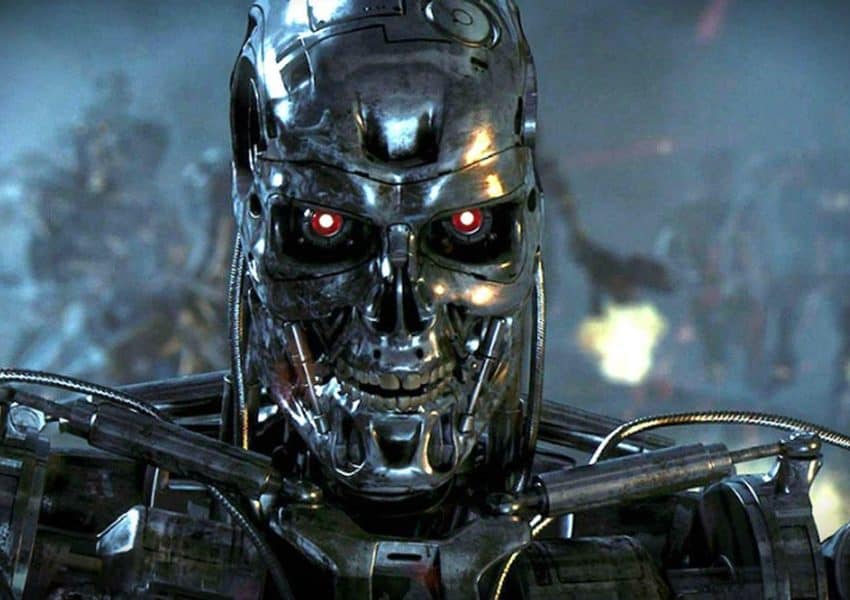
Here we go then. A little early in the game perhaps, but the recrimination engine is cranking up. Everyone’s getting in on the act, from conspiracy theorists to big-ticket mainstream journalists.
The recipe is familiar. A large dollop of cover-up, a strong flavour of deep state and a seasoning of insanity and espionage. The standard defence of “we are where we are. Let’s get the crisis over with before we start asking awkward questions” is crumbling before The Recriminator – an Arnie Schwarzenegger decked out with a titanium PPE suit slashing away at an army of lily-livered apologists.
Exhibit A is the origin conundrum, which is bubbling away nicely. Even the big newspapers are unable to figure out who to blame, apart from China in general. Ben Macintyre in yesterday’s Times gives us chapter and verse on the KGB’s campaign to pin AIDS on the CIA, and the fact the myth is still alive today. Today’s Sunday Times tells us about the Wuhan Bat Woman, in whose lab COVID-19 was allegedly brewed and accidentally released.
Donald Trump, in characteristic fashion, wavers between praising Chairman Xi for China’s transparency and mumbling “we’ll see” – his usual response when he hasn’t a clue and realises he should have a clue – about reports that the bug originated in the notorious Wuhan lab.
Then there’s Exhibit B: those who fiddled while Rome burned – or at least when the first few tenements went up in flames. Boris Johnson’s enjoyment of his extended recuperation at Chequers probably diminished a little when he learned, also from the Sunday Times, that he failed to attend five COBRA meetings before he got sick, some of them at weekends.
If this is true, I have some sympathy for him. Leaders, or anybody else for that matter, forced by circumstances or the expectations of others to work 12 hours a day seven days a week, especially when they live on top of the shop, sooner or later become in danger of losing a sense of perspective. The occasional day of leisure and reflection will surely be of greater benefit than attending endless meetings in which much is discussed but little achieved. Besides, even Winston took the odd day off.
The same newspaper accuses the British government of “sleepwalking into a pandemic catastrophe.” It may be true that Johnson and company wallowed in a warm bath of complacency for three critical weeks, but equally true is that we as an electorate have also sleepwalked. We slumbered into Brexit, and last year elected the most incompetent bunch of politicians in two generations to serve as our government. You might not agree with that suggestion, but I would argue that our sleepwalking took the form of the suspension of critical faculties. We followed our dreams rather than objectively drawing conclusions from a number of self-evident realities.
So we might gleefully pronounce that “it’s the government’s fault”, but we should accept that it’s our fault too.
Yes, we’re into a four-way blame cycle, in which everyone blames everyone else – involving the politicians, the scientists, the bureaucrats and the public.
What of leadership? As The Recriminator dons his gleaming armour, we in the United Kingdom have been parading one hapless, rabbit-in-the-headlights minister after another, and a stream of compliant scientists prepped to deliver the same slogans. Boris Johnson, more by accident than design, sits above the fray.
Exhibit C is in US, where the situation is slightly different. Donald Trump has assumed the role of Recriminator-in-Chief. Every day, seemingly without rhyme or reason, he finds someone else to blame for his government’s lame response. The fake news media, China, the Democrats and anyone else who dares to distract attention from himself. His advisers crowd around him, some struggling to keep a straight face. Others, like Mike Pence, adopt expressions of blank piety. And poor old Dr Fauci puts himself through an Olympiad of carefully chosen words in his attempt to tell the truth without criticising his boss.
In Germany we have Angela Merkel, who shows her scientific rigour as she calmly spells out the consequences of each week of early lockdown on the German health system in a manner that even the dimmest of us can understand, yet without condescending to the logically challenged. If things go pear-shaped in her country she will be in trouble, at least in terms of her mental health, as the inner politician points fingers at the inner scientist and vice versa.
Very few leaders will emerge from this crisis with a clean bill of health as far as their people are concerned, because the pandemic offers huge opportunities for their opponents to criticise them. But it does look as though female leaders (as in Merkel, Ardern in New Zealand and one or two others), will emerge with more credit than their male counterparts. Which is not surprising, given that all the strong men are men.
If we’re going to ascribe blame not on the basis of the evident human failings of the decision-makers but instead on cold, hard data, we’re going to have to wait for a very long time. Or so says my brother, who is a leading academic in the field of medical statistics. In a phone conversation this morning he suggested that this pandemic will be the subject of PhD theses for the next twenty years.
The haphazard way in which infection data is collected, analysed and interpreted around the world makes it ridiculously premature to come to any certain conclusions either on infection control or the efficacy of treatments. In other words, most countries are doing it their way, which is very British of them, but also rather strange, because I thought the World Health Organisation had provided frameworks for such research. More fool me, but I wouldn’t join Donald Trump in blaming them, because persuading all the scientists and politicians to adopt a common approach must be like herding cats.
Be that as it may, The Recriminator won’t wait for data. He’s already well into his stride, and no doubt he won’t be satisfied until the heads start to roll, regardless of how long it takes. But no matter how many victims he claims, it will only be an entertaining sideshow, because in most countries the die is cast. People will keep dropping, and the pandemic will end when it’s good and ready.
Though blaming someone else makes us feel good, doesn’t it?
One of the interesting things about the reaction in the United States to the pandemic is how protest groups against the lockdowns in various states seem to pop up out of nowhere. Except that they’re not out of nowhere.
Whatever you think of the lifestyles of people labelled as Trump’s “base”, there’s no doubt that there’s a groundswell of discontent – perhaps not just among them – at the severity of the measures. People are pissed off that they can’t go to malls, go to church, go to the beach and invite each other to barbecues.
There’s nothing new about protests in America. I’m old enough to remember the civil rights marches and the Vietnam war demonstrations in the Sixties and Seventies. If you supported those protest movements, you can’t complain if people whose politics are far from your own turn out to register their discontent in public about a current issue.
But there’s a difference. And it lies in how quickly the mass media of the time enabled the virus of protest to spread. Two hundred years ago, it would have taken quite a lot of effort to organise protests in multiple cities more or less simultaneously. Think about it. No internet, TV, radio, means of rapid transportation. News would travel as fast as a horse could go. It took three days for official word of Wellington’s victory over Napoleon at Waterloo to reach London.
Even in the sixties, grass-roots protests – as the gatherings in Michigan, Ohio and other states appear to be – would have been organised by word of mouth, leaflets, posters and small meetings. Only when they became newsworthy would their impact be amplified by radio and TV. And as even today Fox News has amply demonstrated in its relationship with Trump and his base, public reaction to protest was heavily influenced by political views held by wealthy owners of newspapers, TV networks and radio stations.
Nowadays you don’t need to be William Randolph Hearst or even Rupert Murdoch to start a riot or two. Savvy use of the social media will buy you previously undreamed-of influence, as a bunch of Russians showed before the 2016 presidential election when they organised a protest in the US by the use of fake identities on Facebook. It also helps if you have a few billions at your disposal, because you can use your money to spread discontent in a number of ways – Facebook ads, bot campaigns on Twitter and funding for lobbyists, pressure groups, political action committees and so forth.
Whereas Murdoch through Fox News can influence opinion through the drip-drip repetition of selective information and outright lies, any old billionaire can ignite the fire. Robert Mercer, a former IBM computer scientist turned hedge fund magnate, proved that when he funded Breitbart and Cambridge Analytica, two organisations that played a major part in persuading America to elect Donald Trump and Britain to reject the European Union.
It took the Nazis eleven years to reach power in Germany. It took Donald Trump two years to gain the presidency. Who’s to say that over the next few days, with the tacit approval of Trump and the money of people like Mercer, we won’t see the preening exhibitionism of a few rifle-toting good ole boys turn into mass civil disobedience, with armed mobs storming statehouses and governors’ mansions in an attempt to force state administrations to uphold the right to go to shopping malls?
And what then? Armed insurrection? The collapse of the rule of law? The National Guard called out? The military?
By way of context, perhaps we should cast our minds back to Russia after the collapse of the Soviet Union, or specifically around the time of the attempted coup against Gorbachev and Yeltsin’s subsequent accession. The country was in chaos. The value of the rouble had collapsed. Public servants were not paid for long periods. Nuclear scientists were touting their expertise to the highest bidder. The former constituents of the USSR who had weapons on their territories suddenly became nuclear powers. As Yeltsin launched his reforms, large industrial concerns found themselves in the hands of oligarchs, many of whom worked hand-in-hand with organised crime.
Those of us who welcomed the end of the Cold War looked on with horror and trepidation. Order was eventually restored, but at the cost of many of the new liberties that Russians won after the collapse of Soviet authority.
To compare post-Soviet Russia with virus-stricken America would be to invite ridicule. And yet, watching the early signs of America’s disintegration under the weight of the pandemic, exacerbated by a catastrophic lack of leadership from the federal administration, it’s hard to avoid a sense of diminishing certainty among those of us outside the US, for whom, for better or worse, America is a bedrock of global equilibrium.
We – speaking for those in Europe and beyond who have known centuries of disconcerting change, instability and war – may not have liked all of America’s policy decisions and their consequences over the past seventy years. But to contemplate life without its massive presence would be almost unthinkable.
Now, as some Americans worry about whether Trump will find a reason to postpone or even cancel this year’s elections, as individual states form alliances to take concerted action against the virus independently of the federal government and as law and order is threatened with the apparent connivance of the president, the world suddenly feels wobbly in a way that it hasn’t since those days following the fall of the Soviet Union.
Just as the hippo in the picture has a symbiotic relationship with the birds that keep it free of ticks, America, its friends and trading partners each benefit from their long-standing relationships. If the hippo gets sick or dies, the birds will find another hippo on which to feed.
In the geopolitical world, that is already starting to happen. But will the birds find the new hippo as hospitable as the old one?
Perhaps before long we might start to find out.
Three more weeks! What the hell are we going to do? Three more weeks of po-faced politicians and sanctimonious scientists repeating the same bloody slogans, and saying “today I can announce…” followed by yet another target that will never be achieved.
Three more weeks of videos – silly, heart-warming and heart-breaking. Of watching the news on telly every night. Of narcissistic celebs posting pictures of themselves at 20. Of tut-tutting at neighbours who don’t come out from behind their hedges to applaud the NHS. Of cooking bizarre sauces never previously known to man, usually with olives.
Three more weeks of domestic projects – painting woodwork, vacuuming crannies undisturbed since the fall of Troy, plotting evil things against the squirrels in the loft.
Time for a Captain Tom-style challenge perhaps. Three reruns of the entire Sopranos canon in a week while exercising on the cross-trainer? Memorising the entire script of The Life of Brian, with accents? Replying to every tweet from Donald Trump with an entirely new species of insults not seen before on the social media? Or perhaps a set of photos showing the progress of paint drying, taken every minute for three hours and posted on Facebook.
I fear that none of these worthy activities will raise £12 million for the NHS, but they might be fun in a grim kind of way. Better than emulating polar bears that bang their heads against walls in zoos.
No doubt we will knuckle down, just like the French, the Italians and the Spanish. By the way, I never thought that stoicism would emerge as part of the Italian character. From all the reports I’ve seen, the people of that beautiful country are responding to disaster with grace, dignity and resignation. Not so many people are singing from balconies, but they do have Andrea Bocelli, and they’re hanging in there.
Not so, it seems, in certain parts of America. In Ohio and Michigan there have been flag-decked cavalcades of cars, their drivers hooting horns in misery at not being allowed to visit the hairdressers and buy plant seeds. “My gaad, the only place we can shop is Walmart!”. On that score, I can understand their frustration.
Then there are the usual troupes of gun-toting extras from Planet of the Apes posing on the steps of civic buildings, brandishing their AR-14s atop bellies straining to break through their hunting jackets.
Now here’s a thought. New York is the city that’s suffering most in the US. As far as I’m aware the Big Apple has seen no such outbursts of libertarian exuberance. New Yorkers are behaving much as we Europeans are in London, Paris, Milan and Barcelona. Why should this be?
I do have an explanation, or rather a theory. Of all the cities in the continental United States, New York is the only one that in recent memory has suffered the trauma of burning buildings and bodies falling in the streets. 9/11 happened not so long ago, so there are plenty of people with vivid memories of that dreadful event. Have those memories conditioned their response to this crisis, and given them a resilience that other American cities lack?
And what of our cities? Most of us don’t remember the East End of London burning and the destruction of Coventry in the Second World War. Likewise, few of the people of Barcelona living today witnessed the Spanish Civil War. But it’s pretty clear to me that memories passed on through generations have re-written our cultural DNA, so that even without a well of personal experience we seem to be showing the same resilience in the face of an invisible threat as our forebears did as they coped with the all-too-obvious danger of incendiaries and high explosives.
Some of us in each of the four European countries most affected by the coronavirus have more recently experienced the fruits of terrorism, but nothing on the scale of the war that people like Captain Tom witnessed.
If the effect of cultural DNA stretches back that far, you would also expect the people of Richmond, Atlanta and Charleston, cities that suffered grievously in the American Civil War, to show the same qualities of stoicism and resilience as New York. But perhaps not every part of America, especially cities and states that might have lost their sons in foreign wars but have been untouched by tangible disaster on their doorsteps.
The idea of cultural DNA is not mine, I should point out. A few years ago, a chap called Gurnek Bains wrote a stimulating book on the subject. I reviewed it here, in case you’re interested. It’s quite a long post, but it gets to the point eventually.
I might be maligning the good people of Ohio and Michigan, by the way. Reports on the protests have suggested that they’ve been inspired by right-wing pressure groups funded by various billionaires. Which ones I can’t say, because I haven’t delved into the story deeply enough. But it could be that the honking cavalcades and loping gunmen have nothing to do with the resilience of the population and everything to do with polarising influence directly or indirectly inspired by you know who.
Fortunately, at the risk of sounding complacent, deeply divided as we British are politically, there’s nothing the political fringes can exploit that’s likely to bring us out on the streets. Over the past few years, the usual stuff about inequality, incompetent government and how it’s all the EU’s fault has left us too exhausted at this point to stream out of our homes in anger and risk PC Plod’s retribution.
We also have secret weapons that keep us relatively calm. We have loo rolls from Tesco. We have a highly-developed sense of humour. And if we don’t exactly share a sense of national unity, we can and do unite in admiration for all the steadfast people who, despite their fear for their own personal safety, are keeping us fed, getting us to work and saving our lives.
That focus on people who have it worse than most of us will probably be enough to see us through the next few weeks and beyond. The lack of hairdressers? Not a problem for me, I’m glad to say.
One or two people have asked me why I’ve dramatically jacked up the frequency of posts over the past couple of corona-afflicted months. Am I writing about the pandemic as a form of self-administered therapy? Do I imagine that churning out a post a day, as opposed to once or twice a week, will be any less boring to the people who encounter this blog?
The answer is simple. It’s a matter of balancing input with output. At a time like this, locked at home with no children to educate and no work to perform, it’s easy to sink into input only – TV, books, social media, games, videos, sudoku or whatever else takes your fancy.
We have plenty to do. All those home projects that normally get put off. And they’re great. Very satisfying in fact. But many of them are fairly mechanical. Sorting out books, cleaning patios, painting woodwork. They don’t exactly tax the mind.
Writing about all the strange things that are happening at the moment is my way of making sense – to my own satisfaction at least – of the experience.
I’ve never written a diary before, and I’m not sure that what I’m writing under the heading of Corona Diaries actually is a diary. Be that as it may, I’m making sure that I’m capturing my thoughts at an interesting time. I wish I’d done so at other moments of crisis. Cuba in 1963; the 3-day week in 1973; various wars and financial crashes. During good times as well. The 1966 World Cup, the moon landings, the fall of the Berlin Wall. And personal landmarks – getting married, the arrival of children and so forth.
Seventeen years ago, just before he died, I spent three hours recording on video a conversation with my father. My mother was there too, but he did most of the talking. I asked him a hundred questions about his life. One of them was about how he felt about the threat that Hitler posed in the late 1930s. His answer was that he would have done anything to stop a war, which he freely admitted put him in the appeasement camp.
How much better if he’d been able to point me towards a diary of the time. Not that his thoughts expressed in 1939 would have been a substitute for a video that showed much more than a narrative. But diaries, if they’re honestly written, can give a much more accurate view than 60-year-old recollections.
My memories of events such as Cuba, Berlin and the Gulf Wars consist of fragments, not consistent thought. Wondering whether I’d wake up the next morning in October 1962. Looking at a newspaper headline on Kennedy’s assassination in wonderment at the size of the typeface. As time went on, I can recall more coherent thoughts – on Vietnam, Nixon, Saddam Hussein, Khomeini and Brezhnev. But how much of what I think I remember reflects who I am today as opposed to the person witnessing the events at the time?
I suspect that for most of us diaries are unimportant. We’re at an interesting transition point where, even if we don’t leave a formal written account, the evidence of what we think, feel and do is quite abundant, but only if we use the social media. Assuming the data doesn’t disappear into a virtual crematorium at some stage, if in fifty years’ time you wanted to know how your parents reacted to some event in their lives, you would probably have to assemble the evidence from a digital patchwork of photos, likes and fragmentary comments on the back of other people’s input.
Going back to my father, would he have “liked” a contemporary Facebook clip of the General Strike, or Chamberlain’s “Peace in Our Time” speech at Croydon Airport? How would he have reacted to propaganda videos from Oswald Mosley and his Blackshirts?
As it is, all that remains of most ordinary people like him is photos, letters and diaries, whose survival will be largely a matter of luck. Otherwise we have to rely on a dwindling number of living eye-witnesses, whose memories will mostly be fragmentary.
There is, of course, a big difference between a public diary like mine, which is intended to provoke, inform and entertain (even if it doesn’t succeed on any of those counts) and a private diary never intended for publication. Those are far more interesting, though I’m not talking about the majority of political diaries, which are written with one eye on the posthumous reputation of the writer. As pure entertainment, I doubt if many can beat Alan Clark’s journal of political life during the Thatcher years.
The best example of the private diary has to be that of Samuel Pepys. Did he expect it to be published? I doubt it, though he must have figured that his family would read it, which probably explains why some of the cruder expressions he uses are in code.
I doubt if I’d ever have written the classic diary, noting in exhaustive detail one’s activities on a daily basis. My life has been interesting enough to me, but probably not to others. I would have got bored very quickly. And as for pouring out innermost feelings – love and hate, fears and hope – no way. Nobody’s business except my own. Some things are best forgotten.
Anyway, writing about the pandemic on almost a daily basis has been enormous fun, even if the subject isn’t. Hopefully it will continue to be so until I get hauled off to hospital. And should my descendants be interested, they won’t have to scrape up likes on Twitter and Facebook to figure out what their ancestor thought about Donald Trump, Brexit, Boris Johnson and other subjects of historical interest. It’s all here, my dears.

And now for a morality tale of sorts.
For a while we’ve had visitors in our loft. We hear them but we never see them. A few years ago, we called the council and they sent a man. He climbed up into the loft to our extension, which we don’t use, and told us that on the evidence he saw we had resident squirrels. He left a bowl of chopped-up Snickers bar laced with poison. Squirrels love chocolate and peanuts apparently.
It didn’t work. He suggested that we get ourselves an air rifle and shoot the culprits, who were most likely hanging out in the garden. His qualifier that “I didn’t tell you that” was enough to put me off from going down to our local gun shop (yes, I know this is the UK, but we actually have one!) and purchasing the necessary weapon. I don’t like the idea of shooting things, and anyway, a few months later the squirrels went away.
Recently they came back. Maybe not the original ones, but perhaps their grandchildren, who had listened to stories of the magic loft on their grandpa’s knee. You could hear them above our bedroom at strange hours of the day and night – tapping and scratching away. If we banged on the ceiling, they would go silent. But not for long.
This time, we decided on a hi-tech solution. We got ourselves a little device that emits a high frequency sound wave that squirrels are not supposed to like. We stuck it up in the loft. There was silence for a while. But then the little bugger (or buggers) returned.
Now we’re in lockdown, so it’s highly unlikely that we can find a posse of exterminators willing to use any means necessary to get rid of them. I’ve been a bit worried about the possibility of one of our visitors chewing through an electric cable and setting the house on fire, but I figured they would trip a circuit breaker before things got to that point.
But yesterday, as my beloved was having at the driveway with our pressure washer, the machine just stopped. After doing a bit of fault-finding I discovered that a circuit that provides power to half the house has gone kaput. No breaker appeared to have tripped, which was ominous, but there was no smoke from the loft either.
We now had no shower, because the pump in the loft seemed to have been affected. Fortunately, the lights were still working, and so was the heating. But what caused the outage? If we called in an electrician, assuming one was available, we would risk the deadly virus penetrating our little cocoon. If we didn’t, we would have to live with whatever was happening up there – live wires and God knows what else.
But wait, my precious. Since the outage started there was not a peep from the squirrel. Which suggested that there might well be a dead body in the loft.
After much agonising, we decided to call the electrician, give him a mask if he didn’t have one, have him slather himself from our dwindling supply of antiseptic gel, wipe all the surfaces he touched and hope for the best. The alternative would have been to spend the rest of the lockdown getting very furry. But that would be better than being electrocuted or burnt to a frazzle.
We may have wanted the squirrel gone, but not under these circumstances.
Up to this point, then, with a dead squirrel cooking in the loft and us facing the prospect of months of jungle-washing, the moral of this tale would have been to be careful what you wish for.
But there’s more. We called our home emergency service. Yes, said the charming chap from Athlone, we’re still in business and we can send you an electrician. Five minutes later, we got a call back on the phone. It was the electrician, who turned out to be an equally charming woman called Karen. Which surprised me a bit, since in all my long years I had never met a female electrician.
So the second moral of the tale is just because you haven’t personally experienced something, it doesn’t mean it doesn’t exist.
As it turned out, Karen didn’t need to visit us. She asked us to send her a photo of the circuit board, and quickly identified that a switch I thought was on was in fact off. One flip and we were back in business, with me feeling like a total idiot. Collapse of cable-chewing dead squirrel theory.
And thus to the third moral, which is that when shit happens, the most likely cause is usually the most obvious one.
Each of these morals is relevant to the current plague, but I’ll leave you to figure out how.
Now we have to work out what to do about the squirrel. A final solution is required. Yet another Google search has led to innovative solutions. Ultrasound is useless, we are told, so I suppose we should sue Amazon.
The latest colourful answer is to spray the urine of foxes or deer around the loft. Yeah right, as if I’m in a position to go hunting these animals with a little pot and asking them politely if they’d piss in it. I reckon that a more effective solution would be an electrified fence around the eves that delivers 20,000 volts to any animal brave enough to touch it.
It would be interesting to see how many circuit breakers that would blow. Perhaps an automated taser activated by movement would more easily do the trick. But I doubt you could find one of those on Amazon.
This being lockdown time, there must be an online forum of frustrated Americans with hunting jackets and AR-14 semi-automatics who have nothing to shoot. They would surely be glad to advise.
On the other hand, perhaps there’s new life being created up there, and we should take satisfaction from that thought in this time of doom and death.
But enough of this rambling. Just another day in lockdown. Time to make a cake, I think.
Unlike some people who get skittish about the effect advancing years might have on their career prospects, I have never contemplated lying about my age. Until now.
According to yesterday’s London Times, the British National Health Service has invented a “clinical frailty scale” that will determine whether or not you get a bed in an Intensive Care Unit during the COVID emergency. It applies to the over-65’s. Basically, you will be assessed on a points system. Over 70, you get four points, plus three penalty points for your implied fragility. Which takes you dangerously close to the cut-off point of eight points. So any underlying conditions – a dicky heart, lung problems, dementia and so on – will mean that you don’t make the cut.
It is, apparently “guidance”, meaning that clinicians will make the final judgement based on your points, plus your current state as indicated by vital signs. Annoyingly, the article doesn’t tell us how many points you “earn” if you’re between 65 and 70, which is my bracket.
So does this mean that it will make no difference whether you’re a marathon runner or a giant sloth, so long as your vital signs are heading in the wrong direction? Presumably your path will be oxygen on a general ward yes, but round-the -lock attention and a ventilator no.
An objective view might be that although it’s a system more likely to appeal to technocrats sitting behind desks rather than clinicians with real humans in front to them, it makes sense as long as it isn’t the sole basis for determining who is worth trying to save.
With that in mind, and considering that nobody who goes into hospital is jogging in there to show their underlying fitness, the determining factors governing whether you’ll make it out again is oxygen, medical care and, in the final analysis, luck. Though even if you’re lucky enough to get into ICU and on to a ventilator, you’re not out of jail. Your chances of making it past the ventilator stage are currently just over 30%.
Since my chances of making the cut are limited, to say the least, I shall prepare mentally in the hope that I can nudge the hospital staff towards a positive decision. This is where lying about my age might come in handy. If I thought I could get away with it, I would declare myself to be 64 until further notice. Unfortunately, with centralised records, I’m stuffed.
But given that the staff authorised to use the protocol include healthcare assistants, I shall go out of my way not to say unkind things about the apple crumble that the nice lady with the trolley brings me for lunch. A dog biscuit at dinner might be a bad sign.
Being able to complete a sudoku puzzle in five minutes might also help, as would challenging the nurses at arm-wrestling. But in the end, I suspect, I would discover that I can’t beat the system.
There is another potential dimension to the NHS’s systematised approach to assessing patients.
For now, it seems, the rationale is to stop the service from being overwhelmed, and specifically to reserve the highest level of critical care for the younger part of the population – or at least to load the dice against those who by objective criteria are less likely to survive.
I understand that, even if I don’t particularly like it. Well I wouldn’t, would I?
But what if, when the pandemic is over and the accountants start analysing the cost of the whole thing to the NHS and, by extension to the state, some bright spark comes up with the idea that “hey, this is the magic key to ensuring that universal healthcare is affordable going forward. So let’s keep using the scorecard even if we have spare capacity. That way we reduce the costs of pensions, social care and a big piece of the NHS.
Let’s encourage the private hospitals to set up their own ICUs and the health insurance companies to include the cost of intensive care in their premiums. If the elderly who can afford it wish to even up the dice, let them pay for it, just as they pay for their care home places. This will enable us to keep the intensive care capacity for future pandemics, but take the day-to-day burden of the weaker elderly away from the state and place it onto the individuals whose lifestyle choices have led to their pre-existing conditions.”
No matter that these individuals may have paid proportionately more of the taxes that fund the NHS. No matter that some of them may have worked themselves at the expense of their health – literally half to death – over forty years to provide for their families. The wealthy must pay. Period.
I wouldn’t be surprised if that’s the way we go. Which takes us towards passive, if not active, Logan’s Run territory – if you’re over 65, you won’t be encouraged to die, but you won’t be helped overmuch to live. Or at least it moves us a little closer to the American “system” in which inequality is institutionally embedded.
I’m not making a firm prediction here. Nor am I making a political point. But when this pandemic over we will be left, in healthcare terms, with capacity but not cash. So it’s entirely possible that there will be influential people who will be making the argument I’ve set out on the utilitarian principle of “the best possible outcome for the most possible people”.
If you don’t like the idea, you’d best be marshalling your counter-arguments now.

Happy Easter everyone!
It’s OK to say this, because the celebrants among us know that Easter Sunday is the day when we remember the resurrection, even though resurrection from our current state is some way away.
Better than Happy Good Friday, despite Donald Trump’s efforts to celebrate the Good bit despite the awful event being commemorated. I guess at the time of his tweet he was focused on the idea that Jesus died to absolve us of our sins. That must come as a particular relief to Mr Trump, though whether he is actually aware of all the sins for which he needs to be absolved is debatable.
On this special day, labour on isolation projects has come to a temporary halt. So my beloved has laid down the pressure hose with which she is remorselessly cleaning our drive, and I have cast aside the hoe that I’m using to scrape away several years-worth of accumulated crap between bricks and tiles that the hose can’t easily reach.
Normally on Easter Sunday we would have a smattering of family over for a big lunch. Perhaps the turkey we picked up for a bargain just after Christmas. This year it remains frozen. But we do have a large leg of lamb, which we shall cook along with other Easter specials including a nice cake. No matter that we’re the only ones who will be eating it. We’ll live on leftovers for the next few days, just as we do after Christmas.
I won’t bore you with details of whom we will zoom, but no doubt we’ll be able to see our grandson on his first Easter egg hunt.
Back here, exercise will continue. I won’t pretend I’m not getting a little jealous at the sight of my beloved swooning at Joe Wicks as she contorts her body into impossible configurations. Though perhaps she’s not swooning – more likely falling over in an attempt to regain her normal posture.
I will continue to go nowhere on the cross-trainer, with the TV for company. I’ve run out of Rick Stein guzzling his way through France, and I’m now on to Du Fu, China’s greatest poet, of whom the vast majority outside his homeland are totally unaware. I can’t say I can see what the fuss is all about, though Ian McKellen’s honeyed tones do make the 250 calories of purposeless energy expenditure a little easier.
Outside, all is quiet. Our neighbours are giving their strimmers a rest, though the dogs are harder to mute. I know them all by their barks. Max, the beagle next door, has a whoomph of outrage, as if mortally insulted by any other creature daring to make a noise, including us humans. The two St Bernards down the road bark in short but deafening low-frequency bursts. If their owners tire of them, they could be usefully deployed on cargo ships as sonic cannons to deter Somali pirates.
I also hear the shrieks of children at play. I recognise three of them. They have a large garden nearby, so they’re not breaching isolation rules. But there are others whose sound I don’t recognise. I must send up a drone to survey the immediate vicinity and take pictures of them and their families pausing during their exercise, or, worse still, playing football. Photos, date/time stamped and with GPS location will go straight to the local constabulary. Who needs net curtains when we have drones?
Speaking of the police, a little anecdote from Ireland. Yesterday my normally mild-mannered sister-in-law was pootling down the road close to home on her way to the local shop, when she was stopped by two gardai. The younger one, who was aged about fourteen, started interrogating her about her destination. Slightly riled by their impudence, she spun an elaborate cock-and-bull story about it being a lovely day, and she was off to her holiday home on the coast and rushing to get booze and barbecue stuff for a family gathering.
As the gardai turned purple and stated getting their notebooks out, she told them “just kidding, I’m off to the local shop to get eggs and milk”, and proceeded to chew them out for not having better things to do than lurking down country lanes. On your way madam, they said, a little taken aback at her ferocity. I hate to think about how that would have played out here in England.
No doubt we shall tune in to the Pope blessing us all from an empty St Peter’s Square and the Archbishop of Canterbury’s homily from his garden in Lambeth Palace. Then there’s the Queen on Instagram, Nigel Farage on Twitter and Priti Patel on Facebook. Oh joy! And John Cleese, who claims to be so broke that if you pay him he will send someone a personalised message on your behalf.
I’ve not yet started on the Sunday newspapers, since I’m giving them the usual three hours for their resident virus population to die off. However, I confidently expect to be told that we’re all doomed, or to be regaled with heartbreaking reports from ICUs and in-depth analyses of the failings of the government, along with the cataclysmic effect on the US of Trump’s hapless dithering. And if I skip the first sixty pages, I might find a few football non-stories and pictures of the fashion editor posing in designer PPE gear. Lots to look forward to then.
Speaking of newspapers, about the most sensible musing came from Matthew Parris (as usual) in yesterday’s Times, under the headline of “We say everything will change, but it won’t”. We will not learn lessons, he says, and things will gradually stumble back to normal by next year. Though “the shadow it (COVID-19) will cast will not be over attitudes, lifestyles and values, to which our attachment (and in which our inertia) runs deeper than we know. We’ll be just the same, but poorer and, sadly, somewhat fewer.”
I suspect he might be right, especially about being poorer and fewer. In which case our futurologists and super-forecasters will likely be out of business for a generation. They should make hay while the sun shines. It’s an interesting article. If you can get through the Times paywall, it’s here.
I will end with an apology, Priti Patel-style. I’m sorry if you’re even more bored than you were before reading this. Actually, I’m not sorry at all, because it’s not my fault and your emotions have nothing to do with me. So get over it.
That’s all for now. I’m off to bake the cake.
It’s time for a corona listicle. But this one, be assured, doesn’t have endless pages of photos that take years to load, enough cookies to choke the most ravenous Labrador and five times more ads than content. Just words:
That people who have the least often give the most. I’m thinking of the lady down the road who lives on her own, is in her eighties, but regularly bakes cakes and delivers them to the doorsteps of old people she knows who also live on their own.
That people who buy expensive apartments with airtight windows are idiots. Balconies and windows that open might not be aesthetically pleasing, but fresh air beats floor-to-ceiling vistas and air-conditioning every time.
That Brexit is no longer important. When a munitions dump goes up, you don’t notice which rockets are exploding.
That ancient grannies and granddads are expendable. Or at least so it seems, judging by the number of them dying in care homes.
That people don’t think you’re mad if you greet perfect strangers. I have discovered this waiting to go into Waitrose and passing people in the park. Except joggers, of course. They do think you’re mad.
That headless chickens can run a long way before falling over. Or so most governments appear to be showing us.
That people who keep the internet going are essential workers. If you want riots, chaos and general disorder, wait until broadband starts falling over on a regular basis.
That “platforms” for small businesses get very wobbly in a pandemic. As in Amazon, eBay and the like. In case you were naïve enough to believe otherwise, they will look after themselves first.
That you can make soup out of broccoli stalks. Well, perhaps not just broccoli stalks, but certainly mixed in with other unappetising stuff you might normally throw away.
That people will go to any lengths to exploit their dogs for viral videos. But dancing parrots and shrieking goats win out every time.
That shopping lists are aspirations, not prophecies. Nobody is better at opportunistic purchases than my beloved. Russians who lived in the Soviet era would be in awe of her.
That Gollum would be a better president than Donald Trump. Well, you knew that already, but no post from me would be complete without an insult delivered in Trump’s direction.
That Americans use twice as much loo paper as the rest of the West. Why should this be? Do Americans use it on their dogs and cats? Do they visit the loo more often on account of eating twice as much as the rest of us? Are the rest of us converting (or reverting) to toilet hoses? Or is obsessive polishing what’s Making America Great Again? Just curious…
That I don’t miss football, but I do miss cricket. Ben Stokes, I hope you’re staying fit. Your moment will come again.
That suburban silence is bliss – no planes, no cars, only birdsong. Until, that is, our neighbours crank up their lawnmowers, strimmers and other weapons of war against nature.
That studio audiences exist only to boost the confidence of those in front of them. If a TV programme can’t do without them, it’s not worth watching.
That applauding the NHS is not enough. We should be out on the streets cheering all those born in another country who chose to make their home in ours. Not just doctors, nurses and care workers, but plumbers, cleaners, delivery drivers, shelf-stackers, teachers, academics and research scientists. We would be lost without them. Or rather, MUCH more lost than we already are.
That we’re not living through a war, for goodness sake. Rather, we’re facing an invisible steam-roller that’s flattening everything in its path. Eventually it will run out of steam. Hopefully, like Jerry the Cat, we will reanimate.
The half thing? That custard creams are an essential necessity. I’ve always adored them and especially now. But I’m still grieving over the disappearance of an ambrosial biscuit called Milk and Honey.
I’m done with this – there’s only so much you can learn from one emergency. But should you wish to add stuff you’ve learned, you’d be more than welcome!
2020 is shaping up as the Year of the Expert. To me, that’s a welcome turnaround from the days of 2016, when we in the UK were encouraged to be sceptical about expert opinion, especially when that opinion contradicted our political beliefs in the Brexit debate one way or another.
The trouble is that this year we’re learning something we seem to have forgotten about experts. There is no single version of the truth. Just as the theologians of Constantinople in the first millennium would argue endlessly about the nature of the Holy Trinity, and scientists have for decades been disputing the meaning of climate data, a bewildering array of doctors and epidemiologists are popping up on a daily basis to offer opinions on the efficacy of our coronavirus suppression measures.
Arguments and contrary views are meat and drink to the media, especially those that major on health and medicine. Not a day goes by when the results of one piece of research seems to contradict those of another. Butter’s good, butter’s bad. Cholesterol keeps us healthy. No it doesn’t – it kills us.
In the same way, consensus on coronavirus containment is wickedly hard to find. Don’t wear face masks, do wear face masks. Two metre separation? Nonsense – seven metres and hit the deck with your face buried in your clothes whenever anyone close to you coughs. Depending on whose opinion you read, the potential final death toll varies by a factor of ten.
Both the mainstream and the social media seem to be playing that game enthusiastically. In the UK, a bewildering array of professors from lesser-known universities are popping up to add their tuppence worth. Heads of quangos most of us never knew even existed before the emergency are giving interviews, each with a slightly different take from the other.
Then we have the medics whose credentials are only slightly distinct from those of David Icke, such as the guy who convinced Donald Trump that chloroquinine is the answer to all our problems – provided, as it turns out, we’re prepared to endure heart attacks and fearsome headaches in our desire to suppress COVID-19.
I suppose you could say that the blizzard of divergent information and opinions makes us all experts now, though some of the stuff you can read I find utterly decipherable.
I give you as an example a Mail Online article that I stumbled upon this morning via Twitter. Now I recognise that the readers of the Daily Mail are experts in many things, not least health, sport, the evils of socialism and the continual visitation of Unidentified Flying Objects. But this piece, which goes into some length about a Cambridge University study into three variants of the COVID virus, while interesting, will probably leave its readers, however expert, none the wiser about the implications.
It does have some value, I suppose, in that it will allow Mail readers who have survived the virus to compare notes with their peers over their privet hedges on whether their version was Type A, B or C. At this point it’s not clear which strain carries most cachet, but no doubt, being experts, they’ll figure that one out and add the distinction into their social hierarchies. Perhaps they’ll also be able to explain why, since we’ve all been taught to refer to the bug as COVID-19, the Mail is using another name: SARS-COV-2. Oh well, God has many names, so why not His instrument, the coronavirus?
All of which goes to show that our government was somewhat naïve in claiming that in its approach to dealing with the virus, it was “following the science”.
If we’d known then what we know now, perhaps the obvious question in response would have been “which science?”.
One more thought: from Ancient Greece through to Age of Enlightenment, what we now call science was bracketed under the label of “philosophy”. The squabbling philosophers of the ancient world would have watched our various differences of opinion with knowing smiles.
Some things never change.
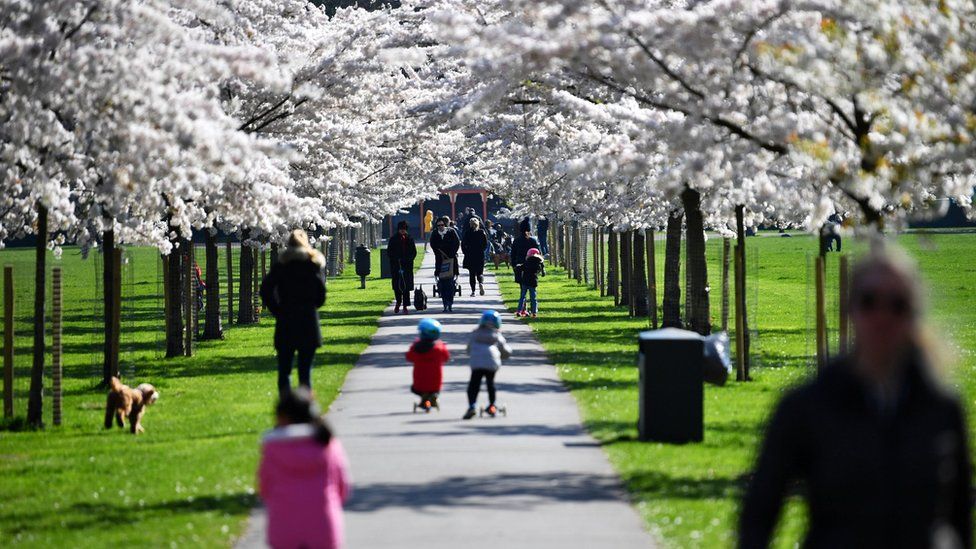
Yesterday Linda Tripp, a former civil servant in the United States, passed away. She became famous, and in some circles infamous, when she made public a confidential conversation in which Monica Lewinsky told her about her sexual relations with President Bill Clinton.
Ms Tripp claimed that she blew the whistle over the priapic president’s extra-curricular activities on the grounds that it was her patriotic duty. Her testimony played a major part in Clinton’s subsequent impeachment.
Not for the first time, a debate raged at the time over whether a greater good was served by what some saw as her betrayal of a confidence. Is it right that a confession to a heinous crime, such as murder, should by protected by client-attorney privilege? Is it right that priest should be absolved of the duty to report a similar confession made in a small wooden cell in a church?
This post is triggered by two British media reports. In the first, from the Guardian, police chiefs are said to be urging the government to impose tighter restrictions on isolation. It also states that several police forces have created online forms for the public to use when they want to report infractions.
In the second report, the BBC quotes the Chief Constable of Greater Manchester as saying that his force broke up 660 parties over the last weekend. They included street parties, fireworks, bouncy castles and parties in people’s homes. What he doesn’t say is where his force got their information. To discover that number of parties without the help of the public would have been a tough job.
So is it right that the police in Great Britain should encourage citizens to report their neighbours for breaking the lockdown rules? Is the risk of creating an informant culture – a standard feature of authoritarian states such as Hitler’s Germany, Stalin’s USSR and the post-war East Germany – outweighed by the notional good of calling out behaviour that puts other people potentially in danger of catching COVID-19?
That’s an issue on which we will all no doubt have our own opinions. As does Donald Trump, who famously called his lawyer Michael Cohen a rat for his allegations of presidential wrong-doing, and who is going around merrily firing government inspectors-general, officials who serve as watchdogs to expose actions by government departments that might be illegal or incompetent.
But getting together in groups of more than two, or driving to beauty spots under the pretext of taking exercise, are surely not on a par with murder, or the mighty accidentally spilling seed on an intern’s dress.
My own feeling is that encouraging the public to inform on others is a greater evil than that infractions on social isolation should go unreported. Having said that, the government is placing the police in a tricky position by passing laws that are difficult for them to enforce on their own without the assistance of vigilant citizens lurking behind net curtains.
Equally, the police don’t do themselves any favours by calling for tighter regulations to enforce the lockdown. Their job is surely to present the data to the executive, who then make the appropriate decisions. To use an extreme analogy, how would the public – whether or not they are Daily Mail readers – react if police chiefs called for the re-introduction of the death penalty?
Of course we live in the real world, and police chiefs are making recommendations to the government formally or informally all the time. But lawmakers, our elected representatives, make the law. The government makes decisions according to those laws. The police enforce the law, and if they can’t do so effectively, they have a duty to raise that issue with the government. Only in extreme cases should they delegate their responsibilities to the public.
That’s not to say that informants have no place in a democracy. Convictions for terrorism, gang crimes and acts of violence often rely on information received from the public. But that’s slightly different than sending the police haring after a group of five having a picnic in the park, only to find that the group are a family who live together.
“Reasonable” is a key word often used in the writing of laws – as in reasonable doubt, reasonable behaviour and so forth. The interpretation of reasonable in different situations is what gives, or should give, the law a measure of flexibility.
So perhaps we should be asking whether it’s reasonable for the police to ask the public, on a wide scale by the use of an online form, to report unreasonable behaviour on the part of its neighbours.
Yes, we should all play our part in helping to prevent crime. But do we really want to become a nation of COVID vigilantes? We already have a network of surveillance tools, including increasingly pervasive CCTV coverage. Perhaps the police should seek to use those tools effectively before enlisting the public’s help. And the lawmakers should surely only pass laws that are within the capability of the police to enforce.
I will end with the ritual incantation that the police are doing a good job. Of course they are, and of course we need to support them. But if we all become little police officers, monitoring each other as we go about our lives, for some people that will become a thrilling habit that will be hard to shake off once this emergency is over.
I don’t know the boundary between reasonable and unreasonable, but I do know what sort of country I want to live in. A nation of covert watchers is not it.
 59steps