
Yesterday a friend sent me an email suggesting I write about China. He included a link to an article by Melanie Phillips in the London Times entitled West can no longer turn a blind eye to China.
It was nice of him to ask, especially as I’m nowhere near as knowledgeable as Melanie Phillips. So let’s start with an opinion I’ve written that you might encounter out in the wilds:
“Thank goodness that’s sorted. It’s all China’s fault for covering up the original outbreak. In fact, I wouldn’t be surprised if it manufactured the damn thing and let it loose on the grounds that it could manage the fallout better than its rivals. Economies collapse, democracies implode, and China picks up the pieces.
Much the same argument that influential Americans made at the height of the Cold War: let’s nuke the Russians. Yes, there will be mass destruction, but our bit will be less destroyed than theirs.
For the plan to work, you don’t want a virus that’s too virulent. That would either end up destroying everyone, or it would die out after being bottled up in a quarantine zone. No, you want one that debilitates but doesn’t destroy, thus leaving the victims vulnerable and dependent on mighty China to keep them afloat.
Remember the aftermath of the 2008 crash? It was China’s massive stimulus that kept the world economy afloat. It embedded Chinese investment in the US, Britain and other powerful nations to an unprecedented extent. That was Phase One.
Now we’re into Phase 2. The ultimate revenge for the Opium Wars. Where the Western nations brought China to its knees in the 19th century by getting it hooked on opium, so today China has turned us into Yuan junkies.
So by the end of this pandemic, no country will for the foreseeable future challenge China’s economic and political supremacy, because to do so would result in catastrophic withdrawal symptoms.
Welcome to the Chinese Century.”
If I were to synthesise a virus to demonise China in my little Surrey lab, this would be its DNA. If variants of the same virus weren’t already out there, you could cut and paste this one, and it would go zipping around the world as fast as the one that started in Wuhan. Which is why China is in the process of being revealed to the watching world (but mainly in the US and the UK) as the devil incarnate. Just in time to stop it from taking us all over.
If the BlameChina20 virus didn’t exist, it would be necessary to create it. Because everybody needs a scapegoat. A coherent narrative that distracts attention and channels blame. No matter how incompetent your government in responding to the pandemic, the ultimate counter-narrative is to blame the Chinese.
Unfortunately for the blame virus, there are plenty of antibodies that will stunt its virulence. In fact, logic shows one fatal flaw.
If you believe that China’s virologists are so smart that they could synthesise a virus as effective as COVID-19, and test it in secret with live subjects to make sure it had the desired effects, you are naïve in the extreme. An accident possibly, but deliberate? Highly unlikely, because you would be dealing with something that would screw you up as effectively as it would those you are targeting. Your economy as much as theirs. Your people as much as theirs. And if there’s one thing followers of Confucius abhor more than anything, it’s chaos – the opposite of harmony.
Take away the intention, and the whole theory falls down.
Now, let’s get serious and realistic.
China is an authoritarian state. Covering stuff up is what countries like China do. And not just China. Remember Chernobyl? It was only after the toxic cloud reached Scandinavia that the USSR, under that nice Mr Gorbachev, finally admitted the full horror of what was happening.
However, in the case of the coronavirus, Chernobyl is not a good analogy. China has dealt with lethal virus outbreaks before – bird flu and swine fever most recently – and has effectively suppressed them. It seems highly likely that the politicians who orchestrated the COVID-19 cover-up did so out of a sense of complacency. In other words, we’ve dealt with this kind of thing before, no point in alarming people. Although the implications of Chernobyl were pretty clear early on, that might not have been the case in Wuhan. People with viruses don’t emit radioactive clouds.
But in both cases, you can point to organisational incompetence and a cover-your-arse culture, which are signs not of strength but of weakness.
Though before its fall the USSR was revealed as a sclerotic basket case, China is nowhere near that point. We might look at its ruthless suppression of the virus after the outbreak as evidence of its competence, but ordering people around is something that authoritarian states must do to stay in existence.
In the USSR, the structures Lenin put in place to keep the people compliant lasted over seventy years. You could argue that they still exist today after Putin’s efforts at refurbishment. China, on the other hand, has no need to rebuild its authoritarian apparatus. Instead, it’s enhancing it.
So basically, China covered up in Wuhan because it could – for a while. As I said, for better or for worse, it’s what authoritarian governments do by default.
Finally, lets look at some fundamentals about China that the West interprets as strength.
Covering up the original COVID-19 outbreak is not strength. It’s fear. Locking up millions of Uigurs in camps is not strength. It’s fear. Carrying out surveillance on its people to an unprecedented degree is not strength. It’s fear.
So perhaps we should think carefully before branding Xi Jinping as an all-powerful dictator, presiding over a juggernaut of an authoritarian state bent on world domination. And we should not forget that authoritarian states are built on fear. The people fear the state. The leaders fear the people, because they know that their legitimacy depends on what they can deliver – safety, prosperity, stability and contentment. The moment one or more of those four pillars is threatened, the legitimacy cracks and the leaders fear for their future.
Therefore we should not fear China as an economic cuckoo in our nest, or as an aggressive military power seeking to dominate the South China Sea and beyond. We should see it for what it is: a major power with strengths and weaknesses, both proud and paranoid.
Rather than constructing a conspiracy theory around its national ambitions and seeking to punish or even isolate it, we should deal with it as an equal, protect ourselves from its unsavoury activities such dubious trade practices and industrial espionage, and treat it with clear-eyed, calculated respect. Neither the kow-tow nor the cold shoulder.
And if the leadership finally implodes, it will most likely do so without our help. What’s more, we shouldn’t kid ourselves that such an outcome will be to the benefit of the rest of us. We surely learned that lesson after the collapse of the Soviet Union.
One last thought. Various voices in the West are calling for a reparation claim on China for covering up the original outbreak. China will treat any such claim with contemptuous refusal. Likely as not it would respond with a demand for reparations on account of the damage done by opium forced upon it in the 19th Century. And it would have a point.
The reality of the present is that China is neither malign nor benign beyond the boundaries of what it perceives as its national interest. If we understand what that interest is, we in the West have a sensible basis for interacting with it as we go forward.
OK Jeremy? That’ll be six packets of Custard Creams please.

A few months ago, if I had got into a discussion with my neighbours about an imminent financial collapse culminating in a worldwide depression, they probably wouldn’t have believed me. But if they had taken my prediction seriously, they would have been terrified at the prospect of losing their jobs, their savings and their pensions.
Yet now that all these possibilities are looming, we seem to be in another frame of thinking. It’s as if someone comes up to you and tells you that there’s a good chance you’re going to die. Deeply worried, you go off and do what’s necessary to make sure you give yourself the best chance of living. At the same time you probably think about death all the time, how you will handle it, and what you need to put in place before you die – making a will, fixing broken relationships, telling your loved ones that you love them, planning for your funeral.
Then someone else comes along and says “the good news is that you’re going to live. The bad news is that your life will never be the same. You will be financially ruined, and so will everyone else you know”. How do you react? I suspect that most of us would think “thank God I’m going to live. What comes next? Less important than being alive”.
We might also think “the worst is happening now. What follows can’t be so bad”.
So compared with the mountain of staying alive, dealing with what happens after the pandemic might seem a hill to climb, not a cliff to fall over. We’ve already fallen off the cliff, and we’re bobbing around in the rapids below, clutching at branches of overhanging trees.
What do we care about right now? We want to go to the park. We want our football back. We want to party, to go out to eat, to go to church, to go to the pub, to go listen to some music. Yes, we’re worried about the future, but we’re living in the present.
And actually, despite the circumstances, many of us might one day look back at this moment and reflect that the present wasn’t a bad place to be in. Our culture encourages us to worry about the future. We’re conditioned – by the media, by the fears of our peer groups, by our politicians and rulers – to be afraid of illness, financial ruin, crime, terrorism, destitution in old age, climate change and what might happen if the other party gets in.
But right now, because we have to, we accept the things we cannot change. Those of us who sit in isolation think about stuff we don’t normally have time consider. We observe things – goats in the high street, squirrels in the park, empty beaches, leaves sprouting on the trees, blaring ambulances and mortuaries in car parks. Things that surprise, delight and appal us, but which in normal times – barring the bad stuff – wouldn’t merit a second glance.
I’m not about to promote mindfulness and all the other psycho-fetishes that people try and sell us. But even those who don’t have the time to look at the world anew, who might be driving our buses, delivering our letters and desperately trying to keep the sick alive, are living almost entirely in the present.
Yet who would have thought that governments around the world are lashing out extraordinary sums of money to keep our economies afloat, ward off deprivation and ultimately keep us from starving? And who, right now, apart from a handful of economists, is concerned about the mountains of debt being incurred on our behalf? And how it is that these governments can go from austerity, prudence and sound financial management to magic money trees? And if every government in the world is borrowing money, from whom are they borrowing it? How will it be repaid?
At any other time, these questions would be front-page news, everywhere and every day. Today, as defined by Stephen Covey in his Four Quadrants, they come under the heading of important, but not urgent.
For the first and possibly the only time in our conscious lives, most of us – even if we have much to be worried about – are living almost entirely in the present. We are concerned only with a tiny sliver of the future – what we can see in the next twenty-four hours.
A hundred years ago, according to Laura Spinney in her book Pale Rider (see my review), the indigenous population around Bristol Bay in Alaska was reduced by 40% in the 1918 flu pandemic. The descendants of the traumatised survivors refer to that event as nallunguaq, which means something you pretend didn’t happen. Will we and our descendants prefer to forget what we’re living through now?
I very much doubt it. But by then we’ll be back to the future.

The truth is out there. In fact it’s so totally out there that everyone’s telling it, if only we were listening.
No doubt you’ve been bombarded with advice from a billion sources, and don’t know what to believe. Relax. Help is at hand.
So here, in all its glory, is my Compendium of Alternative Coronavirus Truths. You just have to pick the truth that suits you best. Trust me, there’s something here for everyone:
Where does the virus come from? The CIA, a lab in Wuhan, 5G masts, the Qataris, God and the Devil appear to be the main sources. Lesser known origins are a secret establishment in Krasnoyarsk, the Israelis, the North Koreans and the half-men-half-lizards that rule the world.
Two other sources I’ve yet to hear about on the internet are a meteor carrying a lethal pathogen that latched on to an innocent coronavirus, and an ancient bug that emerged from the melting permafrost.
How do you treat it? Chloroquinine, garlic, colloidal silver, plasma from a new-born baby and those old favourites: eye of newt and toe of frog, wool of bat and tongue of dog, adder’s fork and blind-worm’s sting, lizard’s leg and howlet’s wing.
Who is most vulnerable? Cats, dogs, ferrets, tigers, bats and three-toed sloths. Humans with underlying conditions, including a predilection for conspiracies, a liking for soaking themselves with with the blood of Christ and a compulsion for oral sex and self-flagellation.
And don’t forget obsession with sunbathing. I have it on good authority that the interaction between the sun and the human body creates a negative force field that sucks the virus from wherever it’s lurking and infects the flagrant rule-breakers.
What can you do to protect yourself? At all times wear a paper bag on your head, remembering to punch out holes for your eyes. Euthanise your gerbils, and keep your cats and dogs in larger paper bags. Erect a yurt in your garden (if you have one), and cover yourself with lamb’s fat in the Mongol style when you’re self-isolating.
Regularly clean your AK-47s. Shoot your postman if he comes within two metres of your door. Bludgeon passing squirrels and foxes. Microwave your newspaper. Better still, incinerate it in the oven. Install a sheep dip by your front door for your shoes. If you have to go outside, make sure you bring a cattle prod to nudge joggers and cyclists out of your way.
And finally, avoid bad language, water, the electrical grid, vacuum cleaners, barbecues and endless re-runs of Spooks.
When will the crisis be over? When your leader says so. Or when the Reverend Copeland (see below) spews slimy black demons from his mouth. Or when you run out of episodes of Curb Your Enthusiasm. Whichever is earlier.
So there you have it. Fear not. We will get through this, and we will meet again, whether in this life or the next. Or possibly in the twilight zone, somewhere between the two.
God save the Queen.

Something very strange is happening to me. No, I’m not growing green scales. Nor have I started speaking in tongues.
The strange transformation is that this week I managed to sit through almost an entire session of the BBC’s Question Time. Normally, after five minutes I go into auto-immune collapse. I start cursing the speakers, muting the sound of the rent-a-crowd, and chewing the carpet as the obligatory Brexiteer or English Defence League audience member spews clichés fed to her by the Daily Mail like a slot machine that’s paying out a jackpot of cyanide capsules.
The new, socially isolated Question Time is actually watchable. Some might say that without the audience applauding like Kim Jong Un’s praesidium at every golden utterance from a panel member pumped up like an angry pit-bull, vying with the others on the podium for the most bloodthirsty applause line.
Take away the audience, reduce the size of the panel to two or three in the studio spaced at the correct distance and a couple of online members, and lo, the panellists are having a discussion, not a shouting contest.
In the same way, Kier Starmer, newly elected leader of the British Labour Party, making his opening address in a short and simple video, was far more impressive than he might have been in front of a delirious crowd of “invited” party hacks going into raptures at his every pronouncement.
And government ministers, doing their 5pm coronavirus update without even the physical presence of journalists seem more human and less demagogic than they might otherwise have been. Some are far too human for their own good, but that’s another discussion.
Contrast these scenes with Trump’s baying mobs, and even the roaring, heckling rabble that the British House of Commons becomes when it scents political blood.
The Roman mob, the factions of Constantinople and the chuckers of sticks, stones, eggs and tomatoes that succeeded them down through the ages have hardly been likely to inspire wisdom or reason in those whom they despised or adored. Adrenaline is as infectious as a virus. It helps you win battles but not arguments.
Perhaps this feeling says more about me than the current crisis. I’ve never liked crowds because I sense that those who inspire them are manipulating me. Happy crowds are OK, and so are solemn ones. Music concerts, weddings, funerals and parties are fine with me, because they’re normally there because of love, or at least appreciation, of something or someone.
Demonstrations, marches, political rallies and even sales conferences may have a positive intent, but appeal to our basest instincts as often as our best.
However, since was more than happy last year to see huge numbers of people turn out in opposition to Brexit, and in 1989 I rejoiced at the sight of the Ceausescus realising that they’d lost the Romanian dressing room, I guess that makes me a bit of a hypocrite.
Anyway, for better or worse, the power of crowds is temporarily at an end. And in keeping with the spirit of reason and empathy, up pops Her Majesty the Queen, who will be addressing her subjects at 8pm this evening.
She’ll probably get better ratings than Trump in his daily virus briefings, but I fail to understand why we need widely-propagated trailers telling us what she’s going to say. The BBC in its 10pm news last night even went so far as to quote directly from her address. Why? Can’t we wait for tonight?
She’s not delivering a political speech whose contents are pumped up by the spin doctors (as in “the Prime Minister will say…”). She’s the National Granny, whom most of us deeply respect. We know without being told that she will talk about togetherness, values and hope. She will thank the NHS and all the other heroes of the pandemic. She will end by saying God be with us, or some such blessing.
Sadly, I’m afraid, most of will say “aah, that’s’ nice”, have a warm feeling for five minutes, then get back to our gaming, boozing and box sets.
Still, I’d rather have this dignified, gentle old person as our head of state and voice of the nation than any of Trump, Putin, Xi and all the lesser charlatans and chancers that she has to suffer whenever they come to our country for state visits.
Happy Sunday everyone. Enjoy the sun if you can, but make sure you don’t arouse the ire of the viruspolizei or find yourself featured in a photo posted by vengeful harpies on Twitter.

Loiter is a glorious English word. Much better than hang around or wander about aimlessly. One word says it. But what, in the context of a coronavirus lockdown, does it mean? If I interrupt my daily stroll to enjoy admire the view, or stand in front of a shop window to admire the fancy chocolate sculptures on display but not on sale, am I loitering?
Dawdle means much the same thing, but has an innocent connotation. Lurk is not so innocent. But loiterers are usually up to no good. Hence the term loitering with intent. But with intent to do what?
For this reason, I’m curious about the case of Marie Dinou, who was the first person in Britain to be fined under the Coronavirus Act. According to the Times, she was found “loitering between platforms” at Newcastle Central railway station.
As the deputy police constable of the railway police says, officers were dealing with someone who was behaving suspiciously, and railway staff thought she didn’t have a ticket.
Although she was convicted and fined, the case has been quashed on the grounds that the wrong legislation was used.
The case raises many questions. What legislation makes it a criminal offence to hang around a railway station? If she was beyond the ticket barrier where was she – on the railway track? What made the staff think she didn’t have a ticket? Did they ask her, or did she just look like the kind of person who doesn’t buy tickets? And what does such a person look like?
As for the police, did the railway staff call them or did they approach her of their own accord? According to other reports, Ms Dinou refused to speak to them. Did it occur to them that she might have been afraid, that she might have been depressed, that she might suffer from some condition that made her reluctant to speak to people, or even that she might have been planning to throw herself on the track? Or, more simply, that she was confused about which platform she needed.
And then the prosecution. How come nobody in the chain that led to the district judge figured out that they were using the wrong legislation? And anyway, is it against the law to loiter between platforms?
Perhaps there’s a new law that’s been passed behind our backs: the crime of “loitering with intent to do nothing”. If so, what of the legal principle of mens rea, which by one definition is “the intention or knowledge of wrongdoing that constitutes part of a crime, as opposed to the action or conduct of the accused”? If Ms Dinou was refusing to speak to the police, how on earth were they able to divine her intention? Unless of course she was in the process of getting on to a train, in which case she was not loitering.
No doubt my lawyer friends will tell me I’m talking out of my arse, in which case they’re free to correct me.
For sure there must be more detail that has not been reported. And I have to say that the Times report was sketchy on the details. But if we have more tricky cases like that of Ms Dinou, I suspect that Rumpole of the Bailey will have to be dragged out of the clutches of She Who Must Be Obeyed back into the law courts.

I was once asked to do a promotional piece for a glossy magazine about a watch fair in Switzerland. I found it surprisingly hard to write. Having to conjure up the necessary excitement about jewel-encrusted baubles that do anything from telling you how much longer you have to live when you’re exploring the bottom of the Mariana Trench to tracking your bowel movements in Bali didn’t fill me with enthusiasm.
I’m a Swatch person – the cheaper the better, black plastic strap, no maintenance, tells the time. On my undemanding wrist they usually last between three and five years, and then give up the ghost, begging to join their siblings in a landfill. I don’t grant their wish. I leave them languishing in a drawer somewhere, waiting to be fixed, until I put them out of their misery in the next clutter-purge.
I buy Swatches because they work fine until they don’t work fine. But a couple of years ago I accidentally bought an automatic – the sort with no battery that winds itself when you wiggle your arm or conduct a symphony orchestra. You can wind it up with a button, but I’ve forgotten whether you have to do it clockwise or anti-clockwise. So I try both.
It’s crap. It’s totally useless. It loses time, it gains time, both according to no discernible logic. Normally I would scrabble through mounds of paperwork to find the guarantee and send it back to Swatch. But not now. Not in the time of plague.
This morning my watch told me I’d woken at six. So I got up, went downstairs, and found that actually the time was seven. And it didn’t matter. These days I set more store on when the birds start singing. If I was still in the Middle East, it would be the first morning prayer call, just before dawn. And anyway, what do I have to get up for? The clock in the kitchen provides an adequate approximation of the time, and that’s good enough for me.
No golf at seven. No conference call at nine. No deadlines, appointments, cows to be milked, trains to be caught, babies demanding feeding, dogs patiently waiting for breakfast. Nothing between now and the next time my head hits the pillow. Liberation from time, from structure, from daily rhythm. Plenty to do, but an endless stretch of time in which to do it.
For some people that might induce a queasy feeling, rather like the sense of disturbance you feel when you’ve been out on a rolling sea in a small boat and you step back on land. But I don’t find the temporary suspension of time remotely disturbing. On the contrary, it’s a kind of freedom, even if it’s unnatural.
I say it’s unnatural because nobody, except possibly the very young, the very old and the very sick, lives without reference to time. Not even the birds, who wake when the sun comes up, or the squirrels in my garden, who know when it’s time to start scratching around for lost acorns.
But we have food, so I eat when I’m hungry, even though I bow to the tradition that you eat dinner at approximately the same time every day. Stuff to be done can be done today, tomorrow, the next day. I’m not even aware of what the days are called.
I’m exaggerating of course. But first thing in the morning, alone with a coffee, I like to spend a little time dreaming that I’m living in a timeless place.
And then I switch on the laptop and the spell is broken. I’m sucked, as if through a wormhole, into a few square inches of a different world. Deadlines for virus tests, anxious faces, angry people, prophets of doom and messages of hope as well as despair.
My wife wakes up, I bring her tea, and the real day begins. Not so different from the imaginary one, yet still punctuated by the urgency of others.
But for ninety minutes or so every day, this pandemic brings me the precious gift of a brief sliver of life without the constraints of time.
A small mercy, but worth celebrating.

I don’t want to get overly philosophical, but I do think that one of the interesting facets of the pandemic lies in how the definition of essential will change during weeks or months of social isolation.
Before the lockdown, you may have been among among the hordes of people panic buying in the supermarkets, anxious to buy anything that they perceived would be unavailable should the outbreak get worse.
Anyone who remembers learning about Abraham Maslow’s famous Hierarchy of Needs will recognise this behaviour as trying to meet the most basic need – defined as Physiological. The need for basic survival, food, shelter, warmth, clothing and so forth.

For most people, I suspect that the panic buying was on the basis of “just in case”. Once we realised what a serious threat we were facing, we started worrying about needs that Maslow defined as at the second level as Safety and Security. Will I catch the virus? Will I die? Will I lose my job? What will happen to my savings if the economy crashes? Will I be physically safe from opportunistic burglars or marauding rioters?
Next up, at the third level we have Love and Belonging. This is where we function as friends, families, tribes, society in general. Now that we’re confined to our homes, how can we make up for the lack of proximity to people and groups where we fit in? Those who can, make up it by phone calls, online chat, Skype, Zoom and so on. It’s better than nothing. Needless to say there are others – especially those who don’t have access to these tools – whose sense of belonging must feel utterly broken.
The fourth level is Self-Esteem. How many people languishing at home, deprived of the symbols of social and career success, are thinking about how fragile and ultimately irrelevant those symbols are? Perhaps they’re questioning the value of the jobs they do. Above all, they might be feeling pretty powerless. Some are entitled to feel proud of their work in the crisis, such as the NHS staff who are doing their best to keep the rest of us alive and healthy. But the chances are that they don’t have the time or energy to feel good about what they do, despite the applause they receive. They’re down at level 2 – exhausted, afraid, trying to stay alive themselves.
And finally Self-Actualisation – the sense of achievement, of knowing that our lives have been worth something. That we are worthy of an obituary that say more than “we were born, we lived and we died”. For most of us, the only achievement we need right now is to stay above ground through to the other end of this pandemic.
Now, back to shifting definitions of “essential”. It’s pretty clear that the government views essential as primarily a matter of safety and security. It had and still has no concerns about Level 1. There’s plenty of food in the supermarkets, and these days even loo paper seems easy to obtain.
Though the government might think that it has the task of ensuring our physical safety well in hand, the psychological safety of the nation is another matter. And this is where definitions of essential start to blur. At the moment, most people seem to be coping with being cooped up and isolated from their normal social structures. But how long will that last?
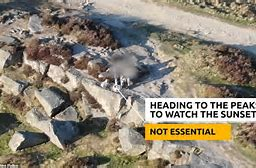
The cracks are already appearing. There have been push backs against over-enthusiastic police enforcement. People are starting to be concerned about things they feel are essential to well-being, which could be the kid of activities deemed by Derbyshire Police to be “NOT ESSENTIAL”.
For example, the Times this morning reports on a garden centre owner who is refusing to close on the grounds that for many people, the ability to tend their gardens – albeit in isolation – is essential to surviving the crisis. So he sell seeds, bedding plants, fertiliser and all the other stuff people use to keep their gardens looking pretty in the summer.
As isolation continues, this is where the government needs to be fast on its feet. It’s not enough to call on the army to patrol the streets in an effort to keep us confined. If it’s sensible, it will also be adding to its army of experts a few psychologists who can devise strategies that will keep us docile without the use of force.
They should particularly advise on ways to lighten the measures in ways that will not lead to a new upsurge in infections. In Italy, they are trying to do this by allowing people to go out with their children. In Britain, I suspect that being able to buy seeds and bedding plants will not do the job for everyone, since we don’t all have gardens. Perhaps the wherewithal to enable the cultivation of a particular type of weed might come in very handy for quite a few folk whose supplies are running low.
If the antigen tests come online soon, another measure would be to allow a little more freedom to those who know they’ve already had the virus. Will we start seeing antigen parties in our parks?
What’s pretty clear to me is that as the period of isolation drags on, our idea of essential will start to ascend up the hierarchy of needs. If the government is smart, it will be sensitive to this dynamic, and will come up with effective ways that will allow us gradually to return to normality, not just in the physical sense, but also mentally. Whether or not it’s copped on to this challenge remains to be seen.
Perhaps first we need to think about whether or not normality as we knew it in 2019 ever returns. Whoever answers that question successfully will find no shortage of self-actualisation,

I’m not sure I’m going to keep listening to the British government’s daily TV update on the coronavirus situation. The only thing I learned today is that even our medial advisors seem to have had training in evading questions.
I yearned for a straight answer on at least one of the questions. All I heard was smooth deflection.
For example, the question on why we are struggling to test more than a few thousand a week when the Germans are managing half a million. The answer wouldn’t require a detailed exposition on the differences between the two health systems, though it would be interesting if we could learn why Germany has twice as many hospital beds as we do.
All it would take would be a little humility. How much more satisfying and how much more honest, it would be if Mr Sharma, the minister at the podium tonight, said this:
“We are full of admiration at the way our German friends have handled their testing programme. To date, we have not been so successful, for a number of reasons, some structural and some practical.
What I can tell you is that we have much to learn from Germany’s outstanding effort. Based on their experience as well as our own, we are doing our best to get to the same level of testing.
Yes, we have made some mistakes, and yes, perhaps we should have mobilised sooner. But now is not the time for a detailed inquisition on what has gone wrong and why. Now is the time to learn from experience, wherever it is gained, and to put that learning to good use for the benefit of our country. And I can assure you that this is what we’re trying to do.”
One of the reasons why people mistrust politicians is because of their inability to admit mistakes. In this case either the government doesn’t believe it’s screwed up, in which case it’s delusional, or because despite a comfortable majority and four more years in office, it’s so insecure that it automatically resorts to knee-jerk evasion born of a deep-seated fear of failure.
Neither possibility is a promising recipe for success, I suggest.
Michael Gove went on television yesterday and said that a lack of chemical reagent is holding up the UK’s coronavirus testing programme. According to the chemical producers’ industry body, there is no shortage of reagent. They claim that the government has never asked them for more supplies. The story comes from Robert Peston, ITV’s chief political editor.
This is what Rachel Clarke, a prominent NHS doctor, had to say on Twitter about Peston’s report:
Tonight @MichaelGove told the public our inadequate #COVID19 testing is due to a lack of chemical reagents. The UK Chemical Industries Association says there’s no shortage at all. Nor has @10DowningStreet even asked manufacturers to increase production. This is indefensible.
Small wonder that a large number of people in the UK quite possibly believe that Michael Gove is a liar.
Michael Gove may be a liar. We are all liars to one extent or another. Liars to ourselves if not to others. But wait. There is another possibility. That he and his colleagues are desperate, fearful and, crucially, credulous.
I very much doubt that a few weeks ago Gove knew any more about the chemistry of testing for virus infection than 99.99% of the population. He probably doesn’t know much more now. After all, it was he who told us during the 2016 Brexit referendum campaign that “I think the people in this country have had enough of experts with organisations from acronyms saying that they know what is best and getting it consistently wrong.”
Cheap shot, I know – I couldn’t resist it. But today he, like his colleagues who routinely pop up to the No 10 podium to pronounce on the crisis, is reliant on briefings from those who know what they’re talking about.
So now, imagine a meeting – of COBRA, Ministry of Health. Downing Street advisors, whatever – in which the politicians – Gove, Johnson, Hancock, whoever – assemble their team and say “right guys, we’re in deep shit unless we can come up with a reasonable explanation for why we’re behind on testing. Ideas please….”.
Advisors, who have been working 18-hour days for weeks, scuttle off and break into huddles. Some bright spark comes up with the idea that a contributing factor is a shortage of reagents. Not necessarily because the reagents aren’t available, but because within the layers of bureaucracy, something has caused the supply chain to break down. Maybe a key person – a vital human link in the chain – has caught the virus and is out of communication. Someone less knowledgeable is standing in for them.
Amidst the panic, speculation from the stand-in mutates into information, which passes up the chain of command to the bright spark at No 10. The ministerial meeting resumes, and the hard-pressed advisors, fearing for their jobs if they don’t come up with something, provide a list of possible contributing factors, of which the reagent theory is one. “I like that”, says the minister, “let’s go with the reagent shortage”.
So in the space of a few hours, amid a febrile environment in which new political meteorites are constantly streaking towards the decision makers, a theory mutates into a fact, at least in the mind of the politician, who doesn’t want to hear the caveats about lack of verification. He wants a bloody answer. Now. Because nothing at this more precise moment is more important to him than the daily update he will deliver at 5pm. The last thing he wants is to appear an idiot.
And yes, maybe what he tells us will turn out to be a lie. But not necessarily a cold, deliberate untruth. Because he’s sitting at the top of an anthill threatened with scalding water that sends the workers scurrying around trying to figure out how to save the colony. Or, to put it another way, he has to be the swan sailing serenely against the current of a river while beneath him his feet are paddling furiously.
The scenario I’ve described may be totally wrong. But my experience tells me that lies uttered by leaders often come about not through cold calculation, Goebbels-style, but in the heat of the moment, driven by fear and desperation.
When I heard the Gove story, I tweeted “Why would you lie when you know you will be found out? Only kids do that, don’t they?” I was wrong. Kids don’t necessarily know they will be found out. They don’t even consider the possibility. If they find themselves in a corner, they’ll say anything to wriggle out of trouble, regardless of the consequences. And so, under certain circumstances, do the rest of us.
And that, I suspect, is the story.
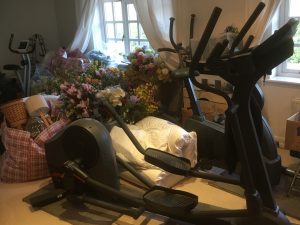
In one of our rooms we have what we rather pretentiously call a gym. I suppose the presence of a cross trainer and exercise bike qualifies it for that name, as does a mirrored wall that provides the excruciating experience of being able to watch yourself as you wobble back and forth on one of the machines. To relieve the boredom, there’s a telly where you can watch satellite TV piped from the box downstairs. I hadn’t used our gym for a decade. My preferred form of exercise is golf, but my wife uses it most days.
In case you think I’m some kind of an oligarch, you should know that it also possesses most of the characteristics of a junk room, as seen above. Boxes of artificial flowers used by one of our daughters for her business share the space with suitcases used on our travels that we can’t be arsed to stick in the attic and various other things for which there is no other logical home. No landmines or samurai swords, but it makes picking your way to the fitness equipment something you would not attempt in the darkness.
Now that golf is banned, along with Easter Eggs and blue ponds, I’ve made my first tentative steps back on the cross-trainer. Half an hour, with plenty of intervals. It would be a supreme irony if at this moment of viral danger I dropped dead of a heart attack. So I’m not going at it with the manic intensity of relative youth back in the day.
One session a day in the gym, plus the statutory 30 minutes of outdoor exercise (carefully avoiding beauty spots or any other place that might be remotely pleasing to the eye), should be enough to prevent me from turning into a semi-inert blob. It doesn’t help my blood pressure to see Rick Stein cruising around France sampling some ineffably gorgeous-looking gastronomy, while I’m wending my lonely way to nowhere upstairs. Bastard!
But I do miss the golf course. Unlike the blubberous toad in the White House, most of us in the UK walk our courses. Some of us carry our clubs – though not me because my knees wouldn’t take the strain. This blubberous toad has an electric trolley, but that doesn’t stop me walking through five miles of English countryside at least three times a week. In the process, I get to see red kites, swifts, weasels, rabbits, foxes and the occasional deer darting from fairway to fairway.
Now these places are closed. I suppose that’s just as well, because if they remained open, no doubt some posse of over-zealous police would quickly be at work with mechanical diggers ripping up the greens, so that those of us who can still walk around our courses can no longer enjoy the view. Or perhaps they’d spray them red.
I very much doubt if Mr Trump, in his turbo-charged cart surrounded by other vehicles manned by secret service agents with fearsome weaponry, sees much beyond his ego.
Not that I’m complaining about this temporary restriction. Unlike millions who live in apartments whose only concession to nature is a plant-box in the front window, we have a garden, and we live in a leafy town at an arm’s length from London.
Nor are we afflicted by the loneliness of social isolation, unlike many people who live alone. I like my own company, and long before the pandemic, my wife and I evolved a way of living whereby we don’t impinge on each other’s space. So not much chance that we’re going to batter the hell out of each other and end up divorced.
She might say otherwise, as my sociopathic behaviour – such as the desire to tidy up stuff that’s beyond my remit – irritates the life out of her from time to time. But thankfully not enough to induce her to depart for East Grinstead.
This might sound complacent, but it’s accompanied with regular touching of wood. Anything might happen to disturb the equilibrium – most obviously if one or both of us gets seriously ill or worse, or if someone we love suffers a similar fate. Or, less terminally, if the Sky box fails, the boiler blows up or the internet falls over. Any of these irritants turns me initially into a raging maniac, and subsequently leads to sullen improvisation. In normal times, though, fixes to these problems are usually available in fairly short order. Not now, perhaps.
All of which leads me to reflect on what pampered, spoilt and unresilient creatures we are, or at least those of us who have never dodged bullets in Afghanistan, risked asphyxiation down coal mines or, today, worked ourselves to exhaustion in intensive care wards.
I don’t think there’s any need, therefore, to hark back to earlier times when we say we’ve never had it so good. Some of us have never had it so bad, but the rest of us are learning not to take the good things for granted. And most especially, the people we love.

Suddenly, it seems, we’re all pandemic experts. We gravely discuss R0, R2, U-curves, W-curves and all the other indicators that help us predict the spread of pestilence. But most of us run out of authority when our knowledge is revealed as less than a micron thick. Even Donald Trump resorts to something resembling witchcraft whenever challenged over his encyclopaedic expertise.
However, if you’re looking to become a certified bluffer when it comes to lethal illness, you could do worse than to read Pale Rider, Laura Spinney’s masterly account of the 1918 flu pandemic and its aftermath.
You will then be able to mutter about Pfeiffer’s Bacillus, once thought to be the cause of flu, about how the death rate in Western Samoa was so dramatically different than that in neighbouring American Samoa. You will be able to point out that the schools in New York were kept open, because health officials believed that they were much healthier places than the squalid slums where so many of the kids lived – particularly those of recent Italian immigrants.
You will learn that there were three theories as to the origin of the pandemic: the mid-west of the United States, where the first documented case arose; China, from which battalions of labourers were exported to the Western Front to work behind the trenches; and war-torn France, where migrating birds shat on piggeries and the resultant flu virus mutation took a liking to humans.
You will also be able to explain the function of different strands of RNA that enabled the virus to spread – the H strand that breaks into healthy cells, and the N strand that enables the virus to replicate. Hence H1N1 and successive variants of flu.
Then there were the consequences. Baby booms among the fittest who survived. Shorter height and lower life expectancy among those who were infected in utero.
All this and a cornucopia of anecdotes. The doctors who experimented on themselves and learned that flu doesn’t transmit through blood. The Xhosa woman whose dreams while unconscious led many within her tribe to revere her as a prophetess, until the South African authorities declared her insane and locked her up in a lunatic asylum. The religious implications of an outbreak in Mashad, Iran, the death of a film star in Odessa and catastrophic mortality in an Alaskan town.
And then the death toll. Initially estimated at 8 million, after further research it’s now accepted that 50 million people died, and some estimates suggest that the true number was 100 million.
Spinney’s book makes the science accessible, yet is full of human stories of courage, suffering and resilience.
The parallels with the current coronavirus are not exact, yet there are many echoes that make sense today. Even if you have no desire to become a Category A pandemic bluffer, you will find much in her book that will help you to understand our current predicament more clearly.
Speaking of the present, do you remember the miracle of the hospital in Hubei that the Chinese built in a week? Now we’re deeply impressed at the achievement of the NHS in creating a temporary hospital in a London exhibition centre in a similarly short time, with more to come in other cities. Which makes me wonder why the Chinese opted to build a new structure rather than adapting an existing one, as we in Britain have done.
Both here, in the US and elsewhere, though I don’t like bandying about oversimplified comparisons with World War 2, it’s also impressive how despite slow starts by governments (especially on Trump’s part) businesses and scientists are working together with an energy not seen since the war on vaccine research, workarounds and vast quantities of equipment needed to fight the virus: tests, safety gear, ventilators and so on. While politicians and pundits squabble and point fingers, it’s comforting to know how much effort is being put in by those who can really make the difference.
Now, back to the old cynic act. Though this has nothing to do with the pandemic, it seems that the US Department of Justice has released the unredacted version of the Mueller Report to a federal judge after a long legal battle.
Take a look at the job title of the person sending the document:

Does that not suggest that the United States doesn’t have a deep state as much as a deep bureaucracy – layer upon layer of hierarchy? Would organisations like these be able to design a new model of oxygen mask within a week that will spare thousands from having to lie comatose in a ventilator, or create a coronavirus vaccine in a month when most vaccines take years to develop?
We have similar bureaucracies in the UK. Which reminds me of my favourite job title in the government department for which I worked in Saudi Arabia: Manager, Management Management.
Something to think about when this awful episode is over.
More soon.
Yesterday, the coronavirus sent me a precious gift.
A few days ago I mentioned that, like many people in lockdown, I’ve come up with a number of domestic projects that have been waiting for a while to get done. One of them was to sort out my books. Not only do we have many shelves full of them, but the numbers were swelled when my father died seventeen years ago.
Some of the books he left went to my siblings according to their interests. The rest, including some seriously arcane stuff from the early part of the last century, stayed with me. The subjects range from history, geography, art, music and psychology, and that’s just the stuff I kept.
He also had a liking for big coffee-table books, many of which languished on our bottom shelves because they were too big to fit anywhere else. Part of my project was moving them to a place where I could easily pick one out in an idle moment, of which there are likely to be many in the coming months. I chose our conservatory, which is a bit cold in the winter, but not a bad place to hang out in warmer times.
So yesterday I merged his big books with mine and now we have a long row of volumes lining one side of the room. In doing so, I discovered the gift.
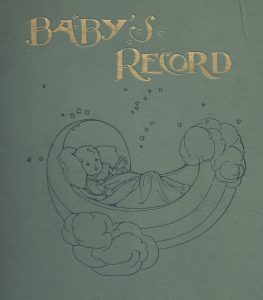
Hidden among the larger stuff was a modest cloth-bound book dating from 1922. Inside were letters and photographs. It was my grandmother’s Baby’s Record, full of colour plates of babies, sentimental poems and spaces where she could enter stuff about the baby’s development – height, weight and so on.
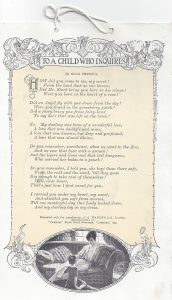
That baby was my father.
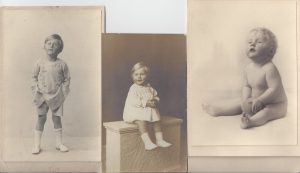
Like many mothers who start these records with the best of intentions, my grandmother left the story far from complete, but it’s still full of interesting information – to me anyway. One of the events she describes verified my father’s yarn about the time he swallowed an open safety pin which had to be surgically removed from his gullet, with no less a personage than King Edward VII’s surgeon in attendance.
Then there was a new mystery. Why after two months was he “skin and bones”? He was weaned off the breast after six weeks. My grandmother noted that that “he is not such a good baby as Brian (his brother), fidgety and nervous. Digestion ruined at 6 weeks old, due to the wickedness of Nurse Milsom.”
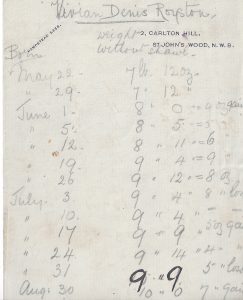
What Nurse Milsom did or didn’t do we will never know.
And why, at the age of 18 months, was his circumcision “a very necessary operation”?
My grandmother, whom I only met once when she was very old and afflicted by Parkinson’s, was by family tradition a bit of a character. My grandfather’s second wife, she was a silent film actress and a crafty tax evader. Like many relatively affluent mothers of the time, she seems to have delegated much of the child’s care to a live-in nurse and then a nanny.

The collection is full of little pointers to social attitudes of the time. For example, my father was christened by “Mr Woods. Irishman. Locum”, as if this was unusual. This caused my wife, who is Irish, to raise her eyebrows slightly. His toys included “Rattle, rubber duck. Big Dog from Biddy for Xmas, Teddy from us” and little else. Contrast that with the tsunami of soft toys and shrieking electronic devices showered upon today’s babies.
Then there were the diseases. My father’s were pretty typical for the 1920s: whooping cough at two, measles at three and chickenpox at five. MMR jabs were a generation away.
Among the loose papers was a letter that corroborates another family legend: that my grandmother wanted a girl, and chose names in advance for the baby that would work regardless of the child’s gender. The letter is from a Nurse Hiffersen, who apparently was my uncle Brian’s nurse before my father. In it she says she looks forward to re-joining my grandmother: “Only 6 weeks and 2 days. I shall be counting the time away. Now do try and hold out until I come as I want to receive the little stranger and manage her from the beginning of her life.”
Being a bit of a family history buff, I have a number of documents and photos, but mainly from my mother’s side. They include a spectacular diary of the First World War that I’ve serialised in this blog. To come across a little collection of records in my paternal grandmother’s hand is a special gift, for which I thank the coronavirus, without which I may never have discovered them.
In a strange way, it’s a message of hope. Three years before my father was born, the Spanish Flu pandemic ended. My grandparents were obviously among the lucky ones who survived it. Life went on. A hundred years from now, family stories from today are likely to be digitised. There will be video records but few letters. But only if we bother to collect them and make them available to our children and grandchildren, so that family historians in 2120 will know how their ancestors fared in the wake of the 2020 pandemic.
Surely that’s worth a few hours of anyone’s time.
I’m getting a bit fed up with journalists asking questions that begin with “Prime Minister, do you regret that…”, or “are you afraid that…”. At this precise moment, we don’t need ritual bows, hara kiri or grovelling on the altar of false humility. Of course Boris Johnson, as he sits in gilded isolation, regrets shaking all those hands, and Michael Gove regrets the government’s failure to act earlier. And is Matt Hancock afraid as he contemplates the progression of his illness? Of course he is.
You only have to listen to Jeremy Hunt, the former Health Secretary, who, now that he’s no longer in office, admits to many regrets about his period in power, to know what government ministers think but cannot admit publicly unless they are unable to wriggle off the hook of responsibility.
Questions about emotions are for later, unless you happen to be Donald Trump, whose psychopathic nature renders him incapable of normal human responses apart from pride, anger and malice. What we need right now is for the press are, on our behalf, requests to inform, explain and justify. We should let the politicians handle their emotions as best they can and judge them accordingly when the time comes.
Not that emotions don’t play a part in the current situation. Those of us who have no symptoms are afraid that they will develop. Those with symptoms are afraid of what comes next. Speaking for myself, I rejoice every morning when I wake up feeling OK. Yes, I’m afraid too. My wife and I think back over the past couple of weeks to occasions and interactions that could have been laden with COVID-19. But not for long. We have plenty of projects.
What about volunteering? At the moment, we’re reaching out to people we know, not just in the UK but everywhere in the world, to make sure they’re OK. As things develop, I think that a more specific need is arising that goes beyond practical help. As people develop symptoms in increasing numbers, some are alone, some are in denial, and some won’t don’t what to do. The advice they get from official agencies such as 111, overburdened as they are, will be on a pull basis. If you’re sick, you have to call. They will not call you. And the saddest stories are of those who died alone in their homes without anyone coming to their aid.
So what people who have sent out a distress signal will need is a signal back, not just once but on a regular basis. Not just those who need practical help, such as food shopping or getting their plumbing fixed. There are some who simply need advice, emotional comfort or possibly an advocate.
However, and by whom, that gap is filled, returning the signal will be one of the most important activities in the months to come.
Moving on, I don’t know about you, but I’m a glutton for good news that can lift us out of our gloom. But when the good news, especially if it come from an unimpeachable source, induces cognitive dissonance when set against the evidence in front of us, the result, as always, is confusion.
A case in point is the story on the front page of today’s Times, in which a professor from Imperial College claims that the UK death rate from coronavirus is likely to be far lower than predicted: the curiously precise figure of 5,700. This is in contrast to an analysis by another Imperial professor, who claimed that without the stringent measures we have adopted 200,000 will die.
So what are we to believe? An end total only five times greater than Italy’s current daily death rate, or the 20,000 that the government says we’ll do well to stay within? The answer is neither. These are models, which are laced with a string of assumptions that most of us won’t even bother to examine in any detail.
We just have to sit tight and wait, like the rest of the world.
As the lockdown progresses, I suspect that our idea of good news will change. The activities of the Derbyshire viruspolizei point the way. For those of us with little to celebrate other than videos of dogs and angry Italian mayors, there will be nothing that will make us happier than having a good moan at an appropriate target.
Step forward the Derbyshire plod, who, as I reported the other day, are making total arses of themselves by publicising drone videos of middle-aged ladies out for walks with their dogs in beauty spots. Now they have topped that by dying sky blue ponds black to that people will not come to gawp at the strange colour of the water. Thanks to their misplaced enthusiasm, they’ve made an internet meme out of NOT ESSENTIAL
Sad to say, most police forces have their complement of heroes – brave and dedicated, polite and helpful. But they also have some who delight in surveilling us, lecturing us and treating us as delinquent children, usually from their desks and now from the safety of drones, because they wouldn’t get away with their officious behaviour in face-to-face interactions with the public. They get the heroes to do the dirty work for them.
There! I feel happier already. Pathetic really, isn’t it?
Finally, an observation. I’m sure I’m not the only one to notice it, but contemporary drama and comedy shows on TV seem like period pieces. Do you flinch instinctively when you see someone on the box getting close and personal? I certainly do. Isn’t it amazing how thoroughly we’ve been programmed in the space of a month?
More when I have it.
For us in the UK, was it not heart-warming to see so many people out on the streets applauding our National Health Service workers for their efforts in keeping us alive? For once the social media came up trumps as a positive force, though one virally-induced expression of goodwill doesn’t excuse it for being a platform for trolls, liars, bigots and bots.
One striking indication of change in the country was the video of Alistair Campbell, Tony Blair’s former chief spin doctor, out in his street blowing a jaunty tune on his bagpipes. A decade and a half ago, in the aftermath of the Iraq war, I suspect that the last thing he would have wanted was people knowing where he lived.
Speaking of videos, the new government information clip showing Chris Whitty, our Chief Medical Officer, urging us to stay at home, is a tad anodyne. His etiolated figure reminds me of the deputy head of a British public school who never quite made it to the top job, but is prized for his reliability over a 40-year career, and reluctantly stands in whenever the head resigns over some unspeakable indiscretion. Unfair, I know, because Professor Whitty is one of the good guys.
Not so reluctant are the police, some of whom appear on BBC footage politely asking people in their very British way if they would get the hell off the road, park or whatever, and go home. Now that they have the power to slap fines on unauthorised loiterers, I’m surprised they haven’t outsourced the job to our beloved parking wardens, who I’m sure would be only too pleased to slap tickets on people now that offending cars are in short supply.
Also, have you seen those drone videos showing people taking their dogs for a walk in the Peak District, highlighted by a flashing “non-essential”? There must be officers who have waited all their careers to do something as fun as this. Far more fun than arresting a couple of cage fighters scrapping in a supermarket over a packet of loo rolls, I should have thought.
For really effective enforcement, perhaps we should persuade some Italian mayors to come over and let rip at our gregarious offenders in their unique style, as in:
But since they’re still too busy corralling their own miscreants, we could always record examples of their choice rhetoric to be broadcast via the surveillance drones. That would put the fear of God into Mr and Mrs Molesworth, who have sneaked out with the dog for a second spot of exercise. Though whether the police have technology to identify the number of 30-minute exercise periods the Molesworths make in a given day is debatable.
Seriously though, I’m entirely supportive of efforts to keep people at home provided we do so in an appropriately British way. No tasers, cattle prods and paddy-wagons please.
We in Britain might be slightly stunned by the lock-down measures in our country. But spare a thought for our neighbours across the channel. Katy, a former colleague who now lives in France, sent me this update yesterday via Facebook in response to one of my blog posts:
The postal service in France is rapidly grinding to a halt and is longer accepting parcels for deliveries. Letters are being delivered sporadically. Online shopping no longer works because the delivery companies are not operating. Here people no longer want deliveries because of the fact the virus lives on cardboard for several days. Seems obsessive compulsive but hey we’ve adapted to the new world where you are scared of your next-door neighbour infecting you.
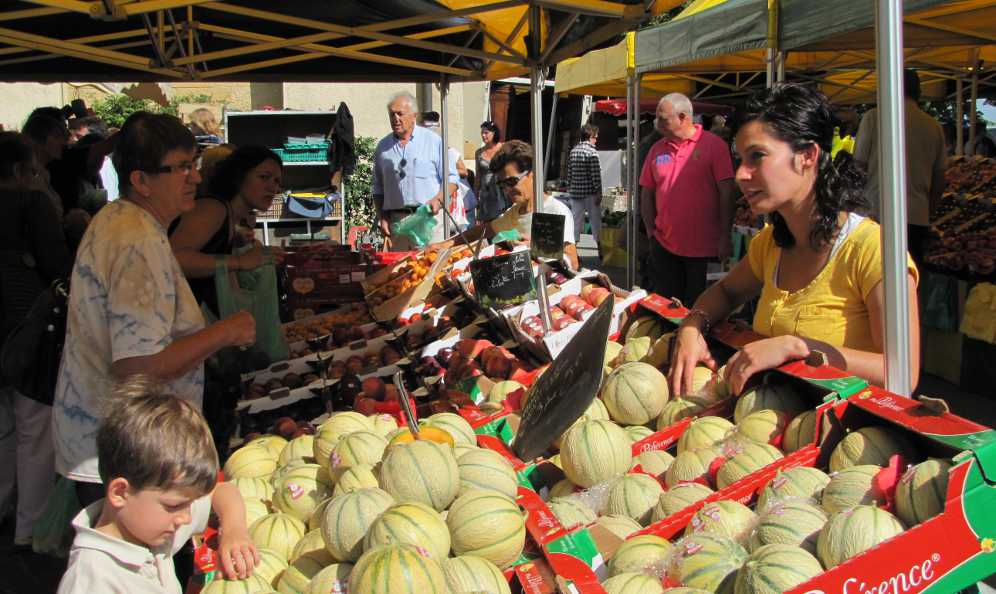
Employers can be fined for not protecting staff correctly and essential means essential i.e. food or pharmacy. Little else counts. Locally there is a preference for open air food markets rather than the supermarket. Some supermarkets only allow one visit per week. The DIY shops have been closed for 10 days but now some bigger shops are selling essential items for collection: door locks, lightbulbs, hot water tanks and boiler parts, electricians supplies. But no paint, decorating or garden stuff. In the property world (I am an estate agent) you can no longer move house, or view houses, house sales processes are on hold, the French land registry is closed, the mortgage registry office is closed, notaires are closed, you cannot buy property.
You cannot buy much really. What is interesting is how quickly we seem to have adapted to it all. 10 days in and there is a quiet acceptance of the situation. Next crisis in discussion: food production. The French government has been recruiting volunteers to help harvesting and people here are planting their vegetable plots. We can produce a lot of food in France. How will the UK fare in comparison?
So France, land of the barricades and the gilets jaunes, seems to be quietly buckling down, despite restrictions even more severe in some ways than in Britain.
Katy’s comment on the preference for open air markets over supermarkets is not surprising, but I wonder how the French are maintaining social distancing in those gorgeous rural gatherings where people normally crowd around the meat stalls and lovingly inspect the rows of shiny fruit and vegetables.
No doubt they find a way with the assistance of a few strategically placed gendarmes, but sadly there will be no cafes open where they can relax after their shopping. And no brocante stalls, full of antique glassware and Napoleonic maps, which are my favourite feature of the classic French market.
As for food, I’m sure we in the UK can get by on oats, sugar beet and turnips, but so far I’ve seen no sign of municipal parks or the Buckingham Palace lawns being dug up for planting. On the DIY front I imagine that most of us will be OK, especially those who before the lockdown hoovered up all the stuff they will need for their home projects.
I was a bit taken aback at the shutdown in France of online buying and home deliveries, though we too are becoming somewhat OCD about stuff that arrives on our doorstep. I’ve just received a package from Amazon containing some books (of course). I took each book out of the box, cleaned the jackets with antiseptic wipes, put the box outside and washed my hands. We’ve also started wiping down supermarket purchases (no, not the onions and bananas, stupid! We bathe them in chlorine).
Enough of this nonsense. I have important work to do. The CDs are sorted in alphabetical order, we’ve done a deep clean of the bedrooms, and now my Director of Operations has ordered me to undertake my toughest task yet. I have to rip all the weeds out of the cracks in the patio so that she can have at the slabs with the steam cleaner. Purging our bookshelves will have to wait, as will sorting lego bricks and other detritus belonging to our little grandson who, to our immense sadness, can’t visit us at the moment.
Life goes on – hopefully.
I woke at 8.30 this morning, which is most unusual, since I’m normally up in the early hours. What was equally unusual was the cause of my wakening – my wife giggling helplessly beside me. At this point it occurred to me that manufacturers are not alone in going into overdrive to meet the nation’s needs in this time of crisis. A trickle of joke videos and photos about social isolation is turning into a flood. It’s not just the virus that’s going viral.
One of the best is an expletive-laden rant by a squeaky-voiced dog with a broad Scottish accent complaining about the effect on its social life of one 30-minute walk a day. One of our friends responded by texting “why do I think this was made by Judy Murray?”. Mrs Murray, in case you don’t know of her, is Andy Murray’s mum, who is known for her, um, outspoken style.
Personally, I reckon it’s Andy Serkis, who plays Gollum in Lord of the Rings. But judge for yourself:
Anyway, on to more weighty stuff.
The deaths of a 35-year-old British diplomat in Hungary, and of a 21-year-old woman with no pre-existing conditions in the UK, should surely reach into the minds of the madding crowd of youngsters who think the virus is no worse than the flu. Except, possibly, those of folks who enjoy playing Russian roulette.
For people who take seriously the possibility of falling sick, there’s a new app that encourages us to record our symptoms, should we have any, on a daily basis. A good idea, because the data it provides gives a wider view of how the virus is affecting people, and in what geographical areas.
Fine in principle, but there are one or two underlying reasons why it might not work as well as it could. First, there will be people who will view it as just another example of the surveillance society. Everybody’s collecting data on me. What else will they use it for? Will I get a knock on the door at some stage by the viruspolizei, who will cart me off to some unknown leper camp?
Second, I suspect that some people are in denial. If someone has a symptom like a mild cough, or they sneeze occasionally, they might find a number of reasons to think “it’s a cough, no big deal”. On my one trip out yesterday I popped into Morrisons, which operates a one-out-one-in policy. There was a queue of about eight people, separated by the mandated distance, waiting to go in. Two of them were coughing. Why, you might wonder, weren’t they at home, especially as both were accompanied by partners?
If people are in denial, why? Normally, when flu symptoms appear, half the population thinks to hell with it, and keeps working. The other half wonders if they should go to the doctor and keeps an eye open to the possibility of calling in sick.
A month ago, people worried about whether they were infected would have sought help in the knowledge that if they got really sick, the good old NHS would be waiting for them, ventilator at the ready.
Now we’re inundated with videos and news footage of overstretched intensive care units, people struggling to speak, and heartbreaking stories of NHS staff unable to get the kit they need to protect themselves.
Is it therefore any wonder that people imagine a hospital ward to be a place worse than hell from which they might not return, and will blank out any evidence that they themselves are on a pathway to that fate until they’re so sick that there seems no alternative?
I hope I’m wrong, but for this reason I fear that the self-reporting app will only deliver incomplete data.
Next, to the argument that the elderly (or, in my case, people getting that way) are a burden on society and should make way for the succeeding generations. I was surprised to see the historian Sir Max Hastings, who is 74, endorse that argument on the grounds that, to put it bluntly, we baby boomers have screwed our kids by keeping our wealth to ourselves. It’s an argument, sure. But are we really a burden?
If all you only think of old people as cash cows, you ignore the wider role of the elderly in society. As a source of perspective, though in the case of Brexit a pretty wonky one. As people who love and are loved, who care for grand-kids, some of whose minds continue to be sharp as pins through to the end, and who, by reaching an age far beyond the average life expectancy of as little as a century ago, represent what we regard as one of the ways in which society has progressed in the era of technology, mass communications and medical breakthroughs.
And, of course, are these not people who paid their taxes and national insurance contributions for up to fifty years as part of a covenant that the state would look after them when they were too old to work?
Speaking as one of the alleged economically inactive, I would point out that far from hoarding what wealth I and my beloved have accumulated, we are spending it. So are millions of elderly people who keep buying stuff, going on holidays and serving as the Bank of Mum and Dad. Are we to be sacrificed on the altar of youth? And when their turn comes, will the young step readily towards the same altar?
There are plenty of counter-arguments to what I’ve just said. For example, to the person who protests that they’ve paid their dues and deserve to be kept alive, you might ask if over their 80 years of life they’ve never come across any examples of a government making promises it can’t keep.
Perhaps it’s all about love. The love shown by the priest in Italy who gave up the ventilator that his parishioners bought for him so that someone else might live. He died shortly afterwards. And perhaps for most of us it’s personal experience that informs attitudes towards the elderly rather than elevated concepts of morality and expedience. If your Dad is a crabby old bastard, you might be happier to let him go than if he has been the kindly mainstay of your life.
Moving from morality to expediency, I’m interested in the stance of the British government over bailouts to British Airways, our national flag carrier that’s actually a subsidiary of a Spanish holding company. It wants cash. Rishi Sunak says no – find it by loans from the market or shareholder subscriptions.
I agree with him, not because BA has long ceased to be our flag carrier, whatever that means. If BA went out of business, much as I sympathise with the thousands of employees who would stand to lose their jobs, after the pandemic is over, others would surely move into the vacuum created by its demise.
I also suspect that there are a few predators out there with deep pockets who might see the current aviation meltdown as an opportunity to pick up a bargain or two. Qatar Airways, for example, who are owned by the state of Qatar, already have a stake in International Airlines Group, the owners of BA. They might benefit greatly by taking a controlling interest. If not them, perhaps Emirates. Although less likely, perhaps even the Saudis, who have lagged behind as their rivals in the Gulf have created successful hubs in their home countries, might dip in.
The aviation industry might end up being only a relatively minor part of a succession of corporate re-alignments after the pandemic is over. Will the banking industry emerge unscathed? And what about technology companies, especially some of the old behemoths that have dominated the last few decades? For those of us who survive, it should be interesting to see which corporate household names also make it through the storm.
Finally, as we retreat more deeply into social isolation, I’m beginning to see this diary as the equivalent of a flight data recorder from a crashed aircraft plaintively pinging away from the bottom of the ocean, reminding us that it’s still there.
That’s self-indulgent nonsense of course, since we still have the full range of communications capabilities to remind others that we’re still here. Yet there’s a little voice lurking in the background telling me that if I stop posting, it will mean I’m about drop off my perch. Equally nonsense, because I only reach a small number of people, and they have more to worry about than one addition to the mortality statistics in Surrey, England.
But come what may, I shall keep buggering on, with one eye on the present, and the other on what promises to be a fascinating future.
One of the inevitable side-effects of a national crisis is the way big stories are forced off the front pages. UK readers might remember the Labour spin doctor who emailed a colleague on September 12 2001 to the effect that “today is a good day to bury bad news”.
Not quite appropriate in the case of Alex Salmond, but the former Scottish Chief Minister’s acquittal yesterday on charges of sexual offences would have been splashed all over the internet and the mainstream media. The trial began with a bang, as one of the women alleged to have been assaulted claimed that Salmond was “all over her like an octopus”. It ended with a whimper, overpowered by the sound and fury of the coronadrama. The story made it to Page 20 of The Times, for those not too exhausted by the preceding coverage of the pandemic.
For Salmond, perhaps, it was a bad day that buried good news, for he surely would have preferred his vindication to take place in a blaze of publicity.
On the bad news front, I also wonder how many businesses that were failing before the crisis will now blame the pandemic for their demise. Laura Ashley, the furnishing retailer that went into administration last week, will be unable to use that excuse because its troubles were well known. But how many others will quietly slip away, claiming it was all because of the virus? Even if the real cause was the incompetence (or criminality) of the directors, will they avoid scrutiny as the system for examining corporate failures becomes impossibly overloaded?
Equally, how will the government prevent companies in dire trouble before the pandemic from leeching public money to stay afloat under the current financial mitigation measures? This is perhaps more of an issue in the US, where Donald Trump insists that he will provide the oversight that will prevent large corporations from misusing money earmarked for bailouts. Yeah, right.
But the question for the government is do you support businesses that were already failing in order to keep people in jobs, thus creating yet more zombie companies that owe their existence to government support?
Another potential danger is a rise in cybercrime. People – particularly the elderly – who are stuck at home, and previously used the internet for the most basic reasons, will be looking to do more things online, such as banking and ebusiness. If their net savvy is limited, they are particularly vulnerable. Perhaps the government, in conjunction with the banks, should use their communications channels to educate them on fraud avoidance tactics.
An interesting development is how the BBC has become the government’s “voice of the nation” in matters related to the pandemic. Not only does it televise the government’s daily update at 5pm, but it carried Boris Johnson’s announcement of the lockdown at 8.30pm. How long before, on the government’s instruction, it creates a special Corona Channel carrying only news, announcements and directives? And how long before Sophie Raworth is replaced by a man in a dark suit and a bow-tie intoning “This is London”?
I hesitate to suggest that at some stage we might even see censorship of the media, but if we start seeing large-scale civil unrest, as opposed to people flocking to the beaches of Bournemouth in protest at the lockdown, I wouldn’t rule it out.
But before we get carried away in a rush of fear and paranoia, more prosaic concerns need to be clarified. For example, is a newsagent an “essential shop”? Whereas the fags and booze bit probably isn’t, given that the supermarkets will stay open, what about newspapers? The last thing the government surely wants is people crowding into the big stores to get their papers. And newspaper deliveries are surely one way of keeping people at home.
Then there’s the question of other deliveries, especially of stuff ordered online. None of Johnson’s ordinances seem to suggest that the likes of Amazon will grind to a halt, especially as they’re increasingly used to order “essential” stuff, such as the pallet of loo paper that arrived at a house near us last week. But as supply chains buckle under the strain, we can probably expect much longer than usual delivery dates.
Also, are DIY shops considered essential? As of early this morning Homebase, according to its website, was still open. But as of now, three hours later, the website has crashed, so who knows? Given that half the country will be engaged in the coming weeks in a frenzy of long-delayed house improvements, I would think that if they are open they’ll be doing a roaring trade just now. Anything we need we’ll order online.
That’s all for now, apart from couple of curiosities from elsewhere.
Search Twitter for “Italian Mayors”, and you’ll find a delicious collection of videos in which these officials rant at their disobedient citizens, including references to dogs with prostate problems, and people not needing elaborate hairdos in closed coffins. Priceless.
Then there’s the Texas couple who self-medicated with chloroquinine sulphate. One of them died, and the other is critically ill. The one who’s still alive claimed they did it because Donald Trump said it was a good idea. Oh dear, that’s another lawsuit the president has to look forward to when he leaves office, which hopefully will be soon.
That’s it for now. Back to my book-purging, CD-sorting and other mindless man-chores.
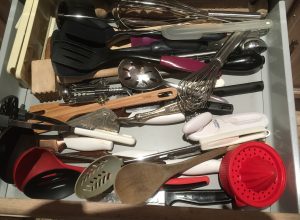
Lots of interesting stuff in the Sunday newspapers, as well as the online cloaca maxima. I shan’t comment on all the doom and gloom stuff. You can find that yourselves easily enough.
First off, what a joy to hear foxes copulating at night, disturbed only by the barking of jealous dogs. Then in the morning, not a plane in the sky or car on the road, leaving the soundscape to the birds, who must be astonished to have a blank canvas on which to paint their musical portraits.
In the Sunday Times, Matt Rudd comments on the efforts of people to provide appropriate backgrounds for their online communications. There’s a picture of Ben Fogle in front of a colour-coordinated bookshelf. One row of red, followed by blue, green and yellow. This strikes me as rather a daft idea, unless you have a brain that categorises things by colour, as in Hilary Mantel, green, Albert Einstein, purple, Donald Trump, a sickly orange.
Which brings me to the President, without whom no blog post about COVID-19 would be complete. He’s tweeting with an excitement he rarely summons (other than when he’s boasting about the stock market) about the benefits of chloroquinine in mitigating the virus, despite the advice of one his most eminent advisors that it’s not approved for use by the Food and Drug Administration, even though Trump says it is. From this one can only assume that the president’s son-on-law has invested in a company making tonic water. Expect large numbers of Americans to expire from gin poisoning before long.
Then there’s the Harley Street doctor who has reaped £2.5 million from private coronavirus tests in one week. He’s done this by applying a massive mark-up on a test available direct from the supplier. Goes to show that there’s no limit to human ingenuity in exploiting a bad situation, and no end to gullible punters with more money than sense. I mean, if the test comes back negative, what do you do – test yourself every week for 500 quid a shot? When this is all over, I will definitely reinvent myself as a snake-oil salesman.
Next up, we are being encouraged to decide whether or not we wish to be resuscitated in the event of our catching the virus. Sensible enough when directed at care home patients who spend much of their time staring into space. But as the death toll rises, if some official starts making such noises in the direction of the not-so-elderly, my response will be go stuff yourself, I bloody well do want to be resuscitated. I’ve never had a tattoo, but I’m seriously considering having RESUSCITATE tattooed across the bit where they put the ECG stickers.
Isn’t it amazing how easily how new acronyms enter the language, and how everybody who uses one assumes that you understand what they mean? In this case, I’m talking about PPE, which stands for Personal Protection Equipment. In other words, all the masks, gowns and other stuff health workers use to keep themselves from being infected, and which fashion models use when they’re flying to exotic places. Given the shortage of such kit, I’m surprised people are venturing out wearing latex gloves and face masks when they go to Tesco, where they face disapproving looks that say how dare you wear that stuff when the NHS is running short? But people can be pretty hard nosed when it comes to self-preservation.
I fully expect to see a crop of other new acronyms to emerge in the coming months. Such as NWH (now wash your hands) and SOGs (selfish old gits). Further suggestions welcome.
Meanwhile, as we languish in isolation with only Carrie Mathison for company, I’m doing a bit of planning on constructive things to do at home. Plans are great, aren’t they? You make them down to the last detail, and if you screw up, you look around for someone else to blame. A bit like government IT projects, actually.
I have three projects under development. The first one is to sort out the books. By which I mean that we have shelf after shelf of books which, despite my dogged delusion otherwise, I have to admit I will never read again. It’s time for a purge.
But what to do with the purged volumes, of which I’ve set a target of five hundred? Take them to the charity shop? Maybe. Sell them to an independent bookseller? I’m not sure there are many left, at least not in our neighbourhood. Crate them up ready for disposal after the pandemic is over? That would be my preference, but not easy when the garage and much of the rest of the house are jam-packed with our children’s detritus. (They are of the opinion that since we live in a relatively large house it’s their right to use it as a warehouse.)
Alternatively, as I’ve hinted before, put them in the garden shed and keep them in case we have a hard winter and no means to stay warm, as in The Day After Tomorrow, when the huddled survivors of the big freeze survive by burning the contents of the New York Central Library.
Then there are the CDs. Hundreds, lining my study. Given that I’ve digitised most of them, why keep them there? Because they look nice, and because I want my kids to have them when I’m gone, even thought they might not be too enthralled with 10CC and The Incredible String Band. But they’re totally jumbled up, which means I can’t find anything without loads of searching. So I’m going to do a man project. Sort them all by genre and then by alphabetical order.
Third project: purge the kitchen. How was it that we managed to accumulate enough pots, pans and cutlery to start a restaurant? Do we really need fifteen pots, ten metal trays, twenty mugs and countless knives, forks and spoons? That’s not including more stuff stashed away in the garage.
That one’s going to take a bit of thinking, especially as I will need the uxorial sign-off – she who against all logic can always find a reason to keep something. Marie Kondo she is not.
Next, the plight of the self-employed. This one is close to home. Last week, one of my daughters went from a decent income stream to very little in 24 hours. Apparently there are up to four million people like her. I appreciate that providing support to the self-employed is not a straightforward as subsidising the jobs of employees, and I also appreciate the amount of work the government has had to do to finalise the current support measures.
But it should not be beyond the wit of the mandarins to come up with a plan to help these people that goes beyond the current plan to offer a small increase on Universal Credit. These people pay their taxes and national insurance contributions just like employees. They are the twitch muscles of the economy – they can ramp up very quickly. Equally, if their businesses are allowed to die, a huge financial hole opens up that will be difficult to fill. Try harder, Rishi Sunak.
Lastly, I’m not in the least surprised at hints that the British government is about to bring in the viruspolizei to keep people in their homes. I went through town on an errand yesterday, and was somewhat gobsmacked at the number of people in their cars and on the streets. It reminded me of the old wartime question: “don’t you know there’s a war on?”
Finally, this afternoon my wife took a walk through the park. Since it was a nice day, the place was full of people. Three-generation family groups, teenagers playing football, kids in the playground. So no, I’m not sure people are taking the emergency seriously. Perhaps we need a few electronic signs about showing yesterday’s death toll and the death toll from the day before. That might concentrate the mind. We are not immortal, and we are not immune, even in Surrey.
More soon.
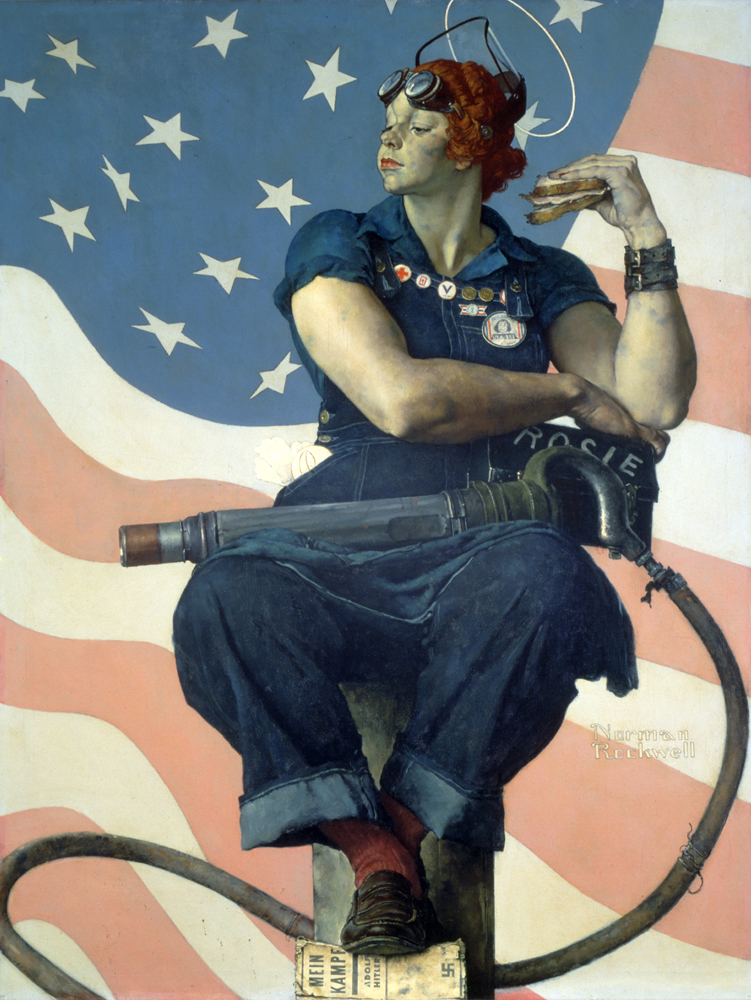
Wherever you are in the world, it’s easy, and natural, to be engulfed in your own national crisis to the exclusion of everything and everywhere else.
But just as the pandemic has reminded even the most insular of us that we (speaking of Britain now) are neither independent nor in control, it’s interesting to watch that realisation sink in elsewhere. Especially so in countries where people widely resist the idea that they can’t determine their national destinies alone.
And particularly in America. Thanks to the extraordinary diversity of media sources available online, from the New York Times to the steaming cesspits of Twitter, you don’t have to be living in the States to get a reasonable idea of current developments.
The most recent story to get my attention is that several Republican senators allegedly sold large quantities of stocks and shares after the Senate received a confidential briefing on the coronavirus and before that information was made public. This sounds like a classic case of insider trading. If the senators in question are forced to resign, that would temporarily give the Democrats a majority in both houses of Congress.
The procedure for replacement of senators who resign varies from state to state. In most cases, the state governor nominates a temporary replacement to serve until a special election is held. But if the governor is a Democrat, and the resigning senator is Republican, can the governor nominate another Democrat for the seat, thus creating a shift in the balance of power in the Senate?
Though there are plenty of ifs and buts yet to be resolved, the implications are enormous.
The second bit of recent news is that the US government is urging its citizens, wherever they are in the world, to come home before travel restrictions make their repatriation impossible. Ho hum. If I was a US citizen living in, say, Germany or Singapore, where the authorities, backed by well-funded and sophisticated health systems, seem better able to deal with the outbreak than most of their neighbours, I would think very carefully before returning to a country as woefully unprepared, incompetently-governed and ill-equipped as the United States. Harsh words, I know, but mild compared to some of the opinion expressed within the country, not least by some of its scientists and doctors.
Then there are the students on their spring break making whoopee in Florida and blithely ignoring advice on social distancing. There have been videos of one or two of them saying words to the effect of “if it happens, it happens. No big deal”.
There are two possible reasons to explain their behaviour. First, that they’re genuinely ignorant about how seriously ill they could become if infected. For that you can blame the mixed messages coming from Trump and other sources such as Fox News. The second possibility could be rooted in research on adolescent development. This appears to show that the part of the brain that assesses risk remains underdeveloped in males until they reach their mid-twenties. Which in turn might explain their liking for extreme sports. So are we seeing a new sport – Riding the Virus? If enough kids are prepared to ignore the risk of infection, peer pressure does the rest.
A further problem is that people make judgements based on their lived experience. If I’ve never had the virus, and I don’t know anybody who has, I’m more likely to dismiss anything that contradicts what I see in front of me. But by the time my lived experience changes by seeing people I know become horribly sick, it’s too late to change my behaviour, because the virus is out there among my circle and replicating like crazy.
The next interesting – if that’s the appropriate word – factor in the US is the balance of power to make decisions related to the pandemic between the federal and the state governments. This is most likely proving a life saver where some states are taking decisive action, as is the case in New York and California, and where the federal response is weak and confusing. By contrast, in countries such as China, Italy and Spain (and the UK when we get round to it) central governments are making decisions for the whole country without challenge.
In the US, the federal government is able to take a range of decisions unilaterally, such as allocation of federally-controlled resources such as the military. But thanks to the delicate issue of state’s rights, over which a bloody civil war was fought, it’s the state’s prerogative to impose lockdowns.
Is the distribution of power to federal, state and (not to forget) city administrations helping or hampering America’s response to the pandemic?
Just as important for the long run, is Trump’s response fatally weakening his chances of re-election, as well as the future Republican control of the senate? Or, if the crisis has abated by November, will sufficient numbers of his supporters believe his inevitable claims to have beaten the virus to assure him a second term?
What’s more, as Trump goes around pointing the finger at China by referring to the “Chinese virus”, what of the post-pandemic relationship between the US and China? And if Trump finds his support tanking by October, what are the chances that he will find a reason to take precipitate action against Iran? Nothing like a war to bring about a change in electoral fortunes.
So many questions yet to be answered – good reasons to keep a close eye on American politics over the next eight months.
Another fascinating story is Trump’s attempt to subcontract for large sums of money the development of a vaccine to a German institute, in return for “exclusive use” for the US of the end product. An entirely logical move if you treat the running of a country as a business, as Trump does. And there is a precedent, though in different circumstances. After all, at the end of World War 2, America managed to recruit an entire cadre of German scientists, led by Werner von Braun, to kick-start the US space programme. The spoils of war, you might say.
But in the middle of a global crisis, making such a blatant America First move to the detriment of an allied country, not to mention the rest of the world, is just one reason why you should be very careful before you allow a business person, especially one as amoral as Trump, to run your government.
Much as I admire and respect so many aspects of American life, not least the instinctive generosity and boundless optimism of its people, I still deplore the corrosive effect that Trump and his followers are having on their country. At such a time, another president would their utmost to unite the country. This one, however much he tries, is continuing to divide it.
It’s hard to escape the conclusion that this is not America’s finest hour.
My beloved has been out shopping today, not once but twice. Not to stockpile, you understand, just to make sure we have enough essentials to keep us going for a while. By essentials, I don’t mean loo paper, though she did manage to secure an eight-pack today. I’m talking about really boring stuff. Paracetamol, light bulbs, plasters, washing powder, that kind of thing. In the process she comes back with wonderful stuff like a kilo of mussels, which we shall eat tonight.
Just as the virus cases have skyrocketed over the past week, so have the supermarket shelves cleared. At 7am this morning, there were long queues waiting for Morrisons to open. 7am, for goodness sake! I can’t remember what she was hoping to secure at that godly hour, but clearly the rest of our town had similar ideas. Just like Christmas Eve, she said. Locusts don’t celebrate Christmas, I replied.
That said, the panic buying in the UK is clearly selective. She reports an abundance of condoms and pregnancy test kits in the store. Which suggests that people are rutting with abandon and not bothered about the consequences. I wonder how supplies of Viagra are holding up.
Rutting apart, most of us are no doubt thinking how we will fill our isolated days. I have no worries on that score, thanks to a pretty decent stockpile of books. In case you need a few suggestions, here’s my reading list. Even if you don’t share my love of history, you might find a nugget or two nestling within this lot:
The Mirror and the Light: Hilary Mantel. In which Thomas Cromwell finally gets his turn.
The Histories: Herodotus, trans. Tom Holland. Collected works of the West’s first historian, translated by one of my favourite modern historians.
The Red Famine: Anne Applebaum. The story of the Ukrainian famine, orchestrated by Stalin.
Invisible Romans: Robert Knapp. How the other half lived in ancient Rome.
The Tattooist of Auschwitz: Heather Morris. My first novel set in Auschwitz.
The Fifth Risk: Michael Lewis. How Trump is dismantling government.
The Science of Storytelling: Will Storr. An anatomy of stories.
Pale Rider: Laura Spinney. Given where we are now, I couldn’t resist this account of the 1918-20 pandemic.
Black Wave: Kim Ghattas: chronicle of the rivalry between Saudi Arabia and Iran, and its many consequences.
A Curious History of Sex: Kate Lister. I’m hoping it does what it says on the tin.
The Last Day: Andrew Hunter Murray. Dystopian thriller.
Nathaniel’s Nutmeg: Giles Milton. Account of competition between the English and the Dutch in the East Indies.
Tidelands: Phillipa Gregory. Historical yarn set in the English Civil War.
Venus and Aphrodite: Bettany Hughes. Meditation on the Goddess of Love.
Arabs: Tim Mackintosh-Smith. History of my favourite people.
Why, you might wonder, do I buy so many books? Because their subjects are so fiendishly interesting. And you never know when a pandemic is lurking around the corner.
Back on the subject that keeps on unfolding – loo paper. I’ve come up with another cunning trick to cut down on excessive usage and eke out supplies a little longer. Regular doses of Immodium. One sure way of ensuring that your bowel movements are kept to a minimum. Once every couple of days would be pretty good. There is of course the possibly that if things went awry you could end up exploding after a few days. But you could always ward off that possibility with a well-timed laxative. The colonic equivalent of uppers and downers. On reflection, perhaps not such a good idea, though at least if you’re caught short you would suffer the consequences in your own home.
More thinking on a lock-down. I worry about our two-year-old grandson if he has to spend a few months cooped up at home. The twos are an age when kids learn the art of socialisation, not only with adults, but especially with other kids. What will be the effect of missing his swimming, playgroup and visits to the park playground? Hopefully he’ll catch up, but you do wonder. Then the realist kicks in. He’ll adapt. Kids do.
On the physical health front, we make the assumption that fruit and veg from overseas will miraculously continue to appear on the supermarket shelves. But if supply chains are disrupted, we should keep an eye on our consumption of vitamin C. So expect our public-spirited locusts to start stockpiling cartons of orange juice.
Meanwhile, keep doing the right thing. Every day without symptoms is a victory.
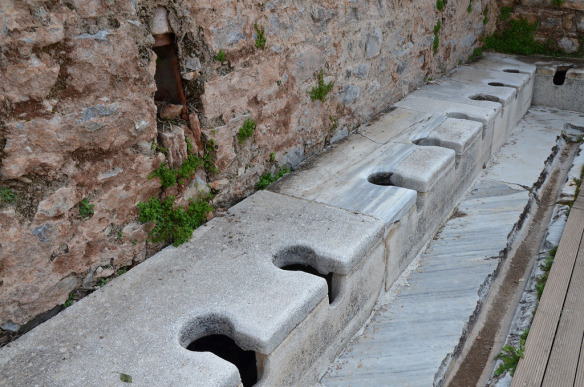
On 30th January I wrote the first of a dozen posts about the emerging pandemic. It seems a lifetime ago. Coronavirus had hardly penetrated Donald Trump’s palaeolithic imagination. Boris Johnson was crowing about Brexit. And the rest of the world – China excepted – was getting on with its life. Now everyone with a phone, tablet or keyboard is writing about it. This will be the best documented event in human history.
Good. Everybody has their own story to tell. Will those of us who survive end up any the wiser? I’m not sure. One wonders how future historians will sort through all the slush in order to come to any universally-accepted conclusions.
If we want to derive lessons from history from, say, the war between Athens and Sparta, we have only Thucydides and a limited number of other sources to draw upon. As each event or period from then onwards becomes better documented, the picture becomes not clearer but muddier, not focused but more multi-faceted, more open to interpretation.
So it will surely be with this pandemic. All that diarists will be able to offer is slivers of experience and uncertain speculation.
So my first bit of uncertain speculation for this morning is that lock-down in the UK might be hours away. I’m not suggesting this in a vacuum. Stuff is flying around the internet to this effect.
I guess most of us are wondering what this new world we’re entering is going to look like. Here are one or two thoughts – some facetious, others less so. First, whose job will be safe over the next twelve months?
Delivery drivers, though any carrying loo paper will need an armed escort. Bureaucrats – can’t see the civil service standing anyone down. Personal trainers, provided they kit themselves out to do their sessions online. Therapists, again on-line, tending to the anxious. Private jet aircrew, provided any country will still allow billionaires to land. Actors, waiters and teachers, provided they take jobs as delivery drivers and supermarket shelf stackers. Journalists, provided they don’t expect to get paid for everything they write.
Some jobs are actually being created. Aside from manufacturers who are re-tooling to produce ventilators and other pandemic paraphernalia, I hear that the government is afraid of riots in the near future. Therefore, allegedly, it’s planning to recall some police officers from retirement. I’m not sure whether they’re being recalled for their beef or their brains, but either way, depending on the length of time they’ve been retired, I imagine that there will need to be a bit of shoe-horning of large bellies into uniforms and reading up on what’s changed in the law.
And if riots are imminent, this implies that there will be arrests, so will we see former prison officers being enticed back into service to look after all the looters and protesters confined to their kettles? I doubt it. Not when prisoners are being released to reduce overpopulation of our penal institutions.
Next question. Which assumptions that underpin our daily lives will prove to be unreliable over the next eighteen months? Here are a few:
That the internet will work. That central heating boilers will be repaired if they go wrong. Ditto cars and washing machines. That potholes will be repaired. That online deliveries will arrive on time, if at all. That you will be able to choose from ten types of coffee at your local supermarket. Likewise tea. That you will be able to meet your local Member of Parliament.
An irony of the present last gasp of free association is that most restaurants are nearly empty, judging by a drive we took last night through our town centre. We went to one of them – possibly for the last time for a while – and were able to secure a table miles away from the only other diners, an extremely loud group of twentysomethings. Washed hands going in and going out, plenty of distance, nice dish of pasta. What’s not to like?
Fine for us, but not for the restaurant, whose owner vented his frustration at being unable to claim on his insurance for loss of earnings because the government has not ordered him to shut down. So this is not anecdotal. It’s real. And he blames the insurance companies for lobbying the government, a possibility I mentioned a few days ago. You can see the grievances being stored up.
On to what now seems like an old chestnut. We’ve given up waiting for our online order for loo paper, placed three weeks ago, well before the panic. So before long we’ll be moving to plan B, which is to use back copies of The Times cut into neat little squares. Plan C is to dismember all the books we’ll never read again, though we’re reserving the coffee-table volumes because the glossy paper would be thick and non-absorbent. They will also be useful for next winter, in case the boiler gives up the ghost or the nation runs out of gas.
The best solution of all would be to find a plumber who can fit a toilet hose in one of our loos (see my post about these devices from happier times). Cheaper and more energy-efficient than the singing, dancing and blow-drying Japanese super-toilets. Bidets would work too. But I imagine that all the McMansion owners around here have created a shortage of these as well.
Use of unconventional materials with which to wipe your bottom could lead to other challenges. One of the potential environmental benefits of restaurants closing will be that the fatbergs blocking our drains are unlikely to get any worse. But will they be augmented by DailyMailbergs? The last thing we need is concrete blocks of Brexit propaganda causing a sewage reflux.
Our little contribution to avoiding such a nightmare in our neighbourhood might be to deposit re-used newsprint in bins rather than down the loo, as they do in Greece and other countries with less robust drains. Unfortunately, that would make the job of our refuse collectors more hazardous and unpleasant than it already is. Everything has consequences.
If all else fails, then perhaps we should do as the Romans did. Buckets of water and sponges on sticks. But this would probably not be a favoured option in Surrey, since it would require regular sluicing of formerly pristine wet rooms with liberal doses of disinfectant. Enough already.
On a more cheerful if crashingly mundane note, yesterday I refuelled the car. No queues, no panic, Not surprising, considering that before long anyone on the roads will be intercepted by viruspolitzei demanding to know where we’re going. But satisfying normality in these abnormal times. I’ve no doubt that given half a chance there would be people filling up jerrycans at the pumps, thus turning their garages into incendiary devices. Perhaps that’s for later.
As we plod slowly towards national hibernation, here’s a final list – things I’m not missing.
Traffic jams in my town, where planners insist on cramming in more people without considering the small detail that each of these people want at least three cars. Aircraft every two minutes on the flight-path to Heathrow. Talk about Brexit (yes, of course there’ll be a bloody extension whatever Boris the Idiot says). Talk about reforming the BBC. Flooding (thank you God for giving us a break from the rain). Unkindness, lack of compassion (we do seem to be caring about each other a little more).
That’s that for now. Comments on any of these thoughts are more than welcome.
Onwards and upwards with good cheer in adversity.
I don’t know about anyone else, but one of the odd things about living though a pandemic is the sense of certainties evaporating. Things we take for granted, that shops will be open, that planes will be crossing our sky on their way to Heathrow, that playgrounds in the park will be full of kids and that there’ll be footie on the TV if we fancy a nap – all slipping away from the realm of normality.
Then there’s the possibility of death, something most of us come to terms with if we have an incurable disease. But a plague is different. It’s rather like a storm cloud you can see on the horizon as you’re out walking. Will it drench you or will you escape a soaking? Either way you prepare yourself for the deluge, and hope it discharges itself elsewhere.
For the past six weeks, since the virus first raised its ugly head, I’ve thought constantly about the prospect of being one of the unlucky ones. My first emotion was fear. I was also struck by the cognitive dissonance of contemplating the end amid benign normality. Then fatalism. If it happens it happens. Then positivity. It’s possible to influence the outcome by taking precautions, and meanwhile life, to the extent that it’s allowed to, goes on. There’s plenty of pleasure to be had from listening to the birds, watching the early flowers come out and seeing the trees gird themselves with buds in time for another summer.
That’s how I feel now. Should the virus take me, there probably wouldn’t be much processing capacity beyond dealing with body aches and failing lungs – the primal struggle of staying alive. But that’s for tomorrow. Today is for appreciating good health and using it in productive ways. Writing this diary is one of them.
Normally on my birthday we would have a gathering of our small but much-loved clan. Not on Sunday. We cooked the usual full-monty lunch meal, but because one of our daughters, her partner and our grandson have the sniffles they didn’t make it. Our other daughter, stuck in London, gave it a miss on our advice. Hopefully there will be other opportunities in better times to get together.
But enough of this mawkish contemplation. Time to think about others, especially the people of Italy. Celebrity chef Giovanni Locatelli posted a video the other day showing the death notices in a Milanese newspaper a month ago. One and a half pages in February, and ten pages in a recent edition. Brings it home to you, doesn’t it? My heart goes out to them.
Now, turning towards the reported policy of the British government towards the over-70s. I know nothing, but it occurs to me that the worst thing you can do is to confine fit and healthy senior citizens to their homes, especially if they live active lifestyles. State of mind must play a part in boosting or depressing immune systems. So surely we should be encouraging our elderly to continue to be active, so long as they do so in a way that doesn’t potentially infect others?
They should be encouraged, not just allowed, to go for walks provided they keep away from others. They should be allowed to play golf, so long as they maintain a safe distance from their playing partners – no handshakes, no congregating in the club house, plenty of hand-washing. If they live by the sea, they should take the dog for a walk on the beach. If they live inland, they should seek out beautiful places, if they’re lucky enough to live close to any.
Is this dumb advice? Call me stupid, but it seems to me that someone locked in their home is more likely to succumb to depression, and consequently to other ailments, even if they escape the virus. I know people, especially singles, who if they were locked away might die of boredom and neglect.
Of course it would be simpler just to issue a blanket ban. But most older people I know want to live and have much to live for, not least to be involved in the lives of their kids and grandkids. They’re not stupid. Should we not trust them to do the right thing? Maybe, maybe not. After all, desperation often finds a way.
Another question: to what extent can the population as a whole be trusted to do the right thing? I’m assuming that everybody by now knows the basics – hand-washing, social distancing and so on. But how far into the population has the message actually penetrated, and to what extent are people believing what they want to believe, especially if there are siren voices on the internet and amongst natural sceptics suggesting that the virus is no worse than the flu?
I suspect that despite the wall-to-wall messaging, there are still people who are not convinced. It may well be that a universal acceptance of the danger won’t come about until everybody knows somebody who has been infected, and their stories – especially those who have had a bad dose or even died – circulate widely. That moment may not be far away.
Here’s another issue that prompts my inner cynic to leap out. In the government’s most recent communications, spokespeople from Boris Johnson downwards keep airing the prospect that a lock-down is imminent. Yesterday, Johnson said in the first of his daily homilies that people should avoid going to public places such as theatres, pubs and restaurants.
Good advice, except that, as a number of journalists on the social media point out, until the shut-down is mandatory, owners will not be able to make insurance claims for loss of earnings. So they’re understandably worried that they will soon go out of business.
Now here’s where my cynicism kicks in. If insurance companies, which are among the mainstays of the British economy, have to pay out for a massive number of claims, what will the hit do to their financial health? And what level of lobbying of the government is going on to mitigate that risk? And to what extent is any lobbying influencing the timing of the government’s decision to impose the lockdown?
Recommendations, as opposed to orders, appear weak and indecisive. I find it hard to understand why the government should wait a couple of weeks before doing what most people know it’s going to do. So to what extent is the timing guided by science, and to what extent by powerful lobbying?
Finally, the latest in the long-running saga of our online loo paper order. After numerous promises that delivery is imminent, we got this email today:
Thank you for the message to find out the status of your order for toilet paper. I’m very sorry to hear that you have not received your order as of yet.
As you will no doubt have heard the recent escalation of the Coronavirus outbreak has created a sudden and unprecedented demand for household essentials, especially toilet paper. As a result, all manufacturers are struggling to meet the increased demand, which is, therefore, resulting in some delays in getting sufficient stock to us.
Nevertheless, we have secured the commitment of stock from our manufacturers, and are receiving stock on a daily basis and will be fulfilling all orders. We completely understand the importance of having essential household items such as toilet paper during this period of uncertainty and are working extremely hard to ensure that all our customers receive their orders as soon as possible.
I will also check with our carriers regarding your order, as we are starting to receive reports of parcels of toilet paper going missing. It is something that we are monitoring carefully, but rest assured if this is the case we will organize a replacement parcel to be sent out asap.
We apologize for the inconvenience caused and thank you for your patience and understanding.
So it seems that the timeless Middle Eastern tradition of bukra inshallah (tomorrow God willing) has arrived in Britain. Or otherwise, I will look with unaccustomed suspicion upon my neighbours, as in as in that famous Surrey epithet: “which of you bastards has nicked my bog paper?”
Oh for the days of plenty when loo rolls would cascade down the terraces at football matches!
One last thought. If the Grim Reaper decides to take me, I fervently hope he doesn’t knock on my door until after the last episode of Homeland.
More when I have it.
Though I’m not religious, I am a bit of a papaphile. This post might only make sense to those of you who are also interested in popery. Or, more specifically, the work of Paolo Sorrentino, who three years ago directed a gem of a TV series called The Young Pope. It featured Jude Law as a tortured American priest who becomes Pope Pius XIII at an unusually young age.
I loved it (see my review), and I yearned for a follow up, which Sorrentino has duly delivered in the form of The New Pope.
In The New Pope, Jude Law’s character lies in a coma after a heart attack, and the cardinals elect a new pontiff. And then another, in the form of John Malkovich as an English aristocrat who also happens to be a priest. And then Pius XIII wakes up.
The whole thing is like a dream, in which a central questions – what sort of church is fit for purpose in the 21st Century, and indeed whether the church’s beliefs and traditions are immutable or flexible – slither in and out of the narrative. Accompanied by dancing nuns, a sinister character who claims to be God and his devilish assistant, a woman enlisted as a whore in the service of Christ, a malevolent jihadist and a troupe of fanatical worshippers of the stricken young pope. Plus corruption, hypocrisy and gay cardinals in every corner.
The central character is not, as you might expect, either of the two popes, but the ubiquitous Cardinal Voiello (magnificently played by Silvio Orlando), pope-maker and “the longest-serving Secretary of State in the history of the church” as he frequently points out. He presides like a tarantula over a far-reaching web of influence. He knows where all the skeletons are hidden.
Yet he’s far from a cardboard baddie. He cares about the church as much as his own career. And his best friend is a disabled boy to whom he has provided a home and companionship. When the boy dies, the subsequent funeral in front of the pope and the cardinals, and Voiello’s eulogy in which he describes the life the boy would have lived had he not been disabled, are deeply moving.
While Malkovich does a decent job of the effete and damaged aristocrat, the drama comes alive when Lenny, the stricken pope, emerges from his coma. I sometimes think Jude Law doesn’t get enough credit for his acting skills. In The New Pope he is superb. He contributes scenes of great pathos, with moments of sweetness you would not have expected after watching the first series.
I have no idea about Sorrentino’s religious beliefs, but this surely is the work of a man on whom the Catholic Church is indelibly engraved. It’s stylish, beautifully staged, well-acted and full of humour and emotional intensity. The Vatican, as most of us see it, is theatre, which the director captures with panache. It’s a mysterious tableau, on which Sorrentino paints his fantasies, and millions of the faithful paint theirs.
The real work of the church takes place in less glamorous places. Yet would it be the same without its glittering epicentre? Watching the faces, full of wonder and devotion as they listen to their holy father addressing them from his balcony, you might think not.
Does the story end here? There’s plenty of life in the characters, though I doubt if all of them would make it to Series 3. But if anyone can create another chapter to equal the first two, it must be Paolo Sorrentino.
Lots of stuff to think about today, starting with a beacon of wisdom and leadership.
Donald Trump has suggested a national day of prayer to head off the coronavirus. If he was Irish, he would say “I’ll pray and pray till me knees are raw”. Perhaps a better approach would be to wash and wash until your hands drop off.
No doubt a little faith goes a long way. At least you feel a bit better afterwards. But a day of prayer? It’s hard to imagine that the righteous would be able to stay on their knees all day without a regular slug of Fox News to sustain them. Perhaps that’s the benefit of staying at home. You can do both at the same time.
A few days ago I suggested that the data from the pandemic would be difficult to analyse because a number of countries would be keeping the extent of their infections under wraps in order to hide their ill-preparedness. It seems I was right. The president of Indonesia has admitted doing just that, though his stated reason was that he didn’t want his people to get too worried. Sadly, another example of a leader treating his citizens like children. Do we have the same situation in Russia, Turkey and India?
When people are dropping like flies, even the most authoritarian government finds it difficult to pull the wool over peoples’ eyes. As in Iran.
But lo! Now it turns out that in my own country, according to the BBC :
“People who are self-isolating with mild symptoms are no longer being tested for the virus. The government said on Friday it estimated the true number of UK cases to be around 5,000 to 10,000.”
Which means that the “confirmed infected” numbers are meaningless. We’ve either run out of testing capability, which is the case in the US and most likely in other countries where the number of cases is suspiciously low, or the rate of infection is so rapid that we can’t catch up and have given up trying.
So actually the death toll is the only meaningful number, and the death rate – the percentage of dead versus those infected – will remain a mystery for all time, as happened in the Spanish flu pandemic. Duh. Now even I, with my limited intellectual capacity, am beginning to understand.
Meanwhile, almost every hour it seems, we are being bombarded with news and speculation. The Health Secretary, Matt Hancock, tells us via the Daily Telegraph that we’re on a war footing. Good old WW2 rises its head again. Boris Johnson is urging industry to convert its factories to produce, not Spitfires, but respirators. What a shame that we don’t have factories in the UK anymore. Perhaps the government will take up my earlier suggestion that we should buy the kit from China. He could call it a lend-lease agreement.
On the speculation front, some the most alarming conjecture came last night from the very mainstream, non-fake ITV. Robert Peston, the arm-waving harbinger of financial doom in 2008, suggests that soon the NHS will stop treating anyone over 65, and enforce isolation on the over-70s, who will be ordered either to stay indoors go to a care home.
Very interesting. No doubt our eminent human rights lawyers would have something to say about an implied contract between the state and people who contributed mandatory National Insurance payments for their entire working lives. Breach of contract for not providing healthcare?
I have a particular interest in this story. Today is my birthday. I’m over 65, but under 70. So if Peston is correct, I shall still be free to go out and play havoc, but I shan’t be treated if I get sick in the process. Which I guess is better than being forced to go to a care home where the boredom would see me off faster than the virus.
I’m sure the government will have thought about another implication – how the constituents of elderly members of Parliament would feel about their elected representatives being incapable of functioning because they’re forced to stay at home. But of course that would not be an issue if they suspend parliament for six months. Problem solved!
Should we all end up being gated, I’m not in the least concerned about being bored. We have enough books to last us for months, including a number of 900-page tomes I haven’t got around to reading yet, including a birthday present from my beloved, Hilary Mantel’s The Mirror and the Light, which describes Thomas Cromwell’s stately progress towards the executioner’s block. Now there was a man who knew something about plagues…
On the subject of books, I had a heated discussion with my wife this morning. Our regular delivery of loo paper is now two days late. If it completely fails to arrive, and our back copies of the Times are no longer sufficient for our needs, we’ll need to attack the library. But what books? Lee Child, Kathy Reichs? Or perhaps the moth-eaten history books festering on my shelves?
I fear this argument will continue to run until the crisis is over or I peg out, in which latter case the drains will quickly become blocked by pages of my late father’s biographies of obscure Austro-Hungarian archdukes.
But first I shall propose a compromise – that we should start with all the exotic cookery books we’ve accumulated over the years but never used, saving only the one that contains the recipe for Woolton Pie, the insipid concoction recommended by the British government to the ration-stricken population during World War 2.
I will end this bulletin with a chirpy little story from the front page of the Sunday Times. Apparently ISIS has told its followers not to travel to Europe. In its Al-Naba newsletter, it warns that “the healhy should not enter the land of the epidemic and the afflicted should not exit from it”.
Oh well, that’s one less thing for MI5 to worry about. It can turn its attention to the octogenarian resistance movements brewing in the suburbs.
Hasta la pasta!
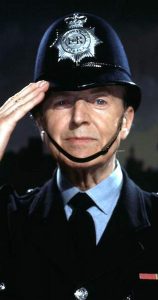
Evening all. Now that the British government has delegated the management of the coronavirus crisis to the Department of Agriculture, those of us who are not approaching the end of our useful lives, and who don’t have swine fever, tuberculosis or foot and mouth disease can rest easy that we’re in safe hands. To hell with omnidirectional clamour of the experts. Herd immunity is on its way.
The rest of us look nervously for signs that point to a cull, be it by vets with rifles, vans with frosted windows or a chap with a black cowl and a scythe stalking the neighbourhood. Note, by the way, the headline in today’s London Times, which screams “Police get powers to detain virus victims”. Do we think they’ll be heading for police cells? I don’t think so.
I’m joking of course.
Seriously, I do worry about the substantial portion of the population that keeps invoking the example of the Second World War. This little fetish is much loved by Brexiteers, who keep reminding us how we stood alone against the monstrous force across the Channel.
Now we have folks recalling the spirit of the Blitz, when we pulled together as the Nazi bombers rained death and destruction upon us. The analogy, though stirring, is a little fragile, I’m afraid. For example, we didn’t leave the sick and the elderly out of the air raid shelters to create space for the able-bodied, who could thereby continue to drive the buses and deliver the milk. We did massacre our pets, but not our grannies and granddads.
But such minor details are unlikely to put off the war fetishists. While the Italians are singing arias out of their balconies, most of us, not having balconies, will no doubt be singing Vera Lynn songs out of our front windows during tea breaks from building Anderson shelters in our gardens which will be used not for hiding from bombs but for concealing vast quantities of stockpiled loo paper (amongst other essentials).
Also don’t be surprised if the government, embracing the spirit of wartime discipline, doesn’t create a Ministry of Information, and make it illegal for anyone to spread alarm and despondency. In which case you’re unlikely to hear from me again after Dixon of Dock Green has taken me off in a Black Maria.
One bit of positive news is that America finally seems to be waking up to the seriousness of the pandemic. Even Donald Trump, for whom the whole affair seems to be an opportunity for him to look presidential, seems to get it, even though he still seems happy to shake hands with people, and he still refuses to be tested. I half expect to hear him declare “I have great immunity. No one has better immunity than me.”
But it’s no joke for ordinary Americans, who seem to be going through all the circles of hell to get tested and diagnosed. I also have a sneaking worry about the haphazard melange of announcements and decisions coming out of the US. If things get seriously bad, and half the population is required to work at home, what about those who can’t, and who look after facilities that not only Americans but all the rest of us need to work properly?
Maintenance of nuclear power stations comes to mind. If one of them accidentally melts down (remember Chernobyl), there will be global consequences.
Then there’s something else that we all seem to take for granted, especially during the current crisis: the internet. The US is a key technical hub for the net, and if connectivity and bandwidth start degrading because there aren’t enough staff to maintain the nodes, we’ll all be in trouble.
Which calls to mind one of my favourite novels of last year, Robert Harris’s The Second Sleep, set in a world eight centuries from now that has returned to the Middle Ages after an unspecified disaster wiped out all the infrastructure and much of the population on the planet – around now. Unspecified because a resurgent church blames the collapse on the biblical apocalypse, and does its utmost to hide the real cause for fear of losing its hold on the imagination of the surviving population.
But this is a flight of fancy, and I don’t for a moment believe that the internet will fall over, though I suspect that we might be in for some patchy service in the coming months, which will not be good news for those of us, which is most of us, who rely on ebusiness in our daily lives.
On a practical level, if large numbers of people are confined to quarters over the next few months, there will need to be a network of volunteers who are prepared to drop food and other supplies to those who can’t go out. Provided I’m not one of them, I’m more than happy to help.
Perhaps this is where community spirit will assert itself, despite efforts by the government to encourage the survival of the fittest. We should never underestimate the ability of people to care, even when much of the evidence suggests otherwise.
On that optimistic note, I’m off to Waitrose for a spot of panic buying. Half-baked ciabatta, walnuts and ginseng are top of the list. Oh, and loo paper, because our consignment still hasn’t arrived.
Back soon, virus permitting.
So we’re worth little more than a herd of cattle, is that right? I suppose you could argue that Britain’s elderly and vulnerable are worth considerably less than a farm full of Jersey cows. Cows produce milk, cheese, yogurt and, at the end of their days, meat. Old people consume them, and economically speaking make no recognisable contribution to society other than the money they spend, much of which comes from the government anyway.
I think I understand the concept of herd immunity, and I recognise that it would be good if the survivors are equipped to resist a second wave of coronavirus, which might arrive in the coming winter.
Yes, well we’re all entitled to our opinions, though those whose views carry the most weight appear to be prepared to sacrifice a generation in order to prove their opinion right.
I have a better idea. It’s not particularly sound economically, but morally it knocks the economic argument out of the ballpark.
If the Chinese have equipment left after their shipment to Italy, we should spend some of the money we’ve budgeted for roads, railways and other stuff on buying intensive care facilities from them. We should immediately start work on creating ten, maybe twenty thousand intensive care beds, whatever it takes. If the Chinese can build a hospital in Wuhan in a week, surely it is not beyond our capabilities to build, even on temporary premises, enough beds to save some of those who will otherwise die in their beds or hospital corridors because the NHS can’t treat them.
Would that not be an act of leadership? Would it not be proof that as a country we care about all our citizens, including the economically quiescent who paid tax and social security for maybe fifty years in order to raise and educate the generations who will benefit from this herd immunity. Better surely than treating them like exhausted milch cows?
I have no idea how long it would take to create the extra beds. Sir Humphrey Appleby from Yes Minister would no doubt find a reason why it would take many months, at which point the intended beneficiaries would be dead. But the Chinese presumably don’t have Sir Humphrey equivalents. The orders come from on high and they jump.
If the objection is that it’s not a matter of equipment but staff, my question would be that given there are many people unable to work through being temporarily laid off, what would it take to train people rapidly to perform certain specific tasks in support of the intensive care effort?
In short, I would set a target of two months to get the new facilities in place. Just in time for the anticipated peak. Businesses love stretch targets. Why not governments?
And now a further thought. When the crisis is past, perhaps we should put the surplus equipment in storage and earmark it to be donated to faraway countries of which we know little when they have to cope with epidemics – zika, ebola, whatever – for which their health systems are underprepared.
If we wish to see it this way, would not the soft power that accrues from such a gesture more than make up for a few delays in our new roads and railways?
But, you might ask, what qualifies me to mouth off about this stuff? I can only say that I’ve learned much from the globally acclaimed expert in such matters, Donald Trump. His leadership, wisdom, and deep scientific knowledge are an example to us all.
More soon.
So here we are in leafy Surrey, the epicentre of the coronavirus (because everywhere is the epicentre, or is likely to be shortly). As always, we’re on the alert for the dreaded dry cough and raised temperature. At least I don’t have to set off for work in a packed train full of grey-faced commuters, or take my kids to school, or tootle down to Cheltenham for the great equine virus exchange festival.
I don’t actually have to do anything except perform my daily Alzheimer’s test of bringing my beloved her morning cup of tea without spilling it on the stair carpet. But plenty to catch up on. Trump’s mogadon-fuelled address to the nation, suspicions on Twitter that Boris Johnson is preparing us for the abandonment of the oldest generation and news of the latest footballer, politician or movie star who has fallen victim to Covid-19.
One bit of good news raises the spirits. A kitchen fitter arrived yesterday to fix the kitchen cabinets that keep collapsing every time we open them. He’s a lovely guy called Attila. A very appropriate name given that the other day the malfunctioning kitchen caused me to wreak Hunnic destruction on a plastic spatula that proceeded to take its revenge by breaking a pane of glass in a nearby door.
This Attila (a common name in Hungary) has been in the UK for sixteen years. His son was born here. He has no desire to return home, because he’s already at home. He’s bloody good at his job, and much in demand from the Surrey bourgeoisie who like to change their kitchens every three years. Which causes me to ask: what kind of stupid country encourages decent, skilled, hardworking tax-payers like Attila with a son who is bilingual and loves playing chess to ply their trade elsewhere?
Only the madness of the plague trumps the insanity of Brexit in these interesting times.
Back in our pit of pestilence, I have it on good authority that our local Waitrose has run out of quinoa, olives and black truffle paste. No doubt the matronage is planning a raid coordinated with an insider at Waitrose to snaffle up supplies for their lunch collective as soon as these much-needed essentials return to the shelves.
Zooming up to the situation nationwide, Twitter this morning is full of Brits asking why when neighbouring countries are locking down every conceivable group activity, we are locking down precisely nothing. Does our government know something that the Irish, Germans, Italians, French and even, God help them, the Americans don’t? Perhaps our magic formula for keeping nature at bay is our endless repletion of the national mantra – keep calm and carry on. Before long someone will no doubt claim that we inherited it from the Druids, who knew a thing or two about magic.
At home we have other problems to worry about. Our two-year-old grandson has suddenly learned how to copy the words we temperate adults say. A couple of days ago he heard an expression of annoyance from one of us. I won’t embarrass my wife by letting on which of us came out with it. Anyway, he immediately came back with same word, flashing a wicked grin.
We then set about convincing him that the offending word was shoot, and tried by repetition to implant the alternative into his memory. The result was that every time we said shoot, he went sssh, and collapsed with helpless laughter. A child that is able to detect a naughty word at his age is clearly destined for great things. And if we’re not careful about what we say from now onwards, we face stern disapproval from his parents, not to mention death stares from the matronage at Waitrose.
But dang, ain’t things moving fast at the moment? Every time I go online, I expect to discover some new member of the great and the good who has succumbed to the bug. A wicked thought occurs to me. If, God forbid, Her Majesty contracts the virus, you can bet your life that we will do everything in our power to help her get through the disease. Which goes to show that Boris Johnson’s remark about us having to face the fact that we will be losing our loved ones doesn’t necessarily apply to everyone.
Knowing the Queen, which I don’t, I suspect that she would insist on getting no better or worse treatment than anyone else, just as the Queen Mother insisted on staying in Buckingham Palace during the blitz. But I comfort myself with the knowledge that a 103-year old lady has just become the oldest person in China to survive the virus. Her Majesty, by all accounts, is a healthy woman, and I’m sure she would be fine.
Hi ho. It’s been at least an hour since the last bit of bombshell news, so I’m going to stop here while the going’s good, which no doubt it still is at Cheltenham.
Oh, almost forgot. The loo paper hasn’t arrived. I suspect the delivery driver left it outside and some sneaky neighbour snaffled it. In Surrey?
More when I have it, and as always, stay safe.
Fourteen days back in the UK, and not a symptom in sight. Hurrah! At this precise moment nobody needs to fear me, though now I have to fear the super-spreaders.
Well, that’s the theory anyway. Just the same, I’ve been scrupulously careful. Mainly staying at home. Washing hands before the occasional visit to the high street. Washing hands afterwards. No handshaking.
I’ve played three rounds of golf since coming back. Golf is a great plague sport, because you’re outdoors, and you’re never close enough to your partners – provided you avoid the high-fives – to exchange viruses. You’re walking four or five miles a round, and you don’t have to go near the clubhouse afterwards, apart from to wash your hands. Cross-country running’s probably even better, but my knees are knackered, and anyway, I’m looking for exercise, not mindless endorphins.
But fear is out there on the golf course, especially among the older folks who rely on golf for their social life. The other day I played with a guy in his seventies. He has Type 2 diabetes. His feet aren’t good. The only time he became animated was when we mentioned the coronavirus. It’s not a joke, he said. People are dying. He was right of course, but there’s nothing like black humour to leaven fear. And I realised that he is very afraid. What he meant but didn’t say was that he was worried he might die. He and a goodly percent of the elderly golfers in the country with “pre-existing conditions” who turn out come rain or shine every week.
And me? I have to admit I’m ambivalent. There’s one side of me that says fuck you, coronavirus. If you want me, come and get me. Then at other times I think that if I’m careful enough, I might just end up being among the 40% of the population that dodges the bullet long enough for the scientists to develop and test an effective vaccine.
If you take the middle way between my attitude swings, you end up with something that looks like common sense. That of course assumes that decisions will not be taken away from us, as is the case in Italy.
Do the math, on the basis of cases doubling every four days, and you will find that within one calendar month, starting at a base of 500 infections, we in the UK will have 128,000 cases, and between 2,500 and 3,800 deaths, depending on a fatality rate of between 2 and 3 percent. At what point will the government declare a lockdown? And would that number of infections and fatalities be sufficient to overwhelm the National Health Service?
Depends, depends depends. If the virus produces a spectrum of seriousness, how many of the 120k will need intensive care, and how many will have a mild illness that requires them to stay at home for a week or two with no clinical intervention required?
No doubt this stuff has been modelled to the nth degree by the doctors, scientists and statisticians. But while you can model all you like, you must still be flexible enough to update those models rapidly.
What if something unexpected happens? A few days ago, I read of a limited Chinese study that suggests that the virus has mutated into two versions. One, highly lethal and contagious. The other still contagious but less lethal. The bad news is that you can catch both simultaneously. The good news is that the more lethal version will die down more quickly because it will kill more quickly, thus depriving itself of the means to reproduce.
If this is true, and it’s a big if because I’ve not heard anything about this theory since it first hit the media, it makes the job of testing more involved, and the modelling much more complex. Could it explain why the Italian death rate is so high compared with that of other countries?
Is proactive testing – identifying cases early – the way to limit the death toll? The relatively low death rate and high level of testing in South Korea suggests that might be the case. As with all these speculations, it’s unlikely we will know the answers until after the fact, and perhaps not even then.
Just as we don’t know the precise numbers of infected and deaths in the 1917-19 flu pandemic, we are unlikely ever to know the full story of this pandemic, although for different reasons. Back then, the problem was a lack of ability to diagnose or document consistently across the world. Today, it’s more likely that some governments will choose to distort or under-report in order to disguise their lack of preparation and mitigate the political fallout from their incompetence.
Even so, we will almost certainly end up with better data than we did a hundred years ago, which will stand those of us who survive in good stead when predicting the outcome of the next pandemic. In fact the post-mortem – if you’ll forgive the inappropriate analogy – seems already to have begun before the patient has expired. I’ve just read an interesting article in The Guardian about a study suggesting that if China had introduced its lock-down measures three weeks earlier than it did, it would have reduced cases by 95%. Nothing definitive, just another bit of modelling to add to the pile.
Meanwhile, here in the United Kingdom our beloved government has revealed our annual budget.
Two things stand out. They’ve suspended any increases in duty on booze for a year, which suggests that they’re encouraging us to drink and be merry while our grannies and granddads drop like flies.
The second thing is why, at a moment of supreme uncertainty, would you issue a budget at all? Would it not be better to announce a package of coronavirus temporary measures (which they did) and defer the remainder of the budget until the current crisis looks like resolving itself (which they didn’t)?
Do we really think that if the economy tanks over the next three months the government will be willing and able to deliver on its commitment to a massive spending splurge? The answer, I guess, depends on whether you believe anything this government promises.
We must at least give our lot credit for having some kind of plan. I was quite encouraged by the discussion in Parliament in which Matt Hancock, the Health Minister, answered questions about how the government was dealing with the outbreak. For once our MPs sounded like adults. The questions were intelligent, as were Hancock’s answers.
Our cousins in the United States, on the other hand, seem to be at sixes and sevens, except in the fevered imagination of the president. Minimal testing, mixed messages, prayers and, initially at least, gross complacency on the part of Trump himself.
I won’t go on about his behaviour in the crisis, except to recommend an excellent report for the BBC by Jon Sopel, who doesn’t just deal with Trump’s antics, but points the finger at America’s ethos of every man for himself as the biggest obstacle in the way of the country getting a grip on the crisis.
Trump himself has come within two degrees of separation from the virus. A couple of congressmen shook hands with someone who had the virus at a recent conference. One of them was on Air Force One the other day with the president. The last thing I wish is that Trump gets infected, and if he does, I hope he recovers quickly. But a bout of infections at the highest level might persuade the complacent to take the pandemic seriously.
Perhaps Trump’s travel ban on people from various European countries will focus the American mind. If not, the news that Tom Hanks, the epitome of the Decent American, has caught the bug might seep through to the backwoods of Pennsylvania and Montana.
It pains me to think that the United States, because of its shortage of testing facilities, might end up as one of those countries whose reporting on infections might never reflect reality. But more, I’m worried about my friends over there who have more to lose than the national reputation.
On the domestic front, our regular online order of loo paper has not yet arrived. My wife wonders if it’s been hijacked. She may be right. But at least the newspaper arrived this morning, so all is not lost.
That’s it for now. Stay safe y’all.
Speaking of moral choices, of which I’ve done quite a lot lately in the context of how we deal with the coronavirus, I feel rather sorry for Jolyon Maugham.
He’s the barrister who killed a fox in his garden on Boxing Day and tweeted about it. The fox in question was threatening Mr Maugham’s chickens. It got caught up in some netting – the opposite of the Great Escape, you might say. So a man with a formidable reputation for pro-bono work on various causes, most notably the legal challenges against the British government’s high-handed behaviour in trying to deliver Brexit, is now just as widely known as a fox slayer.
Despite the efforts of some enthusiasts within the RSPCA (Britain’s animal welfare charity, which has powers to prosecute) to hang, draw and quarter him, he learned this week that there will be no criminal charges resulting from his action. It seems that he complied with the law when he rapidly dispatched the fox with his baseball bat. Not quite the humane killing of a snarling animal in pain that the RSPCA would have preferred. But swift, effective and legally mandated.
It’s a bit surprising that he had to wait almost three months to discover that there would be no charges against him. The RSPCA did a post-mortem on the animal and determined that it died instantly. It’s hard to understand why it took that long to come to such a conclusion when the Silent Witness team, my favourite TV pathologists, usually manage to unravel the most hideously complex cold cases in a quarter of the time. But I suppose in real life these matters require a hundred emails and the long deliberations of great minds.
Anyway, the moral choice in this case was do you consider the lives of your cherished chickens – presumably the source of an abundance of free-range eggs for your table – more highly than that of a fox doing its utmost to break into the coop and decapitate them? Or do you don a pair of kitchen gloves, grab some wire-cutters and risk catching rabies in order to liberate the fox in full knowledge that it will make further attempts to murder your chickens? Or further, do you wait for hours on a public holiday for the RSPCA to arrive and make the decision for you, knowing that the fox will be in pain throughout the wait?
I’m pretty sure that there would have been farmers across the country cackling with laughter at the thought of city dwellers in such a frenzy of anxiety and anger over Mr Maugham’s moral choice. A farmer would have whipped out the shotgun and bang. Problem solved and nothing said.
The other dimension of the story is the social choice Mr Maugham made by tweeting about it. As a public figure with hundreds of thousands of followers, why did he not realise that his tweet – intended to be ironic – would ignite such a firestorm of fury that he felt the need to withdraw from the social media for weeks? The reaction was so toxic that he even offered to resign from his chambers (the equivalent for a self-employed barrister of leaving his place of work). His offer was not accepted, but it’s an indication of the effect on him of one ill-judged tweet.
All of which goes to show how careful you need to be with your pronouncements on the social media, and how even the wisest and best of us are prone to the occasional disastrous misjudgement. As opposed to the likes of Donald Trump and Boris Johnson, who make heinous misjudgements on a daily basis and seem to get away with it. But then they are neither wise nor the best of us.
I, on the other hand, am not well-known, wise or particularly good. Therefore I feel I can confess to a heinous misjudgement without fear that my reputation, such as it is, will be ruined, and my picture splattered all over the tabloids.
What’s the old fool on about, you might ask? It’s this. I am a spatula killer. By which I don’t mean I kill things with spatulas. I kill spatulas. Well, just one actually.
Let me explain. Over the past few years our kitchen has been showing signs of frailty. Every now and again, draws collapse and cabinets fall to pieces. Each time, I, or members of my family, patch the offending bits up with the aid of nails, glue and gaffer tape.
At this point you might ask why we don’t just get a new kitchen. The answer is that if we can fix it, why bother to spend untold thousands on a set of new cabinets that work no better than the ones we replace?
But make-do-and-mend does have its disadvantages, especially when the thing you’re mending shows signs of terminal degradation. When the person doing the mending is also showing signs of degradation (if not terminal), the consequences can be surprising.
As happened the other day. When I pulled out the cutlery draw it collapsed, causing the draws underneath also to collapse like one of those old buildings brought down by a controlled explosion. At which point, in a moment of mindless frustration I grabbed a nearby plastic spatula and smacked it down on the dining room table.
What I wasn’t expecting was that it would break into a several pieces, and that a larger bit would fly into a glass pane in a nearby door, leaving the door with the appearance of having been the victim of vandalism or a drive-by shooting. Or at least I think that’s what happened. I can think of no other reason why a pane of glass should suddenly crack.
I only discovered the damage later, after I had reverted to my usual calm demeanour. Imagine my shame when owning up to the by-product of my senseless act of destruction.
As a result, I’m in the doghouse, not only for my uncharacteristic (honest!) display of temper, but because the cost of replacing the pane of glass is a ridiculous two hundred quid. Then there’s the destruction of a much-loved spatula, which may have been old and bobbly, but served our family in the preparation of countless pans of onions over the past decade. Mea maxima culpa.
Now the spatula wasn’t threatening any chickens, and my behaviour was intemperate, whereas Jo Maugham’s was logical, even if, in some people’s view, draconian. But if I tweeted about what I did the result would be the same, if microcosmic in my case. I would be forever known as a spatula destroyer. In my obituary, my shameful act would feature as prominently as my many achievements.
No doubt Mr Maugham has learned a lesson, although I’m not sure I have since I don’t really care a hoot about my reputation.
There is a postscript to my tale of wanton destruction. We’ve hired a kitchen fitter to replace the offending drawers and shelves, not with new units, but with what are known in the trade as carcasses. This enables us to fit the wooden fronts of the old units to new ones that work fine, thus saving the outrageous cost of some artsy-fartsy “new kitchen”.
But I’m troubled by the unfortunate use of the word carcass. From now onwards, whenever I open a kitchen cabinet or pull out a drawer, I shall be forever be reminded of the intended victims of Mr Maugham’s intruder and of its grisly fate.
Which goes to show how easily unintended consequences can corrode the soul.
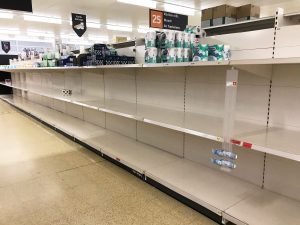
Matt Hancock, Britain’s Minister of Health, tells us today that the government will “be guided by the science” in determining next steps in dealing with the coronavirus outbreak. Sorry Mr Hancock, but that is an abdication of responsibility.
If the science tells us that by not imposing lockdowns on seriously affected areas, banning public gatherings, closing schools and doing all the other stuff that Italy is doing right now, the result will be X, and by taking draconian measures now, the result will be Y, the government clearly has a choice: if X equals rapid spread and an early peak in infections – you could call that a “get the virus done” approach – and Y slows down the rate of infection but prolongs the outbreak – with consequent risk to the economy – that is not a choice dictated by science. It’s a political and a moral choice.
X will most likely result in the Health Service being overwhelmed and unable to deal with a vast number of serious cases becoming critical at once. I imagine that the advice of economists would be just as influential in making that decision as that of the scientists. Either way, it will be scant consolation to the weak and elderly who might die, but might be saved if the government opted for Y.
I went on at some length about the implications of large numbers of deaths in my last post, so I won’t repeat myself here. But I do wish that Mr Hancock and his colleagues would explain to us that there are a number of factors at play other than just the science. Aside from the political, moral and economic dimensions, there’s the danger of a breakdown in law and order sparked by panic buying, disrupted supply chains and quite conceivably by an ugly public reaction to what people might see as the needless deaths of their elderly relatives.
I would understand if he explained that more extreme measures might be unwise unless or until we have areas of mass infection that can clearly be identified as candidates for lockdown. It’s difficult to lock down a whole country. Not even Italy has done that. Instead it waited for a regional trend of infections to become clear.
But I really object to his insulting our intelligence by pretending to bow down to the God of Science. Science is neutral. It can tell us when we’ve been infected by a virus. But it can no more offer a clear way forward than the Delphic Oracle, because it points towards choices, not certainties.
Science might tell us about the consequences of letting the epidemic rip. Economists will calculate their best guess as to the damage to the economy. Doctors can estimate how many will die. Politicians will worry the effect on morale of food rationing and social isolation. And moralists will ponder what it does to a society if hundreds of thousands of elderly die needlessly.
It’s not just the science that should guide us, Mr Hancock, and you know it. Informing us about difficult choices is not the same as spinning bullshit to win elections. You would think that we’ve been a democracy long enough to be treated as intelligent adults rather than gullible dupes ready to believe any old nonsense.
The government must listen – especially to health workers on the front line – educate and admit that it doesn’t have all the answers, and nor does science. If it doesn’t do these things, many of us will start believing any old nonsense, not least all the crap being circulated on the internet.
We are adults, Mr Hancock.
OK, so where do we go from here? Speaking of myself, nowhere. I’m ten days on from returning to the UK from a country that has seen a Covid-19 outbreak. Nothing on the scale of Iran or Italy. Not even as big as the UK on current numbers. The island where we spent a couple of weeks had no cases. But then we had to negotiate airports on the way home. Plenty of hand-washing – and disinfecting our personal space on the aircraft – hopefully did the trick.
Thus far, no symptoms. We haven’t self-isolated, because no official advice has required us to do so, but we’ve continued to be careful. Within four days we will move from being notionally a potential threat to others to the outside world being a threat to us.
For reasons that are none of your business, I would consider myself to be mildly immuno-compromised. So according to current guidance I need to be extra careful. But I am only one of a huge number of people in this country who are at risk if and when the virus really takes a grip. How many people have heart problems, Type-2 diabetes, respiratory problems? I can think of a dozen or more without even trying.
I’m not in my 70s or 80s, I live an active life and I haven’t lost my marbles yet. I would therefore hope that I will not be first in the queue for death’s door. But I do consider myself to be part of a clan: the walking immuno-compromised, to be known here onward as the WICs.
And speaking on behalf of that clan, I have to say that I don’t buy into the crap perpetuated by the “keep calm and carry on” brigade, especially when they reel off the flu death statistics and claim that Covid-19 is just like a nasty dose of flu. For some, maybe, but for others, including people like me who haven’t been to the bookies for decades, it’s a matter of odds.
If the virus infects 60% of the population, and it kills, say, 3% of those it infects, then we will lose 1.2 million people, mostly the elderly and WICs.
Now I can see the advantages both for the dead and those who survive them.
The dead won’t have to live with the consequences of Brexit, won’t see our cricketers lose the Ashes once again, nor our footballers crash and burn in Qatar in a couple of year’s time. They won’t need to witness another Eurovision Song Contest. They won’t have to look on Boris Johnson’s fat, smirking face gurning at them in the newspapers. If they’re lucky, they might live long enough to see Donald Trump blow up like an enormous stink bomb in November.
Those who live in care homes will be spared the trauma of having to move to another “home” because staff costs in the Priti-Points era have made the current place unsustainable. They won’t live to see the Archers privatised, nor will they have to put up with a daily diet of reality TV featuring people 60 years younger than themselves.
For those who survive, I can see many advantages. A million less old-age pensions for the state to pay out. The National Health Service relieved of the burden of having to care for society’s weakest members. And since the virus doesn’t distinguish between the rich and the poor, think of the inheritances that will cascade forth upon the survivors, not to mention the boom in death duties, as well as the properties liberated from the iron grip of the baby boomers and the stamp duty bonanza resulting from their sale by grasping descendants.
Yeah, it’s sad about grandad, but he had a good life and his time had come. Now the funeral’s over, let’s get on with the tax cuts, eh Boris? With all that extra money, time to build some motorways, HS 2, 3 and 4, and get that bloody bridge across the Irish Sea sorted.
When the survivors look back, it will seem as if God organised a euthanasia programme, since He knew that we were too wet and sentimental to do it for ourselves.
Will it come to this? Your guess is as good as mine. But the signs aren’t good. The most ominous portent from the last couple of days is the news that two BA baggage handlers at Heathrow have come down with the virus. This implies that they caught it from bags they handled, which in turn implies that either the passengers or the handlers at the originating airport were infected. Try tracking that lot.
We seem to be fast approaching the point at which we need to make some decisions. To be fair to the government, I think they realise this.
Do we put life on hold for the next six months for everyone in the country to give the WICs a chance? Or do we let God get on with His euthanasia programme?
If the former, it will mean embargoed communities, no Glastonbury, no Cup Finals, no quiet dinner parties and no scrums on the Tube. In other words, Wuhan awaits.
If the latter, it will be sauve qui peut. Crowds mobbing the supermarkets as they panic buy and infect each other. Paranoia, attacks on minorities perceived as being super-spreaders (already happening), economic collapse (not far away) and general anxiety sufficient to move even the most phlegmatic of our citizens (getting close).
Speaking as a paid-up member of the WIC, I think that any society that is prepared to abandon the weak and the elderly to their fate isn’t worth belonging to. I would say that, wouldn’t I? But to do so does set a dangerous precedent, since the young will be old one day, and this pandemic is surely not the last we shall face within the next couple of generations.
So I don’t think it’s too much to ask to put normal life on hold for the next few months. This is the government’s Delay strategy. Try and phase the rate of infection so that the NHS isn’t overwhelmed all at once. The longer we avoid reaching the peak, the closer we come to the point at which we have a viable vaccine.
If there’s a lesson to be learned from a pandemic, it’s that we’re not an island. We simply can’t close our borders, close our eyes and hope for the best. Because by the time we get around to doing that, it’s too late. The damage is done.
Whether we like it or not – and lots of people in this country don’t like it – we’re not independent and never will be. We’re interdependent. Right now, we depend on the efforts of other countries to limit their exposure to Covid-19. We depend on other countries to share information and research that will result (hopefully) in a vaccine. And if our economy is reduced to a smoking ruin, we will depend on international institutions to keep us afloat.
Perhaps, even in our frenzy of national selfishness, we might find it within ourselves to assist other countries less able to cope with their health emergencies.
I will not bang on further about Brexit and the false god of independence. And besides, we have other more pressing things to worry about. At least I’m pleased to announce that we have a shipment of loo paper, ordered online, coming our way. Should it be diverted by rioting dysentery sufferers, we have a large number of back issues of The Times which will do nicely. I always knew that the print version was preferable to the online edition, though I hadn’t anticipated this potential benefit.
We’re all dealing with our fears for the immediate future in our own way. Some of us are in denial, which is certainly a comforting strategy. My way is to put my thoughts in writing, hence this post. I don’t think we’re approaching the end times, but I do believe that we should keep our eyes open, be realistic and recognise all the crap that’s circulating about this crisis for what it is.
That’s it for now on the corona front. More when I have it.
 59steps