Of the 25 Democratic senators up for re-election in 2018, 10 come from states where Trump won: solid red states Indiana, West Virginia, Missouri, Montana, and North Dakota, along with traditional swing states Michigan (still recorded as likely Trump until all votes are counted), Ohio, Pennsylvania, Florida, and Wisconsin—which all voted for Barack Obama in 2008 and 2012. Tim Kaine also faces re-election in Virginia, a battleground state Clinton won only narrowly on Tuesday.
On this Election Day I have nothing further to say about the momentous choices facing the electorate. In fact I’m not sure that what I had to say before was of much significance. A series of long, weary sighs would probably have sufficed. But I do have a question that nobody in politics is likely to want to answer.
Some time ago, as an aggrieved baldie, I wrote a piece about how if you’re male and blessed with a bright shiny pate, you have no chance of being elected to lead just about any country except France. At least – in the case of Britain and the USA – not since the days of President Eisenhower and Sir Alec Douglas-Home (who wasn’t elected anyway, and ended up being unseated by Harold Wilson after a couple of years in power).
Now for another earth-shattering observation masquerading as a question. Why is it that the women who have risen to prominence in our leading political parties have such different body shapes? None of them are bald (as far as I know), but I can’t help noticing that the Tory women are built like hunter-gatherers, as are Theresa May, Justine Greening and Andrea Leadsom. But among the upper echelons of the Labour side there seems to be a preponderance of women built like earth goddesses. I’m thinking of people like Diane Abbott, Emily Thornberry and now the person who has temporarily replaced Abbott as Shadow Home Secretary, Lyn Brown.
This is not a commentary on the attractiveness or otherwise of these women. I’m neither a fat-shamer (how could I be, with my generous 18-stone physique?) nor an ardent admirer of the lean and mean.
But I do wonder why things have changed since yesteryear. The time was when the Tory women – especially those of the shires, who kept the blue flame alive and sailed like battleships into the party’s annual conferences – were often as wide as they were high. And Labour’s senior female politicians were the sort of women you would bet on completing a three-hour marathon: Barbara Castle, Margaret Beckett and more recently Harriet Harman.
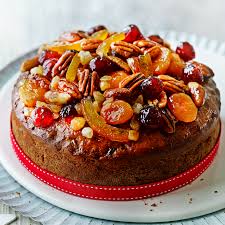
One possible answer has its roots in cake.
Since its inception and until fairly recently, the core purpose of Women’s Institutes, those alleged hotbeds of Tory fanaticism, was to keep the home fires burning. Yes, they stuck up for women, but suffragettes they were not. At the risk of appearing unfair, sexist and, heaven forbid, patronising, one of things for which WIs were famous was the quality of their cakes, even in wartime when the normal ingredients were unavailable.
In recent decades, the WI has broadened its scope and appeal. Food still features strongly, but these days you are more likely to find “healthy” recipes on their website than instructions for making a treacle tart.
At the same time as the organisation has moved beyond its traditional appeal, we in Britain have started to celebrate the naughty but nice on a far wider scale than the WI ever achieved. To a large extent, this has been down to the success of The Great British Bake-Off, which is a triumphant celebration of the empty calorie.
Of the presenters and judges, only Mary Berry would be recognisable as a archetypal Tory, even if she’s a frigate rather than a battleship. And the competition winners come from all walks of life, exemplified by the lovely Nadia, who is a Muslim of Bangladeshi descent. Could it be that Bake-Off has convinced a greater number of Labour voters that cake is cool – and I’m not talking about Mr Kipling’s lamentable creations?
To be honest, I have no idea whether the ample proportions of the senior Labour women have anything to do with the national obsession with cake. For all I know, the opposite might be true.
More likely it has to do with wider lifestyle issues, and the fact that these career politicians are struggling to balance family life with the needs of the job. There are no free lunches if you’re in opposition. I suspect that the senior ones eat quickly and on the run, which is not the best way of controlling weight, assuming they actually wish to.
On the other hand, May and her colleagues are pretty busy too. The PM suffers from Type 1 diabetes, so she has to control her calorie intake, but what about the others? Is the difference down to vanity, being comfortable in their skin or otherwise? Is body size more important to censorious, image-conscious Tories than to the more tolerant, inclusive Labourites?
Whatever the reason, it might just be a passing phenomenon. The junior members of Labour’s shadow cabinet more closely resemble their Tory counterparts, and Ruth Davidson, who leads the Conservatives in Scotland, is hardly a stick insect – though to be fair, she does come from the home of the deep-fried Mars bar.
Whether it’s down to the cake, the demands of the job or personal preference, I prefer to see a little diversity of shape among those who are governing us. Or to put it another way, I’m somewhat suspicious of those who – in the words of Shakespeare – have “a lean and hungry look”. Like Cassius, who did for Caesar, they tend to be the assassins.
I can’t recall ever feeling more relieved to see the end of an election campaign. As Britain goes to the polls – yet again – I suspect that one politician will be particularly glad it’s over, whatever the result.
Theresa May has seemed so far out of her comfort zone that she must be praying for deliverance – desperate to return to the familiar embrace of her Westminster cloisters.
I’m even beginning to feel sorry for her. It must be deeply humiliating to have presided over such an abject train wreck of a campaign.
But I’m even sorrier for the English language. In the hands of her advisors, she is reduced to terse formulaic utterances as devoid of content as those terms and conditions you hear rattled out during the last ten seconds of a radio ad promoting financial services.
We all know about “strong and stable”, which seemed to be the anthem of the early part of the campaign. But I wonder if anyone else has noticed her new catch-phrase: “I’m clear that…..” As in her latest tweet: “I’m clear: if human rights laws get in the way of tackling extremism and terrorism, we will change these laws to protect the British people.”
The other day, she answered every question in an interview with “I’m clear that…” and proceeded not to answer the question.
She uses the word clear so often that I’m beginning to wonder whether this daughter of the Church has become a secret Scientologist. However, I looked up Scientology on Wikipedia and discovered this definition of the word:
“the attainment of Man’s dreams through the ages of attaining a new and higher state of existence and freedom from the endless cycle of birth, death, birth … Clear is the total erasure of the reactive mind from which stems all the anxieties and problems the individual has.”
That doesn’t sound like Mrs May’s state of mind to me, so the responsibility for her monochromatic delivery must lie with her hired sloganators.
How she must yearn for the gorgeous language she hears every Sunday from the pulpit. Phrases like:
“Let justice roll down like waters, and righteousness like an ever-flowing stream” (Amos 5:24).
A much more eloquent expression than “I’m clear that with a strong and stable government we will do what is necessary to bring these terrorists to justice”.
Another phrase I can’t abide, but which I can’t lay at Mrs May’s door, is “it is right that…..” That one seems to have originated during Tony Blair’s term of office. Every five seconds it seemed that some minister would pop up to claim that this was right and that was right. And I wanted ask “do you mean morally right, right as in the correct exam answer, right because it said so in your manifesto, or simply expedient?”
By tomorrow it will be over. Except that it won’t be over, because in the coming months we’ll be subjected to an endless stream of Brexit-speak. Who will be in power to utter the robo-rhetoric remains to be seen. If it’s Labour, be sure that their sloganators will be just as relentless as May’s.
Years ago I stumbled on to a language called Simplified English. It’s purpose is to ensure that in an international environment you should easily be able to learn a thousand words of English – enough to prevent catastrophic misunderstandings in fields such as aviation. Hence if you look out on to the wing of the aircraft taking you to Majorca, you will see the words “No Step” emblazoned on a part of the wing that is not built to withstand a technician jumping up and down on it like a demented gorilla.
The point about Simplified English is not just that there is a limited vocabulary, but that only authorised words and phrases can be used. Could it be that the sloganators have latched on to this in their inventive choice of words for the likes of Mrs May?
Certainly, monotonous though she may be, she is at least clear, in her gnomic kind of way. Unlike Boris Johnson, who sprays words about with the glee of a two-year-old boy peeing in a paddling pool.
I fear that from now onwards we shall have to endure both styles of discourse: politicians like May being clear and saying nothing, and incontinent orators like Johnson and Donald Trump saying the first things that come into their heads in incoherent lumps of brown, disconnected verbiage.
God protect us from both styles, though at least Trump is contributing to the development of the language with his imaginative new words.
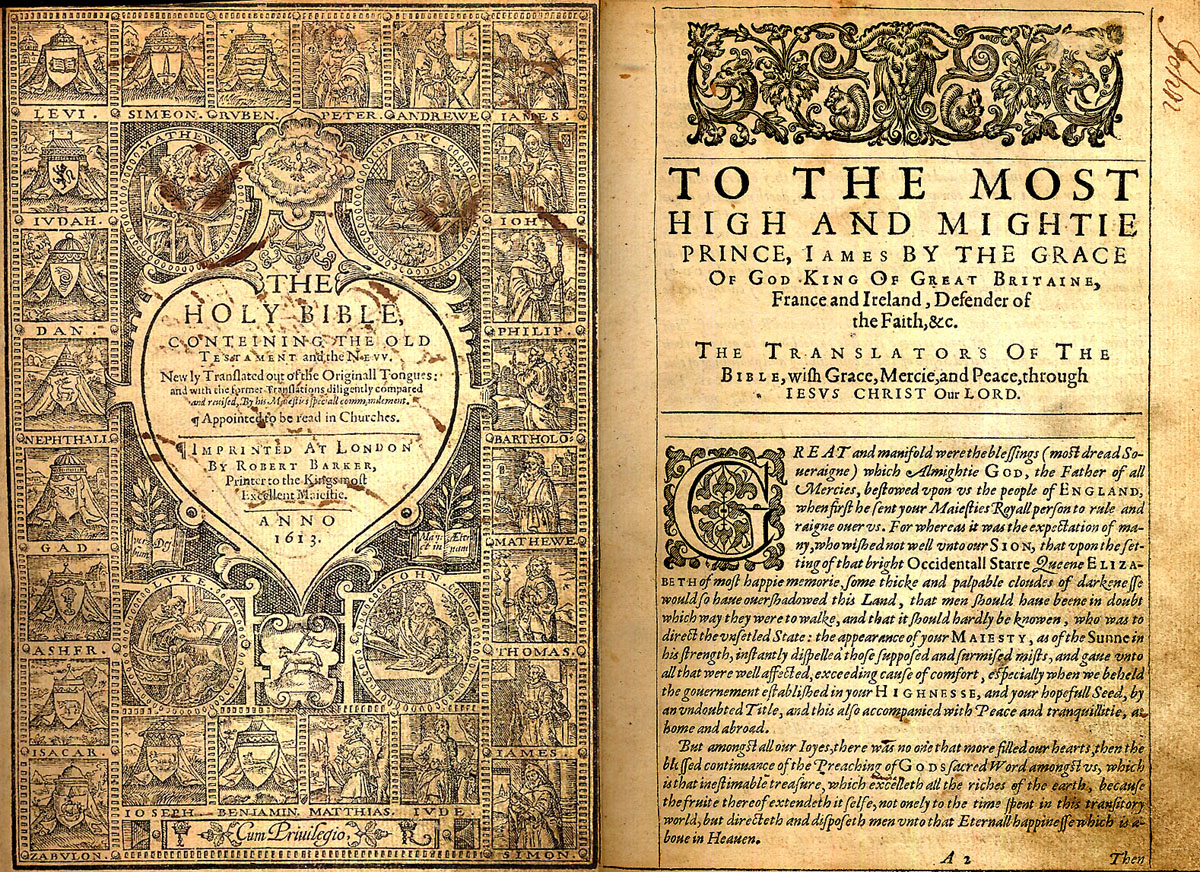
Me, I’m going back to my grandfather’s King James Bible to find some proper English. The old words are the best ones, I reckon.
I have a message for Theresa May and Jeremy Corbyn:
Enough is enough. Please stop using policing and national security as a political football. Neither of you have all the answers and you know it.
You, Mrs May, cannot prove that reductions in police numbers since 2010 have had no effect on terrorism or any other form of crime. You, Mr Corbyn, cannot prove that by recruiting more police you will make any impact on the current rate of terror attacks.
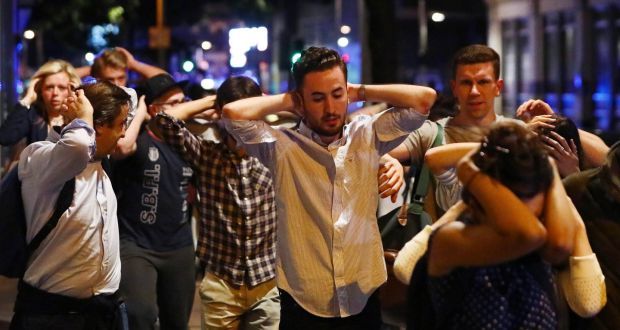
You both know that potential attackers have thousands upon thousands of potential targets. You cannot protect them all with a few thousand extra bobbies on the beat, armed or otherwise. You know that when attacks take place, too often the police can only minimise casualties, just as happened thanks to their swift intervention at Borough Market.
You both know that to deploy armed response teams in every town and city in the UK to guarantee intervention within minutes would be prohibitively expensive, and you have no intention of doing so. The public have no reason to expect the arrival of an SAS helicopter to back up the police in Plymouth, Loughborough or Norwich. And you know that sooner or later there will be attacks on softer targets less intensively policed than London and Manchester.
You agree that the number of armed police must increase. Fine. You agree that the security services must hire more people to keep watch on the high number of potential jihadis across the country. Fine again. But what you don’t tell us is that the kind of people MI5 and GCHQ need to hire are not lined up outside job centres ready to sign the dotted line. It takes time to recruit and train them, and until they do, the security services must make do with what they have. The same goes for the police.
In other words, what you don’t tell us – unless the whole issue of extra numbers is a red herring – is that in terms of our ability to anticipate and defend ourselves against attacks, for a while things are likely stay as they are, or possibly get worse, before they get better.
And while we’re on the subject of red herrings, you should not be preaching certainty where it doesn’t exist. When you trot out statistics on crime, and correlate them with police numbers, do you take into account changing demographics, the effect of poverty, wage stagnation, financial insecurity and other factors that affect crime rates?
In your quest for differentiation, you seem to be ignoring the same reality that advertisers have long recognised, which is that “50% of our advertising is a waste of money – the problem is, we don’t know which 50%.”
Can you, Mrs May, tell us in words of one syllable why police numbers have fallen? What services are affected? What has been the impact of reduced numbers? What “smart policing” actually means? And can you, Mr Corbyn, tell us how your proposed recruitment drive will materially improve what is currently deficient, other than that you will increase the number of front-line officers?
Can both of you guarantee that our membership of cross-EU security organisations such as Europol will continue after Brexit? Can you guarantee that the current level of cooperation between security services in the UK and the rest of the EU will continue after Brexit? Of course you can’t, because these matters are subject to the Brexit deal. But at least you can make clear that this is the UK’s intention.
I will not criticise you for failing to elaborate how you propose to minimise online recruitment of jihadis. This is a complex issue which requires the cooperation of the social media and search companies. But you are not pointing out that draconian action can have unintended consequences. Do we wish to become even more of a society under surveillance than we already are?
Mr Corbyn, Mrs May, these are issues that transcend party politics. They call for coherent policies that survive the lifetime of a particular government.
Both your parties have since 1997 been agreed on the benefit of devolving monetary policy to an independent body – the Bank of England. For centuries we have had an independent judiciary that is much admired throughout the world.
Now is the time to create an independent authority, accountable to but not controlled by the government of the day, to build and implement a consistent, coherent, long-term policy on policing and national security.
It should be an authority that recommends changes to legislation, takes opinion from all sections of our society, including our ethnic and religious minorities, and delegates tactical decisions to the Home Office and security services.
Just as the Bank of England has a duty to explain changes in monetary policy, so the new body should be accountable to the public as well as to the government. It should explain policy changes, highlight uncertainties and threats as well as achievements, and interpret statistics in a clear and consistent fashion.
There will always be secrets relating to national security that it cannot disclose, but the rationale for secrecy should be clearly set out.
You will no doubt bristle at the suggestion that the safety and security of your fellow-citizens is too important to be left solely to the discretion of whichever of you forms a government after June 8th. But I suspect that I’m not the only citizen deeply frustrated by the inability of successive governments over the past two decades to build a national consensus on issues that are fundamental to our well-being, and by your personal failure to demonstrate that you are speaking for all of us, rather than in the interests of the political parties you represent.
We need the best brains available, regardless of their political affiliations, to take a long-term view. Because, in case you hadn’t noticed, this is a long-term problem – way longer than the five years that await you.
Enough is indeed enough.
The head of BT Sport is having a moan about the fact that cameras are not allowed in football dressing rooms. According to yesterday’s London Times, Simon Green says that “football has an arrogance. It’s not a logical business in any way, shape or form, it’s an irrational business”.
Apparently, being logical, by his definition, is doing things the way they go them in the US. Cameras in the dressing rooms, comments from managers during games and all manner of other bright, shiny ways of applying TV viagra to revive waning attention spans.
Well yes, interesting things do go on in dressing rooms, don’t they? Or so we hear. What would we have given to have witnessed Alex Ferguson nearly decapitating David Beckham with a random boot? Or Donald Trump having a good laugh with his golfing buddies about pussy-grabbing?
On second thoughts, perhaps they’re best avoided. Do we really want to see a bunch of sweaty guys in jock-straps sitting around picking their noses, or slumped trance-like with their Bose headphones clamped over their ears?
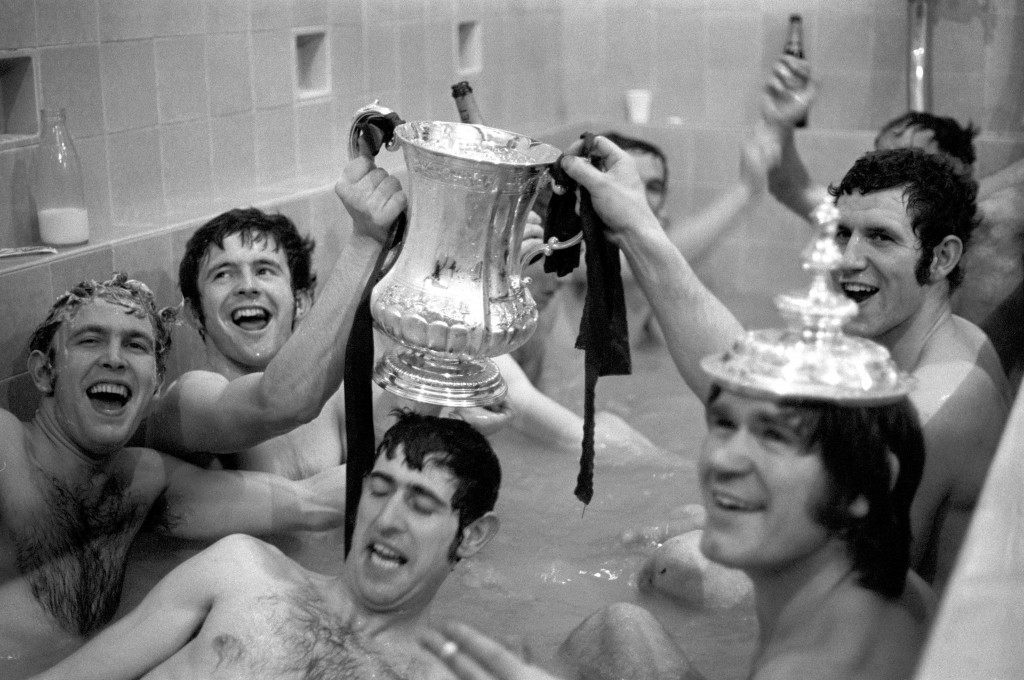
And how would the occupants feel about constantly having to be on their best behaviour? No frolics in communal baths, sweary rants about the referee, or insults hurled in Spanish or Croatian about the nutter who got sent off after thirty minutes.
I suppose there would be some side benefits – for the players, bigger endorsement fees for aftershave and shampoo, photo opportunities in Calvin Klein underpants. And at half-time, we viewers would be spared a few minutes of droning analysis from the commentary box.
If the practice extended to rugby, perhaps we would be treated to graphic demonstrations of the effects of body-building on the human torso. And yet more commercial opportunities, such as beer sponsorship.
On balance, I think that dressing rooms are best avoided. There will, however, be voyeurs amongst us who would argue that if the cameras are allowed in male dressing rooms, it would be entirely sexist if they weren’t also installed in female ones. And if we can get an eyeful of footballers and rugby players, why not at Wimbledon, or even better, at the Olympics?
Full-marks for trying, Mr Green, but I suspect that once the novelty wore off, being a fly on the wall of most dressing rooms would be no more exciting than watching one of BT’s call centres fending off streams of angry customers complaining about the quality of their broadband service.
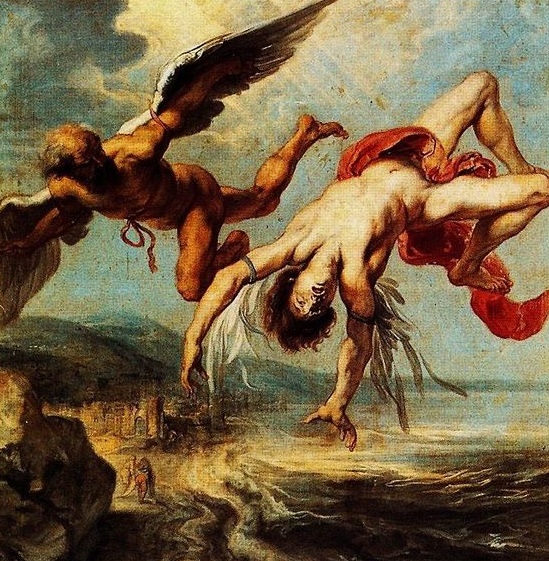
Hubris and Nemesis. Those words keep coming back to me every time an opinion poll suggests that the Conservatives will have a hard time holding on to their majority after June 8th.
It could be that we’re in the middle of a massive false alarm, and Theresa May’s worst nightmare won’t come true. Or it could be that The People, ever unpredictable, will speak again. And this time, they might say that they don’t like anyone enough to entrust them with a majority.
It could be that they judge Mrs May to be well-meaning but inconsequential. An empty vessel filled with the ideas of her advisers. A middle manager promoted beyond her competence.
They might also consider that Jeremy Corbyn is more than the IRA-loving, Hamas-cuddling class warrior that the right-wing media portrays. That he’s a compassionate, responsible leader who has pulled together a consensus from his fractious party at the cost of some of his long-held personal beliefs.
General elections are periodic opportunities for politicians of all stripes to indulge in one perennial and crucial piece of deceit: that they will be wholly or mainly instrumental in the fortunes of the country they propose to govern. And we, the electorate, set aside our critical faculties and believe them.
Beneath that grand piece of deceit lie many little ones. Numbers quoted out of context. Facts selected from a tapestry of information that, looked at from afar, shows a picture at variance from the detail presented. Rather like picking out a cherub from the Sistine Chapel ceiling and surmising from that the majesty of God.
We are seduced by deceit and by those peddle it. Never more so than in the TV events that provide a centrepiece for elections.
In Sunday’s TV set-piece – in which Theresa May and Jeremy Corbyn faced questions from a selected audience and then subjected themselves to an inquisition from Jeremy Paxman – we were looking for truth among the thicket of deceit laid down by both leaders.
We didn’t find much. Instead we were treated to two politicians who had clearly been coached within an inch of their lives in the fine art of deflecting questions. And when Paxman did what Paxman does, each dealt with him as their media people advised. We paid more attention to Paxman’s attack-dog performance – and to the efforts of Corbyn and May to refrain from bludgeoning him with whatever furniture came to hand – than we did to the issues being “discussed”.
Corbyn did a better job than May in this respect. He came over as more relaxed, and more capable of rising above Paxman’s barbs. May was tense, and more reliant on the campaign soundbites that had been drilled into her.
The truth we were searching for was never going to be revealed. How would Corbyn perform as Prime Minister, with muck and bullets flying around, and chaos everywhere? What sort of a leader would he be? What does Theresa May really think about the policies she mouths? Is she working from a script or from conviction?
And for we electors who set so much store on the likeability of the candidates, what are they really like? Is this a contest between Dumbledore and Cruella de Vil?
Of course not, and we shouldn’t form judgements on the basis of a couple of TV events. Yet the candidates ask us to do so, and we do.
They ask us to set aside circumstantial evidence that might help us to predict their performance. The chaos of Corbyn’s first year of leadership, with a leadership challenge and shadow ministers coming and going with bewildering regularity; the perception that he’s the stooge of a cold-eyed fifth column intent on turning Labour into a party of the extreme left. May’s rapid changes in direction in the face of political pressure and public opinion orchestrated by the media. Her robotic repetition of campaign slogans and her reluctance to enter into debate with other party leaders.
If we buy into Paxman’s typical lines of questioning, we might think that that both party leaders are ambitious, unprincipled liars who will do anything to gain power, including trying to convince us that black is white.
Unless we have reason to be utterly cynical about our politicians, we know that the reality is more nuanced. Corbyn and May are not “bad people”. They may not be our favourite dinner guests or pub mates, but neither of them are narcissistic bullies like Donald Trump, or ruthless opportunists like Vladimir Putin.
Rather, you might think, they are the would-be one-eyed kings in the kingdom of the blind, groping their way to false certainties in an uncertain world. They endlessly repeat the mantra that “The People have Spoken”, and cling to Brexit as though it was an article of faith rather than a rational decision that may over the next couple of years be proven overwhelmingly to be misguided and therefore worthy of being reversed.
If anything symbolises this uncertain world, it would be the sight of Jeremy Corbyn – rather than Theresa May – greeting the man who is probably the antithesis of everything he stands for, as Donald Trump arrives in Britain for his state visit.
In the longer term, it might also be the consequences of no deal being better than a bad deal, as we slink out of a European Union newly fortified by the defeat of the extreme right in the Netherlands and France, leaving us only with the consolation of an unequal friendship with a psychotic who claims to put America first, yet is busy destroying his country’s international reputation on so many fronts – not least in his repudiation of the Paris climate change treaty.
In the most negative scenario imaginable, we will be alone, less able to influence events beyond our direct control, and last – or second last after Donald Trump – on the invitation lists of those we like to think of as friends.
I’m not so stupid as to believe that if we walk away with “no deal”, we would be prepared to ask our neighbours if we can rescind our decision to leave the EU and re-enter the fold. That’s a decision that could only be made by politicians who are untainted by the disastrous mistakes that led to the referendum. Corbyn might get away with it, but for May and any of her colleagues, it would be a career-ending humiliation.
So we have to accept, apparently, that this is the Brexit election. All we’re expected to argue about is whether Theresa May is the best person to negotiate the “Best Deal” with the EU. Everything else is a sideshow: austerity, immigration, the fate of the National Health Service, the funding of social care, the education of our kids and the defence of the realm.
Even further from the radar of the mainstream parties (Greens excepted) are the effects of climate change and the despoliation of the oceans.
And there has been little discussion of a huge question that is looming up on the horizon: how we propose to mitigate the economy-crippling job losses that are likely to be caused by robotics and artificial intelligence.
Across these issues over which we have minimal control, the question that we need to be asking is: what is Plan B? And if international cooperation is called for, how easy will it be for us to cooperate with others when we are walking away from so many of the structures that currently exist?
We should not be expecting ready answers to the last question, let alone any kind of consensus. But it would be good to know that our government, and those who would govern us, are at least thinking about it.
Undoubtedly they are, but those who are seeking election would prefer to maintain the grand deceit – that the future of our country lies in our hands.
I suspect that if the decision of the electorate stops Theresa May and her colleagues in their tracks, it will not be because of our judgement on her character or that of Jeremy Corbyn. It will be because our younger voters, galvanised by the consequences of their apathy in the referendum vote, and appalled at the politics of the right exemplified by Donald Trump, will damn the Conservatives by association, and by their votes will tell Mrs May “thus far – no further”.
And this teenager in his seventh decade will be with them all the way.
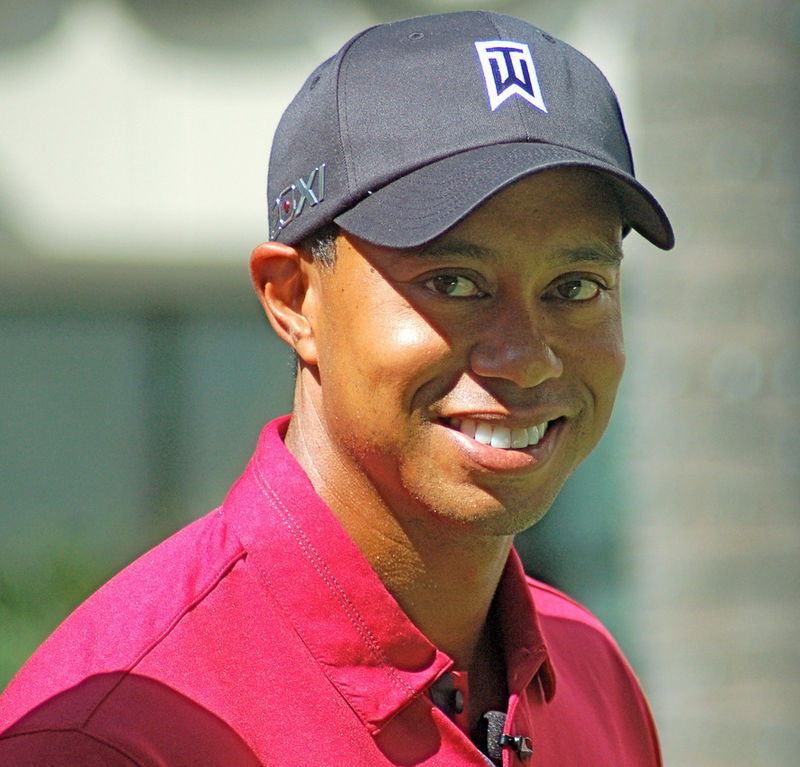
As far as I know, Tiger Woods is not a murderer, a rapist, a child abuser or a fraudster. He’s a magnificent golfer with a technique admired by anyone who loves the game. He’s also a guy who has fallen on emotional hard times, and whom injury has prevented from playing the game in which he was once without peer.
He was always, it seems, a man with demons. Those demons wrecked his marriage, and may even have cause the injuries that have laid him low.
It was shocking enough to learn that he was arrested after being found sleeping at the wheel of his car with the engine running, and to hear that he was incoherent and unsteady on his feet. His explanation was that his condition was down to unexpected side effects of medication he was taking for his back injury. No alcohol was involved.
Tiger is not a victim in the sense that he is a wealthy man, and has access to the best medical help – both physical and psychological. He is not the only person to have had a difficult childhood, and to have grown up in the glare of public adoration. He is also not the only one to have lived a double life – the image of a settled family man contrasting starkly with the reality of a life in bars and casinos.
But I see no reason why he should be publicly humiliated by the release of a police dashcam video in which he struggles to walk in a straight line, and barely understands the instruction to recite the letters of the alphabet. I can understand why the police routinely use these videos as evidence in a subsequent prosecution. But whose interest is served by the release of the video? Or of any other similar video of someone who isn’t well known for that matter?
I think it’s cruel and despicable. It’s as though in the age of reality TV it’s OK for anybody, whether they are willing or not, to be exposed to the public eye in their darkest moments. It’s not OK as far as I’m concerned, and it gives me one more reason for hoping that a man who has given me and millions of others countless memories of his sporting brilliance will come through his latest crisis and excel once more.
Equally importantly, I hope he manages to find happiness and contentment. He’s not a celebrity. He’s a human being who deserves our respect and compassion.
It’s been a week since the Manchester bombing. After a short grace period, the general election campaign has resumed. The politicians and other axe-grinders have been busy ascribing blame for the rise of religious extremism in Britain.
We know the arguments pretty well by now. It happened because we’ve cut back on police numbers. It’s because of our foreign policy – we attack countries that have not attacked us, and we’ve caused the deaths of millions of innocent people. It’s because of oil-rich Middle Eastern monarchies, who have introduced the virus of extremism via the mosques they build, the schools they establish and the imams they send to preach the message of hatred. It’s because of unfettered immigration. It’s because of multiculturalism.
Politicians believe that we voters look for simple truths, and feed them to us whether they’re true or not, often stripped bare of context.
If we want to indulge in a blame game, we could probably establish a causative chain that takes us back to the Pharisees who urged the Romans to crucify Jesus, or even back to Adam and the serpent.
Of course it’s important, as doctors tell us, to diagnose the cause of an illness if we are to cure the patient. Treating the symptoms is not enough. But the analogy breaks down if there are multiple causes producing multiple symptoms. It follows that there need to be multiple treatments. And if we extend the definition of terrorism beyond acts carried out by jihadis – which we certainly should – the picture becomes infinitely more complex.
There are no easy answers – no Einsteinian grand unified theory. If there were, the massive resources brought to bear on the problem would have solved it by now.
So perhaps we should set aside grand theories, symptoms and causes for a while, and focus on realities – things that are staring us in the face. Depending on where we sit and what we believe, we all have different realities. But for me there are a few realities that I think we sometimes forget amidst the sound and fury of each successive outrage.
First, we have to accept the internet for what it is – both a great benefit to mankind and a weapon of mass destruction.
It’s a benefit because it exposes us to ideas, to people and to experiences that otherwise would have been unavailable to us. It’s changed our world as much as did the invention of the printing press and the translation of the Christian bible into the languages of the worshippers.
It’s a weapon of mass destruction because some of the ideas that now reach us are catalysts or enablers of destructive acts. It’s not destructive just because you can download instructions for making a bomb, but because it’s become an enabler for those who incite hatred, division and conflict – of all kinds. It’s the primary means of communication for those who wish to plan, transact and execute in secret. It’s what has enabled terrorists to become states, and states to become terrorists
We can’t shut it down unless we’re prepared – at huge cost – to re-invent the way we do business. It’s become as essential as electricity. Yes, we can impose massive fines on the search engines and social media outlets for failing to take down sites and videos that incite hatred and violence, provided we do so fairly and target all sites regardless of provenance and ideology. But that will only be a palliative measure. The determined will find other ways of getting their message across.
We could follow the Chinese in erecting a series of Great Firewalls across boundaries, but again, this would only be effective up to a point, and would lead to howls of outrage within the liberal democracies over the curtailment of free speech.
The prospect in front of us is a long-term game of catch-up between the renegade and the state. This will not end soon, and if the threat from ISIS burns itself out, it will be replaced by other threats.
In short, we can no more control the internet as it is now than we can the proliferation of other weapons of mass destruction.
But we need to recognise it for what it is. And that means you, me and everyone else who willingly posts, likes and transacts – not just the shadowy organisations we entrust with keeping us safe. We have personal responsibilities. Just as we wouldn’t dream of touching live electrical cables or lighting bonfires in our lounges, we need to understand the implications and risks of what we do on the internet.
The second reality is the importance of context. Nobody who has just lost a child in a bombing wants to be told that their loved one – statistically speaking – stood a far greater chance of dying through a knife crime, a drug overdose, a car accident or through natural causes. But our politicians have a responsibility to remind us that the chance of death through terrorism is still small. And governments should avoid public displays of action that cause people to be focused on terrorism to the exclusion of all other risks.
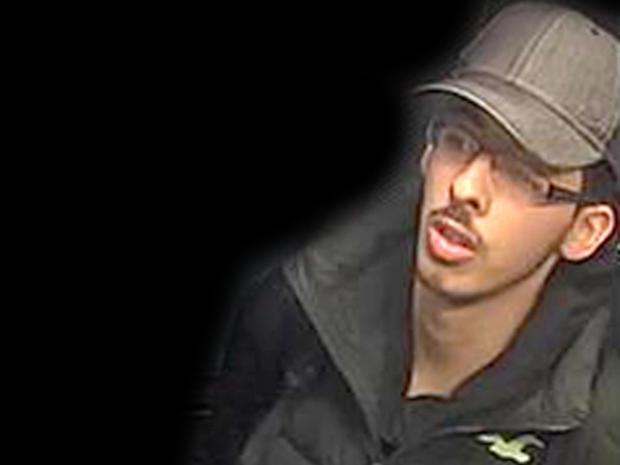
Our media needs to avoid taking every opportunity to ascribe blame. For example, headlines pointing out that the security services were warned about Salman Abedi hide a positive aspect of the story. The warning might have been ignored or given a low priority, but the fact that it came from within the Muslim community shows that contrary to the common narrative about the shortcomings of the government’s Prevent strategy, there are people in all communities willing to report their concerns and name names.
Both our politicians and our media have a duty to report, highlight and condemn other criminal acts of similar magnitude as that of Abedi. A couple of days ago the New Arab reported that “The bodies of 34 migrants, mostly children, were recovered from the sea off Libya after some 200 migrants tumbled into rough waters when their overcrowded smugglers’ boat capsized on Wednesday.” The British media also covered the story, but in The Times the death of these children seemed incidental to the main thrust of the story, hence the headline “Six million migrants waiting to reach Europe as more die in the Mediterranean”.
Is it therefore surprising that there are people in the UK who feel that the rest of us care more about the children who died in Manchester than those who drowned in the Mediterranean? Our seemingly callous lack of concern for those who are dying in Iraq, in Syria, in Libya and other parts of the world serves to fuel the narrative of resentment that in turn plays into the hands of the jihadi recruiters.
I accept that the newspapers and the online media are not public servants. Their viability as businesses depends upon their ability to sell us news they think we want to hear. Right now, all we want to know about is Manchester, and the media responds to that desire. But they’re also purveyors of opinion. To be fair, The Times focused on Libya in one of its leaders a couple of days ago – for obvious reasons. But how often in recent months has it or any other newspaper for that matter urged action to help repair that shattered country?
Just as finger-pointing is surely of limited value in helping us to move beyond the shock of last week’s atrocity, we ignore the wider context at our peril. And that’s not just the responsibility of the politicians. It’s down to you and me.
The third reality is the questionable value of being lured into discussing the minutiae of religion to the exclusion of all other factors.
The scriptural justifications that ISIS and Al Qaeda use to underpin their actions are of course important to understand. I’ve read a few books on the origins of Islam and its holy books, yet I still wouldn’t presume to call myself an expert. But what I do know through years living in Muslim countries is that the vast majority of Muslims are no more extreme in their thoughts and deeds than those who show up to church on Sunday in my country. They choose to ignore the messages the jihadis seize upon, just as we refuse to exact an eye for an eye and a tooth for a tooth.
You might then ask why it is that so many more Muslims seem to carry out acts of terror than Christians who sit quietly in their pews on a Sunday listening to a sermon from a priest.
I would reply that the churchgoers of England have never in recent times been oppressed, tortured, executed, invaded, deprived of their homes and their liberty. Nor of course have British Muslims who were born and grew up in this country, but the sense of belonging to a wider religious community is perhaps stronger among them than it is among Christians, and their number has been swelled by refugees from conflict zones. Small wonder that violence, and stories of violence, beget violence. And those looking for a justification for for their acts will find it – whether or not they do so through the scriptures.
I will end with a story from the Cuban Missile Crisis. In 1962, the US blockade of Cuba was in place and the world was on the knife-edge of a nuclear conflagration. President Kennedy received two messages from Nikita Khrushchev. The first was conciliatory. The second was aggressive and uncompromising. Kennedy and his advisors had to decide how to respond. Which message represented Khrushchev’s real attitude? Had there been a coup, which resulted in the second message?
Kennedy chose to respond to the first message and ignore the second. The result was the deal that wound down the crisis.
The parallels with our response to the jihadis are not exact. But we do have a choice. Do we respond with an assumption of their humanity or of their inhumanity? If we accept, as the security services tell us, that there are 23,000 radicalised jihadis in the UK, do we treat them as the inhumane enemy? Do we round them up, intern them or isolate them in some other way? Do we regard every Muslim in the country as potentially suspect – capable of being radicalised and capable of carrying out acts of inhumanity?
Or do we seek to appeal to the humanity of the jihadis-in-waiting? Do we ask each and every person who knows someone who is contemplating such an act to think of the pain they would suffer if they lost loved ones – father, mother, son or daughter. And if they are motivated by a sense of revenge, would we ask them to think whether an endless cycle of violence was what God wanted? And in our dealings with the wider Muslim community, do we work on the assumption that three million fellow citizens are Muslims first and British second? That they are a special case – the enemy within?
I don’t doubt that we should make every effort to track down and identify the people whom we suspect are capable of carrying out mass killings. But just as those who have been radicalised presumably once held different views, we shouldn’t assume that their minds can’t be changed once again. That thought is at the heart of the Prevent campaign. We should support those efforts, and if they have shortcomings, we should aim to fix them.
And once again, we as individuals have a part to play in our attitudes and deeds. We are not crusaders, and we should not think and act as crusaders. We should assume the best of our fellow citizens, not the worst.
Like the people of Manchester over the past week, we should rise above hatred and focus on what brings us together rather than what drives us apart.
Fine words come cheap, you might say. But do we really have any other choice if we are to close down, or at least mitigate, the cycle of resentment and violence?
I wrote on Monday, when reacting to the Manchester bombing, that I wouldn’t be reading the newspapers because I already knew what the politicians would say. I didn’t keep my word, but so it turned out.
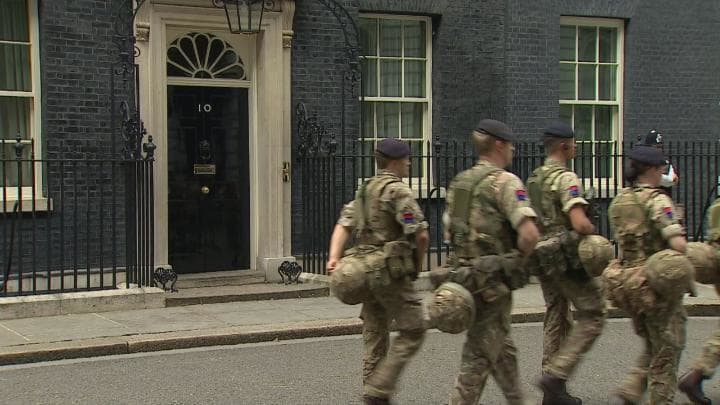
Standing on her podium outside 10, Downing Street, Theresa May said all the right things – that “the terrorists will never win and our values, our country, and our way of life will always prevail”.
In describing the perpetrator, she used a word that seems to have been on the speechwriters’ list of standard expressions ever since the IRA started bombing Britain. That word was coward.
In his reaction to the attack, Donald Trump used a different word to describe those behind the bombing. He called them losers. Both expressions set me thinking.
You could argue that coward and loser are the antitheses of how leaders would like to think of themselves – or perhaps they reflect how they fear others might see them. During the General Election campaign, Theresa May been projecting herself – to the accompaniment of some mockery because of the endless repetition – as strong and stable. Loser is Trump’s favourite insult, hitherto hurled through Twitter at Marco Rubio, Ted Cruz and a host of others. If there is anything that plays to his innermost insecurity, it must be the perception that he’s a loser.
Before we deal with Trump’s remarks, let’s first think about cowardice.
While it’s true that at times like this most people expect to hear formulaic utterances condemning the perpetrators, the description of acts of terrorism as cowardly grates on me and always has. Whether a person plants a bomb and detonates it remotely, or detonates a suicide device, can they really be called cowards?
I actually think it takes great courage – albeit of a warped and perverted kind – to kill yourself while the balance of your mind is sound, or even to risk your life in planting a bomb and walking away. You could claim that the bombers are no more cowards than those who advanced into the line of fire at the Somme or on Omaha beach. The difference lies in our perception of motivation and morality.
You could argue that the cowardice of people like Salman Abedi lies in their allowing their instincts as human beings to be overridden by peer or group pressure. That assumes that our instincts are to preserve life rather than to end it. Even if that is the case, it’s an instinct that is easily overridden, most commonly in the military. Note that ISIS described Abedi as a “soldier of the Caliphate”.
So where does this notion of the terrorist as cowardly come from?
In the UK at least, I suspect it has its origins in our perception of bullying. The bully picks on vulnerable people – people weaker than them.
Are bullies cowards? Only, perhaps, if they back off in the face of resistance. Even then, you could say that their behaviour is sensible. They get away with it until someone stands up to them. In playground mythology, that’s the pint-size David who punches Goliath on the nose, reducing him to tears of pain and humiliation.
So in our hallowed national narrative, Hitler was a bully. We stood up to him. In fact, anyone who tries to push us around is a bully, and they will not prevail. Hence the rhetoric that follows the terrorist attack. They will not change our way of life. They will not intimidate us. They will not win.
These are comforting words, because they encourage us to stand together, as the narrative claims we did we did during the Blitz. They help us to overcome our fear.
But are they the kind of words we really need to hear? In the immediate aftermath of an atrocity, perhaps they are. They allow us to focus on the positive. But in the long term? I’m not so sure.
Turning to Trump’s favourite word, it might also comfort us to believe that these people are losers. Again, I’m not convinced.
If the overall strategy of Abu Bakr al-Baghdadi and his ilk is to unite the people of the Muslim world – dar al-Islam – under the banner of a caliphate, then that’s an ambition they are unlikely to achieve. The bitter division between Sunni and Shia will see to that. Nor will the black flag ever fly over Downing Street and the White House. But they only lose when they stop trying.
The tactics they use in the West are designed to provoke a reaction that forces Muslims to choose between “them and us”. That’s the intention behind the bombings and all the other acts of violence. If “they” – the secular state, the crusaders, the oppressors, the unbelievers – marginalise and persecute “us”, the Muslim community, then we, the thinking goes, will come together to defend our faith. We will send more of our children to Syria, and we will support those that remain to strike at the enemy with whatever means we have at our disposal.
So are those who are orchestrating acts of terror losers? It’s almost certain that the Islamic State will soon cease to exist as a territorial entity, so to that extent, yes, ISIS are losing. But Al Qaeda have shown that you don’t need a state to create havoc and division.
So let’s think about what these “losers” have achieved.
Since 9/11 they have caused the security services of many countries to gain the power to watch over their citizens to an unprecedented degree. They have forced us to think of them every time we go through security hurdles at airports. They were the catalyst for disastrous wars in Iraq and Afghanistan. The fear of an enemy within they that they have generated in the UK and the US contributed to the election of Donald Trump, and the decision of the UK to leave the European Union.
Now, as much as ever before, their influence is pervasive. Trump continues to try and ban visitors from seven countries that are perceived to be hotbeds of terrorism. In the UK, the presence of armed police on the streets is common where it was once rare. Soldiers guard our key institutions. The Manchester attack has a significant bearing on the outcome of the General Election by putting the government’s cuts in police and armed forces budgets firmly at the top of the debating agenda.
So let’s not kid ourselves that those who inspire, plan and execute attacks across much of the West and the Middle East are losers. They may not be winning in terms of their overarching objectives. But they’re not losers until they give up. Which most definitely they haven’t.
It suits us to denigrate the morality of those who use ultra-violence to achieve their aims. But we shouldn’t hide behind words that obscure the reality that we’re facing.
In my next piece, I’ll try and outline, from my limited perspective, a few of the realities that we need to recognise before we even begin to make the world a safer place for its children.
This morning I don’t want to read the newspapers, because I know what they’ll say. I know what the police will say, what the politicians will say, what the eyewitnesses will say. I know the kind of things families will say, ranging through grief, fear, blame and anger.
I am no more or less shocked than I was after the Bataclan, Sousse, Nice and the countless bombings in Baghdad. And I’m not surprised. How could one be, when the techniques and the materials for bombing are freely available, and when the motivation among the few is undimmed?
I am relieved that my daughters, and the daughters of friends (as far as I know) were not caught in the explosion – this time. Next time, it might be them, me, anyone. And there will be a next time. This is not going to end soon. I think everyone whose eyes are open knows this, even though we hoped that it wouldn’t happen again in our country. As did the French, the Germans, the Americans, the Turks, the Spanish and the Belgians.
The strange thing is that as the explosion was doing its work in Manchester, I was at home taking a second look at Tom Holland’s documentary, ISIS – The Origins of Violence.
Holland shows footage from the Bataclan. We watch the reaction on his face as he watches ISIS execution videos. As he walks through the ruins of Sinjar, where ISIS killed the men and the old women and enslaved the girls, and where unexploded bombs may be waiting among the rubble, he doubles over with nausea.
He interviews a Salafi sheikh in Jordan, a man said to encourage young people to fight in Syria. With a face devoid of expression and a voice devoid of tonal variation, Abu Sayyaf tells Holland why it is acceptable – and indeed an obligation – to put unbelievers and apostates to death, according to his reading of the Koran.
Holland’s documentary is unusual in that as the narrator he finds it hard to maintain the mask of objectivity that seasoned journalists assume in dangerous locations. Perhaps that’s because he’s not a journalist.
He’s a historian, more steeped in the complexity of this story than most others. As the author of In the Shadow of the Sword, in which he discusses the origins of Islam and comes to conclusions that did not endear him to many Muslims, he has reason to be fearful for his own safety.
He’s a brave man. He must have known that his new work would result in messages of hate or worse via Twitter, where he’s an active presence. And I suspect that this is already happening.
Courage comes in many shapes. The sad-eyed Christian monk whose monastery overlooks Mosul exemplifies the kind of courage that comes from faith. As one of only two monks left in what since the third century CE has been a flourishing religious community, he tells Holland that he is not afraid of ISIS, because they cannot do worse than to kill him.
For those of us in the UK, digesting the consequences and implications of the Manchester bombing, the monk’s words are worth thinking about.
They cannot do worse than to kill us. That’s a hard mantra to live by. But it implies that we will not die inside before our time through fear, hatred and anger. That we will continue to live our lives, mindful of risks yet not dominated by them. That we will think the best of people before we suspect the worst. And that as a country we will not exclude, marginalise or persecute the many because of the actions of the few.
Pious words, platitudes even. You will hear them today from pundits, politicians and priests. And rightly so in my opinion. But can we live up to them? Only time will tell.
Meanwhile, life goes on. As it does in Lalish, the spiritual home of the Yazidis, considered by ISIS to be devil worshippers, and from where in Tom Holland’s film the smiling faces of the innocent shone out.
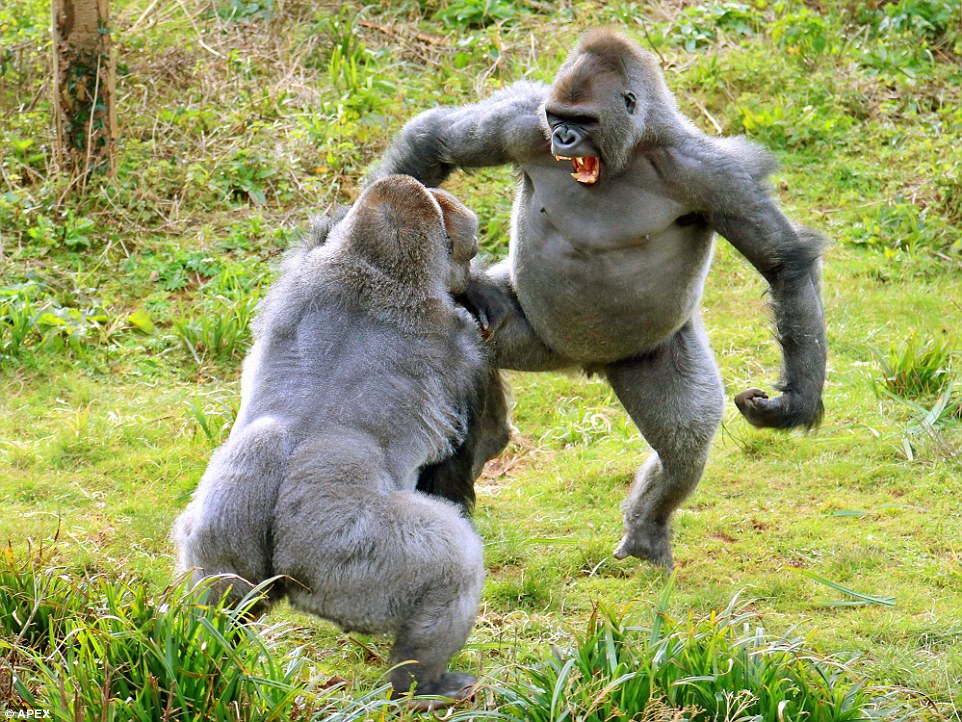
A couple of American law professors have been grappling with one of the most pressing problems of the modern age: how to stop people getting into fights over reclining seats on aircraft. According to the London Times, they claim that the most equitable answer is for people who wish to push their seats back into the precious space occupied by passengers in the row behind to offer them drinks or snacks.
I think they’re on to something, even if it would take some serious cultural reorientation for one passenger actually to speak to another on a flight unless it’s to complain about their behaviour or, worse still, to threaten to kill them.
Another angle the professors came up with was for the passengers to offer each other money for waiving the right to recline. This, apparently, would not be so effective, because the parties would be unlikely to agree on the financial value of not being squashed to death. I suspect that a 300-pound gorilla would probably demand an extremely high price for losing their precious few inches.
But I can imagine how passengers could profit mightily if they offered to refrain from a wider range of legal but antisocial behaviour.
For example, how much would you pay if the mother of a screaming child offered to silence the infant? She could probably collect from everyone within a ten-metre radius of the wailing monster. All she would have to do would be to forget to feed it for the first half hour, and bingo! The money starts rolling in.
Other commercial opportunities might include “ten bucks or I take off my shoes”. There could also be a flatulence levy, to be exacted by anyone brave enough to admit that they have a problem best relieved by a trip to the toilet rather than in the comfort of their seat.
Threatening to introduce exotic, rather than noxious, odours into the cabin is another possibility, especially if the flight is coming from countries where people like to bring their own food on board. A curry waiver perhaps?
And then there’s the durian, probably the foulest-smelling fruit on the planet. Airlines in south-east Asia ban passengers from bringing it on their aircraft. But as far as I’m aware, operators outside the region don’t even know what a durian is, so the extortion value might be extremely high, say, on an Air Canada flight. Best not to unleash a durian salad on a US aircraft, though. You might end up diverting the plane and being shot by airport security staff wearing gas masks.
But if you’re flying across America, you might well earn a few bucks if, after uttering a few sentences including words like jihad and Raqqa, you agree only to speak English rather than your native tongue, because your animated Arabic conversation with your mother-in-law makes your fellow passengers uncomfortable. That would give you plenty of latitude, since to the average American ear a good fifty percent of all world languages sound like Arabic. Again though, anyone trying this one should be aware that they run the risk of being terminated with extreme prejudice by an over-anxious sky marshal.
You might think that some of these scenarios are beyond ridiculous, and you’d be right – they’re the product of my warped imagination. But a recent developments in aviation opens the door for some level of passenger interaction along these lines.
American Airlines are removing video screens from their new Boeing 737 short-haul aircraft. Instead they will be providing wi-fi that will make flight entertainment available through streaming to the 90% of passengers they say have smart phones or tablets in the cabin. It’s highly likely that other airlines will end up doing the same, at least in economy. It’s not impossible that some bright spark will develop an application that will enable passengers on a flight to talk to each other and to every other passenger – a kind of closed-circuit Twitter.
You could therefore envisage on-line auctions for seat swaps, with transactions going through PayPal. So if you’re a seven-foot basketball player stuck in an ordinary seat, you might be able to post an offer for an exit seat occupied by someone who has no need for the extra space. It would also be useful for anyone separated from friends and family. No need for hard-pressed cabin crew to negotiate on your behalf. Just cut out the intermediary.
There are potential drawbacks of course, such as messages announcing “I have a bomb” or “we’re all gonna die”, that induce mass panic. But passengers can do that perfectly well without wi-fi. And any system that’s acceptable to the airline would be able to link the message to a seat number, thus bringing hell and damnation upon the perpetrator.
If our law professors are correct, there’s a price for everything. Provided the airlines themselves – impoverished by having to offer travellers large sums of money not to travel on their flights – don’t have to open their coffers, I should have thought that they would be delighted to see their passengers doing deals among themselves to make their journeys in flying sardine cans more tolerable.
This in turn, could open up new opportunities for the world’s second oldest profession. Standard contracts between passengers, lawsuits for breach of contract – the possibilities are endless. Which is probably why the legal eagles came up with the research in the first place. Perish the thought!
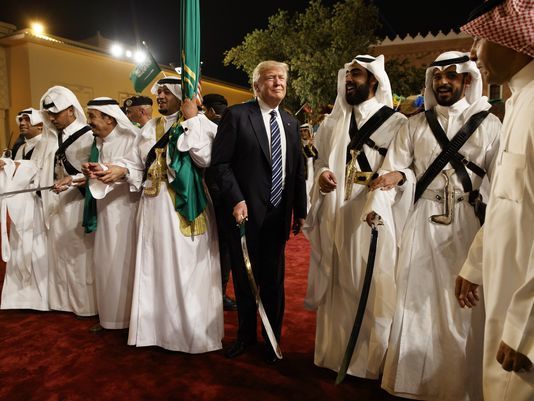
It’s good to see Donald Trump enjoying the hospitality of the Saudis. The sword dancing must be a welcome change from the grim corridors of Washington, where knives seem to await the poor man at every corner.
Trump and Saudi Arabia are made for each other. I’m pretty sure the President is finding much to admire, and perhaps even more to envy.
The Saudis, for example, respect the elderly. At 70, Trump is years past the retirement age of the average Saudi, so he definitely counts as worthy of deference.
They love KFC and MacDonalds. They love big buildings. In their gilded palaces, the décor will make him feel as though he is in Trump Tower. The chairs are built for Trump-sized rumps.
In Saudi Arabia, women know their place in traditional society. When the head of the house goes shopping, his wives follow him several steps behind – a practice with which Melania Trump would be familiar, judging by the recent picture of her following him down the steps of Air Force One.
They have a respectful press. It is against the law to insult officials – even more so to disobey the King. When good things happen, it is because the King ordered them to happen. It’s therefore customary for ministers, officials and the general public to thank him effusively for all the benefits conferred upon the country. Trump would love it if that happened back home.
When the King decided to build a wall along the Kingdom’s northern border, it got built, with no need to seek congressional budget approval. The Saudis have an immigrant problem – too many foreign workers and not enough Saudis in jobs. They are able to deal with it unhindered by their courts of law.
Trump might also notice that there are only three golf courses in the country worthy of the name. If he’s smart, he should be able to rectify that by negotiating – at arm’s length of course – lending his brand to a slew of country clubs. Persuading the Saudis to take up golf en masse might be a little more difficult, but you never know what magic the President might be able to work.
I’ve no doubt that he will have a fund of stories with which to entertain his cronies back in Mar a Largo – if he can remember them. And the Saudis will no doubt look on the trip as an important step in re-kindling the alliance between the two countries. They too might have a few stories to tell, though more discreetly.
Sadly, the biggest favour they could do for America might be beyond their ability or inclination. They could persuade him to stay there.
The Yanks have copped on to us at last. For hundreds of years, we Brits have been exporting the slimiest, most opportunistic gold-digging toe-rags we can find from our decadent society to the pristine shores of the United States. We have been subverting, exploiting and ripping off our gullible American cousins, until finally they realise they’ve been had, and send our ne’er-do-wells scuttling back to whence they came.
All this from a journalist by the name of James Kirchick, who has written a stunning exposé for The Daily Beast. In The Brit Grifters and the Designated American Suckers he takes aim at four individuals whom he believes epitomise the species: Louise Mensch, former novelist, Tory MP and re-born conspiracy theorist; Milo Yiannopoulos, the would-be online media entrepreneur who became an alt.right hero of the hour – for just about an hour; Piers Morgan, former newspaper editor who took over Larry King’s slot on CNN and bombed; and finally, Sebastian Gorka, the sort-of Brit who made a name for himself as a counter-terrorism expert and ended up in the White House on the coattails of Steve Bannon.
To emphasise that our habit of sending our wrong’uns West is not a recent phenomenon, Kirchick quotes from literary figures such as Mark Twain and Scott Fitzgerald, who describe our con-artists and chancers in their novels. Even our own writers – Evelyn Waugh and more recently AA Gill – he cites as having taken delight in satirising our dubious exports.
He could have gone further, of course. He didn’t mention the impoverished English aristocrats sent across the pond to secure wealthy American brides who would help to restore the family fortunes. Such unions produced people like the notorious British grifter, Winston Churchill, who pulled off the biggest con-trick of all by luring Roosevelt into the Second World War on our side. How Churchill managed to persuade the Japanese to bomb Pearl Harbour has yet to be revealed, though no doubt the answer is lurking in an archive somewhere. Something to do with oil, no doubt.
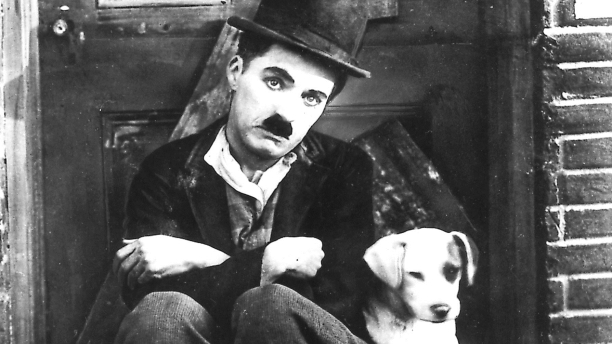
He also doesn’t mention our nefarious scientists, whom we sent to America to help our allies build the nuclear bomb. Or, for that matter, the dodgy characters we sent to Hollywood – Alfred Hitchcock, (creepy sadist) and Charlie Chaplin (covert commie) being good examples.
Oh yes, we really have exported the worst of the worst. And it’s still happening on a scale Kirchick is too polite describe. People like Ridley Scott, whose latest alien extravaganza is causing movie lovers all over America to wet themselves with terror. Jony Ive, chief designer at Apple, whose products have steadily rotted the brains of the country’s youth. Simon Schama, historian and renaissance man, who has the temerity to counter every tweet by the rightfully-elected president with his own contemptuous counter-posts. And countless other scientists, academics, engineers and writers who have fooled their gullible hosts with second-rate talent.
Come to think of it, how much better off would America not have been right from the start without our cast-offs? What if we’d never come across the pond in the first place? Without those troublesome pilgrims insisting on the right to practice their own beliefs free of English tyranny, there would have been no pesky characters like Franklin, Washington or Jefferson. No Harvard. No English common law. No English, in fact. The lingua franca might have been French or Russian. Le monde nouveau would have been a far more interesting place, full of chefs, philosophers and intellectuals, instead of MacDonalds, Hollywood and Breitbart.
Let’s face it. We Brits have polluted, exploited and spoilt America from way back. And what have we received in return?
Nothing but good. Tech giants who grace us with their presence because they appreciate our rigorous tax regime. Benevolent big data firms who have nudged us on the road to Brexit – for free, of course. Bankers who put up with our miserable climate for negligible gain. And soon to come, the biggest joy of all – a state visit by Donald Trump.
America doesn’t deserve our cast-offs. We should send our best people. Theresa May, Nigel Farage, Boris Johnson (who’s half-American anyway), Sir Philip Green, the editor of the Daily Mail, and as many of the cast of Made in Chelsea as are capable of taking a comfort break without dropping their mobile phones down the loo.
That would leave us with our lesser talents. Folks like Steven Hawking, James Dyson, Simon Rattle, Tom Holland, Mark Rylance, Andy Murray, Kate Winslet, Jessica Ennis and Mary Beard.
I’d settle for the stay-at-homes, thank you very much. America, please take our brightest and best. We’d be sad to see them go, but I have a feeling we might muddle through anyway. And those you send back? Well, I’m sure we can find some space for them in the Isle of Wight, where they can cause no more trouble.
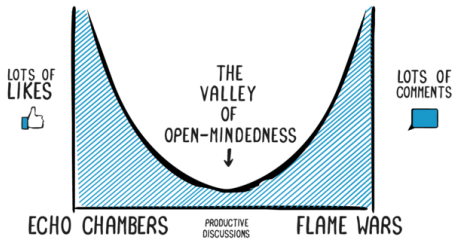
This is serious. I’m worried that the political echo chamber I live in is starting to give me tinnitus. Or perhaps I should say, turning an existing condition into an intolerable one. But I won’t say that, because then I’d be admitting I had an existing condition rather than a new one, which would invalidate my health insurance cover, wouldn’t it? Or would it?
Ever since early 2016, I’ve tried to disrupt the harmonics of the orchestra of opinion that reaches me from my wishy-washy liberal world. Therefore I read the Daily Mail occasionally (but only occasionally – it has a low overdose threshold). I started following Trump on Twitter. And Farage. And even Boris Johnson. For goodness sake, I even visited Breitbart from time to time.
I wanted to try and understand where the other guy was coming from. I failed. I just got angry. Because it’s easy to get angry from afar. That’s what trolls do. And what Trump does.
So I decided not to get angry any more, if I could possibly avoid it. No more shrieking at the TV. No repeat of the omnidirectional, plate-smashing fury with which I greeted the Brexit result. No matter that the effort of restraining myself brought me out in boils. Keep Calm and Carry On started feeling like sensible advice rather than a commercial opportunity.
But since Trump became president, the echo chamber, full of the sweet sounds of reason, has started to feel like a pressure cooker. The voices of reason were sounding like angry wasps trapped in a fish bowl. Over the past couple of weeks, since the Comey firing, the wasps have turned into buzz-saws. And now, with the allegations about Trump playing fast and loose with America’s most sensitive intelligence, the buzz-saws are morphing into swarms of shrieking harpies.
Before I lose my hearing altogether, I should break the chamber. I should try going out a bit more.
Maybe I should seek out a few hominids bearing tattoos of the cross of St George. I should sit down with them over a pint or two, and try to understand them as human beings rather than symbols of extremism. I would discover that they love their mothers. That they have nothing against blacks personally (or for blacks, substitute effing foreigners, Muslims, Jews, Pakis and so on) – it’s just that they think we should send the bastards home.
After all, these are the kind of conversations journalists have, especially at election time. So why not a humble member of the public like me?
Perhaps I should re-engage with my Brexit-voting neighbours without accusing them of betraying the country I love – the same accusation they made against me when I voted for Blair in 1997.
Or perhaps I should take a trip to some of the less-visited parts of the United States, where I can commune with pussy-grabbers, believers in redemption, purveyors of fake news, wall builders and tax cutters. I should bask in our common humanity.
And who knows, after a few weeks with all those whom my echo chamber tells me I should deplore, the harpies will stop. The righteously indignant will go away. I will no longer worry about Trump handing out secrets to visiting Russians like chocolate chip cookies, or about billionaires subverting British democracy.
I will have learned to love the bomb. I will have become comfortably numb. And finally, I will love Big Brother.
On the other hand, probably not. I should just get hearing aids.
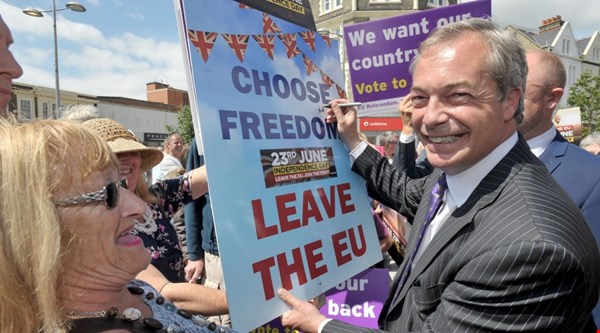
I’m not someone who flies around peddling conspiracy theories. Most of the stuff I encounter is baseless, even more so since politically-motivated websites started deliberately seeding the internet with their creations.
But I make one exception. I believe that there’s enough evidence to make at least a prima facie case that a group of right-wing American billionaires used their money and technology to subvert Britain’s EU Referendum. They then went on to use the same techniques to win the US election for Donald Trump. I also believe that the UK’s election laws are incapable of preventing the same techniques from being deployed again – specifically in the current General Election campaign.
You might think that as a fervent Remainer who despises everything Donald Trump stands for, I’m just another gullible fool who believes what he wants to believe on the basis of the thinnest of evidence.
If so, read no further.
But if you’ve followed my blog over the past months and years, I might have convinced you that I’m reasonably rational, and that I’m not a “true believer” in anything. As for conspiracy theories, here’s a piece I wrote three yours ago that sums up my scepticism about the wider shores of human belief: Conspiracy Theories – the truth isn’t out there, it’s right in front of us (if we care to look).
I don’t believe in the grassy knoll. I don’t believe that the neoconservatives brought down the twin towers. I do believe that we went to the moon. I don’t believe that George Bush Senior is a member of a reptile elite running the world. And I don’t believe that a bunch of clapped-out politicians known as the Bilderberg Group is running it either. Roswell, alien abductions, X-files? Not convinced. And sadly, I don’t believe that the passengers of MH370 are hunkered down in a remote Pacific island waiting to be rescued from the clutches of a demented pilot.
Those who believe in conspiracies often do so because the theories chime with their world view. In other words “they sound right”. And if they read about the theory from a source they trust, they’re even more likely to believe it. So if you were a Breitbart reader before the US election, you would be well primed to believe that Hillary Clinton was the devil incarnate.
Three months ago I wrote about an article by Carole Cadwalladr in the Observer newspaper. In my piece – Are we really Bannon fodder in an information war? – I summarised Cadwalladr’s article thus:
Robert Mercer is a billionaire hedge fund owner who has bankrolled several organisations in order to promote his right-wing, libertarian views. He is a former IBM employee with a deep understanding of Big Data.
He’s a buddy of Steve Bannon and an investor in right-wing news site Breitbart. Another of the companies in which Mercer has invested is Cambridge Analytica, who have amassed profiles of over 220 million Americans based on data hoovered up from Facebook. Using artificial intelligence and working with information gathered from the likes we click on a daily basis, CA is able to help politicians tailor messages that tap into and manipulate the emotions of targeted voters.
Cambridge Analytica worked for Trump, and also provided support for Nigel Farage’s Brexit campaign – the latter for no charge. It is basically, according to Jonathan Albright, a professor of communications at Elon University in North Carolina, a propaganda machine.
The company inherited a number of its techniques from another company in which Mercer is involved – the SCL Group, from which it was spun off in 2013. The two companies retain close links.
According to Cadwalladr, the relationship between the two companies is thus:
“Emma Briant, a propaganda specialist at the University of Sheffield, wrote about SCL Group in her 2015 book, Propaganda and Counter-Terrorism: Strategies for Global Change. Cambridge Analytica has the technological tools to effect behavioural and psychological change, she said, but it’s SCL that strategises it. It has specialised, at the highest level – for Nato, the MoD, the US state department and others – in changing the behaviour of large groups. It models mass populations and then it changes their beliefs.”
Since then, Cadwalladr has discovered more about the companies that Mercer controls, and about the relationships of the various pro-leave campaign groups to his companies.
If you are interested in the future of democracy in your country – and not just in Britain – I urge you to read her latest article, The Great British Brexit robbery: how our democracy was hijacked
You might find it disturbing. As with her previous piece, I had to read it twice before I got a proper grasp of what she’s saying.
And in case you’re not familiar with the UK media landscape, the newspaper she writes for is one of the oldest in Britain. It was first published in 1791. It has a reputation as a responsible publication that holds its staff to rigorous journalistic standards. Which is why I wrote earlier about trusting the source.
I can’t know for sure whether Mr Mercer and his crew were responsible for tipping the balance in favour of the Leave campaigns, or whether any laws were broken in the process. But I do believe that the British Government should set up an independent Commission of Inquiry to find out, and also to report on whether Britain’s election laws are still fit for purpose.
And if it was legally permissible to do so, I would be happy to see certain individuals put in a darkened room and asked some very hard questions in the harsh glare of a spotlight.
Common sense says that the government would go to any lengths to avoid such an inquiry, since it could quite possibly undermine the legitimacy of the referendum, and therefore of the government’s subsequent acts.
But it’s conceivable that as more information emerges about the possible subversion of the US election, and especially if that information also relates to the British referendum, the government might find itself forced to react, no matter how traumatic the consequences.
The Conservatives will then have the same choice as the Republicans should they be asked to impeach Donald Trump: do we act in the interests of the party, or of the nation?
,
How galling it must have been for Rome’s first century aristocracy to have had to bend the knee towards Lucius Aelius Sejanus, commander of the Emperor Tiberius’s Praetorian Guard. While the emperor himself spent his days indulging in pederastic pursuits at his villa on the island of Capri, Sejanus, a middle-class upstart, effectively ran the empire from Rome.
He gradually acquired more and more power until Tiberius, whether at the instigation of others or thanks to his own paranoia, had him arrested and condemned for treason. He was strangled and thrown down the wonderfully-named Gemonian Stairs, where the Roman mob, who only days before had revered him as a surrogate emperor, ripped his corpse to pieces.
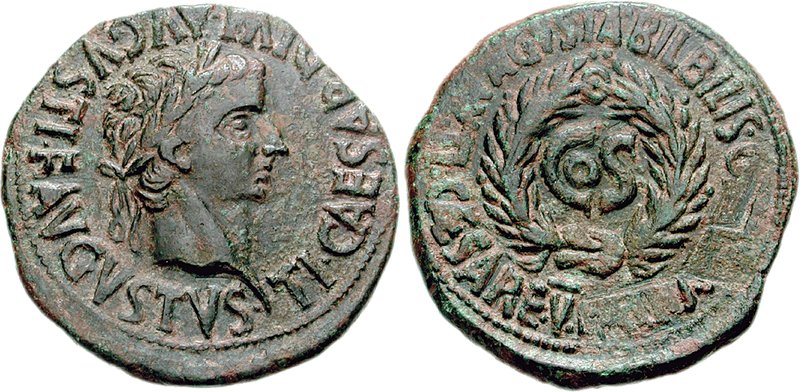
After his death, the Senate passed a motion of damnatio memoriae, though which he was reduced to a non-person. All mentions of him were erased from the official records. His name was even rubbed out on coin of the realm (as in the pic above). Think Stalin, and the numerous comrades whom he airbrushed out of history.
Such are the risks of being a creature of the powerful.
I thought of Sejanus when I read an article by Dominic Lawson in the UK Sunday Times, in which he describes the disgruntlement of senior Conservatives at the power of Theresa May’s two senior advisers – chiefs of staff as they would be known in America.
According to Lawson, Nicholas Timothy and Fiona Hill are the “second and third most important political figures in the land”. “As one Tory frequently in and out of No 10 put it to me: “try and imagine how powerful Nick Timothy is. Now multiply by 400. You still haven’t got it.”” Wow.
I imagine Lawson’s source nervously whispering these words from the corner of the mouth, looking anxiously around for informers who might scuttle gleefully back to the Ministry of Truth. Or perhaps sitting on a park bench, as spies and whistle-blowers are wont to do.
Timothy, by some accounts, is the scarier of the two. His wrath is said to be terrible to behold and painful to endure. He certainly looks intimidating. From afar he bears a distinct resemblance to Alexander Solzhenitsyn, the chronicler of the gulags. Though he would probably prefer to be compared with the Marquess of Salisbury, the magnificently bearded 19th Century Tory Prime Minister.
But the quiet animus of May’s senior colleagues in Parliament for these two “advisers” suggests that their lives might not be a bed of roses.
Resented by many who feel that they should not be denied unfettered access to the supreme leader, the deadly duo are likely to be flattered by sycophants and condescended to by those who feel confident enough to take pot shots at them. Phillip Hammond, the Chancellor of the Exchequer, recently described them as “economically illiterate”. Which apparently sent Timothy into one of his rages and led him to direct a volley of negative briefings against the mild-mannered Hammond.
They go their merry ways enforcing the will of the leader, making enemies here, there and anywhere. They know they are protected until such time as May loses faith in them, or until they make a mistake so toxic that she feels it necessary for them to fall on their swords.
A recipe for paranoia and insecurity, I should have thought. And yet for them, it might well feel like the best of times as well as the worst. The excitement at reaching the peak of politics on the coat-tails of a leader must be intoxicating.
Unlike senior civil servants, who are required to pass rigorous entry exams and endure endless challenges from their peers as they rise up a rigid hierarchy to the top, there’s no formal qualification required of a political adviser beyond the security services certifying that they’re not fraudsters, perverts or Russian spies. And unlike Members of Parliament, who have to endure the indignity of facing the electorate every few years, advisers are unelected.
Of course, Timothy and Hill are not the only sidekicks to acquire the reputation of overweening insolence in recent years. Tony Blair’s henchpeople were a pretty robust bunch, not least the fearsome Alistair Campbell. But the current duo seem to have come under the cross-hairs fairly early in their careers.
Perhaps this is because they are perceived to be serving – not to say manipulating – a relatively passive boss who relies on them more heavily than her jealous colleagues think appropriate. So much so that it’s tempting to wonder how many of the bright ideas that emerge from Downing Street are the result of May’s own philosophy as opposed to those of her flunkies. Not a question you would have asked about Margaret Thatcher, I think.
Still, whatever the relationship between queen and courtiers, it seems to work for now.
But if Timothy and Hill might occasionally bemoan the insecurity and isolation of their place at the top, perhaps they should look across the Atlantic and ponder the lot of the hired hands who work in the White House.
Imagine a day in the life of the unfortunate Reince Priebus, Trump’s chief of staff. Surrounded by a web of poisonous relationships between scheming courtiers who hate each other. Walking corridors where staff nervously eye their mobile phones, occasionally muttering “POTUS is tweeting again…Jesus!” Constantly dealing with outrage and confusion over Trump’s utterances, and fending off lawsuits triggered by his flawed executive orders. Bombshells to the left and tantrums to the right.
How calm the waters of Downing Street must feel in comparison. But Timothy and Hill will have their crises too, especially when the Brexit negotiations start unravelling. And Theresa May will not be content to be seen as a pliant plaything in the hands of two ambitious ideologues.
At some stage their Sejanus moment will surely arrive.
At that point I won’t feel too sorry for them, or for the hapless Priebus floundering in the White House. After all, when the end comes they will not be thrown unceremoniously down the Gemonian Stairs to be dismembered by the mob and eaten by wild dogs. The British duo will be loaded with gongs, and most likely will be given seats in the House of Lords. Lucrative gigs on the boards of public bodies await, though unlike their predecessors, they won’t be able escape to the comforts of a nice little earner in Brussels.
And if all else fails for them and for Priebus, there’s always the backstop of a healthy advance for their memoirs – the more spiteful, snarky and revealing the better. In fact, Preibus is in a particularly good place – whoever is the first to hit the streets with the story of Trump in the White House is likely to earn a fortune.
Which would be more than Sejanus had to show for a career living by the sword in the service of his emperor. But at least his name has lived for two thousand years, despite Tiberius’s best efforts to ensure otherwise. That’s far longer than is likely to be the case for today’s zealous enforcers. I give them thirty years, tops.
Will they care? I doubt it.
There must be something about people called Elif. I know two. The first I know personally. She’s a teacher, a former colleague. She’s beautiful person, nurturing, smart and a superb communicator. The second I know through her work. She’s an award-winning novelist. Both are Turkish. Both are open-minded. Like so many in their home country, they look to the West as much as to the East. And both know how to speak to the heart.
I find it easy to write about politics, travel, business and all that other stuff that allows the writer to maintain a distance from the subject. Matters of the heart are not so easy, which is perhaps why I’ve never felt able to write fiction. Yes, I would probably be capable of writing stories in which the narrative predominates. But to create a character from the clay of one’s consciousness and experience, to allow it to live and breathe, to reflect and illuminate the world around it? That would be beyond me.
Great writers can do both. I don’t study the alchemy of creative writing. Too much knowledge about the techniques of any art, unless you happen to be the artist, can, I find, detract from the experience, take away the wonder at the creation. I found that over years in the music business. I became so focused on the technical aspects of performance and delivery that it took me years to remember what I loved about music in the first place – that it helped me to lose myself.
I posted a tweet the other day about the second Elif – Elif Shafak – in which I said that I had learned more about Turkey through her books than in all my visits to the country. It was her latest novel, Three Daughters of Eve, that prompted me to make that comment.
It’s the story of Peri, the daughter of a conflicted family in Istanbul. Her mother is devoutly religious, and her father is an admirer of Ataturk, the man who transformed Turkey into a secular democracy after the fall of the Ottoman Empire.
Peri is profoundly uncertain – about who she is, and about her relationship with God. She’s a straight-A student at school, and her father persuades her to go to Oxford University, where she studies Politics, Philosophy and Economics. There she befriends two other Muslim girls – one devout, and the other militantly secular. She joins a philosophy class ran by a charismatic professor who selects his students for their diversity, and encourages them to look beyond the narrow confines of their beliefs.
Professor Azur preaches uncertainty. He puts his students in situations where they challenge each other’s certainties. Some find his techniques manipulative. The effect on Peri of the professor and his seminars changes her life. We go back and forth between Oxford in 2001, and the present day, in which she is a mother living back in Istanbul.
For me – though I’m not sure if Shafak intended it this way – Peri is a metaphor for Istanbul itself. Melancholy, passionate, curious, uncertain of her place in the world. Her social circle is drawn from the Istanbul bourgeoisie, where the devout and the secular still mix. They debate the merits of western democracy, and they talk politics in private lest they fall foul of The State that looms over all of them. For some, God takes second place to commerce. To others He has granted political ascendancy after decades of secular government. Yet they are still able to enjoy each other’s company.
Peri is an oddity in that Oxford has taught her to speak out on matters traditionally regarded as male preserves, something that the other women in her circle are more reluctant to do. Some of the men find this disconcerting. The tradition of patriarchy rubs shoulders uneasily with the egalitarian values of the West.
She is convinced that despite its shortcomings, Istanbul is more civilised than its rougher neighbours.
“I read it’s been ranked worst in the world.”
“What?”
“The traffic. Worse than Cairo, imagine. Even worse than Delhi!”
Not that she had ever been to Cairo or Delhi. But, like many Istanbulites, Peri held a firm belief that her city was more civilised than those remote, rough, congested places – even though ‘remote’ was a relative concept and ‘rough’ and ‘congested’ were adjectives often applied to Istanbul. All the same, this city bordered on Europe. Such closeness had to amount to something. It was so breathtakingly close that Turkey had put one foot through Europe’s doorway and tried to venture forth with all its might – only to find that the opening was so narrow that, no matter how much the rest of the body wriggled and squirmed, it could not squeeze itself in. Nor did it help that Europe, in the meantime, was pushing the door shut.
Of course, Istanbul is not Turkey, and nor do the views of its middle class necessarily reflect the street. Orhan Pamuk, whom I rank alongside Elif Shafak as my guide to the soul of Turkey, shows another side to the city in A Strangeness in my Mind, his recent novel about the migrants from Anatolia who settled in the city over the past three decades.
Three Daughters of Eve is beautifully constructed and very moving. It speaks to the heart through the heart of its central character. Her other books – most notably The Forty Rules of Love, the Bastard of Istanbul and The Architect’s Apprentice – also enrich and inform the visitor’s experience of Istanbul. Read them alongside Pamuk’s work – particularly Istanbul, Memories and the City, My Name is Red and A Strangeness in my Mind – and you will have some understanding as to why the city is what it is, and where it’s come from.
Despite Turkey’s recent move towards religious orthodoxy and authoritarianism, Istanbul in my experience is still a place defined by diversity of thought. Shafak in her writing represents that diversity. Long before the arrival of the Ottomans, in Constantinople religious disputation was a way of life. Arguments over the nature of The Father, the Son and The Holy Ghost have indelibly seeped into its ancient walls.
If there is a future Islamic world in which heterodoxy thrives, in which respect for difference wins out over the suppression of The Other, then I suspect that Turkey, and in particularly Istanbul, will be the source of that mindset. Despite the country’s long history of bouts of religious and ethnic intolerance, if Shafak and Pamuk are to be believed, the spirit of inquiry and uncertainty still survives.
It will outlive presidents, ISIS and the preachers of Medina. One day perhaps, we in the West will stop looking at Islam through fearful eyes, and will once again recognise that it, like other faiths, has many shades of belief, and that among the faithful there are as many uncertain seekers after truth as are to be found in churches, temples and ashrams.
And then we will come to realise that we have much to learn from it.
Or, as Elif Shafak’s beloved Rumi said:
“Listen! Clam up your mouth and be silent like an oyster shell, for that tongue of yours is the enemy of the soul, my friend. When the lips are silent, the heart has a hundred tongues.”
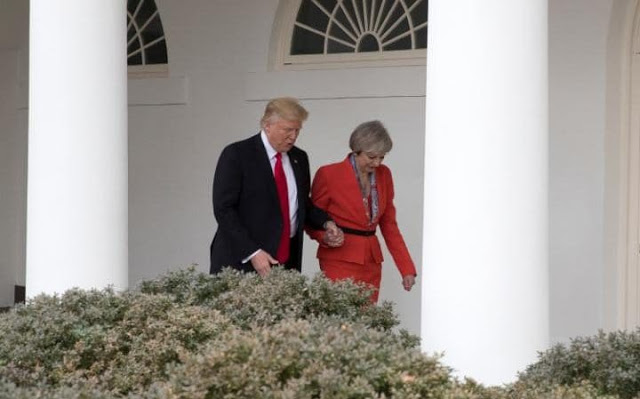
Those of us Europeans who take a close interest in US politics have been watching dumbstruck at the antics of the nation’s prepubescent president. People I speak to ask why he hasn’t been impeached already, and take bets on how long he’ll last.
While so many commentators in America are harping back to Watergate, we in Europe have other parallels to chew over. Some are relevant. Some less than one might think.
Before we get on to them, let’s think about the chances of an impeachment.
It seems to me, having read countless opinions across the political spectrum, that unless conviction-grade evidence emerges that Trump is a rapist, a fraudster or the paid agent of Vladimir Putin, it’s highly unlikely that an impeachment process will get onto the starting blocks, let alone to the finishing line.
Why? Because a significant number of Republicans in both houses of Congress would need to support such a measure. Since Barack Obama lost control of Congress after the 2010 mid-term elections, the Republican party has become increasingly right wing, and remorselessly partisan. There were times during Obama’s presidency when it seemed as though any measure Obama put forward – even if it was sensible and uncontroversial – would be subject to blocking tactics by the Republicans, simply because it was Obama’s measure.
Now the Republicans have the golden scenario – a majority in both houses and a manipulable naif in the White House. They, and equally importantly those who finance them, see a rare opportunity to line their pockets by entirely legal means. They have the power to pursue their agendas, however venal or extreme.
The opportunity will be available at least for the next two years, until the 2018 mid-term elections. Enough time to cut taxes and spend like demons, but not enough time for any adverse consequences to start affecting the US economy. If they manage to maintain control of Congress in 2018, the window will extend further.
I’ve often heard it said that for the Republican leadership, power, and the interests of the party, are more important than the national interest. If this is true – and it needs to be said that it’s certainly not the case with some senior figures such as John McCain and Lindsey Graham – then it’s easy to understand why, from their standpoint, getting rid of Trump might feel like turkeys voting for Christmas.
The resulting chaos would be unlikely to benefit the party’s chances in 2018, even if Pence took over. The extreme right would probably be outraged at Trump’s ousting. Many of them might decline to vote Republican. We might see a new party of the right picking up votes. The Democrats would be all over their rivals like a rash. The result could be that the Republicans lose Congress, thus hamstringing any further measures Pence might wish to introduce just as his adversaries hamstrung Obama.
So if we assume that an impeachment is unlikely, what’s the fallback strategy for the Democrats and anyone who might wish to limit the damage they believe Trump is causing?
Here’s where one of the parallels with Europe – or more specifically Britain – comes into play.
As a committed Remainer, I would like to see Brexit stopped. If that can’t be achieved, then the next best thing would be a Brexit deal that minimises the risk of serious economic damage. In the forthcoming elections I will vote for whichever party commits to the latter, even if the former now seems unattainable.
Back in America, for the Democrats, Plan A must be removal of Trump before the next mid-term elections. If that’s not achievable Plan B will be to exert the maximum effort to win back Congress in 2018, thereby giving themselves the opportunity to curb his worst excesses.
The Democrats are pretty gloomy about their chances of winning back either house. This piece from Slate.com, written shortly after Trump’s election, explains why. It’s mainly about demographics:
The math is simple: If the electoral map stays the same colors between now and 2018, the Democrats could stand to gain just one Republican seat while losing 10 of their own, leaving them with an even smaller minority than they held when they lost their majority in the 2014 midterms.
And then there’s the House. Currently, Republicans hold a wide majority, with 239 Republican congressmen to just 192 Democrats. And with Republican gerrymandering, the Democrats could face an uphill battle trying to flip that many seats in 2018.
But here comes our second parallel with Europe
Emmanuel Macron has just been elected President of France. He is a centrist, and effectively an independent, even if he ran under the banner of En Marche!, the party he formed before he entered the race. A year ago, very few people in France would have given him a cat’s chance in hell of taking the presidency. Since 1945, the office has been won either by the socialists or by the Gaullist right. Neither of the two main parties got a look-in this time round. He came through to trounce the far-right Marine Le Pen.
So, you might wonder, with candidates in the US and France coming from nowhere to take the presidency, does that not shorten the odds of a resurgent – or possibly insurgent – Democrat effort overcoming the demographics and recapturing Congress?
Apples and oranges, I’m afraid. Macron’s efforts were focused on a single objective: winning the presidency. In 2018, we’re talking about 33 Senate seats, 435 seats in the House of Representatives, not to mention 36 state governorships. To make a dent in the Republican numbers will take a determined, focused effort from a united party. The Democrats haven’t yet shown that they can be that party.
Could a new centrist or left-wing party emerge to sweep away the old order? Unlikely, and even if someone like Bernie Sanders crosses that Rubicon, a left-of-centre insurgent will bleed votes away from the Democrats. Note also that Macron may have won the presidency, but En Marche! faces an uphill task in getting enough candidates elected in the next French National Assembly elections. Macron might conceivably end up a President without a party, and therefore with his ability to get things done severely limited.
So the best chance the Democrats have of controlling at least the House, and thereby tying up the elephant, is for Trump to continue to perform catastrophically, to make a series of mistakes that might fall short of triggering impeachment but that will seriously discredit his administration and those who support it. In other words, the demise of the Republicans in Congress is not a realistic objective for the Democrats solely through their own efforts. But it could happen through unforced errors, most probably by Trump himself.
The final parallel between the political landscapes in the US and Europe – again represented by Britain – is the current strength of the right wing within the Republican and Conservative parties.
The Conservatives have their own equivalent of the libertarian Tea Party. They’re referred to as the Brexiteers. They may have a more limited ideological objective than the Tea Party, but the Brexit package would be applauded by the Tea Party, as it was by Trump himself.
Theresa May is expected to win an increased majority next month. It’s highly likely that a good number of her new MPs will on the right, especially in constituencies where they have the opportunity to win back voters from our own fading right-wing insurgency – the UK Independence Party. The danger for the Conservatives is not that Theresa May is likely to implode in a Trumpian inferno. More likely that the electorate will become steadily more disenchanted with the consequences of Brexit, or die of boredom with her uninspiring persona.
Trump, on the other hand, could never be described as boring. His qualities are the very opposite to those that May trots out several times a minute. He’s doesn’t appear strong, despite all the dice that are stacked in his favour. And as for stable, well that’s a matter of opinion, or more likely of clinical diagnosis.
When all is said and done, we shouldn’t be surprised if Donald Trump manages to slash and burn his way through to 2020, and maybe beyond. What America and the world beyond will look like by then is anybody’s guess.
Until then, all that those of us who care about his country and ours can hope for is one fatal error.
A few thoughts on Donald Trump’s firing of FBI Director James Comey.
Firing people on reality TV makes great entertainment. People love to see other people being humiliated. But in real life, “tough guys” like Trump are anachronisms. Yes, people get fired, but those who do the firing are mindful of the potential negative consequences. They have to, because if they don’t go through the necessary motions, they can end up getting sued, or at the very least suffering serious reputational damage.
In my experience, firing people, especially when they are part of an organisation that is under stress, can cause a further dip in morale even if the firing was justified. People wonder who’s next, and take steps to cover their backsides. If the firing is done as a demonstration of power – management by thunderbolt as I call it – the danger is that those who have independence of thought, initiative and creativity either leave, or form disgruntled cells of resistance. Those who remain in power are the yes-men (and women).
The FBI staff were, according to some reports, overwhelmingly supportive of Comey. Trump has now upset two of the main planks of America’s security establishment, having previously made his contempt for the CIA very clear.
He may believe that whoever he appoints in Comey’s place will plug the constant leaks from various sources within the government. Actually his action might have the opposite effect. The leaks could increase, and if Comey was on the verge of discovering some damaging information that threatens Trump’s presidency, you can be pretty sure that it will eventually get into the public domain – with or without the appointment of a special prosecutor.
Parallels are being drawn across the media with Nixon’s firing of Watergate prosecutor Archibald Cox. The difference between now and then was that in 1973 there was a limited number organisations willing and able to run with the story. Today, the Washington Post has competition from a host of other organisations – traditional and online – who would be all too happy to talk to a new Deep Throat, including organisations beyond US jurisdiction.
If Trump has anything to hide, I would be very surprised if there weren’t multiple Deep Throats ready and waiting for the appropriate moment to release the bombshell that brings him down.
Management by fear works for tyrants who are able to surround themselves with loyalists and put apparatus in place to weed out traitors. The United States is not at that point and hopefully never will be. So Trump is making enemies and doesn’t have the means to deal with them. Which suggests that Russia notwithstanding, his leadership style will eventually be his undoing. Every major media organisation in the US that he has insulted over the past year is watching and waiting for his next misstep.
I write this as someone who threw the occasional thunderbolt early in my business career. Each time I regretted doing so. I was young enough to learn from my mistakes. At 70, I’m not sure Trump is capable of learning anything if the lessons don’t chime with his long-established personality traits.
Live by the sword, die by the sword.
As always, there’s coverage aplenty on The Great British Drone-Off – also known as our current general election campaign. I’m not planning to write too often on the subject, but I will share a few random thoughts that have occurred to me during the first couple of weeks of the campaign. My emphasis is on stuff that I haven’t come across elsewhere.
I’ve met people who argue that because David Cameron was unable to meet his objectives in negotiations with the EU prior to the referendum, the EU is intransigent and incapable of reform, which is why we must leave. They are wrong. Reforming an institution as large and complex as the EU takes years, not the three months Cameron gave himself to get a special deal for Britain. He was always going to fail, and should have known that from the outset. He should also have known that time is a critical factor in any negotiation. The party that has a known deadline is always at a disadvantage when the other side doesn’t. Cameron had three months. The EU had forever.
There are those who admire Jeremy Corbyn because he is a man of principle. I’ve no doubt they’re right. But being a man of principle doesn’t make a person an effective leader, let alone a successful politician. You can promise the earth, but unless the voters believe you can make promises come true, you have no chance. So the big question about Corbyn is not whether he has the right policies. It’s whether he’s nasty and ruthless enough to succeed as a political leader.
Where does Jeremy Corbyn’s accent come from? Born in Wiltshire, educated in Shropshire, speaks Estuary. A deliberate makeover, or have his years in Islington slowly rubbed off on him? In which case, surely he would sound more like Tony Blair.
Speaking of accents, there are some who claim that Nick Clegg has more gravitas in his little finger than Tim Farron. Might that be because Farron speaks with a northern accent, whereas Clegg, educated at one of the UK’s most prestigious private schools, speaks in the honeyed tones of the establishment? History suggests that if you’re not posh (Jo Grimond, Jeremy Thorpe and Paddy Ashdown), Scottish (David Steel and Charles Kennedy) or both (Menzies Campbell), you’re a bit of an outlier as far as potential Liberal voters are concerned. Prove me wrong Tim!
Pundits claim that the Conservatives, on the evidence of the council elections, have gobbled up the UKIP voters. Maybe, but who did those people vote for before UKIP existed? Labour? I doubt it – at least not many. More likely they’re returning Tories who will be reabsorbed into the reactionary wing of the party. The big question is whether the new MPs – of which there may be more than a hundred – will turn out to be as reactionary as the returning voters. In which case, we should be prepared for the most right-wing government in recent history. If the mainstream media wants to do us a real service, it should do some research on these candidates, so that we have some idea about what kind of government we’re electing.
The presidential style of the Tory campaign creates a hostage to fortune. We are being encouraged to vote for Theresa May, not the Conservative Party. The trouble is that if May goes at a time not of her choosing, then the government will be seen as illegitimate, with the result that we’ll have to have yet another bloody election.
The bad news is that Jeremy Corbyn and Theresa May will not take part in a head-to-head debate. The good news is that the seven leaders of Britain’s main political parties will debate, with stand-ins for May and Corbyn. A good chance for a potential successor to Corbyn to strut their stuff, and an excellent chance for one of May’s mediocrities to bore us to death. Unless, of course, she chooses Boris Johnson….
More when I have it.
The Promise is a movie about the Armenian genocide in 1915.
Publishing that sentence in Turkey would be enough to get you into deep trouble. You would be told that the death of half a million Armenians was the unfortunate consequence of war; that those who died were being moved away from the conflict zone in the east of the country, where Armenian separatists assisted an invading force – Russia. It was not genocide, say the Turks.
The Armenian version of the story was that 1.5 million of their people were slaughtered in a systematic series of massacres, through forced marches and in labour camps. That the killings were part of a plan by Turkey’s leaders to transform the Ottoman Empire into a land in which ethnic and religious diversity would be snuffed out and assimilated into a dominant Turkish culture. The First World War provided the opportunity to start that process away from the prying eyes of the world.
Reviewers have given The Promise a mixed reception. There have been criticisms that plot is weak, that the love story formulaic and that the actors are dwarfed by the action. As with all reviews, these are subjective opinions. If the subject is interesting, I ignore the critics and watch the movie anyway.
I found it compelling. It didn’t pluck the heartstrings, but it was well worth watching. Equally striking was the film’s backstory. It was funded by a billionaire who didn’t care whether or not he recouped his investment. Before it was released, it was trolled by voters on the IMDB film industry site. Without having seen the movie, over sixty thousand “people” gave it one star out of ten. Thirty thousand gave it ten. The industry assumption is that these voters were Turks and Armenians expressing their disapproval or otherwise that the film had been made.
The Promise is also noteworthy in that it’s the first effort from mainstream Hollywood since 1919 to portray the Armenian massacres. Why such a subject should be so long ignored is a mystery. Is it because unlike the Nazi Holocaust it’s faded from living memory, or has there been a lack of advocates willing to invest in telling the story? The events in Turkey were no less dramatic than those in Western Europe twenty five years later.
Movies depicting historical events on an epic scale are relatively rare these days. Hollywood tends to prefer serial blockbusters – Marvel heroes, Star Wars, X-Men and so forth. The Promise is something of a throwback to the days when the historical epic was the only big-budget game in town. I think it’s a shame that this kind of movie is in decline.
However inaccurate, stories based on real events have a good chance of arousing curiosity among mass audiences about the events depicted. They cn bring history alive in a way school curricula never could. How many people were inspired to discover Ancient Rome after watching Spartacus, Cleopatra and the Fall of the Roman Empire is anybody’s guess. The same goes for movies about Elizabethan England, the American Civil War and the Holocaust.
All of which causes me to wonder about the criteria critics and audiences use to rate these history fests. What makes an epic great in the eyes of the beholder? And when we look back to them, what do we remember most – the characters, the plot or the context?
A few thoughts from my perspective:
Some films focus on eternal human themes – of heroes, lovers, losers and martyrs. Of triumph over adversity. Without the protagonists, there would be no movies, because it’s their fate that moves us. The historical narrative takes second place, at least in our lingering memories.
When I think of Doctor Zhivago, I remember Omar Sharif and Julie Christie, and only then do I recall the tundra, the fighting and Tom Courtenay’s grim commissar in the armoured train. In Braveheart, the dominant image is Mel Gibson painted in blue, not the endless squabbles between the English and Scots. In Lawrence of Arabia, Peter O’Toole co-stars with the spectacular landscape of the Hejaz.
Then there are movies where the characters take second place to the context. Titanic is a movie about a doomed ship. The love story of Rose and Jack is there to keep us interested, but the ship is the star. In The Longest Day, the massive undertaking of the D-Day invasion is at centre stage, not the array of sub-narratives in which half of Hollywood strutted their stuff.
In others it’s a draw between the event and the characters. Schindler’s List, for example, is as much about Oskar Schindler’s humanity and Amon Goeth’s moral collapse as it is about the Holocaust. Likewise, Hotel Rwanda, in which the hotel manager’s efforts to save those threatened with slaughter, and the UN commander’s despairing actions to dampen the flames of genocide are the vehicle through which wider story of the conflict unfolds.
When I look back at films I consider memorable, it’s the small details that come to mind. In Schindler’s List, the girl in the red coat, a drunken Amon Goeth taking pot-shots at concentration camp inmates from the balcony of his villa, the pebbles on Schindler’s grave. In Saving Private Ryan, Captain Miller’s hands trembling as he rests in the church. In Gladiator, Maximus discovering his murdered family. T E Lawrence’s agony at having to execute the boy he rescued from the desert.
Characters, plot and context battle for supremacy, but another factor is also in play, though it’s often buried deep under the surface: the underlying intention of the movie makers. Often enough, the intention is pretty obvious – money, box-office success, awards. But producers and directors also use movies to educate, to persuade and to win hearts and minds. Or, if you want to be cynical, to manipulate our emotions. Whether they succeed without us noticing goes a long way towards the durability of the work.
Films that support political ideologies often use history as the backdrop to the message. Eisenstein’s Battleship Potemkin and Olivier’s wartime production of Shakespeare’s Henry V were effectively state-sponsored propaganda.
There are also movies that reflect the family histories of those who make them. Schindler’s List for example – Spielberg’s testament of the Holocaust. The main producer of The Promise was Kirk Kerkorian, an American billionaire of Armenian descent, who funded the movie to the tune of $100 million. He had previously donated $1billion to Armenian charities. He clearly wanted the story of his people to be told.
I struggle to think of a vignette from The Promise that will remain with me decades on. Yet for me, it’s still an important film. The story has present day resonance, which is presumably why it’s excited the trolls. A genocide denied by the descendants of the perpetrators. The Armenian story was a key way-point in the decline of the Christian tradition in the Middle East. It’s also a reminder that massacres inflicted in the region on ethnic and religious groups – such as the Yazidis – are nothing new.
Turkey is in a different place today. It’s industrialised, and it’s a democracy – of sorts. Yet just as a hundred years ago many Turks felt threatened by the Armenian separatist movement, it’s now the turn of the Kurds to assume the role of the enemy within. Ironically, Kurds were among the Ottoman citizens who took part in the Armenian genocide. Nobody in their right mind would suggest that the Turks would even contemplate the ethnic cleansing of their Kurdish population. But a nation whose government locks up thousands of its citizens on suspicion of supporting last year’s attempted coup, and regularly jails dissenting journalists, still has a strong authoritarian streak.
But here’s the counter-narrative: the same country provides a safe haven for three million Syrian refugees.
We may remember the Armenian genocide as the forerunner of the Holocaust and other mass killings that scarred the last century. We may disapprove of the Turkish state refusing to acknowledge the enormity of committed by its Ottoman predecessor.
But perhaps we should also ask ourselves whether the United States, Britain or France would allow three million people to cross their borders, and, if they did, what kind of impact the influx would have on their politics, cultures and economies.
Which goes to show that no matter how unambiguous the historical narrative presented by movies like The Promise, there’s always another side to the story. Unfortunately, in the age of fake news and limited attention spans, we don’t always go in search of it.
Last night a man aged twenty seven beat the crap out of another man fourteen years his senior. It was the kind of event you could have witnessed on a high street, outside a pub or a nightclub, anywhere in Britain on a Saturday night.
The difference was that the rules of this particular contest were designed to make sure that the loser didn’t end up in hospital brain dead. The street fight would probably also have involved knives, or, if it had happened in the United States, guns.
Wladimir Klitschko and Anthony Joshua were fighting for the “unified” world heavyweight boxing title. Unified because there are at least three rival governing bodies in boxing, each of them administered by people who make a very nice living encouraging people to beat the crap out of each other.
I don’t have any strong feelings for or against boxing per se. If people want to turn their brains into mush for cash, they should be entitled to do so, provided they’re aware that they have a very small chance of making significant money, and a very large chance of seriously damaging their health in the long term.
I also don’t have a problem with the fact that these events are typically attended by all manner of celebrities who wouldn’t last one round with a hamster, yet are thrilled by much braver people than themselves risking their lives in the ring.
But I do find it rather sad that in Britain we make such a fuss when one of our own prevails, and pictures of him are on the front pages of our national newspapers. We clearly don’t have much to celebrate at the moment beyond the spectacle of a young guy beating the crap out of an older one.
At least we should respect the courage of Klitschko and Joshua, at a time when most of those who normally dominate our headlines have never been tested, on the battlefield, the boxing ring or anywhere else.
Whether we liked them or loathed them, a couple of generations ago many of our politicians had come through war and considerable physical hardship. Might the fact that – with honourable exceptions – their modern equivalents have had no need to demonstrate physical courage be part of the reason why so many of them appear to be gutless, unprincipled nonentities in comparison?
Or am I just being absurdly nostalgic?
Christ and the Woman Taken in Adultery – Pieter Breugel
It’s comforting to know that the spirit of America’s first president – the man who couldn’t tell a lie – still pervades the highest echelons of the nation’s government.
George Washington would have been proud of the Justice Department official who stood up in front of the Supreme Court and told the Chief Justice about the importance of truth-telling in American life. The New York Times reports the conversation thus:
“Some time ago, outside the statute of limitations, I drove 60 miles an hour in a 55-mile-an-hour zone,” the chief justice said, adding that he had not been caught.
The form that people seeking American citizenship must complete, he added, asks whether the applicant had ever committed a criminal offense, however minor, even if there was no arrest.
“If I answer that question no, 20 years after I was naturalized as a citizen, you can knock on my door and say, ‘Guess what, you’re not an American citizen after all’?” Chief Justice Roberts asked.
Robert A. Parker, a Justice Department lawyer, said the offense had to be disclosed. Chief Justice Roberts seemed shocked. “Oh, come on,” he said.
The chief justice asked again whether someone’s citizenship could turn on such an omission.
Mr. Parker did not back down. “If we can prove that you deliberately lied in answering that question, then yes,” he said.
The argument was made to justify the stripping of a woman’s citizenship because she lied in her naturalization papers about a detail in her husband’s past that she felt was immaterial. The full story is here.
Jimmy Carter was another serial truth teller. It’s a good job the American people didn’t reject him when he confessed to having committed adultery “in my mind”. Perhaps the electorate – or at least the righteous among them – were mindful of Jesus’s words to the religious leaders who wished to put an adulteress to death: let he who is without sin cast the first stone.
It’s also comforting that America has in the White House a Superman who believes in Truth, Justice and the American Way. I’m sure that the vast majority of naturalized citizens also believe in Superman’s mantra, even those who failed to confess on their forms to a speeding offence or to dropping a cigarette butt in the street.
I would argue that people who apply for US citizenship deserve a break if they lie on their application forms, on the basis that until they become citizens they cannot fully absorb the American Way, with all that truth and justice stuff.
OK, they’d be a bit naughty if they didn’t admit to being a terrorist, a drug smuggler or a member of an international money-laundering gang.
But is it not excusable that they might tell a fib or too, given that most of them come from countries where lying is part of daily life, whose leaders routinely tell untruths (or alternative truths) about everything under the sun? How can they expect to live up to George Washington’s lofty ethos on Day One? They need educating, right?
Once they get used to living as citizens in a country whose politicians abase themselves for the slightest factual inaccuracy, where drunk drivers routinely line up at police stations to confess their intoxication, where people cheat on their spouses and immediately grovel for forgiveness, where murderers turn themselves in and tax evaders report themselves to the Internal Revenue Service, where nobody lies about their age, their wealth or their sexual potency, the new Americans will surely get the hang of the American way, will they not?
All of which reminds me that in the unlikely event that I should be considered eligible for US citizenship, I wouldn’t think of applying. I have too many guilty little secrets, and besides, I come from a country that is Sodom and Gomorrah to America’s virtuous Jerusalem.
Living up to America’s values would be utterly beyond me. And as it happens, I quite like the mendacious swamp I live in right now.

I love walls. Many of them are beautiful, though not in the way Donald Trump predicts about his wall.
For me, walls that define and protect boundaries are symbols of failure. They are steeped in emotion – hubris, fear and sadness. Think of the famous walls that remind us of those emotions: Hadrian’s Wall, the Land Walls of Constantinople, the Great Wall of China.
All of them failed in their objectives. Hadrian’s successors couldn’t protect Britannia from the encroaching Saxons, let alone the Picts and the Scots to the north. The walls of Constantinople crumbled under the onslaught of the Ottoman cannon. And China’s wall, a landmark five thousand miles long, visible still from space, couldn’t keep out the Mongols.
Yet the bricks are still there for us to admire, as we contemplate the downfall of those who defended them.
Other walls are not so beautiful. The Berlin Wall is mostly gone, but bits remain. Ugly chunks of concrete covered in graffiti, sitting close to the Gestapo cells where so many opponents of the Nazis met their end. Hitler’s Atlantic Wall, the Maginot Line and the Siegfried Line moulder away in rural France and Germany – overrun, circumvented or blasted into pieces. The Israeli wall is still in use, likewise covered in graffiti on the Palestinian side, splitting farms, communities and families. Its time will come as well.
There’s one thing that all these walls have in common. Those who built them didn’t require those from whom they wished to protect themselves to pay for their construction.
Donald Trump dares to be different.
That’s what I find strange about his beautiful wall. It’s easy to understand why he would want a barrier that stops people from entering the United States illegally. He’s worried about unchecked immigration, about drug-runners, about violent crime. Or, to put it another way, a substantial number of those who voted for him are worried, he knew that and he banged the hell out of the immigration drum.
What I don’t get is by what logic he proposes to get Mexico to pay for his wall.
So I googled the search term “why should Mexico pay for the wall?”. Strangely enough, I found very little by way of justification of Trump’s intention. Most of the stuff I found seeks to explain not why Mexico should pay, but how it could be made to pay.
The only piece of any substance questioning the rationale was by Michael Dorf, Professor of Law at Cornell University. In it, he identifies Trump’s tactic of implying collective responsibility on the part of groups he seeks to demonise.
According to The Donald’s narrative, Muslim Americans know who are the terrorists in their midst. They are not shopping them to the police. Ergo they are all responsible for acts of terrorism by Muslims. Mexico “sends” their people to America. Their people run drugs, commit crime and work illegally. Ergo, it’s their fault and they should pay for the wall.
Another point Dorf makes is about the dodgy statistics Trump trotted out during the campaign:
Trump’s various campaign statements about undocumented immigrants and criminals being sent by Mexico across the southern border earned him four Pinnochios from The Washington Post. His focus on illegal immigration ignores the fact that the population of undocumented immigrants in the United States has been stable, not increasing, for the better part of a decade.
Although some undocumented Mexican immigrants do, of course, commit crimes—as do some other immigrants, tourists and citizens—substantial evidence indicates that undocumented immigrants are less likely to commit crimes than the baseline population. In fact, their addition to the population lowers, rather than elevates, crime rates.
Par for the Trumpian course, I should have thought.
Now he’s gone to Congress to get funding for his giant erection. The story has moved from “we’ll build a wall and Mexico will pay for it” to “we’ll pay for the wall and Mexico will pay later – somehow”.
Not surprisingly he’s met resistance, mostly from the Democrats, who are objecting to a number of his budget plans. So the latest tactic is to threaten to de-fund Obamacare. Which is rather like a mugger holding up a little old lady and her dog. Something along the lines of “gimme the money or the pooch gets it”.
Promising to build a wall must have seemed a good idea at the time. Even if it gets built, it’ll be tunnelled under, climbed over or swam round. One way or another, those who run up against a brick wall will find another route into the US. And then, in a decade or so, it will start crumbling because there will be no need for it. The killer drones will be up in the sky the moment some poor migrant sets foot in the country, ready to blast the interloper into eternity. At least that’s the way things seem to be going right now.
By then, Trump will be gone, or he’ll be up in his Tower sucking liquidised chicken nuggets through a straw and staring blankly at Fox News.
And his wall will join all the other defunct walls that still stand – monuments to ego, paranoia, broken dreams and technological redundancy. Some beautiful. Others, like his, ugly.
Will the wall actually be built? Maybe – at least a section long enough for the president to be able to say he’s kept his promise.
But I suspect that come 2020, if he hasn’t been impeached by then, Trump will have learned that walls built to keep people in are far more effective than those that keep them out. So expect in his next campaign a promise to build more beautiful walls. This time they’ll be rectangular, and full of bars. “Round’em up – lock’em up”. That’ll go down well with his supporters, I would imagine.
One more thought. Trump is a bit of a movie buff, or so I’m told. I wonder if he ever watched The Day After Tomorrow, in which a sudden change in climate turns the northern part of the US into an ice shelf overnight. At the end of the movie, after half the population has been frozen to death, Mexico graciously opens its borders to millions of American refugees.
Now wouldn’t you think the president might wish to stay in Mexico’s good books, just in case?

Vive La République! The people of France have spoken, and have so far proved resistant to the demagogue. Despite the best efforts of Vladimir Putin, Donald Trump, an army of bots of indeterminate origin and a motley crew of agents provocateurs armed with knives, trucks and AK-47s, Marine Le Pen looks set to fall at the final hurdle to the centrist Emmanuel Macron.
That would seem to be the case anyway, unless the forces of discord have some scandal up their sleeves that might yet derail Macron.
I have no idea how he will fare as president, and I suspect most people in France haven’t either. My French correspondent Fils De Danton, who inveterate 59steps readers will recall railing against Sarkozy in highly scatological terms a few years ago, has declined to comment this time, at least in writing. Last time I spoke to him, though, he told me that he had a low opinion of Macron, though for reasons I don’t clearly recall. Wishy-washy and opportunistic were words I do remember.
Perhaps Fils de Danton was too busy prepping for the apocalypse, burying his cognac in a mountain cave somewhere, along with a year’s supply of jambon and saucisse. I’m hoping he will emerge soon to dispense his wisdom.
Back in the UK, the Daily Mail, true to form as the standard bearer of the reactionary right, has a huge picture of Le Pen on the front page, and a smaller one of Macron, as though she was the winner and not him. We are told that this was a revolution, because the main parties have been displaced. But the Mail was unable to crow about the impending dissolution of the European Union. Macron’s election will actually strengthen it, leaving the United Kingdom further out on a limb.
Macron is certainly an unlikely revolutionary. It may be surprising that the socialists and the right-wing UMP have been beaten out of this election, but the man of the hour looks very like the men of previous hours. He’s a graduate of the two grandes écoles that normally churns out the political elite – Sciences Po and the École Nationale d’Administration. He’s a former banker, civil servant and minister. You could argue that he has considerably more experience in government than Barack Obama when the latter took office.
As for Le Pen, she has only marginally improved on the benchmark her father set when he got to the second round back in 2002. Assuming she doesn’t make the final hurdle this time, she will probably have another go in 2022. Whether the other demogogues will have been routed by then remains to be seen.
All of this sound and fury coincides with the screening in the UK of Spin, a French political thriller about duelling spin doctors at the commanding heights of the French state. Simon Kapita is the doctor-in-chief to the President, a tetchy soul called Marjorie. We in Britain might snigger at the name, just as we would if our Queen changed her name to Eric. But I’m sure his surname is quite normal in France.
The said Marjorie is coming to the end of his term. All around him unscrupulous rivals, aided by their spin doctors, are manoeuvring for position in the upcoming elections. He is labouring under one or two disadvantages. His wife is mentally unstable, which makes her something of a loose cannon. He’s having an affair with one of his ministers, who herself is on the media radar because of suspected corruption.
In the last episode, his prime minister resigns, to be replaced by his thuggish minister of the interior. There’s a hilarious scene during the official handover, conducted in public with cordial words spoken by both men. They pose for the cameras, all smiles and apparent chit-chat, while the one promises not to reveal compromising information about the other in return for his support in the forthcoming election. It seems that in France the politicians haven’t heard of lip-reading.
Kapita is suffering from post-traumatic stress after witnessing the assassination of a right-wing politician in a TV studio. Marjorie has a permanently worried expression that softens only when he falls into the arms of his ministerial squeeze. Little does he know that his affair, and her dubious dealings, are about to be exposed, thanks to efforts of a rival spin doctor. We wait to see how the traumatised Kapita deals with the fallout.
Spin is good clean fun, so long as you don’t object to politicians being assassinated every once in a while. What’s more, it’s not so implausible given the scandales that frequently afflict leading French politicians. Presidents Mitterrand, Giscard, Chirac, Sarkozy and – in the recent election – former prime minister Fillon have all been tainted either by accusations of financial impropriety or by various sexual shenanigans. Not to mention Dominique Strauss Kahn, whose alleged liking for prostitutes and rough sex derailed his presidential ambitions.
All of which makes our politicians seem rather tame, if you exclude John Major cavorting with Edwina Curry, which at the time seemed more ridiculous than dramatic. It’s hard to imagine Theresa May taking back-handers or having secret assignations with one of her insipid ministers. Boris Johnson has form, at least on the priapic front, but his antics are the stuff of comedy rather than affairs of state.
Still, my wife and I will have several more episodes of Spin to amuse us while the election campaign churns on at home. The French title is Les Hommes de l’Ombre, which translates as men of shadows. Presumably political communications is a male preserve across the channel. We wait to see if in real life the shadowy men have some surprises in store, either in France or in the UK. If so, I suspect that it will be the genuinely shadowy figures rather than the spin doctors who will be trying to turn the tables.
Step forward the FSB, the CIA, the military-industrial complex, the Bilderberg Group, the half-human reptiles and all the other usual suspects beloved of the guild of conspiracy theorists.
The truth is out there, folks. We wait with bated breath.
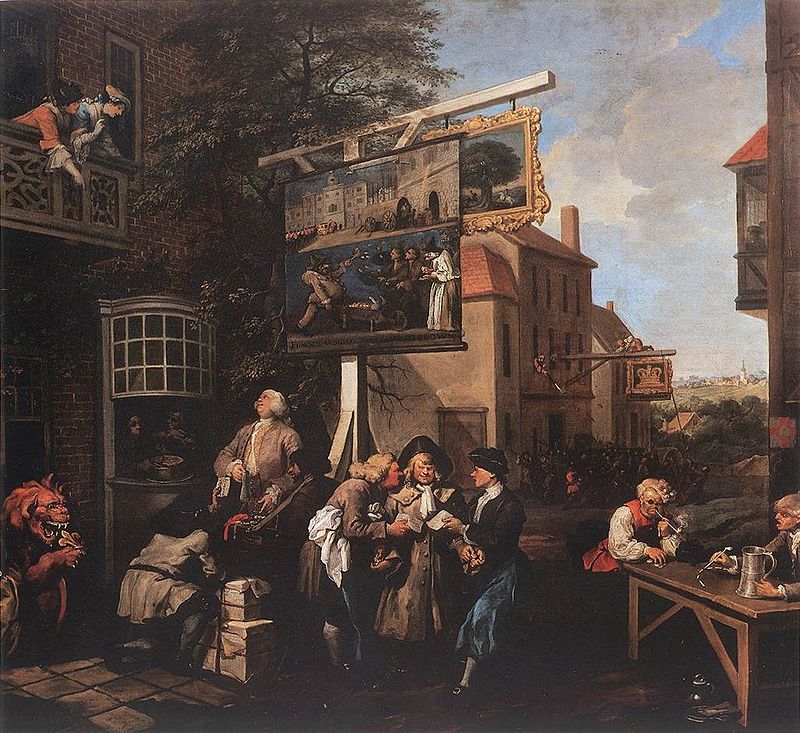
William Hogarth – Soliciting Votes
Yesterday there was a knock on my front door. Amid the usual sound and fury of the dog giving a passing imitation of a thigh-chewing Rottweiler (she isn’t one by the way – she just demands respect) I opened the door to a mild-mannered chap who turned out to be my local county councillor.
In the UK, county councils look after roads and social services, including the funding of care homes. Councillors get expenses, but no salaries. So unless they’re retired, they usually have a day job. They serve on councils for a number of reasons. Perhaps because they care about their communities. Because they love committees, god help them. Maybe because they have political ambitions – getting involved in local politics is a popular route towards Parliament. Possibly because they get tangential benefits from the networking.
Anyway, we have county council elections coming up, so this chap was out knocking doors. I felt for him a little, because the local elections, which the media would normally have taken very seriously as an indicator of the fortunes of the main political parties, have been somewhat overshadowed by the general election that the government called a couple of days earlier.
It was the first time I’d met a local councillor in forty-five years as a voter. I’ve met a few members of Parliament and the odd peer (odd being the operative word). But this guy was, as far as I could see, entirely normal. It turned out that he was a Conservative, which was not surprising considering that I live in a fairly well-heeled neighbourhood.
We had a brief door-step conversation. I could have asked him in, but I felt that this would have been a little unfair, since I would never vote for his lot in a month of Sundays. In fact, given their stance on Brexit, I wouldn’t vote for them in a century of leap years. But he is my councillor, so I told him how pissed off I was about the council’s policy of saving a minuscule amount of money by switching off the street lights in my road between midnight and six in the morning. I also told him my thoughts on Brexit.
I could have laid into him about the state of the roads, about the county’s financial incompetence and about their difficulty in funding care home places for those who need them. But his party doesn’t control the council, so what would be the point? Actually, I should have, because they may gain control, given that the entire country apart from Scotland seems about to be rinsed in blue.
But I didn’t, and I didn’t even tell him that I wouldn’t be voting for him. He was such an inoffensive chap, and I didn’t want to make him cry with a stream of invective about his disgraceful party. He disarmed me to an extent by telling me that he also opposed Brexit, but what could he do?
Resign, I suppose, but that would make as much difference to the national discourse as a single plankton does to the composition of an ocean.
Anyway, after three or four minutes of conversation I took his leaflet and let him get on his way.
All of which serves to remind me that people like me are quite happy to sit at our computers pouring online disdain and derision over politicians whose policies we don’t like. It’s easy to do that, because we can vent our fury without erupting with spittle-flecked rage in person at the people we demonise. Just as it’s easy to make rude signs at bad motorists in full knowledge that they’ll never notice our gestures, and say nasty things about our work colleagues, but never to their faces.
And it’s easy to forget that whatever their motives, however obnoxious their beliefs, the vast majority of politicians are just human beings like you and me, with their own entirely human hopes, fears, and ambitions. Even Donald Trump and Nigel Farage, I have to concede.
Yes, there are dangerous people in politics – dangerous because of perceptions skewed by lifetimes in their ideological bubbles, or because of egotism, greed and bigotry. No doubt there are also a few Frank Underwoods and Francis Urquharts out there – in reality as well as fiction.
We might think of politicians as pond life, worse even than estate agents and insurance salespeople. We might laugh at them when they choke with self-righteous bile about the opposition, in front of crowds of puppy-like supporters. We might heave with contempt about their lies, their spin and their hypocrisy.
But we’d miss them if they weren’t there, and we were ruled instead by some thuggish junta. And we should never forget that there are a good few – like, I suspect my visitor of the other night, and like poor Jo Cox, the MP who was gunned down last year – who genuinely believe that politics is about improving lives, doing good.
And before we are tempted to throw eggs at their pinstripe suits and shriek in the ears of the obnoxious, we should remember to do unto others as we would be done by.
I know this all sounds a bit pious. There are always people who are angry with politicians. I’m one of them. But anger is one thing. Abuse makes nothing better – not the target, not the originator and most likely not the situation.
Advice to myself that I shall no doubt forget next time I hear some self-righteous lemming-herder remind us that the people have spoken, next time I see a vicious headline in the Daily Mail calling out traitors and saboteurs, and next time I hear Donald Trump’s whiney, sneery voice and his piggy eyes bulging with faux anger.
At that point I shall probably rise up, and in an incoherent rage kick the dog and pelt the TV with beanie babies.
Over the next few weeks I fear there might be many such moments. Perhaps I should install a protective cage around the TV and go for a dose of electro-convulsive therapy. I was joking about the dog of course.
When the election’s over, I’ll sigh with relief, happily contemplating the impending demise of the nation, secure in the knowledge that no politician is likely to knock on my door for the next few years. I shall remove the cage around the TV, and get back to watching House of Cards.
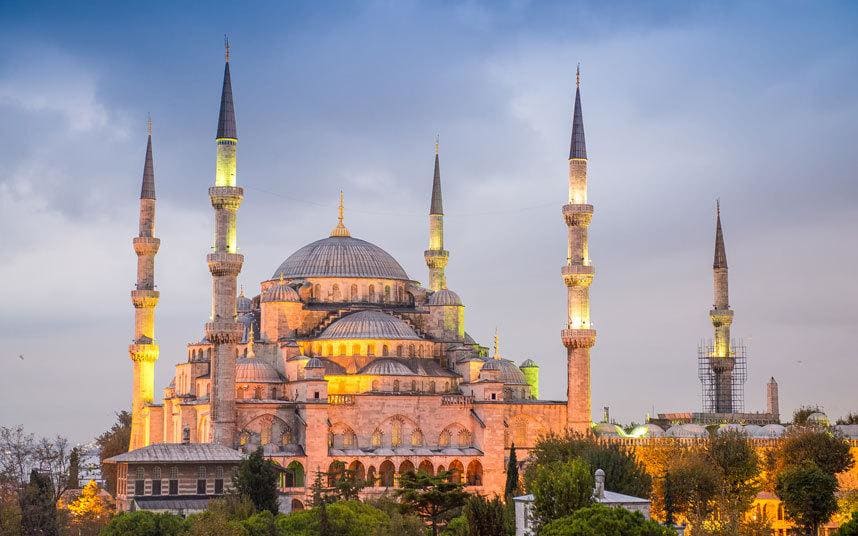
A long time ago, when I was a student, I used to wonder what countries I would not wish to visit because of the policies of their governments. Top of the list was South Africa. In fact, it was more or less the only country on the list, apart from its little brother in white supremacy, Southern Rhodesia. Oh, and maybe Paraguay.
For me, this was a time when the possibility of travel was strictly theoretical. I lived on a student grant, though truth be told I would get through each grant cheque in a month, and rely on my parents to keep me in beer, books and bus fares for the rest of the term.
Some of my peers did travel quite extensively. The hippie trail was just getting started. The way-posts were celebrated in the names given to varieties of cannabis resin: Moroccan, Red Leb(anese), Afghani and Paki(stani) Black. You could get to India via North Africa, Lebanon, Italy, Greece, Turkey, Iran, and Afghanistan, and perhaps end up in an ashram, where you would study meditation and hope to meet a Beatle. If your tastes were less spiritual, you could moulder away on the beaches of Goa amid clouds of sweet-smelling dope.
You might also head north to Kathmandu, where you could acquire your first taste of Buddhism. Or, if your money wouldn’t stretch that far, you could hang out in Kabul, which in those days was full of young backpackers eager to get hold of one of those smelly, shaggy sheepskin jackets much envied by the hippies back home.
Your parents would worry about you, often for good reason, and lived for the airmail you might send them every few months. They would dread hearing bad news from a local British consulate. A phone call from you would most likely only come because you were in trouble of some kind, though more often because you were broke and starving.
In addition to South Africa, there were many other countries that were off limits for a number of reasons other than political preference. Some, like Vietnam and Cambodia, were war zones. Others didn’t encourage tourists except under strictly controlled circumstances – the communist countries particularly. Then there were those that were far enough away to be inaccessible to all but the well-heeled. And there were countries so remote that those who visited them were usually categorised as explorers. Parts of Brazil, Saudi Arabia and Mongolia for example.
Nowadays many of us in the wealthy west, including relatively impoverished students, can afford to go almost anywhere. So the question arises: if, forty years ago, we had moral qualms only about visiting South Africa, where can we go today with a clear conscience, safe in the knowledge that by visiting and spending our money – or perhaps working – we are not contributing to the continuance of an obnoxious, oppressive or exploitative regime?
In 2017 there are different war zones into which only the foolish would venture. But what of countries whose regimes fall far short of what we might find acceptable in our own countries? If we were born and raised in liberal democracies, do we avoid Russia, China, Belarus and North Korea, all countries that call themselves democracies, yet are to all extents and purposes are one-party, or one-ruler, states? Do we avoid Saudi Arabia and the Gulf states, most of which make no pretence of democracy?
Or do we follow our liberal hearts and say to ourselves that governments are not the same as people, and no matter how objectionable we find the social and political regimes, it’s our duty to reach out to their populations because we share a common humanity? And perhaps thereby we can act as ambassadors for the freedoms we treasure in our own countries.
That might be a valid point of view, except that the people living in those countries might not appreciate our messianic zeal. They might say that they’re doing fine as they are, thank you very much, and that they don’t need arrogant westerners spouting orientalist claptrap and trying to upset a status quo that may not be perfect, but at least allows them to live in peace.
What if we’re of an analytic bent, and we try to set criteria that allow us to decide where to travel and where not to? What might those criteria be?
Freedom of speech?
Gender equality?
Absence of racial discrimination?
The rule of law?
Fair elections?
Universal enfranchisement?
A reasonable set of questions to ask about any country, I should have thought. Turning them into benchmarks would be hard, though.
I’ve left out one criterion because it can only be measured by an objective benchmark that would be hard to define and set: the gap between rich and poor. Apply what you might consider a fair measure, and you could be left with very few countries – probably excepting only very poor ones that might fail on a number of the other criteria – that your conscience would allow you to visit. Including, quite possibly, your own.
Let’s say that your moral qualms wouldn’t allow you to visit countries that don’t meet at least five of the six criteria we’ve agreed upon. You therefore rule out those I mentioned earlier. What are you left with? Perhaps fifty percent of the planet’s landmass. Even if you exclude the likes of Russia and China, the liberal democracies would get enough ticks in the boxes, wouldn’t they?
Perhaps we should think again.
The problem is that these criteria are moving targets. Politics and economics are constantly changing the goalposts. There are many countries that are in a fuzzy zone – sliding one way or another up and down the greyscale.
Take Turkey for example. How would it score, post-coup and post-referendum, on freedom of speech, fair elections and the absence of racial discrimination? Do we now refuse to visit Turkey because President Erdogan has acquired powers that move him close to dictatorship? And because so many journalists are languishing in jail, or because the country’s Kurds are treated as a potential enemy within?
And what of countries that we have hitherto seen as shining beacons of liberal democracy?
How would the United States – the ultimate exemplar – now score against the criteria? Racial discrimination may not be a policy of state. And yet under the aegis of state institutions, many Americans would say that police forces actively discriminate against black citizens and politicians racially gerrymander electoral districts. And that’s not to mention the question of whether the 2016 elections were fair, and the extent to which Donald Trump is attempting to erode the rule of law with his immigration policy. Does the US practice gender equality? Not in Silicon Valley, where pay differentials and the glass ceiling are as strong as anywhere.
What of New Zealand, where you might not find many Maoris agreeing that they were on a level playing field – except possibly on the rugby field?
And France, the home of liberté, égalité et fraternité? Do the ethnic Arab populations of the banlieues feel that they are not discriminated against?
And finally, my own country, whose police have been accused of institutional racism, and which recently decided to leave the European Union on the basis of a referendum polluted by lies on all sides of the argument? And where since the referendum acts of violence are increasingly being carried out against foreign nationals, often with impunity?
You might defend the US, New Zealand, France and Britain because they have laws that specifically forbid acts of racism and electoral fraud, and criminalise the infringement of a wide range of individual liberties. But those laws don’t manage the attitudes of society. And the rule of law depends not only on laws being in place, but on the extent to which they are obeyed. If the laws cannot prevent religious, racial and gender discrimination, you could argue that the rule of law – one of our key criteria – is weak.
All of which suggests that the countries at which we point the finger for their various political deficiencies have a right to tell us “judge not, lest you be judged”.
Of course, as we all know, this ain’t how the world works. Most of us don’t solemnly go through a list of countries we might like to visit and cross off those that offend our principles. We get on the aircraft with the intention of seeing for ourselves, because we don’t trust the opinions of others. We might then make our judgements, and regale our friends back home with horror stories of what we encountered at our destinations. What counts is not the morality of our hosts, but our personal experience.
But there’s another factor that makes me at least think twice about visiting a country. It’s rooted in emotion. A sadness that what was once welcoming and outward-looking is no longer so.
Take the United States as an example. I have many friends there, and over the decades I’ve been enriched by its cultural influence. I think of America as an old friend.
But on recent visits I’ve felt as though the old friend has changed. It starts with immigration. Suspicion. Scant attention to the social niceties. An intimidating atmosphere that demands compliance on pain of rejection or arrest. Once in, I’ve sensed a harshness of opinion that tolerates no discussion. It’s almost as though the society – or communities within it – is shutting down free speech even if the constitution continues to guarantee it. Sacred cows roam the streets, and it’s taboo to speak against them – national security being the biggest and ugliest.
All this I noticed before Trump became president. I’ve not visited the country since then, (here’s something I posted last year on this theme) but everything I hear and read – and not just within the liberal echo chamber – suggests that those traits are getting worse.
The old friend is changing, and do I want to renew the acquaintance? I’m not sure. And anyway I might not get the chance, especially after all the critical things I’ve said about its current president.
And then there’s Turkey. I’m not one of those who looks at Recep Tayyip Erdogan’s bid for enhanced power purely through Western eyes. The guy was nearly killed in last year’s coup attempt. He may well see enemies everywhere. Perhaps with good reason, given that his country has felt the flames of the Syrian conflict. But his intemperate remarks about Nazis in Holland makes you wonder whether his narrow escape has destabilised him.
Be that as it may, he has won his referendum, and now – theoretically at least – has as much power as Ataturk. But he would do well to remember that Ataturk’s power came as much from the respect of his people as from the laws he created. One man does not make a nation, although if he has sufficient determination he can divide and destroy it.
I also think of Turkey as an old friend, yet I wonder whether I will ever visit Istanbul or the gorgeous southern coast again. An American friend of a friend expresses the sadness much more eloquently than I ever could. In a blog post published the other day, Margo Catts, novelist and journalist, writes about the dangers of a people reflecting their hopes on a strongman, and on the awkward, often parasitic, relationship between religion and political power:
I’m an American, and have watched my own country struggle with the relationship between government and religion. Religion provides a moral, tribal, unifying code; government provides the structure to uphold it. They should go well together, right? But I have ample support for the opposite conclusion: We could learn a lot from Bergman and Bogart.
For the results that are actually good for us, rather than the fake, rosy, unnatural ones we think we want, government and religion need to play the star-crossed lovers. They can never, never, get together.
And don’t get me wrong—they’re mad hot for each other. Religion is soft and sexy. It has people’s hearts, their better selves, their longings and hopes, the warm embrace of love. But oh, we struggle to be all she wants us to be. Government, on the other hand, has the muscle. It can make things happen, keep people in line, exact penalties for disobedience that actually have some teeth. Complementary personalities with the same objective. They seem made for each other, right?
For much of human history, they have been intertwined, and it doesn’t take a terribly close reading of history to see the disastrous results. Bloodshed and oppression in the name of God; immoral leadership operating under a stamp of religious authority; enforced ignorance, poverty, and enslavement to serve the selfish ends of the few, propping themselves up with certainty about God’s will.
I strongly suggest you read her whole piece, which you can find here.
She, like me, once lived in Saudi Arabia, and like me has frequently visited Turkey. Her worries about Erdogan’s fiefdom are informed by her experience of living in a country whose authoritarian government, full of awkward contradictions derived from need to justify its legitimacy on religious grounds, is what Turkey’s isn’t today, but might become in the future.
That’s what I mean by a moving target. Our last trip away was to one of the world’s few remaining communist states – at least in name. Our next one will be to a nation ruled by a military junta. How therefore can I have qualms about visiting the US or Turkey? Logically, I can’t. But emotions are something else. The pain of seeing a country that has given me so many treasured memories reduced in my estimation might, for now at least, be too great.
That’s just the self-indulgent sentiment of someone who’s been around a bit. To anyone who hasn’t travelled much, I would say go forth and discover the world while you still can. But watch out for poisonous oysters.
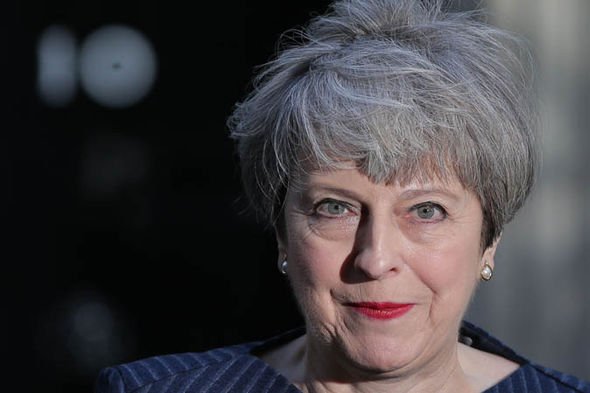
A few quick thoughts about Britain’s upcoming general election, also referred to as a snap poll.
I have no idea why the word snap is used to describe an election called at short notice. Perhaps it has something to do with the card game, usually played by kids, in which the first person to turn over a card of same value as the previous one shouts snap, and gets to remove all the cards underneath. It usually results in fisticuffs when the two players shout snap simultaneously.
I’ll leave you to figure out how this is relevant to our political leaders, though children and fisticuffs might provide a clue. But in this context, snap has a different meaning for me – as in another bloody election will seriously challenge my sanity, and might actually push me over the edge.
The Daily Mail, which for the umpteenth year running is poised to win the Goebbels Award for Rabid Journalism, is having a field day. On its front page it has Theresa May staring at us with a demonic half-grin. Either that, or she was in urgent need of the bathroom during the photoshoot. Not blessed, as an Irish friend is fond of saying about people whose appearance leaves something to be desired. A shame, because when she’s not practising her death stare, she has a very pleasant face. Not that looks have anything to do with politics in my book, you understand, even if cartoonists might try and persuade you otherwise..
Anyway, the headline says “Crush the Saboteurs”, presumably referring to all those who have wilfully attempted to defy the Will of the People by obstructing Brexit. There follows fifteen pages of what the Mail, with its characteristic sense of humour, call Reports and Analysis.
Of those, pride of place goes to two pieces. One, written by their political editor, helpfully provides lists what he calls “charge sheets” against each of the saboteurs. He means, of course, the usual suspects: Labour, the Lib Dems, the House of Lords and so on. I imagine that after the election, he will suggest that these felons will be put up against a wall and shot.
The second piece shows a statue of Winston, under the headline “This election gives Mrs May the chance to do what every Conservative leader since Churchill has dreamed of – putting an end to Labour for ever.” A very conciliatory sentiment given the prime minister’s avowed desire to pull the nation together. The devil inside me wants to shout “Ein Reich, Ein Volk”. But I won’t, because I’m not one for summoning the ghost of Adolf whenever some tin-pot authoritarian newspaper editor gets above himself.
The writer has the cheek to refer to the Battle of Cable Street, in which Britain’s pre-war Fascist movement fought a pitched battle against its opponents in London’s East End. He cites that famous event as a “lesson of history about social dislocation”. He fails to mention that the Mail’s publisher at that time cheered on the Fascists in a leader entitled “Hurrah for the Blackshirts!”. Authoritarian instincts are clearly embedded in the Mail’s DNA.
Anyway, we are where we are. From where I sit, I wish success for any candidate or party committed either to destroying Brexit, or at least mitigating its consequences. I’m not sure that that’s the way things will turn out. The lemmings are likely to keep running. And if Labour are wiped out, which the Mail so fervently desires, our only hope of avoiding being in a country without a serious opposition is if the Conservatives, secure in a massive majority, start fighting each other. In other words, the only opposition worthy of the name might be within the ranks of a single party. A depressing thought, and certainly not what Mrs May has in mind.
I’m pretty sure I’ll be commenting further as the whole exercise pans out. The only good thing about this election is that the run-up is mercifully short.
But not too short for one significant event across the channel to take place in the interim that might add some spice. The run-off for the French presidential elections takes place on May 7th. How will political calculations change should President Le Pen take office?
The next few weeks should be grim but fascinating.

What – if anything – goes through your mind today as North Korea test launches a ballistic missile which explodes almost immediately? I don’t say “if anything” to imply that you’re apathetic about the latest twist in the military dance between the United States, China and Kim Jong Un’s regime. But do you breathe a sigh of relief, or do you just get back to enjoying your Sunday with the thought that “it ain’t going to happen anyway”?
I can only speak for myself.
As two US aircraft carrier battle groups steam towards the Korean peninsula, it’s hard to find stories of frightened South Koreans and Japanese citizens panic-buying food and heading for their cellars. Is their relative calm the result of decades of wolf-crying? Are they immune to the hysterical rhetoric coming from the North? Or are they fatalistic enough to believe that the apocalypse will come whatever they say or do?
If those closest to the potential conflict zone are maintaining a stiff upper lip, then the reaction of us Westerners seems almost comatose in comparison, despite efforts on the part of newspaper leader writers to persuade us otherwise.
Compare the situation to 2003, before the US and its allies, including my country, invaded Iraq. Mass demonstrations, demands to stop the war, dire warnings of casualties. Agonising over the existence or otherwise of a legal casus belli. And on the Iraqi side, as in 1991, blood-curdling, ornate rhetoric in classical Arabic.
Don’t we care about the million people who – according to China – might die in a conflict, nuclear or otherwise, between the US and North Korea? Or are we all lined up behind the mantra of national security, fearful that a deranged regime is developing weapons capable of destroying Los Angeles, San Francisco and Seattle, and satisfied that the US has every right to pre-empt that threat, as it did in Cuba in 1962?
We’ve been here before, and more recently than 1962. Perhaps the difference between today and the run-up to the Iraq war is that in 2003 there was no evidence that Saddam Hussein had nukes that could strike London, Paris or Frankfurt. Only the possibility that he had hidden his WMDs, and that at some stage he would retrieve them from his bunkers to threaten his neighbours again.
Back then, there was an argument that old age, or his own internal enemies, would eventually do for Saddam. And indeed John Nixon, the CIA operative who led the debriefing of Saddam after his capture, contends that Saddam was by that time semi-detached, more concerned with writing novels, and leaving the details of government to his henchmen.
Had not the Arab Spring intervened, it’s likely that the West would have left Muammar Gaddafi to moulder, especially as he had forsworn his WMDs.
In both cases, we took an active role in regime change, with tragic results that led many who survived the subsequent chaos in Iraq and Libya to look on the eras of Saddam and Gaddafi as golden ages.
Which brings us back to the equally (at least in our perception) loathsome dictator who is quite happy to build his missiles while a significant number of his people remain undernourished and frequently starving.
Aside from the potential toll in lives – and that’s a big aside, especially if the conflict turns nuclear – we have to consider the economic consequences of a second Korean war. We may think that the deaths of a million nameless Asians is sad, even horrific, but of little consequence to those of us who have never visited Korea or Japan.
But the potential economic shock should get our attention. South Korea’s economy is the thirteenth largest in the world. Japan’s is the third. Think of the disruption to supply chains that a conventional war – let alone a nuclear conflict – might cause. We have come to rely on our Samsung phones, our Toyota cars and all the components manufactured in both countries that are essential to the technology that keeps us ticking just about everywhere in the world.
Think also of the insecurity that would follow a nuclear detonation in anger. A taboo, once broken, is no longer a taboo. The unthinkable becomes thinkable. Soon enough those who have never sought nukes might think again.
This would not be a local war. In its consequences, it would be a global war, and perhaps a foretaste of worse to come. So you could argue that we should be more concerned than we appear to be.
Back to the subject of the failed missile test. What is its significance?
People who love theorising about dark dealings will no doubt come up with plenty of explanations. Speculation may well be focused on five possibilities:
- That is was a cock-up. The launch failed because launches sometimes do. That’s the purpose of a test – to see if something works.
- That the US or one of its proxies have hacked the missile program and caused the launch to abort.
- That the Chinese, fearful of the consequences of war on their doorstep, did the hacking, perhaps in concert with the US.
- That this was a face-saving exercise. Kim Jong Un knew that launch would fail, but managed to save face by going ahead with it, but calculating that there would be minimal US response.
- And lastly, that elements within the North Korean military, unbeknown to Kim, sabotaged the launch as an act of resistance to the regime, or in the certain knowledge that they would bear the brunt of any retaliatory strike.
Whatever lies behind the failed launch, the US flotilla draws ever closer to the Korean peninsula. Mike Pence is due in Seoul to consult with the South Korean government. Is a decision about to be made? Not surprisingly, we don’t have a clue. Whether Trump has a coherent plan is also questionable.
I don’t believe that even he, with his grown-up generals at his side, will start launching nukes at the drop of a hat unless Kim does so first. Instead, will the battle groups sit close to the mainland like dark avengers, armed and ready to pull the trigger in order to pile the psychological pressure on Kim, and perhaps to encourage his military to save their skins by acting against him? Or has Trump already decided to take the shot? Would such an act of war be legal, and would Trump care?
All I know – at least from my layman’s perspective – is that if, as many military analysts claim, North Korea is years away from being able to launch its missiles against America, there’s plenty of time and scope to use other means of bringing him down, be it by economic pressure, covert subversion, cyber-warfare or a combination of all three. Even if thus far diplomacy has proved to be futile, have we really exhausted all other options beyond blasting North Korea to smithereens and shattering the economies of the entire region?
Whatever transpires over the next few days, this is some game of poker.
Is there no end to Scandinavian enterprise? They create a flourishing entertainment industry out of their seasonal affective disorder. They hook us Anglo-Saxons on subtitles, to the extent that these days we use them with English-language dramas whose dialogue is beyond normal hearing range.
Then they bombard us with “lifestyle books” about the joys of open fires, hot chocolate, cakes and candles, which our media pick up on despite the fact that the majority of our population work sixteen-hour days on zero-hour contracts and barely have the time and money to spend on anything cosier than a pack of stale muffins from Tesco.
And now some bright Swede is seeking to clean up by publishing The Little Book of Lagom, following on from the best-selling Danish Little Book of Hygge.
Lagom, apparently, is based on the principles of simplicity, lack of clutter and nothing to excess.
If you read the breathless prose in Vogue telling us that 2017 will be all about Lagom, you would think that nobody had stumbled upon such principles before. It’s probably true, though, that nobody had thought to write a little book about them. The cynic in me thinks that these books are probably “little” because their content is so breathtakingly vacuous that most of us would fall asleep from boredom by chapter 3.
Yep, we all know that Hygge and Lagom are just lifestyle scams, designed to persuade us to buy stuff we don’t need – such as cushions, scented candles and silly sweaters – or not to buy stuff we do need – such as furniture that doesn’t turn us into orthopaedic wrecks, or décor that doesn’t bear forever the stains from accidents with chocolate fondue. Given that we’re more likely to buy unnecessary stuff than not, our addiction to faux lifestyles is what keeps IKEA in business.
Yesterday’s London Times quoted the PR puff for one of the forthcoming Lagom books, which suggested that the Vikings were early adopters of the concept by providing just enough mead at their parties to ensure that everyone had a sip.
A sip? Do me a favour! Do we have any evidence that the Vikings would be satisfied with a sip of mead when celebrating the destruction of half of England? I doubt it. If so, then presumably they were pretty moderate in their other habits. Pillage limited to a cart-load per warrior. No more than three rapes a day. Enslavement of the local population limited to a thousand a month. Unkind, I know. Perhaps I’m just not up to date with the current wisdom about those temperate, peace-loving folk.
Of course I love our Nordic neighbours and their dark dramas. They’re as diverse as we are in the United Kingdom, and just as quirky in their own various ways.
But I see no reason why the Danes and the Swedes should make a fortune showing other countries how to live without a bit of competition from their British cousins. After all, we have a rich tapestry of lifestyles which we have exported to the world without writing cute little books about them. And my goodness we need the money these days.
So it’s time we got into the little book business.
How about The Little Book of Decline, for example? The concept of Decline is all about graceful degradation. Flea-ridden gundogs lounging around in crumbling country houses. Aristocrats in their patched-up corduroys enjoying draughty evenings huddled around wood fires under the baleful gaze of more prosperous ancestors. Decline is about accepting that each generation will be poorer than the one before. It’s about making the best of what remains after everything else has been sold to the Chinese.
And then we have The Little Book of Brexit, one of our lively urban lifestyles. This is the concept of having your cake and eating it. Jolly gatherings of ladies who lunch on asparagus harvested by gangs of Lithuanians living in huts around the fields of Norfolk. Cuticles spruced up by Vietnamese girls working on minimum wages in the local nail bar. The offspring looked after by Romanian au pairs or maids from the Philippines. Joyous conversations inspired by the Daily Mail about all the immigrants who will be sent home when Brexit comes to pass.
If they’re a bit passé, perhaps The Little Book of Silence might appeal. A lifestyle entirely lived inside your head. Streets full of people wearing headphones, staring at the pavement, oblivious to large automobiles about to mow them down. Houses full of children engrossed in their tablets, while mothers and fathers wordlessly use their phones to enter online competitions. The art of self-sufficiency through non-communication. No need for complex language – The Silent express themselves through emoticons, grunts and minimalist body language. The perfect way to navigate a society full of linguistic, cultural and physical potholes.
You might also think that our soulmates across the Atlantic would be full of bright little lifestyle books. Except that Americans don’t do little – at least not any more. Everything has to be large, like the Mother Of All Bombs that Donald Trump has just dropped on a bunch of unsuspecting ISIS troglodytes in Afghanistan. Big walls, big lies and big therapy bills. So watch out for The Big Book of Yuge any time soon. Very Nordic-sounding.
(Oops, there I go again. Every time I post, I promise myself that I will get through to the end without a disparaging reference to the dreaded Trump, but somehow I never manage it.)
Leaving the great attention-grabber aside, I think it’s time I wrote my own lifestyle book. I’ll call it The Little Book of Acceptance. It will be based on the idea that worrying about lifestyles is a waste of time. That watching other people’s lifestyles is voyeurism. And that accepting your own uncool habits and preferences is the key to happiness. Anything else is fool’s gold.
For those of us in our declining years, what can be more tedious than working ourselves into a frenzy in order to meet the expectations of fashion magazines, lifestyle-conscious acquaintances and the authors of silly little books?
Better surely to buy your socks from Marks and Spencer and your cholesterol from Waitrose, to avoid pine furniture like the plague, and to collapse every night into your comfortable sofa in front of a fifty-inch TV watching endless American crime shows and the hygge-free adventures of Scandinavian psychopaths, while your arteries fur and your brain fills up with sticky plaque.
Mind you, these books make great Christmas gifts, especially if you don’t particularly care for the recipient. Which is probably why they all end up in the charity shops shortly after New Year.
No doubt I shall be rewarded for my cynicism. At some stage in my dotage I fully expect to receive for Christmas A Little Book of Dementia which will tell me how to live a happy life as my mind turns to mush. That one will never end up in the charity shop, because I’ll be reading it anew every day.
Enough. Not funny. Stop now.
The United Airlines CEO Oscar Munoz is clearly heading for great things. Not only did he defend the actions of the security goons in Chicago on the grounds that the unfortunate doctor who was booted off the flight to Louisville was being “disruptive and belligerent”, but he stated that “While I deeply regret this situation arose, I also emphatically stand behind all of you, and I want to commend you for continuing to go above and beyond to ensure we fly right.”
That’s what’s known in the media business as doubling down.
What, I wonder, would be flying wrong? Picking on an Asian couple would entirely chime with the Trumpian age. What the hell were they doing on the flight in the first place? Perhaps flying wrong would be to select a nice middle-class couple of a less obvious ethnic origin and dragging them screaming and kicking off the flight. Or insisting that your staff shouldn’t leave it to the last moment to get home in time for work, and expect those who pay their wages to have their lives thus disrupted. Or insisting that your people should have the foresight to avoid an on-board rebellion by selecting those to be denied boarding before they actually get on the plane.
What, I wonder, does United’s procedures handbook say about these matters? Is there a section about profiling targets for extraction? As in “if you have to kick someone off the flight, choose an elderly Asian doctor, because his culture abhors confrontation. Don’t go for a 300-pound American footballer who could probably punch a hole in the fuselage without the help of explosives. And don’t go for an elderly matron who looks like your grandmother, or every other grandmother on the flight will rise in solidarity. Don’t select anyone in uniform, or you might be accused of being unpatriotic.”
Probably not. Most likely this wisdom is passed on orally – nothing written down.
If I was happily settled into my seat, having anaesthetised my legs to allow them to fold up into an stress position behind the seat in front of me, looking forward to my complementary dog biscuit, I might be mildly pissed off to be told by a couple of paramilitary flight attendants that my presence was no longer welcome, and then to be dragged out bleeding by a SWAT team from the airport security force.
And if I was a doctor, I might wonder at the gall of an airline that would be quite happy to call out on the intercom “is there a doctor on the plane?” and expect me to revive a passenger in trouble, yet equally happy to haul me out of my seat as if I was a terrorist, or a drunk on a stag trip.
Perhaps I should give United the benefit of the doubt, and ascribe their PR fiasco to rank incompetence, or lack of staff training.
In which case, for his own incompetence, his warped sense of what it means to go above and beyond, and his unerring ability to keep digging once he fell into a hole, Mr Munoz should be rewarded with the supreme accolade for such qualities: a place in Donald Trump’s White House.
 59steps