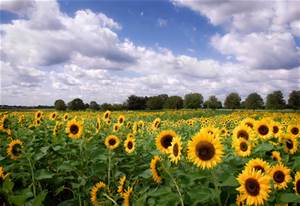
August for me has always had a dream-like quality, especially in Britain, my home country. You could easily imagine that half the world shuts down, as politicians, journalists, neighbours and schoolchildren disappear on their holidays. The roads are almost civilised in the morning, thanks to the lack of cars delivering little ones to their places of education. And when we get a run of decent weather, as we are at the moment, we seem to go into a strawberry trance.
This year we’ve been blessed with the sight of rowers, shooters, hockey players, gymnasts and synchronised swimmers going through their bizarre routines in Rio. Sporting mayflies emerging into the spotlight of prime time television for their quadrennial moment of fame. No matter that we won’t see them again until 2020, and that most of us slumped in front of our tellies in holiday resorts, pubs and quiet sitting rooms at home watched with bemused fascination as judges judged on criteria beyond our understanding, and referees intervened to enforce rules so arcane that they could only have been created by committees of Pharisees.
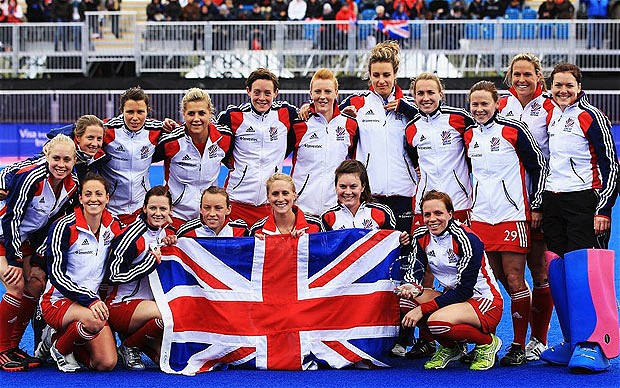
I suppose we all got a bit of a lift when our plucky Brits bumped the Chinese from second place in the medal table – about the only way we “pull above our weight” these days. And it was genuinely heartening to see these athletes, professionals to a greater or lesser extent, succeeding through determination, expert coaching and liberal doses of money, courtesy of the nation’s enthusiasm for the National Lottery.
While we bask in the post-orgasmic glow of all those smiling faces bearing medals, the occasional reminders of the ludicrous reality we have left behind for a short few weeks begin to surface. Boris Johnson running the country. Jeremy Corbyn sitting on the floor of one of Richard Branson’s trains. And Nigel Farage milking the applause at a Trump rally.
No doubt more serious stuff awaits us in September. In fact, the world has never stopped being deadly serious, even if we haven’t been paying attention to it.
Several national newspapers have been busy alerting us to the new Yellow Peril. No, not hordes of Japanese soldiers kicking us out of our empire and forcing our soldiers to build railways. This time it’s China’s attempt to build stuff within our shores. The Hinkley Point nuclear power project, we are warned, is not only a bad deal commercially, but dangerous because the Chinese, who will be a partner in the project, will thereby gain a foothold in the UK’s critical infrastructure. They have already bought a large chunk of our North Sea oil production. What next? Will they soon be building our warships and missiles, and running GCHQ on our behalf? Unlikely, but you never know.
Certainly it doesn’t bode well for the future of post-Brexit Britain that we no longer have the expertise to build our own nuclear power stations. For the Faragists among us, it must be almost as mortifying that we have to rely on France, our prickly enemy/friend, for the engineering capability to make Hinkley Point happen.
Further afield, the multidimensional war in Syria and Iraq is becoming more baffling than ever. Has there ever been a more complex matrix of interests, ambitions and alliances than in the Middle East today? The only constant is death.
Then there’s the turmoil in Turkey. Despite the post-coup purge of the armed forces, the government has still managed to summon up enough troops and tanks to overwhelm ISIS in a key Syrian border town, not – if you believe some narratives – to destroy ISIS but to take the town before the Kurds get there.
And is it any wonder that the average observer outside Turkey fails to understand the paranoia about the Gülen Movement. Why should Mr Erdogan be so obsessed by this seemingly mainstream Muslim organisation, whose followers believe in religious toleration and liberal education? Is it a cult? Is it a wolf in sheep’s clothing? Did its leader, an elderly and seemingly avuncular cleric, orchestrate the attempted coup from his eyrie in Pennsylvania? Is he a Trotsky or a Khomeini, plotting and planning in exile to bring about the downfall of the established order? Or is he just a convenient scapegoat, whose followers are a convenient enemy within?
I don’t know enough about Turkish politics to judge with any confidence, but one thing’s for sure: in the West, his PR is more effective than Erdogan’s. The President is seen as an increasingly authoritarian figure, locking up journalists and purging thousands of army officers, judges, civil servants and teachers suspected of being Gülenist sympathisers. But if you believe the Gülenists, they are no more threatening to the established order than the Methodists were in eighteenth-century Britain.
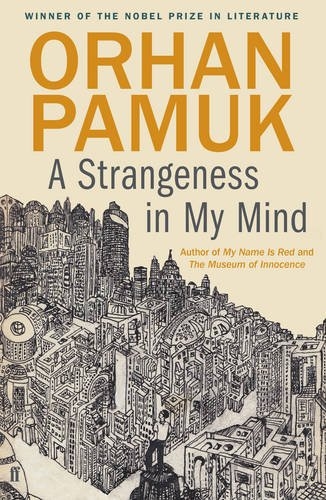
In any event, I’m hoping that A Strangeness in My Mind, Orhan Pamuk’s latest novel – which I’m ploughing through at the moment – will give me more insight into the current mindset within Turkey. The book traces the life of an Anatolian street vendor in Istanbul. Through his eyes we see the growth of the city and the evolution of the wider Turkish state since the late Sixties. Two things are already apparent. First, the gulf between the cosmopolitan Istanbul elite and the conservative societies in Anatolia from which most of the city’s new population have come. And second, the corrosive effect of successive military coups and of the authoritarian regimes that followed. No wonder the Turks pushed back with great courage against the latest attempt.
Another tome I’ve just finished serves as a reminder that the kind of multidimensional conflict we’re currently witnessing in the Middle East is by no means unique. Max Hastings’ latest book, The Secret War – Spies, Codes and Guerrillas 1939-1945, does what it says on the tin.
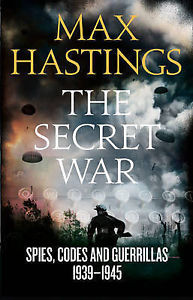
Hastings sets out to provide a panoramic view of intelligence activities of all the main participants in the Second World War, as well as the various partisan movements and embryonic special forces deployed by the combatants. So we learn about the familiar stories – the Ultra decryptions by Bletchley Park, the bumbling German Abwehr organisation and the far more effective spies of the Soviet NKVD. We also encounter the British Special Operations Executive (SOE) and the American Office of Strategic Services (OSS), forerunners of the SAS and the CIA respectively.
What emerges is that the masters of these organisations, in particular Stalin and Hitler, rejected much of the intelligence presented to them because it ran contrary to their own views. Thus Stalin ignored overwhelming evidence that Hitler was about to invade the Soviet Union in 1941. And Hitler fell victim to deception tactics in advance of Operation Bagration, the Soviet offensive in 1944. He also swallowed the Allied deception designed to convince Germany the invasion of France in 1944 would centre on the Pas de Calais. Similarly, the US ignored compelling evidence of Japanese plans for the attack on Pearl Harbour.
What is perhaps less well-known is the infighting and rivalry between the intelligence services within each of the combatants – the mutual contempt between the British MI6 and the SOE, and in the US, between the FBI and the OSS. Perhaps more surprisingly, the fact that in the latter part of the war, intelligence and special forces activities, especially those of the Soviet Union and the US, were largely focused on the post-war future. To that end, allies spied on allies, and on the odd occasion carried out hostile acts against each other. For example, US fighters shot down two British aircraft carrying French forces on their way to infiltrate into Japanese-occupied Indo-China.
During the Asian conflict, rivalry between the British and the Americans centred on Roosevelt’s anti-colonial views. He was determined to thwart British efforts to re-establish dominion over the colonies they lost to the Japanese, and sought instead to establish areas of American economic influence. The OSS was one of his tools for achieving this end, with the result that it and its British counterpart the SOE hardly spoke to each other. The Soviets, of course, were focused on penetrating the Manhattan Project that resulted in the development of the atom bomb. This they did with some success.
In case we imagine that World War Two was a conflict in which the allies were solely devoted to winning the war, Hastings reminds us that the victors were also determined to act in their own long-term interests in anticipation of the post-war order, even if that meant acting against each other during the conflict.
In reading terms, Pamuk and Hastings are not exactly summer salad for the mind. But I’ve always been a meat eater, so that’s fine. For a little dessert, I’ve turned to Dead – a Celebration of Mortality, by Charles Saatchi. I picked it up for five quid in a local charity shop. It had not been opened, so clearly someone didn’t relish someone else’s idea of a cheery gift. Perhaps it was an eightieth birthday present.
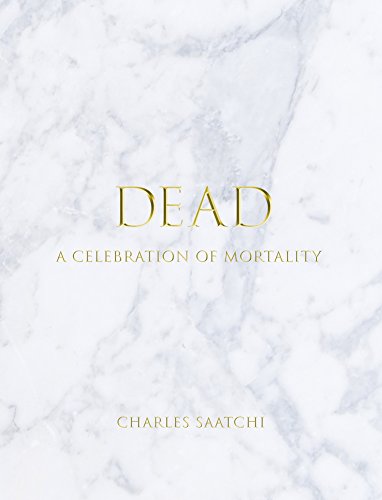
Anyway, despite my misgivings about the author, who grew rich coming up with natty ads for Margaret Thatcher, cornered the market in modern art of questionable merit, and was caught on camera with his hands around his wife’s throat, I am interested in his chosen subject. After all, I’m closer to that momentous event than many.
And very appetising it is too. Saatchi has come up with a hundred-or-so short vignettes, mostly factual, on various aspects of death. No turgid philosophising, though I imagine he sees his choice of subjects as a philosophical statement in itself. He writes with dry wit about Russian gangsters, gallows humour, near-death experiences, of living Indians in Bihar declared dead by relatives to get hold of their meagre inheritances and a host of other subjects. The book cover looks like a tombstone, and the layout reminds you of a Word document in the hands of someone who couldn’t use the table of contents and footer features. Except that it’s clearly a deliberate effect.
Dead is an entertaining, even if rather a cold and cynical, study of the fate that awaits us all. Its bite-sized chapters are easy to read and never boring. The last chapter is short and sweet:
SOME LIVES LEAVE A MARK. OTHERS LEAVE A STAIN.
ALMOST EVERYBODY LIVES A LIFE OF LITTLE CONSEQUENCE TO MANKIND.
BUT WOULDN’T YOU PREFER TO HAVE SPENT YOUR YEARS RATHER USELESSLY, BUT ENTERTAININGLY – EVEN IF YOUR EXISTENCE DIDN’T ACHIEVE ANYTHING MEMORABLY SIGNIFICANT AT ALL?
I wonder if that’s how Saatchi sees his own life. Certainly, it seems to me, his final words are those of a melancholy man. Be that as it may, Dead is perfect fare for the fading days of summer. Available from a charity shop near you, no doubt.
I for one will continue to enjoy my ant-like existence, blissfully unaware of the manner in which the Great Foot will descend on me, but newly enlightened on the vast array of possible exits.
And now, September approaches and the kinderpanzers get ready to reclaim the morning roads. Our attention turns from burkinis to Brexit, as the politicians continue to flounder in the mess they created.
Time to go on holiday.
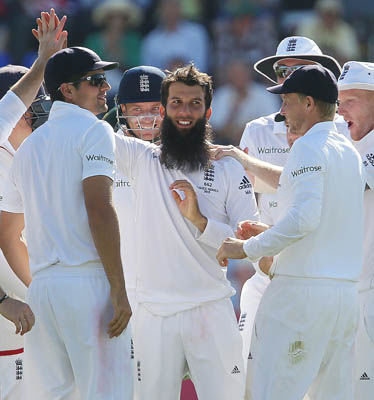
Moeen Ali, English Cricketer
Enough of this nonsense. The flight crews and passengers of airlines that have arbitrarily got Muslim passengers chucked off flights because they “felt uncomfortable” at the sight of people sweating, writing mathematical formulae, reading books about Syria, texting in Arabic and referring to Allah in conversation should gather in London in two days’ time.
There they will see a cricket match between England and Pakistan.
If the recent international in Birmingham is anything to go by, they will witness men with long beards and Pakistani national dress sitting happily alongside white guys dressed as bananas, as bishops and yes, even as crusaders. They will see Moeen Ali, a guy with a long beard, proudly wearing England colours, playing his heart out and embracing his colleagues. The same guy who won the man of the match award for his magnificent batting in the game just finished. They will see young kids in Pakistani colours cheering their team, but applauding the English team with equal enthusiasm. And why not? Strange as it may seem, you can be English without forgetting your foreign heritage.
They will learn that you can be devout without being a terrorist. That appearance is not a reliable predictor of behaviour. And that the 50,000 spectators in Birmingham may have differences in religious belief and social norms, but are united in the love of a game that was born in England and exported to most corners of its former empire, not least to the Asian subcontinent.
If they can’t make it to London, they should come with me to Riyadh, the capital of Saudi Arabia, and join me in a taxi driven by a native of Peshawar – a stone’s throw from the border between Pakistan and Afghanistan, and listen to the inevitable conversation about cricket – the smiles, the jokes and the sense of something shared.
Or they should go with me to Bahrain, and meet friends of mine who will introduce them to imams, and take them to Ramadan gatherings where the Quran is recited. Friend who don’t have a violent bone in their bodies, who care far more for their fellow human beings, I sense, than many of the pampered, timorous, “uncomfortable” customers of Western airlines.
A couple of weeks ago, John Oliver, host of Last Week Tonight, made the point that feelings rather than facts are dominating the current US election campaign. I feel unsafe, and therefore I am unsafe, no matter that the facts suggest otherwise. Which explains why the Muslim couple who were allegedly sweating in the heat in Paris were kicked off their flight to the US. A flight safety issue, said the pilot.
We need to get real. Islam is not going away. Muslims are not going away. Forgive me for the oft-repeated liberal sermon, but we may be in the middle of a surge of terrorist attacks in Europe, but that does not make the millions of people – who may be dressed in a distinctive way, who may have long beards, who may speak the world’s fifth most popular language, and who may read books and newspapers in a script unreadable to most fellow passengers – potential terrorists.
And yes, 9/11 may have cast a long shadow over aviation, but do all the mind-numbing security checks at international airports count for nothing? And the pre-checks, the no-fly lists, the data crunching by the NSA and GCHQ? The enhanced cockpit security? The threat recognition training given to airline staff and airport security employees? Are all of these safeguards to be disregarded just because a passenger “feels uncomfortable”?
I suppose I find this nervousness hard to empathise with because I fly to, from and between Muslim countries on a regular basis. What to me is normal behaviour would cause some passengers to reach for a double dose of Prozac.
What I find unsettling is not someone in the next seat reading the Quran. It’s people – and I’m not just talking about passengers, by the way – exercising their God-given right to get drunk before boarding an aircraft. And aircraft with bits falling off the interior, where the seats don’t work properly, and whose external paintwork is peeling. Aircrew so rotund that they can barely get through the aisles without banging into passengers on their way, or flight attendants who look as though they’ve just been recruited from a model agency. Flights that are delayed for hours because some “minor problem” that needs to be fixed.
Facts will tell you that terrorism is way down the list of causes of aviation fatalities. They will also tell you that in America far more people are killed by accidental shootings in an average year than terrorists. Even in Europe, your chances of succumbing to a terrorist attack are infinitesimal.
But as we have discovered yet again in this year of toxic elections and referenda, feelings count more than facts. And when feelings – fear, prejudice, hatred – are directed towards minorities, then those minorities will become embattled and bitter. In the case of Muslims, a sense of siege increases the likelihood that they will turn in on themselves and fall for the seductive narrative of the extremists.
What’s to be done? In the short term, Western airlines could help by training their staff to tell the difference between threatening behaviour and non-Western cultural norms. That, for example, when someone says “Allah” – a word that appears in virtually every second sentence spoken by a devout Muslim – they are not about to commit an atrocity. Even “Allahu Akbar” is not necessary the prelude to a suicide bombing. I have a friend who uses those words when admiring a magnificent plate of fish in a restaurant. Because in his view, God is indeed great to have provided him with such a feast.
They could recruit a few Captain Fatimas to fly their aircraft, and guys called Mohammed to dish out the meals. They could learn how to calm nervous passengers by taking them to one side and assuring them the person next to them is not necessarily a terrorist just because they’re speaking in Arabic before take-off. If they see someone reading a book on Syria, they could engage them in conversation, as in “that’s an interesting-looking book – what’s it about?”
It seems pretty obvious that most of the incidents on aircraft arise from miscommunications – people misreading body language, misinterpreting conversations – and jumping to the wrong conclusions. The fact that in each of the well-publicised recent cases where Muslims have been chucked off aircraft, the travellers are subsequently deemed to be no threat, bears this out.
So better training in the art of communication – and particularly listening skills – would help. Airlines have decades of experience in calming nervous passengers. Is it too much to ask that they learn to deal with irrational fear of Muslim passengers? As many pundits have pointed out over the past couple of years, we are in the grip of a hysteria born of fear and ignorance. Airline staff are clearly as likely to succumb to irrational behaviour as anyone else.
Perhaps that ignorance could be mitigated if pilots and flight attendants working for Western airlines were given training on Islam, its principles and observance, as well as cultural beliefs and practices prevalent in the Muslim world. After all, is it not good business to know your customers?
Muslim passengers also need to be aware of behaviour to avoid in order not to trigger extreme reactions. But they do not deserve to be publicly humiliated by their names and seat locations being called out on the intercom, and being told that they are being watched, as happened on a recent flight in the United States.
As the Guardian pointed out in The perils of “flying while Muslim”, it’s not just Muslims who are on the radar. Just about anyone with a dark skin has an increased chance of being singled out for special attention. And if I – a white, middle-aged traveller with a very British accent – more than once came in for close attention from airport security staff in the US in the years following 9/11, presumably by virtue of my passport having lots of visas from Middle Eastern countries, what chance has some poor innocent who “looks like a terrorist”?
Ultimately, the fear of “the other” can only be countered by the societies in which we live. Responsible politicians, religious leaders, civil servants and teachers can play their part. And of course it’s a given that political solutions in the battlegrounds of the Middle East will go a long way towards reducing ideologically-motivated terrorism.
Until then, those of us in England who love our national sport could do far worse than to try and convert America and continental Europe to the joys of cricket, in all its multi-ethnic, multi-faith glory.

Westerly, Rhode Island
We all need a break from time to time. In this summer of hate, a trip to New York, one of my favourite cities, seemed just the antidote to all the grim stuff going on in the old world. No matter that the spectre of the presidential elections hangs over America, I got the impression that New York was preoccupied with more urgent matters. Such as relieving tourists of their money, and staying cool in 35 degrees. Which perhaps explains why one of the best bits of our recent trip to New York was the day we spent escaping from it. Even then, it was difficult to ignore the politics, as I mentioned in my previous post.
Enough of all that. Time to write about some uplifting experiences for a change. What I didn’t mention last time was a train ride up the Eastern seaboard, past pasture, woodland, meticulously tended houses in small towns that eventually opened out to a series of wetlands, creeks and inlets. Beaches sparsely populated with vacationing families. And boats. Thousands of them. If we Brits think that as an island race we’re well stocked with boats, we should think again. The coastline from New York to Rhode Island quite possibly has more recreational boats than the whole of Britain put together.
I also didn’t mention our hosts for a day – the delightful family that has been coming to the little seaside town of Westerly for a century. Their great-grandparents built a large house on the shore of a lagoon, and it has remained in the family ever since – jointly owned by the descendants. Every summer, members of the family pitch up from neighbouring states – Pennsylvania, New York, New Jersey, Connecticut, and Massachusetts – some for a few days, others for longer. During the day they go sailing or swimming in the lagoon. Young cousins climb trees in the large grounds or wander off into the woodland. In the evening the kids play cards, and the adults sit around – outside on the veranda or around the house – reading books.
They’re a Quaker family. They have a calm and respectful demeanour so impressive that if I should ever return to organised – or, as they might have it, unorganised – religion, it would probably be to the Society of Friends.
My only previous encounter with the Quaker ethos came from a time when as a student I worked in the summer holidays for Cadburys. The founding family created a village for their workers, with recreational facilities in the grounds of the factory. They were perhaps the archetypal benevolent employers of nineteenth century Britain. The company was gobbled up a decade ago by Kraft, but the Cadbury legacy is still in evidence from the cricket green next door to the factory, and the absence of pubs and liquor shops in Kings Norton, the Birmingham suburb they founded. The tree-lined streets and rows of neat little cottages are a reminder that corporate social responsibility was not invented in the late twentieth century.
The Quaker beliefs of non-violence, religious toleration and quiet contemplation that William Penn brought to America have spread beyond Pennsylvania over the past three hundred years. One of our hosts is farming land on the coast of New Jersey that has been in the family for almost all of that period. Deep roots indeed. After delving a little into the story of the founder of Pennsylvania, I wonder why no American production company hasn’t yet come up with a mini-series about him, such were the dramatic ups and downs of his life, and the profound effect he had on what subsequently became the United States.
But there was little evidence of Quaker calm in New York City, which was as raucous and in-your-face as ever. When we were there earlier this month, it was hot, humid and packed with foreigners like us. It was our first visit in July, and probably our last. Spring and autumn are more temperate times of the year.
There seemed an abnormally febrile atmosphere in the city. And that’s saying something in that edgiest of cities. More people than normal talking loudly to themselves on the streets. More beggars on the sidewalks, and more human casualties tottering through the crowds of tourists. More police, and in Penn Station, two burly marines in full armour guarding the entrance to our Amtrak platform. Was it the state of the economy, the heat, paranoia about terrorism, concerns about policing, or does everybody go slightly crazy in the heat of the summer?
Whatever the answer, I’ve never been a fan of wandering around Manhattan for the sake of it. Too noisy, too crowded. And you can keep all that Frank Sinatra, New York, New York stuff. But every visit brings delicious moments of difference which keep us coming back.
If there was one such moment this time around, it was a visit to The Cloisters. For me, no visit to the city is complete without stopping by a museum. The big ones – the Natural History Museum, the Museum of Modern Art and the like – are pretty packed at this time of the year. But take the subway right up to the northern tip of Manhattan, and you will find a place so different from the rest of the city that you could be in Canada. Or southern France.
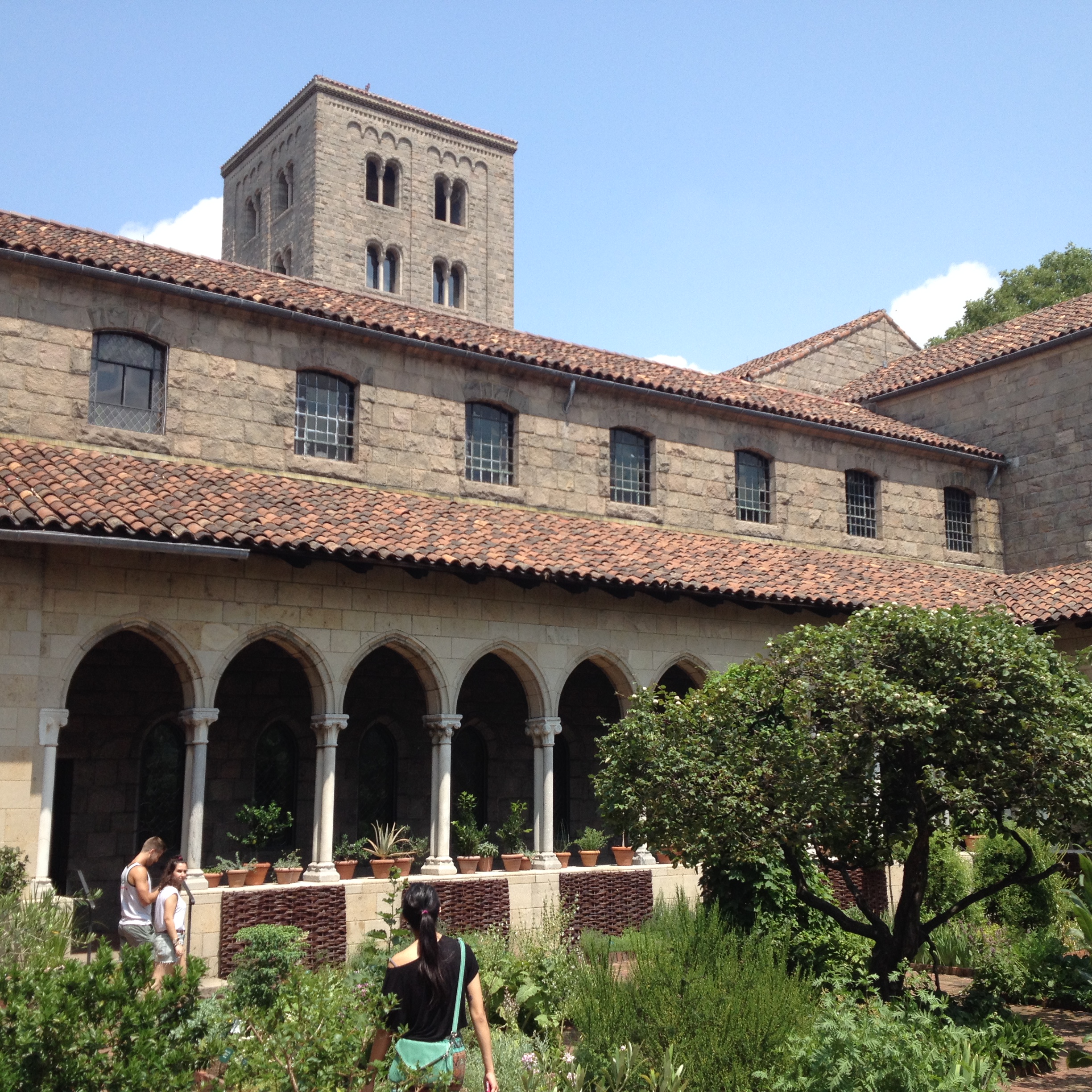
The Met Cloisters is a museum of medieval art and architecture. It sits on Washington Heights, a wooded, hilly outcrop that overlooks the Hudson River. Why, you might ask, would a Brit come to New York to view pieces of 13th Century France, Spain and Italy, when there are a thousand such treasures to choose from just across the Channel? A trite answer would be to point to the massive delays in Dover, the security lines at Heathrow and Gatwick, and the lurking presence of disturbed teenagers willing to murder priests in French churches.
But to know the real reason, you would need to visit The Cloisters for an afternoon after a few days of incessant traffic noise, of heat reflected from pavements and the constant efforts of guys trying to sell you tours of the city. It’s a respite.
The museum was built in the 1930s by John D Rockefeller Jr to house his collection of medieval artefacts – religious sculptures, windows, tapestries and devotional treasures. The actual buildings include a number of structures from monasteries reassembled and integrated into the buildings. There are four cloisters and two chapels, each housing a variety of works of art.
Within the cloisters are gardens that contain an approximation of the plants and flowers that were widely cultivated in medieval monasteries – as medicines, for food and for decoration. When we were there, many of them were in full flower – a real treat.

The museum has an aura of quiet that seems to radiate from the ancient stonework. It’s perhaps a commentary on the state of Europe at the time, that these works of art and pieces of crumbled monasteries were allowed to be exported from their countries of origin. Today, it’s inconceivable that a wealthy art collector could purchase a monastery or a priceless tapestry and transport them to the New World without cries of outrage at the despoliation of national heritage. A hundred years ago, people in high places cared less about such things.
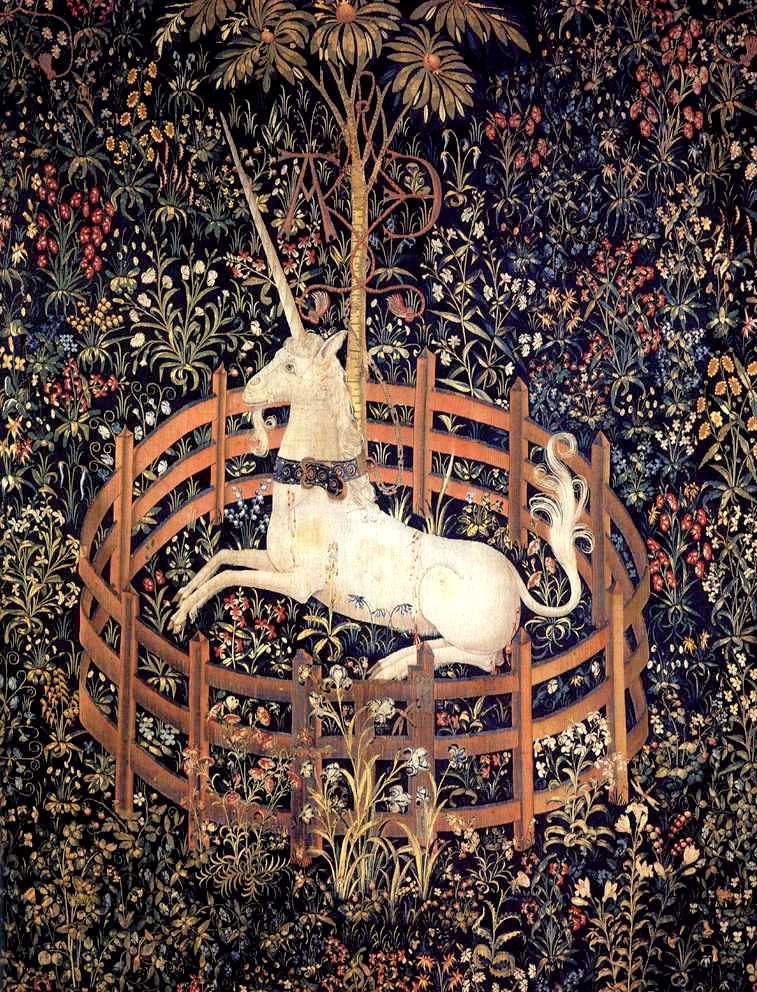
But as a result, you can go to The Cloisters and see art and architecture from across Western Europe, all in one place, and all in an afternoon. Great if you don’t have the time or the inclination to traipse across four or five European countries in search of examples in situ.
Because the museum is somewhat off the beaten track, it wasn’t crowded. It’s set in large grounds, and if you arrive by public transport you have a bit of a hike up hill and down dale to get there – another reason why it has the feel of a sanctuary. But not just a sanctuary for tourists. Seated around some of the exhibits were groups of children – black, white, Asian, Hispanic – enthralled by young group leaders talking about the meaning of the art. Kids from the city learning about unicorn mythology.
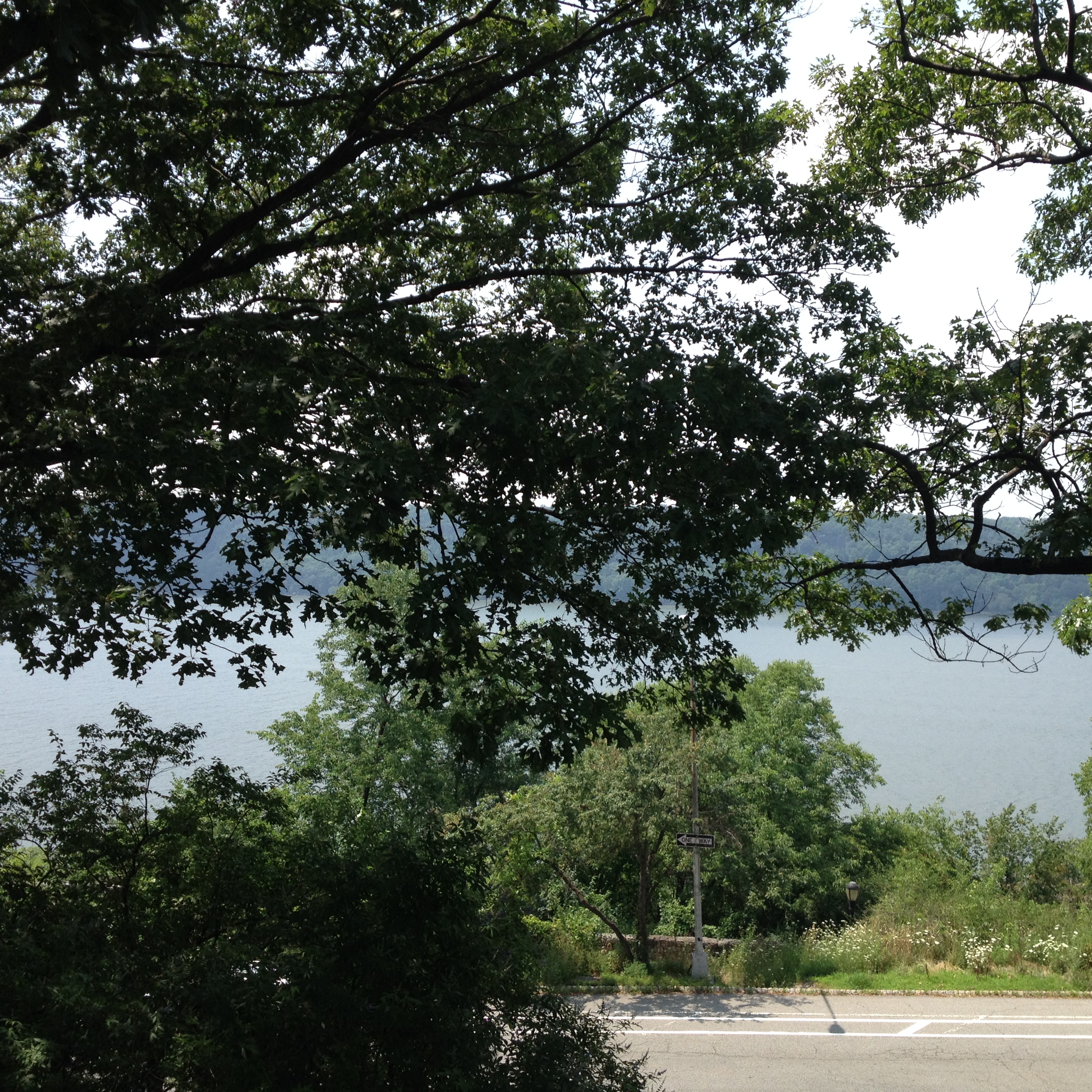
The Cloisters was a joy, especially if, like me, you tire of the streets and the endless crowds.
There are other aspects of New York that make the city always worth a visit – the food, the shops, the theatre and the fabulous skyline. We had a taste of all of these, as we have on previous visits. But it’s also nice to bring back memories of places that that are the antithesis of the busy city – a trip to New England and a few hours in an urban haven.
America is, after all, more than its cities, and its cities are more than its streets. Most important of all, America is more than its politics.
Summer 2016 is, it seems, a time for losing friends. As I write this, Britain is going through a traditional heatwave. A few days of intense heat, followed by thunder, lightning, hailstorms and floods. Tempers fray, neighbours fall out with each other. People adopt uncompromising positions about situations that could be resolved with a deep breath and a willingness to discuss rather than lash out. Rigid self-interest trumps compromise and willingness to listen to the other person’s point of view. Relationships that have pottered on for decades can be broken for ever.
The political issues in my country and in the US, from which I’ve just returned after a short visit, have lit forest fires of resentment and anger. I haven’t escaped the madness, as my post shortly after the EU Referendum result was announced shows. Parents are estranged from their children. Old friends shun each other because beliefs and values that remained off limits for the sake of their friendship have suddenly taken centre stage.
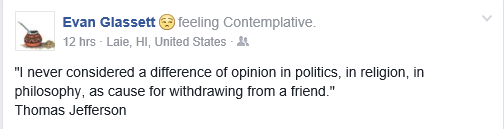
A Facebook friend posted a telling quotation to illustrate the point:
Followed by this conversation:
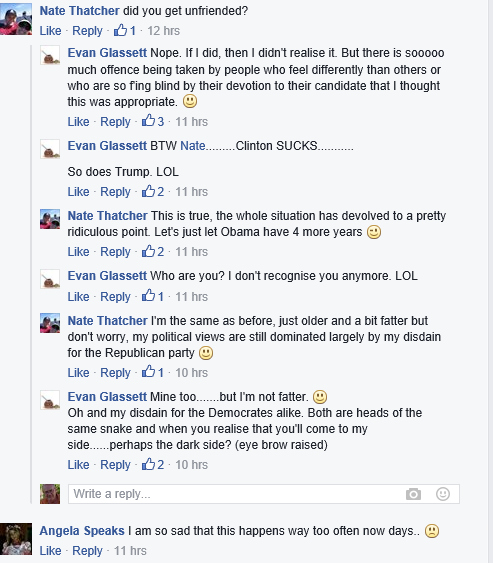
Does it have to be this way? Can we not accept differences any more? Is it impossible for a Remain voter to continue to like and respect a Leave voter? For a Trump supporter to have a beer and a barbecue with a Hillary fan?
I suppose much depends on the nature of the friendship. If it’s based on shared self-interest, and one party is revealed as having very different interests from another, the bond is relatively loose and can fracture easily. If it’s based on deep ties of love and family relationships, provided that the nature of the disagreement doesn’t threaten the interests of either party, it should surely be possible to move on.
My wife and I have just come back from a few days in New York, punctuated by a visit to a quiet seaside town in Rhode Island, where we had been invited by a friend to join a fishing trip. When you visit America in this high summer of political polarity, it’s almost impossible to avoid talking about the upcoming presidential elections, and in particular the candidates on offer. So the subject came up several times. We met supporters of both the candidates, as well as one or two who – like the writer of the Facebook post – couldn’t abide either of them.
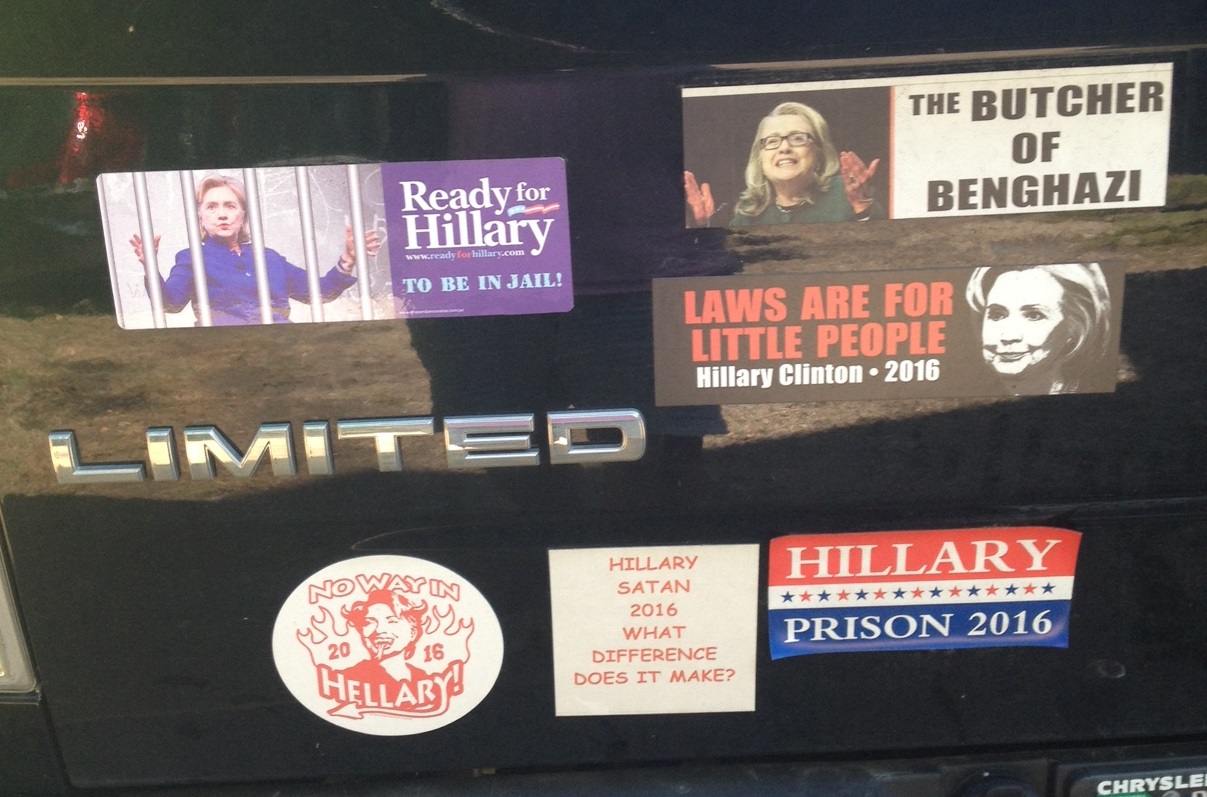
Bumper stickers – succinct, trenchant and often extreme – are a pervasive symbol of the great American tradition of free speech. They predate Twitter by many decades. The stickers in the photo above aren’t on the back of some redneck’s car. They belong to the friend who invited us to Rhode Island. He’s a driven, multi-talented urban high achiever. He’s generous with his friendship, and devoted to his wife and two young kids. And he’s proud of his stickers.
Confronted by the uncompromising certainty of the messages, I wasn’t about to take up cudgels on behalf of the presumptive Democrat nominee, even though I believe that she’s a far better option than the guy the Republicans nominated yesterday. After all, how would the average Brit react to an American’s considered opinion on Theresa May or Jeremy Corbyn?
I didn’t ask my friend if he is a Trump supporter. He spoke with such certainty about Clinton that I thought better of probing further. It’s his country after all. I did try to explain that we foreigners care about US politics because we have a stake in it. It isn’t just an American affair. We are all affected. Yet still, I felt I could only ask bland questions, not make statements. If I were to try a spot of Socratic dialogue, I worried that he might be offended. End of friendship – pass the hemlock.
In conversations with other people, I did ask about political allegiance.
I met a fisherman who blames all of America’s problems on immigrants and ethnic minorities. He claims that they get preferential treatment from the Federal government. He can’t get a loan to start a small business because he has a property with no mortgage. The banks tell him to take out a mortgage. Yet immigrants with nothing can get loans. How is this fair, he asked?
Will he vote for Trump? “You’re damned right I will”. Yet this was no swivel-eyed white supremacist. He was a charming guy. He sees himself as a decent, public-spirited person. He’s proud of the fact that he has raised hundreds of thousands of dollars for a child cancer charity. He will vote for Trump because Trump is different. He is deeply concerned about Mexican migrants infiltrating of America, taking American jobs. Yet I’d he found a Mexican in trouble, I suspect he would go out of his way to save him.
Clearly, he’s not alone. In Rhode Island, it was interesting to see so many houses with Trump placards in their yards. There were no Hillary placards on view, and a solitary poster supporting Bernie Sanders. This in a state where the governor and the two senators are Democrats. Observations from a small seaside town are hardly a reliable indicator of how the state will vote in the general election. But if you look at the fisherman’s views in the context of a five-minute snippet from a radio interview I heard with a Trump spokesman commenting on his leader’s vice-presidential selection, in which he repeated the phrase “jobs for Americans” five times, you can see that the message is getting home.
Back in New York, I met someone who is the polar opposite of the Rhode Island fisherman. He’s a liberal city dweller who deplores Trump and all his works. As well he might, because he’s a direct beneficiary of Obamacare. As someone who has derived his income from a number of sources over the years, he’s never been able to afford health insurance. Now he can, and thanks to his insurance he’s undergoing a series of tests to monitor a heart condition that he’s been aware of for years. No surprise that he will vote for the candidate who will preserve his new entitlement.
Those two conversations seemed to confirm the stereotypes propagated by political analysts: that Trump speaks for the angry, dispossessed white voters, and Hillary for the ethnic minorities and the liberal urban intelligentsia that voted for Obama.
Yet, as always, there are shades of grey. I heard opinions from a black guy who is in real estate. He was a supporter of Bill Clinton, but says that Hillary has lost the youth vote. He bemoaned his fifteen-year-old son’s lack of focus and ambition, and blamed the entitlement culture that provides support to fractured families and, in his view, doesn’t incentivise those that stick together. A Trump supporter? I didn’t go there, but it was pretty clear that he wasn’t enchanted by Hillary.
What to make of all this?
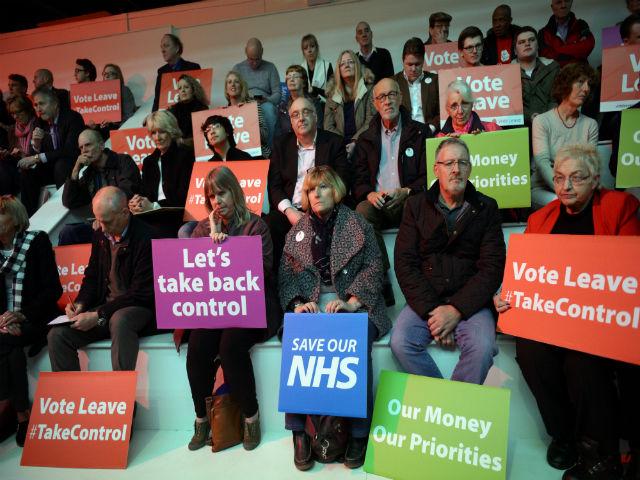
Perhaps a clue lies in a statement made the other day by a retired CIA agent that President Obama has “lost control of the Middle East”. The implication is that as a default, America should control a region consisting of sovereign nations. The statement very much chimes with Trump’s message: control our borders, build a wall, ban Muslims from entering the country. And it also chimes with the concerns of many of the UK’s Leave voters, as David Aaronovich wrote in yesterday’s London Times:
I was in Wakefield recently and spoke to some Leave voters. They were not closet racists, and immigration was not the main reason they voted to quit the EU. One thing they all said, unprompted, was that they wanted “to take back control”. I asked each of them what they meant by it. All but one said straightaway they didn’t know. “But why,” asked a couple of people, “should we do as the French and Spanish say?” There was not even the slightest perception that having it our way would mean the French and the Spanish having to do what we said. They weren’t British; they had no legitimate desires.
Take control. That phrase was far more powerful than I’d realised, but that doesn’t make it any less utopian. Consider, for example, what has been said this week about our immigration target. Back in 2010 David Cameron’s government said it would bring net migration down to “tens of thousands”. Instead, it brought it up to 330,000. Slightly more than half of this is non-EU migration and we have always theoretically had control over that. We could just have said “no” to any non-EU migrant. Instead we said “yes” to hundreds of thousands.
Uncertainty breeds fear. And fear produces a feeling of not being in control. And lack of control breeds uncertainty. A vicious circle.
In such times, when politicians admit that life is complicated, that there are no easy answers, they are accused of being indecisive. When they change their minds, they are accused of making U-turns – a mortal sin in modern politics.
This, it seems to me, is America today. Fearful. Longing to be told that there are solutions to intractable problems. Not necessarily believing what they are told, but willing to give the guy who comes up with the answers the opportunity to turn his message into reality.
How apt that the man who sells in the American way, with direct promises that provide simple answers, should be the person they turn to in the moment of their perceived crisis. No more Reds under the Bed, but terrorists down Main Street. Immigrants at your porch, taking your job. Donald Trump realises the fundamental truth of US politics. That people buy dreams. And nobody wants to hear about blood, sweat and tears. When the dreamers wake up, they have to deal with real life, just as they have always done. But it’s too late by then. The salesman has closed the deal.
Don’t tell a typical Trump supporter about statistics that show comparisons between deaths from terrorism in America since 9/11, and deaths from domestic gun crime. He won’t listen to you. And in a way he’d be right. Because it’s the impact of the relatively small number of deaths by terrorism that matters. Fear of terrorism has generated a massive cost in terms of increased security, surveillance, gun purchases and insurance premiums, to say nothing of time wasted sitting in four-hour queues at airports. Can ISIS be destroyed militarily, as Trump promises? Unlikely, because ISIS is an idea, not a state. And guns can’t kill ideas.
For those at the political poles, it’s not cool to embrace or even recognise ambiguity any more. To think grey. That’s why so many people hate Barack Obama. He’s the epitome of pragmatism. He, like every president before him, has learned that there are limits to his power. There are some things that he can’t control – such as Congress. His watchword is that “it’s complicated”. But people don’t want to hear that. Not in the US, in Britain, in France or in any other place riven by fear.
Back in the UK, there are many people who will not listen to arguments about immigration. There’s no point in suggesting that it enriches the country, that new blood invigorates and renews, that immigrants pay for themselves. They won’t believe you, because they see evidence to the contrary. They want their country back. No matter that the country they want is long gone, and can’t be revived except in a theme park or an Olympic opening ceremony.
This is an age of “I am right and you are wrong”. Of barricades. Of marines guarding New York train stations. Of solutions to every problem but answers to none of the questions. Of left-wing certainty. Of right-wing certainty. The stronger the opinions, the more they define the person who holds them, and the more likely that their views will influence their choice of friends, and cause them to reject the friendship of those who don’t see things their way.
We know there aren’t easy answers, yet we prefer to pretend there are. And when we vote, we vote for number one. Whatever altruism we show in our private lives, we fail to demonstrate in our support for politicians. What can Trump do for me? What can Brexit do for me? It’s only in extremis that we pull together, and discover that for all our differences, we are British, or American. Think of Britain in World War 2, and America after Pearl Harbour and 9/11. Yet as soon as the crisis passes, that unanimity and sense of common purpose unravels, and the blame game begins. We revert to self-interest. Thus it ever will be.
The crisis in America that is causing such conflict and polarity is not existential. Nor are is Britain’s woes. Compared with many nations, we are the lucky ones. Rather, our problems are the result of a slow erosion of national self-confidence, partly as a result of the 2008 financial crisis, partly because of globalisation, and partly because of the disruptive effect of technology. Jobs are changing and disappearing. In both countries there are sections of society that feel excluded and dispossessed. And those who are in the economic mainstream fear that they will be next. For many, life has become a game of musical chairs.
What’s to be done? Plenty – enough to fill a thousand posts. But for now, here are a few general observations:
First, we should stop expecting too much of our politicians. They are human. They make mistakes. They should be able to change their minds without being subjected to a barrage of abuse.
Second, we should appreciate and praise them when they get things right, even if we disagree with their political orientation. It’s telling that people only eulogise politicians when they leave office, as has been the case with David Cameron.
Third, we should accept that there is a limit to what a single nation can control, both within and beyond its borders – even one as large and powerful as the United States. Any politician who suggests otherwise is being disingenuous.
Fourth, we should learn to accept what we cannot change. I deplore Brexit, but it will happen, and I’m prepared to live with the consequences. To do otherwise would be counterproductive. “Yes we can” is fine as a rallying cry. But we need to recognise that there are limits to what we can achieve, and live with them. Or otherwise, we need to make different things happen that might achieve the same result.
Fifth, we should remember that idealists rarely make the most effective politicians. The most significant changes in both countries over the past fifty years – Lyndon Johnson’s civil rights programme and Margaret Thatcher’s reforms – were pushed through not by saints, but by cunning, ruthless and often nasty people who knew how to bully, manipulate and cajole.
And finally, we should understand that the problems facing both countries cannot be solved with quick fixes. They are fundamental, and in some cases will take a generation or more to solve. Perhaps they are insoluble.
As for friendship, I can’t see an end to the current phenomenon until we enter more settled times. I don’t see that happening any time soon. In fact I wouldn’t be at all surprised if in the near future we have to live through another catastrophe that causes unity through adversity before we return to laissez-faire. Ultimately though, the answer is in our hearts. And perhaps that’s where Thomas Jefferson comes in.
I lost a friend this week – or at least it looks that way. Not because of politics, religion or philosophy. Not because either of us is a bad person, but because my friend showed a side of himself that I’d never seen before, and which I didn’t like. This led me to conclude that he’s not the person I thought he was. Perhaps he would say the same of me. I’m very sad about the situation, but that’s how it can often be with friendships. Like reputations, you enjoy them for many years, and in a second they’re gone. Can former friends be reconciled? Of course, but it’s always different.
Something the Leavers, the Brexiteers, the Trump supporters and the Hillary fans need to think about before their animosity causes them to step over the brink into personal hostility.
So all the men have slunk away or been kicked into touch, and we are left with two women who would be Prime Minister of the UK. And the responsibility for selecting the person who will be tasked with for pulling us out of our worst crisis since the Second World War falls upon 160,000 members of the Conservative Party. In other words, a quarter of one percent of the population.
If I was going to characterise this tiny elite, I would describe them as latte-sipping, wine-imbibing, gin-and-tonic-swilling, dinner-party-hosting, middle-class, prosperous folk mostly concentrated in the South of England. Nigel Farage’s “decent people”, in other words. Many of them are relatively elderly. Some are deeply reactionary – those who haven’t defected to Farage’s party, that is.
Actually I haven’t really got a clue who these people are. A few hints are to be found in the attendees of the annual party conference, and in the interviews of ladies drinking coffee in country town high streets. Then there are the young ones who seem to grab most media attention – braying, bullying Tory Boys. Yes, I know I’m being unfair. There are good, sensible and sincere people in every party. But one thing’s for sure: the voters in this election are not my tribe. I have never voted Conservative.
As if the horror of Brexit was not enough, we now have to endure two months of non-stop coverage of an election in which I, and fifty-nine million other people with a stake in Britain’s future, have no say. In addition, we face the prospect of a Labour leadership contest in which Jeremy Corbyn – assuming he resigns and stands again – uses his supporters to kick sand in the faces of those beastly, Blair-loving MPs who dared who dared to defy the will of the proletariat. Enemies of the people. Well, enemies of the hundred and fifty thousand people who support Corbyn anyway.
Corbyn doesn’t speak for me, any more than do Theresa May or Andrea Leadsom. And in case you think that makes me a supporter of UKIP, who are also having a leadership contest, I would rather eat a cyanide sandwich than associate myself with that rabble.
I did consider paying my three pounds to become a member of the Labour party with the express intention of voting against Corbyn, or any other member of his benighted shadow cabinet. I’m sure he’s a decent and principled person, but he reminds me of the goat that was supposed to be dinner for a tiger in a Russian zoo, and ended up making friends with him – for a while. The epitome of someone not in control of his own destiny.
Anyway, I couldn’t sign up to such a ridiculous piece of political manipulation. I don’t want to be anybody’s fifth columnist. Since I can’t bring myself to support the Greens, the Liberal Democrats or the Monster Raving Loony Party, I guess that makes me truly non-aligned for the first time in my life.
So who would I vote for, should the political establishment be graceful enough to give me the opportunity? The Dalai Lama, perhaps. The Archbishop of Canterbury. Sir David Attenborough. Mary Beard. Brian Cox. David Beckham even. Yes, I know – this is getting ridiculous. But are they not “decent people”?
If you think I’m raving, you may be right. I do feel as though I’m in the middle of some awful nightmare. I just want to wake up and for all the nonsense that has transpired since June 24th to be revealed as a dream.
But it isn’t just a nightmare, is it? This country, my country, has suddenly turned into a cauldron of witch-hunters, liars, political ideologues and racist xenophobes. It’s as if something has polluted the water supply and driven us insane.
Yet away from the front pages of the newspapers, we’re soothed by the prozac of summer. The Welsh football team sweeps away our memories of the brain-frozen England team. Andy Murray is in a Wimbledon final again. And we’re all thinking about our holidays, even though just about anywhere we go beyond our borders will cost us at least 20% more than we thought it would two weeks ago. The dawn chorus still rings out at sunrise, and my friendly robin still comes to visit me in the morning.
Best perhaps, to focus on the eternals of life – love, hope and friendship. Our capacity for doing good. Tolerance, generosity and kindness. They may be in short supply at the moment. But sooner or later we’ll leave the asylum and settle down to a new normal.
I welcome the prospect of another woman prime minister. But to be honest, I don’t care if our next leader is man, woman or Klingon. Whoever gets the job needs to bring with them a large capacity for common sense. Right now we’ve landed on a ledge halfway down a cliff. Will she throw us down a rope or kick us, screaming, onto the rocks below?
Chilcot disturbs me. Not because of the rationale for the report, or even because of the conclusions.
What unsettles me is the reaction to it. It seems that the attention of the print and broadcast media, the politicians, the social media Greek chorus and the families of the armed forces personnel killed and injured are focused almost exclusively on one person: Tony Blair.
Basically, the dominant voices are of those who want him hung, drawn and quartered. Nothing else and no one else seems to matter as much. Not the planning (or lack of it). Not the inadequate Snatch Land Rovers. Not the disastrous decisions by the Coalition Provisional Authority that arguably created the conditions for the chaos that ensued. Not the fact that war would have taken place with or without Britain’s participation. Not the fact that if there was an arch perpetrator of the war of aggression against the saintly Saddam Hussain, it was one George W Bush.
Do we see calls for Bush to be taken to The Hague and tried for war crimes? Is he required to check with his lawyers when travelling abroad to make sure that a prosecutor in his host country is not liable to arrest him, as opinion suggests Blair will have to do?
Tony Blair, according to Chilcot and by his own assertion, did not lie to Parliament when making the case for the war. He claims that he – and his colleagues, it should be remembered – acted in the best interest of his country. Unfashionable as this opinion is, I accept that he didn’t lie, and I believe – unless the details of Chilcot can subsequently convince me otherwise – that he acted in good faith.
My belief in Blair’s motives doesn’t imply a lack of compassion for the bereaved relatives, as well as for the millions of Iraqis whose lives were destroyed by the conflict and its grievous consequences. I, and surely everyone else in Britain who has followed events in the Middle East before and after the 2003 war, feel deeply for them.
Perhaps now is not the time to make a few supplementary observations that might upset a few people. But here goes anyway.
First, the political motives of Jeremy Corbyn in condemning Blair seem pretty transparent to me. Tony Blair is at fault. The Labour MPs who voted with him in 2003 are at fault. I, Jeremy Corbyn, didn’t vote with him. Many of the current MPs who want to get rid of me as leader did vote with him. Ergo their views on the current leadership should be discounted. Ergo I should remain in place because I have been given a mandate by the party, not the MPs. And, by the way, the “Blairite faction” should be rooted out of the Labour Party by any means necessary, including intimidation by the membership and ultimately deselection. They bear the mark of Cain.
I’m sure Corbyn would not publicly condone intimidation, but I feel confident that he would privately acquiesce in it if achieves the end result he desires. Am I being overly cynical in suggesting that he – or at least his praetorian guard – sees Chilcot as his means to hang on to his office? Subsequent events will surely prove me right or wrong.
Second, there may be reasons for incompetence on the part of the politicians, generals and civil servants, but no excuses. Each owe a duty of care for our armed forces. But the fact is that those who serve as soldiers, sailors and airmen know when they sign up that their profession is riskier than others. To put it bluntly, they know that they can be killed or wounded in action. If we were to examine each and every conflict involving British troops from the Napoleonic Wars onwards, we would find equally reprehensible failures of political and military leadership, of logistics and of tactical command. There were no inquiries into the Somme, Arnhem, Suez and Helmand. Perhaps there should have been.
Today’s wars – at least those involving Western powers – are carried out in the full glare of media coverage that didn’t exist at the time, say, of the Somme. The seeming destruction of Blair’s reputation will surely make any Prime Minister extremely leery about proposing any kind of military action at least in the near future. They will be fearful of the consequences – not just of the war itself, but for their personal reputations.
All well and good, you might argue. That’s central plank of Chilcot – that these decisions should be rigorously justified and expertly planned. But the trouble about some wars fought in the face of aggression – be it real or implied – is that they are fought in reaction to events. Some events can be foreseen to the extent that the military can make contingency plans, which basically what NATO has been trying to do since 1949. But others come out of the blue. Stuff happens.
So my concern is that we don’t put measures in place to prevent another Iraq so stringent that they prevent us from reacting with military force to ANY situation. If our future is to become a nation of conscientious objectors, then that should be a matter of debate even more profound than the one that is currently taking place over EU membership. It raises the question of why we need to be a member of NATO, and why we need to maintain a military capable of doing anything beyond protecting our borders from small-scale, non-state incursions. It would also call into question the viability of our domestic defence industry, on which thousands of jobs depend. If we don’t buy the weapons we build, why should anyone else? And if we are no longer to be part of the European Union, will we be content to see ourselves not sheltered by any alliances than those motivated by trade?
If that’s the future we see for ourselves, fine. But we should walk towards it, not stumble upon it as an accidental consequence of Chilcot. I don’t see such an extreme outcome taking place. But then again I didn’t see the Leave decision coming either.
Finally, we should consider our faith – or otherwise – in our politicians. I find it ironic that our nation is consumed with the question of Tony Blair’s good faith at a time when lies and bad faith seem to have become common currency. I’m not just talking about my country, and the shameless embroidery that has been traded on both sides of the EU argument. In the United States, Donald Trump has made a career out of exaggeration and outright lies. Hillary Clinton’s reputation has taken a blow over her attempts to sex down the email furore.
In both countries there is a level of cynicism about politicians and mistrust of their motives that has not been seen since the end of the Second World War. The current crisis in confidence exceeds even Vietnam and Watergate on the US side. In Britain – at least in my memory – the only comparable event has been the miner’s strike and the three-day-week in 1973.
We should welcome the findings of the Chilcot Report, and the fact that it was commissioned in the first place. But the timing of its publication, by accident rather than design, means that there is yet another reason for us to be repelled by our political establishment. In the United States – perhaps because of an ethos of “my country right or wrong”, and perhaps because of the shock of 9/11 – the debate over Iraq has never been as damaging to George W Bush and his administration as it has been to Tony Blair and his colleagues.
Yet on both sides of the Atlantic, the cumulative effect of 9/11, Iraq, Afghanistan and the 2008 financial crisis has been to replace prostitution with politics in the public’s perception as the world’s oldest profession. And distrust of politicians goes hand-in-hand with lack of faith in our political institutions. Faith in the integrity and sovereignty of Parliament in the UK, and in the effectiveness of the checks and balances enshrined in the US constitution.
The ability of the British government to trigger Article 50 of the EU treaty by royal prerogative rather than by Act of Parliament threatens to create dangerous paralysis in the months to come. In the US, many argue that partisan Republicans in Congress have repeatedly blocked legislation and executive actions put forward by the president, not on the merits of the proposals, but out of a visceral hatred of the president himself.
What makes the current situation extremely dangerous is that if reforms to political systems are needed, how can they gain popular acceptance if the politicians who propose them are not to be trusted?
Chilcot adds yet another brick to the wall of scepticism that currently surrounds public life in my country. Commendable though the headline findings of the report seem to be, will it ultimately help to make Britain less governable? That would be an irony, considering the sorry state of Iraq following the war it was commissioned to examine.
Yesterday’s publication was not about the destruction of one man’s reputation. That happened long ago. It’s far bigger than Tony Blair. It’s also about what kind of a country we want to live in, and how we wish to be governed.
And those questions are what we, and our cousins in America, should be thinking very carefully about over the next few months. We live in interesting times.
OK, enough about Brexit for the time being. There are things happening in other parts of the world that are worth writing about. In Turkey, for example.
The trickle of reports about an attack on Istanbul’s airport turned into a torrent. The grainy videos showed a sudden flash, people running for safety. Lives ruined, fear redoubled, and the inevitable reaction. All so familiar to cities – Beirut, Baghdad, Dammam, Sana’a, London, Paris, Brussels, New York, Dhaka, Jakarta, Kabul – that have experienced such traumas, some many times over. Wait a few days to comment on an attack in one city, and attention has shifted to another. Last week Istanbul, this week, Baghdad and Madinah.
Istanbul – sitting on the edge of Asia, suffered its latest attack in a week when we on the Western extreme of Europe remembered the Somme, where more than twenty thousand British soldiers died on the first day of the offensive a hundred years ago.
At that time, Britain was at war with the predecessor of the Turkish state. The Ottoman Empire, even after a century of decline, still presided over a land mass comparable to that of the present-day European Union. In addition to the current territory of Turkey, most of the Arabian Peninsula, Syria, Palestine, Lebanon and Iraq answered to the Sultan and his government in Istanbul. Its population included Turks, Arabs, Circassians, Kurds and Armenians. Although the ruling class was Muslim, its people also embraced Christianity, Judaism and Zoroastrianism.
We British, along with our cousins in Australia and New Zealand, think mainly of Gallipoli when we remember the war against the Ottoman Empire. We might also recall Lawrence of Arabia, and his part in the Arab revolt against the Ottomans in the Hejaz, now the western half of Saudi Arabia.
Before the First World War, for most British people the Ottoman territories were “faraway countries of which we knew little.” Wealthy travellers might visit Istanbul and Anatolia. Merchants would travel to the Levant for business. Pilgrims and priests would go to Jerusalem. And the occasional explorer would venture forth to the interior of the Arabian Peninsula.
The Ottoman Empire, to the extent that it impinged on our conscious at all, was the “Sick Man of Europe”. Its Balkan dominions had fractured into a set of belligerent nation states – Serbia, Romania and Bulgaria. The assassination of the Archduke Franz Ferdinand of Austria by a Serbian nationalist was the catalyst for the outbreak of the First World War. The Ottomans entered the war on the side of Germany and Austria-Hungary. The consequences were fatal for the 400-year old empire.
My interest in Turkey and its Ottoman heritage comes from two directions. I spent nearly a decade in Jeddah, the commercial capital of the Hejaz. For many Jeddawis, Lawrence was not just a remote historical figure. The parents and grandparents of people with whom I rubbed shoulders knew him. Some fought with him. Remnants of the Hejaz Railway that the Bedouin tribesmen attacked are still there to be visited in the desert. Many in the region think of themselves as Hejazi first, and Saudi second.
I’m also deeply interested in the Byzantine Empire. The last remnant of the eastern Roman Empire, Constantinople, fell to the Ottomans in 1453. The city we now know as Istanbul entrances me. Not so much because of the Byzantine traces – the land walls, Aya Sofia and other buildings from the period – but because of what came after – Topkapi, The Blue Mosque, the cafes, the markets, the bridges, the wooden palaces along the Bosporus.
I love the food, the music and the coffee of Turkey. I love the works of Orhan Pamuk and Elif Shafak. That doesn’t make me an apologist for fratricidal sultans, the Armenian massacres and the penchant of the present government for locking up writers. But it does mean that I look on the tribulations of today’s Turks with sympathy, not with contempt and condescension. And I don’t believe that people always get the governments they deserve. How could I, living in Brexit Britain?
Aside from the tragedy in Istanbul, I have two other reasons for thinking about Turkey at the moment.
A couple of weeks ago I went to a production of Terence Rattigan’s Ross at the Chichester Festival Theatre. Joseph Fiennes was superb in the role of the tortured T.E. Lawrence as he sought anonymity by enlisting in the lower ranks of the Royal Air Force under the alias of Aircraftman Ross. The play looked back at his career in the Hejaz with the Arab revolt against the Ottomans in the First World War. Whether Rattigan accurately captured the complex character of the hero with any accuracy is debatable. There was a post-show chat between audience and cast to which one or two people contributed who clearly knew a lot about Lawrence. One of them, for example, quoted a relative who served with him in the RAF, and who was convinced that he was not, as some biographers contend, gay. The discussion was almost as interesting as the play itself.
Overall, it was a compelling production, well-acted and directed. If I had a reservation, it was the portrayal of the Turkish protagonists. In the way that they were acted, they came over almost as cartoon baddies – sadistic and supercilious. Lines that could have been delivered otherwise were played for laughs. The effect made the production somewhat lopsided. The British – Lawrence, Allenby and Storrs – and Auda abu Tayi, the Bedouin tribal leader (played by Anthony Quinn in the movie Lawrence of Arabia) were believable. The Turkish governor wasn’t.
I suppose that was understandable. Rattigan wrote the play in 1960. It was a time when Britain’s other arch-enemy, the Germans, rarely had a sympathetic portrayal in the numerous war films that celebrated the defeat of Nazism. Good Germans, in the estimation of the dramatists, and so perhaps good Turks, were in short supply.
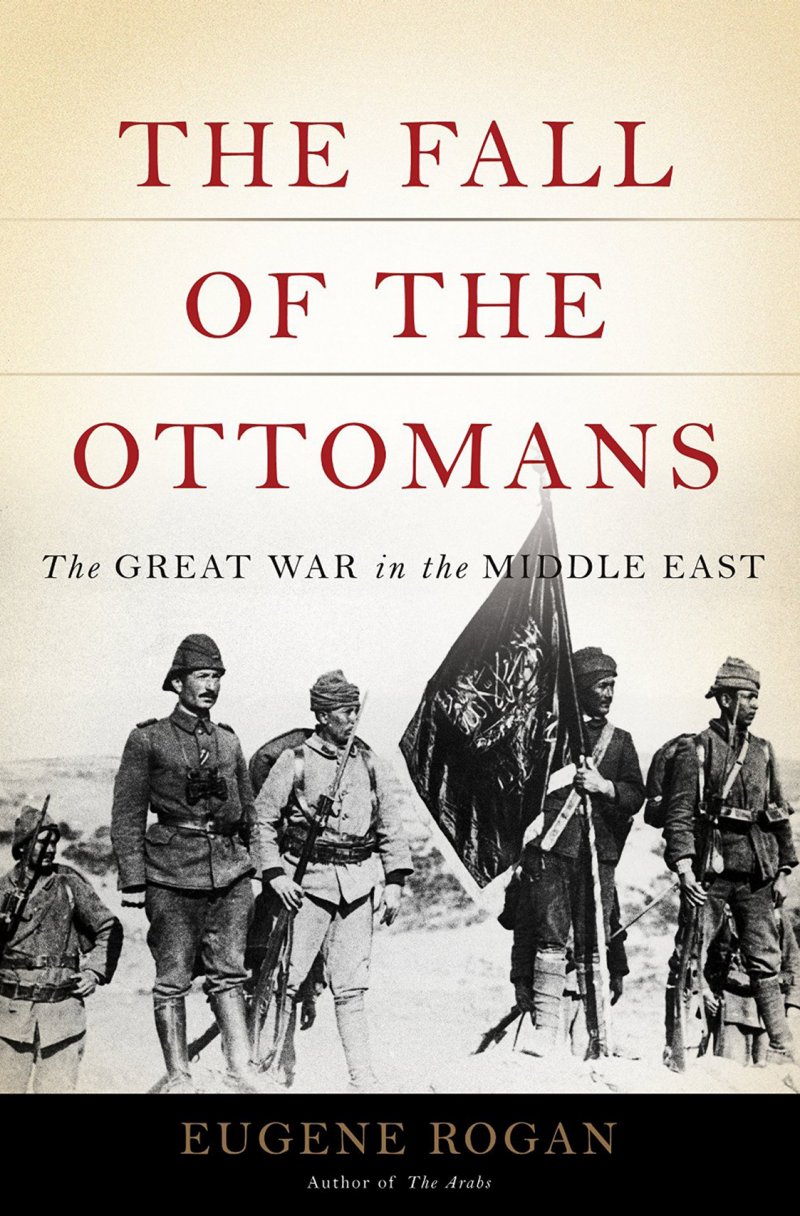
An antidote to Rattigan’s caricature portrayal of the Ottomans comes from The Fall of the Ottomans, Eugene Rogan’s history of the First World War in the Middle East. Historians tend to take a more balanced view of protagonists in major conflicts – or at least they do these days.
The Great War was as much a tragedy for the people of the Ottoman Empire as it was for the Western combatants. Famine in Lebanon, slaughter at Gallipoli and the death of between 800,000 and 1.5 million Armenians (depending on who you listen to) were major events. But throughout the period, there were other smaller but no less vicious encounters as the Ottomans sought to defend their territory on several fronts simultaneously.
Rogan is excellent on the doomed Gallipoli campaign, and on the woes of the Anglo-Indian expeditionary force in Mesopotamia that culminated in the British defeat at Kut. Both campaigns resulted from a perception that the Ottomans were the weak link in the Central Alliance, and that to take them out of the war would bring the overall conflict to an early close. Those who advocated the operations, Winston Churchill among them, were gravely disappointed. The Ottomans with commanders and logistic support from Germany, fought with great courage and inflicted damaging defeats on the British-led expeditionary forces.
On the Armenian massacres, he writes at some length not only about the event but also about the motivation. Armenian Christians had long agitated for a level of autonomy in the east of the Empire. When the fighting with Russia broke out, some Armenians joined their fellow-Christians and took up arms against the Sultan. The city of Van briefly rose in rebellion. It was fought over by the Russians, the Ottomans and the rebels, and changed hands several times. When the Ottomans finally regained the city, the triumvirate of Young Turks who ruled the Empire decided that the Armenians were unreliable subjects and needed to be dealt with.
Across the Empire, Armenians were sent on forced marches out of their main centres of population. Many died of thirst and starvation. Many, according to reports at the time, were killed by their captors. What was interesting to me was that despite the trenchant denial by the modern Turkish state that the Armenians were the victims of genocide, there were many accounts of what took place. Genocide and holocausts are emotive words. Successive Turkish governments have insisted that they were victims of war rather than of a deliberate act of extermination. Be that as it may, hundreds of thousands perished, and not at the hands of the Empire’s enemies.
Yet after the war, as Rogan points out, the victorious allies encouraged the new Ottoman government to put those responsible for the fate of the Armenians on trial before military tribunals. As a result, the three primary Young Turk instigators, who escaped to Germany, were sentenced to death in absentia. A small number of lesser perpetrators were hanged. The 1946 Nuremberg trials were not the first war crimes prosecutions of the 20th Century.
Another aspect that is little known by those who, like me, are not deeply familiar with the war in the Middle East is that the Ottoman leaders prevailed upon the Sultan, in his role as caliph, to declare jihad against the enemy powers. Throughout the war, the British were nervous at the effect the pronouncement might have on the loyalty of their Muslim Indian troops. Likewise, the French were concerned about their colonial forces from North Africa. In the event, there were desertions to the Ottoman side, but not in numbers that made a material difference to the outcome of the war. A reminder though, that the use of jihad in modern times didn’t start with Afghanistan in the 1980s.
As for the Arab revolt in the Hejaz, and Allenby’s campaign in Palestine and Syria, T.E. Lawrence takes his place in the narrative as an influential figure, but not as the principal instigator around which the legend of Lawrence of Arabia was built. Although the British encouraged and funded the revolt, it didn’t gain universal acceptance in the Arab world, let alone among the wider Muslim constituency. We look on the Middle East today primarily through the lens of faith – as a Muslim region with embattled pockets of Christians, and with a Judaic state sitting defiantly in the centre. Christian communities at the beginning of the 20th century were far larger, and many leading nationalists were driven more by ethnic than by religious considerations. It took Allenby’s army to tip the balance. His capture of Jerusalem marked the beginning of the end for the Ottomans in the region.
As part of the post-war settlement, the Empire was partitioned. The British and the French acted according to the notorious Sykes-Picot agreement and established their spheres of influence over the Levant, Palestine and Iraq. The British occupied Palestine and the Jewish immigration – sanctioned by the Balfour Declaration of 1917 – began. Thus the seeds of all the subsequent conflict in the Middle East were sown.
In 1923, Mustafa Kemal, the victor of Gallipoli, overthrew the Sultan, and Turkey became a republic. Kemal, now given the title Ataturk (father of the Turks), became its first president. Ataturk abolished the symbols of the Ottoman Empire – among them the fez and the veil. He disbanded the religious orders, banned Arabic script in the education system and established a secular state. He is so revered in Turkey that anyone insulting his memory is still liable to prosecution.
Rogan’s narrative ends with the abdication of the last Ottoman sultan. His account of the war in the Middle East is a heart-breaking story of political duplicity, civilian suffering, remorseless fighting, courage on all sides of the conflict. Hopes of a unified Arab Kingdom that fuelled the revolt in the Hejaz were dashed. Another kingdom, Saudi Arabia, emerged in the Arabian Peninsula. The sons of Sharif Hussein, the figurehead of the revolt, took their places as Kings of Jordan and Iraq. When finally free of Anglo-French domination, Egypt, Iraq and Syria led the surge of Arab nationalist sentiment, and the descendants of Ibn Saud, enriched by the mineral wealth that lay beneath the desert, consolidated their power.
The Fall of the Ottomans doesn’t explain everything that has happened in the region since the Great War. And the Ottoman Empire has a rich history that is well worth exploring if you want to understand why the Middle East has come to be as it is today. But he’s produced a clear narrative of a conflict overshadowed in Western European memory by the horror of the trenches.
Few people in Iraq are likely to remember the Somme. But they will remember Kut, the fall of Baghdad, their Hashemite king and the Gallipoli campaign in which their conscripts died alongside Turkish comrades. And, thanks in part to ISIS, they especially remember the Sykes-Picot Agreement.
Which takes us back to those who died, it appears, at the hand of ISIS in Ataturk International Airport, the gateway named after the hero of Gallipoli. As an admirer of Turkey and its rich heritage, I grieve for their people, just as I grieve for the dead of Baghdad, of Palestine, of Lebanon and Syria. The people of the former Ottoman Empire have paid dearly in blood over the past century for the accident of their geography – for their civilisation, their beliefs, their culture and their rich and diverse heritage.
The successors of the Ottomans are a proud and sometimes prickly people. The people of Istanbul are, Orhan Pamuk contends, suffused with melancholy – perhaps for good reason. But they are also kind, warm and creative. Turks don’t deserve to be demonised. Especially they don’t deserve to be used as a political football by the xenophobes in my country who have stoked up fears of a flood of Turkish immigration. In short, they deserve a break.
Over the past few of days, there have been so many references to the Wars of the Roses, Game of Thrones and House of Cards that you could be forgiven for thinking that the plotting politicians engineered Brexit on their own. They didn’t. It was the voters. And even if the vote had gone the other way by a similar margin, we would still be talking about a divided Britain. So if we can somehow look beyond the flashing of knives, perhaps we should be focused on why these divisions built up in the first place. Or, to be more specific, why the electorate delivered such a slap in the face of our political elite. We think we know. But do we?
On Brexit day, a friend posted his reaction on Facebook:
Today’s events represent significant change. But from the excellent foundations of the original treaties rebuilding post war Europe, the current EU structures have become an unaccountable, bloated and very expensive bureaucratic machine, paying decreasing attention to the individual wishes of each sovereign nation population. The U.K. Population on our tiny islands has never shirked in the past from taking on the seemingly impossible and I personally think, that in time when current histrionics calm down and a revised EU structure is built, that once again Great Britain will have led the way.
Elegantly put, and certainly not the words of a disadvantaged Northerner, a neo-Nazi or a disgruntled pensioner pining for the days when the only foreigners settling in their country were bus drivers from Barbados, factory workers from Nigeria and Punjabis who opened corner shops and operated post offices.
I do, however, find it interesting that he referred to the EU as paying decreasing attention to the individual wishes of its member states. His statement reflects a common perception of the EU as a society of unelected bureaucrats busy interfering in citizens’ lives with unnecessary red tape on stuff like the shape of bananas.
The accusation about ignoring the individual wishes of individual populations is inevitable in a project that sees “one size fits all” as a virtue. I agree with him that there should be limits to integration and commonality. After all, “Europe” is a land mass, not a collection of entities with identical cultures, languages and heritage. Any fool can tell you that that a Romanian is unlikely to think and act like a German, nor a Finn like an Italian. What’s more, that diversity should be cherished, not suppressed.
The same applies to the United Kingdom, even if we British do speak the same language. As a nation, we are highly diverse, yet we have a common system of democracy that includes local and national elected bodies. We have media that reflect virtually all shades of political opinion. We have opinion pollsters coming out of our ears.
But despite the myriad ways for the thoughts of individual voters to percolate up to the political decision makers, the Leave vote came as a surprise, even to leading campaigners such as Michael Gove and Nigel Farage. How could our political classes have been so blind to the strength of popular concern over immigration and national identity? Was it the arrogance of those who had been in power too long, was it impotence in the face of events and conditions beyond their control, or did our leaders find themselves in a doctrinaire bubble in which they believed that their rhetoric about short-term pain and long-term gain was self-evident? Did they lose touch, or were they never in touch?
Whatever the answer – and it was almost certainly a combination of all three – going forward we must listen and act if the United Kingdom is not to be permanently divided in the near future.
I’m not sure even now that we truly know the mind of our population. Was immigration really the key issue? Or was it economic deprivation? Or disempowerment? A sense of alienation between North and South? Was it “I want my country back”?
If the primary reason was a sense of abandonment among communities devastated by the loss of their traditional sources of employment – mining, manufacturing, fishing, ship building – then why did Scotland vote Remain and the North of England vote Leave? Both regions have communities badly affected by globalisation. Did a higher level of immigration into the North of England tip the balance?
Either we don’t know, or we don’t trust the interpretation of the data we have by those whose who we believe are politically motivated. Not just by politicians, but by media outlets, their editors and owners.
Our national issues are generally known. Otherwise they wouldn’t be exploited by unscrupulous rabble-rousers like Nigel Farage. But what we clearly didn’t understand was the strength of feeling about them. And I suggest that no opinion polls using relatively tiny samples are likely to be able to tell us what people in one town think as opposed to voters in another.
Perhaps it’s time that we created an independent and impartial National Opinion Bureau that seeks to poll the entire population at regular intervals. We already have an Office for National Statistics. We carry out national censuses every decade or so. If the private opinion pollsters, the national politicians and the local authorities can’t provide a reliable guide to concerns of the electorate, is it such a daft idea to set up a mechanism that is capable of accurately reflecting our thinking as a nation on, say, an annual basis?
You might think that a National Opinion Bureau sounds rather Stalinist, open to manipulation and yet another expensive layer of bureaucracy. It needn’t be so. The data would be valuable not only to government but to business. It should be independently audited and publicly available. It could use existing delivery methods – local authorities, the electoral register and online polling.
If the government were to baulk at the cost of setting it up, it could subcontract the job to one or more of the opinion poll companies working to a common specification. The important feature would be that the data collected would be far more granular than is currently collected privately. It could reach out to towns and communities. It could provide a regular dashboard on quality of life and significant issues affecting local communities. It could register strength of feeling about a number of key indicators – crime, immigration, employment, public services and economic well-being. And the results would be available for everybody to see, unvarnished by political spin.
I’m not suggesting that we should govern by league tables and punish low-performing authorities and government departments. But I do think we could use a barometer of national opinion. It would not necessarily be a guide to action, but would certainly identify perception in an objective manner. It would not replace opinion polls, because it would not ask political questions. And besides, it would be impractical to carry out surveys that reach the majority of the population more often than once a year.
If Peterborough was highly concerned about immigration, and Derby less so, it would give local and national government the opportunity to find out why. And if satisfaction with local services was high in rural Wales, but less so in Cardiff and Swansea, then that could be the catalyst for creative solutions.
It’s possible that readers who work in government, as local councillors or in social services might say “we don’t need this. We know what the issues are. The problem is that national government isn’t listening.” In which case I would reply that perhaps such a system would force government to listen, because the data would attract plenty of media attention.
The key to the success of a National Opinion Bureau would be buy-in. To achieve that you would need follow-up based on results, action if needed, and at the very least improved communications. We may not be able to convince the elderly that they can have their country back, communities concerned about immigration that there is an instant fix, or areas of high unemployment that massive inward investment is just around the corner. But if we can convince them that they are at least being listened to, and that their feedback is reflected in national and local policy, then that would go a long way towards healing our current divisions.
The concept of Gross National Happiness has been bandied about in various countries and in the United Nations ever since the King of Bhutan first coined the phrase in 1972. Measurement models involving seven-hour interviews clearly wouldn’t work. But surely we in the still-United Kingdom have the imagination and expertise to come up with a simple method of taking the national temperature in a manner that would produce meaningful and useful results. And if we succeeded, we would become the first major nation to do so.
It could be a vehicle for short-term political opportunism, but if used properly it could also be a valuable aid to long-term social and economic planning.
Either way, you could argue that the Brexit surprise results from a failure to communicate. And communications means listening as well as broadcasting. We need to start listening now, even if we don’t like what we hear.

The referendum result, as we are told by those elements in the media that favoured Remain, is advisory. Meaning that it is not binding and has no force in law. Which means that Parliament can refuse to play along. Would it? Should it? There’s an interesting discussion on the constitutional issues in The Independent here.
Even though, as Michael Heseltine said shortly after the result, a majority of around 350 MPs opposed Brexit, it would take a great deal of courage on the part of individual members to put their jobs at risk by defying the “will of the people”.
Personally, I would like to have seen a different process.
Across the Atlantic, the founding fathers of the USA imposed a requirement that a change in the constitution requires a vote of at least two thirds of both houses of Congress to carry. I find it hard to accept that the change delivered by Brexit is of less importance than the 23 amendments, which include the abolition of slavery.
There is an interesting additional requirement in the US process. If Congress passes a constitutional amendment, at least three quarters of the member states must then approve it. If we had taken a leaf out of America’s book, we might additionally have prescribed that Brexit would not take place if more than one of the four constituent parts of the United Kingdom – England, Wales, Scotland and Northern Ireland – voted against it. The last two voted Remain. Therefore Brexit would have been scuppered.
It’s all very well to say that David Cameron should never have allowed the referendum to be determined by a simple majority. The fact is that he didn’t. But would it now be against the spirit of our democracy for Parliament to say “yes, we know a majority voted in favour of Brexit. But you, the electorate, entrusted us with the power to pass laws that are in the country’s best interest. We happen to believe, all things considered and in the light of subsequent developments, that Brexit is contrary to the nation’s interest”?
There is an interesting parallel in the Labour leadership crisis. 172 out of 229 Labour MPs have publicly expressed no confidence in Jeremy Corbyn’s leadership. They must know that he might well win a new leadership race, and that their own jobs might therefore be at risk at the hands of his vengeful supporters. Yet they are prepared to defy those supporters who overwhelmingly elected him last year.
So the question is, should we let our politicians act in what they think is the best interest of their party, as in the case of Labour, and their nation, in the case of Brexit? Or should they slavishly follow the wishes of the electorate even if they know that the consequences will be disastrous?
There will most likely be a new Labour leadership contest. If the new leaders of the two main parties are sufficiently far-sighted, they will debate the Brexit question at their autumn party conferences, or if necessary, at emergency conferences called as soon as they are in place. They should then call for a Leave/Remain resolution on a free vote in the House of Commons.
If Parliament rejects Brexit, the Prime Minister should call an immediate general election. Party positions should have been established at the conferences, but candidates should be free to state their own views on Brexit in the election.
The newly-elected parliament should then vote definitively on the issue.
Impractical? Complicated? Unacceptable because of the lengthy period of uncertainty involved? Maybe. But such a process would restore the primacy of Parliament and defuse objections that MPs voting against Brexit were ignoring the will of the voters.
And if the new leaders are in place by mid-September, an election could be held by mid-October, at which point Article 50 of the EU treaty could be invoked, or otherwise Brexit put to bed. Is a delay of twelve to fourteen weeks too much to ask before we take the final step? I think not.
Sharper minds than mine are working on ways to force a re-think. I hope they succeed.
Whichever way it goes, and especially if Brexit falls over, it’s equally important is that we address the concerns of the 37% of the electorate who voted Leave.
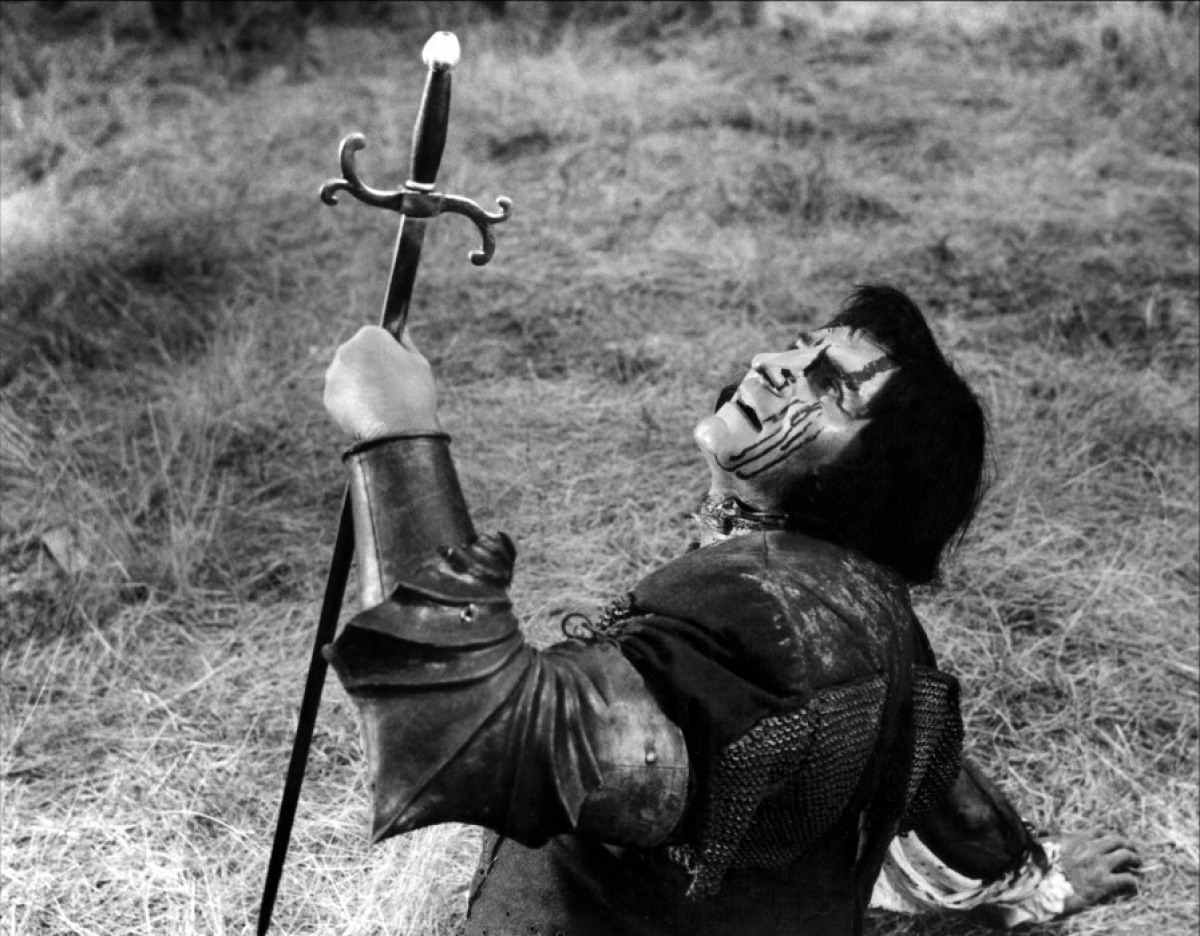
Laurence Olivier as Richard III – “My Kingdom for a horse!”
The referendum is over. Brexit has yet to begin. Yet Britain feels like an entirely different country this week. It’s as if a good proportion of us have taken a large swig of Trump kool-aid. The Labour Party is eating itself. Nigel Farage is hurling bar-room insults at fellow members of the European Parliament. And racists are placing poisonous literature in the hands of innocents.
How many of those who voted for Leave would happily turn back the clock to Wednesday so that they could place their mark elsewhere? A good few, I suspect. How many of the EU politicians and functionaries who so contemptuously brushed David Cameron aside in February are now regretting not being more accommodating? More than a few, even if they might not care to admit it.
As to the future, very few questions posed before the vote have so far been answered. The uneasy coalitions on both sides have disbanded, and it’s back to politics as usual, but with a nasty, vindictive edge.
Sitting in my comfortable suburban perch – my area voted 60-40 in favour of Remain, by the way – I feel like a vulture, waiting to pick at the broken dreams of the brave new Brexit world. But that would hardly be a satisfying meal. What matters now is where we go from here.
In the couple of days since I got home from France (see my previous post), I’ve talked to quite a few people, read plenty in the online and print media and thought of little else. For me, the near-term future boils down to the resolution of a few six key issues that I intend to discuss over the next few posts.
The first issue is the leadership gap.
David Cameron is on his way. Jeremy Corbyn, whether he stays or goes, is an electoral liability. Where are the big beasts waiting to step into the breach? I don’t see any beasts out there. A few dogs maybe. Boris Johnson – lovable, sly, unprincipled. Theresa May – icy, Margaret Thatcher’s mini-me. George Osborne, he of the killer smirk – damaged goods, even if history proves him right in his dire predictions. As for the rest of the senior Tories, none of them have the stature or the credibility of the Clarkes, Heseltines and Macleods of yesteryear.
On the Labour side, there’s no Gordon Brown, brooding in the shadows. The other big boys have gone – Blunkett, Milburn, Miliband the First. Of the current crop, Hilary Benn and the current front-runner, Angela Eagle, are probably the most electorally viable. Then there’s John MacDonnell, Labour’s very own Francis Urquhart, waiting in the wings, knife in hand. The rest of the potential candidates resemble the England football team’s forward line – good looking but as yet unproven when the chips are down. The reliable midfielder, Alan Johnson, has unfortunately retired from the team.
Not necessary a dearth of talent on either side, but do they have the experience to lead us through what is likely to be a bumpy ride over the next couple of years? Equally importantly, do they have the ability slap down Nigel Farage, who, back in the day when Britain’s public schools were famed for their robust put-downs, would have been referred to as a bumptious little squit. And do they have the qualities needed to hold the country together in the face of secessionist pressure from Nicola Sturgeon and renewed polarisation in Northern Ireland?
It’s no surprise that David Cameron didn’t fancy the job of dealing with the self-inflicted mess arising out a contest that never should have been imposed on us. But one thought does occur. Is he planning to hang around for a while in the hope that his party calls him back to “save the nation”?
And as for Labour, will we see David Miliband returning from exile at some stage to try and take the crown he must have felt should have been his when his little brother outmanoeuvred him? That might depend on whether the crown turns out to be worth wearing.
If I was a Conservative, I would probably go for Theresa May, who has managed to get through the ghastly referendum process without making too many more enemies than she had before. She also has a reputation for being tough yet pragmatic, which would serve her well in negotiations with the EU. On the Labour side, the parliamentary party seems to have settled on Angela Eagle as the alternative to Corbyn, at least for the time being. Longer term, I would say that Hilary Benn or David Miliband would have the best chance of restoring the party’s fortunes. Assuming, of course, that Labour as we know it still exists as a coherent whole by the time the Brexit negotiations have been concluded.
Whatever happens, given the mud that is bound to be slung in all directions for the foreseeable future, politics doesn’t look like a very attractive career choice right now for the ambitious young hopefuls working their way through a system that seems pretty much shattered. How many of them will change direction and seek refuge with Goldman Sachs? That would perhaps be the most significant fallout from the current debacle.
We need decent, honest and principled politicians. People like poor Jo Cox. And no doubt there are still some around on all sides of the House of Commons. But if you were faced with abuse on your doorstep, violence every time you made yourself available to your constituents, and death threats when you expressed concern about your leader, would you want to be a British MP in 2016?
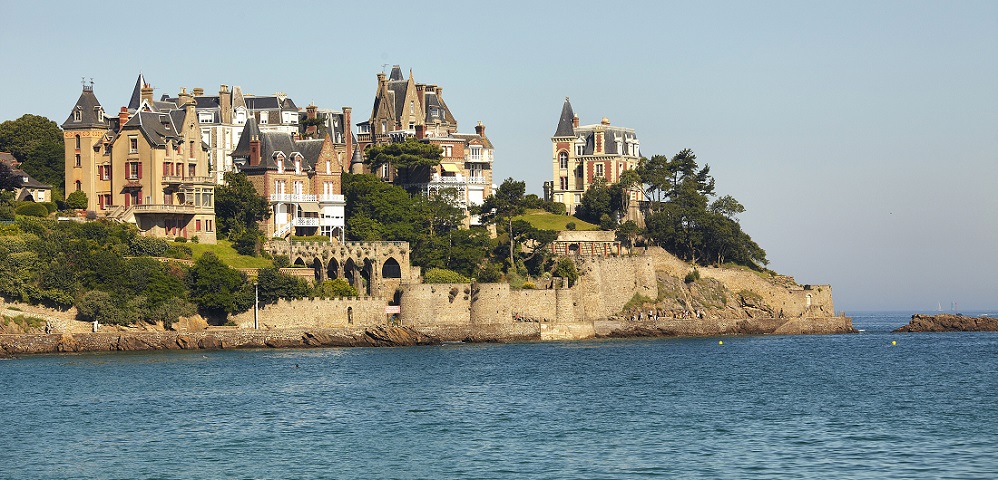
Dinard, Brittany
Whatever I might have said or done on Friday 24th July, I plead not guilty on the grounds of temporary insanity.
Last Wednesday, I was among a bunch of friends who headed happily to France for a few days of golf. It was an annual trip whose date was set many months in advance, long before Britain’s EU referendum was anything but a campaign promise waiting to be fulfilled.
Of those who met on the Portsmouth car ferry for the Wednesday night sailing to Saint Malo, the vast majority were Remain voters. There was one carload that was firmly on the Leave side.
Dinard, where we stayed, is where the Welsh football team have their headquarters. Welsh dragons were in abundance – flags flying from hotels and signs welcoming Gareth Bale and his teammates to the pretty little Breton town that has been their home since the tournament began. The welcome seemed all the warmer because the town was playing host to Celtic cousins.
After a rain-sodden round of golf and a raucous evening full of the usual banter, we retired for the night. Brexit figured in the conversation, but the consensus seemed to be that Remain would win the day, just as it was back home.
The next morning, I woke early to check the results. And that’s when I realised that a big stick had poked the British anthill. The colony had gone mad. And I went mad.
I can’t remember any British political event that has made me as angry as the Brexit vote. At breakfast I let out a stream of loud invective at nobody in particular about the idiots who had created this chaos. Not just those who had voted for Leave, but at the politicians who allowed the whole exercise to happen. I’ve written about this already, so I’m not going to repeat myself now.
But what shocked me more than anything else was the fury – you could almost call it hatred – I felt against all the people I knew, including the occupants of the Brexit car, who had been prepared to push my country off the parapet into an utterly uncertain and unquantifiable future on the say-so of a motley bunch of liars, demagogues and self-servers.
I watched Nigel Farage intoning about a victory for “decent people”, popping up onto his toes to make a point as small men do. I looked at the faces of his supporters, frowns etched on their faces, eyes gleaming with righteous anger, and saw thugs and gauleiters – Hess, Rohm, and Goebbels risen again.
I felt as though people I had considered friends and in whose company I have happily spent time over many years had let me down. They were not the people I thought I knew. They were longer friends. I wanted to say “OK, you gullible fools. You have what you wanted. I hope you’re satisfied. Now watch as the promises you believed in turn to dust.”
Walking among the French, the Bretons, the Europeans in this little seaside town, I wanted to say – as many people subsequently did via the social media – how ashamed I was of my country. How ashamed I was that my generation, the ones who have the least time left, have imposed their will upon those who the most time. And above all how disgusted I was that so many people had voted for the basest of reasons – racism, xenophobia, small-minded parochialism.
I apologized to the young guy at the hotel reception who voiced disappointment because he had hoped to be able to come to England so that he could gain work experience.
For the rest of the day I was a bore with a sore head. Burning with an anger that wouldn’t go away. But I was equally distressed at my own reaction. I thought to myself “this isn’t me. I’m a rational person. Yes, I get angry from time to time, but my anger quickly passes. I’m not fanatical about anything. I believe in discourse, in the power of logic, in respecting the other person’s point of view”.
Suddenly, for the first time in my life, I felt like a member of a threatened tribe, ready to lash out at those who didn’t see things my way, who wanted to change my life without my consent. In that day of rage, I had become the kind of extremist I have despised and – from a distance – pitied throughout my adult life.
I had become the kind of fanatic that likes to say “my way or the highway”.
I had been writing for months about Donald Trump, and the polarization of America that he has exploited. About ISIS, and the uncompromising ideology from which it sprang. I had been lamenting sectarianism and right-wing extremism.
Yet suddenly I found myself unwilling to accept any argument in favour of Brexit. I was right. They were wrong. And that shocked me as much as the result itself.
By Saturday, the temporary insanity had faded. I didn’t end up murdering anyone. I largely internalized my rage, and friends remain friends, or at least I hope so.
Yesterday, before we boarded the ferry back to Portsmouth, a Brexit voter, one of the mildest-mannered and yes, decent, people I know, quietly reminded me that we live in a democracy.
I wanted to say that in a democracy you wouldn’t hold a referendum to determine whether God created the universe. Nor should you use that device to settle a question so complex that the answer for those of us who, as Michael Gove said, “aren’t experts”, can only be rooted in belief, gut feeling and emotion, because the consequences are potentially profound yet largely unknowable. That we are a parliamentary democracy, and such issues are for parliament to decide. Isn’t that what we elected them to do?
But I didn’t engage. The rage was done, even if the anger remains. What matters now is the new tomorrow. More on this in future posts.

This damnable, unnecessary, divisive and corrosive referendum campaign finally staggers to its climax tomorrow. I’ve written more about it than I intended to. My voice is but a tiny whisper, largely inaudible in the midst of the hysterics, the clamour and the lies that have destroyed reputations and, most likely, more than a few careers.
I’m a citizen too, and I will have my say. But no more long paragraphs – there are enough of them out there already. Just twenty-one short sentences that summarise why I think we should Remain:
- Because we are the grit in the EU’s oyster – the devil needs an advocate
- Because now is not the time – we should keep our powder dry for a real crisis
- Because the choice is not either/or – we can continue to prosper within the EU
- Because we’re not the only member in favour of reform – it’s just a matter of timing
- Because we’re not in control of our own destiny, and never have been
- Because we’re a country of migrants, and always have been
- Because if we ditch EU regulations, we’ll create our own, which could be just as burdensome
- Because migrants bring new thinking and new energy
- Because migrants are net contributors, not bloodsuckers
- Because our health service depends on migrants
- Because migration is not responsible for the pressure on our schools and health service – our governments are
- Because we have an exaggerated sense of our own importance
- Because patriotism is not incompatible with EU membership – ask the Germans and the French
- Because our unelected bureaucrats are no more competent than the EU’s – and there are many more of them
- Because our politicians are no smarter than those in any other EU nation
- Because our business people are no more or less effective than their colleagues in the rest of the EU
- Because the Daily Mail, The Daily Express, The Sun, UKIP and the British National Party say we should leave
- Because there are more important things than the shape of bananas
- Because divorce is expensive, destructive and emotionally damaging
- Because nobody in their right mind parachutes off a cliff blindfolded
- Because we should be focusing on what we can do for our neighbours, not just what they can do for us (with apologies to JFK).
That’s it. To my fellow citizens I urge: go out and vote Remain tomorrow. And if you’re thinking of voting Leave, I can only say we’re not the country we were – get over it. Nobody has convinced me over the past three months that we should do anything but Remain.
Poppy 2006
I don’t consider myself to be a dog lover. If you befriend me on Facebook and incessantly post photos and videos of cute dogs doing cute things, I will block your content. But slowly, and not so you’d easily notice, my dog-orientation is changing.
We had them when we were kids – a labrador, a miniature poodle and a King Charles spaniel. The poodle came to an untimely end in a swimming pool the day after Christmas. The spaniel yapped – incessantly. The lab did what labs do. Ate like a herd of starving pigs, demanded walks and behaved with a mild benevolence that epitomises why his species is known as man’s best friend. Except that he was a woman’s best friend – my mother’s to be precise.
Andy with best friend, 1964
It must have been before labradors became hideously inbred, because Andy had none of the hip problems commonly associated with his breed today. Anyway, kept lolloping on until he was fourteen, which is a pretty good age for a big dog. And I won maternal brownie points by taking him for walks.
Shortly before he went, so did I – off to university in my case. And that was it for me and dogs.
Thirty-odd years later, Poppy came along. It was the usual story. Offspring begging. Wife in favour because she’d grown up with dogs too.
Poppy was born at our daughters’ riding stables. Her mother was a white german shepherd. Dad was a labrador of unknown provenance who infiltrated the stables and had his evil way with the mother. Mum was a guard dog, but clearly didn’t consider that a lecherous lab was within her brief to repel.
So we ended up with this puppy with floppy golden ears, who looked just like the Andy of old, until her alsatian snout grew progressively longer. My conditions for having a dog in the house were that she wasn’t my dog, and that the rest of them would be responsible for din-dins, walkies and the poop patrol.
Of course it didn’t work out that way. This old curmudgeon ended up pitching in with everyone else, though I continued to maintain the fiction that she was their dog. I gave her all kind of rude names, and she answered to all of them, looking up at the only male in the family with watery brown eyes. I was, it seems, the pack leader. The rest of my family would tell you that she was in a minority of one on that perception.
She’s now twelve. She still runs like a whippet after pigeons and squirrels in the garden. But she takes a while to get up after lying down, and climbing into the car is a bit of a struggle. Every so often my wife sees her walking unsteadily, and wails “she’s limping!”. She now gets Omega-3 fish oil like the rest of us. She crunches the capsule with great relish.
This spring she started to moult – big time. She reminded me of a caribou. Bits of fur waiting to fall away. If you pulled at her coat, you’d take clumps out. This, of course, means incessant vacuuming, which mainly falls to me. Her hair gets everywhere. It drifts into inaccessible places, so I can’t get away with a quick whip-around with the Dyson. I have to probe under furniture, behind radiators, up curtains. Every bloody where. After a day, the carpets have a thick white sheen. I swear that if someone eventually demolishes our house, her DNA will still be there among the ruins. In that respect she’ll live for ever.
The funny thing is that if you use the normal dog/human age converter, she’s 89, which is considerably older than me. Yet it feels as if we’re about the same age. We’re both beginning to creak. I have no difficulty getting into the car, but if I started chasing squirrels, they’d be in Timbuktu by the time I took my first lunge forwards.
We’ve both mellowed, though not that much. She still has a bark like a rifle shot, and sends me three inches off my chair when she detects a potential intruder – that is, anyone coming to the door. I still write grumpy blogs cursing Donald Trump and Nigel Farage. I’m still not a dog lover any more than I’m an unconditional lover of humans, elephants and sea anemones. I don’t go goo-goo over other people’s dogs, and I’d rather be locked away in a mental hospital than look after someone else’s object of affection. Yet Poppy’s different. She’s an individual with whom I’ve built a relationship. And she’s a member of my family.
As we approach our twilight years I can’t help thinking what a gap she’ll leave when she goes. Yes, my wife and I will be able to take off somewhere at a moment’s notice without having to think of the dog. And our lawn will at last be free of those unsightly nitrogen-rich green patches with little deserts in the middle. But I’ll still miss her utterly self-interested enthusiasm when I come downstairs in the morning and feed her. Fifteen seconds is all it takes, after which she flops, exhausted, back in her basket. And she seems to love me, despite my protestations of indifference. In fact, the more I feign indifference, the more affectionate she becomes. As if she’s trying to win my love, poor thing.
And of course I do love her in my rather crabby way, though I always wonder whether her doggie affection has nothing to do with love, and everything to do with genetics. The successful dogs are those that endear themselves.
Be that as it may, she has taught me a few things.
For most of my life my focus has been on other humans, not animals. That said, I’ve always enjoyed wildlife programmes on TV, taking the kids to the zoo and listening to the birds in the garden. In my head I understand the importance of species diversity. But I’ve never had any desire to be a jungle explorer, a vet or an animal liberationist. I’ve never really felt the connection with animals that David Attenborough showed in that priceless encounter with a family of gorillas.
Until Poppy came along, I hadn’t really had a proper relationship with an animal. The dogs of my childhood were just there. I had no responsibility for them, and besides, I was away at school for most of their lives.
With Poppy, it’s been different. The kids have left home, so now there are just three of us. I can’t say that I’m her primary carer. That’s my wife. But when she’s away, it’s just the two of us. So I feed her, walk her, vacuum up her hair, let her out into the garden so that she can survey her domain. She misses my wife. She lies at the front door waiting for her. When I’m upstairs, she lies at the foot of the stairs. She’s not an obtrusive presence, demanding attention. But wherever I am, her eyes follow me.
Even at twelve, her hearing and sense of smell are pretty good. The moment I open the fridge door, she materialises beside me, ever hopeful, usually denied. When I take her for walks in the woods, her nose follows trails unknowable to humans. She occasionally stops to pee at landmarks previously peed on – rather like a dead drop for dogs. Olfactory gossip, I imagine. This one’s happy. That one’s sad. This one’s pregnant. That one is sick.
Beyond her exchanges of scent, she doesn’t have much to do with other dogs, except when we go on holidays. She goes to kennels, where she hangs out with all the other guests who are the same size as her. I sometimes wonder what they talk about. Tales of Putney, Richmond, Volvos and Boden, no doubt. She’s not fond of small dogs, probably thanks to a jack russell that bit her legs in the local park when she was two. So we tend to steer her away from areas heavily populated with other dog owners, for fear that we might one day get sued after she takes the ear off a yorkie.
This means that her main interactions are with humans. Is that cruel? Should we have been better trainers? Should we have got her another dog for company? Sometimes I wonder, especially when she looks up with that guilt-inducing eye. But that would have meant twice as much crap to pick up from the lawn, even more dog DNA to vacuum, and ultimately the sadness of losing not one, but two dogs. And we dog owners generally work on our terms, not theirs.
So what has she taught me? She has shown me that animals are not just there to be eaten, admired, gawked at and laughed at on YouTube videos. That of all the non-human species, if we want an enduring relationship with an animal, the dog is probably the easiest option. That a she’s not a child or an animated cuddly toy. That it’s not just humans who have emotions we can understand – happy, sad, bored, jealous, angry. That sometimes it’s good to enter her world – the woods, the fields and the footpaths. To stop when she wants to sniff, to go where she wants to go.
When I do enter her world, I try to imagine what goes on in her head. No Syria, no drowning migrants, demented assassins, murderous lost boys, narcissistic demagogues. No rich, no poor, no worries, no bereavements, no frustration. Just doggie stuff, lived in the moment. Nothing earth-shattering about this, except that it’s one thing knowing, and another experiencing. And that experience didn’t come to me until relatively late in life.
And she has reminded me that there are a million species other than ours that think their own stuff without reference to human beings. For many of them the interaction with our species is rarely to their benefit. And that even if there’s not much most of us are willing to do or capable of doing to lessen that negative impact, we should no more ignore the plight of other species than we should close our eyes to the suffering of our own.
Above all she makes me realise that we’re not special – we’re just evolved. And that evolution, whatever Dawkins says, brings with it responsibility as well as power. That evolution has led us to care and protect as well as to destroy. And that if we don’t care for and protect other species, our own evolution will ultimately end in failure. In which case, so much for Darwin.
When she goes, we will not get another dog. Time is running out for us too. Whether for business or pleasure, we’ll most likely be spending increasing lengths of time out of the country. And that wouldn’t be fair. You can’t be a part-time dog owner.
But she’ll always be part of the family memory. And along with ours, her DNA will linger on, long after we’ve become distant figures in some future family history. Like most dogs before her.
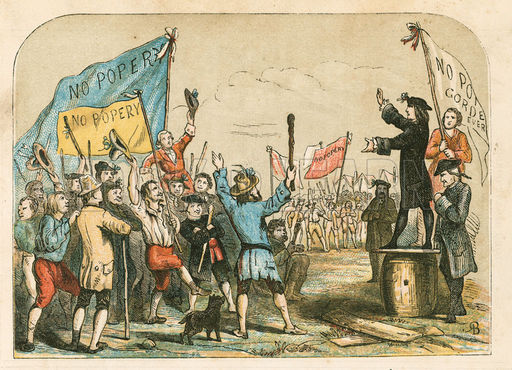
The Gordon Riots, 1780
Forget about facts. Forget about forecasts. Ignore the lies, damn lies and statistics. The British EU Referendum will be determined by feelings.
On the Remain side, it will be “we’re doing quite nicely, thanks. Please don’t rock the boat”. On the Leave side, it’s “they’re taking our jobs, they’re telling us what to do, they’re taking our country”. Note the pronouns: Remain is about us, Leave is about them.
I’m beyond commenting on the arguments, or should I say the suppositions, assumptions and implications. Go to the pub, read the papers, watch the TV if you want more of the same. I’m beyond trying to persuade people which way to vote, either in this blog or in conversations with friends or strangers between now and June 23rd.
I’m done. I know which way I’m voting, and always have. I shan’t even be in the country on the day. Between now and then it’s pretty obvious what’s in store. Churchillian rhetoric, appeals to self-interest, publicity stunts. Blood, sweat and tears.
For me, what will be fascinating will be the aftermath.
Whichever way the vote goes, we’ll muddle through. We always do. There are far worse things that can happen in the next few years. Things that dwarf our little referendum into insignificance. Wars, economic collapse, pestilence, natural disasters. If all we have to worry about is the state of our GDP, the existence of a Polish butcher in our high street and the fact that the family next to us on the train aren’t speaking our language, we should count ourselves lucky.
On a purely parochial level, I always enjoy the political drama that plays out after a major election. Tears of joy, wailing and gnashing of teeth. Removal vans at Number Ten. Recriminations, bitching, accusations, torturous analysis. We have all that to come after this referendum. Except that after an election one government replaces another, or hangs on to power. In this case the whole political order will have been ripped apart, just as happened in the early 20th century when our politicians were arguing about – guess what? Free trade.
I suppose we need a good shake-up in Westminster now and again. And for sure, we’re going to get one. Neither major party is in a position to capitalise on the weakness of the other, so whatever the referendum result, we’re due for some turbulence, uncertainty and unstable government. Perhaps even a general election pretty soon, God help us.
When I first thought about this post, I did wonder whether we’re more in thrall to our emotions as a nation than we have ever been. I thought of Diana’s funeral – the mass outpouring of grief that matched those at the funerals of Rudolf Valentino, Eva Peron and the Ayatollah Khomeini. Are we more easily swayed, whipped up and manipulated than ever before?
Then I remembered our dark history of riots and insurrections. Of the Peasant’s Revolt and the execution of Charles I. Of the Gordon Riots (as above). More recently, of Brixton and Notting Hill, St Pauls and Toxteth. And, on the flip side, I thought of the hundreds of thousands who gathered in central London to celebrate the defeat of Hitler, drinking, dancing and fornicating merrily through the bomb-ravaged streets of the capital.
So no, we’ve always been prone to getting carried away, in our usually polite but occasionally violent British fashion. And thus it is now. There will be no riots after a Brexit, though some way down the track there might be. But it won’t be because we’ve been duped by ambitious politicians. It will be because of factors way beyond our control as a nation – as I said earlier, wars, economic collapse, pestilence and natural disasters. And, as always, there will be multiple reasons for the anger. Except that – to paraphrase Richard Nixon when he lost the 1962 California governorship election – we won’t have the EU to kick around anymore.
For all the logical arguments put forward by reasonable people, set out by responsible newspapers and TV stations – and I’m not talking about Boris Johnson, Nigel Farage, Rupert Murdoch, The Sun and The Daily Mail – voters will listen to their emotions and do what they have to do. Emotions are the most potent weapons the persuaders have, because any other doorstep conversation becomes hopelessly mired in detail-laden assertions and rebuttals that most of us neither understand nor believe.
For the past few weeks both sides have been wheeling out celebrities, business people and role models to declare their allegiance, because they calculate that if you like Sir Ian Botham and Jeremy Clarkson, you will think as they do. Twas ever thus. Dog food, razors, Britain’s future – what’s the difference?
Which leads us to one last factor. We, the British voters, are not stupid. By now, most of us know we’re being manipulated. In the end, I expect, while most of us will vote with our feelings, the balance might be tipped by which of the two sides we think takes us for fools more than the other.
Which ever way it goes, come June 24th, we will most likely face an uncertain time, perhaps a period of relative poverty. But the sun will come up as it always does. It will probably rain. Our footballers most likely will be off for their summer holidays, either because of their own performance or thanks to the fighting spirit of their fans. Wimbledon will be upon us. The politicians will be plotting and back-stabbing. And we ordinary folk will have a whole new set of conversations.
There have been worse times. And hey, we still have the Donald and Hillary Show to look forward to in the autumn.

I feel it coming on again. This pressure in my chest. Is it indigestion? Is it the long-awaited heart attack, sent to reward me for all my lifestyle misdeeds? Or is it my inner retired colonel, ready to burst out of my ribcage, its face red with rage, spluttering with fury, spitting viscous obscenities at every target of its wrath?
I fear it’s the colonel again. Not content with pouring venom over the idiots who came up with our infernal EU referendum, and soaking Donald Trump with acid contempt, my very own Disgusted of Tunbridge Wells has new targets.
The victims on this occasion are fortunate shareholders of LinkedIn.
LinkedIn is a social media site for business people. Populated by millions of cheery folk who hope that by posting their life stories on the site, someone will offer them a better job, which, presumably, will lead to a better life.
In the interest of transparency, I should mention that I’m a user, though I’m not sure why. I’m certainly not looking for a better job. Or any job for that matter. Ah yes, I remember. Lots of people on LinkedIn visit this blog, and it’s nice to see my reading stats boosted by referrals from the site. I can’t really think of another reason, apart from a general interest in how people I’ve come across over decades in business are doing, and moments of great hilarity at the way users describe themselves, and the way they choose to project themselves through their photos, which range from the sublime to the ridiculous.
For this – for a site populated by millions of wannabes, headhunters, salespeople and rampant narcissists – Microsoft is prepared to pay $26 billion. Payday at last for the venture capitalists, for the company’s option-laden executives. For what reason is Microsoft prepared to part with a slice of my MS-Office licence fees? For access to the site’s users so that it can sell them things, presumably. Also for the opportunity to charge for stuff beyond the imagination of the current owners. And finally to prove to the world that it’s moving forwards, not backwards. Because there’s no such thing as equilibrium in 2016. Growth is good. In the mind of the market, flat is merely a precursor of decline.
There have been one or two pieces in the media in recent weeks suggesting that the long climb towards new heights of sporting performance is beginning to come to an end. That we are close to the limit of what humans can achieve in a hundred-metre dash, in the long jump or in the pole vault. Are we also close to the limit of what companies can achieve in business? Does Microsoft’s acquisition of LinkedIn herald the impending collapse of Gates’s enterprise under the weight of its own gravity? Likewise, Google, Amazon, Facebook and the other tech giants?
I have no idea, but it does strike me that to pay such an enormous amount of money for a business that relies entirely on its self-populating users for its perceived value is bizarre. For a business, what’s more, that by an astounding coincidence, after fourteen years of burning its investment capital, has only just started to turn a profit. We’re not talking here about a company that make things. You could understand someone wanting to pay a fortune for Tesla, SpaceX or even poor old Nokia. But $26 billion for a database?
And what about the valuations of other self-populating databases? Facebook, Instagram, SnapChat and so forth? Similarly astronomical. This, it seems to me, is speculative heaven – investors playing with funny money in a market full of emperors with no clothes.
Yes, I know, it’s all about the algorithms, those clever bits of software that persuade us suckers to part with our money via advertisements targeted at Steve, Amanda and Ibrahim based upon what the databases know about us. About LinkedIn’s clever exploitation of vanity, greed, exhibitionism, loneliness and unfulfilled ambition. I understand all that. But ultimately, all these sites have to offer is air – to be swept around the globe by every change in climatic conditions. As solid as a puff of smoke from a hedge fund owner’s barbecue.
I get some of the tech giants. Apple – it makes stuff that’s vaguely useful, even if it has spawned a generation of autistic zombies. Microsoft – what would we do without Windows, Office and Skype (one of its more sensible acquisitions)? Amazon – you can buy stuff with consummate ease, even if it is laying waste to the traditional retail industry like a Vogon planet destroyer. They will all turn into dark stars sooner or later, like Nokia, Motorola, and like others teetering on the edge of terminal decline. Not because they’re bad companies, but a because a founder’s vision will only take them so far. Even Google’s supply of creative hydrogen will eventually be exhausted.
But when these shining stars have finally exploded or imploded, their people have deserted them and their market capitalisations withered away, I suspect that another breed of enterprise – the sort that plod along, neither exceeding not disappointing market expectations – will still be around. These will be companies whose outlook goes further than the next quarter’s results, whose executives are neither stars nor miracle workers, just workers.
They will be manufacturers, service providers, undertakers, clothes makers, food retailers, energy producers. Companies that provide things we actually need rather than stuff it would be nice to have. Unsexy but vitally necessary. And I suspect that that the ones which will endure whatever the prevailing economic winds will be those that do not serve as vehicles for speculation on the part of their owners and managers. Companies whose core purpose transcends shareholder value. Whose owners don’t keep an eye constantly open for an exit.
I know only one country where that ethos still prevails – Germany.
Germany is a nation of makers. If you are Greek, you might argue that it’s also a nation of takers by virtue of its economic supremacy. But whence does that supremacy come?
Is it a coincidence that a nation in ruins seventy years ago has never abandoned its roots as a maker of things? And is it also a coincidence that its works councils give ordinary employees a say in the running of its major enterprises? That it leads the world with its apprenticeship schemes and its technical universities? That it’s further than any other nation in its adoption of alternative energy sources?
And is it a coincidence that outside Germany, few people could name the CEOs of its leading businesses? That it’s led by a woman? That it’s avoided involvement in any global conflict since 1945? Goddammit, even its footballers have outperformed all others in international tournaments since the early fifties.
It’s a nation so successful that it’s prepared to open its borders to refugees from the Middle East because it has skills shortages, and is prepared to take the risk of welcoming the new arrivals because it believes it will be in its long-term interest to do so.
And the key is in the last sentence. Long-term thinking.
Germany is no paradise. It has areas of deprivation. It has an extremist fringe. It is a highly conformist society. But it has no Donald Trump, LinkedIn, Wall Street, instant billionaires, property bubbles and arsenals full of nukes. It has learned from its mistakes and has regenerated as an enlightened example to many other countries – the UK and America included – that are destroying their futures through the cowardice, paranoia, opportunism and short-term thinking of their political and business leaders.
I don’t blame the shareholders of LinkedIn for cashing in. Fair play to them. They put money in. They’re getting it out. But I do blame a financial system so puffed up with blind faith in the insubstantial. I also blame the business schools for propagating over decades the notion of the supremacy of the shareholders. And I blame shareholders and executives for thinking that someone else should pay for the social and political stability that allows businesses to flourish while using every method known to their lawyers and accountants to avoid taxation in the countries in which they operate.
And, while we’re at it, I take a dim view of the notion that the CEO of a building company, Persimmon, should take 16% of a £600 million bonus pool awarded to its top 150 managers over the next five years. If this Alexander the Great of the building trade had created the company single-handed, I would understand. But he didn’t.
And if it was perfectly obvious that if he fell under the bus tomorrow there would be nobody remotely qualified to do his job, I would be convinced that he deserved his £100 million. But were that the case, the company’s shares would probably dive on the basis of it not having an effective succession plan.
Ah, but that’s capitalism, I hear you say. Well, I’ve never read Marx, I’ve never read Piketty and I didn’t go to business school. But I have run businesses, and I know enough about what’s going on to recognise that “the system” that has evolved in my country and many others is heading for a fall. It’s so lopsided in favour of a privileged few, so focused on leadership at the expense of employees, and so obsessed with shareholder value to the detriment of the societies that enable it to function that it’s simply unsustainable.
One day, and maybe soon, it will go poof – like a deflated airship. And when we look back as we stumble among the ruins, I won’t be surprised if our historians point to a company called LinkedIn that was sold to Microsoft for $26 billion as an example of the madness that laid us low.
Struggling with a blog post, circa 1961
We Brits – along with most other societies in the West, live in a world of speed. Speed reading, speed dating, high-speed internet, fast food. Even World War 3, when it breaks out, will be over in a matter of days, whereas the previous one took six years.
Now we are being prepared for fast golf. Contests lasting six holes and no more than an hour. The player has no more than 30 seconds to take the shot.
Well, a similar format seems to have worked for cricket. 20/20 is wildly popular – more so than the longer forms of the game. In most sports nowadays, the optimum length for any continual activity appears to be a maximum of two hours.
The promoters of golf are pushing the short format because the long version, in which a round of eighteen holes can take anything up to five hours, is losing its appeal. Club memberships are on the wane. People simply don’t have all that precious leisure time – or the money – to devote to the sport.
The same goes for cricket. People don’t have the time or patience to sit through a one-day match, let alone international matches lasting five days.
Or at least that’s what we’re being told. In order to hook the kids as participants rather than just spectators, we need a short version tailored to their limited attention span.
I disagree. We actually need to get kids into activities that develop their ability to concentrate for long periods.
I didn’t play golf when I was at school, but I did play cricket. A match lasting all afternoon and well into the evening was one of the joys of summer. Even better, when I got to play for my school’s first XI, we had matches that started at 11am, stopped for lunch, and carried on for the rest of the day. I felt like a proper cricketer, even if I didn’t play like one.
Another long-form recreation is fishing. I’ve never fished, but having the patience to sit for hours waiting for a tiddler to take the bait is surely good for the soul, even if it isn’t good for the fish that finally takes the bait. Fortunately, unless you build tanks full of ravenous piranhas, it’s difficult to see how a short form of fishing can evolve. So our kids can still sit at a river bank waiting for the bite that might never come. The opposite of instant gratification, and the priceless opportunity to sit and think.
Another highlight of my school days was visits to the theatre. My school was quite close to Stratford-upon-Avon. Two to three times a year, busloads of us would pitch up to the Royal Shakespeare Theatre, to watch Hamlet, Twelfth Night and the history plays. Some of the plays lasted three hours, excluding the interval. And at the ages of eleven to thirteen, I’d sit through them, enthralled.
Very different to today, as the BBC showed recently when it deemed that its production of Midsummer Night’s Dream would not appeal to the average viewer if it lasted more than ninety minutes.
Think also of movies. Modern films mostly last for a maximum of two hours. Anything longer than that is so unusual that film reviewers make a point of warning us. Yet way back when, blockbusters like Ben Hur, How the West Was Won and the Fall of the Roman Empire were screened with an interval that let you stock up on popcorn and Smarties. Lawrence of Arabia ran for 231 minutes, and, before my time, Gone With the Wind was an epic 240 minutes – enough to test the most elastic bladders.
If a multiplex screened a movie today lasting nearly four hours, the cinema would probably need to issue a health warning about the dangers of deep-vein thrombosis and advise you to take an aspirin before entering the premises. And even then you probably wouldn’t get enough takers to make the whole thing commercially viable.
We all know the difference between now and then: TV, video, smart phones, the internet and any number of other sources of fun that involve little more than sitting down – usually for relatively short periods. Whereas most of us growing up in the fifties and sixties would, depending on our parents’ income, be on the streets playing football, in our gardens blowing up wasp nests, in the fields chasing rabbits or shrimping in rock pools on our seaside holidays. Apart from organised sport, books, homework, radio and illicit activities behind the bike shed, there was little else during the day to grab our attention.
Yes, kids can still play sports, and the other day I drove past our local cricket ground where hundreds of youngsters dressed in white were taking part in a cricket camp. But the state schools, encouraged by cash-strapped local authorities, have for the past decade been selling off their playing fields, thus creating an even wider gap between the public and private schools. Boarding schools like mine – set in hundreds of acres, with woodland, a river, numerous cricket, hockey and rugby pitches – are a world away from urban state schools that barely have enough land left for a playground.
If I go on about dumbed-down school curricula and exams that rely heavily on multiple choice – test of knowledge rather than critical thinking – you might dismiss me as a privileged old fart who probably wants his country to leave the European Union, and rants away about how wonderful “things used to be”.
So I won’t go on. In many respects “things” used to be pretty grim. Go into the fields and you might have been poisoned by DDT. Look in the skies and that little point of flame could have been a ballistic missile heading your way. Switch on the TV and you had a choice between Z-Cars and Come Dancing.
So much is better now. The internet despite its dangers, is a wonderful tool. Cars and planes are safer. Health care, for those who can afford it, is far superior. Levels of poverty and disease are far lower than they were in the Sixties. Even wars, such as the conflict in Syria and Iraq, are notable for their comparative rarity, even if it seems otherwise.
Yet I do feel that we’ve lost something in our pursuit of speed, of quick fixes, of instant service. We’ve forgotten how to wait, and our attention span is declining with each generation. As parents we get nervous when our little darlings tell us they have nothing to do. As voters we demand action – now. As shareholders we get ready to fire the CEO when results don’t improve by the next quarter. When we get sick, we must have antibiotics – now. When our broadband fails we shriek down the phone at the poor Indian call centre agent, demanding action – now.
I’m as impatient as the next person. As my wife would tell you, I rage at idiots who hold up traffic. I’m apoplectic when the internet goes down. And I can’t stand queues at airports. Perhaps the malaise started with my generation. For my parents, waiting was a way of life, especially in wartime – standing in line, taking your turn, putting up with shortages, powerlessly hoping for a positive outcome. Our expectations grew to be different over time.
And the politicians, the retailers, the doctors and the service providers pander to us, because they don’t have the balls to say “wait. Nobody has died. It’s not the end of the world. It will take time to fix this.”
We measure our quality of life by how easy it is. Stress is bad. Everywhere around us are safety nets waiting to catch us if we fall. And as each generation finds it easier to blame others for its misfortunes, it finds it harder to take responsibility for its own salvation.
Everything that takes a long time we usually perceive as negative, apart from holidays. And even then we complain about traffic jams, security and queues at airports.
It’s interesting that western culture is not the only one to be affected by hatred of delayed gratification. Right now the Muslim world is in the middle of the Holy Month of Ramadan. The faithful fast from dawn to dusk. No water, no food, not even toothpaste. In the United Kingdom, where at this time of year daylight lasts for eighteen hours, that’s tough. And it’s something to bear in mind when we watch cricketers like the admirable Moeen Ali stand apart during drinks breaks. Could you participate in top-level sport if you’ve had nothing to eat or drink for twelve hours?
You would think that among Muslims, self-restraint and patience would be ingrained in their cultural DNA. Yet in Saudi Arabia, one Muslim country I know well, the I-want-it-now ethos is stronger than just about every other place I’ve visited. Is that because in a desert culture you grab what is life-sustaining when you can? Or is it because the oil-rich country has become accustomed to everything they want being available – from retailers, employees and servants – at the click of the fingers? The latter, I fancy, which suggests that nurture, not nature, breeds impatience.
Are there things we would like to be longer? Our lives, for sure, until we face a final decade of loneliness and declining health. Mealtimes – bring back the long lunch. Sex, perhaps, assuming we make the time between Episode Seven of Games of Thrones and that late-night catch-up to see who’s posting on Instagram or to check our email.
Now that we have short-form golf, what’s next? Speed chess? Maybe, but hardly a majority activity. Speed elections – now there’s a thought. Quickie criminal trials – ISIS knows a thing or two about those. Fast exams – well, I think we’re already getting there.
A final thought. By all means teach the young about all those things lacking in the current curricula – citizenship, soft skills, resilience and so forth. But before each kid leaves primary school, give them a special test. Put them in a room on their own with nothing but a few random objects, including a pencil and paper. Watch them for three hours with the promise that there will be a reward for those who don’t walk out early. See how they use the time.
OK, that’s a pretty crazy idea. I’m sure educationalists can come up with more sensible ways to develop powers of concentration and patience. And they should.
Because if there’s one thing we should be teaching our kids so that they can cope with life after they’ve fled the nest, it’s that there are some things in life that unfold rather than explode. We need them to learn how to wait.
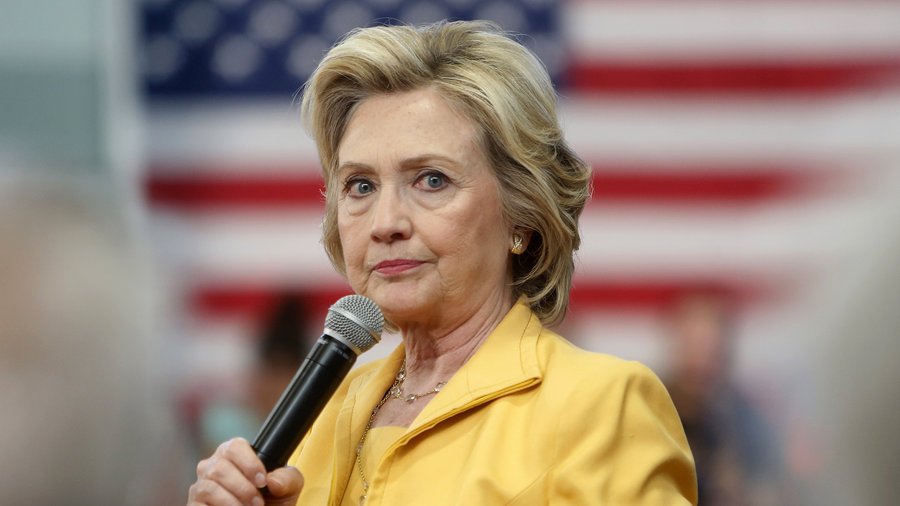
Dear America,
What took you so long?
Was it really so hard to imagine a woman president that until now you knocked back every previous female candidate before she even got to the nomination? Or was it that you were so repelled by the personality and politics of those women who didn’t make it that their rejection had nothing to do with gender?
Now that you have chosen a female nominee, will you rise above your concerns about her character and send her to the White House? And if you do, will it be because the alternative would be far worse, or because she reveals herself as a more attractive candidate in the forthcoming campaign trail, or because some of your voters will go for her simply because she’s a woman?
A bit of everything, I suspect. Depending, of course on whether Trumpelstiltskin is finally stymied before he can claim his prize, and makes an angry exit in November.
Yes, we all know that Hillary has history. You wouldn’t expect a woman of sixty-eight not to. And yes, she’s made a few mistakes in her long career. She’s misspoken (your delightful euphemism for lying) on the odd occasion. She presided over the screw-up that led to the death of an ambassador in Libya. And then there’s the little matter of going off-radar with her email account.
What many of us beyond your borders can’t fathom is how those mistakes could possibly be compared with her opponent’s lie-a-minute campaign stump, with his Trump University scam, and with the bigoted, ill-considered utterances that cause even his most faithful political acolytes to weep in frustration.
As for Hillary’s character, you put your candidates through a brutal obstacle course. Thanks to the internet, it’s getting harder than ever for a would-be president to keep the skeletons firmly locked in the closet, as her husband discovered, and as her opponent is discovering now. The question is, what sort of skeletons materially affect the performance of a president? A tendency to stray from a marriage? The desire to accumulate wealth? A problem with alcohol? A psychological disorder? Or, as Jill Abramson put it in the UK’s Guardian newspaper, (This may shock you: Hillary Clinton is fundamentally honest), in Hillary’s case, a lack of transparency about personal matters that gives rise to suspicions, even if they ultimately turn out after rigorous examination to be unjustified or, at least, unproven.
To put it another way, if a candidate has committed no crime, which skeletons are the business of the individual, and which should be of interest to the nation? Is it the nation’s business that she chose to stick with her marriage rather than kick her philandering husband into the long grass? Should it be a concern in a society that celebrates money-making that she, as a private citizen (as opposed to the presidential nominee of her party) accepted the largesse of Goldman Sachs in return for her services as a speaker? Was she under any greater obligation to reveal what she said to her audience at Goldman than Mitt Romney was in his good-ole-boy fundraisers, one of which was famously leaked in 2012?
Moving on to observations that Hillary lacks the charm of her husband and other recent presidents including Reagan, Bush Junior and Obama, please tell me: has charm become a requisite of the job? That would amuse Vladimir Putin, a noted paragon of sweetness and light. And have you considered that the undoubted steeliness of her personality might have contributed to the effectiveness as president of her charming husband?
If I were in your shoes, I would certainly prefer to see steel tempered with realism in the White House than the volatility and emotional incontinence of her opponent.
And what of the accusations that she is a creature of the Washington establishment? It happens to be a fact of life that every president, whether or not they posed as an anti-establishment outsider (which most of them did in one way or another), becomes part of that establishment the moment they set foot in the White House. And the same applies to those who, like Hillary, have held a major public office before seeking the presidency. Don’t you find it ironic that these days anyone who has direct and relevant experience of navigating the corridors of the federal government should be considered more of a liability than a peanut farmer, a Hollywood actor or a casino operator?
As I said in my last epistle to you, in which I begged you to turn away from Donald Trump, your choice of president is not of concern just to you. By a combination of accident and design, your choice affects everyone on the planet. Whether Trump likes it or not, that’s the American’s burden – the price you pay for your political, military and economic supremacy. Whether you like it or not, we non-Americans are all your stakeholders.
So I congratulate you for providing your electorate with a viable alternative to the casino operator. Gambling in one form or another is a legitimate feature of every society. But always provided, as the advertisements in my country are obliged to point out, you bet responsibly.
The fact that you are offering a woman as that alternative is both commendable and wise. No matter that a sizeable proportion of your electorate sees her as hardened battle-axe – every husband’s nightmare mother-in-law. If those qualities come to the fore in the upcoming election campaign, so be it. She won’t be the first. Golda Meir and Margaret Thatcher got there before her. But I hope you will also recognise that the qualities which enabled her to reach the base camp of her political Everest – her determination, her resilience and her intelligence – will serve you well should you decide to entrust her with your highest office.
I also hope that you will look to Germany as an example of a powerful nation that has flourished under female leadership. Angela Merkel is no Thatcherite battering ram. She is subtle, principled and emotionally intelligent. Like every politician, she has made mistakes, and her career seems close to its conclusion. But she, if anyone, is living proof that a leader doesn’t have to be soaked with testosterone to guide her people through stormy waters.
So now you have provided your voters with a choice between two of the most different candidates in recent history. They are separated by a temperamental and philosophical Grand Canyon. Not all of your foreign admirers, of which I am one, will necessarily be enchanted with either alternative. The political inclinations and interests of those who watch you from afar are many and varied. But it’s inconceivable – at least to this admirer – that you should entrust your future to the sneering casino operator.
Choose well, dear America. And please remember that it’s not just your future that’s at stake.
Yours with continual affection,
Steve

If you were doing a workshop with a bunch of people from the Middle East on body language, and you wanted to show a video clip to demonstrate a point that would engage the audience, what would you use? Would you use the same material as you would with a Western audience? And would the body language you encounter in the Middle East send the same signals to Westerners? The answers to the second and third questions are sometimes and not necessarily. As for the first one, the answer in my experience is – wait for it – Mr Bean.
Whilst body language is a fairly obvious physical manifestation of a culture, much more lies beneath. “Cultural experts” make lots of money out of corporations by preparing them for what to expect when they set up business in a different country. Too often they focus on the superficial – manners, social etiquette and so forth – so that their employees can avoid faux pas that can kill relationships stone dead before they get the chance to develop.
But there are deeper questions to consider. How do you get the best out of a team in China? How do you negotiate in Japan, Brazil or Saudi Arabia? How do you get teams from India and the US to work effectively together?
I’ve worked in the UK, the Middle East and the US. I’ve helped set up businesses in several European countries, and I’ve worked with a number of multinationals in these countries. And in the process I’ve accumulated quite a few war stories about failures resulting from incorrect reading of situations and people. A few successes too, thanks mainly to experience gained from the failures.
I’ve been lucky to have had a business partner who is equally interested in such things. So over twenty-five years of working together we’ve had many conversations about doing business with Americans, Finns, Irish, French, Malaysians, and Hungarians, not to mention regions where one of us has more experience than the other – the Middle East in my case, and Africa in his.
What if one could find a fool-proof method of predicting how people will behave and interact with alien cultures, based on traits common to their home countries?
Up to a point, that’s what Erin Meyer, a professor at INSEAD, the French business school, is attempting to do in her recent book the Culture Map. There are a number of other tomes on the subject of multicultural understanding, one of which, Cultural DNA, I reviewed a while ago. Meyer’s book is relatively short and direct in comparison with, say, the work of Geert Hofstede, the granddaddy of cross-cultural research.
In the Culture Map, she looks at eight aspects of business culture: communications, performance feedback, persuasion, leadership and hierarchy, decision-making, trust, disagreement, and finally perceptions of time. As reference points she takes countries in each of the five populated continents and places them on a scale for each of the dimensions.
For example, when it comes to trusting, she distinguishes between task-based and relationship-based trust. Task-based trust is “simply business”. Do you perform well? Are you reliable? Do you have a track-record of trustworthiness? Are you easy to work with? Countries such as the US, Denmark and the Netherlands feature at the task-based end of the scale.
Relationship-based trust doesn’t recognise the boundaries between business and personal life. It’s built up by socialising as much as business interaction. If I experience the “whole you”, I will invest my trust in you, even if that trust takes a long time to build. Countries on this end of the scale include India, China, Nigeria and Saudi Arabia.
On each dimension Meyer provides stories of misunderstanding resolved through better understanding of the other’s cultural traits. Most of them are based on her own experience.
The trust scale particularly chimes with my Saudi experience. Typically it takes time to build strong relationships with Saudis, and the whole process involves much more than mutual business interest. Coffee, lots of chat, doing stuff together, mutual hospitality are all important parts of the equation.
Curiously enough, my country, the UK, sits close to the middle of the scale. My own partnership reflects that ambivalence. While Ken and I were running our business in the UK, we would take very different approaches with our staff. He’s outgoing and gregarious. He socialised with the staff regularly.
I’m a little more reserved, and my interaction tended to be task-based. Yes, I’d go to the pub with a few of our people after work on the odd occasion, but not to the extent that any of them became friends. Whereas after we sold our UK businesses he stayed in touch with many of our staff, and still sees them when he’s in the country. And he’s done that throughout his career.
Meyer’s book is useful to me because she encapsulates a number of traits that I had experienced but had not considered systematically. I’m well aware of some of them, such as differences in treatment of time (see my recent post about the way Middle Easterners view time), and differing methods of persuasion (inductive versus deductive reasoning). But she provides valuable insights not just about what, but why.
The teaching of Confucius heavily influences hierarchical behaviour in China, for example. Deference to those higher up the pecking order, is the most commonly observed trait among China-watchers, but less obvious is the craving for harmony and order, and the responsibility of seniors towards their juniors. Then there’s the difference between China and Japan. Although they are both strongly hierarchical cultures, in Japan decisions require ground-up consensus. Whereas in China they tend to be made by leaders without reference to the lower ranks. This seems to explain why the Japanese take longer to make decisions than the Chinese.
She also emphasises the importance of framing when people from different cultures work together. If you outline your own cultural framework up front, and ask the other team to do the same, you can avoid misunderstandings and create a commonly-accepted way of working together.
The book ends with an example of a cultural map in which the differences between cultures can clearly be seen across each of her dimensions. If you create such a map, her theory goes, you can identify the potential areas of dysfunction and take steps to overcome them before they become critical issues.
The potential issues arising from a team with a mañana culture working with another for which time is a commodity to be used or lost is one obvious bear trap.
The Culture Map is full of stories illustrating these cultural differences, and Meyer provides advice for each dimension on how to overcome them. Her work is a great primer for companies planning to set up in new territories, for managers who find themselves leading multinational teams, and for employees assigned on overseas postings in countries with which they’re not familiar.
But I found myself looking for more. It’s all very broad-brush, and it doesn’t address how cultures are changing with globalisation, and how national traits can be overridden by leaders of organisations. Also, by ascribing generic traits to individual countries, it ignores the fact that many countries have multiple cultures. Do Texans think and behave in the same ways as Californians? Do Londoners share the same culture as Mancunians or Liverpudlians? Do Saudis from the cosmopolitan western city of Jeddah think the same way as natives of Riyadh?
What about countries with a strong multicultural mix? London, for example, has a mish-mash of cultures that reflect the different ethnic and social groups that live and work there. It’s not English any more. It’s international.
And what about individual organisations? Does IBM have the same culture in the US as Apple or Amazon? To what extent have the personalities of Jeff Bezos and Steve Jobs overridden typical “American traits”?
It would take more than the 250 pages of the Culture Map to answer those questions, yet they’re just as important as Meyer’s broad-brush observations. So when we’re looking to understand how to negotiate with Alibaba, we need not only to understand the culture of China and the personality of Jack Ma. We need to know how the bit of Alibaba we’re dealing with works, which also depends on the location and the sub-cultures of the organisation’s different components.
So if I was doing Meyer’s job as a consultant to multinationals, I would be looking for tools that enabled me to analyse much more than eight basic traits that characterise a dozen countries, fascinating though they are.
Many moons ago, a colleague and I came up with a rough guide for predicting corporate cultures by observing external phenomena. The look of the furniture; open plan or cubicles; the state of people’s desks; what sort of corporate stuff was on the walls and notice boards; the prominence given to organisation charts and mission statements; the way people dressed; the design of the front office; the attitude of the staff. Not very scientific, but enough to provide some indication of how that organisation was likely to behave in business interactions.
These days we have other indicators. Gossip via the social media; sophisticated external communications teams; the fallout from frequent reorganisations, mergers and demergers; short-term neurosis about share price performance.
When you hear a person complaining (as I did recently) that “I’ve been sliced and diced, my job has been defined and redefined, my company merged, split up and renamed three times in the past ten years”, what does that tell you about the culture in that person’s organisation? Depends on the reasons for the changes, of course. It could indicate a workplace that values agility and flexibility. On the other hand, that organisation could be populated by hardened survivors – cynics who are hanging on like grim death.
If these changes are designed to “enhance shareholder value” (or the CEO’s bank balance), or to ensure the survival of a struggling enterprise, to what extent does company culture trump national traits? And above all, how do we figure all this stuff out?
Complex questions, and way beyond the scope of the Culture Map. So this is no criticism of Meyer’s work, but an observation that more can be done to read companies, cultures, teams and individuals – not just at a fixed point in time but on a regular, self-updating basis.
There are tools out there, such as team psychometrics and engagement surveys that can go some of the way, but those I’m aware of don’t factor in national, local and corporate cultural influences on thinking and action.
When I was thinking about this piece I came across an interesting article by a couple of professional mediators on how to prepare for cross-cultural negotiations. I would certainly find it useful, but it falls some way short of providing a framework that takes the donkey-work out of the process.
I’m pretty sure that there are other academics out there actively working on ways to map cultural genomes in a way that makes sense and doesn’t cost a fortune. Perhaps Erin Meyer herself is working on this.
Until they come up with something better and less expensive, it will continue to take experience and know-how to predict the reaction of a stable and valued workforce to suddenly having to apply for their own jobs (as happened to Digital before its demise in the late 1990s). Also to work out how best to integrate two businesses with dramatically different cultures when they are suddenly merged into one. Too often the outcome, in my experience, ends as the worst, not the best, of both worlds.
And could we not come up with more sophisticated techniques before we intervene in the affairs of other countries, and when we’re negotiating peace deals or resolving less consequential conflicts?
Be that as it may, I would have found the Culture Map a useful companion when I first set off to do business in foreign lands. Would I have been more effective in my subsequent career?
Quite possibly. But then I wouldn’t have nearly as many memories of embarrassing disasters and triumphs over adversity to laugh about in my senescent years. After all, an easy life isn’t always an interesting one.
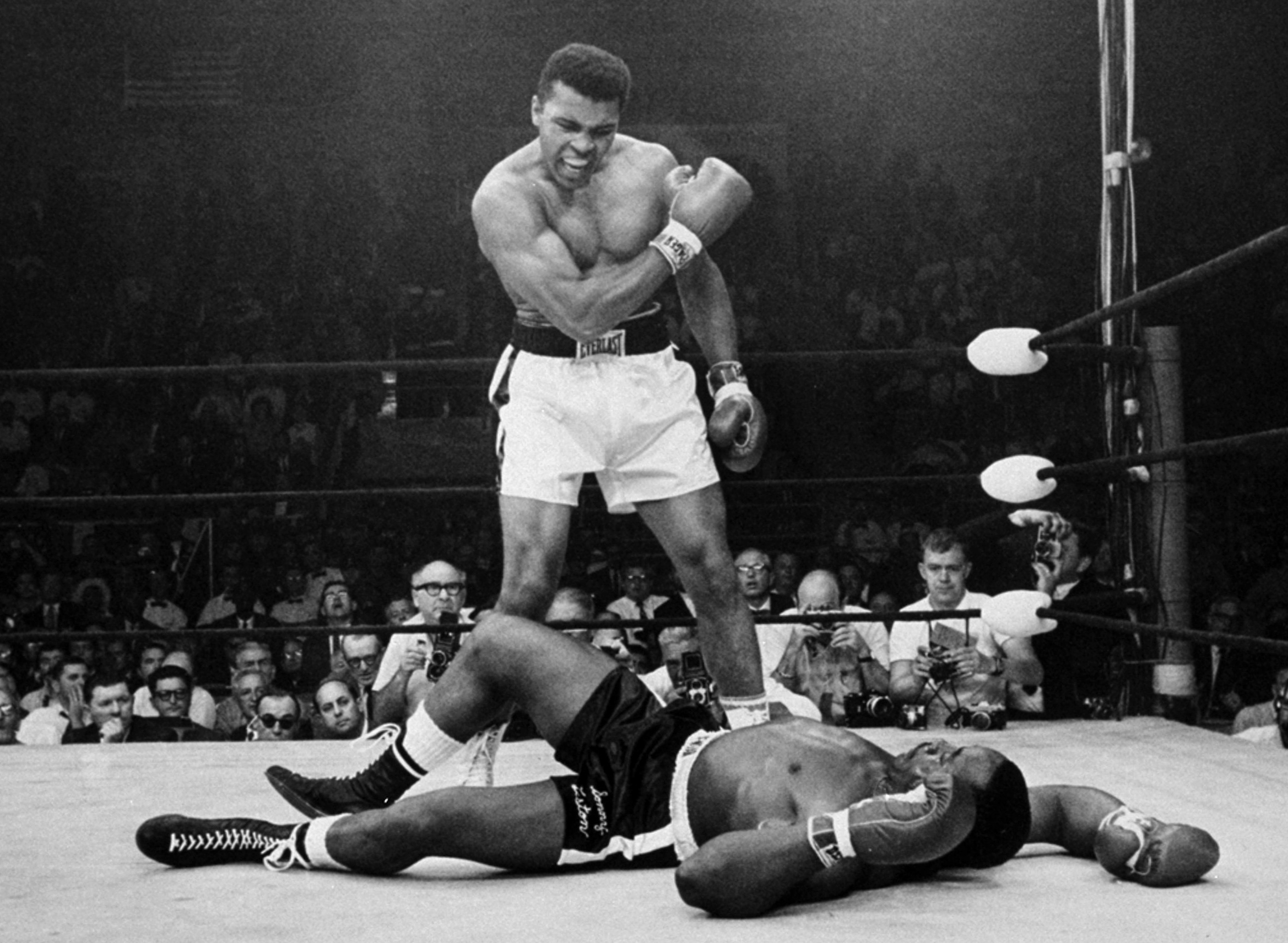
Muhammad Ali deserves the global media coverage of his departure. Yet some of the words spoken and written over the past few days only serve to reinforce the mixed feelings I’ve always had about him.
His life was surrounded by hype, and so is his death. While there’s no denying that he was a man of exceptional strength of character, and a sublime talent in his chosen profession, one side of me sees a man who was exploited throughout his life, and continues to be exploited after death.
I followed his career from the sixties onwards, and I can’t help feeling that more than anything else, for his army of camp followers, for Elijah Muhammad, for Angelo Dundee, for Don King and, later in his career, for the multitude that sought to capitalise on his reputation by wheeling him out, unable to speak, at countless events around the world, he was a meal ticket – or at least the means to a variety of ends.
When I hear people saying that without him, Barack Obama would never have been President, and suggesting that his achievements were comparable with those of Martin Luther King, Nelson Mandela and Obama himself in combating social and political racism, I find it hard not to be sceptical. And when I learn that such luminaries as Bill Clinton and President Erdogan of Turkey are due to speak at his funeral I get the sense that he’s still being used, just as he was by Mobutu in Zaire and by all the other presidents, kings and emirs who feted him during and after his boxing career.
Then I ask myself who was the user and who was the used.
Was he a man with a mission who, as he claimed, was using his boxing talents and attendant fame to as a means to his end? For whom the dependent acolytes and admirers played an essential part in maintaining his gigantic ego, for giving him the strength to defeat Sonny Liston, George Foreman, Joe Frazier and the white establishment that wanted to destroy him for refusing to serve in Vietnam? Who, in his declining years, needed all the endorsements and appearances to remind him that he was still a man to be reckoned with?
And is it unfair to give a boxer less credit than a preacher-turned-campaigner who led hundreds of thousands to march on Washington, or an activist who endured thirty years in jail, only to become his country’s president and reject revenge in favour of reconciliation? Or another activist who rode the wave of his own eloquence to become the leader of the most powerful nation on earth?
Perhaps the difference between Ali and the three leaders to whom I’m referring was that as a boxer he may never have succeeded without being able to channel the anger within him into the blows he landed on his opponents. Hatred and contempt for opponents as well as for the white establishment were his stock in trade. They were his most frequently-expressed emotions when he was at the height of his powers. The others needed a wider range of talents to make their mark.
As a white man, however sympathetic I was with the causes that he, King and Mandela espoused, I never felt immune from his anger, and probably was never intended to. Being the subject of anger and hatred, even if those emotions are not targeted directly at one’s self, is never a comfortable feeling.
So yes, I have mixed feelings about Muhammad Ali: both admiration and disquiet.
But he was never less than a compelling figure. I listened to his fights on the radio, watched them on TV. I remember the battles in Kinshasa and Manila as clearly as I remember the death of JFK, England’s World Cup win, the moon landings, the Tet Offensive, the breaching of the Berlin Wall and 9/11.
I might not feel in my heart the pride of those whom he called “his people” in his many achievements. But he was every bit as essential a part of my half of the twentieth century as the presidents and warriors, the musicians and dramatists, and all the other creators and destroyers with whom he competed for attention.
Now that he’s gone, I wonder whether the love for him frequently expressed during his declining years by those who were not “his people” stems from a kind of relief that he was no longer able to vent to his anger; that he had been thereby neutralised. Or were his new-found admirers responding to a perception that the anger had burnt out, and that the man who held up the Olympic torch in Atlanta was now an icon for all of us, not just for the oppressed minority to whom he claimed to have dedicated his life? Was the love born of sympathy rather than the respect he demanded?
As for whether he was the user or the used, that’s for others to say who knew him best. Probably both would be my judgement from afar.
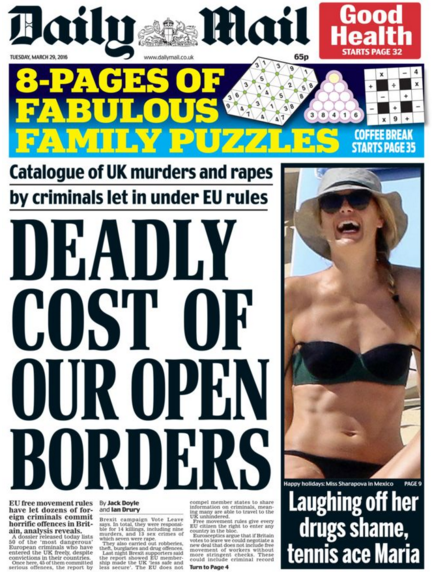
I will say this for David Cameron. He may not be my country’s Prime Minister for much longer, but he sure knows how to stir up a can of worms. The EU referendum debate seems to have been grunging on for an eternity. At this stage in a general election campaign we would all be curled up in a foetal position waiting for the damned thing to finish. But in this exercise in futility, the fun and games seem never-ending.
One thing’s for sure, lifelong political friendships within Cameron’s party lie in ruins. Advocates on either side of the debate have bite marks all over their legs. Once the Daily Mail readers have had their say, any show of civility and unanimity among the Tories will be exposed as a sham. How do you accuse your colleagues of deceit on one day, and refer to them as “my honourable friend” the next?
The whole exercise in political cowardice will at worst have pitched us into a kingdom of the blind. At best it will have left us with indelible memories of buffoonery and manipulation.
Lately I’ve been conducting what I call golf polls. I get the clubs out two or three times a week, and the people patient enough to play with me are many and varied, (which, given the abysmal standard of my golf, is more to their credit than mine). Among them, I’m at something of a pivot age. I’m one of the youngest in the group I play with during the week. Most of them are anything between sixty-five and eighty-five. By contrast, I’m usually the oldest of the guys I play with at the weekend. This give me the opportunity to test the water with at least two generations.
I sat down for a coffee last week with the older crowd. The chat turned to the referendum. I did a straw poll of the ten people who were there. Eight wanted to leave. Two, including me, will vote to remain.
The reasons for leaving were the usual ones. Unelected bureaucrats, pressure on the health service and school system caused by immigrants. People “coming to this country to live on benefits”. Beyond a vague hope that we might do more trade with the Commonwealth, there was not a single positive reason for leaving.
I asked them to tell me how many bureaucrats they thought there were in Brussels. A million, said one. A hundred thousand, said another. When I told them that the figure (according to the EU) is around thirty thousand, nobody reacted. When I then compared that number to the half million unelected bureaucrats in the British Civil Service (not including Northern Ireland, the police, the armed forces and the National Health Service), I also got no reaction.
The conversation turned to the health service waiting lists and overcrowded schools. All the fault of the immigrants, apparently. I suggested that since the vast majority of our immigrant population are working and paying their taxes, and since the immigration trends have been reasonably predictable over the past ten years, perhaps we should hold the government accountable for not investing in new schools and hospitals. That got no reaction either.
Then, if only to provoke a reaction, I suggested that since the seventy-somethings in the group were least likely to be affected by the result one way or another, perhaps they should not be allowed to vote. I could have been talking to the wall.
I got the impression that I could argue until I was blue in the face about all the reasons for staying in, and this crowd would not be moved. The Daily Mail has done its work. Logic has no role to play. It’s all about visceral emotion. About how we’re swamped with foreigners. How we’ve lost our country. How things are “not as they were”. About “the Muslims”, the unelected bureaucrats and the long wait in Accident and Emergency.
Last weekend, I sat down with the younger bunch. All of them are still working, and none of them want to leave. Not one. In this group, the conversation was about being in a position to change things from within. That the EU is a pretty dysfunctional organisation, but that if the country votes to remain, enough will go awry in the next few years to trigger widespread discontent throughout the EU, which in turn will lead to negotiations in which the UK will no longer be a lone voice.
Not exactly a representative sample of our voting population, I agree. No female voters. And there were no twentysomethings – people who take for granted the status quo: who value the ability to up sticks and work in Germany, France or Holland; who grew up with the social chapter; who happily pop over to Copenhagen, Milan and Barcelona with wallets stuffed with Euros.
That’s not to say there aren’t Leave supporters among the millennials. Those who can’t find a job because, they believe, the Poles and Romanians have taken them all. Or those who find themselves working on the minimum wage because of the same foreigner are also prepared to do so.
Some themes run across generations. But by and large, whatever the efforts by the politicians to present positive reasons for voting either way, all one seems to hear from voters is the negative stuff.
It sometimes seems to me that the referendum has created a lightning rod for everybody (except possibly the Scots, who have a different agenda) who is dissatisfied with their lot for just about any reason. If in doubt, blame the EU. Blaming the government is pretty futile given that they have another four years in power, so cursing the unelected bureaucrats in Brussels is the next best thing.
As for me, I just want it to end soon. The Remain side will win, despite the same media hysteria that hyped up the Scottish referendum. And the reason is very simple. When it comes down to it, the British electorate does have a measure of common sense, and most of us are not willing to parachute off a cliff blindfolded.
I want it to end soon because it’s a distraction from other stuff that matters so much more. Every morning, when I open up my laptop, I see the same faces glowering at me, reproaching me with their tears or just staring into space with expressions muted by suffering. I see Donald Trump, snarling protesters, bombed-out kids and bereaved parents, the religious righteous scowling in disapproval at the ways of the other. I see name-callers, blame merchants, faces made ugly with hatred and pain.
And I want the unkempt sophists, the smooth operators and the spin doctors to get out of my face. It’s not funny any more, if it ever was. And I pray that for the rest of my life I will never to have to witness another referendum, and that we will never again be ruled by the political cowards stupid enough to call this one.
Fat chance, I guess.
For the lack of much else to do, last night I watched the BBC’s latest version of Shakespeare’s Midsummer Night’s Dream.
It would be a cheap shot to say that Russell T Davies, who adapted the play, sought inspiration from Doctor Who – one of his other claims to fame – for his production values. So I won’t. Nor will I laboriously list the ways in which he inserted gay, lesbian and ethnically diverse threads into the plot. Or the way he turned the patriarch Theseus into a fascist dictator and did away with him in the final scene.
After all, it was only TV – just another ninety minutes to fill on a dull Monday night.
Yet I do think his reported comments when speaking at the Hay Literary Festival were quite interesting. He justified his treatment of the play by saying that this is 2016. Young girls watching the play, for example, should not be exposed to the idea that lovers commit suicide when thwarted in their desires. As a member of the Hay audience implied, best then not to expose them to Romeo and Juliet.
Most revealing of Davies’ comments was that he wouldn’t countenance the reference to suicide because:
“I’ve got to put my name on this and I don’t care what Shakespeare was thinking, I don’t care, it’s my name on it. It was kind of standard in the 1590s, it is not standard now. I’m deliberately hoping to get young girls watching this and I will not transmit lines in which women are so much in love that they are threatening to commit suicide.”
Evidence of a shrieking ego, I would have thought. It’s his name on it, so perhaps it would have been more accurately billed as “Russell T Davies’ Midsummer Night’s Dream, featuring poetry by William Shakespeare”.
Also evidence of a BBC frightened of its shadow. Did it submit the script to the National Union of Students LGBT Committee for confirmation that it was appropriate for viewing in a safe space?
Maybe not. The recent production of the history plays was hardly safe. But The Hollow Crown drew inspiration from the wildly popular Games of Thrones, so that was all right. Or was it the other way round? Doesn’t matter. This is 2016 – we create our own reality, right? And this Midsummer Night’s Dream would surely have passed muster with our millennial Guardians of Morality.
Leaving aside such contentious issues, I quite enjoyed the production. Not because of the big names in the cast, Oberon’s horns and the welcome return of Richard Wilson, but because of the acting of some of the lesser-known players, especially Kate Kennedy, Prisca Bakare, Paapa Essiedu and Matthew Tennyson as the young lovers.
Easy entertainment, clearly not aimed at Disgusted of Tunbridge Wells, but at the generation that wants to be safe.
I do wonder, though, how Mr Davies would deal with The Taming of the Shrew, Coriolanus and the Merchant of Venice. I suspect they won’t be on the BBC’s production schedule any time soon.

I’m very reassured to learn that the US Department of Defense still uses a 1970s-vintage IBM computer and eight-inch floppy disks to run its nuclear command and control systems. Why? Because the average hacker probably wouldn’t be able to tell the difference between a floppy disk and a hole in the ground.
As for the DoD’s IBM Series/1 computer, it’s far better that America’s nuclear defences should depend on the computing equivalent of a Ford Model T than that of a Google driverless car.
On the theme of technological golden oldies, I’m simultaneously worried and excited by the arrival of 5G mobile technology, upon which driverless cars depend for real-time positional information.
It seems that the new superfast networks will enable the Internet of Things to develop beyond the TedTalk visions of 25-year-old Steve Jobs lookalikes to systems that actually do something useful. Like remotely activating strategically-placed tasers or unleashing a robotic guard dog when your IPhone tells you your house is being burgled. Or instructing your e-cooker to prepare your no-yoke omelette (the raw materials having been pre-ordered and delivered on the instruction of your fridge) before you even rise from your bed in the morning.
This will be the perfect solution for the young Manchester United footballer who was recently reported as requesting a couple of boiled eggs from the club chef because he didn’t know how to make them at home.
Sooner or later it won’t just be Premier League superstars who can afford the Internet of Things, but all of us. The other day, we got a foretaste of things to come when we asked our daughter, who was staying the night, to move her car to a more suitable place. In order to forestall the impending strop (she had more important things to do, she claimed) we offered to move it for her. Unfortunately, cars don’t have keys these days, and we would have needed a seminar on how to start the damn thing. So we had to wait until she got round to doing it, grumbling all the way.
All of which suggests that we’re heading for a multigenerational technology crunch. The young ones don’t know how to use old technology, and the oldies struggle with the new. Twas ever thus, I guess.
But there is a silver lining, which could end up as a lifeline for technology addicts who don’t know how to do things for themselves, as well as for old farts who couldn’t be bothered with all these baffling computer-driven household innovations.
The day will inevitably come when all the devices we’ve come to rely on will suddenly stop working. Whether it’s for a few hours, days or weeks, whether it’s the result of a cyber-attack, a power black-out or some catastrophic event beyond our control, such as a massive solar storm, it will happen. We thought it might happen on January 1st 2000, but it didn’t. But sooner or later it will. If it’s later, it will be worse, because the technology addicts will have become the old farts. And then we’ll be in serious trouble.
But for the time being, there’s hope that we will come through the crisis unscathed. Because there are still people around who know how to boil an egg, drive a manual gearshift car, shop at Tesco’s, count to ten, write a letter, use a landline and read a paper book, civilisation – as we pampered westerners know it – will survive, at least for a while.
And should that moment come when the Steve Jobs lookalikes come crawling back to their parents to beg for their help, it will be an opportunity for the old farts to demand their due. They can ask for an apology for the condescending manner with which the young regard the old, with which the tech-privileged deal with the luddites, with which the smart phone users speak to those who think phones are for talking to people.
I say this with one qualification: that the tech addicts don’t come to rely on their parents for any length of time. Otherwise they’ll end up driving us crazy. Horror of horrors, they might even want to move back in with us.
So God bless the IBM System/1 and the floppy disks. As the DoD spokesperson said, they work. All the time – at least thus far. Which is more than can be said for Windows 10, my internet connection, fly-by wire aircraft, bank websites, and quite possibly in the near future, 5G.
William Blake, Angel of the Revelation
When I no longer do stuff for money, I will try to do stuff for no money. Which is another way of saying that when I retire, I will continue to live. Hopefully.
Perhaps I will become a visionary, like the former owner of a business I once worked for, who describes himself thus in LinkedIn. Unfortunately for the rest of us, he doesn’t appear to share his visions widely. Knowing him as I once did, I suspect that he sees them through a wine glass, darkly.
It would be nice to join the pantheon of visionaries. I imagine myself being dragged out of my last workplace, muttering “I think I’m becoming a visionary” in the manner of the Roman Emperor Vespasian, whose last words were reported to be “I think I’m becoming a god”. Then, from my lofty perch of sagacious retirement, I could prognosticate, cogitate, regurgitate, curse the European Union and issue philosophical fatwas.
And most likely, nobody would be any more likely to listen than they do now.
If I’m not too busy doing stuff, I would also like to be a thought leader. That would be nice. Spending all day thinking without being distracted by worldly concerns. Leading whom, thinking about what, it matters not. Tending to my gigantic ego, convincing myself that I’m not just another clapped-out guy in a culture that doesn’t respect the elderly for whatever wisdom a lifetime of labour bequeaths them.
Blogging perhaps, on matters about which I know little. After all, ignorance is no reason to be opinion-free, right? Ask all the old buffers who are rattling on about how wonderful Britain would be outside the EU, for example. As if they have more of a clue than anyone else about how things might turn out.
I actually think that between the ages of sixty and eighty-five there’s a golden opportunity. You’ve come to the end of your prime working life. Even if you’re still working, your earning power is declining in direct proportion to your advancing years. But it doesn’t matter so long as you’ve made enough to meet your foreseeable needs. And if you’ve stopped “working” (a concept as ludicrous as “retirement”), the chances are that you still retain a degree of mental vigour, if not rigour. Best of all, thanks to the social media – and once upon a time I never thought I would say this – you still have a voice.
Provided your health is OK, you still have a brain that works reasonably well, so why not use it? I use eighty-five as an arbitrary line, after which you slowly descend down the slippery slope of Maslow’s Pyramid to the point where nothing is more important than to be physically comfortable, safe and well fed. To be loved and cared for is something of a bonus.
True, there are exceptions. You could still be watching bonobos at ninety, like David Attenborough, writing at ninety-seven, like Diana Athill, or, like Henry Kissinger, conferring wisdom at ninety-three upon neo-fascist presidential candidates. But most of us, I suspect, once we get close to life’s finishing tape, don’t give a damn any more. We just want a quiet life, unblighted by Parkinson’s, Alzheimer’s, arthritis and wheelchairs. We don’t expect to be listened to, or our opinions to be respected. At eighty-five, we’re not about to arrive at a Theory of Everything or compose a Tenth Symphony.
But provided we don’t fall over in the deadly seventh decade, like David Bowie and so many others whom we would like to have lived a little longer, once we hit sixty we can still look forward to a golden quarter-century in which to make our mark.
I have a friend who in his twenties wanted to be a successful rock musician. He never achieved that by conventional benchmarks, but probably influenced more lives as a teacher over the subsequent four decades than he ever would have done rubbing shoulders with Marc Bolan and Robert Plant. Now that he no longer “works”, he puts his heart and soul into his music. He’s all over the social media with posts about his latest stuff. He’s had voice coaching, and the jazz influence that was always there has come to the fore. He does regular open mic sessions. Even though he’s the same grumpy old git as he was in his youth, when I last saw him I got the sense that he’s more fulfilled now than ever before.
Then there’s another guy whom I haven’t met since we were in our twenties, though we’re linked on Facebook. He’s a professional cartoonist. He’s still producing superb work with the same wit and invention that he showed when I commissioned stuff from him all those years ago.
Other people I knew in my twenties are still acting, writing, gigging, doing stuff, going places.
Best of all, for me anyway, my business partner in the US is still running our business despite being well beyond the traditional retirement age. He’s as fit as someone half his age, which is possibly down to the fact that he goes to the gym every day, eats well and, alone of his colleagues, works standing up. An example that some of our more corpulent brethren (myself included) could do with emulating.
That’s not to say that, as the lifestyle columns in the print media would have it, sixty is the new forty. Utter nonsense. At forty, unless you happen to be a retired hedge fund manager, you may be at the zenith of your career, but typically you might also be fraught with worries. Maybe about your kids, the state of your marriage, about the next step in your career, about the looming realisation that your maximum earning years may soon be coming to an end. The future is no longer bursting with unlimited opportunity. It’s also full of demons and monsters.
And for some people, the years from sixty onwards are also times of anxiety and decline. Perhaps their pensions haven’t worked out as they hoped. Or maybe they’re suffering the consequences of questionable decisions, like a guy I know who chose to stay in a foreign country in order to pursue an employer against whom he won a judgement for unpaid wages fourteen years ago. He’s now living in penury, because he can’t get the court to force the employer to pay up. I can’t help thinking that if he’d quit the country and started again somewhere else, he would have more than made up the sum he lost in the intervening years.
But for those of us who have survived relatively unscathed, there really can be plenty to look forward to. A Mormon couple I met the other day are planning to spend a couple of years teaching in the Brazilian outback. Not out of religious obligation, they say, but because there’s a shortage of teachers.
As for me, I’ll keep working for money as long as there are people who want me to do so, provided I like the work and I like the people I’m working with. And if the time comes when nobody wants a visionary thought leader in their midst, I shall concentrate on extending my career as an embarrassing old fart and keep doing stuff for nothing. After all, it’s no bad thing being able to walk away with no financial consequences.
Far from believing that rot about sixty being the new forty, I have another theory. It’s that for many people, adolescence ends at fifty-nine years and eleven months. Or, to put it another way, we only truly grow up when we hit sixty. Until then, our emotional intelligence is only as good as the next crisis. We’re driven by desire and fear. We don’t feel in control of our lives, and the spoilt child is never far from the surface. Once we sense that what we see as the major life opportunities are past us – we’ve either grabbed them or walked away – the real opportunities present themselves. Opportunities to reflect, to correct mistakes that can be corrected, to look at the world without our perception being coloured by worrying about the next dollar or the next career move.
Equally importantly, we have the chance to shrink the ego to manageable proportions. Not everybody can do that. In my perception, this is the reason why some old people remain adolescent to their dying day. I might joke about having a gigantic ego. Actually mine, as all my friends know, is as small as a walnut. I might think that, by the way – you couldn’t possibly comment. For those with seriously big egos, life beyond sixty can be a real challenge.
Fortunately for the rest of us, few people at that age embark on a vanity project as colossal as Donald Trump’s. It must be tough for people who think a lot of themselves suddenly to find that theirs is a minority view. But I suspect that if he fails in November, he’ll just carry on with his business and keep blathering on about his personal greatness until there isn’t a breath left in him.
Not so easy for Louis van Gaal, who’s just been sacked by Manchester United. Though he’s been quoted as saying that this is his last job in football, it’s hard to imagine him being content with gardening and the occasional evening at the bowling alley with his mates. If he doesn’t take another job, expect that favourite last resort of high achievers, the ghosted autobiography. At least that would get him out on the road for a few book signings. And given that he’s just pocketed £4.5 million in compensation for early dismissal, he could easily resort to that other device beloved of big egos, and set up a charitable foundation under his name.
Most of us, though, have less lofty ambitions. We would just like to continue to mean something once our time as cash dispensers is over. To make a difference to our families, friends and local communities, perhaps. Or, like my new Mormon friends, to make a difference further afield.
The key word, it seems to me, is purpose. Lose your sense of purpose, and you’ve lost virtually everything. And if you’re lucky enough not to have to till the soil until you drop dead, there has never been a better time to extend your usefulness beyond your occupational sell-by date.
After all, what do you want people to see on your gravestone? “He cruised, then he cruised”?
Think about that, boys and girls of any age. Barring misfortune, it’ll be your turn someday.
According to Sir Richard Shirreff, a recently-retired British general, there’s a fair chance that next year we will be involved in a nuclear war sparked by Vladimir Putin’s territorial ambitions in the Baltic. If we are not involved, we will still be caught in the economic blast that such an event would trigger. That would be the best case. The worst would be that our membership of NATO would oblige us to join in the nuke tossing.
So what are the vast majority of us who are not generals, politicians and geopolitical analysts to make of this dire warning?
Well, I suppose we could buy his novel, in which the dire scenario he envisages unfolds. That, presumably, is the reason for all his recent interviews. Though if a nuclear war breaks out, the general would be unlikely to be around to enjoy his newly-enriched retirement.
Sir Richard is wrong, for one simple reason. The dynamics that have prevented nuclear war between the superpowers (if Russia can still be given that accolade) for the past seventy years have not changed. Those who launch such a war will not benefit from its conclusion.
That’s not to say that there isn’t still a high risk of a nuclear exchange being triggered by a computer error leading to one side concluding that it’s under attack when actually it isn’t. And a regional nuclear war surely becomes more likely as current non-proliferation protocols continue to be broken by the like of North Korea.
But is Vladimir Putin mad enough to risk his nukes in an exchange with NATO? He might be, but it takes more than one madman to start a war. Even though Putin seems to have concentrated more power into his own hands than was ever vested in a Soviet leader, he still depends on his supporters and on the chain of command. All of those who have ridden on the back of Putin’s rise to power would find themselves destroyed, if not physically, then financially. It would only take one sane intervention, even if it’s motivated by instincts of self-preservation, to break the escalation chain before the big bang.
This happened during the Cuba crisis in 1962, and more recently in 1983, when a Soviet commander used his own judgement to stop the response sequence in its tracks after an alert based on a computer error. For those of you who are keen on might-have-beens, you could do worse than to read David E Hoffman’s The Dead Hand – The Untold Story of the Cold War Arms Race, which I reviewed here a couple of years back.
Whatever safeguards exist today to prevent an accidental war, Mutually Assured Destruction still applies. No matter that the US, Russia and probably China possess tactical nukes that can take out something smaller than a city – a ship or a tank battalion for example – any nuclear exchange would light a fuse that would be hard to extinguish.
So I for one will continue to live my life in the knowledge that tomorrow I could be knocked down by a bus, killed in a car crash or choked to death by a fish bone. And that any of those outcomes would be far more likely than to end up as a bunch of disassociated molecules in a mushroom cloud.
Should the general be right, sadly he would be unlikely to be in a position to tell us that he told us so.

Last week I put my heart and soul into trying to persuade America to step away from Donald Trump. Obviously Trump isn’t going anywhere – at least, not yet – so I’m done with pretty please.
It’s time to say a few words about America’s leading airline. Notice that I didn’t say favourite. British Airways adopted that accolade for themselves, and, in a singularly un-British act of immodesty, applied it to the world. They never were and probably never will be the world’s favourite. But at least they’re trying. Which, sadly, is more than can be said about American Airlines.
Usually, when I fly to America, I travel with BA. I’m the proud owner of a frequent flyer card that lets me use the business check-in even when I’m in economy. I also get to enjoy the bacon rolls and fresh fruit for breakfast in their Galleries lounge. Just occasionally I might get an upgrade without paying a fortune in air miles for it. And best of all, I get to use Heathrow’s wonderful Terminal Five, which is only a few minutes away from home and has seriously got its act together after its initial teething problems.
Unfortunately, not all routes to the USA are operated by BA. Some are the exclusive preserve of American, BA’s OneWorld partner. “Exclusive preserve” is obviously a phrase beloved of Mr Trump, who would like to turn his country into one. Anyway, more of him later.
So yesterday, I was obliged to fly out of Terminal Three, which is where American has its perch. I showed up at the AA Premium check-in, an enclave to the side of the terminal that is reserved for First and Business passengers. I kind of assumed that my BA card would allow me to check in there. It was packed. There were two people serving around twenty high-status passengers, and each passenger was taking at least five minutes to get their boarding cards. When you fly to America, you get asked all sort of questions, such as why are you flying? Business, pleasure, nefarious activity? Where are you staying? Your grandfather’s inside leg measurement?
So I did the math. Twenty divided by two times five equals a wait of at least fifty minutes. I checked with the guy standing beside the line and discovered that my card didn’t enable me to check in there anyway. He suggested I join the economy line. To hell with that, I thought, and toddled off to the “Priority” line just inside the main terminal. There I found a line with ten people and two check-in agents. And twenty minutes later I was done, wondering at AA’s strange world, in which those who are First will be last. Then I saw the seething masses up at economy in a snaking line that wouldn’t have been out of place in Ellis Island circa 1910. And then I thanked the deity of aviation, or rather my wife, who is so good at sorting these things, for my little silver card.
After a pleasant hour with bacon rolls and raisin swirls, I boarded the plane. That was when I received the first and only smile from a member of the cabin crew in the whole flight.
Now one of the things you notice in many of the established airlines in the West, BA included, is the relative, shall we say, maturity, of the crew. This is fine on one level, because in an emergency you don’t want to be in the hands of a flock of twentysomethings running around like headless chickens. On the other hand, you don’t want your exit blocked by a sumo wrestler. Yes, that’s an exaggeration, and I’m not suggesting that all the crew were a tad large. But several of them were not small. And most probably not exactly fleet of foot.
Which again is fine. I know several ladies of a certain age who would make excellent cabin crew. They’re motherly, jolly, sometimes a little rotund, caring and excellent communicators. Rather like the average BA crew member.
Not this lot. It grieves me to say this, but I’ve rarely encountered a more stone-faced bunch of attendants on any light – admitting at this stage that I’ve never flown with Aeroflot. From the evidence before me, I would say that American Airlines has a serious staff morale problem.
Fundamentally, these ladies (there were no men to be seen – presumably they were hiding behind their female colleagues) didn’t appear to enjoy what they did, and made no effort to disguise the fact. We, the passengers, were clearly an inconvenience. And they seemed to have been trained in the Trump school of monosyllabics. As witness this conversation, which took place more than once after a strenuous effort to establish eye contact with the owner of a passing trolley:
Her: “Any drinks?”
Me: “Yes please, coffee.”
Her: “Milk and sugar?”
Me: “Yes please.”
(Coffee duly deposited)
Me: “Thank you.”
Her: “Uh huh.”
The final acknowledgement of my thanks was delivered with that characteristic upward inflection that sounds like a question but comes over as a sneer. And that was that. No smile, no conversational grace notes. No grace. And it wasn’t as if they were exceptionally busy. The flight was two-thirds full.
As for the aircraft, it must have been more than twenty years old. A Boeing 767 with overhead video screens, showing apologies for movies that everyone around me watched with vacant expressions.
The seats, on the other hand, seemed relatively new. They were different to those I’ve encountered on AA before. And yes, you guessed it, different doesn’t mean better. It means smaller. Time was when a redeeming feature of an American Airways flight was that even in economy, the seat pitch and width easily accommodated those with a more ample frame and longer legs than the average human. Sadly, not any more.
The food was OK, though miles behind BA’s offerings and light years behind the kind of stuff you get on the newer airlines like Emirates and Qatar. I did enjoy the mid-flight chocolate ice cream, even though it came frozen close to absolute zero, and took a good twenty minutes to consume. In its initial form it would have made a very effective offensive weapon.
No matter. The flight arrived on time. I managed to avoid all but snippets of the in-flight movies – a ghastly rom-com and a cheesy pre-teen kung fu love story – by sleeping through much of the journey.
As I stepped out of the aircraft past the grunting cabin crew, I reflected on the experience. Was I being unkind? After all, it was a bit of a miracle that American was still around after its bankruptcy. And who was I to complain when coming to a country that has always regarded air travel as akin to travelling on a bus?
But then I remembered that one of many things America has taught the world is the art of customer service. While it’s true that in a restaurant the cheery demeanour you usually encounter is specifically engineered to extract the maximum tip, it’s still more pleasant to be greeted by service with a smile rather than a scowl.
Of course, cabin crew on airlines don’t get tips. But neither do hotel receptionists and shop assistants, and they still manage to put on a good show. Like the cheery assistant in North Carolina who once asked me “whereabouts in England is Paris?”.
And finally it occurred to me. The answer to a number of problems.
Should Donald Trump fall at the final hurdle, perhaps he should expend his titanic energy on an equally worthy project. A project almost as tough as running America. He should spend his billions on buying American Airlines.
No doubt he would rename it TrumpAir. But a resurgent airline rebuilt in his image would surely be a wonder to behold.
No Mexicans running around the cabin imposing a mile-high experience on unwilling passengers. No expulsion of people speaking strange languages to their relatives in Baghdad before take-off. No need for cabin crew to have to tell the difference between written Arabic and an algebraic formula. No flights to and from South America, China and the Middle East. In fact, no Mexicans, Chinese and Muslims allowed on Trumpair flights in the first place, so no need for those tedious interrogations at check-in.
The cabin crew could wear their surliness as a badge of honour. Every so often, The Donald – like Richard Branson on steroids – could appear on one of his flights (emerging from Seat 1A, naturally) and progress down the aisle to rapturous applause from the exclusively Caucasian passengers heading for one of his resorts. Wearing latex gloves, of course, and accompanied by his uniformed posse of sky marshals armed with chocolate ice cream grenades.
Just as the average male North Korean expresses his admiration of Kim Jong Un by sporting The Leader’s distinctive short-back-and-sides with soaring bouffant, the TrumpAir staff could stand out from the crowd with orange make-up and comb-overs that wouldn’t look out of place on a stadium roof designed by Zara Hadid.
The in-flight entertainment would consist of the entire back-catalogue of The Apprentice, all the super-hero movies and endless re-runs of American Sniper. And before landing, a video of The Donald would appear, asking the passengers to vote on which member of the cabin crew they would like to fire.
Oh, and I almost forgot. A wall between business and economy, and electronic slots on the back of very seat.
Thus Trump’s disappointed followers would at least have a Donald experience now and again without the rest of us having to put up with him.
TrumpAir would also do us a great service by taking care of the fearful and the ignorant. Then, perhaps, a person who can tell the difference between Arabic and algebra could – without fear of being chucked off the flight – let the nervous person sitting next to them know that actually algebra is derived from an Arabic word.
They might also be able to point out that the algorithm – without which our IPads, the aircraft’s flight management system, the internet and virtually every other modern convenience on which our world depends – was named after a ninth century mathematician by the name of Al-Khwarizmi. Who happened to be an Arab and a Muslim.
Well, perhaps that would be too much to hope for. But giving the great man’s admirers their very own airline would surely be a start.
In fact, why wait for the elections? Shareholders of American Airlines, do the right thing, and sell out to The Donald before it’s too late. Give him something else to do before he brings America down, and you with it.
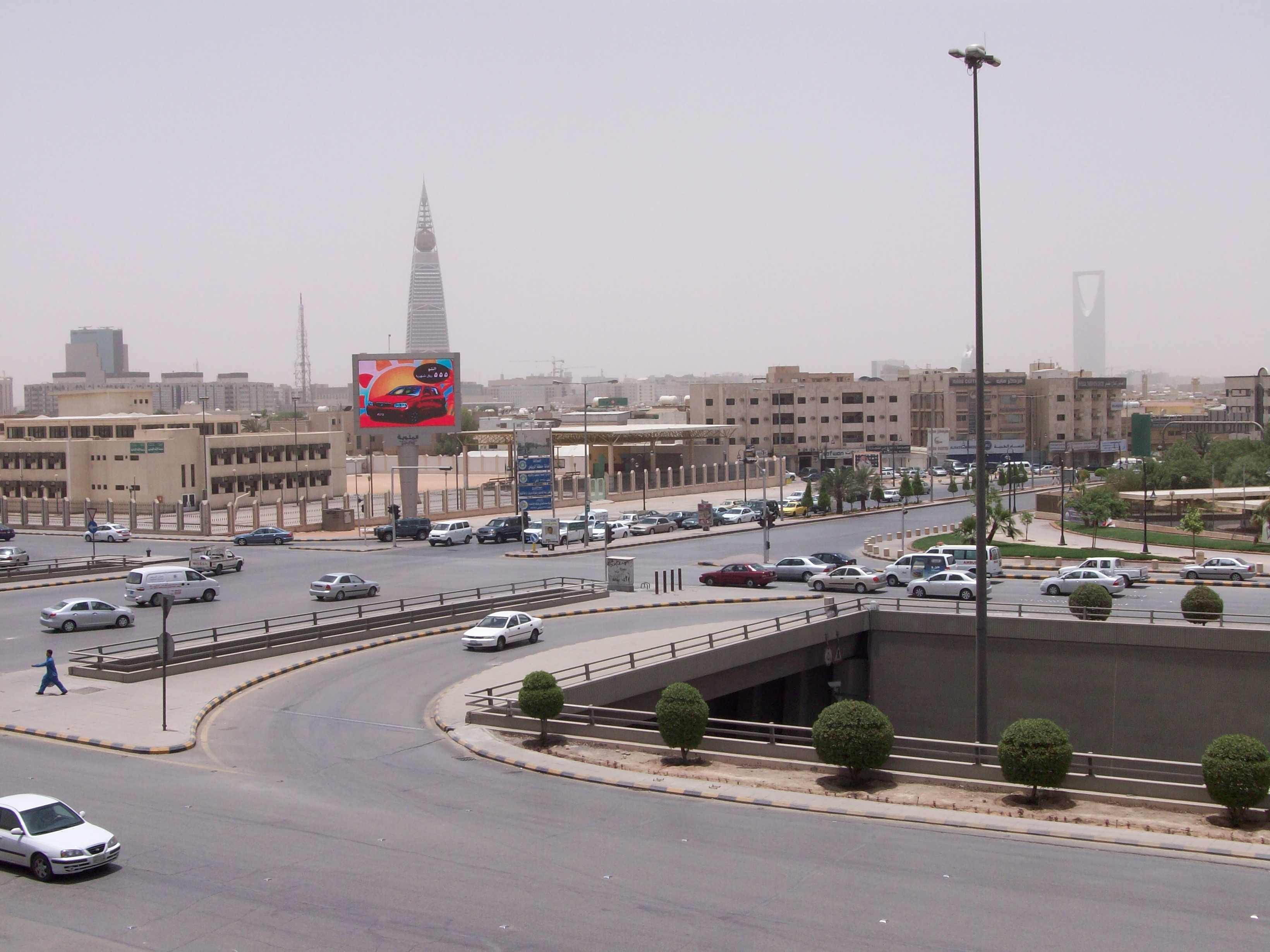
View from Khurais Road, Riyadh
People sometimes ask me for advice about working in Saudi Arabia. I try and share my experience with anyone who asks, whether or not they’re from the same background as me – a relatively privileged westerner. If you’ve followed this blog for a while, you’ll know that I’ve written quite a lot about the country and its people. It’s been a labour of love. The Kingdom has done much for me, and I sometimes feel that it doesn’t get a fair hearing in the western media.
There are plenty of books for people intending to work in Saudi. Some of them I find rather dated, which is not surprising given the pace of change the country is currently experiencing. Others tend to dwell on fairly superficial stuff – enough to get you through the culture shock. And some are far longer than they need to be. So in this post, I’m going to try and share a few of what I see as essential do’s and don’ts based on my own experience. If you are looking at the country for the first time, you might be surprised to find that much of what I’m saying here is common sense that might equally apply at home.
If you’ve come to this blog for the first time and you want to read some more about this fascinating country, try searching below on the phrase Postcard from Saudi Arabia. You’ll find a number of recent pieces on various aspects of Saudi society.
So without further ado, here are ten suggestions that might help you make a success of your new job in Saudi Arabia. Following them, ten more bits of advice on things you should avoid doing. They’re written from the perspective of a western professional, but many of them apply whatever your origin and background.
Learn some history: that you should learn something of the history of a country applies just about anywhere you might visit. History enriches understanding, and provides context for what you see and experience.
When I first went to Saudi Arabia in 1981, Robert Lacey’s The Kingdom was an essential companion. He’s since written an update (Inside the Kingdom). Both are accessible and sympathetic views of the country. Beyond Lacey, there are any number of books available, some of which are not available in Saudi Arabia. If you’re into novels, read the Cities of Salt trilogy by Abdulrahman Munif, an epic that traces the evolution of a fictional Arab kingdom from the beginning of the oil era.
Also take time to study the recent history of the country. The Kingdom’s ambitious 2030 Economic Vision promises to deliver far-reaching change in Saudi society. To understand the context, it’s worthwhile reading up on the factors that have led to the aspirations it contains.
If you would like to compile a reading list, you’ll find some reviews of books relevant to Saudi Arabia and the wider region under the Books tab in this blog.
Learn about Islam: not taking the trouble to learn at least something about Islam in its spiritual heartland is the same as coming to the UK and driving on the wrong side of the road – potentially disastrous. And no, we’re not just talking here about fatwas, jihad and religious police – all the stuff that makes headlines in the West. You don’t need a course on the subject, nor do you need to buy Islam for Dummies. Just do some browsing, learn about the Five Pillars of Islam, find out where the religion comes from and what distinguishes the different schools of thought. The rest you’ll pick up as you go along.
And if you’re curious about any aspect of the faith, just ask any Muslim. The vast majority, whether Saudi or not, will be more than happy to answer any questions you might have. And that includes the rather forbidding-looking guys with long beards, who, when you engage with them, often turn out to be delightful company. That’s been my experience anyway.
Reach out: in some parts of Saudi Arabia, people are more reticent than in others. Reticence is often mistaken for arrogance. My perception is that if you make the effort you can penetrate that wall of formality. Just as if you engage the stone-faced commuter on the train in conversation, there’s a good chance they will open up. But often you have to make the first move.
The best way to establish a connection is by talking about things you admire about the country. There’s no reason to be false or obsequious. Every culture has its good points, so share your impressions. Also open up about yourself. Self-deprecating humour goes down well, and so do stories from your life that chime with theirs – the challenges of bringing up children, for example.
Recognise boundaries: there are social boundaries in every country. In mine, you wouldn’t take kindly to being asked how much money you earn. In Saudi Arabia, especially in more conservative circles, it’s bad form to ask someone about their families, unless they volunteer the information first.
Likewise, don’t invite them to open up about the classic taboo subjects: sex and politics. These subjects are increasingly discussed on the internet, but people know that if they go too far they are liable to get into trouble. So caution tends to be a way of life.
Understand where you fit: you might think that you’ve been brought to the country to do a specific job – engineer, consultant, academic, whatever. With some employers, you might be wrong. You’re a resource, and if you’re a westerner, you’re a high-status asset, to be used for all manner of purposes.
The status of the westerner is not as high as it was, partly on affordability grounds, and partly because there’s plenty of expertise available from other parts of the world, now that the country has strong relationships with countries like Russia, India and China.
But many Saudis still value having a westerner on their staff because they believe that a khawaja, as we’re often referred to in the region, brings them credibility. So be prepared to be asked for advice that might sometimes be beyond your pay grade, and to be given projects that have nothing to do with your day job. As long as you don’t make claims of expertise you don’t possess, you will endear yourself by showing the flexibility to meet the needs of the moment.
And if you find yourself seriously out of your depth, don’t be afraid to use the magic words “I can’t do this, but I know someone who can”.
Another thing you should be aware of is that organisations are often not what they seem. You might find your name slotted neatly into a hierarchy that looks straightforward on first glance. Before long you might come to realise that the neat set of boxes and arrowed lines that appears on paper bears little resemblance to the real organisation, which is built around relationships and trust, rather than functions. This is especially the case in family businesses. Your superior could be a yes-man with little authority. Your subordinate could be a key influencer behind the scenes.
So when you’re bedding in to an organisation, take the time to look, listen and learn. Don’t make premature assumptions based on first impressions.
And last but not least, don’t underestimate your Saudi colleagues. There are some very smart people out there, and I’m not just talking about those who were educated in the West. Some just need the confidence to spread their wings. And that’s often where you can help.
Learn a little Arabic: you don’t have to be fluent, but at least learn enough Arabic to communicate at a basic level. Start with the traditional greetings, and then pick up the kind of words you will need for a taxi – left, right, straight on, next and so on. Words denoting time – today, yesterday, tomorrow, days hours and weeks – are obviously useful, as are the numbers, which are pretty easy up to ten, and then get complicated.
I once did a deal with my Egyptian assistant. We would spend each successive day for two weeks speaking only each other’s language. It was an unfair arrangement, given that he spoke more English than I did Arabic, but it certainly helped me.
Reading is tough, even if, like me, you’ve previously learned a language in a different script. One little trick I’ve used to pick up on the Arabic script is to take advantage of traffic jams by looking at number plates on front of you. The Arabic letters appear next to their English equivalents. Ten hours in traffic should be more than enough for you to pick up all the characters, even if they look different when strung together.
Learn the social conventions: you can get these from all the guide books or cultural briefings, so I won’t go into the taboos in any detail. But things like where to put your feet at a traditional feast, not shaking hands with women, Arabic coffee protocol and other conventions are worth learning. You won’t be cast into the outer darkness if you break them, because the Saudis are very tolerant of the clumsy foreigner. But they’re a matter of good manners. And the less faux pas, the more easily you will win their respect and trust.
Accept the contradictions: your Saudi colleague might speak perfect English with an American accent. You might assume that he’s studied in America, and therefore invites friends to his home every weekend for barbecues, where wives and daughters mix freely with guests outside their immediate families. You’d probably be wrong, at least in your assumptions about his lifestyle.
You might also hear idle chat about weekends in Bahrain and Dubai – of wine, women and song. Don’t assume that your colleague would tolerate such behaviour in his own country. You might also think less of him for behaving one way outside his country and another way within. Understand that in Saudi Arabia the guys-only culture leads a few men to do stuff abroad that might be frowned on at home, but as long as they don’t embarrass their families, they consider their indiscretions as adventures rather than mortal sins. In other words, what happens in Dubai stays in Dubai.
Be curious: Saudis are proud of their culture, traditions and history. Most will be happy to explain any aspect to you if you take the trouble to ask. I recently spent a good half-hour being given a learned lecture by a colleague on the art of camel farming. Much of it I’d heard before – the animals’ beauty features, the cost of keeping them and the joy they give their owners. But each recitation brings a few new vignettes.
Another time, a doctor at a workshop I was facilitating gave me a demonstration of ablution before prayers. He went on to share a number of practical reasons why the act of praying had physical as well as spiritual benefits. Conversations like these bring a deeper connection than anything you might share on the work front. And if you’re genuinely curious, you will have made a priceless bond.
Share your knowledge: the sooner you realise that you’ve been employed not only to do stuff but to show your hosts how to do it, the sooner you will win their respect and trust.
A long time ago, my Saudi boss at the time gave his team of westerners a talking-to about Saudization. The message was that those who most effectively eliminated their jobs by sharing their knowledge would be the people who would be with him the longest.
You will find many expatriates who don’t buy into the ethos of knowledge-sharing. They consider that knowledge is power, and that holding on to what they know is an essential job preservation tactic. Ultimately, though, I find that attitude to be unproductive. You might prolong your employment, but will you learn anything, increase your skills, grow personally? I doubt it. My personal philosophy is that every time I share knowledge, I end up getting something back. Maybe not immediately, but learning is a two-way thing.
And now, here are some no-no’s.
Don’t play office politics: especially if you’re a westerner in a workplace largely populated with Saudis and other Arab nationals. Everyone gets caught up in workplace politics to a greater or lesser extent. But if you start playing games, you’re at a distinct disadvantage, especially if you’re new to the region, because you don’t know the rules.
If you don’t know Arabic and you’re unfamiliar with the cultural nuances, the chances are that you will make serious mistakes and end up alienating people you wouldn’t want to upset. Only a fool plays politics in an environment they don’t understand, so it’s best to steer clear of games of thrones. Just do your job to the best of your ability, don’t take sides and watch dispassionately as the smooth operators wield their stilettos. And quietly learn.
Don’t cross the red lines: especially those applying to the social media. If you’re tempted to post your opinions about a colleague, your employer or the latest decision by the government on Facebook or Twitter, be very careful. Saudis are extremely sensitive about personal insults. The government monitors the social media, and people do get into trouble for what they say.
One way to figure out what the red lines are is to read the local English-language newspapers. You’ll find plenty of opinion critical of the performance of government departments, or deploring anti-social behaviour. If you feel you must speak out, be sure to go no further than the local media do. And never, ever, ever, attack or insult an individual.
Red lines apply in your face-to-face interactions, too. You can talk to a local about crazy drivers, and he will probably agree with you that drivers in Saudi Arabia leave much to be desired. Make disparaging remarks about women in face veils, and you will be on dangerous ground. Topics such as the segregation of women, the female driving issue, the practice of Islam and other fundamental aspects of Saudi society are best avoided in the company of your hosts unless they bring them up first, and provided you discuss them in a constructive manner.
Don’t be surprised by surprises: or, to put it another way, always expect the unexpected. The reason for this advice is that even if you think you see the big picture, you probably don’t. Your boss, for example, is unlikely to share his complete agenda with you. If he’s inexperienced, he might not have a complete agenda. A broad set of intentions, yes, but not necessarily a fixed view of the way forward. Experienced managers will often be quite prepared to change their minds for no apparent reason. No matter how senior you are, they are likely to tell you only what they think you need to know, which might not be the same as the information you think you need.
This can be maddening if you’re not ready for it, which goes back to the advice about knowing where you fit. A key word in a typical Saudi job description is flexibility. In practical terms this often means stopping what you’re doing at a moment’s notice and getting on to something else. Immediately. In fact, yesterday.
Some people find this requirement demotivating, because they don’t feel they have any control over what they’re doing. In fact, there’s no harm in pushing back, and asking why the sudden change of direction, and warning of the potential consequences of delaying the task in hand. What response you’ll get depends on how autocratic the boss is. Sometimes you might even find that the person is expecting push-back. In reality, asking you to do something, and waiting for push-back, is his way of seeking advice without having to admit that he needs it.
It’s worth remembering that Saudi society is strongly hierarchical, and the person at the top of the pyramid might find it difficult to admit weakness or uncertainty. To do so requires him (and, increasingly, her) to trust the confidant, and trust builds up over years, not weeks and months.
Don’t make fun of your hosts: it’s the same the world over – most societies are happy to mock their own foibles, but don’t take kindly to others mocking them.
The Saudis have a great sense of humour. Ask them to illustrate what they find funny and they’ll show you videos on WhatsApp and explain the humour. Every Ramadan between 1992 and 2011, there was a TV program called Tash Ma Tash (No Big Deal) that got huge audiences. The program featured sketches poking fun at Saudi society. The subjects were surprisingly close to the bone: gender politics, pompous patriarchs, incompetent officials, the religious establishment.
It’s perhaps significant that the series was discontinued in the year of the Arab Spring. Since then, the authorities have been less inclined to look kindly on satire. Whether this will change in the wake of the 2030 Vision, which includes plans to set up entertainment and cultural centres, remains to be seen.
The humour is still there, especially on YouTube. But your hosts know the red lines. So laugh with, and not at.
Don’t spend all your money: I first came to Saudi Arabia when I was 29. My tax-free salary ended a decade of penury. It would have been easy to have blown the money on stuff: expensive holidays, cars, gadgets, clothes and so on. Even easier when there wasn’t much opportunity to spend the money while I was in the country. But holidays were a different matter.
But for one reason or another, I managed to hang on to a good proportion of what I earned, and when I came home nearly a decade later, invest it in a start-up business. But things could have been very different. As an expatriate, you never know when the days of milk and honey will end. A change of policy, a new person at the top, a misstep on your part, and bang, you’re out of work.
So even though saving or investing your ill-gotten gains is a smart thing to do in your own country, it’s especially wise for an expatriate. If you’ve been away from home for a while, you may find yourself less employable than you were when you first set off on your Arabian adventure. A cash cushion to ease your return can be extremely useful as you adapt to a less opulent lifestyle.
Don’t think you’ve made friends for life: I have met hundreds of fellow expatriates over thirty-five years of traipsing back and forth from Saudi Arabia. My wife and I made good friends and generally had a great social life. Whether it’s a reflection on us, or the transitory nature of some friendships, we can count on the fingers of one hand the number of people we met in the Kingdom with whom we are regularly in touch, and whom we see quite often.
There’s a wider circle we’re in touch with occasionally, but less than I would have imagined at the time. One of the reasons is pretty obvious. The people we knew came from all corners of the globe, so when we all left, there was no longer the proximity that sustains most friendships. Another was that being strangers in a strange land gave us a commonality of interest that dissipated once we returned to our own little patches. There are only so many reunions where you rehash the old war stories before you start realising that actually your shared past is the only thing you now have in common.
Don’t mistake a conversation for a fight: one of the cultural aspects of the country that takes a bit of getting used to is that loud conversations are not necessarily confrontational. They just sound that way. This is especially the case when you listen to a couple of Bedouin people talking. The absence of personal space between the two, the tone of voice and the volume of speech might give you the impression that they’re about to go for each other’s throats. Then you see the twinkle in the eyes, and the smiles break out, and you realise that they’re probably engaged in some form of negotiation, or just chatting about weather.
The lesson here is that in a different culture, you need to re-learn what you think you know about the art of communications, and especially body language. The language of emotion can be strikingly different from what you’re used to, so avoid jumping to conclusions.
Don’t assume you’re safe everywhere, or nowhere: there’s safe and safe. Take to the roads and you’re no safer than any other passenger or driver in a country that loses thousands of lives a year to road accidents. Walk through the streets of Jeddah and Riyadh and you’ll find areas with no pavements, open manholes and often precious few safe ways of crossing the road.
Read the advisories from the US State Department and the British Foreign and Commonwealth Office, and you’d be forgiven for thinking there’s a Daesh member lurking around every corner waiting to blow you away.
Some people take these warnings very seriously. In 2008, five years after the spate of Al-Qaeda attacks on westerners, I worked with a number of consultants who insisted on spending every minute of their leisure time holed up in a plush, heavily-guarded hotel. They never went out, even on an occasional foray to a well-guarded shopping mall. When I drove one of them to another city 400km away, he refused to get out of the car at the gas station to stretch his legs for fear that someone might be waiting to take a shot at him.
That’s a long way from the life I lived in the Eighties, when I felt perfectly safe wandering around the back streets of Jeddah. Since then, street crime has increased. And yes, there are occasional attacks on westerners, and more than occasionally, armed confrontations between the security forces and armed insurgents. But I try and let common sense prevail. There are some parts of Riyadh I would avoid, just as there are some parts of London and Los Angeles. There is always the risk of opportunistic crime, whatever the motive. But I don’t let the fear of such an event dominate my outlook any more than I would stop walking the streets of central London or refrain from visiting Istanbul.
After all, bad luck comes in many different forms. You can only do your best to mitigate the risk. Bottom line: if you’re habitually nervous about your personal safety, stay at home. In my view, no amount of money can compensate for a life lived in fear.
Don’t lose your sense of humour: assuming, that is, that you have one in the first place. The best way to cope with the cultural dissonances you’ll encounter in Saudi Arabia is to be able to laugh about them. Laugh at your mistakes, your faux pas, and laugh at the absurdities (from your perspective) that you’ll encounter in daily life.
What’s the alternative? Get angry, get frustrated, lose your temper, waste precious energy raging at things you can’t change. Remember also that what might first appear absurd might have an underlying logic that becomes apparent with the passage of time. For me, watching hidden meanings unfold is part of the joy of discovery.
Don’t be a walkover: you’re an employee, not a slave. Act that way. Don’t let people take liberties with your willingness to fit in, to help out and be a good team member. Sometimes an ownership attitude leads employers to take the view that your time is entirely theirs. Unconditionally. The more you comply, the more they’ll expect your compliance.
I’ve often found myself working twelve-hour days and weekends. I do so when I judge it’s necessary. I’ve never clock-watched. As a consultant, I work what is usually referred to as a professional day. At times, that day stretches beyond normal limits. But in Saudi Arabia, as in other parts of the Middle East, attitudes towards time and productivity can often be at variance with the western compulsion to make every minute count. See my recent post, The Art of Hanging Around, for more on this.
Most Saudi employers treat their western employees with respect. They will always try to get the most out of you that they can, just as employers do in the West. If you’re unlucky enough to find yourself with an employer who tries to push you beyond reasonable limits, make sure you have your own red lines that you will not allow to be crossed. If necessary, tactfully and politely stick to them. Or look for another employer.
That’s just about it.
Except to say that working in Saudi Arabia can be truly exhilarating, madly frustrating, deeply fulfilling, and occasionally soul-destroying. Whether you succeed or not largely depends on you, and also on how you define success. On whether you’re prepared to learn from the good experiences as well as the negative ones, adapt rapidly to change, and see every situation as an opportunity to develop your skills.
Good luck!
Dear America
Forgive me when I fail to encapsulate my feelings for you in a tweet or a three-minute video. I know that’s what you would probably prefer, because you must get any number of letters from friends, admirers, detractors and enemies. But I’m relying on your famed ability to get to the heart of the matter, no matter how long, torturous and clumsy the message.
I’m writing to you as a friend and admirer. You don’t know me, but we’ve had a relationship for many decades.
You’ve been in my life ever since The Lone Ranger, Rawhide and the Beverley Hillbillies first hit our tiny black-and-white TVs. And on the big screen, How the West Was Won showed us the broad sweep of your early history. Wide open spaces, triumph over adversity, right defeating wrong. So much classier, so much, well, bigger, than Hancock’s Half Hour, Z-Cars and Doctor Who.
You have always been big for me. Broad, optimistic, high as the sky. Even your dark moments were big. Cuba, when the lights nearly went out. Vietnam, when big turned out to be not enough.
But even before I first set foot on your shores, you dominated my life and gripped my imagination. Your enterprises were always big and so were your aspirations. The space program. Jumbo jets. Skyscrapers. Mount Rushmore. Aircraft carriers. Hydrogen bombs. Dams. Multi-lane highways. It was as if you were constantly striving to match the majesty of your natural landscape – the Rockies, the Grand Canyon and Yellowstone – in your feats of engineering, construction and technological innovation.
No matter that we Europeans sniggered at your unsophisticated ways. Your absurd can-do attitude. Your vulgar materialism. Your liking for settling disputes with guns and bombs. Your crass, in-your-face sales methods. Your gullibility. Your unsubtle sense of humour. You didn’t get our decadent old continent at all, did you?
Yet for all our snobbish dismissals of your culture, or lack of it, we envied you – and how. And even though we objected to your bombers, your nukes and your cruise missiles, we felt safer under your protective shield. Our parents – and then, when we took time to think about it, we baby boomers – were grateful when your soldiers saved us from Hitler, your dollars helped rebuild Europe after the War, and your soldiers stood on the Rhine alongside ours.
As I grew up, I came to love your music. And hand-in-hand with the music, I embraced the counter-culture that we helped to create together. We might have thought that our music was superior to yours. But without your audiences, your adoration and your spending power, our acts would fared no better than Johnny Hallyday. And where did our musicians draw their inspiration from? It seems that for a few years, for young people at least, the Atlantic really did shrink to a pond. On our side, the Beatles, the Stones, Zeppelin and The Who. And on yours, Dylan, the Doors, the Byrds and the Dead.
Our cultures seemed to coalesce. Hendrix came from Seattle and made his reputation in London. Mancunian Graham Nash went to LA to join Crosby and Stills. We did the same drugs. We were all against the Vietnam war, and we all wanted to ban the bomb. Well, most of us.
Then, from the mid-seventies onwards, the idealism faded, and the common ground receded. On my side, the hippies became hip capitalists. Nobody epitomised the progression more than Richard Branson, whose Virgin brand started with a chain of pokey little record shops staffed by cool dudes with sandals, bells and Jesus beards. The shops reeked of incense and other aromas less legal. By the end of the decade, Branson was the owner of a flourishing record label, and dreaming of cola, financial products and a transatlantic airline all bearing the image of that dreamy hippie chick. He was always a businessman, of course. We just kidded ourselves otherwise for a while.
Meanwhile, you were inventing stadium rock. Big again. Rock entourages advancing with military precision from city to city, hard-nosed record companies and gangster managers in tow. Debauchery on an industrial scale. Baseball stadia filled with the adoring masses.
Your baby boomers who, at the end of the previous decade, flooded to Woodstock, started getting proper jobs, just like ours. In enclaves across the country, socially inadequate kids started acquiring their ten thousand hours of experience writing software programmes on mainframes using time cadged from academic institutions and corporations. Those with better social skills went into banking or real estate.
Those who didn’t have the education went to work in car factories and steelworks, or started their own small businesses – repair shops and hardware stores. Because in those days, despite the ups and downs in your economy, sometimes triggered by oil shocks and unsustainable booms, there were plenty of jobs, plenty of opportunities for those lucky enough not to end up in your rotting inner cities.
At the end of the decade, we watched aghast as a Hollywood actor of seemingly limited intelligence became your president. But when he proclaimed that it was “morning in America”, you believed him, and kissed goodbye to the painful seventies with a surge of optimism. You proceeded to get on with what you do best – creating businesses out of nothing, using technology to change the game. Microsoft and Apple were born. Intel and Motorola thrived. The Star Wars bluff brought the Soviet Union to its knees.
Back in Britain, we were preoccupied with shoring up the last vestiges of our colonial possessions. National pride restored following the Falklands campaign, our trenchant leader sold the family silver, presided over the decline of our industrial base, and by deregulating the banks opened the door for the greed and speculation that led to disaster two decades later. In both our countries, greed was good.
When the nineties opened you were top of the world – the only superpower left standing after the collapse of the Iron Curtain. You led us and a host of other willing participants in liberating Kuwait, once again showing us your technological prowess with your laser-guided bombs, cruise missiles and Patriots. Your corporates embraced the internet. Microsoft, Yahoo and Amazon became household names. You started connecting the world, and spawned a host of dotcom millionaires. Everyone was a winner, including citizens of limited means whom the obliging banks helped on to the housing ladder with no-questions-asked mortgages.
We shared your enthusiasm for property. Our financial industry thrived. As your faithful ally, we basked in the reflected glory of your ascendancy. It was the economy, stupid, and for all the bumps in the road – civil wars and genocide – we both still ended the decade feeling that we were in a better place than when it started.
But we should have realised that not everybody in the world was happy with your supremacy. Russia’s humiliation coiled a spring of resentment. China began to emerge as an industrial power. And in dusty training camps, armed veterans of the Afghanistan struggle pointed the finger at you as the root cause of the Middle East’s pitiful status as your personal gas station, to be sucked dry of pride and resources.
9/11 changed everything. As you recoiled in surprise and outrage at the audacity of nineteen men armed with box-cutters, you lashed out. You took out the Taliban and degraded al-Qaeda. Then you took Iraq, and hunted down the leader who “tried to kill my Daddy”. You – and we – ended up with an unwinnable war in Afghanistan and a bloody power vacuum in Iraq, happily filled by the very people you thought you’d eliminated.
Just when you reckoned that your surge had finally beaten back Al-Qaeda in Iraq, two decades of greed and dubious banking practices came to a head with the sub-prime crisis. Suddenly your citizens found themselves sleeping in their cars in parking lots. Millions thrown out of work and on the streets.
At that point we both realised how skin-deep was the veneer of the prosperity we thought would never end. In the subsequent years we saw a tepid economic recovery, but the underlying poverty and hopelessness of the dispossessed became clear as never before. As the internet billionaires got richer, the average wage stagnated. In my country and yours, unemployment statistics masked the underlying reality that the next generation couldn’t rely on being better off than their parents. Yes, there were jobs to be had, but only provided you were prepared to accept the minimum wage.
And people got angry. None more so than your white population who found themselves outvoted and out-numbered by migrants from Asia and south of your border. In my country it was a similar story, except that our migrants came from Europe and our former colonies – and lately from those displaced by the battlegrounds of Afghanistan and the Middle East.
And now that anger and disappointment has come to a head, like a gigantic boil.
In my country, pressure from the resentful has led to a referendum in which we will be deciding whether to become an island again. To put up the barricades that will protect our sovereignty from encroachment across the channel.
And on your side, you have a presidential candidate who wants to build a wall across your southern border to stop people from entering because they’re rapists. Someone who wants to stop people from entering because they’re Muslims. A man whose battle cry is anger and resentment, who is defined not by what he is for but by what he is against, not by what he wants to start but by what he wants to stop.
Can it be that you want to be small again, after a century of being the biggest guy on the block? And does small mean that you will spend your treasure on a wall to seal your borders (because you know your neighbours won’t pay), yet inside those borders you will allow your bridges and roads to crumble, your dams to fracture and your lakes to dry up?
And will you leave your friends and allies to fend for themselves unless they’re prepared to pay the bill for their protection? What? Are you going to turn your military into a force of mercenaries? Are you proposing to run an international protection racket?
If those friends choose not to pay the bill that you think appropriate, and acquire their own nukes, carriers and Delta forces, do you seriously believe that you will be just as safe within your fortress? And when you erect your trade barriers, can you assume that your allies will continue to align with you when they have no good reason for doing so?
Will you really be safe in a world whose big guys don’t recognise borders? In a world more connected and interdependent than ever before? In a world bristling with unstable dictatorships brandishing nuclear-tipped ballistic missiles, or with rivals ready to bring you down through cyber attacks that would dwarf the damage caused on 9/11?
I’ve visited so many of your cities and marvelled at their diversity. I’ve admired the energy and enterprise that led to their creation. Big in ambition, big in scale. The spirit of optimism so beautifully captured in Dvorak’s New World Symphony and Copeland’s Fanfare for the Common Man. I love your celebration of success. I love the pride you have in your national parks and your great outdoors. These, not the mean streets, are what come to mind when I think of you.
Yes, I know you have a dark side, none darker than the civil war whose scenes were captured by Matthew Brady, and whose scars are still evident on the Virginia battlefields I have witnessed with my own eyes. A thousand movies and TV series show the violence, greed and corruption in your inner cities, your suburbs and your corporate citadels.
But I never thought you would let a cynical, sneering hypocrite stand so close to the footsteps of Washington, Lincoln and Roosevelt.
And yes, I know you’ve had your fair share of demagogue politicians – your George Wallaces, Huey Longs and assorted post-bellum carpetbaggers. Not to mention the racists, religious rabble-rousers and lynch mobs – your Nathan Bedford Forrests, Klansmen and real-life Elmer Gantrys.
We’ve had a few – still do, as a matter of fact. But none of them, on your side or ours, has ever come within touching distance of the nuclear button. None of them have had the power of the social media at their disposal. And none of them have been able to harness so effectively the myth of the super-hero relentlessly propagated by an entertainment industry so bereft of artistic imagination.
None of them have had the power to destroy – through pride, vanity and a blinkered sense of national interest – so many of the positive aspects of our civilisation that you have helped to create.
Generous, decent and principled America, I’m begging you. Pull back from the brink. Don’t entrust this man with your future and ours. Through your abundant natural and human resources, your competitive spirit and yes, though the ideals implanted in your DNA by your founding fathers, you have become the world’s lodestar, its reference point.
You are the one nation that’s too big to fail. You may no longer want the responsibility that comes with your exalted position, and you may not have asked for it in the first place. But it’s yours, whether you like it or not.
I will never forget the moment when you truly stood for mankind. When, with the whole world watching, you stepped on to another world, and said “that’s one small step for a man….”.
And I was so proud of you when you elected a black president, just as I was proud of London more recently for choosing a Muslim mayor. Not because I’m black or Muslim, but because in great societies ethnicity and religion should be no bar to leadership.
Don’t let this small man who claims to speak in your name diminish you. Don’t turn in on yourself. Don’t become a black hole, a malevolent dwarf that sucks all of us into your orbit of decline, resentment and suspicion.
You may feel that the rest of the world is against you. You may not understand why. And yes, you’ve made your mistakes. Goodness knows, we all have. But you still have the power to do the right thing. To right wrongs. To keep the show on the road – yours and ours. You must surely realise that your power is not unlimited. That these days you need to exert a different kind of power. The power of persuasion and of example, rather than that which comes from the barrel of a gun.
You still have the power. So again, I’m begging you. Use it wisely. Stay big, but be a different kind of big. Now more than ever, we need you, and whether we know it or not, we would be bereft without you.
Please, America, pull back from the brink. You are so much bigger than Donald Trump.
Affectionately yours,
Steve
The trouble with -isms is that they are dangerous tools in the hands of accusers. Dangerous because for the politician, the demagogue or the anonymous name-caller in the social media, there are no gradients. You’re either a racist or you’re not.
The same goes for hatred. It’s a definitive term. You don’t vaguely hate or mildly hate. You hate. Or you loathe. You might hate very much, but you don’t hate very little.
Which is a problem, because anybody who is honest with themselves will admit that there is in fact a spectrum.
Let’s take an -ism. Anti-Semitism. Do you hate “the Jews” so much that you would harm a Jew whom you meet in the street? Or would you personally do nothing, but approve the actions of other people who harm Jews? Or vote for a political party or leader committed to harming them? Would you deliberately avoid employing someone you knew was Jewish? Would you avoid their company, or find an excuse for not allowing them to become a member of your golf club or flower-arranging circle?
Would you avoid shopping in a store on the grounds that it’s obviously owned by a Jew? At a party or among like-minded people in a pub, would you blame the Jews for many of the problems in the country and the world beyond. And if you knew that anti-Semitism was so socially unacceptable that you were afraid to air your views, would you use the word Zionist instead of Jew, even though in your mind the two words were interchangeable?
Or would you do none of the above, but nurse a prejudice – without knowing where it comes from – that leads you only to seek opinions similar to yours?
Now substitute Muslim for Jew, and ask the same questions of yourself. And in the context of the last question, would you substitute the word Islamist, or extremist, for Muslim?What about blacks, whites, Asians, non-believers, Tories, Trots, fox-hunters, animal testers, smokers, cyclists, frackers, gypsies, gays, immigrants, Arsenal fans or fat people?
The sad reality is that anybody who has no prejudice – mild or strong – against any person or group of people is either brain dead, or lives in a cave separated from the rest of humanity.
But -isms don’t allow for shades of opinion or belief. You’re either an -ist or you aren’t. What is why they’re such powerful tools in the hands of demagogues.
Let’s now look at hatred. In the real world, are there grades of hatred?
Prejudice may not be the same as hatred, as I hope I’ve demonstrated. But in the hands of skilled politicians and demagogues, it can be fertile ground for breeding full-blown loathing. So let’s think about these words in the hands of politicians, or more specifically, at what I call The Three Statements of Hatred.
Here’s how it works. Consider these statements:
- I hate Jewish people because they have no loyalty to anyone but themselves
- I hate people in Israel who attack innocent Palestinians
- I hate Binyamin Netanyhu, because he’s a Zionist
Which of them is anti-Semitic? This theoretical hatred ranges from carpet bombing to precision-guided. Most people I know would regard only the first statement as being 100% anti-Semitic. The second statement could be anti-Semitic because there is an assumption born of prejudice that some Israelis kill innocent people. The third statement could be anti-Semitic if the person making it equates Zionism with anti-Semitism, or it could be political if the person sees Zionism as a political movement.
Complicated, right? Now it’s the turn of Muslims:
- I hate Muslims because they want to turn the world into a Caliphate
- I hate Muslims who mutilate women
- I hate Abubakr Al-Baghdadi of ISIS because he’s a murderous fiend
Now blacks:
- I hate black people because they’re lazy scroungers
- I hate black people who rape women
- I hate Robert Mugabe because he’s a tyrant who has ruined his country
Immigrants:
- I hate immigrants because they are taking our jobs
- I hate immigrants who don’t integrate into our society
- I hate Sadiq Khan (Labour candidate for London Mayor) because he’s a covert Islamist
Each of these statements is subject to the same range of underlying attitudes, ranging from outright, blanket condemnation of an ethnic group, a race or a social group to specific, targeted disapproval.
The difference between the first statements and the second is the use of two words: “because”, which allows condemnation for a generic reason, and “who”, which targets behaviour that might not necessarily characterise the whole group. The third statement reverts to “because”, either on the basis that the subject’s behaviour is objectionable, or because he or she is deemed to symbolise the characteristics of the group in Statement 1 or the sub-group in Statement 2.
The likes of Donald Trump rarely use Statement 1. In fact, they rarely use the words “I hate”. But they do use Statements 2 and 3, because they know that they will reach those who use Statement 1 in everyday life. In other words, by criticising individuals and subsets of larger groups, they appeal to those who have prejudices that could be described as anti-Semitic, racist, Islamophobic or fascist. All the while they retain the ability to deny that they are racist or anti-Semitic, while appealing to people that actually are.
Now remove the words “I hate”, “because”, and “who” from the statements and we get, in the case of the last set:
- Immigrants are taking our jobs
- Immigrants don’t integrate into our society
- Sadiq Kahn is a covert Islamist
And voila! We have a set of assertions that are highly likely to send a message that we should therefore hate immigrants, and Sadiq Kahn in particular. Meat and drink for Nigel Farage, Donald Trump and Marine Le Pen, who leave it to their listeners to draw the final conclusion.
Even if they qualify these statements with “who” and “because”, in the minds of their audiences, the qualifiers disappear.
Thus, Donald Trump’s statement about Mexican immigrants,
“When Mexico sends its people, they’re not sending their best [sic]. They’re sending people that have lots of problems. They’re bringing drugs. They’re bringing crime. They’re rapists.”
becomes, in the minds of his followers:
“Mexicans are drug dealers, criminals and rapists”
What of Ken Livingstone, the former mayor of London, who has been suspended by the Labour Party for alleged anti-Semitic remarks? In this transcript of a BBC interview, he’s talking about Naz Shah, the Labour MP also suspended from the party because of her allegedly anti-semitic tweets from 2014:
“She’s a deep critic of Israel and its policies. Her remarks were over-the-top but she’s not anti-Semitic. I’ve been in the Labour party for 47 years; I’ve never heard anyone say anything anti-Semitic. I’ve heard a lot of criticism of the state of Israel and its abuse of Palestinians but I’ve never heard anyone say anything anti-Semitic.
“It’s completely over the top but it’s not antisemitism. Let’s remember when Hitler won his election in 1932, his policy then was that Jews should be moved to Israel. He was supporting Zionism – this before he went mad and ended up killing six million Jews.
“The simple fact in all of this is that Naz made these comments at a time when there was another brutal Israeli attack on the Palestinians; and there’s one stark fact that virtually no one in the British media ever reports, in almost all these conflicts the death toll is usually between 60 and 100 Palestinians killed for every Israeli. Now, any other country doing that would be accused of war crimes but it’s like we have a double standard about the policies of the Israeli government.
His logic seems to run thus:
– There has never been any anti-Semitism in the Labour Party
– Hitler supported Zionism, therefore Zionism must be bad
– Naz Shah made offensive comments in reaction to Israel’s treatment of Palestinians
– Criticism of Zionism is not the same as anti-Semitism
– Therefore Naz is not anti-Semitic just because she’s opposed Zionism
– And what’s more, Zionists are war criminals, just like the Nazis
Sort of…..
Based on his words alone, Livingstone can’t be accused of being anti-Semitic, never mind an apologist of Hitler. What you can say is that he was extremely dumb to quote an historical “fact” that is not only of questionable accuracy, but is also a non-sequitur. He shows himself to be a man who is quite prepared to use dodgy history – the idea that Hitler wasn’t mad in 1932 but went mad afterwards is quite ludicrous to anyone who has read Mein Kampf – to fit his political world view. Like his party leader, Jeremy Corbyn, he is a man who sticks to his principles. Like many politicians, he chooses only the facts that support those principles. But on this occasion he chose badly.
His approach is very different from that of Donald Trump. Trump, in my estimation, is an opportunist totally focused on personal electoral success. He sensed a groundswell of discontent, and is prepared to say anything necessary to tap it. If it increased his chances of election, he would happily reverse his position on just about any issue. And if elected, he wouldn’t feel bound by any of his campaign promises.
So it seems to me that the true demagogue of the two is Donald Trump. He uses the Three Statements progression, whereas Livingstone is merely guilty of a clumsy framing of long-held convictions.
Either way, it’s clearly the season for wonky inductive reasoning on both sides of the Atlantic. It will be interesting to see Trump explain away his wilder campaign statements if he’s nominated for the presidency. On the European side I look forward to hearing Jeremy Corbyn declare victory in the upcoming council elections, and the Brexiteers claiming that black is white in the referendum debate.
Whoever ends up as winners and losers, the art of reasoned argument is dying. Nowadays, it seems, you can only get widespread attention if you employ the tactics of the shock-jock. And if disapproval breeds prejudice, and prejudice is repeated enough to become respectable, then it’s only a short step to the Three Statements of Hatred. And from there, all manner of destructive possibilities lie.
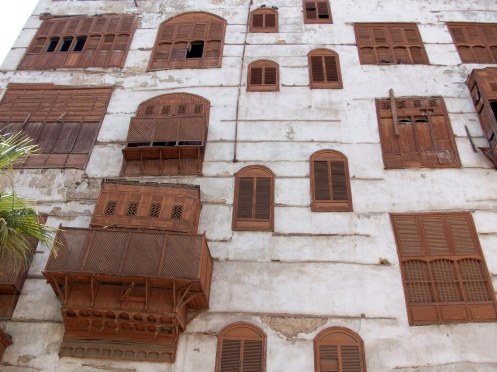
I come from a country whose wealth is derived from centuries of conquest, exploitation and slavery. A country whose capital city is full of mansions owned but rarely occupied by wealthy foreigners – safe havens for their fortunes of dubious provenance.
A country where generations of families whose adults have never worked live in run-down districts on state-funded benefits. Where gangs of taxi drivers prey on vulnerable girls and turn them into sex slaves. Where foreign workers with criminal records in their home countries murder and maim people for sexual gratification or financial gain.
Where stressed-out workers live on Prozac and the unemployed burgle homes to sustain their heroin habits. Where racism is endemic, and citizens rumble on about national values of respect and tolerance while abusing others on Twitter, avoiding tax and gorging themselves on cheap wine. Where a diminishing band of rich people are getting richer and ever-increasing millions of the poor are left to make do on the minimum wage.
Where people stumble on to the path of on-coming vehicles with smart phones in their faces. Where young girls collapse in the streets with their legs in the air when the bars close on a Saturday night. Where the elderly are abused and robbed by workers in “care homes”, or else live lives of aching loneliness in real homes they can’t keep clean, dying for the weekly visit from the meals-on-wheels team because that’s the only visitor they ever get.
Where politicians periodically send our armed forces to bomb, invade and destroy countries in the notional interest of “national security”. Whose security forces can monitor our mobile phones and listen to our conversations. Whose police and other enforcement bodies can enter our homes for any number of reasons, and whose local authorities can prosecute us for allowing our dogs to foul the streets or for putting the wrong kind of waste in our wheelie bins.
Is that a fair view of Great Britain?
Nine out of ten of my fellow-citizens would answer that it’s a ridiculously unbalanced picture of their homeland. Many would argue that the UK leads the world in its liberal values, compassion and freedom of speech. A great place to live. So great that twice as many foreigners choose to live there as Britons make their lives in other countries.
But it wouldn’t be difficult to put together a one-hour documentary, full of interviews and video clips, that would convince a substantial number of timorous foreigners never to set foot in the place, on the basis that it’s a pretty diabolical country to live in.
Now consider Saudi Arabia.
At a time when the Kingdom’s efforts to wean itself off its reliance on oil are putting the country in the spotlight, its human rights record is also under the gun from the western media. The narrative of the recent ITV/PBS co-production Saudi Arabia Uncovered was familiar to those who follow events in the Middle East, yet most likely shocking to those who don’t: sectarian unrest in the Eastern Province, the role of the religious police, the suppression of religious and political dissent, harsh punishments meted out to miscreants, evidence of covert funding of Al-Qaeda prior to 9/11.
A predictable reaction from the West dominated the social media: how can we support a regime that does such terrible things? Followed by equally predictable comments from the British government to the effect that Saudi Arabia is not a perfect state, yet acts as a valuable bulwark against terrorism, and from the Saudi government, which stated that the documentary was unfair and unbalanced.
And unbalanced it certainly was, as Sabria Jawhar asserts in Spreading lies about KSA, a recent article in the English-language Arab News. Sabria lived in the UK for some time while she was studying for her PhD, and she has always written sympathetically about her life in the West.
In the article, she robustly defends her home country, pointing out that:
The PBS Frontline documentary titled “Saudi Arabia Uncovered” gives Americans what they want the most: A deep dish of Saudi “oppression, cruelty, executions, abuse of women and assorted nastiness” that would disgust any human being with an ounce of emotion and empathy.
Much of it was nonsense, of course, and the video segments aired in hour-long documentary on March 29 are already online. But people will believe what they want to believe and me whining about it will not change the perception that Saudi Arabia’s citizens live in the “dark ages.”
She then argues that the documentary “loosely plays with the facts”, and presents a series of rebuttals of many of the points made in the programme.
I’m in no position to argue about the specifics, but I also take issue with some of the broad assertions.
The show told of an underground network of dissidents opposed to the Kingdom’s conservative elite, the religious establishment, the suppression of free speech and the social policies for which the country has become famous or, in the eyes of its critics, notorious.
What it didn’t point out was that there are many shades of opinion openly expressed in the print and social media every day. It’s true that there are red lines. Criticism of the ruling family and questioning of Islam, as Sabria points out, have always been no-go areas.
But Saudi journalists have been writing about social issues in their country for as long as I’ve been coming to Saudi Arabia. What they don’t do is confront the issues head on. They’ve learned to be more nuanced, more subtle. It’s also true that some have been judged to have over-stepped over the mark, and suffered accordingly, though certainly not on the scale of some neighbouring countries – Turkey for example.
Then there was the stark contrast drawn in the documentary between the palaces of the elite, which the under-cover dissident videoed in Riyadh, and the slums of Mecca. It would be easy to come to the conclusion that the Kingdom is populated mainly by the absurdly rich and the grindingly poor.
That’s not the case. Yes, if you go to south Jeddah you will find poverty and slums, and yes, there are plenty of palaces to be seen in Riyadh without the need to video them covertly. But just as there are many shades of opinion, there is as much variety in living standards as you would find in the UK, the US and other “first world” countries. A big section of the population falls into the middle-income bracket. There are small villas and apartments and larger ones. There are poor areas, wealthy ones and many in-between.
Another target in the film was education. The undercover reporter shot footage of a 14-year-old child parroting some pretty extreme stuff about Christians and Jews based on what he reads in school text books. Again, the deficiencies of the Saudi education system are not a state secret. There have been debates about improving primary and secondary education at least for the past couple of decades.
A more balanced portrait would have noted that for the past ten years the King Abdullah Scholarship Program has sent hundreds of thousands of young Saudis to study at western universities. Anyone who has studied at a British or American university will tell you that something of the culture of the host country – the way of life and the way of thinking – rubs off on everyone who studies at them. For the Saudis – and I’ve met many who have returned to their home country after studying abroad – this is no less the case than with any other nationality.
These plane-loads of returnees come home more open-minded and aware of the world than they were when they first set off. Not necessarily less conservative or inclined to challenge the social mores in their country, but certainly older and wiser, and more capable of thinking critically. They, I would argue, will be a powerful intellectual force in the years to come.
As for the text books themselves, the government has made efforts to remove the more poisonous messages, just as it is trying to clamp down on imams broadcasting similar messages in the mosques. And if you believe that the Saudi government can solve the problem simply by diktat, consider the difficulties the British prison service encounters in preventing their Muslim chaplains from sending what it considers to be extreme messages to the inmates in their care.
Concerning the criticism in the ITV/PBS documentary of the authoritarian nature of the Saudi state, let’s hear Sabria’s views on the subject:
I have long criticized conservatives and the Commission for the Promotion of Virtue and Prevention of Vice (Haia) if their conduct warrants discussion. I have also criticized the policies of some the government ministries. Yet, I have never been silenced by the government for my opinions. It’s really a matter of how you express criticism that matters. We are not a democracy, but a monarchy and most Saudis will say this is their preferred form of government. We do not have free speech. Many of the criticisms leveled in the documentary are not due to government actions but are religious. Shariah is our preferred form of law and criticism of a Muslim country’s rulers is a very delicate issue in Islam for a variety of reasons that are not covered in the documentary.
The documentary states clearly that Saudis want a new form of government, but this is far from the truth. Stability is vital in this region and it’s the ruling monarchy that is giving us that stability. Most Saudis see no reason to change it.
She makes a fair point on the desire for stability. Ask any Iraqi or Syrian to compare their lives today with those they lived under Saddam and the Assads, and I suspect most would reply that they would gladly swap some personal freedoms for the ability to raise and feed their families in safety, free from bombs, shells and arbitrary justice.
Likewise, ask most Saudis whether they would prefer to live under their form of government as opposed to scratching around the bombed-out ruins of Ramadi or Palmyra or risking their lives on boats taking them to an uncertain future in Europe, and it’s not difficult to imagine what they would say.
There will be many people in the Kingdom who have seen the programme, or are aware of it, who will be pretty aggrieved by the portrayal of their country by the foreign media – not least the Government.
So – as my Arab friends like to say when faced with a difficult problem – what to do?
I suppose that depends on what you’re trying to achieve. The other day there was another piece about group of religious scholars debating how to improve the country’s image abroad. With all due respect to them, I doubt if they’ll come up with any answers to the problem of rebutting criticism, except possibly within the Muslim world.
If I were a PR executive with a general brief to find ways of making the country look better in the eyes of the world, I would probably come up with separate strategies aimed at the near critics and the far ones.
The near critics – the Arab and Muslim world, mostly share the language and many of the social mores of Saudi Arabia. Because I’m neither a Muslim nor an Arabic speaker, I wouldn’t presume to advise on getting those worlds on-side. What’s more I don’t think the Saudis need much help in this area.
But in dealing with the far critics – those in the West, and especially in countries like Britain, France and the United States that have an influence over Saudi Arabia’s actual and perceived security, I would first recognise comprehension barriers. Arabic is the big one, of course. There are very few Arabic speakers in the West outside its ethnic Arab communities. So the language barrier tends to reinforce the sense of the other – as a young Iraqi discovered recently when he was thrown off a flight in the US after he had spoken in Arabic with his uncle in Baghdad.
Then there are also the physical manifestations of difference – thobes and ghutras on the men, abayas, hijabs and niqabs on the women. Like it or not, the way the Saudis dress instantly differentiates them, even from other Arabs who don’t dress the same way.
Let’s start with the language barrier.
I will probably be howled at by my Saudi friends if I suggested that Saudi Arabia could learn from Israel in any sense. But for decades Israel has used articulate young spokesmen who explain government policy in perfect English. One of the most formidable of these is Mark Regev, the newly appointed ambassador to the UK. From very early in his career he has been one of Israel’s leading West-facing advocates. What he says may not be to the liking of his audiences in the West, but he says it with style and conviction. What’s more he comes over as “one of us” – the epitome of a young, educated westerner, which is not surprising given that he hails from Australia.
Saudi Arabia has a number of articulate ministers who make the country’s case very effectively – as well as one or two who fall short. But just as Prince Mohammed bin Salman represents a new generation of leaders, and is more than willing to speak at length to make the country’s case to the western media, perhaps every major ministry needs communicators who, like Regev, can speak comfortably in the western metaphor.
Finding such people should not be impossible. As I mentioned earlier there are large numbers of talented young Saudis graduating from western institutions through the Scholarship Program. Using younger people to speak for the government would be culturally dissonant in a society that associates age with authority, but this too is changing, again thanks to the elevation of Mohammed bin Salman.
Another aspect of communications at which Israel excels is fast reaction to events. This is also something that Saudi Arabia could learn. Initial denials of events and subsequent admissions don’t enhance credibility of the communicators. There are other aspects of Israel’s communications expertise that the Saudis probably shouldn’t emulate. The apparatus of Hasbara, through which it saturates the social media with trolls, fake accounts and robust expressions of the party line, is probably not a model to be copied. The world has become wise to these tactics, in which the Israelis are closely rivalled by the Russians.
Saudi Arabia can also enhance its image through less formal means. There are any number of YouTube videos that show the Saudi sense of fun – the Gangnam Style videos are good examples. Clips that need no translation appeal as easily to western audiences as to local ones. Then there are films. Wajda was a beautiful portrait of the country’s human face. Saudi Arabia should encourage its nascent film and entertainment industry, not only because it will have an audience in the Middle East and beyond, but because the output can contribute towards dissolving the sense of “the other” among outsiders. And if Iran can have a flourishing film industry, why not Saudi Arabia?
Outward appearances present another barrier.
Saudis are perfectly entitled to be proud of their national dress. The thobe, the ghutra and especially the flowing, gold-trimmed bisht convey a dignity and formality that instantly stands out from the suits that surround them at events typically covered by the western media. Yet that formality can be a double-edged sword. We in the West can relate more easily to a less formal style. Business leaders and even politicians are increasingly dressing down. Sixty years ago you would never see a British prime minister at a major event without a tie. Nowadays every G7 conference features photos of leaders in informal attire, even if some of them look as uncomfortable as they would be if they were wearing fancy dress.
Yet the Saudis, at least in public, remain mostly wedded to their formal robes. There are signs that this is changing. Mohammed bin Salman, for example was photographed talking to Bloomberg about the country’s need for economic transformation. He was not wearing a ghutra. The effect was immediately to make him more “like us” in western eyes. That can’t have been an accident. Likewise, the Foreign Minister, Adel Jubeir, frequently posed in suit and tie when he was the ambassador in Washington.
A less traditional approach doesn’t have to involve loss of dignity. And lately, apparently, dress-down is the norm among the young technocrats busy finalizing the National Transformation Program.
Should Saudi Arabia invest in an English-language channel with similar production and journalistic values as Al-Jazeera? I’m not sure. Russia, China and Iran – other countries that feel the need to explain themselves to a suspicious western audience – all have English-language channels, but RT, CCTV and PressTV serve more as an occasional curiosity than as mainstream viewing. Qatar’s Al-Jazeera is the only channel with close ties to a state entity that has come close to engaging with westerners outside the Middle East, and even it has pulled out of its US venture.
Whether the Saudis should make greater efforts to become more accessible to the West is not for me to judge. No doubt there are many patriotic Saudis who feel that their country has no further need to justify itself. Yet communications is one of the techniques of soft power, as other nations fully realise.
And finally, what of the ordinary Saudis? Are they, as PBS/ITV’s programme-makers suggest, cowed, downtrodden and oppressed? Obviously it’s ridiculous to generalise about a people of twenty million, just as it’s misleading to suggest that the followers of Donald Trump represent the sum of current attitudes in America, thank goodness.
But here’s what I know. The country has its share of intolerant, bigoted, feckless citizens, just as America and Britain have. But the vast majority of the people with whom I interact, not just in the office but in everyday life, are courteous, friendly and full of life. They have a great sense of humour. They are not afraid to comment on and mock their national shortcomings. They may have different social mores from those in the West, but there is no lack of idealism and sincere desire to improve their lives and those of others around them.
There are also many Saudi Arabias – different attitudes and customs within distinct communities and in different locations. The country is not a monolith. The Saudis are not a downtrodden people slaving to build the pyramids under the lash of the Pharaohs. Nor, for that matter, are the Kingdom’s expatriates a persecuted underclass, even if some undoubtedly suffer abuse – examples of which, by the way, often surface in the local media and attract loud condemnation.
The country is changing, even if the pace of change is not as fast and not in the direction as some western commentators would like. Saudis are overcoming the taboo on manual work, for example. Rasheed Abou Alsamh’s opinion piece in Arab News, Dignity in Manual Labour eloquently illustrates the point. As for the favourite subject of the Kingdom’s critics, women’s rights, Cynthia Gorney in National Geographic Magazine’s The Changing Face of Saudi Women offers a far more nuanced and positive view of progress and the obstacles that need to be overcome than many of the monochrome condemnations that appear periodically in the West.
And in recent weeks, there are signs that the government is acting to curb some of the excesses of the religious police. First there was an announcement that they are no longer allowed to arrest people, and should show a gentler touch when reminding people of the error of their ways. There was also a report that inflammatory sectarian opinions voiced by ultra-conservative clerics on the Ministry of Islamic Affairs website have been deleted.
Even if some cynics suggested that these were window-dressing measures in advance of President Obama’s visit to Riyadh last week, I see them as steps in the right direction.
So if anybody, after watching Saudi Arabia Uncovered, were to ask me how I can possibly visit the country, I would answer that if I avoided every nation with an aspect of its governance or society that I found less than perfect, I would have to avoid everywhere, with the possible exception of Antarctica.
Besides, despite the frustration of dealing with impenetrable bureaucracy, and despite the occasional outbreaks of startling cultural dissonance, I get immense pleasure from engaging with people who are well aware that their country is in need of improvement, even if they don’t all agree on the way forward. And another reason why I’ve been coming back and forth to the Kingdom over thirty-five years is the endless fascination of watching as the country progresses.
For what it’s worth, this is the picture of Saudi Arabia that I see. Not an apology for its shortcomings, but a view born out of empathy with its people rather than antipathy towards the systems they create.
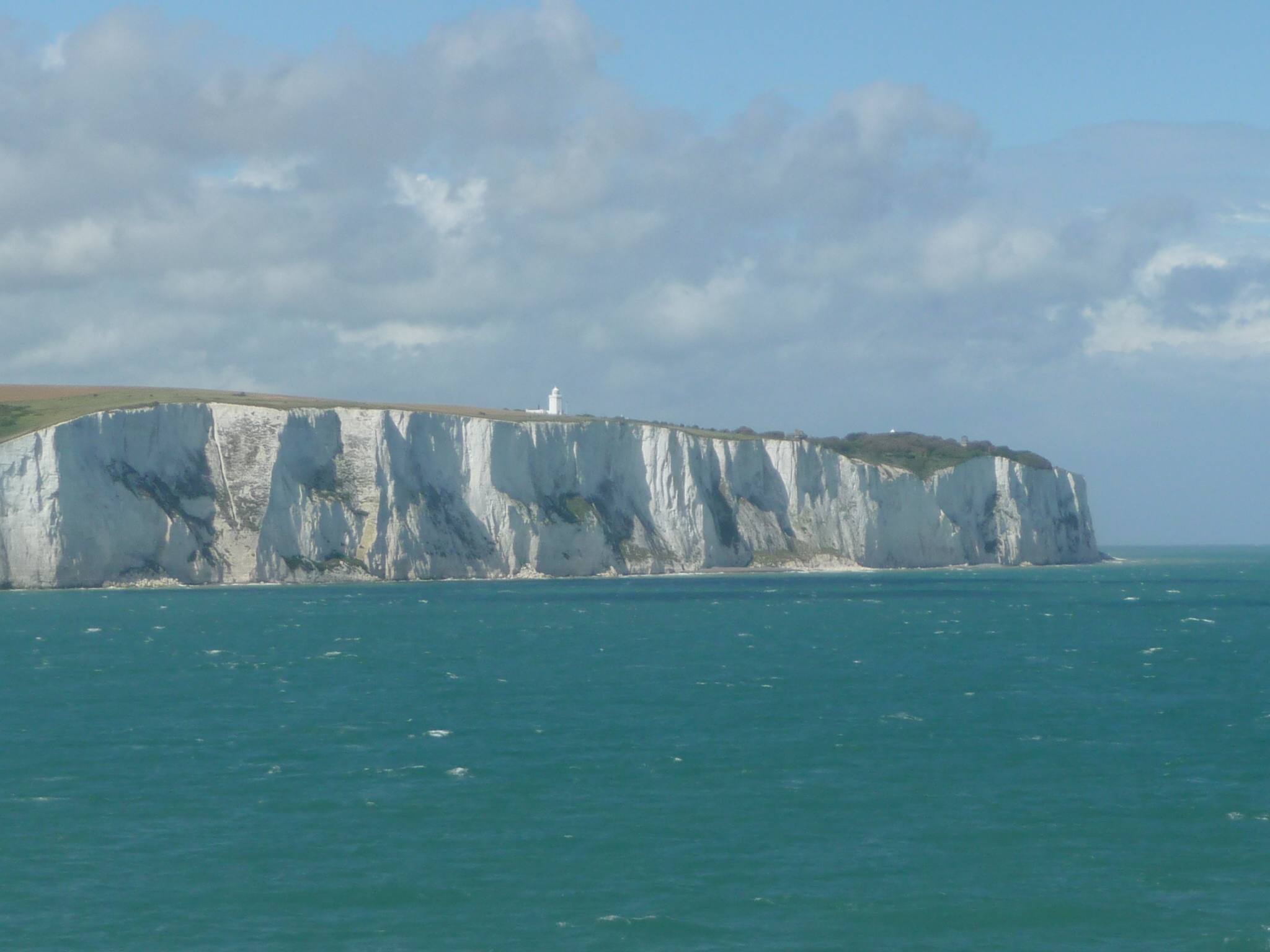
I live in a divided household at the moment – or at least I will do when I get home. I will vote Remain, and the dog – who barks at all visitors – will vote Leave. As for my wife, it would be more than my life’s worth to second-guess her intentions.
I’ve followed the debate from afar (Riyadh, to be precise) over the past few weeks. I can’t say I’ve picked up every dire warning and fatuous argument while I’ve been away. But I’ve read enough to to know that the damned referendum has paralysed the country. Nobody wants to make decisions because of the massive implications of a potential Leave vote. I will not use the B-word, by the way, unless somebody wants to print it on toilet roll – the best thing to do with overworked expressions, I reckon.
The referendum has brought together the xenophobes and the bulldog patriots. Nigel Farage makes common cause with Ian Botham. Boris Johnson and Michael Gove – the bombastic egoist and the frustrated reformer – are thrown together in a grim alliance.
Even from a distance of several thousand miles, I’m fed up with the whole thing. I wish it had never been launched. The only reason we’re going to the polls is that before the last election David Cameron and his opportunistic friends didn’t have the balls to face up to Farage without offering the nation this dangerous sop.
All the referendum has achieved thus far is to polarise us. It’s given the little Englanders a platform they would never have had without it. The sub-plot on the Leave side is kick the bloody foreigners out – they’re destroying our culture, draining our economy and running our country.
On the Remain side, the underlying message is that outside the EU we’ll be like an economic jellyfish floating off the shores of Europe. Subject to tides and winds we can’t control or even influence. No strong ties with anyone. No preferential trade deals. A decimated financial industry. And we misled voters will be the poorer for it.
The big picture, as I see it, is this.
Those who are foolish enough to think that if we leave the EU our national problems will magically go away, and we’ll somehow turn into a kind of Norway – with warm beer, jobs for everyone and chicken tikka masala as the only alternative to Macdonalds and the chip shop down the high street – want their heads examining.
Our big problems, some of our making and some not, are not going to go away just because we retreat into our little island stockade. Climate change, technological change, demographic change, financial uncertainty and global political instability will still lap up remorselessly on to our shores.
In response to the same pressures, the EU is going to have to change whether we’re in it or not. If we leave now, it’s possible that some of those changes will be precipitate rather than orderly. If we stay in, at least we will be able to influence the outcomes.
Whatever we do, the days of the overweening EU superstate are numbered. Jean-Claude Juncker, the EU Commission president, virtually admitted as much in a recent speech.
The rise of the far right in several member states is hastening the roll-back, but for all the wrong reasons – the logic of hatred and fear of the other. Though the nationalists may not achieve ascendancy in countries like France, Holland and Germany, they are exerting a gravitational pull on their rivals, and putting the unelected bureaucrats on the defensive.
The result could be a more flexible, less centralised, more democratic European institution. Perhaps even two institutions – North and South.
So ironically, there’s a real chance that the European order with which we British would be most comfortable will emerge over the next decade. But we, unfortunately, will no longer have the opportunity to be a part of it.
Meanwhile, thanks to our craven politicians, we have to put up with weeks of endless argument on the same very obvious themes. On the Leave side, emotion disguised as logic. On the Remain side, logic in emotional clothing.
We will vote to stay in the Union, and rightly so. The fear factor will win the day, for the simple reason that the Leave campaigners will never be able to demonstrate to the satisfaction of the majority that leaving doesn’t constitute a massive, unknowable and ultimately unacceptable risk.
And in case we in Britain hadn’t noticed it, there are no such things as islands any more.
 59steps