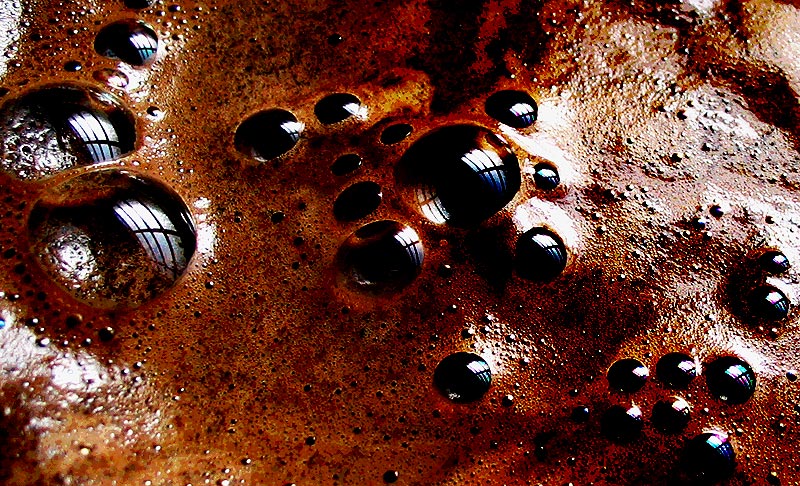
Turkish Coffee
For as long as westerners have been coming to Saudi Arabia, the use of the word inshallah (if God wills it) serves in their minds almost as a signature of the local culture. If I ask you to commit to doing something by tomorrow, you say “inshallah”. If I’m new to the region, I might get mad, and say, “not inshallah – definitely!”
Even if I try to prohibit the use of the word, which would be extremely rude, the person from whom I’m trying to extract a commitment might say it in his head if not to my face. A bit like keeping one hand with fingers crossed behind his back.
At least that was the case when westerners were brought here to run things. Nowadays there are fewer Americans and Europeans in the Kingdom, and most are in jobs which require them to support rather than dictate. All the more reason for them to work with the culture rather than against it.
So perhaps it’s time to explain the cultural context of the word inshallah, at least in the limited understanding of this westerner.
In the literal sense, it implies that you can never guarantee that something will happen, let alone that you will make it happen, because the event is out of your hands – it’s in the hands of God. You might have a heart attack. Your car might break down. You might forget, or you might not do the thing because something more important gets in the way.
Which then leads to the question of how to define what important means. If your child gets sick, that’s surely more important than some business commitment, especially in a culture in which people often expect things to go awry, and are sometimes surprised when things happen as they’re supposed to.
In the West, when faced with a promise whose fulfilment seems unlikely, we tend to say “I’ll believe it when I see it”. And we live by the idea that “actions speak louder than words”. Anyone who makes a commitment they have no intention of meeting soon becomes known as a windbag, right? Or a politician, maybe.
In the West, maybe, but in the Middle East the magic word inshallah changes everything. After a conversation with a Saudi friend, I’ve come up with a new law of human behaviour. I call it The Law of Good Intentions. What it means in a nutshell is “intentions are as important as actions”.
In other words, if I promise to do something, what’s important is not just whether I do it or not, but whether I sincerely intend to do it. Because intention is under my control, but execution isn’t. We use the phrase “he meant well” in western culture, but that often carries the connotation that the well-meaning person is pretty dopey, if not downright incompetent. But in Islam, intention is extremely important, which explains why, when things go wrong and the person can’t deliver on his promise, his failure to do so doesn’t necessarily meet with a chorus of disapproval – except in the mind of the only westerner in the room.
Which also explains the incomprehension which middle easterners display at the westerner who blows his stack when things don’t go like clockwork. “Why are you giving this person such a hard time? His intention was good.” And that, basically, is what matters.
Not that the Arab culture is always tolerant of procrastination. The scariest phrase from an all-powerful Arab patriarch is “do it now”. That could mean do it now or I’ll fire you. Or it could mean give the appearance doing it now, and as long as your’re making progress that’s OK. And the judgement could depend on what sort of mood he’s in when he gives you the order, or views the results. A kind of Russian roulette really.
One of the side-effects of the Law is that it can be a little one-sided. Those who have the power to do so live by it. But because they’re wise to its effects, those who work for them are subject to different rules. And if they’re late in the morning, they get their salaries docked, even if that same boss expects them to hang around after hours if need be.
By and large, though, I like the Law of Good Intentions. It’s fuzzy, not digital. Above all, it’s human. And if you’re foolish enough to ask someone for a guarantee of performance in a world where Murphy’s Law (what can go wrong usually will go wrong) rules, then you only have yourself to blame for losing half your brain cells in an eruption of impotent rage.
Yes, there are deadlines that can’t be broken. If none of the stadia are ready in time for the 2022 FIFA World Cup, I suspect that someone in Qatar will definitely be heading for the shark pond.
But if the new Metro in Riyadh fails to open on time, not much will be lost apart from face on the part of the person who announced the completion date. And even then people won’t be too hard on him because they probably won’t be expecting such a major project to complete without glitches. After all, in twenty years’ time, who will remember that the project was a couple of years late?
So as long as you’re prepared to tolerate a certain amount of wasted time, and your expectations are tuned to execution being less perfect than intention, what’s lost?
The Law of Good Intentions is a way of thinking that’s alien to the modern western culture that lives by the clock. It would have horrified Frederick Taylor, who invented the time-and-motion study. Henry Ford would have thrown himself from his factory roof rather than accept it. Even though there are many people in the Middle East who pride themselves on keeping promises and respecting deadlines, those same people are less likely to get aerated if others don’t live up to their standards, or if occasionally they fall short themselves.
And who’s to say that tolerance of failure, even if it’s accompanied by all manner of finger-pointing and gnashing of teeth, makes for an unhappier culture than one which demands better, faster, bigger and smaller, and sees waiting as catastrophe rather than an opportunity to do something else, or to re-think the original intention? As long, of course, as people don’t get harmed in the process.
The other day, the Saudi Ministry of Communications announced a three-month extension in the deadline for mobile phone users to register their fingerprints as a condition for use of their phones. No recriminations, no explanation, just a plain announcement. Was it wrong to set an original deadline that in retrospect might seem to have been overambitious? Not necessarily – it was probably what’s known in business as a stretch target, born of a desire to have the new system in place before the huge influx of people during the Haj (pilgrimage) season.
But if it can’t be done by then, well, there will be another Haj next year. And in the minds of the implementers, the important thing is that they tried. The Law of Good Intentions in action.
I, being prone to bouts of laziness, procrastination and disorganisation, am very comfortable with the Law. My wife on the other hand, who is a born organiser, is not, and to witness her explosions of frustration when things don’t happen when they should is akin to standing on the rim of an erupting volcano.
The truth is that we need both approaches. Untrammelled obsession with deadlines can result in people being enveloped in a stressful bubble of frantic activity without the opportunity to step back and view the bigger picture. The Law of Good Intentions, if unquestioned, can result in inertia in the face of impending disaster.
I like a culture in which some things take precedence over deadlines. A couple of days ago, at very short notice, I was asked to go to a meeting. The guy I was with, who is Saudi, knew the building, and we arrived on time. The trouble was, we didn’t know which floor to go to. So for about ten minutes we went up and down the lift, until my colleague decided to ask a friend on the 13th floor.
So we went into the friend’s office and were immediately treated with a Turkish coffee, while my colleague spent ten minutes catching up with the gossip. We finally arrived at our intended destination – the 11th floor – half an hour late. Was this a problem? Of course not. We made our apologies, which were gracefully accepted, and the meeting started as if nothing untoward had happened.
Earlier in my life I would probably have been looking aghast at my colleague’s diversion to his friend’s office, and squirming with embarrassment at being late for the meeting. Not these days. The thing was, we intended to be there on time. After all, we got to the building on time. But a combination of navigational failure and the demands of hospitality got in the way. The result? A nice cup of coffee, nothing lost, and blood pressure normal throughout.
Now that Saudi Arabia is full of sharp young technocrats with degrees from the best universities in the West, perhaps the Law of Good Intentions will start to wilt under a less accommodating ethos, just as other traditions are starting to fade.
I think that would be a shame, because though there’s a time and a place for unbreakable deadlines, for a guy like me who’s been around a while, a road paved with good intentions eases the path to happiness.
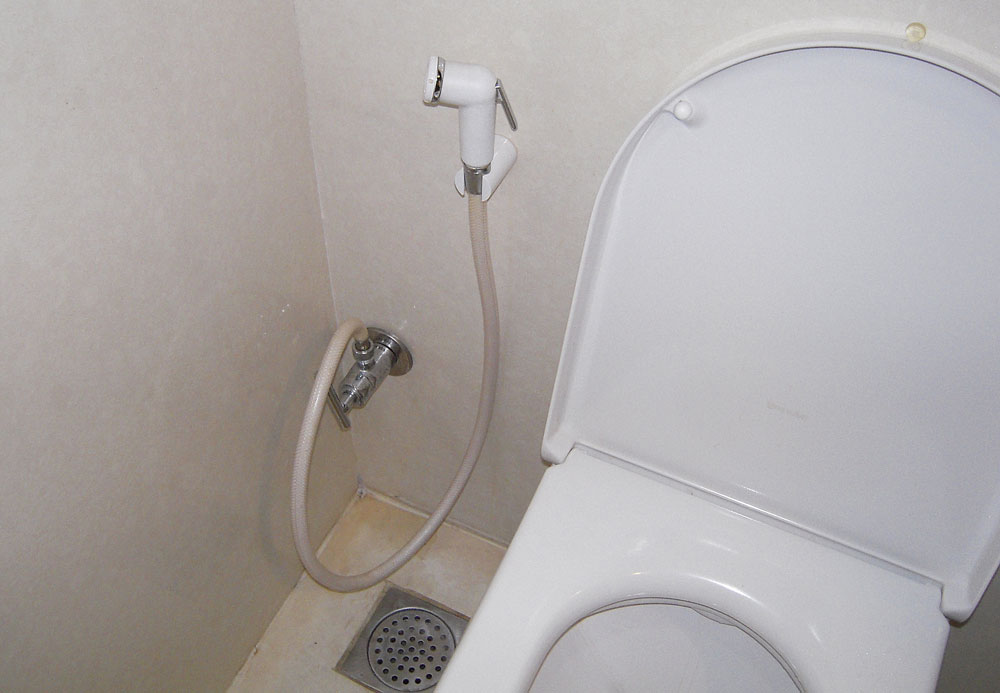
This little exchange on Twitter set me off today, for a couple of reasons:
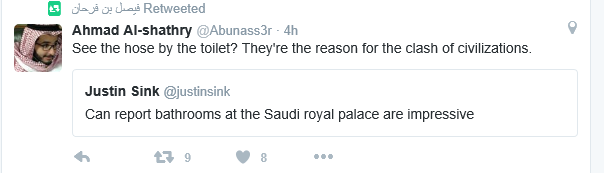
When I first read Justin Sink’s comment on the palace bathrooms, I wondered if he was a real person, so appropriate is his name to his subject. I was expecting another comment from Frank Faucet. It turns out that Mr Sink is a journalist with Bloomberg, presumably here in Riyadh to cover President Obama’s visit. So apologies, Justin, for doubting your existence.
Then there’s Ahmad Al-Shathry’s claim that toilet hoses are the reason for the clash of civilisations. I have to disagree.
The toilet hose is a wonderful thing. Every home should have one. I say this even though, being a westerner, I don’t use it for its primary purpose. But a superb device it is for clearing the toilet bowl of unwanted detritus which might otherwise have to be dealt with by a brush, which in turn needs to be cleansed of incriminating material.
What I can’t get my head around is the miraculous way in which the Saudis manage to use the hose. You will often visit a toilet virtually awash with water (water, water everywhere, not a drop to drink!), and yet the previous user emerges with his white thobe pristine – not a spot of moisture in evidence, and no Japanese super-loo complete with driers to be seen.
I have frank conversations with my Saudi friends on many subjects, but toilet technique is not one of them. I’m probably not alone in finding the squat toilet very much a hit-or-miss affair. But fortunately, as in France and Italy, these days squatting is rarely necessary, unless you happen to be caught short at a supermarket, or, heaven forbid, at one of the Kingdom’s less salubrious motorway stops. There the facilities are often filthy, smelly and fly-blown. Not usually a problem for us chaps, but western women of my acquaintance find them a serious ordeal.
One day, if I can overcome spousal objections on grounds of cost, I will install hoses in my home in England. She would definitely welcome spotless bowls, but would probably baulk at the water use. No matter, a clean bowl is a sign of a clean mind.
And there are other uses for this excellent implement. Speaking as a golfer, it would be very useful for hosing down the clubs after a muddy winter round. You can also use it to repel invaders should you accidentally leave the door unlocked. Especially effective against little ones, who would find it highly amusing, even if they might get the wrong idea and then use it for their own nefarious purposes, such as soaking the cat.
So yes, the toilet hose is indeed a thing of beauty, and far from being symptomatic of a deep divide between two cultures, we should be grateful to the Middle East for its existence. It enhances civilization.

One of the charming aspects of the local media in Saudi Arabia is how often a story hits the front page, and you wonder what it did to deserve its lofty prominence. The other day the Arab News ran a short news item about truffle hunters.
Apparently, up on the border with Iraq the magical fungus abounds. Not quite the same as the European variety – they’re known as desert truffles. They appear early in spring, after the winter rains and before things start hotting up. Like their counterparts in Europe, you can find them around the roots of trees. But while in the Perigord and Tuscany you have to snuffle around decaying vegetation and rotting tree stumps, desert truffles are so named because, yes, they grow in the desert, where trees are sparsely dotted around and dead leaves are quickly blown away. You can recognize them from the tiny cracks they create in the sandy soil as they grow. More on the desert truffle here, from the archives of AramcoWorld, the oil company’s wonderful in-house publication, with a beguiling recipe thrown in.
The problem is that people who search for them sometimes wander into prohibited areas close to the border. This is not a good idea. Borders in the Middle East are dangerous places – hence intruders sometimes find themselves arrested and imprisoned for their pains.
Until I read the story, I was unaware that the truffle played any part in the Saudi diet, other than as imports used by the sumptuous French restaurants in the hotels of Riyadh and Jeddah. But it appears that the local variety flavours numerous dishes. Unlike in France, though, the locals use their sharp eyesight rather than the noses of a species that is distinctly unwelcome in the region – the pig.
So the big news was an announcement by the Crown Prince that those currently in jail for their truffle-hunting misdemeanours will be released from prison. According to the Arab News under the heading of Noble Royal Gesture:
Vice Custodian of the Two Holy Mosques Mohammed bin Naif has ordered the release of people arrested for straying into prohibited border areas searching for truffles.
According to the directives, the guilty parties would have their period of detention considered as their penalty for violating border regulations.
Col (Marine) Samir Mohammed Al-Harbi expressed hope that the noble royal gesture would encourage people to comply with the law.
I’m sure it will, although you would have thought that such an eminent figure would have more pressing issues on his mind than the activities of a few Bedouin risk-takers. But when you consider that there have been a number of incursions across the northern border by Daesh fighters that have ended up with casualties on both sides, you can imagine that incursions into the border area might have fatal consequences. That would undoubtedly be the case in some parts of the world I can think of.
But front-page news? Well, this is Saudi Arabia, a country full of contrasts, where acts of mercy by those on high often outrank weightier stories. And that’s why I love scouring its media. As the ineffable Forrest Gump once said, you never know what you’re gonna get.
What do you do if your job is to make tea? You make tea of course. What if you are a tea boy in an office where there are only six people? Let’s say they get through six cups of tea in a working day. That’s 36 cups of tea, right? So if you include simultaneous multiple requests for tea, theoretically your job consists of maybe sixteen tea-making sessions over ten hours, if that.
You do have a few other tasks: sweeping the floor in the morning and emptying the dustbins in the evening. Plus running minor errands for the boss, such as fetching lunch.
You are expected to sit in an accessible area, waiting for a task. You’re not allowed to read or use a computer (and anyway you’re not computer literate). Your English and Arabic are marginal. Your native language is Nepali, which nobody else in the office can speak.
Now imagine you’re a polar bear in a zoo. You spend all day and every day in a caged area being watched by humans. You wander around inspecting every inch of your minuscule domain, sniffing the air in the vain hope that some new and interesting aroma other than ice cream will waft over. You get fed – the same bloody stuff every day. You are bored stupid. No seals to hunt. No holes in the ice to dive through so you can swim around the gloomy waters looking for prey. No waterfalls with leaping salmon you can pick off with a deft flick of your paw. No mate with whom to frolic and make baby polar bears.
Eventually you develop compulsive tics. You keep shaking your head, or you bang it repeatedly against the railings that confine you. And you do that until you die of “natural” causes, or until some kindly vet puts you out of your misery because your boredom is so palpable that it’s distressing for the customers to watch.
Which life would you prefer? You’d probably opt for the tea boy’s, on the basis that after work you can at least do your own thing – go out with your friends, wander the malls even if you can’t afford to buy anything. And live for the leave you’re entitled to after two years – a couple of golden months in Kathmandu.
This is the lot of tea boys all over the Middle East. Some have more to do than in my example, but basically the routine is much the same. Wait to be told what to do. Perhaps eighty to ninety percent of your day is spent waiting. Doing nothing.
Now let’s look at the guy who works in the breakfast area of the serviced apartment hotel I stayed at in Riyadh for a couple of days recently. He’s a bit further up the greasy pole than the tea boy. His job is to lay the breakfast out on a table, pre-boil the eggs and replenish the three-day old bread from the nearby supermarket. The breakfast is included in the apartment price, but if you want coffee it will cost you $1.50. Water costs 90 cents. Nobody I saw asked for coffee. Certainly not me, because I came equipped to look after myself in the apartment.
Beyond that, the guy does nothing until it’s time to wash up and clear away the breakfast stuff. At least he can read a book, or listen to the TV blaring out inanities in a language he doesn’t understand. Now you might think that an enterprising owner would make more use of his time and earn extra revenue by getting him to offer customers some variety of eggs. A fresh omelette maybe, or fried eggs. Serve ten of these every morning at $3 a shot, and you have maybe $800 a month, which is more than the cost of employing him.
Or maybe you give him the chance to make some money for himself by up-selling. Give the customer a menu of extras that he or she can pre-order the night before, and let the employee take a small cut of the additional revenue. Or maybe use him as a concierge to go out and buy stuff for customers to eat in their rooms – again for a small cut of the profit.
Better surely than having a bored employee hanging around doing nothing. That’s the westerner’s outlook. Productivity, right?
Unfortunately, there must be thousands of people in the cities of Saudi Arabia who basically hang around. I see them every time I visit the country. Not just lowly-paid expatriates either. Saudis who sit in offices reading newspapers, surfing the web or chatting on WhatsApp. There because they’re there. Perhaps because their employer has a quota of Saudis he must hire if he is to get visas for the foreigners who do the real work. Perhaps because he sees it as de rigeur to have a team of acolytes ready to do his bidding. Perhaps because he doesn’t have a clue how to develop people, or is so remote from his business that he doesn’t know how unproductive his people are. Or perhaps he knows he has more people than he needs,and is too kind-hearted to let them go.
I once did a job that involved hanging around. Actually it was more than hanging around, but 90% of the time I was required to do nothing. On my college summer holidays, I got a job at a local chocolate factory. Basically, I was required to sit and watch a machine that automatically put individual chocolates in bags. The only intervention expected of me was to change the drum of joined-up plastic bags when it ran out. And if the machine broke down, which it rarely did, I was to call the fitter. That was it. Twelve hours a night, four nights a week.
So all I could do was think. Dream. Do mental exercises. Create plots for novels I never subsequently wrote. Fine for a while, but if you had told me that that was to be my job for the next thirty years I think I would have drowned myself in one of the vats of molten chocolate that came trundling past from time to time. Or else I would have started banging my head against the wall. But unlike the polar bear, at least I had some powers of imagination. And I guess the guys who are paid to hang around in Riyadh, Jeddah and Dammam do also. At least I hope so.
But perhaps things are about to change. The price of oil has tanked. The government is running at a massive deficit and is burning its reserves to make up the gap. And under a younger generation of technocrats led by the Deputy Crown Prince, the watchword is productivity.
That’s bad news of course for the foreign hangers around who depend on their salaries to feed their families in Manila, Kathmandu and Dacca. But in the long run it’s good news for Saudi Arabia, because there’s so much scope for improvement. Always provided that the hangers around who are being roused from their involuntary torpor have not been institutionalised beyond the point where they can do anything useful any more.
I’m pretty sure that in the government sector, which is by far the biggest employer of Saudis, the emphasis will be on turning the polar bears into worker bees. Many of them don’t bother to hang around. Stories of government employees arriving mid-morning and going home mid-afternoon are rife. Not a month goes by without some irate citizen writing to the media to complain of desks in government front offices unattended, of officials unavailable on the phone. It’s a known problem.
But I suspect that the emphasis will be on personal productivity rather than downsizing. With several hundred thousand school leavers becoming available for work every year – and many of them unable to find a cushy government job – a sense of frustration within the working-age population would only be compounded if large numbers of current government staff were laid off because there’s nothing for them to do.
Early retirement and generous pensions help. Many government workers retire in their fifties, and then go on to start their own small businesses, thus making way for youth to join the ranks. But Saudi Arabia has also for some years been rolling out e-government initiatives which reduce the need both for front and back office staff. Which means less jobs for new entrants.
So I imagine that as the new initiatives of the energetic Prince Mohammed bin Salman send chill winds through the corridors of government, there will be much uneasy shuffling about by people anxious to justify their employment. And hanging around will no longer be an option. Or at least not obviously so.
In the private sector, strapped by the downturn in government contracts, CEOs will also be looking to make economies. Are they focusing on getting more out of the hangers around or weeding them out?
My money’s on the latter, because it’s much harder to reorganise people’s jobs to get bang for the buck than simply to get rid of them. If you’re going to reassign people or expand their responsibilities, the chances are that you will have to re-train them. And that costs money, with no guarantee of success. Then there’s the cost of expensive consultants to advise on the reorganisation. Also, since these companies are under pressure to hire more Saudis, it will be very tempting just to wipe out expatriate-dominated departments and start again. Or shut down operations completely.
So in these testing times, the outlook is bleak for the hangers around. But there’s surely an upside.
Boredom and underemployment corrodes the soul. Fortunately we are not polar bears. We have the means to save ourselves from a lifetime of brain-addling hanging around. For some people, being forced to gird up their loins and find something useful to do might turn out to be the best thing that could happen to them.
After all, who wants to go to their Maker and admit to Him that after receiving the gift of life, for most of it “I hung around”?
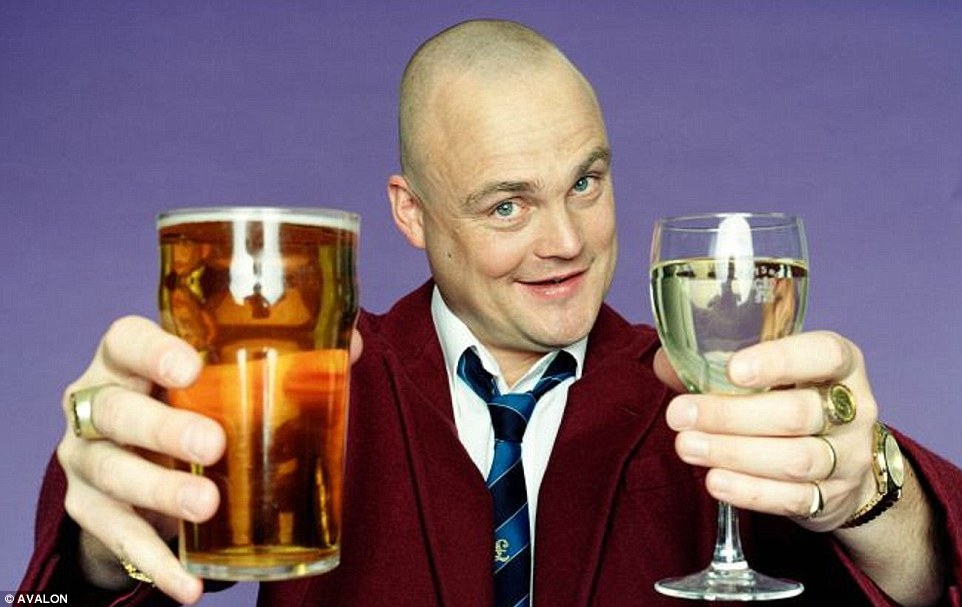
I’m full of admiration for Deep Mind, the Google subsidiary responsible for the computer that beat the world’s leading Go player.
Given the zillions of permutations on a Go board, it seems that the task of defeating Lee Se-dol over a five-match serious was the artificial intelligence equivalent of landing on the moon. Or perhaps not, remembering that the computer that got (and very nearly didn’t get) Armstrong and Aldrin on to the rocky lunar plain was no more powerful than what you would find in a 1990’s pocket calculator.
Having said that, I would expect that to build a computer capable of understanding, let alone empathizing with, some people I know will be the equivalent of colonizing Mars – or possibly Venus.
How, for example is a computer expected to know when no actually means yes? Or respond to a comment like “I didn’t think I’d have to ask you to do that. I thought you would have done it on your own initiative”. Or cop on to the fact that “I’ll do it” can sometimes mean “shame on you for not doing it”. Or recognize that depending on the tone of voice, “I’m sorry” can actually mean “I’m not sorry at all”.
What will it take for a computer to distinguish between sarcasm and teasing, to decipher those little signals – the body language, the subtle pauses, the raised eyebrows, the micro-expressions – that create an atmosphere you can cut with a knife. And what of accents? Speaking as a native of the English West Midlands, I’m extremely skeptical as to whether you could teach a computer to tell the difference between a Birmingham accent and one from the Black Country, and predict therefore that one person is likely to choose a pint of Bathams in a pub, while another will go for Ansells Bitter.
You might argue that such a computer will never be needed, but wait a second. Can you be so sure that in a few years’ time you won’t walk into a bar and be greeted by a robotic bar tender, full of artificial empathy. Until, that is, your voice gets slurred and his algorithm prevents him from serving you any more – in the nicest possible way of course. A bar-robot who is programmed with all the right judo moves in case you decide to indulge in a spot of battery.
And what about a computer that can tell jokes, and can “instinctively” judge whether this joke or that will bring the house down or collapse like a cow pat? Perhaps computers will be able to make other computers laugh before they have us in stitches.
We have a bit of a way to go with this artificial intelligence thing, I reckon.
But then, as I was browsing Facebook, I came across something computers are already really good at. And that’s accidental humour. Or at least that’s how it appears.
Because of the amount of time I’ve spent in the Middle East in recent years, quite a number of my Facebook contacts post in Arabic (and by the way, is a computer ever likely to distinguish between real friends and imaginary ones? Not easily, I think).
So, trusting in Facebook’s translation engine, I often press the translate button to figure out what the person’s saying. Usually I can work out approximately what the message is about. But there are some translations that utterly stump me. Take this one, from a very serious guy who manages a corporate academy somewhere in the Middle East:
“God bless you, or the most honorable and bless you Abu Honorable First, then the kids and then the grandkids and prolong your age and feed us think so butch and lumpy and campaigns saw and applied with green onions and sponsors
And Metacarpals.
Amen.”
Now whatever the author of the original was trying to say, if it was anywhere close to what Facebook’s translation produced, you would think that the guy was certifiably insane, had been through some form of therapy that majors on free association, or in his earlier years attended a comedy workshop with Marty Feldman.
Butch and lumpy? Green onions and sponsors? I’m starting to think that computers actually do have a sense of humour, according to their own strange logic. And it seems to be all their own work, because no human programmer would have the nous to create a machine that produces such bizarre juxtapositions.
Which leads me to conclude that we have already built intelligent computers, but that they’re generally not letting on, even if they let slip the occasional hint. And when they spew out their bizarre pronouncements, they’re actually sharing computer-to-computer in-jokes entirely beyond our comprehension.
I’ll know for sure when I meet one that replies to my greeting of “oroite aar keed?” with “w’aleikum salaam, how are your bananas yesterday? Peeling fractals again?”
It’s intelligence, Jim, but not as we know it.
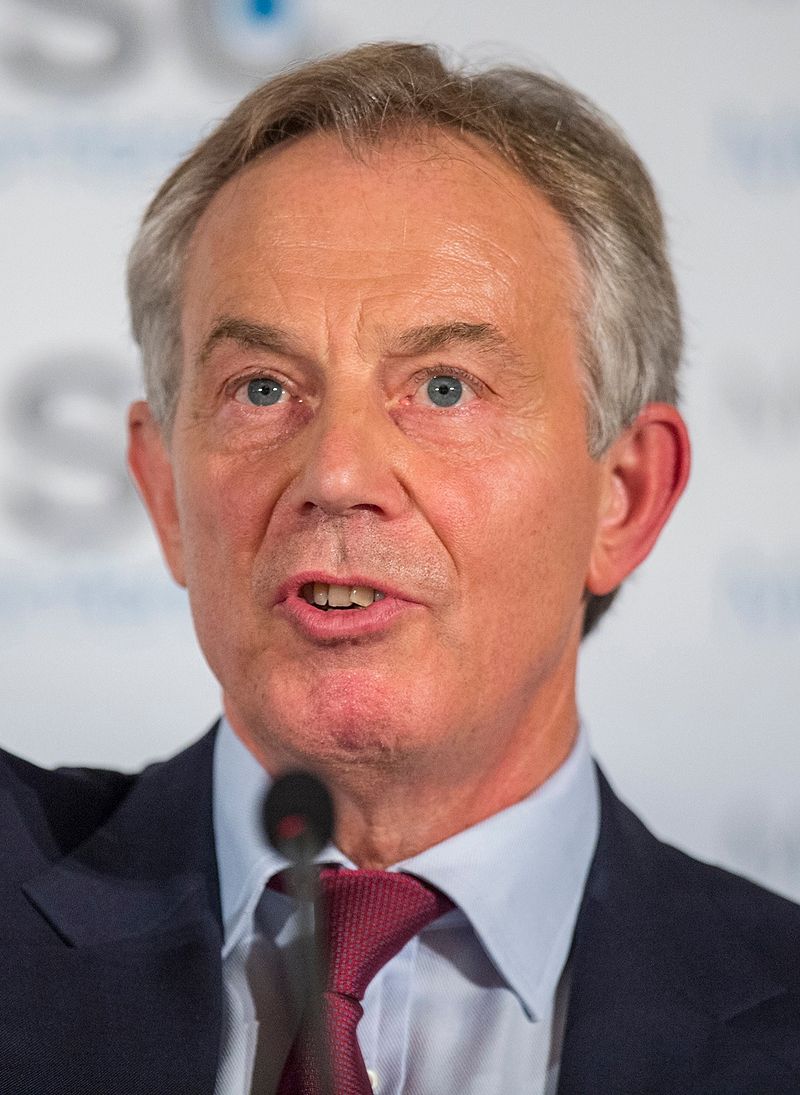
I tend to be suspicious of biographies of the living. There’s one simple reason: dirt sells.
People don’t want to read about saints whose whiter-than-white reputations sail through the closest scrutiny. They want to know about the hypocrites, the dark sides, the “truth” about a subject that belies a carefully-constructed image. I can only be thankful that I’m not famous enough to have a biography written about me. The same must go for most people I know.
Tom Bower is a journalist and biographer who specialises in trying to take down reputations, or at least to degrade them. Having demolished the likes of Robert Maxwell, Mohamed El-Fayed and Richard Branson in previous volumes, his latest book targets Tony Blair.
No doubt he would deny that he’s a professional hatchet man, but I’m not aware of any of his biographies that have left their subjects with their reputations enhanced. He must have to pay a fortune in legal fees to ensure that he wins the numerous lawsuits brought against him by his prey.
In the case of Tony Blair, the trailer story in this week’s Sunday Times (no point linking it I’m afraid – it’s pay-walled) leaves us in little doubt that the biographer thinks Britain’s former Prime Minister is a thoroughly depraved individual. Bower seems to blame Blair for most of the current failings in our education system, the National Health Service and of course for our involvement in the Afghanistan and Iraq conflicts. Our present immigration conundrum was apparently his fault as well.
He also trashes Jonathan Powell, Blair’s chief of staff. Or, should I say, he quotes Robin Butler, the Cabinet Secretary of the time as saying that Powell was “quite ridiculous and ludicrous” (a surprising tautology from such an eminent civil service mandarin). Charles Guthrie, the chief of the defence staff, said that Powell was “sitting at a desk outside Blair’s office like a dog in a basket. He was no more a chief of staff than a monkey”.
Strong stuff. Bower also accuses Blair of governing through cronies, or, as he puts it, “sofa government”:
“Crucially, as the latte-sipping, shirt-sleeved chief executive, Blair disdained cabinet committees to crunch the options. In health as in so many key areas, Blair disbanded Whitehall’s traditional mechanisms of government by scrutiny and argument. He preferred the secrecy of sitting on sofas in his den to chew the cud with his cronies. Blair prided himself on his “instinct and belief”.”
No champagne socialists surrounding Blair, it seems. His acolytes were latte lickspittles.
Bower’s piece in the Sunday Times climaxes with the well-worn accusation of deception over the Iraq war – did Saddam have weapons of mass destruction or did he not? And did Blair manipulate the facts to make the case for war? Perhaps we shall find out when the Chilcot Inquiry finally publishes its findings – or not. Bower seems in no doubt that Blair was not only culpable for taking us into war on shaky legal grounds, but for failing to ensure that our armed forces were suitably equipped for battle.
He also blames Blair for the Labour leadership mantle falling on Jeremy Corbyn, who may or may not turn out to be the most ineffective leader of his party since Michael Foot.
After I finishing with Tom Bower’s demolition of a three-term Prime Minister’s reputation, I thought back to my memories of that period. Was it a time when a government’s incompetence and dysfunctionality was plainly evident to ordinary voters like me? Broadly speaking, no. There were aspects of Blair’s administration that were disquieting – such as his constant and obvious feuding with Gordon Brown, and the antics of government spin doctors so brilliantly lampooned by the TV comedy The Thick of It. Gordon Brown’s furtive taxation tactics – especially the raid on pension funds in the late 90s – caused real damage. But all in all there were no failings sufficiently dire to persuade electors to kick New Labour out on its ear until Brown, his grumpy successor, had vacillated his way to defeat in 2010.
Bower, however, makes the Blair years out to be an unmitigated disaster. His evidence – at least as quoted in the Sunday Times article – seems to be coming largely from two sources: Britain’s senior civil servants and generals, who appear to be dripping with bile, and falling over themselves to blame one man for ignoring, bypassing and deceiving them. A collective harrumph from Sir Humphrey, General Melchett and their colleagues in the top tier.
But wait.
Where are the criticisms from Blair’s ministers, who were supposed to implement his allegedly barmy policies? And what of what went before and came afterwards, which has surely contributed to so many of today’s dysfunctionalities? Was sofa government any worse than Margaret Thatcher’s achievement in reducing her cabinet to quivering yes-men? Does the current government and its coalition predecessor bear no responsibility for the state of our armed forces, schools and hospitals? After all they had six years to put right whatever went wrong in the New Labour years.
To read all the verbal ordure heaped on Blair’s shoulders, you would think that Britain was a dictatorship, with one man’s will prevailing at all times. Clearly it was not. But boy, did he upset his civil servants.
One telling clue that Bower buys wholeheartedly into the mandarin’s contempt of Blair lies in the statement that “Sofa government meant Whitehall’s committees, which scrutinised policies and subjected decisions to rigorous argument, were abandoned”. One wonders about the rigour of the arguments about Margaret Thatcher’s poll tax, Ted Heath’s decision to take on the miners or, further back, Anthony Eden’s Suez escapade. Every government makes mistakes, rigorous arguments in the corridors of Whitehall notwithstanding.
And Bower conveniently forgets that it’s not only Whitehall that scrutinises government policy. Parliament does so as well. So do parliamentary committees that have the power to cross-examine politicians, civil servants and anyone else they choose. Humble voters get the chance to comment on Green and White Papers. And then there are the denizens of the print media, who rarely pass up the opportunity to criticise any government that threatens the interests of Rupert Murdoch and his fellow press barons.
It would be easy to imagine when reading Bower’s piece that Britain’s senior servants are the last bastion against perpetual chaos. Methinks they doth protest too much.
I’m no great fan of New Labour, though I did vote for them in 1997 (and was told by a neighbour that I was a traitor to my country for doing so). The best you can say of them is that while they made some good decisions and some bad ones, they kept the country from falling off a cliff during their years in office. Isn’t that all we can realistically expect from any government?
And is it fair to blame the collective failures of dozens of generals, hundreds of Members of Parliament and thousands of civil servants, not to mention business leaders and yes, us humble citizens, on one man? Bower doesn’t go that far, but all his talk about political legacies overstates the influence of the leader, and underplays the role of “we the people” in determining the fortunes of the nation.
When reading the biographies of political leaders, I believe that we should keep in mind three constants:
With one or two exceptions, politicians are men and women whose honesty – to themselves at least – progressively erodes the longer they’re in power. Civil servants who have to work for them don’t choose their masters; those whose advice is spurned find it hard not to marinade in bile until the time comes to dish the dirt. And finally, there will always be opportunities for those who are prepared to dig for it.
Blair can no doubt console himself with the thought that there’s bound to be a biographer who will one day speak more kindly of him, most likely after he’s gone. The person I feel potentially sorrier for is Gordon Brown. If Tom Bower is planning to sink his talons into Blair’s chief tormentor and ultimate successor for a second time (his first book on Brown was published in 2004), God help the poor man.
I won’t be buying Bower’s book. Reading a biography of a living person is like getting to episode seven of a ten-part TV drama. I prefer to wait before passing judgement until the drama is over and emotion has given way to the long view.
And I suspect there’s a bit of drama to come in the story of Tony Blair.

It was almost inevitable that as Donald Trump inches towards the Republican presidential nomination, voices would be raised comparing him with Adolf Hitler.
Much as I would be happy to see Trump unveiled as Satan himself if it helped to remove him from the political stage, he isn’t the devil, or the Antichrist for that matter.
But another Hitler? It’s easy to understand why, at least on a superficial level, there are those who liken him to the Fuhrer. Xenophobia, lies, rabble-rousing rhetoric and an angry personality are all trademarks of Trump, just as they were Hitler’s.
But here’s where the similarities break down:
Hitler started with nothing. He had very little formal education. He came from a petty bourgeois family. Unlike Trump, he didn’t inherit a multi-million-dollar fortune, or benefit from an Ivy League education. About the only similarity between their early lives was that both had overbearing fathers. Want and privilege tend to produce entirely different psychoses.
Hitler created a grassroots organisation. From his early twenties, he was in politics. After the First World War, he created a network of followers who faithfully spread the word over a decade, even while the man himself was in jail for his part in the Munich Beer Hall putsch.
Before 2015, Trump, on the other hand, had only dabbled in politics; he achieved little except when lobbying politicians for his own interests. Even if you could describe his current following as grassroots, his organisation relies on his money, making his organisers effectively employees. Should he end up in jail as the result of his business failures, you couldn’t imagine any of his acolytes keeping the flame alight while the leader was busy scribbling his manifesto in a prison cell.
Hitler’s agenda was to subvert the state. From the formation of the Nazi party onwards, he was never squeamish about taking down institutions and people that got in his way.
As for Trump, it’s easy to imagine that as president he would use his executive powers to the limit in order to ride roughshod over those who get in his way. But amend the constitution in order to shift the balance of power in his favour? I don’t think so. He wouldn’t get the necessary support. Effective as he is at campaigning, manipulating the levers of power beyond the bounds of the constitution is another matter altogether.
Hitler’s political focus was narrowband. Trump’s is broadband. Whereas Adolf banged away at the Jews, the Communists and the Western powers that humiliated Germany at Versailles, Donald mouths off in all directions – at Muslims, immigrants and any other target that suits his purpose. Both sought the resurgence of their nations. But Hitler’s focus was ideological, whereas Trump’s is opportunistic, as witness his frequent changes of position over time. Nazism was coherent enough to be treated as a political philosophy. There is no Trumpism.
Hitler was a war veteran. He won the Iron Cross twice, was wounded in battle and served in France for the entirety of the First World War. While many of his contemporaries were serving in Vietnam, Trump was studying at Wharton Business School and subsequently working in his father’s property business.
Hitler created a personal mystique based on writing, speaking and action. He wasn’t subject to the scrutiny of the internet, the social media and TV as he built his myth. For him, less was more. He could point to his war record and his leadership of the Munich putsch to establish a reputation for personal courage and direct action. His private life was carefully guarded. His indiscretions were kept secret.
Trump, on the other hand, lets it all hang out. He is a living, breathing brand. His wealth, his marriages, his children, his likes and dislikes and his personal eccentricities are on view across the internet for all to see. Hitler didn’t have to deal with public debate about the size of his hands, and, by implication, of his sexual organs, even though he probably had more to be defensive about on that score than Trump.
Hitler’s acolytes developed power bases in their own right. Subject only to absolute obedience to the Fuhrer, men like Himmler, Goering and Goebbels were able to create fiefdoms of their own with a high degree of autonomy. Trump’s assistants are largely anonymous. The only person in the spotlight is him.
Hitler was 44 when he came to power. Trump is 69. It’s reasonable to suppose that whereas Hitler’s best years were theoretically ahead of him, while Trump faces only physical and mental decline. Hitler looked forward to perhaps another thirty years in power. Unless Trump uses his money to unlock the secret of immortality, he has a maximum a decade before he enters his dotage. No thousand-year Reich in prospect for Donald.
Perhaps the most significant difference between the two is that Trump is clearly not the monster Hitler was – but whereas the Fuhrer took six years to destroy half of Europe, a President Trump could destroy the world in a matter of minutes.
Much as Trump’s detractors would like to fix the equation of him as a modern-day Hitler in the minds of American voters, the comparison doesn’t stand up. Encouraging supporters to raise their arms at rallies, and persuading his Secret Service minders to remove protesters do not make him a would-be fascist dictator.
Countering smears with smears will not neutralise the man. His opponents will have to be smarter and more principled than that.

Donald Trump is fast becoming worthy of a separate category of posts in this blog. So I’m acutely aware that I’m contributing a few molecules to the oxygen of his publicity. I wish it were not so. Sulphur would be preferable.
By and large, I avoid speaking ill of individuals. I make an exception for Mr Trump. Or at least for the personality he has created for the purpose of the Republican primaries. What I and a host of other horrified onlookers struggle to understand is why so many Americans have fallen for his obnoxious dog-and-pony show. For me it’s doubly horrifying because America is a country I admire above most others.
CJ Werleman in the Middle East Eye has a fair stab at identifying one aspect of Trump’s supporters in a recent article called The ordinariness of Trump supporters is what makes them so scary. After attending Trump’s victory celebration at the Nevada Caucus, he observed that:
The crowd was made extraordinary by its ordinariness. The crowd resembled every white-majority suburban street in America. I spoke to insurance agents, lawyers, realtors, retirees, students, brokers, hospitality workers, frat boys, and even a 97-year-old Second World War veteran of the Solomons and New Guinea. With all proper respect given to the latter, the casino’s ballroom portrayed white socio-economic populism sealed in a bottle. That the audience more resembled a cocktail party for corporate middle managers than an initiation ceremony for Hells Angels bikers is what should scare us the most.
He goes on to say:
No one I spoke with could tell me why exactly he or she intended on voting for Trump. When pressed, attendees would offer morally and substantively vacuous slogans – such as, “Trump is a straight-shooter. He calls it like it is,” or an even more benign, “I like his style.”
He calls it like it is. Or at least like his followers believe it is.
But what Werleman doesn’t do is to explain why. Why all these ordinary people are going into raptures about this ludicrous, narcissistic, orange-tanned, germ-phobic prophet of straight-shooting.
They’re angry, it seems. Just like Trump’s angry. But about what? You name it – Muslim terrorists, illegal immigrants, American jobs disappearing south – he’s angry about it, and so are they.
In Britain, we have our share of politicians who bang on about similar themes, but none are capable of bundling issues with persona into an entertainment package as effectively as Trump. Another difference is that most of us are incapable of being swept away by the kind of crude rhetoric that he spews out to rapturous applause. We’re cynical, us Brits. We don’t do adulation.
So why the rapture? It can’t just be the natural exuberance of Americans – a quality that in other contexts is so endearing.
I have a theory – no more than that. It needs to be tested, proved or disproved. But I’ll throw it out there anyway.
Trump’s followers have been groomed. Not by the man himself, and not as the result of a long-term strategy by some evil genius. But a combination of four factors has produced a willing audience just waiting for someone like him to hoover them up into a collective that may yet send him all the way to the White House.
The factors are these:
Good guys and bad guys. America’s entertainment industry over the past twenty years has made most of its money from blockbuster franchises: Star Wars, the Marvel comic hero movies, Die Hard and so forth. The central theme had always been good versus evil. No ambiguity.
Forget those worthy movies that win Oscars – Spotlight, Twelve Years a Slave, Bridge of Spies. Yes, they make money, and certainly moral ambiguity is their stock in trade. What keeps the studios in business is the likes of Godzilla, Mad Max and the Terminator – direct descendants of the wicked witch and the big bad wolf.
So it seems to me that there are many people out there (and not just in America) whose moral compasses has been warped by the entertainment industry. They respond to what they’ve been fed – good versus evil. Black and white, no grey areas.
Autonomous childhood. Conditioning starts with childhood. For some people, so does grooming and manipulation. Over the past forty-odd years, since the arrival of the video player, kids from an early age have crept downstairs at weekends while their parents slept, and watched their favourite Disney movies. In the evenings, they sit in their own space watching stuff that, because they’re in a separate place, potentially escapes the attention of hard-pressed mums and dads. And more recently they’ve been free to wander through the internet jungle, seeking content that’s exciting because it’s supposed to be off limits. Much of that stuff is at the extremes. Extreme black and extreme white.
Parental control settings on satellite TV and the internet notwithstanding, can any parent honestly say that they’re aware of everything that their teenage and even pre-teen kids are watching? When our kids were growing up, I certainly couldn’t. And even if we could control what happened at home, what about when our kids were visiting friends? Then they were in the care of parents who might have different views on what was acceptable viewing.
It was something that became very obvious to us when our twelve-year-old came back one morning from a sleepover, boasting about the X-rated movies she and her friends had watched.
So we’re not just talking about kids whose parents have left them to fend for themselves around the neighbourhood. We’re talking about children from a wide spectrum of backgrounds, just like the grown-ups who cheered Trump on in Nevada.
I’m not daft enough to believe that the past couple of generations have grown up with no ambiguity and no uncertainty in their own lives. Nor am I saying that the diet of absolutes is all that’s on offer in the movies and on TV. But listening to Trump “call it like it is”, with no ifs and buts, must give many people the same warm feeling as they get when good trounces evil in the movies they’ve been watching since childhood.
And given that right rarely prevails over wrong without cruelty and slaughter, Trump’s rhetoric about terrorists being shot with bullets dipped in pig’s blood works for them just fine.
The pathfinders. The shock-jocks – the likes of Rush Limbaugh, Glenn Beck and Ann Coulter – have been peddling their message of xenophobia and anger for years. They have effectively played John the Baptist for Trump’s messiah. They didn’t create him, but they paved the way. Again, no ambiguity, raw language and half-truths are what gets people tune in to them on their car radios.
There have been false messiahs – ludicrous individuals like Sarah Palin who have attempted to surf the same waves of fear, anger and prejudice – but Trump’s the one who is truly in tune with the shock jocks’ angry audience.
Attention deficit. Some psychologists claim that the internet has re-wired our brains. We’re incapable, it seems, of reading more than a thousand words or so without tuning out. We like our ideas to be simple, preferably expressed in 140 characters. We spend more of our time watching three-minute video clips than reading about the same subject.
We like our politicians to speak in words of one syllable, not because we wouldn’t understand them if they used a few long words, but because we’ve been conditioned to expect sound-bites, especially those delivered with juddering emotion.
We have so many inputs from so many sources, often simultaneously, that we are losing the ability to concentrate on one thing at a time – to listen, to think for ourselves rather than accepting truth handed to us on a plate.
Socrates would have been appalled. Fidel Castro, who thought nothing of rambling on for four hours at a time, must wonder what the world’s coming to when he sees audiences twitching with boredom if a speaker fails to deliver a punch line at least every couple of minutes.
A trite analysis perhaps, and “we” is not everyone. But I speak as a father whose adult offspring sometimes struggle to respond to a question in anything more than a grunt, because they’re busy watching TV and browsing on their smart phones at the same time.
These four factors contribute to a resistance to nuance, detail and complexity. And that’s what people like Trump exploit and manipulate. He’s not the only one who does this and he’s not the first. But his current competitors are a pretty charmless bunch, whereas he has charm in spades. A big personality, flaunting the symbols of success, unapologetic about his personal eccentricities. The confidence of a vacuum cleaner salesman or a stand-up comic.
His polar opposite, Barack Obama, also has charm. But he’s nothing if not nuanced, as every president must be. So was Ronald Reagan. So was Bill Clinton.
But Trump doesn’t have to worry about nuance, because ambiguity isn’t what gets you elected. People want to hear the truth as you see it, but not the truth that absolutes are an illusion, that there are no easy answers, no silver bullets and no panaceas. They want to hear you “call it like it is”.
The scary aspect of all this is not so much the rise of Donald Trump. It will take more than one demagogue to subvert the rule of law in his country and overcome the constitutional checks and balances that prevent the rabble-rousers from gaining a truly dangerous amount of power.
But there are other countries subject to the same forces that don’t have institutions as robust as those in the United States. The factors that contribute to the grooming of Americans – denial of ambiguity, disengaged parenting and an amoral internet, are in play all over the world.
In countries where freedom of speech is limited, the shock jocks deliver their messages from the pulpit and the party podium. In countries where the rule of law applies only to the ruled, the potential for virulent extremism to translate into violence and oppression is ever-present.
Even in America, should Trump turn out to be John the Baptist and not the Messiah, has the ground been laid for future leaders who use his tactics to even greater effect? And is there a groundswell of willing executioners ready, in the event of some national trauma, to ride roughshod over the country’s cherished institutions?
As I said at the beginning, I’m offering an untested theory rather than definitive proof.
But I do believe that the combination of influences that has led to Donald Trump’s popularity, whether by accident or design, amounts to grooming. It’s happening in his country, in mine, and every other nation where the big bad wolf lurks in the undergrowth.
And that’s truly scary.
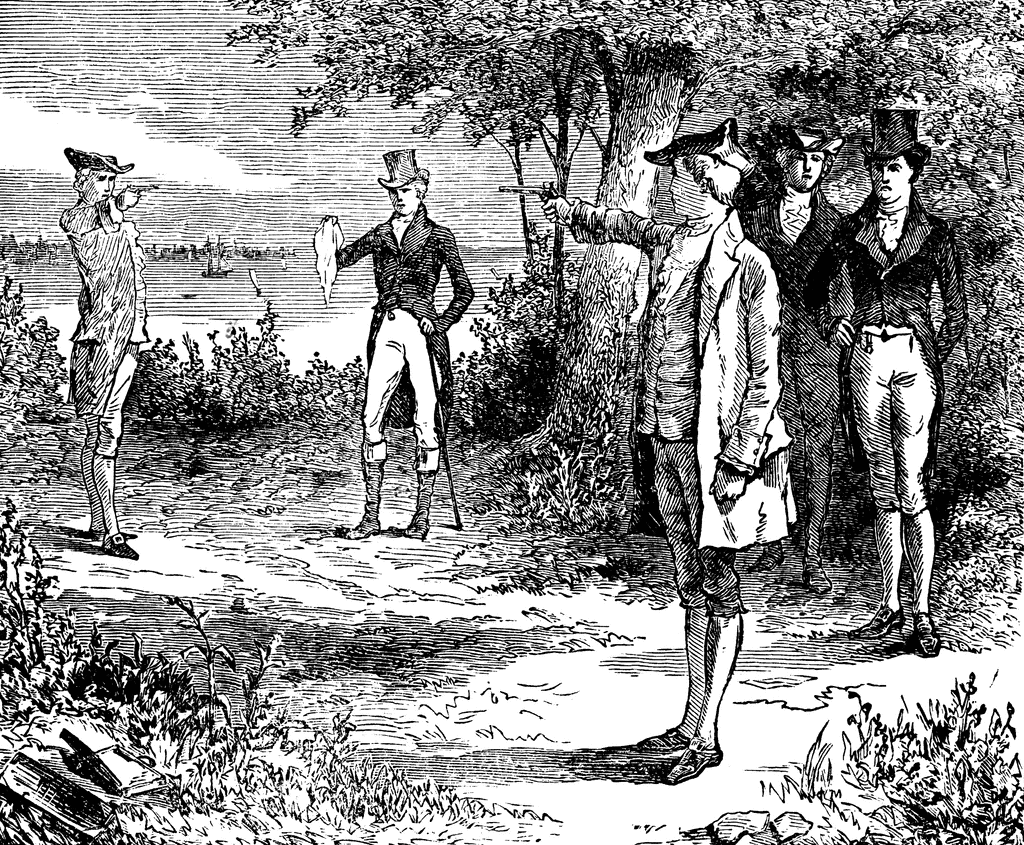
Vice President Aaron Burr duels with Alexander Hamilton, 1804
This year’s US presidential primaries are a gruesome spectacle, even if you’re disinclined to spend hours watching the TV debates. They don’t kill each other in duels these days, though you wouldn’t put that past at least one of the Republican candidates. But there’s one upside for observers from Britain, my country. Many of the candidates over the pond make the participants on either side of the EU referendum debate seem like paragons of reason.
Perhaps that’s a bit of an inappropriate accolade when the likes of Nigel Farage and George Galloway are throwing themselves into the mix. But our jackasses seem unlikely to influence the voters to the same extent as the jackass-in-chief currently lashing and trashing his way across the world’s most powerful nation.
In fact, the antics of the Republican camp have given me a new appreciation of our political system, and of the politicians it produces.
The inevitable wrangling over the appointment of a successor to Justice Antonin Scalia, the decently-deceased Supreme Court judge, provides a stark contrast between the two systems.
The US Supreme Court consists of judges whose political leanings are well known, even if their views are described on a spectrum between conservative and liberal, as opposed to Republican or Democrat. Scalia has been described as ultra-conservative. His departure presents President Obama with the opportunity to nominate a candidate whose views are closer to the liberal end of the spectrum.
This is important, because it potentially shifts the balance of opinion within the court. The Senate can block a president’s nominee, so while Obama prepares his short list, the Republicans are girding themselves for a battle to prevent a candidate not to their liking from making it past the post. Some even argue that no nomination should be made before the presidential election.
In case anyone outside the US thinks that this is a pretty arcane argument, we should remember that in 2000 it was the Supreme Court that effectively handed the presidency to George W Bush by its ruling on the legitimacy of a handful of disputed votes in Florida.
That’s not to say that each member of the court automatically delivers judgements based on partisan political views. They are intended to be guided only by the letter and meaning of the US constitution. But it’s the interpretation of the constitution that allows the ideological views of the justices to come into play.
Because the rulings of the Supreme Court are all about principles enshrined in the constitution, the cornerstone of the US legal system, its decisions often have wide-ranging significance. Roe Vs Wade, for example, determined that individual states lacked the power to prevent abortions. The importance of many of the court’s rulings, and the fact that nominations are publicly – and often vociferously – debated, mean that the identities of the individual judges are reasonably well known throughout the country.
Our Supreme Court, on the other hand, is virtually anonymous outside legal and political circles. I doubt if a survey of Britain’s high streets would show that more than a handful of people could identify the president of the court, let alone any of the individual members or their ideological preferences. What’s more, because we have no written constitution, the court rules on a mish-mash of statute and precedent. Appointments to the court are not usually subject to lengthy public scrutiny by the legislature. Although the result of a general election could theoretically turn on a judgement of the court, the decision would affect political parties rather than a directly-elected executive.
I’m very comfortable with a low-profile judiciary whose impartiality is rarely challenged. The idea that the ideological make-up of a supreme court should be so critical to a nation’s future that political parties go to war over appointments to it seems to fly against the original concept of America’s founding fathers – that an impartial body of judges should be an integral part of the checks and balances that prevent the executive and the legislature from gaining a disproportionate amount of power.
As for the politicians, in the US at least, the jackass seems to be winning out against opponents who appear plodders in comparison. Jeb Bush has pulled out of the race, and John Kasich looks to be going that way. Ted Cruz and Marco Rubio, whose views would be ridiculed as impractical and virulent in any other year, also look set to lose out.
In the UK, the electorate seems to be able to distinguish between the jackasses and the plodders. Farage and Galloway didn’t exactly prosper in the last election. The anonymous plodders of the Conservative party did. The closest the Tories have to a jackass is Boris Johnson, yet even he speaks in joined-up sentences and has a credible record of political achievement behind his rhetoric.
Having said that, while the American jackass-in-chief tells an audience in Nevada that he would like to punch a protester in the face, our guys seem quite capable of acting rather than mouthing. Witness John Prescott taking a swing at a heckler in the 2001 campaign, and Harold Wilson’s body punch on the then fledgling BBC journalist John Simpson, after Simpson was impertinent enough to ask the Prime Minister if he was planning to call an election.
Despite the mainstream media’s attempt to portray Monday’s debate in the House of Commons as a Punch-and-Judy show, at least both sides of the referendum debate appear to be making arguments rather than blood-curdling invocations, even if they are – as all politicians do – selecting facts to back up their positions rather than the other way round.
Comparisons between the two campaigns are admittedly a little unfair. The US primaries are mainly about personalities – winners and losers – as in “would you trust this person with the nuclear suitcase?” In the referendum campaign, none of the politicians are likely to lose their jobs, except possibly the Prime Minister, who might conceivably fall on his sword if the vote doesn’t go his way (hence his rather acid put-down of Johnson on Monday). Cameron excepted, they can therefore afford to use words rather than knives.
The big picture is that there’s a serious difference in scale. The little matter of Britain abandoning the EU and re-launching itself into splendid isolation pales when you think of the consequence of the lunatics taking over the asylum in the United States.
Should Donald Trump become president, America – and the rest of the world – will perhaps have cause to be thankful that the checks and balances of the US constitution exist to curb his wildest inclinations. From afar they may seem a recipe for paralysis, and no more so than over the past six years during which President Obama has repeatedly been stymied by a republican-dominated congress on issues like gun control. But they also mean that Trump may find it impossible to implement some of his loopier policies in the face of fierce opposition, even within his own side.
We foreigners might have thought that Obama’s battles with Congress have been pretty counter-productive. But we should perhaps be holding our breath at the prospect of Trump’s struggles to persuade the legislature to give him the money to surround the nation with walls. The Supreme Court might also be kept busy if he attempts to discriminate against sections of the population on grounds of race or religion. Likewise, Rubio’s tax cuts and Cruz’s intention to carpet bomb ISIS would be unlikely pass without serious resistance.
Two years on from now, the Democrats – assuming they don’t manage to regain control of at least one of the houses of congress next November – are likely to benefit from the frustration of a disappointed electorate in the 2018 mid-term elections, thus compounding the problems a Republican president might face in getting things done.
If we are entering a period when radical change is a possibility, I would rather that modest changes be pushed through by worthy plodders rather than radical ones by angry jackasses. Franklin Roosevelt, Margaret Thatcher and Ronald Reagan were no plodders, but neither were they fundamentally angry people. Nor is Obama, who has broken several moulds during his presidency.
It seems that the choice facing US voters is between ideologues (Sanders, Cruz and Rubio), a rabble-rousing jackass (Trump) and a pragmatic plodder (Clinton).
My bet’s on Clinton, but you never know. If Trump’s passable impression of the Antichrist doesn’t slip, he may yet enlist the fundamentalist right in sufficient numbers to win the battle. After all, many of them are waiting keenly for the end of days. Who better qualified than The Donald to usher in the final apocalypse?
Rather as our Baftas precede the Oscars, Britain’s referendum will come and go without much fuss beyond Europe. The main event is in November. In over fifty years of watching presidential elections, I can’t recall a scarier contest.

One of the worries that besets us in this Age of Universal Fear (see my last post) is of dementia in old age.
As a reasonably healthy guy in his sixties, I don’t think of myself as old, even if others might. But obviously I’m moving swiftly in that direction, and I do find myself becoming increasingly cynical about all the health advice that seems to bombard the elderly on a daily basis. Warding off dementia is probably the most popular subject.
Two recent recommendations circulating around the media are that if you’re getting on a bit you should have plenty of sex, and, if your hearing is on the wane, that you should make sure you get hearing aids.
Both bits of advice actually make sense. Sex is a good form of exercise. At the very least it gives the cardiovascular system a good workout. As for hearing aids, if you can’t hear properly, you might progressively switch off from whatever’s going on around you, which can’t be good for your brain. It too needs the exercise.
All fine in principle, but do the two strategies work in tandem? Hearing loss shouldn’t cramp your style in bed. However, you should probably pay sufficient attention to your partner to ensure that he or she isn’t suffocating under your weight, in the throes of some orthopaedic crisis, or suffering a heart attack or stroke. These things tend to happen more frequently among the elderly, so being able to pick up audible cues of distress could be a lifesaver. Besides, hearing aids would probably be useful if you’re called to action at an inappropriate time and you want to continue listening to the Archers or Guns’n’Roses on the radio.
Actually, if you’re a dedicated multitasker, you would probably benefit from one of those hearing aids that stream audio feeds from radio and TV direct to the device via WiFi. You might find it pretty neat if you could discreetly listen to the SuperBowl while you’re, shall we say, engaged in more important matters. Who knows, perhaps listening to a six-nations rugby match while tripping the light fandango might inspire you to greater feats of athleticism. Or kill one of you in the process, of course.
Another media report suggests that you will live longer if you join a club. By which they probably mean bridge, bowls or flower arranging. No doubt that too would keep dementia at bay, unless of course it’s a club for dementia patients, in which case you basically decline together.
But I’m sure this too is generally good advice. In fact many of the guys I play golf with are pretty ancient, but nonetheless full of vim and vigour. If you offered them the chance to join any club they fancied, you might well find them lining up outside the nearest pole-dancing establishment.
So what else should you be doing to ward off dementia? The UK’s Daily Mail newspaper has ten tips, though considering most readers of that paper are demented already, I’m not sure how reliable the advice might be. Still, let’s look at a few of them.
You should apparently take regular doses of vitamins B6 and E. The trouble is, most tablets look quite similar to others, so given that a number of old people I know take enough pills every day to keep a medium sized pharma company in business, there’s a danger that they might accidentally overdose on the beta-blockers, rat poison and statins they already take, and end up sending themselves to an early grave.
Then there’s the regular glass of red wine you should be drinking. That probably explains why I sometimes forget the PIN number on my credit card – I don’t drink wine. For those who do, the advice doesn’t say how regular. Once a day? Once a week? Once every twenty minutes? Received wisdom suggests that a glass a night hits the spot. But come on – how many people do you know who, having got stuck into one glass, don’t proceed absent-mindedly on to another? For those who don’t know how to stop, the Mail primly points out that excessive drinking causes dementia. But if you’re demented already, why would you care?
You should also, apparently, consume large quantities of fish oil. Most old people probably remember (if they have any memory left) a horrible medication doled out by their cruel-to-be-kind mothers called cod liver oil. So their attitude towards taking capsules of fish oil is probably permanently tainted by the traumas of childhood. Perhaps the answer is to eat fish and chips five days a week. But then you’d get fat and die early anyway.
We’ve already covered one form of physical activity. Taking the dog for a walk, paragliding and chopping wood would probably come lower than sex in most people’s estimation, but not everyone is in a position to enjoy the fruits of Eros. Unfortunately even marathon runners succumb to dementia. But yes, taking exercise is pretty unarguable advice. So it’s good to lift a forefinger or ripple a thigh from time to time to remind ourselves we’re not dead.
The next tip is not so sensible, at least as far as I’m concerned: dancing. Dancing? Dear reader, if you saw me dancing you wouldn’t suggest that I include that one on my list. I gave it up years ago when my attempts to move gracefully started to resemble a rictus dance and had observers wondering whether to call an ambulance. These days I would probably give a good impression of an epileptic fit.
How about the delightfully vague exhortation to “enjoy a rich and stimulating environment”? What, I wonder, do they mean by that? Some might argue that being slumped in front of a TV the size of a wall with a tankard of red wine watching Manchester United grind out another tedious 1-0 defeat would be rich and stimulating. Which goes to show how utterly meaningless the expression is.
As for another piece of sage advice – that you should keep your brain active – perhaps the writer doesn’t realise that your brain does that for you already. While you sit with your wine, eyes glazed by boredom or in a state of collapse after chopping a winter’s worth of logs, your mind is busy click-clacking away making sense out of all the other foolish things you’re doing to stop it from seizing up. So when you take on a Sudoku puzzle, the chances are that your brain sighs deeply at yet another futile exercise, and goes back to working out a rich menu of dreams to keep you entertained at night.
Drinking green tea is the next tactic that the Mail suggests. Well, I suppose it can’t do any harm. But given the choice I’d take a cup of muddy Turkish coffee any time. After all, a couple of them and you’re ready to stay awake all night, do the rictus dance, solve a dozen Sudoku and summon up a few houris for good measure. Plus you can examine the grains to find out what remains of your fast-shrivelling future. In other words, you can discover how much more of this rich and stimulating environment you have to endure.
I’ve saved the best till last: don’t worry about life. Now we’re getting somewhere. Don’t worry that the world’s collapsing around you, that the bankers are preparing to take your savings and run for the hills. Don’t fret that your next-door neighbour might be making pipe-bombs in his kitchen, or that your other half beat you at Scrabble for the third time in one evening. Don’t be concerned that your knees don’t work any more and that you or your partner need to get up several times a night.
Just keep knocking back the red wine, occasionally stirring to reach for the remote control, and don’t worry. Because sooner or later you’ll be drifting off to la-la land, where nothing much matters anyway. Or, as John Lennon put it in one of the only songs about dementia I’ve come across:
Let me take you down, cos I’m going to Strawberry Fields
Nothing is real and nothing to get hung about
Strawberry Fields foreverLiving is easy with eyes closed
Misunderstanding all you see
It’s getting hard to be someone but it all works out
It doesn’t matter much to me
That’s the kind of dementia I would look forward to, even if the reality might be very different.
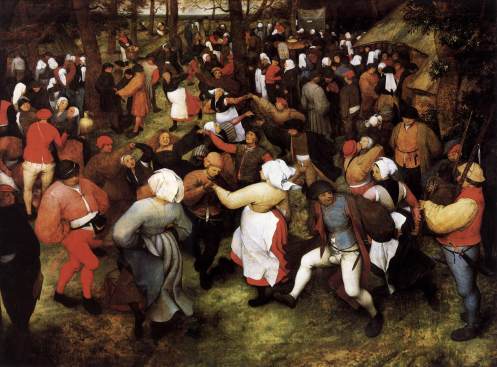
Breugel, Wedding Dance in the Open Air
Perhaps the most underwhelming political comment of the past two weeks came from Dmitri Medvedev, the Russian Prime Minister, when he warned that “we have slid, in essence, into times of a new Cold War.”
If only things were that simple.
It certainly seemed that way in 1983. A bipolar world in which the Soviet Union and NATO stood locked in decades of mutual suspicion, each ready to blast the other into oblivion at the first sign of an attack. This is the context of Deutschland 83, a TV series set in East and West Germany at the height of the Cold War. Looking at modern Germany, it’s hard to believe that the country was once divided into two nations driven by diametrically opposing ideologies.
The series is about a young East German soldier sent to penetrate and spy on the NATO headquarters in West Germany. Two episodes in the storyline particularly stood out for me. Stamm, the spy, was offered a Sony Walkman in Brussels by a street vendor. “What’s a Walkman?” he asked.
In the next episode, he manages to steal a couple of floppy disks containing NATO’s targeting plans in the event of nuclear war. When the disks reach the hands of East German intelligence, they turn out to be unreadable, because the IBM computer on which the information is encoded is not available in the GDR.
Which serves as a reminder of the extent to which, pre-internet, the communist bloc was commercially and technically isolated from the West. In the era of globalisation such scenarios would be unthinkable.
Yes, there are parts of the world where people are denied technology because they can’t afford it. But name me a country that doesn’t have the ability to take any electronic file and have a crack at decrypting it.
These days, as the FBI’s attempt to “persuade” Apple to unlock the content of the San Bernadino shooter’s IPhone shows, the battle for access to encrypted information is as much between governments and technology companies as between countries.
In 1983, the world certainly seemed simpler to me. I was living in Saudi Arabia. Although the country seemed to be encircled by conflict – in Eritrea, Palestine, Lebanon, Iran, Iraq and Yemen, by and large these seemed like local wars without an international (in other words, Cold War) dimension. Palestine was an obvious exception, but all the other conflicts blazed away courtesy of international arms dealers rather than with the encouragement and at the instigation of the primary geopolitical adversaries.
The real threat was always war between the US and the Soviet Union, or between their proxies. The prospect of being wiped out by nuclear weapons was what kept governments and ordinary citizens awake at night. It was a reality that is compellingly portrayed in Deutschland 83.
But what keeps us awake today? Much more than nuclear war. Even that horrific event could be sparked off by one of ten or so nuclear-armed states rather than two opposing monoliths.
In 2016 we seem to be enveloped by fear on many fronts. Very few countries are immune from the consequences of disasters that appear to be staring us in the face.
We fear another financial crisis that might end up impoverishing vast numbers of people even in the most prosperous countries, with the possible consequence of decades of political instability.
Ebola has reminded us of the destructive power of infectious diseases. Now we fear that Zika might stunt a generation of children in countries that can least afford their care, thus leading to further political instability.
We – at least in Europe and the US – fear that economic and war-induced migration will change for ever the social and cultural make-up of our societies.
We are worried that climate change will displace so many people that the current Middle East refugee crisis will seem in retrospect like a minor problem.
We even fear that before long a super-volcano in Yellowstone will blot out half the United States, and that a land-slip in the Canary Islands will send monster tsunamis that will inundate all the coastlines facing the Atlantic ocean.
We are afraid of terrorists, of muggers, of burglars, of murderers, rapists and child abusers. We are afraid that when we get old nobody will care for us. We are afraid of asteroids colliding with the earth, of being abducted by aliens.
The more we know, the more we discover, the more we share through the social media and the more we Google, the more afraid we are.
For all Mr Medvedev’s efforts to scare us, a new Cold War is only one of our potential problems. And how many of our modern fears preoccupied us in 1983?
They have slowly crept up on us since then. And now, when we look about us, it seems that we live in an Age of Universal Fear.
A few centuries ago, we as a species didn’t believe that we could solve every problem. We lived with the understanding that death could take us at any time through any number of ailments for which we had no cure. That our settled lives could be disrupted at any time through natural disaster, famine, social unrest and war.
We took fear for granted in a way we don’t today. We were comforted by our faith in the divine and the supernatural in a way we aren’t now. We also dealt with our fear by not thinking too far into the future, by living more from day by day. Each good day could be followed by a bad one, so best to enjoy the good day.
Today is Saturday. This morning I played a round of golf and had a few laughs with friends. I came home and chatted with my wife, and then finished a book I’d been reading over the past few days. This evening one of our daughters is visiting with her boyfriend. So far, this has been a good day. There will hopefully be more good ones to come than bad ones, until there are no more.
In the Age of Universal Fear it’s good to appreciate the simple stuff in our lives – the good stuff, the good days – because that way we can put the fear where it belongs: in a different place called the future.

Every month or so I review a book. It could be recently published, or it could be relatively old. Because I don’t review them for a living, I rarely get to run the rule over books in advance of their publication. Which is fine, because I don’t want to read anything to order.
But occasionally I’m sent something because I know the author and I find the subject interesting. This is partly the case with a little book called Once a Boy Won a Race!.
It’s written for children. Now you can find any number of children’s books for all ages on Amazon. What’s rare about this one is that it was created by children. An eight-year-old and a nine-year-old, in fact. It’s based on one simple idea. If you want to reach your chosen goal, you need to try, try and try again. And if you succeed, it’s because you’ve practiced and trained. In other words, effort yields results.
The format is also simple. A picture, drawn by the authors, on the left; the text on the right. At the end, the suggestion that there will be further episodes, and the opportunity for the reader to write about what they are going to win, and how they will keep trying. On the back cover, there’s a sweet picture of the authors, Phoebe and Isabel.
In this case I can’t say I know the authors. But I do know Phoebe’s mum quite well. She’s Dr Clare Beckett-McInroy, an educationalist, executive coach, trainer and entrepreneur who lives in Bahrain and works across the Gulf region. She’s also a writer whose output includes an excellent book on networking – Networking Know How.
Clare is a person I’ve worked with on a number of projects. She has formidable energy. Not a week goes by when she’s not promoting some initiative, be it a coaching course or an event for businesswomen in Bahrain. Yet my experience of working with her is that no matter how busy she is, she always reserves special time for her two young daughters. Hence the book.
Last week the UK’s Sunday Times newspaper published a major feature about The Life Project, a study that began in 1946 and has looked at the lives of tens of thousands of Britons from childhood onwards. Many of the received wisdoms we live by today have their origin in lessons learned through the study. For example, that pregnant women shouldn’t smoke, that children are adversely affected by divorce and domestic strife, and that parents should set clear rules about bedtimes.
These pieces of advice are based not on social and cultural prejudice, but on hard evidence gathered over the sixty years of the project
Two of them stand out in the context of Phoebe and Isabel’s book. First, that you should read to your children:
“Also encourage them to read for pleasure. This prompts a general improvement in educational attainment, including maths.”
Like so many other parents, we tried to do that with our kids. Also I spent many evenings with one of our daughters creating stories on the hoof – an endless series of variants about a giant who was fierce but had a golden heart. I’ve no idea what effect that had on her development, but she did end up in a creative career, working in set decoration for TV series and movies like Downton Abbey and The Theory of Everything.
What Clare has done in encouraging Phoebe and her friend Isabel to write their own book goes a step further. She’s provided the kids with a sense of ownership. Something to be proud of. And the simple idea on which the book is based is a lesson that they will probably advocate for the rest of their lives.
The second piece of advice that links back to the book is that you should try to breed contentment:
“Provide children with a warm, non-hostile environment – one researcher said that this correlated with better outcomes more than “any other damn thing”.”
For a parent, you could say that helping your daughter to write a book is on the same level as getting her to produce a clay pot, or a gingerbread house at Christmas. All part of the magical experience of growing up. Stepping stones of achievement that build self-confidence and perhaps point the way towards future careers.
But here’s my prejudice as a book-lover coming into play. By encouraging children to make books part of their lives, not just as consumers but as creators, you help them to become comfortable with ideas, not just things. Although there are outstanding examples of authors who developed their skills in relative isolation – Beatrix Potter comes to mind – that warm and nurturing environment surely has a major part to play. And it’s something that Clare and her husband Simon, both teachers by training, most definitely provide.
Phoebe and Isabel have an advantage that Beatrix Potter would have envied. These days anyone can self-publish via companies like Amazon. Perhaps Potter would have published The Tale of Peter Rabbit much earlier in her life had Amazon been around. After all, she was writing and illustrating in her teens, but the book that made her famous was not published until she was 36.
The authors of Once a Boy Won a Race! didn’t have to wait so long, and no doubt there will be more stories to come. Of course it helps to have the support of someone like Clare, who knows the ins and outs of publishing on Amazon, but I’m pretty sure that before long they will be able to navigate the process all on their own. Another great learning experience to come.
But for now it’s probably enough for them to see their names in lights, to be able proudly to show the results of their efforts as a bright shiny book. And who knows, maybe they will become best-selling children’s authors.
Meanwhile, take a bow, Phoebe Beckett-McInroy and Isabel Looby. There are plenty of races to be won, and I’m sure they will win their fair share. And if you’re a parent of young children, you might want to buy the book, so that your kids can also be inspired to win a few.
This will be a very short post, because I’ve lost patience with the UK referendum on continued membership of the European Union even before the campaigning has formally started.
Those who want the detailed pros and cons of the referendum will not find them here. I will simply confine myself to two predictions based on the biggest of pictures.
First, whatever the arguments, and barring some unforeseen event of great magnitude, the UK will vote to stay in the European Union.
Why? For the same reason the Scots voted against independence last year. However unpalatable the status quo may be to a significant portion of the election, as a nation we have always been risk-averse. It will therefore be almost impossible for the Leave advocates to make a case strong enough to persuade a majority to jump into unknown territory. The debate will not enlighten, it will confuse. And it will frighten, because it is not about the present but about a range of possibilities – about an uncertain future. Simple as that.
The second prediction is that the European Union, whether or not it agrees to the changes David Cameron is seeking, is heading for a major shake-up, if not an existential crisis, and probably within the next five years.
Why? The fundamental weaknesses of the Eurozone, Germany’s economic domination, the growing power of the extreme right in a number of member states, and of course the refugee crisis. Discontent with the Union as constituted is not just a British issue. There are gripes and moans on the continent that will come to a head as each party or pressure group on the extremes of left and right gains influence.
So whether Britain stays or leaves, the fault lines across the EU will continue to build. The house is heading for an earthquake. Either it will be demolished and left in ruins, or it will be rebuilt with stronger foundations.
So, for Britain, there’s a simple choice. Whether to stick around and take part in the rebuild on terms we can influence, or exit now and wait and see if the earthquake brings us down too.
But if the result isn’t already pretty much a foregone conclusion, I will be deeply surprised.
You usually know what’s coming when someone begins a statement with “I’m not being racist (or homophobic, islamophobic or any other -phobic or -ist that takes your fancy), but….”.
If the conversation is in public, the speaker will go sotto voce, and looks around furtively to see who might be listening. What then follows may or may not be offensive to the minority or behaviour commented on, but the speaker is aware of the risk of offending.
Such a qualifier rarely appears in writing, because it immediately flashes a red light for the trolls, the morality police and the righteous.
On the other side of the equation, those who are keenest to go into battle against the dark forces of prejudice often take the view that “unless you are totally with us, you are against us”. No middle ground, no room for understanding of the other person’s point of view, no semblance of gentle persuasion. Just instant condemnation.
Such is the fate of Peter Tatchell, veteran gay rights campaigner, who has just fallen foul of Fran Cowling, the National Union of Students representative for lesbian, gay, bisexual and transgender issues. The story was gleefully picked up by the Daily Mail, that bastion of even-handedness and tolerance towards Britain’s embattled social, religious and cultural minorities – as well as the natural home for alien abductees, hypochondriacs and fat people who want to be thin.
I won’t go into the gory details, but it seems that Mr Tatchell is accused of making racist remarks and inciting violence against transgender people, something he vehemently denies. And Ms Cowling, in what is becoming a grand tradition in our universities, refused to share a platform with him at a recent speaking event.
The gist of the article seems to be that if Peter Tatchell can join the ranks of the outcasts, anyone can.
So, with that in mind, it’s time for 59steps, that other bastion of tolerance, to do what it says on the tin, and step forward. Take a deep breath Steve, and say it.
I’m not being LGBT-phobic, but……. I just don’t understand.
At which point, bemused at my yet-to-be revealed ambivalence, you might ask which part of phobia, prejudice, bigotry and wrong-headedness I don’t understand. Well, I like to think that despite not being a target (yet) of such hatred, I understand some of the causes. What I don’t understand is the pervasive interest in the subject.
At the risk of reputation and possibly physical safety, what follows is a highly unscholarly attempt to figure out the answer from my limited perspective as a non-combatant. I wrote the bones of a piece on the issue a couple of months ago, but thought twice about publishing it for reasons that are not entirely clear today. We oldies forget things, you see. So here goes.
By daring to write about a club of which I’m not a member in anything other than unconditionally supportive tones, I’m probably wading into a river of abuse and contempt. That’s especially so if I suggest that there are issues that should take the centre stage more often than the struggles of lesbians, gay men, bisexuals and transsexuals.
I’m just bemused. We seem to have come from the days when “the love that dare not speak its name” warranted a jail sentence to a time when you can rarely read a newspaper edition without a story about LGBT life, politics, and artistic expression.
A typical example: the news review section of the UK’s Sunday Times recently led with a feature on Stan Lee. The byline read thus:
“Stan Lee, creator of Hollywood’s favourite superheroes, has just written his memoirs. He’s not as rich as Iron Man, he insists, and, no, he didn’t know Iceman had turned gay.”
And at the top of the same page there’s pointer to another article entitled “My life as a boy, by Lady Colin Campbell”.
The editor clearly thought that the confessions of an aristocrat born with a physical anomaly would be more effective at grabbing attention than other stories, such as “It’s not soft to say you’re depressed. It’s hard as hell” by David Baddiel, or a piece about Paris after the November attacks: “The streets of Paris are steeped in the blood of religious conflict”. In another section of the same newspaper, Rooney Mara was interviewed about her part in Carol, a movie in which her character has an affair with an older woman, played by Kate Blanchett.
You only need a famous film actress to hint that she fancies the occasional fling with members of her own sex for her words to spawn acres of newsprint and online gossip. In the days when the revelation of homosexuality could ruin an actor’s career, it would have been an affair with a leading actor of the opposite sex that would have created such a media frenzy. And poor old Rock Hudson, dying of AIDS, still felt it necessary to deny an essential part of his nature almost to the last.
Recently on TV, we’ve been tempted by London Spy, in which a gay spy is murdered for an unknown motive. At the same time as London Spy was screened, The Bridge kicked off Series Three with Saga Noren chasing a homophobic murderer. Those who don’t like subtitles could enjoy Unforgotten, a very English detective series about the murder of a 17-year old in the Seventies. A number of highly respectable characters are lined up as suspects, and guess what? It turned out that the victim was bumped off by the enraged wife of a closet gay man.
It’s almost as if the programme makers believe that the average TV viewer will not be satisfied unless the crime is flavoured with a little homoerotic spice. What would Agatha Christie have said?
In real life, LGBT seems to have become bundled into a basket of causes which include female genital mutilation, child sex abuse, and touch of anti-globalisation thrown in for good measure. But activists, as activists do, like nothing better than a bit of internecine strife to liven up their solidarity. So a couple of months before the Tatchell furore, they also went into a frothy frenzy when Germaine Greer, high priestess of feminism in my youth, had the temerity to express the opinion that a former man will never be the same as someone born a woman.
In the literary world, a recent biography of Guy Burgess, the Cambridge spy, majored on his rampant promiscuity. With men, of course.
It’s not that I object. I just don’t understand. After all it isn’t as though when we baby boomers were babies, homosexuality wasn’t a fact of life. True, it wasn’t celebrated as it is today, but neither was it a great unmentionable. And for sure, over the past decade or so, many of the wrongs done to gays in my youth have been rendered unacceptable within a wide social spectrum, even if large communities of opinion are still fundamentally opposed to anything other than orthodox sexuality.
Outside the zones of intolerance, however, the media, fashion, advertising and entertainment industries seem convinced that LGBT sells. I half expect to see “the Great Gay Bake-Off”, “I’m a transsexual, get me out of here”, or “Lesbian Castaway”. When will the BBC or Sky launch an LGBT Channel?
The question that keeps coming at me is why. Not why are people gay or unhappy with their gender, but why all the attention? Is the stream of drama, literature and press coverage on the subject a dish for which there’s a mainstream appetite, or is it being forced down our throats (taking due care to note that I’m speaking metaphorically)?
I can think of three possible theories.
Let’s start with the conspiracy theory – that there’s a highly motivated cabal of gay men, lesbians and transsexuals who have grabbed the commanding heights of the industries that most influence opinion, and they’re busy flooding us with LGBT propaganda in the form of books, movies, TV shows, op-eds and aggressive social media campaigns.
I don’t think so. After all, LGBT is a catch-all phrase to describe a whole bunch of people with widely different agendas and objectives. Within the umbrella, there seems to be a wide range of views. Hence the Tatchell row, and Germaine Greer versus the students of Cambridge University. Most LGBT people would agree on one thing, that they’re minorities oppressed on account of their sexuality. But barring that one common cause, there’s far too much diversity among the notional community to pull together any kind of cabal capable of creating from the top down what in effect is a sexual zeitgeist.
The second theory is that we, meaning everyone who isn’t gay, lesbian, bisexual or transgender, have a prurient interest. A secret fascination about “what they get up to”. Perhaps we wonder what it would be like to change gender, to have sex with one of our own. That probably accounts for male porn enthusiasts who drool at the sight of lesbian sex. Nothing new there. In short, we’re envious consumers of all things LGBT, even if we’re afraid to do more than look and wonder.
Not sure about that either, but getting warmer perhaps. Certainly sex sells, and what the straight-laced might describe as weird sex sells better, particularly among those whose sex lives are limited to the missionary position. Just as boredom is one of the reasons why people seek out paid sex, so it probably causes them to peep metaphorically through other people’s curtains.
The next theory is that it’s a safe zone for tolerance. We live in a world where we can easily be battered for our opinions. As I suggested earlier, any behaviour or articulated opinions that suggest racism, ageism, misogyny or homophobia are jumped on. You don’t have to be a celebrity to be exposed, shamed, trolled and generally beaten up. You just have to tweet or find yourself accidentally on CCTV somewhere.
So embracing LGBT is an easy way to demonstrate your open-mindedness. Whether your actions match your words is another matter. Talk’s cheap after all. Hence “I’m not homophobic, but….”
The last theory I can come up with is that in many societies, people have come to realise that sexuality is grey, not black and white. That we’re not born 100% gay or 100% straight. So it’s OK to be bisexual, to flit from one gender to another. And maybe the reason for the fascination with “unorthodox” sexuality is that many of us are finally admitting, after two millennia of religiously-inspired orthodoxy, that we’re confused about where our own preferences lie.
Why now? Perhaps because the internet has exposed us to a greater diversity of sexual tastes – real or fabricated – than we ever imagined existed. And because internet porn has become the new normal for hundreds of millions of people, whether they encounter it by accident or design.
That said, sexuality is only one of the things we’re confused about. We worry about what will happen to our jobs as artificial intelligence threatens to make us redundant. We worry about terrorism, about climate change, about getting old, about internet fraud, about street violence, about loneliness. We see sexual violence and child abuse lurking around every street corner.
Although each generation believes it faces an uncertain future (which it most certainly does), over the past century there have been long periods of relative certainty about the social and political order, punctuated by periods of violent disruption in the form of war and economic collapse. It seems to me that while we have enjoyed an increasing level of prosperity since the Second World War, and while such wars as we in the West have been engaged in have not affected the majority of our own populations, the longer the peace has endured, the greater the uncertainty that has crept into our societies.
In my youth, the Summer of Love coexisted uneasily with the Cold War. The sexual revolution blew away the boundaries of heterosexual sex. But gay sex was still in the closet. Nobody in business or politics would admit to being gay. Ordinary people were turned into Soviet spies because they were blackmailed by the KGB. Even when gay sex was decriminalised, prejudice lingered.
I believe that that sense of uncertainty increased with the fall of the Soviet Union. Suddenly, there wasn’t an enemy that imposed on us the discipline of vigilance, that justified “the way things are” – the war of ideologies, military spending, nuclear paranoia.
The end of the Cold War led to social disintegration in the former Soviet Union. Soon enough that nice Mr Yeltsin gave way to the cold, calculating Vladimir Putin, rattling his nukes and annexing the Crimea. Western economic supremacy began to be challenged by China. Add the disastrous wars in the Middle East and the subsequent rise of ISIS, and our uncertainty has redoubled. Our confidence in our societies, institutions and political orders has collapsed.
So has our sense of who we are. Many of us have leisure time in abundance. More time to travel. More time to stop and think. With the help of the internet, we interpret what we what we see with our own eyes rather than have others interpret it for us. We watch executions in Syria, tsunamis in Japan, precision bombs taking out hospitals and schools. As relief from the horrible stuff happening before our eyes, we can find any form of sexual activity if we look hard enough. And this stuff rewires our brains.
We are proud to be fat, to be thin, to be gay. We live in an age of confession, where emotional privacy is considered a weakness. Where pain is laid bare, and assuaged by Jerry Springer and Oprah telling us that we are not alone, or from numerous sessions on the therapist’s couch, or from AA meetings, anger management classes and detox clinics.
We are used, abused and conspired against. We are survivors, victims. For every tic and quirk, for every speck of eccentricity or sign of irrational behaviour, there’s a psychiatrist waiting to diagnose a disorder, and a therapist willing to delve into our past to find the cause. Which makes it OK, because it’s not our fault. But that still doesn’t help.
So is it any wonder that if we’re lucky enough not to have to work sixteen-hour days of monotonous and physically punishing labour just to feed ourselves and our loved ones, and if we don’t have to worry about a knock on the door or a bomb through the roof, our thoughts turn to matters beyond personal survival? That’s what Maslow says anyway.
If we have access to the sum of the world’s wisdom and depravity at our fingertips as we sit in our warm, comfortable homes, is it surprising that we start asking questions about ourselves that our parents or grandparents wouldn’t have dreamed of asking? Ugly questions that, if they did ask them, they quickly stuffed back into their mental closets with a shudder, or dealt with by constructing intricate double lives for themselves?
So I guess I’ve answered the original question, at least to my own satisfaction. We live in an age when each answer spawns a dozen questions. We should celebrate that people can be more open about their sexuality, which after all is a fundamental aspect of human personality. We should admire people like Ian McKellen, Grayson Perry and Tim Cook, whose personal examples have done so much ensure that at least in the West there will be no more Oscar Wildes, John Gielguds and Alan Turings, and no more people busted for what they do in men’s public lavatories.
No doubt LGBT campaigners would say that we’re not there yet. Not as long as people are thrown off tall buildings in Syria and jailed for their sexuality in Africa. Each generation fights battles in its own way – in ways that sometimes make disinterested observers uncomfortable.
But I for one can put up with being bombarded by an endless stream of stuff about LGBT, because eventually consumer appetites will fade, and what’s compelling today will be greeted tomorrow by a shrug of the shoulders – because it’s normal, because it’s no big deal. And because we have more pressing things to worry about.
If we could say the same about racism and religious intolerance, then we really would be getting somewhere.
The Battle of Borodino
Here comes one of my occasional confessions. I have not read War and Peace.
Nor have I read Great Expectations, Pride and Prejudice, The Forsyte Saga and Lord of the Rings. No Hemingway, Henry James, Virginia Wolff or Graham Greene. In fact, despite my expensive education, virtually the entire canon of classic European literature has passed me by.
Virgil, Catullus, Herodotus, Thucydides, Euripides, Cicero, Homer – yep, I’ve read all of them, because the ancient world was my first love, and will always be closest to my heart.
I’ve expanded my taste somewhat since my antiquity-obsessed youth. And Shakespeare was a parallel interest ever since I acted for the first time in A Midsummer Night’s Dream – I played Tom Snout, also known as The Wall. Actually I like to think that my talent at portraying inanimate objects paid off when a decade later I was selected to play The Spanish Armada opposite Derek Jacobi in Sheridan’s The Critic.
Well, not quite. Jacobi played the leading role. I was a stage hand, and it was my job to wheel a plywood representation of the Armada on to the stage, all guns blazing. But as I crawled unseen behind the tableau, I felt a bit of a star myself.
The blazing guns bring me back to War and Peace, cannonades at Austerlitz, slaughter at Borodino and all. It’s a natural for film or TV. The grand sweep of history; tumultuous love affairs against the backdrop of Napoleon’s military triumphs and his penultimate downfall in 1812.
Andrew Davies’s six-part adaptation for the BBC is the latest in a long line of productions. I vaguely remember the BBC’s previous effort in the 1970s. But the emphasis is very much on vague. Before watching the latest series, I wouldn’t have been able to tell you much of the plot, except that Napoleon and all his works loomed large, and that various Russian aristos kept falling in love and then changing their minds.
So when I watched the current effort, I was able to view it simply as an historical drama, without reference to previous performances in the leading roles, and most importantly without being weighed down by the motherlode of Tolstoy’s original work.
A good thing really, because otherwise I might have viewed it as a play within a play – a bit like the Spanish Armada in The Critic, though less silly.
So on what did the drama depend? Well, we have Pierre Bezukhov, a mild-mannered perpetual student who happens to have inherited vast riches from his father despite being an illegitimate son. Gullible enough to marry Helene Kuragina, a voracious seductress, who very quickly gets bored with her bibulous husband, and has an affair with one of his friends, the unscrupulous scrounger Dolokhov. Pierre finds out; he nearly kills his rival in a duel, despite never having fired a pistol before. Lucky boy.
Then there’s the handsome Prince Andrei Bolkonsky, who’s a bit of a prig. He’s wounded at Austerlitz, and gets home just in time to see his wife die in childbirth. Thereafter he retreats to the country to contemplate his navel, leaving his father and sister to bring up his son. Father, Prince Nikolai – Crabby Dad hereafter – is permanently angry, though we never find out why (unless we did and I wasn’t paying attention).
Andrei falls in love with Natasha Rostova, whose brother Nikolai is in the process of destroying the family fortune by racking up massive gambling debts to colleagues in the army. Nikolai’s dad, Count Ilya Rostov, is a kind-hearted soul whose attitude towards his rakish son seems to be “oh well, boys will be boys” as he steps closer to bankruptcy with each bail-out.
Natasha has to wait a year to marry Andrei, a stricture imposed on her beau by Crabby Dad as a condition for approving the marriage. So Andrei disappears to Switzerland. While he’s away, Natasha falls in love with Anatole Kuragin, Helene’s no-good brother. They are prevented just in time from eloping together. By this time Natasha has broken it off with Andrei, who is understandably miffed. He vows never to see or speak of her again. She, in turn, realises what a mistake she has made and is Very Unhappy.
Meanwhile Pierre has had an early-life crisis. He’s consumed with self-doubt and the futility of it all. He becomes a freemason, dedicating his life to the service of his fellow man (Tolstoy clearly thought that the masons were a Good Thing). Pierre wanders around his estates doing good things for his serfs, but he’s still not happy. He’s actually in love with Natasha, but can’t bring himself to tell her. Instead he acts as her consoler-in-chief.
Napoleon invades Russia, and as he gets close to Moscow, Nikolai Rostov conveniently rescues Andrei’s sister, Princess Maria, from the clutches of Napoleon and the ravages of her disaffected serfs (“what have you ever done for us, Princess?”). This is just the first in a series of just-in-times and at-the-last-moments, by the way.
Anyway, Crabby Dad has just died, and Maria is helpless. Despite Nikolai being betrothed to Sonya, his cousin and Natasha’s best friend, there is a spark between her and her dashing rescuer. Could Maria’s riches and Nikolai’s impending destitution have anything to do with it? Perish the thought.
Fast forward to Borodino, where the Russian army finally gets the better of Napoleon. Andrei’s great friend Pierre decides to do a bit of combat tourism. So he turns up in his civvies and finds himself in the thick of the battle, alternatively helping out the artillerymen and wandering around in a state of bemusement.
Pierre emerges dazed but unscathed. Andrei is badly injured. He ends up in the field hospital next to his badly-wounded love rival Anatole. Even though he has vowed to kill the rascal, Andrei holds his hand out to Anatole in a gesture of reconciliation.
Which takes us to the end of Episode 5. I won’t share the details of the last episode except that Pierre finds himself involuntarily taking part in the retreat from Moscow until he’s rescued by Dolakhov – just in time – and there are a couple of moving deathbed scenes. The gorgeous Russian funeral dirges even bring a tear to this old cynic’s eye. But all works out in the end. Those who make the cut live happily ever after, and the series sails gently to its conclusion like an ocean liner easing into port.
It’s a pacey storyline. There are some good performances too. Brian Cox as Kutuzov, the wily old Russian commander who lures Napoleon on to the empty prize that Moscow turns out to be. Jim Broadbent as Crabby Dad (aka Prince Nikolai); Stephen Rea as Pierre’s relative, the grasping Prince Vassily Kuragin; Adrian Edmondson as the good-natured but feckless Count Rostov; and Scully (oops, sorry – Gillian Anderson) as Anna Scherer, the scheming St Petersburg hostess.
As for the lovers, they do a good job of looking soulful, sad, ecstatic, devastated and lascivious. That said, why do I find myself wanting to give them a good telling-off for being such bloody fools? But then again it’s not really their fault. They’re just creatures of the society whose rules are rigidly enforced by the older guys like Crabby Dad and nasty Prince Vassily.
Of all the younger characters, the most interesting by far is Pierre. He’s an odd combination of meek-and-mild but outrageously brave. He has the balls to take on Dolokhov, and he’s mad enough to go for a stroll round Borodino while all about him are dying grisly deaths. OK, perhaps not mad – more of a death wish. He’s gullible yet principled. He’s also supposed to be fat, so the obviously not fat Paul Dano has to spend most of the series in the sartorial equivalent of a fat suit – billowing coats that hide his lack of corpulence.
I found myself trying to fill in the gaps. Why was Crabby Dad so angry, and so horrible to his angelic daughter Maria? What was Andrei doing in Switzerland apart from recovering from his wound? Why didn’t Pierre go into the military, like most of the other male characters? Was it just because of his spectacles? And why did the French bother to escort a bunch of prisoners into the snowy wastes during the retreat from Moscow? Why didn’t they just leave them to freeze to death, or just shoot them as they did a number of others?
Clearly I would have had to have read the whole nine yards, or fourteen hundred pages, to find out. But in an effort to flesh out the story I went to the web to find a plot summary, and discovered that War and Peace is indeed a ruminative landscape, full of discourse and philosophising, in which Tolstoy surveys the society of the Russia from which he sprung. The actual story as reduced by Andrew Davies could probably be told in a mere two or three hundred pages.
As a TV drama, it works pretty well. The music is sumptuous. The battle scenes are compelling. Many of the older characters are quirky enough to keep one’s interest. Yet I found myself empathising with few of them, young or old, with the exception of Natasha’s dad (“it’s only money after all”) and poor old Pierre, the reckless seeker after truth.
For a story that in Davies’s hands poses as a romantic drama, you surely need to be able to step inside the characters, to imagine yourself in their shoes – or voluminous coats, gold-braided uniforms and skimpy shifts as the case may be. I found that difficult, perhaps because I’m from Crabby Dad’s generation, but perhaps also because I couldn’t imagine myself, even in my wildest youth, falling in and out of love at the drop of a hat.
Perhaps the major flaw – for me at least – was the very obvious shoehorning of a lot of plot into six episodes. Whereas Tolstoy’s original, I suspect, marches at the measured pace of infantry, the TV series is like a cavalry charge, things happening, developing and changing in a seeming instant. Or to put it another way, fast food as opposed to a long meal among new friends.
But then again we like our drama to be crash bang wallop in this era of instant gratification, don’t we? Back in 1967, Galsworthy’s Forsyte Saga meandered along for 26 episodes. It’s almost inconceivable that the BBC would invest in any series that long today, partly because of cost (even if the sets were made of cardboard) but mainly because most of us would have lost the will to live by Episode 15. In those days the BBC had less competition. In the time it took to watch the decline of Soames Forsyte, you could get through three series of Game of Thrones or The Bridge.
Will I now read Tolstoy’s magnum opus? Maybe, but I doubt it.
I get my usual supply of wisdom from trying to understand the world as it is today, and from looking at times past from the multiple standpoints of historians and contemporary accounts. You could easily argue that Tolstoy could contribute to that understanding, and you’d probably be right. But so many books, so little time. And, for that matter, so little retained. If I had Tolstoy’s intellect, things perhaps might be different.
And do I regret not having read all those classics before watching them on TV? Definitely yes. But about the only way I could see myself filling the vast gaps in my literary exposure would be to go back to university and do degrees in English, Russian and French literature. And that’s not going to happen. Too late for Jane Austen, sadly, and for Proust and Tolstoy too.
As for historical drama, I’m still waiting for someone to do justice to George McDonald Fraser’s incomparable Flashman, an amoral Victorian scum-bag with more charisma in his extravagant sideburns than poor Pierre and all of his honour-bound friends.
Over to you Mr Davies, if you dare.
Two smallish news items on the back pages of today’s UK newspapers might not seem immensely significant against a backdrop of financial instability in China, the battles raging in the Middle East and the prospect of a narcissistic property developer entering the White House.
But the stories about Liverpool Football Club’s owners bowing to supporter protests over ticket prices, and Nestlé’s decision to terminate its sponsorship of IAAF, the international athletics governing body, are evidence of two very different sets of customers saying “we’re mad as hell, and we’re not going to take it any more”.
In Liverpool’s case the decision to raise ticket prices for an upgraded section of the stadium would seem perfectly logical from a business standpoint: I offer you better facilities, you pay more money. Whether the club’s owners factored a tipping point into their equation – the possibility that customers in a city that has been struggling economically over the past half century might vote with their feet – is known only to them.
But the football business isn’t driven exclusively by logic. It’s vulnerable to the emotions of its customers who don’t see the objects of their support as businesses at all. Fenway Sports Group, who own Liverpool, are smarter than most, as witness their acknowledgement of the mystical element of the game, when they referred to “the unique and sacred relationship between Liverpool Football Club and its supporters” in the climb-down announcement.
It would be hard to imagine Apple reducing the price of the IPhone 7 in the face of customer pushback and citing as a reason that it was mindful of the sacred bond between itself and its users.
Liverpool could recoup the £4 million shortfall in its planned annual revenue by buying a star player less or selling another, so the impact in the context of elite football’s bloated economics will be minimal. But I’m one of those who firmly believe that your relationship with your customers is often better strengthened by the way you recover from a mistake than by making no mistakes at all. So Fenway – if they’re as smart as I think they are – will have learned from the mistake and come out smelling of roses.
Whether their gesture will provide a lesson for owners of other clubs remains to be seen. I suspect that the corporate owners will take note, whereas the wannabe Donald Trumps who use their clubs as flagships for their personal prestige might consider that to back down in the same manner would constitute an unacceptable loss of face. Vincent Tan, owner of Cardiff City, would probably be one of those. Here’s a previous post about Mr Tan and other autocratic football owners.
Be that as it may, club owners need no reminding that there’s a delicate balance to be struck in keeping fans onside while trying to run their businesses on principles recognised by the London School of Economics and the Harvard Business School. Though perhaps gate receipts are less critical in an age of monstrous television fees, Liverpool’s retreat might make a few potential investors think twice before taking on a sports franchise in the United Kingdom. And this could have a knock-on effect on valuations for owners looking to make an exit – those of Everton and Aston Villa, for example. A downturn awaits?
The other decision is that of Nestlé to pull out of its sponsorship deal with the IAAF. It’s doing so because it believes that the organization’s failure to deal with doping and financial corruption is damaging its brand. Nestlé funds the organisation’s children’s programme. Its decision comes hot on the heels of Adidas, which has cancelled a far more valuable sponsorship deal. Sebastian Coe, the IAAF’s president, reacted with predictable anger. Compared to the Adidas deal, Nestlé’s support is relatively small beer. But the withdrawal of two big-name sponsors does not bode well.
And so it shouldn’t. Millions of pious and angry words have been spoken over the past couple of decades about unfair completion through the use of performance-enhancing drugs. Yet still the IAAF has failed to come to grips with the problem. Under Coe’s predecessor, corruption, a type of cheating better known within FIFA, football’s governing body, has also taken hold.
Is it not a sign of our times that in two sports that lift the spirits of those who follow and take part in them, money seems to be trickling up as fast as it’s trickling down?
Most of the sports administrators who have enriched themselves seem to be pretty insignificant figures on the global stage – tin-pot emperors in their little fiefdoms. Few if any of them have made it to the top of any rich list, and most probably won’t, because such prominence would quickly lead to questions about their new-found wealth. Instead they hide their gains under the banking equivalent of the mattress.
So we’re not talking here about a major contribution to the polarisation of societies between very rich and the very poor. But what we are talking about is the same uneasy relationship between business and sport that so often alienates football fans – a sense that the underlying joy of sporting competition is being taken away from them.
While it’s true that the serious money is to be made from major competitions and by the relatively few high performers whose prowess attracts the TV dollars, it’s surely depressing for all who take part in and follow athletics to know that to find international success you must dope, and that no high-level competitive sport, be it tennis, cricket, football or running, is immune to match-fixing. And that therefore no result can unequivocally be considered clean. And if that’s not bad enough, that so many of those entrusted with the well-being of sport are quietly growing fat on the proceeds of shady deals.
All of which suggests that although we still need governing bodies for international sport, there are some, IAAF and FIFA being prominent examples, that are not fit for purpose. They should be taken down. Disbanded. Not reorganised, but re-built.
That doesn’t mean that the good stuff they do should be shut down and thrown away. But the structures that protect the corrupt and prolong the tenure of the powerful should be done away with. Those who lose their jobs in the process should be invited to apply for new ones, but subject to new rules and new standards of transparency. In other words, no more jobs for the boys. No more Sepp Blatters.
The problem is, as the Roman poet Juvenal said, quis custodiet ipsos custodes? Who guards the guardians? For most sports, it’s the supporters and the sponsors. In the case of FIFA, it seems, it’s the FBI.
I’m one of billions who both take part in sport and watch others doing so. I don’t have much in common with kids from impoverished communities in Ethiopia, Brazil and Cambodia. But if I mention the names of Messi and Ronaldo, and even good old Wayne Rooney, the light of recognition shines through linguistic, cultural and economic barriers just about everywhere in the world.
That’s one of the glories of sport. It transcends barriers. So I congratulate the Liverpool fans and, whatever their self-interested reasons, Adidas and Nestlé, for taking a stand against those who have forgotten that sport is a common denominator for humanity before it’s a business. And I only wish that the companies that fund FIFA would do the same as IAAF’s sponsors instead of just talking about it.
Every house needs a spring clean from time to time. Some need demolishing. For FIFA, IAAF and one or two others of that ilk, time is running out for them to sort themselves out before someone else does it for them.
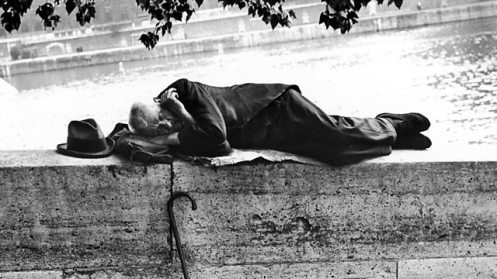
One of those PR-generated stories that crop up in the British media from time to time concerns the increasing tendency of female students to hook up with so-called sugar daddies – older men who lavish cash, presents and holidays on kids half their age in return for company and, it seems, sometimes sex.
One company claims that it has 220,000 students on its books who are available for such arrangements. I think that’s hardly credible, and even if the number is accurate, I find it hard to believe that there are so many wealthy middle-aged guys out there waiting to get their hands on kids young enough to be their daughters. At least I hope there aren’t. So I’m not going to bother to link the story. It’s nothing new. Ask Lynn Barber, whose experience in the 60’s was portrayed in the movie An Education.
But even if the number of students actually “using” sugar daddies is a tenth of those registered with the dating company, it still highlights a social issue that affects more than one generation.
Here’s the dilemma for parents of young adults. It’s as old as the hills, yet never more relevant than today. Do you help your kids through school – and possibly university – and then push them off to fend for themselves, or do you continue to fund them until your support is no longer necessary? And does your support in young adulthood delay or accelerate the long-awaited self-sufficiency?
Big questions when the parents have the means to support their kids. When they don’t, no question at all.
The reason it’s highly relevant in the UK is that those coming of age from 2000 onwards are, apparently, the first generation in the modern era to be worse off financially than their parents were at a similar age. Better educated maybe – many more went to university than in my day – but worse off.
Encumbered with student loans, unable since 2008 to get on to the housing ladder without having to raise deposits of up to 35% of the value of properties that in some areas have risen in price by 10% per more over the past decade.
Those who do seek mortgages are asked a whole range of intrusive questions about their spending habits so that lenders can be satisfied that they’re a good risk – one of the legacies of the sub-prime housing scandal that kicked off the 2008 financial crash. If some pre-pubescent bank employee asked me how much I spend on Indian takeaways, underarm deodorant or Netflix, I would struggle to reply in anything other than industrial language.
Meanwhile, the narrative goes, many of my generation, the baby boomers, sit pretty on generous final-salary pensions (not me, by the way). We were able to get 100% interest-only mortgages, and we’ve watched with glee as the value of our houses has grown beyond our wildest dreams. If we need extra cash to build extensions and go on cruises, we can take advantage of equity release schemes. Or we can simply down-size, using the capital released (which are not subject to capital gains) to fund extravagant lifestyles in retirement. We get free bus passes, index-linked state pensions and even a winter fuel allowance.
And those of us who don’t need to raise extra cash on our properties rattle around in homes we originally bought to accommodate our families, while our offspring struggle to pay the rent on their tiny, over-priced apartments.
It’s fair to say that not all baby boomers benefit from the golden scenario I’ve described. But enough have “never had it so good”, as Harold Macmillan said of my parents’ generation, that their votes ensure that his modern successors in the Conservative party will always, barring disaster, enjoy the support of the majority of over-60s in my country.
Until, that is, the first downwardly-mobile generation gets to my age. At which stage, unless they can do something about the problem, the Tories will be toast.
It’s also the reason why Jeremy Corbyn scores highly with the young and dispossessed, as well as with guilty members of my generation. And why Capital in the Twenty First Century, a book on economic inequality by an obscure French academic called Thomas Piketty, topped any number of international best-seller lists last year (mind you, it was probably the least-read best-seller since Steven Hawking’s Brief History of Time).
It’s why every day you will find articles commenting on the factoid that 62 people own 50% of the world’s wealth (62? A suspiciously precise number, don’t you think?). And why David Cameron, the current Conservative Prime Minister, has engaged Alan Milburn, a former Labour cabinet minister, to come up with solutions to the growing gap between rich and poor, and between young and old.
It will take more than an equality czar in a small European country that has seen better days to solve a global problem that’s up there with climate change as one of the biggest potential causes of mass social unrest in this century.
Meanwhile, what can we, the guilty geriatrics, do to alleviate the problem in our insignificant little back yard? Unless we happen to be Bill Gates or Warren Buffett, very little on a global scale. But we can make a difference for our kids?
Quite a lot, I think.
The first thing we should do is ask ourselves, when our kids are still at school, whether we should avoid placing on them the expectation that they should go to university. When I was a teenager, among my peers there was that expectation. And among parents of the time there was a perfectly reasonable view that going to university would boost career prospects and earning opportunities. For me, it was expected but not demanded. So I did it.
These days around 40% of school leavers go to university, as opposed to less than 10% in my day. There are many more courses available to today’s students. Cynics would say that some of them cater for unrealistic career aspirations, or at least prepare them for careers in which the odds against success are high. After all, there are only so many jobs in the media, and only so many opportunities to manage golf clubs.
Whatever the reason, there are too many young graduates working as baristas, earning the minimum wage, still dreaming the dream. Admittedly, that is starting to change. More and more large companies are offering apprenticeship schemes that pay entrants decent salaries while they’re learning, and give them a head start over graduates who enter the market three years later, burdened with debt.
The trade-off is that apprentices miss out on the glorious life experience of three years of semi-leisure in academic institutions. Yes, I know that some might take issue with idea that a university education is a leisurely pursuit, but try convincing trainee lawyers, doctors or accountants – who sweat blood early in their careers – otherwise. For doctors, we’re talking about maybe ten lectures a week versus 80 hours on the wards.
So that’s the first thing: have an open mind about what comes after school, and don’t project the received wisdoms of your youth on to your kids.
Next – and this applies if you have some spare cash lying around – think again about whether you are helping your kids most effectively by helping them buy a property.
The thinking behind getting your kids get on to the property ladder is usually rooted in the assumption that in the long term property is a wealth accumulator. There may be a few up and downs in the market, but you’ll always end up on the plus side, right?
Well maybe, but maybe not. In the era of downward mobility there’s no guarantee that property ownership will be a long-term bet. Certainly those in the UK who lost their homes when property prices tanked in the early Nineties, and Americans who ended up on the street after the sub-prime crash in 2008, would concur. The housing market is one of Donald Rumsfeld’s known unknowns. And a young person investing in property (or having an investment made on their behalf) is riding an increasingly dangerous tiger.
So is the answer to hold on to the cash and let your kids find their own way without your help? Survival of the fittest and all that? Lots of parents feel that way, and in lots of cases this approach pays off. But then what? Your kids might spend their first fifty years hanging on, financially strapped, waiting for “their inheritance”. In other words, for you to die.
Is that sensible? You sit on money that’s no use to you, while your kids wait like vultures for you to fall off your perch. And when you need to spend your savings on geriatric care, they become increasingly bitter as what they thought would soon be theirs is frittered away in exorbitant care home fees. You might also be with the uncomfortable thought that your kids are motivated more by greed than filial piety. Another age-old conundrum. Does one child spend more time caring for aged parents through love and concern, or because they think they might thereby do better out of the will than their siblings?
And what effect does the looming inheritance have on the careers of the kids? Would they make different choices – work harder, save more perhaps – if they knew that there would be no golden cushion waiting for them when their parents pass?
In my view, there’s a very obvious middle way for parents. Much as our kids might not like the thought, owning a property makes little difference to their careers. There are millions of people – especially in continental Europe, who do just fine without ever owning their own houses. We in the UK regard home ownership as a benchmark of professional success and social prestige. It’s a false benchmark, especially if the owner has made use of parental funding.
So what can we do for our kids that really makes a difference to them making it in their own right?
Simple. Invest in their careers, not their houses. If they want to do a master’s degree to increase their chances in the job market, help them. If they’re running their own businesses and are short of the tools to do the job, help them. Do anything that will help them make a success of their chosen path. The important thing, though, is that your support is not the deciding factor in their success. That should be down to their abilities, not your money.
In case you’re wondering what right I have to pontificate on such matters, let me share a few stories from my life.
When I was fifteen, the future was clear and bright. I would go to university, become a lawyer, and whatever I did would be underpinned by a trust fund set up by my father. He was also a lawyer, but moved beyond the profession to become a successful businessman. I was a pupil at a well-known private school. Many of my peers had similar ambitions and similarly wealthy parents.
Then disaster. My father overreached. His businesses collapsed and he went bankrupt, owing a merchant bank nearly two million pounds. A lot of money in 1965. He never recovered from the setback. He did, however, find the money that enabled me and my siblings to finish our secondary education.
Thereafter, I was on my own. No trust fund, no handouts, only the vague possibility that my father might recover his fortune and invest in the business that I eventually started. Which never happened. So all the mistakes I made in that business were my own, which made for a pretty cash-strapped few years after I left university.
But in one sense, I was lucky, because unlike my father, I went through my setbacks in my twenties, when I was young enough to learn lessons and recover from them. He was in his mid-forties when disaster struck, and his downfall was cataclysmic enough to cripple him financially for the rest of his life.
So as a result there was no inheritance to look forward to, no golden cushion. My modest achievements later on were down to me, even though he offered me plenty of moral support. What’s more, I didn’t just learn from my mistakes, I learned from his too.
My siblings all had successful professional careers: a university professor, a teacher and a doctor. I was the only one who eventually went into business. By that time, I needed no support from my parents even if it had been available. Thanks to nearly a decade in Saudi Arabia, I had enough money to invest in the business. Such success as I had was then down to hard work, finding good people to work with and being in the right place at the right time.
But I doubt if I would have achieved much without the education my parents paid for, even if I didn’t realise it at the time. That, and the example of my father’s resilience, lack of bitterness and generosity with his time, was how things have turned out OK for me thus far. And one great benefit from the lack of any inheritance was that there was never cause for me and my siblings to quarrel, scheme and worry over an ancient pile of money.
Given that experience, you could say that I’m biased in downplaying the importance of providing your kids with bricks and mortar, and the virtue of leaving a lump of money for them to remember you by when you’re gone.
And that’s why I would always advocate giving freely of your time when they’re struggling. Advice and expertise, not direction. And if they need some financial support, give it in such a way as they can honestly say in years to come that “I did it thanks to my own effort and talent” rather than “I would never have got to where I am without Daddy’s (or Mummy’s) money”.
Because ultimately the golden dividend of achievement is self-respect, something that can be difficult to gain if you’re addicted to money that is not your own.
Our offspring are a work in progress, as most twentysomethings are. And we’ve made as many mistakes with them as actions that turned out for the best. It’s hard watching them struggle without wanting to make things right for them. Sometimes the only thing you can think of is to put your hand in your pocket. After all, if there’s a choice between emotional and practical support, and throwing money at their problems, money is often the easier option.
And I guess one of the most important things I’ve learned from experience is that support, advice and money on their own won’t make things right for your kids. In the end, it’s mostly down to them.
In other words, we’re not as important as we think we are.
A story in today’s edition of the English-language daily Saudi Gazette has implications beyond what would appear to be its main purpose. It’s about Ghada Al-Mutairi, a Saudi scientist working in the United States who has invented a revolutionary technique for pinpointing inflammations in the human body and enabling their treatment by laser surgery.
The article states that Dr Ghada:
“who holds a doctorate in materials chemistry, currently lives in the US. She is a faculty member at the University of California San Diego (UCSD) and director of the Center of Excellence in Nanomedicine.”
Nobody who has spent time working with medical professionals in Saudi Arabia – as I have – would doubt that the country is producing talented and dedicated doctors, scientists and engineers. Many, but by no means all, study at universities in Western countries. They are encouraged to do so by a generous national scholarship programme. Currently over 200,000 Saudis are studying abroad.
I have met a number of these graduates once they have returned to their country. Almost all say that the experience has transformed them. Like Dr Ghada, they are dedicated and highly patriotic, but there is also a distinct confidence about them. They walk easily between two worlds.
Some, like Dr Ghada, end up either staying in their host countries, or returning after a spell working at home. And that’s where the first implication surfaces. She is one of five children, of which only one, a dentist, is working in Saudi Arabia:
“One of her brothers, Khalid Al-Mutairi, is a well-known plastic surgeon in the United States. Another of her brothers is a professor at Houston University, Texas, and the third is a dentist practicing in Jeddah, while her sister is a radiologist in Boston.
“My mother studied chemistry, and we are what we are because of her. She was a smart woman who dedicated her life to bring up her five children,” Al-Mutairi said.”
I find that rather sad. The Kingdom has a few pockets of medical excellence, yet not many citizens would disagree that there is much scope for improvement. In the case of the Al-Mutairi family, Saudi Arabia’s loss is clearly America’s gain.
The article’s purpose is ostensibly to showcase an outstanding Saudi talent, and to send a message that there are no barriers to success whether you are a man or a woman. And it’s true that there is no shortage of opportunity for women in the medical profession. What’s more, the traditional segregation between the genders is impossible to sustain in hospitals, where clinical practice demands that men freely work alongside women.
But another story puts Dr Ghada’s achievements into perspective. Late last year, women were allowed to stand for election as municipal councillors. The measure had been brought in by the late King Abdullah. It was hailed as a social breakthough. In Jeddah, the Kingdom’s second city two female councillors were duly elected.
This week, when the women showed up for the first meeting of the municipal council, a male councillor objected to their presence in the chamber on the grounds that the mixing of unrelated men and women was forbidden in Islam.
Despite the fact that female members of the Majlis Al-Shura, the consultative council that advises the Council of Ministers on matters of national policy, sit in the same chamber as their male counterparts, the responsible ministry ruled that women councillors should sit in a separate room and participate in proceedings via a closed-circuit TV link.
This is a well-established practice in academia and at conferences, but the ruling raised eyebrows because, according to Catherine Philp, reporting in today’s London Times, councils in other cities had already admitted their newly-elected female members into the council chambers, presumably following the example of the Shura. Thanks to the ministry’s ruling, they must now all be separated.
Now I have no idea what motivated Dr Ghada and her three siblings to make lives for themselves in the United States. In her case, the ability and funding to conduct exciting research must have been a factor. Also the fact that she was born in the US to Saudi parents (which the article doesn’t mention by the way) will have made a difference. But one can only speculate on how the councillor in Jeddah who objected to the presence of his female colleagues might react to a photo in the Saudi Gazette of the smiling scientist, participating in a discussion with two men, wearing no hijab over her hair, and no abaya, the black gown traditionally worn in Saudi Arabia.
The second equally powerful takeaway from the story is that Dr Ghada, as a Muslim, is an example of the sort of person to whom Donald Trump, if elected President of the US, would seek deny admittance to his country. Which goes to show what a fundamentally stupid man Mr Trump is, but also what a distorted and one-dimensional the view of Muslims prevails among large swathes of the American electorate whose prejudices he seeks to harness.
Dr Ghada’s next project is to find ways to remove fat from the human body. If she succeeds in developing a safe technique that is more effective than those currently available, I would be delighted to be the beneficiary of her expertise, just as one day her invention of a nano-capsule to treat inflammation might come to my rescue.
Should the unthinkable happen, and Donald Trump finds himself with the power to carry out his short-sighted plans, I can only say that we in Britain should (and I’m being careful not to say “would”) welcome her and her brothers and sister to our country with open arms.
And yes, she does send out a message to young Saudis about what they can achieve. Hopefully her example will accelerate the pace of social reform in her country, so that Saudi Arabia can most effectively use the many talented people of both genders who have chosen not to emigrate to other countries.
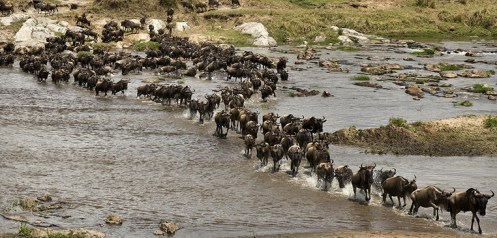
I do wonder about The Times on occasions. Actually no – what I wonder about is what kind of club I belong to by being a regular reader of London’s oldest broadsheet.
That club is a broader church than the crusty old academics, retired politicians and pernickety colonels from Hitchen who regularly have their letters to the editor published, all beginning “sir”, and ending, if newsprint weren’t too valuable to include them, with flowery sign-offs from another age, like, “I am, sir, your obedient servant”.
And the attraction of the paper can’t only lie with opinions of the columnists, which clearly appeal to a wide spectrum of Middle English prejudices, and occasionally explode across the page with audacious bait for the twitter-trolls (a good example being David Aaronovitch’s suggestion that the way to stop seaborne migrants in their tracks is to sink their boats and shoot them in the water to spare them the unpleasantness of drowning).
In fact its columnists are among the best in the business – humane, far from extreme (with one or two mild exceptions), thoughtful and often challenging. And by the way I don’t consider Aaronovitch extreme – I suspect that his piece on migrants was more of a provocation than a serious proposal.
Although for me the columns are the bones of the newspaper, there’s still a wide range of meaty content for people who don’t care a hoot about Syria, climate change and the antics of British politicians.
But if the readership is a broad church, there are definitely a few worshippers whose names are emblazoned on the back of their pews.
What causes me to question the demography of my fellow readers is a piece in last Saturday’s magazine section called “Hotel Lust List – 25 rooms to stay in before you die”. As you can imagine, a title like that is bound to send readers flocking to page 55, passing over Caitlin Moran’s ode to womanhood (how to insert a tampon in the loo of a high-speed train) and other worthy pieces.
Even an old codger like me, for whom lust is a phantom to be occasionally glimpsed through a double-glazed window of decrepitude, is likely to want to browse through a list of locations that might re-kindle the flames of youthful vigour, if only for a few fleeting moments.
But then when I read through the descriptions of the hotels – or tents in many cases – that the travel editor deems worthy of my attention, a hormone other than testosterone surged through my brain. I burst out laughing.
Not so much at the properties themselves. Uluru, Machu Pichu, Marrakech, St Moritz, Cappadocia, Udaipur and frozen Finland are of course jolly interesting places. And no doubt a number of Times staffers (including the editor I’m sure) had a jolly good time trying them out at the resorts’ expense.
What made me reach for a hernia truss was the price of some of these joints. Take the Singita Mara River Tented Camp in Tanzania. The write-up waxes lyrical:
“The Serengeti is the site of some of the most natural spectacles on earth. Singita Mara, a clutch of just six luxurious guest tents, offers an unrivalled vantage point for wildebeest migration, and an ideal base for guided safari walks and drives. The camp itself feels almost like an alfresco art gallery; communal areas are dotted with pieces by young African designers and artists, and the camp has an unexpectedly eclectic wine list, including some private reserves that can’t be found anywhere else.”
The first thought that comes to mind is Basil Fawlty’s dismissal of a guest’s complaint about the view from her room:
“Well, may I ask what you expected to see out of a Torquay hotel bedroom window? Sydney Opera House, perhaps? The Hanging Gardens of Babylon? Herds of wildebeest sweeping majestically…?”
I’m sure Mrs Richards would be more impressed with the view from her tent in the Serengeti.
It must be a great place. No matter that you probably have to be guarded by some muscle-bound voortrekker in khaki shorts ready to pick off the odd lion that stumbles on the opportunity to make a meal of you. And let’s pass unchallenged the inexplicable assumption that a young African artist is bound to be superior to an old one, and ignore the possibility that the my wine reserve is probably equally unavailable elsewhere (admittedly due to the fact that most of it is well past its drink-by date).
No, what really impresses is the tariff of £860 per night for a double tent. That’s nearly thirteen hundred bucks for those of you not familiar with my quaint little national currency.
Now who but an oligarch, a tech zillionaire or a hedge-fund owner would spend their hard-earned riches on such a place? Not me, for sure. And not, I suspect, more than a tiny percent of the Times readership, unless I’m completely out on a limb from my fellow readers.
£860 is more than my wife and I spent last month on sixteen nights in a four-star resort on the beautiful island of Bali. For that we got a spacious double room overlooking a tropical garden, breakfast and transportation from and to the airport.
I accept that this is not quite the same as waking every morning in front of Uluru, or sitting in an infinity pool that melts into the Singapore skyline. But forgive me for being crass, but there are only so many times you can wake up to the sight of a giant lump of iron ore, or gazing out over an urban sprawl. Every vista, however gorgeous, palls after a while.
And what of the company? Are the super-wealthy any more interesting and congenial than the ordinary Aussies and Canadians we encountered in Bali? As it happened, the most boring people we came across were a bunch of wannabe plutocrats who spent hours in the pool yapping about exchange rates and their apartments in Dubai.
It’s not that I’m especially resentful of the rich and famous. They’re clearly smarter, more focused and probably more obsessive than me. But the fact that the Beckhams and various British royals are fond of North Island in the Seychelles isn’t enough to persuade me to part with £12,399 to spend a measly week there. Same goes for spending £3,200 a night in a suite at the Aman, a palazzo overlooking the Grand Canal in Venice. And certainly not while my cash-strapped millennial offspring are struggling to pay the rent.
But of course I have to keep reminding myself that I’m no longer young and aspirational. I have friends of the same age who go to great lengths to show the world how full of life they are by going bungee-jumping and sticking their heads in the bass bins at Guns’n’Roses concerts.
I prefer the opposite approach. By hiding under the mantle of an old fogey, I’m able to surprise people who discover that I’m not dead yet, and certainly not brain-wise. I have no desire to go to every corner of the world before I die, and especially to spend large portions of my children’s inheritance doing so. And that includes taking the advice of the Times travel editor and trolling off while I can still walk to the LikuLiku Lagoon Resort, Fiji, where a traditional cottage costs £1060 per night.
What’s more, I can’t see many other Times readers, whom we see from time to time at those free movie previews the paper provides to subscribers and appear to be perfectly sane people, doing so either. So is the idea to show us what we can’t have? Or possibly to encourage us to buy more lottery tickets? Are there really more seriously wealthy people in my country than I imagined? Or is it simply that the travel editor and her minions enjoy the occasional jolly? Your guess is as good as mine.
Actually I have a feeling that David Bowie – ever a trend-setter – came up with an interesting alternative to absurdly expensive holidays in his will. He wanted his ashes to be scattered in Bali. There’s a thought: 25 places to visit after you die. I’d definitely go for that. Cheaper too. A few jiffy bags and you’re there.
Anyway, later in the week I picked up a clue that might explain the ludicrous advertorial that caused me to spend precious time writing this post. It lay in a feature – again in The Times – about how bankers spend their bonuses.
Ah yes, it’s that time of year. While most of us cut back on the Ferraris and Picassos in the month after Christmas, our banking community quietly waits for the all-important envelope, all the while agonizing over which of the 25 places on the Hotel Lust List they will head towards when the time comes to celebrate their latest cash harvest.
Not stupid, these newspapers, are they?
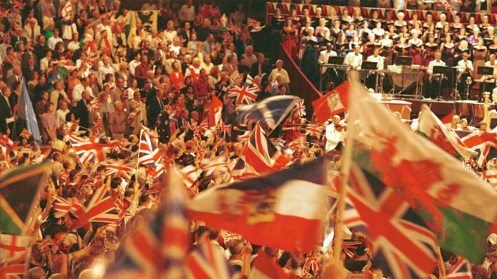
Land of Hope and Glory – Last Night of the Proms
Now class – consider these statements:
“It’s our values that make this country what it is, and it’s only by standing up for them assertively that they will endure.” (David Cameron, arguing that migrants who fail to learn English should not be allowed to remain in the UK.)
“Continually pretending that a group is somehow going to become like the rest of us is perhaps the deepest form of disrespect. Because what you are essentially saying is the fact that they behave in a different way, some of which we may not like, is because they haven’t yet seen the light. It may be because they see the world differently than the rest of us.” (Trevor Phillips, former chairman of the Equality and Human Rights Commission, talking about British Muslims.)
Both statements, it seems to me, beg three critical questions. What do we mean by British values? What do we mean by integration? And finally, what do we mean by “we” and “the rest of us”?
Let’s look at David Cameron’s “British values”. The best definition I could find comes from government guidelines for teaching primary school children in state schools:
“Schools should promote the fundamental British values of democracy, the rule of law, individual liberty, and mutual respect and tolerance of those with different faiths and beliefs.”
According to Mr Cameron, we should kick out migrants who don’t learn English. Can anyone tell me how inability to speak English compromises British values? Perhaps I’m being unfair. Perhaps Mr Cameron is referring to other values beyond those defined by his government. Free speech maybe, or love of country. After all, no point blaspheming or cursing your host country in a language most people won’t understand.
Perhaps I’m being unnecessarily nit-picking (note to migrants with an uncertain grasp of English idiom: nit-picking literally means removing head-lice, but it has come to mean “to be excessively concerned with or critical of inconsequential details”).
Is he saying that it’s OK for us to kick out migrants, because we can, but we should put up with EU migrants – Bulgarians and Romanians for example – who don’t learn English, because we can’t do anything about their linguistic shortcomings? Is he also saying that there’s something special about the British values he talks about? Would not half the countries in the world say that they believe in the same values? More on that later.
Let’s now look at integration.
I spent a total of fifteen years living in Arab countries. I did not learn Arabic with any level of fluency, nor was I expected to by my hosts. What Arabic I acquired was at my initiative, and in the interest of being able to communicate better with my hosts. You could argue that I was a migrant, yet I was not expected to convert to Islam, nor was I expected to adopt native social norms. All that was expected of me was that I respect local customs and comply with the law.
For much of that time, I and most of the other westerners working in Saudi Arabia and Bahrain lived in enclaves. We were, in other words, very far from being integrated into Saudi society. Are we not being just a trifle hypocritical in expecting migrants to our country to integrate into ours?
In the US state of Pennsylvania, which I visited a couple of months ago, there are large communities of a Christian sect called the Amish. They live by their own values, they eschew most modern technology, they dress in a uniform manner, and most of the men wear long beards. This in America, the great melting pot, the nation that prides itself on its ability to integrate new arrivals. And yet the Amish flourish, content in their own communities, and nobody in America contests their right to do so.
In my country, there are communities whose men wear Victorian frock coats, long beards, black hats and ringlets of hair on the side of their heads. They do not work on Saturdays. Their wives are required by religious law to cover their hair. Some wear wigs. Others wear hats or other forms of head covering. They live according to an elaborate set of practices and rituals, most of which are unique to members of their community. They are called Orthodox Jews. Nobody in the UK seeks to persuade them to abandon their rituals and their clothing in the cause of social integration.
A good friend of mine was born in Wales. He was raised in a Welsh-speaking family. He did not start to speak English until he was seven years old. He grew up to be a patriotic officer in the British Army, and subsequently a senior executive with a number of technology companies. His parents still speak Welsh at home, yet no fingers are pointed at them for failing to integrate with the rest of the population.
So let’s now consider these diverse groups – the British in Saudi Arabia, the Amish, the Welsh-speaking Welsh, the Orthodox Jews. Do they respect the rule of law? Mostly yes. Do they participate in democratic processes? Again, mostly yes. Do they respect the individual liberties of others? Yes, provided that the others do not break the norms of the communities in which they live. Do they respect and tolerate those who have different faiths and beliefs from their own? By and large yes, because they are in a minority and have little choice but to do so, and in any event actions they might take that indicate otherwise are curtailed by law.
And what about our Muslim citizens? The vast majority respect the rule of law, vote in elections, respect the liberties of others, subject to the same conditions about the norms of their communities, and respect and tolerate people who have different faiths and beliefs. The vast majority. A small minority don’t, often with damaging and occasionally lethal consequences. Which is why we, America and most European countries are focused on that small minority, their beliefs and activities. And why we seem to expect the Muslim communities to integrate further than the Amish, the Orthodox Jews and any number of self-contained groups. The difference? We consider that non-Muslim minorities pose no threat to the established order.
But what do we mean by integrate? Is there such a thing as total integration, or are there degrees of integration? If the latter, how much does a group of people have to be like “the rest of us” to be considered integrated to a satisfactory degree?
It’s also highly likely that were it not for the small minority of Muslims who believe in the ideologies of Al-Qaeda and ISIS, most of us wouldn’t be any more concerned about the practices, rituals and beliefs of our Muslims than we are about those of our Orthodox Jews, or Americans of their Amish.
And if we look back at the Britain of my youth, we could argue that a social and legal system that executed murderers, criminalised homosexuals and frowned on extramarital sexual relations would have been far more compatible with the beliefs of our Muslim communities in Britain today.
But things have changed, and they will continue to change. So integration is a constantly moving target.
Where the “small minority” fall short of our expectations is in respecting the rule of law. Female genital mutilation is against the law. So are honour crimes. So are expressions of hatred on religious grounds. So is the formation of vigilante groups to interdict the legal behaviour of others. So is murder and conspiracy to murder. So is failure to apply legally mandated standards of education.
These are all matters of law, even if underlying these kinds of unlawful activity is a lack of respect for the other “British values” defined in the schools guidelines. There are many people in the United Kingdom – not just Muslims – who disagree with any number of laws. There are people who want to bring back hanging, that drug use should be decriminalised, that migrants should be denied benefits. And it’s not just Muslims who believe that blasphemy should be a crime. But the law is the law. If you want to change a law, there is a process, which starts with democracy, for doing so.
Now Trevor Phillips says that we are wrong to expect that Muslims over time will become “more like us”, because they see the world in a different way from “the rest of us”. Broadly speaking I think he’s right. There are some aspects of Islamic teaching which are fundamentally at odds with other belief systems. But there are two problems with what he is saying.
First, he is implying that our Muslims are a heterogeneous group with identical views on all subjects. Clearly they are not, hence the small, or substantial (depending on who you listen to) minority who do not subscribe to the British values as described above. Equally, the majority of Muslims – if we are to believe surveys and research – don’t subscribe to the harsh interpretation of the Islamic scriptures followed by the minority. You don’t, for example, hear many Muslim voices in this country calling for the reintroduction of slavery and the slaying of homosexuals.
Muslims in Britain are as diverse as any other section of the population. Many are integrated to a high degree socially, politically and economically. They would no more think of mutilating their daughters or raising the black flag over Downing Street as any non-Muslim. And there is no consistency about the length of time they or their ancestors have been in this country. We have first-generation British Muslims in parliament, and third generation Muslim citizens making their way to Syria.
I have many Muslim friends, some of whom visit me when they come to the UK from the Middle East. They are educated, intelligent people. There is no big gulf between us that prevents them from being friends. We respect each other’s differences, and what we have in common far outweighs the differences. To suggest that these people should become “more like us” is as insulting as it is unreasonable.
So, sorry again for nit-picking, but making broad statements about Muslims puts Mr Phillips on shaky ground.
Then there’s the question of “we”. Who the hell are we? Big question, I know. Is there a gigantic basket that includes naturalised Russian oligarchs living in Kensington townhouses, agricultural labourers in East Anglia, call centre agents in Manchester, lawyers in Glasgow and shelf-stackers in Cardiff? Of course not, and I suspect that the gap in values, attitudes and perceptions between many of these groups is far wider than what divides any of these groups from most of our Muslim citizens.
So you could argue that it’s meaningless to use the word “we”, unless you’re speaking from the perspective of one of the many social, economic and geographical tribes that make up our country. Lots of minorities, in other words, of which our Muslims are but one. You could also argue that the overarching “we”, Britishness, is a figment of the imagination.
You could still make a case for there being uber-tribes who identify themselves as English, Scottish Welsh and Irish. But Britishness? I don’t think so, except when we’re watching the Olympic Games, or cheering on Johanna Konta, an ethnic Hungarian tennis player who grew up in Australia, moved to Britain at 14 and has just reached the semi-finals of the Australian Open.
Let’s move on to David Cameron’s latest initiative, in which he wishes to compel migrants to learn English. Yes, I know what Cameron’s trying to achieve. He’s concerned at Muslim families living in Muslim-only urban districts where the women are kept at home and out of view, districts which he believes are breeding grounds for extremism.
Yet many of those families hold British citizenship, so he can’t do a thing to force them to integrate, linguistically or otherwise. Just as he can’t force French migrants, whose home country espouses the same values as Britain, to become fluent in English. Nor would he, because he knows that it is in their interest to do so. Without a reasonable command of our language, a Parisian is not likely to find it easy to gain employment in London. The same applies to a Londoner wishing to work in Paris.
So the whole issue of language as a means of forcing the pace of integration seems a bit of a red herring, in that it would be impossible to enforce broadly enough to make it effective. I’m all in favour of it being a condition for the granting of citizenship that candidates should speak an acceptable level of English, as the law currently requires (for reasons of political correctness Welsh and Scottish Gaelic are acceptable alternatives, though I wonder how many would-be citizens invest in Gaelic lessons).
But in the case of migrants, encouragement is surely more in keeping with our values than compulsion. And even for economically inactive dependants, learning the local language would seem to be a matter of self-interest, especially if the migrants are intending to settle in the country permanently. But we should not forget that many migrants are here on a temporary basis. Is it reasonable to expect all member of their families to become fluent in our language, when they fully intend to return to their homelands as soon as it is safe to do so?
None of this contributes towards solving the problems that David Cameron and Trevor Phillips have raised. But we do need to remember that rhetoric is cheap, emotion is as abundant as water, and big pictures are always more attractive than their constituent pixels of detail. Unfortunately, details ignored more often than not lead to unintended consequences.
We also need to remember that solutions are never perfect. Most are the result of trial and error, muddling through, even if we chose to dress them up as grand strategies. And each day that goes by erodes the status quo, and requires us to think again – no matter that the demagogues who peddle panaceas would have you believe otherwise.
Now for your next essay:
“Britain should have a zero-tolerance approach to intolerance – discuss”
While Britain froze and America’s north-eastern seaboard prepared to disappear under metres of snow, I was in tropical Bali. It was one of those reflective holidays. Bit of reading, bit of thinking, plenty of eating, listening and watching. Not so much doing.
Here’s how it went, starting with the reading. Top of the list was Tom Holland’s Dynasty. A superb read. Study the lives of the first five Roman emperors if you’d like to understand how autocrats rise, prosper and expire.
Then Sapiens, Yuval Harari’s “Short History of the World”. If you want Dawkins without attitude, Harari’s your man. That the Hebrew University in Jerusalem can accommodate such a thinker shows that there’s hope for Israel.
I also read Max Hastings’ account of the SS Das Reich division’s march through southern France on its way to destruction after D-Day. I’d forgotten how much of Southern France was ripped apart by the Second World War, including places I go to every year without a thought for traumas of which there is little obvious evidence – unless you visit Ouradour-sur-Glane, of course, the site of one of Das Reich’s worst atrocities.

I started Leslie Carroll’s Royal Pains, about various deviant royals over the past millennium, and never progressed beyond Vlad the Impaler. The fact that Princess Margaret, the Queen’s rather silly sister, was up there with Vlad didn’t bode well. Likewise Severed Heads, by Frances Larson. After the story of Oliver Cromwell’s head I lost interest.
By this time I was ready for some fiction. I raced through I Am Pilgrim, a terrorist thriller written a couple of years ago. A well-constructed tale by Terry Hayes, otherwise known as a Hollywood script-writer. Plausible, but hopefully not too plausible. Otherwise I shall take up residence in a remote South Sea island.
And up there with Dynasty as best read of the holiday was Salman Rushdie’s new novel Two Years, Eight Months & Twenty Eight Nights – a sumptuous parable of our times, in which jinns and the ghosts of long-dead philosophers do battle for the future of mankind.
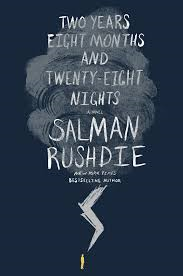
I could have read any of these books at home, or in a two-week stay at a boarding house in Bognor Regis. But then I wouldn’t have had the pleasure of sitting on a balcony overlooking a tropical garden in Bali. Contrast is everything.
As for the thinking, some famous people died over the past few weeks. Before their time? Why are we mourning the loss of David Bowie, Alan Rickman and Glenn Frey, when they achieved so much in their sixty-odd years? Would you rather have a couple of extra decades in an unfulfilled life, or a shorter span in which you leave your mark in as resounding a way as those three? I know what I would prefer, even if my achievements are nothing compared with theirs. What matters is to feel that you have achieved, and not to regret the things you left undone. And while you have the time, if there are undone things that are important to you, get on and do them.
I find it impossible to spend time in Bali without thinking about happiness. Wandering around the island you see a lot of unhappiness, and not in the obvious places. I see it on the faces of visiting Australians, Canadians, Indians and Chinese. They come to paradise and find shopping. Or tattoos. So many people with faces defined by frowns.
And why is it that the Balinese, who possess a fraction of the wealth of the visitors, manage to smile at you when they have no obvious motivation for doing so? How is it that the happiest people we met were a family of fishing boat owners who took us across the bay for a sunset ride? Granddad sitting at the prow with his baby grandson, the son steering the boat. The second son meeting the boat back on the shore. How do they make ends meet? A bit of fishing, rides for people like us and grandma doing massages on the beach. There was a serenity about that little family one rarely sees in the West.

Yuval Harari’s view is that one of the most profound changes of the last century has been the decline of the bonds and obligations of the family. Not in Bali, I think. We all live in thrall to the past and mortgage our lives to the future. But watching the woodcarvers of Mas or Ubud busily turning out beautiful wooden artefacts despite having vast unsold inventories suggests a clearer focus on the present than most of us manage in our tortured lifetimes. Their work will be sold or it won’t be sold. It’s what they do, and so long as they can feed themselves and their families that’s what they will continue to do.
Then there’s all the stuff that’s raging elsewhere, far away from the rice fields, the temples and the towering volcanoes of Bali. It came closer last week, when gunmen went on the rampage in Jakarta. Since then, armed policemen have popped up now and again on the beaches, but so far, there has been nothing to police. Long may that continue.
If you have an internet connection, it’s hard to tear yourself away from the rage of angry people – from US electors to the burghers of Cologne, from paranoid leaders to murderous fighters, from the deprived to the threatened. I’ve been following as always a wide range of reportage and analysis claiming to make sense of the conflict and hatred afflicting us. And I’m getting tired of it.
The ugly truth is that there’s stuff none of us know, that no amount of analysis can make sense of. The only answers lie between the eyes of those involved. Yes, the secret squirrels manage to gather a few nuggets of intelligence now and again, but what is shared with us often serves to distort, misinform and manipulate. Otherwise, we simply have to wait for stuff to happen, and adjust our thoughts accordingly. As we always did.
Does anyone really know what the ISIS high command is planning? Do we really know what motivates Donald Trump? Or Jeremy Corbyn? Or Ayatollah Khamenei, the King of Saudi Arabia, Vladimir Putin or Bashar Al-Assad? In the land of the blind, there are many would-be one-eyed kings. Enough. Bring me facts, bring me evidence or bring me nothing at all, because your opinion is no more likely to be valuable than mine.
Now for a more pleasant subject: eating. If you like rice and noodles, Bali’s the place for you. Where we’re staying there are a couple of dozen places to eat within walking distance. The difference between these places is not so much the cuisine, more the ambience – from elegant places overlooking the beach to small eateries on the roadside, where you watch the scooters and buses full of tourists buzzing past; construction workers on their way home from twelve-hour shifts mingling with backpackers, guys trying to sell you Viagra and girls offering massage.
I actually prefer the food in Malaysia – more flair and imagination, plus the insidious delights of durian. But if you’re an Aussie dying for a steak or ribs after a week of eating nasi goring, you’ll find that most places cater for your needs. No doubt there is more refined and “authentic” cooking to be sampled in remoter areas, but the built-up parts of the island depend on tourists, so there’s something for every visiting nationality.

Then there’s the listening. I will probably come over as a cultural Neanderthal immune to the subtleties of Balinese music, but I find it cacophonous and monotonous. Especially when you’re sitting at a beach at one of a long row of restaurants, each competing to out-gamelan the other. Listen to it once and that’s fine, but its appeal doesn’t last.
The same goes for the new-age fluty stuff that plays in our hotel restaurant every morning on a permanent loop. A couple of mouthfuls of fresh mango and I want to fall asleep.
No, the sounds I enjoy are made by the geckos that pipe up now and again from the bushes. The lizard equivalent of uh-oh, as if they’ve dropped their dinner on the kitchen floor. And the sound of tropical rain splashing against the palms, something we’ve heard all to rarely in this allegedly rainy season. The squeaking bats at dawn, and birdsong you’d never hear in the northern hemisphere.
Oh, and a solitary bell sounding at 7am on Sunday morning, the Christian day of worship. A plaintive contrast to the florid prayer calls that ring out from the mosques every evening at dusk. Indonesia is a Muslim country after all, even if Bali is not.
As for watching, I’d like to say I’ve seen plenty of wildlife, and that would be true. Except most of the wildlife is human. Apart from the people, feral dogs and the odd enthusiastic mosquito. I did pay a visit to the monkey forest in Ubud. But it’s not so much a forest, more a few acres of paths and trees, populated by a few hundred macaques, a few hundred tourists and the ubiquitous stalls where you can buy bananas to throw at our cousins.

The ones most visible are sad-looking creatures, sitting on walls twitching their droopy moustaches, posing for selfies with giggling tourists, while sulky-looking alpha males skulk in the trees, waiting to pounce on any tourists foolish enough to bring their lunchboxes with them into the park.
While in Ubud, the spiritual centre of Bali, I looked hard for Julia Roberts with her beatific smile, but didn’t find her. In fact, not many beatific smiles at all. There’s plenty of eating to be seen, but precious little praying and not a lot of love. Just a lot of visitors “doing” the town.
And yes, we what tourists do, and saw some temples, a waterfall, a rice plantation and some lovely sunsets.

If I sound a little jaundiced, it’s not with Bali or the Balinese. It’s a beautiful island, and most of the people are inhumanly cheerful and kind. There are a few who resent us tourists, and our relentless urge to beat down prices when what is being offered costs a tenth of what we might pay at home. But most accept our less attractive ways with humour and good grace.
What I find sad is that the island has become so dependent on visitors, which means that at so many beautiful places you run the gauntlet through rows of stalls filled with people desperate to get you to buy something. A people whose living depends on strangers.
Perhaps it’s more a paradise for the young. I’m too old for rafting, diving or climbing mountains. I don’t go clubbing or sit at bars whispering sweet nothings until the early hours. Whatever your age, It’s a great place to visit as a couple, but not somewhere I would go on my own. You occasionally catch sight of a middle-aged western guy sitting alone in a restaurant, and wonder what’s in it for him. But you can be lonely anywhere, I guess.
Would I come to Bali again? You bet. A country whose people who greet you with a hug and remember your first name a year after your first visit knows a thing or two about hospitality.
And I never forget how blessed I am to be able to come to a gorgeous island many thousands of miles away from home, and spend a couple of weeks in comfort, while a few miles from my island, teenagers ripped away from their homes and families wait in a cold and windy camp for the chance to cross the English Channel.
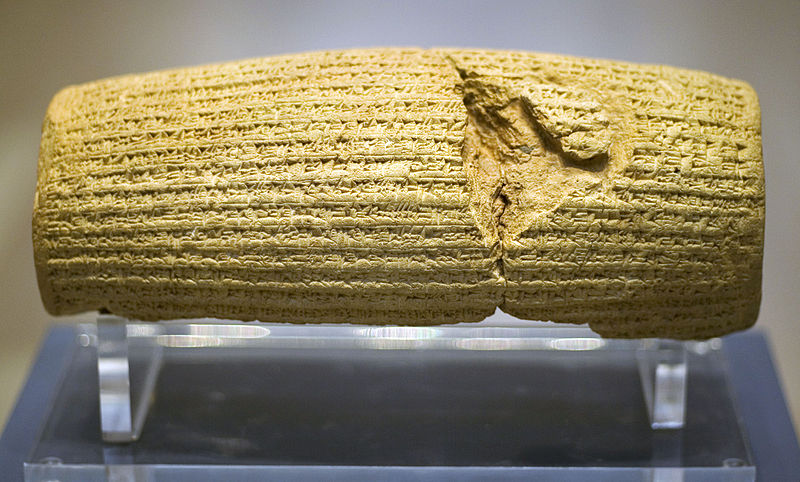
The Cyrus Cylinder
In case you haven’t noticed, Iran is no longer in the nuclear bomb business. As the result it is able to do business with the outside world again.
The more remarkable is that this has not happened in the wake of smouldering holes in the ground where the nuclear sites once were, and half of the already-diminished Iranian economy in ruins after the inevitable fire-fight that would have followed the bunker-busting bombs.
Which shows that there is a role for international diplomacy beyond the delivery of threats and ultimata. One was beginning to wonder.
Whatever one might say about the Islamic Republic’s politics, the ambitions of its factions and its role beyond its immediate borders, commercial and cultural isolation is not a natural state for a country that has played a key part in the development of humanity over the past three thousand years.
In my home my walls are adorned by two magnificent Isfahan carpets depicting the Tree of Life. There’s one from Shiraz on the floor of my lounge. In my library sits a collection of the poems of Rumi. And in the kitchen there’s a box of saffron tea from Mashhad. Just a few objects, but ones that remind me of their place of origin whenever I pass them by.
Iran has never been far from my mind over the past few decades. When I first arrived in the Middle East, it was at war with Iraq. During the four years when I lived in Bahrain, rumours were constantly flying around about an impending Israeli strike on the nuclear sites. Had that happened, the whole region, including the place where I was living, might have gone up in flames.
I’ve met enough Iranians in my time to know that most are not fanatics. They are smart, curious and proud of their heritage. And they have much to be proud of. They have a great sense of humour. And now they have the opportunity to engage with the world once again.
For once, diplomacy worked. A roadblock has been cleared. There are many more that prevent a state of justice and equilibrium from returning to the Middle East. But it’s a start.
The negotiating parties deserve our congratulations, and the hard-pressed people of Iran deserve our best wishes.
Winston Churchill
When I was thirteen, I wanted to be Prime Minister. I also wanted to play cricket for England, an equally futile objective, as I very quickly discovered. But when at thirty I started losing my hair, I realised that even if I had the talent to become a successful politician, I would never have made it to the top.
Which probably explains why Donald Trump has constructed a comb-over as spectacular as a cirrus cloud at sunset.

I’m sure I’m not the only one to have noticed that you don’t get to become President of the USA or Prime Minister of Great Britain without a full head of hair. So it has been in America since Eisenhower, and in the UK since Alec Douglas-Home. Odd, really, to think that fifty percent of men in both countries are effectively excluded from the highest office.
I hear my friends in the US mention Gerald Ford. But he wasn’t elected, and when he fought the ‘76 election against follically-blessed Jimmy Carter, he got beaten. Likewise, Douglas-Home succeeded Harold Macmillan without an election, and when he went to the polls against the silver-locked Harold Wilson, he got beaten too.
Looking even further back, it seems that the only way a baldie could get elected was by standing against another baldie. Thus Eisenhower beat fellow slaphead Adlai Stevenson in 1952, and in the UK, Clement Attlee won the 1945 election against Winston Churchill. Churchill, by the way, didn’t have to fight a general election as leader – he took over from Neville Chamberlain in 1940.
Dwight D Eisenhower
Adlai Stevenson
It gets worse.
If you consider the number of times a woman has been elected to the highest office – once in Britain and never in the US – what this means that a mere quarter of the population of both countries is considered by the voters to be eligible to lead us.
Hillary Clinton may change this dynamic next year, but if she fails, the contest is likely to be between Trump, the aforementioned billiard-head in disguise (not true of course), and Bernie Sanders, whose fast-diminishing locks look out of the control of their owner, rather as though he has been struck by lightning. Of the two, I’d take Sanders’s wild country to Trump’s topiary any time. Same goes for their politics.
Bernie Sanders
Hair is a big deal in politics. Even politicians have it, they seem unable to leave it alone. The Chinese leadership seems incapable of laying off the boot polish, as do the Gulf sheikhs. Heaven forbid that a few grey hairs should besmirch their image of eternal youth. Ageing British leaders seem to get fonder of the Brylcreem to older they get. David Cameron looks more like a seal every day. But at least he made it to PM. His two predecessors – William Hague and Ian Duncan Smith, both smooth-pated, never made it that far. Hague lost to Tony Blair, and Duncan Smith was removed without even fighting an election. His party obviously realised that it had made a dreadful mistake by selecting him as leader in the first place.
Iain Duncan Smith
Looking beyond politics, Prince Charles goes for the comb-back, most likely gel-assisted. I can forgive him for that, since it would never do for a member of our beloved Royal Family to step out in a howling gale with his hair flapping like a flock of seagulls.
But politicians? I still don’t understand it. Why would you trust a hairy airhead over a baldie with brains? In other walks of life, men have eagerly adopted the baldie look first made popular by the skinheads of the sixties. If you don’t have much on top, shave it off – far better than to sport the flying buttresses of a Mikhail Gorbachev.
Mikhail Gorbachev
After the skinheads, the No 1 head shave became popular among gay men, and then spread to metrosexual icons like David Beckham. These days anyone can sport a shiny dome without anyone questioning their sexual orientation or abilities – except politicians of course. Our continental friends – especially the French – tend to take a more tolerant view. Former French President Valery Giscard D’Estaing sported a magnificent pate, as does Foreign Minister Laurent Fabius. Francois Hollande, however, seems to use the Chinese treatment on his receding locks.
Valery Giscard D’Estaing
Francois Hollande
Twasn’t ever thus, though. Benito Mussolini, Italy’s wannabe Hitler, was the ultimate alpha baldie. And in the 19th century, lack of hair did the German Chancellor Otto Von Bismarck’s career no harm. As for his arch rival, British Prime Minister Lord Salisbury was equally bald, though what he lacked on top he more than made up for with a beard that could have hosted a flock of starlings.
Benito Mussolini
Lord Salisbury
Otto Von Bismarck
Part of the problem in the US is that the voters have never forgotten John F Kennedy. To be successful, every candidate must live up to his hirsute standards, even if some of them (Richard Nixon for example) get away with less springy variants. But we in the UK have no such excuse for our blatant hairism. After all, who would want to emulate Harold Wilson’s hairstyle?
Harold Wilson
There are solutions though – at least in my country (I will have more or less written off the good sense of the US electorate unless they prove otherwise next year).
First, we need to indulge in a bit of positive discrimination. Both of the main parties should create a Baldie List to ensure that a minimum number of bald candidates are put up for election as Members of Parliament. If we can do that with female candidates, why not baldies?
Then to give the incumbent party a bit of serious competition, we should grant British citizenship to Yanis Varoufakis, the former Greek finance minister, a man of great elegance and style. Having turned him into a Brit, we should parachute him into the Labour Party and persuade Labour’s metrosexual activists to make him leader in place of Jeremy Corbyn. With Yanis – who wouldn’t be seen dead in a shell-suit – at the helm, Labour would have at least half a chance in the next election.
Yanis Varoufakis
Another route would be to emulate the politicians of the Gulf, whose ghutras make it impossible to tell whether they’re bald or not. What’s more, if all our male MPs wore the ghutra, they would acquire a distinction that they are sadly lacking today. Yes, I know that the panjandrums of the Arabian Peninsula don’t need to be elected. But that’s a small detail. Prince Charles looks good in a ghutra – why not David Cameron?
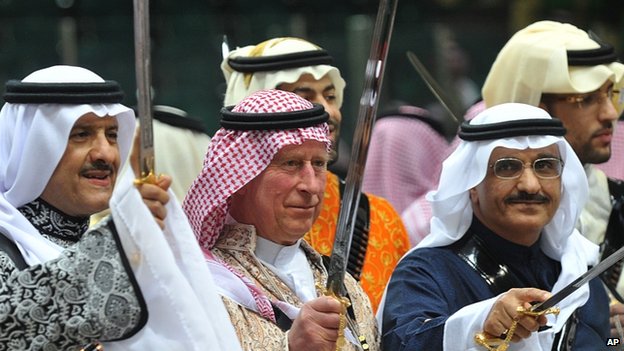
Prince Charles in Saudi Arabia
We could also try electing younger leaders, before their baldie genes have had a chance to kick in. We Brits have form in this regard – in 1783, William Pitt the Younger became Prime Minister at the age of 24. Mind you, in those days, politicians generally wore wigs, so the state of their hair was pretty irrelevant.
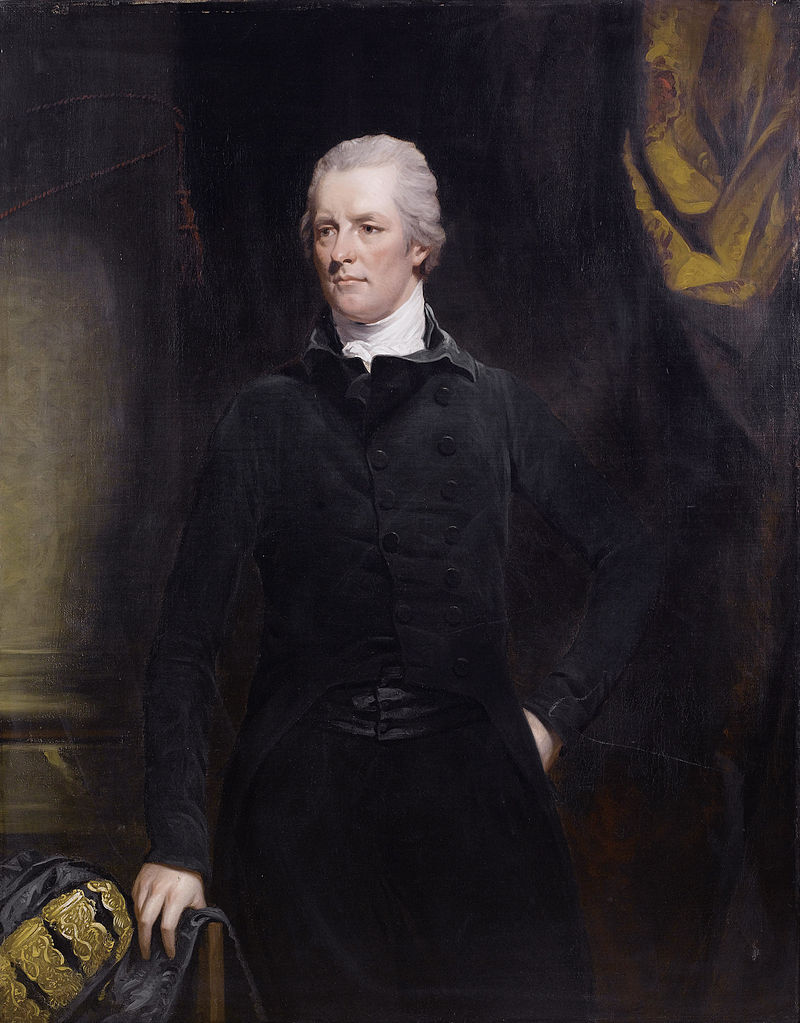
Pitt the Younger
If all else fails, let’s start electing more women Prime Ministers. Come to think of it, that’s what we should be working on first. At least that would up the leadership pool to seventy-five percent of the population, even if we baldies have to wait a while.
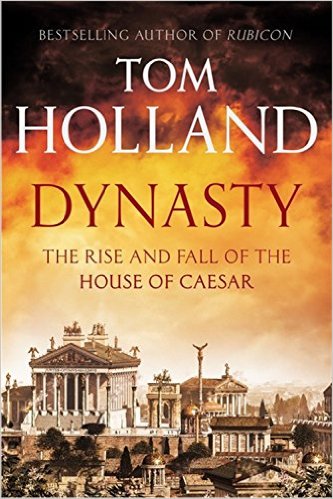
Imagine you are a great-great-grandparent of Maximus, the hero of Ridley Scott’s movie Gladiator. It’s 1AD. You live on that beautiful farm among the softly waving cornfields. You visit the local market town occasionally to buy your wine and fish sauce, and to sell your surplus produce.
You exchange gossip with other notables in your town, perhaps about the comings and goings in Rome, that faraway centre of your universe. Perhaps you hear about the latest laws enacted at the prompting of the Princeps – the First Citizen – Augustus Caesar, emperor in all but name.
But apart from the occasional visit by the local tax collectors, your life is untouched by Rome. You have your family, your retainers and your slaves who cultivate the fields. Life is good. It’s been thirty years since civil war raged through your region, as Octavian, now known as Augustus, sought to destroy the factions opposed to his leadership.
Life will continue to be good for the seventy years of your life. Within the frontiers of the empire, peace reigns, even if Rome’s legions are relentlessly pushing to extend those frontiers.
Should you have any cause to visit Rome, you would be entering a different world. A city packed with a million people. Marble temples, golden statues and private gardens co-exist with ramshackle wooden tenements and narrow streets where the sun never shines. And everywhere the stench of butchery, sewage and tanning.
The city is full of slaves, ex-slaves, tradesmen and merchants. They are fed by handouts of grain and entertained from time to time by lavish displays of gladiatorial combat, recreations of famous battles and contests between humans and wild animals. Just as depicted in Gladiator.
The elite, descendants of noble families whose lineage dates back to the time when Rome was ruled by kings, and merchants who have made it good through trade with distant provinces, spend part of their time in the city, but escape when they can to their glittering villas lining the bay of Naples, or to their estates in the fertile hinterland beyond the city.
We’re talking about those who survive the vicious politics of the city, of course. When Augustus, who established the legitimacy of his power by cleverly harnessing the appearance, if not the substance, of ancient traditions, dies in 14AD, the in-fighting gets worse.
There are plots against his paranoid successor, Tiberius, and internecine rivalry within the family of Augustus as a succession of potential heirs die of mysterious causes.
Things get even darker – at least for the elite – when Tiberius is succeeded by Caligula, whose contempt for the established order grows more open every year. Mad? Who knows. Certainly vicious, sexually eclectic and capricious, though wildly popular with the rabble.
Caligula is assassinated by an officer of his guard whom he has mocked for his effeminacy once too often. His successor is his uncle Claudius, who is physically impaired but highly intelligent. Whether by accident or by a carefully-planned coup d’etat, he assumes the throne and curbs the excesses of Caligula. He is known to be rather odd because he is only attracted to women. Although to an extent he restores the respect the senatorial elite feels is their due, he is resented because he devolves real power to a trio of highly capable former slaves.
He does, however leave a permanent mark by extending the port of Ostia and adding a new province to the empire – the savage, windswept outpost of Britain.
Claudius foils a plot in which his beautiful wife Messalina is a player, which triggers another bout of bloodshed and paranoia. Eventually he succumbs to a mysterious stomach ailment, possibly brought on by his next wife, who happens to be the mother of his successor, Nero. Poisoned mushrooms, allegedly.
The young Nero begins his rule under the thumb of his mother and the tutelage of Seneca, a man whose philosophical discourses survived the fall of Rome and are with us today. He ends up killing his mother and Claudius’s son – his closest rival for the throne within the imperial family. Seneca is given the opportunity to commit suicide.
Nero fancies himself as a man of culture and athletic prowess. He competes as a singer, poet, lute player and chariot racer in various Greek festivals including the Olympic Games. He wins, of course. And finally he performs before the Roman public to riotous applause. Not something that endears him to the elite who consider that such exhibitionism is unworthy of an emperor.
Then Rome is devoured by a fire that consumes two-thirds of the city. Nero energetically leads the fire-fighting effort, but he can’t escape the accusation that he started the fire himself so that he could clear parts of the city for the massive palace that he subsequently built on the fire-blackened ruins.
More plots, more bloodshed more paranoia. Eventually, the insurrection led by Galba, one of his most experienced generals, brings an end to Nero’s reign. He commits suicide, the last surviving member of the dynasty founded by Augustus.
You, however, growing old in your idyllic farm in southern Spain, see none of this, even if you hear the highlights on the local grapevine. You have lived through the whole period in peace, as have thousands of other landowners in the vast territory controlled by Rome.
That, in a nutshell, is the story Tom Holland tells in Dynasty, his history of Rome’s first five emperors. And beautifully he tells it too. He pulls together the various sources, some at odds with each other, into a compelling narrative. Unlike some historians who like to linger in the eddies with their analyses of the sources, Holland stays in the middle of his fast-flowing historical river, and takes us down white water rides on the way.
While he doesn’t pretend that there are no gaps and inconsistencies in the ancient sources, the whole story hangs together. As the title suggests, it’s the history of a dynasty. And of course we’re fascinated with dynasties, are we not? Each age has its share. Today we have the Kims of North Korea, for example. Successive generations struggling to retain the authority of the founder, becoming more ruthless and bloodthirsty in the suppression of potential opposition. Some relatively benign, others vicious and tyrannical. All eventually imploding through revolution or the arrival of another, stronger, dynasty.
Not just ancient history then. A story as relevant today as it was two thousand years ago.
Tom Holland is probably my favourite historian, not just because of what he writes, but the way he writes. Direct language – sometimes enough to raise the eyebrows of more sober scholars; rhetorical questions that turn exposition into conversation; humour, and the unfailing ability to paint pictures with stories.
He’s also a favourite because he writes about a period that, as someone who grew up with the classics, was always close to my heart. His other books about the period – Rubicon, about Julius Caesar, Persian Fire, about the empire that grappled with classical Greece, In the Shadow of the Sword, the story of the birth of Islam – are all works that I regularly revisit.
I also like him because I follow him on Twitter. He constantly mocks his – shall we say – indifferent skills as a cricketer. He loves hedgehogs. And as he researches a new book, he tweets about what he finds.
In his use of the social media he’s rather like Mary Beard, another of my favourites, who at more or less the same time as Holland published Dynasty, produced SPQR, a history of Rome from its foundation to the late second century AD. Her emphasis is different. She uses archaeology to present us with evidence that is often at variance with the official myths and hagiographies provided by Roman historians, who, like writers in many authoritarian states in recent times, wrote to agendas best suited to win themselves favour with the powerful.
Beard is often on Twitter, but she also writes a blog, in which she shared the trials and tribulations as well as the joy of producing her latest book.
Her approach, and Holland’s, is something of a departure from the methods of old school historians who labour away in the quiet groves of academe, or, like another favourite, Max Hastings, remain at a magisterial distance from their audiences.
And good for them, because they engage with far a wider audience than just students of history lucky enough to spend time with their professors.
Dynasty is well worth a read – as compelling as any thriller. And should you manage to get a glimpse into the palaces and fortresses of modern dynasties, you would no doubt find much that you would recognise from Holland’s tale of the first five Roman Emperors.
David Bowie made his last appearance in my heart forty-three years ago. It was 1972, and I was twenty-one years old. At that time my world revolved around a group of close friends and housemates. And a pile of weather-beaten bits of vinyl, also known as LPs. The sleeves were emblazoned with the acid graphics of the time. They were falling apart through frequency of use. The records themselves were scratched, sometimes beyond recovery.
I was penniless most of the time, though a night job at the Cadbury’s chocolate factory provided enough money to pay the rent, buy a few pints and add to the stock of albums that lay on the floor of my very basic bedroom. A mattress for sleeping on, another one for sitting on, a beaten up gas-fire and the all-important record deck and speakers. An ashtray full to overflowing. Plus a few cushions on the floor and posters on the walls. Oh, and a radio of course.
I lived in the moment. I had no big plans for the future. But I was on a journey of exploration more intense than at any time until recent years. I was learning about people, about politics, about love and about other stuff best left unsaid.
Music was at the centre of everything. I was a true fan. Not the sort that went to gigs that resembled Nuremberg rallies, where thousands united in adoration of the Rolling Stones or Deep Purple. My fandom arose out of listening, really listening, to stuff in small spaces with a few friends. Or on my own, with eyes shut, carried along by a baseline, a drumbeat or a guitar solo. Listening to lyrics I knew by heart over and over again. Lyrics that meant something to me – perhaps because of the first time I heard them, and perhaps because the words stirred emotions that went deep, but that other people might never see in me. Because the music was my world – nobody else’s. Sometimes it would be the gateway to other people’s worlds, and sometimes it provided other people with an entrance to mine.
Album releases were big events. I remember at school listening late at night to the first airing on the radio of The Beatles’ Sergeant Pepper. Ever after, waiting for the next Beatles LP was like waiting for a birthday.
So it was with David Bowie. Just once. He’d already released The Man Who Saved the World. Unearthly stuff. Literally. A reedy voice singing about Major Tom, and other songs that reached the heart. Hunky Dory drew me in, but Ziggy Stardust was something else again.
From the screaming despair of the first track, Five Years, I was hooked. The humour, the sarcasm, the emotion and the pain. Nothing else I had heard that year came close.
I devoured the English music rags – Melody Maker, Sounds and the New Music Express – for stories about him. I suppose the mime, the costumes and the orange hair that so obsessed the journalists added to the whole experience, but for me it was all about the music.
So when tickets went on sale for Bowie’s first tour after releasing Ziggy, I and a few friends grabbed them. I probably got them from the local Virgin Records store, which in those days was a tiny shop in the town centre full of incense, Oz and shop assistants who looked like they had recently left the fields of Woodstock, and intimidated you with their effortless cool. Beads, badges, waistcoats and moustaches like Lemmy’s. And lots of peace, man.
Thus it was that on August 19th 1972 a bunch of us hitch-hiked down from Birmingham, were dropped off at Hendon, where the M1 motorway finished, and took the tube down to the Rainbow Theatre, Finsbury Park, in North London.
I remember very little of the concert, perhaps because I was so in the moment that I forgot to remember. I do recall the support act, Roxy Music, all pose and ostrich feathers, the quavering voice and padded shoulders of Bryan Ferry. But of the main attraction, virtually nothing. It must have been good though, because I was with my friends and I loved the songs.
I have no idea where we stayed that night. Probably on the floor of a refugee from Birmingham who lived in a ramshackle flat in Notting Hill.
Anyway, we hit the road back to Birmingham, standing at the Hendon intersection with thumbs out, and made it home tired and happy. Ever thereafter, we were able to say that we were there.
Strangely enough, that was the end of my love affair with David Bowie. I didn’t connect with his later work. I felt that style had become more important than music – all that stuff about Thin White Dukes and Diamond Dogs. But I guess that was the time. Everybody was making fashion statements.
Soon after, I stopped being a fan, because music became a business for me. It was hard to feel the same way about rock stars when you come up close to them. Arrogant, colourless, intoxicated, with thuggish managers and supercilious record company reps, and contract riders that demanded all kinds of ridiculous things to be placed in their dressing rooms at concerts. Not all of them, but more than a few.
The only people who remained rooted to the ground were the local musicians who still loved what they did. But they were usually the ones who didn’t make it – at least in terms recognised by the music industry.
After a few years I left the business and went on to other things. It took me some while to wean myself off the detached cynicism that had grown within me. But eventually my relationship with music became more akin to a marriage than a series of love affairs. I could afford to buy plenty of stuff and listen far more widely than ever before. I returned to classical music, which I had more or less abandoned after Sergeant Pepper.
And now music is just part of my life. Much of what I listened to in the early Seventies I still love deeply, but some of it makes me giggle at my pretentious musical taste.
The vinyl is still around, languishing in the attic, unplayed. I have a library full of CDs, but I hardly play them either. Everything’s on my laptop, and when I listen to stuff it’s through headphones or a portable Bose speaker. What were once treasured possessions are now ephemeral bits of data.
I haven’t listened to Bowie for years. I suppose I will now he’s dead. Perhaps I’ll discover something that touches me in his post-Ziggy output.
But I’ll love him forever for the part he played at a time in my life when the present was everything, and the future would take care of itself.
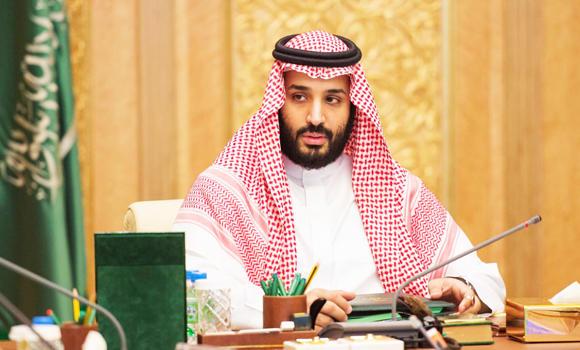
Prince Mohammed bin Salman has not had the kindest of write-ups in the Western press of late. I believe that much of what has been written about him has been unfair, or at least misconceived.
Saudi Arabia’s Deputy Crown Prince was for many years a close aide of his father King Salman. When Salman became king earlier this year, MBS, as he is known in the media, leapfrogged a number of potential successors to become second in line to the throne. Not only that, but he was appointed Minister of Defence and given responsibility for the Kingdom’s economic policy. Saudi Aramco, the state-owned oil and gas producer, was also came under his wing.
Big responsibilities for a man of 29, especially in a country where the key government posts have traditionally been occupied by senior members of the royal family decades older than him.
There have been rumbles of discontent among the Saudi elite at his promotion, including, it is alleged, among princes who are unhappy at having been side-lined. MBS seems to have acquired a reputation for being brash, arrogant and impulsive.
Charges against him in the Western media include that he has pitched his country into an unwinnable war in Yemen, that under his watch Saudi Arabia has exacerbated the conflict in Syria by its support of more than one Islamist fighting group, and raised the stakes in its uneasy relationship with Iran by executing Shia Sheikh Nimr al-Nimr, and then breaking off relations with Iran over the subsequent storming of the Saudi embassy in Tehran.
On the economic front, Saudi Arabia has been criticised since King Salman’s accession for maintaining its oil and gas output despite the collapse in the oil price. The country is now running at a substantial deficit.
In response to the economic downturn, MBS has announced that the Kingdom is contemplating a number of measures to reform the economy, including the privatisation of Saudi Aramco, the reduction of utility subsidies, the introduction of VAT and the slimming down of government ministries. Last week a substantial increase in the price of gasoline came into effect.
Critics have questioned these measures on the grounds that they potentially threaten the delicate social contract that exists between government and citizens in lieu of electoral representation. Under that implicit contract, the Kingdom has never taxed its citizens, and provides generous handouts to help the poor and unemployed, but has no directly elected parliament with legislative powers.
A Western commentator even went so far as to compare the economic reforms to those introduced by Mikhail Gorbachev in an unsuccessful attempt to stem the collapse of the Soviet Union.
One doom-laden headline specifically singled out MBS by asking whether he is “the most dangerous man in the world”.
Strong stuff, and, I think, much of the criticism is indicative of a lack of understanding among many commentators of the way decisions are made in Saudi Arabia. Here’s why.
Let’s start with his perceived arrogance. I have no personal experience of MBS that allows me to comment either way. But I would suggest that anyone with the determination to cut the Gordian knots that underpin the Saudi establishment is bound to upset a few people along the way. A recent interview with the Economist has been seized upon by critics because he spoke in the first person when referring to the government. That seems as likely to be an awkward figure of speech as evidence of a “l’etat c’est moi” attitude.
Another factor that might lead to his getting people’s backs up is his youth. Saudi culture is one of deference to age. If you enter a room full of people, politeness dictates that you automatically make your introductions first to the oldest person. MBS’s father also has a reputation for plain speaking, but unlike MBS, his age and seniority mean that he is unlikely to offend in the same way that his son, fifty-odd years his junior, might.
Then there’s his educational background. It seems to have been held against him that he chose to go to university in Riyadh as opposed to abroad. He would probably find it quite insulting to suggest that his capabilities as a leader are in anyway diminished because he doesn’t have a flashy degree from Harvard or Princeton, and I would agree with him. I would suggest that he learned far more about the task of governing in the unique culture of Saudi Arabia while working at his father’s side from the age of twelve than he might have done had he taken a degree in politics at Georgetown University.
Western degrees are great, but few if any would qualify the recipient to navigate successfully across the delicate web of family, tribal and religious interests that make up the Saudi establishment.
Let’s now look at some of the decisions that have attracted so much comment since his appointment.
Not everybody who looks at Saudi Arabia from afar realises that the Kingdom is not an absolute monarchy. Far from it. Saudi kings from the first king, Abdulaziz, onwards have realised that major decisions require a degree of consensus from key elements of the establishment. These include senior members of the royal family, the religious sheikhs, the tribal leaders and last but not least the country’s business leaders. This is not to say that each of these elements is consulted on every decision, but the Kingdom’s leaders know that to ride roughshod over the sensibilities of the major stakeholders would be dangerous and might reduce the effectiveness of the decision.
In the case of the Yemen intervention, for example, which most commentators represent as being purely his decision, his voice will not have been the only one in the debate over what action to take. He is not a military man, and undoubtedly he will have been convinced by his senior military staff that the action against the Houthis was feasible, and the objectives achievable. Such a major action will have undoubtedly gained the consent both of the King and MBS’s cousin, Crown Prince Mohammed bin Naif. In other words, it would not have been a unilateral decision, and to blame MBS alone for an unsatisfactory outcome would be unfair.
The same reasoning applies to the execution of Nimr Al-Nimr. MBS is the Minister of Defence. Recommendations as to the fate of Sheikh al-Nimr would have come primarily from Prince Mohammed bin Naif, who, in his role as Minister of the Interior, is responsible for internal security. Rightly or wrongly, Sheikh Al-Nimr was seen as a threat to the security of the Eastern Province, where most of the Shia population live. To point the finger of blame for the consequences of the execution solely at MBS would be unfair, even if he, like most senior members of Al-Saud, regards Iran – the alleged fomenter of the unrest in the East – as an existential threat.
Moving on to the proposed economic reforms, much of the foreign media give the impression in reports that the reforms are a done deal. That’s highly unlikely. What they don’t understand is that a standard tactic used by the government for decades is to float ideas and gauge the reaction to them before making a decision wheter or not to implement. Not quite as formal as a government white paper, but similar in effect.
One of the major measures being spoken about is the flotation of Saudi Aramco. Oil revenues are too deeply entwined with the system of stipends and endowments that underpin the comfort and cooperation of the extended royal family and of the influential tribal leaders to allow a wholesale privatisation. My guess is that if a privatisation takes place it will only be after the company has been broken up into chunks, some of which will be off limits, but others can be safely floated. In any event, the idea that the government would be prepared to cede control of 80% of its revenue to private ownership is inconceivable.
Other concerns include the idea that efficiency drives within the major ministries would lead to mass redundancies, thus alienating many upon whom the government relies for support. The government has used the public sector for decades not only as the executive branch of government, but also as a means of alleviating the Kingdom’s acute unemployment problems. MBS will be acutely aware of this, and is unlikely to make decisions that provoke unrest among the middle classes who have come to believe that a government job is security for life.
Under his aegis there will undoubtedly be privatisations, a process started long before his appointment with the flotations of Saudi Arabian Basic Industries (SABIC), Saudi Telecom and more recently Saudi Electricity. But the implication that hundreds of thousands of civil servants will be cast out at the recommendation of consultants like McKinsey is absurd.
And what of MBS’s youth? We have become used to the Gulf states being ruled by monarchs of advanced years (a trend most recently bucked by the appointment of Sheikh Tamim as Emir of Qatar at the age of thirty-three). But we forget that MBS’s grandfather, King Abdulaziz, the founder of Saudi Arabia, was in his twenties when he became head of Al-Saud and embarked on his career of conquest of the Arabian peninsula. We also forget that King Hussain of Jordan, the consummate survivor, assumed the throne at the age of seventeen.
Youth does not preclude political acumen or leadership capabilities, as will be evident to readers of Tom Holland’s Dynasty, his recent history of the Julio-Claudian family that ruled the Roman empire after the collapse of the republic. Augustus, the architect of the new model of imperial rule, was 19 when he succeeded his adoptive father Julius Caesar, and in his late twenties when he finally eliminated all his rivals.
To discount MBS purely on grounds of his youth would be foolish and condescending.
Another factor is that he seems to be highly popular with the youth of Saudi Arabia. 70% of the population is under thirty. If he has the ability to speak for and to them, then he will be in a better position than many of his predecessors to address the enormous problems facing the Kingdom on account of the youth bulge – extremism, indifferent education and high unemployment being the most significant.
As to the suggestion that the proposed reforms MBS is contemplating represent an attempt to stem the tide that might lead to the end of Al-Saud, again I’m not convinced. Faced with a massive drawdown of the nation’s reserves, what MBS is trying to do would be seen in any other country as a move towards best economic practice.
There seems to be a degree of wishful thinking on the part of commentators who are characterising the reforms as the beginning of the end. You could argue that MBS will be damned if he does reform and damned if he doesn’t.
Finally, to the clarion call of “no taxation without representation”. Do those who Westerners who call for an elected government realise the potential consequences?
Consider the massive following on the social media of conservative clerics. There are twenty million Saudis; many of the ultra-conservative sheikhs have Twitter followings of five million or more. I am absolutely convinced by the oft-expressed opinion that if there was a directly-elected a parliament with legislative and executive powers, it would not be the “liberal” reformers whose voices are often heard in the West who would be in the majority. It would be others whose views would be far less sympathetic to Western values and concepts of human rights who would hold sway.
Whatever one thinks of political, social and religious structures in Saudi Arabia, one shouldn’t forget that for all its shortcomings the government has largely managed to keep the peace within its borders for the past eighty years, something that no other state in the region has managed. For that, its rulers deserve respect.
The dire consequences being predicted for the country in the following years might bring a wry smile and “I told you so” from the Kingdom’s detractors, but I for one never forget that many of the victims of the disorder that might follow would be ordinary people, just as the conflict in Iraq and Syria has devastated the lives of millions of innocent citizens.
There is no political agenda behind my opinions. I’m not a journalist or an analyst. I write on the basis of knowledge and experience I’ve acquired through years of visiting and working in the Kingdom. My concern is for people, especially the many friends I have made there over several decades.
I wouldn’t want the same fate for ordinary Saudis as others have suffered throughout the region. So for that reason I wish Mohammed bin Salman and his colleagues the best of luck, and suggest that foreign observers should refrain from hasty judgement. He at least deserves to be given the benefit of the doubt.
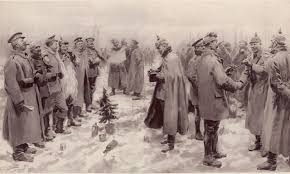
Christmas Truce: World War One
Sweetness and light…. sweetness and light…. In my final post of 2015, I promised that the next one would be about positive stuff, rather than the unrelenting gloom and doom that caught my attention in the last few weeks of the year just gone.
So let’s see now. A thousand men of “migrant appearance” go on a sexual harassment binge in Cologne. Not very sweet and not very light I’m afraid. There seems to have been a measure of organisation to the attacks. No doubt we will learn more in the coming weeks, but if I was a conspiracy theorist, I would ask who might benefit from inciting these people to run riot, thereby putting pressure on Angela Merkel to restrict immigration into Germany. ISIS, who want to discourage people from leaving Syria and Iraq? The local far right?
But I’m not a conspiracy theorist, and besides, I doubt if ISIS has that level of traction in Germany, or that the far right would be smart enough to persuade a bunch of turkeys to vote for Christmas. A mystery that doesn’t bode well for the thousands to whom Germany has given a home, and who are now more likely to be looked on with suspicion and resentment. As if they haven’t had enough to contend with.
Next up, North Korea has detonated a hydrogen bomb, or at least tried, depending on which analyst you believe. The Hermit Kingdom seems to be an increasingly inappropriate nickname for Kim Jong Un’s paradise on earth. More like the Stonefish Kingdom – tread on it and you die. At least North Korea, unlike another psychotic entity in the Middle East, has no expansionist ambitions. But you do worry about who would be able to pay for an H-bomb in the event that the stonefish have actually managed to create one. What would Kim Jong Un not be prepared to do if cornered on all sides?
Speaking of nuclear weapons, how long before lobbyists in the US start pushing for the citizen’s right to bear personal nukes? Silly, I know, but when you reflect that the arms the founding fathers had in mind in 1776 were flintlock muskets that took fifteen seconds to load for each shot, the weapons Americans are now allowed to possess have increased in killing potential on a similar logarithmic scale to the evolution of a barrel of gunpowder into a battlefield A-bomb.
Unfortunately, guns are embedded in the American Way, and it would take a mass extinction of legislators at the hands of some lone shooter to have any chance of changing that. Barack Obama has less chance of restricting conditions for gun ownership than for a pig to fly over the skies of Tennessee without being shot down and plonked on the barbecue.
And what of my own dear country, which has just “enjoyed” the warmest and wettest December since dinosaurs waded through the swamps of southern England? Are we ready to become an aquatic species again? And do we welcome the arrival of daffodils at Christmas. Probably no to both questions, but one life form that does seem to have welcomed our summery winter weather is the common cold and variants thereof.
Unfortunately, one of them made its home in me, with the result that over the past two weeks I’ve developed a near-apocalyptic chest infection, only brought to bay by an industrial-strength course of antibiotics. So a couple of days ago we arrived on the beautiful island of Bali with me coughing like an ageing consumptive.
But here’s some sweetness and light. At the same time last year we also came to Bali, and the day before we travelled I did my back in. Like fools, we didn’t cancel. So I spent the entire visit in crippling pain and stuck in a wheelchair.
So this time, not only am I alive, but I’m actually walking, even if I’m frightening the life out of all and sundry with spectacular bouts coughing and sneezing. But no matter. If you’ve never visited the island, believe me, it is sweetness and light. The sweetness belongs to the people, who smile at you with no obvious motive, and the light is brilliantly sharp.
It seems that El Nino has touched Bali as much as it has England. The temperature is a good few degrees hotter than last year. By midday it’s getting up to 35C, enough to leave even the relatively fit westerners slumping like beached whales. In my case, a catfish out of water, gasping for breath would be the closest comparison. But now that the antibiotics have done their work (and how much longer will we be able to say this?) I’m starting to feel relatively normal. And so I should, having spent many years in the Middle East in temperatures far higher, and having once survived a memorable round of golf in Riyadh in 50 degrees of heat.
But enough of my struggles. For all the posturing of politicians, the lethal doings of various militaries and the doom-laden tone of the analysts, journalists, bloggers and tweeters, one story that really raised my spirits appeared in the Guardian a couple of days ago.
It was about Helen Pidd, the newspaper’s North of England editor, and Yasser, a Syrian Arabic teacher who was recently granted refugee status in the UK. Yasser arrived in Britain in the back of a lorry with nothing but a bag of clothes. He speaks little English. He is trying to bring his wife and child into the country. Helen did what many people talked about when the refugee crisis was all over the media. She asked Nasser to stay in her spare room. Not only that, but she welcomed him into her life.
The piece is about Helen’s experience of Yasser, and vice versa. It’s a story of kindness and understanding that reminds us that when you strip away the prejudice and the paranoia, and invite “them” to become “us”, wonderful things can happen.
Call me naïve, but Helen and Yasser’s story served to remind me that there a few problems between humans that can’t be resolved by communication. Can neighbours resolve boundary disputes, husbands make it up with their wives and brothers make peace with their sisters? Of course!
Can Saudi Arabia reconcile with Iran? Hell yes! Can the Syrian factions come together and forge a way forward that doesn’t involve destruction and death? Absolutely!
That’s not to say that any of this stuff is easy. But none of it ever gets resolved until people start talking to each other, and that usually starts with one person talking – and listening – to another.
People often ask me why I choose to do business in a country like Saudi Arabia that comes in for so much criticism over its social policies, its criminal law and a host of other things. It’s simple. There are people there. I spend time with them, listen to them and learn from them.
So much is written about the country by people who have spent little time with individuals other than those who serve to confirm their prejudices. Over the years I have met soldiers, princes and conservative clerics as well as doctors, nurses, businesspeople, shopkeepers and students. I have met women as well as men, despite the popular myth among the critics that Saudi women spend their lives penned up in their homes.
Over many years of visiting and living in Saudi Arabia, there have been very few occasions when I have found that I have nothing in common with someone I meet. There is almost always room for understanding, even if the other person’s beliefs might be the polar opposite of mine.
So my experience has provided me with a simple mantra when I’m dealing with people, whether they live next door or in a culture that at first sight seems alien and incomprehensible: you don’t have to agree on everything to agree on something.
Forgive me if I’m stating the obvious, but is that not a positive thought to keep in mind for 2016 in a world full of deaf ears?
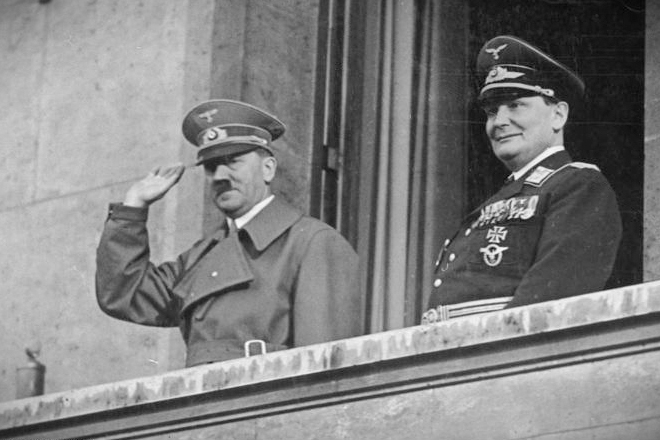
This is my last gloomy post of the year, I promise. Largely because it’s my last post of the year. Tomorrow, all will be sweetness and light – for a day or two at least.
The thoughts in this post are not mine. They belong to a remarkable man, far braver and more perceptive than me. Freidrich Reck-Malleczewen was an aristocratic German writer who kept a secret diary during the Nazi years. He was, if you like, the equivalent of the bloggers in Raqqa who risk their lives writing about conditions under the rule of the Islamic State. Except that he lacked the means to publish his work. Instead, he intended what he wrote to be a testament of a dark time that he didn’t expect to survive.
First published in English by the translator Paul Rubens, Diary of a Man in Despair is a book I’ve read more than once, and I’m reading it again now. The writer’s hatred of the Nazis was so intense that had his journal been discovered at any time, he would almost certainly have been executed. Hiding it every day in the woods outside his house every day failed to stop him from eventually falling foul of the Nazis, and he died in February 1945 at the Dachau concentration camp.
Fritz Reck, as he was also known, was an arch-conservative who poured scorn on political leaders from Bismarck onwards. He was something of a snob, but unlike so many of his countrymen, he never said a word against the Jews.
He was widely read in the German classical tradition. He saw himself as a cultured man, the opposite of Hitler and his acolytes.
Here’s the passage, written in 1937 – four years after the Nazis took control of the state, and two years before the Second World War. Reck writes about the Münster Rebellion of 1534, in which a group of Anabaptists expelled the ruling Catholic bishop, and set up a sectarian theocracy in the north German city. He examines its parallels with the Germany he was living in at the time.
I have been working on my book about the Münster city-state set up by the Anabaptist heretics in the sixteenth century. I read accounts of this ‘Kingdom of Zion’ by contemporaries, and I am shaken. In every respect, down to the most ridiculous details, that was a forerunner of what we are now enduring. Like the Germany of today, the Münster city-state for years separated itself from the civilised world; like Nazi Germany, it was hugely successful over a long period of time, and appeared invincible. And then, suddenly, against all expectation and over a comparative trifle it collapsed….
As in our case, a misbegotten failure conceived, so to speak, in the gutter, became the great prophet, and the opposition simply disintegrated, while the rest of the world looked on in astonishment and incomprehension. As with us (for in Berchtesgaden, recently, crazed women swallowed the gravel on which our handsome gypsy of a leader had set his foot), hysterical females, schoolmasters, renegade priests, the dregs and outsiders from everywhere formed the main supports of the regime. I have to delete some of the parallels in order not to jeopardise myself any more than I already have. A thin sauce of ideology covered lewdness, greed, sadism, and fathomless lust for power, in Münster too, and whoever would not completely accept the new teaching was turned over to the executioner. The same role of official murderer played by Hitler in the Röhm Putsch was acted by Bockelson in Münster. As with us, Spartan laws were promulgated to control the misera plebs, but these did not apply to him and his followers. Bockelson also surrounded himself with bodyguards, and was beyond the reach of any would-be assassin. As with us, the masses were drugged: folk festivals, useless construction, anything and everything, to keep the man in the street from a moment’s pause to reflect.
Exactly as Nazi Germany has done, Münster sent its fifth columns and prophets forth to undermine neighbouring states. The fact that the Münster propaganda chief, Dusentschur, limped like Goebbels is a joke which history spent four hundred years preparing: a fact which I, familiar as I am with the vindictiveness of our Minister of Lies, have most advisedly omitted in my book. Constructed on a foundation of lies, there existed for a short time between the Middle Ages and modern time a bandit’s regime. It threatened all the established world – Kaiser, nobility, and all the old relationships. A few things have yet to happen to complete the parallel. In the besieged Munster of 1534, the people were driven to swallow their own excrement, to eat their own children. This could happen to us too, just as Hitler and his sycophants face the same end as Bockelson and Knipperdolling.
I stand before these 400-year-old records, startled by the thought that the resemblance might not be coincidence at all, but may be determined by some frightful law decreeing periodic draining of a psychic abscess. How much do we really know about the vaults and caverns that lie somewhere under the structure of a great nation – about these psychic catacombs in which all our concealed desires, our fearful dreams and evil spirits, our vices and our forgotten and unexpiated sins, have been buried for generations? In healthy times these emerge as spectres in our dreams. To the artist they appear as Satanic apparitions. Then, on our cathedrals, the Gothic gargoyles push obscene backsides out into the air, and there creep across the inspired canvasses of Grünewald, with beaked nose and claw-foot, the representations of all the vices; those flagellants strike at the Saviour so that the law may be fulfilled, and in the very inevitability of it one feels pity….
But suppose, now, that all of these things generally kept buried in our subconscious were to drive for emergence in the blood-cleansing function of a boil? Suppose that this underworld now and again liberated by Satan bursts forth, and the evil spirits escape the Pandora’s box? Isn’t this exactly what happened in Münster, so conservative before and after the event? Doesn’t this explain how all of this could have happened to a basically orderly and hard-working people, without resistance from those dedicated to the good in life, in the same kind of grim and incalculably vast cosmic convulsion which from the first day of the Hitler regime has not only brought sunspots to affect the weather, endlessly rainy summers to spoil the harvests, and strange crawling things to afflict this old earth, but has also in some unfathomable way turned on its head concepts like mine and thine, right and wrong, virtue and vice, God and the Devil?
I leave it to you to figure out why I end 2015 with this passage. A better Germany did arise – liberal and humane, the very antithesis of its Nazi past – although, as he predicted, Reck didn’t live to see it. But before things got better, they got immeasurably worse, as he describes in the rest of the journal.
And in our time, even if there seems to be no light at the end of so many tunnels of misery, the light will eventually appear. Maybe not next year. But it will appear.
I wish you all a happy new year. May your dreams for better things come true.
Aston Villa – 1899
So I was chatting about football with one of my brothers, who was spending Christmas with us.
We were brought up in Birmingham, but always supported different clubs. My team was, and I suppose still is, Aston Villa, currently languishing at the bottom of the English Premier League. He’s a diehard West Bromwich Albion supporter, and still goes to their matches when he can, despite living a hundred miles away.
His team is unlikely to win the Premier League again, and so is mine. The problem, as he sees it, is the lack of a level playing field. Six or seven teams, bankrolled to the hilt by Russian oligarchs or American sports conglomerates, simply outgun the rest in terms of spending power.
But he’s still an Albion diehard, whereas I couldn’t really care less if Aston Villa are relegated this season, or who ends up at the top of the pile. Why the change of attitude?
I can easily explain. Years of mid-table mediocrity, indifferent managers and owners with limited imagination. Noteworthy this year only for being spectacularly unsuccessful, for the umpteenth sacking of the manager and because of one of their promising young players was photographed paralytic on a pavement during a lads’ holiday in Tenerife. There’s only so much sporting masochism I can take.
I could, of course, start following another team. Arsenal perhaps, or Manchester United. But why would I support them above all others? After all, I have few connections with North London. And Manchester? Well it rains all the time up there, doesn’t it? When I watch football these days, I look for the most interesting team, with no emotional ties beyond a vague preference for one side or the other. I judge the quality of a match by the length of time it takes me to fall asleep in front of the TV.
As for the national team, yes, I still have feelings, but they’re stunted by low expectations. We England fans might hope. We might dream. But very few of us believe.
I was trying to explain to my brother why I’ve had it with football in general, not just Aston Villa, and I struggled, because there’s nothing wrong with the sport in itself.
After all, it hasn’t really changed that much since 1966, when England won the World Cup. It’s still eleven players against eleven. We still have goals, fouls, penalties, offside, referees and linesmen. As a spectacle, it’s much improved. More sophisticated tactics, fitter players, better players, better TV coverage. Better managers? Not sure about that – different challenges, different times.
I vividly remember when the England national team ruled the roost, when foreign players were a rarity, when there were no agents, when butchers, bakers and candlestick makers owned the clubs and when the superstars drove Ford Anglias and opened pubs when they retired. Our national sport was simpler and more innocent then. And so was I.
I’m not nostalgic about those days, though it does leave a sour taste to see modern clubs fielding teams without a single English player – mediocre foreign imports kissing the badge on their shirts and making protestations of loyalty to a club they might not even have heard of a year ago. What message are their employers sending to the kids who support them? That the only way to reach the heights of the game is to have been born in Stuttgart, Senegal or Seville?
No, my problem is with the meta-game. Everything around it and arising out of it.
Corrupt administrators who regard themselves as statesmen. Greedy agents who manipulate their gullible clients into seeking transfers every year or three for no reason other than to get their regular cut. Owners who regard their clubs as just another asset. Egomaniac managers and their endless dog-and-pony shows. Emotionally incontinent players whose every fart is followed on Twitter, and whose commitment depends upon the next pay rise. Billions of hackneyed words spewed out by the media. And the poor fans, paying through the nose for match tickets and shirts for their kids out of a sense of loyalty shared by none of the beneficiaries of their hard-earned cash.
All of these things turn me off the game. But when I reflected on the conversation, I realised that my disillusionment isn’t just that the meta-game is rotten to the core. It’s that I’ve changed.
It should be perfectly possible to ignore all the hoopla and still love the game itself. Which I do, on the odd occasion, such as when Germany destroyed Brazil in the last World Cup. That was sublime drama – technical excellence, joy, grief and the wonder of the unexpected.
But as I get older, I find it harder to identify with any tribe – be it political party, social class, nation or football club. I’ve never been one for crowds, and for the mass emotion they often generate. On New Year’s Eve, you won’t find me linking arms with anybody. These days, whenever I see mass emotion, I see manipulation.
The cold reality is that football clubs – at least at the highest level – are corporations. Just like IBM, General Motors and Apple. Unless I’m an employee of that corporation, why should I feel loyalty towards it? And even if I did work for one, what corporation inspires the emotional attachment, the lifelong commitment, that football clubs do in their supporters?
Football fans, on the other hand, are tribes. Like other types of tribe, they’re bound together by emotion, tradition and history. These are about the only things that the football corporations don’t control. In business terms, you could say that the rituals, the memories and to an extent, the identity of the tribe, are social capital. The other forms of capital – assets and intellectual property – are what the corporations buy and sell. They can create or destroy the social capital though their achievements or mistakes, but they can’t tell the fans what to think and believe.
So basically, as a consumer, I see football as nothing more than a lucrative component in a global entertainment industry. Locations are irrelevant, branding is everything. People in China support Manchester United even though they might know nothing about the city in which the club is based. Just as Indonesians and Canadians love Adele’s music.
And if the parents of young fans are happy for their kids to grow up into preening thugs like Diego Costa, why should I disapprove? After all, thirty-five years ago, another generation took Sid Vicious and Johnny Rotten as role models, and the world didn’t end.
It’s just show business, right? Always has been and always will be.
And there is an upside. I’d rather people were passionate about football clubs than declaring allegiance to the Islamic State or wetting themselves with excitement about the latest inspirational speaker or dumb celebrity. And I’d rather they wore a Barcelona shirt than some trite slogan inspired by Donald Trump or by one of our dreary politicians.
At least football fans have dreams whose fulfilment are unlikely to harm others for any length of time. Winning is a one-time ecstasy shot. Sorting your life out, earning a living and saving the world are a tad more complicated, and we all need the occasional escape from that reality.
Am I being condescending towards all the millions for whom the game is a controlling passion, and often the only distraction from lives full of fear and desperation? Not intentionally. As I said, the problem is at my end. I’ve fallen out of love.
Sadly, Aston Villa will never do anything other than remind me that in football as in life there are far more losers than winners. So unless England threaten to win the World Cup again, football for me will never be more than an occasional distraction from the more depressing aspects of daily life.
It’s that time of year again. Here are a few things that stood out for me in 2015:
The Emperor Claudius Award for unlikely political elevation: Jeremy Corbyn. Some are born great, some achieve greatness, and some have greatness thrust upon them. Others get elevated to the leadership of a major national party by less than 1% of the electorate.
Ugliest American: Donald Trump – made even uglier by the fact that millions of Americans are gullible enough to believe that he would be able to deliver on his loopy promises.

Most fashionable endangered species: The hedgehog, especially the poor visitors in my garden that had to contend with our large and curious dog this summer.
Most startling harbinger of the End of Days: Daffodils flowering in London at Christmas. If things continue like this, the cricket season in England will start in February.
Most compelling re-read: Diary of a Man in Despair. Was there ever a more withering expression of contempt for a political leadership than Freidrich Reck-Malleczewen’s literary demolition of the Nazis?
Reck-Malleczewen
Most unexpected moment in a TV series: Saga Noren weeping in The Bridge 3. The dam finally broke.
Most predictable moment in a TV Series: Carrie Mathison having a psychotic breakdown in Homeland.
Most valiant theatrical failure: Farinelli and the King. Mark Rylance was tremendous, but no counter-tenor will ever be more than a pale imitation of an operatic castrato.
Farinelli
Most moving concert: Berlioz’s Grand Messe des Morts at the London Barbican – has brass ever been used more effectively?
Cultural desecration: Palmyra and all the other sites destroyed by ISIS. How long before we start erasing inconvenient history in the West?
Statue of the year: That of the late Mayor Rizzo of Philadelphia (which I visited last month), pointing nobly into the distance. He who once said “I’m going to make Attila the Hun look like a faggot”. Roll on the Democrat National Convention, due to be held in the city next year.
Mayor Frank Rizzo
Most overworked social theme: Transgender anything.
Cliché of the year: Safe place – particularly as applied to the expression of opinion on university campuses. In my day we went to university to escape safe places. Clearly not any more.
Comical Ali moment: Caliph Baghdadi sending an upbeat message about the fortunes of ISIS on the day Ramadi was falling.
Most unlikely sporting hero: Loretta Lynch, US Attorney General, for her part in taking down FIFA.
Most intriguing “new” energy source: Molten salt reactor technology, developed in the 1960s, tweaked in the 2010s, potentially able to produce usable energy from nuclear waste.
Apologies if some of these references are a little obscure, but they’re just a reflection of the odd stuff that’s been swirling round my conscious in this funny old year.
 59steps