It was the best of times, it was the worst of times, it was the age of wisdom, it was the age of foolishness, it was the epoch of belief, it was the epoch of incredulity, it was the season of Light, it was the season of Darkness, it was the spring of hope, it was the winter of despair, we had everything before us, we had nothing before us, we were all going direct to Heaven, we were all going direct the other way. . . . (A Tale of Two Cities)
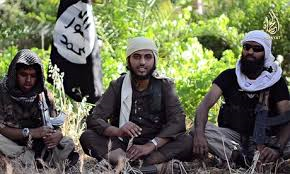
Charles Dickens could have written these lines for a bedraggled group of 30 disgruntled British jihadis stuck in Syria with nowhere to go. According to yesterday’s Independent newspaper they want to come home. They are apparently upset at not being able to fight the forces of President Assad, and instead having to direct their fire at rival rebel groups. Perhaps spending their weekends decapitating their fellow Muslims is beginning to get to them as well. Worst of all, they fear that their fratricidal activities will not qualify them for paradise.
They feel stuck between a rock and a hard place – the rock being the butchers of the Islamic State, and the hard place the prospect of several years in a British jail. They say that they’re prepared to undergo de-radicalisation programmes in the UK if they’re allowed to come home.
It’s hard for a middle-aged non-Muslim like me to grasp the mind-sets of these kids – because many of them are just kids – who go off to make war in foreign countries for a cause that most of the world, the vast majority of Muslims included, finds illogical and perverted.
Read their tweets and you can recognise the immaturity of any typical 18-to-20-year old. Wild excitement, enthusiasm and yes, idealism, though not yet tempered by the harsh realities of experience. For some of them that harsh reality seems to be bearing down.
So what if for these young idealists violent jihad is essentially a form of adventure, rather like the gap year rite of passage thousands of British school leavers go through when they head off to Thailand, India, the Antipodes and the Americas in search of new experiences, fun and, in some cases, to do some good in the countries they visit? Are these mamma’s boys from Luton, Blackburn and East London basically backpackers with attitude?
What really set me thinking about this was a story I saw in the Arab News, a Saudi English-language newspaper, about a young Saudi killed in an Israeli air strike in Gaza. Sultan Farhan Al-Harbi had been sentenced to five years in jail for attempting to join the previous Sunni insurgency in Iraq. When he was released, he apparently went off to fight in a number of hot spots including Somalia, Yemen, Libya, Syria and finally Gaza, where he met his end. The paper reported that, like the Brits, he was disillusioned with the Islamic State. So he decided to try his luck at killing a few Israelis.
What seems odd to me is that he had apparently embarked on a kind of Jihadi’s Grand Tour. Why did he not stay in one place and see the struggle through? Did he go off to the next place because the jihad experience in the previous location didn’t suit him? Or was it just a case of “been there, done that, got the shrapnel wound”? Perhaps he was on some self-appointed mission to unify all the groups into one coordinated fighting force?
We will probably never know. But there’s something about Sultan Al-Harbi’s wanderlust that sounds very consistent with the dilettante spirit of the backpacker.
Which leaves me in little doubt that lurking in the fetid armpits of the internet there’s probably someone right now working on a Rough Guide for Jihadis. It would sit nicely alongside Islam for Dummies, which seems to be quite popular with the British contingent of the Islamic State. Where you can get the best deodorants and knife-sharpeners in Somalia; where to get a hot meal in Raqqa; how to switch to a new twitter account so you can let your mates know who you’ve beheaded lately. Or perhaps whereabouts in Mosul you can pick-up a slave-wife, and whether it’s possible to download Bruce Willis movies via Netflix in Tripoli.
I do wonder whether those lads who make it out of the IS abattoir alive and end up back on the streets of England will not look back wistfully on their youthful exploits on the bloody plains of Syria in 40 years’ time, just as people of my age swap tales of the first Glastonbury, of Led Zeppelin at Shepton Mallet, and of running out of money in Casablanca, Kabul and Kathmandu. Will the burnt-out jihadis of the future sit in their council houses or prison cells and tell themselves that “it was the best of times, it was the worst of times” while thumbing nostalgically through the Rough Guide for Jihadis?
Or will they just feel like dupes? Some gap year.
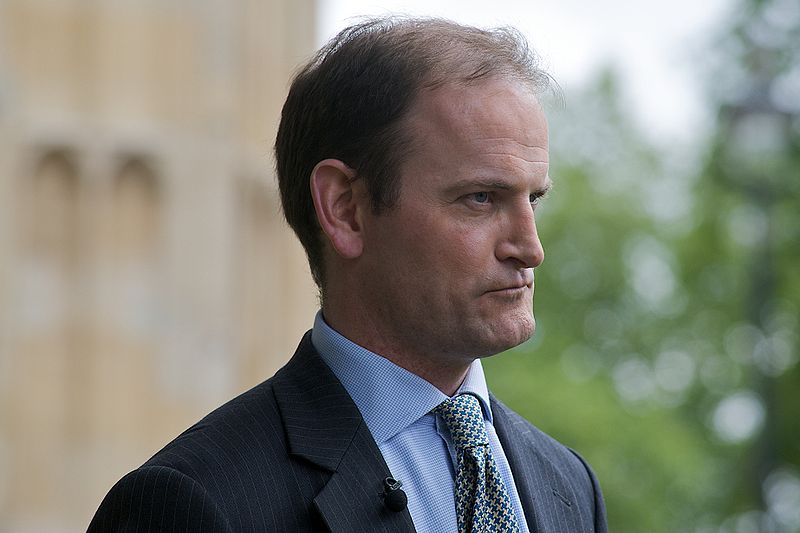
I’ve seen plenty of comment about the defection of the British MP Douglas Carswell from the Conservative Party to UKIP, the party of warm beer, village greens and impenetrable borders. One aspect doesn’t seem to have been raised as an issue. So I’m raising it.
Apparently Mr Carswell has been plotting with UKIP’s chief gnome, Nigel Farage for several months about the timing of his defection. For reasons discussed at length elsewhere in the media, the time is now. So the principled – or prodigal depending on your viewpoint – MP is resigning his seat and standing in a by-election as a UKIP candidate. He will most likely win.
Now there’s a long tradition of MP’s changing allegiance during the lifetime of a Parliament. Winston Churchill did it twice. In 1981 twenty eight Labour MPs, many of them far more significant figures than Mr Carswell, defected to the newly-formed Social Democratic Party. All of them remained in their seats until the next general election and stood on behalf of their new parties when everybody else was up for election. But our man has chosen, as a matter of honour apparently, to resign now and fight a bye-election. It’s very obvious why he’s doing this. He wants to generate lots of publicity for his new best friends by means of a campaign that will clearly attract plenty of media attention. Honour has nothing to do with it. It’s a cynical ploy, and the people of Clacton, his constituency, are unwitting participants.
If Mr Carswell had any sense of honour, he would take the view that he could make enough noise by remaining in Parliament without having to trigger a bye-election, and thereby save the tax-payer the expense of funding a costly and unnecessary contest. The cost of organising an election is peanuts compared with the bucket loads of public money wasted by governments of all stripes over the years, but I do object to the arrogance with which he and his buddies blithely dip into the national purse to stage what in effect is a publicity stunt.
If I was a British political party leader, I would put up no candidate against Mr Carswell, so that he ended up arguing against himself. That would expose the contest as the meaningless farce that it is. But then I can’t see any of them taking a stand against this cynical manipulation of the electoral system. After all, they might want to use the same ploy themselves at some time in the future.
I will take our political system over most others in the world, but boy, our politicians do let us down from time to time….
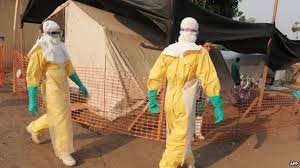
We are living through a period of great drama and tragic events. Horrifying as the catastrophe in Syria and Iraq undoubtedly is, the incident that has shocked me the most in the last couple of days was in Liberia. Protesters forced their way into an Ebola quarantine centre and looted the contents, including blood-stained bedding. Several inmates, suspected of having contracted the disease, vanished into the city.
One eye witness claimed that the protesters, armed with clubs, broke into the centre claiming that there was no Ebola, and that the patients had malaria. There are conflicting reports about how many of those admitted to the centre had died before the break-in, and how many have disappeared. The government claims to have moved them to a different location, but others say that several have returned to their families.
The centre is in West Point, a heavily populated area of Monrovia, Liberia’s capital. The potential for further infection among the 50,000 residents of the township would seem to be high, especially if, as claimed, ignorance of Ebola and its consequences is widespread. That ignorance, combined with mistrust of the government’s motives in setting up the centre in West Point creates a heady cocktail of anger and fear that can only hinder efforts to bring the outbreak under control.
As one official commented: “This is one of the stupidest things I have ever seen in my life. All between the houses you could see people fleeing with items looted from the patients.”
It’s the stuff of movies – perhaps. Yet most biological disaster movies are played out in Western locations, the better to scare the audiences with the prospect of panic and disorder breaking out in their own back yards. When an unknown virus causes havoc, it’s usually in the West. Valiant doctors and scientists struggle against the odds to develop a vaccine. Characters drop like flies in the process, but eventually a cure is found. Which is essentially the plot of the most recent bio-disaster movie, Steven Soderbergh’s Contagion.
The drama being played out in Africa would be hard to stage. The horror of Ebola’s end game, with patients bleeding out of every orifice, and dying without the simple comfort of human touch. The squalor of the township to which the patients return. Waves of anger, fear and mistrust sweeping through the densely-packed community. And of course the love, the grief and the pain. Outside the township, hard-pressed, resource-starved officials struggling to deal with a crisis beyond their experience – bombarded with advice from foreign experts, trying to maintain order, wondering which way to turn as people start dying in one location after another. And finally the volunteers who tend to the sick in the full knowledge that the slightest slip in barrier nursing procedures – a piece of skin exposed – can be fatal.
I doubt if any Western movie-maker could truthfully capture the ghastly scenes of the dead and dying without half their audiences walking out of the cinema and throwing up. And besides, the true drama of the Monrovia incident lies in the emotions of the protagonists. Many would argue that the medium best suited for portraying the nuances of emotion is opera. Modern opera has brought us stranger subjects – Nixon in China, The Death of Klinghoffer and Jerry Springer, for example. So I suspect that one day the agonies of the Ebola outbreak will end up most effectively portrayed in music and song. One disaster movie is much like another in terms of plot, but it’s the emotions of the protagonists that transcend the event.
A real-life Contagion is with us. It’s happening in Africa right now. But its grisly details are unlikely to be on a screen near you any time soon – thank goodness.
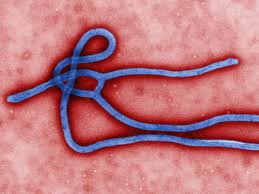
The World Health Organisation has acknowledged that the threat posed by Ebola is “vastly underrated”, according to the BBC. Well yes – any virus that carries off 80% of those infected and has spread to four west African countries, killing over a thousand people in the process, should most certainly be taken seriously. The more so because we are a month away from the Haj, when millions of pilgrims gather in Mecca from all over the Muslim world. The Saudi authorities have done their best to mitigate the risk of infection by issuing no visas to residents of Guinea, Sierra Leone and Liberia, and discouraging its own citizens from visiting those countries. I would imagine that they are watching anxiously as the disease progresses in Nigeria, west Africa’s most populous country, where an outbreak has recently been reported.
Given their vast experience in dealing with infection control among the pilgrims, one would hope that the Saudis will be as successful at keeping the lid on Ebola as they have been in controlling another deadly virus – MERS Coronavirus – which first showed up within the Kingdom. But they must be nervous, as we all should be, since people returning from the Haj will be heading for all corners of the globe.
What surprised me in one respect about Ebola – but not in another – is that we have known about the virus for nearly 40 years. The first outbreaks in 1976 carried off over 400 people. So as an ordinary Joe with little knowledge of epidemiology, the drugs industry and the World Health Organisation, I would be very interested if someone with expertise on these subjects could answer the following questions:
- Why has it taken 38 years for “us” – governments, the WHO and the drug companies – to wake up to the threat of Ebola?
- What has prevented the drug companies from producing an effective vaccine years ago? Lack of funding? A sense that the necessary research would not be cost-effective because the governments whose citizens are affected – in other words African governments – would not be able to afford the treatment?
- What is the point at which a global or regional health emergency becomes so acute that the WHO, or its member governments, start commissioning the development of treatments rather than leaving it up to drug companies to decide whether or not to invest in the necessary R&D?
According to its statement, the WHO is “coordinating a massive scaling up of the international response, marshalling support from individual countries, disease control agencies, agencies within the United Nations system, and others”. All fine and good, but the simple fact of the matter is that here is a virus that kills the majority of those infected. Preventive measures can reduce infection, but cannot cure those already infected. Surely the massive cost of preventive measures would be unnecessary if “we” had had the foresight to ensure that work on developing an effective vaccine had started many years ago, once we recognised the devastating potential of an Ebola epidemic, or worse still, of a pandemic?
Perhaps I’m being naive. Perhaps work has been going on since 1976 to develop a vaccine. Perhaps the task is a challenging as developing a vaccine for AIDS, for which research has been going on for decades. In any event, there’s no point looking back for lessons to be learned until the current outbreak has been brought under control. Hopefully the experimental ZMapp treatment will prove effective.
If and when the drains-up does take place, I will be watching to see whether there’s any kind of debate over why the health of millions depends on the efforts of private companies whose efforts are driven by profit, or on organisations such as the Bill and Melinda Gates Foundation that exist because of the philanthropic vision of wealthy individuals.
“We” spend billions of public money every year in dealing with the effects of natural and man-made disasters, from earthquakes and floods. “We” spend billions attempting to mitigate the effects of climate change. Some of “us” spend millions on relief efforts to save minorities threatened by homicidal fanatics in Iraq and billions on the wars that preceded the current crisis. Yet Ebola suddenly (but not suddenly) raises its ugly head, and “we” struggle to deal with its consequences.
Are we really that dumb, or am I indeed just hopelessly naive?
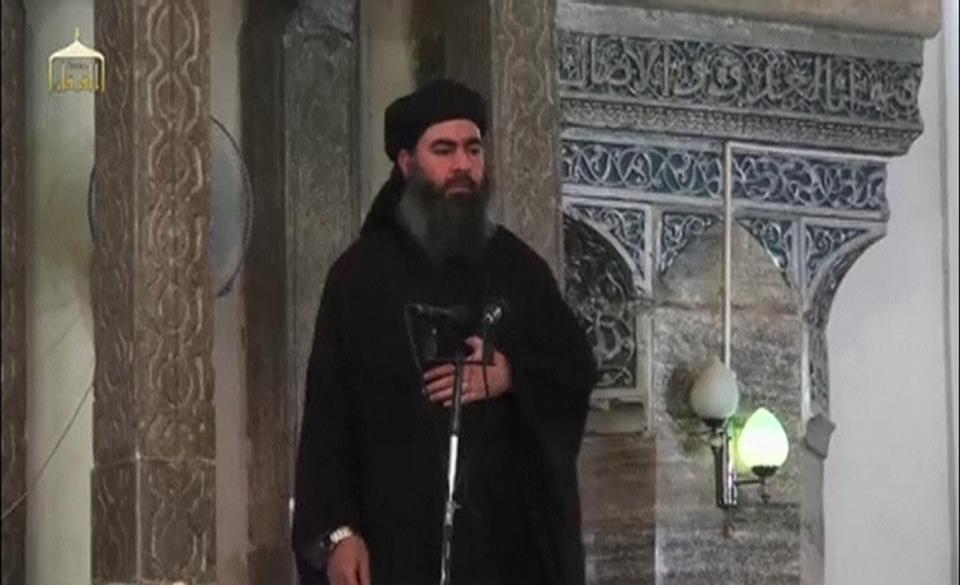
Some people can say in a few hundred words what I might take thousands to express. One such person is David Aaronovich of the UK Times. Here’s what he says in today’s column about the butchers of ISIS:
Last week in the grotesque bazaar of social media, someone posted pictures of Isis executions by a river in Syria or Iraq. On a concrete jetty awash with blood, victims were being brought one by one to the water’s edge, forced to kneel and then shot in the head before their bodies were pushed into the flow.
For this spectacle to exist there needed to be a minimum of four men: a guy to hold the bound victim and push him to his knees, a guy to hold the Isis flag, a guy to blow the victim’s brains out and — indispensable — a guy to take the pictures on his mobile.
By the Mac as I type this, I have a book with a photograph on the cover that shows much the same scene. A group of eight or nine young men — one no more than 17 or 18 — form the background, standing on a low bank. In front of them a man in a jacket and white shirt, holding an overcoat, kneels looking just to the right of the camera. To the side and slightly behind him, legs braced, is a uniformed man with spectacles, his right arm outstretched, holding a pistol about two feet from the kneeling man’s head.
The book, Believe and Destroy: Intellectuals in the SS War Machine by Christian Ingrao, is an explanation of how “handsome, brilliant, clever and cultivated” young Germans came to be in foreign lands shooting defenceless people in their thousands, and thinking that this mass murder was not just necessary but good.
Most things that are bad — even very bad — are not “like Nazism”. But Isis are very like the SS in occupied eastern Europe. There is the same idea of a mystical destiny that doesn’t just permit killing, but demands it. Like the Caliphate for the jihadis, the east, as Ingrao puts it, “symbolised a mythical space for the SS, a tabula rasa for Germandom to shape, a place rich with possibilities”. In service of that vision, the pits had to be filled with bodies.
There are aesthetic differences. The SS would hang people if they wanted to put on a show and Isis men — including young Britons — will behead, stone or crucify them. But allowing for method, one great similarity will shine through. Just like the SS, Isis men will kill more and more, will be more unconstrained in their savagery, stopping only when they are utterly defeated and every executioner — even if he is such a gentle boy from Purley — is dead or tried. Any politician’s talk that does not envisage this defeat is wasted breath.
Easier said than done. The SS did their work in the context of a world war between evenly balanced opponents. It took the defeat of armies numbering millions by even bigger armies to stop them. By then it was too late.
Since then, we have signally failed to intervene in time to prevent mass homicide. We failed in Yugoslavia, in Cambodia, in Rwanda, and now we’re failing in Syria and Iraq. In each case we – meaning the West – were eminently capable of deploying superior forces and firepower in the air and on the ground in order to stop the massacres. What prevented us was a combination of lack of intelligence, superpower tensions, slow-moving diplomacy, ineffective use of peacekeeping forces and war-weariness on the part of actors that could have intervened. Take an average of three from the five factors above, and you will understand why we have allowed millions to die at the hands of bloodthirsty sadists over the past thirty years.
The same factors are in place today, except that in order to have peacekeepers you need combatants who are willing to respect the rules of engagement. Isis respects no rules but its own.
As Aaronovich says, ISIS will not be stopped until it is utterly defeated. That will not happen unless there are troops on the ground who are capable of defeating them. That could mean another “coalition of the willing”, whatever Obama and Cameron say about not deploying ground forces. Air strikes can prevent further territorial expansion by ISIS, but they cannot stop the insurgents from doing their dirty work within the territory they already control. They are doing it now, so it’s already too late to save the thousands whom they have killed already, and thousands more who are in their gun-sights.
But if we accept that the US and its allies will not risk another Afghanistan by sending troops into the killing fields, what’s the alternative? That the Kurdish Peshmerga continue to struggle against their well-armed opponents with the aid of new weapons and ordnance from the West? That the remnants of the Iraqi army, supplemented by half-trained Shia militia take the fight to ISIS and wreak bloody revenge on innocent Sunnis in the process? An Iranian intervention side by side with the Iraqi Shia, triggering anti-Shia insurgency by remnants of the jihadis allied with the tribes in the Sunni provinces?
All are possible. The only other remote chance is that the alliance between ISIS, the Sunni tribes and former Saddam-era Baathists will fracture because the fellow-travellers will no longer be able to stomach the barbarity of the foreign jihadis. An Iraqi government not led by the divisive Al-Maliki might be able to exploit the differences between ISIS and its allies and turn them against each other. But I suspect that we are now beyond the point at which dissenting elements within the so-called Islamic State would be prepared to overcome their fear of the fighters sufficiently to bring about a disintegration of the new entity.
So we’re back to ground troops, or we must accept a containment policy in the knowledge that ISIS is getting stronger by the day both financially and in the numbers of disaffected extremists from around the world who are flocking to the region to make holy war on every state in the Middle East that is unwilling to see things their way. And that includes Jordan, the Gulf states including Saudi Arabia, Lebanon, Turkey and God knows where else.
The killing will not stop until the killers are stopped. That’s the essence of what Aaronovich is saying, and I agree with him wholeheartedly. And that, ultimately and at the cost of many more innocent lives, is what Obama and his allies, or their successors, will eventually conclude. Too late, as usual.
My favourite British political party has put its foot in it again. When I say favourite, I don’t mean that I’m any more likely to vote for the UK Independence Party than I am to take up residence in an Ebola-infested West African village (with all due respect to the brave medics who are doing exactly that).
It’s just that UKIP contrives to provide an endless source of amusement through the loose words of its nuttier officials and supporters. In the latest “UKIP moment”, one of its European Parliament members, Bill Etheridge, urged his audience at a public speaking seminar to learn from the example of Adolf Hitler.
According to a story in today’s Mail on Sunday:
Mr Etheridge, who recently wrote a book celebrating golliwogs, made his astonishing remarks last weekend while training young Ukip members planning to stand in council or parliamentary elections.
The West Midlands MEP was hired to give a class on public speaking at the Young Independence Conference in Birmingham.
He suggested that the audience should take their oratorical tips from ‘a hateful figure who achieved a great deal’.
Mr Etheridge, 44, said: ‘Look back to the most magnetic and forceful public speaker possibly in history. When Hitler gave speeches, and many of the famous ones were at rallies, at the start he walks, back and forth, looked at people – there was a silence, he waited minutes just looking out at people, fixing them with his gaze.
‘They were looking back and he would do it for a while. And then they were so desperate for him to start, when he started speaking they were hanging on his every word.’
He added: ‘I’m not saying direct copy – pick up little moments.’
He clearly didn’t expect some youthful mole in his audience to relay his words to the Mail on Sunday, because his next statement rather embarrassingly revealed an inability to practice what he preached:
When a member of the audience asked Mr Etheridge, who was tasked by his party to deliver the conference, how they should use social media for pro-Ukip campaigning, he warned: ‘If you think for even a second that what you say can be screwed, twisted and spun, do not allow that video to be posted by people.’
About the only thing that commends UKIP to me is its leader Nigel Farage’s preference for real ale over the gassy slop – commonly referred to as lager – that the vast majority of his fellow citizens prefer to drink when they party.
But in this rare instance, for all the stupidity of Farage’s acolyte in exposing his party to yet another accusation of extremism, I agree with every word that a UKIP official has said.
Like him, I have used Hitler as an example of effective oratory in public speaking seminars. My emphasis is slightly different. I don’t suggest that my students stand on stage glowering in silence at their audiences before launching into choreographed tirades. That wouldn’t necessarily go down too well if you’re addressing the annual general meeting of a gardening club, or presenting an interesting set of epidemiological statistics.
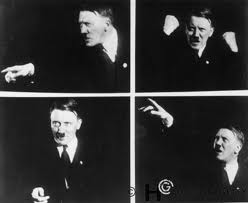
My use of Hitler is as an example of the benefit of practising your speaking skills. I use the famous pictures (above) of the Fuhrer adopting various dramatic poses in a specially-commissioned set of images that he used to perfect his technique. The message is that practice makes perfect.
Fortunately, I’m not at the mercy of a pack of baying, rent-a-quote Labour MPs ready to jump on me with accusations that I’m an example of Nigel Farage’s failure to “clean up” his party. But I did once get into trouble for my use of Hitler’s dedication to his craft at the hands of a client who seemed to believe that even speaking of the evil tyrant might turn her impressionable young students into Nazis. Why did you have to use him as your example, she asked? Because he’s the best example, I replied. Why didn’t you use George VI in The King’s Speech? Because I used him as an example of how people can overcome crippling impediments to become effective speakers, I said.
Like Etheridge, I also use Churchill and Martin Luther King. In my seminars they are joined by Bill Clinton, Barack Obama, Adele, Peter Kay, Abraham Lincoln, Steve Jobs and Benjamin Franklin – all to illustrate different aspects of the art of keeping an audience awake.
My relationship with that particular client was never the same again, but I have no regrets about using Hitler as an exemplar, and will continue to do so, just as I use Genghis Khan to illustrate a particularly brutal negotiation technique now employed by The Islamic State to great effect in Iraq.
The person concerned was an educationalist who should have known better than to suggest that you can’t learn from bad people. Of course you can. Should you is a more relevant question. After World War 2, the United States had no compunction in using Werhner Von Braun’s expertise in rocketry to design the systems that took it to the moon. Was Von Braun a bad man? That’s not for me to judge, but the records show that he was a Nazi party member and an honorary major in Himmler’s SS.
Knowledge in itself is neutral – it’s neither good nor bad, regardless of the morality of those from whom it is obtained. There are of course ethical dilemmas over whether it’s permissible to use knowledge that has an evil provenance. Should you, for example, use the results of Dr Josef Mengele’s cruel and lethal experiments on Auschwitz prisoners if the data he obtained fills a gap in scientific knowledge and thereby benefits mankind?
But the fact is that we learn from bad guys all the time – from the mistakes they make as well as from their achievements. So I really don’t know who is more stupid – Bill Etheridge for his maladroit insensitivity to the use his party’s political enemies might make of his history lesson, or Mike Gapes, the rent-a-quote Labour MP who said of Nigel Farage: “‘One of his MEPs training young candidates to speak like Hitler? Simply unbelievable.’”
If what Gapes said was accurately reported – a big proviso given the source of the quote – then he’s as guilty of distortion as Etheridge is of naivete. A plague on both their houses, say I.
In my humble opinion you learn as much from bad people and evil acts as you do from those who are popularly regarded as the good guys. What’s more, one man’s villain is another man’s hero, so if you start being selective about whom you learn from you end up in a whole lot of trouble. Do you admire Hitler because he was the builder of motorways and lover of dogs and small children, or Churchill because he was a bullying, alcoholic, war-mongering racist who thought that the sun should never set on the British Raj and sent thousands to their deaths in Gallipoli?
The moral of the story is that enlightenment is to be found in unlikely places, whether we like those places or not. What we do with our enlightenment is another matter altogether.
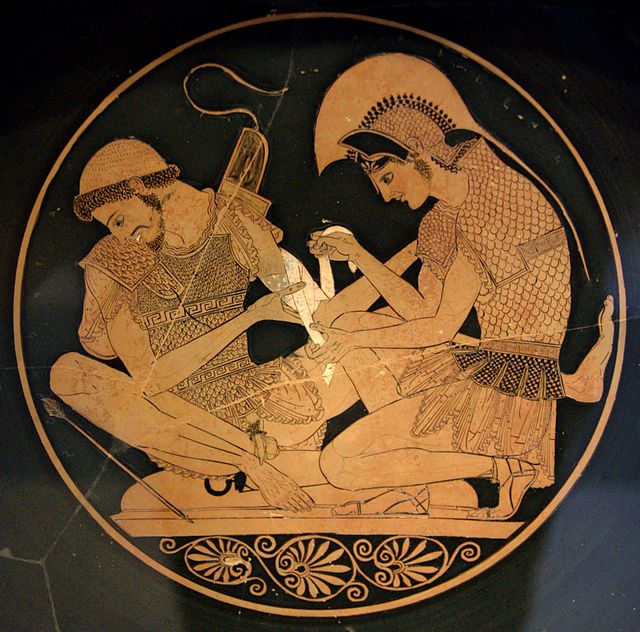
Achilles Tending the Wounded Patroclus
Back in the mists of time, when I was eleven years old and a geeky boarder at what is known in England as a prep school, I spent three consecutive nights sitting in the lavatory reading the Odyssey and the Iliad from start to finish. No torch under the blanket would last long enough, so I would creep out after the dormitory lights went off and install myself in the only place that offered a night-long source of light. I had just started learning Ancient Greek, and my nocturnal sessions with Homer marked the beginning of a lifetime’s love affair with all things classical.
Since then, when boring necessities such as earning a living haven’t got in the way, I have looked for connections with the ancient world in every place I have visited, in architecture, books, languages, cultures and people I encounter along the way.
A couple of weeks ago I was in Copenhagen – not a city you would immediately associate with Ancient Greece. Because we were only in the city for a few hours, my wife and I decided to go separate ways. I headed for the National Museum, and she happened upon the Carlsberg Glyptotek, of which more later.
The National Museum is small and understated, very much in keeping with the Danish character. I had wanted to see some Viking exhibits, and I was not disappointed. Nothing lavish, but plenty of interesting artefacts and good explanations in Danish and English. The galleries were laid out in chronological order, so to reach the Vikings you passed through the Stone Age and the Bronze Age. The Bronze Age exhibits included axes, swords, spears and armour that looked very like weapons you can see in their Italian, Greek or Turkish counterparts, and of course in the British museum, whose collectors have drawn from every part of the world in which we British have had a commercial or imperial interest.
Unsurprisingly, since Denmark is not so far from the limits of the old Roman Empire, there is a section on the influence of Ancient Rome in Scandinavia. It includes large hordes of coins accumulated by the Vikings. Not just Roman coins but some from the Byzantine Empire, a reminder that the Vikings made it all the way to Constantinople, and thousands of them served as personal bodyguards to the emperors – the Varangian Guard. Which dispels the idea that the ancient Scandinavians lived in some kind of frozen Nordic isolation.
As I was wandering round the modern section of the museum, which consists of a number of tableaux of life between 1600 and 2000 – notable for an oil painting of a Danish man in full SS uniform, (hard to imagine any country formerly under the Nazi yoke candid enough to show one of its own in the uniform of the oppressor) – I received a text from my wife summoning me to the Glyptotek. You must come, she said, lots of Greek and Roman stuff here.
And indeed there was. Probably the largest collection of Greek and Roman sculptures in Northern Europe, courtesy of Carl Jacobsen, the son of the founder of Carlsberg. In the nineteenth century Jacobsen used some of the profits from his beer empire to fund excavations throughout Southern Europe – often in return for a piece of the action. Which is why so many magnificent sculptures, sarcophagi and other artefacts found their way to the handsome building built next door to the Tivoli Gardens to house his collection. The Glyptotek is a light, airy and elegant monument to the ancient world. The sculptures are of a quality that rival those in the British museum.
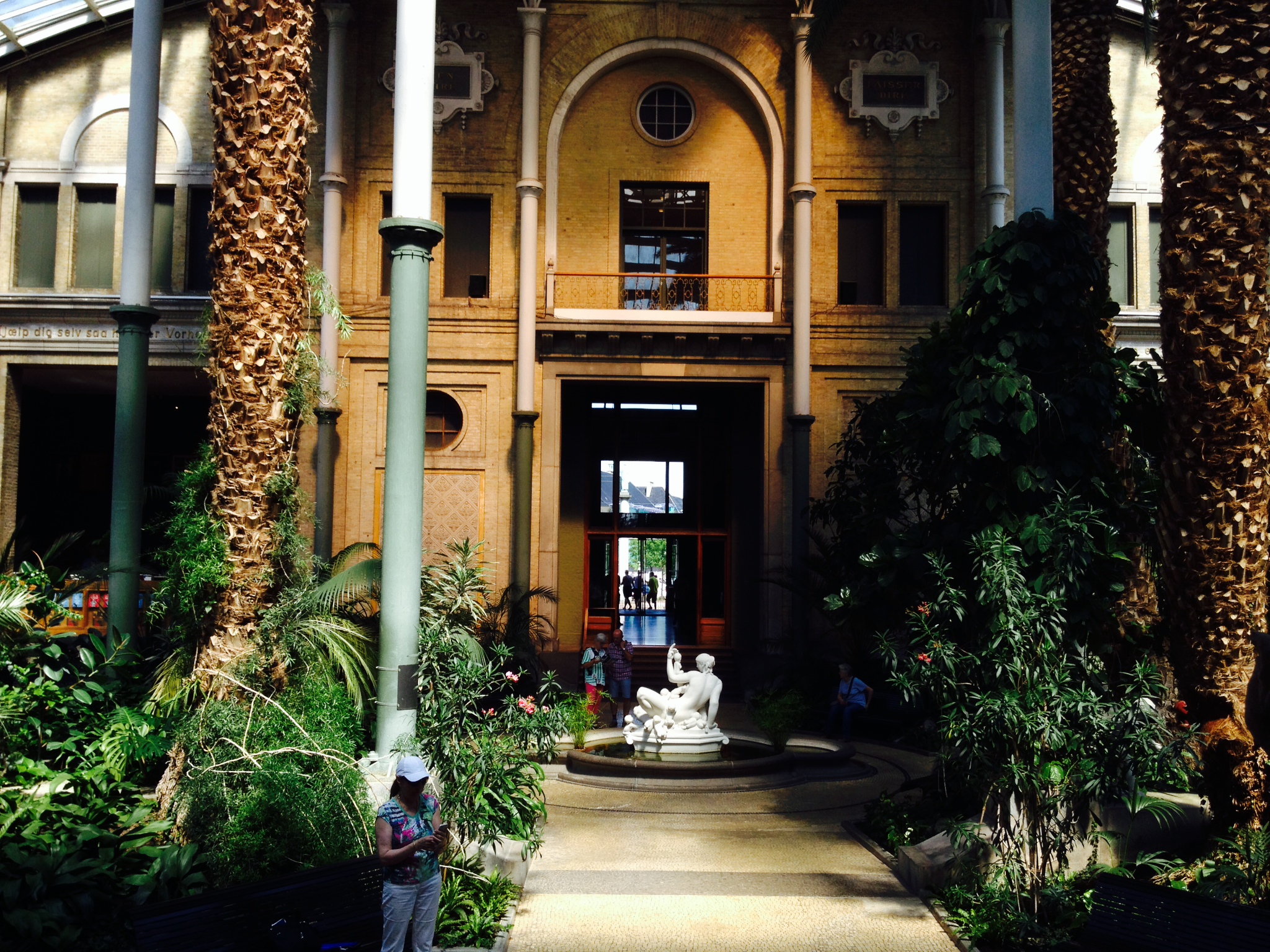
Carlsberg Glyptotek Winter Garden, Copenhagen
A museum that floats on a sea of beer, as one of the attendants commented. An interesting reflection on a country whose people first made their mark on Britain through our encounters with the rapacious Vikings. Now we buy their bacon, butter and beer.
My boyhood knowledge of the Vikings was limited to the historical narrative of the time. A restless, sea-faring people who came to my country to rape, pillage and plunder and ultimately colonise. The Viking heroes were fearsome figures such as Harald Bluetooth and Erik the Red. Our heroes were Anglo-Saxons, who sought to defend their prosperous and settled way of life from the marauding raiders. Most notable of these was Alfred the Great, king of Wessex, who defeated the Vikings and laid the foundations for the first political unification of England since the Roman occupation. The abiding impression left by our history books was that was savagery was confronting civilisation.
We know differently today, and the Viking culture was recently laid out for all to see in a magnificent exhibition at the British Museum. But the narrative of heroes, of attackers and defenders has an echo much in much earlier history.
Which brings us back, in my usual roundabout fashion, to Homer. Who was he? Did he actually exist? If he did, when were his words written down? Who were the heroes he wrote about? Where did they come from? And when did the events described in his epics take place?
Nobody has yet come up with definitive answers to these questions, but Adam Nicolson, in his new book, The Mighty Dead – Why Homer Matters, adds his thoughts opinions to those of countless scholars, philosophers, poets and archaeologists who searched for him, starting with the ancient Greeks of the classical era, for whom he was no less an inspirational link to their recent past than Shakespeare is to ours.
Nicolson sees Homer as a window into the earliest origins of European culture. A culture that sprung up not in the fertile plains of Mesopotamia, the forests of Northern Europe or the lands flooded annually by the Nile, but in the steppes of Asia – the huge belt of grassland that stretches from Hungary to Mongolia.
The Homeric heroes besieging Troy – fractious, stubbornly independent, clear-eyed, glory-seeking killers – were representatives of a people in transition. Descendants of nomadic Asian tribes who had migrated south to Greece and Asia Minor, but, as Nicolson sees it, had not yet settled into the Mycenaean palace culture whose major population centres were excavated by the German archaeologist Heinrich Schliemann and his colleagues in the 19th Century. The people of Troy, a settlement that dominated the trade routes at the entrance to the Black Sea, were from similar origins, but had created a city far more enduring than the homelands of the restless Greek arrivistes.
Nicolson opens the book by discussing the long tradition of Homeric appreciation: from Socrates and the Alexandrian librarians to Alexander Pope and John Keats. The Iliad and the Odyssey have been translated many times. Theories as to the identity and location of the bard have ranged from the scientific to the bizarre. Was Homer a person, or the culmination of an oral tradition – the work of many? Were the stories enhanced. embellished and varied with each telling, in the manner of the Bosnian storytellers whom the Homeric scholar Milman Parry encountered in the 1930s? Or were they word-perfect recitations handed down over generations, like those of Duncan Macdonald, the great storyteller from the Scottish Hebrides, whose rendition of a famous Gaelic tale was recorded five times over fourteen years and found to be almost identical each time?
Or were the stories improvisations, dreamed up on the spur of the moment? One of Parry’s assistants, James Notopoulos, met storytellers from Crete, including one who could produce epics on demand. He proceeded to invent the Kriepiad: a wildly inaccurate account of the kidnapping of Heinrich Kriepe, the German general kidnapped in World War 2 by British special forces led by Patrick Leigh Fermor, one of my favourite travel writers.
Then there’s the language. According to Nicolson, there are over 200 untranslatable words that appear nowhere else in Greek literature. Where do they come from? Minoan Crete perhaps. He talks about echoes of the early Greeks in Hittite and Egyptian manuscripts. Homer’s language betrays the origins of his protagonists. The sea as threatening and alien. The grasslands as familiar and comforting.
The discovery of hinges for writing tablets in a bronze age ship has echoes in the Iliad. The heroes he described are illiterate, but the written word does exist, even if for them it has an unknowable, magical property. Nicolson’s, book shows that archaeology is not merely a matter of digging holes in the ground and finding jewellery, skeletons and foundations of palaces. Even when what is being explored pre-dates the written word, literal and oral tradition is an essential companion, reference point and signpost that can clarify and explain the physical evidence.
There’s an interesting chapter on Bronze Age metals. As I discovered in Copenhagen, subject to regional variations and subcultures, “a single world of Bronze Age chieftainship stretched across the whole of northern Eurasia from the Atlantic to the Asian steppe”. Just as most of the languages in Europe evolved from a single proto-language – Indo-European – that emerged somewhere in the steppes.
The excavations of Schliemann and others show us an era when grooming and physical beauty were at a premium among high status Bronze Age warriors – again as reflected in Homer’s epics. This is a tradition that continues to this day. Think of the Taliban with their eye shadow, and preening fighters of just about every nation with their immaculate uniforms and glistening medals.
Nicolson takes us to Hades, the scene of Odysseus’s pathos-laden encounters with the shade of his mother, and that of the great warrior Achilles, doomed forever to regret his passing from the light. Homer’s underworld is a grey, gloomy place, there the ghosts are unable to talk unless fed the fruits of the earth above. Its denizens are sad and diminished, whose shadowy existence contrasts strongly with the bliss and the agony of monotheistic heaven and hell.
Homer’s gods are petulant, capricious superhumans, reflecting the whims of nature as well as the unpredictability of their human counterparts. Small wonder that a wise, all-seeing deity became an irresistible lure to adherents of the monotheistic faiths. To conquer the world in the name of an almighty is very different from a revenge mission in the name of honour. Yet Homeric concepts of honour remain in our world, both in the uncompromising savagery of honour killings and in the pious justifications of war.
Nicolson is known for his elegant descriptions of landscapes. One dimension of The Mighty Dead is of travelogue, in which the author gives beautiful and sometimes moving accounts of his journeys while researching the book: Chios, where Homer is supposed to have lived; Huelva, in Spain, whose poisoned river the author believes could be the site of Odysseus’s Hades; Ischia, where the first written reference to a Homeric character was discovered on a drinking vase.
By accident rather than design,the book provides unexpected connections not only with recent travels but with other stuff I have been reading. The description of Goliath as the archetypal, though hapless, Homeric warrior, chimes with Malcolm Gladwell’s David and Goliath, in which Gladwell discusses the asymmetric clash between the protagonists as a metaphor for solving problems despite adversity. And the capture of the German general in Crete forms a prominent part of An Adventure, Leigh Fermor’s biography by Artemis Cooper.
Homer doesn’t moralise or preach. He doesn’t judge his characters. His heroes are not role models. They are what they are. In a sense, he tells his story from the inside out, through the mindsets of the protagonists, and yet manages to survey the human landscape with compassion and wisdom. Or, as Nicolson puts it:
“Homer – allied to his neighbour and contemporary, Isaiah, another great speaker of wisdom, whose dates and identity also stretch across many generations from at least 1600 to 600 BC, is the archetype from which every great seer is descended: he is Lear on the heath, Rousseau in a reverie on his island in the Lac de Bienne, the Ancient Mariner who waylays the wedding guest at the bridegroom’s door, but who will not ever enter that feast. Homer exists in his other world, almost unknowably separate from us in time and space, a realm whose distance allows us ideas of transcendence to develop around him. His distance from us is itself an imaginative space which his own greatness expands to fill.
This is no modern effect: it was the effect Homer had on the ancient Greeks, as a voice from the distant past, even a voice from the silence, the voice of greatness untrammelled by any connection with our present mundanities. Homer doesn’t describe the world of heroes: he is the world of heroes. As his epitaph said, he made their kosmos, a word which in Greek can mean order, world, beauty and honour. It is used in the Iliad when the commanders set their men in order for battle. It is used to describe the order in which a poet sets the elements of his tale. Those qualities are all different dimensions of one thing. Everything one might associate with the heroic – nobleness, directness, vitality, scale, unflinching regard for truth, courage, adventurousness, coherence, truth – is an aspect of the cosmic and all of it is what ‘Homer’ means.”
Adam Nicolson has brought Homer back to me. In a sense, the bard never left, but remained buried in the bedrock of my life experience – an unconscious influence and perennial reference point. But thanks to The Mighty Dead, he has returned with a vengeance to the forefront of my conscious.
His echoes are everywhere. I read the tweets from Syria by a young British jihadi glorying in the decapitation of their opponents, as reported by the UK Times:
In one post on July 8, he wrote: “Probably saw the longest decapitation ever. And we made sure the knife was sharp. Brother who was next decided to use the glock lol.”
He also posted pictures apparently showing executed prisoners from the rival Jabhat al-Nusra group.
“JN guys we caught & executed. This is how they looked less than an hr l8er,” he wrote alongside a picture of at least two bodies.
He later added that he was there when the men were killed, but suggested that he may not himself have carried out the execution.
Another post in early July said: “executed many prisoners today”, with another fighter said to be originally from Portsmouth replying: “Epic executions bro, we need to step it up like the brothers in Iraq.”
Then I think of Patroclus on his death or glory rampage through the Trojan ranks outside the city walls, mocking the corpse of one of his victims as it leaps out from under the wheels of his chariot:
Hah! Look at you! Agile! How athletic is that, as if you were diving into the sea. You could satisfy an army if you were diving for oysters, plunging even into the rough seas as nimbly as that.
And what relative of the dead in Gaza would not recognise the scene after Achilles’s revenge for the death of his fallen companion:
Now the sun of a new day struck on the ploughlands rising
Out of the quiet water and deep stream of the ocean
To climb the sky. The Trojans assembled together. They found
It hard to recognise each individual dead man;
But with water they washed away the blood that was on them
And as they wept warm tears they lifted them on to the wagons.
If Homer was looking on from Hades, he would recognise with a wry smile the blood feud in The Godfather, as Michael Corleone, as a cold-eyed Achilles, puts bullets between the eyes of his brother’s killers. He would see Penelope, Odysseus’s queen, in the faces of long-suffering wives waiting for their men to come home from war. And he would shake his head in sad recognition at the unending conflict between Israel and the Palestinians.
And above all, on this hundredth anniversary of the outbreak of the First World War he would understand the sentiments of those who stood up at ceremonies to honour the fallen – mighty or otherwise – just as he would see nothing unfamiliar about their squalid and untimely deaths.
The Mighty Dead is not a dry, scholarly tome. It’s a vivid, personal and beautifully-written meditation on the deep insight Homer offers us into the origins of European culture and the imperfect nature of humanity.

Kristallnacht
Last week’s UK Sunday Times ran a story about anti-Semitism by Stephen Pollard, the editor of the Jewish Chronicle.
“Natan Sharansky, the former Soviet dissident, is not prone to rash statements. He weighs up every word when he speaks, and kept himself sane during years of solitary confinement in Siberia by playing mental chess.
But in last week’s Jewish Chronicle, Sharansky — who runs the Jewish Agency, the main body responsible for the immigration of Jews to Israel — issued the most blunt warning about the future of Jews in Europe that I have seen.
According to Sharansky: “We are seeing the beginning of the end of Jewish history in Europe.” There is, he says, an “intellectual atmosphere which asks Jews to choose between their loyalty to Israel and their loyalty to Europe”.
The Europe he describes is not that of the Enlightenment or even of the noble post-war project to bring peace to a continent ravaged by conflict. It is a Europe that “is abandoning its basic values”, such as freedom and tolerance. And it is capitulating before those who place hatred and extremism above all else.”
Pollard goes on to describe attacks on Jews across Europe, particularly in France and Germany. He points out that many of the attackers are using Israel’s action in Gaza as the pretext for their verbal and physical assaults. The perpetrators, he says are not just the usual mish-mash of right-wing extremists, but an increasing number of radicalised Muslims. He questions why protesters target Israel, when there are more lethal conflicts elsewhere that do not receive the same attention. How many Palestinians have been killed in Syria, he asks? More than at Israel’s hand in Gaza, as it turns out. He also wonders why there have not been demonstrations about the abduction of 200 children by the Nigerian Islamist group Boko Haram, and about the vicious slaughter of Iraqis by ISIS, or the Islamic State as it prefers to be known. Why then, if not for anti-Semitic motives, do people take to the streets to protest about Israel’s actions in Gaza?
I should have thought that the answer was pretty obvious. In the case of Boko Haram and ISIS, who is there to demonstrate against? Israel is a well-armed, potent state. The Gaza action is within Israel’s power to stop whenever it wants to. Nigeria, on the other hand is a shambolic, corrupt confederation of ethnic groups and faiths. It did not will Boko Haram on its people, and its ability to deal with this vicious group is limited, not just because of resources but because of a lack of a concerted national will and a concern that military action will result in the deaths of the children.
ISIS is an equally vicious, but a far more successful gang of opportunist religious fascists – a self-declared state with no embassies, no institutions and a currency of fear with which to cow its new-found subjects. What embodiment of ISIS is there to act as a focal point for protests against them?
Now I take issue with Sharansky’s assertion that Europe is abandoning its basic values of freedom and tolerance, because much of Europe never held those values particularly dear. Certainly not Russia, where he was born, and vast swathes of eastern Europe from the Baltic to the Balkans have a patchy record of respect for freedom of speech and ethnic diversity. I would argue that since the end of the Cold War there are more parts of the continent where those values hold sway than ever before, which is why comparisons with the pogroms of the past two centuries and the organised assault on German Jewry on Kristallnacht are somewhat overstated.
As for dual loyalty, being beholden to more than one entity has long been a fact of European political and social life. Germans before World War One could be loyal Bavarians as well as subjects of the Emperor, just as in Austria it was possible to be a patriotic Hungarian yet still be prepared to die for Franz Josef. Moreover, for many hundreds of years, the Papacy was far more than a powerless stakeholder in the lives of those who were the temporal subjects of kings and emperors. Those who feel loyalty to the state of Israel as well as their home countries are not outliers, and such divided loyalty is a rarely a problem unless the interests of one entity conflict with those of the other. There are many people both within and outside the US, for example, who feel that the Jewish lobby exerts a disproportionate influence on US foreign policy, and that without that influence, US politicians would have been more likely to have put stronger pressure on Israel to come to terms with Palestine.
Where anti-Semitism comes into play in the issue of divided loyalty is when a citizen is asked to chose between being a Jew, with all that culturally Jewishness entails, and being French, or German. These kind of pressures existed long before the the state of Israel, particularly in Germany, where Jewish musicians such as Gustav Mahler converted to Christianity in order to advance their careers.
Pollard is right to raise the alarm against European anti-Semitism, but wrong to compare it with conditions in play in 1938. Much of the anti-Semitism he describes is by groups that would themselves claim to be discriminated against – such as under-privileged Muslim minorities and others who have missed out on economic prosperity. For all the electoral gains made by the far right parties in France, Hungary and other European States, no member of the EU is likely to elect a government that advocates and subsequently practices institutional anti-Semitism on any serious level, let alone on a scale comparable with what the Nazis did. And if it did so, it would be unlikely to remain in the EU for long. It would also be subjected to international opprobrium and punitive measures far more severe than those being introduced against Russia.
Israel, whose unending conflict with the Palestinians appears to be at the bottom of the current upsurge of anti-Semitism, fights its battles with every weapon at its disposal, including the underlying threat of its ultimate nuclear deterrent. Its use of hasbara, Hebrew for “explanation”, is one of those weapons. Every embassy has a representative whose job is to put forward Israel’s point of view in the media. The state deploys armies of volunteers to scour the web for opportunities to rebut material critical of Israel and its policies. Journalist Brian Whitaker has posted two interesting articles about hasbara on his website Al-Bab here and here.
It seems that in addition to having created a fearsome citizen army ready to respond to military threats at a moment’s notice, Israel is systematically equipping its citizens with the rebuttal narratives. This is a concern, because consistent arguments can easily turn into ideology, and those who question the top-down narratives become liable to accusations of being unpatriotic. And rigidly enforced orthodoxy can the the first step towards totalitarianism. The other night I watched a BBC current affairs program hosted by Rageh Omaar, in which a young Israeli pilot talked about his role in the selection of targets in Gaza. His answers to questions about the moral dimension of his work used the same diversionary techniques employed by professional Israeli spokesmen. It was pretty obvious that he had received media training – otherwise it would have been unlikely that he would have ended up on screen.
Stephen Pollard, as a prominent British Jew, would probably be insulted at the suggestion that he is an instrument of Israeli hasbara. Yet the recent torrent of reports about anti-Semitic activity across Europe surely serves the purpose of diverting attention from Israel’s activities in Gaza towards what is being portrayed as a widespread wave of anti-Semitism. He rightly points out that there is still a latent seam of anti-Semitism on the continent, particularly in France. And Gaza has provided the pretext for latent becoming blatant. But vicious as they are, individual and collective acts of violence against French Jews are not state-sponsored as they were in Germany in 1938.
Unfortunately, as Whitaker points out, hasbara is starting to wear thin, as more people start to see through the stonewalling techniques it employs. This is particularly noticeable in the social media. Whether the result of individual sentiment or organised counter-hasbara initiatives, Facebook, for example, is rife with anti-Israel posts. A video of Jon Snow of the UK’s Channel 4 News interviewing an Israeli spokesman and struggling to break through Mark Regev’s formulaic defence tactics recently went viral. Suggestions that Snow “destroyed” Regev’s arguments are a bit wide of the mark, but it was certainly a good example of the line that all official Israeli commentators take with the media. A video by an emotional Snow shot after his return from Gaza, not broadcast on the terrestrial news show but on the station’s YouTube channel because of fears that it breaches the TV regulators stipulations on impartiality, has notched up over a million views in five days.
To paraphrase one commentator, Israel is winning its war on Gaza, but is in the process destroying what remains of its reputation as a bastion of personal freedom and democratic values in a region dominated by autocrats. Sadly, the reputational blow-back is indeed sparking the attacks by bigots who are only too happy to blame innocent Jews for the actions of the Jewish state with which they have no ties and for whose policies many have no sympathy.
I repeat, we are not looking at 1938 all over again. But ahead of us is a new, equally worrying threat, in which the Palestinian cause becomes inseparable from the most extreme forms of political Islam, and fuels ever more virulent incarnations of ISIS-type insurgencies. With the ever-present possibility of nuclear proliferation in the Middle East (if Iran get the bomb, Saudi Arabia has to have it, and then the Emirates and so on), we may be approaching a point at which Israel’s much-vaunted Iron Dome missile defence system becomes no more effective than a greenhouse in protecting its population from weapons that may become available to a future rogue theocracy. At that point attacks on European Jews will become a sideshow.
Because I frequently write on these subjects, people sometimes ask me how I think the conflict will end as if I was some kind of authority. I’m not. I shrug my shoulders, because I honestly don’t know. But deep down I sense that it will not end until some catastrophe occurs that wipes out the memory of participants in the last seventy years of conflict in the region. And that will only happen if the participants themselves are wiped out.
Let’s hope I’m wrong, and that there are enough sane people to call a halt to this cyclical madness before insatiable bloodlust produces the biggest fire-break of all time.
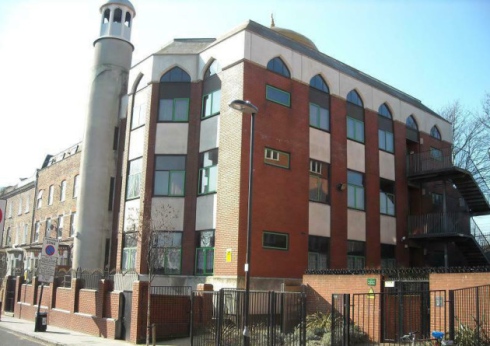
Finsbury Park Mosque
My old friends at HSBC have put their foot in it again with their decision to withdraw banking services to a number of individuals and organisations. The bank explained its intention to its account holders in typically weasel terms. Apparently it considers the business with the affected parties to be “outside of our risk appetite”. That all those affected happen to be Muslim is surely a coincidence. Well it must be, because HSBC says so:
“Discrimination against customers on grounds of race or religion is immoral, unacceptable and illegal, and HSBC has comprehensive rules and policies in place to ensure race or religion are never factors in banking decisions.”
So perhaps it’s afraid that the account holders might be tempted to indulge in a spot of money-laundering. This is a sensitive area for the bank, since in 2012 it was stung for $1.9 billion in fines for allowing its Mexican subsidiary to be used by drug cartels for their nefarious activities.
Which leads one to wonder what HSBC know about their account holders beyond money in and money out, and what raised the red flag. Are we talking about funds transfers to Aleppo, Mosul or Gaza? And does the bank employ investigators to look at potentially dodgy customers? Or does it get tip-offs from shadowy representatives of the security services in the countries in which it operates?
The rejected customers all claim to be bemused by HSBC’s action. Several of them are charities, none of which are under investigation by the Charities Commission. Individuals include the teenage children of people running the charities.
One wonders who else might be beyond its risk appetite. If religion doesn’t come into the equation, then is the bank planning to target other charities that organise relief efforts in the world’s trouble spots or for the needy at home? Oxfam, perhaps, or those fanatics at Christian Aid. How about the uniformed, carol-singing crusader shock troops that the Salvation Army puts on the streets? And will its diminished appetite cause it to re-brand itself as The World’s Local (Apart From Gaza, West Bank, Syria, Iraq, Medellin and Acapulco) Bank?
Another aspect of the decision is the cack-handed way it chose to communicate with its customers. In this supposedly warm and cuddly world of customer intimacy, HSBC chose the most impersonal method of delivering the news: by letter.
This comes as no surprise to me. A couple of years ago my company in Bahrain received a similar letter, but without even an explanation as vague as in this case. After much nagging on my part, I managed to get the reason out of the bank: that all corporate account holders with an annual turnover less than $30 million were being culled. This was the cumulation of what appeared to be a “death by a thousand cuts” campaign to persuade us to move elsewhere: grossly inflated charges, no more cheque books, no more designated account manager. More on our wonderful experience – which persuaded me never to touch HSBC again with anything other than a well-charged cattle prod – in The Terminator Bank – A Tale of Modern Finance.
HSBC, of course, is a private company. It can do business with, and withdraw it from, whoever it wants to. But it should be aware that by targeting individuals and organisations without a convincing reason it is effectively stigmatising them. In this instance it is telling the affected customers: “you are too risky for us”. Implication: “we don’t trust you.” Will it be easy for the Finsbury Park Mosque, the Cordoba Foundation and the Ummah Welfare Trust – three of the organisations that received the bank’s billets doux – to make alternative arrangements? I doubt it, at least not with the other UK clearing banks.
Perhaps the risk HSBC has in mind has nothing to do with money laundering. But as far as I’m aware, none of the targeted customers are in debt to it or are failing to comply with any of its conditions, so the only risk I can think of is reputational damage. After all, nobody – whether it was HSBC or anyone else – is likely to want to be known as Abu Hamza’s former banker, even if the aforementioned “sheikh” is rotting away in an American jail and the Finsbury Park Mosque purged itself of his malign influence years ago. Yet the bank’s action will almost certainly have caused reputational damage to its customers.
The company, as a clearing bank, occupies a privileged position in the UK financial industry. Its activities and failures – as we saw with other clearing banks in 2008 – have wide ramifications both on the British economy and society as a whole. In return for that privilege it should operate at high standards that reflect its responsibilities. And that should include fairness, transparency and lack of discrimination in its dealings with its customers.
No doubt HSBC has done its homework and believes itself to be fireproof in this case. But in its lack of transparency and its impersonal communications style it comes over as cold and arrogant. Hardly a great advertisement for The World’s Local Bank.
There are times when I wish that my graphical talents extended beyond crude PowerPoint diagrams and stick people.
Like so many repelled by acts of inhumanity on both sides of the Israel-Palestine conflict, I’ve been reading column acres about the Gaza stand-off over the past two weeks. Much of it is in the form of propaganda, received wisdom and formulaic condemnations. For me, the most futile debate is about who is entitled to the land. Not futile because the suffering of those dispossessed and oppressed over the past 100 years is irrelevant – of course it’s not. But it’s when territorial claims are represented as God-given, or even backed up by treaty or ancient right that I get exasperated.
Perhaps it’s all very simple. The most recent land-grab becomes a legitimate right after a few decades. And the most recent act of aggression condemns the aggressor until the other side trumps it with something worse, after which the original aggressor becomes the oppressed. And so it goes over centuries and ultimately millennia.
Now if I had the graphical skills I crave, this is what I would do.
I would take a region that has been in conflict for as long as anyone can remember- Israel/Palestine in this case – and create an animated timeline overlaid on a map of the area. I would track ethnic migrations, conquests, disaporas, and population breakdowns and numerical estimates for as long as we have historical and archaeological records to back them up. You would see arrows for incoming Cretans, Samaritans, Jews, Arabs, Hittites, Babylonians, Greeks, Romans, Arabs, Byzantines, Franks and every other group that migrated to, colonised and occupied the land for any length of time. Then there would be other arrows to indicate emigration – Jews to Babylon, to Andalusia, Western Europe, Eastern Europe, Africa and India for example. You would also be able to select a second view by religious faith. Again population numbers, but this time divided out between Christian sects, Muslim sects and the various branches of Judaism.
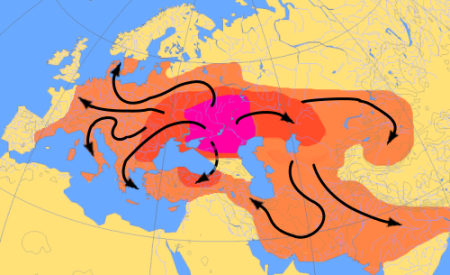
The kind of map you can see above is the classic way of showing immigration and movements of people. Its static, has no jump-off points and lacks the critical elements of time and numbers.
If you were able to track the comings and goings over all of recorded history of so many peoples, faiths and civilisations in an easily-grasped animated graphic, perhaps all but the most narrow-minded fanatics would be persuaded of how pointless it is to use history – or divine right for that matter – to justify the rights and wrongs of the present.
You could use the same technique in just about every region of the world. Ukraine for example, whose history in terms of conquest, forced migrations and ethnic cleansing is far more complex than most casual observers will realise. France – a battle-ground since the days when it was occupied by ever-shifting Gallic tribes. Britain – a melange of Celts, Gauls, Romans, Saxons, Vikings, Normans and now immigrants from Africa, the Asian subcontinent, the Caribbean and all parts of continental Europe. America, from the arrival of the Paleoindians from across the Bering Straights to the multi-ethnic mix resulting from four centuries of European immigration.
When looked at against a moving tableau of time, what appears to a contemporary witness to be a rock of ages turns out to be nothing but a pebble on a sea-swept beach. Which goes to show that history explains, and sometimes predicts, but should never be used to justify.
Sadly, relatively few people have the time, the inclination or the interest to read history in any depth. These days most of us rely on what we read on the web or watch on TV. And the more simplistic, the more we prefer it. Which is why we’re so susceptible to those peddling religious and political agendas – simplicity is easy, but complexity is difficult. It muddies the waters. Yet we pay our taxes and vote for politicians who best explain themselves in words of one syllable, and then proceed to spend our money without feeling the need to justify themselves, 0r, if called upon to do so, respond again in simple terms that mask the real underlying complexity.
What we now need is a way of conveying complexity to a generation addicted to the easily digestible overview. So here’s a project for a budding historian, and perhaps a digital media artist as well: create an animated template into which historians can populate data and trends over sustained periods in a clear and compelling way. Or maybe a group collaboration involving historians, archaeologists and graphic designers. It’s certainly something to which I’d be happy to contribute.
If anyone is aware of such a project that’s currently underway, I’d be very interested to hear from them.
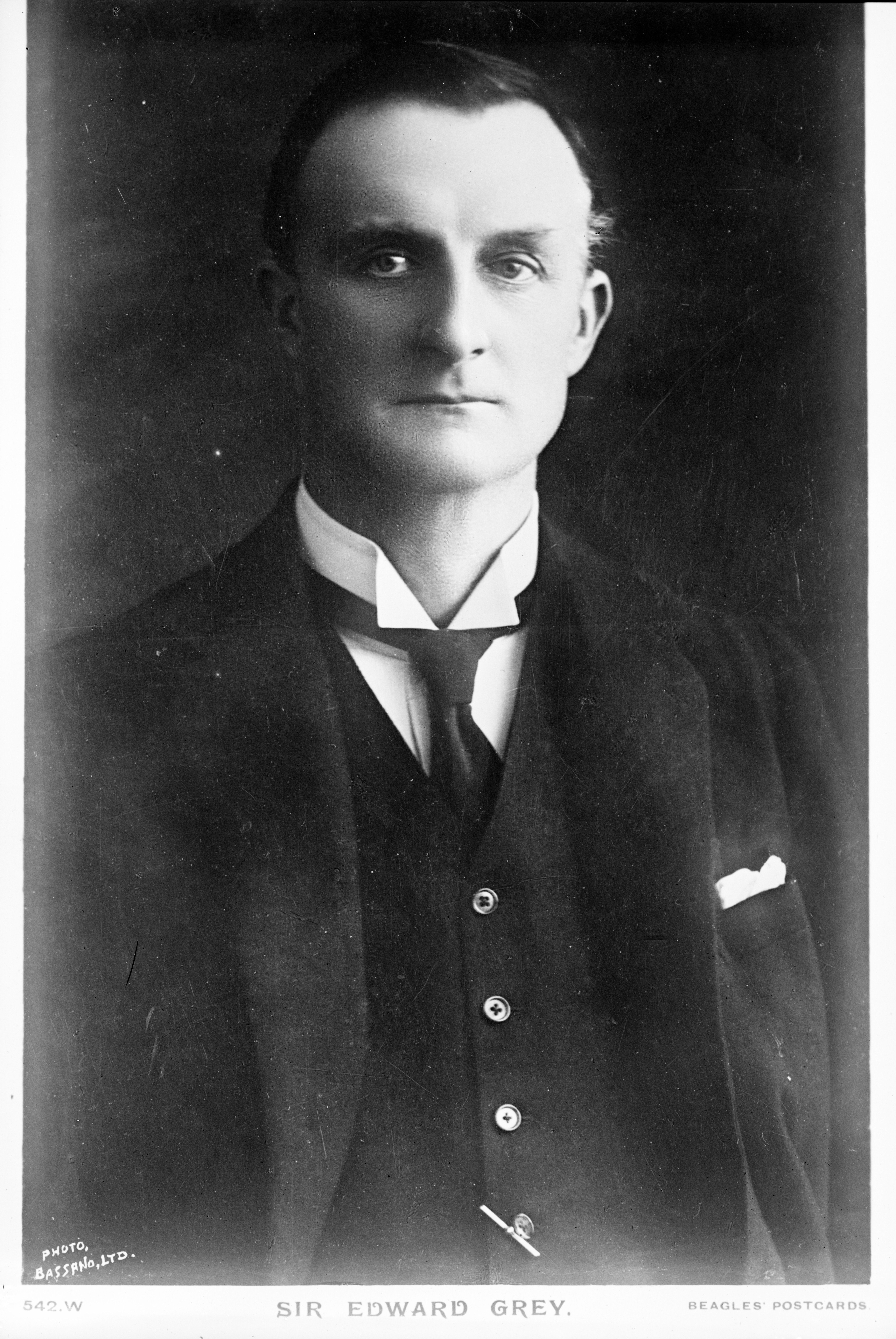
Sir Edward Grey 1914
As the anniversaries of key events leading to the outbreak of the First World War start to fall almost on a daily basis, I like to imagine the scene in the institution that was at the heart of the crisis: Britain’s Foreign Office. Smartly-dressed clerks scuttling around the building carrying telegrams from the ministries of other protagonists; reports from the Britain’s far-flung embassies describing meetings, opinions and hunches; morning-suited mandarins and ministers drifting in and out of their ornately furnished offices; foreign envoys waiting in anterooms waiting to meet the man at the apex of this venerable organisation: Sir Edward Grey, Britain’s Foreign Secretary.
Not a bad time, then, to read Sir Sherard Cowper-Coles’s latest book, Ever the Diplomat. In writing his memoirs, Cowper-Coles is following a long tradition on the part of retired diplomats. As he points out in the book, a diplomatic career doesn’t earn you a fortune, so I’m sure the royalties help. A couple of years ago I read his last effort, Cables from Kabul, in which he tellingly portrayed the consequences of of the muddled thinking behind the West’s intervention in Afghanistan after 9/11.
In Ever the Diplomat he covers his pre-Afghanistan career. I’m pretty sure that he wouldn’t have been desperately happy with the subtitle Confessions of a Foreign Office Mandarin, which sounds a bit like the latest in a series of sleazy tomes that started with Confessions of a Window Cleaner. As he himself notes in the introduction, there are limits imposed by obligations of confidentiality as to what he can say, so much of what he writes is in the form of personal reminiscence likely to offend nobody.
That said, it’s an interesting read. Cowper-Coles comes over rather like Forrest Gump with brains. At the heart of many significant events over the past twenty five years in which British diplomats played a part, was Sherard. The Lebanese civil war, Sadat’s assassination, Hong Kong at the handover, Paris when Diana died, Saudi Arabia during the Al-Qaeda attacks on Western expatriates and finally Afghanistan, where he ended his public career as the Foreign Secretary’s Special Representative.
In many respects I would have loved to have worked in the FCO. The life of a top career diplomat – hopping from one foreign post to another and enjoying the lavish (though now fast diminishing) facilities accorded by Her Majesty’s Government to its senior diplomats – would definitely have appealed, but I fear that I would have been too much of an outsider, both in attitude and background. The world Cowper-Coles moves is inhabited by insiders. Public school, Oxbridge, distinguished ancestors, connections everywhere made him eminently suitable material. Having said that, the days when the nice but dim second sons of the great and the good could forge themselves comfortable careers in the Diplomatic Service seem to be over. Nowadays connections are useless without intelligence, discretion and good judgement, all qualities which the author seems to have in abundance.
Exalted insider though he undoubtedly is, Cowper-Coles comes over as refreshingly unpompous, and not afraid to mock himself, even if he occasionally appears a tad self-satisfaction, which I supposed he’s entitled to be. He is an expert in damning with faint praise, but tends to be annoyingly effusive in his praise – though no doubt sincere – of various fellow mandarins and others he meets along the way.
He describes colleagues as having high intelligence, as incisive, kind and so forth. I keep hoping that he will condemn one or two people (apart from the usual suspects like Gaddafi) as total rats. But that’s not his style, even if it would probably sell more copies of his book.
I have passing familiarity with his world and the conventions within which he operated, so his stories of the internal workings of the FCO, its hierarchy and obsession with form, often over substance, ring true. But while he’s also under no illusions about Britain’s declining influence in the world, he tells a story of a government department that really does believe that it matters.
In recent years the Foreign Office in my experience has seemed much diminished. Yes, our embassies still harbour the usual cluster of acolytes – the political officers, the military attaches and the British Council staff, not to mention a few spooks – but the decline in our political clout has undoubtedly caused some painful adjustments in the role of the Diplomatic Service.
Our armed forces are reduced to a shadow of what they were even at the time of the last Gulf War. We have been so badly bruised by Iraq and Afghanistan that virtually no modern British politician has the courage even to contemplate armed intervention, let alone carry it off, beyond the use of air strikes and Special Forces.
So there is a gap between the ultimate deterrent – sledgehammers with a single purpose – sitting in our nuclear submarines, and the efforts of our diplomats. The great powers of today – the US, China, Russia and, to a lesser extent, Germany – have a far wider range of options sitting behind their diplomatic efforts. They can deliver as well as threaten. We have not been able to take significant unilateral action since the Falklands. So we are reduced to piggybacking on the agendas of allies better equipped and powerful than us.
What remains of our network of embassies and consulates these days appear to most casual external observers as a set of sales offices for Britain plc with a bit of customer support thrown in for citizens who get into trouble or need rescuing from situations not of their making.
Yet as Cowper-Coles points out, the curious reality is that many countries still seem to believe the myth of Britain punching above its weight, of having more influence or power than it actually has. Hence the disaffected – especially in the Arab world – tend to lump us with the US as the main cause of their troubles – the great manipulator and fomenter of unrest, the Little Satan.
Our involvement in recent wars certainly helps to cement that impression, but as Cowper-Coles noted in Cables from Kabul, beyond the unhappy participation of our armed forces, our influence has been limited. In post-Saddam Iraq, the blundering US grand vizier Paul Bremer proceeded to sow the seeds of the current ISIS land-grab by applying a disenfranchisement policy against Baathist structures, most notably the armed forces, based on the denazification of Germany after World War 2. In Afghanistan the US again called the shots in its clumsy attempts at nation-building. However much our politicians claim otherwise, there is probably more distrust and divergence of opinion between Britain and America over foreign policy than at any time since the Suez crisis in 1956, when Eisenhower effectively torpedoed our attempt to neutralise the growing power of Gamal Abdul Nasser.
The author is good on the often uneasy relationships between junior and senior officers of his department, and especially interesting when describing his years as Principal Private Secretary to Tony Blair’s first Foreign Minister, Robin Cook. Cook was a difficult man. Intelligent, principled but chaotic in his working habits. Not the kind of biddable insider that the mandarins prefer. By all accounts he so loathed the red dispatch boxes that were full of government papers he was expected to read and act upon, that Cowper-Coles often had to chase after him with documents requiring his signature like a mother trying to feed a reluctant toddler.
Intellectually vain, bad tempered and given to wearing inappropriate hats, Cook nonetheless won praise from his chief minder and occasional dog-walker for his achievements in the job, even though he was heartily disliked by the FCO hierarchy. Not content with “being Foreign Secretary”, by which Cowper-Coles means submitting to the time-honoured system created by generations of civil servants, Cook was more interested in doing, and won the author’s respect for what he achieved in East Timor, Kosovo, Sierra Leone and other troubled hotspots of the time.
It’s a fair bet that someone like Cook, with his quirky looks and personal idiosyncrasies, would be unlikely to make it to the top in today’s coalition government. His closest modern counterpart, Michael Gove, equally a man of principle and no more blessed in his looks, has just been kicked downstairs (or sideways, if you believe the Prime Minister) from his job as education secretary, allegedly at the behest of the Conservative Party’s abrasive election strategist Lynton Crosby, who argued that Gove’s “style” did not sit well with the electorate. I suspect that Cook’s removal was for similar reasons.
Which goes to show that an anodyne appearance, preferably with a full head of hair, combined with a biddable nature, can give a male politician a serious head start in British politics. Though when there’s an election coming up, he should look anxiously over his shoulders at female rivals equally capable of doing his job, provided that they don’t look like Russian shot-putters. Margaret Thatcher would not have approved.
A measure of the decline in the status of Cowper-Coles’s beloved Foreign Office since 1914 – when Prime Minister Herbert Asquith effectively delegated the conduct of negotiations with the other great powers in the run-up to war to Sir Edward Grey – is that in today’s crisis over Ukraine, Philip Hammond, the new Foreign Secretary, is a relatively anonymous figure who sits in the background while David Cameron does all the talking and, presumably, negotiating.
That said, those of us who have lived abroad for any length of time would miss the FCO if it wasn’t there, still flying the flag in locations popular and obscure. I have met many diplomats in my time, including a few ambassadors. Ours representatives are unfailingly polite, pleasant and, of course diplomatic. I would sooner be dealing with them in times of trouble than some of the diplomats of other nations I’ve encountered along the way.
Sherard Cowper-Coles, according to friends who knew him during his stint as ambassador to Saudi Arabia, was one of the best. He writes fluently and thoughtfully about his experiences. Ever the Diplomat is well worth reading if, like me, you have taken a keen interest in international politics through the times he describes. If I was starting out today, would I consider a career in Her Majesty’s Diplomatic Service after reading his book? Absolutely. Even working in a mouldering South American outpost surely beats a zero-hour contract in a call centre any day of the week. But don’t be dazzled by the glamour – that’s for the chosen few. And stay off Twitter.
We are entering what is known in Britain as the silly season. A period when Members of Parliament set off for their Tuscan villas, and journalists who still have jobs struggle to find anything interesting to write about. So they go for any human interest stories they can dredge up from the local newspapers or through browsing the internet. At this time of the year the national newspapers tend to resemble Facebook, but minus the inane comments.
Not this summer. We have MH17 being shot out of the skies of Ukraine, murderous rocket attacks from Gaza and the usual crushing response from the Israel Defence Force. Domestically we have an investigation into paedophile rings in the upper echelons of society, celebrities being targeted by the Inland Revenue over their involvement in torturous tax avoidance schemes, Islamist subversion of school governing boards. Oh, and equally significant, former Education Minister Michael Gove finding himself locked in a House of Commons toilet.
Running through the London Times today, I keep stopping and reflecting on the blindingly obvious. There’s no point in including links to the articles, because the newspaper charges for online access. Here are some examples of stories – most of them far from silly – that miss the point, or at least overshoot it:
Malaysian Airlines Flight 17: Cui bono (who benefits)? Not Putin, not the Ukraine government. Most likely a clumsy mistake in the part of the headbangers who have got hold of equipment – one way or another – from Russia and haven’t been trained to use it properly against their intended targets.
Simon Cowell alleged in a court case to be gay: who cares, apart from Simon Cowell and some extremely well-paid lawyers?
The European Court of Justice rules that it is illegal to discriminate against the obese: so you employ an obese truck driver who suffers a heart attack at the wheel and wipes out a dozen people in a motor crash. If you failed to hire him, you were discriminating against him. If he crashes, you are vicariously liable for the consequences. Damned if you do, and damned if you don’t. The issue is not whether or not the obese are disabled. Many of them are. The problem lies in the definition of disability and the limits of actionable discrimination.
Ed Miliband, the Labour leader, is granted a photo-opportunity with Barak Obama: who cares? Not Obama and not the millions of undecided British voters who can see empty posturing from a mile off. If you were cynical you could say that politically speaking this will be a meeting between a dud man walking and a dead man walking. You might think that – I couldn’t possibly comment.
Former British Minister and Plebgate protagonist Andrew Mitchell investigated in film scheme “designed to avoid tax”: most people do not want to destroy their careers and reputations by being involved in dodgy tax avoidance schemes. The UK tax regulations are ludicrously complicated. Successive governments have tinkered with them. Smart accountants and tax lawyers have fed on loopholes for decades. Simplify the regulations, for goodness sake.
Columnist Melanie Reid claims that “It’s a woman’s right to choose – to live or die”: sorry Melanie, but dying is not a feminist issue. The Grim Reaper does not discriminate. If men are being heard more loudly than women on this issue, then why does the Times carry a picture of Jane and Lauren Nicklinson, wife and daughter of the late Tony Nicklinson, a sufferer of locked-in syndrome, who campaigned for him to allowed to die with dignity?
Indonesian scientist spends two years in prison for claiming he’s an atheist: what does he have to do to be released? Say he believes in God? People should think very carefully before visiting a country that locks people up for thought crimes. Unfortunately, that increasingly goes for most Muslim countries whose governments are increasingly caving in to the tide of bigoted fundamentalism.
Microsoft lets go of 16,000 employees, most of them Nokians: well of course they did. They have a new CEO, right? How does this reflect on Steve Ballmer, who acquired Nokia only last year? It doesn’t. It’s a badge of honour among new CEOs to make changes whether they’re needed or not, especially if they’re incentivised on share price. I feel sorry for the Finns – decent people who have been let down by dumb management for years. I know this – I dealt with some of their “managers” in an earlier life.
Best contributions of the day: Sathnam Sanghera, for pointing out that email should never be used for corporate propaganda. Simon Barnes, who argues that “games are simply not worth fighting for.” Bill Shankly was wrong. Football isn’t more important than life or death. Or to quote Barnes’s First Law of Sport: sport matters because sport doesn’t matter. A magnificent article. Barnes is simply the best in the business, and Sanghera one of the wittiest.
All goes to show that there’s no such thing as a silly season. Humanity’s capacity for silliness, (or should I say stupidity?) will extend until the end of time.
Saint Petersburg. Pic from Herbert Ortner/Wikipedia
Dear Yelena
It was a pleasure meeting you last week in Saint Petersburg. I loved what I saw of your city even though I suspect I only saw the bright side. It was hard to see a dark side on a day when it was bathed in brilliant sunshine almost until midnight.
It was also touching to hear how proud you and your fellow guides are of the city. We British tend to be a bit more cynical about our cities. I remember one of the guides saying that she was horrified at the number of rats she saw in the London Underground, whereas in the Petersburg metro there are none. I wanted to say “ah yes, but we have the most beautiful rats in the world”, but I doubt if she would have picked up the irony.
I was also surprised by your colleague’s candour when she said that while the KGB tried to control people’s minds, the FSB, its successor, is more interested in their wallets. I remember her saying that every business, big or small, has to contribute a slice of its income to the secret police. Her lack of fear runs counter to Western perceptions that Russia is still a highly controlled society. Perhaps it was because she was a young woman who never knew the ways of the Soviet Union.
Our guide the day before was in her fifties. She was far more circumspect. When she took us to the prison in the Fortress of St Peter and Paul, where pre-revolutionary assassins and political prisoners were incarcerated, the conversation turned to Leon Trotsky. Someone mentioned his assassination, and she came out with what could only be described as a Soviet response. “Possibly,” she said. “That depends on who you believe.” I should have thought that there were easier ways of committing suicide than to impale yourself with an ice pick. Clearly, among the older generation, old habits die hard.
I was intrigued when you brought up the subject of Ukraine. We were in a cathedral whose walls are covered in golden icons. We had been talking about Russian history, and the central role of Kiev in conversion of Russia to Christianity. You said that when you think of the current state of Ukraine, you and many others feel deeply hurt. I can understand that, and I think that few in the West appreciate the extend to which Russians feel connected with your neighbour, not just because of family ties but also because of a common history stretching back to the days of the Kievan Rus.
I also understand that you might share the view of many commentators in your country that there was a strong Nazi element among those who overthrew the government of Yanukovych. You believe that the crisis came about because of interference by the West. I would agree with you that many politicians in the West are reluctant to accept the concept of spheres of influence – that Russia, as a great power, has learned through bitter experience that it needs to protect its borders by establishing buffer states that are either friendly – as was the case with the so-called eastern bloc – or politically neutral, as Finland was until it joined the European Union.
We talked about Vladimir Putin. You couldn’t understand why the West is so antagonistic towards him. You were very surprised when I said that dislike was the wrong word, and that a better description would be fear.
We didn’t get the chance to discuss this at length, so I’m going to try and explain what I meant.
The world I grew up in was polarised. On the one hand, as we saw it, there was the West. We had democratic government, however imperfect. We are able to speak freely and travel freely from one country to another. Looking over fortified walls were the communist countries, of which the Soviet Union was by far the most powerful. We saw in your country an aggressive exporter of a totalitarian system in which freedom of movement and political expression were severely limited.
Thanks to the mutual paranoia that grew up since the Second World War, the two sides engaged in a massive arms race that on at least one occasion nearly resulted in the obliteration of all the countries that aimed nuclear weapons at each other. I’m old enough to remember the Cuba crisis, and I’m sure your parents would have remembered it too. There were other times – during the Yom Kippur War, for example, and in the early eighties, when some of us feared that the next day might be our last.
Then came détente, and the economic and political collapse of the Soviet Union. The end of the cold war, as we thought. When both sides stopped aiming nuclear weapons at each other, we rejoiced, even though we realised that the price on the Soviet side was crippling poverty among the privileged classes (I won’t call them the middle class, because I’m not sure that since the revolution was there ever moneyed class that corresponds to our meaning of the phrase). We worried as technocrats, academicians, engineers and doctors found themselves struggling to get by, their savings wiped out, their pensions reduced and often having to wait months for their salaries. We were concerned that among the technocratic elite, those who worked in the arms industry might be tempted to sell their nuclear and biological knowledge to ruthless state actors – North Korea, Iraq, Iran, Libya and Syria amongst them – none of whom were friends of the West. Worse still, we feared that fully assembled warheads, or their lethal components – enriched uranium or plutonium, might find their way out of Russia and into the hands of our potential enemies.
Thankfully, through cooperation on both sides and new arms limitation treaties, the Soviet nuclear arsenal returned to the Russian Federation, and large-scale decommissioning of warheads on both sides took place.
With the defeat of the coup against Gorbachev and the coming of Yeltsin, we began to feel that the long nightmare of the cold war was really over. Even though we could see that the privatisation programme was giving opportunities to ruthless businessmen who quickly used the opportunity to amass huge fortunes, our major financial and industrial concerns felt confident enough to invest in the new Russia. For us, your country was a bit like the Wild West – a land of opportunity, yet lawless, corrupt and racked with gang warfare. A dangerous place, yet worth the risk.
What we – or at least those of us who took a passing interest from afar – failed fully to grasp was the sense of humiliation felt by so many of your compatriots at the loss of power, influence and prestige that followed the disintegration of the Soviet Union. Also resentment at the fact that so few – apart from the oligarchs – benefited from the economic boom brought about by the rising price of oil.
For ordinary people in the West, the most noticeable change was the appearance of Russians in our towns and cities. Thirty years ago, I had never met anyone from Russia. Now we meet Russians in the street, in businesses, in bars. Wealthy Russians buy huge houses, football clubs and banks. Gazprom sponsors the European Champions League. And millions of people from the former eastern bloc countries would come to Britain for work once their membership of the European Union permitted them to do so.
When Vladimir Putin appeared on the world stage – as if from nowhere – we knew that he was a native of your city, and a middle ranking former KGB officer who had been an assistant to your mayor, Anatoly Sobchak. Beyond that he appeared to be just another grey apparatchik. How wrong we were!
From our perspective here was a man who ruthlessly and rapidly consolidated power around himself and a small group of associates. The press freedom that grew up under Yeltsin slowly eroded under Mr Putin. We saw this as an attack on an essential element of the kind of open and democratic society into which Russia appeared to be transforming itself.
Since then we have seen many other signs of a return to a more authoritarian – if not Soviet – style of government. The imprisonment of Khodorkovsky; the Pussy Riot trials; the assassination of Alexander Litvinenko on British soil. To us it seemed that President Putin was able to use the judiciary and the FSB as a means of enforcing his will. Again, for the West, an independent judiciary is another pillar of a free society.
In the foreign policy arena we have been concerned by actions that many western politicians have viewed as cynical and inhumane: the intervention in Georgia; the use of gas pricing as a means of rewarding punishing near neighbours; and more recently the continued support of Bashar Al-Assad’s vicious regime in Syria. Regardless of the logic behind these actions, many in the West see them as an ominous return to the style of a previous era.
We are also concerned at the concentration of power in the hands of the President. In Soviet times, the General Secretary’s powers were limited by the need to maintain the confidence of the Politburo and the Party Congress. Today it seems to us that Mr Putin has few constraining influences that curb his power. Our perception is that the Duma acts only to rubber stamp his decisions. Yes, he goes through the motions of seeking its approval of key decisions, but in the knowledge that approval will not be denied.
However, nobody in the West would deny that he has huge support in your country. It seems to us that many people value stability and national self-respect above democracy and the rule of law. Yet we also hear rumours of the massive wealth that the President has accumulated during his terms in office – wealth that cannot have been accumulated only through his salary as president. Whether or not the rumours are true, they reinforce the perception that Mr Putin presides over what is in effect a mafia state, with himself as the chief beneficiary
Now we come to Ukraine. You said that people in Russia are hurt by what is happening to your neighbour. I’m not surprised. Ukraine is so intertwined with Russia that the fighting in the eastern region must feel like a family crisis. And yes, President Yanukovych was freely elected. When he was ousted, extreme right elements in Kiev played an influential part in his overthrow. I fully understand Mr Putin’s intense hatred of Nazism, an emotion that must be shared by all those in Saint Petersburg who suffered so grievously in the siege of the city during the Great Patriotic War.
Yet I’m not sure that Russians are getting a fully balanced picture of events in Ukraine. By no means all of those who opposed President Yanukovych were right-wing fanatics. And although the West surely did influence his downfall, just as it played an important part in helping to hasten the end of the Soviet Union, I believe that the main drivers of the Maidan uprising were economic.
On the ground a major factor in the uprising was that many Ukrainians could see that the key to their future prosperity lay in increasing closeness with the European Union. They can see the transformation in the economies of neighbours and former allies such as Poland, the Baltic States and the former German Democratic Republic. They want some of that prosperity for themselves. They perceived that Yanukovych presided over institutional corruption that led him and his close associates to accumulate massive wealth. The evidence was laid bare for all to see when the doors of his palace were thrown open.
Again it’s understandable that ethnic Russians in the east of the country should naturally gravitate towards their cousins across the border, and fear discrimination by ethnic Ukrainians in the western region. But for us in the West, the massing of Russian troops and tanks on the border, and what we saw as Russian influence and support in the attempted successions of Donetsk and other eastern cities reminded us of Stalin’s tactics in bringing about the incorporation of Poland, Czechoslovakia and other countries into the Eastern Bloc after World War 2. We also remembered the suppression of the reformist regimes in Hungary and Czechoslovakia in 1956 and 1967.
As for the annexation of Crimea, you argued that 97% of the population voted for the region’s return to Russia. Are you sure that ethnic Ukrainians – and the Tatars who had returned to the peninsula after having been resettled by Stalin in the 1930s and account for 12% of the population – took (or were given) the opportunity to vote? And how does the referendum result tally with a Ukrainian opinion poll taken after the Maidan that suggests that only 41% of people in Crimea supported a union between Russia and Crimea?
Commentators in the West saw Crimea as the first step in a strategy by Mr Putin to reassemble the old Soviet Empire. After Crimea, Eastern Ukraine would follow, and then Moldova, Latvia, Lithuania and Estonia. Ridiculous or not, this has been a widely held perception. The West then responded by confidence building measures to reassure the worried Baltic states in the form of joint military exercises. Bridget Kendall of the BBC offers an interesting analysis of Mr Putin’s objectives and tactics here.
Mr Putin is aware that NATO is unlikely to risk military confrontation with Russia, but the statement in March by Dmitry Kiselyov, head of the state news agency, that “Russia is the only country in the world that is realistically capable of turning the US into radioactive ash” did nothing to ease tensions. The ultimate deterrent is still in place.
You argued that Russia has no territorial ambitions beyond its borders. You may be right. But such is the mistrust of Mr Putin among many governments of the West that few would be surprised if Russian military force intervened in Eastern Ukraine to “prevent the oppression of ethnic Russians in the region” – a reason that they consider to be a pretext to justify Mr Putin’s expansionist strategy.
In any event, I’m confident that we are not about to enter a new cold war. Your country has so many links to the West today that such an outcome would be catastrophic. We are entering an era in which the use of oil and gas as a weapon of economic warfare is less effective. Russia needs to sell its commodities as much as the West needs to buy it. There are so many economic ties that bind the Russian economy to those of the West that Mr Putin risks much by damaging them.
So to come back to the central question: why is the West afraid of Vladimir Putin?
First and foremost, because we perceive that he sees relations with the West in terms of “great power rivalry”. Let’s forget the word superpower. These days, as was the case 100 years ago at the outbreak of World War I, the world is dominated by great powers, of which the most potent are the USA, China and Russia. The fact that each is a nuclear power is no coincidence. Germany, though not a nuclear power, is a significant fourth power because of its economic strength. Of the first three, Russia has certainly lost influence since 1989, and Mr Putin is trying, with considerable success, to restore that influence.
Second, because although I have referred to the West throughout this letter as though it was a monolithic entity, it is not. Britain, France and Germany, the European Union’s most powerful members, are no longer politically tethered to the United States, even though in extremis we still regard American military might as an ultimate shield. Since the financial crisis of 2008, the European Union has become weaker and more politically divided than ever before. We seem incapable of coherent political action, and rely for defence on NATO, a Cold War institution dominated by a non-European power whose confidence has also been badly shaken by recent events in Iraq and Afghanistan. Even though we are capable of applying damaging sanctions on Russia, the effective leader of the EU, Germany, has too much to lose by cutting economic ties with Russia much further.
Third, there is concern that Mr Putin presides over an unstable political environment in which nationalist factions such as Alexander Dugin’s Eurasian movement and Vladimir Zhirinovsky’s LDPR will increasingly come to the fore if a decline in the price of oil causes the country severe economic difficulties. The limits to Mr Putin’s power would then be seen on the streets.
These are perceptions and assumptions that are widely held in the West, Yelena. They may or may not be based on reality. Likewise, opinions in Russia that the West sought to exploit Russia’s weakness after the collapse of the Soviet Union may or may not be based in reality.
It’s easy to understand that under Stalin’s post-war logic it would never again be acceptable to your country to tolerate neighbouring countries governed by ideologies fundamentally unsympathetic to yours. But today the logic is different. Russia is no longer under the control of a dominant ideology. The West no longer sees Russia as an exporter of a political system that is fundamentally threatening to its cherished institutions. There should be no more domino theories, Vietnam wars and Cuban crises.
The three main nuclear powers recognise that each has the power to annihilate the other and in the process annihilate themselves. That’s a given. But there are new threats that face each power equally: Islamic extremism, climate change and the instability of the global financial system. These are common problems that require a common approach. Paranoia and confrontation between Russia, China and the West will only make the task of tackling these problems harder. We need partnership, not peer rivalry.
You live in a beautiful city that is rightly proud of the legacy of Peter the Great. Your political legacy may be different to ours, but your people’s values and aspirations are not so different. I watched a newly married couple posing for photos on the banks of the Neva and other young people sunbathing near the river, talking on their mobile phones.
I was one of thousands walking open-mouthed through the magnificent Hermitage museum as we passed by the Leonardos, Rembrandts, Titians, Monets, Gauguins and Picassos and marvelled at the intricacy of the Scythian gold artefacts recovered from Russian soil. You showed me the statue of Dostoyevsky, one of many Russian giants of world literature.
We passed by an old lady offering wild strawberries outside the food market. We stood in the cathedral where the devout were offering prayers in low voices, their heads gently touching the icons that would not have looked out of place a thousand years ago in Constantinople, the capital of the Eastern Roman empire.
You and I were able to talk without fear about politics. No minder stood in the background straining to hear what we were discussing. You said how much you enjoyed visiting London. I told you how impressed I was with Saint Petersburg.
Despite the current fears and suspicion that are causing old barriers to rear their ugly heads again, Russia, its culture, its civilisation, its deep spirituality and its technical ingenuity enriches the world. And the rest of the world has much to offer Russia. That idea defines Saint Petersburg, where English, French and Italian architects and builders helped to create a jewel that is nonetheless profoundly Russian.
Yelena, I offer these thoughts in a spirit of respect and admiration, and in the hope that you and your friends will continue to visit my country, and that I will be able in the future to see more of yours. The more that ordinary people like you and me are able to meet, communicate and understand each other, the better the chance that we will never again need to stand behind ramparts under dark clouds of ignorance and mistrust.
Today is the anniversary of the killing of Tsar Nicholas II and his family in 1918. During my visit I stood at the memorial to the slain Romanovs in St Peter and Paul Cathedral, where they have taken their place among the tombs of all the other Romanovs since Peter the Great. It seemed like a sign that your country has come to terms with its past. What remains to be seen is whether it can become comfortable with its present reality – something that my country has struggled with over the past 70 years. I sincerely hope so.
In respect and friendship,
Steve
This post comes with a health warning: if you are wider than you are tall, and are sensitive about your size, do not read further.
According to the British government, more people with Type 2 diabetes may soon be eligible for weight reduction surgery to mitigate the complications of their condition. Diabetes UK reckons that up to 850,000 people would qualify for the surgery, although the National Institute for Clinical Excellence (NICE), under whose guidelines the operations will be funded, reckons that the caseload will be in the tens of thousands. Many of those who will qualify are so seriously overweight that they can hardly walk.
NICE rather primly points out that losing weight without surgery is a better option. That must be right, but one wonders how many people in the Government’s hit list lack the means or desire to find their own solutions. Quite a few, I’m sure, and I’ve just seen evidence to suggest that the poor are not the only ones who could do with losing half their body weight.
I’ve just come home from a two-week Baltic cruise. Among my three thousand or so fellow travellers I had never seen such a concentration of fat people. Yes, fat. Let’s not beat around the bush with mealy-mouthed words like obese, overweight, chubby or rotund. These people were plain fat. Large numbers of them were exceedingly fat. And most of them didn’t seem very happy about it.
Here’s what I wrote on the boat.
They are people who might live next door. Or down one of those roads in leafy suburbia in a hundred British towns. Faces lined with discontent or disappointment, or maybe just lined. Or not lined, because every attempt by nature to chisel out facial wrinkles and crevices is snuffed out by increasing layers of compensating fat, slowly expanding over the years into wobbling bulk too voluminous to accommodate in a normal chair, too ponderous to allow long-suffering knees to carry without mechanical aids.
Nobody on the cruise – fat or not – looks particularly happy or intensely sad. Just an unsmiling blankness only lifted by the prospect of food. Mountains of it. Three times a day, or four if you count afternoon tea. At mealtimes, couples sit in silence, unless forced by a lack of space to sit with others. Then the conversation is about the weather, or how many cruises you’ve been on, and which ship is better, and how inconsiderate that the Murray match at Wimbledon abruptly gives way to some World Cup football match between far away countries of which we know little.
No love boat this. No wife-swapping, drug-taking or drunken binges. We have quizzes, dance shows, comedians struggling to bridge the generations. During the day, non-stop music on the pool decks. The “entertainment team” – Butlins redcoats reincarnated for the age of the cruise liner – struggle valiantly to animate the corpses laid out on the poolside loungers.
On a P&O cruise from Southampton, the sun may be reluctant to show its face, but what little there is has not yet set on the British Empire, however much the old country it leaves behind may have descended into feeble decline. The passengers are largely British, and overwhelmingly white. Apart from the officers, the crew are mainly from Goa, Kerala and the Philippines. An exception is the captain, who is from Poland. He is as far removed as it is possible to be from grumpy old Captain Smith of the Titanic. He looks like a teenager, and talks like a middle manager from a mobile phone company.
In the traditional dining rooms, there are kippers, kedgeree and devilled kidneys for breakfast, three-course lunches and four course dinners. Every three nights the dress code is black tie, or dark suits for those who couldn’t be bothered. I couldn’t be bothered. I resisted family pressure to wear a black tie on my wedding day because I didn’t want to look like the Yorkshire Ripper, and I’ve rarely worn that ridiculous getup – except in the pursuit of personal gain – ever since. A minor act of rebellion, shared only by a small group of Chinese passengers.
Those who can’t be doing with the leisurely pace of the formal dining rooms can gorge themselves to their hearts content on the buffet restaurants that are open all hours of day and night. This they do with enthusiasm and ruthless purpose as they barge their way to the refuelling stations. There’s something about queuing for food that exposes just a tiny bit of the inner predator. Just as when they aggressively sally forth in their cars, the meek and the mild reveal their hidden steel in pursuit of the steak and kidney pudding or banoffee pie. Nothing like three hours of starvation to bring out the caveman.
Why all the fat people? Well, you might think it’s the result of two or three cruises a year. But most people can’t afford that kind of expense. Perhaps the reason is this: if you’re faced with the task of decanting yourself into an EasyJet seat for a two-hour flight, thus facing the humiliation of being told that you have to buy an extra seat to accommodate your bulk or maybe even not being allowed on the flight because there isn’t a free seat next to you, why would you not avoid the hassle and go cruising instead? Even better if you’re wheelchair bound, and don’t want to go through the hassle of being hauled into your airline seat.
That doesn’t explain away the presence of such a large proportion of people whom you would categorise as fairly fat, as opposed to monstrously so. As I watch the outsize population wheezing their way to the next meal, or beached on the deck chairs reading Fifty Shades of Grey, I can’t help thinking of animals. Walruses, seals, silverback gorillas. Or pugs, whose jowly faces threaten to render the eyes, nose and mouth invisible. I wonder how many cruises it takes to reach that state, or whether a lifetime of booze, burgers and bread has inflated them slowly. Or even whether decades of misguided dieting and obsessive attention to the waves of conflicting “health advice” to be found in newspapers like the Daily Mail has brought them to this. Is it sugar, carbs, saturated fat, hydrogenated fat or fructose? Or is it boredom, despair, ignorance or lack of willpower? Is it someone else’s fault – the food industry, our parents or social deprivation? Or is it our own fault, a heretical thought in an age when there’s always someone to blame for everything?
Whatever the cause, as I look around at the younger passengers, slim, good- looking and full of energy, I wonder which of them will be the bloated cripples hobbling around the cruise liners in thirty years’ time. Statistics suggest that up to 25% of the population of Britain is seriously obese. In this temporary town, the proportion is more like 50%. I wouldn’t be surprised if this lot hadn’t accounted for the equivalent of the entire annual throughput of hip and knee replacements by a large national health hospital.
Perhaps it wouldn’t seem so depressing if the lardy army showed some sign of enjoying themselve. But no, most of them have the joie de vivre of undertakers on their third funeral of the day.
Now before those of you who know me accuse me of hypocrisy, I freely confess that I’m no sylph. I’ve struggled with my weight for most of my adult life. But compared with some of the people on this ship I’m a stick insect. I’m unlikely to be a candidate for gastric banding and I’m quite capable of playing three or four rounds of golf a week without the help of a cart. Like most of the people of the people on the cruise, I’m perfectly aware of what I have to do to lose weight and I understand the consequences of eating too much of certain types of food. By some miracle I managed to get through the fortnight without gaining any weight. Should I one day keel over one day with a heart attack, you will not find me blaming anyone but myself.
So should we be trying to save people from themselves by stapling off half their stomachs, or should we be letting nature take its course? No doubt some NICE statistician has calculated the cost comparison between saving the state the cost of all the artificial joints, heart bypasses and amputations and bearing the expense of caring for people who are thereby living longer. But is it the responsibility of society to save people from themselves?
If we are prepared to help alcoholics and heroin addicts to kick their habits, then I suppose we should extend a helping hand to people who can’t resist stuffing their faces. But let’s not kid ourselves that the grossly fat are suffering from some genetic condition that takes the responsibility out of their hands. There may be a tiny minority of people to whom that definition applies, but the vast majority are not victims. They are mature adults who make choices about the way they live their lives.
Unfortunately we live in an age when behind every corner lurks a lawyer desperate to give us a reason to sue someone. If we are stupid enough to trip over because we weren’t looking where we were going, we look for someone else to blame. If a doctor makes an error in good faith, our first instinct is to ask for compensation, as if money can truly compensate for the loss of a loved one. There is no such thing as bad luck – only perpetrators to find and blame. We are frightened, risk averse, responsibility averse and obsessed with health and safety. We see demons everywhere. Thanks to the acts of a few nasty individuals we can’t even glance at a child in the street without being subjected to dark, suspicious looks – especially if we happen to be male. We are obsessed with our rights and other peoples’ obligations.
The “obesity crisis” presents us with a moral dilemma. In a society with limited means that is committed to providing free healthcare for all, regardless of wealth and social standing, is it right that we should prioritise the downstream consequences of lifestyle choices over provision of the best available treatment for conditions that have nothing to do with lifestyle – brain tumours, breast cancer, motor neurone disease and so forth? And what constitutes a lifestyle choice? Unsafe sex, drinking, smoking, over-eating, extreme sports? Are the fat undeserving of the same resources as the unfortunate? Or is it against our western principles to allow no redemption for past mistakes?
No doubt NICE’s calculations are based on practicality, but it’s impossible to escape the moral dimensions of clinical decisions being made every day by doctors and hospitals up and down the country. To give a liver transplant to an alcoholic; to give the most expensive lung cancer treatment to a smoker; to spend £3000 on a gastric band to a person weighing 200 kilos. If practicality was the only consideration, we would have legalised assisted suicide years ago on the grounds that it saves the health service the heavy burden of palliative care. It is the moralists, such as the Church of England, that are resisting the legislation currently going through Parliament.
A couple of years ago I lost a friend to a brain tumour. He was 54, fit, energetic and full of life. A lovely guy. If I had needed a gastric band or a couple of knee replacements so that he could have had life-saving treatment, I would have cheerfully have waived my entitlement to those operations through the National Health Service and paid for them myself. The hundreds of fat people on that cruise could afford to spend thousands every year to sail the seas. The vast majority of them could also afford to pay for their new hips and gastric bands, or at least take out health insurance.
The fat are no less worthy than the thin. No less intelligent, no less kind, no less life-enhancing. They deserve the best quality of life they we and they can afford.
But the dilemma is not going away. As a nation we are getting fatter and less fit. So are most of the other wealthy nations. We all want low taxes, higher wages, protection against crime and terrorism, investment in infrastructure. Above all we want healthy lives.
Something has to give. In the UK at least, my guess is that practicality will win out over morality, and that within the next thirty years the founding principles of the NHS will be replaced with a colder, harder philosophy: you reap what you sow.

I normally leave the task of monitoring the Saudi media to others who do a much better job of it than me. But I can’t resist picking up on a report in today’s Saudi Gazette that an Egyptian Islamic scholar has issued a fatwa claiming that soccer is against Islam:
With the start of the 2014 FIFA World Cup in Brazil, users of social media were exasperated by a fatwa (religious edict) describing the event as haram (against Islam).
An Egyptian scholar appeared in a video clip circulated on social media to announce that soccer matches are haram. He claimed that they distract people from observing their religious duties. He said that watching the games was “catastrophic”.
Tweeters strongly criticized this unusual fatwa and called for stopping scholars from making such unrealistic decrees. They said that fatwas should only be issued by the concerned official religious authorities.
This is not the first time an Islamic scholar has ruled that soccer is haram. Two years ago, a Saudi scholar said the same thing. He said soccer is a Masonic game.
In 2003, Abdullah Al-Najdi, a Saudi scholar, wrote a 36-page report in which he claimed that playing soccer is haram. He put a number of conditions on how the game should be played. Among others, these conditions included the cancellation of free kicks, corners and penalties. He also said the players’ shirts should not be numbered. Al-Najdi also said the yellow and red cards should not be used by referees in soccer matches.
The writer goes on to pour scorn on scholars who issue outlandish fatwas, and asks why so many of them want to make Muslims miserable, and treat them as though they were “flocks of sheep with no freedom to choose or think”. He also has a pop at those who encourage the faithful to blow themselves up in order to go to Heaven.
He recommends that the authorities criminalise the issuance of fatwas urging people to engage in jihad (by which one presumes he means the violent type), and that only the responsible religious authorities should be allowed to issue them. He ends by arguing that “We should all realize that Allah has given us minds to think and to use for doing good and for abstaining from doing wrong”.
Well yes, I second that. And I suspect that there will be more of such well-meaning exhortations in the Saudi media as ISIS inches closer to the Kingdom’s borders.
The trouble is that Sunni Islam does not have a centralised organisation underpinning it, unlike the Roman Catholic Church, and also unlike the Shia in Iran, where church and state are indivisible. So although Saudi Arabia does have an established ulema (clergy) approved by the state, it can do little about wild pronouncements from beyond its borders. And since the Saudis are among the most voracious users of the internet, and especially YouTube, in the world, there is not much to stop them from feeding on a diet of extremism from neighbouring Muslim countries, such as Egypt, Syria, Pakistan and, further afield, even Indonesia.
Just one more headache for the long-suffering Saudi authorities.
Setting aside the fatwas endorsing terrorism, I’m intrigued by Sheikh Al-Najdi’s proposals for a halal version of soccer. In the absence of free kicks and red cards, I wonder what sanctions he would place on two-footed challenges and head-butts. Presumably he would leave it to the Almighty to deal with the relevant offenders. And taking a bite out of an unslaughtered human would be halal on two counts, which would probably result in Luis Suarez having a special place in hell reserved for him.
In case anyone thinks that the ordinary Saudi would take the Shaikh’s advice seriously, think again. They are football nuts. I remember vividly when they qualified for the World Cup in the 80s. I have never seen an outburst of jubilation in the country – streets thronged with people, processions of cars with horns honking and flags waving – before or since. Men and boys, of course, but I’m sure the women were cheering in the back rooms.
I wonder what strictures the Sheikh, if he is still with us, would place on other sports. Cricket, for example. It goes without saying that he would frown at the half-naked cheerleaders and riotous music that accompanies the 20:20 game. Actually I’m with him on that one. Far too much of a distraction from the real action. But would he ban pads and boxes to deter bowlers from slinging the ball too fast? And what about fours and sixes? Too much indecorous celebration by half. As for the long version of the game, which can last for up to five days, seven hours of cricket a day would surely meet his disapproval unless punctuated by the prescribed prayer breaks, enforced, naturally, on the spectators by stewards provided by the Commission for the Promotion of Virtue and Prevention of Vice.
I sense that bowls and curling would be OK by him – not the woman’s game of course. But other sports redder in tooth and claw, where players take lumps out of each other – such as rugby, boxing and ice hockey – would surely be no-nos. And as for Formula One, drivers defying death in front of crowds of scantily-clad admiring girls? Enough said.
Far better that the sheikhs issue fatwas against really dangerous Saudi sports, such as drifting, in which young drivers compete to put their cars through the most outrageous contortions, and wheelies practiced by motorcyclists blazing down city centre thoroughfares. But everyday life in Saudi Arabia is not noted for its thrill-seeking opportunities, so I can understand why the kids see auto abuse as more fun than camel racing.
And speaking as a Brit, I can see the attraction of having some seriously eccentric pronouncements to laugh about. Far more interesting than the mundane strictures of our beloved Nanny State.
Lovers of conspiracy theories tend to fall into two categories: those who feel conspired against, and those who are amazed and occasionally amused at humanity’s enduring gullibility. I fall into the latter category.
I don’t believe in the grassy knoll. I don’t believe that the neoconservatives brought down the twin towers. I do believe that we went to the moon. I don’t believe that George Bush Senior is a member of a reptile elite running the world. And I don’t believe that a bunch of clapped-out politicians known as the Bilderberg Group is running it either. Roswell, alien abductions, X-files? Not convinced. And sadly, I don’t believe that the passengers of MH370 are hunkered down in a remote Pacific island waiting to be rescued from the clutches of a demented pilot.
I write this because a friend in Bahrain sent me a link to an article in a Canadian website on which he thought I might like to comment. The site is impressive and scholarly in appearance. It is run by the equally impressive-sounding Centre for Research on Globalisation, which is the brainchild of a Canadian economist by the name of Michel Chossudovsky. The writer of the article claims, among other things, that the United States, Israel and the United Kingdom have over the past couple of decades been engaged in a strategy to re-draw the map of the Middle East according to their strategic objectives. For the US, bolstering its superpower status, for Israel, self-preservation, for the UK, who knows? England winning the FIFA World Cup perhaps.
According to the article, the three Satans are pursuing a policy of “constructive chaos” – that’s divide and rule to you and me – whereby they foment civil war across the Middle East and end up with a bunch of fragmented, exhausted and thereby compliant states that will supply all the oil required by the Satans without making troublesome land grabs, exporting terrorism or brandishing weapons of mass destruction. Iraq replaced by Sunni, Shia and Kurdish states. The Shia state to include Saudi Arabia’s Eastern Province – thus slicing off the vast majority of Saudi oil revenue – and a coastal strip currently part of Iran. Kuwait, Qatar, the UAE and Oman inexplicably left independent. A greater Jordan expanded down the Red Sea. An “Islamic Sacred State” including Mecca and Madinah. Saudi Arabia’s southern borders shrunk to accommodate an expanded Yemen. What remains of the unfortunate Saudi state is all the dusty territory with Riyadh as its capital, under the catchy title of “Saudi Homelands Independent Territories”. Oh, and Baghdad, straddling the borders between the Sunni and Shia entities as an independent city state.
The re-drawn map in the article is the work of Ralph Peters, a former US lieutenant colonel who writes spy thrillers and has produced many articles over the years on military and geopolitical topics that have found their way into publications such as USA Today, the New York Post and even the Washington Post. An example of his views is to be found in a 1997 article called Constant Conflict:
“There will be no peace. At any given moment for the rest of our lifetimes, there will be multiple conflicts in mutating forms around the globe. Violent conflict will dominate the headlines, but cultural and economic struggles will be steadier and ultimately more decisive. The de facto role of the US armed forces will be to keep the world safe for our economy and open to our cultural assault. To those ends, we will do a fair amount of killing.”
Colonel Peters also recommended assassinating Julian Assange at the time of the Wikileaks exposés.
According to the Global Research article, the US is assisting both the Shia-led government of Iraq and its deadly enemy The Islamic State of Iraq and Al-Shams (ISIS) in its efforts to hasten the fragmentation of Iraq.
I won’t go on. The theory might be plausible to people in the Middle East who believe that they are victims of a giant conspiracy to keep them divided and permanently under the thumb of the United States. But to anyone else it’s a piece of garbage. The idea that the US, over twenty years straddling the presidencies of Clinton, Bush the Younger and Barack Obama, should have a coherent policy on anything is ludicrous, unless you subscribe to the well-established conspiracy theory that US administrations are puppets in the hands of an evil military-industrial complex, of which Dick Cheney and Haliburton are the current bogeymen.
This is not to say that there aren’t powerful factions and interests in America, and within the military and ex-military there are undoubtedly people as deranged as General Jack D Ripper in Stanley Kubrick’s classic cold war black comedy Dr Strangelove It was he who kicked off World War 3 by launching a nuclear attack on the Soviet Union from a British air base under his command. But fortunately the Rippers of today don’t have his ability to act unilaterally. And to suggest that the USA is in the hands of people bad enough to pursue a long-term policy of fomenting civil wars that kill millions of people is an insult to a nation whose values – despite its periodic destructive blunders and acts of malevolent self-interest on the part of groups and individuals – can hardly be considered those of an evil empire.
In the Middle East, conspiracy theories are balm for national humiliations, and convenient excuses for the stupidity of leaders. It’s easy to blame all the problems the region faces today on the Balfour Declaration, the Sykes-Picot Agreement, the Great Satan and all the little Satans who have interfered, exploited, fomented and grown wealthy at its expense over the past century. And it’s equally easy to believe narratives that support the idea of continued victimisation.
But just as a needy adult will blame his parents, his teachers, the environment he grew up in and any number of other factors beyond his control to explain away his present troubles, the people of the Middle East will not come to terms with their present and make a better future until they start taking a measure of personal responsibility for their predicament. Not easy, I know, as the fallout from the wave of uprisings in 2011 demonstrates.
And whatever influence overweening foreign superpowers may have on the region, I can’t see that influence being mitigated by the foresight and wisdom of leaders whose decisions are based on more than aggrandisement, enrichment and self-preservation, because there aren’t many of them out there.
I fear that the friend who sent me the link to the Canadian website that sparked off this little diatribe will not like what I’ve written. He’s a charming, well-educated person just starting on an entrepreneurial career. He has a great future in front of him because of what he is, and I hope he will understand that I’m not suggesting that the Middle East is devoid of people like him – bright, full of potential and with a sincere desire to leave the world a better place. I’ve met more idealists – especially among the young – in the Arab world than in any other area I’ve visited.
But sometimes I think that the past sits on the region like a heavy blanket – comforting yet smothering. Yes, I’m sure there are plenty of minor conspiracies out there. But if we place greater faith in our ability to see the obvious for what it is and act for ourselves, the less we will be inclined to ascribe our failures to ulterior motives on the part of others. In the big geopolitical picture there are plenty of agendas, but most of them are pretty obvious if you take the time to think about them. And that goes for just about every region, not just the Middle East.
But then if you think otherwise, you can always do little, blame others, sit back and immerse yourself in all the plots, conspiracies and alien paranoia offered up on a daily basis by the History Channel.
Sorry, but the truth isn’t out there. It’s right in front of us. In the words of Don Henley’s song They’re Not Here, They’re Not Coming:
They’re not here, they’re not coming
Not in a million years
Turn your hopes back homeward
Hold your children, dry their tears
You may see the heavens flashing
You may hear the cosmos humming
But I promise you, my brother
They’re not here, they’re not coming
They’re not here, they’re not coming
Not in a million years
‘Til we put away our hatred
And lay aside our fears
You may see the heavens flashing
You may hear the cosmos humming
But I promise you, my brother
They’re not here, they’re not coming(Lyrics by Don Henley and Stanley Lynch © Warner/Chappell Music Inc)
The other day, I flew back from Portugal after a short break with a bunch of fellow golfing nuts. It was the classic holiday flight. Stuffed in the middle row at the back of a British Airways Boeing 737 with a yowling baby in the row behind, my knees touching the seat in front. A two-and-a-half hour flight, delayed by an hour because a couple of Norwegians lost their passports in the departure lounge for the incoming flight and had to have their bags removed. At Gatwick, the bags took a good forty minutes to arrive, with the result that many of my mates, myself included, didn’t get home until the not-so-early hours.
Now, it seems, BA is planning to reduce the seat pitch for its business class short haul passengers, who will have to suffer only slightly less cramped conditions than the unfortunates in economy, despite having to pay up to three times the economy fare for the privilege. More about this in the excellent blog, Head For Points, where my wife gets all her smart tips about air travel.
I have form when it comes to complaining about airlines. You will find a number of posts on aviation under the Travel section. But the piece that best sums up my attitude towards flying economy short-haul is a whinging tome I wrote a couple of years ago in another blog:
I do a lot of flying – usually economy. The experience is never better than OK, often horrible, depending on how many cattle are in the class. The only flights I look forward to are in business, which happens only when someone else is paying or when I’m cashing in my air miles.
Yes, I know, I’m a spoilt brat. But part of the problem is that I’m a big spoilt brat. Not of the obese kind that pours itself, wobbling and sweating, into the seat and spills over into half of the precious space either side. While being tall is OK under most circumstances, it’s not OK in economy. Air stewardesses seem to have a mission to destroy my already-shattered knees by aiming their trollies at me with laser-guided precision.
I heave with malevolent envy whenever I see a short-legged passenger actually crossing her legs. How dare you have enough space to cross your legs, I think, when the passenger in front of me is lucky not to suffer an indentation in their back every time I try and force my restless legs into more comfortable position?
When I was young, every flight was an adventure. These days a “good flight” is the absence of pain.
Whenever I sit in an aisle seat, I need to make a decision. Depending on which knee was last crashed into by a trolley, do I want to be totally crippled, or just equally damaged in both knees?
Then there are babies. Full-on, yowling babies. The days when our own babies flew with us are buried deep in the mental archives. But I don’t remember them being half as loud or half as objectionable as the squalling infants of today.
Not to mention falling luggage. Actually, I nearly killed an unfortunate Chinese lady when my laptop fell out of its bag, dealt her a glancing blow and gouged a hole in itself against an armrest before crashing the floor. I was lucky. She just rubbed her head with a bewildered expression and accepted my profuse apologies. If she’d been from my country, I would have been at least a million dollars lighter. All those witnesses. A slam dunk. The miracle was that the laptop continued to work.
And bugs. Zillions of them. Expelled from hacking coughers. Coating every surface. I’m surprised the germs don’t eat each other as they’re waiting to attack us. Apart from flu, the king of the aircraft bugs is the norovirus. This is the one that causes you to project your lunch at anything within a ten foot radius, and leak from orifices too unpleasant to discuss in polite company – all at a moment’s notice. It’s also the scourge of the cruise liners. Not for nothing will you find more alcohol gel than alcohol on the love boats these days. Days of diarrhoea and vomiting on the high seas are no fun. So why do you suppose the airlines don’t do the same thing with their passengers? Quite simply because by the time you start throwing up, you’re already off the plane, and it could have come from anywhere, couldn’t it?
I could go on. Announcements that cut across the inflight movie at a critical moment. Drunken passengers who lurch down the aisle colliding with people on the way. Unusual fragrances emanating from people who haven’t changed their clothes for a week. Food that crumbles and slops all over you no matter how hard to try to keep your dinner to yourself against the best efforts of other people’s elbows, so that when you get up, bits shower off you as they would from a baby being lifted out of its high chair. Queues for the loos, assuming you can overcome the impenetrable barrier of trolleys crawling from your end to the malodorous “conveniences” fifty rows down the aircraft.
A couple of days ago I flew from Doha to London on a packed flight and was treated to the full symphony. Stereophonic babies. A trolley blow to the knee that I swear was delivered on purpose to discourage me from allowing any part of my anatomy to protrude into the aisle for the remainder of the flight. An officious steward who berated me for trespassing into the sacred space of business class to use the loo when the aisles in economy were blocked. Apparently one of the passengers complained. Quite right – let the starving eat cake. (Note to Qatar Airways: why do you display signs visible in economy directing you to vacant loos if you don’t want people to use them?)
Roll on the day when an airline – probably Ryanair, given their record of creative travel solutions – introduces Coffin Class. You give your passengers a near-fatal dose of tramadol, wrap them in sleeping bags, load them into converted coffins and forklift them into the hold along with the cats, dogs and reptiles. At the other end give them a shot of adrenaline and send them staggering into immigration.
Surely a better option than long hours on a packed cattle class flight. Spoilt – moi?
Even though British Airways will probably not be satisfied until its passengers have evolved into human flat packs, I wonder why people are still prepared to pay premium prices for short-haul business class tickets. Two hours of pain in a cramped economy seat is not great, but for most people it’s the only option.
Could it be that BA is not really interested in business passengers for its short flights, and plans to turn its European business into a slightly posher version of Ryanair? That would open up the intriguing possibility that the airline might eventually spin off the short-haul operation and be left with the long-haul business. In which case they could call the former British European Airways, and the latter BOAC.
A thought to stir the memories of moaning old comfort addicts like me.
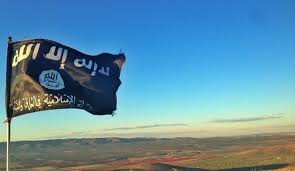
Why are the Gulf financial markets so sanguine about current events in Iraq?
Zawya.com reports that credit default swaps have remained stable since ISIS advanced into Mosul and towards Baghdad:
“The calm reflects the Gulf’s progress in building up its financial resources on the back of high oil prices as a defence against regional instability, as well as its success in containing domestic political fallout from the Arab Spring uprisings over the past three years, economists and fund managers said.
“I think people now see the Gulf as well insulated from the politics around it,” said Jason Tuvey, Middle East economist at Capital Economics, a London-based consultancy.
He added that apart from Saudi Arabia’s Eastern Province, which has seen some low-level unrest among its Shi’ite minority, it was difficult to see how events in Iraq could have any direct impact on Gulf states. If there is any impact, governments have the monetary and security resources to deal with it, he added.”
I wonder if the leaders of the Gulf states and Saudi Arabia are as comfortable with the situation as Mr Tuvey. If so, they are surely misguided. Here are three scenarios that suggest why:
Scenario 1: The government in Baghdad drives ISIS out of central Iraq with the assistance of Iran’s Revolutionary Guard Quds Force. As the price for waging a proxy war on behalf of the west, Iran negotiates easier terms on their nuclear deal. The Islamic Republic gains increased influence in the region as the result of Iraq becoming a puppet state underpinned by Iranian military force. Iran’s ability to weaken the Gulf states by fomenting unrest in Kuwait, Bahrain and Eastern Saudi Arabia increases. ISIS retreats back towards Syria, depleted in numbers but much strengthened by captured weaponry and large amounts of currency looted from Mosul. The stalemate in Syria continues, but ISIS uses its replenished resources to foment uprisings by Islamist factions in the Gulf. This prompts further payments from the Gulf through unofficial channels. In effect the payments would be a form of Danegeld. Just as the Anglo-Saxons in 10th and 11th century England paid vast sums to the Vikings to keep them at bay, the deal is that “we will keep paying you if you leave us alone”. A similar implicit bargain allegedly left one Gulf state unscathed when over many years it acted as the money-laundering centre for Al-Qaeda.
Scenario 2: ISIS consolidates its hold on Iraq’s Sunni Triangle by drawing support from locals who fear sectarian reprisals in the event of the Iraq government re-taking the lost territory. The government is too weak to prevent a Kurdish declaration of independence. In order to prevent further gains by ISIS, the western powers provide military assistance to the Kurdish government. Turkey, despite its long-term opposition, reluctantly agrees to the creation of the Kurdish homeland. It sees an independent Kurdistan as a lesser evil than having to live with a militant jihadist entity on its borders. In a political settlement with the central government, the Sunni Triangle becomes a semi-autonomous region under the control of ISIS and its allies. ISIS fighters from the Gulf states return home to create cells in their own countries, including Saudi Arabia. Iraq is effectively partitioned. In addition to having to deal with jihadi-inspired unrest in its own country, Saudi Arabia now also has to contend with an Iranian puppet state on its northern border.
Scenario 3: The US puts boots on the ground, most likely special forces to support air strikes. It deploys drones and bombers to harass ISIS from the air. US support is sufficient to hold ISIS at bay while the Iraqi army recovers from its recent debacle. Backed up by Shia militia and Iranian forces, the army slowly beats ISIS back, but at a terrible cost in civilian lives. The conflict has escalated into a sectarian civil war, with the US perceived to be on the side of the Shia. Anti-US feeling once again spreads within the area. Extremists in the Gulf states feed on the discontent and launch terrorist attacks on governments and western expatriates, in the knowledge that such actions are bound to weaken the economies of the targeted countries. The chaos in Iraq demotes the nuclear issue down the agenda in western eyes, and Iran announces that it has developed an atomic bomb. Saudi Arabia takes immediate steps to acquire nuclear weapons from Pakistan.
Actually, the short-term outcome could contain elements of each scenario. Some are already falling into place. Britain’s announcement that it will re-open its embassy in Tehran, for example, is unlikely to be a coincidence. President Obama has stated that all options in dealing with the Iraq crisis will be open, though he has not yet been foolish enough to define any red lines. General Suleimani of the Iranian Quds Force has arrived in Baghdad with a team of “advisers”. And at the behest of Ayatollah Sistani, Iraq’s senior Shia cleric, who has issued a call to arms, thousands of volunteers have signed up to assist in the fight against ISIS.
Britain, however, states that it will not take part in military action against ISIS. Not surprising, considering that the last Iraq intervention destroyed the reputation of Prime Minister Tony Blair. But I suspect that right and wrong are no longer considerations in British foreign policy. Despite the fact that ISIS is pursuing its objectives with a violence that makes Saddam Hussain look like a teddy bear, our concern will be that further military intervention with an uncharted outcomes would further expose us to the risk of home-grown terrorism from returning jihadis. But if the unrest were to spread south to the Arabian Peninsula, would Britain (and the US) fight to preserve the power of the Gulf autocrats? Almost certainly, because that would be the expedient thing to do, as it was in 1991.
So I suspect that the complacency of the Gulf markets is largely because of the implicit western guarantee that it would go to any lengths to prevent those countries from being destroyed from within by kuffur-hating jihadis. Yes, Saudi Arabia and the other Gulf Cooperation Council members have pretty efficient internal counter-terrorism operations. Several of them have declared the Muslim Brotherhood – who are considerably lower on the extremism scale than ISIS – a terrorist organisation. Yet they don’t seem able to prevent wealthy individuals from funding ISIS. Or some, Saudi Arabia excepted, are not trying. So either their competence is limited to detecting internal plots, or there is ambivalence at the highest level driven by a desire to find the most effective way of deposing Bashar Al-Assad. The problem is that ISIS seem to have little interest in ridding Syria of its leader. Their focus seems to be on carving out a Sunni caliphate across the borders imposed under the Sykes-Picot agreement.
In the longer term, anyone who thinks that ISIS have no designs on the world’s richest oil fields and the holy places of Saudi Arabia is naïve in the extreme.
The financial wise men should stop to consider that the last time a relatively small force of highly motivated soldiers overran the region, they came out of Madinah in the 7th century. And before that, Alexander the Great overcame huge numerical odds to conquer Mesopotamia and the lands to the east. Admittedly, Khalid Ibn Al-Walid and Alexander didn’t have to face drones and thermobaric bombs, but force does not have to be overwhelming to prevail, as the US and its allies have discovered in Afghanistan.
And so long as there are common interests, there will be alliances many will see as unholy: private financiers in Saudi Arabia, Qatar and Kuwait funding jihadis in Syria, former Baathist officers working with jihadis on the ground in Iraq, the US and the UK finding common cause with Iran. The problem with tactical alliances is that they can lead to unforeseen consequences far beyond the short-term objectives.
You would need to be divinely inspired to work out what the Middle East will look like in five years time, let alone ten. Compared with the current Iraq-Syria crisis, the Arab Spring – though bloody enough – was handbags. This is daggers drawn in multiple directions.
I hope I’m wrong, because I wouldn’t wish what is happening in Iraq and Syria on my worst enemy, let alone on my many friends in the Gulf. In my humble opinion, no part of the Middle East can consider itself immune to the consequences of the lethal game being played out in the old killing grounds of Mesopotamia. If the financial markets are “calm” right now, perhaps it’s because the analysts are looking no further than the end of their noses. And maybe that’s as far as anyone can reliably see. As Donald Rumsfeld would say, there are too many unknown unknowns waiting to unfold. Calm is better than panic, but unless this crisis is resolved quickly, the financial implications should give world markets – not just local ones – increasing cause for concern.
Primary School – That’s me in the middle of the back row.
I have a golfing buddy who knows a lot about life. And so he should, because he’s in his eighties – a big personality, always coming up with outrageous stuff and seemingly impervious to the banter that comes his way.
A while ago I found myself on his email list, which means that I get a regular stream of golfing jokes, some of them so sexist that even the Chief Executive of the England Football Association (who nearly lost his job recently when some boys-only remarks ended up on the desk-top of a female member of staff) would have fallen on his sword if he’d been caught sending them. If not about golf, John’s themes tend to be on the UKIP end of the political spectrum, usually along the lines of “fings ain’t wot they used to be”.
As with so much that dings around the internet, it’s impossible to tell who the originator might be, and John tends to be the conduit rather than the author.
Some of the stuff has such a strong political agenda that I wouldn’t put it past Nigel Farage, the high priest of the UK Independence Party, to have set up a little team in a shed somewhere near a pub to inseminate the net with stuff like the email that follows. John clearly agrees with the sentiments. And as someone who was at school in London during the Second World War, he can regale you with stories of “how it was”.
SCHOOL-1945 vs. 2013
Scenario :
Johnny and Mark get into a fight after school.
1945 – Crowd gathers. Mark wins. Johnny and Mark shake hands and end up best friends.
BUT
2013 – Police called, and they arrest Johnny and Mark. Charge them with assault, both expelled even though Johnny started it. Both children go to anger management programmes for 3 months. School governors hold meeting to implement bullying prevention programmes.
Scenario :
Robbie won’t be still in class, disrupts other students.
1945 – Robbie sent to the office and given six of the best by the Principal. Returns to class, sits still and does not disrupt class again.
2013 – Robbie given huge doses of Ritalin. Becomes a zombie. Tested for ADHD – result deemed to be positive. Robbie’s parents get fortnightly disability payments and school gets extra funding from government because Robbie has a disability.
Scenario :
Billy breaks a window in his neighbour’s car and his Dad gives him a whipping with his belt.
1945 – Billy is more careful next time, grows up normal, goes to college, and becomes a successful businessman.
2013 – Billy’s dad is arrested for child abuse. Billy removed to foster care; joins a gang; ends up in jail.
Scenario :
Mark gets a headache and takes some aspirin to school.
1945 – Mark gets glass of water from Principal to take aspirin with. Passes exams, becomes a solicitor.
2013- Police called, car searched for drugs and weapons. Mark expelled from school for drug taking. Ends up as a drop out.
Scenario :
Johnny takes apart leftover fireworks from Cracker night, puts them in a paint tin & blows up a wasp’s nest.
1945 – Wasps die.
2013- Police & Anti-Terrorism Squad called. Johnny charged with domestic terrorism, investigate parents, siblings removed from home, computers confiscated. Johnny’s Dad goes on a terror watch list and is never allowed to fly in an airplane again.
Scenario :
Johnny falls over while running during morning break and scrapes his knee. He is found crying by his teacher, Mary. She hugs him to comfort him.
1945 – In a short time, Johnny feels better and goes on playing footie. No damage done.
2013 – Mary is accused of being a sexual predator and loses her job. She faces 3 years in prison. Johnny undergoes 5 years of therapy and ends up gay.
This should be sent to every e-mail address you know to remind us how stupid we have become!
I guess we are all responsible for the present situation as we have selected the idiots that pass these rules in Parliament. Try and stop the rot by thinking and using your vote!!!!
And of course there’s only one party that promises to stop the rot! As to which one, if you’re not familiar with British politics, see this post for an explanation.
As with all missives of this kind there’s enough of an element of truth to draw a wry smile whatever your political persuasion.
The scenario that made me laugh was the one about the wasps. That’s because when I was about ten my older brother and I actually carried out the very same stunt. Being a couple of years older than me, and a bit of a chemistry nut, he was the cell leader.
He’d been experimenting with explosives by mixing certain household chemicals and igniting them in very small quantities. When we discovered the wasp nest in the rockery at the bottom of our garden, he decided that it was time for the big one.
We were lucky enough to have a swimming pool, and there we found a very convenient container for the bomb we would build. So we took one of the aluminium tubes that fitted together to make a brush that cleaned the bottom of the pool. Into the pipe we packed an ample supply of the required chemicals, sealed the ends with sellotape and set a fuse that ran to some bushes a few yards away.
We planted our pipe bomb at the bottom of the rockery where the wasps were buzzing around most angrily, retired to the bushes and lit the blue touch paper. 20 seconds later, BANG! All that remained of the wasp nest and at least three feet of rockery was a smoking hole. Of the pipe, nothing.
Fifty yards away, my mother was taking tea with our family doctor – an old friend – by the swimming pool. After the explosion took place, when the two ladies got off the floor they discovered that a piece of aluminium shrapnel had whizzed over their heads and embedded itself in the wooden wall of the changing room. Other bits of metal were subsequently to be found lying around a wide radius of the blast. Thankfully no humans, animals (except the wasps) or buildings (apart from the changing room) were damaged. My brother and I were only a few yards away, so I guess we were lucky.
And no, we didn’t get six of the best. My parents didn’t believe in corporal punishment, but we did get a very stern telling off. Nor did the police arrive, alerted by worried neighbours. Clearly the folks next door were used to loud explosions in the Royston household, though they were mainly vocal. I had a pretty sharp temper in those days.
Today? Well my neighbourhood doesn’t have a reputation as a hotbed of terrorist activity, so the chances are that the most extreme response would have been a quizzical post about the bang on Facebook from our delightful next-doors.
As for the rest of the scenarios, yes, they hit the mark. We do live in a different age – litigious, risk-averse and fearful – in which well-meaning regulation has piled on regulation. Less freedom of action remains in the hands of parents and more in those of the state.
But let’s not forget that in 1945 there was no National Health Service, no vaccines for polio, tuberculosis was rampant, unexploded ordnance scattered around the bombsites, food rationing, thousands of kids without fathers and a far higher degree of eccentricity, not to say sadism, among teachers than you would find today. Speak to Roger Waters of Pink Floyd, who wrote The Wall, about the last point. “Hey, teacher, leave those kids alone….”
So it’s easy to argue that life was simpler in “those days”. But better? I like to think that my school years – in the fifties and sixties – coincided with a happy medium. The legacy of the war had faded, but the regulators had not yet embraced education in their iron grip.
But maybe I’m guilty of selective memory. On which subject, I can think of no better way of ending this piece than to refer you to the Four Yorkshiremen sketch by John Cleese, Rowan Atkinson, Terry Jones and Michael Palin, in which the participants discuss their earlier days. Pure luxury.
My Mother’s Submarine at Arromanches
I spent a couple of hours this afternoon watching TV coverage of the D-Day 70th anniversary ceremony in Ouistreham. It was attended by various heads of state including the Presidents of the US and Russia, and my own dear Queen. The arrival of the big-wigs was an interminable process as one after the other, the suited, booted and uniformed presidents and monarchs proceeded down the red carpet towards the welcoming embrace of the host, French President François Hollande.
The last to arrive were Obama and the Queen. There was a gap of several minutes between the two, and as I watched Hollande standing there waiting for Her Majesty, an evil thought crossed my mind that for some reason she might have been struck by some unexpected health problem. I wondered how that would be communicated to Hollande, and how he would have reacted to the news. I shouldn’t have worried. At 88, the Queen is allowed to take her time, and finally she trundled down the aisle with the Duke of Edinburgh to greet the assembled veterans and take her place in the front row of the stalls.
All the while, the cameras kept focusing on Obama and Putin, who apparently loathe each other. At one stage, the pair appeared side by side on a split screen which was clearly visible to each of them. Obama chewed gum, and Putin let out as much of a smirk as the Botox allowed.
When I was at school, if I had stood through assembly chewing on a wad of gum I would have been spotted by some eagle-eyed teacher and given a seriously hard time. For Barack Obama, school rules obviously don’t apply, because on his arrival in the presidential tank masquerading as a limousine, he chomped away in full knowledge that the world was witnessing his mastications. I guess gum is the American way. For sure, a good proportion of the brave souls who landed on Omaha Beach 70 years ago would have been sharing Obama’s habit. I very much doubt that Her Majesty would have allowed herself to indulge in the Spearmint on any public an occasion, let alone one of such solemnity.
I’m afraid I disengaged half-way through Hollande’s speech, which he gave after a lengthy military ceremonial in which various French units did what they do on such occasions – saluting, raising flags, marching past and so forth. An awful chauvinism came over me, as I reflected that we British don’t excel in many things these days, but we still do ceremonial better than any nation.
But I was also struck with a feeling of regret that I was not there. Not anywhere near the ridiculous collection of the great and the good, but down on the beach with the veterans, among the boats and the jeeps, and wandering through the cemeteries. Arromanches is on my bucket list. It’s so ludicrously easy to get to from Southern England, where I live, that I’m ashamed never to have been there. After all, my mother, who was attached to Eisenhower’s staff, made it to those beaches some weeks after D-Day, arriving by submarine See the picture). And a good friend of ours who was a navigator for one of the planes that took the gliders to Normandy early on the morning of the invasion was there among the veterans.
D-Day means a lot to us Brits. In a way, despite the fact that only a minority of the troops who landed that day were natives of our shores, it was a kind of redemption, after four years of mishaps in which the British army suffered more defeats than victories. No matter that Montgomery’s tactics after the landing, especially his failure to take Caen within the timeframe allowed in the battle plan, attracted much criticism from his American colleagues. Our troops faced the music side by side with the other allied forces, and suffered as they suffered even if they got off relatively lightly compared to the Americans on Omaha Beach. Our engineering know-how contributed massively to the success of the operation, as did our navy and air force.
Watching the veterans walking or being wheeled around the beaches and villages – each with their own memories of that dramatic day – caused me to reflect on the nature of heroism and courage, particularly in the context of what happened on the beaches and fields of Normandy.
One of the veterans commented thus on being referred to as a hero: “we are not the heroes. Those we left behind are the real heroes”. Modest words typical of what you would hear from any war veteran.
Now I have immersed myself as much as any ordinary person in the history of the Normandy campaign. I’ve read books, watched movies and TV documentaries and even heard the first-hand account of my friend who towed one of the gliders. But because I was not there, and have never experienced combat of any kind, I have no concept of the internal struggle these guys went through.
I see no problem with describing all of them as heroes, because they were involved in a heroic enterprise. But have we devalued the meaning of the word by such an all-embracing usage? Are there degrees of heroism?
Most of the people who landed on the beaches or parachuted out of aircraft to secure a path for the landing forces were not volunteers. They were conscripts. They had no choice but to be there. But once on the beaches or in the marshy fields beyond them they had decisions to make. To hide in the shell craters and hedgerows, albeit still in harm’s way but at least with the perception of relative safety? Or to expose themselves directly to machine-gun and shell fire by moving forward and confronting the enemy? Many of those who did stand up were cut down in short order. Is that what the veteran meant?
What I do know is that if I had been on one of those beaches, with bullets and shrapnel fizzing around me, my first instinct would have been to head for the nearest hole and bury myself. Would I have followed my instinct and sprawled cowering in that hole? Perhaps not. What people discover in those situations is communal courage, in which the bonds formed with others through friendship, training and a communal sense of purpose – overcome the individual drive for self-preservation. But those bonds can be fragile and easily dissolve in adversity. And that’s where leadership comes in. Not necessarily through the chain of command – often different leaders seem emerge to inspire others in combat by personal example. The sergeant who leads the assault on a gun emplacement, or the private who rallies those around him when the command structure is wiped out.
Aside from the grand sweep of events, the politics and the impact on societies and individual lives, the enduring fascination of war is to project oneself into it and try and imagine how one would feel, react and behave. And I’m happy to regard anyone who has survived through the terror of combat and managed to live a useful and productive life thereafter as a hero – not just the fallen. Heroism is not just the actions of the moment, but coming to terms with the consequences.
Just as I have visited the graves of relatives in the cemeteries of Flanders, I will go to Arromanches – and hopefully Pearl Harbour and other battle sites on my bucket list – not just to imagine, but to reflect on how lucky I am not to have had to go through what those dignified and modest old veterans experienced.
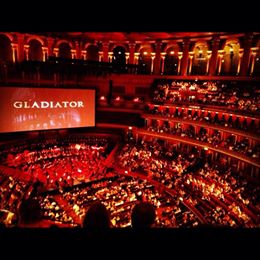
What is it that makes Gladiator the king of the ancient epics? Why would the makers of Pompeii so shamelessly rip off what they thought were the best bits from Ridley Scott’s film and manage to produce a truly awful movie? And why would thousands of people who have probably seen Gladiator many times pack into London’s Royal Albert Hall for a screening of the movie to the accompaniment of a huge live orchestra and choir?
I’ll answer the first question as a fan who has seen any number of big-screen epics in my time – Spartacus, Ben Hur, and The Fall of the Roman Empire among them. The story – substantially inaccurate, incidentally, but hey, it’s a movie – of blood and guts, love, envy, courage, hope, faith and revenge. A great cast, with Richard Harris, Russell Crowe, Joaquin Phoenix, Derek Jacobi and the late great Oliver Reed in his last role leading the line. A taut screenplay by David Franzoni in which Crowe’s lines repeatedly deliver knock-out blows. Superb costumes, sets and cinematography subtly enhanced with CGI. And then Hans Zimmer’s music – as much a star of the show as the spectacle itself.
Unsurprising then that the makers of Pompeii would take a warrior enslaved, turn him into a gladiator and send him into a city about to be destroyed by the mother of all volcanoes. Like Crowe’s Maximus, Milo, the hero of Pompeii, becomes best mates with a soulful black gladiator. He too worships his ancestors and has a daughter of the aristocracy swooning over him. We are treated to the familiar gory scenes in Pompeii’s version of the Colosseum, where the baddie, Keifer Sutherland’s venal property developer of a senator endeavours to fix the demise of the plucky Brit and marry his girlfriend against her will, only to be stymied when Vesuvius intervenes.
At this point the unfortunate Pompeians are treated to every spectacular volcanic phenomenon known to nature. First an earthquake, which actually struck Pompeii 17 years before the volcano put out the lights. Then the fiery boulders that come crashing down on the city, trashing whatever the earthquake spared, followed by a pyroclastic flow that incinerated everything in its path. No matter that in reality Pompeii got the ash, and Herculaneum the pyroclastic flow, which was why the remains of the two towns are substantially different from each other.
When I watched Pompeii with my daughter, who is also a Gladiator fan, we kept whispering “Gladiator” to each other each time we identified a rip-off from Ridley Scott’s masterpiece. The characterisation was unsubtle, the script a poor attempt to emulate Franzoni’s ringing epic-speak. By the end of the movie you felt grateful to the volcano for putting an end to such an assortment of ill-drawn characters and tedious plot lines.
The inspiration for Pompeii, however, endures, but that doesn’t fully explain why the multitudes would come to the Albert Hall to see a live orchestra performing music that most of the audience, judging by their apparent prosperity, could easily hear in the comfort of their settees in front of their home cinemas.
Clearly the answer lies in the power of live music, and powerful it certainly was. As a cinematic experience it left something to be desired, because the music often overpowered the dialogue. But the producers had thoughtfully provided subtitles for those who didn’t know the lines by heart. And actually this brought an extra dimension into the movie, because there are bits of script that are virtually inaudible in the cinema version – such as Maximus’s imprecations to his ancestors, and the catcalls that greet Commodus on his grand procession through the streets of Rome upon his return as newly-proclaimed emperor. Watching the movie with several thousand others also brought out unexpected moments of humour, like Commodus’s petulant reaction to senatorial mockery: “I am very vexed!”
For me the interesting thing about the concert was that it’s part of a new genre of live music – concert-versions of movies. Silent movies usually had a live piano accompaniment, and occasionally a small orchestra, but when the talkies came along, recorded music went hand in hand with speech. There have always been talented composers writing for film, and soundtracks have always sold well in the record shops. But they have usually been seen as “not serious”, except when “serious” composers – such as Ralph Vaughan Williams with Scott of the Antarctic – deigned to produce music for the movies.
These days, however, film music has acquired a niche in classical radio playlists on stations such as the UK’s Classic FM. Even the BBC’s Radio Three regularly features film music. The days when classical purists would turn up their noses at film composers as derivative and unchallenging artisans while torturing their ears with Schoenberg, Boulez and Glass are over. And it’s not surprising that composers who feel constrained by the limitations of the four-minute song turn to film as a way of getting their work in front of a mass audience.
All though opera and ballet are still cherished vehicles for live music, you wonder whether the great operatic composers like Handel, Mozart, Verdi and Puccini would have bothered writing for a bunch of high-maintenance divas in rickety opera houses if they had the opportunity to reach millions by scoring Dr Zhivago, Lawrence of Arabia or Pirates of the Caribbean. You bet they wouldn’t, especially when they could earn a hundred times the money on offer from their grasping theatre impresarios. So you could say that the true heirs of the great operatic composers are the likes of Maurice Jarre, Vangelis, John Williams and Hans Zimmer, rather than the subsidised “pure classical” composers who toil away producing works that will never reach a fraction of the audiences who buy other forms of music.
This is not to deny the undoubted talents of composers like Maxwell Davis, Harrison Birtwhistle and the recently-departed John Tavener. But the old composers lived on their wits and their ability to attract patrons and theatre-goers. More than we think, it was a matter of “art for art’s sake, money for God’s sake” in the immortal words of the 10CC song. Most of the great composers wrote works for the market that existed at the time. Their genius lay in pushing out the boundaries of their art without losing their audiences and patrons. There was no such thing as a government-funded Arts Council in those days, just capricious bishops and rapacious theatre managers.
Gladiator is not the only movie to be given the concert treatment. Bernstein’s West Side Story will soon be performed at the Albert Hall, and last year the same venue hosted a concert of Danny Elfman’s music for the films of Tim Burton. Apart from serving as a highly profitable franchise for the promoters, these performances play an important role in introducing people to orchestral concerts. These productions are the latest in a long tradition of live performances of music that can’t be described as hard core classical, from Gilbert and Sullivan through the Boston Pops to the Three Tenors.
Conductor/impresarios such as Andre Rieu do very nicely out of televised concerts that are relatively easy on the ear. Classic FM’s brand promise is “Smooth Classics”, and the station does what it says on the tin. No composer more dissonant than Stravinsky ever reaches the sensitive ears of its genteel listeners. And the music of Zimmer, Elfman and Williams, while often strident and dramatic, does little to disturb the day of the taxi drivers, exam revisers, school run mums and pensioners who tune in for their regular dose of the Classic FM Hall of Fame, whatever that’s supposed to be.
Another interesting facet of Hans Zimmer’s success has been his willingness to collaborate with other composers, Gladiator, for example features a strong contribution from Lisa Gerrard, who sang the main theme at the Albert Hall. Through his company in the US he encourages composers to work with him, something that Bach and Beethoven would never have thought of doing. Not quite the equivalent of the workshops of the great renaissance painters and sculptors, because Zimmer encourages diversity, whereas the renaissance workshops basically employed apprentices to serve the needs of the master. But the net result is the same – a widening of experience, credibility and skills of people – in Zimmer’s case, composers, arrangers, musicians and technicians – who work with him.
I admit to having an ulterior motive in these musings beyond a strong interest in film and music – my daughter Nicky Royston is in the early stages of a career as a film composer. As with any creative career, she’s on a tough road. But collaboration with established composers is one route that offers a way forward in a fiercely competitive arena, and she already has some experience of this through working with the Spanish composer, Marco Werba.
Needless to say, I’m rooting for her, and I look forward to the day she invites me to the Albert Hall to listen to her stuff!
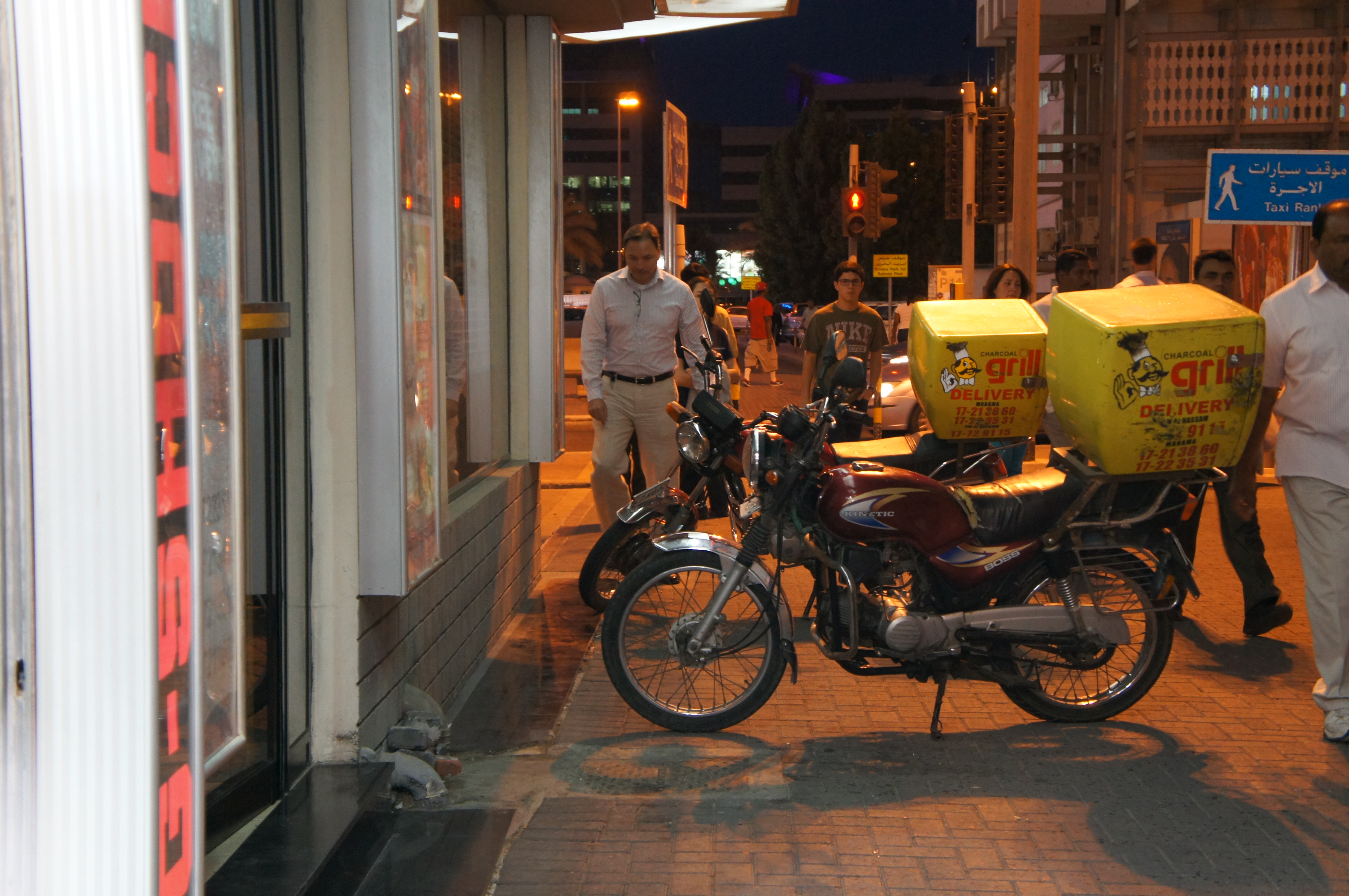
If you spend enough time in the Middle East, and especially the Arabian Peninsula, you will accumulate all manner of stories about the eccentricities of decision-making. For every weird decision, you learn to look beyond the obvious reasons, and search for hidden motives and power plays that frequently underlie them.
Nothing is exercising the good people of Bahrain at the moment more than the proposed new traffic legislation that bars expatriates from obtaining driving licences. The law was approved last week by the Shoura Council, the unelected upper house of Parliament, and is now awaiting ratification by the King.
Since the Shoura approval, there have been howls of outrage from Bahrainis and expatriates alike. Talk centres mainly on the provision being unconstitutional, in contravention of human rights and disastrous for business. It seems that there would be exemptions for certain categories of expatriates who the authorities consider need to drive as part of their jobs.
It’s still unclear whether those who already have driving licences would have them revoked. If that were the case, chaos would ensue. Like many of the Gulf countries, Bahrain has thousands of expatriates – many of them from the Indian subcontinent – who get by doing “a bit of this and a bit of that”. Most likely they would ignore the provision, taking their chances that the country’s police force, already stretched by having to deal with regular outbreaks of violence in the Shia villages, would be hard pressed to catch up with them.
Even the rationale for the provision, which the lower house of Parliament inserted into a wider set of regulations, is disputed. Parliament claims that the majority of accidents are caused by expatriates. Not so, say the objectors, who point to the shortcomings of Bahraini drivers as the prime cause. I can’t comment on these claims, but in my four years of living in the country I can certainly recall numerous reports of accidents in which Bahrainis died as the result of collisions at high speed. On the highways, most of the speeding I experienced was by young people in expensive cars that would be beyond the pocket of low-paid workers.
But hey, you can manipulate statistics any way you want, so if you give equal weight to minor dinks and major accidents, you could probably come up with the justification you’re looking for.
Bahrain has form in coming up with regulations that are hard to implement or are quietly dropped.
Most recently there was a requirement that all visitors should obtain electronic visas in advance of arrival. The motive seems to have been to screen out potential troublemakers like those pesky human rights activists who would come to the country during the Arab Spring protests and take to the streets in solidarity with local demonstrators. The process was cumbersome and never fully implemented. People without visas (which are normally issued on the spot by the immigration officer for a small fee) would find themselves hauled into a room and asked to wait while an official did a Google search on the person’s name! Hardly the most effective way of weeding out the undesirables. I suspect that the need to admit visitors easily and quickly for the annual Grand Prix bonanza was the reason why the system was never applied universally.
Then there’s the perennial issue of alcohol. Parliament – which has its fair share religious extremists within its ranks, has on many occasions tried to introduce a total ban on the sale and consumption of alcohol. It has always been blocked by the Shoura Council. The reason is pretty obvious. There are many powerful players within the country whose business interests would be damaged by a ban. The local economy depends heavily on tourists, both Westerners who would not take kindly to visiting a dry country, and the hundreds of thousands of weekend visitors from neighbouring Saudi Arabia who come over to do stuff that is forbidden in their homeland. I fancy that a fair few of them would find somewhere else to indulge in the demon drink if Bahrain shut all the fleshpots and bars. So the hotels, shopping malls and cinemas would undoubtedly suffer, and Dubai, an equally enticing watering hole, would benefit accordingly.
More recently came the attempt to disqualify anyone without a degree from standing for parliament, as if education and wisdom were one and the same thing. My thoughts on that one are here.
I have to admit to having a sneaking sympathy for the driving ban, but not necessarily for the reasons that motivate the parliamentarians.
Like all the Gulf states, Bahrain is heavily reliant on expatriate labour, though less so than the UAE and Qatar. Approximately 50% of the population of Bahrain is foreign, compared with around 80% in Qatar. Bahrain has to ask itself whether it’s viable in the long term to pour money into infrastructure that enables it to support an expatriate population. The country has had far longer than any of its neighbours to develop a workforce that sustains the country without the need for large numbers of foreign workers. Bahrainis are quite capable of building highways, cleaning the streets and maintaining the air conditioners if they are trained to do so. Thanks in part to the influence of its wealthier neighbours the idea has been implanted in society that trade and the professions are OK, but manual labour isn’t, except for the underclass that has grown up in the villages.
The trouble is that while across the causeway Saudi Arabia has ample funds that enable it to outsource the dirty stuff to hordes of foreigners, Bahrain is not so fortunate. Its oil and gas reserves are miniscule compared with the likes of Qatar, Kuwait, Abu Dhabi and the big boys next door. Without considerable assistance from its well-heeled cousins the dolce vita that every well-educated Gulf national regards as his birthright would be unsustainable.
In terms of economics, any measure that encourages the local population to rely less on its expatriates would seem to be a step in the right direction, whether the expatriates themselves like it or not. More on the dependency issue in this piece, which I wrote in 2011 just as the Arab Spring protests were beginning to crank up.
In any event, Bahrain being Bahrain, the most likely outcome from this latest uproar with be that the proposed provision will either be blocked at the behest of the great and the good, or it will be implemented in such a diluted form that people will be left wondering what the fuss was all about.
What the Bahrainis will not be asking themselves is why, eighty years after oil was first discovered on the island, they have not gone further down the road to labour self-sufficiency. How is it that Singapore, a country that in 1945 – after three years of Japanese occupation – was arguably in a far less advanced state than Bahrain at the time, manages to get by with only 16% of the population who are guest workers?
There are many answers to that question depending on your political, cultural and historical persuasion. My suggestion would be to follow the money, as the detectives like to say.
As for the drivers worried about their ability to get around an island notorious for its inadequate public transport system, my guess is that if you were to visit Bahrain in five years’ time, there will be no shortage of cooks and bottle-washers from Kerala and Kathmandu still riding around in their beaten-up old Toyotas.
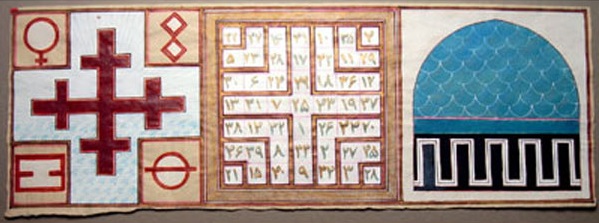
This week’s edition of the UK Sunday Times runs stories about the “alleged Muslim plot to wrest control (of schools) and force out non-Islamic staff. There have been claims of homophobia, segregation of boys and girls in some lessons, refusal to teach sex education, bullying and invitation to extremists to speak at assemblies”.
Ofsted, the schools inspection authority, have sent inspectors into a number of schools in Birmingham to carry out emergency checks on 21 schools suspected of being subject to attempts by Islamic extremists to gain control of their governing bodies. At the same time Michael Gove, the Minister of Education, has appointed a former head of the Metropolitan Police counter-terrorism unit to investigate the “Trojan Horse” allegations.
One the same page, there is a story about Tahir Alam, the man suspected of being at the centre of the plot. Apparently he was the leader of a fundamentalist group called the Movement to Reform Muslim Youth. The Sunday Times claims through an anonymous source that the group, which was active from the late 1980s until Mr Alam shut it down in 1995, was highly sectarian. It regarded the Shia as not proper Muslims. Several members “went to fight in Afghanistan and Bosnia”. According to the source, the group was in favour of establishing an Islamic caliphate in the United Kingdom.
At which point my ladder of inference automatically kicked in. This the mental process whereby we make assumptions based on the way we see the world. We chose our facts, select our reality, make assumptions based on that reality and take action accordingly.
So according to one reality Mr Alam is an Islamic extremist. He probably still wants to establish a caliphate in the UK. Bin Laden, Abu Hamza and all the other people who committed, facilitated or encouraged acts of terrorism, had the same ambition to establish caliphates. Ergo the Trojan Horse plot is all about radicalising young Muslims and producing foot soldiers who will go to Syria, Iraq, Afghanistan et al, learn the terrorist tradecraft and return to the UK to practice their new skills in this country. Birmingham’s schools, and in the future schools in Blackburn, Bradford, Luton and any other part of this country where there is a large Muslim population will become recruiting centres for Al-Qaeda. Mr Alam must be stopped.
This seems to be very much a common train of thought within government and the print media. I found myself effortlessly rolling down that track, until I stopped for a second.
Hold on, I told myself. It is no more against the law of this country to advocate an Islamic caliphate than it is to call for a Nazi dictatorship run by Kermit the Frog. But there are rules. If you want to abolish the monarchy and replace it with a Commander of the Faithful, you would first have to gain a majority of MPs in parliament and pass an Act establishing a new constitution. Plotting to remove the Queen by any other means would leave you open to prosecution for treason. Using violent means would mean that you would fall foul of anti-terrorism laws. And there is a host of other laws that would curtail your efforts – against gender discrimination, promotion of religious and racial hatred for example.
As far as I am aware, Mr Alam has never been convicted of any of these crimes. He has the same right to speak about his beliefs as any other UK citizen. We may not like what he says, but unless and until he falls foul of our laws, he is free to continue to advocate the establishment of a caliphate, no matter how abhorrent such an outcome might appear to the rest of us. In short, he is not a terrorist, and assumptions about his motives should be rigorously tested, including the possibility that he changed his mind in 1995.
Extremism is not terrorism, and this appears to be the cause of some in-fighting between the Education Ministry and the Home Office. The Home Office sees its role as countering terrorism, whereas Mr Gove’s department has a duty to prevent any form of extremism from distorting the state education system. The former is accusing the latter of not picking up on evidence of Islamisation as early as 2010, while the latter believes that the former is at fault by restricting its brief to preventing terrorism, rather than addressing extremist activity likely to lead to criminal acts.
If we wish to prevent the kind of education Mr Alam is alleged to be attempting to introduce in the schools concerned, we have processes that can deal with the attempt. What parents do to influence their children we cannot control so easily. Acts of violence in the name of family honour are against the law, as is female genital mutilation. But here again the ladder of inference comes into play by associating such acts with religious belief rather than cultural tradition: most honour killings are committed by Muslims, therefore Islam supports honour killings. Not so, even if the perpetrators try to justify their acts on religious grounds.
If additional measures are needed to counter the radicalisation of Muslim schoolchildren, we are free to do so within the law, or to introduce new laws. And if Ofsted finds that governing bodies and senior teachers in the United Kingdom are seeking to curtail independence of thought and critical thinking in our schools, those responsible should be prevented from doing so. We only need to look at the Saudi education system to see the consequences of an education in which religion is the primary guiding force. It has been controlled for decades by the religious establishment with similar views to those advocated by Mr Alam’s former group, and is deemed by many observers within the country to be incapable of producing graduates fully fit to enter the workplace.
All children in our schools should be given equal opportunity to spread their wings and think for themselves without interference by religious bodies. There should be no right to pick and choose from the national curriculum according to religious belief.
Having said that, it would be wrong to try to drive the likes of Tahir Alam underground. We should be countering his ideas with persuasion and influence, not prescription, or our country is no better than those that impose religious, social or political orthodoxy on their young.
It should be obvious to anyone but a fantasist that the United Kingdom will never become an Islamic caliphate. The views of the fundamentalists will never reach the mainstream unless our culture becomes so rotten that radical Islam appears an attractive answer to our problems.
But the schools cannot stop the radicalisation of children unless it is with the cooperation of parents. And they are beyond the reach of the educators. So it is unrealistic to expect one government department to change the mindset of the Muslim community or any other community given to extremist thought or behaviour by diktat or otherwise, just as it is not a merely matter for the government as a whole. It’s an issue for our society – not just politicians and civil servants.
Nonetheless we do need standards and best practice in our schools that give the young – regardless of their faith – the opportunity to come to their own conclusions about the world they live in. Such standards already exist, even if they are applied inconsistently and with varying levels of competence. And if it is necessary to monitor the activities of the fundamentalists and, within the law, to pre-empt acts of terrorism by our citizens at home or abroad, then that is the price we have to pay to maintain our vibrant, querulous, multi-national, multi-faith and multicultural society. And where breaches of the law take place, be they for cultural or religious reasons, we should be prepared to use our laws to deal with them systematically and energetically.
Here’s the bottom line for me as a father. Both my daughters are way beyond school age, but if they were students today and we happened to live within a predominately Muslim school catchment area, I would be delighted for them to learn about Islam – and all its variants of belief and practice – along with all the other major world religions.
I would also expect them to wear a school uniform, but not be forced to cover their hair. I would object strongly to any gender segregation on religious or cultural grounds. I would have no problem with them celebrating Muslim festivals provided the Muslim kids celebrated Christian ones – and that would include the right to use the term Happy Christmas, Happy Eid or any other recognition of another person’s beliefs rather than anodyne, politically correct phrases like Season’s Greetings.
I would have no problem with my kids receiving sex education lessons as long as all kids received the same lessons. I would support the teaching of Creationism as a belief system provided it was presented dispassionately alongside other theories about our origins and our children were given the opportunity to make up their own minds about the science. I would have no problem with proponents of any faith addressing school assemblies provided they formed a basis for debate on the merits of what the speakers were saying. I would expect my children to be taught to be highly sceptical about assertions of right and wrong. I would expect teachers to be selected on their merits as educators, not on grounds of faith. I would encourage my kids to visit the homes of schoolmates of different faiths, just as I would welcome their visits to my home.
Above all, I would expect my children to learn the difference between belief and fact, between subjective and objective and between emotion and logic.
If there are any schools – be they secular or faith-based – that are failing to provide such an education to our young, then we should identify them and take whatever measures are necessary to bring them back into the mainstream.
Marine Le Pen
About ten years ago an American friend asked me what I thought about the future of the European Union. At the time it was riding high. Ten additional states, including eight former communist countries, had just joined. The Euro was two years old, and seemed to be bedding in nicely. There was hardly a hint of troubles to come. The Greeks were busy cooking their books and gorging themselves on borrowed money. Most of the other states south of Munich were floating merrily like drunken sailors on a sea of debt. And in the UK we were assured that the inflow of workers from the new member states would have minimal impact on our booming economy.
I replied that the EU was likely to implode within 30 years if it continued on its path towards “ever closer union”. Over time, I thought, with the level of political and economic integration envisaged by the Union’s leaders of the time, it would become harder to assimilate new members because the barriers to entry would become progressively higher.
So we would be left with Fortress Europe, an exclusive club, becoming wealthier, and a number of neighbouring states becoming increasingly envious. The modern equivalent of hungry barbarians at the gates of the Roman Empire, if you like. The North African states were becoming a conduit for economic refugees from further south – Sudan, Somalia, the Sahel countries, and there was increasing pressure on Greece, Spain, and Italy to secure their borders against a rising tide of economic migrants and political refugees. Once in the EU, the migrants headed north, into France and Germany, and, in many cases into the UK via Calais and the Channel Tunnel.
It seemed to me that a one-size-fits-all set of rules and institutions applied to countries with very different languages, cultures and histories would create a rigid structure that would eventually fracture. Better, I reckoned, to keep things looser, so that the Union could adapt, not break. Otherwise the result would be increasing instability – not so much from within, but from without. Integrating new members was the issue, rather than dealing with the fractious individualism of those already within the fortress. Would we respond to the poor on our borders by erecting concrete barriers that might collapse and trigger a disorderly surge of needy humanity, or by creating porous structures that gradually allow the human floods to seep through in a controlled fashion?
I was wrong. The first serious challenge to the integrity of the EU came from within. The debt binge became a debt crisis. The resultant austerity, combined with the 2008 financial meltdown, impoverished huge numbers of citizens. Some countries coped with austerity better than others – Ireland and Iceland (not a member, but inextricably linked to the EU economy) for example. Other countries went into denial – France and Italy. The wealthiest nations – Germany and the Nordic countries – sailed on regardless – their standards of living the least affected.
The bail-out countries – Spain, Greece, Portugal and Ireland – have suffered the most. High unemployment and a sense of lost sovereignty as they bow to the demands of the central bankers and politicians of the lending countries.
No matter that economists are seeing light at the end of the tunnel for the basket cases, and that the wealthier economies are on the road to recovery. The legacy of 2008 is pent-up frustration among swathes of people across the EU at the decline in living standards. They want someone to blame, and what better target than immigrants who take our jobs, foreigners whose presence dilutes our culture, people with darker skins who remind us that our society is not our own any more, and religious extremists whose views and actions seem to reject the core values of the societies we grew up in? The English, the French, the Swedes, the Danes, the Finns and the Greeks all seem to be saying the same thing: we are losing our national identity. The established national politicians and unelected Eurocrats are the chosen culprits.
No amount of reasoned argument and dispassionate presentation of facts will persuade many people in Peterborough – a typical mid-sized market town in eastern England – that the newcomers from Poland, Estonia and Pakistan are a good thing. According to the BBC, the town has seen an influx of 25,000 immigrants over the past ten years – one in eight of the population. The people of Peterbrough see Polish butchers and Lithuanian delicatessen in high streets previously populated with greengrocers and bookshops run by locals. Don’t try to persuade them that high streets were already having the life sucked out of them by Tesco and Amazon.com, and that the gaps left by dead businesses might otherwise be populated by charity shops and Poundland stores. It’s all the fault of the immigrants, and of those who let them in.
The French see the secular state established by the revolutionaries of 1789 as threatened by women in veils and criminal gangs from the former colonies taking over the suburbs of Paris, Marseille and Lyon. The Greeks see their capital overrun by Albanians, Iraqis, Afghans and refugees from the Balkan civil wars.
So they want to “take back their countries”, just as do ageing white Americans in Republican heartlands who coalesce around the Tea Party. And it doesn’t take much for an educated right-wing demagogue who is able to articulate the broad-brush concerns of the disinherited, disenfranchised and alienated to act as a lightning rod for the growing army of electors who have grown impatient waiting for the promises of imminent prosperity by their mainstream politicians to come true.
Demagogues abhor complexity. Their stock in trade is black and white. Their currency is emotion – anger, nostalgia, fear and despair. And those who heed their messages are not to be swayed by facts or analysis that contradict what people experience personally – benefit cuts, job losses, foreign languages in our streets, Polish plumbers, Bulgarian fruit pickers, Estonian baristas and Roma camped on our streets. To hell with statistics. The politicians who can’t see what’s going on are out of touch, right?
The net result of the outpouring of rage across the EU will be politicians of all stripes vowing to “listen to the voters”. They will fine-tune their policies to bring all but the most extreme elements of the disaffected back into the fold. Don’t for a minute believe that Britain’s UKIP and France’s Front National will achieve political power. Influence they already have in spades. But dealing with the task of governing would either be the end of them, or as much a disaster for their countries as the bumbling Nazi bureaucrats and their psychopathic leaders were for Germany. (And no death threats please – I’m not suggesting Farage and Le Pen are psychopathic Nazis, merely that ideologues, psychopathic or not, have a habit of leading their people down blind alleys. Though speaking of Nazis, it’s interesting to note that the rise of UKIP has coincided with the eclipse of the British National Party in the European elections. I wonder who hoovered up the deserting BNP voters?) Besides, there are many powerful vested interests within and without the wealthier EU countries that will come together to prevent the “protest parties” from achieving direct power.
More likely, the “European Project” will ossify. There will be a deadlock between those who want to bring it down and those for whom it remains a comfortable meal ticket.
So my prediction has 20 years left to come true. Has the current crisis brought the due date forward?
Probably not, and hopefully not. Because if the break-up happens earlier it’s likely to be a rupture rather than a graceful separation. Integration has gone so far that it will take a revolution of sorts to destroy what has been created. And revolutions usually occur as the consequence of hard times, not good. All too often they bring chaos and suffering in their wake, sometimes on a far greater scale than the conditions that triggered them, as we are seeing in Syria and Libya today. Another financial crisis, a military confrontation, pestilence or man-made disaster – all candidates for a catastrophic failure of the European system. It’s not difficult to see the potential for any of them in the next couple of decades.
The best possible scenario would be an amicable divorce, where we reach the point at which there is no critical emergency, but where different factions within the Union come to the conclusion that the future is best without it. Perhaps a north-south split, or even several progeny. A Baltic Union, consisting of the Nordic members and Latvia, Lithuania and Estonia. A German-dominated middle European Union consisting of Germany, the Netherlands, Luxembourg, Belgium, the Czech Republic, Poland and Austria. To the south, a Mediterranean association between Italy, Spain Portugal, Greece, Malta and Cyprus. And to the east a Balkan group consisting of Romania, Bulgaria, Hungary, the former Yugoslav states and even Turkey. The remaining big players, Britain and France, might fancy their chances standing alone (if Britain hasn’t already done so). And it will be the secession of key players that is likely to trigger the wholesale dissolution of the Union.
These groupings could continue to be bound together by free trade treaties, but the most rigid structure of all – the Euro – would have to go. If it survived, it would most likely serve as the currency of the German group. Historians reading this would immediately question whether groups of countries along these lines would be able to look beyond old enmities, particularly in the Balkans but also in the grouping led by Germany. It’s a good question, and it would depend on the structures that were established and the economic well-being of the constituent members.
Be it through catastrophic disintegration or ordered political settlement, I stand by my prediction that the EU as we know it today will no longer exist by 2034. By that time I’ll be in my dotage, but I shall watch with doddery interest how events unfold in the meanwhile.
Of one thing I’m certain. If Nigel Farage, Marine Le Pen and all the other right wing politicians whose voices have rung loud and clear over the past week think that they can achieve even a rough facsimile of the counties they would like to reclaim, they are naïve or deceitful. There is no reset button to restore La France Profonde or England’s green and pleasant land. Not that either existed beyond literary fantasy in the first place.
What’s done is done. The present can be changed, but that change is no more likely to be to the taste of the disaffected voters than the conditions that have driven them to the polls today. Such changes as might satisfy some are likely to upset others.
A couple of weeks ago I found myself in Tewkesbury, another of those small English towns that, like Peterborough, seems to be one of UKIP’s natural constituencies. I visited Tewkesbury Abbey, which is the largest parish church in England. It’s been around for a thousand years, for the first five hundred as a monastic abbey, and after the dissolution of the monasteries by Henry VIII managed to survive intact when many others were left in ruins. It has seen its fair share of disorder and blood. A group of defeated nobles took refuge there after the Battle of Tewkesbury in the War of the Roses, only to be slaughtered by the opposing side in contravention of the law of sanctuary.
On the wall of the nave is a plaque honouring the dead of Tewkesbury in World War I. Of the hundreds of names inscribed on the monument, there was not a single one that you could identify as foreign. A few Scottish, Welsh and Irish names – but mostly English. It reminded me that a hundred years ago, outside the big cities the population of England was remarkably homogeneous. You would not be able to say that of any conurbation in England today. Is it any wonder that so many people have gathered behind UKIP’s banner?
Yet people do eventually learn to live with the uncomfortable, and I believe that one day we will acknowledge we are the richer for our new blood. The sooner we accept that that was then and this is now, the sooner we start improving now. If you were ask me today how sensible politicians should react to the current tremors of disaffection rattling Europe, I would answer: by preparing for life after the Union.
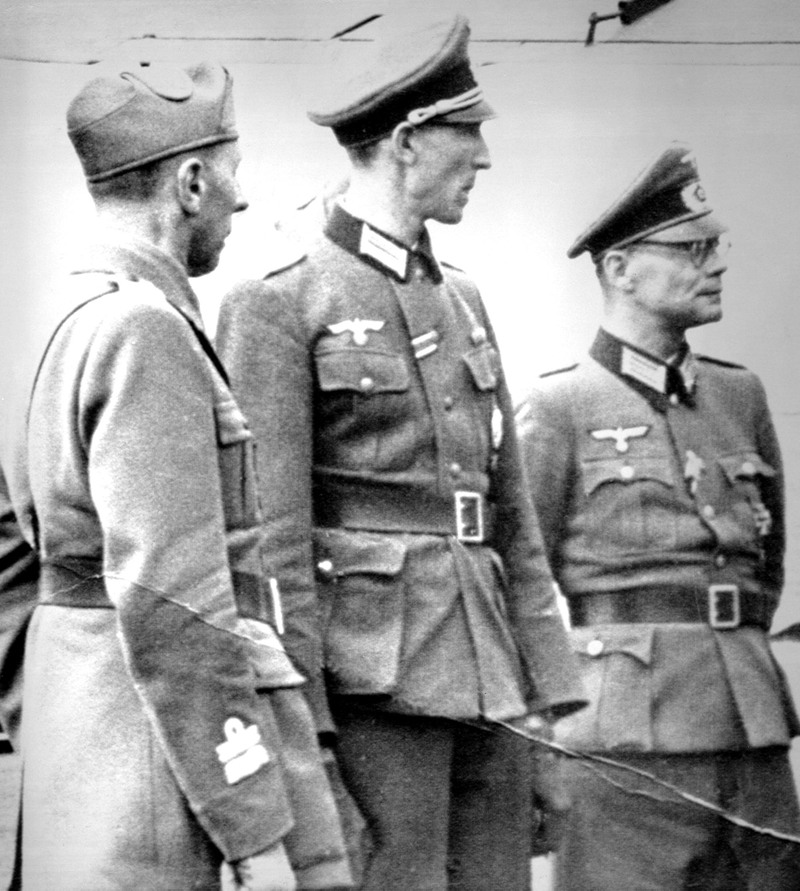
Kurt Waldheim (centre)
Imagine a world in which nothing is ever deleted. All the data, the images, the videos, the scanned documents from down the ages are sucked into vaults of humming servers belonging to a single social media enterprise. Millions of tiny cameras record all but the most intimate aspects of the lives of its willing employees. A vast network of webcams allow you to check out the surf on a Californian beach, or the snow on Mount Fuji. Many of the cameras are mobile – ordinary people are encouraged to contribute to the vast panoply of global image feed by launching personal mini-drones.
A company that started with a mission to encourage transparency in private and public has embraced America in a cult-like grip. 1984 fuses with Facebook and Google. But what George Orwell didn’t foresee was that pervasive surveillance has come about not through compulsion but thanks to overwhelming peer pressure. Those who wish to opt out are becoming a marginalised minority.
In an auditorium full of excited employees, Mae, the central character in Dave Eggers’ novel The Circle, demonstrates how quickly someone can be found when you crowd-source a physical search for a person using networked video camera feeds. She selects a former friend who doesn’t want to be found and is now trying to escape:
“On the screen behind her, Mae saw that two SeeChange cameras, positioned on the bridge, had been added to the grid. A third came alive seconds later, offering a view of the span from the riverbank far below.
Now another voice, this one a woman’s and laughing, boomed from the third drone: “Mercer, submit to us! Submit to our will! Be our friend!” This last entreaty was rendered in a child’s whine, and the woman transmitting through the electronic speaker laughed at its strangeness, this nasal entreaty emanating from a dull black drone.
The audience was cheering, and the comments were piling up, a number of watchers saying this was the greatest viewing experience of their lives.
Mercer turned his truck toward the drone, as if intending to ram it, but it adjusted its trajectory automatically and mimicked his movement, staying directly in sync. “You can’t escape, Mercer!” the woman’s voice bellowed. “Never, ever, ever. It’s over. It’s over. Now give up. Be our friend!”
I was halfway through writing a review of Eggers’ latest work of art when life intervened, in the form of the ruling by the European Court of Justice that we have the right to be forgotten.
The judgement was against Google. The two plaintiffs in the case were a businessman who went through a financial crisis, and a plastic surgeon accused of botching an operation in 1991. The court determined that links to on-line evidence of our past antics, misfortunes, sins and misdemeanours can be erased from the databases of search engines if they are no longer relevant or their existence is no longer in the public interest.
Yet to be defined is the meaning of relevant and public interest. Would it have been in the public interest to know that Kurt Waldheim – the UN Secretary General in the 1970s – lied about his war record as an intelligence officer in the German Wehrmacht? Was his war record no longer relevant to his candidacy for the Presidency of Austria?
If you search on Google for Waldheim, you will find prompts that include “Kurt Waldheim war crimes” and “Kurt Waldheim Waffen SS”. Yet he was never convicted of a war crime. Relevant? In the public interest? Something of a moral dilemma perhaps. Judge for yourself after reading his obituary in the New York Times. Under the EU ruling Google could probably defend the inclusion of this link on the grounds that Waldheim was a public figure, and that there was a “preponderant public interest” in the subject. But then you have the problem of defining public figure and preponderant interest. For example, does one become a public figure through on-line exposure, possibly abetted and proliferated by Google? A blogger, for example, or someone accused of a crime that attracts a large amount of public attention, even though the person is subsequently acquitted?
Also to be determined whether the ruling is likely to be extended to include the search engines of content providers. Are we just talking about the likes of Google and Bing, or does the ruling also apply to any application or content provider that has its own internal search engine. This blog, for example. Or Facebook, through which we can winkle out all the embarrassing photos and posts from the lives of people who might wish to re-invent themselves as sober citizens after a youth of debauchery and excess – especially when the headhunters, HR watchers and journalists come sniffing.
The judgement itself, for those of you who have the patience to plough through it, is here. I hear the sweet sound of lawyers cackling with glee.
If it ends up having real teeth – enforcement will be down to national agencies and judiciaries, so uniform implementation is by no means guaranteed – it seems to me that the European Court of Justice has gone some way towards restoring the natural way of the world. For the past decade we have had unprecedented access to relatively unmediated information that would have been impossible for an ordinary person to find without substantial expenditure of time, and, by implication, money.
Before Google and its less sophisticated predecessors there was little – apart from state and commercial secrets – that you couldn’t discover if you were prepared to put a team of researchers or private detectives to work. Suddenly much of that information became available through internet searching. True, you have to exercise critical thinking skills to extract diamonds from the dross. But the information is there, waiting to be turned into knowledge.
So at least for those of us who live in the EU, our ability to find stuff will depend on decisions about relevance and public interest that will not be ours to make. If the EU ruling is enforced, there will once more be two classes of information – what governments and the wealthy can see, because they have the necessary resources, and what is easily available to the rest of us.
Thinking globally, you could also say that there are now three classes, segmented by location: countries where links are purely at the discretion of the search engine operators, such as the US, countries where they can be erased on request, such as Germany, and countries where they are mediated by the state on a massive scale, such as China. Multinational companies will therefore find it easy to avoid privacy strictures simply by doing their searching in the most open environment.
For those concerned about a right to privacy, the ruling will only bring limited comfort. There is a vast amount of information relating to each of us that will never be linked to Google. Given that governments frequently outsource their data collection and maintenance, and some government agencies are willing to sell the data, there will also be a yawning gap between bought data and stuff obtained for free. Who owns this stuff? Clearly not us. And the frequency with which personal data stored by private companies – eBay being the latest example – is hacked into by criminal and even state players suggests that on-line privacy cannot be guaranteed, nor ever will be.
Ultimately what is important is not just the collection and maintenance of data but the truth or otherwise of the information, what people do with it and what decisions are made on the basis of what they discover.
No freedom of information legislation will fully allow a person to understand decisions made relating to themselves, because decisions, when they are documented, can be dressed up under false premises.
Take hiring decisions, for example. The records might show that “I decided not to hire you because you did not have the appropriate qualifications”. The real reason might be because you are black, Muslim, lesbian, have unpleasant body odour or poor dental hygiene. Or simply because “I don’t like you”, or “you’re not like me”.
Equally unfathomable are the decisions of juries. Supposedly arrived at on the basis of fact and reasoned argument, if this were the case there would be no interest in courtroom dramas. Abu Hamza, for example, might be, by Western moral standards, a thoroughly bad man. But I read nothing from reports of his recent trial in New York that suggested an open-and-shut case against him for the terrorist offences he was alleged to have committed. Did the fact that he was being charged in a city grievously wounded by people with whose views he clearly sympathises, and that with his self-induced disabilities – one eyed, hook-handed, he looks like an archetypal baddie -have anything to do with the speed of the jury’s decision to find him guilty?
If ever there was a moral maze, it lies in the confusion surrounding free speech, access to information and the ability to hide it. A small illustration can be found in the pages of emotional on-line comments about the Wall Street Journal’s article on the EU court judgement.
In my rather cynical world view, the legislation, court judgements, ringing declarations and constitutional guarantees are vain attempts to stem the tide of human curiosity and ingenuity. Freedom of speech and information, and the right to privacy are illusions. If you want them, you have to actively fight for them. If you have time, money, intelligence and motivation, you have a better chance of speaking without fear of persecution and disapproval, you can discover information that others can’t, and you have a reasonable chance of reinventing history – be it your own or that of others. But there are no absolutes, otherwise thousands of journalists, historians and lawyers would be out of a job.
The internet hasn’t changed these constants – it’s just enabled us to howl more loudly about them.
If you’re one of those people who engage in endless debates about rights and freedoms that exist only in theory, you could do worse than to check out The Circle. It’s a thought-provoking, witty and compelling view of how technologies used by Facebook and Google seduce us effortlessly, and where those technologies might lead us to in the very near future.
But right now, I have to run off and change my eBay password in case those evil hackers – who presumably have the time, money, intelligence and motivation – get hold of my personal information.

Even if you’re not a reader of Britain’s Sunday Times, you would be hard put to ignore the paper’s annual hullabaloo over its Rich List – a compendium of the country’s wealthiest thousand residents.
I wonder how the remaining 63,704,000 inhabitants of this sceptered isle greet the news that London has more billionaires than any other capital city, and all the other statistics showing that the rich in Britain are getting richer by many times the rate of inflation. Do we choke over our cornflakes and pray for the revolution? Or do we pontificate over the theories of Thomas Piketty, this year’s economics superstar, whose book about the consequences of rising inequality is likely replace Steven Hawking’s Brief History of Time as the work of non-fiction bought by the most people but read by the least? Or do we spit out a couple of well-chosen expletives at those rich bastards and return to our usual Sunday chores?
And what of the thousand themselves? Do they anxiously check the list to make sure they’ve made the cut? Or do they howl with indignation at being unfairly downgraded, as Prince Alwaleed of Saudi Arabia did in his famous spat with Forbes Magazine? Or do they sigh with resignation, reach for the phone and order a few more goons for their personal security team, and prepare to repel the army of stalkers, paparazzi and chancers who come knocking at their doors in search of a piece of the newly-publicised action?
For me, the best thing about the Sunday Times Rich List was the delicious set of fat cats – portraits of Richard Branson, Simon Cowell and Elton John (as above) that show the miraculous ability of the human brain to recognise a face from a handful of visual prompts. Marvellous work by photographer Tim Flach and ad agency Grey London.
As for the rich themselves, I’ll resist the temptation to blather on about how envious I am at their ability to buy pieds-a-terre in any part of the world, to move from country to country in search of the most advantageous tax regime and to satisfy every whim that money can buy. Nor will I sermonise about wealth not necessarily making you happy, or point out that they can get sick, depressed and lonely, and that each and every one of them eventually dies like the rest of us.
But one thing does strike me after a brief perusal of the list. Those who do not feature on it are far more interesting than those who do.
Even in the shallow backwaters of the moderately wealthy, with only one exception you will not find a single British politician, judge or civil servant – serving or retired. The exception is Michael Heseltine, who founded his publishing business before getting into politics.
If it were possible to penetrate the opaque layer of privacy surrounding the assets of politicians in Russia and China, and to a lesser extent in countries like Thailand, Malaysia and Japan, you would find rich lists heavily populated with the families, friends and business associates of those who hold political power. The same applies to the wealthy countries of the Middle East and any number of poverty-stricken African nations.
This is not to say that public servants in the United Kingdom are immune to influence by the wealthy. But clearly they are not enriching themselves to any great extent as a result. Political donations do not arrive through the goodness of the donor’s hearts. Yet we still have a culture that takes a dim view of the untoward exercise of influence. Hence the resignation last month of Patrick Mercer, a Conservative Member of Parliament exposed as tabling table parliamentary questions for cash, and thirteen years ago the demise of Labour minister Peter Mandelson on suspicion – never admitted or proven – that he pulled strings in order to secure British passports for the Hinduja brothers, who now sit proudly at of the top of the UK Rich List.
Elsewhere in the West there are numerous examples of the wealthy using their money to obtain political office. In the US, the Kennedys, the Romneys, the Rockefellers, and more recently Michael Bloomberg. In Italy, Silvio Berlusconi. And in any number of countries the wealthy use their assets to influence rather than exercise power through democratic means. Take Sheldon Adelson, for example, whose massive donations to the Republican Party have significantly shaped opinion in the United States.
In Britain the time has long passed when landed aristocrats such as Lord Salisbury – the last Prime Minister to serve from the unelected House of Lords – used their power to achieve high office. And even when the wealthy ruled the roost, their exercise of power tended to be motivated by the interests of a ruling class, if not the nation, rather than personal gain.
So for all the implications for the long-term future of the United Kingdom of increasing wealth sticking to a small group of individuals while millions struggle on zero-hours contracts that pay the minimum wage, I still give thanks that I live in a country where the great and the good are not entirely measured by dollars in the bank, and where political corruption is not the greatest of our problems.
And at the risk of sounding pious, as I write this I’m sitting out in glorious sunshine surrounded by flowers in bloom, fresh leaves on the trees and an abundance of exuberant birds and insects. I can see, hear, smell and taste the incomparable English spring. And that is an experience no money can buy.
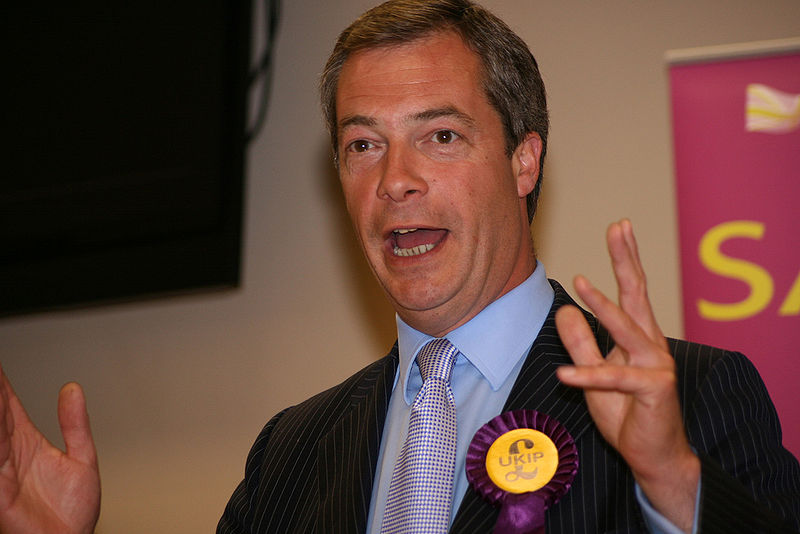
A couple of thoughts about Nigel Farage, esteemed leader of Britain’s UK Independence Party.
Images of the great man supping a pint of real ale at the bar of some cosy-looking pub have become the most powerful “man of the people” icon in British politics since Harold Wilson’s ubiquitous pipe. Given that former Labour Prime Minister was a former Oxford don, and Farage a stockbroker’s son who spent much of his career as a city commodities trader, it shows that a well-chosen prop can convince most of the people most of the time.
Farage and the UKIP also bring to mind the 1970s punk boom. Whether he most closely resembles Malcolm McLaren, the godfather of punk, or Johnny Rotten, the main man, is debatable. Perhaps Paul Sykes, as UKIP’s biggest benefactor, deserves the McLaren tag more than Farage. But the comparison between a grass-roots musical movement orchestrated by a manipulative impresario and populated by a bunch of kids who couldn’t play their instruments (but could make a lot of noise), and a political party looking to give mainstream politics a bloody nose by “telling it like it is” on immigration, Brussels and any other subject you might hear in the pub towards closing time is irresistible.
I also admire UKIP’s “Bill Grundy moments”, in which election candidates and donors pop up with racist, sexist and xenophobic outbursts, and are immediately disowned by the party. I refer to the infamous Bill Grundy Sex Pistols interview in which Johnny Rotten and Steve Jones came up with a choice selection of expletives on live TV. After several other carefully-selected outrages, The Pistols were rewarded with the cancellation of their EMI recording contract, signed up with A&M Records, trashed their offices, were released again, then signed up with Virgin Records and sold a truck-load of records on their back of their expertly-won notoriety.
Of course I’m not saying that Farage and UKIP put their supporters up to advising Lenny Henry to emigrate to Africa, declaring that married women cannot be raped by their husbands, that gay men are incapable of love and that female party supporters who don’t clean behind their fridges are sluts. But you could argue that for UKIP no less than for 1970s punk bands, bad publicity is better than no publicity. And if you were of a cynical disposition, you could suspect that there could be a little “you might think that, but I couldn’t possibly comment” going on.
These days mainstream politicians avoid saying what they really think about UKIP, as Prime Minister David Cameron did in 2006 when he described them as “fruitcakes, loonies and closet racists”. They realise that insulting people who previously voted for them but are now leaning towards Farage’s party might be counter-productive.
But I’m not a politician, and I have no problem with upsetting millions of my fellow citizens when I say that I would rather have the Pub Landlord running my country than this latest incarnation of the Monster Raving Loony Party.
There have always been fruitcakes in politics, some less benign than others. I suppose it’s our good fortune that the social media provides them with a platform they’ve never had before, so that an undisciplined rabble of a party like UKIP allows us an unfettered insight into the wilder shores of its support, whereas the armies of communications people employed by the mainstream parties quickly sniff out and snuff out most damaging utterances from within their own ranks.
Fortunately the good voters of Britain would seem to be far too sensible to treat UKIP as anything other than a suitable vehicle for registering a protest against the policies of the mainstream parties. Should I be wrong, and the electorate seriously considers voting a large number of UKIP candidates into our own Parliament – as opposed to the European Parliament, which most UK voters consider an irrelevance – I’ll seriously consider emigrating to a proper democracy where the voters always make the right choice. North Korea perhaps.
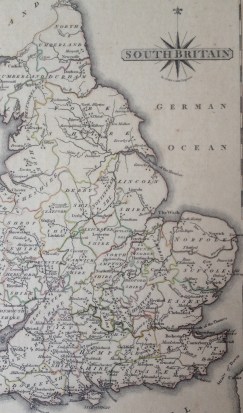
A hundred years ago Great Britain was about to go to war, as we have been constantly reminded by the flood of commemorative books, TV documentaries and drama. Much of the material focuses on the land war – in France, Belgium, Germany, Austria, Italy and Turkey. Aerial warfare was in its infancy in 1914, though it came into its own in the latter years of the Great War.
When we British think of the Great War, the dominant story is of millions of our soldiers caught in the murderous battles of Mons, the Somme, Amiens and Passchendaele. Like so many others, I have relatives buried in war cemeteries dotted around northern France and Belgium. I have the diaries of my grandfather, an artillery officer who served in the Western Front between 1916 and 1918. His account vividly portrays long periods of inactivity punctuated by days and sometimes weeks of terrifying violence.
We have no lack of material to draw upon. A few months ago I reviewed Catastrophe – Europe Goes to War 1914, Max Hastings’ account of the first year of the war, in which he places the blame for the war squarely on the shoulders of the German and Austro-Hungarian political and military elites. Over the past three years I have published several excerpts from my grandfather’s diary (here’s one of them). The Imperial War Museum in London is full similar accounts by survivors – and some who didn’t make it – of their small part in the war, unaided by knowledge of the big picture, only aware of what was happening in their small section of the trenches and dugouts that extended from Belgium to Switzerland.
The naval war is less explored – at least among historians and TV producers intent on capitalising on the interest generated by the anniversary. Yet the naval rivalry between Britain and Germany in the two decades preceding the war was at least as significant a factor in Britain’s decision to go to war on the side of France and Russia as the chain of events sparked by the assassination of the heir to the Austro-Hungarian throne in Sarajevo.
To try to understand the naval dimension of the Great War, you could do worse than starting with Dreadnought – Britain, Germany and the Coming of the Great War.
Robert Massie – the author of acclaimed biographies of Peter the Great, the great modernising Russian Tsar and founder of St Petersburg, and of Nicolas and Alexandra, the last Tsar and his empress who met their deaths at the hands of the Bolsheviks in 1918 – published Dreadnought in 1992. It was one of many weighty tomes I inherited from my father, who died a decade ago. Since then it had been sitting in my library waiting for me to get round to it. Massie’s book shows why sometimes it’s good to step off the treadmill of keeping up with new books on your favourite subjects, and to go back to stuff you missed when it was first published.
Before I get on to Dreadnought, a little diversion. Whenever I can get away with it, I like to buy antique maps to hang on the walls at home. I usually have to overcome family objections that we have too many pictures already. But this little map tells an interesting story. It was printed in 1809, four years after the Battle of Trafalgar, in which Lord Nelson averted a possible invasion of Britain by defeating Napoleon’s fleet off the coast of south-west Spain. At that time our main continental rival was France. Victory at Trafalgar sealed British naval supremacy for the century that led up to the beginning of the Great War. And global naval supremacy enabled us to build and administer a far-flung empire that reached its fullest extent during that period.
Look at the area to the east of what the map calls South Britain, and you will notice that the area now known as the North Sea is referred to as the “German Ocean”. The current term started to be used in the 1830s. Just as the narrow strip of sea between Iran and the Gulf states is still a bone of contention between the Iranians who refer to it as the Persian Gulf, and the states on the other side who insist on calling it the Arabian Gulf, it’s almost inconceivable that imperial Britain in the late 19th century would tolerate calling the sea off their east coast after one of its main continental rivals.
But in 1809, Germany did not exist as a political entity, and the adjective German referred to ethnicity rather than nationality. How times changed in the intervening century.
The unifying theme of Massie’s account of the run-up to war was the importance of the sea and shipping in the geopolitics of the age. Britain relied on control of the seas for trade between the homeland and the empire. France mainly focused on the Mediterranean for the same reasons. French colonies were primarily in North Africa, but also in the Pacific, so it needed a strong navy to protect commercial traffic. Germany, however, only unified in 1871. It was a late entrant into the colonial stakes. Until the end of the century it relied on British warships to protect its commercial shipping between the Baltic ports and its colonies in east and south-west Africa.
But in the 1890s, under the young Kaiser Wilhelm II, the German political elite began to believe that the nation would only be recognised as a world power if it developed a navy to match its formidable land army. And hungry for more colonies, it chafed at the prospect of having to rely on British sea power to safeguard the shipping lanes.
Britain, on the other hand, saw very clearly that the security of both homeland and empire depended upon sea power, and was determined to no other nation should threaten its naval supremacy. It had a tiny army compared with Germany, and throughout the 1890s conducted its foreign policy on the basis of what Prime Minister Lord Salisbury called “splendid isolation” from the political machinations of the competing continental powers – Germany, France, Austria-Hungary and Russia.
The modernisation of the British fleet under Admiral John (Jacky) Fisher came at a time when the young Kaiser was beginning to get into his stride. The German Emperor ditched Bismarck, the Chancellor responsible for the creation of Germany from the hotch-potch of princely states under Prussian hegemony, and started to install his own men into the principal offices of state.
Fisher led the design of a series of heavily armoured battleships with formidable gunnery and increased speed. The prototype was HMS Dreadnought, hence the title of the book and the adoption of the generic term for large battleships. Not only were the new British dreadnoughts the largest and most powerful vessels ever constructed, but Fisher pioneered techniques that enabled them to be built in record time.
The strategic imperatives were twofold. First, to protect the British Isles from blockade and invasion, and second, to protect the sea lanes between Britain and its empire. Unlike the continental powers, Britain felt particularly vulnerable as an island, so that in an age without air power its leaders saw naval supremacy as fundamental to national security.
As Britain’s formidable dreadnoughts started rolling down the slipways, Germany embarked on its own programme of capital ship construction. This in turn sparked an arms race that continued through to the outbreak of war. British naval doctrine demanded that fleet should always maintain a ratio of supremacy over the combined fleets of two of its largest potential enemies, which it took to be Germany and France. It had no doubt that the German programme was designed for hostilities against itself. Under Fisher and his successors on the British side, and Admiral Tirpitz, the architect of the modern German navy, an ever-escalating tit-for-tat naval construction race took place.
Britain ended up constructing 36 battleships and 10 lighter and thus speedier battle cruisers. Germany built 19 battleships and 8 battle cruisers. Both sides also invested heavily in destroyers, torpedo boats and submarines.
The cost of the British programme was massive. In today’s money, the dreadnoughts cost around £22 billion in the six years leading up to the war. Compare that figure with the £6.2 billion budgeted for the construction of the two aircraft carriers, that when completed will be Britain’s only ships comparable with the battleships in range and firepower.
When war came, the two fleets remained in stand-off save for the only major sea battle, the stalemate at Jutland in 1915. The Imperial Fleet surface fleet never put to sea thereafter, though German submarines caused massive damage to British merchant shipping.
Was the investment of so much treasure on floating steel monsters a justified expenditure? In terms of their active contribution to the war, you could argue not. But naval historians would probably contend that without the aid of a numerically superior fleet, Britain might have been unable to prevent a blockade. Its transportation of personnel and equipment to the Western Front might have been hindered, and a German Navy free to bombard the coasts of Britain and Northern France could have caused massive damage to the morale and fighting capabilities of the Anglo-French alliance.
There was another less obvious consequence of the massive military spend. As David Lloyd George, Britain’s finance minister of the time, observed with frustration, every pound spent on ships reduced the resources available to spend on solving the country’s urgent social problems. Had his Liberal Government been able to devote more funding to social institutions, the post-war collapse of his party might never have happened. The rise of the Labour Party as the natural opposite pole to the Conservatives might have been delayed, if not ultimately postponed. But that’s just one of many might-have-beens that still provide ample scope for exploration by modern historians.
As we have discovered over the past 70 years, investment in a deterrent that is never used is as potent a guarantor against war as Britain and Germany hoped their battleships would be. The difference was that war at sea was only part of the equation a hundred years ago, whereas nuclear conflict is the whole equation.
In any event Germany’s fleet ended up scuttled in Scapa Flow, and 25 years later the redundancy of battleships became abundantly clear as all sides in the Second World War sent numerous capital ships to the bottom of the sea by a combination of submarine attack and aerial bombardment. The era of the aircraft carrier and the attack submarine had well and truly arrived.
Massie’s book focuses on the rivalry between Britain and Germany in the run-up to the war, so you will not get the balanced panorama of the dynamics within each of the participating powers that contributed to the conflict that you might from Hastings’ book. But Massie is much stronger on the arms race, and on the personalities that launched it, as well as on those who frequently tried to mitigate it.
One the German side he provides telling narratives on the character and roles of the politicians (Bismarck, Caprivi, Bulow, Holstein, Eulenberg and Bethmann-Holweg), the military men (Tirpitz and Moltke), above all, Wilhelm II. He does equal justice to the British protagonists: Admirals Fisher and Beresford, their political masters (Prime Ministers Salisbury, Balfour, Campbell-Bannerman and Asquith, and their ministers Joseph Chamberlain, Haldane, Grey, Lloyd George and Churchill) and the Kaiser’s uncle, King Edward VII.
He is particularly good on the Kaiser and his relatives, Edward and Tsar Nicholas II. It’s hard to imagine today a world in which the heads of state of three of the five major powers are close kinsmen. Though as monarchs Wilhelm and Nicholas exerted far more direct power than Edward and his son George V, Edward wielded much more influence than our current monarch. He was a major participant in the process that led to the Entente Cordiale between Britain and France, for example.
Of all the protagonists, the Kaiser comes over most strongly. Massie describes a man who is mercurial, vain, insecure and , desperate for affection and respect. Yet he is energetic, curious and with a high cognitive intelligence. Unfortunately his low emotional intelligence lets him down. He is seen by his own people as well as his adversaries as something of a loose cannon. In his arrogant and bombastic manner he provides a prototype for the caricature German that the British have loved to mock ever since. Here he is commenting on a report from Count Lichnowsky, his ambassador in London, on last-ditch negotiations with Sir Edward Grey, the British Foreign Secretary, to avoid the outbreak of war:
“England reveals herself in her true colours at a moment when she thinks that we are caught in the toils and, so to speak, disposed of! That mean crew of shopkeepers has tried to trick us with dinners and speeches. The boldest deception, the words of the King to Henry and me: ‘We shall remain neutral and try to keep out of this as long as possible.’ Grey proves the King a liar, and his words to Lichnowsky are the outcome of a guilty conscience, because he feels that he has deceived us. At that, it is as a matter of fact a threat combined with a bluff, in order to separate us from Austria and to prevent us from mobilising, and to shift responsibility for the war. He knows perfectly well that, if he were to say one single, serious, sharp and warning word at Paris and St Petersburg, and were to warn them to remain neutral, that [sic] both would become quiet at once. But he takes care not to say a word, and threatens us instead! Common cur! England alone bears responsibility for peace and war, not we any longer! That must be made clear to the world.”
Harsh words from a man who revelled in his visits to England, wept over the body of his grandmother Queen Victoria and reacted with child-like delight at his appointment as an honorary Admiral of the British Fleet by King Edward.
On the British side, the stand-out character sketches are of Jacky Fisher, the brilliant outsider who transformed the fleet, Winston Churchill, a bumptious, eloquent and hyperactive First Lord of the Admiralty, and Sir Edward Grey, who worked tirelessly to keep the rivalry between the great powers from spilling into war, yet in contrast to the travel-obsessed foreign ministers of our age, hardly ever ventured beyond his home shores. It was Grey whose words upon his ultimate failure to keep the peace summed up the sentiments of his generation as Britain’s war ultimatum to Germany expired: “The lamps are going out all over Europe. We shall not see them lit again in our lifetime.”
Other historians more effectively explain the social and economic backdrop to the Great War. But Massie’s forte is in bringing the human protagonists alive. Whatever the monstrous outcome of their labours, the monarchs, politicians, and military men of Britain and Germany were not in themselves monsters. They were largely rational people, with physical and emotional frailties that informed their attitudes and decisions. Had they been able to anticipate where those decisions would lead them, it’s hard to imagine that any would have trodden the same path.
If you are interested in exploring the dawn of the first truly global conflict to afflict humanity, Dreadnought would be a compelling addition to your reading list.
There is a fatuous debate going on in the United Kingdom at the moment over whether we should describe our country as Christian. It was started by Prime Minister David Cameron when he wrote that we should be more “confident about our status as a Christian country”. Since then politicians, bishops, scientists and prominent atheists have merrily pitched in.
Of course we are a Christian country. Christianity and Christian values are ingrained in our culture, social customs, laws and political institutions. Christianity has inspired our music, our literature and our art. Even for Britons of other faiths, Christianity is a backdrop against which they practice their religion, because its physical and behavioural manifestations are everywhere.
I speak as someone who was brought up as a Christian but whose participation in organised religion faded at the age of 15 – the year in which I was confirmed into the Church of England. Given that I have struggled to find a relationship with God, does that make me an atheist or an agnostic? Neither, because I’m not arrogant enough to say that there is no divine entity, nor is the potential existence of an entity with characteristics that the religious would define as divine a preoccupation that prevents me from getting on with my life.
Having said that, Christianity is in my spiritual DNA. I subscribe to Christian values, because I’ve seen nothing in my life and in the examples set by others that have led me to deliberately re-programme my basic conditioning. I prefer humility to arrogance, forgiveness to revenge, and trust to suspicion. I believe in turning the other cheek, in not judging lest I be judged and in respect for life, liberty and property, even though I have consistently failed to live up to all those values throughout my life.
I believe in heaven and hell, but not as the bible would define them. For me they are not places to be aspired to or feared in another life. They are ever-present places in this world. Places that we can all visit, and that most of us have experienced in one way or another.
Whatever my own reservations about the nature of divinity, I could not conceive of my country as anything other than bound together by some dominant form of religion. For the past 1500 years that religion has been Christianity. For the next millennium, who knows? It could be Islam. It could be some new faith as yet unknown.
You could argue, as the philosopher A.C. Grayling essentially did in yesterday’s Times newspaper, that the opposite of the qualities I espouse have been as much facets of Christian thought ever since the first organised churches evolved, and that many of the beliefs we associate with it are in fact rooted in Graeco-Roman philosophy. I would agree with him on both counts. Religions do not exist in a vacuum, and ever since the conversion of the Roman Emperor Constantine Christianity has been a tool in the hands of the powerful, to be fashioned according to their needs. And at the same time beliefs do not arise out of the blue, so it’s unsurprising that Christianity – like Islam – implicitly or explicitly refers back to the belief systems it replaced.
Yet just as the majority of Muslims do not associate themselves with the attempts of the Salafists to recreate the conditions of original community of believers founded by the Prophet Mohammed in the 7th century, most Christians thank goodness no longer endorse the methods of the Inquisition in forcing conversions, or the use of arms in reclaiming former Christian lands.
But whether it is the gentler, kinder beliefs of the Church of England or the harsh creed of the Salafists, there will be always faith, because faith of one sort or another is a sine qua non of humanity. In other words, humans cannot function in coherent societies without it, even if not all members of those societies share the same faith, or if some have no religious beliefs whatsoever.
If I look beyond the UK, I could not conceive of the Middle East, a region in which I have spent many years, as a region of atheists. If Islam did not exist, the people of that region would likely be Christians – as the majority were in the couple of centuries before Islam – Zoroastrians, Hindus or Buddhists. But atheists? Never.
Should we be thankful that religion is a pervasive feature of human life? It’s very fashionable to blame it for many of the ills of the world – for bigotry, intolerance and inhumanity. At the same time religion has produced great art and heroic acts of altruism. It has provided happiness and fulfilment to countless multitudes.
However I’m less concerned about what faith should be – positive or negative. I’m more interested in the part it plays in our lives. For as long as we have been recognisably human we have felt the need to rationalise the inexplicable by faith in the divine. I can’t think of a single society in human history that has not conformed to this compulsion, which leaves me to conclude that humanity and religion are inseparable.
For all the scientific discoveries that have eroded conventional religious narratives by explaining phenomena that we previously ascribed to divine intervention, there is more than enough mystery remaining for us to evolve in our beliefs and continue to accept the divine. And whatever my personal faith might be, I’m convinced that a world full of atheists would be surely be an infinitely duller and more spiritually barren place than the one we are living in today. Even if Richard Dawkins and his followers were able to make an unanswerable case that we are basically sentient biological computers, the vast majority of us would simply refuse to believe it.
When Tom Holland wrote In the Shadow of The Sword, in which he questioned the origins of Islam and argued the lack of contemporary evidence documenting the life of the Prophet Mohammed, not a single fatwa emanated from the Muslim world in response to what could be judged to be a fundamental undermining of the world’s second most popular religion. Why was this, when Salman Rushdie, Danish cartoonists and blasphemers in Pakistan have been pursued to within an inch of their lives? According to Muslim scholars, because Holland’s theories were so manifestly absurd – and would be viewed that way by any Muslim – that they deserved no further consideration.
And for the same reason, Dawkins’ views will forever be those of a minority, because for the majority the world can’t be explained by science and logic. Life is a mystery, and most people need divinity to make sense of it. They will continue to believe in the divine because they would find the alternative intolerable.
As my father once said when talking about his faith, “without God what would be the point of it all?” To which I would reply that if you need to find a fundamental purpose in life, then a divine element would be an obvious conclusion, whereas most people get on with life without questioning its purpose. They do this either because they’re too caught up in the daily struggle to reflect on such matters, or because in their societies and cultures the divine is a given, so life without God would be unthinkable.
Equally unthinkable would be a world in which each individual worshipped a divinity only in the privacy of their homes. Humanity thrives on common belief and shared values, so it’s impossible to conceive of life without organised religion of one sort or another. If not formally organised, then practised through communal events where people come together in an organised fashion and perform shared rituals.
The most successful religions have always been those best suited to the continuance and coherence of human life. Equally those variants that seek to exclude and marginalise non-believers usually end up being marginalised themselves. The more detailed the articles of faith, the more likely that only a minority will be able to subscribe to them other than by lip-service. So this exclusivity ultimately dooms the belief systems that generate it. If it becomes too difficult to practice a religion, and particularly if adherents are told that only a lifetime of diligent observance will result in them being “saved”, then many will decide to take the chance that their God is more forgiving, and behave accordingly.
You could even risk the wrath of the creationists by arguing that the rules of biological evolution equally apply to the spiritual. Only the fittest religions – those that best help us to live with ourselves and others and thereby maintain the species – survive.
This is why I believe that Muslim Salafism will – along with fundamentalist Christianity and Hindu extremism – fail to achieve any permanent level of ascendancy, even though they might continue to spark conflict and disorder when rubbing up against other faiths for some time to come. This is because the human race is fundamentally pragmatic, and ultimately rejects beliefs that threaten its continuance. Social pragmatism will ensure that inclusive Christianity and Islam will not fade away in the foreseeable future, because the majority of adherents value their relationship with their God over the minutiae of practical observance. Jews who eat pork, Catholics who use contraception and Muslims who drink alcohol will continue to regard themselves as people of faith, even if some of their fellow-believers regard them as cast into the outer darkness.
This is not to say that other exclusive belief systems will not take the place of current ones, because another constant human urge is to belong, even if the rules of belonging exclude others. Which is why we have families, tribes and nations – and religious cults.
Returning to the hoo-haa about Britain being a Christian nation, the established Church of England has evolved since its creation in the sixteenth century. The witch-hunting, heretic-burning instrument of state control created by Henry VIII has turned into an inclusive, usually benign and – some would say – ineffective institution. But it’s still there, and it’s still central to the lives of many of us. The very thing that leads observers to question its survival – its self-effacing nature – is probably what will guarantee its survival.
Imagine, for example, weddings and funerals without the option of a religious ceremony. When the Queen dies, would the nation accept a secular ceremony in preference to the grand theatre of a funeral in Westminster Abbey? And at the other extreme, where would we be without church fêtes, and without the army of volunteers whom churches mobilise in time of crisis?
Perhaps the ultimate test of our spiritual DNA might come if the planet was threatened with extinction by a meteorite. At that point I have a fair idea that the churches would be full to bursting as humanity seeks divine intervention to save it from impending doom.
Christianity is as much in the bones of the majority of the living British as it is in those of our ancestors buried in churchyards the length and breadth of the land – just as Islam is in Saudi Arabia and other Muslim nations.
If the world’s great religions were to disappear, I find it hard to imagine what might replace them, except possibly the heartless totalitarian systems of the 20th century that tried and failed to suppress religious practice, and whose soulless political ideologies caused tens of millions of deaths. I know which world I prefer.
Manchester United’s sacking of manager David Moyes has unleashed a firestorm of column inches in the British media. One of the most thoughtful pieces appears in today’s Times newspaper.
In Manchester United haunted by successor and failure, Simon Barnes, the paper’s Chief Sports Writer, argues that Moyes never had a chance, because autocrats like Sir Alex Ferguson rule by their strength of character and usually leave an unfillable void in their wake.
Barnes cites historical examples of failed successions to back up his case. Attila the Hun, Louis XIV of France, Stalin and Margaret Thatcher were all followed by weak leaders, with the inevitable adverse consequences. Après moi le déluge, in other words. He finishes by saying:
“You can follow the autocrat with a good, understanding, listening people-person and he will fail. You can follow an autocrat with another autocrat and he will fail. You can follow an autocrat with Mother Teresa or Attila the Hun, Le Roi Soleil or Pope Francis, and they will all fail.
Autocracy is a marvellously effective system, wonderfully economical in its decision-making, gloriously tidy in the way it works. And you can get things done all right – you can certainly make the trains run on time.
But the one thing you can’t do is pass it on to the next leader. All autocrats are by definition victims of their own success.”
I agree with him and others who have expressed the same view less eloquently. But only up to a point.
One of the ironies of Manchester United’s downfall this season is that it coincides with the resurgence of Liverpool Football Club. In 2011 Ferguson took some delight in “knocking Liverpool off their perch” by helping United notch up a nineteenth league title, thus overtaking their biggest rivals as the most successful club in English football.
Liverpool are currently favourites to win the Premier League. It would be their first title for twenty-four years. Even if they don’t make it to the top spot this year, they will still have achieved the club’s objective of returning to the UEFA Champions League for the first time since 2010.
Liverpool’s history of management provides an interesting counterpoint to United’s current woes. Like United, the club enjoyed a prolonged spell of dominance over English football. Over two-and-a-half decades, starting in the mid-1960s, Liverpool won 13 league titles, 5 FA Cups and 4 European Cups. Without Bill Shankly – another Scottish autocrat – who took the club from the Second Division and won much of the silverware early in that period of dominance, it’s inconceivable that Liverpool would have achieved that success.
But here’s the difference between Ferguson and Shankly. Ferguson went on into his seventies, amassing a number of trophies that will probably never be exceeded by one man. Shankly retired at the age of 61, and handed over to his assistant Bob Paisley, who went on to win more trophies than his former boss. When Paisley retired, he handed over to Joe Fagan, yet another long-time member of the Bootroom – the team of coaches and assistants Shankly had assembled. Under Fagan, Liverpool kept on winning trophies.
Although the Bootroom culture gradually faded over time, successive managers – Kenny Dalglish, Graeme Souness and Roy Evans – all had long histories of involvement with the club. Dalglish and Souness were illustrious players during the golden years. Evans had been with the club for his entire career. It was only in 1998, twenty-four years after Shankly’s retirement, that Liverpool recruited a manager with no previous association with the club.
The Liverpool story suggests that the departure of an autocrat is not a guarantee of subsequent failure. The difference between the Liverpool succession after Shankly and the current situation at Manchester United was that whether by accident or design, Liverpool had an abundance of managerial material ready to take over from the supreme autocrat.
Manchester United, on the other hand, perceived that they did not. What’s more they allowed Moyes to dispose of Ferguson’s principal lieutenants, Mike Phelan and René Meulensteen. Moyes did appoint two “keepers of the flame”, Phil Neville and Ryan Giggs, to his coaching team, but neither had the depth of experience as coaches as the two men who departed. The loss was not just of experience but of institutional knowledge – “the way things work around here”.
Was Shankly less of an autocrat than Ferguson? That’s a matter of opinion. But what the two examples seem to show is that regimes can survive the departure of a dominant leader if the leader’s surrounds himself with other strong characters – his court, if you like.
It would be too simplistic to blame the decline of both clubs solely on a failure of leadership, or indeed on the crumbling of a culture built up by Shankly and Ferguson. Liverpool and Manchester United have both had to contend with factors beyond the control of their managers. In Liverpool’s case the Hillsborough and Heysel disasters and the uncertainty arising from the club’s previous unfortunate choice of owners, Gillett and Hicks. For United, ownership continues to be an issue as a large slice of profit is sucked out of the business every year to service the debt its current owners incurred in order to buy the club. And the departure of chief executive David Gill coinciding with the end of the Ferguson era created a double rupture.
So the picture is more complicated than simply the inevitability of failure following an autocrat for whom, as Barnes put it, “le club c’est moi”. And for every historical example he quotes to back up his argument, there are others to contradict it.
Take Genghis Khan, an autocrat if ever there was one. His sons and grandsons consolidated and extended the empire he founded. Way before Genghis, Alexander the Great created an empire which his successors – although they carved individual fiefdoms out of Alexander’s domain – ruled for the next couple of centuries, and longer in the case of Ptolemy and his family in Egypt. In the modern day, the Kim dynasty of North Korea continues into the third generation twenty years after the death of the founding autocrat Kim Il Sung.
It seems to me that if you are an autocrat and you wish see your legacy continue intact after your demise, you need to have done several things.
First you need to have instilled an abiding sense of purpose that survives you. John Major did not fail just because he was weaker than Margaret Thatcher. His other problem was that he didn’t believe in the principles of “Thatcherism” as the compelling purpose of his government, and his colleagues by and large didn’t either. Nor did he create a new sense of purpose that galvanised the electorate as Thatcher’s philosophy did.
Second, you need to have created a structure that survives you. In many cases that structure is the family, or a close band of associates who have the talent to keep your show on the road and will not cut each other’s throats after your passing. Kim Jong Il would not have been able to succeed his father without the support of the structure – primarily military – that his father Kim Il Sung created. Kim Jong Il’s son Kim Jong Un appears bent on destroying that structure by eliminating in spectacularly gruesome ways a number of his father’s and grandfather’s closest supporters, which is one of the reasons why political observers are predicting that he will be the last of his dynasty.
Third, you need to have created a sense of tradition that survives the test of time. At Liverpool that tradition still lives, which is one of the reasons why the scintillating football played by Brendan Rodgers’ team is hailed by football lovers, including this writer, as a return to the values of Shankly, Paisley and Fagan.
If you get each of these three elements right – and if your successors enjoy a little luck and manage not to be swept away by events beyond their control or understanding – then your empire stands a fair chance of avoiding the deluge.
In Manchester United’s case, the club’s owners appear to care little for purpose beyond making money.They certainly have no emotional attachment to football. The structure they have created is purely business-driven, despite the presence of Ferguson and fellow United legend Bobby Charlton on the board. The one thing that they have not been able to destroy is tradition, because that lives in the emotions of the supporters and employees of the club.
Liverpool, on the other hand, have an owner in John Henry’s Fenway Sports Group that is acutely aware of the importance of tradition, as fans of Boston Red Sox – also under Fenway’s stewardship -would testify. Under Henry, the club has a strong sense of purpose and probably closer links to its supporters than any of its peers, just as the Red Sox do. It also has a structure – of which current manager Brendan Rodgers is a part but not the sole dominant personality – that would seem appropriate to the long-term stability of a major sporting enterprise.
Much as I cherish the great football moments Sir Alex Ferguson and his teams helped to create, my money’s on Liverpool to forge ahead of their old rival in the decade to come.
As for the fiefdoms of the autocrats, who’s next for the deluge? In football, Cardiff City after Vincent Tan, because of his failure to respect tradition, and in politics, Russia after Vladimir Putin, because of his failure to create structures that do not depend on him. Unless North Korea gets there first, of course.
 59steps