
One of the consequences of lockdown was that for three months we weren’t able to spend any time with our grandson, who is now two-and-a-half.
Of course we saw him on video. He recognised us, would wave and go back to what he was doing before his mum shoved a phone in front of him. But that was not the same as spending time in his company and watching him grow – a developmental flywheel that slowly gains momentum.
Now his mum is back at work, and he comes to us for a day a week, as he did before lockdown.
It’s been such a long time since our kids were at the same stage that I’ve forgotten how two-year-olds develop. Each is different, for sure. Ours were girls. Rupert is a boy. Is it my conditioning that leads me to think that there’s a difference in how boys and girls develop? I certainly don’t remember our daughters as the bumptious, risk-taking, furniture-climbing little handfuls – qualities that we typically attribute to boys in my culture. But I might be wrong. So much of my time in those days was spent with my eye on other balls.
One difference I do notice. Our kids loved stories. It was as if they learned about the world and relationships through narrative. Rupert likes stories too, but he seems to spend far more energy figuring out how things work. He loves clocks, keys, tower-building, furniture-climbing, decanting water from one container to another.
He has extraordinary balance. He jumps off things and lands on his feet. He dribbles a football like a baby Messi, yet nobody has taught him how. His speech is coming on leaps and bounds, though he was few months slower than some kids (girls, curiously enough) of his age.
One of the jokes my wife and I used to share was how mothers we knew when our kids were growing up would proudly proclaim that their offspring were in the “gifted stream” at school. What mother doesn’t think her kids are gifted?
I make no such claim for my grandson, because I have no point of comparison. But one of the delightful results of enforced separation has been that development the parents perceive as gradual appears to the grandparents as a giant leap. This little fellow can tell us what he wants and doesn’t want! He can count to thirty! He can eat his dinner all on his own without spilling food in all directions! All skills that have come together in the space of three months.
None of this has happened by accident. In her nurturing, her patience and her teaching skills Rupert’s mother most definitely is in the gifted stream. Which reminds me how little we value parenting skills – the ability to bring up a happy, curious and engaged child – against other occupations for which we’re paid money, get promotion, win the acclaim of our peers and sometimes fame and fortune.
Not that I’m dissing his dad’s undoubted parenting skills by singling out his mum. It’s just that at this stage of Rupert’s life we see more of him with his mother than with his father. Dad’s time in the spotlight will come.
I don’t get all soppy and sentimental about parenthood. I can’t stand the toe-curling saccherine of Mother’s Day and Father’s Day. I also know from experience that Rupert’s parents are still at the start of a long journey on which the skills of both will be sorely challenged. For example, will they have the emotional intelligence to realise that a teenage Rupert will probably reject them as the spawn of the devil, yet still want to come running back to them at times of need? To be there or not to be there is the ultimate question for parents of adolescents, just as it is for those of us whose children have grown up.
I have two reasons for writing this. First because we – or more specifically, I – spend so much time focused on stuff beyond our power to influence in anything other than a small way, be it politics, pandemics or global discord, that we sometimes forget the minor miracles happening on our own doorsteps. And second, in the hope that Rupert’s generation will make less of a bollocks of the world they inherit than we have.
The key to that hope being realised is the world’s oldest vocation: parenthood.

I have never been to Beirut. But a city is the sum of its people, past and present. I have met many Lebanese people, so I feel a special grief for their capital city.
How is it that a people so gifted, vital and creative should be made to suffer as the Lebanese have over the past four decades? I have no answer. If you’re looking for reasons, you could do worse than read Kim Ghattas’ book Black Wave. which explores the disintegration of the Middle East since 1979.
I lived a short plane ride from the country in the Eighties. Saudi Arabia at that time was full of emigres, refugees from the civil war, who had the precious ability to speak in tongues. Not the gibberish that issues forth from evangelical Christians, but a magical mixture of French, English and Arabic that you will hear in a single sentence. Is that a metaphor for a trading nation that is able to speak the languages of many cultures? That’s the way I look at it.
I have no doubt that Beirut will recover from its latest body blow. Perhaps the trauma of the explosion will be enough to blow away the sclerotic political compromise that has so bedevilled the country since its birth. It needs a government that can get things done rather than tread fearfully through the minefield of competing factions. Failing that, will the city, as it has before, rise again through the efforts of its merchants, entrepreneurs and ordinary citizens?
If decent governance and regenerated infrastructure are silver linings that might be realised after the tragedy, there’s another potential good that might come out of it, even if it’s not directly connected to the latest disaster.
The many videos of the blast show an extraordinary explosion. Not surprising when you consider that 2,500 tonnes of ammonium nitrate blew up. A mere two tonnes of the stuff, in the hands of a terrorist group, are enough to destroy a large building. Current estimates are that the power of the blast was one fifth of the size of the Hiroshima bomb.
Could it be too much to hope that those who witnessed it, including governments all around the world, will be reminded of the destruction and human suffering that would be caused by a nuclear bomb, and make greater efforts to put new agreements in place that limit the risk of their use in war?
Be that as it may, this was a “where were you when…” moment, not just for the people of Lebanon, but for the rest of us who are paying attention from the safety of our undamaged homes. Until something else comes up to divert our gaze.
It’s almost inconceivable that such a grotesque man-made catastrophe should be a deliberate act rather than the result of systemic negligence. Naturally, though, the Lebanese will be looking for someone to blame. Conspiracy theories have already started drifting on the electronic breeze.
In one sense it doesn’t matter how it happened. Somewhere in the world there’s a dam that will break, a bridge that will collapse, a virus that will escape confinement, a fire that will destroy a tower block. Or perhaps another Chernobyl. What we sow we shall reap. Or, as Donald Rumsfeld would say, shit happens.
We are, after all, human. We are unique in being able to create great works of art and literature. We can fashion the physical elements into things never created by nature. We’re also capable of wreaking havoc and destruction like no other species.
The world is safer for humans that it was a hundred years ago, at least in some respects. Where international standards prevail, usually less accidents take place. Less planes fall out of the skies thanks to the process of learning though mistakes. Despite or perhaps because of Chernobyl, nuclear safety appears to have improved.
But over the past century, the potential for hugely destructive accidents has increased. Back then, it might have been a Titanic, a fire or a building collapse. Now it’s an airliner capable of carrying six hundred people, a city, or a whole area rendered unfit for habitation.
Lebanon, already thrice cursed by economic meltdown, coronavirus and rotten politics, will survive this latest disaster. If it is to survive and thrive, most of the solutions will have to come from its own people, if they are allowed to find them. Its gifts are the climate, the beauty of the country and the talents of its people. Its misfortune is its strategic location within the region, its proximity to Syria and Israel and the competing influences of Iran and Saudi Arabia.
Those of us who don’t govern countries, run banks or lead development agencies can do little to help other than to lend our vocal support to our fellow-humans in their suffering, donate to relief agencies and keep them in our thoughts.
The last is important. How many of us still think of the millions of displaced Syrians, of Palestinians stewing in Gaza and Rohingya eking out desperate lives in Bangladeshi camps?
After all, if we think we’re immune to human negligence and iniquity, we don’t have to look far back in our own history to see their effects on us.
And today is the seventy-fifth anniversary of Hiroshima.

When you look back on your life, what was the peak? Was there one, or were there many? And do you remember what standing on that peak meant to you? What did it feel like?
These are the kind of questions motivational coaches ask when encouraging people to visualise success. I ask them of myself occasionally when I try to imagine how it feels to achieve something special. It could be in sport, like Liverpool winning the Premier League. Or politics, as in when Johnson won the last election, or the Brexiteers prevailed in the EU Referendum, much as it makes my toes curl to think of it.
Most of us, me included, go through our lives with our fair share of minor triumphs. When, for whatever reason, we can’t repeat them, we’re not so much jumping off a summit, more a case of rolling gently down a hill of disappointment.
TV viewers in the UK had a rare insight a few nights ago into what it takes to achieve the heights of sporting success, how it feels and what life is like on the down slope. The Edge is about the England cricket team, which went from a miserably low ranking to number one in the world in the space of less than two years, and then back again equally fast.
If you’re not into cricket, don’t give up on me. There are lessons to learn whether you’re an Oscar winner or a prize pumpkin grower.
The period in question was between 2008 and 2014. It began with the appointment of Andy Flower, a tough Zimbabwean who was a first-rate player, as head coach. If you’ve ever encountered a rugby player from Southern Africa, you’ll know what I mean by tough.
With the aid of a new captain, Andrew Strauss, Flower forged a team ethos out of group of talented individuals who included Kevin Pietersen, one of the greatest batsmen of the age, but awkward, cussed and sensitive. Preparation for the summit, a tour of Australia in 2010-11, included a brutal army-style boot camp in Bavaria. It worked. One of the hardest tasks for any national cricket team is beating the Aussies on their home turf. For England, it’s nirvana. England crushed them, and won the series at the inner sanctum of Australian cricket, the massive Melbourne Cricket Ground, in front of ninety thousand baying home fans.
Later that year, with a home series win against India, England made it to number one. Before long, it all went pear-shaped.
Injuries, spats between players, most notably involving Strauss and Pietersen, and a relentless schedule that would have sent cricketing superstars of an earlier age, like W G Grace (above) to an early grave, came to a head when England returned to Australia. They were battered, bruised and ultimately crushed by a resurgent home team who went at them with vicious intent.
Several of those involved went into a downhill spiral. Their careers never recovered. From the interviews, many of them painfully honest, you sense that their lives have never recovered either. It was desperately sad to see Jonathan Trott, one of the people worst affected, still in tears five years after the event.
Others survived and prospered. Two of them are still playing at the highest level and made vital contributions to England’s recent series win over the West Indies.
At which point you might say what the hell – it’s only a game. Not for these guys. Cricket was at the centre of their lives. It’s the same for footballers, golfers and other elite sportspeople who make it to the top and spend a few brief years as the focus of mass adulation. And then what? How do you cope with the rest of your life when you go from being a superstar to a washed-up celebrity making a living out of reality TV, or perhaps fading entirely out of the view of your adoring public?
How was life for Neil Armstrong, or for a soldier whose ultimate moment was storming a hill seventy-five years ago?
We focus on training for success in any field. Battalion commanders, business executives, football coaches become heroes when they instil esprit de corps in teams, and when they coax performance out of individuals beyond what the person thought possible.
But it seems to me that the work of those who help people face the downward slope is both unrecognised and unrewarded. This is partly because there’s little profit in helping people manage what they see as their decline. Yes, there are therapists and life coaches. For those who bear the physical scars there are doctors who deal with chronic pain. And yes, many people build new careers after outstanding success early in life. Many don’t though, and spend the rest of their lives aching at the big gap that success in any field has left.
This is not just a problem for elite sportspeople. We all eventually have to face the the possibility that our careers are in decline. Our earning power is on the wane, or possibly non-existent. Many of us respond by finding new challenges that have nothing to do with money and career trajectory. But others – the ones who are aching inside – hit the bottle, suffer from depression and all too often decide to end their lives.
In the UK, fairly early in our working lives we’re encouraged to prepare for our retirement by taking out pensions. Why, then, aren’t we also encouraged to prepare mentally for the downhill slope? You would have thought that the cost to the state of treating age-related depression, dementia and other illnesses is sufficiently high for us to invest a little in this field. Call it decompression therapy, if you like.
You might also think, if profit is your motive, that there are plenty of bucks to be made from a self-help tome along the lines of How to Grow Old Gracefully. Or even disgracefully, so long as in the process of your disgrace you aren’t splurging money you don’t have pretending that you’re still young and, unbeknown to you, attracting the ridicule of those who are still young.
Perhaps mine is a very British concern. If you’re an American, society will tell you you’re on your own, buddy. Which perhaps explains why so many more Americans belong to a church, which often steps into the breach as a carer of last resort. Either that, or you go buy yourself a self-help book.
Either way, a society that rewards us for success and then abandons us to find our own way on the slow trudge towards oblivion can hardly be called enlightened. Perhaps our government, in its new-found enthusiasm for public health programmes, won’t stop with it’s efforts to turn us from fat to fibits and bicycles, will nudge us into thinking more about dealing with the mental impact of knowing that our best days are behind us. Or at least to find new best days to enjoy, rather than cower behind our front doors waiting in dread for the grim reaper, or the viruspolizei, whichever comes sooner.
Meanwhile, back at the ranch, England are in action again tomorrow against Pakistan. I hope the younger players have watched The Edge, or else talked to those who went through the days of glory and despair. Perhaps they have a coach who’s trotted out the old Kipling chestnut:
If you can meet with triumph and disaster and treat those two imposters just the same….
Perhaps not. After all, winning’s everything, is it not?

Thanks to artificial intelligence, this blog and millions of other utterances will soon sink into a swamp of incredulity. As in, nobody will know for certain whether the words I’m writing come from me or from a computer. Thanks to a miraculous piece of technology called GPT-3, all I have to do is come up with a few sentences, and the computer will complete the post. And, based on results I’ve seen, make perfect sense – perhaps better sense than me.
I wish it had been available ten years ago. I would thereby have been saved the effort of writing over a thousand posts and a million words. Though probably I wouldn’t have bothered.
The implications of GPT-3 and its even smarter successors are mind-boggling. Imagine you wrote a letter or email of complaint to the CEO of a utility or mobile phone company. The software would be able to read your letter, make sense of it, and draft a meaningful response rather than the blatherous vanilla reply that usually comes from an executive far too busy to bother themselves with our particular problem.
Now imagine that you run a vlog that posts to YouTube. I’ve often thought about doing this using the content that you see in this blog, but to be honest, it’s a hassle. I’m not particularly photogenic, at least not at six in the morning. Though I like the sound of my voice that’s no guarantee that anyone else might.
So, using another technology called Deep Fake, that creates utterly convincing videos of people who either don’t exist or do exist but have had their heads substituted by someone else’s face, imagine that I could hire, say, the face of Tom Hanks and replace my voice with that of Richard Burton or Anthony Hopkins.
All I have to do is feed in the words, and Tom and Tony do the rest. Fine, so long as people realise that the words come from me. Also fine, so long as the ever-reasonable Hanks unwittingly lends his face to some right-wing shit-stirrer who wants to summon the militia from the hills in order to defend Donald Trump after Biden’s whipped him in November.
In fact, what if the social media is so saturated by AI-generated stuff that’s utterly plausible? If we’re no longer aware that a real human has anything to do with 80% of the content we view on the social media, as opposed to the rabble of fairly obvious bots that currently infest Twitter and the like, then the human content eventually gets crowded out. At that point you’ve arrived at a stage that often occurs in an epidemic. A particularly virulent bug kills everything in its path, and eventually runs out of organisms that it can infect. It therefore dies out, because it’s too successful for its own good.
A similar situation could also occur with the social media, because I doubt whether most of us would want to be fed a constant diet of AI-generated opinion, even if it actually makes more sense that most of the human-created stuff that it’s replaced.
Then, according to a blogger who’s posted an interesting article on the implications of GPT-3, the only spaces in the internet where we can be sure that we’re looking to content that has come from humans will be private areas – probably at a cost – in which the authenticity and humanity of the contributors has been verified.
The likes of Mark Zuckerberg and Jack Dorsey of Twitter are unlikely to be very sanguine about this prospect, because it threatens the entire existence of their current businesses. They either create these private spaces or they die.
I’m making a very big assumption here. It’s that people who hoover up stuff on the social media actually care whether the stuff they’re reading or looking at comes from a human or a computer, so long as it tells them what they want to hear. If they don’t care, then the social media will be reduced to a sump of propaganda that will serve even more than today to amplify people’s prejudices.
An interesting prospect. Fake news burns itself out? The mainstream media regains its credibility?
Whatever the outcome, I suspect that we will be hearing much more about GPT-3 and similar technology for the foreseeable future.
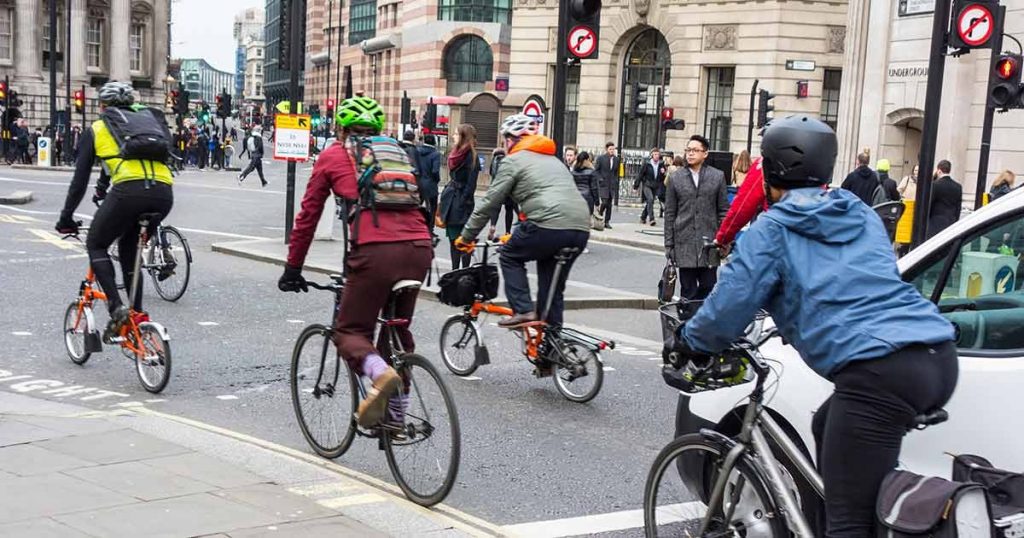
Sometimes I’m ashamed of how cynical I’ve become in my old age. I offer an example. This morning I read a delightfully idealistic fantasy of post-COVID life in big cities. Gaby Hinsliff, writing in the Guardian, extols the virtues of the fifteen-minute movement, which advocates that our cities should be transformed into villages in which everything we need for normal daily life is within a fifteen-minute walk or cycle ride.
Not only will we save the planet by reducing transport emissions, but we will level up – in other words, regenerate neglected areas and turn them into versions of Hackney, where currently middle-class millennials rub shoulders (or elbows, I guess) with drug dealers and knife fighters. In Gaby’s ideal fifteen-minute cities, high earners who have saved money on commuting, Pret sandwiches and suits will be:
drawn to spending it on services that go with the grain of their changed lives: hub workspaces, where lonely home workers can rent a desk alongside others, or cosy neighbourhood joints that make them feel comfortable about going out to eat again.
There will be affordable housing, a decent supermarket, artisan shops and all the rest of the stuff you would expect to find in some of London’s “edgy-but-cool” inner city havens.
Yep, and the big rock candy mountain as well.
No matter that you’ll have to tear down the rat-infested fire traps doubling as tower blocks, and find decent jobs for all the people who are no longer required to get up at three in the morning to take the first train in to their city cleaning contacts. There are only a certain number of barista vacancies in Dulwich and Dalston.
You’ll also have to persuade those who may have enjoyed the experience of working from home that this is forever. How long before they start hankering for the gossip, the office politics and the ceaseless manoeuvring for promotion by being the last person to leave the office?
As for building local communities, I suppose that’s a laudable aim as long as you understand that in modern cities, or rather the inner city areas we all want to see regenerated, communities, like the people who create them, are transitory things. Half the people want to move away to better jobs and safer lives, and for the other half are at the stage in their lives when they crave the excitement, the vibrant creativity that results from many ethnic groups living close together. And, of course, the fact that many of their friends from uni live nearby.
So these communities, where a hundred years ago people would have spent their entire lives, are now largely transitory. Not quite pop-up communities, but definitely places where you live for a while until you can afford to move on. And if you can’t afford to move, you either sink into apathy or you make damn sure that your kids can.
When I look back at my life trajectory, I ask myself if the dynamics of the city life that I experienced were so different in the Sixties and Seventies. I went to university in Birmingham and for the following decade continued to live within fifteen minutes by bus from the campus. I couldn’t afford a car, so I didn’t bother to learn to drive until I could. The places where I lived, in flats and house-shares, were full of people I met at university. Moseley, Kings Heath and Harborne were my stamping grounds. We didn’t have craft beers and internet cafes, but we did have pubs, music, curry houses and each other’s places for some riotous assembly.
Then, at the age of 29, via a circuitous set of circumstances, I ended up in Saudi Arabia, where I spent most of the next decade. I got married, we started a family and when we came home we bought a house in a small Surrey town utterly different from Moseley. Which is where, apart from some further excursions to the Middle East, we have remained ever since.
If you judge it by the ideals of the fifteen-minute movement, my town is a deprived area. Any sense of community is negated by preponderance of people who live in gated estates who might pay lip service to the idea of sharing space with other people, but who actually want to keep themselves to themselves, save for visits to Waitrose, the occasional night out at a “cosy local restaurant” and maybe a trip to the movies five miles away.
We have no local newspaper, though there is an online version. Once upon a time there was a communal hall, but that closed years ago. The local hospital burned down a while ago, to be replaced by a couple of general practice surgeries in portakabins. We do have plenty of park space, as well as good schools and supermarkets, but “community activities” are far and few between beyond those that are centred on schools.
That was my journey, and you’d be hard put to convince me that the fitbit-wearing, yoga-panted vegans in the inner cities aren’t on the same road themselves.
Our town is as far from edgy as you could possibly imagine. And of course I was joking when I said it was deprived, which is not to say that nobody you could call deprived lives there.
So where I live, COVID is hardly likely to force a lifestyle change. All it’s likely to do is put the aspirations of its population on hold for a while. As soon it’s no longer a dominant factor, be it in six months or three years, they will be back on their trains to their offices in the city or the outlying suburbs, pursuing their goals of endless upward mobility.
As for city-dwellers, I’m afraid it will take much more than a few affordable housing estates and supermarkets to create permanent communities that care for each other from cradle to grave. Cities will remain as they are: a permanent crust of the suburban entrenched that encloses an endlessly shifting population. A bit like the planet we’re trying to save, actually.
I hate to pour cold water over the dreams of idealists, but in my humble opinion the entire structure of our country, with its entrenched interests and its inequality, its greed and its guest-workers, and its relentless pursuit of what others have, will have to change if fifteen-minute cities are to become a reality.
Mass impoverishment through economic collapse is only likely to lead to existing power structures being replaced by others whose main purpose will be to constrain and restrict rather than to liberate and empower. The imperative will be keeping the show on the road.
Will COVID create these conditions? Possibly. To assume that once the virus has done its work, people will be focused on anything other than their own struggles for economic and social survival, is naive at best.
That’s not to say we shouldn’t dream. Fifteen-minute cities are splendid things. I lived in one once, after a fashion. But it will take more than a wodge of government money to make them happen. You could argue that it will take a revolution. Or an apocalypse.
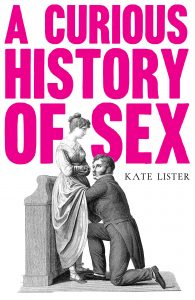
If you’re looking for some light relief (to coin a phrase) from the troubles of the day, you could try reading Kate Lister’s A Curious History of Sex. I won’t go into the contents in any detail, since this isn’t an adult blog.
But suffice it to say that Lister, who covers the whole gamut of sexual activity in varying levels of detail, deals with her subject in an academic style, with loads of footnotes, references, a huge bibliography and a comprehensive index. But she does so with a lack of the stuffiness and arcane language you would expect from someone who makes her living as a university lecturer. In fact the book is laced with wicked humour that’s entirely appropriate because, as we all know, sex can be a very funny subject.
We meet many of the usual suspects, from Casanova to Kinsey, Lord Rochester to D.H. Lawrence, and a number of earnest but little known inventors who over the ages have come up mechanisms both to encourage and prohibit the art of procreation and the enjoyment thereof. The illustrations are almost worth the investment on their own.
In case you think that this is a smutty book dressed up as a serious academic tome, be reassured. It’s neither, though there’s plenty of smut as well as scholarly reflection. Kate Lister really knows her stuff, so if you want to know about the history of aphrodisiacs, monkey glands, contraception, sacred prostitution, bicycles and menstrual fetishes, she’s your woman.
Let’s face it, most of us have done it, thought about it, read about it and remembered it, even if for some it’s a theoretical interest. Sex is everywhere, whether we like it or not. So it surely does us no harm to delve into the subject in a little more depth than we might if all we encounter beyond our own experience is bonkbusters, adult websites and R-rated movies.
Having said that, it’s not the sort of book you would want to leave lying around when your grandparents come to visit unless you’re pretty sure of their broad-mindedness. Are grandparents shockable these days? I’m not sure, but I suspect that my children’s grandparents, if they were still alive, might have squirmed a bit.
On the other hand, you might find it amusing to read it at the airport and watch the carefully-disguised reactions of your fellow-passengers.
Well worth a read, even if you feel the need to wrap it in brown paper.
Unconscious bias is a very cool concept these days. We talk about it most when we’re examining the causes of racism. Why should a white person feel more threatened when he’s being followed in the street by a black guy with a hoodie than he is in the presence of a white guy wearing Boden?
There are, however, many other causes of bias. Whether they’re rooted in the unconscious or are the result of conscious, known bias depends on the individual. Or at least I imagine so. The difference, perhaps. between “I’m not a racist, but…” and “I am a racist”.
I mention this after watching a video of a group of doctors, one of whom, a woman from Texas, extols the virtues of hydroxychloroquine, the wonder drug that Trump believes cures the coronavirus. My immediate reaction is to ask who is behind this obviously staged event. Steve Bannon, Breitbart and the Republican Tea Party group, it seems. Ah. Then Trump (or his son, not quite sure which) retweets somebody who in turn has retweeted the video:
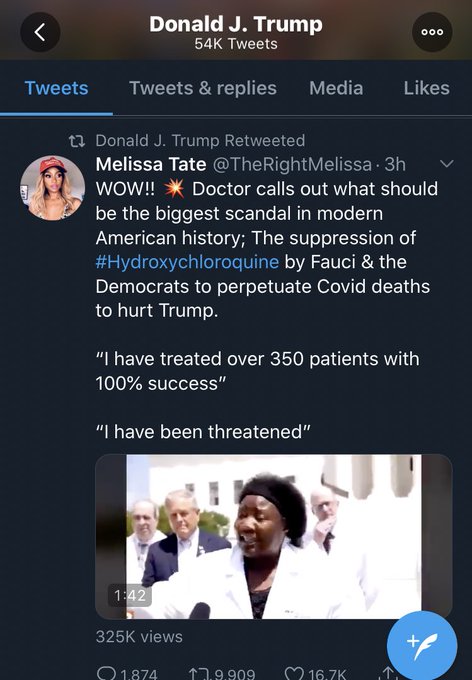
At which point I turn off. Trump propaganda. Not worth wasting brain cells on this stuff. I long ago ceased to see any merit in anything he endorses or claims to believe. As a side issue, the background to this story is hilarious. The doctor in question believes all kind of weird stuff including “alien DNA and the physical effects of having sex with witches and demons in your dreams.” This article in the Daily Beast, from which I’ve quoted, is a must-read for anyone with a dark sense of humour.
So what’s going on here? Basically, I think Trump is an arse. So I ignore anything he says unless it serves to prove that he’s an arse. Why do I think he’s an arse? Because of his repellent personality as much as because of his repellent policies.
So you could say that I’m guilty of personality bias, for want of a better phrase. In the same way as I despise Trump and Boris Johnson, I’m prepared to give Joe Biden and Keir Starmer the benefit of the doubt. Not because of their policies, but because I’m attracted to their personalities. Uncle Joe and Steady Starmer, as opposed to Donald the Bully and Blatherous Boris.
Perhaps my bias has roots in my unconscious, but it feels very conscious to me. The trouble is, as we know, bias towards people we consider empathetic, sympathique, can blind us to their flaws and hidden agendas. Which is why we end up falling victim to charming con artists. And why many of us make decisions primarily based on personality. I like him, therefore, I’ll marry him, I’ll vote for him, I’ll go into business with him, I’ll buy something from him.
Apart from the obvious pitfalls of marrying a charming person who ends up as controlling and abusive, or voting for a politician who fails to deliver, there are other pitfalls to personality bias. Combined with the cancel culture – another vogue phenomenon – it can lead us to dismiss a person’s life achievements because of a single misstep.
Take Dr David Starkey, for example. His personality isn’t everybody’s cup of tea. His public persona is acerbic, sarcastic and bad-tempered. Yet he’s made a career out of his books and and documentaries on the Tudors. I’ve found them entertaining and insightful. Now that he’s cast into the outer darkness because of a racist remark in an interview, he may publish more books, but it would be a brave TV producer who would commission another documentary series from him. He will be forever known for his views on slavery. Part of the reason will be because of his spiky personality and love of controversy.
JK Rowling, on the other hand, will most likely survive and prosper despite her views on gender which so enraged trans activists. Millions of Harry Potter fans will stay with her, and because of her empathetic, compassionate personality she will always win more admirers than detractors.
Are we more likely these days to make snap decisions about people based on their likeability or their repellent personalities? Yes, I think we probably are. It’s nothing new, but I do wonder how many people who have much to offer, and whose talents may have flowered in times gone by, find themselves dead in the water because of the imperative to be liked. Whether or not the social media has anything to do with this I’m not sure. But certainly the key to online popularity is how many people hit the like button in response to something you say or do.
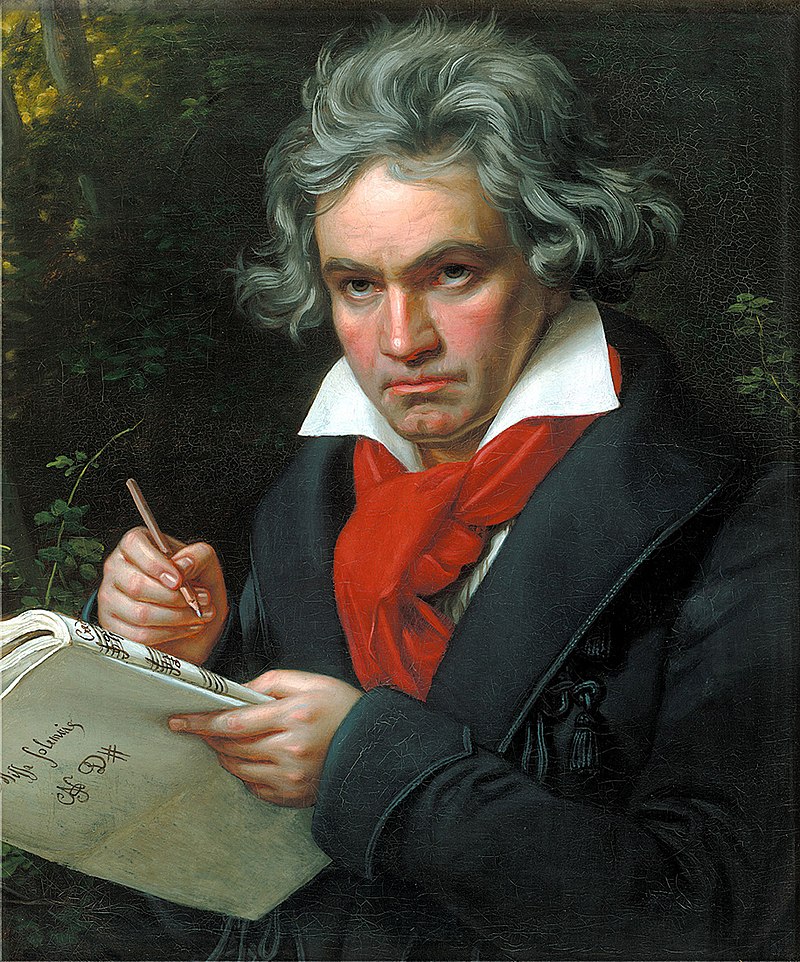
Would Beethoven’s genius have been fully appreciated today if his success had depended on social media approval? Likewise Dylan Thomas, Charles Dickens and a host of other artists, writers and performers whose personalities and private lives would not have escaped scrutiny in today’s censorious culture.
So this is a gentle reminder that nobody is all bad and nobody is all good. That even Donald Trump, the very sight or mention of whom induces in me almost a physical revulsion, might occasionally be capable of doing something that I might consider positive, not that I can think of anything at the moment.
Yes, some people are beyond the pale, and probably would be in any age. We shouldn’t, for example, give Hitler any credit for his love of dogs and watercolours. But let’s not be too quick to write off the awkward, spiky, unpleasant souls whose achievements might nonetheless change us for the better.
Whatever Facebook or Instagram might lead you to think, being likeable isn’t the the be-all and end-all of life.

As a lay observer of the COVID pandemic, I can’t add anything to the science or the politics of the event, though I can shoot my mouth off like Donald Trump and any other ignorant blowhard.
But let me tell you what frustrates me about the way information is presented, both by governments and institutions involved in dealing with the crisis.
Since the outbreak began, we have been assailed by diagrams, such as the one above, showing the progress of the virus. Most of them are by country, and all of them are two-dimensional. Effectively, they’re league tables. Even when there are breakdowns of different regions or cities within countries, the same format is used. London’s doing OK, Leicester’s had an outbreak. New York is over its peak. Florida and Texas are in the middle of a second wave.
We all seem to be holding our breath in anticipation of a second wave this winter, with the added complication of the flu season. Based on what I can see, I’m not sure it will be as simple as that. What if there are second waves now? Will those affected have a third wave, or a fourth? And will they all happen at the same time?
Perhaps the picture we should be looking at will show us that because of the measures taken thus far, the idea of successive waves, as occurred in the 1918/9 flu pandemic, is both over-simplistic and reflects the fact that countermeasures at that time were not nearly as effective as those we have used against this pandemic.
What I would like to see is a form of presentation that shows the rise and fall of infections and deaths in a much more granular and dynamic way. One method would be a three-dimensional, animated terrain map that shows how infections ebb and flow, which allow you to zoom to a region and perhaps even a city to show what’s happening.
Perhaps each peak, that might look like a molehill, could have a different colour to show successive waves. For example, blue for the first, red for the second and purple for the third. To give you an idea of what I’m taking about, take a look at this animated global map showing earthquakes around the world since 2015. Imagine the map a hundred times slower, and you’ll see what I mean.
That way, you should be able to see not only the size of the infection – indicated by the size of the molehill – but where each region is in terms of the progression of the disease. If we see that Leeds, for example, has stayed flat after a first wave, does that suggest that it’s in for a second one soon? We should also be able to look at the intervals between successive waves and understand reasons why an area has been hit with three waves over six months, and another by only two.
It may be that some institutions and governments are using these techniques right now to forecast future molehills, or, if you prefer, spikes. If so, they clearly think that we’re too stupid to understand anything other than a flat diagram. Or perhaps they don’t have data sufficiently granular to be able to show infections on anything other than a broad regional basis.
It would be a bit stupid of any government to share with the public predictions that might either be too optimistic or too apocalyptic. But wouldn’t it enhance our understanding of what’s happened thus far if we were shown historical data in the format I’m suggesting?
Why is this relevant to us ignorant proles? Well, suppose you were looking to go on holiday in France or Italy. You want to look at the history of infections in the region you want to visit. Wouldn’t it be useful to be able to see a dynamic map showing what has happened in the past six months in that region? Far more useful and meaningful, surely than a simple chart showing lines rising and falling, and often at only a national level.
The current situation in the United States shows how unevenly the virus is spreading and being contained. New York has been flat for a while, whereas Texas is in the middle of an outbreak similar to that which hit New York in March and April. Playing whack-a-mole with each successive hotspot is likely to result less in a blanket second wave in the coming winter, but instead in regions at different stages of infection, which is where the US is now.
Given all the science that’s going into developing vaccines and testing drugs to treat the symptoms of COVID, it would be surprising if 3D geographic models didn’t exist.
Many of us have important decisions to make as we emerge from the social and economic wreckage. Surely we need as much information as we can get, so that we can come to our own conclusions about where we want to live in the future, where would be the safest places to go in holiday, and where we might want to work.
Similar models showing economic trends would also be useful. For example, it would be good to see trends in employment by region and city, not buried in some dense statistical report, but in easy-to-understand graphic form. The same goes for business failures, bailouts and reconstruction spend.
Such information, collected and updated in real time and presented without political bias or spin by organisations such as the UK’s Office of National Statistics, would go a long way towards counteracting the sense that our chains are being pulled by leaders who have varying agendas and are only too happy to pull the wool over our eyes.
The cost of recovering from the pandemic will ultimately be met by us, the taxpayers, not by the Bank of Never Never. So surely it’s time that we were treated as grown-ups, not gullible children.

What with the cricket, the pandemic, the labours of writing a daily post and the bizarre political goings-on on both sides of the Atlantic, I’m finding it difficult to catch up with one of my favourite activities: reading book reviews.
So this morning I was doing a review binge. One of the books that caught my attention was a novel set in the 1918-19 flu pandemic. I got halfway down the review to the point where the author is described as living with her female partner and their kids. At that point, I thought uh-huh, I know what’s coming.
And it surely did. A few paragraphs later she talks about realising she was a lesbian at 14, and the effect that this had on her writing career – the sense of otherness that every writer needs at some time in their life.
I don’t doubt her sincerity, and I agree with her otherness hypothesis. But I wonder at what point in the future we stop remarking on sexual orientation as being noteworthy.
Perhaps when Putin has fallen, when imams no longer urge their followers to throw gays off the top of buildings and when thuggish Chelsea supporters no longer beat the crap out of gay journalists.
Also perhaps when we have worked out a commonly acceptable protocol within which people can change their gender without arousing fear and paranoia rather than sympathy and supportiveness among those who aren’t remotely affected.
Should that day ever come, relief from the politics of sexual identity is unlikely to be long-lasting because most phobias tend to submerge and rise again. But I actually long to read something like this in a book review which doubles as a profile of the author:
When I got to be 18, I realised that try as I might to prove to myself otherwise, I was a man who had no sexual interest in other men and did not wish to be a woman. I found porn boring, had no dominating sexual fetishes and was only interested in women of roughly my own age. I felt utterly alone.
Because when we get to the point where normality in terms of human behaviour is no longer seen to be relevant, and has only ever been a reflection of social expectations at a specific point in time, then we can start thinking of a new baseline. What is toxic? What is harmful, not only to other humans but to other species and to life itself?
Does that mean abandoning religious belief, which is responsible for so many of the structures that help societies to be coherent yet cast aside people who do no apparent harm and yet whose behaviour is deemed abhorrent? Not necessarily. What it does mean is that perhaps followers of religions should examine their scriptures and traditions and ask whether their deity really intended to cause so much suffering through the strictures they are supposed to have decreed.
As part of that process we also need to define more closely what harm actually means. If we accept that those who murder, injure, rob, lie, steal and cheat are doing harm, what, for example, about those who break with societal norms, and in particular the rules of honour? Is someone who brings shame upon a family doing harm?
These are all questions on which enough has been written to fill many libraries. I have nothing profound or groundbreaking to add to the literature.
But I do sense that in many parts of the world we’re moving closer towards the ethos of “do no harm”, even though Google abandoned it years ago. Perhaps that’s because I’m of a subset of a generation that tried for a while to live by that ethos, until we discovered for ourselves that harm has many definitions and that living in the real world was far more complicated than we imagined.
Since the Sixties and Seventies, in Britain at least, we have moved on from some moral absolutes. We don’t censor books, male homosexuality is no longer a crime, divorce no longer carries implications of morality, and it won’t be long before we decriminalise marijuana.
You could argue that our increased toleration of variety in behaviour is a sign that the bonds of Western societies are weakening, that we are becoming increasingly decadent. That’s certainly an argument that the likes of Xi Jinping might accept.
And yet, even while laws might reflect a more tolerant society, we use the power of the social media to reject, condemn, ostracise and cancel people whose views don’t chime with ours.
We live in a world with miraculous diversity. We have more species than we can count. Each landscape and waterscape is subtly or obviously different from its neighbour. Why then are we so obsessed with differences in human behaviour?
Much as I’d like to believe otherwise, as each generation finds its targets of intolerance, I don’t have much confidence that we’re moving much closer to that golden era when to be normal is abnormal.

The BBC’s Once Upon a Time in Iraq is one of the most painful documentary series I’ve seen in ages. I’ve only viewed the first two episodes, but I already know from having followed events in Iraq since 2003 that the remaining ones will be equally heartbreaking.
Sometime you watch a documentary about a particular person or family that’s hard to watch. But repeat the pain, the suffering and the remorse a hundred times, and you witness the story of Iraq.
It’s particularly painful for me because I originally supported the war. I thought that the Middle East without Saddam Hussein would be a safer and happier place. Not so much because of his weapons of mass destruction, which were the false pretext for the war, but because of his casual expenditure of the lives of his people in wars against Iran, Kuwait, his brutal treatment of Kurdish Iraqis in Halabja (above) and his suppression of the Shia uprising in 1991. Not only that, but because of his intolerance of any form of dissent and his methods of dealing with it.
Because I supported it, I feel responsible, even though I was horrified at the time by mistakes made by the coalition authorities after the invasion. Many of those mistakes were immediately obvious, particularly the decisions by Paul Bremer to disband the armed forces and purge the civil service of Baath Party members, which left hundreds of thousands out of work, a state without institutions and ample supplies of weapons and ammunition with which the disenfranchised were able to mount an insurgency.
The model Bremer used, and clearly endorsed by the Bush administration, was based on the de-Nazification of Germany after World War 2. But there were two key differences. The victorious allies didn’t strip out Germany’s entire administrative apparatus, and reconstruction was far easier because the occupying forces were on a similar cultural plane to the defeated population.
In Iraq, on the other hand, US and British forces on the ground knew little of the culture, the traditions and the taboos of the locals. In many cases they didn’t care to know their new subjects better. The result was resentment, which led to insurgency, which led to ruthless counter-insurgency tactics which further amplified the resentment. Exacerbated by a failure to restore the country’s infrastructure even to a basic level, conditions in Iraq led many people who were glad to see the end of Saddam actively to try and force the end of the occupation.
I’ve read several books about Iraq after the war of 2003, but none of them prepare you for the interviews with the witnesses, participants and victims of the subsequent events. They are truly harrowing.
I haven’t watched the remaining episodes yet because I feel the need for time to reflect before watching the next one. There are no new revelations – to me at least – because what happened was obvious at the time to those who took the trouble to look.
But I do feel a sense of deep shame that, regardless of the political reasons for the invasion, we paid so little attention to what might happen next. As a result we ruined several generations of Iraqis and started a chain of events that have played a large part in suffering across the region.
To understand how and why we got to where we are today, you could do much worse than to read Kim Ghattas’s Black Wave, which explores the consequences of key events in 1979. I reviewed the book earlier this year. Although the Iraq War was only a stepping stone in that progression, it was an apocalypse for those who lived through it.
Once Upon a Time in Iraq brings to life those violent events to which we paid so little attention – car bombs, IEDs, kidnapping, murder – because we were so preoccupied with acts of violence at home that were far less frequent and far smaller in scale than those that were taking place on the streets of Mosul, Baghdad and Basra. Whereas we knew the names of each of the victims of attacks in London and Manchester, the dead of Baghdad were nameless, and therefore seemingly less significant in our eyes.
Like Ken Burns’s series on the Vietnam War, this series reminds us of the psychological damage done to those who survived. But Vietnam is over, whereas Iraq and its people are still suffering, seventeen years on.
So too are the people of Yemen, Syria, Lebanon, Palestine, Libya, Egypt and, though it’s not fashionable to say so, Iran.
Whatever you think of the motivation of Western nations that have intervened in one way or another in the Middle East since the end of World War 2, whether through good intentions or “to keep the oil”, Once Upon A Time in Iraq will serve to remind you of the cost to the people of the region.
Western powers are not solely responsible for the mess. The region’s leaders have also not served their people well.
Should we be ashamed? That’s for you to decide. I can only say that the Middle East is full of bright, often idealistic, creative and warm people for whom I have great affection.
And yes, I’m ashamed.

One of the more interesting things about the BBC’s recent feature about QAnon is the claim that large numbers of older people are signing up to its interesting worldview. There was a plaintive piece to camera from one guy who said that “the person I knew as my mother is no longer present and is probably not coming back”, meaning that she was away with the conspiracy fairies, presumably. It seems that there’s even a popular forum on Reddit just for people who are worried about their elderly relatives succumbing to this strange cult.
I can relate to that. My wife and I know people who subscribe to the whole nine yards: a kind of batshit-crazy unified theory of everything which encompasses the deep state: Roswell, Kennedy, 9/11, the COVID hoax, 5G, Ghislane Maxwell/Mossad and satanist paedophiles. We converse with them on such matters in much the same way as you would with people suffering from dementia: accept their reality on that particular day, and gently try to divert the conversation.
I have to admit that I’m weakening. Over the past couple of days both our email accounts have fallen over – hers on her IPad, mine on Outlook. Yet mine works fine on Apple devices and hers is OK on Android. Our collective mood is bad enough when her email goes down, because there’s nothing I can do to sort the problem. The IPad Pro is an infuriating machine as it is, all the worse when it decides not to provide you with your email. When mine goes down as well, our household becomes an inferno of imprecations, accusations and grief.
That’s the moment when I decide that someone’s got it in for us. Is it the deep state playing mind games with us in an effort to drive older people to distraction? Or is it Microsoft and Apple acting in concert? Or is it BT displaying their usual incompetence? Or is something going on that we don’t know about? Solar flares perhaps, an alien invasion, or a hi-tech version of the Chinese water torture?
Then there’s this blog. A few days after I suggested that the Hagia Sophia in Istanbul should be made available both for Christian and Muslim worship, someone writing for the Wall Street Journal came up with the same idea. And a few days after I posted a piece lamenting the decline of the cartoonist’s art, the BBC came up with a piece suggesting the very same thing. Can it be that people are actually reading the stuff I come up with and stealing my ideas? Clearly I’m being monitored by that vast, interlinked, Satan-controlled fake news network.
And how is it that the choice of French cheeses in my local supermarket is so drastically reduced? Is the deep state, or Boris, softening us up for Brexit? Who is creating all these cycle lanes that are turning major arteries through London, such as Marylebone and Euston Roads, into one lane of crawling traffic, with the effect that it takes about an hour to get from the Westway to Islington? Is the Mayor of London trying to force traffic off the road because he’s being secretly funded by Chinese energy companies who want to turn half of England into a vast field full of solar panels?
As for our government, well, we all know that these days it answers to the Kremlin. What’s less known is that Putin has developed a weapon that’s accidentally turning Siberia into a fiery wasteland. To explain it away, he’s blaming climate change. The reason Russia owns half of Britain is that its elite need a bolt-hole into which it can retreat when the whole of Russia becomes uninhabitable.
There’s also an overlying theory about COVID that hasn’t yet gained traction. The big story is not that the Chinese developed it in a Wuhan lab and released it deliberately. It’s actually that the tech giants helped them do so. They did so because they knew that the virus would wipe out all face-to-face commerce. When there are no more shops and offices, all that would be left would be Amazon, Microsoft, Google and others on whom we will be depending for our shopping, our gizmos and our home-working software. The Chinese have as much to gain as the tech giants, since COVID is an opportunity to fulfil their ambition of being able to monitor and control every aspect of their citizens’ lives. In the West, of course, dark forces are in league with the tech giants to achieve the same objective.
In America, only Trump the Liberator will defeat the deep state. Here in the UK, it’s fair to say that we’re done for. It’s time to take to the hills. Or simply sit in docile acquiescence at home, waiting to see which club the deep state will determine should win next year’s football Premier League.
But enough of this nonsense. The point is that if anything goes wrong in our lives, the chances are that we can find a suitable conspiracy theory to blame for our misfortunes. And if we have the time to dwell on such matters, sooner or later we might be looking to join up the dots.
So is QAnon a cult? It would certainly seem so. Perhaps another way of looking at it is that a section of the populations of countries in which it’s gaining strength is suffering from a collective attack of paranoid schizophrenia.
Instead of voices in the head and imaginary enemies, we have the videos, disembodied voices of chat-rooms and “group enemies”. I’ll leave the question of whether there’s a second virus on the loose that’s inducing such symptoms. No doubt doctors and psychologists would have a view. But some of us certainly seem to be suffering from a strange affliction.
Alternatively, perhaps we’re in the middle of a mass psychosis similar to that which gripped the West as the first millennium drew close – prophesies, religious cults and portents indicating the imminent arrival of the second coming. That would certainly chime with the beliefs of many on the religious right. We even have a comet passing by, which, as in 1066 (above), is always a useful sign of an imminent apocalypse.
Unless the apocalypse is really on the way, in which case I shall sit in the bath with a plate of cheese on toast and await my destruction, we’ll presumably arrive at a point when we determine that the worst hasn’t happened, nor is it likely to happen, at least for now.
When their predictions are revealed to be false and their theories untrue, cultists rarely apologise. But we in Britain have a great talent for apologising (Boris Johnson excepted, of course), so I very much look forward to a new group springing up under the banner of QSorry.
I doubt if that will catch on in America, though. They’ll just move on to the next set of theories, because everything must be explained, and whatever the faithful might think, there’s nothing in the universe that “passeth understanding.”
How strange we become when we seek to make sense of the inexplicable.
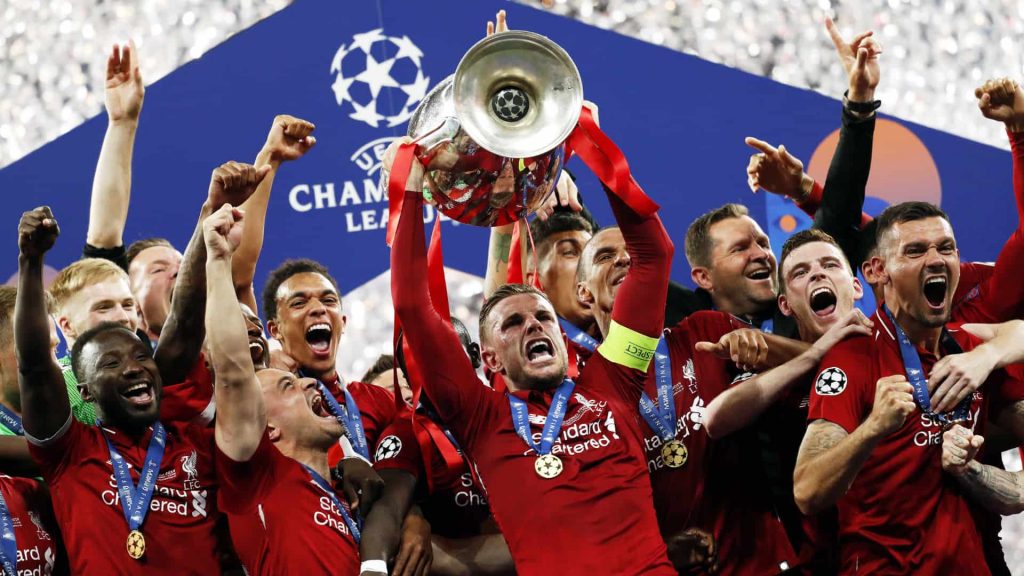
If I was a British politician, I would probably be claiming some connection with Liverpool Football Club, who were crowned champions of the English Premier League last night.
I have such a connection, though thankfully I’m not a politician. In order to gain a bit of cred with my business partner, who is a lifelong Liverpool supporter, I did a bit of poking around to define that connection a little more accurately.
I’ve long known that my great-grandfather, the Reverend William Clark Hudson (below), was the vicar of a parish in the district of Everton.
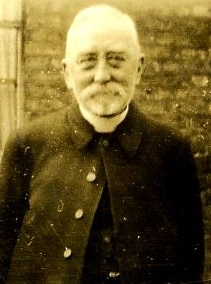
My mother was born at the vicarage, which she claimed was a stone’s throw from Liverpool’s stadium, known to the world as Anfield.
In little more than an hour I discovered that she was right. The modern address of the stadium is 69-71 Anfield Road.
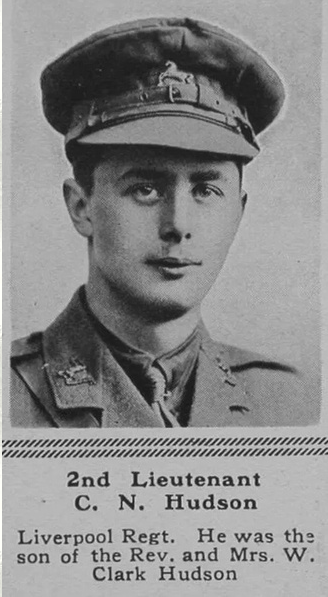
The good Reverend’s address was 69 Anfield Road. The same address! I know this because of a death notice for his son Cuthbert, my great uncle, who was killed in 1917 in the First World War, which listed his address. Since the parish of which he was vicar was St Cuthbert’s, I presume this was why he named his son after one of England’s most revered saints.
So then I looked at a street map from 1910, and found several large houses directly opposite the ground. One of them was most likely the vicarage.
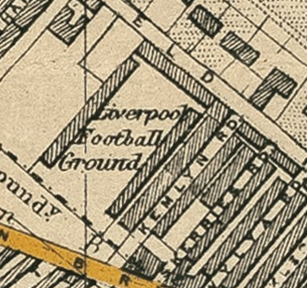
While I was digging around, I also happened upon a register of baptisms at St Cuthberts from the time when the Reverend Hudson was the vicar. That was an interesting bit of social history in itself.
The register lists occupations of the fathers, which would have been typical of a working-class area in a big city like Liverpool: shipwright, cooper, barman, railwayman, harness-maker, grocer’s assistant, dock labourer, bleacher, deck hand, time keeper, warehouseman, boot maker, meter fitter and waiter. I doubt if there are many boot makers and meter fitters in Liverpool today. But the list reflects a vibrant port city yet to suffer the decline that later afflicted it
The vicar’s baptisms included one that caught the eye. Margaret Bowyer was the daughter of Samuel Bowyer, who was listed as a professional footballer.
Baptism: 9 Jul 1911 St Cuthbert, Everton, Lancashire, England
Margaret Bowyer – Child of Samuel Bowyer & Alice
Born: 18 Jun 1911
Abode: 14 Bagnall Street
Occupation: Professional Footballer
Baptised by: W. Clark Hudson M. A. Vicar
Register: Baptisms 1899 – 1924, Page 273, Entry 2
So I did a search on Sam Bowyer, to see if he played for Liverpool. It turns out that there’s a Wikipedia entry for him, which shows that he did indeed play ninety times for for the Reds.
Unlike the current club stars, who live in posh mansions outside the city, Sam lived locally. In those days footballers were paid peanuts, so he probably lived in a small terraced house within the local community. Close enough to walk to work, so no need for a Bentley or a Range Rover, even if he could afford one.
I also took a look at the history of Anfield football ground. It turns out that it started life as the home of Everton Football Club, Liverpool’s great rivals. They then moved a few miles down the road, and the ground was taken over by the newly formed Liverpool F.C.
So most likely my great-grandfather ministered to the faithful of both clubs, and probably saw both Everton and Liverpool in action at Anfield as their home ground.
I have nothing to gain from these little nuggets of family history, except the satisfaction of knowing that one of my ancestors played a tiny part in the history of a great institution.
And how much more fun was the discovery than my usual morning trek through our diseased and turgid present!

OK Mr Putin, you’ve won.
You sent your buddies to buy our mansions, spread their money around and seduce half of our establishment to the point that they didn’t dare say anything when you helped to tip the balance in favour of our leaving the EU. So now we’re off, without a plan, in fact without a clue as to how we were going to make a future for ourselves with a fast-diminishing circle of friends and minimal influence with your other buddy, Donald Trump.
When we got a bit uppity you sent your assassins after the Skripals to remind us that you can do what you like to us and there isn’t a damn thing we can do about it. We clearly hadn’t learned anything after Litvinenko.
Now we’re moaning because you gave Boris a helping hand in 2019 so that he could get Brexit done, and, even better, send us crashing into the wilderness with no deal. No need to get cross at our bitching about it, it’s just for form’s sake. Words mean nothing, as you of all people know. The job is done. As your Ambassador to the EU recently implied, we’re now neutralised for the foreseeable future.
OK. We admit it. We’re neutralised. One down, twenty-seven to go, I guess.
One request. After we’ve sacrificed our trade relationships with the EU for oceans of red tape, and look forward to a decade of post-EU and post-COVID penury, will you now be so kind as to leave us alone with our misery?
No, no, I don’t mean that. By all means send your McMafia chums over here to keep our housing market propped up, and yes, keep funding our politicians, because they’d be bereft without their duck ponds. Perhaps you can fund a museum or two, and make sure our bling suppliers stay in business. All we ask is that next time you host the World Cup, you fix it so that we win this time.
We, in our turn, will flock to your country to visit the Hermitage and the Kremlin, make Russian compulsory in our schools, and erect statues of Stalin, Zhukov and, of course, yourself, once we’ve taken down all the slave-owners and colonisers.
Now that we’re your playground, perhaps also you would’t mind bashing the Chinese for us, because they’re trying to take us over as well, and you wouldn’t want their rough elbows getting in the way of our role as your chief money-launderer. Allow us a little dignity, and tell the Chinese to leave our aircraft-carriers alone, so that we can continue to pretend that we still mean something in the world.
Worried about our nukes? Don’t. They’re controlled by the Yanks, and you’ve got them sewn up too, provided you can get Trump re-elected in November.
So we know when we’re beaten. And we look forward to a long and profitable relationship with the Russian Federation and, more importantly, with you, Mr President. Now that the Russia Report is out, no need to be coy any more. We know who your agents are.
But please, no more poisoners, hackers and little green men. We’re yours now. Just keep sending us your oligarchs, and we’ll make sure they have regular dates with the Queen for tea. When she goes, don’t worry about Prince Charles. He’s a Romanov too. Well, sort of.
And if your people get tired of you, you’ll always be welcome to make the UK your safe haven. But we all know that won’t happen. You have decades ahead of you. So let’s get that trade deal sorted so that you can sell us some hypersonic ballistic missiles, a bit of your gas and a few potatoes if we run short. And in return, we’ll send some of your deep implants – you know, the ones who’ve become Brits – to the House of Lords.
As for the European Union, from now on we have a common objective. Together we’ll bring those nasty foreigners across the channel to heel.
Nastrovje, Esteemed President!
Oh, by the way, you don’t happen to have any nifty 5G kit lying around doing nothing, do you?
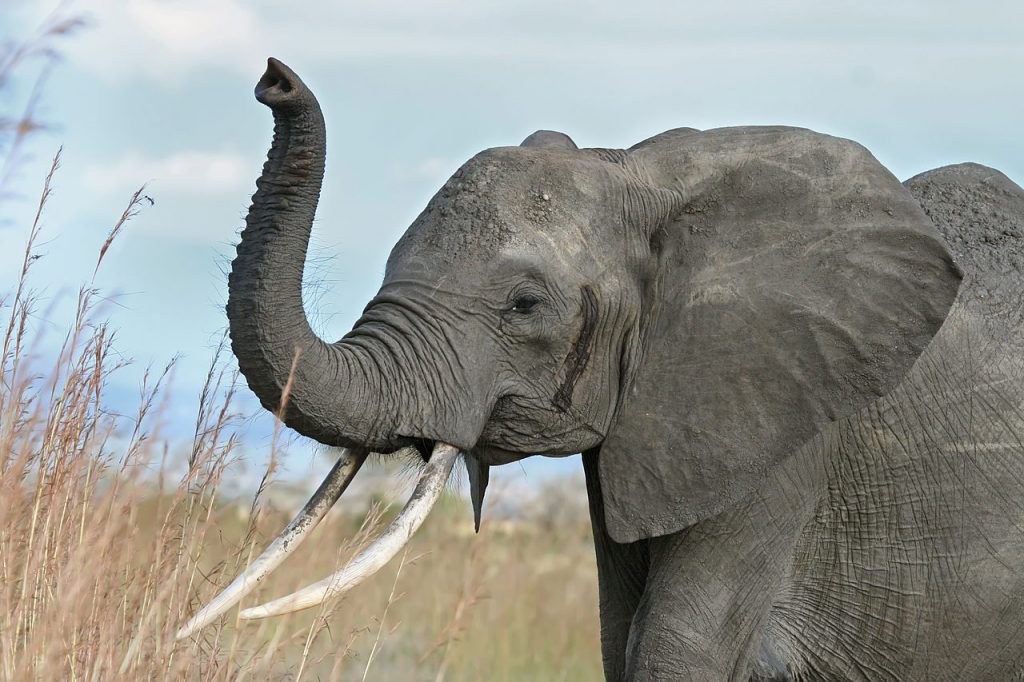
Good news! I aced the same cognitive test as Donald Trump. I know that an elephant is an elephant, and I can not only tell the time but draw a clock. That doesn’t qualify me to run a country, but at least the next time I play golf I’ll know the difference between a putter and a seven-iron.
No matter that occasionally my wife collapses in laughter when my face acquires a vacant expression for a few seconds as I struggle to summon up some bon mot that thirty years ago would have shot out of my mouth like a piece of chewing gum expelled during a Heimlich manoeuvre.
No matter that the name of some innocent piece of kitchen equipment doesn’t come to me immediately, whereas I can instantly recall the name of an actor in a movie from thirty years ago who hasn’t been seen much since (Christopher Lloyd in Back to the Future, in case you’re curious).
Such senior moments are of no consequence, because I’m not the one who has to remember where North Korea is (north of South Korea), or that Finland isn’t part of Russia. Or has to tell the difference between a nuke and a cattle prod.
But it’s rather strange that voters in the largest country in the world are being wooed by leaders who are frantically trying to convince them that they have more marbles than the average care-home resident.
But if both candidates are indeed suffering from some degree of dementia, there would appear to be a marked difference in symptoms. Donald Trump seems to be suffering from the wild, dangerous version that eventually gets the person locked up in a place where they won’t be dangerous to themselves or others.
Joe Biden, on the other hand, has the demeanour of a kindly grandfather who would be happy to accept help when he loses his glasses, and is unlikely to rage against the dying of the light.
So the choice would appear to be between someone who insists on finding his own glasses, and smashes up his home in frustration when he can’t, and someone who knows his limitations and is happy to rely on the support of others.
Two thoughts on this.
Wouldn’t it be more sensible to go for the guy who’s self-aware enough to know that he needs to get help? And second, what if the guy who isn’t self-aware is no longer able to hold it together? Should he disappear, could he be replaced by others even more malignant than him?
So the issue facing American voters in November, if they incline towards the amiable granddad, is if he shuffles off before his term is done, who will be there to pick up the reins? Biden not only needs to nominate a strong vice-president, but it would also helpful if he gave some indication of his executive team. Trump’s team is a known quantity: yes-men, charlatans and opportunists. His opponent’s line-up is as yet unselected.
I’m not saying that Biden has anything but a full set of marbles, but such is the atmosphere of distrust in politicians in the United States, and Trump’s talent for malicious insinuation against his opponents, that the Democratic candidate will need an insurance policy that will reassure the voters. A strong team of willing helpers might make all the difference.
Belt and braces possibly, but Biden will need every tool in the bag to nail his opponent to the floor and prevent him from rising again.
Dementia has not been such an important issue in America since Ronald Reagan’s declining years.
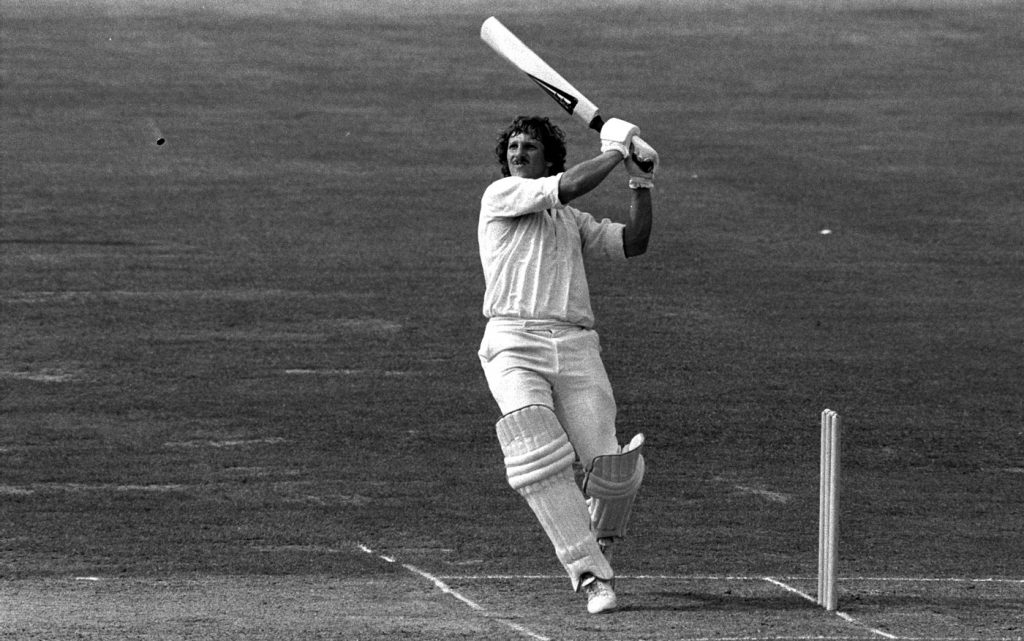
I could be very unkind to Ian Botham, who is about to take his seat as Lord Botham among the superannuated great and good and the rheumy remnants of Britain’s hereditary peerage.
I could say that he’s only the third male cricketer * to be elevated to the House of Lords in recent history, and that the others contributed far more to public life than Botham did. Learie Constantine was a distinguished campaigner for racial equality, a lawyer, a diplomat and a politician. David Sheppard was the Bishop of Liverpool for many years.
Against those achievements, Lord Botham can cite huge sums of money raised through herculean charity walks, a long career talking about cricket, a brief career as a footballer with Scunthorpe United, specialist knowledge of feuding with Australian cricket captains and more than a passing knowledge of marijuana. But then those are not the reasons why Boris Johnson has elevated him. He’s becoming a Lord because he backed the right horse on Brexit.
Nonetheless, I won’t be unkind to him, because if he ever found out and we met in a pub, I’d be on the floor with a broken nose before I had time to call for a player review.
But I do wonder what, with his specialist areas of expertise, he can contribute to the deliberations of Their Lordships on the matters put before them. So I had a little look at a government website that lists the legislation and other business that the Lords have considered this year, and I found one or two items that might arouse his interest.
The Agriculture Bill is one of them. Agricultural is one of the words used to describe His Lordship’s style when he used to hit the cricket ball so far out of the ground that it would never have been retrieved but for the newly-created hole in a householder’s roof. He’s also seen so much of the countryside through his charity walks that he has as much right to sound off on agriculture as has Jeremy Clarkson, petrolhead-turned farmer, who has yet to be elevated to the Lords, presumably because he failed to express an opinion in favour of Brexit.
Then there’s the Bat Habitats Regulation Bill. I imagine that Lord Botham will have much to say about this, since most of his bats will be mounted on walls as opposed to being left mouldering in his garden shed. He might also have some interesting input on the Meat (Grading and Labelling) Bill. Not for nothing was he called Beefy in his cricketing heyday.
I’m not so sure what he can bring to the Duty to Prepare for Terrorism Bill, since his days of terrorising Australians are over. But I imagine he would have a quiet word with Ben Stokes about that. On other stuff I’m not so sure. Take a look at the website I linked to above and make your own mind up.
Those who question Botham’s deep thinking on matters of national importance gleefully quote from an article about cricketers in politics from 2016, in which he’s alleged to have said “Personally, I think that England is an island” and “I think that England should be England. And I think that we should keep that.”
But that’s a cheap shot. He’s smarter than that, as years of commentary as a successful cricket pundit have shown. And even if he is a bit of a blowhard, he has good company in the lower house, where no doubt he’ll have the occasional beer with the likes of Mark Francois and “Sir” Desmond Swayne, about whom I wrote recently.
I bear Ian Botham absolutely no ill will. He’s achieved more in his life than I could ever dream of. He’s a cricketing hero who provided millions of fans, including me, with moments of joy and ecstasy at a time when we all needed a bit of cheer.
Yet I do wonder what putting him in the House of Lords will do for him or for his fellow lords. I suspect that sitting through hours of discussion on the Unconscionable Conduct in Commerce Bill would bore him to death. Half an hour would probably send him scurrying to the bar. If, on the other hand, Boris made him Minister for Cricket, that would make a lot of sense.
No doubt as Lord Botham he’ll have no problem getting the best table at any restaurant he chooses, but he probably gets them anyway as Sir Ian, and certainly as a revered sporting hero.
But his elevation does make me wonder what Boris Johnson thinks the Lords is for. Until he becomes a peer himself, he probably looks on the upper house as a tedious obstacle in the way of his ambition to become World King. Those who see the second chamber as a vital check on the wilder ambitions of the lower house might question why John Bercow, the former Speaker of the Commons, who cares deeply about Parliament and its deliberations, was not also elevated.
The answer, of course, is that Bercow terminally pissed off Johnson and his party in the last parliament by his interpretation of procedure which had the effect of delaying Brexit.
It’s all about Brexit, it seems, which is fine, even though you could say that Boris is a vindictive little worm for denying Bercow his place. I just wonder how proud Lord Botham will be if and when – and I’m pretty sure it will be when – the whole Brexit project is revealed to be a colossal scam and comes crashing down upon dear old England, not to mention Scotland, Wales and Northern Ireland.
Then, presumably, he will realise that he’s just the latest patsy used by an unscrupulous politician to drum up a bit of short-term popularity.
I do have one further thought. If Ian Botham deserves to become a Lord, any party that makes Ben Stokes a Duke will get my vote.
*P.S. Actually he’s the fourth. I forgot about Colin Cowdrey, whose achievements were mainly confined to cricket. Arguably Botham’s charitable activities eclipsed Cowdrey’s post playing achievements. But Colin had the advantage of being a mate of John Major. Some things never change.
I’ve known for most of my life that something was missing. I just didn’t know what that something was. Until today. And finally I’ve realised that the missing piece had been that I don’t have an identity. I do now, apparently.
If you have the patience and curiosity, let me explain.
The other day, in a reply to Debby, who often comments on my posts and has a waspish talent for picking up on my errors and inconsistencies, I mentioned that I often felt that my place in the world was at the edge – the place where you’re on the cusp of falling off. She seems to feel the same way too, but possibly a bit further around the edge. After all, she lives in America, which is as much on a seething precipice as Britain, yet one with slightly different properties.
Being on the edge of the world means that it’s hard to travel to the centre. Centrifugal force works against you. This makes you a loner. Not the glamorous Man With No Name immortalised by Clint Eastwood. But a man with many names, none of which fits.
I’m not by nature a joiner. I’ve never belonged to a political party. I’ve never let myself be swept along by the emotions of a crowd, which is why I avoid football matches, political rallies and birthday parties. Even when I’ve joined something, it’s never been with great enthusiasm, and always despite the Groucho principle of never belonging to a club which will have me as a member. And anyway, I’ve preferred to run things rather than go with the flow. Not always competently, but I’ve got by.
I also have a pretty strong aversion to being manipulated, provided I know it’s happening and I don’t consent to it. I can’t be hypnotised, as I realised years ago when I went to a hypnotist in an effort to give up smoking.
Don’t misunderstand this introspective gush as meaning I’m a tortured and lonely soul. I’m quite happy with my life, thank you very much. Yes, I would have liked to have achieved what Beethoven, Maradona and Spike Milligan did, but given the price they paid for their genius, I prefer comfortable mediocrity.
In my world, St Paul doesn’t have a vision on the road to Damascus. He stops for a MacDonalds in a truck stop a few miles from where the vision is waiting for him, and thereby misses it altogether.
So what of this missing identity, this key that enables me to enter the Garden of Belonging, where I can merge into a common understanding with like-minded blades of grass?
Up to now, I’ve felt that white, middle class, heterosexual, English, cricket-loving, not introvert, not extrovert has been enough to be going along with. But as of this morning I realise that’s not enough.
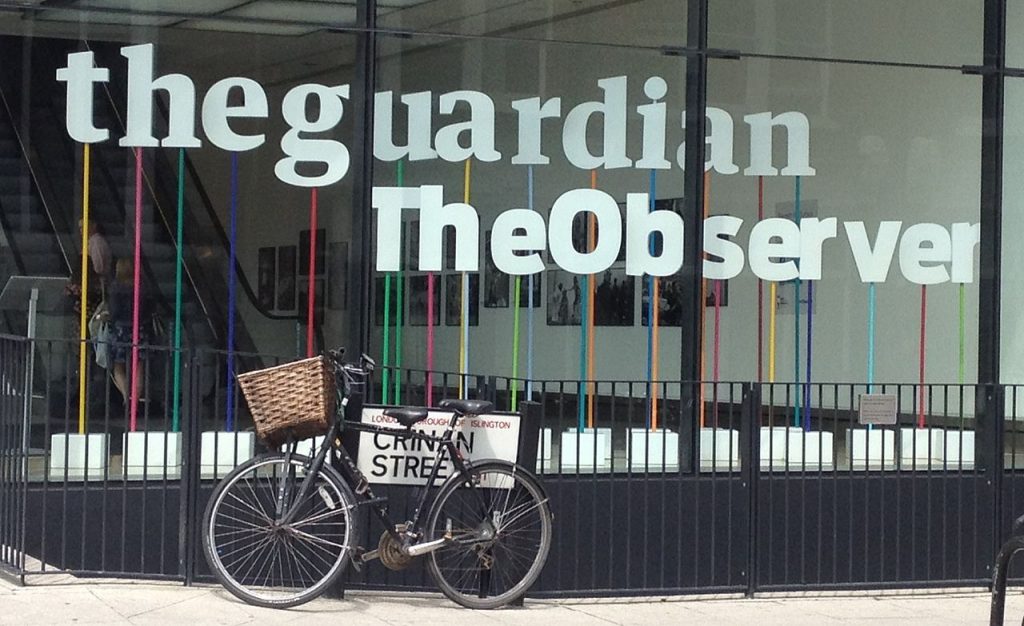
My vision occurred during my first coffee of the day, when I came across a tweet by Marina Hyde, a Guardian journalist. In it, she poured scorn on some anonymous person who said that they would not read the Guardian newspaper as long as certain named journalists continue to contribute to the paper. A little flavour of her invective:
Anonymous men on the internet who reckon they get to say ANYTHING are the worst. Let’s see you with some skin in the game, you silly little prick.
When you have the baby balls to even “unmask” yourself, I’ll be waiting. Until then you can carry on making cowardly points for people who don’t expect better. Honestly, buck up.
Unlike me, she must have woken up on the wrong side of the bed this morning. By way of context, the Guardian is in deep financial trouble, and is having to make cuts left, right and centre. Which is part of the point, because the offending tweeter clearly believes that the Guardian is only worthy of their attention if it is an organ of the left. Diversity of opinion is not, in their world, acceptable.
There followed the usual thread of childish comments, including one that suggests that the said Ms Hyde is not qualified to comment because she comes from a posh family. I was surprised at this condemnation on grounds of ancestry, because she’s the author of some of the most coruscating critiques of the current government that I’ve encountered since Boris came to power. And Jeremy Corbyn, whom many of the people in the thread appear to support, is not exactly a horny-handed son of the soil either.
But one comment turned on the light for me. Someone accused someone else of being a “centrist Tory enabler”. I then realised that this was the label I’ve been searching for all my life. Not a Tory, but someone who by taking no position at all – in other words standing in the middle of the extremes – is allowing people like Boris Johnson and all his predecessors to get away with ruining the country. By the same token, I would presumably also be a centrist Labour enabler if that lot were in power.
In other words, while others made mayhem, I, far from teetering on the edge of the world, have stood passively at the centre, providing the inert ballast that holds together the status quo.
This, then, is the narrative of modern politics, at least among the anonymous twitter mob. You’re either with us or against us. You can’t cherry-pick by liking a bit here and disliking something there. And if you refuse to buy the whole package you’re enabling the other side.
So, it seems, it’s becoming with newspapers, which perhaps accounts for their slow death. In my real place on the edge of the world, I do pick and choose. I don’t expect to agree with every Guardian columnist. There are some writers in the Times (I subscribe both to the London and New York titles) whom I avoid like the plague, yet others whose work I admire very much. I’m not averse to reading in the Daily Mail about aliens, football and prostate cancer. If something in the Telegraph looks interesting, I’ll gladly read it, provided it’s not about taking back control. I even devoured the whole of a Chinese Communist Party newspaper while idling in a hotel in Phnom Penh.
The point is that if national newspapers want to hang on to their circulations, they will need to avoid becoming the in-house publications for transitory political movements with predictable opinions and predictable writers. The Guardian will not become the Morning Star, and the Mail will not become Der Sturmer, because if they do, they won’t survive. They may dress to the left or the right, as the tailor would say, but they must remain broad churches, even if that means upsetting some of their readers.
Rupert Murdoch, the owner of Fox News, figured that out when he realised that his station was becoming Donald Trump’s in-house propaganda machine, and spiced up the content with stuff that pissed the president off. Otherwise, when Trump goes down, so does Fox.
Yet therein lies a problem for publishers. The New York Times upset much of its Democrat-leaning readership recently when it published an op-ed by Tom Cotton, a Republican senator. It fired the editor who allowed the piece to be published. One of its senior editors, Bari Weiss, resigned the other day, saying that she felt she was being bullied because of her eclectic (as a centrist Republican enabler, you might say) political views. And when the Guardian dares to criticise Jeremy Corbyn it’s instantly cast into the dustbin by his followers.
As private companies that need at least to break even, newspaper publishers have to perform a delicate balancing act between pleasing readers who think they own the paper by virtue of their subscriptions and therefore deserve a voice in its editorial decisions, and lumpen centrist Tory, Labour, (or, in the US, Republican or Democrat) enablers like me who seek only to be informed, provoked, challenged and entertained by their newspapers of choice. If they lose either group, they will die.
More likely, they will cease to print and go online. They will become multi-media organisations. The London Times now has a radio station that uses many of its writers. Most of the print media now use podcasts. They will go behind paywalls, which will prevent someone on the tube from picking up a discarded newspaper and reading it. The Guardian’s valiant attempt to go online without a paywall, using voluntary donations – the online equivalent of an honesty box – is clearly not producing the required financial rewards. Before long, the only way you will come across a piece of content by chance is if someone emails it to you, or if you see a link on the social media.
But when every “mainstream media” publication is only available online, what will distinguish them in the perception of their target market from their rivals who have only ever been online? Will “quality newspapers”, with hundreds of reporters, editors and researchers, survive if they’re no longer available to readers who don’t wish to have to squint at their phones of tablets and, if they do, lose patience after 600 words? And do online readers really care whether what they’re reading is the work of one man and his dog, or an august, multi-faceted news machine like the New York Times?
Perhaps they’ll do OK. They will no doubt diversify further. I’m waiting for the first one to start a TV station. And since they have the means to target centrist enablers like me through their command of big data, those with the means and desire to subscribe will continue to do so, while others will lose the habit of reading newspapers altogether. I don’t know enough about the financial implications of online versus print, though in the papers to which I subscribe I don’t see many ads, whereas in those I visit occasionally they’re everywhere. For me they spoil the reading experience. For Huffington Post, The Independent and The New European they’re what keeps them in business.
But if we’re really heading towards a place where there’s no centre, only different edges of the world, perhaps that demographic doughnut will have no place for media publishers who reflect a wide diversity of opinion. They’ll either stop covering politics altogether and leave the field to niche publishers with small but devoted followings, or they’ll fragment into lots of little niches themselves – sport, fashion, business and so forth.
And I will miss them. I will miss being able to go to one place to read about political plots, vaccines, Byzantine churches, book reviews, holidays in Italy, Ben Stokes and Once Upon a Time in Iraq. As a passive centrist enabler I will lament that I did little to stop the drift to extremes beyond casting my vote for an insipid in-betweener every five years or so.
It might take a while for the scenarios I’ve described to come to pass. Perhaps long enough to see me out. And after that? Not my concern really. Though I shall be watching from a place where passive centrist enablers gather to talk about the cricket.

It seems, the Guardian reports, that ten English universities are in danger of going out of business thanks to a decline in fees as a result of the pandemic.
The government is saying that it will only consider emergency funding to prop them up if all other avenues are exhausted. Criteria for funding include the impact of closure on local communities, commitment to free speech and a focus on courses that provide value for money and good employment prospects. The government is looking for an emphasis on STEM courses.
All good, and I hope the endangered universities survive. That said, if one or two fall by the wayside, it will be a tragedy for those teaching and studying at those institutions, but hardly a disaster in the context of retrenchment and job losses across most sectors of the economy.
However, if the criteria announced by the Department for Education and Skills reflect a wider philosophy, rather than the response to a crisis, perhaps they deserve further exploration. Whatever happens to those ten universities, it’s important to pay attention to those that remain intact.
There seems to be a consensus that STEM degrees rate highly in terms of employability. They also seem to map on to what central planners see as our future as a nation of engineers, scientists and innovators.
Fine. But are we doing enough at secondary level to produce a pipeline of students enthused by such subjects? Are our secondary schools equipped with both the facilities and quality of teachers to deliver that pipeline? And do we have effective structures within our university system, the necessary tie-ups with research institutions and major employers and alternative paths to technical excellence, such as apprenticeships? If not, then an increased focus on STEM will always be tactical, not strategic.
Freedom of speech can be enshrined in law and written into university by-laws. But you cannot order people to speak freely. You can only sanction those who don’t allow others to speak. Top-down intervention can only mitigate the effects of bottom-up movements which are seen by some as desirable, but by others as pernicious. So it’s no more feasible to guarantee free speech within a university that it is in the outside world, where perfectly legal tactics such as boycotts, protests and emotional intimidation work against the principle that people should be free to speak their minds on all subjects without consequences.
We live in an age of shadowy manipulation, in which one person’s safe space is another’s chamber of horrors. If we want to preserve free speech, we need to look at society as a whole, rather than obsessing about the micro-climates within our places of learning.
Preaching about “the skills the nation needs” comes across as somewhat “do as I say, not what I did” from a government whose backgrounds are mainly in law and the liberal arts. Yes, we need scientists, engineers, architects, doctors and nurses. But we also need people who become writers, musicians, artists, actors, historians and museum curators. People come to this country and invest in it for more reasons than just to take advantage of its scientific and technological skills.
We also need generalists who don’t have a razor-sharp career focus, but find their focus later in life, and who at university acquire the thinking and communicating skills that equip them for a number of alternative careers.
With that in mind, since the government is so focused on value for money, I’m surprised that it doesn’t require the universities to provide school career advisers with statistical information on their courses. Potential career paths, available jobs by occupation, drop-out rates on courses, historical lead times to employment, earnings averages per occupation and so forth. Some of this information exists at a macro level, but the bureaucrats and the educators need to work together to provide more granular detail on an institution-by institution basis to those who want to keep their options open.
If I was thinking of studying archaeology because I wanted a career in the field, I would want to know how many archaeologists are employed in the UK, how many people are currently studying the subject in all universities, and how much I am likely to earn as an archaeologist. That way at least I would be going into a field that has relatively limited career prospects with my eyes open.
If COVID teaches us nothing else, it should be that educational goals should not be set in concrete. They are a moving target, and so are required skills. If, for example, our future is leading us towards a society divided between those who can work remotely and those who can’t, how will we maintain social cohesion? For those who work remotely, how do we help them to work efficiently, how do we satisfy their emotional needs as members of organisations, and how do we ensure that they stay mentally healthy? For those cities whose centres are stripped of their life-blood, how do we re-purpose space formerly occupied by office workers?
To deal with those challenges, do we have an adequate pipeline of ergonomists, economists, psychologists, urban planners and, critically, out-of-the box-thinkers?
And if we’re facing a decade or so of massive unemployment, where are the plans to re-train, re-skill? Can our universities be re-purposed to take part in that effort by providing curricula and facilities? And where are the teachers, the trainers and the educators that we will need?
It seems to me that there are bigger issues for our educational establishment to consider than the fate of ten cash-strapped universities. I hope they’re doing so. I’ve only touched on a few of them from the perspective of an interested observer.
I have one more thought on this subject. It relates to our self-sufficient, international-adverse future post-Brexit.
Thirty years ago, football in England was bogged down with violence on the terraces, failure on the pitch, outdated thinking in the dugouts and a high level of financial naivety.
Today, football is an industry. Young players from the home nations are benefiting from football academies. They are learning from sophisticated foreign coaches and competing for places against top-flight foreign players . Those who succeed do so not because of quotas but because they measure up against the world’s best.
As a result, the England football team is probably more highly skilled than any of their predecessors. The Premier League is among the most commercially successful of all the European leagues.
If we want the world’s best scientists, engineers, economists and researchers, it would do no harm for us to look at the model of sporting excellence developed, whether by design or accident, by the English Premier League, and ask ourselves whether the inward-looking Britain-first mentality that Brexit has created is best-suited to deliver the talent we need to prosper as a nation.
Perhaps our leaders should think about rising above their ideological obsessions and declare the education sector a Brexit-free zone, so that, like our footballers, we can continue to learn from working alongside the best in the world, rather than just the best in our own little country.

If there are two stories that I find unworthy of close attention, but about which the media clearly disagrees, they are the Johnny Depp libel case and the Epstein business.
The Depp saga is sordid in the extreme. A superficial look at the headlines reveals that neither he nor his wife emerge with their reputations enhanced. When we get down to the details of turds in the bed and lopped-off fingers I stray away to other stuff.
I suppose a salacious libel case, which is a bit of a rarity these days because only those with a lot of money can afford to bring them, is an entertaining distraction from all the other grim stories on offer. But all I see is the sadness of the people involved, and the greed of those who seek to exploit their self-inflicted misfortune. The same goes for high profile divorce cases. Everyone focuses on the money, rarely on the sense of failure that must be felt by at least one of the protagonists.
The Epstein case, or more specifically the arrest and arraignment of Ghislane Maxwell, is also something I prefer not to follow in detail. I can only say that despite the acres of allegations against her, Maxwell has not yet been found guilty of any offence. If I were her lawyer, I would be questioning her chances of a fair trial, since she has already been tried by the media.
That’s not to say that she’s a particularly pleasant person. But it’s unlikely that the favourite daughter of Robert Maxwell was ever likely to have emerged from his grip without serious scars on her personality. Which is probably the conclusion you could draw about Donald Trump if reviews of his niece’s book accurately reflect its contents.
Of the two cases, the Epstein affair is surely more significant because of the high profile individuals caught up in his tangled web of friendship. Prince Andrew, Bill Clinton, Donald Trump were among Epstein’s friends. But if Maxwell’s trial is not due for a year, it will come too late to affect the immediate political fortunes of the president, against whom there are no direct allegations. But should Trump be re-elected, anything that emerges from the Epstein case that directly implicates him in wrongdoing might rapidly bring to an end his presidency, whether or not he reasserts his claim to presidential immunity.
Be that as it may, it’s just another tale of wealth, exploitation and corruption, with a bit of conspiracy thrown in for good measure, all packaged up for our prurient pleasure. Predator porn, you could call it.
While I’m far more interested in cricket, vaccines, Russian spies and bitcoin scams, I also think occasionally of Maximus, general turned gladiator in Ridley Scott’s movie, who turns to the crowd after he dispatches his opponent and asks the crowd “are you not entertained?”
Speaking for myself, the answer is no.

Sir Desmond Swayne is a Conservative Member of the British Parliament whom you could describe as old school. He’s not a man whose name you would want to misspell, because he’s neither a swain nor a swine. More of an ass, of the pompous sort that Boris Johnson’s party used to send to parliament in their droves.
There are still a few around, though they’ve largely been replaced by people with a keener eye on the bottom line, or, should I say, their bottom line: property developers, hedge fund managers, grifters and gropers of all sizes and descriptions, but usually people who didn’t have the brains or the wit to make it to the top of their original professions. In other words, what the Earls and Viscounts who pulled the levers of the party in the days when politics was a calling rather than a means of enrichment would call the “mercantile class”.
Anyway, this chap, who really should rename himself Sir Peregrine Throwback, distinguished himself in the Commons yesterday, when he pronounced that the requirement to wear face-masks in shops was a “monstrous imposition”. To which Matt Hancock, the minister who had the floor at that time (whom, incidentally, someone I met the other day who was until recently a senior NHS manager described as “rampantly incompetent”) responded with a stream of meaningless and rather slimy blather.
I know, I shouldn’t mock. A nation gets the politicians it deserves. And no doubt Sir Desmond came up with his harrumphy intervention because he knew he would have the support of a large constituency of people who regard the requirement to cover their faces as a gross infringement of their human rights. Mostly those who haven’t witnessed large numbers of people in their death throes after being infected with COVID.
All I can say is that we’ll get used to it, because we have to get used to it, especially if a deadly cocktail of flu, COVID, bubonic plague and God knows what else hits us this winter.
All this talk of masks must elicit a knowing, albeit invisible, smile from people in some parts of the world where masks are de rigeur for different reasons. Which takes me back to something I wrote six years ago about the difficulty or otherwise of communicating with people who cover their faces for cultural or religious reasons. Here’s an extract:
For several years I’ve run management and personal development workshops in Saudi Arabia. Those of you who are familiar with the Kingdom might ask why, as a man, I am allowed to teach women in that very conservative country. The reason is that contrary to popular myth there are several workplaces where men work alongside women – the most common being hospitals.
So a couple of dozen times a year I find myself working with mixed groups. The men tend to be on one side of the room, and the women on the other. This is not a pre-ordained arrangement, just the way they feel most comfortable. Depending on the city, some or all of the women will be wearing the niqab. I don’t have the option – like the school in London, or the French state, which has legislated on the matter – to ask the women to remove their veils. I have to deal with what I see, or don’t see.
But I can see the eyes. At the beginning, it was a bit disconcerting. But over time I have acquired the ability to read much more from the eyes, from the voice and from body language than ever before. Think about it. When you watch the theatre that is human expression, the eyes are the leading player. All the other cues are the supporting cast. If you’re unable to see, then the voice takes the place of the eyes. The brain compensates for the missing input, and after a while does quite nicely without it.
The only problem I have is recognising names without a name card being next to the person. There again, there are ways around the problem. Although most of the women are wearing black abayas, each wears distinctive shoes. So I try to memorise names against shoes, as opposed to faces.
Would it be easier if faces were visible? Of course. But not so much easier that the process of teaching and interacting is seriously degraded without visual cues beyond the eyes. These days, it feels perfectly normal. In fact the women tend to be more lively and enthusiastic than many of the men. Their personalities shine through the black gauze, and working with them is often a joy. Whether this is a conscious effort on their part to transcend the limitations of appearance, I don’t know. And for my part, I can focus on the person within rather than the meta-information that comes from physical appearance.
My days of working with women with covered faces – at least in Saudi Arabia – are over, but you can probably tell from my writing at the time that it was a rewarding experience.
So the moral of this story is that there’s a silver lining for us to consider. While it might be less fun to observe Sir Desmond’s righteous indignation when half his face is obscured by a mask, if we’re no longer able to focus on Trumpian pouts, false smiles and mouths contorted by fury, perhaps we’ll come out of this pandemic with an important new skill: the ability to read eyes, listen to vocal cues and recognise the subtlety of body language.
I’m sure nobody can teach Sir Desmond anything, but the rest of us might even become better communicators thanks to the monstrous imposition.

There are many reasons why Istanbul is one of my favourite cities in the world: the Bosphorus ferry, Topkapi, the bazaars, the Theodosian Walls, the restaurants and coffee shops of Sultanahmet, the mosaics of the Chora.
But one place stands above all of the glories of the city. For me, Hagia Sophia is the holy of holies. Not so much in the religious sense, but as a symbol of the endurance of faith. For nearly a thousand years, this glorious building was a Christian church. It witnessed the crowning of emperors, doctrinal schisms, and, in times of invasion, plague and civil war, throngs of supplicants praying for deliverance. Until, in 1453, the prayers of the desperate were not answered, and Constantinople fell to the Ottomans.
For the next four hundred years it was a mosque, rivalled in the city only by the Blue Mosque and the Mosque of the Conqueror. And then, after the fall of the Ottomans, the secular government of Kemal Ataturk re-designated it as a museum.
Whenever I’ve visited the Hagia Sofia, I’ve sensed that, magnificent though it’s vast interior is, decorated with Christian mosaics and Islamic banners, something was missing. The sound of prayer, for which the building was designed. Not only spoken prayer, but choral music and recitation, be it of the Christian gospel or the Quran.
For this reason I’m not grief-stricken at the decision of Turkish government to turn the clock back and re-designate the building as a mosque. I’ve no doubt that non-Muslims will still be able to visit it, because President Recep Tayyip Erdogan says so. I hope that the symbols of all of its past will remain, because permanently to cover up the mosaics and icons would be an act of cultural vandalism.
I believe, though, that the President, who is the prime mover behind the decision, is missing an opportunity.
What better way to promote reconciliation between faiths whose followers have spilt so much blood fighting each other over centuries to share the building as a place of worship?
I know of no doctrinal reason why Christians should be unwilling to share a place of worship with Muslims. Though I’m no expert in Islamic fiq, I fail to see why Muslims should not prepared to do likewise.
It shouldn’t be beyond the wit of People of the Book to work out an acceptable modus operandi. Since the two faiths have different days of rest, there needn’t be conflict over which days are given over to which faith. And I can’t see a reason why Muslim’s shouldn’t celebrate Eid-al-Fitr and Eid-al Adha, while Christians can worship at Christmas and Easter, since the holy days of the respective faiths rarely coincide.
Perhaps I’m being naive, but wouldn’t it be a powerful symbol of respect and reconciliation for Hagia Sofia to become a place of worship that reflects its whole history rather than return to being the exclusive domain of a single faith?
I would certainly rejoice if Justinian’s greatest monument once again rang out with voices in prayer. Much as I love it as a symbol of the past, would it not come alive again as a place for celebrating the present and the future?
P.S. (the day after I originally posted this): if you think that this is a simple matter, think again. This excellent article by a Byzantine art historian gives chapter and verse on why the politics of the moment would make the initiative I suggest fiendishly difficult. Still an opportunity, though perhaps one for the future. Hagia Sophia/Ayasofya has been around for fifteen hundred years. It can wait.

Compared with jumping out of an aircraft with an aerodynamic Superman cloak for a parachute, or poking a cobra with a stick, attending a “COVID party” to prove that the virus is a hoax must have seemed like mild act of risk-taking to a bunch of people in Texas. When one of them died, it wasn’t such a laugh.
In a monumental act of stating the obvious, the 30-year-old man was reported as saying, just before he died: “I think I made a mistake. I thought this was a hoax, but it’s not.”
As last words go, that takes some beating. It’s hard not to feel sorry for a person who went to such lengths to prove a theory and paid the ultimate price. The rare example of an anti-hypochondriac, I guess, whose understatement ranks with that of the Dark Knight in Monty Python’s Holy Grail who, having lost his arm in battle, swore that “tis only a scratch”. Or the famous exchange between the Duke of Wellington and the Marquess of Anglesey, when the latter lost his leg at Waterloo: “By God, sir, I’ve lost my leg!” — which caused Wellington to reply, “By God, sir, so you have!” Sang froid par excellence, though in the poor Texan’s case it was probably all he could do to get his words out.
Hypochondriacs whose convictions are born out, on the other hand, are two a penny. Comedian Spike Milligan, for example, whose tombstone (above) bore the legend (in Irish): “I told you I was ill”. And Alan Clark, politician and diarist extraordinaire, who for decades was convinced he had a brain tumour, and died of a brain tumour.
I rank pretty low on the hypochondriac scale, though at various times I’ve been convinced I was having a heart attack, a stroke or some other mildly fatal condition. By the fact that I’m writing this, and holding on to my wooden garden table for dear life, you will gather that my predictions have not yet come to pass. But I only have to be right once.
Anyway, I prefer to err on the side of caution. The last thing I would want when lying on my death bed would be for my last words, addressed to all the politicians, nut jobs, TV pundits and pastors who kept pumping out the idea that the coronavirus was a hoax, to be: “you lied”.

I don’t go out too often at the moment, not just because of COVID but because my back injury makes standing up for any length of time rather painful.
But I’ve decided to start wearing a mask. You might think I’m doing so to follow the examples of my prime minister, Boris Johnson, and that of Donald Trump, the most powerful person on earth.
Not so, much as I respect and admire them. I’m doing it to protect myself, because I have an innate ability to make other people laugh. And cough, and splutter with glee.
It happens when I swing a golf club, sending the ball 45 degrees through a chain-link fence into the backside of a grazing donkey. Or when I send three successive tee shots from an elevated tee flying into a river upon a group of canoeists, who are surprised to find that they’ve strayed into an artillery range. And when I and another person, whose combined weight is that of a silverback gorilla, fail to ascend a steep path in a golf cart and almost end up going over a cliff.
It also happens on the rare occasions when I’m allowed to go foraging in our local supermarket. When I waddle up to the check-out with a basket full of radishes, broccoli and spring onions. Or when I return home with my haul and make dubious claims about the health-bringing properties of pork pies.
It happens when I try to tell a joke and, as usual, fluff the punchline. When I try to charm British Airways into giving me a refund. When I lose my cool with a call centre agent who tells me to switch off my Sky box or broadband router to get them working again.
It happens when I try and assemble an IKEA flatpack in front of an audience. Or when I order langue de boeuf in a French restaurant, expecting a beef casserole, and the waiter brings a large tongue ripped out of an unfortunate animal sitting alone on a plate. The tongue, not the animal, by the way.
It happens when I start ranting about Brexit, and express the opinion that sooner or later we’ll be begging to rejoin the European Union. When I hold forth with my favourite conspiracy theories, such as the one about a cabal of powerful people trying to enslave us all by inventing the social media. Or when I start on the one about how the government, by facilitating repeated waves of COVID, is planning to reduce the national life expectancy by ten years, thereby saving a fortune in old-age pensions, social care and medical costs.
There are so many reasons why I provoke hilarity among family, friends and my adoring public that I can no longer afford to expose my handsome features other than behind a mask. I’m not so much a super-spreader, more of a super-magnet, attracting clouds of airborne particles violently expelled by people who can’t keep a straight face in my presence.
Wearing a mask will also be a good way of concealing my planned programme of cosmetic surgery, from which I will emerge looking like Brad Pitt. Although I fear that I shall never be able to reveal the results without sparking off fresh outbreaks of COVID wherever I go, self-love doesn’t require the admiration of others, so I’m going ahead anyway.
I can’t say, as Donald Trump claims about himself, that I look good in a mask. But we do share the same motive.
To hell with everybody else. It’s all about me.

If, as I do, you subscribe to one printed newspaper, but rely on the internet for much of your other input on life, I wonder if you’ve noticed how few cartoons appear on the social media.
Flashy graphics, yes. Also stills from animated movies. But cartoons? Not so often.
I find this a shame, because I adore cartoons. I’ve commissioned them, I buy them, I have them all over the walls of my house. In days gone by, you used to be able to buy annual compilations of work by artists like Carl Giles. But nowadays, since the demise of Punch, the only nationally-circulated publication in Britain that has cartoons in its DNA is Private Eye, which still produces an annual.
Politicians still love them, because no matter how grotesque are the caricatures of themselves, they’re symbols of vanity, evidence that they matter. When they put them in their downstairs loos, its not only a statement that they don’t deserve a more exalted place in their homes. It’s also a piece of self-advertising in a room most people visit.
If you don’t – or I don’t in my selected online biosphere – see cartoons in the social media too often, does that mean that caricature is a dying art, or at least in decline?
If so, that would be sad. Because cartoons are powerful. They mock, they lacerate, they make you laugh. Often enough they make you think, because – cliche alert – sometimes pictures are worth a thousand words. They pack an emotional punch, stimulating parts of the brain that other art cannot reach.
Many of them I think of as works of art. Peter Brookes (above), Gerald Scarfe (below) and the immortal Hogarth come to mind.

One of the problems in viewing their work online, particularly in a blog like this, is that the fine detail of cartoons are often difficult to make out. If you read this post on a mobile phone, you might miss Boris Johnson’s clenched fist and his deepening scowl in the middle part of Brooks’ tableau. Whereas you’re able to view it in all its glory if it’s spread out in front of you in a printed newspaper.
Likewise, a cartoon like this one, which is by Hunt Emerson, another of my favourite artists, is more difficult to appreciate on a small screen:

Beyond the UK, cartoonists still do their job of provoking and challenging, sometimes with lethal consequences, as the artists at Charlie Hebdo found out. But satirical magazines like Hebdo, Private Eye and the late Mad Magazine appeal to limited audiences, as do comics, another source of employment for talented artists.
So is there a decent living still to be made as a creator of cartoons, unless you happen to be one of the elite practitioners whose work appears in the print media? Is the decline in circulation of newspapers around the world also limiting opportunities? And are the most talented young artists, who might be the next generation of Gerald Scarfes and Ronald Searles, being lured into the TV and film industry as animators?
All I know is that even if professional opportunities are limited in the post-COVID era, there will always be people who will draw on placards, spray on walls and find other ways to get their work into the public domain.
And long may they continue. Because a world deprived of their wit, artistry, pathos and humour – be it gentle or biting – would be a poorer place.

Like anyone who’s keen on the world not blowing up in the next four years, I take a close interest in the current US presidential campaign.
One aspect that I’ve never seen before is the efforts of disaffected Republicans to make sure that the president representing their party doesn’t get re-elected. The most prominent of these groups is the Lincoln Project.
The Lincoln Project is what’s known in America as a Super PAC (Political Action Committee), which is an organisation that’s allowed to raise and spend unlimited amounts of money in order to influence an election campaign. It’s not allowed to fund a candidate’s campaign directly.
Although this particular Super PAC urges its audience to vote for Joe Biden, it only does so as a means of bringing down Donald Trump. This makes it unusual, because most Super PACs are set up specifically to support a candidate from the party to which they’re affiliated. By affiliated, I mean that the group’s prime movers are either current or former members of the Republican party, many of them senior advisors to the election campaigns of previous candidates such as George W Bush, John McCain and Mitt Romney.
The Lincoln Project team are responsible for some of the most vicious attack ads I’ve ever seen. The interesting thing is that they can attack Trump in a way Joe Biden probably can’t if the Democrats are to succeed in their efforts to attract broad support. They go straight for the jugular in a series of videos that have apparently infuriated Trump.
They hit home by pressing emotional hot buttons that are designed to appeal to Republicans who find it hard to identify with Trump’s raucous “base”. They include fear over the economy, national security, corruption and even the president’s sanity.
The ads are highly professional productions that appear very quickly after a trigger event involving Trump. Some seem designed even more than others specifically to get into the president’s head. In Whispers, the narrator acts as a troll whispering in Trump’s ear. She tells him that none of his inner circle are loyal to him, that they’re all whispering behind his back.
One person on Twitter observed that the video is akin to a military psyop. Psyops, short for psychological operations, are designed to confuse and disorient the enemy, and thereby reduce his effectiveness on the battlefield.
I find this interesting for two reasons. First, if the intent is to deepen Trump’s paranoia and weaken his resolve, they’re playing mind games with someone who’s not only the most powerful person on the planet, but who has shown by his track record in office that he’s capable of making dangerous decisions. Do they really want to make a man who has six months left to serve even more mentally unstable than he already is?
And second, it’s worth remembering that in his 2016 campaign, Trump employed Cambridge Analytica, about whose parent company, SCL, Wikipedia has this to say:
Publicly, parent company SCL Group called itself a “global election management agency”, Politico reported it was known for involvement “in military disinformation campaigns to social media branding and voter targeting”. SCL gained work on a large number of campaigns for the US and UK governments’ War on Terror advancing their model of behavioral conflict during the 2000s. SCL’s involvement in the political world has been primarily in the developing world where it has been used by the military and politicians to study and manipulate public opinion and political will. Slate writer Sharon Weinberger compared one of SCL’s hypothetical test scenarios to fomenting a coup.
The full Wikipedia entry is here. To put it another way, SCL apparently specialised in military psyops – similar tactics to those that the Lincoln Project are using against Trump.
So why is all this of such interest to someone like me, who is British and therefore has no say in the upcoming election?
Well, obviously I’m interested in the outcome of the election. But there’s another reason. In the 2016 Brexit referendum, and in the subsequent two general elections, we in Britain seem to have latched on to the idea of Super PACs.
The referendum was supposed to be non-partisan, but several organisations campaigned to leave the European Union. Their funding caused much controversy, and continues to do so to this day. The alleged involvement of Cambridge Analytica in the various Leave campaigns has also been the subject of much speculation. What is undeniable is that both the main campaigning groups used ads, like those of the Lincoln Project, that were specifically designed to press emotional hot buttons.
In the last election, a number of groups sprang up, funded by largely unknown donors, to support the Conservatives, but operated outside the formal party campaign structure. Again, they employed similar tactics as Leave groups in the referendum, with targeted ads in the social media.
So, aside from the question of transparency of funding, which is another discussion altogether, are we likely to see more Super PAC-type activity in the United Kingdom in the years coming up to the next general election? Is it possible, for example, that a group of disaffected Tories, who have no particular sympathy for the opposition but who are repelled by what they see as the hijacking of their party by an extremist wing led by a dangerously incompetent prime minister, will adopt the same tactics as the Lincoln Project?
Quite conceivable, I should have thought. If so, the UK is in for a style of political campaigning to which Americans are thoroughly accustomed, but which up to now we’ve found rather distasteful. In previous elections, our attack ads have been relatively mild when you compare them to the Lincoln Project’s efforts, though Jeremy Corbyn and Tony Blair might not agree.
As an interested but powerless observer, I find the Lincoln Project’s videos both entertaining and fascinating. Are they effective? That remains to be seen. I certainly hope that they and the Democrats succeed in bringing Trump down. But I worry about the prospect of British politics being dominated in the future by well-funded, sophisticated and relatively unaccountable political hit squads manipulating us this way and that.
Of course, you could argue that these are precisely the kind of operations that Dominic Cummings masterminded in 2016 and 2019. So you could say that we’re already there.
I can’t speak for America, but here in Britain it would seem that it’s time for another look at our election laws, so that we can know more clearly who’s pulling our chain and why. And an important factor in knowing why is to be able to find out where the money’s coming from.
Fat chance at the moment, I would think.

Whenever I think about this phenomenon known as “cancel culture”, Peter Sellars comes to mind. Not the man himself, but the character he plays in Being There, which regular readers of this blog will know is one of my favourite movies.
In the scene I have in mind, the simple-minded gardener who has been mistaken for a sage carries his TV remote control with him on a rare outing from the garden he tends. He sees something in the street that distresses him. He points his remote control at the object of his concern in the expectation that it will go away.
The idea that a virtual mob of right-thinking millennials and Generation Zeddites can “cancel” someone because of what they say or believe is equally ludicrous.
Except that it’s not ludicrous. It’s true. People are losing their jobs. Authors are finding their work declared to be off-limits. Journalists and university faculty are afraid to express their true opinions for fear of upsetting a bunch of intolerant, ideologically-rigid Twitter users.
As you may have guessed, this post hasn’t come out of the blue. It’s prompted by a letter signed by a group of well-known writers and academics. The letter was published in Tuesday’s Harper’s Magazine.
In it, the signatories deplore the curtailment of freedom of expression by ideologically-driven lynch mobs.
You would have thought that the sentiments expressed in this excerpt would be uncontroversial:
But it is now all too common to hear calls for swift and severe retribution in response to perceived transgressions of speech and thought. More troubling still, institutional leaders, in a spirit of panicked damage control, are delivering hasty and disproportionate punishments instead of considered reforms. Editors are fired for running controversial pieces; books are withdrawn for alleged inauthenticity; journalists are barred from writing on certain topics; professors are investigated for quoting works of literature in class; a researcher is fired for circulating a peer-reviewed academic study; and the heads of organizations are ousted for what are sometimes just clumsy mistakes. Whatever the arguments around each particular incident, the result has been to steadily narrow the boundaries of what can be said without the threat of reprisal. We are already paying the price in greater risk aversion among writers, artists, and journalists who fear for their livelihoods if they depart from the consensus, or even lack sufficient zeal in agreement.
If anyone asked me, I would certainly endorse such concerns.
Two of the signatories are Salman Rushdie and JK Rowling. Rushdie has a very good reason to sign the letter. After all, he spent many years in hiding from those who sought to follow Ayatollah Khomeini’s guidance that he should be killed for his alleged blasphemy in The Satanic Verses. Two of the translators of the book were murdered. He would possibly argue that the gap between “being cancelled” and being the subject of a fatwa is not that wide.
JK Rowling has been the subject of widespread condemnation for having the audacity to claim that women are people who menstruate, thus enraging the trans community, who would argue that you’re a woman if you think you are.
The Harper’s letter makes no reference to this issue, by the way. Nonetheless, Rowling’s name on the letter so spooked some of the signatories that they withdrew their endorsement.
This I find extraordinary. If I read a 500-word letter, and I’m asked whether I will sign it, I will make that decision on the merits of the letter, not on the basis of who signed it. I admit that there’s a contradiction here, in that I might think twice about endorsing something that Adolf Hitler might have signed. But that’s because it’s highly unlikely that we could have agreed on anything. But what if Donald Trump signed it? Fine, so long as I’m happy with the words.
So, for the avoidance of doubt, if anyone tried to cancel me, I would suggest that they go forth and multiply. I can afford to, because I’m a nobody, I don’t rely on public opinion for my job, and therefore I’m uncancellable.
I would also ask anyone who tried to cancel me whether they were OK with the Chinese version of cancellation, wherein people who say the wrong thing about COVID, Tiananmen Square, Hong Kong, Taiwan, Falun Gong or the Uyghurs are rewarded by being silenced in a variety of ways including imprisonment. Would they wish the same fate for JK Rowling or Salman Rushdie?
Or would they prefer that those who say something that offends them be admitted to a psychiatric hospital, which was a popular tactic for suppressing dissent in the Soviet Union?
So where are the boundaries, at least as far as I’m concerned? In my country we have laws against hate speech of various kinds. People who have transgressed, including on Twitter, have been prosecuted, though not enough in my humble opinion. We also have laws against slander and libel, as Johnny Depp has discovered.
If you don’t have such laws in your country, I suggest that you encourage law-makers to introduce them. But if you happen to be one of those people whose righteousness impels them to go around cancelling people, be careful of the language you use. Especially avoid death threats. Otherwise you might find yourself falling foul of a force far stronger than yours. You might end up in court, which would not be fun.
I have no problem with activism. It’s your right to criticise, excoriate or boycott anyone who offends you. But I suggest that people like the author of Harry Potter are soft targets. Perhaps you should consider going after people who actually do unspeakable things rather than those who merely express an opinion that you find toxic.
I would also encourage you to come and see me in fifty years’ time, so that you can tell me whether your world is still so bleakly digital, or whether you have come to value the shades of opinion that may change over time, but that, I would argue, define any society that regards itself as diverse. And if you disagree with the opinions others hold, perhaps by then you would be prepared to discuss and debate, rather than deny and suppress.
I shan’t be around by then of course, but I’m willing to guess that many of you will have become, in reality, the rational, tolerant, humble and emotionally intelligent human beings that you think you are today.

Two minutes of shame can lead to a lifetime in purgatory.
A man in a Florida store is caught on camera in a state of rage after being asked to wear a face-mask. He advances on the person who is filming him with his phone, saying that he feels threatened. He screams “back off”. Eventually he walks away. The video goes viral on Twitter. Is he a policeman, ex-military? Somebody identifies him and posts his name and the company he works for. Apparently he’s a salesperson.
Two other videos have appeared on Twitter over the past week showing women seemingly throwing tantrums in stores after being asked to wear face-masks. In both cases the women let loose a stream of invective, throw the contents of their shopping trolleys on the floor and head for the exit. In a third, a woman rips face-masks from the shelves and chucks them on the floor.
A man in Carmel, California (above), is sitting alone in a restaurant. He racially abuses an ethnic Asian family. They video the tirade. We don’t see the abused family. Again, the man is identified as the video goes viral. Turns out he’s a British guy who is the CEO of a tech company. Was he really alone? There were four wine glasses at his table. Where were the other three people? Various other allegations surface about him, and a tweet, seemingly from him, repeats the racist insult and reads like a death threat.
A bunch of white guys are in an argument with a black guy in Bloomington, Indiana. They pin him to a tree, and, allegedly, someone shouts “get a noose”. This video has been contextualised and subtitled by a TV station. According to the person posting the tweet, the white guys are Trump supporters, though there’s no evidence of that in the video. A police investigation is underway, according to the TV station.
In a video, allegedly from Tatarstan in the Russian Federation, a man walks up behind a woman in a niqab who is making her way down a street with her young family. The man kicks her to the floor. There’s then a break in the video, and in the next shot the guy is kicking her on the pavement.
In yet another video, allegedly from India, a group of young men appear to be verbally abusing and mocking a woman in a black niqab. They crowd round her as she adopts a defensive posture. We don’t see what, if anything, happens next. The last two videos are tweeted with a commentary about the persecution of Muslims.
Let me be clear about one thing. I don’t subscribe to Twitter because I have a liking for video nasties. These clips go viral, and they are eventually re-tweeted by someone I follow for other reasons.
It is, I admit, strangely compelling to watch casual acts of racism, outbursts of rage or acts of violence. But what I find disturbing is that the only context is provided by those tweeting or retweeting the videos. He’s a Brit. He’s a salesperson. His name is X. They’re Trump supporters. The women are Karens (a popular label on the social media for white, entitled, angry women). And so on.
Beyond being nudged in one direction or another, we’re left to come to our own conclusions about what we’re seeing. What becomes clear is that those who have been identified will find their careers damaged or possibly destroyed, at least for a while. The white guys in Indiana may well be prosecuted.
But again, I find myself looking for context that simply isn’t there, or at least can’t be relied upon. Who, for example, thought to capture a guy walking down the street and then kicking a woman? Nothing about his behaviour as he approached her suggested an imminent act of violence. Was the scene caught on CCTV? Is CCTV prevalent in Tatarstan? If it’s not CCTV footage, was it a friend of the attacker? Or was it a pure accident that someone happened to be capturing a street scene?
Well-researched context usually emerges only if the video is seriously newsworthy, which is when TV stations or newspapers get hold of the story and fill it out. The killing of George Floyd is a good example. Not only was his death a major story, but the reaction to it was the story of the summer.
But some white guy freaking out in a Costco store, even if the consequence is catastrophic for the person concerned, is just so much entertainment for the Twitter audience, with the additional edge that it’s fuel for those who want to make a point about people ignoring advice on COVID (as discussed in my last post).
So we watch these videos and lament the racism, the anger, the stupidity and the malice on display. For many of us, they confirm a prejudice we already hold. If they didn’t, we would probably pass them by, just as we look out on uninteresting terrain from the windows of buses and trains.
What we don’t always think about is that stuff like this has gone on long before the advent of mobile phones and the social media. But now we’re exposed to the evidence, drip by drip, we think we’re looking at a new and depressing phenomenon.
When I was at school, at the age of thirteen I would cycle every day to and from the boarding house where I lived to the main school. In the winter that meant that I was cycling down an unlit road in the country, often on my own. Today, people might ask, why did the school and your parents let you do this? Weren’t they afraid that you might be attacked by a paedophile or worse?
To which I would respond that in all likelihood paedophilia in the 1960s and 1970s was just as prevalent as it is today. But nowadays it’s considered a big deal and widely reported whenever exposed. Back then, not so much. What we fear today we hardly even thought about fifty years ago.
So what’s the lesson in all of this? It’s not for me to tell you how to react to content you see on the social media. You will react according to your life experience. Perhaps the videos you see will become part of that experience, and further confirm views you already hold. Less likely, but still possible, they will change your mind about something.
But before you pass judgement on what you see, I suggest you look as hard as you can for context, and challenge the context, if any, that is being handed to you on a plate. You’ll notice that in my descriptions of the videos, I frequently use words like allegedly, apparently and seemingly. That’s deliberate. If you’re minded to add to the clamour, ask yourself whether you’re responding to facts, supposition or opinion.
Not always easy to do, but at least that way you can avoid being part of the herd.

This morning my beloved and I were chatting away about the latest COVID-related news. She picked up on a newspaper story about Pret A Manger closing ten percent of their outlets – a total of around forty.
Would it not be better, she suggested, if they said that ninety percent of their outlets will remain open? She makes a very good point. For a takeaway food chain to emerge from the greatest economic catastrophe in living memory with 90% of its capacity still in place would be nothing short of a miracle.
But that’s good news. And good news doesn’t sell newspapers.
I mention this because she’s cited a classic example of framing. How the way you tell stories directly influences the reader’s perception. Are you happy because X thousand jobs are not lost, or sad because Y thousand jobs have disappeared?
Thanks to Margo Catts, an American acquaintance who writes an interesting and entertaining blog, and manages to say stuff with half the words I normally use, I’ve happened on an article in the Atlantic magazine by Tess Wilkinson-Ryan, a professor of law and psychology at Pennsylvania University. In Our Minds Aren’t Equipped for This Kind of Reopening, she talks about the difficulty of making personal decisions during the pandemic in the absence of clear-cut guidance.
But first, going back to my wife’s comments, Wilkinson-Ryan cites an experiment carried out by researchers associated with Daniel Kahneman, the author of Thinking, Fast and Slow and winner of the Nobel Prize for Economics:
“My academic subspecialty is the psychology of judgment and decision making. The foundational experiment in this discipline began with the prompt: “Imagine that the United States is preparing for an outbreak of an unusual Asian disease.” (The glibly xenophobic use of “Asian” as a shortcut to inducing fear and confusion is a subject for another article.) The experiment asked participants to choose between two public-health policies: In option A, one-third of the population survives for sure, but no one else makes it; in option B, there is a one-third chance that all survive, but a two-thirds chance that none do. For some participants, these options were described in terms of how many lives would be saved; for others, how many would die. Participants consistently chose option A, which offered certainty, if they were thinking in terms of potential gains (saving lives) but option B, which involved more risk, if they were thinking about potential losses (dying). A weighty decision was swayed dramatically by the semantic framing.”
She talks about the progressive numbing of our reaction to mass casualties from COVID. Though she doesn’t quote him, the phenomenon is best described by Josef Stalin, who said words to the effect of “one death is a tragedy, that of a million is a statistic”.
She also discusses the disparity between choices made out of self-interest, and those made on moral grounds. This chimes with my thinking. It’s the choice between “I can do this because I’m being careful and exercising common sense” and “if there’s a risk that I’m infected and might infect others, I’m not going to do this”. Ever since people started gathering again in large numbers with minimal social distancing, I’ve often thought that one of the factors that led them to disregard the guidance will be “I have a mate who caught the virus, and they were fine”. Therefore this person’s life experience told them that their risk of serious consequences was low enough for them to ignore the advice.
And finally she talks about social-distance shaming, wherein people look down on others for their blatant disregard of the established norms. She argues that we should not be so quick to blame people, especially if, like me, we live in large houses with gardens, as opposed to densely-populated areas with access to outdoor space that’s usually shared with others. Which leads to her most telling remark:
Even within academic psychology, scholars are prone to focusing on individuals who make suboptimal choices—workers who do not save, or employees who choose bad retirement investments. In the pandemic, this urge is a red herring; it is too easy to focus on people making bad choices rather than on people having bad choices. People should practice humility regarding the former and voice outrage about the latter.
Indeed. In the absence of clear guidance, which has been the hallmark of the British government’s approach since it started easing the lockdown, we should be holding it responsible before we start pointing fingers at crowds of happy drinkers in Soho, whose choice you could argue is a natural reaction to three months of unnatural confinement.
Yes, of course there have been people making irresponsible choices. And I still find it hard not to marvel at their stupidity. But we should take care not to allow those who govern us to explain away their failings by blaming those of us who were driven to cynicism by their cack-handed response to the crisis.
Wilkinson-Ryan’s article is well worth a read. How you react to it obviously depends on your personal experience of the pandemic. I suspect that if you’re an ICU nurse you might react differently than if you’re a beer-swilling celebrant in Soho.

You can get away with murder in a pandemic. Or at least, your chances of being caught are considerably diminished when everyone’s looking the other way.
I’m not just talking about killing someone. In the wider sense of the expression, you can do stuff that in other times would attract widespread condemnation, not just from statue destroyers but from people in power who have enough attention left over from the crisis of the moment.
In most countries, the crisis is not just the undulating waves of the diseased and the dead. It’s also governments floundering as they fail to deal with the response, and in some cases the slow demise of their leaders.
Thus in Britain, huge contracts for PPE are awarded to absurdly unqualified suppliers. In the US tens of millions of dollars in federal relief funding are paid to the president’s cronies. Whether or not laws have been broken, these activities have slipped by, almost unnoticed, until they come to light weeks or months later.
What, I wonder, would be on the front pages, and therefore coming to the attention of more than a limited number of news consumers, if it hadn’t been for COVID and the death struggles of governments?
Would we pay more attention to the intensifying civil war in Libya? How about the unprecedented heat waves within the Arctic Circle? Or the continuing harassment of Muslims in India? Or China’s move to bring Hong Kong to heel? Or China’s ongoing imprisonment and “re-education” of its Uyghur population? Or Putin’s referendum and its improbable result?
And if these events were centre stage, rather than relegated by Trump’s mania, drinkers in Soho and allegations of corruption here, there and everywhere, would governments with a potential interest in the outcomes have perhaps have taken measures that could have changed some of them?
Likewise, when primary journalism – by which I mean the discovery and reporting of stories as opposed to endless comment and analysis – has been debilitated by financial strictures and by the diversion of resources to the crises of the moment, how many stories have we missed, or emerged later than might otherwise been the case? And what were the consequences?
For example, if the story of Russia’s GRU (its military intelligence organisation) paying bounties to the Taliban for killing Americans had emerged before the impeachment hearings, would the outcome of the Senate’s vote have been different?
And if Britain were not so embroiled in the COVID crisis, would we not have paid more attention to the Brexit negotiations, and to the implications of our drift towards no deal? And what of the fabled Russia Report into possible Russian interference in British politics? Would we not have been pushing Boris Johnson harder to release it, instead of allowing him to sit on it for more than six months?
One of the favourite tactics among unscrupulous politicians, especially those in government, is distraction. If I’m getting heat on an issue, I invent another one that will get everyone fired up and talking. Trump has been a master at this in too many cases to mention here.
But distraction can also be accidental. And it seems to me that COVID, with all its ramifications, has served as an accidental distraction that some leaders, Putin and Xi Jinping chief amongst them, have used to their advantage. There are many who would say that they have got away with murder, quite possibly in the literal and certainly in the wider sense.
When governments might have reacted in a more decisive manner – over Hong Kong, the Skripals, Libya and India for example – those that could have made a difference have found themselves hamstrung by limited bandwidth as the result of power being centralised around a leader, be it a Trump or a Johnson, where in other times it would have been delegated to a State Department or a Foreign Office. And even when those sources of expertise are only partially emasculated, they can only be effective if leaders listen to them.
And the consequences? We might not know for some years where the tipping points that have passed us by in our distracted state will lead. And perhaps those tipping points would have been reached anyway, and countries such as the US, Britain, France and Germany have lost the power to intervene and make a difference.
But as COVID eats us up socially and economically, and our governments are paralysed by endless turmoil, it does no harm to focus on the tipping points and thereby, little by little, to force our leaders to pay attention despite themselves. Chances to avert negative outcomes are surely as important as opportunities to do great things.

I’m going to stop writing about lockdown as a current reality. I don’t live in Leicester, or Dallas or Miami. The shops are open, the pubs and their pavements are crowded with people guzzling away at their Stella and their Prosecco as though they’ve been on a long voyage where intoxicants have not been available. Such as in a slave galley.
I, on the other hand, am still locked down after a fashion, since I can’t walk for more than three minutes without a stabbing pain down my right thigh, a consequence of an overzealous attempt to out-drive Tiger Woods at my local golf course. So now I sit in my castle looking out on the garden, browsing on the web or casting a jaundiced eye on the daily newspapers.
Yesterday’s Times makes me wonder why I bother to read such crap. The Weekend section features batty article about a journalist who writes about online dating when you’re over 45, followed by something about missing G-spots. Since I’ve never gone in for online dating for fear of what my beloved might say, and I’ve had plenty of spots in my life but never one shaped like a G, not much of interest there.
Then there are the usual features. A four-page pullout on wine which is really useful given that I don’t drink wine. Something on staycations, with lots of little articles on places in the UK to share with millions of ice-cream slurping, virus-spewing compatriots for the remainder of the summer. And, of course, the property section, which never fails to educate me on the stupidity of those who would pay £25 million for some nondescript town house in North London. Not to mention the foreign properties, which get me spluttering with disgust at the thought that there are people in my country who can afford to buy such sublimely beautiful places in the Greek Islands, Tuscany or Provence that are utterly beyond my budget. Bastards. They must be hedge fund owners or money launderers. Come the revolution, and all that.
And what the hell does “sympathetically renovated” mean anyway? Not turned into a rural version of Trump Tower, presumably. Mind you, most of us could do with a bit of sympathetic renovation after three months of cave dwelling. But I would prefer not to look like Donald Trump afterwards.
The real pits of the world, as John McEnroe might say, are the ads. Pages of cruises. What person in their right mind would book a cruise, even for a year ahead, with the distinct possibility that they’d end up confined in a metal chamber in the bowels of their floating paradise parked up outside Vladivostok? Or, worse still, spend most of their dream holiday frozen in a morgue?
And why would I be interested in magnesium, like the old biddy in the ad? Or a pair of cotton chino shorts, when you could get two of the model’s legs into one of mine? Cordless cleaners, garden furniture and men’s boxer shorts that are supposed to increase your sperm count, with the name emblazoned on the waist elastic: comfyballs, for God’s sake. Oh, and you can get a COVID antibody test and herbal medicine for your cystitis. And facemasks, naturally.
Clearly I only have myself to blame for reading this stuff. Online advertising is so precise because of all the data the advertisers have on you. But you forget that the print media have to take a punt on who you, the reader, are likely to be. And the Times, on the evidence of the editorial stuff, has concluded that the readers of this particular section are wealthy middle-aged sex obsessives who drink like fish and like doing unspeakable things in beautiful properties. But those who skip the editorial puff and go to the ads are semi-geriatric, wealthy men and women. The men with handsome manes of silver hair, and the women with bright smiles despite their cystitis and lack of ability to get up stairs on their own.
Having said all that, there’s one thing that the Times Weekend supplement has going for it. It provides a great opportunity to have a decent rant without even having to think about Donald Trump, Boris Johnson and all the other fools who dominate the front pages.
And for that I’m profoundly grateful, while remaining delightfully enraged. Oh, and one more thing: at least the section isn’t called Lifestyle.

If there’s one thing parents with children at home will never take for granted again after three months of lockdown, it’s surely our schoolteachers.
Why teaching ranks relatively low in public esteem compared with other professions is beyond me. And why we’re so snobby when we call one occupation a profession and another a vocation or a trade is also beyond me. Do not plumbers, police, electricians, accountants, lawyers and teachers all require skills to do their jobs? And do they not all require training and knowledge of the underlying theory – be it in law, psychology, science and communications – to be considered competent?
Anyway, these distinctions – between professions, vocations and trades – have deep roots in our society that go back to the Middle Ages. Are they relevant today in terms of the impact that those who fall into such categories have on our lives? I’m not convinced.
A police officer, a doctor or a firefighter might save our lives once or a number of times, for which we should be profoundly grateful. The training is different, the impact often the same.
Teachers don’t normally save our lives. But they do shape them and influence them. The best teachers inspire us to build on our potential. The poor ones send us on different paths, as did a maths teacher who told me at the age of ten that I gave a passable imitation of a fool. Was I bad at maths because I lacked talent in the subject, or was I put off numbers for life – or at least until the arrival of spreadsheets – by the real fool who taught me?
I prefer to dwell on the best teachers. They’re the ones we never forget until we forget everything.
I certainly took them for granted, as many students do. Only after becoming an adult did I think of them as people, rather than as the occasionally quirky moving parts of an institution. At school, their influence was not always obvious, perhaps because we were bombarded with so many competing experiences that we absorbed them without thinking too much about what we were absorbing.
My reason for this homily is that whereas many parents under lockdown have come to look at education in a new light, and perhaps with a new respect for those who teach their children, I’ve been looking back at my own school, fifty-odd years on, also in a new light.
Back in ancient history, otherwise known as the beginning of lockdown, I started on a number of long-delayed projects. One of them was sorting out my books, of which a sub-project was assembling a mini-library of coffee table volumes – mainly art, history and photography. One of the books I came across was Bryanston Reflections, a lavish collection of photographs, stories and general recollections of my school, written by former students and teachers. It was produced in 2005 and cost £40 – expensive for any hardback. I imagine it was a fundraising initiative, which was probably why I bought it.
At that time I browsed the photos, and read some of the written content, but by no means all. So given the oceans of leisure that lockdown allowed, this time I read it properly.
Bryanston, where I was educated between the ages of 13 and 17, was and is a private boarding school. Also known in Britain rather oddly as a public school. It sits in the middle of a estate that used to be the country seat of one of Britain’s wealthiest landowning families. After World War 1, many of these landowners were subject to punitive death duties. In 1928, the entire Dorset estate, including woodland, gardens, a stretch of the River Stour and an impossibly grand house built by the same person who designed the Houses of Parliament, became a school.
Which is how I and thousands like me got to be educated in the equivalent of Downton Abbey. Right from the beginning, the founders were determined to be different. Pursuit of academic glory and sporting excellence took second place to what you might describe as an all-round education.
As a result, the school didn’t provide a ready stream of politicians, cricketers and administrators of empire. But it did turn out a Nobel Prize-winning molecular biologist, one of the greatest artists of the last century, two world-renowned music conductors and a Lord Chief Justice among a host of people with impossibly wide backgrounds. Oh, and an England rugby captain, though that was never seen as a summit of achievement as it might have been in other schools.
The book speaks of these people, and contains contributions from Fred Sanger, the Nobel Laureate, and Nicholas Philips, the judge. But only in the context of the school, rather some grand “how Bryanston made me what I am” puffery.
There are two things I see now that I didn’t before.
One is love. How deeply so many people, teachers and students, loved the school. And by the school I mean not just the buildings and the staff, but the woodlands, the wildlife, the river and the opportunities for exploration and fun they provided. And yes, love for the institution too, that didn’t try to force you down a path through some absurd sense of tradition. And for the teachers, some eccentric, some impossibly rigorous, and many ridiculously versatile.
I have to say that Bryanston gave me more than I gave it. I wasn’t one of the high achievers. There were times when I was deeply frustrated that the prizes of universal esteem never came my way. But I always knew that I loved it too.
The second aspect is literacy. What strikes me about the hundred-odd contributors is what good writers they were. Whatever their subsequent careers – architects, conservationists, farmers, engineers, lawyers, scientists or artists – the ability to write is the common denominator, because if nothing else, Bryanston taught you that.
The same goes for me. I’m no Wordsworth (though his great-grandson was one of my teachers), but if I have any writing ability it started there.
I could ramble on about plays in the Greek Theatre, bizarre punishments, wild strawberries in the grounds, music, wearing shorts as part of the school uniform until I was seventeen, walks down the river to the local town and being sent off the cricket field for swearing, but that would probably send you to sleep.
Enough to say that reading the two hundred pages of Bryanston Reflections reminds me of several things.
How lucky I was that my parents sent me there, even if I didn’t make best use of my luck.
How the best private schools aren’t instruments of class oppression to be torn down in the name of equality. Rather, they set a standard that publicly funded schools should aspire to meet, if not in terms of facilities, at least in the quality of teaching and the environment in which teachers are expected to teach and students to learn.
How important love is in education. The love of teachers for what they do. The love of students for inspirational teachers. The bond forged by a love of learning that parents, teachers and students can share.
Most of the people who taught me are dead now. But seeing their pictures brings them to life again. In many cases, they’ve become bigger people than they appeared at the time.
John Griffin, my classics teacher, for example. He was rather an austere person who suffered from polio in his youth and walked with metal calipers. He was rigorous, often, it seemed at the time, almost vicious in his appraisal of my indifferent talents. You could always hear him coming. He would clank endlessly round the cricket pitch during matches, just drinking in the sport.
What I didn’t know about him at the time was that during the Second World War, while he was studying classics at Cambridge, he was recruited by Bletchley Park to work on decrypting enemy signals. As a result, he became fluent in Japanese within six months. None of us knew, because the history of Bletchley remained secret until well after I left the school.
Above all, the book reminded me that we should never, ever, underestimate the influence teachers have on our lives. That teachers are just as important as lawyers, doctors, scientists, accountants and all those other people in occupations that we grandly call professions. And that if we don’t respect them, cherish them, nurture them, raise them to the status of national assets and yes, pay them accordingly, we only have ourselves to blame if our offspring spend their lives wishing they’d achieved more.
There are many other factors that lead to a successful society. But education is one of the main foundations. Good education leads us to want to educate ourselves for the rest of our lives.
I think we sometimes forget about our teachers. We shouldn’t.
 59steps