
The British General Election campaign is only a few days old, and the standard of debate is puerile, nowhere more so than on Twitter. I’m not one for hurling insults via the social media, but there have been moments when I’ve been tempted to call out politicians of every hue as idiots. But I’ve stopped myself, on the basis that once you start you join the idiots. So I just read and reflect, aghast.
Apart from the shameless lies and baseless claims, what also concerns me is the hollowing out of the political discourse between left and right, and the exodus of so many women MPs who are fed up with the vicious abuse they receive via the social media.
I may not agree with the politics of Justine Greening, Amber Rudd, Tom Watson, Philip Hammond, Ken Clarke, Rory Stewart and the host of lesser lights who are bowing out of politics – for now or forever – but their departures diminish the diversity of opinion in parliament. Some of those who have defected to the Liberal Democrats may end up being re-elected, as might some who – like Dominic Grieve – have opted to stand as independents. But the chances are that the two major parties will be more polarised after the election, not less.
This time I will vote for the Lib Dems, not because I agree with all of their policies, but because they represent the best chance of driving a wedge between the extremes of Labour and Conservative thought.
Open-mindedness and critical thinking are not qualities that currently lead to a successful political career in the UK. In the United States, by contrast, while Donald Trump seems to have converted the Republican Party into a personality cult, the Democrats are engaged in what strikes me as a refreshing debate on critical issues such as taxation, healthcare and climate. The so-called progressives may not make it to the White House in 2020, but at least opinions that would previously have been held to be acceptable to the electorate are starting to move into the mainstream of political thought.
Our election, though, is dominated by Brexit, the ultimate example of closed thinking, despite the efforts of the contestants to shift the debate to other vital issues.
I could easily point to policies on all sides that would benefit the country, but our problem seems to be not a lack of bright ideas, but a lack of confidence in their practicality and the ability of the politicians to implement them. Competence, it seems to me, is in short supply. So consideration of policies takes second place to judgements on the ability of those we elect to deliver.
Therefore it’s hard to see the coming election as having any function other than to break the Brexit deadlock one way or another. Until that happens, no government will be able to get on and deliver a coherent programme. The immediate prospect for Britain will be compromise, fudging, nip and tuck. And sadly, those at the extremes will find that hardest to do because of the stridency of their messages.
I shall continue to watch and comment as I think fit. I shall read as widely as possible, including the asinine stuff on Twitter. But from where I sit at the moment I see no sunlit uplands beckoning after December 12th, even though I fervently hope to witness some of the worst charlatans and liars being cast into the outer darkness.
If this is to happen, more substantial numbers of 18-30-year-olds need to register to vote, and get out there on the day. If, as in 2016 and 2017, that generation fails to exercise its power to influence its future, can it legitimately blame the older generations for its troubles?
Be that as it may, I hope the nation surprises me and opts for common sense over cultish dogma.
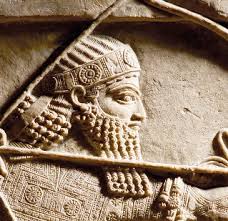
The day after a report signed off by 11,000 scientists warns us of the imminent catastrophe of climate change is probably not the best occasion on which to offer some perspective on sponsorship of the arts by fossil fuel producers, but here goes anyway.
The British Museum is one of my favourite places in the world. In the coming months it’s putting on two exhibitions of great interest to me. The subjects are Orientalist art and the myths and realities of Troy.
The former is sponsored by Standard Chartered Bank. The latter receives funding from BP. According to the new orthodoxy, I’m supposed to approve of the Museum taking money from a bank that contributed to the 2008 financial crisis and is notorious for its money-laundering antics thereafter, and disapprove of it receiving largesse from a company that extracts oil from the ground and thereby contributes to climate change.
Neither of these companies is, in my estimation, any more or less to blame for the predicaments each has helped to bring about than their corporate peers. Among predatory banks whose misdeeds helped to sour the financial prospects of a generation, are Standard Chartered any less evil than Goldman Sachs, Deutsche Bank or Barclays?
And are BP any more evil than Shell, Exxon, Saudi Aramco and all their illustrious predecessors?
Yes, according to a number of righteous organisations such as the Royal Shakespeare Company, who have decided not to take BP’s tainted money anymore.
And yes, according to the protesters who staged a sit-in during the British Museum’s magnificent Assyrian exhibition, I Am Ashurbanipal. Apart from – as the protesters claimed – urging Britain and America to attack Iraq in 2003 so that it could get its hands on Iraqi oil, BP bears the stigma of once having been the Anglo-Persian Oil Company, so its track record of economic imperialism and exploitation of hitherto poor countries in the Middle East is a further mark of shame in the eyes of the righteous.
I don’t enjoy games of moral equivalence, but I fail to understand why BP’s money is so much more tainted than that of a whole bunch of dodgy companies keeping afloat the icons of Britain’s arts establishment. Find a company, and someone, somewhere will find a reason to put a black mark against it.
Here’s a thought. I, for one, am profoundly grateful that BP and its competitors are still producing oil. I’d rather they were investing more in the business of wind, water and solar – nuclear fusion even. But if by some miraculous transformation all the fossil fuels in the world suddenly became unusable, you could be sure that what we think of as civilisation would collapse far more quickly and catastrophically than it would through the progressive disaster of climate change. Until we don’t, we rely on hydrocarbons for our energy, so perhaps we should have the grace to acknowledge that BP actually does something useful, as opposed to the banking community, whose main purpose appears to be making money out of money.
One more thought. If BP’s money is no longer welcome among the artistic great and good, it’ll find some other way to spend it. Otherwise it’ll end up paying more tax to the government. So which would you prefer? That it sponsors sport, or maybe starts supporting the Louvre? Or that it just pays tax that Boris Johnson and his cronies can spend on – among other things – an ad campaign warning us of the oncoming Brexit tsunami? Granted, more people get to see the Brexit stuff than experience the wonders of Troy in a London museum. But in three thousand years time, who will be learning lessons from Brexit?
In the name of austerity, state funding for the arts in the UK has steadily declined since 2011. Institutions such as the British Museum increasingly rely upon corporate sponsorship to maintain the interest of the public and their reputation for excellence. At the same time spending in schools on creative subjects has decreased. Libraries are closing across the country.
Before we force more of our treasured institutions to spurn contributions from the likes of BP – and Standard Chartered for that matter – we should ask ourselves whether in our righteous zeal we are happy to see the cultural life of the country further degraded at a time when the excellence of our scientific institutions is also under threat through the diminishing opportunities for international collaborative research that are likely to be the consequence of Brexit.
If not the likes of BP, who will fill the funding gap? Philanthropists? Yes and no. Plenty of institutions – orchestras for example – are reliant on individual contributions. But we don’t have the same culture of giving as exists in the US, where the likes of Carnegie and Guggenheim would always dig deep in search of personal monuments. As for our billionaires, James Dyson and Jim Ratcliffe to name but two, have scuttled off to foreign shores to escape the ill-effects of the Brexit they supported.
So my humble suggestion is that we shouldn’t be too choosy about the corporations whose money we welcome to enhance our cultural lives. Otherwise we’re left to the mercy of our parliamentarians, many of whom couldn’t tell the difference between a work of art and a hole in the ground.
With exquisite timing given this week’s Brexit shenanigans in Parliament, the London Times has chosen to run a scare story about immigration on today’s front page. It quotes the projection by the Office of National Statistics that the UK’s population will grow by 3 million in the next decade.
Underneath the headline it states that “Immigration fuels a ‘staggering’ rise in numbers”.
The report was released yesterday, so the Times can’t be accused of timing its story to coincide with, or reinforce, Boris Johnson’s efforts to get his Brexit legislation through Parliament in time for the current leaving deadline of 31 October.
But it’s worth noting that the inflammatory use of ‘staggering’ comes from Migration Watch UK, an anti-immigration pressure group. Another group, Population Matters, points out that a 3 million increase in population over a decade amounts to an increase in required infrastructure and public services equivalent to three Birminghams.
Now I’ve long argued – as have many others – that one of the causes of the Brexit vote in 2016 was the failure of the government over the past couple of decades to invest in the schools, hospitals and other facilities necessary to support the growing population. People felt they were losing out, and blamed the newcomers, the immigrant population, for deteriorating services. No matter that the vast majority of immigrants paid their way in taxes and national insurance contributions, it was their fault. And, despite the fact that a significant minority of immigrants came from non-EU countries, it was the European Union’s fault for letting them in. Not ours, it seems.
I’m as concerned as anyone at the prospect of what seems like a runaway growth in Britain’s population. But we should bear in mind two things.
First, our rise in population has not come at the expense of the employment prospects of the non-immigrant (or should we say, in Home Office-speak, settled) workforce. Employment levels have remained at a level far higher than in the seventies and eighties, despite the effects of the 2008 financial crisis. It’s true that wages have stagnated, and a higher proportion of the workforce is now employed in the so-called gig economy, many of them on the minimum wage. But workers coming from the EU have simply responded to the economic opportunities. And the consequences of their choosing not to come can already be seen in the orchards of Britain, where millions of apples lie unpicked.
The second point goes back to the original source of the Times article – the ONS population projection. Here’s a quotation from the summary:
The UK population growth rate is slower than in the 2016-based projections; the projected population is 0.4 million less in mid 2028 and 0.9 million less in mid 2043.
But the report continues with a huge proviso:
National population projections do not attempt to predict the impact of political circumstances such as Brexit.
The Times appears to be ignoring the point that population projections have gone down since 2016. Project Fear in reverse, you might think. It also fails to mention that the projection takes no account of the effects of Brexit, no-deal or otherwise. In other words, the projections are less scary than they were in the year of the EU referendum, and in any event, if we leave the European Union, all bets are off. Why? Because Brexit, whichever version we adopt, will slow down the economy and most likely slow down immigration.
So why are we being urged to take note of these ‘staggering’ projections? Could it be because The Times wants to warn us what will happen if Parliament fails to back Boris Johnson’s deal? Until recently the paper adopted a relatively neutral stance over Brexit. It had columnists who have argued from either side of the debate – Iain Martin for Leave, for example, and Matthew Parris for Remain. But I’ve not been able to detect any obvious slant in the news coverage.
By contrast, it’s worth noting that the BBC, so often accused of bias by both sides of the Brexit divide, provides a more thoughtful analysis in this report.
One thing my media training – which I underwent many years ago – taught me was to look at sources and examine the motivations behind stories presented as news. In this case, it’s pretty clear to me that The Times, though far more subtly than, for example, the Daily Mail, is softening us up to accept Johnson’s dog’s dinner of a deal. And should there be a General Election in the coming months, you can be sure that it will come out for the Tories.
Not that I have a problem with that – after all, I don’t own the newspaper – though I’d rather die in a ditch than vote for Boris’s rabble. But just a warning that we should all sharpen our manipulation sensors, especially when it comes to claims that are likely to be trotted out in any future referendum or election.
The posters, Facebook ads and presumably the newspaper editors are primed and ready to go.
Donald Trump, whose military has been in Afghanistan for 18 years and in Iraq for 16, should know this. And so should President Erdogan of Turkey, whose incursion into Syria, accompanied as it is by well publicised atrocities. Turkey has had its fair share of atrocities to deal with on its own soil in recent years. If Erdogan thinks that his action in Syria will make Turkey safer from future attacks, he is surely deluded. He will also have to deal with attacks on his troops in Syria well after he has declared victory.
Has he not learned from the British in Palestine, the French and Americans in Vietnam and the Russians in Afghanistan, as well as his “ally” the United States? Clearly not. And then there are the consequences for the entire region of a resurgent ISIS.
Most wars start through miscalculations – either over-confidence by the attacking party or complacency by the defenders. And they end messily, with the human repercussions often lasting for as long as the wars themselves, if not longer. Think of Europe after the two world wars, and Iraq after Saddam’s three catastrophic wars. As for Syria, it could take a generation for peace and stability to return.
Leaving aside the moral dimension, Erdogan’s war is plain reckless, and will haunt his people long after he has left office. Those who could stop it – most notably Trump and Putin – are declining to do so, for reasons of perceived national interest. In Trump’s case, the interest may also be personal.
Shame on them. And don’t be surprised if the repercussions spill over on to American and Russian soil.
 How best to describe the current turmoil in British public life? It’s as if we’ve taken to sticking fireworks in the national clothes drier, or stuffing all the contents of the fridge into the washing machine. The result: random explosions blowing the side off the house, or an unidentifiable brown sludge oozing all over the floor.
If I’ve been relatively quiet over the past few weeks, it’s because I’m finding it increasingly hard to take a coherent view of the chaos surrounding us both here and, not coincidentally, in the United States. As time goes on I begin to wonder who is becoming more unhinged: me or everyone else.
But for what it’s worth, here are some random thoughts that have emerged from my present, though hopefully temporary, state of derangement.
Let’s begin close to home. How to respond to the over-seventies in my golf club who know my position on Brexit and now “hate fucking politicians”, as one of them put it? Winding them up or not responding? My answer: calmly asking them who they expect to look after them when they get sick, and who will wipe their bottoms in their care homes once they’re no longer able to wield a seven-iron. Or asking them whether they would prefer to return to the golden days of pre-EU Britain, when we made planes nobody would buy, cars that didn’t work, indulged in strikes and three-day weeks, staged race riots and stacked rubbish in the streets. Or, in order to preserve civility, say nothing, because to argue with Brexit cultists is about as futile as disputing the existence of God in conversation with a Jehovah’s Witness? These days I prefer silence, punctuated with the occasional uncontrollable outburst that makes me sound like Dr Strangelove.
Next, how to pay for the refurbishment of the Houses of Parliament? Easy. If Boris resists the temptation of instigating another Reichstag Fire and using it to abolish the institution altogether, invite bids for sponsorship of Parliament and the great offices of state. As in The Trump House of Commons, the Putin Foreign Office and the Facebook Speaker. Or possibly the G4S Home Office, the Amazon Department of Trade and Industry, the Apple Ministry of Culture and the Goldman Sachs Exchequer. The money raised would be small change for these guys. Alternatively, you could have sponsored debates, as in “the Brexit Debate, sponsored by Marvel”, and make them available on pay-per-view. Further suggestions welcome.
This one’s for students of ancient history. Which prominent figure who contributed to the decline of the Roman Republic does Boris most closely resemble? Julius Caesar? Nah – Boris might have a plastic gladius in his toy box, but faced with an army of angry Gauls, he’d run a mile. Cicero? Closer. Our Prime Minister has the words, but he wouldn’t recognise a principle if it slapped him in the face. My answer: Publius Clodius Pulcher – a degenerate son of the ruling class who turned himself into a plebeian and caused untold grief to the ancien regime, when he wasn’t committing incest and violating sacred rituals by infiltrating female-only ceremonies dressed as a woman. To find out more about this interesting character, here’s a nice blog post, or read Robert Harris’s Cicero novels. Not that Boris has quite sunk to Clodian levels of depravity yet, but, as a classicist, he should recognise a fellow deplorable.
And how to react to the main political parties at their conferences making promises they have no way of knowing they can keep? Actually, that’s refreshingly normal, though the Conservative “promise” to crack nuclear fusion and provide us all with cheap electricity by 2040 would seem to have come from the outer edge of the Trumpian cosmos.
My message for Labour? By all means abolish private schools, but be aware that after Brexit there’s a good chance that few Brits will be able to afford the fees anyway, and you would be depriving the country of valuable income from all the Russian and Chinese parents who do have the money. And since the nation’s universities and health services are becoming increasingly dependent on income from abroad, why not ban foreign students and health tourism as well? Come to think of it, you’d be doing us all a favour if you’d nationalise Parliament.
Actually, I have a better idea. Let’s set up a National Hedge Fund, so that we can capitalise on the the falling pound, the plunging Euro, the devastated Irish economy, the collapsing German car industry and so forth. A good insurance policy for the nation, no? Why let Crispin Odey and his pals take all the spoils?
And finally, at least on the British front, lovely to see Sir David Attenborough at the launching of the research vessel named after him. But wait, didn’t the people vote for the ship to be named Boaty McBoatface in an advisory referendum, only for the government to overturn the said Will of the People? As a consolation they gave the chosen name to a submersible on the ship. Is that not a clear precedent for revoking Article 50, but letting Stoke-on-Trent leave the EU? I think this is a question to be referred to Baroness Spider and her Supreme Court colleagues.
Now, let’s briefly turn our attention to Donald Trump, supreme ruler of land, sea and air, source of universal truth about all things, slayer of the mainstream media and confirmed psycho.
Actually I have very little to say about him because all my email exchanges with Hillary Clinton have been retrospectively classified, and my previous less-than-complimentary ramblings have been locked up in a White House server along with all the other stuff of critical importance to US national security.
I can only add that I look forward to the sight of the helicopter taking him off, post-resignation, to a well-earned retirement at Mar-e-Largo after his pardon from President Pence. But I will feel a little sorry for all his associates who end up in jail, though perhaps Pence will pardon them too.
I hear, however that the Donaldissimo is predicting (or threatening?) civil war if he’s removed. Very similar to the dire predictions emanating from Boris Johnson’s ministers in the event that we’re sensible enough to call a halt to Brexit. Don’t great minds think alike?
All of which goes to show that politics rots the brain, and if things continue as they are much longer, I look forward to a pleasant stay in a secure institution.
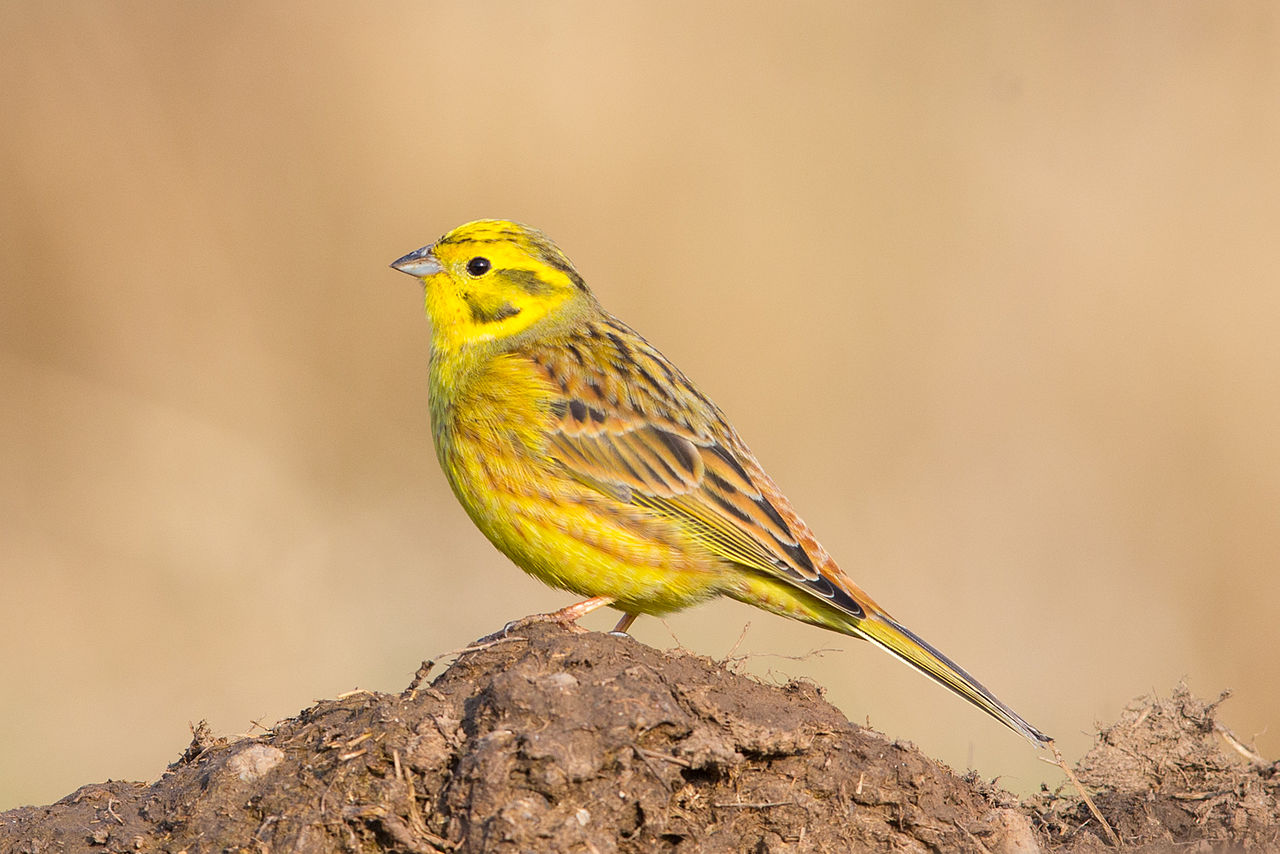
Yellowhammer
Just a sneaky thought about Brexit.
Nothing that has happened in British politics over the past few weeks convinces me that there is a better way of resolving the deadlock than a second referendum which includes as an option remaining in the European Union.
HOWEVER: a smart move on the part of the European Union, assuming that it still wants the UK as a member and a deal cannot be reached, would be to refuse to extend the leaving date beyond 31 October. Instead, it could make a unilateral declaration that if the UK wishes to rejoin the union, it can do so within the next year under the same terms as it enjoys today. In effect, we would be able retrospectively to revoke Article 50.
This would give us ample opportunity to taste the bitter fruit of a no-deal Brexit, and plenty of time to hold another referendum – not on whether to leave the EU, but on whether to return. If the predictions about the consequences of a no-deal exit come true, there would almost certainly be a widespread outbreak of buyers’ remorse, which would increase the pressure on whichever government is in power to think again.
Of course, reversing all the legislation that deals with Brexit would be no small exercise, and you can be sure that leavers, if things go badly, will blame the EU, the Tories, remainers and anyone but themselves for the chaos they have caused.
But a little carrot dangled by the EU might just be enough to persuade a majority of voters to return to the warm embrace of our erstwhile partners.
By this means the EU will be seen to have stood firm against what it sees as the unreasonable demands of the Brits, and the no-dealers will get their wish without having to respond to the EU’s offer, after which, thanks to the mess that follows, with a bit of luck they will never be a force in British politics again.
The last thing I want to see is a no-deal exit, but if such an event serves to convince the British people that they’ve been royally conned, a few months of grief might prove to have been worth it if we are then able to grab a lifeline back to the stability we shouldn’t have forsaken in the first place.
The big question is whether the EU, having been through considerable pain on their side, would welcome us back. Maybe. After potential waverers on its side have seen the grisly consequences of a disorderly exit, perhaps they would be less enthusiastic about life in the wilderness. On the other hand, a negotiated UK exit, if successful, might have the effect of providing a template for future defections.
Just a thought, nothing more.
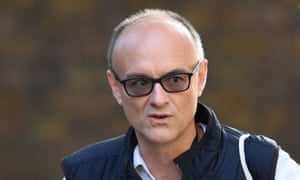
Depending on your political persuasion, Dominic Cummings is a genius (with evil as an optional qualifier), a political visionary or special adviser to the devil. What most people agree upon is that he has an unfortunate manner. I’ve never met him, so it’s not for me to comment on his personality. Others who have say that in his dealings with people he’s as subtle as a flying mallet. That’s certainly the impression you got from his portrayal by Benedict Cumberbatch in Brexit: The Uncivil War. And his behaviour in No 10 Downing Street would appear to bear out his reputation as a man who doesn’t suffer fools gladly – a fool being anyone who doesn’t see things his way.
This is a shame, because we need people like Cummings in politics. Spiky, contrary, full of ideas. Grit in the oyster. If you look at his website, as I have, you will find that nestling within the acres of self-justifying blather, there are some good ideas. Red teams, for example, specifically established to challenge conventional thinking and knock over ill-conceived projects; more diversity in combined honours university degrees; the use of interactive technology to aid decision-making; introducing technology-assisted data modelling into the schools curriculum. And that’s just stuff gleaned from two or three of his voluminous blog posts.
What is unfortunate is that most of his opinions are rinsed with contempt – particularly for politicians, the civil service, the educational establishment. Anyone, in fact, with the power to prevent his ideas from coming to fruition. Not unusual, because these days contempt seems to be the only common currency in our public discourse.
What’s also evident from the blog posts I’ve read is the absence of any evidence of personal values, morality or empathy, as displayed by Nicholas Soames who, when interviewed about his expulsion from the Conservative ranks in Parliament at Cummings’ behest, said that his executioner, the Chief Whip, was a “nice man and a personal friend”.
It’s not for me to suggest Boris Johnson’s powerful adviser sits somewhere on the autism scale. As I said, I don’t know him. But judging by the number of enemies he has made in a very short time, he can hardly be described as a people person, and surely not someone with the leadership skills to bring people with him through persuasion rather than compulsion.
And isn’t democratic politics the business of persuasion, even if decisions made through democratic processes require a measure of compulsion at the end of the line? Unfortunately for Cummings and Johnson, we have not reached the end of the line, and their attempts to short-circuit the process appear to have failed, unless, of course – as some have claimed – this was part of the cunning plan to win the next election without the stigma of having failed to deliver Britain’s exit from the EU by October 31st.
Either way, much as I reject the political wagon to which Cummings has hitched himself, I do believe that there should be a place in politics for people like him, however disagreeable he may appear to those who have to interact with him. But I would no more put him in a leadership role than I would appoint Dr Strangelove as my chief of staff.
He belongs in one of his beloved Red Teams, employed to challenge the unchallengeable, demolish the consensus and force those who control our destinies to justify their proposals – publicly.
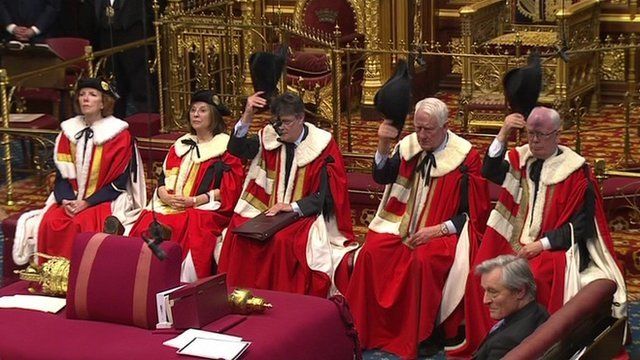
It’s pretty obvious that the faction who have taken over the British government will do anything short of breaking the law to ensure that Britain leaves the European Union by October 31st – regardless of the consequences. After all, Boris told us when he became Prime Minister, that he would “do what it takes” to deliver that outcome.
If the threatened no-deal Brexit comes to pass, the aftermath, which promises to be painful for some, possibly many, will be fascinating to watch. As the smart folks tell us, it will not be the end, but the beginning. Years of uncertainty, negotiation, fence building, mitigation measures, civil unrest and quite possibly the end of the current political order. Will we have to revisit centuries of parliamentary precedent, also known as our unwritten constitution? Will the Conservative Party, which has morphed from the Nasty Party into the Ruthless Revolutionaries, survive? Will the United Kingdom itself survive?
I’m not about to launch into a rant about Boris Johnson, Dominic Cummings and the rest of the motley crew masquerading as our government. I’ll simply come back to the idea that the momentous decision to leave the EU should be tested by a second referendum, justified by the dubious practices of the Leave campaigners in 2016, and by the fact that three years on the electorate is far more aware of the implications of leaving than it was when it was asked a simple yes-or-no-question.
For that view, I’m considered by a sizeable number of the newly-politicised electorate – or at least by their cheerleaders in the media and the more extreme edge of the political spectrum – as a traitor to my country, worthy along with millions of others of being locked up.
To the two acquaintances who told me yesterday that nothing adverse would happen after a no-deal departure, I repeat what I told them, which is that I hope they are right but fear they’re wrong.
I’m a Remainer for reasons that I’ve explained over and over again in this blog, in conversations with friends who think otherwise (and no, I don’t believe in ditching friendships because of differences in political principles – at least not yet) in the social media and anywhere else where I can get my point across. But I’ve always said that I would accept the result of a fairly-conducted (in other words, no lies, no foreign influence and no dodgy funding) confirmatory referendum.
Was it really too much to ask that we should have the chance to vote again?
It may be too late for that now. Such is the lack of trust within the EU in our political institutions, as well as the incompetence of our own government, that one way or another we may be about to reach the end of the line.
But as I said, the end of the line, if we reach it, will be the beginning of another. I have a feeling that a number of political careers, and not just those of our current masters, will fall by the wayside in fairly short order.
Let’s hope our new masters end up more principled and far-sighted than the current gang, and that the names of Boris Johnson, Jacob Rees-Mogg, Nigel Farage and all the other bigots, turncoats and second-rate chancers end up as footnotes to an unfortunate chapter in our history.
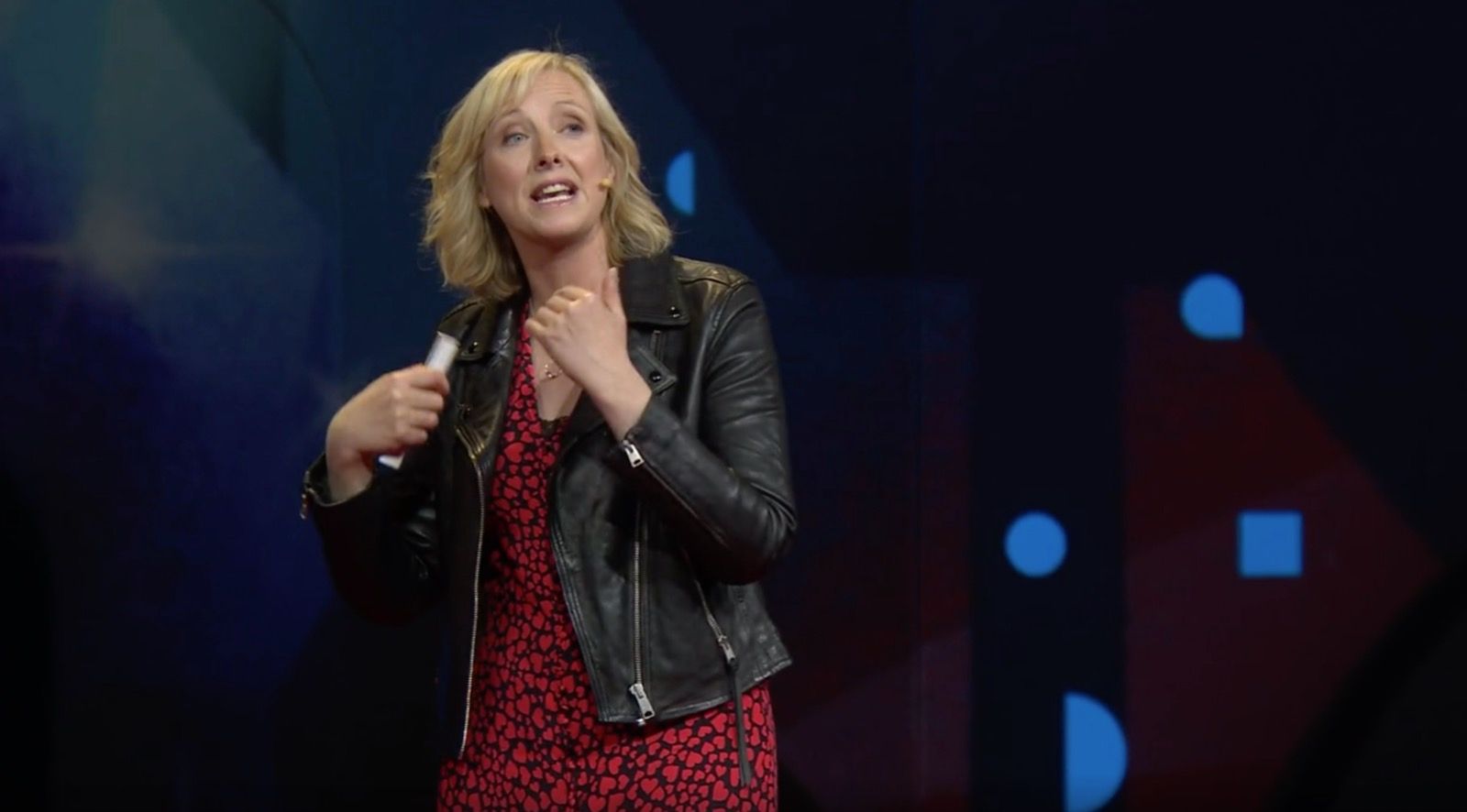
Carole Cadwalladr
We British are in the middle of what used to be called the silly season – a time of year when most politicians are on holiday and inactivity on the political front once led to newspapers struggling to find content other than stories of predatory seagulls, divorcing celebrities and footballers getting wasted in Malaga.
Not so this year. We are being subjected to wall-to-wall electioneering by our new government, unconstrained by the spending limits prescribed by election law. Spending promises, photo opportunities and the novelty of a bombastic liar at 10 Downing Street gleefully playing with the levers of the state.
Meanwhile people who keep our country running – not least our health service – are preparing to return to their own countries. Those who remain feel threatened and unappreciated. And our law-abiding minorities live in fear of racist abuse and actual violence from thugs who are encouraged by the tide of open xenophobia sweeping across Europe and the United States.
I could accept our leaving the European Union if it wasn’t being propelled under false pretences by wealthy interests with nothing to lose and much to gain. I could respect the “will of the people” if the process had not empowered those driven by hatred, envy and malice. If it had not spawned a huge community of emotionally incontinent online trolls. If we had not been conditioned to believe any old nonsense we are fed by journalists and editors who have forgotten their professional obligation to check their facts, and by pop-up pundits for whom telling the truth is an inconvenience to be avoided.
Whichever version of the truth we accept or reject, we are appear to be in a world in which how we feel is more important than sober consideration of the consequences of those feelings.
I have little to say about Brexit that I haven’t already said over the past three years. I haven’t written about Boris Johnson and his abomination of a government because many people more talented and coherent than me have already spoken for the millions of who deplore our country’s lurch to the far right and toward the precipice of a no-deal Brexit.
But it surely does no harm to pipe up occasionally and reiterate that I have not changed my mind about the folly in which we are currently engaged, unlike so many of the Conservative members and MPs who have joined Johnson in his colossal gamble with our stability and prosperity.
As the extent of the manipulation via the social media of the British (and American) electorates in 2016 becomes more widely known, the verdict of the “people” seems ever more unsafe. The failure, for whatever reason, of the police to prosecute electoral crimes that might invalidate the EU referendum, seems more than ever like a coup d’etat.
Yet, despite the efforts of dissenting voices in the print and broadcast media, we are being led to believe that Brexit is a matter of when rather than if.
So I for one will keep banging my drum, no matter what happens between now and October 31st. I may be a nobody whose voice is heard mainly when I loudly curse my incompetence on the golf course, but there others (much as I appreciate your reading or following this blog) whose opinions count more than mine and who are worth reading if, like me, you are in a dual state of despair at the present and tentative hope for the future.
These are people who cross the political, social and professional spectrum. I may not share their views on all subjects, but I admire their energy and, in some cases, courage, in speaking out against the no-deal Brexit madness. They are the antibodies fighting the virus that currently afflicts us.
Carole Cadwalladr – journalist
Matthew Parris – journalist, author, former Conservative MP
David Allen Green – lawyer
Jess Phillips – Labour MP
Jo Maugham – lawyer
Ian Dunt – journalist
James O’Brien – journalist and broadcaster
Fintan O’Toole – journalist and author
Alistair Campbell – journalist and former political advisor
Simon Schama – historian
Rory Stewart – Conservative MP
Gary Lineker – TV presenter, ex-footballer
Dominic Grieve – Conservative MP
Tom Watson – Labour MP
Tony Blair – former Prime Minister
John Major – former Prime Minister
This, if you like, is my roll of honour. There are plenty of others who have spoken out against Brexit – not least the six million who signed the petition to revoke Article 50. If we avoid the precipice, and emerge with a settlement to this nasty dispute that satisfies most of us and leaves my country in a better place, these are the people I will thank.
And finally, a special mention for Jonathan Coe, a son of Birmingham, my beloved home town. I’ve just finished his latest novel Middle England, in which he deals with the contradictions and baleful consequences of the 2016 referendum with a compassion that reminds me that this saga is about human beings, not cardboard cut-outs of goodies and baddies.
There are three months left to prevent what is being portrayed as inevitable. I hope we use them well.

Jacob Rees-Mogg’s decree specifying a style guide to be used by officials in his government department will doubtless win many new votes among pedants, angry residents of Tunbridge Wells, crossword fanatics and people who write letters to The Times beginning “Sir,…”.
While I applaud his attempt to bring clarity and consistency to official discourse, I’m sad that, unlike his boss, he doesn’t have the imagination to invent any new words that might make up for deficiencies in the English language he seeks to maintain in its pristine state – as it was taught in the classrooms of Eton when he was a boy.
To help him out, I offer a new word, a shimmering pearl of expression that will enrich the language:
Mogulation (n). 1 : The imposition of orthodoxy in insignificant matters by high officials. 2 : A decree (as in Papal Bull) demanding compliance of the faithful on pain of excommunication. (vi). : To mogulate.
In time, the meaning of mogulation will no doubt expand to include such statements as “we will leave the European Union come hell or high water on October 31st 2019”. But for now, it describes the will of the God of Small Things.
How refreshing to find a new minister who from his lofty perch finds the time to deal with such matters.
Perhaps his next mogulation will be to define the difference between truth and lies.
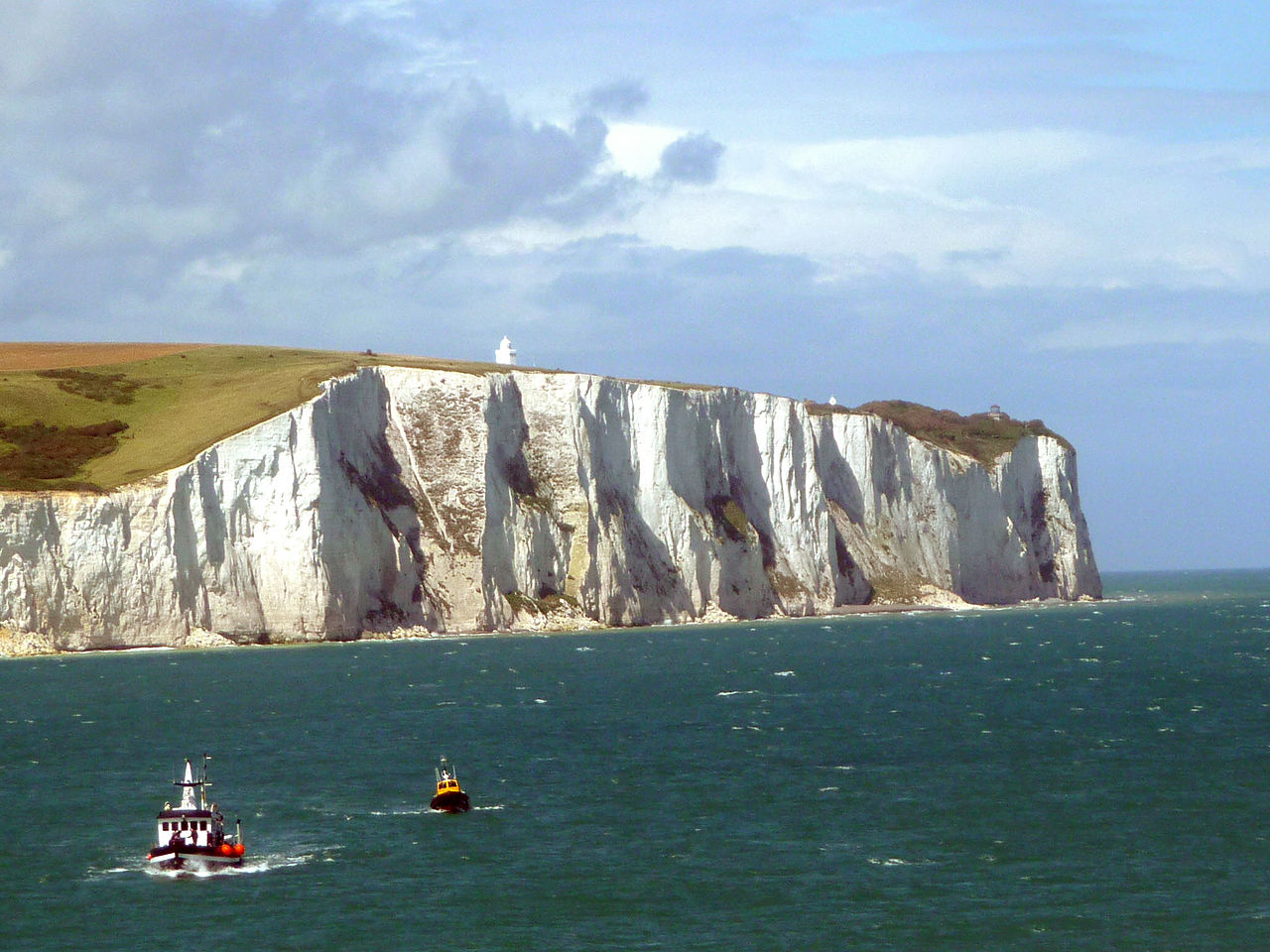
Today is supposed to be the hottest day in Britain since record-keeping began. It’s also the day when an unprecedented act of political decapitation takes effect. A crossing of the Rubicon. The morphing of the Conservative government into a bunch of right-wing ideologues bound together by one purpose above all others – to leave the European Union with or without what is commonly referred to as a deal.
Ask any of the neophytes or re-treads taking their seats at the cabinet table what they think about climate change, defence or social care, to name but three of the critical issues facing the new government, and you’d have to dig quite hard to get definitive answers that are distinguishable from the party line. But ask them about Brexit, and the answer would come back in a second, as if you were asking them whether they were male or female, black or white, straight or gay. No longer a principle, now a matter of personal identity.
While the rest of us bake in the heat, which, it seems, may or may not be a symptom of climate change depending on who you believe, Boris Johnson’s shock troops are gearing up for a single mission. No ifs, no buts. What they think about other issues is pretty much irrelevant. You get the impression that they’re the accountants who, when asked how many people it takes to change a light bulb, reply by asking how many you want there to be.
That’s probably not the case, but when the person on whom you depend for your exalted position is fixated on one objective, all other considerations become secondary. At least until the crises on your patch start cropping up.
A number of political commentators are predicting an autumn general election, called when Boris’s opponents, both within his party and without, block his attempts to take us into a no-deal Brexit. If that’s true, you could describe the strategy as shit or bust. Will his party stay onside? Few of them would relish the prospect of being booted out if the emperor is revealed in all his naked glory. He will certainly need to have chalked up plenty of wins to give his party a chance in an early election.
As things stand the only parties that appear to be prepared for such an event would seem to be the Brexit Party, whose relevance may quickly become questionable now that the government has adopted its key demands, the Lib Dems, invigorated by its recent election results and a new leader, and the Scottish Nationalists, who see a new opportunity to press for independence.
The Labour Party is divided on Brexit, in turmoil over the anti-semitism issue and in two minds about its leader.
So I suppose Boris reckons there’s all to play for. If he succeeds in sending us over the edge, it will be interesting to see how things look at the end of next year. A strong possibility of mass recriminations in the UK over a shattered economy, and, if Trump is kicked out by an electorate that finally sees him as the monster he is, Boris and his shock troops will look very isolated indeed. By that time the reputation of the Conservatives as a party of pragmatists will have been shattered, possibly for ever.
My question then will be: did we really have to go through all this pain to facilitate the prejudices of a minority within a minority? And what can we salvage from the ashes of a broken country, if indeed it still exists as a single country?
I like to think it will all work out in the end, but of course there is no end – only a continuum that leads us on to more paths, none of which is likely to resemble what has gone before.
Hopefully there are still enough sensible souls, even in the Conservative Party, who can stop this nonsense in its tracks. I only hope that they will keep plugging away in the next few months. And I will certainly be among them, sensible or otherwise.
In my chosen national newspaper, there’s been acres of coverage in recent days about a programme called Love Island – about how embarrassing it is to watch as a parent in the company of your teenage kids, how useful (or utterly ridiculous) it is as a sex education aid, and how excruciating it is to watch emotionally pubescent twentysomethings dissolve into shuddering sobs at the breakdown of the “relationships” they pretend to create with their fellow narcissists.
Any pervy frissons experienced by folks of my age, who are more capable of remembering than doing, would seem to be neutralised by the thought that these could be our kids. Even if our kids don’t spend their all holidays drinking, rutting or pair-bonding, they’ve probably had a few Love Island moments in Newquay, Santorini or Benidorm. Most of us, however, would prefer not to imagine them in flagrante.
What sparked off this line of thinking is the wondrous new Russian invention, FaceApp. If you agree to share your camera roll with these folks – who are probably connected to Vladimir Putin, because everybody in Russia is in one way or another – they will repay you by sending you a picture that shows what you will look like in middle or old age, or, if you’re approaching senescence, how you appeared in your golden youth.
One of our daughters sent her older version to my wife the other day. My beloved screamed with laughter. “She looks like me!!” she shrieked, as if that was a fate worse than death. “She would be very lucky if she did” was the only gallant reply open to me.
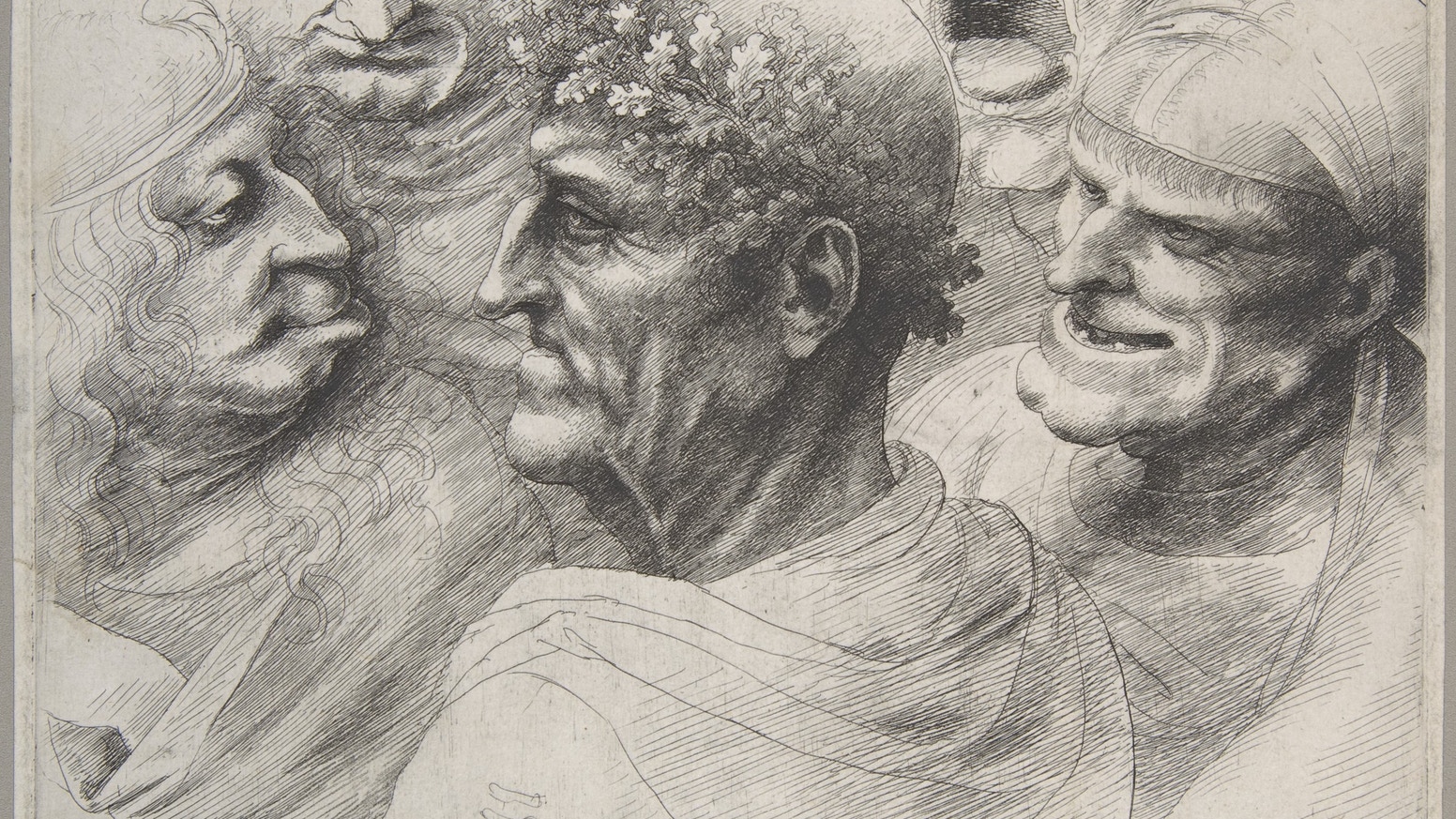
So I wondered what life would be like if, just as Leonardo did, we valued the flaws and imperfections of later life above the blemish-free blandness of youth. After all, given a choice between the perfectly sculpted, rolling green hills of England’s home counties and the wild coast of Cornwall or the mountains of Scotland, how many of us would opt to spend their holidays in Didcot rather than St Ives or Glencoe? So why are we so obsessed with perfection when all around us is a work in progress – human or geological?
Then I imagined the logical implications of such thoughts. What if we really did find the physiques of the elderly to be fascinating and full of beauty, and the characters of the old to be far more interesting than those of their descendants (who, let’s face it, know nothing and have experienced little worth talking about)? And if the proportion of TV programmes made for my generation versus that made for young people was reversed, would we not be sitting down every night to devour the antics, wit and wisdom of participants in an over-70s version of Love Island?
How much more exciting it would be to witness the men in a gnarly state of semi-undress discussing the health of their prostates, or admiring the socks their fellow inmates wear under their sandals? Or the women whose flesh cascades in waves over their sun loungers, regaling each other with tales about their pathetic ex-husbands? Or the men without necks talking endlessly about golf and complaining about immigration? Or the miracles of reconstructive surgery comparing tummy tucks? Or folks of either gender moaning about the inconvenience of incontinence?
Imagine also the private space where couples disappear for a game of whist or, heaven be praised, a night of elderly passion. The cries of surprise, rather than ecstasy, at the moment of fulfilment. The Viagra, the gin and tonics. The sighs of relief when an arthritic lothario decides to plant his long-neglected seed elsewhere.
Perhaps that would be taking reality too far.
In a less visceral version, perhaps we would delight in watching a few old folks getting slightly tipsy as they sit around the pool talking about how life was. About rations, national service, rhubarb in season, the fear of World War Three. About sex before the pill, never having it so good, an NHS that worked, holidays in Weston-super-Mare. About parents who died before their time, teachers who ruled with an iron hand, first girlfriends, first boyfriends, a lifetime of work for a single employer, pride in the moon landings and winning the World Cup. All the stuff that parents or grandparents never discuss with their offspring except in tones of “you don’t know how lucky you are”. Old people stuff not mentioned to the kids and grandkids for fear that the young ones wouldn’t find it interesting.
Perhaps when members of the gilded Instagram generation look horrified and fascinated at the photos of themselves in fifty years’ time, they should look at this elderly Love Island and reflect that this is also me – these are the things I’ll think and the way that I’ll think. This is what my body will look like, assuming I make it that far. These are the people I’ll become. These are the last memories I’ll cling on to when I succumb to dementia.
They should also remember that these old folks had their own youthful Love Islands. Maybe not as exciting or public as the current version. But most of us oldies can remember some episodes in our lives that were considerably more fun than Theresa May trampling a wheat field.
And long before FaceApp was invented, we had a very effective method of imagining what we would look like in the years ahead. All we had to do was look at ourselves in the mirror the morning after getting through ten pints of Newcastle Brown and a couple of packs of Players No 6.
Unless someone comes up with an Oldie Channel, it’s unlikely that Senile Love Island will catch on any time soon, so I guess we’ll have to be content with The Real Marigold Hotel as the next best thing. Part of the problem is that few of us actually believe that we’re really old, rather than young people burdened with bodies that don’t work so well anymore.
And the message to the Aphrodites and Adonises prancing around in paradise? Enjoy your feckless youth while you can. Your turn will come soon enough without the need for FaceApp to warn you what old age looks like.
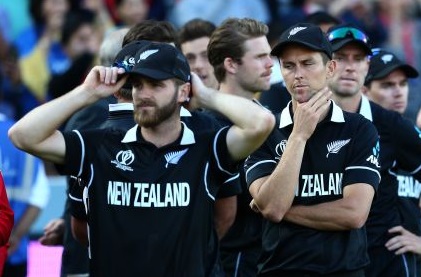
It’s over. We won. My immediate reaction at the end of the Cricket World Cup Final – after unhooking the defibrillator – was to feel that I’d have been just as happy if New Zealand had won. Was that a reflection that the Kiwis seem more like us English than any other team? Or was it that they deserved to win more than us, and were robbed of the trophy by a ridiculous piece of bad luck when the ball went clattering off the outstretched bat of a diving batsman to the boundary in the last over?
Or was it that the Kiwis play the game like us? Determined to win but never surprised to fall at the last hurdle – or blade of grass in this case. Or because they seem like decent people exemplified by a talented and fair-minded bunch of cricketers? Plucky underdogs and good losers.
I can’t really speak first-hand about national traits when I’ve only met a few New Zealanders and never visited the country. Certainly their domination of rugby suggests a nation of murderous winners rather than gentlemanly wannabes.
All I’ve seen in documentaries, news and drama points to a fascinating mixture of the mundane and exotic. Landscape a bit like England, but with volcanoes and glaciers. People reserved and conservative, except when they flare up into tongue-waggling, foot-stomping haka mode. Sheep safely grazing while earthquakes bring down cathedrals.
It’s a country with a female prime minister who at a moment of national crisis behaves like a warm, empathetic human being rather than an emotionally blocked politician frightened of her shadow. A country of gun clubs and a tinge of alcohol abuse and urban violence.
Do I like the Kiwis because unlike their cousins across the Tasman Sea, they don’t seem to have a grudge against the old country? Or because unlike their other cousins at bottom of Africa they’re not the children of apartheid?
Or, perish the thought, am I the product of unconscious bias against competing nations whose representatives are not “like us”? The Indians, whose captain’s eyes gleam with the avenging fury of his divine near-namesake? The West Indians, whose predecessors knocked us over with menacing intent? The Pakistanis, whose raucous expressions of national pride are frighteningly intense?
I like to think not. As a lover of the game I grew up admiring Wes Hall, Gary Sobers and Clive Lloyd. Later in life, Viv Richards, Imran Khan, Sunil Gavaskar and Sachin Tendulkar. Today, the World Cup Final would been graced with the presence of Virat Kohli, Chris Gayle, Rohit Sharma and Babar Azam. And one of the joys of the day was to see Lord’s Cricket Ground packed with so-called neutrals from other countries whose teams didn’t make the final revelling in the contest.
No. Cricket, as much as any other sport but more than most, is a game whose culture, rules and traditions is shared by people who might otherwise have little in common. When I’m in a Riyadh taxi driven by someone from Peshawar or Dacca, or in a tuk-tuk wheezing up the hills above Kandy, I can have a conversation in a common language, just as the mention of Manchester United brings smiles of recognition in Bangkok, Hong Kong and Bamako.
Cricket might be a sport that has its origins in southern England and spread around the world on the coattails of empire, but it has long ago outgrown its colonial origins. It’s a sport whose governing body, for all its flaws, has been instrumental in helping it to flourish in countries such as Afghanistan, whose people have good reason to resent the influence of the former colonial power.
And within the victorious England team, the joy shared by a red-haired assassin who was born in Christchurch, a gracious captain from County Dublin, a lethal bowler from Barbados and two class acts of South Asian heritage with beards as long as two fists as they celebrated together on a sunny evening in London in front of an audience of many nationalities tells its own story.
During those eight hours, it felt as though everyone – whether at Lord’s or on a dusty plain in the foothills of the Hindu Kush – who picks up a bat, hurls a ball down a stretch of dirt or gathers together to watch, was truly “like us”.
That’s why I love cricket.
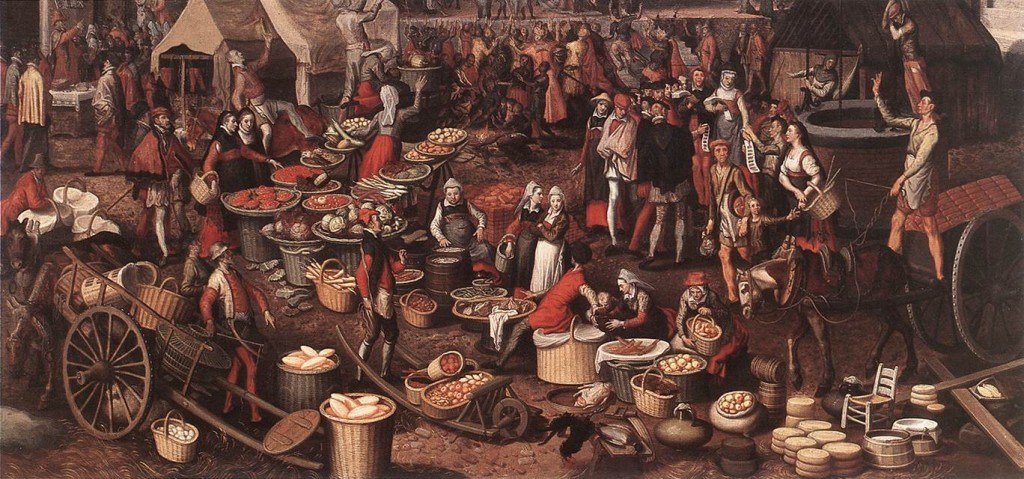
Yesterday, as my wife and I were sitting in our garden, I spotted two little red raspberries growing next to a fence. Years ago, we had a bed of flowers and fruit plants in that area. In a desire to make the garden easier to maintain, we replaced it with tree bark and a few tame wall-climbing shrubs. The tiny raspberry plant, struggling against a lack of water, is the sole survivor.
A few days before, one of our daughters brought us a bowl of strawberries picked that day from a friend’s garden in the country. They were sweet and full of flavour, unlike the tasteless pap that you will often find in your local supermarket.
And on the same day as I discovered the raspberries, we visited our other daughter, who lives next to a river with an abundance of brambles on its bank. Just one or two blackberries have ripened, but in a month or so there will be enough to feed the whole neighbourhood with blackberry and apple pie.
Here in Britain, it’s the berry season. It lasts for about ten weeks. Not that you would notice if you went shopping at Tesco or Sainsbury’s. There’s never a season when you can’t get strawberries from some part of the world. I’m not suggesting that our fruit tastes better than stuff grown in other countries. Some does, some doesn’t. The difference probably lies in the selection of strains grown by intensive farmers – fruit designed to look good and stay fresh longer – as opposed to what grows in the wild and in our gardens.
I’m of a generation that can just about remember seasonality in food. Root vegetables in winter, spring lambs, new potatoes in summer. It was a cycle that changed little for thousands of years. Over the past two or three decades, those of us who can afford it have become foodies. We expect the supermarkets to provide any food, regardless of time of year. It’s always spring in some part of the world, so we import from wherever our food is in season. And yes, ships and aircraft spewing out vast quantities of carbon bring us beef from Argentina, avocados from Kenya and mangoes from India.
I’m not about to launch into an eco-dirge, but it does occur to me that there might be one advantage from a no-deal Brexit to set against a mountain of perils. If disruptions to our trading relations and a steep decline in the value of sterling make it prohibitively expensive to maintain our season-blind cuisine, we might rediscover the joy of waiting for our food to come into season.
We will always import some foodstuffs – our climate doesn’t support bananas, coffee and a range of spices, for example – but much of the food we need can be produced at home. If we could be weaned off our addiction to products that are grown elsewhere purely to satisfy our desire for raspberries at Christmas or rhubarb in the autumn, would that be such a bad thing?
I even agree with Tim Martin, the bombastic Brexiteer who owns the pub chain JD Wetherspoon, when he makes the point that we are quite capable of making beer, lager, cider and wine of a high quality without having to resort to Belgian lager and Chilean chardonnay.
OK, perhaps the foodies can’t be denied their luxuries forever, but we could at least change our ways until the political madness passes, and long enough to encourage our farmers, brewers and winemakers to step up their production, and our supermarkets to pay decent prices to the home producers.
By that time, we might even come to realise that a higher degree of national self-sufficiency is one way in which we can all contribute to reducing carbon emissions. In fact we might even see a period of delayed gratification as a national duty.
It’s complicated, I know, and you could accuse me of being elitist in expecting large numbers of people to switch from processed food with cheap imported ingredients to freshly-cooked seasonal product in order to save the planet. But hey, you have to draw some potential positives from the mess we’re in right now.
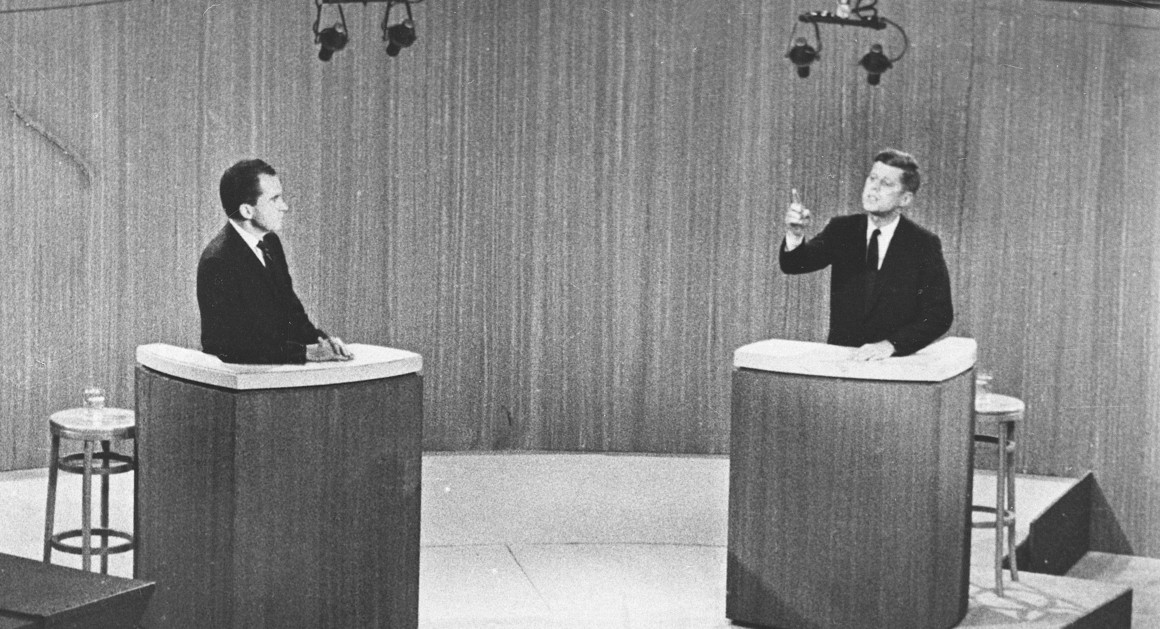
“Senator, I served with Jack Kennedy. I knew Jack Kennedy. Jack Kennedy was a friend of mine. Senator, you’re no Jack Kennedy.” Thus, in 1988, did Lloyd Bentsen squash Dan Quayle on live TV. It was one of the most famous rhetorical custard pies in recent American political history – not that it helped Bentsen become vice-president. George H W Bush won the presidency, though the rest of the world spent four years praying that nothing untoward would happen to Bush while Quayle, his hapless Veep, was waiting in the wings.
How Americans love their zingers! I’m amazed at how studio audiences seem to get hoodwinked into thinking that the devastating put-downs of rival candidates in TV debates are the inventions of quick minds coming up with the right phrases off the cuff, aimed at the right target at the right moment.
Most of them aren’t. They’re pre-baked, either by the candidate or by members of their team hired for the purpose of creating rhetorical missiles. That said, the best lines fall flat when they’re delivered by lousy actors. Timing, pitch and emotional intensity are equally important if the zinger is to win the attention of the masses, as well as the applause of the audience.
TV debates are game-shows, performed in front of audiences who wish they were quick thinkers themselves, and relish the execution of a well-aimed zinger. They respond to these lines as football fans respond to a perfectly delivered pass across a crowded field, or a devastating goal conjured out of nothing.
Do the performances of the contestants provide any clues about how the winner would perform when they gain the prize? When emotions can be manufactured by the best actors – empathy, anger, compassion – I’m not sure. The ability to project strength, passion, righteous indignation and humour are stock in trade for politicians, as they are for leaders in all fields.
Must a candidate be a good actor to succeed in a job that requires deep reflection, calculated responses to challenging situations and outstanding listening skills? I don’t think mass rhetorical brawls provide any indication of those abilities. The problem is that the debates, the interviews and the stump speeches seem designed to allow the fastest thinkers in the west to become top dogs. Not the deepest, the most stable, the wisest. Not the slow thinkers.
These days, you don’t even need to watch the debates. All you do is wait for the candidate or their supporters to post video clips of their zingers on the social media and let the algorithms do the rest.
How would past US presidents and British prime ministers have fared if they had been required to perform in this arena – Lincoln, Gladstone, Disraeli, the two Roosevelts, Eisenhower, Churchill, Macmillan? That question would trigger a long discussion between historians. But based on my limited knowledge, I would guess that at least some of these statesmen would never have got past the first post. Lincoln, Disraeli, Teddy Roosevelt and Churchill would perhaps have adapted. But Gladstone, Franklin D Roosevelt, Truman, Eisenhower and Macmillan? Most likely not.
Likeability and trust in character often trump the minutiae of policy, unless candidates can successfully bring down their opponents on grounds of hypocrisy, pie in the sky and logical fallacy. Even those weapons didn’t work in the case of Donald Trump. Nor will they necessarily stop Boris Johnson.
Here in the UK, we’ve been treated with the contest for the Conservative Party leadership. The winning candidate will become prime minister. I couldn’t bear to watch the debates. But judging from media clips, it’s clear that we have much to learn from the US in the zinger department. Most of the attempted put-downs were as sad as failed souffles.
Nor do I watch the BBC’s Question Time. The questions and the answers generally depress me. As for the audience applause, I’m surprised that the BBC doesn’t re-introduce Hughie Green’s Clapometer to turn the damned programme into a fully-fledged game-show. The other night I stumbled on an episode by mistake, and found myself hooting like a chimpanzee at every wave of clapping at an oh-so-sincere recitation of the “line to take”.
Game-shows or reality TV masquerading as debates are no way to select a leader. Much more effective are one-on-one interviews by skilled inquisitors, though not necessarily those who delight in interrupting the interviewee at every opportunity. Interviewing is hideously difficult. The trick is allowing the interviewee to express ideas while preventing them from evading difficult questions.
But in their infinite wisdom, broadcasters and political establishments in both countries seem to think that having ten hopefuls beat the crap out of each other on live TV is the way to go.
Think about it. Do you want leaders who rely on their wits and their gut instinct, or those who take a deep breath and think before they act? If you want the former, then you elect Donald Trump or Boris Johnson. If the latter, you go for someone like Obama or Gordon Brown. Recent presidents and their British counterparts have made mistakes, but only the most virulent Trump opponent would have to admit that whether by accident or design, he has a few positive achievements to his name, even though most of them can be expressed in the negative – not bombing North Korea, not bombing Iran (yet), and, arguably, not allowing China to make further inroads into the US economy. As for Gordon Brown, whatever his flaws, we should be eternally grateful for his steadiness in dealing with the 2008 financial crisis.
As far as I’m concerned, the best politicians are those who are able to think at two speeds – fast and slow, as defined by the great economist Daniel Kahneman in his book Thinking, Fast and Slow. Where there’s a bias one way or another, you’re in for trouble.
Debates, zingers and all, that test only one mode of thinking, are a poor indicator of the future success of a president or prime minister. When fast thinkers also have manic, obsessive or sociopathic tendencies, the danger is even greater. But though I’m biased towards the tortoise over the hare, slow thinking can also lead to indecision and inertia.
Which is why I reckon that when we select our leaders, sure, we should allow them to debate. But just as a CV is far from an infallible indicator of future performance, so are the qualities on show in in televised slapping contests.
With that in mind, here are three ways in which leadership contests might produce winners less likely to blow up the planet.
First, candidates should be asked to sit in an empty room with no aides and no phones, and write a two thousand word essay on a policy issue not of their choice, ending with a recommendation of a way forward based on their analysis. Their input, which would be a test of their slow thinking abilities, should then be made available to the public.
As a further test, they should not only face the inquisitor’s chair, but also that of the psychiatrist. A battery of tests designed to identify latent personality disorders that might have a bearing on their ability to function in public office might spare us from a leader who gets a little twitchy around the nuclear button. After all, if a leader is required to undergo a physical health check, why not include mental health?
And while we’re at it, given the age of some of the US presidential candidates, would it not make sense to throw in a test for early symptoms of Alzheimers?
None of these suggestions are likely to gain traction any time soon, but isn’t it a little strange that executives and senior civil servants are subjected to a rigorous selection process, yet our politicians are judged so heavily on their ability to deliver well-crafted zingers at each other?
Years ago, I quite fancied the idea of becoming a Member of Parliament. Even if I had been able to persuade a party and a constituency to consider me as a candidate, it wouldn’t have ended well. Toeing the line is not my thing.
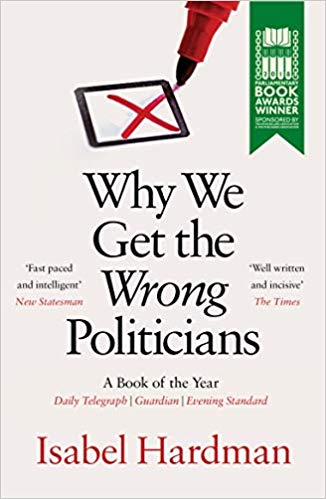
After reading Isabel Hardman’s book Why We Get the Wrong Politicians, I realise what a lucky escape I had. Would I have wanted to ruin my marriage, become an alcoholic, been bullied from pillar to post by arrogant whips, forced to nod through inadequate legislation, suffer abuse from online trolls on Twitter or thugs outside Parliament and then, after years of constituency work dealing with heart-breaking cases of bureaucratic intransigence, end up dumped by the electorate not because of any personal failings but because of the incompetence of my party leadership? I don’t think so.
Hardman interviewed many past and present MPs for her book. A common theme was frustration – with the political system, with inability of individuals to make a difference, or to dissent without ruining their standing within their party. As a political journalist operating within Westminster, she looks at its elected inmates, many of whom she knows well, as human beings first, whereas we outsiders sometimes take a more stereotyped view of our representatives – as venal, toadying, spineless yes-men who don’t have the guts to put the interests of constituents and country before party and personal career.
I’m one of those who in recent years have taken a dim view of our politicians. The Brexit saga has thrown into prominence some pretty dubious individuals, some of whom annoy me so much that I start cursing them when they appear on TV – Jacob Rees Mogg, Mark Francois, Chris Grayling, Steve Baker, Barry Gardiner and Chris Williamson, to name but a few. And yet, to this Remainer, there are people like Hilary Benn, Yvette Cooper, Jess Phillips, David Lammy, Rory Stewart and Dominic Grieve, who transcend the Westminster caricature, regardless of their views on Brexit.
Leaving party politics aside, on of Hardman’s main points is that too often the current system doesn’t allow MPs, to carry out one of their most important roles, as scrutineers of legislation. A relentless throughput of bills are put forward by ambitious ministers. Overbearing whips smother any meaningful criticism among government MPs of proposed legislation. Those who are looking to get into government don’t do their chances much good if they show themselves to be independent thinkers.
MPs find themselves bullied into voting for bad legislation, much of which they don’t have time to review, despite the fact that they have to deal with the consequences of that legislation when they see people in their surgeries suffering as a result, say, of changes to the welfare regulations. Those who don’t toe the line find themselves appointed by the whips to committees set up to examine bills line by line, regardless of their lack of knowledge of the subject matter.
But first they have to get into Parliament. For that you need serious money. If you take into account loss of earnings while campaigning, the cost of becoming and MP can run into tens of thousands pf pounds. One Tory MP spent £121,000 to win his marginal seat. On the Labour side, unless you happened to be supported by a trade union, candidates in the last election spent between £19k and £34k. Even sitting MPs had to shell out an average of £13k. So if you lose, and want to try again, you have to find a similar amount every time.
This was the reality that I found most shocking. How many people with great talent but limited means never make it into Parliament? Likewise, how many with limited talent and plenty of money end up occupying a seat for decades with no visible achievements to their names? More than a few, I reckon.
Hardman also asks whether we should adopt a system based on the separation of powers. In other words, as in the US, the executive branch governs, and the legislature is there to scrutinise proposed laws and hold the executive to account. She comes down against the idea on the basis that the US legislature, wracked by partisan division, is hardly a paragon of democracy, and not highly regarded by those who elect them.
Another bright idea is to upgrade the role of select committees, whose job it is to scrutinise government policy. By paying them a modest salary uplift and upgrading their status, parliament would provide an alternative career path , whereas the only current route to promotion is into the executive, which requires dumb obedience to the party line.
As for the system of appointing people to ministerial roles covering areas of government about which they have zero experience and minimal knowledge, I can only wonder how effective I would be, after a half a lifetime running service businesses, if someone appointed me to be the CEO of a company that makes washing machines.
The counter-argument is that MPs should be jacks of all trades, able to master any brief in the shortest time. That presupposes that ministers have the intelligence to do so, and the very independence of thought that the party political system does its best to grind out of them. Alternatively, if you appoint someone to a ministry and leave them there over a long period to develop expertise, when they move to higher things, they often struggle to avoid seeing all things through the lens of their previous experience. Gordon Brown and Theresa May particularly come to mind.
To me, as an interested outsider, it seems that success as a politician depends on activity, whether or not that activity is required or productive. For backbenchers, questions and speeches in the chamber, regardless of how fatuous their contributions, are considered means to maintain a public profile. For a minister, a constant stream of bills is judged by the public and the media as evidence that the person is “getting things done”.
The question I would ask – which Hardman doesn’t raise – is how much of this legislation is really necessary, how much is to fix problems with ill-conceived and under-scrutinised laws, and how much is make-work to keep MPs and civil servants in gainful employment?
Over the past six months government has appeared paralysed by the demands of arguing about, preparing for, or not preparing for, Brexit. Has the country functioned less effectively for the lack of legislation that would have been passed in that period during normal times?
As a taxpayer whose dollars support the vast machinery of government, including a civil service that boasts far greater numbers than the Brussels bureaucracy the Brexiteers so deplore, am I getting value for money?
I wish I knew. Though it’s pretty obvious to observers of the Brexit shenanigans and the current Conservative leadership election campaign that the current political system is broken, Hardman provides some illuminating insights into the problem from within what she calls the Westminster bubble. As she points out, although there are some pretty ropy characters in the House of Commons, there are also many decent people doing their best under difficult circumstances. But decency is not the same as talent, and it’s pretty clear that Parliament is fishing for its members from too small a pond.
The biggest shame is that a career as an elected representative should be a higher calling. In a world less polarised, a Member of Parliament should be worthy of respect, if not admiration. Instead, both the commercial media and some politicians themselves encourage us to believe that it’s a grubby profession. And thanks to the internet, there’s little an MP can say or do without their integrity being questioned from one quarter or another, and those who put their heads above the parapet are liable to be on the receiving end of vicious abuse. Hardly a great recruiting advertisement for the brightest and the best.
If you belong to the “all politicians are tossers” school of thought, Why We Get the Wrong Politicians might cause you to think again. But it’s also a telling illustration of how tradition, like ivy that takes hold of a building, can undermine and choke great institutions. Time for some pruning methinks.

My wife and I have just come back from a cruise through the Norwegian fjords. Cruises are not, I freely admit, very cool. But once in a while we find it quite fun to escape from our Surrey bubble and drop in on places that would require a fair bit of travel to reach independently. Plus it’s an opportunity to chat with people from Wigan, Southend and other obscure parts of the United Kingdom. The food’s pretty good and the people-watching even better.
And what more appropriate place to visit in these troubled times than Norway, serenely sitting on a cushion of oil, well beyond the grasping reach of the European Union? Well, sort of. The reality is that Norway is more connected with the EU than any of the Brexit ultras would find acceptable for my own country. Which is why the so-called Norway option hit the skids long ago.
I’m sad to say that we didn’t get to meet many Norwegians, apart from a recorded voice in the bus taking us past a couple of the country’s magnificent glaciers. Most of them, apart from the shopkeepers, were no doubt hiding from the marauding throng of tourists. But I suspect that if I were to ask one or two of those brave enough to venture out, they would be far too polite to say anything meaningful about Britain’s current political crisis, even though I also suspect that they think we’re complete idiots.
My fellow cruise passengers were not so reticent. I was unable to find anyone with a kind word to say about the EU. And once again (see my last post) I encountered someone who cited regulations governing the shape of bananas as one of the reasons to leave. This, of course, was one of Boris Johnson’s celebrated fibs concocted to amuse his readers while he was a “journalist” in Brussels.
You would have thought that a week in scenic Norway would have been a good opportunity to forget about the madness at home. Not so easy, since the trip was punctuated with news of the Tory leadership campaign. Each day ended with another head rolling into the basket of confounded aspiration:
Stavanger was a pleasant little town, though I’m sure Grantham’s equally nice at this time of the year. But I don’t suppose Margaret Thatcher’s home town has shops full of reindeer fur. As in other parts of Norway, a coffee costs over ten quid, and a two-course meal can’t be had for less than fifty. Back in the UK, clang – Raab goes west.
In Alesund, the weather was dull and cool, but we had a seriously exciting trip to the fish museum, where we discovered how the Norwegians made cod liver oil out of the unfortunate creatures that a hundred years ago would innocently leap in huge numbers into their nets. Alas, they don’t catch cod as long as a broomstick these days, thus sparing recent generations of children from the delights of a daily tablespoon of cod liver oil. Splat – Stewart hits the dust.
On to Olden. A small town that depends for its economy on farming and tourists like me. As we took an open-top bus ride through the fjords, the occasional ray of sunshine crept through the cloud. We discovered from the recorded voice (who sounded rather like Victor Borge, and with the same dry wit) that the town’s main benefactor was William H Singer, an American philanthropist, who ended up retiring there. A good choice, given that he was from Pennsylvania. No doubt he was much taken with the glaciers, which were probably ten miles longer in his day. Thud – Gove and Javid fall.
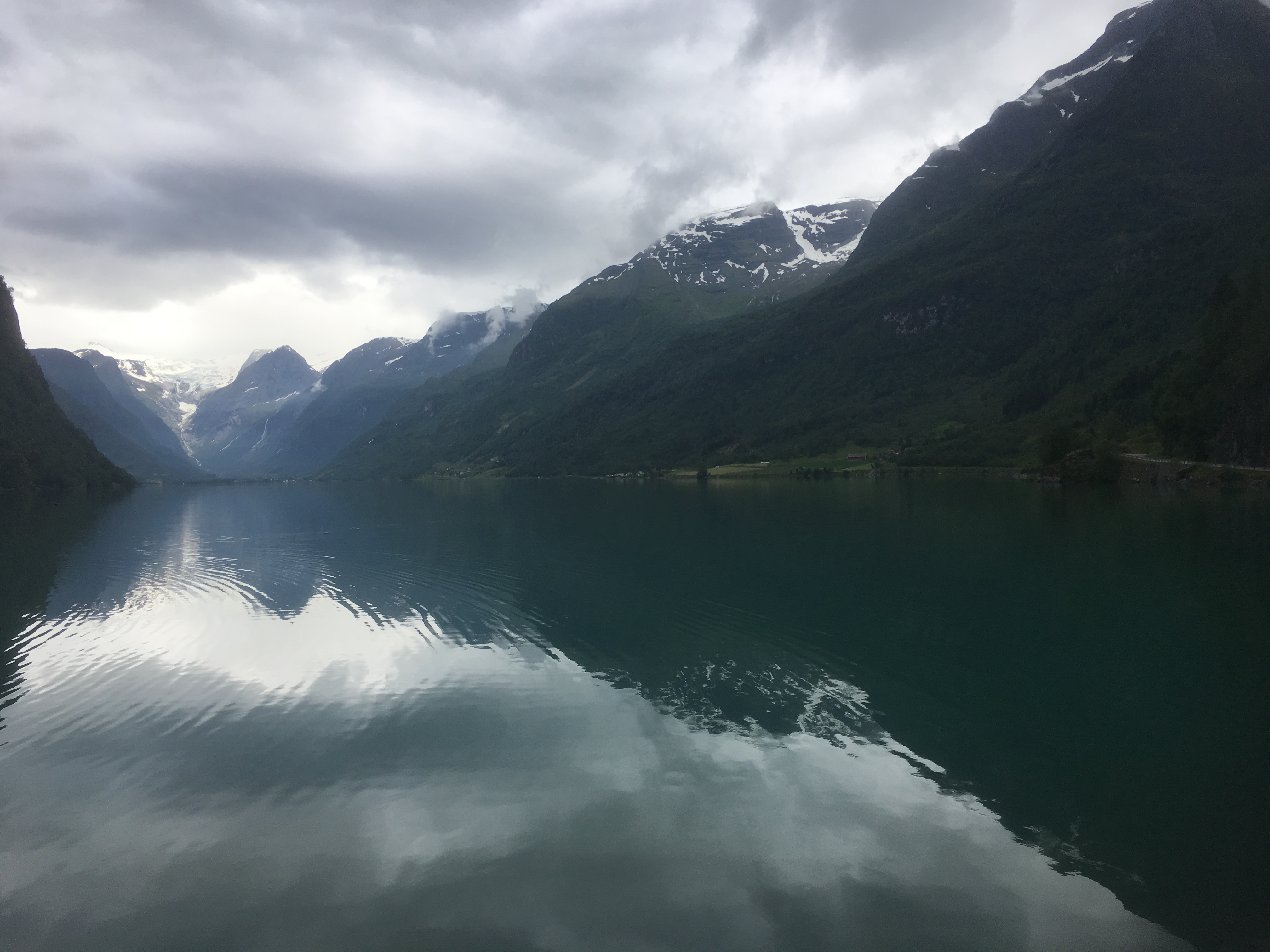
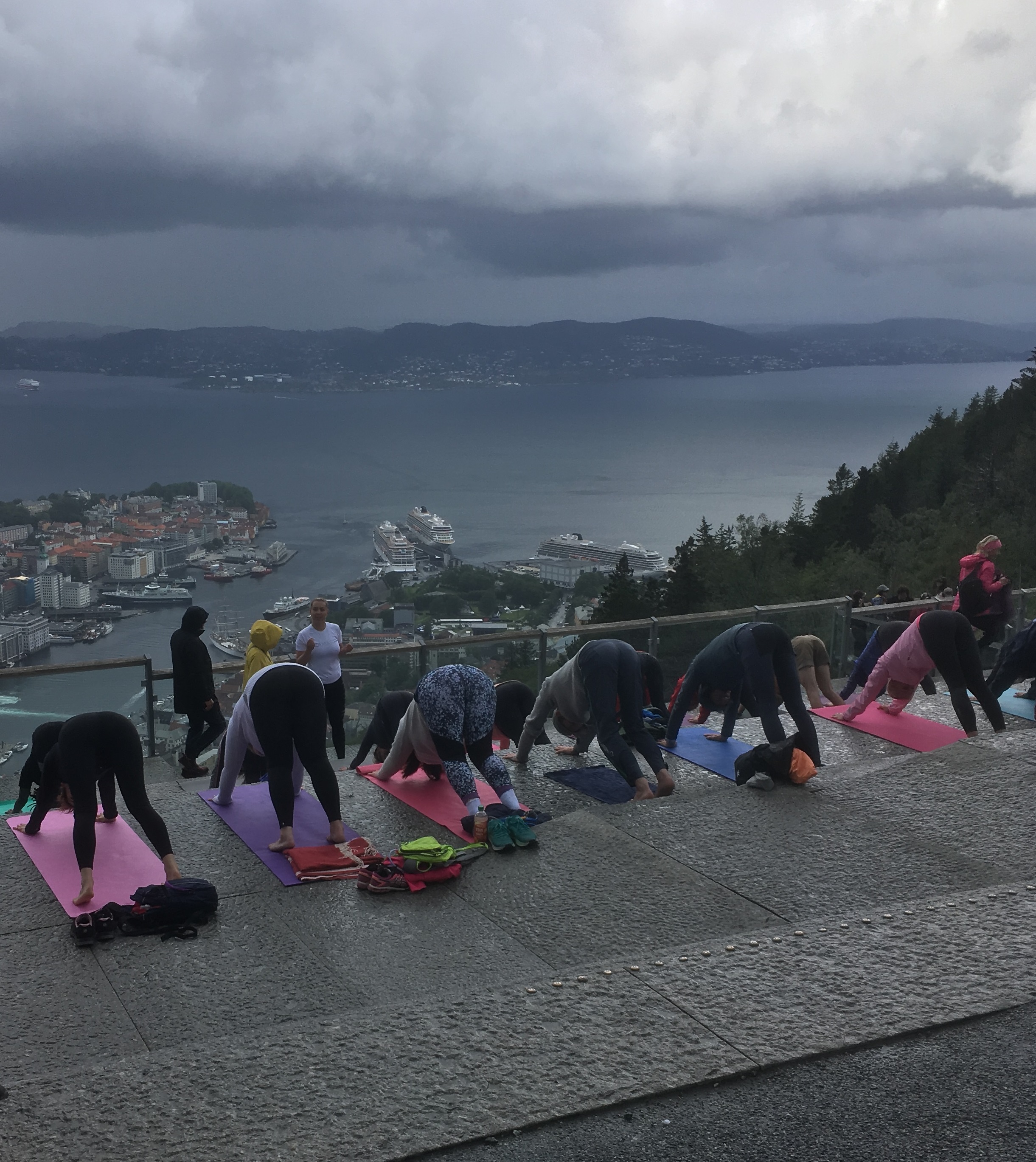
Bergen: Thump – Boris has a domestic with his girlfriend. How he would have preferred Bergen to Camberwell. Rain pissing down all day (which is the norm), a trip by funicular to the commanding heights above the city, where a group of yoga enthusiasts endured wind and horizontal rain as they contorted themselves on their mats. Boris probably would have joined them.
Of all the stop-offs, Olden was the most pleasant. As for the other destinations, attractions included glacier-yomping, kayaking or zip wire rides, none of which were likely to attract arthritic pensioners or the 30-stone leviathans who felt unable to walk up or down a single flight of stairs. The least mobile, I imagine, stayed on board and gorged themselves on lunch and afternoon tea.
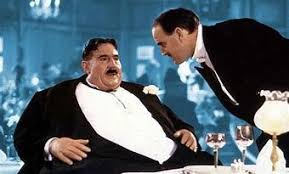
On the ship itself, the inmates entertained themselves between meals with bingo competitions, dancing lessons and tribute acts. If I was a crew member, I’d probably take bets on which of the passengers, many of whom occupied two seats at the dinner table, would burst first, like Mr Creosote in Monty Python’s Meaning of Life, following the legendary offer of “just one more wafer-thin mint”.
The other burning question was whether the ship would run out of costume jewellery, cheap gin and duty-free cigarettes before we glided back to Southampton fully loaded with the effluent from twenty thousand full English breakfasts and an equal number of three-course lunches and dinners. Or at least I hope we were full of the stuff, because if they dumped it in the North Sea it would likely kill all remaining life apart from those who live on oil rigs.
If I’ve given the impression that our fellow passengers were uniformly large and decrepit, forgive me. There were plenty of young people on board, not to mention a few babies. But even the young ones tended to be on the chubby side. And who am I to carp, given my distinct lack of resemblance to Michelangelo’s David? Help, however, was at hand for those whose physiques were less than perfect. Body sculpting, detox treatments, and puffy eye therapy were no doubt quite popular. Surprisingly, colonic irrigation, the treatment I should have thought would be in most demand given the relentless throughput of traffic through that organ, was not on the menu.
The cruise tradition that I least enjoy, harking back to when Britannia ruled the waves and passengers were segregated into the posh, the less posh and the definitely not posh, was the Black Tie dress code. For two nights men who spent most of the cruise looking like Rab C Nesbitt fastened themselves into tuxedos, wobbly chins hanging sadly over their bow ties. And women with no necks, for whom the normal attire was black leggings that cut savagely into their lower torsos, draped themselves with tents made of sequins and curtain materials to hide their ample upper bodies.
As back home the nation worked itself up into a state of febrile excitement over the heads rolling in the leadership election, I found myself worrying about the future for the old folks hobbling around the ship from meal to meal. Clearly they have the means to buy a week on a cruise ship, but how will they cope when our cash-strapped post-Brexit government starts slashing further at the social care budget? Some of them will not require too much care. The smokers have a good chance of dying early; likewise the grossly obese and the heavy drinkers. But the rest, many of whom sat on deck for hours on end in comatose contemplation, looked as though they were in care already.
But would they vote for Boris? A nearby family agreed that he was a splendid chap, and would make a great prime minister. They were clearly looking forward to being able to buy bananas shaped like corkscrews from their local Tesco.
The highlight of the cruise came on the last day, as we sailed down the North Sea heading for the channel, where the scheming French lurked on the other side. The organisers arranged what resembled a Brexit Party rally, otherwise known as a patriotic singalong. Red-faced participants lay like seals around the central area, feebly waving union jacks as cheerleaders had us singing patriotic songs like “Land of Hope and Glory”. All it would have taken to trigger a wave of geriatric orgasms would have been the appearance of Nigel Farage, pint in hand. Or Boris, sporting a black eye, bursting out of a tee-shirt stained with red wine.
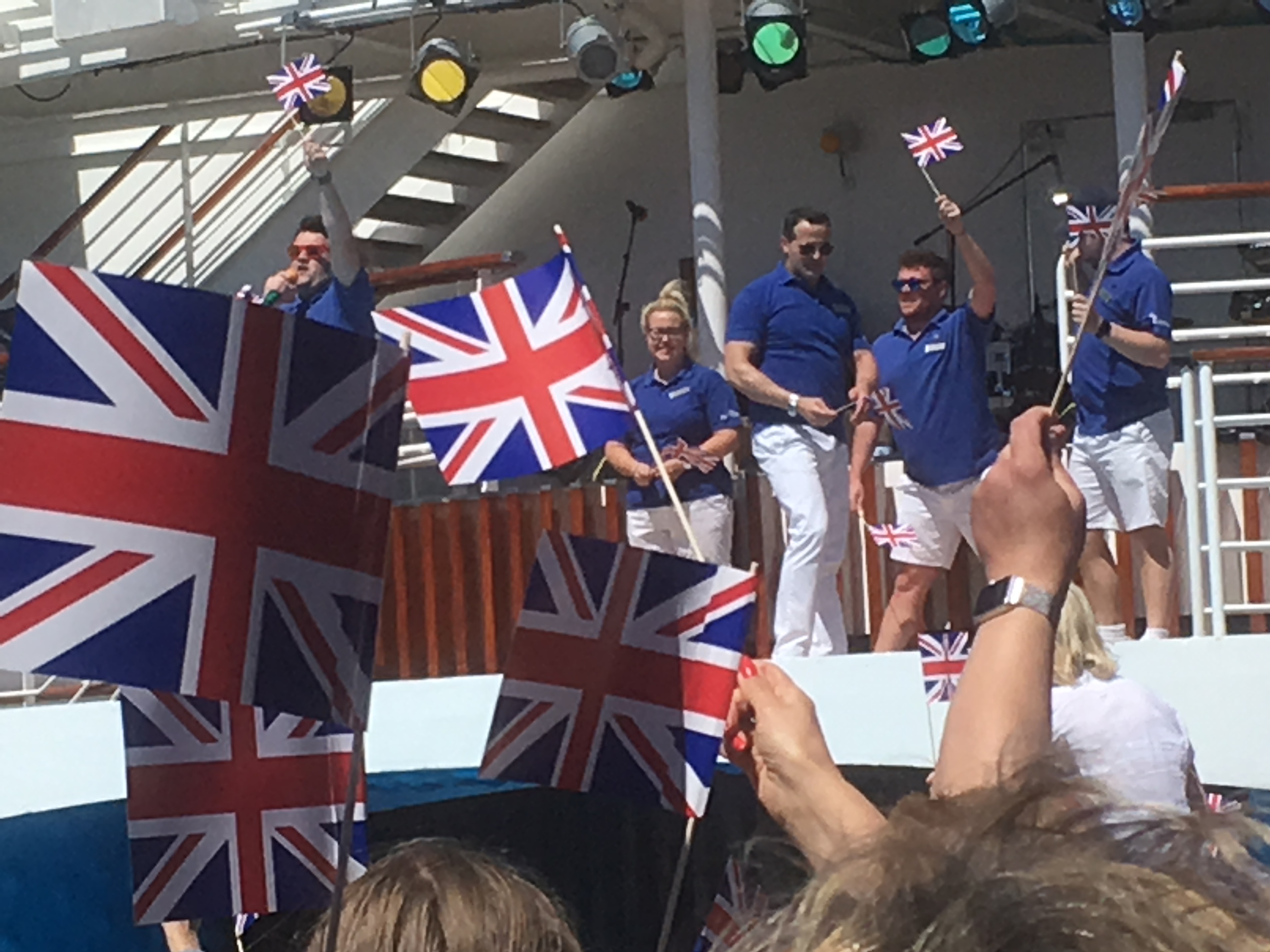
So back home, as the nation (or the 0.2 percent of it that has a say in the matter) prepares to crown our latter-day Winston Churchill in place of Theresa May’s Neville Chamberlain, I couldn’t help thinking that the vast majority of those who stumbled off the ship loaded with their duty-frees will be cheering away, even as the ship of state sinks slowly beneath the waves.
But no matter. We all had a jolly time on the Good Ship Brexit. And if over the next few months the rest of the population manages to be as pleasant and good-humoured as our fellow passengers, then maybe there’s hope for us all.
Didius Julianus, who bought the Roman Empire by auction in CE193
I’ve avoided the BBC’s coverage of the Conservative leadership contest like the plague. If the ten people who wish to become Prime Minister were standing in a contest in which I had a vote – a presidential election perhaps – I might be interested.
But as it is, there’s an evil bastard inside me dying to say that my country’s in a pretty pickle when the task of selecting a new leader falls upon a hundred thousand superannuated reactionaries whose entitlement to vote has been bought by an annual subscription to a party that garnered 9% of the votes in the last democratic election.
I’m aware that there are candidates who are offering all manner of bribes to these people in the form of tax cuts. I’m also aware that the Conservatives seem to have welded their wagon to Brexit, and I strongly suspect that many of their members are not in the slightest concerned about the thousands of jobs leaking away as the result of businesses shutting down their operations in the United Kingdom. At least not unless the value of their pension posts and houses starts to tumble.
I do believe that the BBC is setting a dangerous precedent by televising the leadership hustings, thereby providing a platform for one political party which is not available for others – including those with larger support in the European Elections – that are not holding leadership contests. As it happens, one party, the Liberal Democrats, who easily out-polled the Conservatives, are also holding a leadership election. Dare we expect that the BBC will give equal airtime to the mercifully small number of candidates in that contest?
For all but the chosen candidate in the Conservative race, the outcome will most likely be to raise their profile within the party and, thanks to the BBC, the nation. This will give them the status of so-called “big beasts”, whose voices will count more and whose chances of plum ministerial appointments under the next leader will be enhanced. A good career move then.
As for the party membership, they remind me of members of a golf club who have been approached by a developer to sell their land for housing. Although they have paid an annual subscription for the privilege of playing golf, now they have the additional benefit of a big pay-off for their share of the proceeds.
I also think of the events of 193CE, when the Roman praetorian guard killed Pertinax, the emperor they were sworn to protect, and auctioned his job to Didius Julianus, a wealthy senator. Nine weeks later, when a number of generals disagreed with the selection and marched on Rome, the new emperor’s supporters abandoned him and he was killed by a member of the same praetorian guard.
In the first case unexpected financial gain. In the second, financial gain followed by the swift downfall of the source of wealth.
I then think about football agents who take a huge cut from the transfer fees of the players they represent, only to induce disaffection in the same players, leading to further transfers and further pieces of the action.
It would be the height of cynicism to suggest that members of the governing party would be influenced by goodies on offer that might incentivise them to churn their leadership, wouldn’t it? Just as the idea that the electorate in general can be influenced by promises of financial gain is equally outrageous.
Another historical event comes to mind. In April 1945 Heinrich Himmler and Hermann Goering plotted to succeed Hitler as leader of the doomed Nazi state. Neither succeeded, and both died by their own hand. I don’t wish such a fate on the twelve hopefuls who wish to become prime minister. But I do get a sense that the person who succeeds would be drinking from a poisoned chalice. Just as Himmler tried to turn the western allies against the Soviet Union, the future of the Conservative Party now seems to rest on exploiting the electorate’s fear of a Labour government under Jeremy Corbyn.
And if Jeremy Hunt’s assertion that without Brexit, his party is finished, is correct, he and his fellow leadership candidates are still taking a colossal gamble that the nation will thank them for taking the United Kingdom out of the European Union.
I have no time for this hapless bunch of wannabes. If I was a Conservative member, I would probably vote for Rory Stewart. Anyone who has governed a province in post-war Iraq is probably as well qualified as anyone to deal with the chaos that is likely to follow Brexit. And anyone who has shared an opium pipe with a wedding party full of Iranian notables should at least be capable of understanding the euphoric dreams of a party seeing visions of sunlit uplands while heading for skid row.
No doubt the faithful will get the leader they deserve. As for the rest of us, we’ll just have to wait for our chance to send the chancers scurrying off in search of newspaper editorships, non-executive directorships and consultancy gigs, assuming there’s still anyone out there who is mad enough to employ them.
The story of Didius Julianus features at the end of a Hollywood Roman epic called The Fall of the Roman Empire. In it, the narrator cites the auctioning of the throne to the highest bidder as the ultimate act of political decadence, and a marker for the inevitable end of an era. I guess we’re at that stage today, and the highest bidder in this year’s auction appears to be one Boris Johnson, the man who sold us the lie that the European Union cares about the shape of our bananas. The difference is that he’s using our money for his bid rather than his own.
He and his buddy Donald Trump are worthy successors to Didius, though clearly more expert at self-preservation. We’re in for an interesting time, God help us.
“You really ought to watch Game of Thrones, Dad. But it’s best to start at the beginning, or you won’t get all the references.” Thus spoke my elder daughter last week as the epic came lurching to its conclusion.
This is the drawback with TV series drama, isn’t it? You can see Macbeth at the theatre, or Gladiator at your local cinema, and in the space of a couple of hours you get a beginning, a middle and an end. Macbeth and Maximus die, order is restored, and that’s that. No sequels. No prequels. Max is not miraculously brought back from the dead, and Mac is as secure in his grave as was Richard III under his car park in Leicester.
But watching Game of Thrones from the beginning entails sitting through 72 hours of sex, intrigue blood and guts, while keeping an eye out for Starbucks cups and water bottles littering the battlefields. That’s a pretty significant slice of time for an incipient oldie who’s starting to wonder how much time he has left.
Anyway, said Daughter invited me to watch the last episode with her, as she happened to be staying with us that weekend. I was happy enough to do so, because at least it would make some sense of all the meta-information about the show that’s been swirling around for the past eight years.
It was well worthwhile. I was able to watch it (with a few explanations from Daughter) on its own merits. Despite the howls of a million fans who petitioned the makers to rewrite the ending, I thought it was a pretty decent bit of drama. And certainly a great relief from the real-life political turmoil in my country, which, compared to the confrontations of Game of Thrones, is no more elevating than watching a bunch of feuding gerbils in a wildlife documentary.
I’d actually watched a few episodes three years ago while in the throes of an excruciating back injury that forced me to sleep upright for a couple of weeks. The rough sex, the antics of a debauched dwarf and some well-known actors in the autumn of their careers boosting their street-cred and bank balances were a handy distraction from the pain. But such was my drugged-up, sleep-deprived state that not much sunk in apart from the dwarf, who was magnificent as an actor and memorable as a character.
So I looked forward to renewing my acquaintance with Tyrion, and he didn’t disappoint. I’d enjoyed Peter Dinklage in Three Billboards Outside Ebbing, Missouri, but his performance in GoT – sometimes glowering, sometimes soulful, but always with a compelling stillness – deserved an award, for endurance if not the quality of his acting.
Watching the surviving characters wander through the smoking ruins of a great city made me think of how I would have reacted to similar scenes in Hiroshima after the bomb, and Berlin after Hitler’s downfall, without knowing much about the preceding events.
I saw no reason to obsess about the why. Unlike critics who have been bitching about plot holes and narrative inconsistencies, I could focus exclusively on the what. Impressive sets and cinematography. Great music. And from those of the characters who made it to the end, an overwhelming sense of melancholy and loss.
I’m thinking about watching the rest of the show, but not in the normal way. I shall watch it backwards. That way I needn’t worry about spoilers. The why will unfold bit by bit, just as delving gradually into the past deepens our understanding of the present. Why, after all, should we be so fixed on starting at the beginning? Why not let the past unfold from the end point onwards?
After all, is Hitler’s career any less fascinating if we trace it backwards, year by year, from the corpse in the bunker to the beaten child in Linz? And is it any less thrilling to start with modern homo sapiens and subsequently discover that ours was but one of several human species roaming around the planet tens of millennia ago?
Not that the murderous antics of a bunch of oversexed dragon-fanciers can compare with the discovery of Pompeii and Tutankhamun’s tomb, but since we in Britain have little to look forward to and an obsession with the myth and legend of a glorious past, to crawl slowly backwards towards the origins of a narrative would seem to be perfectly in tune with the times.
And far more fun than wading through some pillock of a politician’s book about eminent Victorians, I reckon. I am, of course, referring to Mogg Rees Jacob.

My clearest memory of witnessing my father’s death 16 years ago wasn’t his last breath. It was watching him let go after a lifetime of achievement, aspirations unfulfilled and ultimately disappointment. Though he didn’t say as much, I sensed he was feeling that all that stuff didn’t matter anymore.
A few days ago, I watched our family dog, Poppy, slip away in my daughter’s arms after two years of increasing infirmity due to old age. As the vet delivered the lethal anaesthetic through a cannula in her leg, I got the same feeling: all that stuff – the struggle to stay alive and hang on to a semblance of her former vigour – didn’t matter anymore.
Though I have no plans to depart any time soon, I must admit that I’m getting to the point at which some of the things I care about – that enrage me, energise me and give me a reason for reading newspapers, scouring the social media, debating with friends and writing polemics in this blog – no longer seem to matter anymore.
Is this the cusp of old age, when I give up fighting – at least in my own head – and accept that there’s damn all I can do about jackasses like Nigel Farage, Donald Trump and all the other bullying reprobates that voters in various parts of the world see fit to elect?
If I’m powerless, why do I bother to care about the extinction of a million species, about yet more conflict in the Middle East, about trade wars with China and about the self-imposed national degradation that will follow after Brexit?
Perhaps I’m afflicted with a temporary madness. I write this in Morocco, looking out over a verdant valley, listening to the sounds of sheep, goats and geese, and marvelling at the huge eagle gliding on the thermals and then swooping down to earth in search of prey. Because of where I am, I’m re-reading Tahir Shah’s In Arabian Nights, in which he describes the central role of stories in Moroccan culture, and laments the inability of us Westerners to draw lessons in life from simple stories whose meaning lies beneath the surface of the words, if only we would look within.
Moroccans are a superstitious people, many of whom believe in jinns, which Shah describes thus:
The Qu’ran says that when God created Man from clay, he fashioned a second form of life from ‘smokeless fire’. They are known my many names – genies, jnun, jinns – and they live all around us in inanimate objects. Some jinns are good-natured, but most are wicked, enraged by the discomfort they believe that humanity has caused them.
Apparently jinns can be exorcised, but only through elaborate and often grisly rituals.
I sometimes wonder whether my own country is suffering from a plague of jinns. If they are to be found in Morocco, why not in Surrey and Yorkshire? How otherwise have we been turned from a relatively tolerant people into a nation full of resentment and ugliness of spirit? Salman Rushdie elaborated on this theme in his 2015 novel Two Years, Eight Months and Twenty Eight Nights:
The novel is set in New York in the near future. It deals with jinns, and recounts the story of a jinnia princess and her offsprings during the “strangenesses.” After a great storm, slits between the world of jinns and the world of men are opened and strange phenomena emerge as dark jinnis invade the Earth. The jinnia princess and her children thus need to fight to defend the Earth and the humans from them, the Grand Ifrits. All the while, the Great Philosopher Averroes (Ibn Rushd) and the famous theologian Al-Ghazali pursue a philosophical debate about reason and God. (Wikipedia)
It’s one of my favourite Rushdie novels, full of rich imagery and a plot to rival the Game of Thrones. What I love about it is that he seems to have chosen his theme just before the world was convulsed with real “strangenesses”: the refugee crises, the election of Trump and the rise of populism in Europe, the most extreme example being Brexit.
Rushdie’s tale is about the conflict between reason and superstition, but if you substitute superstition for irrational belief, you have an allegory for the past three years, in which the “laws which had long been accepted as the governing principles of reality had collapsed.” An era in which lies are believed and demonstrable facts and rational arguments are damned as fake news.
I can’t stretch to believing in jinns, but for whatever reason we do seem to be gripped by a malign spirit. There are many rational reasons why we are where we are, yet I can’t help wondering whether we are at the crest of a wave that has yet to break. Are we on the point of the kind of madness that prevailed in 1914 or during the 1930s? That remains to be seen, but we certainly seem to be heading that way.
Is it necessary for humanity to suffer convulsions before returning to some form of stability? Are we just unwitting and powerless participants in a cycle as natural as ice ages and super-volcanoes? If so, then the actions of Western demagogues and a host of tinpot dictators and murderous monarchs are irrelevant. If they didn’t exist there would be other factors that would produce the same convulsion. Is the only option to ride out the cataclysm and hope for the best?
That we should sit passively and accept what’s coming is arrogant nonsense of course. Arrogant because I’m assuming I’m on the right side. It’s entirely possible that Trump, Xi, Putin and Europe’s populists are the forces of light, and that people like me are merely minor obstacles to be swept way by the tide of history. Arrogant also because I believe in right and wrong, when you could argue that we as a species are no more morally driven than a colony of termites. Individuals might have morals, but the cumulative effect of the species is profoundly amoral.
If Morocco was my home, I wonder how quickly my outrage at what is happening in my own country would slip away, and whether I would look at our political turmoil with Olympian disdain. I think not. After all, four years spent in Bahrain before and during the turmoil there didn’t reduce my concern for my homeland, even if there was less to be concerned about at the beginning of the decade.
So no, I may appreciate the soothing effect of Morocco, jinns and all, but I’m still bloody angry at the charlatans, liars, dupes and manipulators who are tearing apart my country. And I pray for the political demise of Trump, Duterte, Orban and Bolsonaro, not to mention the tyrants of the Middle East and the oligarchs of Russia and China.
If I’m allowed a vote, I can and will use it. If I’m allowed to speak freely, I shall continue to do so. To remain silent, whether through tiredness, apathy or a sense of powerlessness, is a waste of freedom that previous generations, by accident or design, have fought to maintain.
My voice may be small, but if I can influence just a few people to choose dialogue over insult, logic over emotion and peace over conflict, then that’s good enough for me.
If all this sounds rather dramatic, perhaps we should look ahead a few years, and imagine living in a country dominated by one party, in which every individual’s action is monitored by the state, in which journalists are locked up or assassinated, and in which economic and political decisions are made without reference to those who have to bear the consequences. Is that so hard to picture, when I’ve just described conditions that apply to a lesser or greater effect in any number of countries across the world today?
Some of us still have a voice. We must use it or lose it.
The other day we went to our local Odeon to watch Red Joan, a movie based on the life of Melita Norwood, an English woman who spied for Soviet Russia and gave away secrets that helped the Soviets develop their atom bomb. Judi Dench put in a solid performance as Judi Dench, and the movie, though not memorable, was decent Wednesday night fare for someone of my generation who remembers the Cold War. There were about ten of us in the auditorium.
Meanwhile, just down the corridor, there was a milling, popcorn-scoffing, Coke-guzzling crowd of teens and twentysomethings waiting to storm Screen 2 for the latest and final Avengers movie. Anoraks, hoods and other nerdy paraphernalia were in abundance.
Apart from a chance encounter with Iron Man on a flight, which I watched because I like Robert Downey Jr, I’ve never seen a movie inspired by Marvel comics, just as I’ve never seen any of the Star Wars series.
The other day I put to my future son-in-law, who, like just about the whole of his generation, is a fan of Iron Man, Wonder Woman and Black Panther, the question I asked above. What is it with superheroes?
He rambled on about the special effects, the plotting and the way all these semi-coherent lumps of testosterone are dragged together (in the final movie) into an apocalyptic confrontation with the forces of evil, represented by Thanos, a chap described by Kevin Maher in the London Times as having a chin like a scrotum. I’ll take his word for it because I haven’t spent much time closely observing scrota.
Surely there are enough real-life apocalyptic confrontations and disasters looming, I asked, playing the uncomprehending old fart? Couldn’t Captain America save the planet from the effects of climate change, such as melting ice sheets, flooded cities and cataclysmic hurricanes? Couldn’t Iron Man bang heads together to stop a nuclear war between Trump and Putin or forestall the long-awaited Yellowstone super volcano?
He gave me a pitying look. I don’t think climate change would bring much of an audience, he said. And as for nukes and volcanoes, they were all covered by the disaster movies.
I guess he’s right. Genres come and genres go. In the 60s it was war movies. In the 70s, disasters. The 80s witnessed the birth of the Star Wars and Star Trek series. Some genres last longer. Westerns have been rolling on since the 1930s. Likewise gangster movies. Others, like Roman epics, had a brief flourishing (Spartacus, Ben Hur, Cleopatra and, much later, Gladiator) before falling out of fashion.
Now I may be wrong about this, but it seems to me that more than in earlier genres, the Marvel movies present a clear choice between good and evil which matches the black and white mentality of the millennials and successive generations. People are either good or bad. They’re sexist or woke. There doesn’t seem to be a spectrum between the two. Purity personified, or evil men who grope and rape women with no excuse, no extenuating circumstances.
At least with other genres there’s room for flawed heroes and baddies who can redeem themselves. Don Corleone in The Godfather is a murderous thug, yet he espouses family values and has a dignity about him as he goes about wiping out his rivals. There are good Nazis, like Oskar Schindler.
The very best movies, in my opinion, leave us with a sense of moral ambiguity. They cause us to think about good and evil and all shades between, as well as the context in which the story plays out.
In real life we’re constantly asked to judge the character of someone like Donald Trump against the outcomes he delivers. He may be a despicable person, but he’s been good for the economy, so do we vote for him again? Do we forgive Bill Clinton for taking advantage of Monica Lewinski? Should we banish Kevin Spacey to obscurity and forget all the great movies he made and his support for the Old Vic Theatre in London because of his alleged sexual abuse of young men? And what do we think of the British empire, which subjugated half the planet but left them with railways, cricket and parliamentary democracy?
Alex assures me that in fact there is a measure of moral ambiguity to be found in the superhero movies. Take Thanos, for example. He’s the scrotum-chin who believes that the resources of the universe are being consumed to the point that they will soon run out. His solution is to destroy half the living things in the cosmos. A bit like Stalin, then, who was content to see tens of millions of his own people perish in order that those who remained were able to enjoy the fruits of the socialist paradise. Mao had a similar idea.
And Game of Thrones is full of antiheroes and moral dilemmas, so all is clearly not lost.
Every generation needs its dose of escapism. Is it surprising that today’s batch of 16-to-30-year-olds, blighted by financial uncertainty and fears for the future, takes refuge in the exploits of superheroes who definitely know how to take back control?
All the same, I fail to understand how young people yearn for safe spaces where they can be protected from the grim reality of life, yet flock to movies full of death and destruction, and hold Game of Thrones parties, where they watch people dying in a variety of gruesome and imaginative ways.
Most people know the difference between the movies and real life. And if those crowds at the Odeon get their kicks from half the universe being blown up, is that any worse than Butch Cassidy and the Sundance Kid dying in a hail of bullets? Just a matter of scale perhaps. Who are we older folks to criticise their taste in entertainment, when our generation sits slumped in our sofas at home watching psychos doing despicable things in The Bridge and other Scandi Noir series?
It’s easy to understand why Hollywood is hooked on superheroes, just as it was addicted to making the blockbusters that preceded them. Because they make money, stupid. Less risk, more profit. The same goes for the cinema owners. They don’t want to be showing movies that play to eight people in auditoria built for two hundred.
For me, the saddest aspect of Hollywood’s obsession with blockbusters is that they’ve blossomed into a giant hogweed of a genre that sucks nutrition from everything around it. Dollars invested in superheroes aren’t available for films with more universal appeal. We oldies would be prepared to go more often to the cinema if the right content was available. But every time we do go, we look at the trailers and are lucky if we see one that leads us to say ah, we’ll go to that. When we do go, often enough it’s to movies that are OK, but rarely rate in my estimation more than three stars out of five.
Is that because my taste is narrowing, or because movie makers simply don’t make much product for my fellow baby boomers? Both perhaps. But the entertainment market is becoming so segmented that I fully expect cinemas to start providing oxygen tanks and defibrillators instead of popcorn for those of us who might be overwhelmed by a new re-make of Psycho.
Where are the movies that span generations? I’m not talking about so-called family films, to which parents take their kids and which they wouldn’t dream of paying money to see on their own.
I mean grown-up films. Where are the emerging Kubricks, Altmans and Scorseses, and would they get the money to produce masterpieces from studios that only have eyes for superheroes?
Nowadays, it seems, the movies our kids want to see are not what interest us, and vice versa. The same goes for TV and books. Sport still creates common ground, but only if you’re into sport, which my kids aren’t.
Is it just us? If not, how do we bridge the gap? A friend who’s my age adores Game of Thrones. She’s a teacher, and she says that that talking Dothraki is the best way to reach common ground with the kids she teaches. Another way is to talk politics, if you can bear it.
But ultimately, we probably have to wait for the young to become relatively old, at which point they will join with us even older folks in incomprehension at the interests and tastes of their offspring.
I was thinking I might take the sage advice from my daughter’s beloved’s by going to one of the Avengers movies. But when they came back from one of the fifteen daily screenings of Avengers Endgame, he declared himself disappointed. When I asked why, he launched into a bewildering explanation of the intricacies of time travel, and the flaws in the plot wherein the superheroes try to reverse Thanos the Scrotum-Chin’s unspeakable act of destruction. To say he lost me is an understatement.
Then again, I suspect that his face would have been just as blank if I tried to go into the subtleties of a real-life act of destruction, and launched into an exposition of backstops, single markets, customs unions, Hard Brexits and confirmatory referenda. Not to mention constructive ambiguity. His bemused expression would not be because of his inability to understand, but because of my inability to explain.
Perhaps I should do a deal with him.
If he watches Dr Strangelove, Kubrick’s classic nuclear war black comedy, I’ll watch Wonder Woman. Either that, or we accept that there will always be areas of mutual incomprehension between young and not-so-young, and stick to chess.
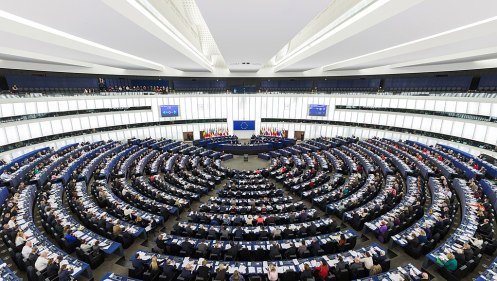
I have failed.
A couple of weeks ago, I decided to reverse a lifetime of standing on the sidelines by becoming actively involved in politics. What prompted this earth-shattering event was an advertisement by Change UK (The independent Group), or The Independent Group (Change UK) – whichever you prefer – for candidates to stand in the upcoming European Parliament elections.
I’ve been rabbiting on about the iniquities of Brexit for more than three years now, and I thought it was time to put my money (or someone else’s money) where my mouth is. Anything I could do, I thought, to thwart the ambitions of Nigel Farage’s Brexit Party, with its glossy ads and slick social media presence funded by money of unknown provenance, would be worth doing.
Change UK’s stated values map reasonably closely on to mine, so I thought why not? I didn’t expect to be selected, but if I didn’t think I had a chance, I wouldn’t have done the online application.
So I spent a couple of hours wading through the online form, blathering on about myself, my experience, my values and why I thought I would be a jolly good candidate. I also had to provide all my social media details in order to spare the Tiggers from being embarrassed by some awful tweet or Facebook post. I thought I was pretty clean on that score, though I freely admit to a few contemptuous (though not abusive) tweets about Nigel Farage and Donald Trump.
They also asked me if there was anything else in my background that might cause them grief. My answer was no. No criminal record. I didn’t mention that I’ve walked through a few wheat fields in my time and once, under the affluence of inkahol, I fell into a Norfolk slurry trench dressed in a white suit. Fortunately that event occurred way before it could be recorded on Facebook, and was witnessed only by a few close friends who have kept silent about it ever since.
I did my best to give a good account of myself – my experience of training and public speaking, of co-owning several businesses in EU countries, my knowledge of the Middle East and so on. Soon enough I was ready, and splat, off went the application. Not so fast, came the reply. Now we need you to complete the diversity questionnaire. Age (oh dear, that’s torn it), ethnicity, religion and some other stuff I can’t remember. No bother – it was a bit like applying for a credit card without the questions designed to expose me as a money launderer or a serial bankrupt.
And that was it. Nothing more to do except look at the EU videos about being an MEP and sit back and wait.
As the days ticked on, I waited for the call to tell me I’d been shortlisted, and would I come for an interview? It never came. I wasn’t surprised, after all, they said that there would be hundreds of applications for only seventy places. It turned out that there were over three thousand. But still, there could have been two thousand nine hundred and thirty idiots.
Eventually it dawned on me that I must have been considered one of the idiots. I received confirmation of my idiot status when I received a nice email from Anna Soubry, one of the Change UK MPs, informing me that I had been cast into the outer darkness. Well, not quite. There was an amazing bunch of quality candidates, she said, or words to that effect. Hang in there, she said, you can always apply to stand for local councils, the UK parliament or to be a police commissioner.
Yes, I imagine I could. Local councils don’t appeal though. Arguing in a council chamber about the traffic lights on Acacia Avenue, or why all the roads in my neighbourhood are pitted with potholes isn’t really me. Police and Crime Commissioner? That would be a very frustrating job, since I don’t believe in berating the failures of the local constabulary when most of their problems stem from the relentless budget cuts imposed by successive governments since 2010. And become a UK MP? I can think of better things to do than immerse myself in a metaphorical and physical rat-hole in which decency and self-sacrifice are values that have virtually died out, save for a handful of good eggs.
No, if I was going to get into politics, it would have been in the European Parliament, where I would have had the opportunity to get to know a few Latvians, Bulgarians and Luxembourgeois, eat lots of frites and sample the delights of Alsatian cuisine. That, and contribute in a small way towards reforming the EU and poking the Brexit Party in the eye. Gravy train? I have enough gravy. I would have done it on an expenses-only basis. It would have been a fantastic experience.
Anyway, it was not to be. Change UK rolled out their list of candidates, and I was not one of them. Gavin Esler, former BBC journalist, Rachel Johnson, Boris’s sister, and a smattering of barristers and former MPs and MEPs were among those who did make the cut. All worthy people with far more relevant experience than me. Beyond the celebrities, there were plenty of folk I’d never heard of. Supposedly ordinary people lifted out of obscurity for their moment on the national stage. I googled a few of them to try and understand why they had been deemed more suitable than me, but I was none the wiser in most cases.
Then, shortly after the list was announced and some of the candidates had been paraded in front of a Change UK press conference, came the news that two of them had resigned because they had said some dodgy things in the past on Twitter. One of them had made a snide remark about Romanian pickpockets, and the other, the number one candidate in Scotland, according to a Scottish newspaper, had written something about being chased by a black prostitute in Holland, and had posted another tweet comparing the intimate female odour with that of anchovies. At the time of writing, a third candidate is rumoured to be teetering on the brink because of a me-too offensive tweet.
So much for the social media due diligence, I thought – can’t have been that thorough. I awaited for the call from the bench, but alas, none came.
I looked as hard as I could for some background on the offending candidates, but found very little. One of them appears to be a martial arts fighter and former wannabe Conservative councillor. The other – the Scottish number one – is reported to be writing a PhD thesis about a Scottish-German anarchist who in the 1930s wrote in praise of paedophilia. He withdrew his candidature out of apparent concern for his mental health after a journalist discovered his questionable tweets.
Assuming this information is correct, my immediate reaction was that if these people were the best Change UK could come up with, it doesn’t say much for the rest of us who never made it to the starting line. Then I discovered that the shortlisting had been carried out by an unspecified third party. So it’s entirely possible that my carefully crafted application never got as far as a Change UK grandee.
More questions occurred. What sort of “third party” makes a living out of selecting candidates for political office? And based on what criteria? Using what methodology?
Here’s my theory. They would have started by creating a list of luminaries – well-known public figures like Rachel Johnson, Gavin Esler, Stephen Dorrell and so forth. These people may or may not have applied through the normal channels. They may have contacted one of the leaders directly.
The rest of us would have been handed over to the third party – probably a political consultancy specialising in data – for sorting. With three thousand applications to wade through in a very short time, I would say that the first cut was made on the basis of the demographic information supplied in the diversity questionnaire. They would have made shortlists for each constituency using some form of ranking system based on location, age, ethnicity, gender and religion. If they were smart, they would have mapped their shortlists on to the demographics and political complexions of the constituencies – London, South East, South West, Scotland and so forth.
Only then would the top-ranking applications in each region have reached the party decision makers, followed by due diligence and interviews with the favoured few.
My guess is that I never made it to the shortlists. After all, in the South East there were most likely plenty of opinionated, white, aging businessmen with no political experience to choose from, and plenty of luminaries who would have been given first place in the queue. Though not in Scotland, it seems.
Whatever the method of selection, my political career appears to be over before it has started. Am I bitter, twisted or consumed with Iago-like envy? Not really. A bit miffed perhaps, because I felt that I had plenty in terms of ideas, skills and personal qualities to offer, and the referees who agreed to speak for me presumably felt the same (unless they were just being kind). But then I would think that, wouldn’t I?
I hold no grudge against Change UK. In fact I wish their candidates luck should the elections actually happen. Realistically it would seem that only a handful have a chance of being elected, so for the rest the prospect will be plenty of hard work followed by disappointment, but a marker set down for the future.
As for me, I have no desire to set down markers. My time is relatively short. I shall lick my wounds back in my virtual castle, and continue to churn out views about politics and other stuff for all who care to listen.
In retrospect, if I’d wanted a political career, I should have laid down the foundations thirty years ago. But would I have liked to become one of those red-faced barflies in Westminster arguing each other to death about Malthouse amendments and backstops? I don’t think so.
Life is short. There are places to go, people to see and things to be thought. And that’s good enough for me.
Gargoyle at Florence Cathedral
The British parliament is in recess. Time, you would have thought, for calm reflection. No such luck unfortunately. The Brexit storm rumbles on, even if it takes an unforgettable tragedy to drive it off the headlines for a day. So forgive me as I repeat myself. Under normal circumstances I would excuse my revisiting of previous themes as a symptom of advancing age. But in the case of Brexit I make no apologies.
Forgive me also for using the emotional language of an angry tweet, and for the rhetorical tone of this post. Again, I make no apologies.
As my mind hovers a few thousand feet over the ravaged landscape of British politics, these ten questions keep haunting me:
How is it that this demon unleashed by David Cameron has become a roaring, all-devouring monster?
When there are so many issues far more important than Brexit, how did it come to define our politics over the past three years?
How is it that an apology for a politician thinks it’s OK to describe references to raping Jess Phillips, a manifestly decent politician, as “satire”?
How is it that our state broadcaster, funded by the licence fees paid by you, me and millions and others, thinks fit to use a tin-pot demagogue who has failed five times to be elected to the UK parliament as its go-to interviewee on Brexit?
When an overwhelming number of businesses, public servants, research organisations, economists and academics predict a disastrous outcome if we crash out of the European Union, how come a significant group of Members of Parliament still advocate that we do so?
How dare those of us who castigate the EU for its institutional shortcomings continue to do so when our own institutions are crumbling? The situation might not have been so evident in 2016, but things have surely changed in the intervening time.
At what stage does the “will of the people” expire? After a year, three years, ten years? Or is the result of the referendum to stand immutable long after a large number of those who voted to leave are dead and buried? Will we still be gurgling about the will of the people as our country metaphorically sinks to the bottom of the North Sea?
Has nobody considered that if you held a referendum to determine the nation’s preference for oranges or bananas, those who voted for oranges might quite like bananas as well, but plumped for oranges because you made them choose one or the other? Or vice versa. And perhaps, on another day, that they might change their minds and vote for bananas? Unless of course they were bombarded with messages that bananas were bad for your health.
Why hasn’t anyone thought of hiring a bunch of electronic ticker tape displays that continually update the cost to the country of Brexit, and put them in every town and city? And while we’re at it, use the same displays to give a running count of the hospitals and schools that the ever-increasing number represents?
How come only a minority of politicians are treating the cocktail of lies, spending violations and social media manipulation that arose during the 2016 campaign as a profound threat to the future of democracy in our country? Regardless of which side we were on, are we really content to see our futures determined by bigots, data thieves and dark money?
Of course there are many potential answers to these questions depending on your viewpoint. I ask them out of a sense of exasperation and yes, anger, that our political discourse has become so coarsened by the single issue of Brexit.
I used to think that the root cause of what I see as an accidental act of self-harm was belief. Belief that a single issue would solve many problems. Belief in the idea, so cleverly inserted into our consciousness, of taking back control. Belief that we can become unbound from international obligations by gaining fictional independence. Belief that our multinational, multiracial, multi-faith present can be rolled back without damaging consequences.
But actually what I now sense is that we are beset not by belief but by disbelief. Disbelief in logic, in the view of experts no matter how compelling the evidence they present. Disbelief in what unites us as human beings rather than in what divides us as tribes. Disbelief that anything matters other than how we feel. Disbelief that what is broken can be fixed without breaking many other things in the process.
These voices of disbelief are what we hear most often these days, in private conversations, via the media and from many of our politicians. I’m a disbeliever too. I don’t believe in sunlit uplands. I don’t believe in the perfection of people, lives, societies and institutions, either past, present or in the future. Democracy, which I do believe in, is like marriage. It’s hard work. It needs nurturing, adapting and improving.
There’s a horrible message from Notre Dame, a cathedral that I adore, which tragically burned down yesterday. If you neglect a building, it will eventually fall down or, heaven forbid, go up in flames. So it is with human societies, which disintegrate through neglect, and sometimes explode into raging conflict.
There’s also an uplifting example in recent days of the power of positive belief. Tiger Woods, whose self-destructive decline led all of us golf fans to believe that his glory days were over, on Sunday overcame his physical and mental challenges to win the US Masters. In so doing he gained more respect and public affection than he ever did when he was winning everything.
Just as Tiger did, we can recover from our dark place, but only if we believe in the things that bring us together. Whether or not we leave the European Union, we can rebuild confidence in our institutions, just as the French will rebuild Notre Dame, but it will be a pointless exercise if at the same time we ignore the obvious signs of social degradation, not only in our country but in others with which we are bound together in a web of mutual dependence.
It won’t be easy, but at least we’re still standing.
Edict of Thessalonica
A long time ago – in the 4th Century CE to be precise – if you wandered into the ancient equivalent of a pub in Constantinople and started mouthing off about the divinity of Christ, you ran the risk of getting into a serious fight. If you expressed the wrong opinion you could have been expelled from the premises, beaten up and possibly murdered.
Such was the passion for religious arguments that they seemed more important to the ordinary citizens of the Roman Empire’s new capital than the threat from marauding Goths and other predators. Understandably, for did not belief in the precise nature of Christ determine whether or not your immortal soul would ascend to heaven or roast in the eternal fires?
These controversies caused so much trouble that a succession of emperors from Constantine onwards attempted bring them to an end with a series of decrees, backed by conventions of clerics gathered to reach a compromise. Which they duly did, but with an explicit understanding that those who disagreed would, in the words of the Edict of Thessalonica:
“suffer in the first place the chastisement of the divine condemnation and in the second the punishment of our authority which in accordance with the will of Heaven we shall decide to inflict.”
Disputes over the relationship between the Father, the Son and the Holy Spirit come to mind when I hear reports of Theresa May telling Jeremy Corbyn that her Brexit deal delivers membership of the Customs Union “in all but name”.
It is perhaps unfortunate that we don’t have an emperor to bang heads together over Brexit.
In recent times we’ve been beset by arguments over secular articles of faith – from deeply destructive conflicts between communism and fascism to everyday contests between capitalism and socialism, Republicans and Democrats and, in my own country, between Conservatives and Labour. All of these disagreements concern our future in this life rather than in the hereafter.
But now, overlaid upon traditional ideological divides, we have an issue that has arisen from being a minority obsession to a political inferno sucking so much energy from those who govern us that other pressing issues – such as inequality, climate change, crime and pollution – are scarcely being addressed at all.
Instead, in pubs and taxis and at dinner tables across the country, we are witnessing conversations – or screaming matches – between people who support a hard Brexit, a soft Brexit, no deal, customs union membership, single market membership and God knows what else. What else might conceivably include union with Canada, annexation of Ireland or the reorganisation of England into its Anglo-Saxon constituents – Mercia, Wessex and so on – with a Trumpian reinforcement of Hadrian’s Wall to keep out the Picts and the Scots.
It’s almost as if we’ve moved back a few hundred years, to an age when everyone had their own version of faith – at various times Lollards, Diggers, Anabaptists, Catholics, Levellers and Calvinists to name but a few variants of belief.
We’re not quite at that point with Brexit, but we do seem to be heading that way. And when an establishment figure such as former Chancellor of the Exchequer Nigel Lawson warns of “understandable insurrection” as a consequence of revocation, you might also think that we’re heading for a civil war. Long overdue, I suppose, since our last one was more than three and a half centuries ago, and most of our EU partner nations have been through their own armed upheavals much more recently.
Not that I agree with Lawson. Riots, thuggery and vandalism for sure, but full-blown fighting with AK-47s, RPGs and death squads? I don’t think so.
What some predict is further political fragmentation, which would be bizarre if the cause of the splintering was a single issue. Instead of two major parties, we could conceivably have five smaller ones – three on the right and two on the left. In fact you could actually argue that these groupings are even now functioning as separate parties. So should the Emperor Constantine decide to rise from the dead in order to bang some heads together on our behalf, here are the groupings, as well as the some of the good, the bad and the ugly associated with them, that he would have to contend with:
First there’s the Cro-Magnon faction, led in Parliament by the likes of Mark Francois (well known for his survival skills after his much-touted years in the territorial army). These are the people who, if we crash out of the EU as they desire, will presumably be out in the woods foraging, ably assisted by Tommy Robinson, who will be on hand to deliver the coup de grace on any small unfortunate small animal that they might find. Nigel Farage won’t make the trip, but will be on hand with a pint or two of out-of-date bitter with which to wash the rats and poisonous mushrooms down. Arron Banks will be there to scare off the gamekeepers with his twelve-bore shotgun.
Then there are the Nasties, also known as the Arghs, who will ally themselves with the Cro-Magnons when it suits their purpose. These are the insurance tycoons and hedge fund bosses who either have an ulterior motive for their fervent desire to leave the EU in the most extreme possible manner, or who have less brains than they think they have. Either way, they’re fanatics, believers in the True Cross of Brexit. Their leader, naturally, is the rather odd Jacob Rees-Mogg, who would like to be Prime Minister, but only if Nanny can sit in on cabinet meetings.
Further leftwards, but not too much further, we have the Ancien Regime, led by the Prime Minister, or before long, by Boris Johnson or Michael Gove. This lot is a mish-mash of country squires, lawyers and shopkeepers, laced with a few ex-soldiers. They’re dedicated to ensuring that the Conservatives govern in perpetuity. They attempt to do so by adopting any policy that achieves that end. Pragmatism over principles is the order of the day. For them, a red line is as solid as a row of jelly babies, which is why Theresa May will shortly be on her way to the back benches.
Moving on to Labour, there are the Proseccos, nostalgic for the sparkling days of New Labour, still singing “Things Can Only Get Better” as they did in 1997. Some call them Blairites. Others identify with Blair’s great rival, Gordon Brown. Either way, if they have a recognised leader, it would be Yvette Cooper, the long-suffering partner of former cabinet minister and Strictly Come Dancing star Ed Balls, who would probably think he escaped from politics at the right time when he lost his seat in 2015.
And finally, on the far left, we have the Popular Front for the Liberation of Islington, a cadre of flinty-eyed former (or current) Marxists and scions of the best private schools, many of whom have never worked in a proper job in their lives, whose desire to collectivise the country has festered away since they were marginalised by New Labour. They have now burst out like the alien in John Hurt’s chest. They’ve managed to convince the idealistic youth that their ideas – which have been around for decades – are fresh and new. They are theoretically led by Jeremy Corbyn (also known to Private Eye readers as Dave Spart). Some believe that he’s an affable figurehead with limited imagination who will sooner or later be shoved aside by some of the more ruthless political operators in his camp. I reserve judgement on this theory.
In addition, we have the nationalist parties of Scotland and Wales, the former a powerful group waiting to break the country apart, and the latter an inconsequential nonentity. And of course the Northern Irish parties – the Democratic Unionists, beneficiaries of the Conservative shilling, and Sinn Fein, who don’t want to play, at least in Westminster. Finally, the TIG group, a bunch of renegade Conservative and Labour MPs who are as mad as hell and are not going to take it anymore.
Have I forgotten anyone? Oh yes, the Liberal Democrats, who have made as much noise lately as mice surrounded by packs of ravenous wolves. Their days must surely be numbered unless they can find someone with star quality to replace decent but dull Vince Cable. And the Greens, who, given the impending end of the world, should be represented not by a single MP but by a multitude of wailers and teeth-gnashers.
If the major parties do end up fragmenting along these lines, politics in Britain would be quite interesting for a while, with all kinds of strange alliances and coalitions. Rather like Italy, for example. Or perhaps more like a sequel (without the sex) to the Game of Thrones, which, by conveniently heading towards a shattering final climax, is leaving something of a vacuum that could be filled by the warring factions in the British Parliament. In the end, however, I suspect that the smaller groups would eventually die out or coalesce back into the old two-party format.
Contrary to popular belief, our politicians are not all idiots, though plenty of them have become sufficiently deranged by the Brexit bubble to appear so. I feel sorry for them, because some decent and dedicated people are being demonised by association with the current chaos. But my sympathy is hardly going to help us move forward on the path of reconciliation. Whatever happens to Brexit, there would appear to be much turbulence to come.
If I were the Emperor Constantine, I think I would probably prefer to stay dead. Dealing with a bunch of unruly bishops might seem a breeze compared with getting this lot to agree on something as esoteric as a Withdrawal Agreement.
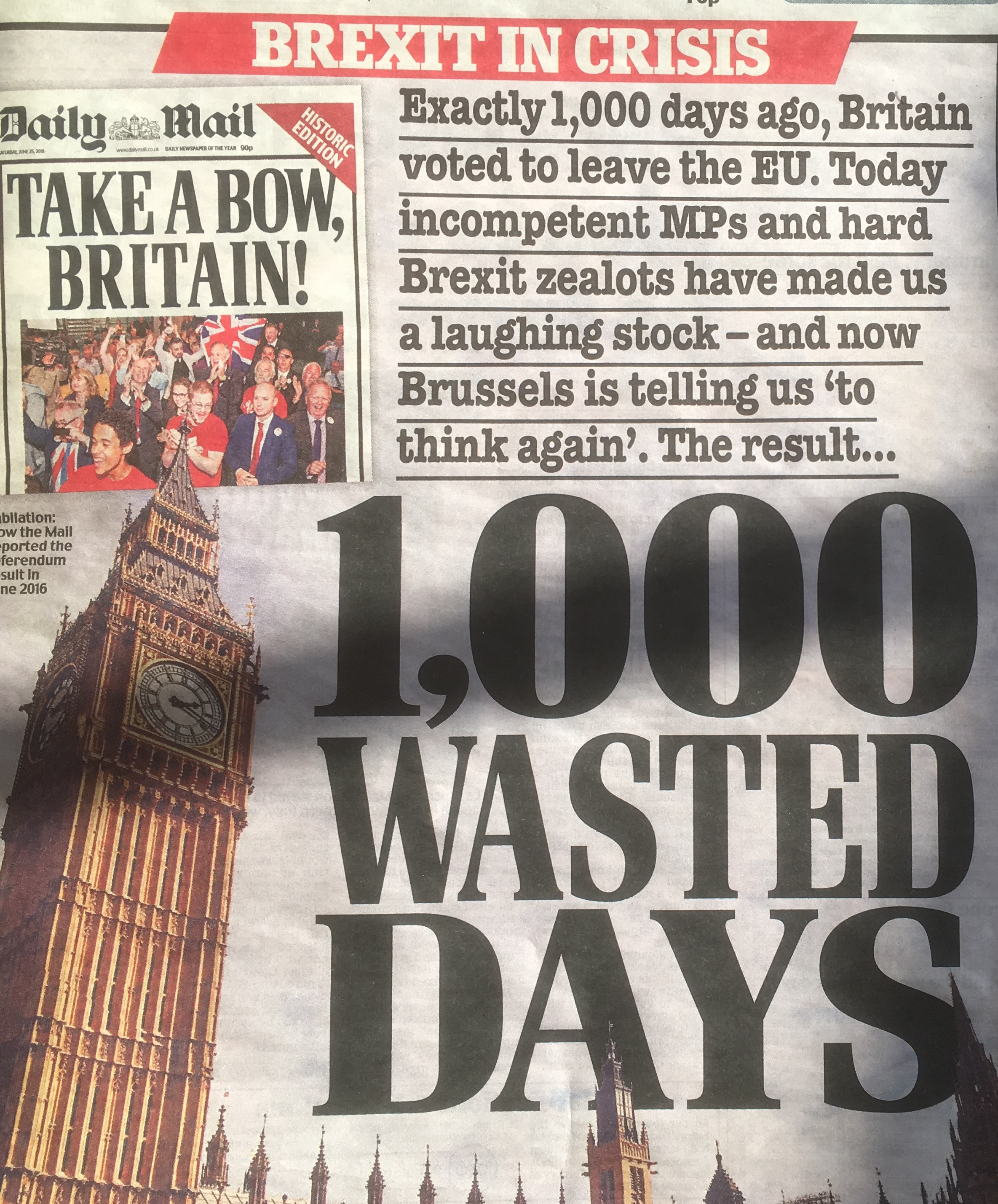
Today was supposed to be the day on which Britain regained its sovereignty and took back control. Instead, political chaos has become the new normal.
Cast your mind back five years, to before the referendum, and before David Cameron even promised a referendum. At that time there was a coalition government, and outside, on the fringes, a UK Independence party that was incapable of getting even one of its members elected. Most of us took it for granted that we were members of the European Union. We might have griped about the EU, but life outside it seemed unthinkable.
As a political talking point, except among a small minority of right-wingers in the Conservative Party and the ever-vocal chippy Kippers led by their bantam cock of a leader, Nigel Farage, leaving the EU was a non-issue. Nobody had heard of Jacob Rees-Mogg. Boris Johnson was a reasonably successful mayor of London whose reputation was as much for buffoonery as for political sagacity. Theresa May was an authoritarian Home Secretary who made an enemy of the police as she presided over cuts in numbers.
Jeremy Corbyn was an insignificant figure at the far left of his party, known mainly as the whipping boy of right-wing newspapers like the Daily Mail for his links with Irish republicans, Hamas and socialist Venezuela. The Democratic Unionist Party in Northern Ireland was the throwback creature of the swivel-eyed Reverend Ian Paisley.
Members of Parliament did not regularly receive death threats, and the prospect of one of them being murdered by a right-wing thug would have been unimaginable. Anti-Semitism lurked in the closet. The leader of the Labour Party was Jewish. Islamophobia was obvious enough but open expression was mainly confined to the far-right fringe groups.
We British took for granted that we would be able to travel where we liked within the EU, and when we came back, we could walk unchallenged through the blue channel at customs. Most of us were blissfully unaware of the procedures that enabled us to import and export foodstuffs, medicine and parts for industry without delays. As the result, our food was cheaper than ever, drugs were always available and our manufacturers benefited from alliances with partners across the channel.
London was the sixth-largest French city in terms of population. Baristas from Latvia, Romania and Poland rubbed shoulders with locals. Yes, we were becoming increasingly concerned about immigration, but an increasing number of British citizens made their homes in EU countries such as France, Spain, Portugal and Italy. Our politicians failed to distinguish between immigrants from the EU, who would come and go, and from people who were not EU citizens, and were likely to stay put. Many of the latter were refugees, but others were allowed into the country because they had skills we lacked.
Crime was more or less as it is today – violence, drugs, gangs, fraud, theft and sexual offences – with one significant difference: knife crimes didn’t occupy the headlines on a daily basis.
As a nation we couldn’t be described as totally at ease with ourselves. But we rubbed along together reasonably well, and when we identified issues that concerned us, such as the widening inequality gap, usually – give or take a riot or two – we debated it with civility.
What the hell has happened to us since then?
Well, obviously, Brexit.
But Brexit was merely the convenient vehicle for discontent. The ground was already fertile. It was waiting for the seeds of anger to be planted and to flower as hatred. A large section of the population was suffering from the economic consequences of the 2008 crash, in the sense that their lives were not improving as they might have expected in an age when economic growth was taken for granted. Austerity – the cutting back of services the government provided in exchange for taxation – exacerbated the problem, and in some areas made hardship and resentment far worse than before.
If Brexit had not been mooted, where else would the resentment have broken out? Against the wealthy most likely. In fact it was Labour’s commitment to end austerity and redistribute the nation’s wealth that most likely caused the upset in the 2017 General Election, depriving the Conservatives of the handsome majority the opinion polls had led them to expect.
If the root cause of Brexit lies in economics, it could just as easily be argued that the same applied to the rise of Nazism in Germany. Although Hitler had gained some traction before the crash of 1929, it was surely the Great Depression that gave him critical mass. I’m not comparing the Brexiteers with Nazis, though some of them undoubtedly are, but I wonder how many Germans in the late 1920s expected their government to turn into genocidal gangsters within a few years. Was anti-Semitism so deep-rooted in German culture that it was inevitable that they would swallow the Nazi message of blaming the Jews for all of the nation’s agonies? I doubt it, just as I doubt that the European Union was the natural scapegoat for Britain’s problems.
Assuming that economic hardship was the seed, then the fertilisers for what we have become were many and varied. The toxic role of the social media in spreading lies and hatred at lightning speed; the platform the referendum campaign coverage gave to minority opinion on the far right both within and beyond the Conservative party; the BBC’s role in giving disproportionate weight to those minority opinions in the pursuit of a doctrine of balanced coverage; the normalisation of political lying by the likes of Donald Trump; the virulence, bordering on incitement to breach public order, of the Daily Mail and its paler imitators. And finally, a Prime Minister whose Thatcher-like doggedness and determination was leavened by inflexibility and the inability to persuade, whose shyness denied her the Churchillian virtues of wit and charm.
So today, on Not-Brexit Day, we are no clearer about our future than we were on 23 June 2016. I have consistently argued for a second referendum. That may or may not happen. But my overwhelming feeling on what was supposed to be an epic day is one of loss. My country is broken, and it will not easily be fixed whether or not we remain in the European Union, as I fervently hope we will.
Just as survivors of the First World War remembered the summer of 1914 as the golden finale to a hundred years of peace and prosperity (for some at least), will we look back to 2014 as a time of relative equilibrium that was shattered by an ill-considered act of national mutilation?
The first decade and a half of this century was far from a golden age. It was mercurial and brutal in many parts of the world, and we in Britain did not escape the consequences. But although I’m a natural optimist, and I believe in our ability to adapt to adverse circumstances, I can’t find much to celebrate on Brexit Day.
All is not doom and gloom, though. It’s a glorious sunny day where I’m writing this. England has a promising football team; the cricketers aren’t bad either. And thanks to today’s vote in the Commons, we’ll be able to get hold of cava and camembert for a few more days. All is not yet lost.
There are a few questions I’d like to ask the sensitive souls seeking confrontation-free safe spaces in which to take refuge at British and American universities.
At what point are you ready to leave your safe spaces? Is it when you go for your first job and find yourselves competing against people who haven’t a clue what a safe space is? Or is it when you become parents, and are presented with the shock of a mewling, shitting child whose desires, motivations and moods are a mystery to you? Or is it when you’re confronted with the death of your parents or other loved ones?
Is it when you see your first ISIS video, unmoderated by the supportive cocoon in which you’ve lived at home and throughout your education? Is it when you witness your first act of racism or religious hatred? Or when you witness your first act of violence, drunkenness or fentanyl overdose? Is it when you get trolled for the first time? Or is it, God forbid, when you’re involved in some kind of accident and end up in a hospital emergency room surrounded by suffering people?
If any of this stuff happened to you while you were unfolding your glistening wings at university, how do you think that listening to opinions contrary to your own or that of your peer group compared with those experiences on a scale of unpleasantness?
How would you have felt if, like my late father, you were expected to make a thirty-mile trip across London to the dentist by train and tube at the age of six? Or if, at the age of eighteen, you landed on a beach on D-Day amid flying shrapnel and body parts?
Asking such questions would of course be a pointless exercise – rhetoric dressed up as questions addressed to a generation that is as diverse as the rest of us, if not more so.
But these are thoughts that come to me in the light of the Christchurch shootings. My only personal connection with that awful event is that I spent much of the last ten years working around young people in the Middle East. Many of those I met were delightful people – idealistic and ambitious. I suspect that among the dead there might well be Saudis, Emiratis or Bahrainis. New Zealand is a popular destination for students from the Gulf and Saudi Arabia who go there on scholarships.
The last thing those worshippers would have expected in what seemed the safest of safe countries would have been bullets in their mosques.
Which leads me to suggest that there are no safe places – physical or emotional – to protect people, be they young or old, from the grim reality that we live in a tough world full of people who through their words and actions make every space unsafe.
So the sooner our young people realise that the safety they seek is a figment of the imagination, the sooner they will learn to cope with the world as it is, rather than as they would like it to be. Part of that learning is being able to form one’s own opinions rather than those of the herd, to confront opinions one doesn’t like with logic rather than emotion. Those who go to university should not be seeking just to become archaeologists, engineers or accountants. They should be equipping themselves to deal with all the bad stuff that life throws at them. And you don’t do that in a safe space.
Perhaps I misunderstand the entire concept of safe spaces, but I fail to comprehend how “no-platforming” Germaine Greer, Tommy Robinson or that cricketer who made a few Oxford students uncomfortable with his silly sexist poem the other day will produce a generation of resilient individuals who can navigate successfully through societies – such as those in the UK and the USA – infested with violence, hatred and political extremism.
There are enough theories to explain the seeming fragility of those born in the new millennium to fill several learned books. Whether it be the effects of the social media, the financial crisis of 2008 or the infectious worries of earlier generations, there does seem to be a well of fear that causes many young people to shrink from the undeniable and take refuge in slavish unanimity of opinion. Or perhaps it’s all fake news.
Nonetheless, I have a sneaking feeling that those who are unfairly referred to as snowflakes have more resilience than we give them credit for. Once they move beyond the influence of the well-meaning crowd who encourage them to bury their heads in the cloistered sand, they will show their mettle. Amid the chaos and confusion currently being caused by their supposed elders and betters, they will certainly need to.
And the awful violence in Christchurch is one more reminder that the extremists don’t give a damn if they’re unable to debate their views in front of a bunch of privileged students in Oxford or Yale. They just get on and do what they do. If we believe that the world should be free of hatred, that’s the reality we need to deal with. We’re engaged in a battle of ideas that needs to be fought where the combatants are to be found. And denying the brightest and best the opportunity to come to grips with uncomfortable ideas will only weaken opposition against the extremists.
The woke need to wake up.

Here’s a Donald Trump tweet. It’s the first I’ve read for I don’t know how long that’s worth thinking about on its own merits, rather than because of the blatherous fool who posted it:
“Airplanes are becoming far too complex to fly. Pilots are no longer needed, but rather computer scientists from MIT. I see it all the time in many products. Always seeking to go one unnecessary step further, when often old and simpler is far better. Split second decisions are…. needed, and the complexity creates danger. All of this for great cost yet very little gain. I don’t know about you, but I don’t want Albert Einstein to be my pilot. I want great flying professionals that are allowed to easily and quickly take control of a plane!”
It’s only slightly above the level of a bar room opinion, but it’s still food for thought. If the first sentence had been phrased as a question rather than as a pronouncement from on high, and the tweet had ended with “what do you think?”, then you might think that it had been posted by a normal person.
Judging by the response – tens of thousands of likes – Trump is not the only person who thinks this way. I couldn’t bring myself to like anything emanating from the great narcissist, but I have to admit I agree with him to the extent that I get along quite nicely without Siri, Alexa, an interactive fridge and a hundred apps that my offspring couldn’t do without. And the last thing I want is a driverless car.
But when it comes to getting on an aircraft, Trump forgets that most modern aircraft, from the Airbus A310 onwards, wouldn’t get off the ground without flight management systems designed by those MIT software geeks, and certainly wouldn’t stay there without a pilot’s hand constantly on the controls. What’s more, his beloved air force has planes that would be incapable of flying at all without software that help them virtually defy the laws of aerodynamics.
The president also forgets that the Boeing 737 MAX 8 – the aircraft that has fallen out of the skies twice in the last three months and the reason for his tweet – may have been created “for great cost”. But it was designed to be 18% more fuel efficient than its predecessors and nearest rivals. That’s no small gain, both for voracious consumers of cheap travel and profit-hungry airlines.
In his Fox-addled twilight zone, if he paused for thought before sounding off, he might also remember that technology depends on innovation. It’s not like making cornflakes or screwdrivers, things that have been around more or less unchanged for a century. If Apple stopped making new stuff or improving its existing products, people would keep their iPhones for ten years, not three. Apple would go into rapid decline, and possibly bust. Without technological innovation, needed or not, the US economy would pancake.
In fact you could argue that Trump, me and millions of others of a certain age are something of a drain on the economy because we have no desire to change our phones every three years, and we see no need to ride around in cars that need computers to keep them running efficiently. Its the young – by which I mean people under 50 – who generally do the inventing and who have been suckered into accepting phones whose makers use updates to limit their useful life, and buying washing machines that stop working after a couple of years. The rest of us get exasperated at the relentless plugging of new products, and can’t see why our phones need updates that wipe all our contacts.
Where things often go wrong is when the marketing people dictate the pace of product development, and the engineers struggle to catch up. This seems to have been the problem with the 737 MAX. And it certainly wouldn’t be an engineer or designer who takes pride in their work that willingly designs fridges to fail in a few years where older models cheerfully did their job for decades.
But even parsimonious oldies cheerfully accept new stuff if it makes our lives easier without our having to give a second thought to the investment and innovation that made it possible – so long as the price is right. And where would we be without the internet, contactless cards, satnav, e-tickets and so forth? What we don’t want is hassle – having to re-learn an operating system or needing a one-hour tutorial in order to use a printer. That’s what causes us to reject the technology.
The only way for Trump’s generation can escape the relentless treadmill created by the technologists is to find a yurt in Mongolia, a tree house in New Guinea or a retirement home in Florida or Surrey. In Trump’s case a secure institution with his very own Nurse Ratched to make sure he keeps up with his medication would do just nicely.
As for the 737 MAX, I’m glad that Boeing have been forced to give their engineers the opportunity to do what’s necessary to satisfy their customers as to the safety of their products. And hopefully I’ll be able to use that little app that tracks aircraft en-route in the four corners of the world without worrying too much about whether one of them will suddenly disappear. Until the next update comes along, of course.

As I was watching Michael Cohen’s testimony yesterday before the US House of Representatives, one thought kept coming to mind. What an evil person Hillary Clinton must be that the American people chose Donald Trump over her. Either that, or how easily deceived they were by the torrent of lies spewed by the winning candidate, or how indifferent they were to the fact that Trump lied blatantly, flagrantly and more prolifically than any presidential candidate in living memory.
They wanted Trump,we were told, because he was authentic, because he was “our kind of guy”, because he spoke “our language”. That, in a way, is the scariest aspect of Trump’s presidency – that he is a man who least epitomises the clarion call of truth, justice and the American Way. Which means, theoretically, that for all the deeply moral, honest and generous Americans I have met over years of visiting the country, there’s another layer of society that shares the values of the conman who resides in the White House.
Just as bad, and quite a shock to this foreigner who clearly misunderstood the purpose of a House hearing, was the sight of one Republican after another failing to use a second of their allotted five minutes of questioning time actually to question Cohen, but instead behaving like coked-up prosecutors from a TV drama using every rhetoric device in the book to discredit the witness and make a name for themselves in the process. All in the service of their own careers and their depraved, narcissistic master.
For all the accounts that have surfaced via books such as Fire and Fury and Fear, both of which I’ve read, we have surely only scratched the surface of the chaos, and venality of Donald Trump’s administration. Even if Muller or the countless other investigators currently looking at Trump’s affairs are unable to land an impeachment-grade blow on the president, one would think that the American electorate already knows enough about him to throw him out of office in 2020. But perhaps not. If millions of people who call themselves Christians continue to support the most un-Christian president in history, perhaps he’ll live to fight another four years.
If my American friends ask me what right I have to comment on their internal politics, I will remind them that for better or for worse, the behaviour, policies and actions of their president matter as much to us unenfranchised bystanders in the rest of the world as they do to them. To see him cosying up with murderous despots who court him because they can see his weakness from a mile off, while behaving with contempt towards countries that have been allies of the United States for more than seventy years, is profoundly worrying.
To watch a man for whom the dollar seems to be the first and last consideration behind every decision he makes is profoundly depressing. His world view is a disgraceful repudiation of the values that have enabled Western democracies, including former adversaries, to live largely in peace since the end of the Second World War.
Michael Cohen, with his hangdog expression of regret and shame, will shuffle off to jail soon enough. What a pity that his former boss, in whose name Cohen threatened, lied and conspired, might not follow him, if not to jail, at least to a place where he can no longer harm his country and those who depend on America to be a rock, a safe place in an unstable world.

Here’s my problem. Perhaps it’s yours too. If not, it should be. It concerns anti-Semitism.
I don’t have any Jewish friends, but I admire and respect many Jewish writers, historians and other public figures in the United Kingdom: Simon Schama, David Aaronovich, Danny Finkelstein, and Philippe Sands among them. And beyond these shores, Steven Spielberg, Carl Bernstein, Larry David and a host of others. I don’t admire them for their Jewishness. I admire them for their humanity and their wisdom. And closer to home, I will never forget the stunning generosity of a Jewish friend of my father who assisted him, a gentile, in his hour of need.
I am unable to forget, even for a single day, the holocaust. Not just because of what happened to those who suffered between 1933 and 1945, but because of the stain it left on humanity in the subsequent decades.
I do not admire or respect the policies of the Government of Israel towards the people of Palestine. I believe that Binyamin Netanyahu is a malign actor who has for the last decade kept his country in a zero-sum deadlock in his policy towards the people of the Left Bank and Gaza. He and his government have carried out countless acts of injustice against Palestinians in the region.
Palestinian leaders are also not blameless. They could have done more to understand the insecurity of their Israeli neighbours and thereby undermine Netanyahu’s intransigent stance. Some shamelessly exploit the sufferings of their people in pursuit of a zero-sum endgame as ruthless as that of Netanyahu.
I inwardly curl when I hear the word Zionism. There is no definitive meaning, because It means what people want it to mean. Even Jews cannot agree on a definition. Go to the Jewish Virtual Library and you will find four definitions: political, religious, socialist and territorial. Ask a non-Jew which of these four definitions applies to their accusations against Israel and Jews in general, and I doubt if you would get a coherent answer.The closest most would get would be cite the actions and intentions of the government of Israel, or more specifically, the oppression of Palestinians, the settlement policy and further territorial aspirations.
For as long as I remember, Zionist has been a trigger word that precedes expressions of hatred – among Israel’s neighbours who refer to “the Zionist Entity”, among right-on political activists who us it as a cloak for antisemitism, and among the plethora of Muslim TV preachers who invent all manner of theories to justify for their calls for the extermination of Jews in the Middle East.
Among the most pervasive theories cited by those who identify as opponents of Zionism is that of world domination. Cabals of Jewish bankers, influencers and media owners occupying the commanding heights of the countries in which they operate. Second is the idea that Jews are loyal first to their fellow Jews, or otherwise to the State of Israel, and that that loyalty goes deeper than any obligation to the countries of which they are citizens.
In response to those theories, I would ask the following questions:
Would it be surprising if after centuries of persecution influential Jews did not work together to preempt further persecutions? Not quite the same as a desire for world domination.
Would it also be surprising if ordinary Jews, mindful of the holocaust and earlier pogroms, discrimination and expulsions, “always keep a packed suitcase by the front door”? Loyalty runs both ways.
I would also ask why, if Jewish Zionism is so widely condemned as evil, Christian Zionism, which has millions of believers in the United States – people who believe that the second coming will only take place after the gathering of Jews in the “Land of Israel” and therefore support the State of Israel – escapes the opprobrium? Is it because Christian Zionists are not Jewish?
I don’t have the answer to these questions, nor do I understand why there are so many people – neo-Nazis, trolls, racists – who don’t bother to wrap up their hatred in political or philosophical arguments, but who are willing to deface cemeteries, daub swastikas and even murder people in synagogues.
My problem is that I can’t see an end to the hatred. And it appals me.
What I do know is that the most fertile ground for anti-Semitism is the lack of a negotiated settlement between the people of Israel and Palestine. That settlement must leave both parties as winners. No zero-sum games. I deliberately say people because I have no confidence that the leaders of either side, egged on and supported by external entities with their own agendas, are capable of reaching such a settlement.
Where does that leave us? Continued insecurity for Israelis, and continued suffering for Palestinians. Until that conundrum is solved, anti-Semitism will continue to play its malign part in national and international politics. And opponents of antisemitism, of whom I am one, will continue to tie themselves in knots over rights, wrongs and meanings of Zionism. And Jews in my country, to who we owe so much for their talent and contribution to society, and whose loyalty should never be questioned, will continue to keep packed suitcases by their front doors. Their worry and distress is something we should all share.
It’s wrong to victimise a Jewish citizen because of the actions of the Israeli government, just as it’s wrong to condemn Muslim citizens for the actions of the Islamic State, and it’s wrong to condemn every American because of Donald Trump, or every Russian because of Vladimir Putin. It’s also wrong to question the loyalty of a citizen who believes in the right of Israel to exist, or who worships Allah, or wishes their country to leave (or remain in) the European Union.
Above all, it’s wrong to hate any group of people without consideration of their individual humanity. One would have thought that the Second World War taught us that.
It’s seventy-one years since the foundation of the State of Israel. That should have been more than enough time to create an equitable modus vivendi between two ethnic groups who find themselves competing for the same space.
To hell with history. It’s time to focus on today and tomorrow.
I’m in the middle of what could be described as a reading holiday. A warm and pleasant corner of south east Asia, a few trips out, but much of the time reserved for hours of concentrated reading. If you follow this blog you may have noticed some of the books I’ve been ploughing through.
I review books not because they’re new and someone’s paying me to write about them. I do so because it’s easy to get to the end without stopping to think critically about what I’ve read, other than to reflect that it was good, so so or not great. I also like to place the book in the context of other stuff going on at the time, either in my life or that of others.
With that in mind, next up is Red Notice, which is the story of Bill Browder’s rise as the most successful foreign investment manager in post-Soviet Russia, and the subsequent moves by the Russian state against him, culminating in the arrest, torture and murder of his lawyer, Sergei Magnitsky. Magnitsky, along with Browder and other colleagues, had exposed massive corruption within the Russian government. Putin was not best pleased, especially when Browder persuaded the US congress to pass the Magnitsky Act, which mandates the use of sanctions against individuals with links to the United States who use torture and extrajudicial killing in their countries. Browder has been a target ever since.
All good. I knew the story, if not the details. I nearly dumped this one fairly early on because – and this is where current context comes in – I felt quite repulsed by the obvious pride with which Browder recounts his business coups in Yeltsin’s Russia. If Russia’s oligarchs were reprehensible in hoovering up huge swathes of Russian industry for a song, so were the foreign investors, including Browder, who attempted to do the same.
His descriptions of the cynical organisations for whom he worked before founding Hermitage Capital – Boston Consulting and Salomon Brothers – reeks of the amorality and greed that pervaded Wall Street before 2008 crash and, as far as I know, still does so today.
It seems that in defending his own interests against the predatory oligarchs with whom he was doing business he had a conversion of St Paul that turned him into a crusader against state corruption. But it must have been pretty obvious at the time when he was acquiring Russian stocks at a tiny fraction of their value that he was dealing with some highly dubious people. Yet he was content to build up a huge investment fund on the back of their dubious dealings.
Browder’s story shows how Russia, whether through economic and political naivety or kleptocratic intent, allowed itself to be raped by a bunch of ruthless and amoral individuals. And when an ex-KGB agent came to power, he turned out to be more ruthless than all of them. Vladimir Putin turned the tables on the oligarchs by stripping those who would not bend to his will of their wealth, power and even in some cases liberty. When Browder fought the authorities who turned the heat on him, you could argue that he was foolish, but he was certainly courageous.
But that doesn’t exonerate him and other opportunists, Russian or foreign, from gorging on the corpse of the Soviet Union and contributing to the resentment felt by millions of impoverished and humiliated Russians against the West, fuelled by a president who encouraged a tide of nationalism and became the biggest oligarch of them all.
As read the book I couldn’t contain a feeling of disgust at what happened in Russia in the 1990s, and sorrow at the lost opportunities represented by foreign politicians, especially in the US, who were content to watch the country eat dirt, while their financiers and oil companies were happy to pile in and feed, because “if we don’t others will”.
Whatever could or could not have been done to prevent the rise of the “businessmen” and the kleptocratic state, I can’t help feeling that Russia’s foreign partners both in business and politics were complicit in the disaster and must share some of the responsibility for the consequences. And that includes Bill Browder.
But ultimately he redeemed himself through his courageous response to the death in custody of Sergei Magnitsky. The desire to to create consequences for those who were responsible for the lawyer’s torture and death overrode his concerns about rebuilding his investment business. Through a public relations campaign and personal lobbying in the face of Russian intimidation from Putin downwards, he managed to persuade the US Congress to pass the Magnitsky Act.
For that he deserves great credit. Given the long arm of Putin’s security services, who most recently reached out to poison the Skripals in Salisbury, one suspects that Browder’s story is not yet over. But hopefully his fame and status as a public figure will deter the Russian state from striking at him for fear of the international outrage and adverse consequences that would follow.
As for the oligarchs who toed Putin’s line. they got away with it. They are free to buy football clubs, mansions in Kensington and apartments in Trump Tower. Some of those closest to Putin have been sanctioned, but others are feted in London, New York and Washington despite their murky pasts. The first of them to cross swords with Browder made a blatant attempt to screw his fund via a dodgy share dilution. The same person is now a trustee of the Guggenheim Foundation in New York, and 2016 France awarded him the Legion of Honour after he donated works of art to be displayed at the Louvre. In other words, a very respectable man.
As the puff on the book’s cover suggests, Red Notice does read like thriller fiction, though attempts to add colour to the story, such as what he had for breakfast at this or that hotel, or the fact that a Foreign Office official poured tea from a blue and white china pot, permeating the room with the smell of Ceylon tea, jar a little.
That said, it’s a compelling story whose implications reach to the present day, especially at a time when Donald Trump’s real or imagined ties with Russia dominate public life in America.
I wish Bill Browder a safe and happy life.
 59steps