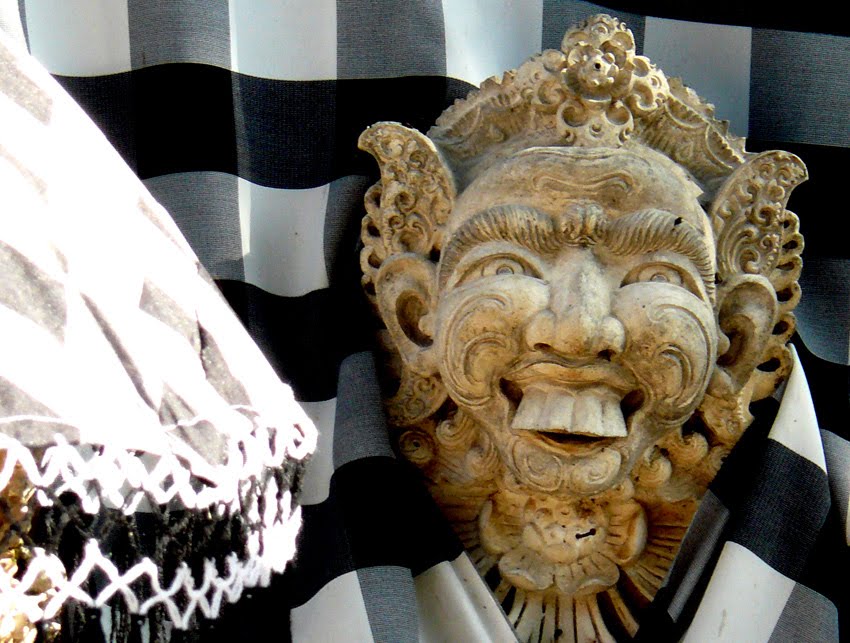
Mecaling, Bali’s demon king
Every time I visit a country more than once, it seems as though another layer, big or small, peels off. On the first day of the trip we’ve just finished, Bali revealed something new to this stranger. On the last day, the aspect that I’d not encountered before was massively reinforced.
We stayed in three locations in the island. On our way to Canggu, our first stop, we mentioned to our driver that we were heading to a hotel in Kuta for our last week. Ah, he said, my father worked there for many years. He worked his way up from maintenance to HR. Is he still there, we asked? No, he said. He passed away three years ago.
We said we were sorry to hear that. It turned out that he was only fifty-three. What caused his death, we asked? Our driver replied that someone at the hotel was jealous of him, and used black magic to put a curse on him.
So people can kill using black magic? Oh yes, he said. It happens sometimes. That was the end of the conversation. But it left too many questions simply to ignore.
Anyone who’s been to Bali will know that the Balinese, who are mostly Hindu, are a deeply spiritual people. Wherever you go there are temples large and small, decorated with statues of the Hindu pantheon. Every home and commercial enterprise has its shrine. And everywhere you will find offerings of rice and flowers on little trays, some with burning incense sticks. There seem to be few boundaries between belief in spirits and what we in the West would call superstition.
So I did a little light browsing, using the search term “Black Magic in Bali”, and came up with plenty of stuff, almost all written by Westerners. This piece is particularly interesting. Strangely enough, the locals don’t seem as keen to discuss the subject, at least not in the English language.
While I was convinced that many Balinese believe in black magic, I mentally filed the conversation with the taxi driver for future reference, and got on with the holiday.
Until, that is, my wife and I actually got to meet someone claiming to be a witch doctor.
It happened at the end of the trip. After several visits to the same hotel (the one with the malevolent employee) we’d become friendly with some of the members of staff. We were chatting with one of them about our favourite restaurants in the area. We mentioned one name, and she told us that it was owned by her brother and named after her father.
We’d decided to eat there on our last night, and promised to look him up. Which we duly did. Within five minutes of meeting us, without prompting, Made (not his real name) told us he was a witch doctor. The more benign Western term for what he does is spirit healer. No, he says, he doesn’t practice black magic, but knows people who do. He frequently helps people who believe they have had spells cast on them by countering the effect of the black magic. I suppose you could also call him a white witch. When I suggested that description, he readily agreed.
For the next hour or so, Made told us his story. He came from a family that owned much of the land in the area. They were wealthy enough to send him to university, where he studied accountancy. He had a successful career that stumbled a few years ago when he succumbed to drink, drugs and gambling.
All the while he knew he had the gift of healing. His great grandfather was a well-known holy man and healer. Made is convinced that his spirit is incarnated in him. Three years ago he went into a trance. He was sure that his ancestor was communicating with him. He spent days in a state of collapse. It was then that he decided to answer his great grandfather’s calling. His health started improving as he underwent training at the local temple. At one stage he experienced what he described as a spectacular physical manifestation of his healing. He vomited a mass of bloody tissue through his mouth and nose.
Shortly afterwards, following a ceremony at the temple, he began his career as a witch doctor.
Since then, he not only runs two restaurants and a B&B but has built a country-wide reputation as a healer. He doesn’t charge a fee for his work, and he doesn’t advertise his gift. People come to him. Do Muslims come to you, I asked, having worked in a country, Saudi Arabia, where “sorcerers” are put to death? Of course, he said, and Buddhists too.
He shared a few case histories. He told the story of a Polish guy who had persistent outbreaks of boils on his back. This guy had a Venezuelan girlfriend whom he treated badly and eventually left. Since then, the boils kept reappearing and there didn’t seem to be any cure. A Balinese friend referred him to our new friend, who suspected that the girlfriend was responsible. It seems that there is also some pretty powerful black magic in Venezuela. After the session with Made, the boils never reappeared.
Made took us to what he calls his office, which is actually a small room containing a shrine full of pictures and objects that are significant to his work. They include a kris, a Balinese ceremonial dagger, and a huge snake fang which he said he had inherited from his great grandfather. On the wall was a terrifying picture of an entity I subsequently recognised as Mecaling, Bali’s demon king.
When Made practices his healing he goes into a trance and runs the snake fang over the affected area – for diabetes sufferers the pancreas, for heart patients the cardiac arteries, and so on. He claims he can diagnose the problem and cure it without invasive surgery purely by use of the four-inch long fang.
He is, apparently, the only one of his ten siblings to have inherited the gift of healing.
As we parted company, I told him that I wished I had known him five years ago when I first came to Bali. Two prolapsed discs at the beginning of our trip left me in a wheelchair for the duration of the holiday and for a while afterwards. Could he have cured me? For sure, he said.
Afterwards I thought back on a couple of aspects of his story. His sudden collapse when he was “visited” by the spirit of his great grandfather reminds me of the tradition surrounding God’s first revelation to the Prophet Mohammed through the angel Gabriel. Mohammed was terrified. Clearly in shock, he went back home and asked his wife to cover him in a blanket. The revelation of supernatural forces was clearly a traumatic event in both cases.
As for Made’s vomiting, the logical explanation would be that he was suffering from a stomach ulcer as the result of excessive drinking. But there are also accounts of vomiting by those undergoing the Catholic ceremony of exorcism.
I’m no more or less convinced by the power of black magic after our hour with Made. But clearly there are many in Bali, despite the island’s modern infrastructure and institutions, for whom it’s integral to their belief systems. And we’re not just talking about villagers with little formal education.
One thing I do know is that I will not knowingly get into an argument with a Balinese person for no good reason. Nor will I cut leaves from trees. Apparently they have power too, and they object to being mutilated.
But it’s a comfort to know that if I do run into any trouble on our next trip to Bali, I can always turn to Made for assistance. Provided of course that my heart is pure and I mean no harm. Karma is a powerful thing, after all. I may still be a sceptic, but the golden rule must surely be to respect what you don’t understand.
One last thought: was it a coincidence that my curiosity, aroused by a casual conversation three weeks ago, should be so unexpectedly revived at the end of the trip? I leave that to you to figure out.
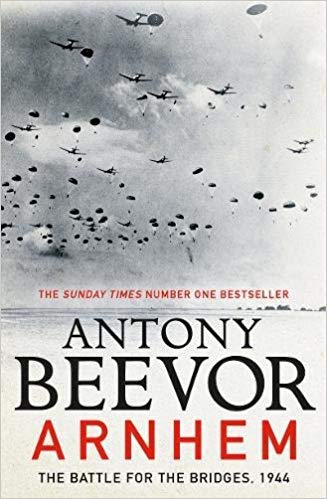
I suppose most of us who’ve watched films and TV series about the Second World War – Saving Private Ryan and Band of Brothers being good examples – would agree that war is hell. Those who have taken part in combat over the past eight decades will not need convincing. But occasionally a book comes along that offers a further definition: war is chaos. I’ve not read any description of a battle that better illustrates the point than Antony Beevor’s Arnhem – The Battle for the Bridges.
I’ve read most of Beevor’s books. He’s a superb military historian. His narratives on D-Day, Stalingrad and the fall of Berlin are compelling, not just because they describe the events but because they tell the stories of those who took part in them, either as participants or bystanders. Military campaigns are carried out by ordinary human beings, not just by generals sitting in tents peering at maps. Beevor’s histories paint war as a set of human experiences.
Arnhem is about Operation Market Garden. It was an airborne attack aimed at opening up a corridor from the Netherlands across the Rhine into north Germany. It was risky, and it failed, costing thousands of casualties among the British, American and Polish forces that took part. Not to mention the German deaths, and those of numerous civilians who these days would be referred to as collateral damage. Both sides, Allied and German, fought bravely. But the objective of ending the war by Christmas 1944 was not achieved.
Beevor’s book contains the usual mix of analysis and human stories. He fills us with a sense of foreboding as he describes all the optimistic assumptions that underpinned the operation, and the tensions and miscommunications among the senior commanders.
Where things go somewhat awry for me, the reader, is when the action starts. His narrative is so granular that I became utterly confused trying to keep track of all the various armies, divisions, battalions and companies on both sides of the battle – or should I say the numerous simultaneous battles that took place over a wide area. The German units are even more difficult to decipher than the allied ones. There seemed an infinite number of variants. Some units named after their commanders, others belonging to this or that panzer division. As for the ranks, I spent so much time referring to the list of SS officer designations to figure out what a hauptsturmfuhrer did, as opposed to a standartenfuhrer or a brigadefuhrer that I eventually gave up and let them all wash over me.
The book is meticulously researched and full of necessary detail. But I found myself no more able to figure out the big picture than the poor bloody infantry on the ground, dropped into fields, shot at on the way down and struggling to coalesce under commanders who were often unable to communicate with each other or headquarters because their radios either had the wrong crystals or lacked the signal range to cover the distances.
If it was Beevor’s intent to portray the chaos of battle by describing a series of small battles in various locations fought by soldiers who had no more certainty about what was happening than the evidence of their own eyes, then he succeeded magnificently. The situation was constantly changing. New units were created from the decimated remnants of others. Field hospitals changed hands on a daily basis as German and allied medics struggled side-by-side with the assistance of Dutch civilians to save lives, often losing theirs in the midst of continual barrages by artillery, mortars and anti-tank weapons.
In retrospect, the whole affair was badly planned. Advice that might have saved the day from commanders and Dutch exiles who knew the ground well was brushed aside because of an arrogant faith in the plan. The planners also underestimated the strength of the German forces awaiting them. The spikiest general of them all, Montgomery, frequently got up the noses of his American subordinates. His boss, Eisenhower, while notionally the supreme commander, spent much of his time refereeing disputes and calming the egos of his head-butting generals. Teamwork, it seems, was a quality demanded of the ground forces while the senior commanders were content to fight their turf wars.
Back on the ground, Beevor admirably captures the courage of combatants on both sides, and the leadership of officers like John Frost, who held out at Arnhem for four days against overwhelming opposition. For the local population the joy of liberation turned into nightmare as their towns were reduced to rubble. Many of them were active participants. The Dutch underground joined in the battle, and the women cared for the injured. Even in the heat of battle, soldiers would be surprised to see shutters raised by civilians offering them cups of tea.
Aside from the suffering during the battle itself, the saddest consequence was what happened afterwards. The Allies remained in control of the southern part of the Netherlands. Those still under German control suffered harsh reprisals for their support of the liberation forces. Arnhem itself was depopulated, looted and destroyed. And the occupiers systematically stripped the country of all the food they could find and sent it back to Germany. The result was the Hunger Winter, in which thousands of civilians died of starvation. The allies made no further attempts to liberate the country until the end of the war. Their rationale was that the sooner Germany was defeated, the sooner they could come to the aid of the starving. It’s something to remember when you visit the cobbled streets of Delft and wander across the canals of Amsterdam.
I’m profoundly grateful that my courage has never been tested on a battlefield such as Arnhem. I’m equally grateful that the European nations that took part in the conflict have lived in peace for the past seventy-four years – something that those who wish to see us separated again from the continent appear to be taking for granted.
Perhaps they should read this book.
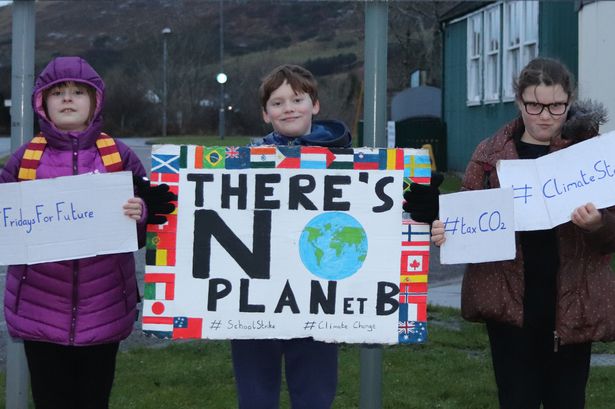
Action on climate change is only one of the demands of the striking schoolkids, or rather the UK Youth Climate Coalition, the folks who organised their protest. According to the Guardian:
They also want recognition that since young people have the biggest stake in the future they should be involved in policymaking, and are demanding that the voting age be lowered to 16.
I’m fine with that. In fact, if the 16-18 year group had voted in the Brexit referendum it’s possible they could have spared us the ghastliness we’re going through at the moment by tippng the balance in favour of Remain. Had they bothered to vote, of course.
But I would set one condition. A 16-year old should only be allowed to vote if they can show that they have passed a formal critical thinking test. That wouldn’t sound so preposterous if we incorporated critical thinking into the national curriculum for all kids over the age of 14. Given that it would take about two years to introduce the change in the voting age, that would be plenty of time to update the national curriculum. If they can’t provide their pass mark, they don’t get to vote until they’re 18.
There are many good reasons for introducing critical thinking into schools. Being able to see through fake news is one of them, and being able to resist political or religious indoctrination is another. It’s impossible to tell whether Shamima Begum and her friends would still have left Bethnal Green for Syria if they’d had such education. But it’s entirely possible that giving vulnerable kids the confidence to think for themselves might prevent their radicalisation. And I’m not just talking about potential ISIS recruits. How many kids today are falling for the seductive messages of Tommy Robinson and his ilk?
Just a thought.
I have no sympathy whatsoever with the investors who stand to lose millions of dollars because they hey were foolish enough to trust some guy to make sure the password to the bitcoin accounts he ran on their behalf was available to be used in the event that he died. He duly did die, of course.
The possibility of discovering the password, and unlocking the accounts, appears to be remote. This is the equivalent of taking a large treasure chest and chucking out of a boat into the deepest part of the Atlantic.
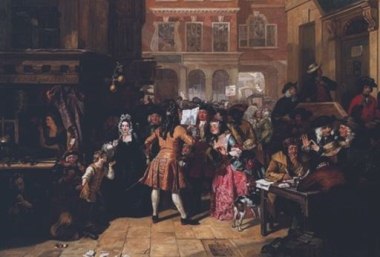
I also have no sympathy with the investors because a bitcoin is modern equivalent of a share in the South Sea Company. In other words, bitcoins are a bubble. Bubbles create notional wealth out of little more than a basic facet of human nature – the fear of missing out. Most people who invest in bitcoins do so out of fear, greed, or both. Companies who use those levers to manipulate people into bitcoins should be ashamed of themselves.
As for blockchain, the technology bitcoin, I’ve yet to be convinced of any benign application when most people who use it do so to buy and sell stuff like child porn, fentanyl and AK-47s on the dark web.
The idea of being able to carry out secure transactions sounds fine. We all want to avoid Russian hackers making off with our life savings by hacking into our banks or mobile phone providers. But when those transactions come with unbreakable security, we seem to opening up a new avenue for corrupt presidents to pay off their girlfriends, or princes to reward assassins with impunity. It’s also a potential money-launderer’s paradise.
The whole bitcoin world is so opaque that we don’t even know who invented the technology. It seems to me that in these times of shadowy forces doing despicable things, we need more transparency, not more fog.
If Robert Mueller and his team were unable to use the classic FBI tactic of following the money, their investigation would have been wrapped up long ago for lack of evidence.
Nowadays it’s not just assassins and money launderers who are jumping on the cryptocurrency bandwagon. JP Morgan, whose boss 18 months ago denounced bitcoin as a fraud, is creating its own cryptocurrency. No doubt other financial institutions will follow. I suppose it’s unlikely that JPM will lose their passwords. But no doubt there are hackers out there who will be gleefully crawling through the wallets of the bank’s less diligent clients.
You might call me an uninformed luddite, but I worry that blockchain is a potentially lethal weapon most of us don’t understand, including governments. I see no sign of enthusiasm on the part of major economic powers to regulate this stuff. Until they create safeguards to prevent the malign use of crypto technology, then we should all be worried.
Given the snail’s pace at which the same governments are moving to prevent the political manipulation of social media users by unaccountable entities with money of dubious provenance, we can surely have no confidence that they’ll get round to regulating the use of blockchain and crypto-currencies at any time in the next decade. Unless, of course some crypto-genius sparks off the next financial crisis. In which case it’ll be too late.
In the meantime, I will be avoiding the technology as if it were the spawn of the devil.
Did you ever play that game in which you line up a bunch of people, and get the person at one end of the line to whisper a message to the next person, who does likewise until the message reaches the other end of the line? You then get the person who first sent the message to read out their version, and the ultimate recipient to read theirs.
The message is usually corrupted in the telling, often to hilarious effect. Google Translate enables a tech version of the game, wherein you translate a phrase into a succession of languages and then back into the original.
Now consider the same games played by people who deliberately set out to muddy the waters in transmission, for political or ideological reasons, or through plain devilment. That, it seems to me is the essence of the problem facing anyone who is trying to make sense of what they read, both in the mainstream and social media. What is written is often no more reliable than what is passed on orally from person to person.
None of this is new. Muslim scholars struggled for centuries to agree on a reliable set of hadiths – representations of the sayings and doings of the Prophet Mohammed – because within the first two hundred years after the birth of Islam there is no evidence that these stories were written down. Thus the definition of true or false not only depended on human memory, but on an accurate line of transmission. In other words, Mohammed said to Ahmed, who said to Abdullah, and so on. Could it be that the original stories, either by accident or intent, were distorted in the transmission? Small wonder that thousands of scholars laboured for centuries trying to work that one out.
Before Jeff Bezos called the National Inquirer’s bluff over its threat to publish his intimate selfies, how many of the good readers of that organ were aware that what they read, or didn’t read, was allegedly part of a regular system of blackmail in return for favours, such as exclusive interviews with subjects of the blackmail? Some perhaps, if they were paying attention to the large sums of money paid to keep Donald Trump’s sexual indiscretions under wraps. The National Inquirer tells the truth, right? And the truth gets more lurid with each retelling.
And what did the readers of the Daily Mail make of its headline in reaction to Donald Tusk’s statement that Brexiteer leaders who were attempting to take their country out of the without a plan deserved a special place in hell? In (presumably) full knowledge that Tusk was referring to political leaders, the Mail insinuated that Tusk was talking about Brexit supporters, not the political advocates of no deal. A little politically motivated tweak launches a new truth into the nation’s conversation.
Then there was a Conservative MP, Daniel Kawszinski, who recently tweeted:
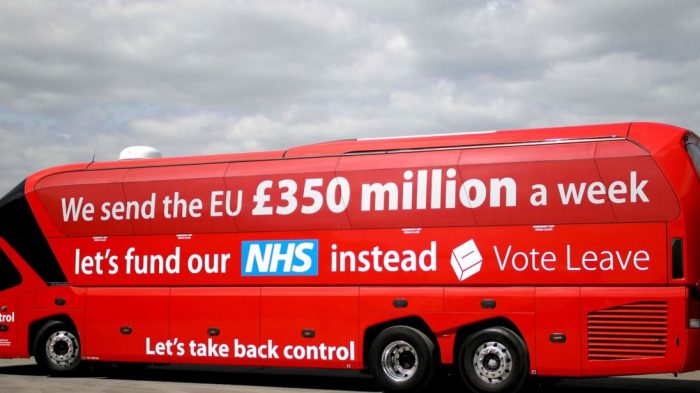
Britain helped to liberate half of Europe. She mortgaged herself up to eye balls in process. No Marshall Plan for us only for Germany. We gave up war reparations in 1990. We put £370 billion into EU since we joined. Watch the way ungrateful EU treats us now. We will remember.
Was he ignorant of the fact that Britain received more from the Marshall Plan than any other country, or was he just lying? Does Kawszinski’s pro-Brexit stance have anything to do with his paid consultancy deal with a gold speculator? Who knows? But two new truths are born: that the UK got nothing from the Marshall Plan, and a Tory MP has a financial motivation for the ruin of his country. You will pick one truth or another depending on which side of the Brexit divide you stand.
A couple of days ago, we learned that Lynton Crosby, the political strategist who helped the Conservatives to secure several election victories and advised Boris Johnson in his last London Mayor campaign, pitched to Qatari exile for a campaign to influence world opinion in favour of Qatar being stripped of the 2022 FIFA World Cup hosting.
Are we therefore to re-evaluate the motives of those who have already come up with significant evidence of bribery and corruption connected to Qatar’s original campaign for the tournament? Was a shadowy “strategist” behind their efforts?
And what of the newspaper publishers whose products we enjoy as we sit at the breakfast table? Rupert Murdoch owns The Sun and The Times. Jeff Bezos owns the Washington Post. Do the views of the owners cause us to ask if and when an editorial is an advertorial? And when is a newspaper owner a lobbyist? Who can we rely upon to tell the truth and nothing but the truth, a concept that now seems to endure only in the law courts?
I haven’t even started on the subject of Donald Trump’s lies, and nor do I intend to beyond saying that many are self-evident, yet believed by those who want to believe.
The oft-repeated (including by me) solution to the fug of confusion and distrust is to promote the art of critical thinking, especially in our schools. But teaching one generation how to think for themselves, and how to distinguish between truths, half-truths and lies, will not help those of us who left school a long time ago.
But what does critical thinking mean? I can only say what it means to me, and how I try to practise it in my everyday life.
On that basis, as I see it there are a few simple things that those who want to look through the fog can do.
For example, go back to the source of a story. Do a little homework on the earliest version of the story you can find – the first in the line if you will. Try and understand the story teller’s political interests, their business interests and any other relevant information about them. Only then make a judgement about the story and the story teller. The same rule should apply to the social media. I find it helpful to stick to the originator of a tweet, rather than disappear down a rabbit hole reading all the comments the tweet attracts. Unless you enjoy wading through the opinions of trolls, bots and smart-arses, that is.
Then there’s the context of the story. Was it designed for an audience, or based on a chance remark? What else was happening at the time that the story surfaced that might have had an influence on its proliferation (think Me Too and antisemitism)? Even the most naive would surely suspect the words uttered in front of a video camera by people kidnapped by the likes of ISIS. In America, a country that loves redemption stories, Liam Neeson’s revelation that he once took a cosh on the streets to find and kill a black person after a friend was raped might have won him plaudits for his honesty. But he was promoting a film about revenge. And this is the America of Black Lives Matter. Wrong place, wrong time, Liam.
Clearly this kind of thinking process will be impractical when you’re browsing the web or a newspaper and come across a story of no great importance. But if it’s clear that the storyteller is seeking to influence you – to buy something perhaps, or to vote for someone or something – and you’re open to persuasion, then it pays to do a little due diligence on the story teller. If you’re not sure they’re trying to influence you, ask yourself whether you’re more likely to take a specific action based on what they’re saying. You should also ask what levers they’re using to influence you. Are they appealing to your emotions? Are they using facts and figures? Or are they trying to influence you on the basis of their credibility? (You may recognise Aristotle’s definitions of logos, pathos and ethos here.)
The problem is that we’re so bombarded with news stories that we simply have no time to do that due diligence on everything we read. We short-cut our critical faculties and rely on whether or not the story “feels right” to us. We apply what’s referred to by psychologists as the ladder of inference. The thing that “feels right” corresponds to the world we think we know. Thus a volcano indicates the displeasure of the gods, and a disturbed person is possessed by the devil.
But if we can avoid jumping to conclusions and go as far back to the original story as possible, then at least we have a reasonable chance of making an informed judgement on its validity.
We also rely on the opinion of others. And therein lies another tactic. Let’s say that we’re lucky enough to have friends that we’ve known for a long time. Whether we’re aware of it or not, we filter our judgement on what they’re saying based on our knowledge of them, their attitudes, their prejudices and beliefs. But are we more likely to believe something a friend tells us than a stranger? Probably yes. If we’re looking for what we think is impartial truth, we end up relying on sources we trust, even if those sources are not necessarily reliable. We treat them as trusted friends who have proved their reliability and impartiality over a long period. After all, they’re people like us, aren’t they?
The same can also apply to journalists and “experts” we’ve been reading, listening to and following for years. We trust them because they’ve proved their trustworthiness over time. This is Aristotle’s ethos in play. Sometimes we trust them because they think like us. But that’s not the same as trusting someone because they tell the truth as they see it, even if we sometimes disagree with what they say.
Several decades of adult experience have taught me not to trust institutions or newspapers. But I do trust some of the people who work for them. I trust some journalists, and I trust some members of Parliament, even if I don’t necessarily align with their views and political affiliations. So just as I trust friends whom I judge to be reliable, so I trust others whom I’ve never met, not because they’re Tories or Democrats or work for Rupert Murdoch or Jeff Bezos. I trust them because they’ve earned my confidence in their integrity through the things they say and do.
Trust in individuals rather than institutions is hardly fail-safe. They can always let you down. But it can be an effective way to filter out much of the bullshit. Sometimes, when all other ways of establishing the truth fail, you have to go with your gut feeling.
Unfortunately, blind trust in an individual produces leaders whose power depends on blind faith. Trust comes to define who you are. Trust turns into belief, and belief often defies evidence to the contrary. When you question a belief, you are questioning much more about yourself than a core belief. You’re damaging your self-esteem. Am I an idiot? Has my life been on the wrong track for the past few years? The process of unbelieving can be very painful, and most of us prefer to stay with our certainties.
This is where the due diligence comes in. So yes, don’t be afraid to trust a friend, a politician or a journalist. But your trust should be conditional. Circumstances change, people change, you change. So never stop applying a sanity check on anything you read, hear, watch on TV and even witness in person. Never forget three basic factors: source, motivation and context.
This is what works for me. You might argue that it’s common sense. Maybe it is. There are many more sophisticated ways of critical thinking taught at journalism and business schools, and I haven’t even scratched the surface of the theory. But most of us will never encounter that wisdom unless we deliberately seek it out. Which takes time, effort and motivation. I’m too bloody old to go back to school, so I’ll stick to what I’ve figured out for myself with the help of a few people I’ve met along the way.
PS: if you’re curious about books, and thinkers, who have influenced me most, here are a couple that are particularly relevant to this post:
Thinking, Fast and Slow by Daniel Kahneman
Influence, the Psychology of Persuasion, by Robert Cialdini
The Death of Truth, by Michiko Kakutani
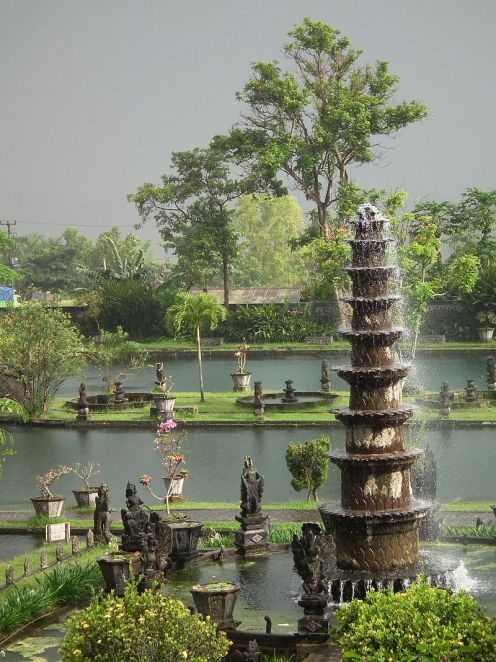
Tirta Gangga Water Palace and Temple
Since my last postcard from Bali we’ve moved from Canggu on the south-west coast of the island, to a place on the east coast not far from the village of Candidasa, Given that we’ve had rain much of the time since we arrived, the highlight of most days has been gastronomic.
One of the joys of Bali are the warungs – small family restaurants that sell affordable meals to foreigners and locals alike. One of our golden rules on holiday is to avoid hotel restaurants as much of possible. Breakfast, yes, but eating in the same place for dinner feels like failure to explore.
Soon after we arrived in Candidasa we therefore went in search of a promising warung. In the bit of the road immediately beyond the hotel, there didn’t seem much of a choice. Many of the restaurants are set up to serve the tourists, with a choice of Indonesian and western food. One of them advertised burgers and hotdogs, with a prominent sign saying “NO Nasi Goreng”. As if those fed up with Indonesia’s national dish could find solace in plain old MAGA food (as in the Make America Great Again hats). Quite an insulting sentiment really, rather like pronouncing “NO Shwarmas” in Riyadh or “NO Chicken Tikka Masala” in Birmingham.
I don’t suppose it’s doing very well, since foreigners are in short supply, it being the rainy season. People don’t like surfing in thunderstorms.
A bit further down the street is a small area by the sea shore that has several warungs. And there we enjoyed our nasi goreng and grilled mahi-mahi fillet. The owner of the one we chose, Ketut, seemed uncommonly grateful to see us. Business was not great. His wife runs the kitchen and, with two kids to feed and educate, every contribution helps.
Like almost every Balinese guy in a tourist area he is a man of many parts. We soon agreed for him to take us sightseeing for a day. To do that he had to hire a car. He asked us to come to the warung to be picked up, because the local drivers would be angry with him if he picked us up from the hotel. That sounded familiar after my experience with striking Barcelona taxi drivers a few weeks ago.
We agreed four local destinations: a water garden, a water palace, a visit to the nearby central market and finally a stop-off at his village where they produce honey and my favourite Indonesian coffee – kopi lowok.
Yesterday morning we set off in blazing sunshine. Not five miles on we were held up for an hour by traffic. It seems that there had been a bit of a landslide further up the hill, and the local authorities were doing their best to clear the road. No matter. It was a nice day, and the macaques by the side of the road provided plenty of amusement.
We finally made it to the Tirta Gangga Water Garden, a temple complex where ponds with large numbers of huge and ravenous carp competed for the fish food you could buy from the temple shop. You only had to stand on the edge of the water with an arm outstretched for a few dozen of these orange monsters to surface en masse, mouths open like piscine equivalents of Donald Trump sounding off.
One of the ponds was laid out with stepping stones which allowed you to wander among the fish on your way to the temple, taking care to avoid barging into the water young Chinese girls pausing for selfies along the way.
The temple itself was pretty nondescript – rather like a bandstand surrounded by glowering statues demanding obeisance. All the favourites were there: Shiva, Rama, Kali and the rest of the pantheon. Beside the temple was a large pool where people can swim – a nice touch.
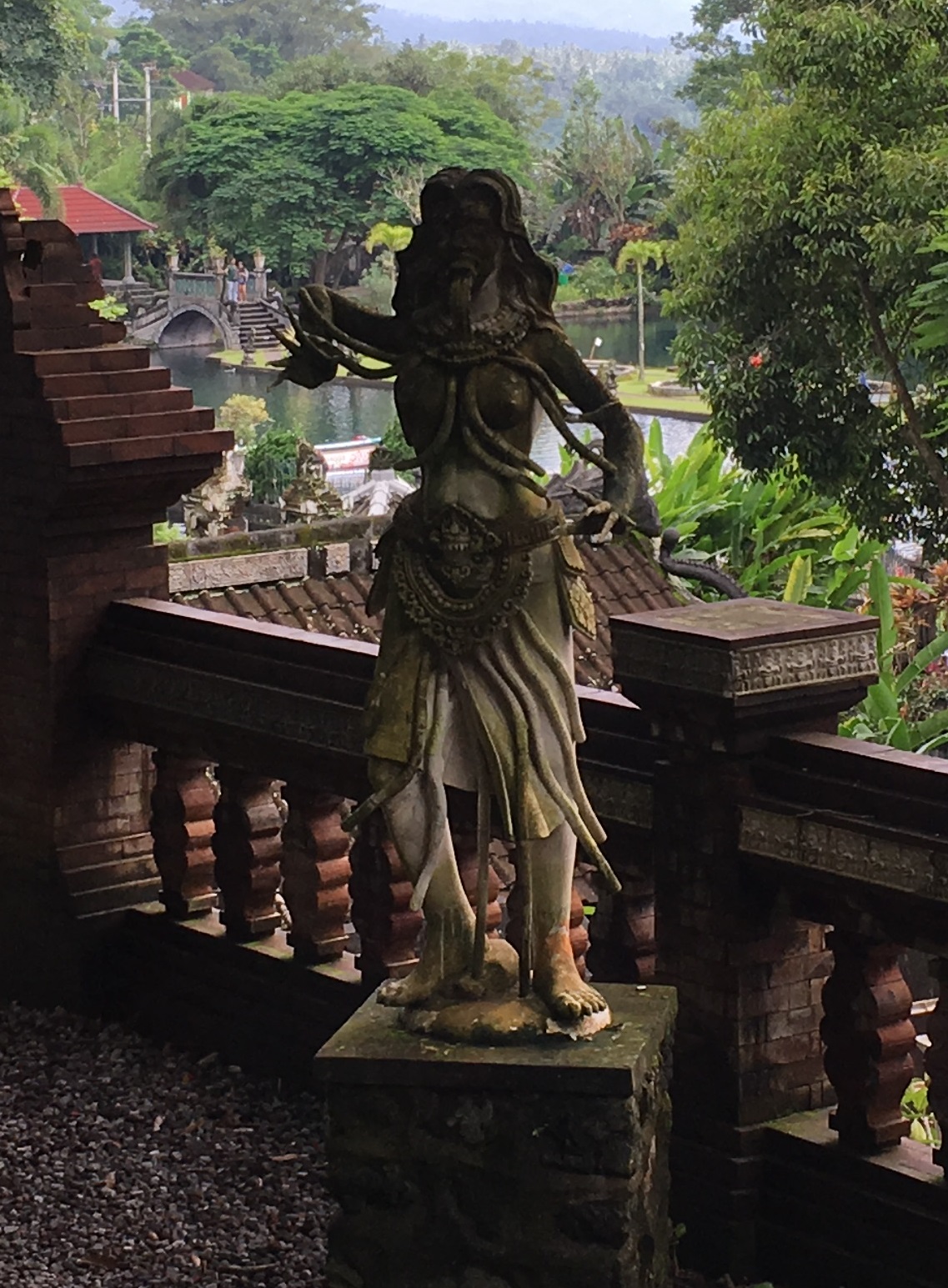
The garden was beautifully laid out and not too crowded. A good place to spend an hour on a multi-itinerary trip. The most charming aspect of all was Ketut, walking with us with a huge grin on his face, repeatedly saying how happy he was to be there. A day out, away from the warung, was like a holiday for him.
The next stop was the central food market, where Ketut was under orders to pick up some avocados. Nothing special about it, apart from the smiley women, mostly Muslim, who ran the stalls. No strange or startling foodstuffs, such as monkeys, snake heads or odd bits of chicken.
Next stop was the Taman Ujung Water Palace, which once was the home of the last Raja of the area. Again, beautifully laid out, and within the palace itself photos of the Raja with his wives, nannies and 24 children. Also the Raja posing with representatives of the colonial power – the Dutch – looking stiff in their western finery. A reminder that on several occasions rajas resisting Dutch rule carried out mass suicide attacks against Dutch forces – they with spears, bows and ornamental swords against the Dutch with rifles. This raja clearly thought the better of the ultimate sacrifice.
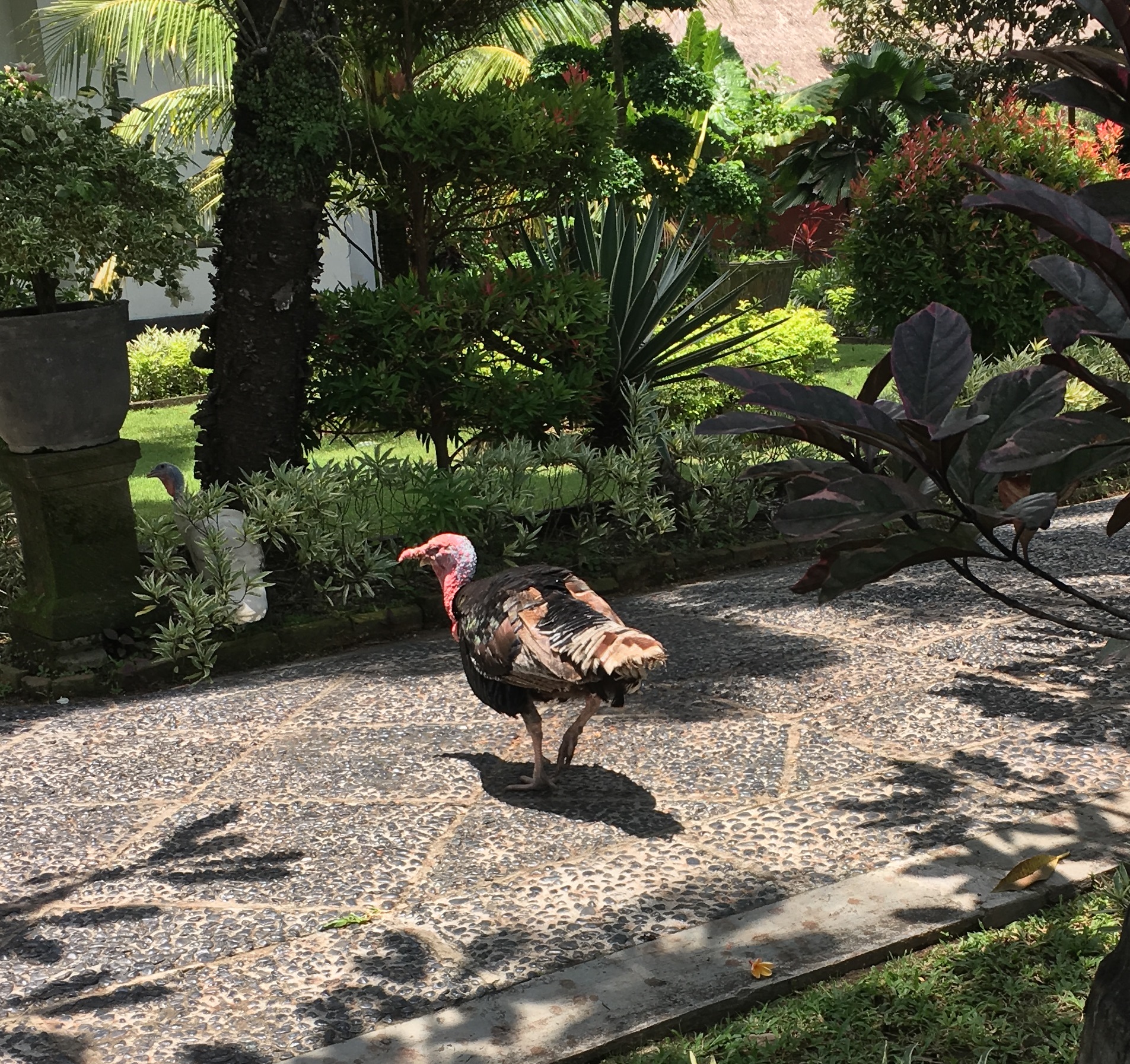
This was the kind of garden where you would expect peacocks to be roaming. So it was a surprise to find that the garden’s ornamental birds were not peacocks but a family of turkeys, casually wandering in and out of the shrubs and ornaments without a care in the world. The biggest ones would probably make the 6-10 kilo range at Tesco, but these guys are not destined for the pot. The luckiest turkeys in the world. And how beautiful they are from close up.
Our last destination was Ketut’s village, where we would commune with bees and drink coffee. Except that things didn’t quite work out as expected. On the way to the village, which is close to our hotel, we encountered another gargantuan traffic jam at the aptly named village of Bugbug.
It was strange to see a single lane highway in the middle of the country as clogged as any I have encountered in London, Riyadh or Los Angeles. The difference was that the Balinese seemed to take it in their stride. Whereas in London the faces of the drivers would be etched with sullen fury, and in Riyadh a cacophony of car horns would erupt as drivers threw their hands in the air and thumped the steering wheel in frustration, the drivers here never came close to losing their cool. It was an opportunity to get out of the car and chat with others in the queue, one of whom was getting regular updates via WhatsApp from a policewoman friend at the scene of the hold-up on the progress of the road works.
Meanwhile, the sky was getting darker. Ninety minutes later, we finally got through the choke point and headed for the village. We were running out of time, and it was starting to rain. Heavily as usual. Against our better judgement, we agreed to stop briefly in the village. By now the rain was monsoon grade. With thunder and lightning all around us, we climbed some steep steps to a where we were treated to a coffee production demonstration and a spot of honey tasting. We didn’t linger long at the coffee station because we’d been to somewhere similar elsewhere in Bali. But in for those of you who have never encountered kopi lowok, it’s made from coffee beans eaten and excreted by civet cats. Because the civet partly digests the beans, the resultant coffee lacks the bitterness of other beans. It’s a smooth, delicious and hideously expensive drink.
The honey came from two species of bee. Asian bees, which produce the kind of honey we would easily recognise in the west, and black bees, which are smaller, don’t sting, are difficult to breed and produce about one tenth of the output of the Asian variety. The black bee honey was unlike any that I’d tasted before. The flavour is best described as sweet and sour. The locals ascribe to it all kinds of medicinal properties. Both honeys were also hideously expensive. Our budget didn’t stretch to £30 for a small jar of black honey or £20 for a similar quantity of the regular stuff.
When we got back to our hotel, we expected to find a Balinese Noah with an ark full of animals ready to take us away. Several ground floor villas were flooded out and the stream at the back of our first floor apartment had started to get very angry. We later learned that an entire building next to the hotel had been swept away, which was a bit scary. Nobody was hurt, fortunately.
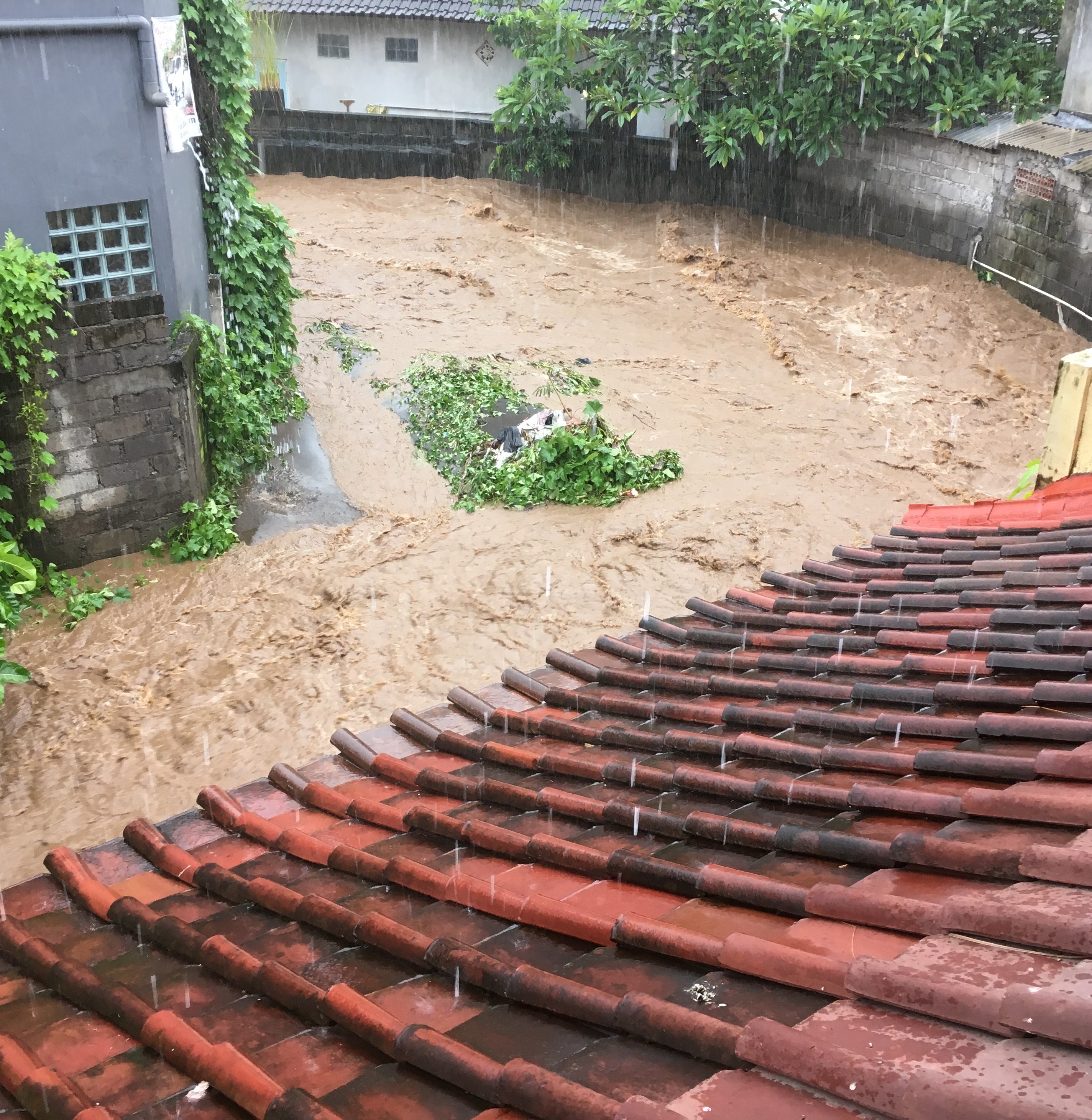
Nonetheless, being British, we kept our promise to eat at Ketut’s warung that evening, so with the rain still bucketing down and lightning nearby threatening instant death, we opened the brollies and made it to his place for more mahi mahi. When we got back, the rain was still pounding, and the path to our villa was a river. We waded through a six-inch stream of water to find that the occupants of the apartment beneath us had been evacuated. Since we were one floor up, it would have taken a tsunami to disturb us – a real possibility in an area that a few months ago felt the effects of Richter 7 earthquake that caused much damage to nearby island of Lombok.
This morning our stairway was clear of muddy water, but the footprints of some unidentified animal ending with claw-marks on the wall were evidence that some residents were less sanguine than us.

Today the rain has continued. The flooding has returned downstairs, negating the hard work of the team that worked so diligently to clear up the mess this morning. No doubt more debris has fallen on the road to Bugbug. But are we bothered? So long as we aren’t carried into the sea by a mudslide, who cares about rain when we have a dry balcony, the temperature’s in the late twenties, and we have books to read. Not to mention warungs to feed us and the Balinese with their seemingly limitless cheerfulness to keep us smiling.
Trust me, there are far worse places to be.
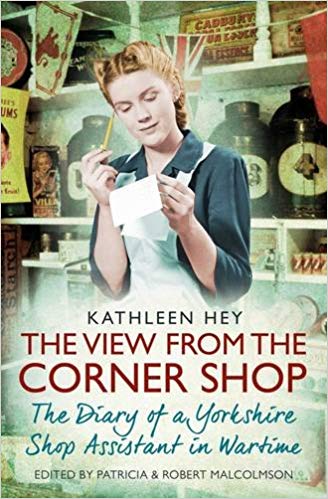
If she was alive today, Kathleen Hey would laugh about the panic-stricken predictions of life after a no-deal Brexit. During the Second World War, she was a shop assistant in a small town near Dewsbury, Yorkshire. Between 1941 and 1946, she kept a diary for the British Mass Observation project. Thousands more did likewise. The View from the Corner Shop – the Diary of a Yorkshire Shop Assistant in Wartime was published in 2016. Perhaps now is not a bad time to be reading it.
Kathleen was 33, unmarried, and lived in rented accommodation above the shop. When rationing was introduced, the job of serving local customers with the groceries they needed was complicated by having to comply with the byzantine and constantly-changing system of stamps, points and coupons that the Ministry of Food imposed in order to ensure that everybody had their fair share of essentials.
If you were a fan of Dad’s Army, you would have seen Corporal Jones, the platoon’s grocer, slipping a packet of sausages a favoured customer’s way with a nod and a wink. Kathleen would have disapproved. According to her diary, she did her utmost to ensure that her regular customers got what they were entitled to and no more. But irregular supply from wholesalers and frequent tweaking of the rules by the local Food Office cause her and her colleagues to tear their hair out in frustration.
She also acted as a lighting rod for all the moans and groans of her customers, who were worried about the progress of the war, outraged that white flour was being replaced with wholemeal (so much for the Hovis nostalgia) and craved the oranges that were reserved for kids under five.
I’ve always been a fan of local history, especially the perspectives of unsung participants – or bystanders – during great national events. So what does Kathleen Hey teach me about her life, that of her customers in Heckmondwike and attitudes on the home front towards war?
What comes across strongly in her diary is that ordinary people were not universally inspired by Winston Churchill’s oratory in the dark days of 1941 and 1942. Nor were they convinced that the government was doing all it could to pursue the war against Hitler. There was a strong sense after the German invasion of the USSR that the Russians were bearing the brunt of the conflict and we were not pulling our weight. That perception only changed after victory over Rommel at Alamein.
Then there was the strain of casual anti-semitism throughout Kathleen’s community, a sentiment implicit in the way that she identifies Jews as “the other”. The Jewish shopkeeper, for example, always seemed to have stuff that others didn’t:
We went to Leeds as he (her brother-in-law) wanted some things from Abe (a Jew he deals with) that he cannot get elsewhere – tinned meat, and fruit and matches, and salmon. But the shop was not open. We spent some time outside and I was amused at the fashions. The Jews all dress well, (or should we say flashily) and no matter how shapeless they are (and they are all shapeless after 20 or so) like the latest fashion. I notice they have a particular taste for high heels, not following the prevailing fashion for flat heels and rubber soles.
To someone like me used to the modern meaning, it’s also strange to find her using the term “refugees” to describe not foreigners seeking shelter in the country (though there were plenty of these) but people bombed out of their homes. Nearby Hull suffered considerably, yet the locals in Dewsbury took in displaced families reluctantly. Some outright refused. She and her friends noted that those living in the big houses tended to be least likely to volunteer.
Kathleen, who probably didn’t progress beyond secondary education, was an avid reader. How many shop assistants today could boast of reading the modern equivalent of books by Robert Graves, Virginia Woolf, Alexander Pushkin, Herman Melville, Beatrice Webb, Andre Maurois, Fyodor Dostoyevsky and Jane Austen? Perhaps more than you’d think if you take into account the number of recent graduates who mark time by working at JJB Sports or Tesco. But her counterparts today are likely to be spending far more of their leisure watching Netflix and YouTube, and glued to their smartphones. Though she did manage to go to the theatre, cinema and music concerts occasionally, reading, radio and, surprise surprise, conversation, seemed to be her main recreational activities. No foreign holidays, no TV, and for Kathleen barely more than a few days holiday a year, which she would spend at home or on an occasional trip to Blackpool.
Another striking aspect of the diary is her compassion for casualties of war. She’s acutely aware of the suffering of the Russians in their fight for survival against the invaders. And when the RAF, in the famous Dambusters raid, destroys key dams that provide power to the armaments industry in the Ruhr Valley, her first thought is not to celebrate the damage the raid caused to Germany’s fighting capability, but sorrow for all the “innocent Germans” drowned in the flooding.
The mass recruitment of young women for war-related work put great strains on local communities, sometimes for unexpected reasons. Hundreds of women were induced to work in armament factories by high wages and decent living conditions. The miners, whose work was equally critical, resented the fact that these women were often paid better than they were. Bus drivers resented the long hours that they spent, unpaid, waiting to be given routes to drive. Older women who were registering for war work resented being interviewed by officious women much younger than themselves.
One of the abiding themes of the diary was unfairness – a sense that some areas bore the brunt of the suffering and others didn’t. There also a strong sense of class resentment – that the wealthy were doing quite well out of the war and the poor not so. Small wonder that the Labour Party won the first post-war general election so decisively. Nationalisation of the mines and the creation of the National Health Service would have had few detractors in Yorkshire.
The entry of America into the war was widely welcomed, but Kathleen herself had a low opinion of the Americans themselves, whom she mainly encountered through Hollywood movies. She considered them brash, uncultured and loud.
Does Kathleen Hey’s diary give us any pointers as to how we might cope with the consequences of a no-deal Brexit? I don’t think so. Much as some politicians and journalists might hark back to the Dunkirk spirit, we citizens in this age of plenty would be horrified if we were suddenly pitched into her world. Food shortages, industrial unrest, the uprooting of populations, inadequate medical treatment for the poor and a sense of weariness that the ordeal seemed never-ending.
Yes, times were hard back then, beyond most of our imaginations. The difference between then and now was that Germany and Japan were existential threats, whereas the Brexit crisis is arguably self-inflicted. Any measures the government will need to take to protect supplies of food and medicines will be deeply resented in a way that they weren’t during the Second World War. There isn’t, and there won’t be, “a war on”. Although Kathleen’s community were quick to blame the incompetence of politicians and officials, very few would have argued that the war was unnecessary.
Kathleen Hey comes over as someone well-read, curious and as informed as she could be about the conduct of the war and the issues of the day. She had a strong sense of duty and a wry wit. She was what some people today would describe as a brick, others as a rock. Did she feel the need to put her best foot forward in the knowledge that her words would be read by others? We’ll never know. There was a hint in her diary that she kept another journal, perhaps with more personal thoughts and feelings. If so, it has disappeared, probably never to be found.
She died in 1984, aged 78. We know nothing of her life after the war, except that she appears to have had no children or other living relatives apart from a cousin who provided the information for the death certificate. She was 33 when the war began. Would she have said in later years that the war had taken her future away? Perhaps. There were many people like Kathleen Hey who came through the war weary and diminished. Most are dead now. But I for one am grateful for the testimony of someone who without the Mass Observation project would have vanished into obscurity, remembered only by a few loved ones.
As we approach an uncertain time, it’s surely useful to look back at the lives, not only of soldiers, generals and politicians who influenced our future seven decades ago, but of ordinary people like Kathleen who also “did their bit”. The diary of this strong woman is a fascinating read.
Now is not a bad time to be celebrating their uncomplaining resilience. We have much to learn from them.
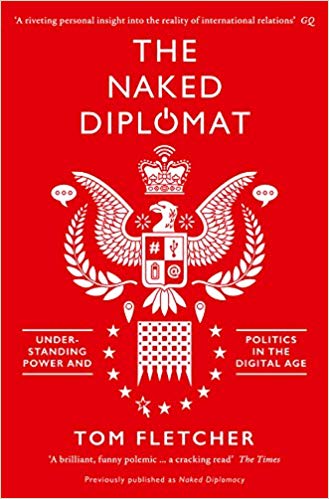
I’ve come a little late to Tom Fletcher’s The Naked Diplomat – Understanding Power and Politics in the Digital Age. Fletcher, a former adviser on foreign affairs to three Prime Ministers and then Britain’s Ambassador to Lebanon, published his book about challenges to diplomacy in the digital age in 2016.
It’s a great read, full of optimism, wit and wisdom. In Lebanon, where he was our youngest ambassador, he practised what he preached, engaging the Lebanese people as well as politicians on Twitter with the relentless positivity that is evident in his current twitter feed.
He recognises the dangers of the social media, the reality of a world without the sanctity of secrets (or so Wikileaks would have it) and the threat of the digital age to the traditional practice of diplomacy. He also looks at the role of the diplomat of the future, wielding soft power, networking and encouraging the use of embassies as gathering places for those interested in interacting with the country they represent.
Quite a change from my limited interactions with ambassadors in the Middle East, which were confined to occasional invitations to the annual Queen’s Birthday celebration. At such events you could get to talk to His Excellency (for it was always a he) if you tried hard enough, but the conversations were always platitudinous. We expatriates were not the object of his interest. We were merely British subjects whom his consular staff occasionally had to extricate (often with limited success) from self-inflicted messes.
To us, the ambassador was a lofty figure, there to influence the great and the good in his posting. That was in the eighties. When I came back to Bahrain and Saudi Arabia a couple of decades later, things had loosened up a bit. Embassy staff were more approachable, but I still got the impression that our demands on their time were met on sufferance, unless we ourselves were sufficiently influential to affect the outcome of British business initiatives.
At no time did I feel that we were viewed as a potential resource to reinforce the British brand amongst our local colleagues. No positive information was ever pushed our way, nor were we invited to provide feedback on the Embassy’s activities and initiatives. There were British business associations, which held occasional parties at the Ambassador’s residence. These promoted a spirit of cooperation between business people, but I always saw the Embassy as a benevolent sponsor rather than an active participant. Perhaps they were afraid of associating with us too closely in case we turned out to be wrong’uns. In other words, we were potentially unreliable exemplars of the British brand.
Tom Fletcher’s embassy in Beirut was clearly way beyond the relative aloofness of his colleagues in Riyadh, though I get the impression from his book that his reaching out was focused more on the Lebanese than on the recalcitrant Brits in his back yard. And yes, his primary role was to represent his country to the people, the government and the powerful warlords in what must have been a fiendishly difficult posting at a dangerous time – just as the Arab Spring was revving up and the Syrian civil war was igniting.
His book is superbly written and starts with a fascinating tour d’horizon (a phrase beloved of diplomats) of the history of diplomacy, from the notional Neanderthal persuading his neighbour not to club him to death to the great diplomatic set pieces from the Treaty of Westphalia in the 17th century through to the summitry of the 20th and 21st centuries. Most of these were – to a greater or lesser extent – successful attempts to stitch up the world order by a small number of powerful nations. They continue today with the G7 summits and Donald Trump’s bumbling encounters with Putin and Kim Jong Un. But in the 21st century, structures like the UN Security Council whose permanent members reflect the ‘great power’ structure of 1945, are becoming increasingly unfit for purpose. Why is Britain a member, and not Germany? Why France, and not South Korea, or Japan? And what of the transnational great powers of the age – Google, Amazon and Facebook? What role should they play in the diplomatic game?
The role of Facebook in shaping opinion around the world may have been less obvious before July 2016, although Fletcher recognises the power of transnational corporations. But subsequent events – the Brexit referendum and the election of Donald Trump – put a different complexion on the power of the social media.
In a way, The Naked Diplomat makes me feel a little nostalgic for those relatively innocent days before a group of ruthless campaigners weaponised data sucked out of Facebook and other sources and used it to send Britain spinning out of the European Union and caused the United States to elect a narcissistic demagogue as president.
For me, the digital world grew several shades darker in 2016. The blueprint that Russia, Cambridge Analytica and others used to subvert the US election took the chaos of the internet and created a powerful beam of concerted manipulation of facts, and most crucially, emotions. It will be used again by other actors, and increasingly by artificial intelligence, through malign algorithms designed to appeal to the basest instincts.
And Donald Trump, by spewing out lies, hatred, paranoia and baseless boasts on Twitter, has shown politicians everywhere that they can prosper with similar methods. America’s diplomats have an almost impossible job projecting consistent and positive messages when their president changes his positions on a whim. And America’s enemies, from states to terrorist groups, have a far easier job justifying their hostility when the most naked diplomat of all reveals his needy personality, covered with psychological warts, boils and running sores, to all and sundry. When he tweets, he speaks for America, and it isn’t a pretty picture he portrays.
How can America’s diplomats project a credible image without conceding that Trump is slightly mad?
As for America’s intelligence community, one can only imagine how they feel when their sober assessments of world affairs are trashed by their boss, who believes he is smarter than all of them. And then denies that he trashed them in the first place!
In Britain, Fletcher’s country and mine, lies from politicians, both online and through conventional media, have become so blatant and frequent that nobody reacts in horror any more. And those who want to believe them go ahead and believe, despite others shouting the truth until they’re blue in the face.
Political discourse through the social media has become more coarse and abusive over the past three years than it ever was. Poisonous tweets abound from people who would never dare to say face to face what they say online. Insults that once could only be hurled with impunity through the closed windows of cars in traffic and through poison pen letters have become the meat and drink of the internet.
And yet the same media, if you follow the right people, can offer rays of hope – pointers to sanity, reason and hope. But my goodness, you need to work hard to find them though the ordure of lies, manipulation and false equivalence.
The Naked Diplomat is still very much worth a read even though so much has changed since Fletcher wrote it a mere three years ago. I have the second edition, in which he provides an introduction clearly written after Trump’s election but before his presidency got into full swing. The twenty three pages stand on their own as wonderfully cogent reminder of challenges we face over the next few decades. The weaponization of the internet is one issue, but there are many more, not least the gap between rich and poor. As he writes:
Finally we will see a growing chasm between ‘on demand winners’ and ‘on demand losers’. Many of us are going to love the ‘on demand’ economy. We’ll get more of what we want when we need it. But it will take a lot of people to service that. Their time will be on demand so that ours can be our own. Make that gap between winners and losers too wide, and we create peril. Growing inequality is the biggest geopolitical risk today. If displaced people had a country, it would be the twenty-first largest in the world.
We better mind that gap.
Two years on, that problem is getting worse, exacerbated by kleptocrats, demagogues and dictators. And, of course, by self-interested politicians in democracies too feeble to call them out and reject them.
We badly need optimism and hope, but tempered with realism. And we need more than ever voices like that of Tom Fletcher to speak truth to power. The power, that is, vested in us as digital citizens.

A couple of days ago, a friend who lives in Bahrain sent me a message via Facebook Messenger. I don’t use the app very often, preferring text, WhatsApp or email. She asked for my home address because she wanted to send me something. She didn’t say what she wanted to send.
Now in a world without paranoia, I would have replied immediately with the desired information. Instead, I hesitated for a couple of days. I had several concerns. Was this really her? Was this some malign hacker pretending to be her? Is some state actor in the Gulf trying to get a back door into my phone content? And what was the package? A bomb, Novichok? Should I use some alternative method of verifying that it was really her sending the message? Should I call her to find out what the package was?
In the end I took a chance and provided her with the address. So now Facebook, if they choose to use or sell the information, have my home address. Will I therefore find myself on a mailing list rustled up by the latest iteration of Cambridge Analytica (as if I’m not on enough already by one data scraping means or another)? Too late for Brexit, unless there’s a second referendum. But there will be another general election pretty soon, I reckon.
But then I figured that any organisation that has my post code therefore has my address, so to hell with it. Also I’m not important enough to waste a block of Semtex on, let alone a toothpaste tube impregnated with Novichok. As for the malign state actor, I hope they find the messages from my wife to pick up milk and frozen peas from Waitrose suitably instructive.
My friend would probably not even dream that I might have such concerns, and on reflection I felt pretty over-cautious myself.
But on reflection, do we not live in a strange society in which a seemingly innocent request should arouse such suspicion?

I come from a line of Church of England clerics, starting with a great-great grandfather who became the Vicar of Newton Tony after retiring as the Dean of Queen’s College Cambridge. Then there was a great grandfather who was the Vicar of Anfield, a stone’s throw away from Liverpool’s hallowed football ground. The tradition continued with a great uncle whose parish was in the Isle of Man. And finally, a few years ago my sister, after a career as a physician, took holy orders in Bristol.
My step-grandfather was also a vicar. Sadly, I never got to know him, since he fell dead of a heart attack six weeks after christening me. But all in all, you could say that the blood of the Anglican Church is flowing though my unholy veins. Despite having few of the religious beliefs that were instilled in me as a child, I still retain great affection for its traditions, practitioners and values.
Perhaps that’s why I’ve relished a new book about the eccentrics, nutcases and rogues who served the Church – and themselves – over the past four hundred years.
A Field Guide to the English Clergy, by the Reverend Fergus Butler-Gallie, is a collection of short biographies of some of the Church’s most celebrated misfits and ne’er-do-wells. He includes academics, country parsons and even archbishops in his gallery.
You only have to look at the parishes – Thursford and Snoring, Blewberry and Stiffkey – and the names of some of the protagonists – Vicesimus Knox, Brian Dominic Titus Leo Brindley, John ‘Mad Jack’ Allingham, Marco de Dominis and Dr Edward Drax Free – to be transported into a world that inspired PG Wodehouse, Evelyn Waugh and the Ealing comedies.
Butler-Gallie’s cast of characters include drunks, lechers, gargantuan eaters and even a murderer. For many of them, a clerical appointment was merely a convenient platform for other pursuits, be they hunting, astronomy and polar exploration. Others were deemed so unemployable that they were shunted off to various arcane posts at Oxford or Cambridge, there no doubt to serve as source material for Tom Sharpe in his memorable Porterhouse novels.
Parish stipends were rarely generous, which was why many of the priests had independent means or acquired them through marriage. Younger brothers of wealthy families would enter the Church as an alternative to going off to run the British Empire. Some did both.
We learn of the rector who was defrocked and ended up being eaten by a lion in Skegness. Another who resisted removal from his parish by barricading himself in his rectory, fortified with large quantities of French pornography, his favourite maid and two pistols. Then there was the one who rowed out to a rocky outcrop in Cornwall dressed as a mermaid and sang to his onlooking crowds. And the Archbishop of York who in an earlier life was a pirate in the Caribbean. Not to mention William Webb Ellis, the alleged inventor of Rugby football, and Jack Russell, who gave his name to the most annoying breed of dogs on the planet.
Many were loved by their parishioners. Others were virtually unknown to them, choosing to delegate their duties to a junior cleric while they gallivanted around the fleshpots of Europe.
One of the problems the Church faced when dealing with badly-behaved clerics was that it was almost impossible to get rid of them under canon law (the separate legal system that applies to the church). This resulted in many of them waging war with the bishops to whom they were responsible when the prelates attempted to curb their worst excesses – hence Dr Drax Free’s last stand with his porn and pistols in his besieged rectory. He only came out after two weeks when his supply of claret dried up.
Butler-Gallie, who is himself a clergyman, finishes his tale with a glossary that explains, among other things, the meaning of various titles in the Church – canons, vicars, rectors, chaplains, curates deacons and all. Very helpful if you’re not familiar with the inner workings of the institution.
As a loyal servant of the Church, and no doubt cognisant of the libel laws, he writes only of the dead. Despite the many and diverse indiscretions of his subjects, he still manages to find a good word to say about most of them.
No doubt there are a few eccentrics among the modern clergy, but I sense they’re better at keeping their heads down than their predecessors.
It’s a short book – a mere 180 pages in a small format – which makes it ideal for a long train journey or a couple of afternoons in some sunny clime. My father, who was an avid collector of human frailty, would have loved it, as would my great aunt who, in later life, developed an all-consuming obsession with men of the cloth, never failing to point one out with delight from the back of our family car.
For all its faults, and despite its violent birth at the hands of Henry VIII, the Church of England is an essential part of the English story. Our culture would be much the poorer without it. If, like me, you occasionally crave relief from the grim realities of the present, this gentle and often riotously funny book will come as a welcome escape into England’s quirky past.
If you’re not English, and you’re curious about our occasional oddball tendencies, A Field Guide to the English Clergy might go some way towards helping you to understand us better. On the other hand, it might leave you even more confused – but hopefully still intrigued enough to want to come and visit us. Because God knows, we need your money.
How nice it is to be in Bali, away from Brexit-ridden Britain, where the Mad Hatter’s Tea Party in Westminster is proceeding on its loopy way. Not that the madness is far away – Twitter and online newspapers see to that.
We’re staying in an area called Canggu. About 500 metres away from our hotel balcony we can see the sea, full of novice surfers struggling to do what surfers are supposed to do, only to dissolve in a vortex of foam after about two seconds on the crest of the wrong wave.
Closer to us is a large building site from which resounds with much clattering and clanging. It seems that the primary activity on the site is chucking large metal objects – scaffolding and steel rods – around the place.
The site will eventually become a hotel, one of many new properties being thrown up around the island to accommodate the masses of tourists – mainly Australians, Europeans and Chinese – who come here in increasing numbers, only deterred by the occasional volcano, earthquake or tsunami.
But my favourite place view from our little perch is the narrow strip of undeveloped land between our hotel and the construction site. For some reason the owners choose not to sell it. They live in a shack adjoining the road to the sea, where they run a tiny stall full of stuff that is unlikely to earn them much of a living.
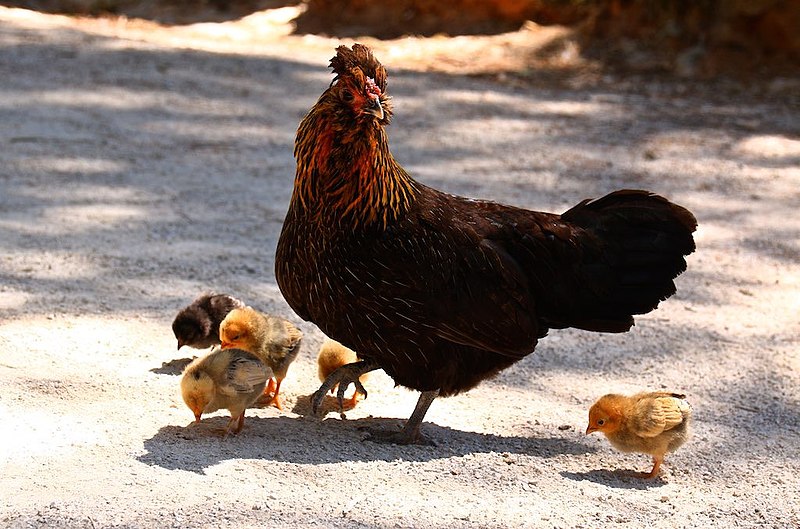
But behind the shack the land is all green. And the occupants are three large bullocks, four dogs and a large number of hens. Oh, and an egret that occasionally descends to pick titbits from the underside of the bullocks.
My main pleasure is watching the hens. Half a dozen of them wander around with families of chicks obediently in tow. It’s nice to be reminded where the expression mother hen comes from. If, like me, you live in suburban England, you rarely see a live hen, let alone one with a flock of five little ones in its wake. I’m sure there will be a restrictive covenant in the estate where I live that would prevent us from keeping hens. Even if there wasn’t, the foxes would achieve what envious neighbours could not. The residents of Surrey are not that keen on the good life. They prefer their chickens trussed up in plastic bags from Waitrose.
But there are no foxes in evidence in this part of Bali, so the chickens roam free with their mums, pecking and scratching through the undergrowth all day. Some are no doubt destined for the pot, and others will produce a regular supply of free range eggs. They live as good a life as it’s possible to imagine, provided they’re deaf to the banging and crashing nearby.
We’ve been to Bali a few times. We’ve seen temples, monkeys, mountains and streets full of wood carvings. No doubt we’ll see more on this trip. But for now, how calming it is to spend half an hour watching hens do what comes naturally.
A wonderful alternative to watching humans do what comes naturally, as exemplified by the braying, blustering and bullying that drowns out all other noise in Brexit Britain.
And the lovely thing about hens is that they don’t tweet.
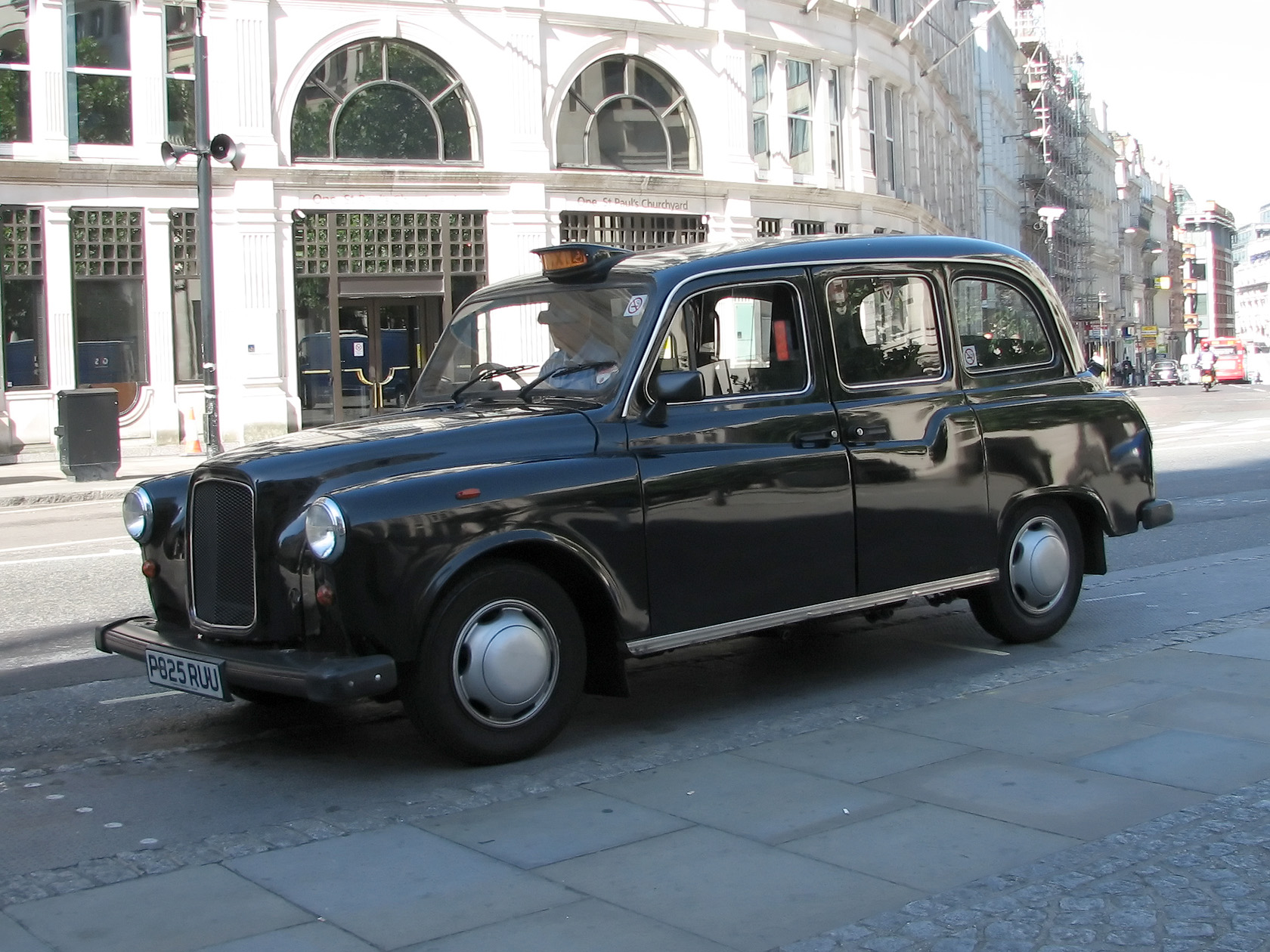
You might think that after a business trip to Barcelona that ended in disaster – a missed flight back to the UK, a cancelled weekend jaunt and the theft of a rucksack full of laptop, IPad and other stuff – I would be pretty down on the striking taxi drivers who started the debacle by declining to take me to the airport.
Though I didn’t know it at the time, the cause of their action and focus of their fury was Uber. I should have known.
A couple of months ago my wife and I were in Penang, Malaysia. There the battle between the conventional taxis and Malaysia’s equivalent of Uber is all but over. How could it be otherwise when the cost of a ride on Grab, the local Uber clone, is around a quarter of that in a conventional cab, and almost everyone has a smart phone with the app they need to summon a driver from nowhere?
And back in the UK, who needs The Learning, the encyclopaedic knowledge of London’s streets that licensed cabbies need to master in order to drive their black cabs, when Uber drivers (as well as the rest of us) all have Google Maps on their smart phones?
I have much sympathy for the taxi driver because those who drive licensed cabs are finding their living eroded to the point that their income is fast becoming insufficient to feed their families.
But I also feel for the Uber drivers who are dependent on low rates that will never allow them to earn above a paltry minimum without working absurdly long hours. Theirs is the classic gig economy living: insecure, unpredictable and subject to the whims of an “employer” whose concern for them stretches no further than whatever it takes to be able to operate legally under a given jurisdiction.
So the only winners are us, the customers, unless, as in my case, striking taxi drivers attack the Uber driver who came to take me to Barcelona airport and led him to make a quick getaway without his passenger (I was unaware at the time that the dispute was about Uber).
It’s quite rare for a consumer to witness the human consequences of cheap products and services. Most of us don’t think of farmers when we buy milk and vegetables whose price is forced down by bullying purchasers at large retailers desperate to outdo each other in price-matching wars. We don’t give much thought to the warehouse workers employed on low wages who make it possible for us to get our products from Amazon within a day of purchase.
We do worry about our kids being saddled with five-figure debts for tuition fees when the economy can’t meet the expectations of graduates that they will be earning salaries commensurate with their academic achievements and those kids end up working on the minimum wage – or not working at all.
But we – and now I’m speaking for the generation born in the Fifties – are surprised when the unemployed, the farmers, the Amazon workers and the taxi drivers don their yellow jackets – literal or metaphorical and erupt with rage against those they see as responsible for their failure to prosper in our globalised economy, and blame the targets identified by demagogues – governments, the EU, the “elite”, the deep state, foreigners, George Soros, Mexicans, Muslims and Jews.
Every age has its Les Miserables. The difference between Victor Hugo’s poor in 19th Century France and the discontented of modern France, Britain and America is the scale of deprivation rather the gap between the haves and the have-nots. Today – in the West at least – we have safety nets that prevent people from dying of starvation and reduce infant mortality to a level undreamed of two hundred years ago. But that’s hardly much consolation to those who, having made it through childhood, face a lifetime of poverty.
This gloomy scenario brings me to an evening we recently spent in the company of Sir Martyn Lewis, the former TV journalist and newscaster. He was sneered at in the 90s for suggesting that BBC should seed the news with positive stories. That doesn’t sound such a bad idea in the current decade, which puts the 90s to shade when it comes to wrist-slashing tales of misery and desperation around the globe.
Lewis, who was giving a talk to a group of old farts like me, is unchanged in his views on good news stories. In fact it seems that the world of journalism has caught up with him since then. He pointed us towards a movement called Constructive Journalism, which is all about encouraging media to place bad news in context by reporting on solutions as well as problems. It’s taking hold in some of the saner parts of the world, such as Denmark, which hosts the Constructive Institute, based at Aarhus University.
Here’s a very succinct definition from the Institute’s website:
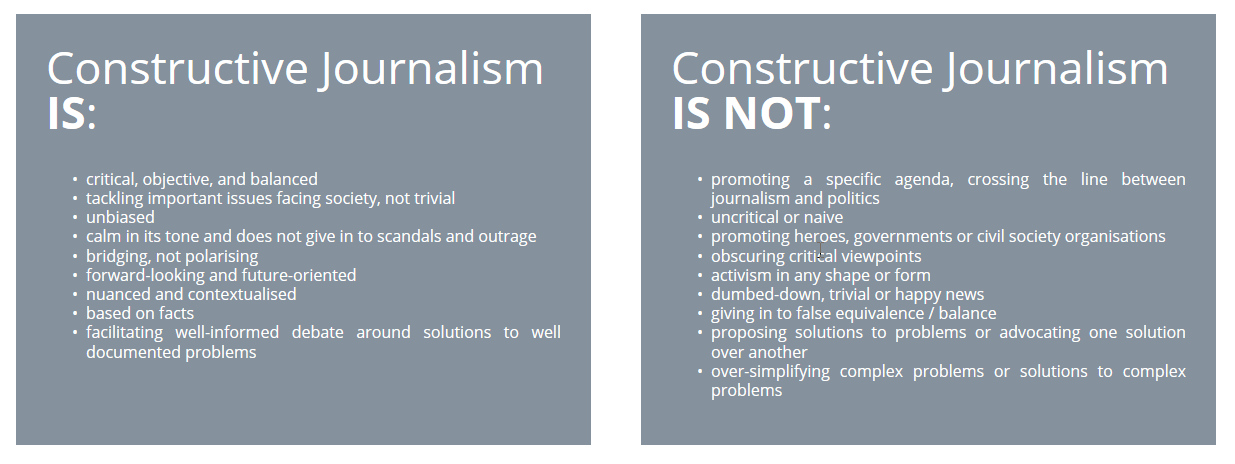
I am neither a professional journalist nor an optimist by nature, at least about the current yawning gap between rich and poor. But in the spirit if not the letter of constructive journalism as defined above, here’s how I would go about alleviating the toxic situation I described earlier.
I would start by doubling the minimum wage. Yes, doubling, and that would include piecework and hourly rates in the gig economy.
Such a measure on its own would result in howls of objection from employers who would have to bear the additional cost, and consumers who would have to pay a higher price for goods and services.
But then I would provide smart discount cards that entitle pensioners who have no other income beyond the state pension to buy energy, essential foodstuffs and local travel at a discount over normal prices. And I would include those on state benefits in the same scheme
I would offer retailers such as supermarket chains a rebate on corporation tax in return for providing the discounts. And I would provide government subsidies to essential service providers such as care homes that will enable them to stay in business despite the increase in wage bills.
The intended result?
Millions of lower-paid workers would be lifted out of subsistence living.
There would be price increases as businesses are forced to charge more in order to cover their higher wage bills. There would also be an increase in government spending. Both effects could be managed if the measure was phased in over, say, three years. But the negative consequences would be counterbalanced by a boost to the economy (and increased tax receipts) as those who have been lifted out of poverty use their increased spending power.
As for the price increases, the main burden would be born by those who can afford them rather than by those who can’t. Of course, such a measure would be characterised by politicians as a stealth tax on the middle class. And yes, a large number of people who are well above the poverty line would find the cost of living rising, but not their taxes.
I for one would not object. It’s easy to forget, when we go off to Tesco and buy our cheap meat and vegetables, order our TVs from Amazon and sup our pints at Wetherspoons, that cheap comes at a cost to people who make low prices possible by having to choose between unemployment and working for a pittance.
Why not go for the rich as well? I’m not an economist. But I know stupid policies when I see them. Punitive taxes on the rich is one of them. If we don’t realise by now that the ultra-wealthy can at the drop of a hat take their money and their businesses to other countries that offer them better terms, we are truly stupid. We are about to find out how easily as Brexit Day looms larger.
But the brutal reality is that the middle classes are not so mobile, and if a no-deal Brexit grips us in its deadly embrace they will be even less mobile and certainly less wealthy. The pips might squeak, but most of those who would be squeezed, including me, would be going nowhere.
Simplistic? Unworkable? More holes than a block of Emmental? Maybe. I don’t pretend that this is the only potential solution, and it doesn’t address the other critical imperative for mitigating inequality – getting people into employment in the first place. But if I was in government, it’s the kind of idea I would chuck at the civil servants and think tanks with a challenge to make something close to it work.
I realise that if any political party were to campaign on doubling the minimum wage, they would be unlikely to find themselves in government. But it’s time we realised that there are some issues more important than Brexit. Right now, barring climate change and the future effects of AI on employment, the gap between rich and poor is Britain’s most pressing problem. Though actually you could argue that a better definition of the gap would be between those who are comfortably off and those who aren’t.
How am I qualified to pontificate on such matters? No more than anyone else who has watched with deep concern as this awful decade has unfolded.
Granted, what I propose might strike you as the kind of thing Mr Bean might come up if he was Chancellor of the Exchequer, or you might wonder if I’ve just taken a break from standing with a placard and a weather-beaten raincoat at Hyde Park Corner. But is it any crazier than a no-deal Brexit, which has none of the upsides and all of the doom-laden risks?
Whatever happens to Brexit, inequality isn’t going away. It will never go away entirely, but there are surely ways of pushing it in the right direction. No excuses – let’s get on with it.
In my Brexit-plagued country, 2019 is kicking off much as 2018 ended. Hot air blasting out of every seam of the House of Commons as our elected representatives work themselves up into a frenzy over procedural issues, plot away in the corridors and line up with desperate enthusiasm to get on the telly in order to spout a dozen different arguments they hope will shape the slowest political crisis in my lifetime. And boost their careers, of course.
Last year, about the only positives I can recall were the arrival of my lovely grandson and the England football team not living up to expectations of failure in the World Cup. Of the negatives, take your pick. The long-term biggies, such as climate change and competition for water and other natural resources. The outrages, including Salisbury and Khashoggi. And then the crises of Western democracy: a dangerous, disturbed president of the United States and, for my little island, Brexit.
It looks like more of the same for the next twelve months. Brexit has loomed large, both in conversations and in this blog, since the referendum. I’m not a voice crying the wilderness. Millions appear to share my concern that the will of the people, ineptly solicited and fraudulently influenced, is being used as an ordinance more immutable than the Ten Commandments.
So, kind readers, at the risk of boring you beyond your tolerance, especially those of you who aren’t British and have only a passing interest in our torturous politics, my first serious post of 2019 has to be about the political meteorite that we can all see but don’t seem able to avoid.
The other day I got an email from my brother, Professor Patrick Royston. He works in biomedical research. We don’t meet as often as I would like, and when we do, we rarely talk about politics. I had never asked him how he voted in the referendum. These days, even among family, that seems like an impolite question.
Patrick has always been a quiet counterpoint to my intermittently bombastic persona. He has greater concerns in his life than the implications of Brexit. But an opinion expressed by someone who does so rarely is often more noteworthy than that of someone who shouts all the time.
Here’s what he wrote:
“I know you have written quite a lot about Brexit already, and I have no claim to be adding anything very new or stunning to the discussion. However, I thought my personal perspective on it might be of interest to you and possibly to others if you were inclined to include some suitably edited version of it in your blog.
I recall, around the time of the referendum in June 2016, thinking about which way I should vote. I was aware of being sceptical about the extravagant claims of benefits of various kinds made by the raucous Leave campaigners. I’d noticed also the perhaps rather dour and off-putting attitudes towards the EU of some of our older (and not-so-old) folk in different parts of the land. Nevertheless, I do vividly remember, even up to the last minute, being quite unsure whether to vote Leave or Remain. My main reasons for disliking the EU concerned the bureaucratic and undemocratic way the Commission operated. I was unhappy about the fact that the EU could quite legally impose rules and regulations on the rest of us with no opportunity to demur or discuss. (Rules about the permitted shapes of certain items of fruit and veg come to mind.) At least, that was my personal understanding of how things operated.
In the event in 2016, it turned out that the Bristol area (where I live) voted 62:38 in favour of Remain. Two and a half years on, I feel I know a lot more about the pros and (particularly) the cons of leaving. For example, I wasn’t aware earlier on that the Northern Ireland/Eire border was such a key issue – that re-instituting a physical border would be tantamount to breaking the all-important Good Friday agreement. Not to mention the serious impedance to trade, increased inconvenience and sheer bother that a physical barrier would impose. It now seems quite clear that leaving the EU will impose terrible damage on certain important parts of our economy. Our country will become poorer for some as yet unquantified period of time. Just as important, we will lose credibility as an influential player on the world stage, including of course the EU itself. The effect of Brexit on reducing funding of biomedical research, the area I work in, will be dire. And more, of course.
The upshot of all of this for me is: I want the opportunity to reaffirm my support for Remain. I believe there is now increasing evidence of a significant national majority on the Remain side. People’s vote, second referendum, call it what you like, I want the opportunity to re-express my view and I think the country needs it too. After all, the politicians have not exactly covered themselves in glory over the whole Brexit process, and even now, aren’t offering a majority view for anything attractive or sensible. The alternative choice in the ballot: Leave with no deal. Simple binary decision. It is obvious that May’s hard won but ill-fated “deal” is dead in the water, so why offer that?”
I would only add to Patrick’s words an answer to an argument I have heard too many times: “if we’re to have a second referendum, why not a best of three?”. The difference between 2016 and now was that then we made a choice while blindfolded, with people all around us telling us which way to walk. Now we can see pretty clearly for ourselves where we’re going. A notional second referendum is not a rerun of the first. End of story.
Finally, my preferred way forward, assuming that a second referendum doesn’t have the support of parliament. We are only running out of time to decide our future if we allow ourselves to do so. If we are not to have a second vote, the most sensible comment I’ve heard in the past few days came from Ken Clarke, who suggested that we stop the clock by revoking Article 50, thus giving ourselves more time to reach a consensus on the way forward. That way we can restart the clock – or not – at a time of our choosing, rather than sticking to a deadline that has become increasingly destructive.
We have reached the point at which in normal times we would agree to differ, and spend our energy solving the innumerable pressing problems that governments usually face. If we must set a deadline for revisiting Brexit, it should expire in five years. That would give us ample time time to re-align our politics, to re-visit the terms of our leaving and prepare for the orderly Brexit that is not in prospect today. If necessary, we could have a second referendum in year four to seal the deal or revert to the status quo. By that time, much is likely to have happened within the European Union and elsewhere in the world that would influence that decision. What will a political landscape without May and Merkel (definitely), Corbyn, Macron, Trump and Putin (likely) look like?
You could argue that calling a temporary halt to Brexit would be an act of kicking the can down the road. True, but better that we kick it down a friendly road we know reasonably well than boot it into a minefield, as seems likely at present. In five years’ time we might need all the friends we can get.
That, it seems to me, is how we take control, at least of our immediate future.

I don’t make New Year’s resolutions, largely because I don’t enjoy setting myself up for failure. But I quite enjoy thinking about what I might resolve if I had the strength of character to see them through. Here are a few that I’m bound to break in 2019:
I will no longer have a favourite cup for my coffee. All our other 15 cups are perfectly acceptable.
I will not trust Google Maps not to send me into a ploughed field.
I will not correct other peoples’ pronunciations, even when they say “nucular”.
I will not stack the dishwasher other than in the wife-approved manner.
I will not eat porridge with cream and kid myself that I’m going for the healthy option.
I will not rest until I’ve found a vegan hyena.
I will not speak ill of those who like Strictly Come Dancing.
I will not count the dead bodies at the end of every Scandi series I watch on TV.
I will not eat spaghetti and speak at the same time.
I will not discuss the unsavoury habits of our ancient dog over dinner.
I will not blame the dog for my own indiscretions.
I will not try and plough through crap books just because I bought them.
I will not worry about Alzheimer’s every time I lose the car keys. After all, at least I still know what the keys are for.
I will not think about dying more than three times a day.
I will not pack three pairs of trousers, eight tee-shirts, three pairs of shorts, sixteen books and the entire contents of Boots pharmacy next time I go on a week’s holiday.
I will stop complaining about boilers, washing machines and laptops having to be replaced every five years, because without planned degradation the economy would collapse.
I will stop complaining when my loved ones drop their phones in the bath, because that’s the way they’re designed. My loved ones or the phones? That’s for you to guess.
I will not curse President Trump more than thirty times a week.
I will not get over Brexit until either we’ve revoked Article 50 or re-joined the EU.
I will not forget, for one minute, how lucky I am not to be starving, in jail, living in a refugee camp or residing in East Grinstead.
I will stop dreaming about emigrating, because I’ve never visited a country that suits me better than my own, and probably never will. Besides, who would have me?
Thant’s all I can think of for now. Good luck with yours, should you be foolish enough to make them.
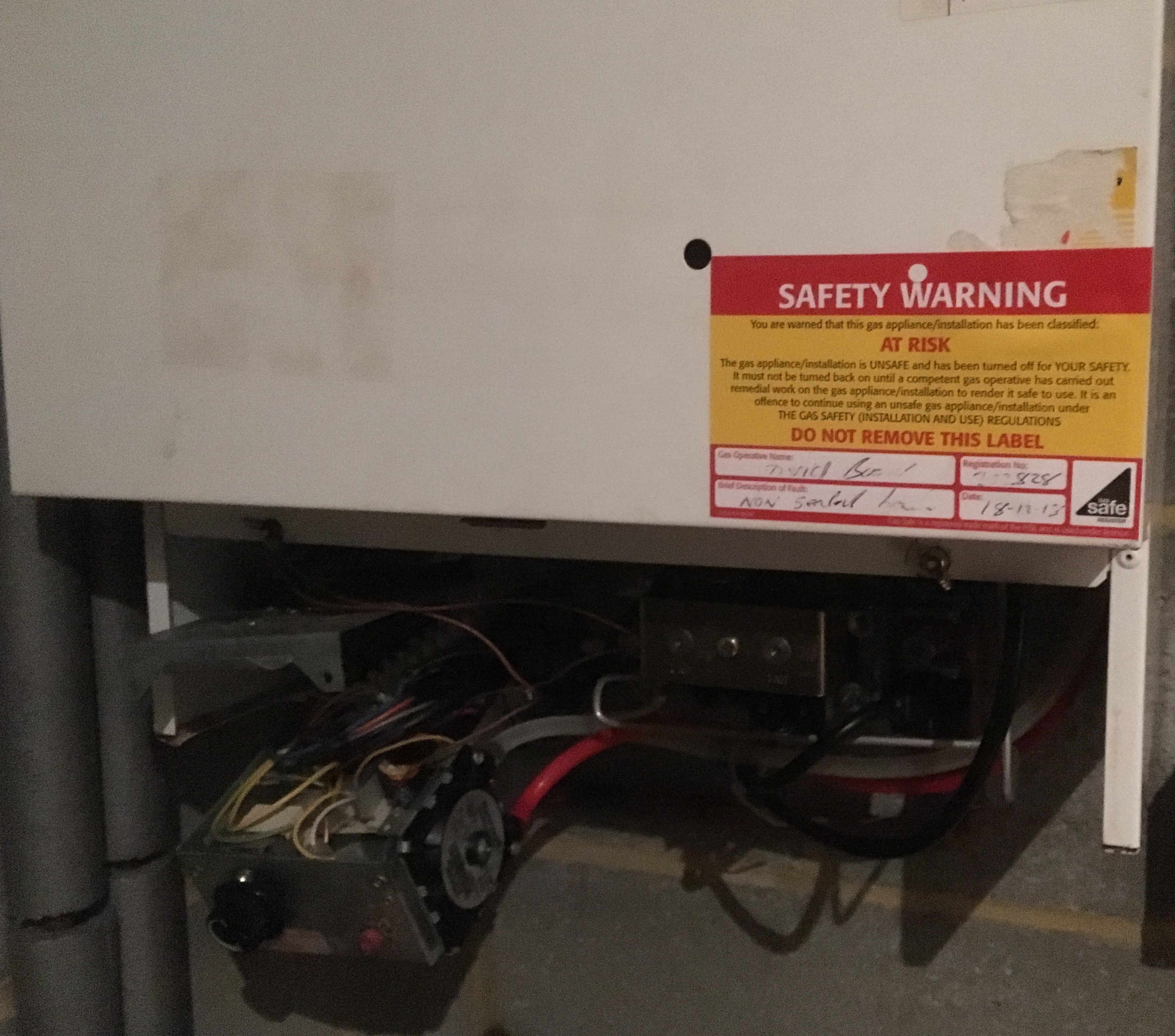
Six days ago, early in the morning, our house was attacked by a phantom intruder with a baseball bat. At least it sounded like that. A furious banging and crashing broke out as I sat innocently downstairs catching up with Trump’s daily shenanigans and the latest in our government’s slow political suicide.
Before I could recover from my surprise and grab the family Uzi (actually, my weapon of last resort is the leg of a long-demolished coffee table), the noise stopped. After checking that there was no intruder and none of my family members had gone berserk, I next considered the possibility that the culprit might be a herd of angry super-squirrels in the attic.
I finally found the answer when I discovered that the central heating pump was dead, and that the boiler had done a Chernobyl. Which was strange, because the damned thing was only serviced two months ago.
Since we have emergency household insurance, my wife called the company, and the first of many plumbers was summoned. Said plumber reported that the guy who did the annual service had not made a key check on the boiler, with the result that the top had blown off. Had the pump not failed and we continued to use the boiler, the entire house would have filled with carbon monoxide in short order. The dog and random domestic insects would have gone first, followed by us.
The next little problem was that the immersion heater that was supposed to warm up the water tank when the boiler died had itself failed, perhaps as a consequence of all the other bits crashing and burning.
So here we were, in the deep midwinter, no heating except for a couple of blowers kept for such emergencies, and no hot water. Six days before Christmas.
As I write this, we still have no heating, but this afternoon a modicum of civilisation was restored when the immersion heater was fixed. A shower at last. Between then and now, my wife has been on the phone to the insurance company and any number of plumbers and electricians for at least six hours a day. Wires to be uncrossed, mix-ups at the insurers’ end to be unmixed, and constant chivying for approvals for this that and the other bit of work.
On Monday, Christmas Eve, we are due to have a new boiler and a new pump installed. Assuming they’ve been sourced by those have undertaken to do so and have been installed in the right order, there’s a chance we might have heating by Christmas Day. If not, six of us, including our eleven-month-old grandson, will be huddling around our fairly ineffective wood fire. Oh, and warmed by the heat of the oven.
Not that I’m complaining. At least we have a home, central heating, hot water and all the other stuff we take for granted, even if some bits aren’t working at the moment. Many people don’t. Perhaps these crises are sent to remind us how lucky we are.
Be that as it may, every difficulty is a learning experience, unless, of course, you happen to be Donald Trump. And I have learned several things over the past few days:
Central heating boilers are malevolent entities. They choose the worst times to break down, such as when you have a baby in the house suffering from gastric flu.
Insurance companies do everything they can to avoid spending money on you. They obfuscate, fail to pass information on to their colleagues and make it obscenely difficult for you to contact them. Hardly news, but good to be reminded every time you’re thinking of taking out another useless policy.
Some plumbers take great delight in blaming other plumbers for the quality of their work. When it comes to fixing stuff, they specialise in the sharp intake of breath, followed by a litany of things they need to do. The heroes are those who call out the bullshit and get the job done with a minimum of fuss.
The “music” the insurance companies play when you’re waiting for them to pick up the phone is designed to drive you insane, or at least to abandon the call. If you’ve sat for an hour at the teacup ride in EuroDisney waiting for your spouse to return with daughter (before there were mobile phones) and listening to It’s a Small, Small World on a perpetual loop you will know what I’m talking about.
Washing with cold water is quite invigorating. Not as exciting as swimming in the Serpentine on Christmas Day, but definitely good for the soul. Which is just as well, considering that not one of the twenty people who came to a party we hosted last week offered us the use of their facilities. Clearly we didn’t appear sufficiently distressed, nor were we obviously malodorous.
You don’t need a shower every day, every second day or even every week – something I’d forgotten since my days as a student living in freezing houses. You just wash in the right places and claim a virtue out of necessity.
Three electrician visits and eight plumbers later, I’m left with the sense that if our little problem was the result of divine intervention, the motive was unlikely to be to punish us for our affluent complacency.
Rather, I suspect that the Supreme Entity Who is Neither Man nor Woman (according to the Archbishop of Canterbury) is preparing us for a no-deal Brexit. For a time in a future when you can’t get a boiler or a pump for love nor money because the supply chain has broken down; even if you could, there will be no Poles or Bulgarians available to deliver it to you. And when you ring the insurance company to complain, you will be grateful that an Indian, Irish or South African voice answers you from far away, because there won’t be enough Brits trained up to staff the UK call centres.
But hey ho, we will have had our taste of the Brexit experience in advance. We’re telling each other that we mustn’t grumble, that we must keep calm and carry on and all that jazz.
Our minor inconveniences serve to remind me that we’re not sleeping on the streets or living under canvas in a Greek refugee camp. Not only that, but for all our problems, present and soon to come, we’re incredibly lucky we are to be living in this country at this time. After all, a hundred years ago Britain was grieving for its war dead and burying flu victims in their thousands.
No, we mustn’t grumble. On that note I wish everyone kind enough to follow this blog, regardless of faith and political belief, a very happy Christmas.
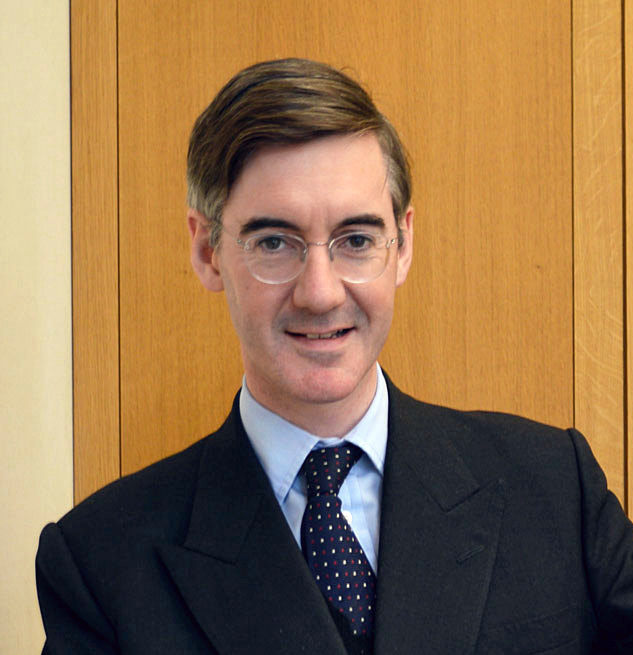
British politics is so chaotic that if professional analysts can’t make sense of what’s going on I’m damned if I can. But I do have a hunch about Jacob Rees-Mogg and his relatively new-found popularity.
Over the past few days I’ve been surprised at the number of people I’ve met who support him because they think he’s a jolly good chap, and they’re very convinced by what he says. Most of those people are over sixty. Could it be that they like him not because of what he says but the way he says it? Quiet, studious, gentlemanly. A throwback to the kind of person who would have been a respected personage in the Middle England of the fifties and sixties. A magistrate, a bank manager or a benign member of the landed gentry who lives in the Big House up the road and invites the villagers every year to Christmas drinks. In politics, his style analogues would have been Harold Macmillan, Sir Alec Douglas-Home and, before his fall, Jeremy Thorpe.
His appearance – the double-breasted suit, the pinstripes and the hairstyle of a Cambridge spy from the thirties – reeks of the kind of authority that was imprinted in the DNA of the middle-class English of a certain age. Not a style that they would adopt themselves, but one to which they would instinctively react with respect. Ronnie Barker looking up to John Cleese in the timeless Frost Report sketch.
He is a man who, even when he spouts poisonous insults – such as describing Mark Carney, the Governor of the Bank of England, as a second-rate Canadian politician – does so with sweet civility. Details he reveals of his private life – his devoted nanny, his six children whose names come straight from the classroom of an English public school, his country pile – project him as the epitome of a bygone gentler, kinder England. Downton Abbey personified.
It would be hard to imagine a public figure more different from Donald Trump. Yet in a sense he is a Trump in toff’s clothing. He appeals to a section of his population that harbours deep resentment – for different reasons perhaps, but resentment nonetheless – against the established political order. Trump’s snake oil is the border wall, repatriating jobs, America First, with the undertone that a threatened majority, America’s whites, will regain their natural primacy in society. Rees-Mogg’s is taking back control, regaining sovereignty, reining in immigration and all the other nostrums of the Brexit faith that seeks to return his country to a proto-imperial nation of free-trading buccaneers.
Whereas Trump’s style is spittle-flecked and neck-bulging, our man’s act is designed to assuage the quiet desperation of the English. Polite, superbly articulated and laced with venom. Education masquerading as wisdom.
The upper classes, I suspect, don’t buy into Rees-Mogg’s young fogey shtick. Where ancestry is concerned, they know a johnny-come-lately when they see one. And besides, most genuine upper-class types are the shambolic heirs to falling-down country estates full of moth-eaten carpets and furniture ridden with woodworm. They survive by opening their houses to the plebs and selling an old master from time to time. Rees-Mogg, the wealthy co-owner of an investment fund, would not allow his castle to fall into such disrepair.
No, his catchment area is the middle classes. Since there is no such thing as a lower class any more (just as Britain’s trains no longer have a third class), his admirers aren’t limited to peppery colonels who run golf clubs. They also include the descendants of Alf Garnett (of Till Death Us Do Part fame) and others who used to be referred to as working-class Tories. Those who have not been tempted to join UKIP or the English Defence League, that is.
Imagine if he became Prime Minister. Unlikely, as his elderly admirers steadily die off, but anything is possible these days. But if it were to happen, it would most likely be after a car-crash Brexit. If we look five years ahead, what sort of Britain would he be presiding over? A nation whose economy has tanked. Perhaps not a nation at all, if Scotland peels off and Northern Ireland in desperation seeks unity with the South in some sort of federation that satisfies all but the most diehard Unionists.
One can hardly imagine a more appropriate Prime Minister of a chocolate box England, devoid of power and purpose, sustained by promises of future prosperity uttered in impeccable Queen’s English, supported by American hedge funds, Russian oligarchs and the Chinese state. A nation of zero-hours contractors, tourist bus drivers and marketers of nostalgia. One gigantic theme park.
It might not be that awful. We would still have our technologists working for Facebook and Google, our neurosurgeons in the employ of American healthcare providers and, if we’re lucky, we might still have a few outstanding universities sustained by a multitude of students from China and the Middle East.
We might also have one or two warships still afloat, and an army capable of quelling an insurrection in the Isle of Man while still having a few soldiers to spare for guard duties at Buckingham Palace.
The good news would be that we wouldn’t need much of an army, because we wouldn’t be able to afford our NATO dues. And besides, we would be immune from invasion because our Chinese, Russian and American owners would be keen to protect their investments against unnecessary conflict.
I jest, of course. Such an outcome would take ten years, not five. All this assumes that our decline is so gradual that we don’t notice it enough to elect a Labour government or, if we do, they are even more incompetent than the current incumbents. In 2028 Rees-Mogg would still be only fifty-nine, but most likely looking even more like a national monument than today.
I bear no ill will towards Jacob Rees Mogg, even though his political views, especially on Brexit, are in my opinion profoundly misguided. In fact I admire him for rising so far, although Eton undoubtedly helped him along the way, as it did clowns like Boris Johnson and David Cameron. The House of Commons is full of grey people whom you wouldn’t notice if you were riding on the tube. He’s definitely not one of them – more like charcoal. He’s a character. His refusal to behave like a 21st Century demagogue screams authenticity, though in politics there’s a thin line between being true to yourself and turning your quirks into a personal brand.
But should he ever become Prime Minister I shall do one of two things. Either I shall move to New Zealand, which really does live in the 19th century, or I shall crowdfund the creation of a theme park called Moggland, the centrepiece of which will be an ancient house with coal fires, chamber pots and unplumbed bathtubs. I shall then await the hordes of Chinese visitors who will be desperate to partake in an authentic English experience. The services of a nanny will be extra.
The Wrinkly Whisperer may yet have his day, but I’m afraid I’m deaf to his murmuring.
In my last post I had a moan about the fact that nobody in my country, the United Kingdom, knows what new arrangements we will have to endure when we travel to European Union countries after Brexit. Perhaps it won’t be that bad, especially if by some miracle we are still be able to go through those sexy e-gates that are being installed in most major airports within the EU.
The trouble with e-gates is that in the UK we’re approaching the point at which we have no option but to use them, which is fine as long as the computers don’t break down. This can cause chaos. When my wife and I arrived at Heathrow the other day the system seemed to be working well. But about 150 people had been kettled into line for the e-gates. There were, however, only ten people waiting at the two desks manned by humans. So we decided to go for them.
When I reached the desk, the officer, who was quite young, asked me if I was travelling alone. I said no, and pointed to my wife at the next booth. For some reason that she didn’t make clear, she ordered my wife to line up beside me. She then ticked us off for bothering her when we could have gone through the e-gates.
Given that if we had gone through the e-gates, we would have done so separately, I have no idea why this official insisted that my wife joined me at the same booth. I can only assume that she was having a bad day, or that donning the uniform of the so-called Border Force turned her from a normal person into a gauleiter every morning. Or perhaps even that she was taking Theresa May’s recent ravings about immigration queue-jumpers a little too literally.
Feeling tired and testy myself, I was tempted to bite back, but being mindful that the “Force” bit might lead to a few hours in a cell somewhere in the bowels of Heathrow, I bit my tongue.
This, I concluded, is what happens when a Service, or in our case an Agency, turns into a Force. A few years ago, the folks that checked our passports wore ordinary clothes. More often or not, they were courteous and friendly. Then they became the Border Force and squeezed themselves, some with difficulty, into snazzy uniforms. My experience of the older officials is that they continued to be courteous and friendly. But the younger ones, like the person we encountered the other day, are sometimes less so.
At around the same time as the Border Force was emerging from its chrysalis, the immigration officials of Saudi Arabia, who from time immemorial were dressed like soldiers and were notorious for their arrogance, were undergoing a happiness transplant. They flung off their uniforms in favour of their traditional white thobes, and started treating those who had arrived in their country to work, do business or carry out the pilgrimage as something close to customers. What’s more, they were seated at desks rather than armour-plated booths. The transformation, about which I wrote at the time, was startling. This was Saudi Arabia, after all – hardly a haven of liberal values, as subsequent events have abundantly proved.
It’s a bit of an irony that while the Saudis were dressing down, our officials were dressing up, and in their shiny new paramilitary uniforms are now staring from their elevated booths at the supplicants below.
Regular readers of this blog would be disappointed if at this point I failed to note a political dimension.
I have no idea whether or not the decision to create a uniformed Force coincided with the policy of the UK Home Office, under the direction of our current Prime Minister, to create a “hostile environment” for immigration. It was certainly a reaction to years of bumbling failure on the part of senior officials who were supposed to be controlling our borders. Uniforms, shaping up, esprit de corps, that sort of stuff.
In fairness, I should point out that those who staff the e-gates look more like airline cabin crew than terminators. But for those arriving at British airports who are not EU citizens, e-gates are not an option. They have to face the robocops.
I’m exaggerating of course. The vast majority of officials are still courteous and professional. But unfortunately the minority defines the majority. And I suspect that the officious person my wife and I encountered is not the only one. In fact, my daughter had a similar experience a couple of years ago when she was accused of not being the same person as the one in her passport photo. Nobody seemed to have pointed out to this official that between the ages of 18 and 26 people often change their appearance quite a lot. It’s called growing up. My daughter was quite intimidated by the questioning.
No doubt there are large numbers of people in the UK who are quite happy to see entrants to the country being given the third degree. I needn’t say how they would have voted in the EU referendum. But even they would surely admit that without the millions of tourists who visit the country every year we would be much the poorer.
So when I see massive lines of people at Gatwick and Heathrow waiting for their grilling, I wonder how many would wish to repeat the experience. We are in danger, in this and many other ways, of becoming facsimiles of the United States, whose Homeland Security officials seem to start their questioning on the basis that you’re a terrorist or mobster at worst, and a liar at least.
Yes, I hear you say, but “the world is a very dangerous place”, as the most dangerous US president for a century is also fond of saying. We have to be on the alert for the bad guys trying to get into our country. True, but let’s not forget that there’s a difference between calm, intelligent questioning and bullying.
I fear that once the old-timers have retired, we’ll be left with a “Force” of officials whose personalities are defined by their uniforms, and whose model of best practice is that of the shaven-headed hominids who think their mission is to keep America safe from child migrants, Muslims and Mexican drug mules.
I know, I’m exaggerating again, but in an era when authoritarian behaviour seem to be the coming fashion, if we don’t want our country going that way, we shouldn’t let examples of such behaviour go unnoticed.
At least the Border Force hasn’t been privatised yet. Those who are caught in their net are, it seems, in for a rougher ride. Staff running an immigration removal centre, who work for the private security giant G4S, have been accused in a newly-released report of being both draconian and laddish towards the inmates. An interesting combination.
Time for a bit of training in both organisations, perhaps. But I doubt if the Home Office budget would stretch to that, especially as we’re battening down the hatches in preparation for Brexit.
Passports are interesting things, especially those belonging to other people. I occasionally snigger at friends’ passport photos (with their permission of course), while conveniently ignoring the fact that mine bears a distinct resemblance to that of a Russian hit man or a recently deceased member of the ‘Ndragheta.
Mark Carney, the Governor of the Bank of England, who recently obtained British citizenship, presumably now has three passports: from Britain, from Ireland, the land of his ancestors, and from Canada, his place of birth. Lucky man.
I have only two, and they’re both British. And in case you think I’m an international man of mystery, they both bear my name. Don’t ask me why I have two. The answer is boring.
My wife, on the other hand, has an Irish passport. Despite being married to me for 35 years and spending most of that time in the UK, she has never expressed any desire to become a Brit. Sensible her.
The other day she and I re-entered the European Union after a trip to Asia. We both went through the EU channel in Copenhagen. It was quick and easy. At that point it dawned on me that before very long she would be able to breeze through every immigration point in the EU, and quite possibly I wouldn’t. I face the prospect of joining the line that says “non-EU citizens”. I would be joining the Chinese, Japanese, Americans, Russians, Afghans and Brazilians. In some countries that would mean that my wait at immigration will be at least twice as long as hers.
If this is how things work out, it will be very annoying for her, but the fringe benefit for me will be that by the time I get through the line, she will have gathered the bags.
What prompts this meditation on passports is that despite having two, I’m running out of clean pages. This is a problem when you visit a country whose immigration officers like to splurge their stamps across a virgin page. I have no idea whether after we leave the EU countries like France, Spain and Italy will want to stick their stamps on our passports, but if so, I shall probably need to get a new one before the existing ones expire.
Being a man, I occasionally amuse myself with lists. So this morning I counted all the visa, entry and exit stamps on my passports. I was quite shocked to discover that over the past seven years I have acquired over 250. In that time I have visited thirteen non-EU countries, some of them many times, hence the multitude of stamps. In addition, I have visited eleven countries within the European Union, again on multiple occasions. Fortunately there is no physical evidence of these visits, otherwise I would have ran out of space ages ago.
This tells me that if each EU country needs to stamp my passport from 2020 onwards, my next one, which will presumably be blue, won’t last long. Unless, of course, I grow so decrepit that I can’t travel any more.
But we don’t know what the new arrangements will be, because the interminable government document on Britain’s future relationship with the EU doesn’t tell us. Just another example, a mere handful of days in advance of the allegedly meaningful vote on the alleged deal, of the bugger’s muddle that is Brexit.
In any event, the imperious preamble in my passport, wherein “Her Britannic Majesty’s Secretary of State requests and requires in the Name of Her Majesty all those whom it may concern to allow the bearer to pass freely without let or hindrance etc” is fast becoming redundant. Since we seem to be running through secretaries of state at the rate of one a day, and since these days Her Majesty isn’t in the position to require anyone to do anything outside our sacred borders, perhaps in our new blue documents the preamble should be replaced with “The Queen says pretty please”. My upper lip is wobbling at the prospect.
I’ve been away from the UK for the last month, travelling in Sri Lanka and Malaysia. I’m ashamed to admit that wherever I am in the world, I can’t shake off the damnable habit of checking the news sites on the internet first thing in the morning.
More than ever, it seems, the dominant stories boil down to a constant SOS signal: Trump-Trump-Trump, May-May-May, Trump-Trump-Trump.
There are many aspects of both sagas – Brexit and the Trump presidency – that I still struggle to understand two years after the events that kicked them off. Long ago I lost count of the analyses I’ve read that have attempted to explain them. Some are convincing. Some are bunkum. Others provide answers that lead me to think that they haven’t entirely hit the nail on the head.
Many of the credible theories seem to be centred not on conspiracies – though there are plenty of those drifting about – but on human nature. How easily emotions can be manipulated. How readily people accept lies, even when they know they’re lies. How acquiescent people are of politicians who break laws, yet outraged when others do so. How fearful people are. How angry. How tribal. How entrenched in their views even when presented with evidence that might lead them to other conclusions. Depressing stuff.
That said, the experience of watching Trump and Brexit unfold has not been entirely negative. I’ve learned plenty on the way. For example, the pervasive and unbalanced influence of the wealthy on the American electoral process; the lengths that politicians on both sides of the Atlantic will go to preserve their careers to the detriment of the national interest; the power of the social media and the ease with which it can be exploited in pursuit of political ends.
There are four key issues that that keep nagging at me.
The position of Britain’s public service broadcaster on Brexit ranks high. There was a time when I would look to the BBC by default for an unbiased view of the political issues of the day. In its international coverage this is still the case. But from the moment that the referendum result became clear, it seems that the Beeb has followed a “line to take” on Brexit. We are leaving, and that’s that. Efforts by large numbers of citizens to advocate a second referendum have been covered grudgingly if at all.
It’s almost as though those that govern the BBC consider any view other than that we’re leaving the EU to be unpatriotic, not to say subversive. They might argue that when World War 2 broke out it would have been inappropriate to present “Herr Hitler’s position” in the interest of balanced coverage of the war. So now that the people have decided, any contrary views on the legality of the process or the possibility of rethinking the decision have, for most of the past couple of years, remained in the background.
Only now, when the awfulness of no-deal and the sub-optimal quality of Theresa May’s deal have become apparent, have the BBC and its flagship programmes started taking seriously the possibility that the situation might be resolved by asking the electorate the in/out question again.
Added to that, the BBC’s willingness, in the interest of “balanced coverage” to invite bigots and cranks, who represent the views of a tiny minority – Tommy Robinson, Gerard Batten and, endlessly, Nigel Farage – to appear as equal debating partners alongside those who speak for major political parties is wrong-headed and misguided. Blowhards like Tim Martin of Wetherspoons might be good value in terms of entertainment, but their participation in shows like Question Time is the reason why I avoid current affairs TV like the plague.
I fear that the BBC has suffered reputational damage since 2016 that will take years to repair.
The next juicy bone of contention is the claim by demagogues that overturning Brexit and the ending Trump presidency would result in civil unrest and violence. You would expect such assertions by the likes of and Farage and his US counterparts. But when the same arguments are made by mainstream politicians and commentators, then we have reason to be concerned.
Not about violence, but about what sort of country we are. Either we are a nation that upholds the rule of law or we are not. You can be sure that if the Leave result in the 2016 referendum had resulted in outbreaks of street violence, it would have been dealt with by the police, just as were other outbreaks of civil unrest over the past thirty years, from poll tax riots to anti-globalisation demonstrations. We should not be intimidated in any shape or form by threats of violence in reaction to referenda, legislation or court judgements.
Protests are fine, violence is not fine. And the same presumably would apply to civil unrest in response to the impeachment and removal of Donald Trump, despite the complication that American citizens tend to be armed to the teeth.
In neither country should the fear of violence ever be a factor in the exercise of democracy and the application of the law.
Then there is the issue of whether or not the 2016 referendum result was obtained by illegal means. Our government seems to have determined that the Brexit rollercoaster should not be halted or called into question because it apparently believes that unanswered questions – about the source of the Leave EU funding, the role of Cambridge Analytica and its foreign owners, the influence of Russia and the failure of Facebook to prevent its user data from being harvested for political purposes – are immaterial, and any wrongdoing is unlikely to have affected the result.
The government, and Theresa May in particular, may be right. The big question, though, is whether its failure expeditiously to pursue lines of inquiry into potential wrongdoing around the biggest political decision for 80 years is a legitimate political tactic undertaken in the national interest, or whether it is effectively a coup d’état.
Carole Cadwalladr, the journalist who has been largely responsible for flagging up the torturous web of influence peddlers and money sources behind the Leave campaign, asks why we do not have our own version of the Mueller Inquiry to examine the matter thoroughly and impartially. If that ever happens, it will most likely present its findings after the fact of Brexit. By that time, we will have left the European Union, and the question of whether a coup d’état took place will be academic, except of course for the perpetrators. It will have been a very British coup.
Last but not least, if a second political earthquake were to occur, and in a new referendum the electorate voted to remain in the European Union, I wonder how much thought we will have given to our future within the Union.
Will a substantial portion of the electorate be embittered by having been deprived of “their Brexit”? What will be the effect of a generation of politicians having to deal with EU institutions despite their opposition to our membership? How will the other 27 members of the EU react having to deal with a government formed by a Conservative party that has firmly branded itself as the “Brexit party”, or by a Labour party that has been at best ambivalent? How easy will it be for us to function effectively within an organisation which suspects us of lacking commitment to its raison d’être? Will we encounter the suspicion of a spouse whose partner has been unfaithful?
None of these concerns should prevent us from continuing our membership of the EU. Nor should they stop us from vigorously pursuing our own agenda on reforming EU institutions if need be. But for that to happen there would need to be a cull of the political leaders who got us into this mess in the first place. Perhaps there would need to be new alignments within the existing political structure. A new centre party? I doubt it. Political organisations need deep roots if they are to thrive, and it takes time for those roots to grow. A coalescing of moderates from both of the main parties around the Liberal Democrats? Maybe, but only if the Lib Dems acquire a compelling agenda and leaders who can capture the imagination of the electorate. They have failed to do that since the 2015 general election.
One thing is clear – to me at least. If we remain in the European Union, we should do so with enthusiasm and commitment. It’s hard to see us doing that with Theresa May, Jeremy Corbyn and their acolytes still at the helm. They should be replaced with leaders capable of adapting to the new reality. As for the Brexit ultras in Parliament, they should either form their own party or go back to running their hedge funds.
In the United States millions of voters have grown tired of Trump’s never-ending reality show. At least they had the chance to register their discontent in the recent mid-term elections. They will have the option to rid themselves of him in less than two year’s time.
Here in the UK I am one of many who are weary of the whole undignified political shambles around Brexit. I’m appalled by the near paralysis of government over the past two years that has diminished our ability to address social, political and economic issues more worthy of our attention. I’m also angry at the distress and anxiety our cackhanded leaders have caused to millions of residents from the rest of the EU who contribute so much to our society and our economic well-being, and to our own citizens who live in other parts of the EU whose lives will be disrupted as the result of our obsession with ending freedom of movement. And I fear for the future of my children and their children, who will have to make a life in an inward-looking country diminished by the mistakes of my generation.
No doubt we will muddle through whatever the outcome from the present mess. But it all seems so bloody unnecessary.
A couple of days ago Donald Trump issued a statement about the murder of Saudi journalist Jamal Khashoggi. It attracted widespread criticism, largely because it seemed to imply that America’s trading relationship with Saudi Arabia was more important than the state-sponsored assassination of a Saudi citizen who happened to be a US resident. Here is a statement that in some parallel universe a president other than Trump might have made. As a a starting point, I have retained his first sentence:
The world is a very dangerous place!
It is not only dangerous to the human beings that inhabit it. Other species, unlike us, are unable to unable to influence their futures. They did not produce the plastics that choke them in the oceans. Nor do they light the wildfires that consume humans and animals alike.
But we humans can influence the future. Through technology, we can improve lives or destroy them. We can use education to help people to think for themselves or to indoctrinate them. We can bring hope, encouragement and confidence through our media, or use it to spread fear, confusion and hatred. We can lift billions out of poverty through international trade, or we can use it to create a small number of winners and large numbers of losers.
We have choices.
Humanity is organised into nation states that act in their own interests. Some make poor choices that ultimately damage those interests. The United States is no exception. But regret over the past does not exonerate nations and governments from mistakes made today and in the future.
The death of Jamal Khashoggi and the nerve agent attack on the United Kingdom are two examples of state actions that no government committed to upholding the rule of law and preserving human rights would take. Those who planned, approved and carried out those actions know who they are, and we know who they are.
The government of Saudi Arabia, as the government of Russia has discovered, needs to understand that state-sponsored torture and assassinations will inevitably affect relations between it and the United States.
For the past 75 years the United States has been a steadfast friend and defender of Saudi Arabia. Our values and cultures might be different, but we have always found common ground and mutual interests that have kept the relationship strong.
The brutal murder of Jamal Khashoggi violates both international law and universal norms of diplomatic protocol. It has horrified Americans – both ordinary citizens and lawmakers – and caused them to reconsider the long-held respect with which Saudi Arabia is viewed in our country.
No relationship between the United States and any other nation is so sacred that it is beyond question and review.
The United States therefore expects Saudi Arabia to take legal action against all who were involved in planning, approving and carrying out Mr Khashoggi’s murder, and take measures to insure that such actions will not occur again.
We will make further representations through diplomatic channels. But in the absence of a satisfactory response, Saudi Arabia needs to understand that it is in danger of sanctions that might include restrictions on trade, investment and military support.
Generations of Americans have contributed to Saudi Arabia’s economic development, safety and security. We want those contributions to continue, whether they be by Americans living and working in the Kingdom, by American companies supplying goods and services or by our military providing assistance in times of need.
That said, we cannot condone state actions that bring our partners, however valued, into disrepute, and by implication – in the event that we were to ignore those actions – the United States.
Of course Donald Trump would never issue such a public rebuke. Would any of his predecessors? I’m not sure. They would probably have been more inclined to communicate such a message through the State Department.
Either way, the whole episode is overwhelmingly sad. It’s not for me to tell the United States how to conduct its diplomacy. But we in Britain, having some time ago lost a credible voice in the Middle East, have to rely on the United States to lead the way in trying to curb the worst excesses of authoritarian rulers in the region, something that it is clearly failing to do.
From a personal perspective, the Saudi Arabia that has emerged over the past two years is no longer the country I know, even though I continue to have great affection for its people. Under previous rulers who held power during my time living and working in the Kingdom – Khaled, Fahd and Abdullah, governance might have been at times capricious, inconsistent and indecisive, but only on rare occasions was it shamelessly cruel.
I wish the country well, but I fear for its future.
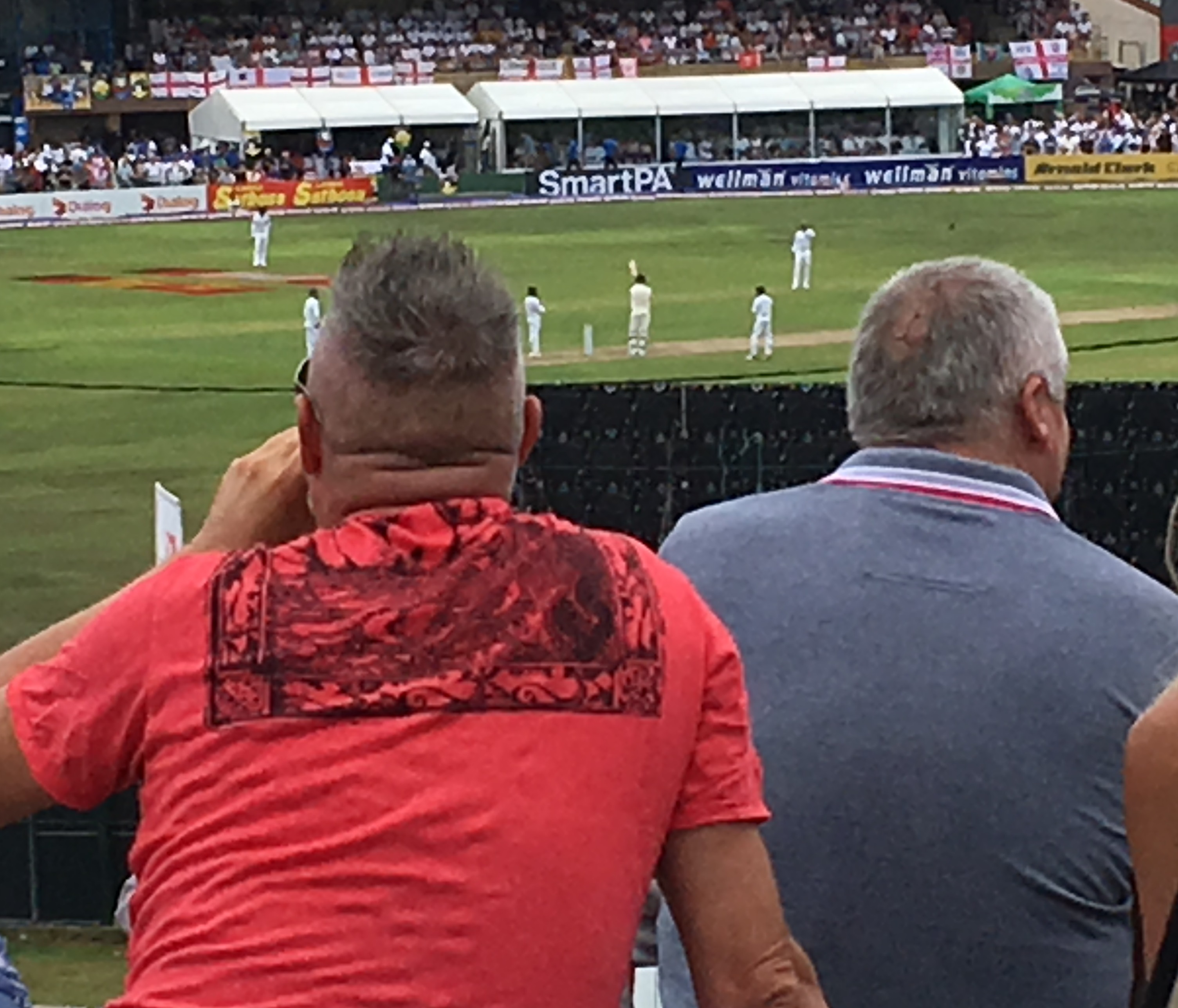
Which is more likely to become extinct first? Test match cricket or the Church of England?
For those of you who are unfamiliar with cricket, a test match is an international contest that lasts for up to five days, unless one side or the other wins the match earlier.
The Church of England, on the other hand, is a religious organisation that is embedded into our unwritten constitution. What the two have in common is that they are endangered species. Test matches because of lack of interest among some of the most influential cricketing nations; the C of E because of declining attendance at church services. A further similarity is that for many, test matches seem endless. So, despite the valiant efforts of priests to make their Sunday sermons short, sharp and relevant, do Anglican rituals, especially if you’re dragged along to partake in them against your will or through a sense of obligation.
I am a fan both of test cricket and the Church of England. I’m not particularly religious, but if the Anglican church shrivelled to nothing it would leave a big hole in our society. So would test cricket.
More often than not I watch my cricket on TV. But when my wife and I were planning a trip to Asia in November, I mentioned that it would be fun, for me at least, to be in Sri Lanka at the same time as the England team. Although she’s not a fan of the game, she nobly agreed.
Which is how I spent several days in Galle and Kandy watching our boys doing battle with Sri Lanka’s finest. I was not alone. In fact there were five thousand other Brits soaking up the sun, the cricket and the Lion beer. The core of the English support was a bunch of folk who follow the team throughout the world. They’re known as the Barmy Army.
The vocal elements of the Barmy Army tend to gather on grassy promontories. They huddle together in groups about the size of the British garrison at Rourke’s Drift. But whereas in the movie Zulu it’s the massed ranks of African warriors chanting and responding, here it’s the Barmy Army. The intensity is midway on a scale between the prayers at an Anglican Sunday morning service and the Zulus at full throttle. Very original they are too. “We are the Army…” chants a single caller. “The Barmy Army…” replies the congregation. Not exactly the wit of Liverpool’s Kopites, but hey, heat and beer do addle the brain somewhat.
The Army tends to find its voice during the afternoon, as pyramids of beer cans pile up beside them like spent cartridges. By the last session the voices are louder, sometimes joyful, at other times mournful, depending on the progress of the England team. By close of play, those still standing are surrounded by the inert bodies of those who have succumbed to the beer, the heat or both, as this clip suggests:
Incidentally, the suspicious-looking policeman at the end of the clip is there because the day before, an Aussie fan out-barmied the Barmies by doing a streak, with nobody to stop him.
In Sri Lanka the English multitudes unfurl banners on fences around the ground. Crosses of St George bearing allegiance to a town, a cricket club or a football club. The Army, when they’re not wearing their customised Barmy Army teeshirts, bear the insignia of their county clubs. Many are wearing football kit. In this respect the analogy of Michael Caine and Stanley Baker at Rorke’s Drift breaks down. They’re more like the English at Agincourt, each with their own coat of arms, ready to repel the French.
The Barmy Army, or at least many of them, don’t believe in sun cream. By Day 3 at Galle, there are plenty of lobsters, heads glistening in the sun.
Not all England supporters identify as Barmy. Every so often, you see old gentlemen immaculately dressed in flannels, shirts and jackets. Their ties and hats bear the distinctive colours of the Marylebone Cricket Club, the owners of Lord’s Cricket Ground and until a few decades ago the ruling body of English cricket. Unlike the Anglican church, its religious counterpart, the MCC has since been disestablished, but such is the prestige of membership that the English elite put their infant sons on the waiting list for membership, as they would for a place at Eton. The usual wait for election is about thirty years. I say sons for a reason. It’s only been recently that women have become eligible for membership.
Whether or not you choose to join the diehards on the hill, when you watch England abroad you make friends easily. The camaraderie is lovely, and very English. Everybody has an opinion on the day’s play and is willing to share it. Conversations are picked up by those in neighbouring seats, and discussions go back and forth for hours about the quality of their hotels, the food and the journey to the ground. Everything, it seems, is evidence of the superiority of our beloved England, apart from the cricket – no England fan will ever take their team’s excellence for granted. The play has been superb though, and very different from the fare you’d expect at home.
At the risk of getting too technical, cricket in England, Australia and the Caribbean tends to start with a bombardment by large, intimidating bowlers hurling down bullets at between 80 and 90 mph. It’s a bit of a blood sport, in other words. Here in Sri Lanka, and other parts of the subcontinent, the pitches are designed to help the ball to spin. The bowlers are slower. The role of opening batsmen – the guys who go in to bat first – is therefore different. They’re not required to risk having their heads knocked off. But they are required to deal with deliveries that bounce in one direction and change course alarmingly.
Spectators who enjoy the sight of blood and guts may be deprived of the sight of a batsman keeling over after being hit with a ball that endangers his fertility, but they do get to see more balls bowled in a day, largely because spin bowlers don’t take a run-up that starts at the boundary ropes.
What of the home supporters? Well sadly, there weren’t many. Ticket prices for seating at the test matches are beyond the pocket of the average Sri Lanka fan. Even the ground admission, to the grassy slopes around the stadia, which costs just over £1, didn’t attract too many local takers.
So you had the unusual spectacle of a cricket match attended by thousands of supporters of the visiting team, and a few hundred on the home side. I asked a tuk-tuk driver why this should be. He said that Sri Lankan fans were not really interested in five-day matches. They prefer to save their money for the one-day games and the even shorter 20/20 matches. These are wham-bam-thank-you-mam affairs, full of thrills and spills and, compared with the five-day format, about as subtle as a flying mallet.
The same is true of cricket in India, where the Indian Premier League, the world’s most popular short-form competition, is massively lucrative. Each match is attended by crowds that would make Manchester United envious. The multi-day game, the original form of international cricket, is played in front of relatively sparse crowds. Even the presence of the Barmy Army, on occasions when England are the visiting team, doesn’t fill the gap.
Why so? The easy explanation is that we live in an age of short attention spans. There are two ways of looking at long-form cricket. Admirers, such as me, love its subtlety, the individual battles and the way that the course of a match can be determined in a few hours, yet changed in a few minutes of collective and individual inspiration. Test cricket is a game of strategy as well as tactics, more like a short war than a swift battle.
Detractors might argue that many test matches are the equivalent of endless bouts of sexual foreplay with no guarantee of an earth-moving conclusion. This chimes with American incredulity that our national sport involves two teams playing for five days, with the distinct possibility that there will be no winner at the end of the game.
Perhaps the American attitude to sport, or rather that of the TV companies, has been instrumental in skewing the game towards short formats. Six hours of cricket a day over an extended period is not what broadcasters consider optimal entertainment, especially as there are often periods of play when, superficially at least, there’s very little happening.
But the Sri Lankan cricketing authorities have done themselves no favours by scheduling matches to start on Tuesdays or Wednesdays. This has meant that on weekends, when you would expect to see more local supporters, the match has finished or is moving into the closing stages. In England most matches start on Thursdays, which means those who buy tickets for Saturday or Sunday have a good chance of catching some of the best action.
So, in the absence of home fans, the Barmy Army holds the high ground. To look at them, with their England banners, beer bellies and bull necks, you would think that they’re football ultras taking a winter break from their usual haunts at Chelsea, Millwall or Blackburn. But they’re not rabble-rousing thugs, even when they visit countries like Australia, where the home fans would give them a run for their money if they turned uppity. As their name suggests, they’re full of good humour and bonhomie. But I do get the feeling that there’s a strong Little England attitude among many of them. If you polled every “Englerland” follower in Sri Lanka on Brexit, I suspect that the vast majority would be Leavers.
The English presence in Sri Lanka is obviously welcome because of the money they bring into the country, though there also seems to be a dark side. A South African journalist whom I met in Kandy, and who was clearly more observant then me, remembers seeing one or two England fans during the last tour of South Africa sitting in the stands with young local girls half their age. This time, he said, he heard men boasting openly of their visits to massage parlours that resulted in “happy endings”. That’s not to say that the majority are in the country for sex tourism, but if he’s right, clearly it’s one of the attractions for some. Though why you would boast about an activity that shows you up as a sad old lecher is beyond me.
Much to the delight of the Barmies, England came out on top in both matches. The venues were spectacular, especially the stadium at Galle, which is overlooked by the Fort, where, if you couldn’t get a ticket, you could gather on the ramparts and watch the game for free. I spent one day there, bitten to death by ants and uncomfortable as hell. But it was still a fun occasion, enhanced as always by a detachment from the Barmy Army, whose unprotected faces progressed to a deep crimson as the day went on. I could never be one of them, but I’d defend to the death (well, almost) their right to be Barmy.
Wherever you go in Galle, it’s hard not to be reminded of the 2004 tsunami. The stadium itself was wrecked by the deluge. Thousands of people in the Galle area died. In a little seafood restaurant on the coast, we noticed a picture on the wall of an oldish man. He was the father of the current owner. He was swept away as he slept. Up in Kandy we spoke to one of the waitresses in our hotel, who told us that she lost her husband and father. After the disaster she built a new life for herself and her daughter up in the hills above the city, far from the potential reach of some new tsunami.
Hearing these stories was a reminder that some things are more important than cricket. Sri Lanka, recovering from decades of civil war in the north of the country, is going through a political crisis. One prime minister has been dismissed, and is refusing to stand down despite the appointment of a rival. Which left me reflecting that I’d travelled from a country that has no prime minister worthy of the title into another that has two.
Will test cricket die out? Probably not any time soon, because of support for the format among the elderly, whose reserves of patience and available time exceeds those of the young. But when they die off, who knows? Sell your shares in breweries would be my advice.
As for the Church of England, I suppose its future is in the hands of God, whom the current Archbishop of Canterbury has just determined to be neither male or female, and who henceforth I shall refer to as The Entity. I hope that said Entity sends the breath of inspiration our way, and ensures that our cathedrals don’t turn into museums, and our congregations don’t dwindle to nothing.
We shall certainly need a little inspiration in the coming months and years. We’ll also need test cricket to remind us that there’s no such thing as a lost cause.
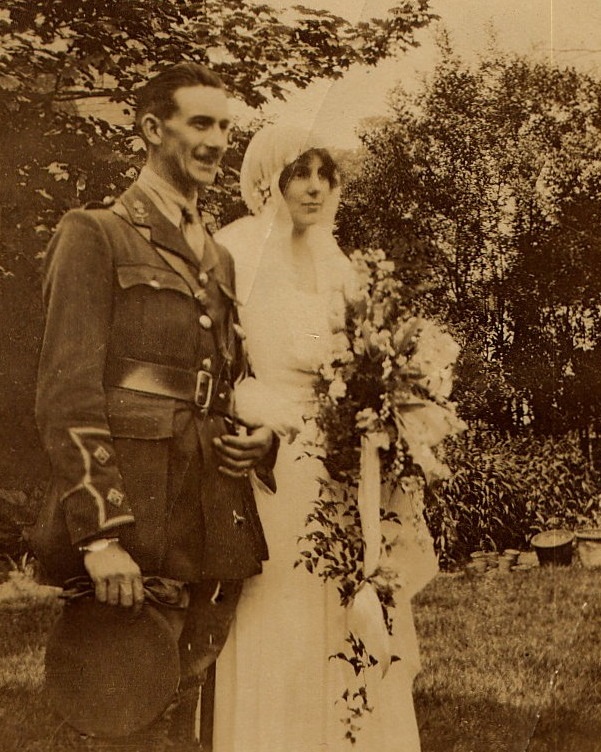
Harry Hickson and Dorothea Newton Hudson, June 12 1917
Over the past four years, I’ve been publishing extracts from my grandfather’s diary in which he described his experiences as an artillery officer on the Western Front. He served at the battles of Passchendaele and Amiens, and had numerous escapes from death by shelling, gassing and aerial bombing along the way.
His life as a battery commander entailed frequent moving of guns from one position to another, periods of inactivity and moments of terror. Gun batteries were prized targets, so he witnessed regular shelling and saw many comrades killed. Some nights he spent in extreme discomfort, often in little more than holes in the ground. Luxuries like a decent bath and a meal in a local town were rare enough to be worthy of mention.
When he wasn’t recalibrating his guns and taking part in frequent barrages, he was charged with keeping his men’s morale high by organising frequent concert parties and football matches. For much of his time at the front he served as the regimental gas officer, which meant that he had to educate the troops on procedures for surviving gas attacks.
The previous episode ends with Harry celebrating the Armistice on the night of November 11th with the only means available: rum, which had fortified hundreds of thousands of soldiers as they went over the top to attack the enemy throughout the war, often to immediate death.
What then? After the shooting ceased, it must have been difficult to maintain discipline among thousands of soldiers waiting to be demobilised. For a while it seemed that Harry’s time on the continent was to be extended. He heard rumours that his regiment was to go into Germany, presumably as part of the occupation force in the Rhineland.
Whether or not the regiment went, Harry didn’t. He’d suffered from frequent bouts of illness during the last year of the war, and things seemed to come to a head in December, when he was hospitalised with a life-threatening fever. After a partial recovery he was shipped back to England and continued his recovery in Birmingham.
The diary makes no mention of the flu epidemic that ravaged the troops on both sides of the conflict. Was the illness he suffered after the armistice, which left him delirious and with a temperature of 106F, the flu? We’ll never know, but it’s surprising that he didn’t once mention the epidemic.
As he describes in the diary, he eventually recovered, to enjoy the happiest year of his life on the south coast, still in the army and hoping for a regular commission.
Though these extracts are relatively anticlimactic compared with the dramas of conflict, they complete the story of Harry’s war. For him at least, it had a happy ending.
November 12th A lovely sunny day. Curtis, Jones, Mears and Webster together with 5 N.C.O’s, left with me in a lorry at 9 AM to go to Amiens. We had a good run down for such a long distance and arrived at 2 pm. A band was playing in the streets and the whole town was in fete. Got a room at the Hotel de Commerce and had a topping dinner and lovely bed, we spent a really jolly evening. Jones and Mears caused great fun, but that must not enter into this diary!
November 13th Another lovely day. We left Amiens with a full party at 11 AM, but it was a very cold ride back, and we arrived at Wassigny about 6.30 pm. We had trouble with the springs, and had to travel slowly. We hear we are to go on up into Germany, very good news!
November 14th Another lovely frosty sunny day. This morning we had a thanksgiving service in a large barn. General Mackenzie and my old Colonel – Colonel Dowell – were there. I quite enjoyed it. The batteries present were 50, 135, 145, 174 and 185. We have now been transferred to 71st Brigade. I wonder whether that means that we shall still go on to Germany. I do hope so.
Sunday November 17th A fine frosty morning. I borrowed a side car from 185 battery and went down to Boheim to see the Canteens officer about Xmas fare. It was a very cold ride. I called at Busiguy on the return journey and got some kit from the Officers Clothing Dept. The Signallers played the Left Section and it was a drawn game 2-2. Noakes returned from Flenicourt. The Major went forward to see 284 Battery.
November 19th This thaw has made things rather uncomfortable, the road are very muddy. The Dr gave me another very bad time this morning. He also said I badly needed a change, and gave me a note to that effect to send on to the Brigade. The Major and I started off for Amiens in the car at 11 AM to buy some pigs for Xmas!! We had tea at the Hotel de la Pain and a topping dinner at the Cafe Cathedral. We stayed the night at the Hotel de Commerce and had a very nice sleep.
November 20th A dull foggy morning. We met Du Berne after Breakfast and he came with us to buy the pigs. We went to Laleuse and made arrangements with a farmer there. We went back to the Hotel Paris for lunch and started our return journey at 2.45pm. We made good time as far as Brie, but it came on very foggy later and we did not arrive back till 7pm. I sang at a concert later, but it was not very successful as the piano was too low a pitch.
November 21st A fine frosty morning again. We had a busy morning getting lorries to go to Le Cateau for a footie match. The Major drove 4 of us in the car!!! We had a very exciting journey as he is not by my any means an experienced driver! We played 17 Siege and they beat us 2-0, but it was a very unsatisfactory game.
November 22nd A fine sunny morning again. Nothing exciting happened today, we were to have played 185 Siege (my old battery) officers at footie, but the game was scratched. I had a topping bath this afternoon.
November 23rd Another lovely day. We are getting a reading and recreation room for the men and I hope it will be a success. A slack day. We played 83 Labour Coy this afternoon, but the game had to be abandoned when we were leading 2-0 as the ball burst! Bad luck.
December 4th I was up at 8AM this morning, but the car didn’t turn up as arranged. However, I found one of our old lorries and made the journey to Boheim on that, on the way up I called at the Cemetery at Corbie to look for Clinton Laslett’s grave as I had promised his father I would. After a long search I could not find it and was very disappointed. It was a long tiring journey up, and I felt very fed up. A Boheim I had dinner with Howell, Beavan and Mason, and they arranged transport for me to Wassigny, which I eventually reached about 10 pm.
December 5th
I got up at 8 AM, and found a very dull day. Curtis, Gill and I walked out to an old Bosche dump to see whether we could collect some souvenirs! Spent a slack afternoon, and after tea attended a committee meeting of the men.
Later Here ended my personal diary of the Great War as recorded day by day in France and Belgium, and I must chronicle from memory what happened afterwards:-
The next day December 6th 1918 I was in command of the battery as the Major was still away, and I took a parade at 9 AM. I didn’t feel very fit, but at 10 o’clock I took another parade. I then felt desperately cold and went along to our Officers Mess and set before the fire, still in my British Warm. I must have dozed off, but at 12.30 pm I was in a raging delirium with a temperature of 106!!! A doctor was hurriedly called, and he sent for an ambulance, I was taken off to the nearest Casualty Clearing Station, which I remember was a large tent.
When I came to my senses I was very much ragged by the Sister as to whether I had forgiven the “Black Lady”, as I kept shouting that it was her fault I was there!!! We had been playing “Slippery Ann at cards (the Queen of Spades) the previous night, hence my reference to the black lady!
When my temperature had been reduced, in a few days I was moved by train to Rouen. I remember all my face and neck broke out into herpes and I looked a sorry spectacle I’m afraid. After a few days in Rouen I was shipped over to Southampton. I landed there without a penny piece and couldn’t even send a telegram to D informing her of my arrival. However, a kind Australian whom I met on the ship insisted on giving me £1, which I accepted on condition that he gave me his name and address to return it. This he reluctantly did and I returned it later with many expressions of thanks. I was then able to telegraph D.
The nearest available hospital to Liverpool was Birmingham University and I was sent there. Afterwards I was transferred to Highbury and had a much better time there. D got rooms in the vicinity, I spent Xmas there we had quite a happy time. I left hospital about the middle of January and we went down to Ventnor for me to recuperate. After about a month there I reported fit to the War Office and was posted to Golden Hill, Freshwater, Isle of Wight.
Then ensued one of the happiest times of my life. Colonel Norman Bellairs was O.C., and he sent me as 2nd in command to Major Woods at Cliff End Battery and Hurst Castle on the mainland. D followed me in a few days and we got rooms with Mrs Hill at a very nice cottage on the cliffs not far from the battery. We met all the military officers and local people socially and had a very enjoyable time. Major Woods retired and I was in command of the two batteries for some months until relieved by a regular officer – Major Hattersby Smith R.A.
Through the good offices of General Massie R.A, the C.R.A. at Portsmouth, I applied for a regular commission, (I had served under General Massie the latter part of the war in France and knew him well). My papers had all gone through with little trouble and I had been to the War Office for an interview, in fact everything pointed to the Commission going through, when the Geddes Economy Act came in and stopped it. In the meantime I was the only non-regular officer who had not been demobilised, and I was Acting Adjutant to Colonel Bellairs for some time at headquarters. We had a wonderfully happy summer, but eventually I was demobilised on November 11th 1919 and returned to the White Star Line in the New Year.
Harry Hickson was only to live another fourteen years. He died in 1933 of stomach cancer. Family tradition had it that his final illness was the result of years as an engineer officer in the White Star Line (of Titanic fame), during which he would have spent much time in the noxious environment of the engine room.
I think it’s also quite possible that the rigours of combat, and especially his exposure to gas, might have been to blame. Again, we’ll never know. My mother, who was thirteen when he died, remembered him vividly as a kind father, even though she saw him infrequently because he was often at sea. That kindness also shines through the diary. which brings him to life for his living descendants, none of whom had the chance to meet him.
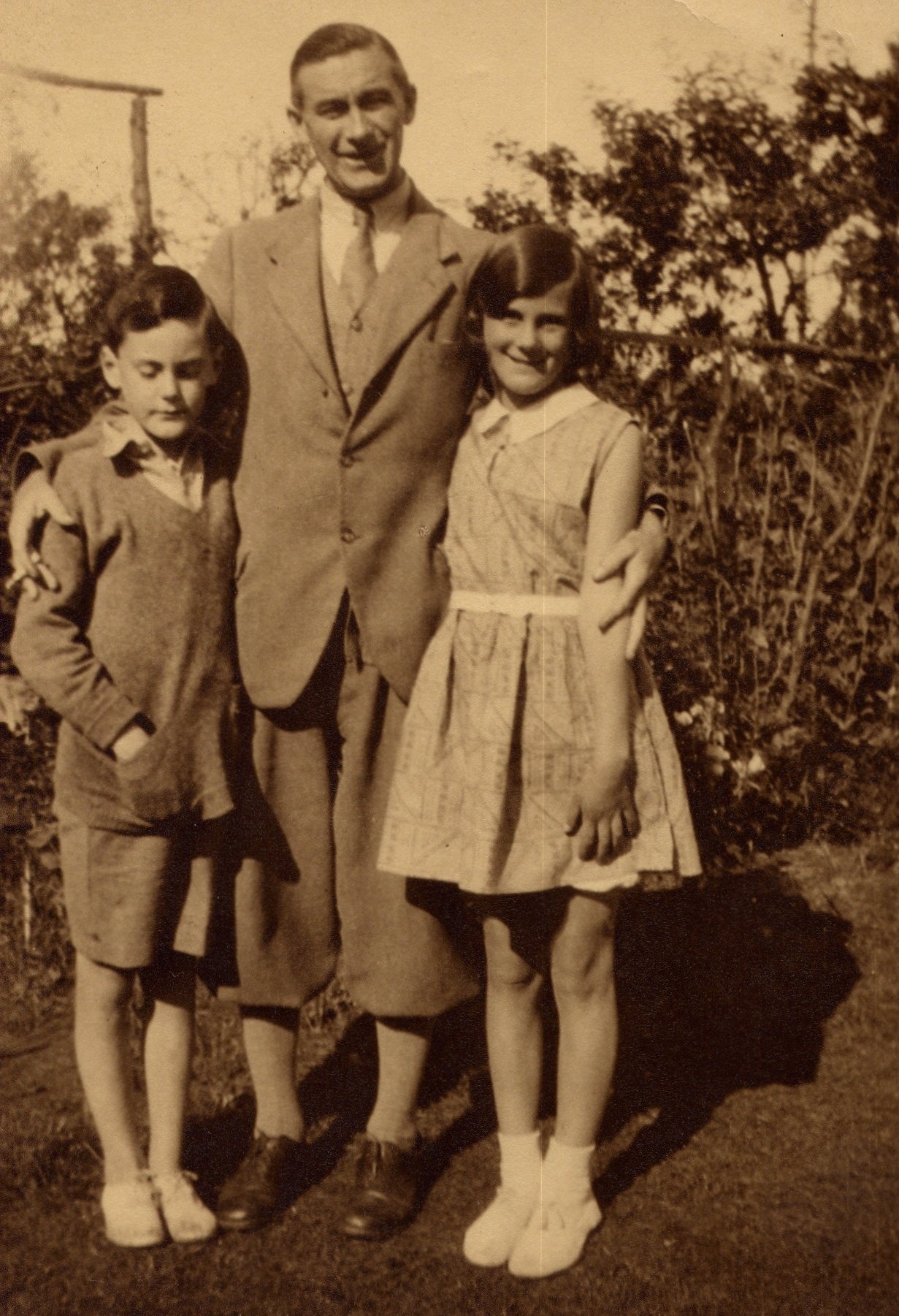
Harry with children Dorothea and John
In the age of the social media, will photos, tweets and Facebook posts one day be judged to have illuminated the past more effectively than the humble diary? I doubt it.
To access more extracts from Harry Hickson’s diary, enter on his name in the search field on the right hand side of this post.
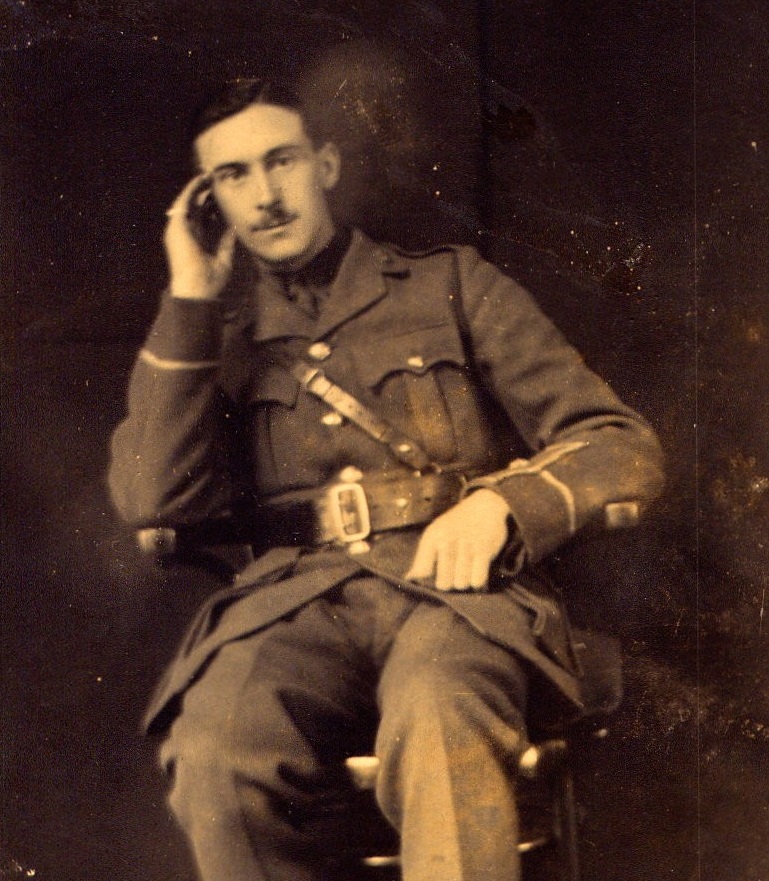
On this hundredth anniversary of the armistice that ended the First World War, I’m sharing extracts from my grandfather’s war diary covering his experiences as an artillery officer on the Western Front in the run-up to the final day. This is the penultimate of several extracts of his diary that I’ve posted at key anniversaries over the past four years. In the previous post, Harry Hickson took part in the Battle of Amiens, an offensive that turned out to be the decisive action of the war.
Before the armistice finally arrived, there was much fighting and dying to come. Harry himself came within a hair’s breadth of death. It’s strange to think that the lives of his children, grandchildren and great-grandchildren depended on the depth of the German-dug hole in which he had taken cover when a bomb came his way.
The war by this time was increasingly fought in the air. Those on the ground had reason to fear bombs as well as the usual explosive and gas shells. In these entries Harry,among other things, bears witness to the aerial war, which provided an additional dimension of terror both to the airmen and those below.
As the weeks progress, he notes events beyond his immediate world as they slowly lead up to the armistice. I make no apology for the length of this post. The original diary is twice as long. If I’d concentrated on the dramatic at the expense of the mundane, I would have given a skewed impression of Harry’s life at the front. Fortunately for him, fighting only took up part of his time.
August 20th: A dull morning with a fine rain. I was up at 5.30am and went down to our near position in a side car. A lorry from No 5 Squadron R.A.F was to take Lunt and I with a party of our men to Abbeville, but it did not turn up. We returned on the ration lorry feeling very disgusted. It turned out a lovely day too of course!!! A very sad incident occurred after tea today. One of our R.E.8 Observation Planes was hit by a shell from the 6″ howitzer battery it was observing for. The observer was blown to pieces and the pilot was also killed, a horrible affair, which luckily very seldom happens.
August 22nd: Another lovely hot day. The Bosche shelled us directly after breakfast and wounded Gunner English badly and wounded Gunner Button slightly. Last evening I registered No 1 gun from the Tower O.P, had an excellent view being very high. Nothing else very exciting today, a slack day. I managed to get a very good Bosche ‘Luger’ revolver.
August 24th: A rather dull day but fine. We played cards till midnight last night, there was no bombing near us. Major Boulton, Cornelius and Taylor came to lunch. No excitement today, but lots of bombing during the night, which gave us a bad shaking. I hear the Bosche hit No 12 Canadian Battery Officers Mess with a bomb and wiped out all the officers. What bad luck, it might easily have been us. They also caused 100 French casualties in Vrély.
August 25th (Sunday): A very nice day. Not too hot. I saw an exciting air scrap this morning, the Bosche was brought down in a spinning nose dive. We had a very nice service under the trees this morning our piano was a great improvement. The Major left us to go on leave, sails on the 27th and I am in command of the battery. Saw another great air scrap, in which a Frenchman was nearly brought down by Fokkers.
September 2nd: Up at 8am and went to Warvilliers, then Mawby and I went on to Flenicourt to get food and cigarettes but had no luck. We had lunch at Flenicourt and then went on to Abbeville where I got some grub, but very few cigs. Returned to the battery for dinner to hear the good news that I was posted Captain of 135 Siege Battery on 8″ battery. Hurrah! The Bosche put two 4.2″ shells very close to me during the night and certainly put the wind up me!! I won’t go to the new battery if they are any closer than that!
September 4th: Last night I had one of my worst experiences of the war, a perfectly rotten time. The Bosche were bombing all round us and then some French guns quite near us opened fire when the Bosche was quite close, we could tell his engine. The Bosche must have been very low, because I distinctly heard him release a bomb, right over where I was lying in a hole cut into an old Bosche trench. I screamed with fright and the bomb landed exactly where I thought it would, on the ground right above me. The earth came down on top of me and I thought I was going to be buried, but luckily not enough fell to be dangerous and I scrambled out. Meanwhile the next bomb fell above Gay and Dew and they had an experience similar to mine. It was horrible and an awful shock to me. When it was daylight I saw where the bomb had landed, there was a fairly large circle of blackened grass round the point of impact.
A lovely day and very hot. We hear the Bosche are retreating from here and I have orders not to fire west of Matiguy after 9pm. Later on I pulled out No’s 1 and 2 guns ready for the road.
September 7th : I was up at 7.30, a lovely morning and afterwards a very hot day. We packed everything up for a move on to Amiens. We left Le Quesnel at 2pm and I came by lorry with the men. Our billets here in Amiens are in a school in the Rue De Faubourg de Hem, and they are quite comfortable. We went to the Hotel de la Raise for dinner, which was quite good. It seemed so strange to be amongst civilians again, for there are still quite a lot in Amiens. We played bridge on our return and the guns arrived about 11pm.
Memo: The Bosche are still in retreat and the news continues awfully good all along the line. Cambrai will probably soon fall to us again, then Douai I hope.
September 10th : What a great day!! The Major gave me my leave warrant at breakfast time. I was so excited I could hardly contain myself! Cheers!!! I was motored as far as Abbeville and I caught the 12 o’clock train from there and arrived Boulogne at 4 pm. I met Justice (Adjutant) there and we had dinner together at the Metropole, very nice it was too. I saw Alexander of the Lancs. & Cheshire there. Slept that night in an attic at the Hotel de Louvre, all I could get, but I was feeling so happy I didn’t mind where I slept!
For the next two weeks Harry rejoined his wife in Liverpool and took a short holiday on the Isle of Man, where his brother-in-law was a parish priest.
September 24th : My last day of leave, how rotten it is, but has to be faced. Went to town after lunch and did some shopping, then we met Major Cattley for tea at the Adelphi and returned home about 6 pm. Said goodbye about 11 pm, it was awful, wondering whether I would ever come back. There was a crowded train to town, and I slept a little en route.
September 29th : Zero hour for the show was at 5.30 this morning, it was very misty and damp. I went over to the left section. Things went well on our front and we captured part of the Hindenburg line by 8.15 AM (the Billenglise part by the canal). It rained after lunch. I had a busy morning and evening as I took over the B.C. Post and we did a lot of counter battery work (answering aeroplane H.F. calls). We fired nearly 1100 rounds today, a record!! When one considers that each round is 200 lbs. weight, what a lot of metal we sent over to the poor old Bosche!!
October 3rd: I left with the guns at 11 pm last night, and we had a long trek up to Magay Le Fosse, where the new position is. The Bosche were bombing badly near us when we left, and we were lucky to get away without casualties. We had a taste of gas on the way up to and had to wear masks, but we arrived there without incident at 4 AM this morning. We carried on getting the guns in position, and they were in action at 8.15 AM. We were very tired and it was a cold night. Soon after daylight a Bosche aeroplane came over, and the pilot had the cheek to fire at us with his machine gun, but did not damage!! The Major went off to the O.P. after lunch to register the guns.
Memo: The French walked into St Quentin on Weds, after we had nearly surrounded it. Our Corps are now only 4 miles from Lille. Things seem to be moving now. Bulgaria made an unconditional surrender on Monday, and the Turks threw up the sponge on Friday, but this is not confirmed yet.
October 17th: Zero hour was 5.20 this morning and things appear to have gone well, as lots of prisoners came back. We ceased firing at 11.20am. I saw President Poincaré come through the main street this afternoon, the inhabitants of Bohain were very excited and gave him a great reception. We have gone in reserve again with the 12th Brigade now.
October 18th: At 5.30 this morning the Bosche shelled Bohain with a long range 9.45″ gun, it made an awful noise and mess. One shell hit the Town Hall. One of our men – Gunner Wade – was killed, and also two women. Curtis and I started out to get stuff for the mess, but the old Ford would not go and we returned for lunch. We attacked again at 11.30 this morning and appear to have done well. I hear we have retaken Ostend and Bruges, also Douai has fallen to us.
October 19th: The Bosche shelled the place with their big gun again this morning, and woke me up feeling none too safe! Gregson, of 69 Siege Battery and I went down the line in their car to Peronne, and then to La Flague for a hauser and mess gear. It was a very cold ride. The Bosche put over three big shells this evening, and then stopped.
Memo: We hear the naval crowd took Ostend yesterday, also Bruges, very good news indeed. Zebrugge too has fallen, and we are on the coast of Holland.
October 21st: Another wet miserable day, not fighting weather at all, the P.B I must be having a rotten time. Had a busy day getting ready Cinema Hall for the concert and a rehearsal this afternoon. The concert was from 6 to 8.30pm and was a great success. The hall was packed with infantry as well as gunners. Nothing else happened, we had a parade this afternoon in full marching order, hadn’t had one for moons.
October 25th: The old Bosche wakened me up at 2.30 this morning, again shelling the place, they must have a special hate against it! A fine morning but dull. I was busy with drill this morning and the concert after lunch. The concert was a difficultly as the H.L.I wanted one at the same time and place, but we had ours before theirs and it was another success. I had a rotten headache, I am not feeling at all well.
Sunday 27th October: A lovely fine morning. I still have a wretched headache and feel off colour. Took the battery for a route march this morning to keep them fit. This afternoon we played ‘soccer’ against the officers of 68 S.B and drew 1-1. I had a topping bath afterwards and took two aspirin and felt better. Early to bed.
October 28th: I felt awful again this morning, I do hope I am not going to be really ill. I was on parade all the morning, but after lunch I had to give in and go to bed. I am ill and feel rotten. Slept most of the time. It was a lovely day too.
October 29th: A lovely day again. I got up at 9.30 and felt a little better, but my head still feels very heavy. Went to Brigade Headquarters to sit as member of a Field General Courts Martial on Gunner Paterson of the 1/1 Highland Heavy Battery. It was a very serious one. “Cowardice in the face of the enemy”, and really involved the death penalty, the only Courts Martial of that nature it has been my misfortune to sit on. He was only a lad who had lost his head and run away during heavy shelling. I felt intensely sorry for him. The Resident – Major Moss, a merciful man – with our consent altered the charge sheet and he was sentenced to two years imprisonment. I saw the Doctor at Headquarters and he gave me some medicine. I got back to bed about 3 o’clock. We are probably going back into the line tomorrow, so I must get fit again.
October 31st I was up at 8am, a miserable day. I still feel very rotten and my head is very bad all the time. I went to Brigade at 10am for a lecture by the Colonel, which lasted 1½ hours!!! I saw the Doctor and he advised me to get back to bed. I had a busy afternoon though getting the guns and remaining lorries away, but I was all clear by tea time and able to go to bed.
November 1stA lovely day, I stayed in bed till after lunch. I hear that last night the Battery had very bad luck in pulling into the new position. The Bosche shelled them badly and Gunner Bruce was killed and three others wounded. I had tea and dinner with Brown of 116 Battery and discovered that he was on a signals course at Newport Pagnell, and knew lots of people I did, so we had something to talk about! We hear Turkey and Austria have both signed an armistice, good news.
Sunday 3rd November: A fairly quiet night. The Major and I are sleeping in a hole dug in the ground with a tarpaulin over it ! It is near the guns. The Bosche were doing a strafe early this morning, I was glad we were below the ground level. A fine morning, but started to rain before tea. The Major went off to the O.P and registered, the calibrated the new No. 1 gun, it was quite successful. The Major told me later that he calibrated on Merzières Church and got several direct hits on it. It seems rather a shame to do that at this stage of the war! A fairly quiet night.
4th November: Another attack at 5.45 this morning, to get across the canal. We put up quite a good barrage, and things appear to have gone well for us. The canal was soon forced, and lots of prisoners came back past us. The Bosche shelled us badly about 9 o’clock, and had a direct hit on our mess. Luckily we had finished breakfast, or it might have been a catastrophe! They also got a direct hit on our motor-bike and side car and blew it to bits! A fine day, but misty in the early morning. I have had a rotten head nearly all day. We had to make another mess, a dug out this time, the other was in a farmhouse.
November 9th: A fine sunny day for a change. The Major and Jones went off to Wassigny with the Battery Sergeant Major to get billets. I got the caterpillars down and the guns ready to leave hen marched the battery to Wassigny. The billets are quite comfortable, but it is a very cold night, I feel frozen!!!
Memo: We hear rumours that the Kaiser has abdicated, and the Crown Prince will not take the throne. Also that internal affairs in Germany are in a desperate state, all very good news indeed. The Bosche are given till Monday to decide whether they accept our armistice conditions. I have been having some awful boils lately.
November 10th: A fine morning with a sharp frost, a lovely sunny day. I saw the Doctor this morning, and he lanced my boils and bound them up. I had a bad quarter of an hour! I feel sure my system was all out of order when I had all those headaches in Boheim. Miller came in to tea, and I afterwards visited my old battery 185. I am in a cosy room now.
November 11th: Monday. A lovely day. I saw the Doctor again this morning and he dressed my boils. We hear that the Armistice comes into force at 11 AM today, we can hardly believe it, it sounds too good to be true. After lunch our fellows played 185 at footer and the latter won 3-1, then we went on to 185 and played bridge. Later on we celebrated the Armistice – and only had rum to do it with! I simply can’t imagine no more shelling and bombing, and the feeling of safety is wonderful.
Finally, a few observations on these entries.
The juxtaposition of the momentous events taking place and Harry’s affliction with his boils, while almost comic, shows that the everyday concerns of a soldier’s life couldn’t be ignored. He had suffered several bouts of sickness during the last year of the war, possibly through a depressed immune system, so it was hardly surprising that he should comment on his latest ailment even on the day of victory.
Then there’s the court martial, which shows him to have been a compassionate man. Gunner Paterson was lucky. Over three hundred of his fellow soldiers accused of the same offence were executed. And lastly a reminder that a junior officer’s job was not confined to leading his men into battle. Of equal importance was paying attention to the morale of the troops, hence his efforts in organising concerts and endless football matches.
So Harry survived, but his troubles were far from over, as we shall see in the final episode of this series, which I hope to publish in the next couple of days.
I post this in memory of all who were killed or wounded in that awful war.
A few years ago a Saudi friend asked me to spend some time with a group of final year students at the school that he owned. The purpose was to help prepare them for the practical and emotional challenges of studying abroad. I and a colleague had developed a programme called Going West, which was designed to do just that.
I was happy to lend a hand. Most of the young Saudis I have met are smart, enthusiastic and eager to learn. There are boundaries, of course. No Westerner in his right mind, then or now, will challenge, or encourage his students to challenge, the supremacy of Islam or the legitimacy of the royal family.
I showed them how to create mind maps on flip charts to channel their ideas on various subjects, including themselves and their ambitions. Most of them wrote what you might expect of kids whose parents have a big say in their futures. They wanted to be doctors, engineers, civil servants or managers. One seventeen-year-old added what seemed like a plaintive note to his mind map: “I am not a terrorist”. His comment produced nervous laughter from his peers.
Bear in mind that this was 2011, a decade after 9/11, and before the coming of ISIS. Saudi Arabia itself was still suffering from sporadic terror attacks from groups affiliated with Al-Qaeda. The point I believe he was trying to make, as a kid who had travelled abroad a few times with his parents, was that he was aware of the damage that these attacks, along with the heavy involvement of fellow Saudis in 9/11, were causing to the image of Saudi Arabia in the outside world.
At the time I found his remark very poignant. Had I been concerned that around every corner was someone ready to mow me down with an AK-47 I would never have gone back to a country where I had spent nearly a decade living and working in the 1980s. Though I certainly encountered Westerners who were worried about just that. In particular, I had an American colleague, who, when I stopped for gas on a lonely petrol station halfway between Riyadh and Dammam, refused to get out of the car and stretch his legs fear that Al-Qaeda was waiting for him.
Now that the Saudi government has admitted that Jamal Khashoggi died at the Saudi consulate in Istanbul, I’m pretty sure that there will be many ordinary Saudis who will be horrified that the misdeeds of a few will again taint their reputations. They, and especially the hundreds of thousands of students studying at foreign universities, will be worried that the world will see them as murderous thugs capable of doing whatever their fellow citizens did to Khashoggi.
Populists, who are in the ascendancy in the United States and on the rise in other western countries, routinely make sweeping statements about entire groups of people whose identity it suits their purpose to denigrate – migrants, Mexicans, Democrats, Muslims, Jews and so on. Will it now be the turn of the Saudis?
The last time they were in the spotlight was after 9/11, when the majority of the plane hijackers were revealed to be citizens of the Kingdom. Whether it was because of the Bush family’s strong relationship with the House of Saud or because populism had not yet reached its current pitch, anti-Saudi sentiment, beyond sporadic attacks on anyone who might look like a Saudi (in other words, people with brown skins) and an overreaction among bureaucrats and law enforcement agencies, was relatively mild in the US, and milder still in countries not directly affected by the attack on the Twin Towers.
The international reaction to Khashoggi’s death might be subtler, yet deeper and longer-lasting. The manner of his passing, in the perception of those who have previously turned a blind eye to Saudi Arabia’s draconian justice system – may serve to draw fresh attention to the mutilations, the beheadings and the floggings at the extreme end of that system.
So will the thousands of young Saudis studying in the West find themselves less welcome and less accepted with an open heart by their host nations because of the actions of their government? I hope not, because apart from the knowledge and skills they bring back to their country their exposure to different values systems, whether consciously or unconsciously absorbed, will go a long way towards broadening the minds of their fellow citizens.
That’s not to say that they should aspire slavishly to emulate the West. God knows, Donald Trump and his fellow populists are hardly ideal role models for the young of any country. But the ability to think critically, which is at the heart of western tertiary education systems, will be their most valuable import.
Saudi Arabia’s people are not responsible for Jamal Khashoggi’s death. We should not dehumanise them with broad brush prejudice. The Saudis I have met and befriended over the past thirty years are among the most respectful, kind and hospitable people I know. They are also as diverse as the people of America and Britain. If we treat them with kindness and respect despite the inhumane acts that have been carried out in their name, they will, if given the opportunity, repay our friendship and our belief in their better nature many times over.
The last thing I want to hear in the coming years is of Saudi teenagers feeling that they have to tell a teacher from another country that “I am not a butcher”.
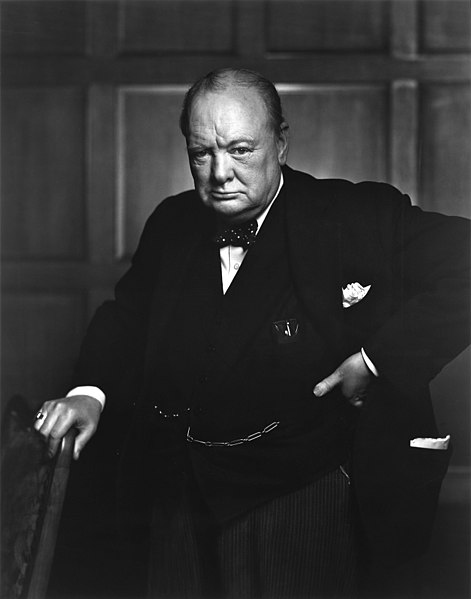
A flurry of informed and semi-informed posts about Winston Churchill signifies that someone has written a new book about the old boy. Indeed they have. In this case the author is Andrew Roberts, who has also written biographies of Napoleon and other political and military leaders.
I’m not yet sure I’ll read it. How many more fresh sources are out there that are likely to cause a radical change reappraisal of Winston’s life, work and personality? An anecdote here, perhaps, a nuance there. Unless anyone can convincingly argue that he was a crypto-communist or a transsexual vampire, the consensus, at least among the British, will continue to be that the sum of the positives was greater than that of the negatives.
The balance sheet in a nutshell looks like this:
Negative: Sidney Street Siege, Gallipoli, Black and Tans, Bengal famine, racist, die-hard imperialist.
Positive: war leadership, speeches, mastery of English, strength of personality, magnetism.
Debatable: support of a post-war “United States of Europe” (depends on whether you’re a Brexiteer or not).
Roberts has clearly chosen a good time to publish his book. At a time when none of our politicians seems to possess an ounce of Winston’s strength of personality, clarity of focus and ability to capture the imagination with his words and actions, we look with increasing nostalgia to a time when we had a leader worthy of the name.
The comparison is perhaps a little unfair. It’s arguably far harder to be seen as an effective leader in peacetime. Winston’s record before and after The Second World War was not stellar. And one wonders how he would have dealt with the social media trolls seeking to demystify his leadership and pin him down like Gulliver in Lilliput.
I suspect that – like Donald Trump – he would have seized on Twitter as a propaganda outlet. But I doubt if he would have indulged in multiple tweets every day. Unlike Trump, whose level of activity as president is dictated by his golf schedule, Churchill during the war was making life-or-death decisions virtually every day.
As with his speeches, Winston’s tweets would have been elegant and well crafted. No covfefes would have vomited from his pen. But perhaps they would have been no match for Trump’s brutal output. If you were looking for a contemporary political figure who would have used Twitter with lethal effectiveness, think no further than Goebbels and Streicher. Twitter is the natural home of trolls and demagogues.
Now that everybody has a voice courtesy of the social media, there are plenty of people ready to call him a warmonger, a monster for “allowing” a million people to starve in Bengal, a racist, a bumbling incompetent who got lucky. Everybody loves to reassess, reappraise and revise historical narratives. Churchill, endowed with a sense of history that was almost unparalleled in a politician, would have understood that.
And I also suspect that if he were here today to defend himself, he would have declined to do so, except to say that he was a human being, fallible like all others.
And that is how we should think of him. As a magnificent, prescient, indomitable human being without whom the words of Hitler, Goebbels and Streicher might today be essential texts in our schools.
Those who would condemn him for his follies, foibles, vindictiveness, callousness and Victorian attitude toward racial supremacy are welcome to do so. And I would reply “yes, all true. And what is your point?”
Churchill matters to me. I’ve read four biographies and a couple of his own books. As a schoolboy I was one of thousands who in 1963 filed past his coffin as he lay in state at Westminster Hall.
It matters to me that his mistakes caused pain and suffering, though I think it’s relevant to point out that neither as a minister or prime minister did he act without the consent of his colleagues. He was neither a rogue operator nor a dictator. But it also matters to me that thanks to his willingness to make difficult decisions, and his ability to inspire and comfort his fellow citizens in wartime, the Britain I live in still survives relatively unscathed.
Now that the country is facing a different threat to its existence through the tactical mistakes of our politicians and our current appetite for the simple solutions of ideologues and demagogues, now is not the time for invoking the pugnacious spirit of our greatest wartime leader.
The qualities we need in our leaders are those that seem to be in shortest supply: the ability to focus on the national interest over party politics; the ability to reconcile, persuade and influence.
We are not at war. Warlike talk and the creation of imaginary enemies will only make our situation worse.
I happen to believe that the best outcome from the current crisis would be for us to remain with our friends in the European Union. I accept that not everyone shares my view, to put it mildly. Whether the outcome of the Brexit process, neutral, positive or negative, the biggest task in front of us is to rediscover a degree of social equilibrium – at least to the level that existed before the 2008 financial crisis – and in the process address the causes of knee-jerk populism: rising inequality in our society, fear of cultural, social and economic change, regional grievances and the relentless tide of disinformation propagated through the social media.
We should let Winston rest in peace. He is not the answer to our problems.
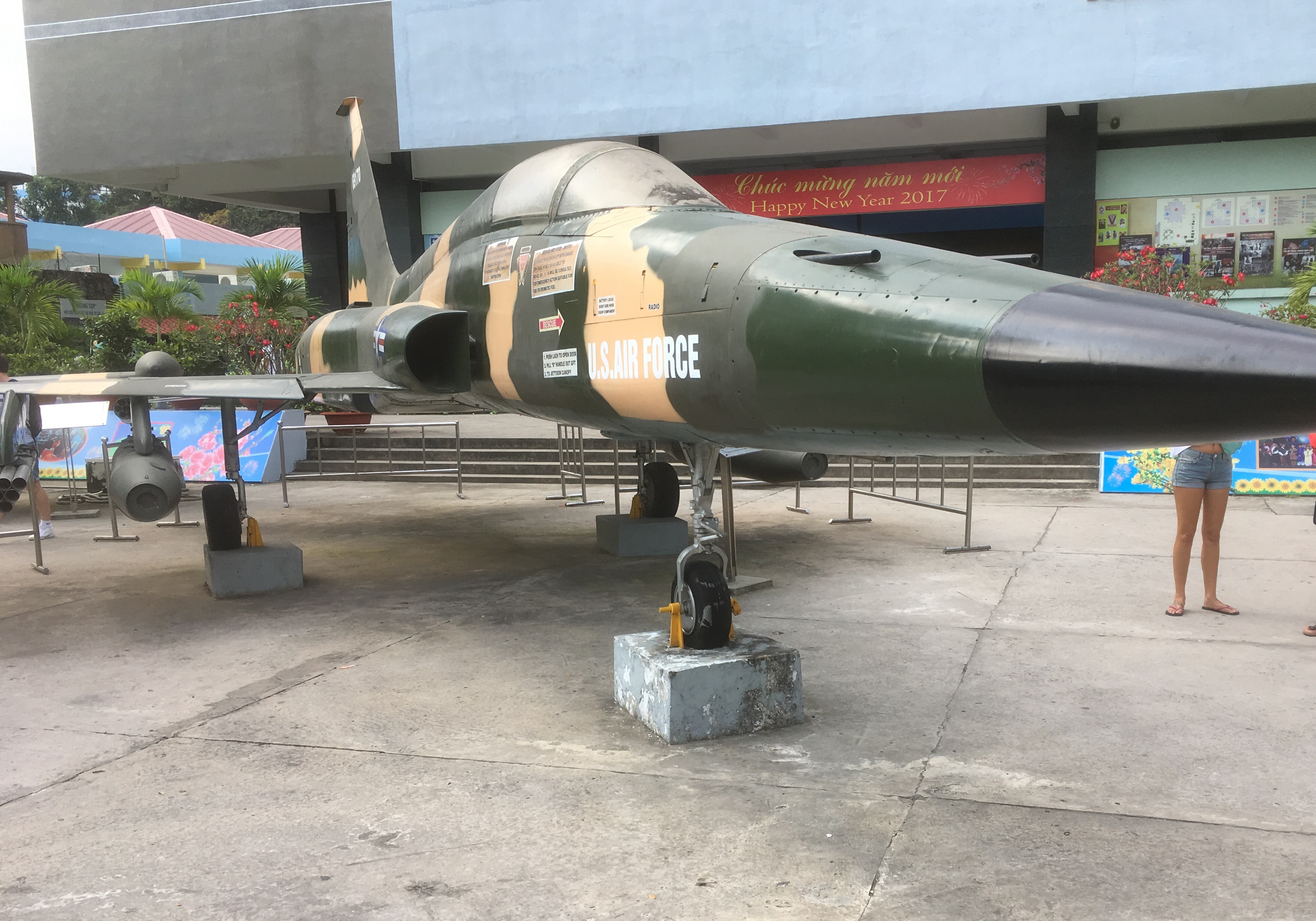
Vietnam War Museum, Saigon
If stories about the Turkish authorities having recordings made within the Saudi Consulate of the interrogation and murder of Jamal Khashoggi turn out to be correct, then the finger of blame points ever more strongly towards Saudi Arabia.
The question is, what now?
The obvious but sad reality is that what is done cannot be undone. No reparations, apologies, prosecutions or ostracism will bring JamaI back. Like many others, I am still replaying in my imagination the horror of what appears to have been done to Jamal. Will his death trigger sanctions against the perpetrators? Possibly – if not by nations, then most likely by investors who don’t want their brands besmirched by association with a regime that is capable of carrying out such vicious acts.
Are we, who look on in outrage, complicit in the death of Khashoggi? One can argue that as individuals, we are both innocent and guilty. Only a shadowy few had a hand in the events in Istanbul. Yet, as users of products that come from under the parched earth of Saudi Arabia, we contribute to the wealth of a regime that is determined to do what it takes to hold on to what it has.
In a wider sense, we breathe the air that saints and sinners have breathed before us. We drink the water that has passed through martyrs and tyrants. We embody the sins of our forefathers.
Some religions, though, provide us with a useful article of faith which serves as a doctrinal device for drawing a line across our past. We were born innocent, we sin, we confess, we have faith, we are forgiven. We have no responsibility for the sins of those around us, let alone of past generations.
But we can’t escape so easily. The past is not another country. It’s with us today, in our memories, our culture and our DNA. It’s also in evidence of achievements and transgressions that can’t be washed away, especially in this age of the internet.
The past speaks loudly in The Vietnam War, a magnificent PBS documentary series about the Vietnam war by Ken Burns and Lynn Novick. It’s been around since 2017, but I’ve only just watched the last episodes. It took me a while because it was so painful to watch. Vietnam was my time, so it wasn’t just history. It reconnected me to the person I was – not a participant, but an onlooker in a third country. Not a protester, just a schoolboy, then a student, whose everyday reality was soaked in the splashback of Vietnam.
That war was just one of many causes that young people of my age were worked up about. Yet it was always there, a backdrop, an underlying narrative, even when we became desensitised to the sound and fury of the first televised conflict.
Watching the footage again now, the faces of the young people, some numbed by combat, others consumed by anger, yet more sullenly indifferent, was like looking at my younger self in a mirror. Listening to the music of the time, suffused with energy, outrage and sadness, brought back to me more than the memory of a war. I felt an echo of the love, despair, hope, ambition and disappointment that swirled through my younger self.
Towards the end of the last episode, one of the American veterans described his first visit to the newly-erected Vietnam War memorial in Washington DC. As he stood before the thousands of names inscribed on the black stone, a dam of emotion, long suppressed, broke. He sank to his knees and sobbed.
I too welled up as I watched his testimony, and that of others on all sides of the conflict.
A few years ago I visited Vietnam for the first time. I saw museums, war memorials, remnants of war. I also watched the young Vietnamese going about their lives, innocent of conflict yet touched by it.
So it was after the First World War, the Second World War and the Korean War. All touched the innocent and the guilty. No doubt survivors of the first Gulf War will remember the turkey shoot at Mutlaq Ridge, people crushed like ants under the berms as the tanks rolled over them, children dying from a lack of medicine. Was that war different from Vietnam, Korea, WW2 and WW1? In scale and provenance perhaps, but the emotions of the participants, the victims and the bystanders who look back today will be much the same.
Also the same is how politicians, academics and polemicists cherry-pick from the past to shift perception of the present.
Which brings me back to Khashoggi. There are those who will say “how can you criticise the Saudis when your country bombed, killed and maimed millions in Vietnam, Iraq and Kuwait, and lied about what you did?” And there are others who say “horrific as Khashoggi’s murder may be, how much more horrific are the atrocities being visited upon the people of Yemen?”
This is where politics steps in, and distracts attention from the main subject, which is the alleged extrajudicial killing of a man who did nothing by generally-accepted moral standards to deserve his fate.
Moral equivalence, or whataboutism, is an easy game to play. You, as someone from, say, West Africa, might blame my country for the slave trade. I might ask you whether or not your ancestors were also complicit, driving their own people into the hands of the slave traders for material gain. And so on.
Better surely not to indulge in such games, and to deal with each injustice in turn, and on its own merits. If we start comparing one injustice with another, we eventually come to the point at which we declare that everybody is guilty, and therefore nobody is guilty, a theme explored by Agatha Christie in Murder on the Orient Express.
Once upon a time a Saudi prince for whom I worked for a short while stopped me in my tracks as I was engaged in an argument in which I compared one situation with another. “Stop”, he said, “you are mixing it!”. It’s a phrase I heard more than once in the Kingdom.
The Saudis would surely understand when I say that we should stop mixing it now. Rather than use patterns of previous or concurrent behaviour to identify the perpetrators, we should use the evidence at hand. Only if that evidence points clearly at the perpetrators should we add to the pattern. And we should remember that patterns based on opinion are inherently unreliable, and often constructed to argue a point. Patterns of fact, to the extent that they can be proven, are what count. Perhaps we have reached that point, in which case we shall soon find out whether values end up trumping political expediency.
Whatever the outcome, Jamal Khashoggi’s murder, if proven, will soon become part of the past that informs the present, and perhaps quite profoundly. And if Khashoggi turns out to have been the victim of a state-sponsored assassination, we should be very careful about the consequences of any action taken for Saudi Arabia’s 20 million citizens, whose future well-being may hang in the balance.
Since the story broke of the disappearance of Saudi journalist Jamal Khashoggi, I have been reluctant to comment up to now, not because of a lack of concern for his fate but because I’m so far away from potential sources that I would only add from a position of ignorance to the speculation over what, if anything, has happened to him.
But I have to say this. Jamal Khashoggi is a person whose writing I’ve followed for many years. I respect his views and I admire his integrity. And I can’t get out of my mind the thought of a gang of fifteen people arresting him, killing him, dismembering him and bringing his body back to Saudi Arabia.
At some stage one would hope that something resembling the truth will emerge. But until then, as a person observing from afar it strikes me that the dominant account of his death doesn’t make sense. If the Saudi regime wanted Jamal dead, why would they not simply send a hit squad to follow him out of the Saudi consulate and murder him on the street or in his house in the city?
They could also hit him at any time during his stay in Istanbul, not immediately after his visit to the consulate. And they could also have contracted out the hit. There must be a few professional killers for hire in Istanbul.
If, on the other hand, they wanted to silence him rather than kill him, they could have put pressure on his family that might have persuaded him to leave Istanbul and return to Saudi Arabia “voluntarily”. Once there, he could have been arrested and jailed alongside all the others perceived as dissidents who are currently incarcerated in the Kingdom.
If the dismemberment story turns out to be true, it will of course strike fear into Saudi exiles around the world. But on the flip side it would horrify Saudi Arabia’s allies in a way that the grisly deaths of thousands of Yemenis had failed to do. It would destroy Mohammed bin Salman’s reputation as a reformer and place him on an international villain’s list that in the past has included Saddam Hussain and Muammar Gaddafi, and currently includes Vladimir Putin, the Iranian leadership and Kim Jong Un. Not to mention ISIS, world leaders in imaginative ways of killing. Hardly a good list of people to be on if you are looking for investment in your country.
There’s been a counter-narrative flying around that has gained some currency within Saudi Arabia, which is that Jamal’s death was organised by Qatar, which wants to discredit its rival in the current dispute. If that were the case, then surely again such an outcome could be achieved by a more conventional assassination.
There are so many questions around Jamal’s disappearance that plausible deniability no longer seems to be a concern – or at least not a priority, just as it wasn’t when Putin’s two GRU operatives went after Skripal. Plausible doubt seems to be the order of the day.
If it turns out that Saudi Arabia is responsible for Jamal’s disappearance, what would be the international diplomatic outcome? Would the United States and the EU impose sanctions? Possibly, but any that involve restrictions in the supply of armaments or the cancellation of security cooperation would be an opportunity for Russia and China, two countries less squeamish about the rights of their citizens, to step into the breach. So my guess would be that there would be plenty of noise but minimal impact.
The whole affair is fast degenerating into a political football. Those who hate the Saudi regime are piling in from all directions. Those who condemn America and all its works will likewise be excoriating the Trump administration for its support of the regime.
I wouldn’t be surprised if somewhere on the internet there are whataboutists who would compare the alleged violation of Turkey’s sovereignty with the United States snatching Osama bin Laden from Pakistan.
With all the sound and fury that has erupted, it’s easy to forget that a decent man has disappeared, much to the consternation of his friends and colleagues. And that a family back in Saudi Arabia is living in fear for their future and the fate of their loved one.
We should spare a thought for them.
Road-testing Britain’s National Health Service six months before Brexit was not something on my agenda for this month. But fate, or rather an appendix teetering on the brink of becoming toxic, intervened. I try never to miss the opportunity to write about an unusual experience. And this was unusual: my first ever NHS operation.
As far as I’m aware, every other piece of surgery I’ve undergone has been private. Not because I’m fabulously wealthy, but because from the age of thirty I’ve had medical insurance, and nothing has gone wrong that has caused me to race to hospital with blue lights flashing.
I’m a fairly frequent user of NHS primary healthcare. Regular screening for this and that. Occasional visits to the doctor for reassurance or antibiotics. But generally speaking I’m far more healthy than I deserve to be.
So when I noticed a pain in my lower abdomen, I was thinking gastroenteritis or a muscle strain – something fairly innocuous. As it got a bit worse, my imagination turned darker – bowel cancer, kidney, prostate – the kind of things guys in their sixties and upwards tend to dread.
Then my wife, who in a previous life used to be a registered nurse, mentioned appendicitis. Not something that occurred to me. I’d forgotten I even had an appendix. Only happens to young people, doesn’t it? Well no, apparently. It hits all ages.
Anyway, she was right. A call at 8.30 to the surgery produced a callback from the doctor, and an appointment for 10.20. A couple of jabs that felt like Aunt Lydia’s cattle prod in The Handmaid’s Tale satisfied her that she should send me to the Surgical Assessment Unit at the hospital. I showed up there at midday, and a CAT scan confirmed the diagnosis. The told me that they wanted to operate later that day. The appendix wasn’t about to burst, so no dramatic rush into theatre, as happened to one of my daughters a few years ago.
So I ended up hanging around, reading, dozing, watching and listening, until they came for me at 10pm. Mask on, breathe deeply and goodnight. I woke up a couple of hours later, the proud recipient of three little holes in my abdomen, keenly awaiting a visit from the appendix fairy.
By 3pm the next day, after being invited to sample an NHS lunch (not great, but designed not to offend), I got my discharge letter and checked out.
Here are a few observations that I shall be submitting in my formal report to the Secretary of State for Health, assuming of course that like his predecessor he’s not too busy hunting Stalinists in Brussels to remember he asked for it.
Staff: everything you read about the NHS being reliant on foreign staff is true. Of the 20-odd people I encountered, about 30% were British and the rest from a wide spectrum of countries. NHS recruiters seem to be stuck on countries beginning in the letter P: Pakistan, the Phillipines, Portugal, Poland. Other nationalities included Lithuanian, Nepalese and Romanian.
Of the two junior doctors I met, both seemed younger than my kids, which was slightly disturbing. One was a charming lady from Islamabad, the other a Brit who looked as if he’s just finished his A Levels.
It was hard to tell from their uniforms what other staff members did – no more starchy collars and rigid hierarchies in evidence. But the standout characters were a livewire charge nurse from the Philippines, and a young Polish nurse whose demeanour reminded me of Villanelle, the psychopathic Russian assassin in the BBC’s new series Killing Eve. When I told her as a matter of politeness that she was too kind, she took on a wistful expression, and murmured “yes, you’re right, I am too kind”, leaving me to figure out her meaning.
Surgery team: well obviously I didn’t meet all of them. I was in la-la land by the time they got to grips with me. But from those I did meet I was able to figure out that it was mainly a female team, from the anaesthetist who told me of all the horrible things that had a less than one percent chance of happening to me, to the surgeon who did the cutting. The consultant was nowhere to be seen. Perhaps he was otherwise engaged on more serious stuff, or at home on call watching Killing Eve.
Either way, apart from the Portuguese anaesthetic nurse, there wasn’t a man in sight, which was a welcome difference from the big swinging stethoscopes you see in TV medical dramas. I did get to meet the surgeon after the op. She was a smart, friendly British woman in her thirties who has probably done more appendices than I’ve had cheeseburgers. Should my appendix grow back, she can have another hack at it any time.
Wards: I don’t remember much about the ward they took me to when I was waiting for the op. I was too busy reading or fighting my phone for a signal so that I could catch up on stuff going on outside the hospital bubble. But I woke up in another place to find my wife whispering in my ear “you’re in the geriatric ward!” This was not something I really wanted to hear, since I’m unused to thinking of myself as geriatric just yet. But certainly there were several elderly patients groaning, grunting and farting in nearby beds.
Next door, on the other hand, was the neo-natal unit from which bawling babies could regularly be heard. The very same unit from which my grandson emerged nine months ago. An interesting co-location. Shakespeare’s Seven Ages of Man minus the middle five.
Actually, as the anaesthetic fug cleared, it became evident that the ward was not for geriatrics. It’s just that more old people get to have operations than young. More disconcerting was the constant clattering of beds being jacked up and down, and the various minor medical dramas going on around me. An old guy in the next bed getting colostomy training, which sent the occasional whiff of excrement drifting my way. A chap across the way anxious that something was leaking. And the gentleman on my other side, who was obviously deaf, not responding to instructions to sit up, lie down or whatever. Everything was audible. Life stories, plaintive conversations with relatives in the reedy, high-pitched tones of elderly men, obviously so different from the strong voices of their prime.
The guy with the colostomy told me that his wife suffered from dementia and had been put in a home, and that he wasn’t allowed to see her because it would be too distressing for her. His kids had put him in a home too, but he escaped, and was living in his own home again. He hadn’t been out of the ward for three days, so I did a Jack Nicholson in One Flew Over the Cuckoo’s Nest and took him to the café downstairs. I was a bit worried that he might also have dementia, so I was relieved to see Chief Bromden making it back to his bed fifteen minutes later. I had visions of him wandering aimlessly round obscure parts of hospital for hours. But I guess they’re used to rounding up lost souls.
The wards themselves were kept clean, despite my attempts to spread biscuit crumbs around the floor. It was not obvious whether or not the hospital was using contractors for cleaning or catering. You certainly couldn’t tell through distinctive uniforms or badges.
Process: the administrative process was as you would expect from a large hospital. A referral letter from the local surgery, a consent form and a discharge letter, with a separate letter to the treatment nurse at the surgery. It did take about three hours for the discharge letter to arrive signed by the doctor, but then I imagine that he had more important things to take care of beyond sending me home.
Brexit fears: despite the imminence of Brexit, morale among the staff seemed reasonable, at least to a patient’s eyes. But I did ask one of the nurses from an EU country whether she was worried about life in Britain post-Brexit. She was concerned at the extra costs of remaining here, especially if the pound fell further against the Euro. She told me that she wouldn’t be recommending any of her friends to take jobs in the NHS at the moment, because of the uncertainty over finance and status. She herself was quite prepared to go home if necessary.
I asked one of the younger health assistants who took my bloods how she enjoyed working for the organisation. She’s British. She’s been with them for a year, and she’s now thinking of leaving to go into retail. “Why wouldn’t you go into nursing?” “The pay isn’t good enough”.
Hospital: the hospital itself seemed in good shape. Plenty of staff bustling around. There’s some refurbishment going on, and the place seems reasonably well maintained. Volunteers are much in evidence, including a rather intimidating lady who reminded me of Rumpole’s wife (She Who Must be Obeyed) in charge of an information desk around the corner from my ward.
My overall impression is that the organisation seems to be holding up pretty well. But luckily for me, October isn’t a peak time of year. How things will look when winter sets in again, and floods of admissions put the hospital under severe stress, remains to be seen.
It would make this account much more entertaining if I was able to tell some shock-horror stories about my experience and that of others around me. But I can’t. Sorry. I saw a team of people who were friendly, compassionate and giving a high standard of care. I even managed to extract two packets of biscuits from the tea lady.
Outlook: I do worry about staffing on two counts.
Being able to hold on to people because of uncompetitive salaries is one problem, and recruiting foreign staff is another. The nurse who trained my neighbour to use his colostomy bag became a ward sister at 25, and has been with the NHS for over thirty years. She was a rarity. Most of the staff were young. How many of them will be prepared to devote their working lives to the NHS, especially if they are from abroad? Staffing levels are one thing. Continuity of the workforce and preservation of knowledge are another.
This little quotation from a recent report by King’s College London’s Economic and Social Research Council encapsulates the challenge of foreign recruitment:
EU27 staff are pivotal to the operation of the NHS, especially in London, the South East of England and Northern Ireland.
The UK has never trained enough doctors for its own needs—some 28,000 doctors are non-UK nationals, around a quarter of the total. NHS England alone depends on some 11,000 doctors from the EU27, which amount to about 10% of all doctors.
Add in the further 20,000 NHS England nurses and around 100,000 social care staff from the EU27 and the sheer scale of reliance on EU migrant workers becomes clear.
In anticipation of a “Brexit effect”, the NHS has already invited bids for a £100 million contract to recruit overseas doctors into general practice. And this in a context in which the NHS already has many unfilled posts.
Apart from the difficulties of importing sufficient numbers of foreign staff, which the Government, by dreaming up new barriers to entry doesn’t seem to be doing much to overcome, I keep coming back to another old bone of contention: the morality of draining other countries of their healthcare resources to satisfy our ravenous appetite for staff.
Why are we not training more doctors and nurses? If our concern is that they will disappear to other countries to work, then that’s surely a quid pro quo for what we’re doing in the NHS. Or are we once again looking to have our cake and eat it?
Our National Health Service is still working. It may be fragile in places and battered around the edges. But I’d rather have it, warts and all, than other systems that depend on the ability to pay. Those whose knees jerk at the thought of socialised medicine are talking about something they’ve most likely never experienced. It’s time we stopped making it a political football every time an election is in the offing.
No single interest group, be it politicians, clinicians, administrators or patients, has all the answers to its problems. But all have ideas to contribute. So a little more humility on the part of those who have the power, and patience on the part of those who don’t, will go a long way towards helping the NHS to evolve successfully.
Of critical importance in a country racked with inequality, it’s free. It’s something we all need from time to time, especially in an emergency. We can share it equally, rich or poor. And this user is profoundly grateful for its existence.
In my last post I wrote about the transformation of Tom Watson, a British politician who has reversed his diabetic condition by losing 100 pounds. As I was thinking about him, and lamenting attitudes in society towards obesity, I happened on an article by Michael Hobbes in Huffington Post: Everything You Know About Obesity Is Wrong. Here’s an extract:
About 40 years ago, Americans started getting much larger. According to the Centers for Disease Control and Prevention, nearly 80 percent of adults and about one-third of children now meet the clinical definition of overweight or obese. More Americans live with “extreme obesity“ than with breast cancer, Parkinson’s, Alzheimer’s and HIV put together.
And the medical community’s primary response to this shift has been to blame fat people for being fat. Obesity, we are told, is a personal failing that strains our health care system, shrinks our GDP and saps our military strength. It is also an excuse to bully fat people in one sentence and then inform them in the next that you are doing it for their own good. That’s why the fear of becoming fat, or staying that way, drives Americans to spend more on dieting every year than we spend on video games or movies. Forty-five percent of adults say they’re preoccupied with their weight some or all of the time—an 11-point rise since 1990. Nearly half of 3- to 6- year old girls say they worry about being fat.
That just about sums up the problem. Blame. Personal failing. The piece is worth reading right through. It’s profoundly saddening. Fad diets that cause people to lose weight, only to put it on again. Stories of heartache and humiliation.
But ultimately the conclusion is that for many people the answers have always been clear. Eat less, eat sensible (if you can make sense of all the conflicting medical advice), exercise more, and on a societal level, ease poverty. You might not change your shape if you walk to the nearest shop rather than drive, or if you eat lentils instead of donuts, but your self-esteem will rise, your cognitive skills will improve, and you will be better placed to deal with the biggest scourge of the obese – the stigma. And of course, a decent education helps.
It’s undoubtedly true that the toughest task of all is to tackle society’s attitude towards the overweight. And I’m one of those people who struggles to override a bias that’s hard-wired from childhood.
But to suggest, as Michael Hobbes does in his article, that diets don’t work, that most weight gain is irreversible in the long term, and that we should therefore “change the paradigm” by getting healthier rather than thinner, is a questionable argument. If we’ve managed to shed a few pounds, should we be going to a meeting and declaring “I am fat. It’s been three years since my last cheeseburger”? Are we but a Mars bar away from perdition?
Not only is such a message bad news for Tom Watson, who has taken sensible action to reverse the symptoms of Type 2 diabetes. It’s also not my own experience. Fifteen years ago I lost four stone (fifty-four pounds). I have never regained that weight. Others, including Nigel Lawson, a senior minister under Margaret Thatcher, and the celebrity chef Tom Kerridge, have done likewise.
Hobbes seems to be telling us that once we get fat, there’s no way back, that we should just get on with it, and be happy with what we have become. He may have science on his side, but science, as we constantly discover, is a movable feast. While I agree with him that we should concentrate on eating healthily, nobody seems to agree on what healthy eating actually constitutes. Mediterranean? Vegan? Paleo? Take your choice. More a matter of belief than overwhelming scientific proof.
Equally, should we simply accept that once we’re fat we’ll always be fat? Not everybody can reconcile themselves with that reality. And people who have lived with the stigma of obesity for most of their lives cannot easily be expected suddenly to become fat and proud. If weight gain really is irreversible, then perhaps research needs to concentrate more on changing that reality. If people can hope for a cure for their cancer, why should they not be allowed to hope for an end to yo-yo-dieting?
Hobbes finds plenty of people to blame. The food industry, which pumps additives, preservatives and low-cost junk ingredients into our everyday diet. The health industry, which in the United States invests $60 billion a year on drug research and only $1.5 billion on nutrition research. The medical profession, in which most people think themselves expert on obesity and dole out advice that is often skimpy, misleading and downright cruel. They are all fair targets.
Blaming is easy, whether we point the finger at fat people themselves or the factors that cause them to be fat.
The Huffington Post piece uses America as its canvas. And the author paints with harsh colours. I like to think that in Britain we’re a little more compassionate. There seems to be a widespread underlying attitude in the United States that sits on the dark side of self-reliance and enterprise, two qualities that Americans see as essential features of their national culture: if you’re poor, sick or obese, it’s your fault. You’re a loser.
What our much-maligned “socialised medicine system”, the National Health Service, does for us is provide a reasonably consistent, non-judgemental approach towards obesity. Yes, there are surgeons who refuse to operate on the grossly obese, but that’s often because they assess the risk to the patient as unacceptable.
We have national programmes designed to tackle problems arising from obesity. Regular diabetic monitoring is one of them. We have screening programmes for aortic aneurysms, bowel cancer and breast cancer. Advice on nutrition is readily available.
But the NHS, increasingly cash-strapped and short of staff, can only do so much. It’s not enough. We’re starting to die younger, and obesity is playing its part.
The other day the London Times columnist Jenni Russell pitched in with her take on the latest demographics on life expectancy. She came up with one startling statistic. In the London Borough of Kensington and Chelsea, which is home to some of the wealthiest and poorest people in Britain, “a boy from the poorest wards will on average die almost 14 years earlier than a boy living 100 yards away in a wealthy home. The gap for women is more than five years”.
She also quotes statistics claiming that areas with the highest levels of obesity also had the highest proportion of Brexit voters. The link, she implies, between deprivation and resentment of an entity held to be responsible. People aged between 30 and 55, she claims, are dying of despair. Increases in poverty, street crime, welfare dependency and drug and alcohol abuse can all be attributed to the government’s austerity policy introduced since the 2008 financial crisis.
So there you have it. One country, that didn’t buy into post-Crash austerity, has a reasonably strong economy, but is emotionally inclined to let its weaker brethren sink or swim. Another, with an economy wobbling under the implications of Brexit, has imposed cuts in policing and social services, and is nibbling away at the foundations of its welfare state. In both, people are dying of despair. Not exactly easy ground for establishing universal inconvenient truths.
So if you’ve stayed with me thus far, you’re entitled to ask where I’m going with this.
The answer is nowhere. Because there is no single answer. If there’s a big picture, it’s that plenty – an abundance of food, energy, transport and medicines – brings consequences. Lots of them, and many of them adverse, including obesity. Just as we seek a simple solution for global warming, we yearn for an overarching solution to obesity. But there isn’t one, except possibly mass starvation.
We can appoint a fat czar, introduce compulsory exercise, develop yet more drugs to suppress appetite, introduce a universal minimum wage, raise food standards to eliminate the unhealthy stuff we’re encouraged to eat, abandon austerity, abolish capitalism, abolish socialism, reverse Brexit, get rid of Trump. We can also make mirrors illegal and shut down the social media.
But one final thought. Perhaps we should stop trying to rationalise a multi-faceted phenomenon. Tom Watson isn’t dying of despair, unless the current state of the Labour party is driving him over the edge. And yes, poverty drives people to junk food and hardens the arteries. But not everyone of limited means succumbs to booze, opioids and an excess of kebabs. Not everybody obsesses about their body image and craves the holy grail of physical perfection. Most of us just get on with our lives, even though we might be blighted by anxiety of one sort or another.
And if you want another big picture, it’s this.
Let’s say you could go back in time and ask some of our ancestors – living as they did one step away from famine, plague and random violence. If you were to ask them whether they would prefer to live in our time, where even in the wildest societies there’s a semblance of law and order, where some form of medical care is available in all but the remotest areas, and where they would have the option of eating themselves to death, I think I know what they might choose.

Tom Watson is the deputy leader of the British Labour Party. Until recently, and without much justification, I regarded him as Labour’s version of Boris Johnson: a bit of a loudmouth, something of a buffoon. Unsurprisingly, given that he’s not in Jeremy Corbyn’s inner circle, you don’t see him in the media that often.
A few days ago I saw a video in which he proposed a ban on on-line betting during live sporting events. Although I’m not a fan of the latest version of his party, I’m totally with him on that. I regard online gambling as socially corrosive. Though I wouldn’t ban gambling outright, I’m repelled by advertising, aimed at mainly at young men, that suggests that gambling is fun, followed by the message that “when the fun stops, stop”, a sentiment as sincere as the government health warnings on cigarette packets that were forced on the tobacco companies.
These are the same young men, presumably, whose standard of living and earning power has declined significantly since the last financial crisis, and who struggle to raise the cash for a deposit on their own homes, condemning them to live for the foreseeable future in rented accommodation. Unless, of course, the ads are targeting rich young men, with the intention of making them considerably less rich by helping them to develop a profitable (for the bookies) gambling addiction.
Addictions of any sort are not fun. Not gambling, not booze, not heroin, not even sex. They might provide a short term hit, but they’re a long-term drag. They take you over. Without them, you wander around with an unfulfilled need that sometimes causes you to do things you’d never dream of otherwise.
One such addiction is to food. Often enough people go overboard on stuff that doesn’t do them any good. Fizzy drinks, crisps, cakes, burgers. Overeating isn’t generally classified as an addiction. Try telling that to someone who would die for a kebab. Or to a cheese addict like me.
I do my best to pass no moral judgement on people who wreck their livers through drinking, empty their bank accounts to pay gambling debts or end up dead in a crack house through an overdose. Equally, I’ve always liked to think, I don’t look down on those who overeat and end up like giant sloths. How could I, a man who weighs 18 stone?
Being over six feet tall, I’m often told, usually by kindly female friends, that I “wear it well”. Not when I look sideways in the mirror, I don’t. I’m under no illusions, even if others might claim to be.
But do I think of myself as a lesser person because of my allegedly imposing physique? Absolutely not. I am what I am and I do what I do, and if that’s not enough for those around me, then they’re welcome not to do business with me, befriend me or have anything otherwise to do with me. Honestly, I don’t care.
Which brings me back to Tom Watson. Until a year ago, the first thing you noticed in unsympathetic photos was the large belly struggling to escape from his suit. Since then, he’s lost seven stone. That’s nearly a hundred pounds in US dollars, and forty-five kilos in Euros.
Watson decided to change his body shape in such a drastic manner because he developed Type 2 Diabetes. The result is spectacular. Granted, he doesn’t share the lean and hungry look of some of his colleagues on the Labour front bench, who would be on my casting shortlist to play Cassius in Shakespeare’s Julius Caesar. But, he does look, well, normal.
Now suddenly I’m no longer seeing an Oliver Hardy lookalike, but a good-looking guy in middle age who comes over as a credible politician.
Why suddenly credible? Is it because there’s a hypocrite lurking inside me who says I can’t take seriously a politician who eats and maybe drinks too much? Is that why I can’t take other fat politicians seriously, and why I look with a combination of sympathy and contempt at grossly overweight people I see on the streets, in restaurants and in offices? Am I feeling a contempt that should actually be directed at me? Perhaps, though I’m ashamed to admit it.
Fat people are in one sense or another widely viewed as deficient. Morally weak. Shamed by society, by the media, by the medical profession. And even I, a person who should probably be subject to the same judgements, find it hard to ignore their size and shape. When I was an employer, did I hire fat people? Yes, just as I hired people from ethnic minorities and others whom “society” marks out as different.
But did those fat people rise in my company to positions equivalent to those of their “normal” colleagues? No.
I liked to think that the reason was simple. A matter of talent. But when I look back, I wonder to what extent I was driven by a sneaky prejudice: that in a sales-oriented company people bulging out of their clothes would not be as credible in front of our clients as those who fitted nicely into an off-the-shelf suit or a skirt and blouse from Topshop. The exception was me. But I was the boss, so I was allowed.
Perhaps it’s a generational thing. The powerful, who can afford the best tailors, can still get away with being fat. Think of Trump and some of his associates. These guys are middle-aged or, as in Trump’s case, positively elderly.
But now look at the CEOs of tech companies, and the politicians from Generation X and below. Scrawny gym buddies, most of them. Young models are still killing themselves to reach size zero. Young men are popping steroids in a compulsion to be ripped. Yet statisticians tell us that each successive generation is getting fatter. You see the evidence in the streets of Britain and the malls of America. Even in South East Asia, a region where a generation ago you would be hard put to see any overweight people, young or old.
Is the prejudice against fat people also a gender thing? Do powerful men assess women on the basis of sexual attractiveness? And vice versa? Absolutely, whether it’s just sex hormones at work or some hard-wired partner selection instinct that looks for people with the best genes.
And to what extent does culture come into play? Why do some cultures prize fatness in women, and others don’t? And why is it that in times of plenty we demonise obesity, whereas in lean times it was a sign of prosperity? Why is it that we celebrate fat people in some occupations – opera singers, for example, and character actors – and not others?
Go to a bookshop and you can find twenty books exploring the subject – who, why, when, where and what. Oh, and how much, because we’ve made an industry of fatness.
Speaking as a recovering hypocrite, perhaps we shouldn’t be so keen to judge others. Fat people shouldn’t look down on alcoholics. Alcoholics shouldn’t despise opioid addicts. I shouldn’t refer to Donald Trump as a walrus. Most of us have dependencies of one sort or another. Perhaps if we concentrated more on helping those who want to be helped – because not everyone wants to be rid of their addictions – and recognised more clearly our own deficiencies, we might end up a little happier ourselves.
And I sincerely wish Tom Watson a happy life, even though I suspect that his career in the Labour party may not contribute much to his future well-being.
 59steps