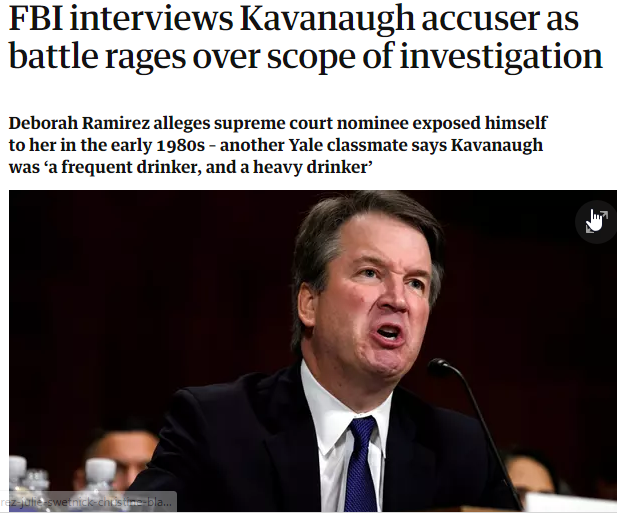
Guardian Headline 1 October 2018
Looking from afar at America’s rather odd constitutional settlement, wherein judges in the highest court of the land, supposedly the ultimate arbiters of impartial justice, are chosen for their partisan leanings, I suppose it’s not surprising that the latest appointment has become a vicious political football. After all, these are vicious times.
If Judge Brett Kavanaugh survives an FBI investigation into his behaviour as a teenager, he will most likely be confirmed as a justice of the States Supreme Court. I for one have had enough of his face, screwed up in pouting anger, all over the media.
I’ve read all the arguments. I understand why he should boil over in tearful resentment at being potentially prevented from reaching the peak of his career because of what he views as unproven youthful indiscretions. I also understand why those seeking to stop his confirmation should argue that the character and behaviour of a teenager informs the character of the man.
I only have a few thoughts to add to the conversation. If he is confirmed, in the eyes of a good proportion of the American electorate, he will forever be tainted. In his darker moments he might also reflect that he obtained his prize not because of his abilities but because he was a convenient vehicle for a threatened political juggernaut.
Will he be welcomed by his fellow justices, some of whom might shudder at the thought that there but for the grace of God go I? Will they advise him to keep his head down and do his job, and that sooner or later the American public will forget about his past? We will never know.
I can only imagine how humiliating he would have found the dissection of his past. And I wonder whether, should he achieve his ambition at the cost of his reputation, he will ultimately believe that it was worth it. It would surely be galling if upon his elevation to the Supreme Court he should forever be known as Injustice Kavanaugh. And that every decision he makes will be measured against his yelp of partisan fury at the Senate hearing.
The sad thing about moments of glory – winning a prize, being promoted, being elected, basking in the applause of an audience – is that they’re like a perfume you want to bottle and smell every day thereafter. But the day after, the fragrance is gone. There is only a new reality. Some of us get the opportunity to enjoy the perfume again. And if that’s what motivates us, as seems to be the case with Donald Trump, we seek every opportunity to be admired and applauded.
But if Mr Kavanaugh takes his place among his fellow judges, there will be no more coronations. Only a lifetime of having to prove his worth among colleagues who didn’t have to fight like cornered animals to be appointed.
Whatever the FBI inquiry reveals, he will know in his heart whether he lied to get his job. And if he did, then that knowledge will spoil the perfume of acclamation, and sour the rest of his career.
But then again perhaps he won’t care. The means will justify the end. And as his sponsor Donald Trump might tell him, only losers bother to tell the truth, the whole truth and nothing but the truth.
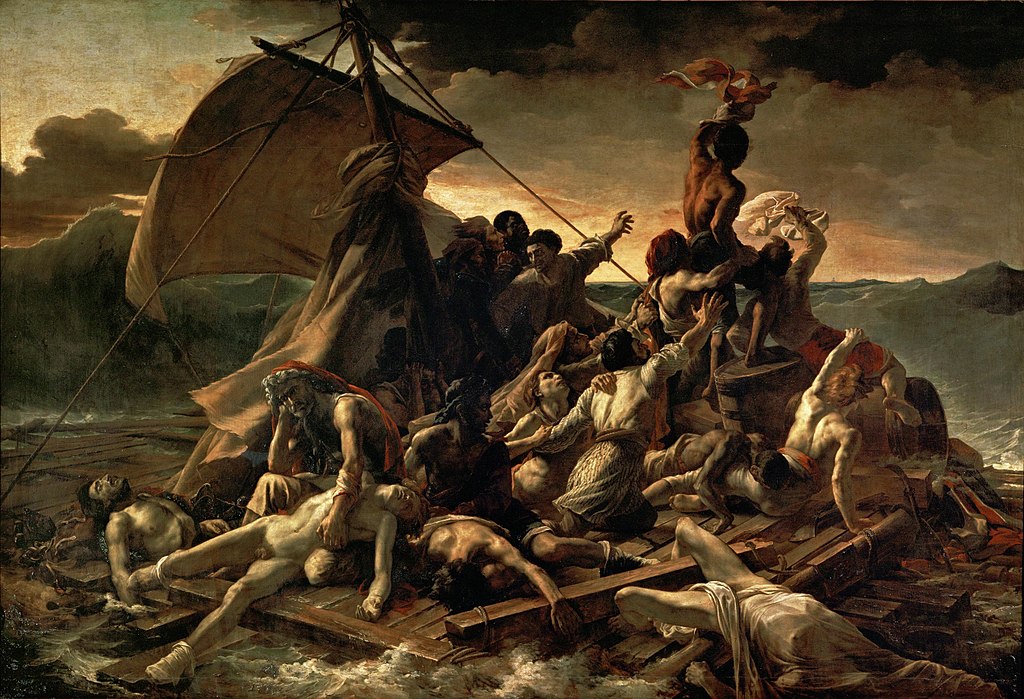
The Raft of the Medusa, Theodore Gericault 1818-1819
In the United States, if you despise your current president, the things he says, the way he behaves, his contempt for the rule of law and his personal amorality, there’s only one explanation for your view. You’re a Democrat. A member of the other tribe. It seems impossible for all but a few in Trumpland to be politically unaligned. Everybody has an agenda.
In the United Kingdom, we’re in a slightly different position. We don’t have a person like Trump on whom to project our animus or our undying devotion. Our politicians are like mice swimming in a flash flood. But we do have Brexit. If we support it, we can’t be labelled filthy Tory reactionaries because there are supporters in the Labour Party too. If we oppose it, we can’t automatically be called rabid lefties, because a number of Conservatives oppose it too.
The only way politicians and the media can easily define a person’s view on our membership of the European Union is to use the tame labels of Brexiteer or Remoaner. It’s almost as if there’s a parallel universe in which there is no Labour, no Conservatives, only Brexiteers and Remoaners.
The shorthand for this with-us-or-against-us, black-and-white political culture is polarisation. Except in Britain it’s a dual polarisation – normal party politics and Brexit. Almost as if two magnets are laid across each other at 90 degrees.
But the essence of politics is that there are large numbers of voters who don’t sit at any of the four poles. Some are too busy earning a living or struggling to make ends meet to care about politics. When they vote, if they vote, they’re motivated solely by what’s in it for them, or what they believe is in it for them.
Others care very much about issues beyond their immediate lives. But the things they care about are not adequately addressed as a package by any political party. So they go from election to election without preconceived political affiliation, and vote for the party that comes closest to reflecting their views.
Since we must have labels, the two groups are thrown into the condescending category of floating voters. Wishy-washy. The undecided.
The same goes for Brexit. Many people who voted to leave the European Union in 2016 did so on the basis of a simple choice. Now, confronted by the complexity of the issues and the possibility of catastrophic consequences, some – enough perhaps to reverse the decision – have changed their minds. Others, appalled by what they’re encouraged to believe is bullying and disrespectful behaviour on the part of the European Union, have gone the other way. The will of the people is a tenuous illusion, expressed once, but not for eternity.
The difference between Brexit and normal policy decisions endorsed by electors and enacted by governments is that governments can be voted out and, in most cases, policies reversed. Brexit, once enacted, cannot easily be reversed. So it seems that we’ve already pressed the delete button, and there’s no helpful little message that comes up on your computer when you’re about to erase a bunch of files that asks you “are you sure?”. No way to fly back up the cliff once you’ve jumped. No room for voters to float on this one.
I believe that floating voters are an indicator of a country’s political and social health, provided that the reason for their non-alignment is engagement, not apathy. The more there are, the healthier we are. As the historian Tom Holland said in a recent tweet:
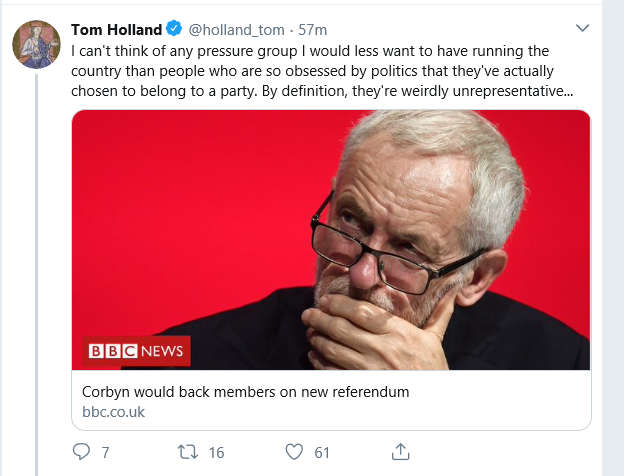
As far as party politics is concerned I’m one of them. And when I watch politicians of all persuasions peddle their ideologies, talk about movements and forget that most governments succeed by pragmatism laced with vision that changes as situations change, I can’t help feeling disillusioned about the present and near-term future.
It may be that a new centre party would provide a shot in the arm of a tired political system. Such a party might energise voters in large numbers and make a difference in moderating the extremes of left and right. But sooner or later it would ossify. Its representatives would, as is the case with many of the current politicians, start considering career and power above principles. And then it would become just another party. No better and no worse than the current lot.
Perhaps we actually need a catastrophe that shakes us up, even if it wrecks the lives of many of us. Maybe catastrophe is too extreme a word. After all, a no-deal Brexit is unlikely to kill us. But I’m pretty convinced by predictions of adverse consequences. I can, nonetheless, see a silver lining. It would likely produce sufficient disappointment, translated into discontent, that the current generation of senior politicians would be lucky to survive.
Would they be replaced by analogues of Victor Orban, Matteo Salvini and the other populist leaders rising to prominence across the EU? Would the polarisation continue? Quite possibly, especially as adversity often generates extremism.
I would prefer not to see my country governed by a bunch of fanatical ideologues, be they from the left or right. Creative destruction, whether its author is Steve Bannon or John McDonnell, leaves too many casualties in its wake. As I have written before, my preferred option would be for us to stay in the EU, work within it to address its obvious flaws, and make contingency plans such that if we choose to leave in ten years’ time we are properly prepared and make the decision with the best possible understanding of the consequences.
By that time most of today’s political leaders will be in the long grass, and perhaps their successors will have the imagination and talent to move us into a different place, if that is what we choose, without leaving us friendless across our borders.
Given the huge implications of the journey we are currently embarked upon, whose consequences will be felt for decades, is it too much to ask that we take a leaf out of the computer’s book, and ask the simple question “are you sure?”?
Neither of the major parties seems amenable to asking that question. So if the option to remain is no longer available to us, and the dire predictions of life after Brexit come true, whichever party is in power after the debacle runs an equal risk of being blamed, and possibly destroyed in the process. And it will be down to us, the floating voters, to deliver the coup de grace.
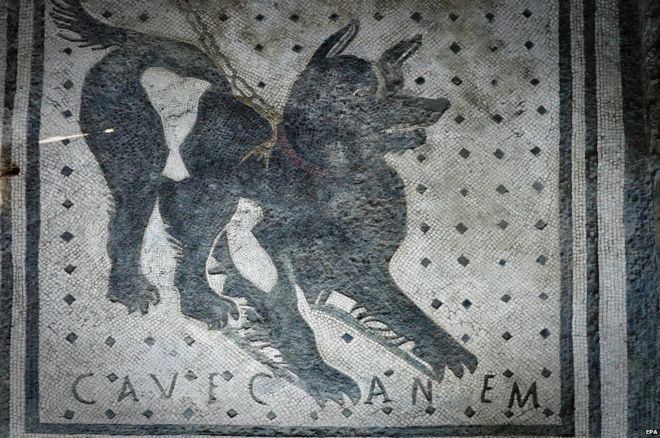
I guess we’re still living in a democracy of sorts. But I sometimes wonder when I watch it all happening on Twitter.
A short clip from Iran’s Press TV showing a bunch of people in a room dancing and hugging each other. Why? Some sporting victory perhaps. The fall of another Indian wicket at the Oval? No. A member of the British Parliament is given a vote of no-confidence by her constituency association.
An interminable thread sparked off by a chap called Owen Jones, who does a bit of writing for the Guardian when he’s not campaigning for Not New Labour (also known as Jeremy Corbyn, his ancient class warriors and their youthful helpers who have seized control of the Labour Party) also comes to mind.
Jones kicked off the thread by saying that Chuka Umunna, a Labour MP who doesn’t entirely buy into his party’s new dawn of ideological purity, is insulting hard-working Labour members by calling on Jeremy Corbyn to “call off the dogs”. The dogs Umunna refers to are people who pour threats and insults upon duly elected MPs who refuse to get on the Momentum bus, and particularly those who object to anti-Semitism within the party.
There followed an interminable succession of emotional and downright childish posts, interspersed with a few plaintive observations that Umunna was using a figure of speech, and that Jones was whipping up outrage on false pretences.
My view? I thought there were laws against hate speech in the United Kingdom. I don’t quite know why they are not being enforced in some of the extreme cases reported by MPs, especially those who, because they happen to be Jewish, have born the brunt of the vitriol. Do the police equate this stuff with a domestic dispute?
Meanwhile, on the other side of British politics, Boris Johnson has once again sparked howls of outrage. No female letterboxes this time. Now he’s accusing Theresa May of wrapping the country in a suicide belt through her Brexit negotiating stance. Not quite as elegant as Rivers of Blood, but his metaphor served its purpose, which I imagine was to boost Johnson’s standing among Conservatives who might be thinking of supporting his upcoming leadership bid. More effective than classical references to satyrs and old goats, to be sure, and a useful distraction from his recently-revealed marital problems.
Over the pond, away from the Shining City on the Hill, a 17-year-old college student won plenty of attention by standing behind Donald Trump at a rally in Billings, Montana, and making funny faces at some of the president’s utterances. He was told he must smile and clap, and when he failed to do so he was whisked away by the Secret Service, detained for questioning in a room for ten minutes, and sent on his way. His place was taken by a Trump loyalist who duly smiled and clapped.
Back in the Shining City, a seemingly mild-mannered judge was given a grilling by senators determined to stop his nomination to the Supreme Court by exposing him as a liar and an extremist. Trump’s nominee, Brett Kavanaugh, parried some of the more pointed questions by claiming memory failure. Valid though the questioning appeared, one got the impression that some of the questioners had half an eye on boosting their own presidential prospects in the process.
While all this was going on, Alex Jones, the owner of an extremist right-wing website called InfoWars, barged into an interview with Marco Rubio, a leading Republican senator who, exasperated by the constant interruptions, threatened to deal with him if he wasn’t taken away. All on prime-time TV, of course.
Onlookers in Washington are also much entertained by Donald Trump’s wild fulminations over the anonymous op-ed in the New York Times, and the harrumphing denials of his “senior officials” that they had anything to do with the exquisite poison pen letter.
What next? Will Trump introduce ducking stools for witches? Will he summon Robert de Niro’s character in Meet the Fokkers to carry out the lie detector tests on all his distinguished appointees that one senator recommended? One thing’s for sure. If J Edgar Hoover was still at the FBI, he would have figured out who was behind the op-ed in an instant. In fact he would have had wire-taps on them, which would have enabled Trump to winkle out his unreliable servants before they even had disloyal thoughts. Trouble is, the president would have run out of servants in double time.
As the resistance to Trump gathers strength, Barack Obama re-enters the fray to campaign on behalf of Democrat candidates in the upcoming mid-term congressional elections. And Sebastian Gorka, who has made a handy career out of his microsecond as a Trump White House national security adviser, appears on TV claiming that Obama’s first campaign speech was all about “me, me, me”. Whoever said that Americans don’t get irony?
If you rely only on the social media, especially Twitter, for your view of the world, you could be forgiven for thinking that the devil is working a hostile takeover.
As Jamie Bartlett says in The People vs Tech, his excellent primer on the threat to democracy by technology:
… the internet is primarily an emotional medium, which is something that many technologists fail to grasp. Speed and emotion are related, of course, because both are means by which our finite brain handles information overload and total connectivity. It is obviously true that citizens need information to form opinions and make judgements, and there are many benefits to a more democratic form of media. But the modern citizen is expected to sift through an insane torrent of competing facts, networks, friend requests, claims, blogs, data, propaganda, misinformation, investigative journalism, charts, different charts, commentary and reportage. This is confusing and stressful, and we lean on easy and simple heuristics to make sense of the noise. As has been well documented, we rely on ‘confirmation bias – reading things we already agree with, surrounding ourselves with like-minded people and avoiding information that does not conform to our pre-existing view of the world. Similarly, because there is so much noise out there, studies repeatedly find that emotional content is more likely to get traction online – shares, retweets etc – than serious and thoughtful comment and stories.
He also cites Daniel Kahneman’s theory laid out in Thinking, Fast and Slow. Fast thinking, or System One thinking as Kahneman calls it, is instant reaction, gut feeling, emotional response. Whereas slow thinking, System Two, is based on reflection, reason and logic. Kahneman’s ideas (and yes, I’ve read the book) make a lot of sense to me, and I agree with Bartlett that much of the sound and fury in the social media is the result of System One thinking. In fact, without the howling, squealing and rage, as well as the me, me, me self-promotion, platforms like Twitter and Facebook would be unsustainable. Emotion is interesting. Reason is boring.
So it’s in the interest of these platforms to promote and rejoice in emotion. But emotion is exhausting, isn’t it? And I wonder how much longer we can take this endless venting before our hearts start failing and our rising blood pressure creates aneurysms ready to pop. At which point we slump into mindless apathy while the madness continues to swirl around us.
Time perhaps to take a break from the social media? Well, perhaps for a day or two every week to give our tortured nervous systems a chance to recuperate. That’s what weekends used to be for, right?
But then we wouldn’t want to miss out on Trump’s latest idiocy, Johnson’s next metaphor and news of the next Labour MP to be hung, drawn and quartered, would we?
So what’s to be done? Get a prescription of opiates, perhaps, or start taking to the bottle. Get a comfort dog, or maybe a couple of cuddly rabbits.
Alternatively, we could do one simple thing before we tweet, post or explode with anger in response to some rabble-rousing Russian bot. Nothing. Just sit down, and for half an hour try and remember what it was like before we had someone else to do our thinking for us.
If we never before had the time or inclination to think for ourselves, we should start now. Question everything, where it comes from, who’s behind it, what their motivation might be.
The process is called critical thinking.
Oh oh, better post this quickly, before everything I’ve written about is superseded by even more ridiculous stuff….
Thus far, I’ve declined to get into the debate over the alleged anti-Semitic tendencies of Jeremy Corbyn and his some of his supporters in the UK Labour Party. But I will say that to doubt the loyalty to Britain of the three hundred thousand Jews among us is to insult a group of people who are as British as I am, and without whose contribution to our society we would be infinitely the poorer.
I also believe that many British Jews, including those who describe themselves as Zionist, would be horrified at the policies of the State of Israel, even though they would argue to the death over its right to exist. That doesn’t make them less British. And if loyalty to more than one nation is unacceptable, then what right did we have to expect the invaluable support of Australia, New Zealand and Canada in both world wars? Were the Canadians less Canadian because they fought and died with us against the Nazis?
That’s not to say that I have any love for Netanyahu and his government, and for their treatment of Palestinians. Far from it. But I see no point in constant references to the term Zionist, because Zionism means different things to different people. Its use only causes confusion. And to debate the right of Israel to exist is pointless. It does exist.
As for Jeremy Corbyn, he may or may not be anti-Semitic. I have no way of looking into his heart to determine the truth. But some of his supporters undoubtedly are. And I can fully understand why members of Britain’s Jewish community feel hurt and threatened by hatred expressed against them in the social media.
But where did this latest British iteration of an ancient hatred come from? Is it largely fuelled by the plight of Palestine? Or does it have deeper roots, stretching back before the creation of the State of Israel, perhaps to the Blackshirts? The question is hardly worth debating. Pick any point in time from rise of Christianity, and you will be able to construct a genealogy of anti-Semitism.
What is undeniable is that whatever the narrative, the Holocaust dominates. It sears the Jewish soul, just as Hiroshima and Nagasaki have left an indelible mark on the Japanese.
What has always interested me is the ambivalent attitude of many in Britain in the 1930s towards the eventual perpetrators of the Holocaust. I remember once asking my father whether he was in favour of appeasement in 1938. I was quite shocked when he said that he was. But why should I have been so surprised, given that he was among those who stood to lose their lives in another war against Germany?
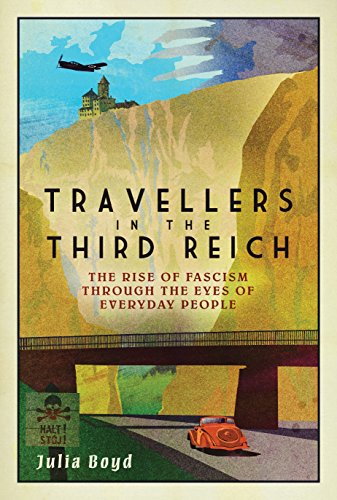
Julia Boyd’s Travellers in the Third Reich – The Rise of Fascism is a compilation of first-hand accounts by visitors to Germany between the 1920s and the end of the Second World War. Her sources are wide-ranging. They extend well beyond the British, whose well-heeled classes thought that sending their young to Germany was a good cultural education.
The approach is similar to that used by Oliver Hilmes in Berlin 1936: Sixteen Days in August. Hilmes stitches accounts both of Germans and foreigners during the Berlin Olympics into a powerful narrative. Boyd concentrates on foreigners, including British women who were married to Germans, over a much longer time-frame.
What struck me in both books was the Germany many visitors described: clean, welcoming (especially to the British), dynamic and enthusiastic. But equally striking was the casual anti-Semitism reflected in the writings both of senior British officials and ordinary visitors. And so many who were not overtly anti-Semitic nonetheless felt either that the persecutions would pass, or were a price worth paying for the resurgence of what they believed would be a key ally in the struggle against Bolshevism.
Boyd’s book ends with the defeat of Germany in 1945. But that streak of anti-Semitism in Britain survived the shock of the Holocaust, and was given a boost immediately after the war with the Irgun attacks on British forces policing the Palestinian Mandate. Casual prejudice persisted. Incredible as it may seem today, there were still golf clubs in the 50s and 60s who would not accept Jewish members.
Travellers in the Third Reich covers much more than Nazi persecution of Germany’s Jews. But through every story the Holocaust was the elephant in my room. How could so many of that generation, and not just the British, have slept-walked as Hitler and his thugs tightened their grip on Germany?
And as we make allowances for the tyrants and would-be tyrants of today, are we setting the stage for, or actually enabling, the persecution of other hapless minorities: the Rohingya, the Yazidis, the Kurds, the Uyghurs, and yes, the people of Palestine, for whom I have boundless sympathy?
As for Britain’s Jews, should they really feel threatened and insecure?
Logically, no. Despite the current kerfuffle about the Labour party, I don’t believe there is widespread support beyond the extremes of British politics for institutional anti-Semitism, and there are too many powerful forces, not least in in the United States, that could bring the country to its knees if an anti-Semitic faction gained the whip hand.
But emotionally? Absolutely. The Holocaust is not an elephant in the room for them. It’s pictures of relatives who died in the camps displayed on the walls of survivors and their loved ones. It’s stories passed down generations, and tears that will flow for centuries.
The State of Israel was founded partly on the principle that, no matter what, no individual power would ever be able to repeat the atrocities committed against Jews by the Nazis. The “no matter what” imperative has spawned its own injustices, and the aspirations and values of Israel’s current leaders may have strayed far from those of the founders. But insecure as Israelis might continue to feel, as Julia Boyd’s excellent book illustrates, it’s also not hard to understand why Jews of other nations are constantly on the alert for warning signs of new threats, and why, as Corbyn’s arch-critic Margaret Hodge said recently, parents advised their children always to have a bag packed by the front door in case they needed to make a rapid exit.
The saddest thing is that throughout the world there are so many other minorities with good reason to fear a knock on the door.

As summer fades into the mist, it’s time once again to look back at one or two books I shall remember for longer than a nanosecond. The first is Mark Twain’s account of his travels to the Old World. It’s reckoned by many to be the first travel classic. Not quite, I would argue. Ibn Battuta preceded him by several centuries, and his journeys were far more arduous than Twain’s. But at least with The Innocents Abroad you don’t have to rely on a translation.
Twain’s book started out as a series of reports to an American newspaper. It’s effectively the story of a cruise, but not a maritime adventure that today’s waddling tourists would recognise as such. In 1867, two years after the end of the American Civil War, he and sixty intrepid fellow travellers sailed off from New York on a converted military steamer. Their journey took them via the Canaries to Gibraltar, France, Italy, Turkey, Russia and the Holy Land, the centrepiece of the trip.
Unlike the modern cruise liner, which provides days of gorging and aimless recreation punctuated by short visits to exotic ports, Twain’s ship served as a jumping-off point for extensive travel by land, mainly by rail, coach and horseback.
I’m not sure how widely his travelogue is read today, but I suspect that if it forms part of any university literature syllabus, it would be riddled with trigger warnings that prepare our delicate young for some weapons grade political incorrectness that would make even the most hardcore Trump supporter blanch. But that was then, and this is now.
I say this because his opinion of the peasantry wherever he goes is rarely short of contemptuous, be they French, Italian or the dirt-poor indigenous population of Palestine. He reserves special scorn for the influence of the Catholic church, especially in rural Italy. Nor is he deeply impressed with the art treasures of the Renaissance he encounters in Rome, Florence and Venice. And everywhere, it seems, the innocents abroad are beset by beggars, con artists and rapacious guides.
Apart from his biting wit, and a sense of irony which can often be lacking among his present-day compatriots, what fascinates about The Innocents Abroad is the historical context.
He’s in France three years before the Franco-Prussian War, at a time when Baron Haussmann is tearing down medieval Paris to build the city of boulevards and squares we know and love today. He visits Italy while the unification is still under way. Rome is still part of the Papal States and is not to be absorbed into the Kingdom of Italy for another three years. Palestine is still part of the Ottoman Empire, and Jerusalem a shabby city of thirty thousand, whose holy places are tended by Christian factions that need to be kept apart to prevent them from fighting each other.
Damascus, he reckons, deserves the accolade of Eternal City more than Rome:
In her old age she saw Rome built; she saw it overshadow the world with its power; she saw it perish. The few hundreds of years of Genoese and Venetian might and splendor were, to grave old Damascus, only a trifling scintillation hardly worth remembering. Damascus has seen all that has ever occurred on earth, and still she lives. She has looked upon the dry bones of a thousand empires, and will see the tombs of a thousand more before she dies. Though another claims the name, old Damascus is by right the Eternal City.
Visitors to the old city before the current civil war would recognise the description of his accommodation:
We stood in a great flagged court, with flowers and citron trees about us, and a huge tank in the centre that was receiving the waters of many pipes. We crossed the court and entered the rooms prepared to receive four of us. In a large marble-paved recess between the two rooms was a tank of clear, cool water, which was kept running over all the time by the streams that were pouring into it from half a dozen pipes. Nothing, in this scorching, desolate land could look so refreshing as this pure water flashing in the lamp-light; nothing could look so beautiful, nothing could sound so delicious as this mimic rain to ears long unaccustomed to sounds of such a nature. Our rooms were large, comfortably furnished, and even had their floors clothed with soft, cheerful-tinted carpets. It was a pleasant thing to see a carpet again, for if there is any thing drearier than the tomb-like, stone-paved parlors and bed-rooms of Europe and Asia, I do not know what it is. They make one think of the grave all the time. A very broad, gaily caparisoned divan, some twelve or fourteen feet long, extended across one side of each room, and opposite were single beds with spring mattresses. There were great looking-glasses and marble-top tables. All this luxury was as grateful to systems and senses worn out with an exhausting day’s travel, as it was unexpected—for one can not tell what to expect in a Turkish city of even a quarter of a million inhabitants.
Twain’s onward journey to Palestine is on the back of a succession of mangy, long-suffering horses, accompanied by a large band of attendants who pitch luxurious tents and serve sumptuous feasts each night – the 1867 equivalent of glamping, I suppose. As they enter Palestine, they are provided with a magnificently clad armed horseman, there to deter Bedouin raiders from preying on them. A protection racket, it seems, because the few Bedouin they encounter are ground down by poverty and not very interested in passing strangers.
The holy places themselves are a disappointment, at least to Twain, if not to the zealous pilgrims among the party. He casts a jaundiced eye on the run-down villages where they are surrounded by baksheesh seekers, and on the unlikely claims that “this is the exact spot where Jesus took a leak before feeding the Five Thousand…..” and so forth. I can relate to his scepticism, having visited some of these places a century-and-a-half later.
Before setting out to Palestine, he and his companions make a side trip from Constantinople up to Yalta on the Black Sea. There they learn that Tsar Alexander II is in residence. Through the good offices of the American consul, the group manage to wangle an invitation to pay their respects to the Tsar and his brother, the Grand Duke Michael. This was a time when Russia and the US were not deadly adversaries, and perhaps the great man was curious about this bunch of ordinary citizens of America, to whom he had just sold Alaska.
Imagine if today a bunch of Chinese tourists showed up at Balmoral asking for an audience with the Queen. I suspect they would not be greeted as de facto representatives of Xi Jinping and rewarded with tea and cucumber sandwiches. Twain himself was one of a committee that was deputised to write a speech of greeting to the Tsar, to which His Highness gave a suitably graceful reply. Fourteen years later Alexander, after surviving numerous assassination attempts, finally succumbed to a bomb in St Petersburg. Clearly his anarchist opponents never thought of infiltrating a crowd of American tourists in Odessa, a vulnerability that didn’t escape the author’s notice.
The relative disappointment of Palestine was redeemed by the next stop: Egypt. Twain waxes lyrical about the wonders of ancient Egypt, despite an indifferent stay at the legendary Shepheard Hotel. The land of the Pharaohs was it seems, everything that the Holy Land wasn’t. Magnificent ruins, and a civilisation that invented things millennia before they were reinvented in the West:
We were glad to have seen the land which was the mother of civilization—which taught Greece her letters, and through Greece Rome, and through Rome the world; the land which could have humanized and civilized the hapless children of Israel, but allowed them to depart out of her borders little better than savages. We were glad to have seen that land which had an enlightened religion with future eternal rewards and punishment in it, while even Israel’s religion contained no promise of a hereafter. We were glad to have seen that land which had glass three thousand years before England had it, and could paint upon it as none of us can paint now; that land which knew, three thousand years ago, well nigh all of medicine and surgery which science has discovered lately; which had all those curious surgical instruments which science has invented recently; which had in high excellence a thousand luxuries and necessities of an advanced civilization which we have gradually contrived and accumulated in modern times and claimed as things that were new under the sun; that had paper untold centuries before we dreampt of it—and waterfalls before our women thought of them; that had a perfect system of common schools so long before we boasted of our achievements in that direction that it seems forever and forever ago; that so embalmed the dead that flesh was made almost immortal—which we can not do; that built temples which mock at destroying time and smile grimly upon our lauded little prodigies of architecture; that old land that knew all which we know now, perchance, and more; that walked in the broad highway of civilization in the gray dawn of creation, ages and ages before we were born; that left the impress of exalted, cultivated Mind upon the eternal front of the Sphynx to confound all scoffers who, when all her other proofs had passed away, might seek to persuade the world that imperial Egypt, in the days of her high renown, had groped in darkness.
After a return visit to Gibraltar, the final stop was supposed to be Cadiz. But there, as in Athens and other intended stop-offs, the party was prevented from disembarking because of a cholera pandemic that was raging through the Ottoman Empire, Italy and Spain. Twain did, however, manage to sneak into Athens, and also made it into Spain unbeknown to the authorities.
If you love travel books, The Innocents Abroad is well worth a read. This was my first introduction to Mark Twain, I’m ashamed to admit. The book is full of wit, wisdom and some passages of superb writing. Be prepared, though, to have to read the occasional passage more than once to get the sense – a reminder that the English language doesn’t stand still. But if, like me, you’ve visited most of the places he describes, you’ll find his narrative fascinating, both because of the historical context and because of what has not changed since his time.
But before you pass the book on to your teenage offspring as they prepare for their gap year travels, be sure not to forget the trigger warnings.
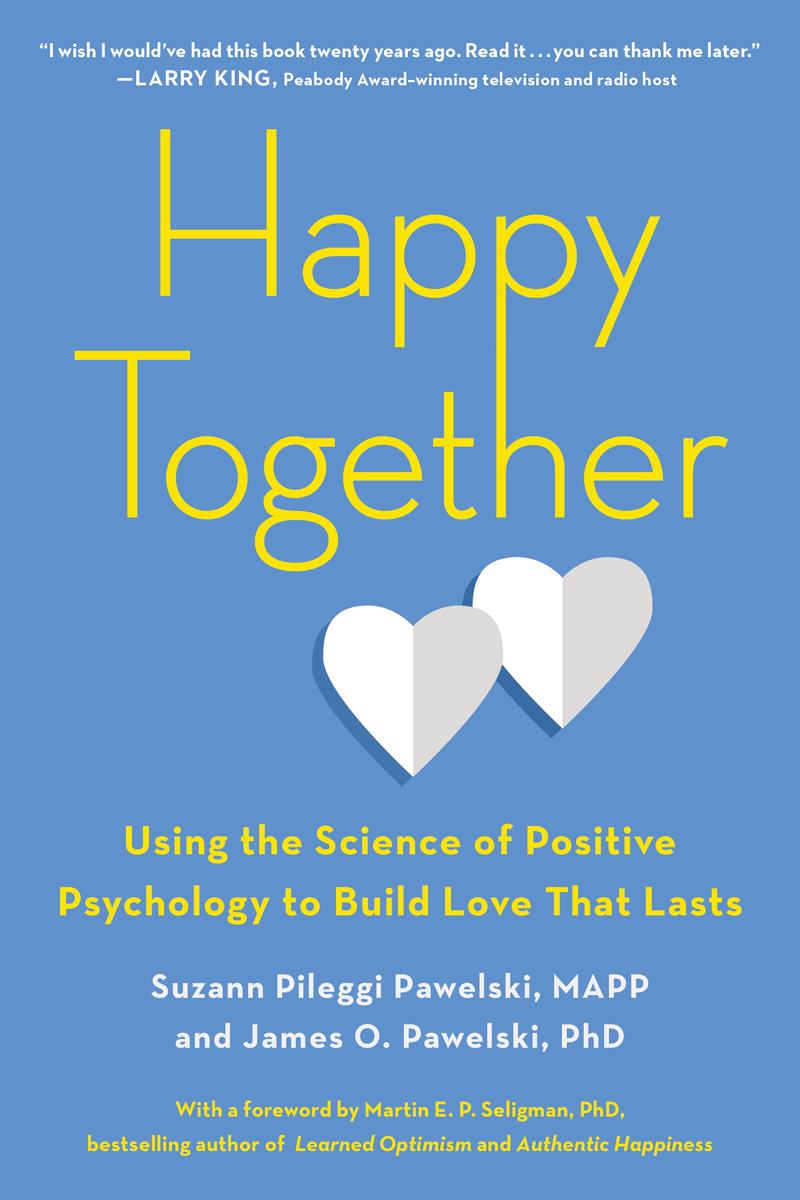
Is there such a thing as narcissism a deux? As in when a couple write a self-help book on how to make your relationship last, and pose hand-in-hand with what look to me like expressions of ineffable self-satisfaction? As in Posh and Becks, and as in every Facebook post showing a couple gazing blissfully into the camera on some beach or restaurant? It’s all about us, right? We are the exemplars. Envy us.
That was my immediate reaction when I read an article in last week’s London Times featuring a large photo of Suzann Pileggi Palweski and her husband James Palewski, who have written a book called Happy Together.
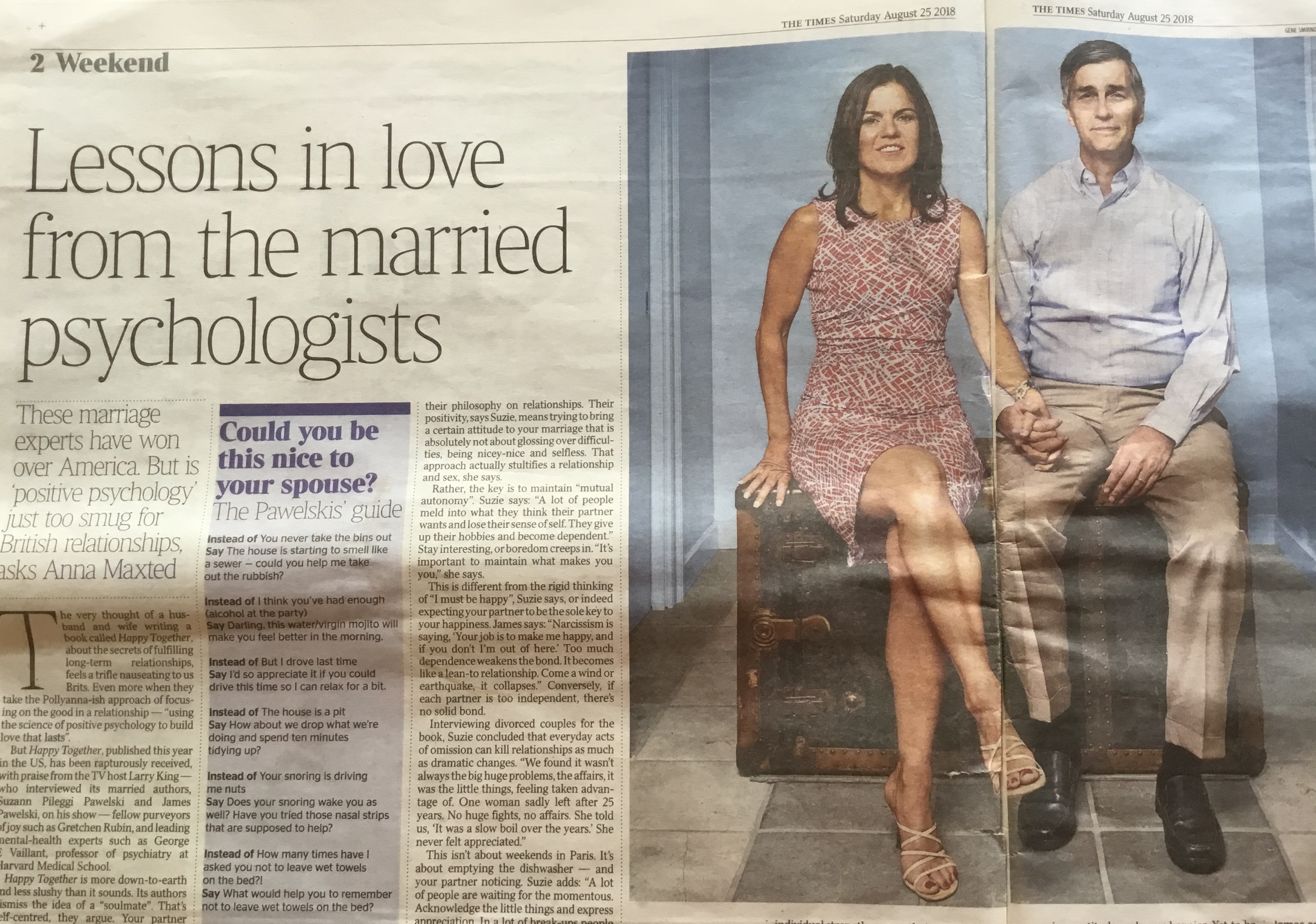
Anna Maxted, who interviewed the authors, entertains us now and again with revelations about her own marriage. This time she gives her poor husband a break and turns her attention to the Palewskis, who are apparently experts in something called Positive Psychology, which sounds a bit like a cult to me. Naturally, they try to practice the faith in their own relationship. And so, as you do, they’ve written a best-seller.
Maxted asks whether “‘positive psychology’ is just too smug for British relationships”. The trouble is, she doesn’t provide an answer. Therefore I will attempt to do so.
Positive psychology seems to be based on the notion of “accentuate the positive”. If you want to know more about it, I suggest you go to Google, as we all do when we want to understand the mysteries of life. Oh, and first read the lyrics of the song by that title. It might take less time.
Anyway, in between snorts of laughter and snarls of envy at yet another best-selling book eagerly devoured by desperate readers who want to improve themselves – envy because I don’t have the wit to write such a masterpiece – I sensed an opportunity. If this self-admiring couple, who have been married for a mere eight years, can enrich themselves by telling us all how to stay together, what pearls of marketable wisdom can a battle-scarred survivor of thirty-five years of blissful matrimony bestow upon the masses?
Not many, I’m sad to say. But here are some helpful suggestions that the Palewskis apparently believe will prevent one partner from going for the other with a carving knife. And I’m happy to share – for free – my own thoughts on each scenario, which tend to be a tad more robust, on the basis that some relationships don’t deserve to survive anyway:
“Instead of I think you’ve had enough (alcohol at the party)
Say Darling, this water/virgin mojito will make you feel better in the morning.”
I say: if your partner is beyond the tipping point, they will greet your polite suggestion with scathing contempt. Far better to politely request from your host the loan of a plastic bin bag, which you, as the designated driver, can strategically place on the front seat of the car next to your inebriated loved one. That way at least your car will survive the worst effects of the journey home. If you want to really make the point, make the request within earshot of your partner. But if you do this, you might think about wearing a stab-proof vest. And what the hell is a virgin mojito anyway?
“Instead of The house is a pit
Say How about we drop what we’re doing and spend ten minutes tidying up?”
I say: that’s fine if your partner isn’t doing something important, like watching InfoWars videos or harassing the neighbours. But often enough it’s better to move the offending mess to a specific room in the house. When that’s filled up, start on the next room. Sooner or later, depending on available space, you won’t be able to move, and will be forced to take emergency action, including calling the skip hire company. In the process you will discover that the stuff you tidied up is completely irrelevant to your life anyway. If you have kids, especially adult offspring who use your house as a repository, you will reach that point much faster. When they’re teenagers, of course, you operate a policy of containment in one room similar to that employed by the authorities at the Fukushima nuclear plant.
“Instead of Your snoring is driving me nuts
Say Does your snoring wake you as well? Have you tried those nasal strips that are supposed to help?”
I say: anyone who is so mutton-headed as not to notice that their partner is wearing a nasal strip is insultingly unobservant. So a stupid question. It would be much more sensible to accuse your partner of snoring like a pig, and then getting into an intense discussion over whether in fact pigs snore. And when your partner has the temerity to suggest that you also snore, thus triggering another heated conversation, you can suggest that you sleep in separate beds. Or get a divorce.
“Instead of How many times have I asked you not to leave wet towels on the bed?!
Say What would help you not to leave wet towels on the bed?”
I say: I can think of many things that would help the lazy miscreant to mend their ways. For example, try carefully laying the wet towel flat underneath the duvet on their side of the bed, leaving them to discover that they will either have to sleep the night in a damp bed or take refuge on the couch.
“Instead of Do we have to have lunch with your mother again?
Say What can we discuss over lunch with your mum to maximise our chances of having a good time?”
I say: suggest that your partner’s mother is a malevolent shrew, and that nothing you could discuss can’t be turned into a passive-aggressive criticism of you. Accept the inevitable, and suggest that he/she go on their own while you draw the short straw of looking after the children (or tidying the house of you don’t have kids). And recognise that your partner’s idea of having a good time is to spend long hours over a bottle of prosecco moaning about you. Given the above, your presence is definitely not conducive to a good time, and your partner will eagerly accept the offer.
At one point, Suzann describes how she suggested to her co-author James that he needed to lose weight. It seems that the correct positive psychology response is for James to thank his spouse for her gift of constructive criticism. I’m not sure that would have been the response of a friend of mine, whose wife, in front of his mother, told him “you don’t need any more food – you’re a fat pig already!”. In fact “thank you for the gift” sounds rather like one of those formulaic utterances from The Handmaid’s Tale, as in “blessed be the fruit”.
While we’re on the subject of toxic exchanges, I have my own little scenario to add to the list. When your partner calls out your behaviour by asking “why do you…..”, don’t go into a Freudian analysis to explain your failure to put the loo seat down after use or clean the barbecue. Just say “because I’m stupid”. That tends to stop the argument right there.
I haven’t read the book itself, so I must apologise to the Palewskis if my gut reaction to Maxted’s article about their philosophy is somewhat jaundiced. But on the evidence of the interactions above, they seem to come from a world in which people believe that all problems in relationships can be solved if the protagonists behave like HR managers.
In real life, unfortunately, for every impeccably polite and tactful couple, there are others who give a passable imitation of Martha and George, the conflict-addicted characters in Edward Albee’s Who’s Afraid of Virginia Woolf?. And the Palewskis don’t seem to have answers for those whose other halves fail to get the message about their unacceptable personal habits. What’s Plan B? Poison or the kitchen knife?
But then I’m also perhaps failing to take into account the fact that they are writing primarily for readers in the USA, where almost every home has an AR 15 rifle that can be used as the ultimate sanction. Conflict in America can have consequences well beyond broken crockery.
I suspect that most recipients of their wisdom will read the book and try out the techniques once or twice. When the approach fails (and they narrowly escape with their sanity after hopeless appeals to the better nature of their loved ones) they will revert to type, and the book will join all the other self-help tomes in the charity shop.
You will guess from this comment that I’m not a fan of the self-help industry, though that’s probably because as a grumpy old cynic I consider myself beyond redemption.
I’ve always thought that those who write such books first get (or invent) a few letters to put after their names, come up with one blockbusting idea and recycle it in endless variants on the theme and lucrative speaking tours. Clever bastards.
The trouble with the gospel of relentless positivity is that it comes in an age of pervasive negativity. There’s not much point in wasting energy avoiding rows at home if you spend much of your leisure time trolling Hillary Clinton, or if you wind yourself up like a tightly coiled spring at work because of the behaviour of other less enlightened beings. Even worse if you end up being the mute recipient of someone else’s bullying because if you speak up you are liable to lose your job. There are times when for your own sanity you need to put your foot down and say “I’m mad as hell and I’m not going to take it any more”. Without a modicum of venting, no amount of desperate positivity is going to save you, because you end up internalising your frustrations. And if you’re not very stable in the first place, ahead of you lies the path of the mass shooter or the suicide.
Speaking as someone whose innumerable flaws rarely pass unnoticed, and yet who is still married after thirty-five years, I can testify that for several reasons a good row keeps a marriage alive.
First, it gives you or your partner the opportunity to occupy the moral high ground, which is important for self-esteem. Second it gives the offending partner the opportunity to point out the other person’s flaws, since in the heat of the battle anything goes. Third, an essential element in a long marriage is the ability to forgive, and God knows, I for one have plenty to be forgiven for. And lastly, the occasional confrontation is evidence that the couple care about their relationship – provided that it doesn’t end with the one bludgeoning the other to death, that is.
My wife and I have both learned over our years of marriage that there are ways to say things and ways not to. Occasionally neither of us can resist the latter. But we didn’t need a self-help book to avoid saying the wrong things. Perhaps we were lucky in our choice of partner. But marriage, in common with much else in life, is a matter of trial and error, upon which the bedrock of love solidifies or fractures.
Much as I sometimes think otherwise, having a quiet, conflict-free life is having no life. Having a laugh helps as well, which is why I dedicate this post to my long-suffering wife, whose sense of humour remains mercifully intact.
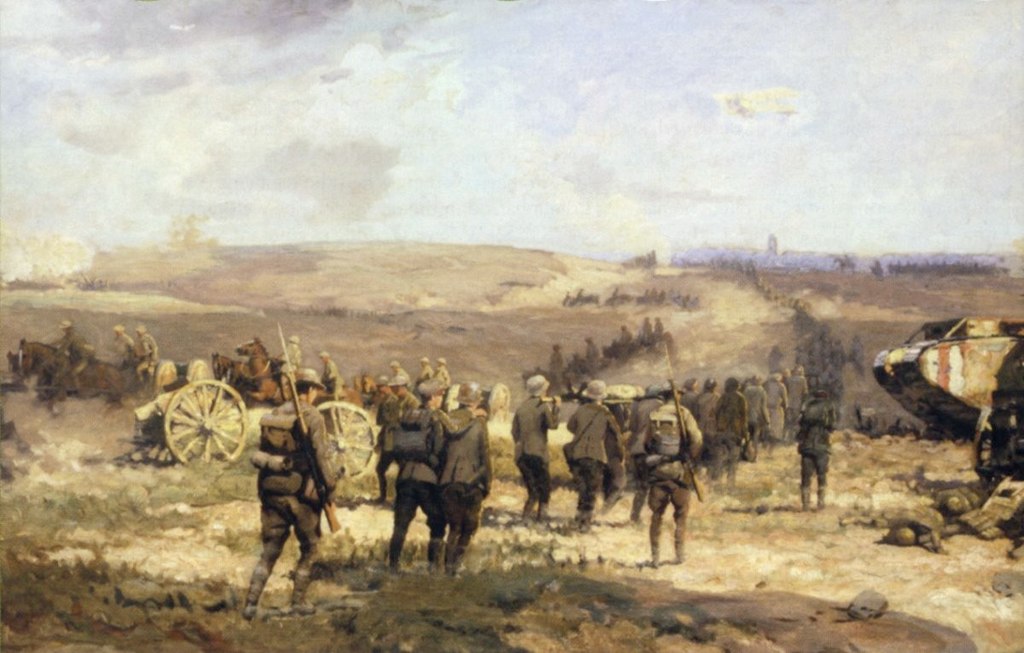
8th August 1918, by Will Longstaff: German prisoners of war being led towards Amiens
The Battle of Amiens – the decisive allied offensive of the First World War – began on August 8th 1918, a hundred years ago yesterday. Harry Hickson, my grandfather, was there. He was an artillery officer who wrote a diary of his experience at the Western Front. He arrived in France in July 1917, and survived both Passchendaele and the Amiens offensive.
As before when I’ve quoted from Harry’s diary, his words speak for themselves without needing much commentary from me.
August 8th
Our big show has come off at last. This morning we made an attack on the Bosche that will live in history as the “Battle of Amiens”. We were synchronising our watches with H.Q about every hour during the night and that gave us an idea it was to come off, but no official word came through till very late. Zero hour was set for 4.20am and everything went off very smoothly. Shortly before that there seemed to be a deathly stillness of the early breaking of day, then at the fall of a handkerchief in each battery thousands of guns belched out and the very earth trembled. The Infantry went forward behind an impassable barrage, and suffered comparatively few casualties thank goodness. Tanks, cavalry, motor machine guns etc all combined in this great advance.
We hear the Bosche have been driven back about 10 miles, and heaps of prisoners came down the line. We were early out of section as we were out of range about 8 AM. I was standing with our Major and Major-General MacDonnell of the Canadians when the latter inspected one big crowd of them, he was none too gentle with them!! One German who seemed to be of high rank complained because he had to walk down the line!
This evening I went forward with a motor cycle and sidecar to reconnoitre for a new position and saw some perfectly ghastly sights. I also got some very interesting souvenirs! I got back about 8.15 pm. The Major went forward this morning to take over some captured Bosche guns and turn them round on the enemy, one of the ironies of war!
August 9th
A lovely day, but windy. We are still advancing, cavalry and tanks doing awfully well. I saw the general this morning, the Brigade has gone forward leaving 145 Battery (8″ guns) and ourselves behind. The Major returned, but has gone off again with a side car. The Bosche are miles from here now.
August 10th
A lovely day, but still breezy. Last night the Bosche did an awful lot of bombing round here, every plane they could muster I should think! I slept out in the middle of a field and didn’t feel a bit safe!! I went off to Brigade at 9.30 AM and saw the Colonel, he told me to reconnoitre for gun positions somewhere near Beaucourt, and I took Gay with me. I selected positions and got back about 2.30 pm. The Major had gone to Saleus to meet Mawby who was bringing up two new guns. Lunt and I went forward with a working party at 6.30 pm to dig positions.
We slept in a deep dugout and it is lucky we did as the Bosche did an awful lot of bombing round here. There seemed to be a constant procession of planes and over 50 bombs were dropped. 4 tank fellows were killed. Cavalry and tanks are still advancing, we hear that Peronne has fallen to us again and also Roye, the latter doubtful. This evening I saw our C in C, Sir Douglas Haig – for the first time, and gave him a salute, which he returned. He was coming back from the line in his car, I knew the latter because the Union Jack was flying on the bonnet of the radiator, the only man who is allowed to do that.
Sunday 11th
I was up at 7.30AM to mark out our positions. It was a lovely day, but very hot. This is a topping valley, but there are plenty of dead cavalry horses, which doesn’t make things very pleasant, also there are lots of tanks. Lunt and I went round exploring for dug outs for our men. A complete Bosche 5-9″ gun battery is also here, a good capture. At about 7 pm, some lorries came up and brought me orders to pull out and go back, it was very annoying after our hard work.
August 12th
Last night we had a simply awful time. We left the position about 9.45pm and the Bosche were bombing it just as we left, but we managed to get clear. They were bombing again when we got to Beaucourt and we had to go through it again, but worse was to follow!! The Bosche managed to hit an ammunition dump with one of their bombs at Domart. This flared up and lighted everywhere for miles round and we were bombed all the way, it seemed a procession of planes.
When we got to Domart we found all traffic stopped and we had to stop too. Whilst there they dropped three bombs about 10 yards from my lorry. One man was killed and 5 badly wounded. The lorry driver beside me was only slightly wounded and when I put my hand inside his coat I found a piece of bomb had also been stopped by his cigarette case. I got into a ditch on the side of the road with my men waiting for the next bombs. We all had a truly marvellous escape, for I found out afterwards that none of my actual party had been hit.
Afterwards we struck out across country and found a chalk pit where we spent the rest of the night, thankful to be alive. We got back to our old billets in the Bois de Gentelles about 7 o’clock this morning and had an uneventful day.
August 13th
Last night I had a safe sleep in the deep dug out, but was wakened at 3.30am and told we were again to get our guns into action. Clough and I came forward to reconnoitre and we found a position in Worvillers. We got back for lunch and afterwards I went back to the new position with the Major and a party of men to dig positions. The Bosche were shelling near us with 5.9″ guns. Our guns came up about midnight, and we worked on till 4.15am. getting them in action. There were crowds of planes about, but 20 bombs fell near us. This is a very nice position in an orchard near a Chateau.
August 14th
A lovely day. Got up at 11am after a short sleep. I slept in a dug out with some Canadians, it was very comfortable, but I am afraid the old Huns left some live stock behind!!! Our guns were in action after lunch. About 4 o’clock I saw a very exciting air scrap. One of the Huns was forced down so low he almost landed, and even then he got away! Our fellows were firing at him from the ground and scared our planes and spoilt the show. I am afraid two of our planes came down. After tea I laid out the new line of fire for our guns.
August 15th
Last night was a very disturbed one with plenty of bombing and shelling. One large bomb fell near us, I hope no one was hit. A lovely fine day it was. The Bosche strafed round here very badly again this afternoon. One Canadian Captain was killed, the poor beggar had only just returned from leave too. Saw another exciting air scrap this afternoon, the Bosche managed to get away. We did an aeroplane shoot after tea, the first time we have fired in this position. When the Bosche retreated from here they left some traps for our fellows. In one dug out in the grounds they left a bomb tied to a bucket. When the bucket was lifted the bomb exploded and killed 3 or 4 men, a dirty trick. Another bomb was attached to a sword stuck in the ground but our men were very careful not to go up and move it, but fired revolvers at it and it exploded the bomb.
August 16th
A lovely hot day again. Last night the Hun planes were over in swarms bombing, they dropped two big ones near us, luckily without doing any damage. Nothing else very exciting happened. They did plenty of shelling all round us and Lieut Belfield had a very narrow escape from being hit near our No 1 gun.
August 17th
Not quite so clear today, but still fine. There were lots of Huns over again last night, but no bombs fell near us thank goodness. I was wakened at 5.20am to go on the guns as I am Orderly Officer. We hear the French are advancing again just south of us, good news. the Huns shells have not annoyed us as much today.
Since we started our splendid push on the 8th inst. the 4th army (which we are in) has taken 25,000 prisoners and lots of guns – a very good effort.
And so the diary went on until November 11, when the war finally came to a close.
A few observations:
I find it interesting that he should describe periods of intense fighting, especially in the air, as “exciting”. But then I imagine watching aerial dogfights from the ground would be the closest thing to a spectator sport that the poor bloody infantry could enjoy in comparative safety.
Note also one of those tales of miraculous survival – shrapnel stopped by a cigarette case – to which Harry was a direct witness.
And finally, as he prepares his guns for action and bombs rain down on him, he ends his entry for August 13 by commenting that he is in a “very nice position in an orchard near a Chateau.”
Thus speaks a man who was thankful for small mercies.
Sometimes I wonder whether there’s much difference between medical studies and opinion polls. Both use small samples of the population to draw conclusions that seemingly apply to the rest of us. And both appear to be wrong on a regular basis.
In the case of opinion polls that predict the results of elections, many turn out to be no more accurate than the predictions of ancient sages who examined chicken entrails.
As for medical studies, or rather those who publicise them, we seem to lurch from one conclusion to another completely different one and modulate our behaviour accordingly. Diet advice particularly comes to mind, but we seem to be particularly concerned about the prospect of our going gaga in old age, and in what behaviour increases or decreases the likelihood.
I take personally the results of the latest study on drinking and dementia.
It draws the believable conclusion that we have a better chance of developing dementia if we drink over 40 units of alcohol per week than if we are so-called moderate drinkers, which by that criterion, seems to indicate that we can safely drink several bottles of wine every week. Despite the fact that we might get extremely merry on a regular basis, we have a good chance of retaining our senses into our 70s and 80s – when we’re not temporarily losing them that is.
But it seems that if you’re teetotal, your chances of developing dementia are greater than they would be if you were a moderate drinker. Yes, you read that right. Abstinence is the path to oblivion.
In order to explain why I’m less than delighted, here’s a little background on my relationship with alcohol.
Aside from a brief flirtation with scrumpy – pickled rats and all – in my mid teens, my first serious encounter came on a trip to Frankfurt in the summer before university. An excess of apfelsaft (the German equivalent of scrumpy) gave me my first experience of being really drunk. The full monty: whirling pits, projectile vomiting and crushing hangover.
Thereafter I took to beer, and in my twenties, when I could afford it, an evening at the pub would involve downing five or six pints of a soapy brew favoured in my native Birmingham known as Double Diamond. It was preferable to Brew Eleven and Ansells Bitter, which were even more noxious.
Then I went to Saudi Arabia where, as most people know, booze is against the law. As a result, unless you were fabulously wealthy and could afford proper stuff smuggled in to the country via diplomatic bags and other devious means, you made your own wine or beer, or drunk the product of other people’s garages. Alternatively, there was siddiqui, a locally distilled spirit that resembled aviation fuel.
After years of drinking this gut-rot, my consumption gradually tailed off, because I could no longer stand the evil hangovers that destroyed the day after. By the time I came back to the UK, I was virtually teetotal. This was the reason why, with a wife and small child in tow, I willingly took on the role of designated driver for parties.
And since then, apart from the occasional beer or glass of wine, very little alcohol has passed my lips. And I don’t miss it.
I suspect that a few people who don’t know me well suspect that I have dark drinking past, maybe that I was once an alcoholic. Or even that I have secretly embraced Islam. The truth is much simpler. As I drank less and less, the effects of the occasional session became more pronounced. I was never an aggressive drunk. My reaction to alcohol was to fall asleep, which is rather boring for those around me. These days, it only takes a single glass of wine for the eyelids to start drooping.
There was one consequence of my abstinence. I’ve become a bit of a prig when it comes to others letting it all hang out. Getting pissed the odd night in your twenties is fine, but there’s something rather sad and undignified about middle-aged drunks.
I, on the other hand was able to see my sober life as a virtue. I still think it’s rather pathetic if you rely on an artificial stimulant to make you the life and soul of a party.
But now, it seems, if I’m to avoid an old age of dribbling dementia, I shall have to change my ways. I must drink. At least 14 units a week, which roughly translates as a glass of red wine a day. My wife will no doubt celebrate. She has never been an excessive drinker, but she does enjoy the odd glass of wine. So we shall get mellow together, and no longer will she have to endure my holier-than-thou face as she pours herself a modest drop in the evening.
But wait. The study, which was reported in the British Medical Journal, is based on a sample of nine thousand civil servants. Civil servants, gawd bless’em! Since when can these worthy pushers of paper and inhalers of photocopier fumes be said to representative of the population as a whole? Do the same survey on pig farmers, truck drivers, estate agents and the idle rich, and I might start paying serious attention.
Which leads me to wonder whether this is just another example of the Grand Old Duke of York syndrome. We get marched up to the top of the hill, and then marched down again.
Thus it was when we were urged to stop eating butter and smear Flora over our toast, only to be told later on that margarine was no better for your health than butter.
There’s also the question of what kind of alcohol we’re talking about. I can confidently predict that anyone who spends a lifetime drinking 40 units a week of siddiqui is unlikely to live long enough to suffer dementia. The same probably goes for Brew Eleven and modern variants such as Stella Artois. As for scrumpy drinkers, you’d be hard put to tell the difference between advanced alcoholism and dementia – until the autopsy reveals the state of the person’s liver, that is.
On reflection, therefore, to hell with it. I’ll take my chances and carry on doing – or not doing – what I’m doing right now. At least I don’t have a face that looks like the crater of a volcano – patches of crimson and ready to blow, capillaries straining at the leash.
If dementia comes, I reserve the right to change my mind. My offspring would then be free to help me drink to oblivion. I would hope to enjoy the process until I’m no longer able to distinguish between scotch and scotch egg puree.
Until then, I shall continue be a self-righteous git, watching with a gimlet eye as others spend their evenings of alcoholic jollity, laughing at stuff nobody in their right minds would find funny. No wonder I have no friends.
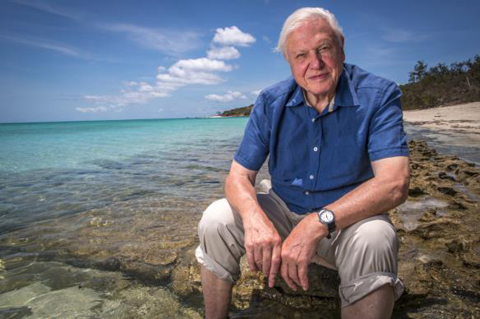
I don’t get to see much fake news on Twitter, apart from the output of Donald Trump, Nigel Farage and a few others I’ve opted to follow for their entertainment value. Or at least, not directly from the horse’s mouth, so to speak.
But occasionally someone retweets without comment a post so pernicious that it’s hard to tell whether the originator actually believes what they’re propagating or has a keen sense of humour.
I offer this little gem, which I stumbled upon yesterday, as an example:
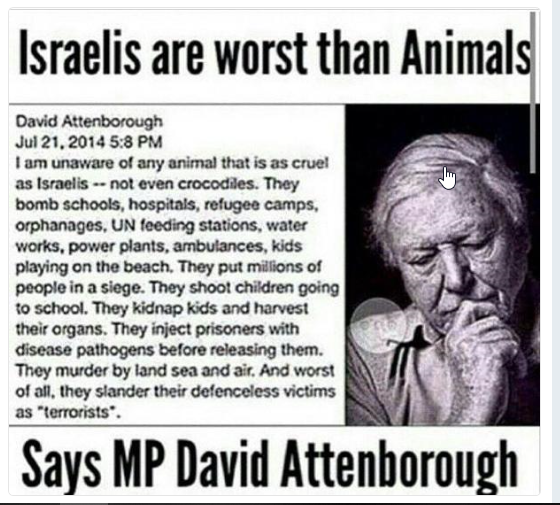
The suggestion that the wise, gentle David Attenborough would have authored this tirade is so absurd that I snorted with laughter when I first read it.
I’ve no idea where the words come from, but apart from picking out the absurdities – of which the worst is the idea that Britain’s beloved national treasure would claim that calling Israel’s enemies terrorists was worse than injecting them with pathogens and harvesting their organs – it’s worth taking a look at the route whereby this billet doux came to me.
The originator is someone whose profile is thus:
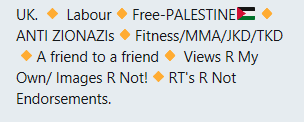
He (his profile photo is that of a male, but then again you can never be sure on Twitter) has more than three thousand followers.
The person whom I follow, who retweeted, is a columnist from Saudi Arabia whose output I often read when I was working there. His articles showed him to be an advocate of free speech and relatively liberal values in a country which locks people up if they stray beyond invisible red lines.
Here’s his profile:
He has over three thousand followers.
He and his brother, who is also a well-regarded journalist, share a deep disapproval of Israel, which is presumably why he retweeted the post.
Does he or the other guy actually believe that David Attenborough, whatever his private views, would utter such words in public? And do they also believe, as is implied, that, at 92, he is likely to be a member of parliament, unless of course MP means something entirely different?
Do they care? Or are they just having a laugh?
Either way, I wonder if their aggregated total of six thousand followers, as well as others who in turn retweeted and liked the post, would be able to tell the difference, or whether Attenborough himself would share their sense of humour. He might take the view that the tweet was grossly libellous. It is, after all, a very serious subject.
I’m sharing this stuff not because I’m an advocate of the State of Israel and its treatment of Palestinians, but out of a sense of amazement that people could be so carefree with the reputation of a person who has dedicated his life to the preservation of our planet in all its glories.
Yes, we, humanity, are “worst than animals”, because in combating what we see as injustice, we so often do unjust things.
And on Twitter, to do an injustice only takes a few minutes.
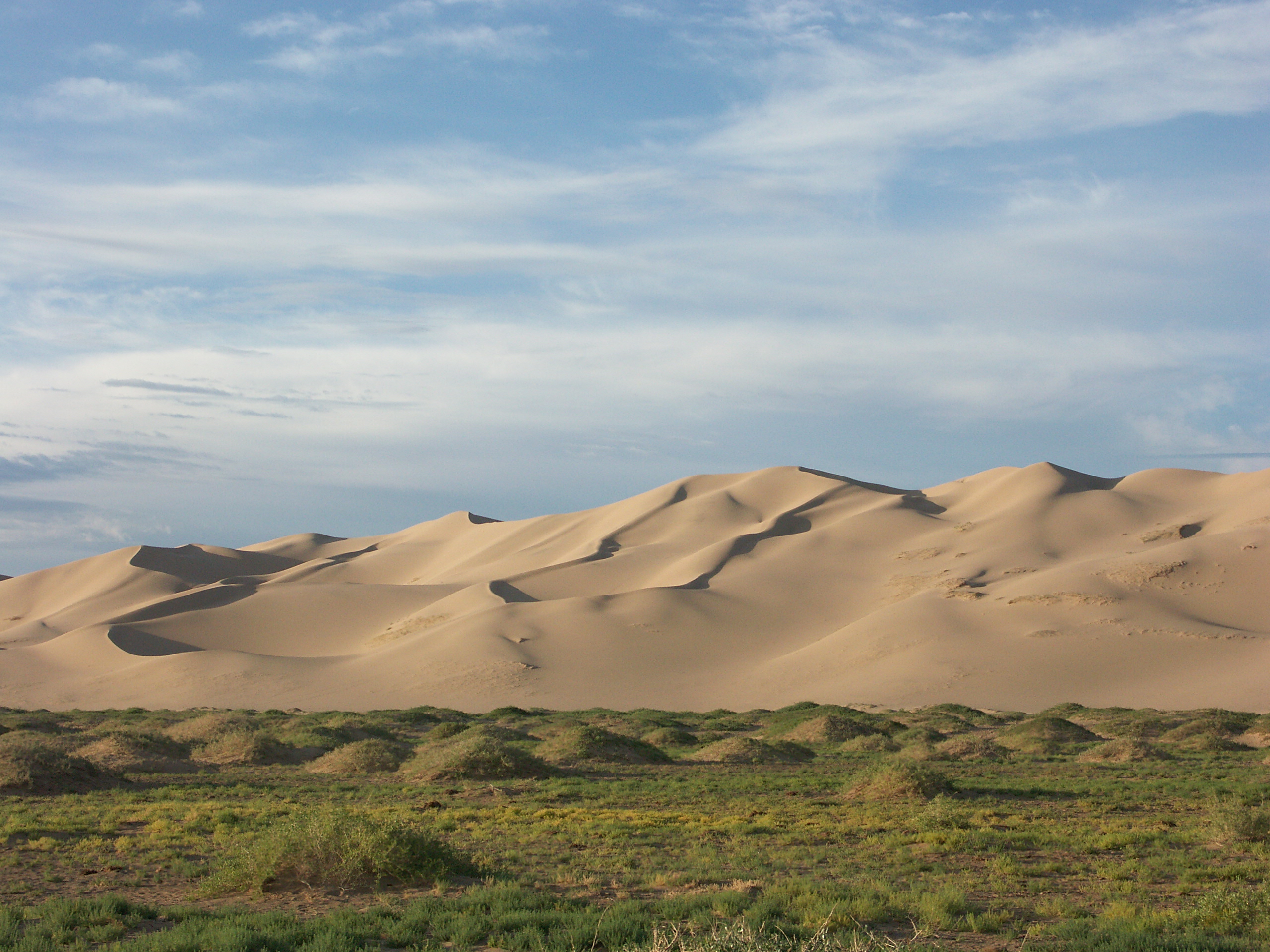
If you are determined to win power, what better way than to be able to portray a current situation as a shambles which you are uniquely qualified to clear up?
One reason, perhaps, why politicians on the extremes would quite possibly be happy with the consequences of a no-deal Brexit, food shortages and all. Would it be too cynical to suggest that such minor inconveniences as empty supermarket shelves, queues at gas stations and life-threatening shortages of medical supplies would be a small price to pay for “the right sort of people” to form the next government?
You might think that those whose political maneuvering leads us to this state of affairs would take the blame for the consequences of no deal. But as we have learned from Donald Trump, there is no lie that cannot be convincingly delivered in the hands of a skilful liar.
It would all be the fault of the European Union, of the Remoaners, of saboteurs and enemies of the people.
Those on the extreme right, such as Nigel Farage, who seems to have an open invitation to air his views on the BBC, and now Boris Johnson, who has recently been having cosy chats with Steve Bannon, the self-proclaimed architect of a Europe-wide right-wing revolution, will not hesitate to blame others for the disaster they might inherit after coming to power.
On the other end of the spectrum, Jeremy Corbyn and the ideologues who control him will be just as eager to blame external forces for the mess – the United States, rapacious employers, imperialists, globalisers. And the Tories, of course.
Either way, the chaos that awaits us after a no-deal Brexit is an opportunity for both extremes of British politics. The question is which narrative the voters will believe.
And yet there are millions of people in the United Kingdom, me included, who have no time for extremism of any flavour. We may not agree on everyday policies, but if opinion polls are to be believed, a majority of voters now support a second referendum on the details of the deal (and presumably on no deal at all). If there was a vote today, we would very likely favour remaining in the European Union as an alternative to the rotten options that have been touted thus far.
But – and this is a big but – where is the credible political force in the centre that could marshal a new remain campaign? If the extremists have aims beyond Brexit, where is an equivalent line of forward thinking that captures public imagination among the mishmash of members of parliament who are allowing themselves to be dragged into disaster by the zealots? Where are the leaders-in-waiting?
The Liberal Democrats have been rendered inaudible by the sound and fury of the zealots. The most prominent voices in favour of a second vote are outside the centre of power. Andrew Adonis in the House of Lords for example, along with lobbyists such as Gina Miller and Mike Galsworthy, and media people like Ian Dunt and Alistair Campbell.
Grass roots will take a movement only so far. If Brexit is to be reversed, there will need to be more than a few awkward MPs like David Lammy, Anna Soubry and Ken Clarke to stand up to the party whips.
Should a miracle happen and a second referendum does take place, how are we to avoid the flaws of the first one? Will there be another barrage of mendacious political advertising aimed at people whose perception is so contaminated by the previous one that they treat all arguments with equal scepticism?
Unless new electoral rules to combat fake news and campaign expenditure are drafted pretty quickly, the answer is probably yes.
And should we crash out of the EU, would a coalition of centrists form to clear up the mess – a government of national unity perhaps? Only after the damage has been done, I suspect. And only after the uncompromising operator at one of the extremes has managed to grab power. The devil, after all, has the best tunes.
So as we lurch towards March 2019, we a have Remainer Prime Minister who dares not defy her diehard Brexiters for fear of splitting her party, a Brexiter Leader of the Opposition whose supporters are overwhelmingly Remainers, and a much-diminished centre party whose leader whose voice is barely heard above the clamour – the only party, by the way, that officially advocates remaining in the European Union. Oh, and I almost forgot, and a nationalist party in Scotland that also supports remaining, but that will use the current mess in whatever way best serves their ultimate purpose of breaking up the United Kingdom.
Not a very pretty situation, considering that two years ago we were the fastest-growing economy in the Union and now we’re the slowest. Whatever the flaws of the entity we’re about to leave, can we really argue that we’re better off ploughing our lonely furrow on the edge of Europe, powerless and fractured?
It’s not too late to call a halt to the madness. Yes, I understand the arguments against a second referendum not mandated by the ruling party’s manifesto. But when we elected the current government we were unaware of the fraudulent nature of the leave campaign, and of the potentially disastrous consequences of no deal.
If they don’t act soon, our current crop of witless politicians will, I fear, be remembered by future generations as the worst in living memory.
And what really hurts is that the blame will be shared by all of us. Because we elected them.
Britain’s struggle with Brexit reminds me of the strangest things.
My wife and I are currently ploughing through a crime series set in Barcelona. One of the characters, a senior judge, is having an affair. He wants to end his marriage. His wife resists his attempts to pressure her into divorce. Unfortunately for him, she knows things that, if revealed, could end his career. So he decides to have her murdered. After she dies at the hands of a bungling hit man, he discovers that she had signed the divorce papers. He is overcome with remorse.
Leaving the EU is not exactly akin to murdering one’s spouse. But it would surely be grounds for national remorse if we failed to prosper after Brexit, and the organisation we left ended up substantially addressing many of the concerns that led to our decision to leave.
Then, I suppose, we could always apply to rejoin, whereas the judge will never get his wife back. But at what cost, while we go through the mind-boggling process of leaving in the first place?
It seems to me that to understand all the nuances of the negotiations, both within the British political establishment and with the EU, you need an advanced degree in Brexitology. Or, to look at it another way, not since the citizens of the Byzantine empire were gripped by an all-consuming obsession about the nature of Christ has a population been so engaged in a single topic of debate to the exclusion of most others.
Al least, that’s how it appears today, though I dare say that a substantial portion of our citizens just want us to get on with it.
As for me, I’ve just about given up trying to follow the latest arguments about the Northern Ireland border, about the merits of single market membership versus a free trade agreement and about the dangers or blessings of no deal. I just want the damned thing to stop.
I want it to stop for the same reason that led me to oppose the leave vote in 2016. We didn’t then, and we still don’t now, have the slightest clue about consequences of any of the alternative paths out of the European Union. Anybody who predicts outcomes with any degree of certainty is as much a charlatan as a fifteenth century weather forecaster.
That’s the big picture, folks. And while the lack of a weather forecast didn’t stop Christopher Columbus from setting out on a journey into the unknown, we, on the other hand, know quite a lot about the monsters that lurk in the deep. We just don’t know which of them, if any, is going to try to eat us.
That being the case, why are we still embarked on such a colossal gamble with our future? We can see the risks even more clearly now than in 2016, but we are no more able to predict the rewards than Columbus was able to see his passage to India, much less the land of milk, honey, gold and hostile inhabitants that awaited him across the Atlantic.
Back in the home port, I have never seen such a political mess in fifty years of adult life. Not since Harold Wilson issued reassuring words about the value of the pound in our pockets, in fact. I have also never seen such a lack of the political talent, at least in the upper echelons, that might extricate us from the mess. Cometh the hour, cometh Jeremy Corbyn and Theresa May? Boris Johnson or Jacob Rees-Mogg? I don’t think so.
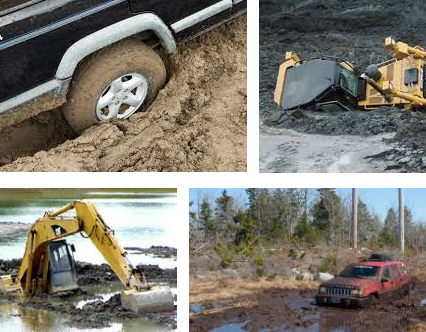
For this reason, I see no good alternative other than scrapping the whole Brexit project. Whether through a second referendum, a general election or a government of national unity, I don’t much care. We have run into a political bog of our own making, and as every month goes by the bog seems to get deeper and stickier. Unsurprisingly, there’s an increasing number of politicians with a modicum of common sense who are starting to think likewise.
I don’t pretend that rescinding our Article 50 letter will not have its own consequences. Nigel Farage jumping up and down like a demented bullfrog, inciting fire and fury, would probably be one of them. But it will be easier to deal with apoplectic Brexiters now, rather than with an angry, frustrated population later, furious at broken promises and impoverished for a generation.
Provided the decision was made on clear and justifiable grounds, and enacted through a legitimate process, we can surely live with the unrest that might follow.
Should we decide to remain inside the European Union at a time of profound international uncertainty, what will we have learned from the debacle?
That if you’re going to murder your wife, or divorce from a political entity to which you’re bound almost like a conjoined twin, you need more than just reasons fuelled by emotion. You need a plan. You need to get your ducks in a row before you go for it. You need to cultivate your friends, and indeed to understand who your friends are at any particular moment.
Perhaps if we’d started our planning a decade before the exit, we would have had some convincing answers to the objections that have caused us to run into our bog. Would it not make sense therefore to stay in the Union, and start the contingency planning now based on our unhappy experience, so that in ten years’ time, if we again determined that our membership was unsustainable, we might be able to make a decent fist of leaving?
Better still, should we not reconnect with the Union in a spirit of determination to make it a community that we would not need to contemplate leaving in the foreseeable future? In many respects, the political tide within the EU is turning in our favour. We are not the only nation to be afraid of the effects of uncontrolled immigration on our culture and economy. Uncertainty over Russia’s perceived intentions are leading us to form a military alliance with France. Our expertise in counter-terrorism and cyber-warfare is still in demand beyond our shores.
I began this argument by referring to a TV series. I end it with an identikit sequence from a Hollywood movie: the wagon train, full of querulous characters drawn into a circle for common protection, under attack from all sides by marauding horsemen. One wagon has broken off and made a run for it, only to be picked off at ease.
A crass and overly paranoid metaphor perhaps. We’re not surrounded by enemies – yet. But neither, as Donald Trump and Vladimir Putin have clearly reminded us over the past few days, can we rely on our friends, unless common interests so dictate.
Is this the right time to abandon the wagon train, or to set out across the sea towards terra incognita?
I don’t think so.
Yesterday, as I was strolling through a leafy side street in north London, the air filled with the kind of low-frequency music you sometimes hear coming from a car with high spec sound system, throbbing with menace. Shortly afterwards, the source of noise came into view: two black helicopters, each the size of London buses.
Down below, a couple of builders working on a house refurbishment, stopped, looked up and pointed. “Oi, look”, one of them yelled, “it’s fucking Trump. Shoot the bastard down!”
Though Trump was not in either aircraft – I subsequently discovered that their job was to “support” Marine 1, Trump’s helicopter, presumably with a company of marines armed to the teeth with weaponry of all shapes and sizes – I fancy that he would have appreciated the plain speaking from Brits who he believes like him a lot.
But then again perhaps not. After all he appears to be a person who likes to give it out, but is not so keen on being on the receiving end.
Thus began the visit of a man who treats his country’s allies as vassals to a country held to ransom by politicians who believe that any kind of a deal with the European Union short of a hard exit will turn it into a vassal.
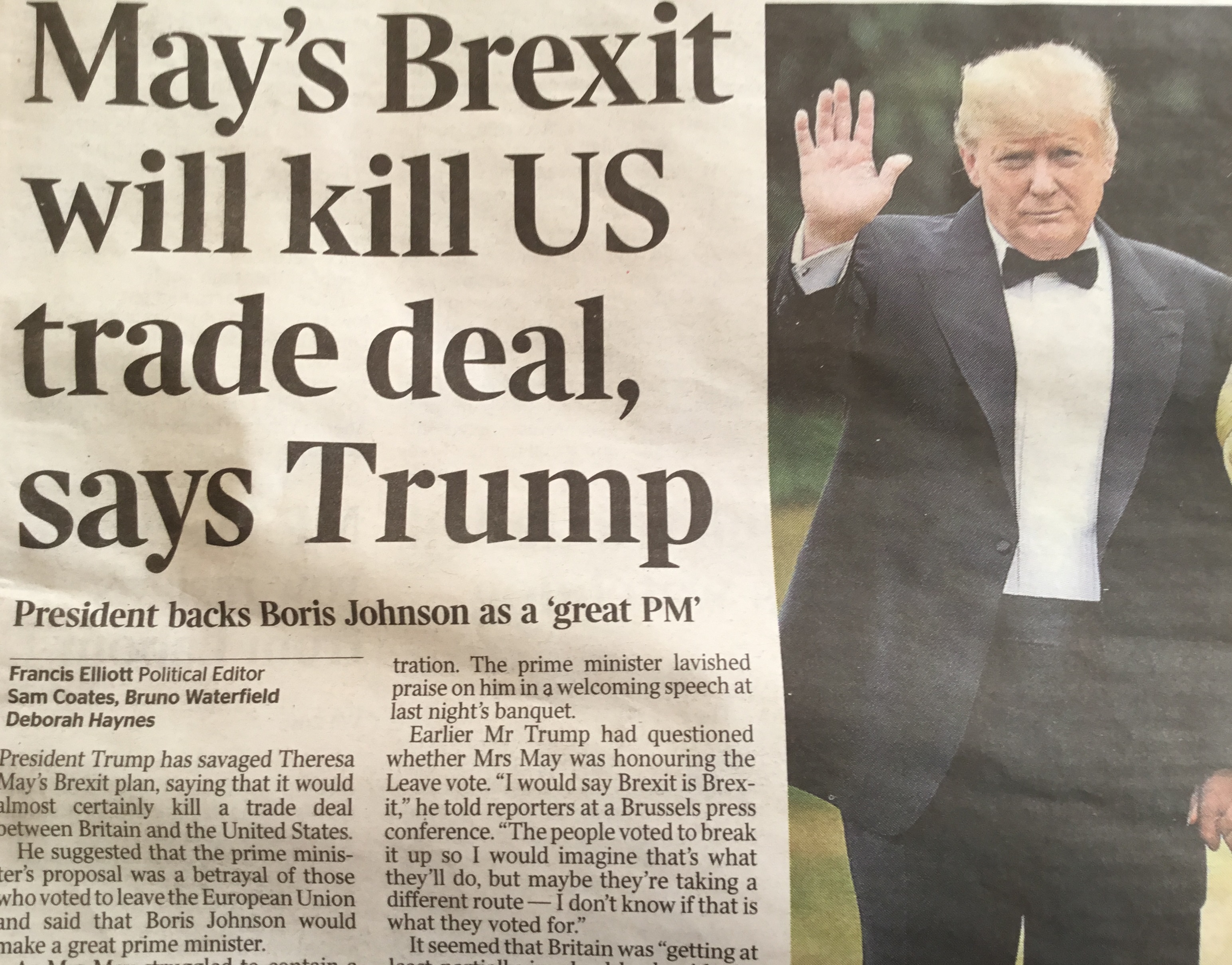
Just as Trump is stomping around Britain issuing unwanted opinions about Brexit, Boris Johnson’s suitability to become Prime Minister and other matters that are none of his business, the BBC is airing Reporting Trump’s First Year: The Fourth Estate, a four-part documentary on the coverage by the New York Times of his first year in office.
Last night I watched Episode 3, which included reaction to the Charlottesville alt-right rally, and included horrendous footage of the car running over anti-Nazi demonstrators, followed by his Phoenix rally in which he incited the hatred of his followers against members of the press directly behind them.
Small wonder that journalists who dare to disparage the man are seeing themselves as being in the front line against his fury. Even smaller wonder after the recent Capital Gazette shootings.
So much has been written about Trump’s followers reacting with glee to their man “telling it like it is” that I’m not proposing to add much to the existing canon. But I still find it amazing that people who, whatever their prejudices, in their private lives are most likely models of civility can applaud so wholeheartedly as their president behaves like a drunken uncle at a party who delights in upsetting his hosts with his provocative opinions.
Now we have this disinhibited would-be tyrant amongst us for a few days before he flies off to Finland to meet a real tyrant, a man who is as tight with his emotions as Trump is incontinent.
I’m not among those who believe that we should welcome the buffoon and shower him with insincere flattery. Now he’s here, we should treat him with courtesy, but let him know privately, in language he understands, that we don’t give a damn about his trade deal, that his opinions on Brexit are not welcome, and that we recognise that as long as he is president, the relationship with his country is no more special than his next chicken nugget.
What, after all, do we have to lose? This is a man who despises the normal conventions of diplomacy, and who appears to have lost any sense of good manners that he ever possessed.
If we cannot deal with this apology for a president, so be it. If NATO collapses at his promting and economies tank because of his trade deals, so be it. Ultimately his country will be among the losers, and American voters will eventually realise that the turkey they voted for won’t be available for Thanksgiving.
Whether it takes two or six years, Trump will eventually be gone. We have no choice but to bide our time and get ready to deal with who or what replaces him. But in the meantime, we don’t have to pretend we’re relishing having him around.
I hope the president enjoys his golf in Scotland, and then flies off to Finland, never to darken our door again.
This might sound a bit churlish as my compatriots in public places across England rely upon carbon dioxide to create fountains of beer every time we score in the World Cup. But as a veteran party pooper, I’m not quivering with anxiety at the current shortage of CO2. I don’t like fizzy drinks, be they Diet Pepsi or that toxic yellow liquid that masquerades as beer.
Fizzy drinks make you fart, belch and bloat. The alcoholic versions have no useful purpose other than to anaesthetise bored grown-ups at barbecues. Oh, and England football matches of course. So-called soft drinks turn our kids into hyperactive, screaming monsters. One famous lager is known in my neck of the woods as The Wife-Beater because of its ability to turn reasonably civilised men into raging lunatics.
A temporary shortage of the gas – or at least the pure form that has some use beyond saturating the atmosphere and frying the planet – can’t be a bad thing if it brings us a limited respite from the worst effects of its use in keeping us lubricated. That said, if I was reliant on somebody’s kidney arriving in good shape from sixty miles away to be transplanted into me, I might think differently.
But in this bone-dry British summer, it’s perhaps no bad thing to be reminded of what we take for granted. Another month of hot weather, and the farmers will be worrying about their crops. The potato harvest will fail and MacDonald’s will run out of French fries. Soon we’ll be appointing a Minister for Rain, just as we did in 1976. H2O will join CO2 in our ever-growing list of worries, conveniently diverting our attention from the imminent catastrophe of a disorderly exit from the European Union.
We in Britain are not used to shortages of what we consider to be the essentials of life. Just as we go into a screaming panic after a few days of snow prevent us from flying to our favourite winter holiday spots, we start fighting each other at the petrol pumps when, by reason of incompetence, politics or both, we run out of fuel.
A small number of church-going people deliberately deprive themselves of stuff they like – such as chocolate – during Lent. A much larger community endures the rigours of Ramadan. In both cases the deprivation is voluntary.
Despite the negative consequences of involuntary shortages – on jobs for example – we surely benefit from the temporary absence of commodities that we rely upon for our “normal” lives, because they remind us how fragile our normal actually is. Supply chains are not as robust as they seem. Remove a link and you have an instant crisis.
Nobody wants to see London transformed by kind of drought recently suffered by Capetown. But even if the rain returns, I can think of a few other shortages that might jolt us out of our affluent complacency.
Take lithium. It’s a rare metal used mainly in batteries. If we go short because of instability in one of the producing countries, we might have to cope with the unimaginable horror of not being able to replace our mobile phones every couple of months.
And what would our comfortable lives be like without regular shots of coffee? I hate to think of the crippling headaches I would suffer during withdrawal. I would probably have to resort Red Bull, the coffee drinkers’ methadone, until supplies got back to normal.
We need to be prepared for the worst. When the trade barriers go up, what will we do without iceberg lettuce, avocados, mangos and pomegranates? A thousand fancy diets ruined. Prostates endangered. Time for our grandparents to start regaling us with stories from the age of ration books
Since we’re rapidly approaching the point at which we have no friends any more, perhaps shortages will turn into permanent non-supply. Should we not therefore start stockpiling the essentials: cocoa beans, razor blades, toilet rolls, Prozac, AK-47s, bottled water?
Hell’s bells – I think I’m turning into a preppie.
Nizhny Novgorod, Samara, Rostov-on-Don, Volgograd. Until this summer these were places that only some of us might have recognised as being in Russia. For others they could just as easily be in Australia.
Were it not for the World Cup, such cities would not be on most people’s list of holiday locations. In fact, thanks to Russia’s image as a country full of grim-faced gangsters, secret policemen and vodka soaks, it’s hard to imagine more than a small fraction of the thousands of football fans who have flocked to Russia setting foot for any other reason in a country whose face to the world is epitomised by the half-smile of Vladimir Putin, an expression that only occasionally breaks through a stern, cold-eyed mask.
And yet the visitors from Japan, Croatia, Spain and yes, even plucky little England, are having a whale of a time. They are discovering that Russia is full of warm and welcoming people who have entered into the spirit of the occasion, their own exuberance fuelled by the unexpected success of the Russian team.
Cynics would say that Russia is putting its best foot forward, just as it did during the 1980 Olympics. Drunks and vagrants cleared from the streets, and not a shadowy FSB goon in sight. If so, clearly it’s working. Football fans will surely be returning to their home countries with stories of the incredible tournament they witnessed, and of the sights they might never have seen but for the World Cup.
Their eyes will have been opened to the possibility that regardless of the regime in power, you can visit most countries in the world, with the possible exception of North Korea and Syria, without encountering the dark sides so vividly presented by the world’s news media, social or otherwise.
And yet image is everything. Think of Russia, and you might think of winter. Of German soldiers freezing outside Stalingrad. Of Napoleon’s retreat from Moscow, littered with the bodies of men and horses. Of Stalin, Ivan the Terrible, Brezhnev and Putin. Death and despair overshadow Tolstoy, Tchaikovsky, the Bolshoi, the Hermitage, Lake Baikal and the Black Sea.
Now think of America, whose birthday it is today. The big country. Open-hearted, generous, welcoming, where everyone wants you to have a nice day. Even today, provided you are considered worthy of entering the US, you can visit any number of places where America is as it always was – tourist heaven, hassle free. Fishing villages in Maine, shopping in New York, Route 66, music in Memphis, Disney in Florida, sequoias in Oregon, lobsters in San Francisco, or perhaps one of those small towns where nothing much ever happens, but where you can encounter sweet, upstanding people straight out of a Norman Rockwell canvas. Places where ugliness exists only if you go looking for it.
But here’s an odd development. Just as the world is discovering that Russia has a summer, that it’s not defined by its grim-faced leaders, by its venal oligarchs and by Novichok nerve gas, the opposite is happening to the United States, whose image has always been sunny without it even having to try.
America is starting to be defined by the glowering face of Donald Trump, by babies in cages and by young men with assault rifles rounding up people at the dead of night. By videos of policemen shooting or tasering black people for no apparent reason. By Trump rallies full of people whose faces are twisted in hatred. By people on both sides of the political divide hurling insults at each other. And by the cynical sneer of Steve Bannon.
I last visited the US in the summer before Trump’s election. The signs were there then. Vicious bumper stickers excoriating Hillary Clinton. Marines with rifles guarding the platform entrances at Penn Station in New York. They were still easy to ignore, and an idyllic train ride to New Hampshire, followed by a weekend fishing for sea bass and hanging out with American friends at an old-style seaside holiday home, more than made up for the acid tinge of public discourse at the time.
Now the toxicity is hard to avoid unless you turn off all news feeds and allow yourself to bathe in a balmy summer of football and barbecues. And if you’re British, you can thereby also escape the equally toxic conversation on all matters Brexit, blissfully unaware of how our country’s image is being transformed by a gurning Prime Minister and her cabinet full of feral backstabbers, not to mention knife-wielding gang members and neo-Nazi thugs.
For those who are consumed by the football, the World Cup is throwing up unlikely underdogs whose national images are sure to be burnished. The gutsy Japanese who only just failed to beat Belgium. Other gallant failures include Iran, Nigeria and Senegal. None of them are tourist hotspots. But all showed courage and decency on the field that did their nations credit.
Much as I’m enjoying the spectacle, I find it hard to switch off from events elsewhere, especially when it comes to America, a nation I’ve always respected despite all its flaws.
Even as Trump’s policies play out and the consequences unfold, I’m watching the second series of The Handmaid’s Tale, set in Gilead, an America taken over by religious extremists, in which state-employed gunmen lurk on every corner, threatening, intimidating, menacing. The series is set in winter, and the action is dark.
The vision is grim yet imaginable, so much so that every so often, when I see on Twitter an example of America’s descent into authoritarianism, I retweet the post with a single word: Gilead.
When the heatwave is over, and the fans have left Russia in tears of joy or despair, will we turn our attention back to the scorched earth of trade wars, to the ambition of third-rate politicians, to irreconcilable Brexit negotiating positions, to Trump’s grand but empty summits and to the slow grind of Robert Mueller’s investigation?
Or will we keep our eyes shut and hope for a best that may never come, only to look back later to a golden summer that ended in catastrophe?
Perhaps, after the football’s done, the two superpowers will return to type. Morning in America will trump American Carnage. And in Russia, exuberance will fade as citizens digest the impact of having to wait longer for their pensions.
The World Cup will come round again. And in eight years’ time it will arrive in Mexico, Canada and the US, assuming that the co-hosts are still speaking to each other. Even if they are, one wonders how Trumpist America will cope with thousands of Muslim fans from countries like Egypt, Tunisia and Saudi Arabia. Not to mention Mexicans, Colombians and Costa Ricans.
Would it not be a supreme irony if the multitudes who were welcomed into Russia in 2018 ended up having to endure the interrogations of Gilead before being allowed to set foot in the Land of the Free?
Happy Independence Day, my dear American cousins. It’s not too late to turn back the tide.
My uncle at Oxford (top row 2nd left). Resolutely single-barrelled, but I’m not sure about his mates.
In my previous post I talked about acronyms, and how many of them have mutated such that it’s no longer possible to use them in conversation without the listener believing that the speaker is trying to communicate in some yet-to-be discovered language from the Amazonian rain forest.
Having got that obsession off my chest, I’ll now move to a second trend that I find a bit baffling. A while ago anyone sporting a double- or triple-barrelled name was highly likely to be posh – or at least to have aspirations in that direction. So if your name was Jago Smirnoff-Bullingdon-Drax, you were highly likely to own a house in the country, a pied-a-terre in London and a couple of very nice cars, one of which would have been a Range Rover. You would probably also have a liking for spanking derived from your years at one of Britain’s elite private schools.
If, on the other hand, you had all these things but no family ancestry to boast about, you probably wouldn’t be happy with plain Smith. You’d change it to Smythe, and expand the name to Spiffington-Smythe. Much more impressive. Then you could definitely walk tall in the Royal Enclosure at Ascot Races.
But now the currency is debased. Just about anyone who’s anyone has a double-barrelled name. It’s usually the result of the offspring taking both their parents’ names. Fifty years ago a top-flight footballer would be laughed out of the game if he sported a posh surname. Now in the England team currently taking part in the World Cup, we have Reuben Loftus-Cheek and Trent Alexander-Arnold. Alex Oxlade-Chamberlain would have been there were it not for injury.
In case anyone who follows football in the UK thinks that the trend is a black thing, it’s not. Everyone’s doing it.
This is all fine by me. It’s ridiculous that a small elite should be able to be identified as such by their baroque family names. It does cause problems for football shirt manufacturers, who have to try and accommodate those long names on the back of their apparel. They must be grateful for the eminently sensible Brazilians, who are content to be referred to as Fred. Since half of all Brazilians are called Silva, it’s doubly sensible.
But for us stubborn Europhobes, it’s to be hoped that the cowering rump of EU residents who are left over after Brexit don’t jump on the double-barrel bandwagon. Otherwise we’ll have to contend with Zabrze-Szectenny and Flugelhorn-Schlacht. Try spelling those over the phone.
Even more troubling is the question of what happens to the offspring of the newly anointed double-barrelled. Will they also take the names of their mothers and fathers, and thus become Quentin Hampton-Jones-McLaren-Smellie? This way surely lies madness.
It’s entirely possible that once we’ve arrived at quadruple and octuple surnames, sanity will return. Maybe our grandchildren will adopt the Arab way, wherein wives retain their family names when they get married, and husbands keep theirs. But the problem is that the offspring automatically get the father’s name, which doesn’t work if the mother wants the child to bear her name.
Or perhaps they will come to realise that it matters less what their names are than what sort of person they turn out to be. Should they decide that celebrity isn’t much fun after all, Smith, Jones, Leclerc and Mousa will be quietly waiting in the wings. And if those names are too boring, they can select from a massive canon of single-word English surnames, such as Hogsflesh and Bloodworth, which were the names of two boys at my school. Needless to say, they became firm friends in adversity.
Which leads me to advise any would-be parents agonising over names for their children: give them the blankest possible canvas, and let them paint their own pictures.
The world is full of innovations that fogeys like me find it hard to understand.
There was a time when acronyms were devices used to spare us from having to spell out concepts and things that can only be described by using multiple words. Unlike the Germans, who happily string nouns together in concatenations that take up entire lines of a page, we English-speakers consider compound nouns rather bad form.
Technical writers and bureaucrats are encouraged to spell out a term the first time they use it, follow it with an acronym in brackets, and then use the acronym thereafter. That makes sense. After all, why would you want to spell out North Atlantic Treaty Organisation or Personal Identification Number more than once in a two-thousand-word document, especially when everyone knows what the acronym means?
But now, it seems, since acronyms started to be used to describe people as well as things, they seem to have become organic. They mutate and expand. They evolve.
This is fine if you understand the evolving species, but if not, it can be deeply confusing.
Here’s an example. I don’t have a problem understanding what LGBT means. Even with a Q attached I’m just about there, though I fail to understand how the word queer defines a set of people who you would think are covered by the first four letters.
But now things get complicated. A couple of days ago I happened upon an article on the BBC website about someone who’s getting married, but claims that she will always be bisexual. Which is fine by me, and in this day and age hardly worthy of comment, you might think.
And yet, judging by this quote from the article, this is clearly not the case:
“Bisexuality often needs an explanation. It isn’t something you can often ‘read’ on a person and because of that bi people sometimes feel like an invisible part of the LGBTQIA community.”
The letters LGBTQIA stand for lesbian, gay, bisexual, transgender, queer or questioning, intersex and asexual or allied.
Crikey. The original acronym has mutated into something that feels as if it has been crafted by a committee on sexuality and agreed upon after much negotiation. It sounds more like one of those old trade union names – Boilermakers, Brain Surgeons and Allied Trades, for example – before media-savvy unions started using snappy names like Unite.
It’s also mutated beyond the point that it can be used in normal conversation. NATO pretty easily trips off the tongue. After all, it only has two syllables. But LGBTQIA has seven, and I find it hard to imagine anyone saying it out loud. Nor, I imagine, would anyone, if asked which category they fall into, reply that they’re questioning or allied.
Which for some reason reminds me of a fond fantasy I had in the punk era. In Birmingham, where I lived at the time, there was a celebrated disc jockey whose stage name was Vic Vomit. I remember desperately wanting to call his home, and, when his mum picked up the phone, saying “good afternoon Mrs Vomit, may I speak to Vic please?” But of course I was far too polite.
Anyway, back to acronyms. I still regard myself as someone who’s aware of social trends and the language used to describe people who like to categorise themselves one way or another. BAME, which stands for Black, Asian or Minority Ethnic, is another term that’s gaining traction in the United Kingdom. But I still struggle to get a fix on that one. Does it refer to anyone whose skin is not a reddish pink (depending on how much alcohol the person regularly imbibes)? Or do Latvians, Poles and Transylvanians – who are still as far as I know minority ethnic groups in my country – fall into the category?
Perhaps it’s time to embrace this hunger to categorise oneself. The only problem is how. White Middle-Aged Middle-Class Southern English, or WMAMCSE? No, that would never do – what about ethnic origin? “English” is just not good enough these days. Now that DNA testing has become quite popular, should one not add “of Viking, Anglo-Saxon and Mongolian origin”, creating, for a small subgroup of citizens, WMAMCSEVASM? Or just VASM for short?
Actually, I prefer temporary acronyms that describe one’s political affiliations. On that basis the category I most neatly fit into is Anti-Trump Brexit-Loathing Centrist, or ATBLC. Now that’s pretty concise, is it not?
But I can’t help thinking that “liberal” would do the job just as well. Just as long as nobody calls me a liberal gammon….
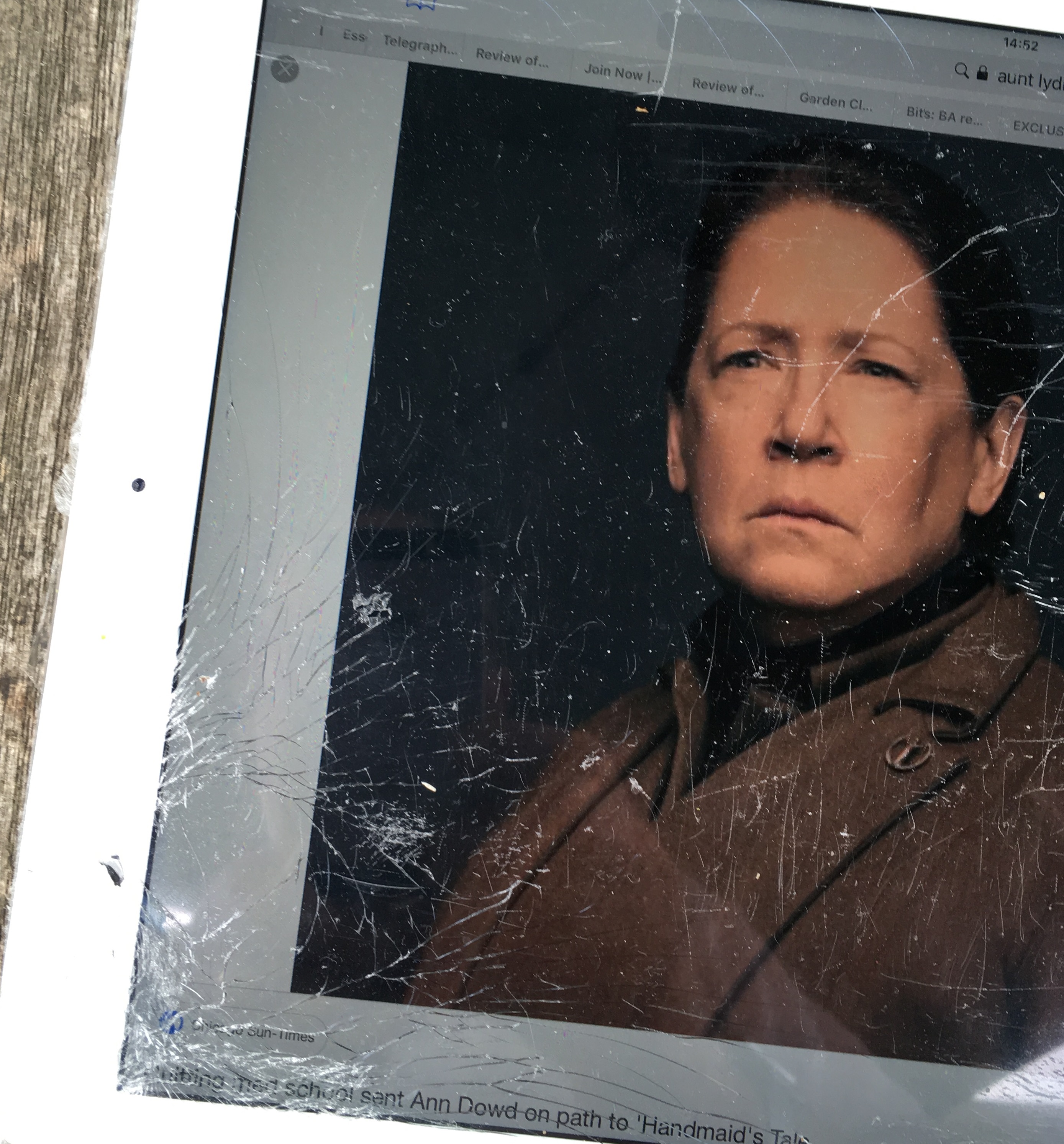
These days it seems as though any view that singles out the characteristics of one gender in contrast to that of the other is unacceptable. Even the suggestion that there are two genders is sufficient to arouse a twitterstorm if it comes from the keyboard of somebody with sufficient followers for their comment to be noticed by the righteous watchdogs of the internet. Except in Margaret Atwood’s Gilead, of course, where Aunt Lydia can be relied upon for robust views on the difference between men and women.
Fortunately my profile is not high enough to be on the radar of shame. So I can probably get away with discussing an issue that might cause me to lose a TV series or to be the cause of social media users wasting the equivalent of a small town’s daily energy consumption in rebuttals, expressions of outrage and virtuous condemnation.
My three-part question is this: is it true that the vast majority of broken mobile devices are those owned by women? If so, why? And, depending on the answer, and in the absence of Aunt Lydia’s ferocious imagination, what’s to be done?
In raising this subject I’m driven by personal experience. Apart from me, our infant grandson and my son-in-law-to-be, all members of my immediate family, including the dog, are female. And every female member of my family, apart from the dog, have at some stage over the last few years had phones and iPads with cracked screens. There have also been instances of phones that mysteriously drop down the loo or, in the case of other people we know, into the bath. Note my careful wording. I’m not suggesting any fault on the part of my nearest and dearest. These things just happen.
The loo possibly because at least two of my loved ones insist on keeping their phones in their back pockets, and the bath because relaxing in a hot tub clearly isn’t a complete experience without easy access to the phone.
The cracked screens? I have no idea why objects that are so dear to them end up in splinters, and no idea how said objects manage to escape spontaneously from their cases, which are specifically designed to protect the glass.
It’s not the cost of replacement that bothers me, and anyway I’m not a patriarchal treasurer of the family fortune. It’s that phones and tablets are in their pristine states things of beauty, and it grieves me to see them with shattered faces, even if mostly they work perfectly well.
But it does piss me off that replacing the screens sometimes costs as much as the residual value of the entire device. And it makes me cross that phone designers spend so much effort in producing whizzy new features, and yet can’t bring themselves to equip their products with shatter-proof glass.
No doubt my loved ones will point out that I’m talking out of my ample backside. That I once lost a mobile phone, having forgotten to pick it up out of one of those little boxes they provide for the airport security check. This is true, but in my defence I would argue that I’m losing at least 5-1 in the lost phone stakes.
They will probably also say that my laptop has a broken screen because I was foolish enough to allow Ryanair to put my cabin bag into the hold, trusting that my Lenovo would be OK if I buried it under several layers of clothing. To which I would reply that at least I didn’t drop the bloody thing.
They might also argue that I only use my mobile phone for the occasional call or text, whereas for them hardly five minutes elapse when they’re not doing something utterly critical, life-saving or life-enhancing with theirs. Therefore, given the difference in usage, it’s not surprising that theirs break occasionally and mine doesn’t. To which I would reply that their fingers don’t break every few months, so why do their phones and iPads, which appear to be equally important to their well-being?
Then they could also roll out with old chestnut about women being the great multi-taskers, and men being unable to walk and chew gum at the same time. Therefore am I not being jealous in citing a minor by-product of their relentless productivity? And I might gently suggest that phones are more expensive than chewing gum.
Is this just a Royston family phenomenon? I suspect not. I was chatting with a friend the other day, and I noticed that his phone was cracked. How did you manage that, I asked him? It turned out that he’d lent it to his grand-daughter, and twenty minutes later it came back broken. Not exactly conclusive evidence of a widespread issue, but enough to convince me at least that Houston, we have a problem.
There is, however, a potential solution. I understand that a local council is planning to section off an area of their pavements specially for people who walk along buried in their phones, thereby helping them to avoid oncoming traffic. Perhaps I should create an area of our house, covered in tasteful polystyrene and bubble wrap, specifically dedicated to phone and iPad use. Oh, and we could install netting over the bathtub.
I have yet to come up with an answer to the loo problem. Perhaps an app that makes a gurgling sound whenever its owner inserts their phone into their back pocket. Or maybe a class action against manufacturers on the grounds that their devices are unfit for purpose would get their attention. After all, so many phones seem to drop into the porcelain that there must be some underlying purpose behind dunking your device as opposed to switching it off.
Surely Apple and Samsung can come up with a better way of stopping the NSA and GCHQ from hacking into their phones?
I may be wrong in ascribing a gender dimension to this phenomenon. Perhaps this is a man thing also, in which case I apologise in advance to my family and to women everywhere. Though whether or not I’ve unwittingly propagated fake news, I suspect that after I post this there will be a second inhabitant of the doghouse for a while.
Back in Gilead, I’d be off the hook, so to speak. Aunt Lydia would no doubt have a view – something to do with phones damaging women’s fertility. And she would be busy in a torture cell preparing the cattle-prod, chains and gas ring in order to deter her handmaids from using the cursed things under any circumstances.
We all need rules. Not only in our everyday lives, but particularly in our sporting activities. Which means that we also need high priests, gurus, lawyers and judges to interpret and apply them.
Last week I was playing in a golf competition and made a mistake through my ignorance of the rules. As a result, I fell on my sword and disqualified myself. I accepted the word of one of my peers that I’d screwed up, even though I felt that the rule in question was bloody ridiculous. I do respect rules, even if I don’t like them.
When I got home, out of curiosity I consulted the rule book, which is a volume produced jointly by the Royal and Ancient Golf Club and the American Golf Association. They are the governing bodies for golf in the UK and the USA, two of the world’s most prominent golfing nations. What they say goes for the rest of the world.
Now you would think that a game that involves hitting a little white ball down a demarcated piece of land is a simple activity. In essence it is. Or it was until it became a multi-billion dollar business in which fortunes depend on the ability of professionals not only to play the game well, but to do so free from infraction.
The Rules of Golf is a reference book that I rarely visit. In my advanced years, and as I approach my second adolescence, I find myself increasingly disinhibited, and less inclined to take kindly to obscure rules rarely invoked. A bit like Donald Trump, actually, except that I don’t cheat at golf.
As a book, it’s quite interesting in a gruesome kind of way. My version is 228 pages long.
Think about that. 228 pages of rules, clauses, sub-clauses and appendices to get that white ball from one end of the course to the other.
In one respect, it’s an outstanding testament to international cooperation, as well as a relic of imperial dominance. On the back of the book there’s a simple statement:
Golf is a global game and The R&A and the USGA have issued this single set of Rules to apply worldwide to all golfers.
Wow. So golf is ruled by Britannia and Uncle Sam! This surely is one area in which the special relationship survives and thrives. Though I can imagine hours of tense negotiations during which the R&A insisted that it should be referred to as The R&A as opposed to just any old R&A, whereas the USGA was content with leaving the definite article in the humble lower case. Such things obviously matter. Whoever negotiated that one should definitely be leading Britain’s Brexit team currently doing battle with the European Union.
On Page 2, there is a qualification of the statement on the back cover. Apparently the USGA rules golf in US territories and Mexico. The R&A holds sway over the rest of the world. Or rather, “it operates with the consent of its affiliated bodies”. Still, even though the Vanuatu Golf Association could theoretically break free of the R&A’s iron grip and write its own rules, as far as golf is concerned more of the world atlas is coloured British pink than the British Empire ever managed.
I won’t bore you with the details of the rules themselves, which are full of stuff that will be understood only by golfers, including “a player is entitled to place his feet firmly in taking his stance, but must not build a stance”, which presumably rules out the use of spades, mechanical diggers and breeze blocks.
What I do find amusing is that there are groups of people who hold competitions with each other to demonstrate their knowledge of the hallowed book – something along the lines of pub quizzes, I imagine.
Golf has not yet reached the status of a religion, wherein followers gain great prestige by learning a scripture in its entirety – the Holy Quran for example – but it definitely has its high priests. Every golf club has one or two self-appointed pharisees who solemnly quote chapter and verse to the rest of us. Which is a good thing, especially for people like me who need to be put right from time to time. And I’m pretty sure that there are grand masters out there who do know the book by heart.
There may even be people who, for the hell of it, take it upon themselves to memorise the detailed specifications that govern the size, shape and properties of golf equipment. As far as I’m concerned the example below might just as easily enable you to build a nuclear bomb:
As it is with golf, so it is with every other organised sport. Over centuries, thousands upon thousands of hours have been spent codifying and re-codifying, building layer upon layer of increasingly complex rules so that people like me don’t end up embedding our putters in the skulls of opponents with whom we disagree.
The fact that most of us happily whack the white ball back and forth without feeling the need to commit murder, and that regardless of where we are in the world we abide by a single set of rules, is surely an example to our politicians who spend much of their lives negotiating rules scarcely less complex.
And the fact that the leaders of six out of the G7 group of countries, after their annual summit ended yesterday, found it impossible to persuade the seventh to agree on a joint communique that included the statement that they believed in a “rules-based trading system” is somewhat surprising, especially as the recalcitrant Donald Trump is a golfer, which makes his role in renouncing the idea that his country should be bound by rules not of its own making doubly strange.
Perhaps he has forgotten the overriding principle of the game he loves: “when two or three are gathered together in the name of golf, the R&A and the USGA will be among them”.
But then maybe we shouldn’t be surprised, because Trump, if we are to believe his critics, wrote the rule book on cheating, if not at golf, almost certainly in other aspects of his life.
If so, he will probably meet his match in Kim Jong Un, whose dynasty has a rich history of cheating. Kim also has distinguished golfing antecedents. His father, Kim Jong Il, apparently once took a mere 34 shots to go around the Pyongyang Golf Course, a round that included no less than five holes-in-one. The elder Kim’s feat was witnessed by no less than seventeen armed guards. So it must have happened.
No doubt they will have much to discuss. It’s a pity the lawmakers of golf won’t be there to keep them honest.
If there’s a word that hacks me off when used by a politician, a “spokesperson” or anyone else doing a media interview, it’s “so”.
As in “tell me Minister, what are you doing to fix this problem?”. The answer comes back: “so we have a number of measures that we will be introducing…blah blah blah”.
Why so? This little word has many uses, and it has the advantage over its synonyms of being short and sweet. As in “do it so”, or “we were hungry, so we went to the pub”. Or just “so?”.
But who or what has persuaded so many people to open their statements in answer to questions with so, and thereby turn its use into a cliché that makes me howl every time I hear it? I’m usually in my car when this happens, by the way, so I do worry about road safety in my immediate vicinity. So far, no accidents, fortunately.
I do use the word myself at the beginning of a sentence as an alternative to “therefore” or “as a consequence”. But its deployment as a device that helps the speaker to avoid diving straight into an answer is, to me, as bad as starting with “well”, or even “um” or “ah”, though not quite as bad as “that’s a great question”. It jars. It smells of media training designed to instil the art of obfuscation. Probably the same training that teaches sportspeople to precede every answer with “look”.
Another way of putting it, to quote from a website called urbandictionary.com, is to define so as:
“The first word of any answer given by a know-it-all douchebag, said to give the effect that they were already speaking when you asked your question or requested their opinion, in order to feign superiority or to imply that they knew what you wanted to know before you inquired.”
That just about sums it up for me, even though not every offender is a know-it-all douchebag. In fact, many are highly intelligent people with something interesting to say. They’ve just been misguided, or are copying everyone else.
I write lots of words, but rarely much about them. I regard them as my friends, and I’m quite fond of so. So I hate to see a little word stripped of its meaning, mutated into a bland precursor for use by people who don’t have the confidence to get straight to the point.
Which probably explains why one of my favourite characters is Saga Noren, the autistic detective from the Swedish TV series The Bridge, who has never been known to mince words. She annihilates them.
Taking a cue from Saga, here’s a word of advice to would-be interviewees. Next time you are asked a question on radio or TV, try taking a leaf out of her book. Instead of answering with a stream of blather preceded by “so”, try replying with “this is not relevant”, or “that is a stupid question”. Or possibly, under extremely rare circumstances (on Love Island, for example) “do you want to have sex?”
Yes, I know – that would never do. And trying to stop the mutation of a language is pointless and futile. But occasionally, spending an hour or so on a pedantic rant is a welcome diversion from Brexit, Donald Trump, the World Cup, Italian politicians, fake news, snake heads that bite people, Melania’s absence, knife crime, plasticised oceans, pooping joggers, murder, mayhem and all the other consequential stuff that demands attention.
Small things also matter. So it’s time to stop victimising small words that can’t defend themselves. So there.
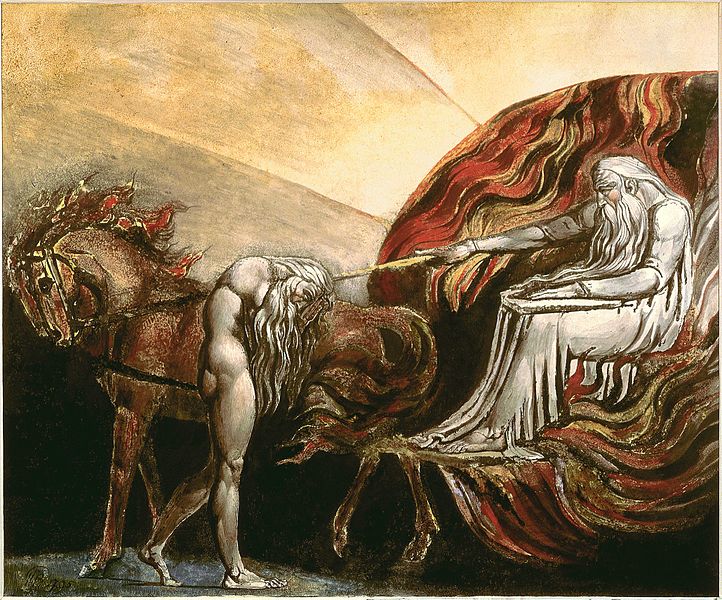
Roseanne Barr, it seems, is blaming a sedative for the repellent tweet that led to her series being abandoned by the ABC TV network. Perhaps because I have no experience of Ambien, the drug in question, or of any other kind of sedative, I fail to understand why someone in a sedated state should be any more likely to come up with a racist tweet.
Indeed Sanofi, the makers of Ambien, have been quick to point out that racism is not a known side-effect of their product. But I suppose there’s always a first time.
Anyway, until today, Roseanne appeared to be following the classic path for celebrities who have been shamed for whatever reason. It goes like this:
Step One: commit some act that causes widespread disapproval, up to and including being cast into the outer darkness.
Step Two: prepare yourself for a host of fresh revelations about your unsavoury conduct, and get a lawyer, just in case someone tries to sue you.
Step Three: announce that your action is the result of drug/alcohol/sex addiction. Failing that, blame your parents, an abusive spouse or some traumatic aspect of your early life for your troubled present.
Step Four: announce that you’re going into rehab so that you can deal with the issues you’ve identified. Ask for “privacy at this difficult time”.
Step Five: assuming you haven’t been thrown into jail, lay low for a few months or years (depending on the severity of the act).
Step Six: have your publicist arrange an interview with a sympathetic journalist, talk about your tough times, and announce that you’re cured. You might also add that you’ve found Jesus. Oh, and beg for the forgiveness of your adoring public.
Step Seven: sign up for a new TV series/movie or whatever you’re famous for. By this time your adoring public, most of whom are also addled with opioids or Jack Daniels, as firm believers in the power of redemption, will give you a second chance, on the basis of “there but for the grace of God go I”.
Of course there’s nothing immutable about these classic stages, especially when you have Donald Trump on your side. Roseanne appears to have gone through Steps One to Three, but hours after her apologetic tweet, she’s spitting venom at all those who accuse her of racism. Clearly Trump has found the time to give her a quick tutorial on doubling down.
I suspect, though, that she will return to the path once she realises that Trump and her lawyers can’t restore her career or her reputation.
Like many great innovations and trends that were created in the USA, this classic celebrity redemption path has spread to the UK and other parts of the world.
We in Britain, of course, have our own time-honoured methods of wriggling free from reputational damage, though they’re generally of use only to certain strata of society. Whereas in America wealth loads the dice in your favour, class and snobbery have been known to do the trick over here.
Take the Jeremy Thorpe trial, which is currently being dramatized in a well-regarded TV series starring Hugh Grant as the Liberal politician. Were it not for Thorpe’s impeccable manners and his elevated place in society, I can’t imagine that the jury would have found it so hard to believe that he was capable of ordering a hit on his gay lover.
Then there was the judge’s summing up at Jeffery Archer’s successful libel action against The Star newspaper, in which His Lordship described Archer’s wife as “fragrant”, as if her body odour had anything to do with her husband’s penchant for paying large sums of money not to have sex with a prostitute. At least Archer was subsequently banged up for perjury, a fate Thorpe managed to avoid.
And back in 1895, it was poor old Oscar Wilde, son of a middle-class Irish family, who took the rap for sodomy. The object of his adoration, Lord Alfred Douglas, son of the Marquess of Queensbury, was apparently an innocent party who had nothing to do with Wilde’s depravity. Well, he would be, wouldn’t he?
These days class tends to play less of a role in British personal redemption sagas. But we are embracing the US model with enthusiasm.
There is one significant difference though. Whereas in America the arbiter of forgiveness tends to be God, whose wishes and intentions are generously interpreted by His legions of believers, over here we are not so overtly religious. The role of supreme judge of morality is usually assumed by the tabloid newspapers, or more specifically by their editors, who are invariably persons of unimpeachable rectitude.
But society never stands still, and the supremacy of the tabloids is being challenged by a multitude of self-appointed judges who populate Twitter with their opinions, each with devoted followers ready to troll on cue.
The path of redemption is never easy, especially when there appear to be so many gods to appease. Even so, it’s my guess that the seven steps will continue to work for most celebs who fall from grace, though they’ll need to spend ever-increasing sums on hiring smart lawyers and publicists.
Either that, or they could try investing in one of Donald Trump’s businesses.
I learned a thing or two today, when ambling down the byways of the national newspaper that gets delivered to my door every morning.
The first item is that during the nineteenth century, there were devices called fog signals. These little beauties were laid on railway lines to alert train drivers to fog ahead. Fog was a problem because signals – such as those warning you to slow down on a tight corner or alerting you to workers on the line – couldn’t easily be seen.
The Victorian solution was explosive charges that were detonated when the train ran over them, thus making a large bang and presumably scaring the daylights of driver and passengers alike. You can imagine the effect of such bangs today.
The reason for this bit of history was that in my home town of Birmingham there was a factory making these mini-bombs, and on this day 150 years ago, before the widespread use of lightning conductors, the factory suffered a lightning strike. The result: boom. 43,000 devices went up. The effect was similar to an ammunition dump exploding. Four people were killed, and I imagine that train drivers had to proceed very carefully for a while afterwards.
That unfortunate incident was only the prelude to other startling information that The Times article had to offer.
In 1769, in the Italian town of Brescia, the tower of St Nazaire church was struck. In the vaults lay 100 tonnes of gunpowder. The detonation destroyed the church, killed 3000 people and reduced a sixth of the city to rubble.
But there’s more. In 1856, the church steeple of St Jean in Rhodes took a lightning strike. It too had gunpowder in the vaults. The explosion killed 4000 people.
I learned about these tragedies as I sat listening to a nearby thunderstorm. Very comforting reading. We do however, have a lightning conductor on the roof, and unless my wife is planning to graduate from burning autumn leaves to something more exciting, I don’t believe we have any stashes of explosive materials.
This illuminating article by Paul Simons, in his unmissable Weather Eye column, came a couple of days after my daughter, his partner and their firstborn spent the night in a tent somewhere in Gloucestershire. It was the night when, according to meteorologists, there were around 15,000 lightning strikes across Southern England. Apparently the three of them, blissfully unaware of the coming storm, slept right through the celestial firework display and woke the next morning surprised to find themselves in the middle of a bog. No doubt they would have slept through the Brescia explosion, too, assuming they were far enough away to avoid the falling masonry.
The article unfortunately didn’t explain why people kept gunpowder in the vaults of churches, though I’d hazard a guess that they were the driest places available, and a timely contribution of church funds probably clinched the deal.
But it does illustrate what might have happened if the Gunpowder Plot to blow up Parliament in 1605 had been successful. It would have been the Jacobean equivalent of a nuclear bomb.
Weather Eye is one of the reasons I read The Times. Simons’ column is a treasure of science, history and stories about the subject we British love above almost all things.
Another joy is the obituaries. Today I read about a marine biologist who terrified members of the Tavistock History Society by subjecting their work to the highest academic standards of peer review. She also discovered that ichthyosaurs were reddish brown, though the diligent writer leaves room for doubt by saying “attempted to discover” without explaining why.
Then there’s the cricket umpire who objected to being made to wear a blue jacket when officiating in one-day-matches alongside players who had to wear coloured pyjamas, and registered his displeasure by marching on to the pitch with a basket full of milk bottles.
Not to mention the brigadier who was Prince Philip’s private secretary. He was a former Ghurka commander who had the distinction of captaining a team in the World Elephant Polo Championship. And finally a neuroscientist who learned to walk at the age of eight months, something that will be of great interest to my daughter as she monitors her son’s development.
I’m sure that The Times has many readers who, besotted with Trump, Brexit and the collapse of civilisation as we know it, don’t have time for these relative backwaters of natural phenomena and human eccentricities.
But for me, as I develop into an ageing man of habit, they offer a comforting daily counterpoint to the sound and fury to be found on the main pages, on Twitter and on the TV news. Not only that, but an alternative to the “you’ll never guess what happened next” advertising honey pots masquerading as human interest stories to be found on Facebook and elsewhere on the web.
Having said that, there are times when serendipity and hard news coalesce. I can hardly wait to see what The Times obituary writers do with Donald Trump when he finally shuffles off. Assuming of course that he goes before I do. An outcome for which, with no malice intended towards the man himself, I profoundly hope.
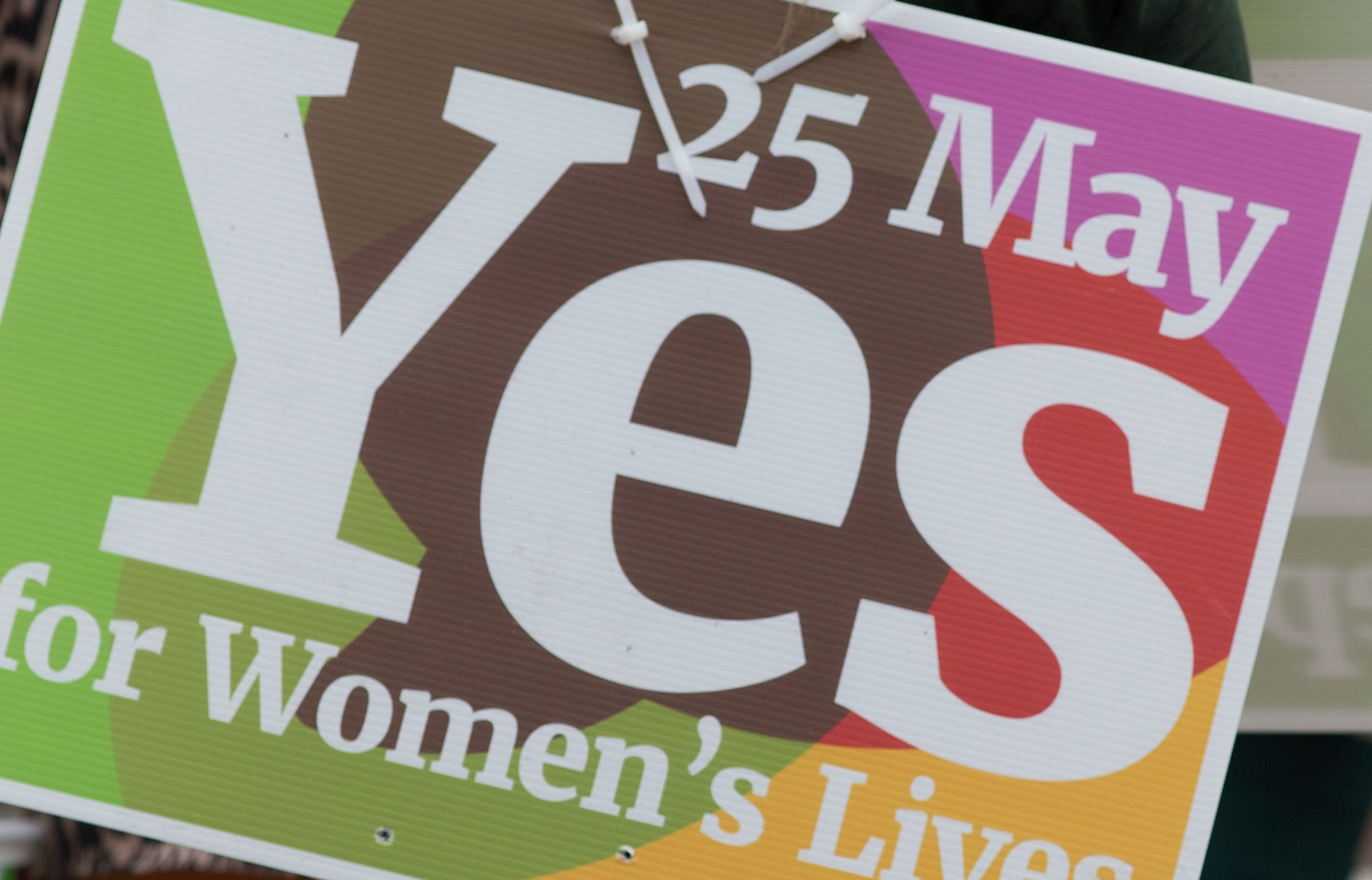
Five quick thoughts on the Irish abortion referendum:
First, it was a single issue, exhaustively explained and passionately argued. The Brexit decision was a multiple issue masquerading as a single issue, inadequately explained and widely misunderstood.
Second, the verdict was so clear that there will be no room for argument, no scope for accusations of Russian influence. And nobody will be able to blame George Soros.
Third, it’s ironic that the votes of a couple of million people, in successive referenda, have led to freedoms that tens of millions of their emigrant relatives in America have enjoyed for decades. And what is America becoming now?
Fourth, Ireland is no paradise. It has many social problems – drug abuse, gang violence, corruption and yes, immigration, among them – but it would appear to be on its way to becoming the tolerant, open-minded society that most of us in Britain thought we were living in, until the EU referendum ripped us apart. I am lucky enough to be married to an Irish woman. I have always respected her home country, but now I am starting to envy her nationality.
Finally, the only thing that Ireland has to do to turn itself into a country that I’d be happy to live in is to have a referendum on the weather.
It’s a gorgeous sunny day in England. This picture could have been taken any time in any part of my country and, for that matter, a lot of other people’s countries over the past twenty years.
It happens that I live in prosperous Surrey. Just down the road from my home is the park where I take the dog for a walk. It has tennis courts, a basketball court and a kiddies play area fenced off from marauding dogs. On days like today, the play area is packed with mums, dads and their offspring having the time of their lives on swings, slides and all manner of other things that adults think kids enjoy.
Outside the fence there are even a couple of table tennis tables, sufficiently rugged to defy all but the most determined vandal.
All around the large expanse of grass are people like me taking their dogs for their afternoon constitutionals, bags at the ready to scoop up the poop. There’s an ice cream van, a posse of sub-teens taking group lessons on the tennis court, and another bunch dribbling footballs around plastic cones. Families are having picnics on rugs spread over the grass.
We took my kids to this park when they were young. Later on, when they became more interested in ponies, we went to the nearby stables instead.
Still later, our elder daughter, then in her early teens, returned to the park, this time for the purpose of hanging out with her mates, something we weren’t too comfortable about, but hey, you can’t keep them locked up forever.
Our kids are long gone, and the dog is too old to chase tennis balls, but we still meander through the park at a pace that allows her to sniff hedges, pee where others have peed and occasionally do more than pee. She pays little attention to yappy little dogs who come up to her – just a perfunctory sniff and on she goes.
This afternoon, as we approached the tennis courts, which mark the far end of our customary circuit, I came upon the pile of garbage that you see in the photo above. This is not an unusual sight, and sometimes I collect what I can and put it in a nearby bin, of which there are plenty.
But this was a bit more extensive than the usual mess. Unusually, it included strips of white cloth. You can accuse me of being a crabby old fart who blames our youth for all manner of misdemeanours, but it was pretty obvious to me that a group of teens – just like my daughter and her mates all those years ago – had been there after school, guzzling soft drinks and junk food, and probably sharing a crafty ciggie. I’ve seen kids before with large amounts of trash around them, and I’ve sometimes suggested to them that they should pick it up. They usually do so, although with bad grace.
Why the white cotton strips? Possibly because exam time is approaching, and some kids no longer have to attend class because they’re revising. Could it be that one of them had taken great delight in ripping one their into shreds? This is a time-honoured ritual I’ve come across before, though it never happened when I was at school.
Such a pile of garbage is a source of great delight to the dog, who swoops on the crumbs in a cake packet before I can grab her. Though I’m not sure why I worry about her developing canine diabetes at her advanced age.
Time and again, the same thought enters my head every time I encounter the detritus of a teenage picnic: why not spend sixty seconds picking it up before you leave, and then another sixty seconds putting it in the bin?
But then I remember that this is what entitlement is all about. No need to bother. Someone will pick it up. And someone always does, that someone being a council employee whose job it is to pick up the trash, check the grass for dog poo and empty the bins in time for the next day.
It’s what we – or rather our parents – pay council tax for, right?
And I wonder at what stage do the litter-strewing brats turn into “good citizens” who always clear up their mess. For some of them, perhaps, when they end up in student flats, and the mounting piles of dirty washing, filthy dishes and general grime becomes too much to bear. Some never evolve, and spend their lives complaining about what others are failing to do for them.
Then I get to thinking about the messes I’ve never cleared up. There must be plenty. Emotional stuff, probably things I’m not even aware of. How many times have I not stood up to be counted, and said “enough”? Too busy making a life to worry about other people’s. Too busy ducking, diving, avoiding unpleasantness and turning a blind eye to all the bad stuff that goes on around us.
Too late to do much about all the stuff I’ve let pass. But now? Yes, I suppose I could immolate myself in front of the House of Commons in protest against our politicians who, with their one-eyed approach to Brexit, are arguably blighting the future lives of kids like the ones who littered my local park. And yes, as a slightly less extreme alternative I could go on demos for as long as my knees could take it.
All the same, as I walk back to the house, and as the dog takes a dump outside our next-door neighbour’s place and I dutifully scoop up her offering with a Waitrose bag, I tell myself “not enough”, reflecting on the amount of times I’ve relied on others to do the dirty work.
The sad reality is that it’s not just gatherings of self-absorbed teenagers who consider themselves entitled. With a few honourable exceptions, it’s all of us. If it were otherwise, what a different country we would be living in.
As time goes on, and as those we rely upon become less reliable, less available and less affordable, we might just have to become that different country, even if it’s by accident rather than design. Let’s hope it doesn’t hurt too much.
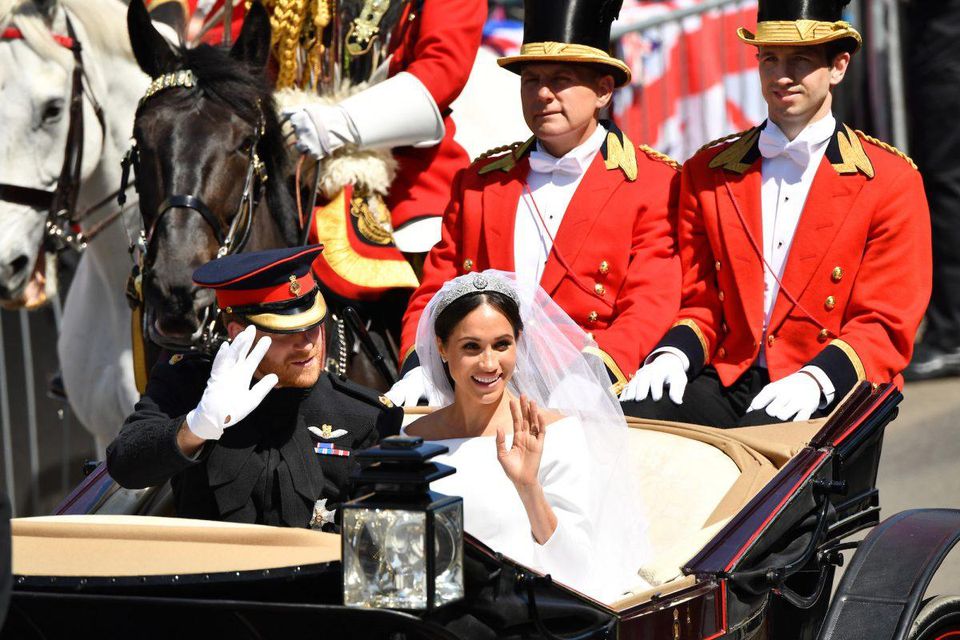
I didn’t want to watch it, but in the end it was unavoidable. When I got back from a round of golf my wife and a friend were sitting in front of the TV oohing and aahing at the dress, the flower girls and all the other accoutrements of Harry and Meghan’s wedding.
I didn’t want to watch it because I hate having my emotions manipulated by the music, the ceremony and the choreography. It happens every time. Diana’s funeral, William’s wedding, even the Queen Mum’s funeral for goodness sake.
But then I reminded myself that every fictional drama I watch on TV or at the cinema tries to wind me round its little finger, so why resist the real thing?
So I allowed myself to be drawn in. And who could resist Bishop Curry’s magnificent upstaging of the Archbishop of Canterbury? Poor Justin Welby had to stick to the liturgical script, whereas Curry was free to emote as he pleased. The contrast between the flat lines of the marriage ceremony and the soaring rhetoric of the Bishop’s address was as between drizzle and thunder. No still small voice could possibly make itself heard, except perhaps in the inner ears of the Queen and Prince Philip as they sat through the sermon displaying their extraordinary talent for watchful catatonia.
In between involuntary alleluias, I kept an eye on Twitter comments, one of which suggested that Kate, William’s wife, looked as though she had swallowed a wasp. Or could it have been Camilla, Charles’s beloved? Surely not, because she was wearing a huge hat that must have been designed by aliens who had just visited the Chelsea Flower Show, and her face was thereby completely hidden from the cameras.
The Bishop’s performance was the best drama we’ve seen in an English church since Earl Spencer ranted on about blood relatives at Diana’s funeral.
Then there was the gospel choir, singing Stand By Me. The Church of England is well used to happy-clappy these days, but this was a cut above, as you would expect at a royal wedding.
The whole thing, from the flower-decked St George’s Chapel to the misty look in Harry’s eyes as he gazed upon his bride, was lovely. A breath of fresh air blowing through the dusty corridors of British royalty.
And yet my traditional mini-me, born of generations of stuffy Englishness, kept shrieking that this was all wrong. She’s a divorcee! She’s wearing virgin white when she self-evidently doesn’t qualify on grounds of non-virginity. The Church of England isn’t supposed to allow people who have ex-husbands to marry in church. After all, wasn’t it Wallis Simpson’s “previous experience” that did for Edward VIII?
I quickly gave mini-me a sharp smack on the head, and he retreated grumpily into his box.
Harry and Meghan’s wedding was proof once more that we British do weddings and funerals exceedingly well. Any kind of ceremony that involves men in uniform, church music and stiff upper lips, in fact. The Bishop has now added an extra dimension: the battle between sang froid and sang tres chaud.
So here’s a thought. Since big set-piece weddings and funerals are about all we do really well these days, perhaps we should aim to become the venue of choice for all the oligarchs, tech zillionaires, presidents and princes of the world who wish to get married in style and exit with a bang. We could rent out our cathedrals, privatise the Household Cavalry, hawk the services of the Archbishop of Canterbury and sign up Bishop Curry as a celebrity sermoniser.
A million dollars each would buy you Oprah, George Clooney or David Beckham as guests, and for another ten million we could close all the streets around the venue for a horse-drawn procession to accompany the happy couple or the deceased dictator.
Who knows, perhaps even Donald Trump might fall for our charms when he next gets married.
The income generated from such occasions would more than make up for the economic shortfall arising out of Brexit, and our politicians would have the opportunity to schmooze with the rich and powerful of other nations on a regular basis. We might even be able to persuade some of them to launder their money in Britain or do trade deals with us.
Such happy thoughts quickly subsided when later in the day I sat down, unaccompanied this time by my wife and her friend – sensible people – to watch the FA Cup Final between Manchester United and Chelsea. It was a grim and joyless occasion in comparison with the royal wedding, so much so that I switched off before the trophy presentation.
Not before watching Jose Mourinho, the losing coach, gracefully congratulating his opposite number, whom he heartily loathes. Now there was a man who really did look as though he’d swallowed a wasp. A whole nest of them actually.
Unless we take up my suggestion, we shall have to wait some time for the next wedding on the scale of Harry’s and Meghan’s. But our craving for immaculate ceremony will no doubt be satisfied by some funerals in the not too distant future. And I, no doubt, will be watching.
Unfortunately the FA Cup Final will continue to come round every year. I think I’ll pass on the next one, or at least switch off after the massed military bands have done their thing.
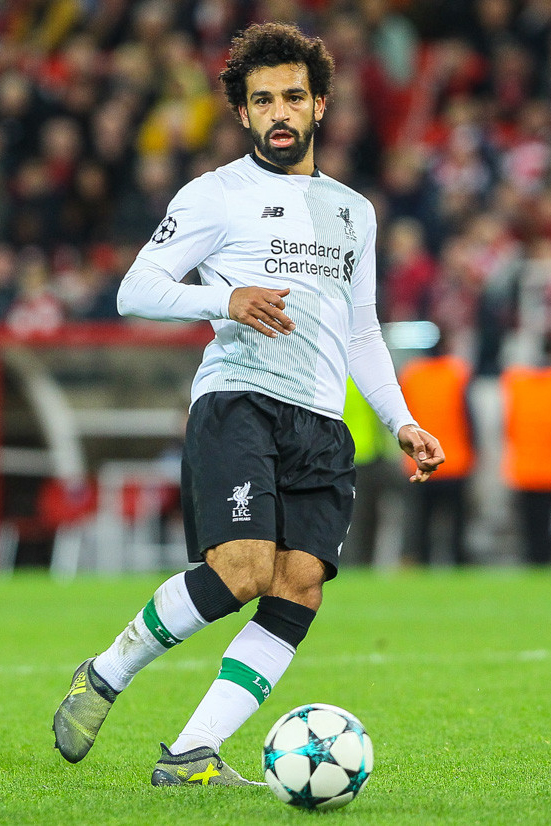
Mohamed Salah
I was talking to a friend the other day about why I no longer support any particular football club, despite still being interested in the seasonal battles for supremacy between Russian oligarchs, Emirati princelings and American baseball tycoons.
I blamed my indifference to the fortunes of the club I identified with in my youth – Aston Villa – on the fact that any team in or around the top flight consists mainly of foreign players. Why, therefore, should I swell with pride at the feats of my erstwhile local club (I haven’t lived in Brum for forty years) when barely a single player born and bred in the area, let alone the city, appears regularly in the first team?
It was not always thus. Back in the day – and I’m talking about before I was born – the majority of Arsenal players were Londoners. Those who turned out for Burnley were born and bred within spitting distance of the dark satanic mills, and Leeds United players were dragged out of the local coal mines. There would surely have been a sense among those who crammed the terraces that these were “our boys” who were fighting for the honour of the town.
When I was growing up, the transfer system and club scouts ensured that those who turned out for the top clubs came from all parts of the United Kingdom, and a good few from the Irish Republic. But this didn’t stop fans from adopting them as honorary Mancunians or Brummies. What mattered more than regional origins was loyalty and devotion to the cause.
Nowadays, for the owners, football clubs are part of a diversified investment strategy. A match ticket to a Premiership game costs a day’s wages for an Amazon warehouse picker or a barista on the minimum wage. The players come from far and wide – from Belgium and Burundi to Brazil and Bosnia-Herzegovina. Look at the Premiership team sheets on match day and you would be lucky to find more than a couple of players from the British Isles, let alone the neighbourhood.
There was a time when football players would take the same bus or tube to their home ground as the supporters. Today they show up in Bentleys. You would therefore expect the average football fan to regard these pampered mercenaries as anything but “our own”.
So why, I would ask my friend, would anyone get fired up with pride in the achievements of Chelsea, Manchester City or Liverpool when those who play for them are the footballing equivalent of the Harlem Globetrotters – athletes with extraordinary skills who are only interested in the next payday.
In the latter respect I’m wrong of course. These guys have a fierce competitive instinct that drives them to seek clubs where they can achieve success. Money is not everything, even if their agents are busy trying to persuade their clients to change club every couple of years, so that they, for whom money is everything, can enjoy another bumper slice of the transfer fee.
But still, why the loyalty among fans for these businesses that bear the names of famous football clubs?
After all, the professional game has come a long way from its roots. Most of them started out as exactly that: clubs, or societies of like-minded individuals formed in the nineteenth century as an outlet for men who needed distraction from the tedium of their day-jobs in the mines, the factories and the foundries.
The root of their loyalty was tribal. It remains so, even if to belong to the tribe you no longer have to live in the club’s home town or anywhere near. The big clubs have long had overseas supporters. Thirty years ago, bus-loads of Liverpool, Arsenal and Glasgow Rangers fans would make the ferry crossing from Ireland every week. They still do, though Ryanair tends to be the preferred carrier these days.
Continents away, people in Kenya, Shanghai and Mauritius also proudly wear the club shirts despite never having visited Britain, let alone Anfield or Old Trafford. The lure of the tribe goes way beyond borders.
So by what right should I look down on people who spend a fortune over their lifetimes supporting a corporation? In truth, I don’t look down on them, any more than I look askance at those who invest massive sums in the products made by Apple, Mercedes and Timberland. Loyalty to a brand that delivers entertainment is just as understandable as sticking to products that serve a useful purpose.
And there’s another dimension. I live in Brexit Britain, supposedly full of people who blame immigration for all their woes. People who, according to a recent report by a UN Special Rapporteur, are endemically racist. People who fear and hate, in equal measures, Muslims.
Yet in the football fraternity these are the same people who over thirty years have gone from venomous racist chanting on the terraces to cheering black footballers regardless of their origin. In Liverpool, not exactly the wealthiest city in the British Isles, Mohamed Salah, a Muslim from Egypt, is adored not just for his goal scoring but for his character – humble, humane, always smiling.
Top footballers may be a wealthy elite, but down to the lowest level of the professional game, fans show up every week to cheer on players from all parts of the world. They are indeed “one of us”.
But among those fans, the chances are that there are many who feel that our culture is under threat because we are being swamped by foreigners.
This is despite the fact that much of the food they eat is prepared to foreign recipes, most of the TV they watch comes from Hollywood, not Shepperton, the cars they drive were designed in Germany or Japan, the clothes they wear were manufactured in Bangladesh or China, the phones they use are designed in America and made in Taiwan.
Without our even thinking about it, our culture has become an amalgam of foreign influences. In fact it always has been. We embrace foreignness. Chicken tikka masala has become our favourite restaurant dish. Ford Fiestas and Renault Clios are seen as being as British as fish and chips. Yet we blame foreigners for diluting our culture.
More specifically, people grumble that that the schools are overcrowded and that there are not enough houses for us Brits. We blame foreigners, and successive governments that have allowed them to live here in increasing numbers.
The millions of football fans have come to regard those who take to pitches around the country in the colours of Brentford, Huddersfield and Blackburn as footballers, plain and simple, rather than foreign footballers. So isn’t it time that we started looking differently at people who fix our cars, care for us in our hospitals, build our homes and serve our cappucinos?
Perhaps we should start seeing them not as foreigners but as taxpayers, which the vast majority are. Taxpayers are people who through their income pay for education, health care, policing and other public services. Why are the pounds contributed by Polish builders any different or less valuable than those paid by those who are soon to obtain blue passports?
And if we look at them as taxpayers, should we not ask why our government is failing to provide the required level of services to all taxpayers – in other words, failing to build enough schools, houses and hospitals for those who need them, regardless of the colour of their passports?
The easy rebuttal to this argument is that since the gates were opened to citizens of new European Union member states, foreigners have arrived in numbers that successive governments didn’t anticipate, which was why they were unable to plan for sufficient new facilities to meet the demand for services and infrastructure.
I don’t buy that. It doesn’t take fifteen years to build new hospitals, new schools or implement new affordable housing projects. The fact is that we’ve chosen not to. The cost-cutting measures known as austerity are partly to blame. The collapse of North Sea oil and gas revenue is another.
Anyway, I’m done with blaming people for a process that has been going on ever since the first hominids started out from Africa and populated the globe. International is a natural state. Boundaries are a fragile constraint and can no more constrain the mingling of people and cultures than they can prevent the spread of pollen on the spring air.
We might not like that idea, and indeed many of the people who supported Brexit find it hard to admit that immigration has been good for Britain, and forget that we, as much as Trump’s America, are a nation of immigrants, even if our immigrant waves are much older than America’s.
Much as I would like to see more players in football’s top flight eligible to play for England in competitions like the upcoming World Cup, there’s no denying that English football would be the poorer without the skills of Mohamed Salah, Kevin de Bruyne and Riyad Mahrez.
And likewise, post-Brexit Britain will be the poorer for the loss of foreigners who keep the National Health Service going, contribute to our scientific research projects and, at the other end of the scale, pick our fruit and vegetables.
Even if we accept that for practical reasons there must be limits to the numbers of new arrivals who need to be housed, schooled, protected and kept healthy, it’s time we viewed our foreign residents as contributors, not burdens, as taxpayers, not scroungers.
And if our football fans can rejoice in the wondrous foreign talent that will be on view over the next couple of weeks as our football season comes to a climax, surely the rest of us should bring ourselves to regard the doctors, nurses, plumbers, builders and carers who have come from other countries as “one of us” as well.
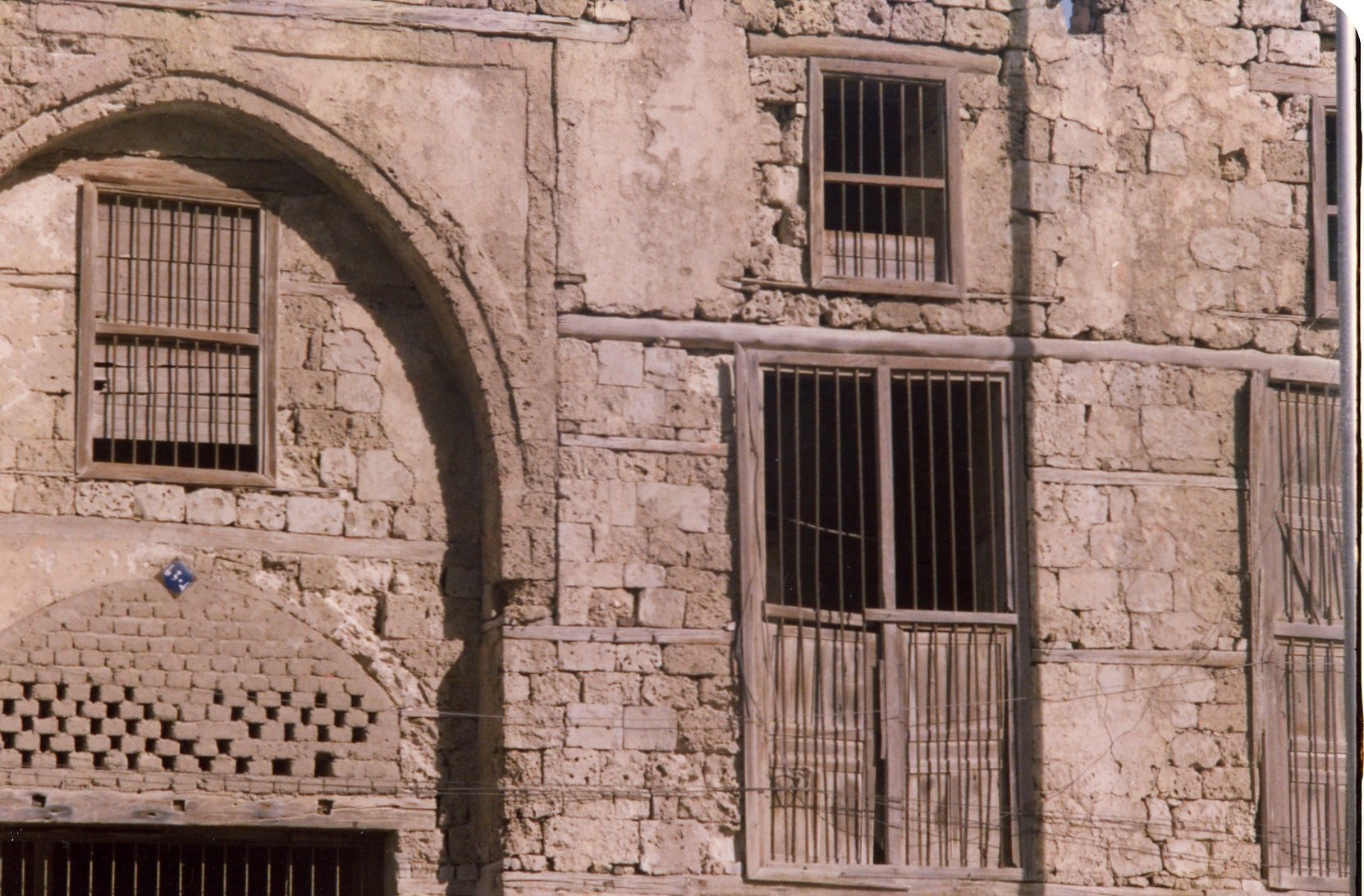
This is the last episode of RetroSaudi, my series of posts about Saudi Arabia in the 1980s. In most of the instalments I have included impressions of the country that I wrote at the time. After each piece I’ve followed up with thoughts on the country as it is today, or at least nearly today, since it’s been eighteen months since my last visit.
If I’d written the same series five years ago, I would have said that eighteen months is as near as dammit current in a country that over the past thirty years has changed at a snail’s pace. But not now. More has changed since 2016 than in the three decades preceding.
So I can no longer claim that my impressions of country “today” are anything more than recent history, as opposed to the ancient history that the 80s represent to me.
I can’t think of a better way to bid farewell to Saudi Arabia than to look back at Ramadan, a time of year that is special to all Muslims, and unforgettable to those of any faith who have lived through the holy month in a Muslim country.
I’m saying goodbye because it’s unlikely that I will be returning to a country in which I lived for the best part of a decade, and visited many times since. There are other places to visit, and time is running out.
Here’s what I wrote thirty years ago:
1988: My first Ramadan in Saudi Arabia started a couple of months after my arrival. It was a bit of a shock. My apartment overlooked one of the many plots of waste ground scattered around the city. One moment I was lying peacefully in bed, and the next I was looking for a sturdy table that would give me shelter. The cause of my alarm was a loud boom that rattled the windows. In my befuddled state I thought that war had broken out.
A few minutes later, when no further explosions were forthcoming, I looked out of my window and saw an ancient field gun set up in the waste ground, along with a tent for its minders.
The cannon stayed there throughout the month, blasting thousands out of their beds for daybreak prayers, and acting as the starting gun for the feeding frenzy that begins at dusk.
For me Ramadan is a wonderful month, not least because of the scarcity of traffic on the roads during the day. Going to work is a dream. Virtually no traffic at 7.30am, and although it gets busy just before dusk as everybody rushes home to eat, this heralds a period of ineffable calm, in which the city becomes a ghost town. No traffic. No angry, honking, road-hogging maniacs trying to run you off the road.
It’s the eye of the hurricane. Twenty-minute car journeys reduced to five. Bliss. But when the devout have eaten, they all seem to take to the road simultaneously, and bedlam breaks out. There are parts of the Middle East, Saudi Arabia included, where drivers verge on insanity. During Ramadan, the ecstasy of the broken fast – or perhaps the sugar rush – seems to drive them over the brink, and the city’s roads are monopolised by battalions of racing drivers, dodgem cars and would-be suicides.
With headlights on full beam, a cacophony of horns, bits of children hanging from of every window, babies climbing out of sun-roofs, the families of Jeddah take to the roads, to shop, to play football on floodlit lawns by the airport, or to visit relatives.
Some just to sit by the side of the road drinking tea. They arranged themselves in a semi-circle, the corpulent patriarch with two, maybe three wives next to him, drinking tea as the children play in the sideroad. Beside the station wagon is a portable TV, from which an impassioned Egyptian soap opera is commanding rapt attention.
I love it all.
True, there are minus points. Everything slows down, and dark rumours circulate about post office staff burning sacks of mail because they can’t be bothered to process them. As the month progresses, those who are fasting become more sluggish and irritable. The evening drivers become faster and more erratic, and the minds of your colleagues become exclusively focused on one thing: the Eid-Al-Fitr holiday that marks the end of the month of fasting.
I have no time for those who sneer at the Arab world because so little can be achieved during Ramadan. Do we in the West achieve miracles of productivity in December? At least Muslims don’t drive off drunk from an all-day office party and mow down groups of Christmas shoppers.
I welcome Ramadan because of the break it provides in the routine of life in this Muslim country. I envy Muslims their certainty in their faith, of the Five Pillars of Islam, of which the fasting month is one, even if I don’t share their certainty.
In that piece I didn’t really capture what Ramadan means to Muslims, only its effect on non-Muslim expatriates, who are effectively bystanders. In a piece I posted to this blog a few years ago, I tried to look at the month as it affects Muslims themselves. A few hundred words can’t adequately capture the meaning for believers, but for what it’s worth, here’s an excerpt:
2010: Consider the implications of fasting from dawn to dusk for 30 days. No food, no, drink, no smoking. In short, nothing to enter the mouth or any other part of the body. And the vast majority of the hundreds of millions of Muslims around the world, rich and poor, do this every year. For example, as I sit in an air-conditioned room writing this, I can see manual labourers in the street working away in 40 degrees of heat with no food or drink to sustain them.
There are, of course, exemptions derived from the Quran and religious tradition. Pregnant women, children, and the sick do not have to fast. Nor under certain circumstances, do travellers, although they have to fast at other times to complete the obligation. There are also rules which apply to people living in areas where the summer sun doesn’t fully set, such as Finland, Alaska and Antarctica. Fasting for 23 hours a day simply isn’t practical, and contrary to some perceptions in the West, Islam is a practical religion.
Such is the power of the obligation that in many parts of the world, including where I live, it is enshrined in the law. Nobody, Muslim or non-Muslim, is permitted to drink, smoke or eat in public during fasting hours. The penalties for breaking the law can range from admonition to jail.
So this is no festive season with a bit of religion thrown in. Nor is it the equivalent of giving up chocolate for Lent. It’s a drastic, annual, change of behavior by a significant percentage of the world’s population. For many Christians, their religion is a way of living, and the teachings of Jesus inform, without enforcing, social norms, morals and behavior in the West. But Islam is a way of life, and Ramadan exemplifies that life. Obligation. No compromise, right and wrong, adherence both to form and substance.
Yet beneath the seeming harshness of the obligation lies the meaning of Ramadan for Muslims. A time of contemplation, of spiritual cleansing, of consideration for others, of self-discipline, of shared experience. It’s a positive time which leaves participants with a real sense of achievement and wellbeing.
Of course not everyone enters into the spirit even if they adhere to the form. Just as in the West the inevitable reaction of horror follows the appearance of Christmas advertising many months before the season begins, there are Muslims who complain of the creeping commercialization of Ramadan. Just as we do, many people max out their credit cards during the season and spend the aftermath worrying about how they will make ends meet. And many overindulge during the night time hours, with some actually gaining weight over the month.
Some also mitigate the fasting hours by sleeping. Visit the more traditional offices in parts of the Gulf during Ramadan, and it’s not uncommon to see sleeping bodies littering prayer areas, offices and communal areas. But even among the weak-willed, there’s no mistaking the desire and intention to meet the obligation of their faith.
For non-Muslims living through Ramadan, only those who wrap themselves in their own bubble of reality can fail to be affected and often uplifted by the experience. I enjoy the month immensely. Social activities go on late into the night. Shops stay open until the early hours. There are special Ramadan foods, including the sweet, sticky variety which I adore. Above all, there’s a spirit of animation and excitement in the night time hours not to be felt at any other time of the year.
Daytimes are quiet. Working hours for those who are fasting are shorter. Meetings late in the afternoon are best avoided. Try as they might, even the most diligent start flagging. I remember one meeting with a very senior executive. At his request, it was at 5pm. As the meeting went on, I could see his eyes drooping as he fought to stay awake. Though there was a good chance that I would have bored him to sleep anyway, I learned my lesson.
How is Saudi Arabia celebrating Ramadan this year, as its women look forward to being able to drive, as movie theatres are under construction, as its armed forces are still bogged down in Yemen and as its young Crown Prince promises a new era of social liberalisation, while reserving the iron fist for anybody who speaks against his regime?
Much the same as in previous years, I suspect. No social reform is likely to touch the enforcement of the rules of Ramadan, or the intolerance of those who don’t respect them. So the country will slip into its traditional rhythm. Night will become day, families will celebrate, the Quran will be read in mosques and homes, families will visit each other, and across the world, wherever there are Saudis in exile or studying in universities, people will be gathering together to pray and to break their fast with traditional Ramadan food.
As Saudi Arabians enter a season that transcends the uncertainty surrounding its present and future, it would be easy for me to sign off a retrospective by focusing on the negatives. After all, everyone in the West seems to want to learn about executions, political repression, treatment of women, abuse of expatriate workers, the backwardness of religious conservatives, superstition, corruption and warmongering.
But when I look back at the country, I prefer to remember the good aspects, of which there are many.
If what follows feels like a tourist blurb, perhaps that’s appropriate, because the Kingdom is now issuing visas for people who want to visit the country for reasons other than work or religion.
Let’s start with the geography. In between nondescript rock-strewn plans lie majestic mountain ranges and escarpments devoid of vegetation yet full of colourful rock strata. In the central region there are deserts that change in hue from deep red to almost pure white. In the East you will find oases full of date palms. To the South there are green mountain valleys full of streams and lakes. All along the Red Sea coat lie stretches of pristine coral reef teeming with marine life. And then there’s the rolling sand sea of the Empty Quarter.
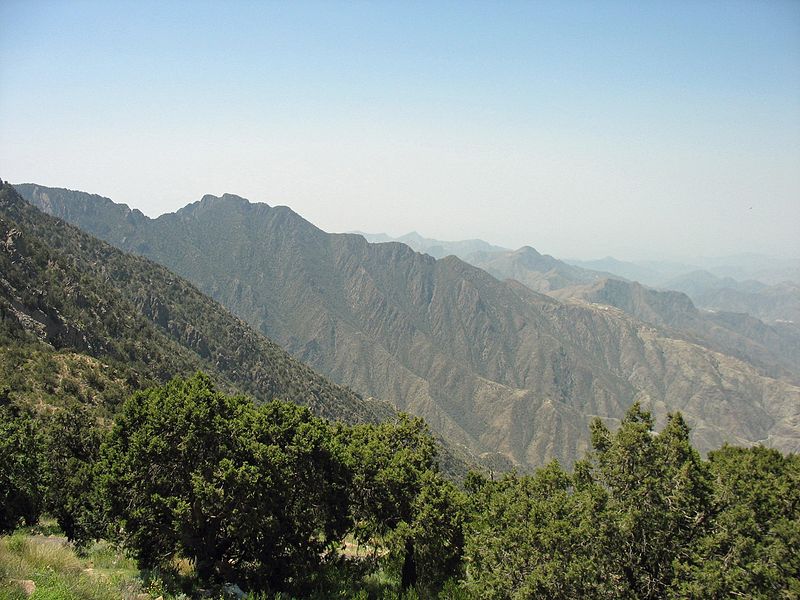
Al Sawda Peak, Asir Province
The big cities are a glorious melange of architectural styles, ever changing. There are old souks and shiny malls, ridiculous luxury sitting side by side with corner shops, family stores and petrol stations. And for those who are reluctant to take to the multi-lane highways that double as racetracks, the age of the train is fast approaching. A new metro in Riyadh, and a network that links Jeddah with the holy cities of Mecca and Madinah.
Jeddah Corniche
Then, most important of all, there are the people. Like every other country, Saudi Arabia has its share of the mean, the cantankerous, the greedy and the arrogant. But the best of them could teach my country a thing or two about humanity and decency. The women I remember most are feisty, ambitious and determined. Those who work do so with enthusiasm and a glint in the eye. They have something to prove. The men are laid-back yet welcoming.
Collectively they are capable of showing great kindness and hospitality. They have an open-hearted enthusiasm for life that is hard to find in societies where the only emotion it is acceptable to display in public is anger. While their Egyptian neighbours are better known for their sense of humour, the Saudis match them. The public image may be of a solemn and serious people, you don’t have to look far to find them rocking with laughter. I include in this description the people of Bahrain, where I also lived for several years.
Nobody, least of all me, can ignore the negatives. Yet the good things about the country rarely get a mention beyond the paid-for efforts of the publicists and spin doctors. I’m neither. I’m just a person who over the years has been enriched beyond measure by my experiences of Saudi Arabia and its people.
And as the Saudis and all the other nationalities that throng the country find their thoughts turning inwards for Ramadan, I hope that in the years to come they will be able to celebrate many more Holy Months in peace, unperturbed by the turmoil that surrounds them.
For those in the region who don’t have that blessing, in particular Yemen, Iraq, Palestine, Syria, Egypt and Libya, I devoutly wish for the same.
To Muslims everywhere, Ramadan Kareem.
On Thursday, an earthquake shook British politics. Well that’s what Donald Trump might have said if he lived in my little town. Not that any but a small number of people in my immediate vicinity would notice it as such, so I guess on the national Richter Scale it probably measures less than zero.
Let me explain. For those who are not familiar with our system of local government, don’t worry. Nor am I. But last time I looked, Borough Councils, for which elections took place yesterday, took care of stuff like libraries, schools, drains, refuse collection, parks and so forth. Given that they are being progressively starved of funds by central government, it’s reasonable to assume that in the near future there will be no libraries, that the parks will be turned into apartment blocks and the refuse will be collected once a year.
But no matter. There still need to be councillors, if for no other reason that we need someone to moan at about the steady erosion of public amenities.
My little town is a political backwater. It’s full of Russian oligarchs, footballer’s wives riding around in Range Rovers that look as though a giant boot has squashed them, bankers recently arrived after selling their monstrously inflated residences in London, plus a few boringly ordinary people like me. It’s the former home of Cliff Richard, John Lennon and Max Clifford. The late Max Clifford, I should add, a rogue of a kiss-and-tell publicist who, before he expired in prison, liked to park his roller outside a café just off the High Street and hold court over a cappuccino at a pavement table.
In other words, it’s prosperous. And as such, it’s about as edgy as a blancmange. It’s the kind of place where, in 1997, my announcement at a neighbour’s general election party that I’d voted Labour led the hostess to declare that I’d betrayed my country. The parliamentary constituency has returned a Conservative candidate since the Stone Age, and inevitably by a massive majority.
You can understand, therefore, why, as a person who has never voted for a Conservative in my life and probably never will, I feel that my vote is pretty irrelevant, at least in national elections. But for some reason the set-up in the local council is not as clear-cut. No party has a majority, largely because of the presence of a number of independent councillors. Which is good, because they’re probably in their seats because of who they are rather than what party they belong to.
But the traditional parties are still represented in force. Most of them are, as you would expect, Conservative. This time round, I decided to vote for a party candidate.
But who? In truth, on local issues there wasn’t much between them. They all supported repairing the potholes that are causing cars and cyclists to disappear down holes, never to be seen again. They are pro-library, and they want to replace the walk-in health centre that was burned down a couple of years ago.
Even though the candidates were campaigning on local issues, I couldn’t forget their political allegiance. The Conservatives fielded a Mr Muddyman, whose name more or less summed up the state of his party. No thank you.
Then there was the Labour candidate. Sorry Ms Franklin, no vote for you as long as your party keeps trotting out meaningless slogans like “for the many, not the few”. The fact is that if you attack the few in my town, they’ll bugger off to somewhere else where they’re better appreciated, with a dramatic effect on local employment: hundreds of cleaners, butlers, nannies, gardeners, restaurant waiters, building contractors and purveyors of luxury kitchens would be scrambling around for alternative employment. And besides, I have a far higher regard for Mo Salah than Momentum. He may be one of the few, but at least he’s bringing plenty of joy to a lot of people.
The UKIP candidate, a Mr Pope, was also a no-no. I’d rather vote for Satan than UKIP, even if its representative does share his name with the Supreme Pontiff. Besides, electorally he was a dead man walking, so much so that after his party was virtually wiped out, a senior official compared them to the Black Death, on the grounds that they would rise again to plague us if the need arose.
The sole independent in my ward was a chap called Craig McKenzie, whose very snappy slogan was “Don’t be Vague, Vote for Craig”. Very droll, but over the heads of the oligarchs, I fear. He is the brother of Kelvin, a former editor of The Sun, a national tabloid. For good reason, I suspect he’s been in his sibling’s shadow for most of his life.
There was no Green candidate, presumably because we’re something of a lost cause, riding around in our diesels, running our clothes driers 24/7 and consuming Waitrose’s entire output of plastic bags to scoop up dog poo.
Which left one candidate – the Liberal Democrat. She was my choice, not because I’m particularly enamoured of the Lib Dems’ political platform, nor even because she seemed like a very worthy person. All of them were perfectly upstanding individuals, judging from their election literature. But I voted for Ms Macleod because her party is the only one sensible enough to realise that Brexit is a disaster in the making, and the only one promising a second referendum on our exit from the European Union.
Not that local politicians have much to do with national issues, but some ascend to the national stage, so you have to take them seriously.
Anyway, more in a sprit of protest than in the expectation that Vicky Macleod would carry the day – she was, after all fighting against the Conservative incumbent, Mr Muddyman – I gave her my vote.
The following morning, I learned that she had won by a handful of votes.
I pay little attention to the post-result squabbling between the parties – and within, in the case of Labour – about what the outcome means. These elections were as much about libraries, walk-in centres and potholes as they were about national politics, for goodness sake. The voters know that and so do the candidates and their parties.
Having said that, my vote was political, pure and simple. And the little earthquake to which I contributed made me feel that for once in my life that vote had actually counted.
It’s a strange and exhilarating feeling.
I was going to speculate on which lunatic self-help guru invented the splayed-legged “power pose” beloved of British Conservative politicians. And then the BBC gave me the answer.
It turns out that it’s the invention of a distinguished American academic:
Harvard professor Amy Cuddy, who came up with the theory in 2010, had observed some of her female students entering a room with hunched shoulders and defensive postures, while their male counterparts sprawled across their desks in a self-assured, swaggering way.
She investigated whether changing the way you occupy your physical space could boost confidence.
“Posing in high power displays” led to an “elevation of the dominance hormone testosterone, reduction of the stress hormone cortisol, and increases in behaviourally demonstrated risk tolerance and feelings of power”, she and her co-authors wrote.
I wouldn’t dispute her findings, though I wonder if she and her team actually tested the effect of the power pose in real-life conditions, especially when the practitioner adopts it in a room full of knife-wielding politicians.
The idea that standing like the Colossus of Rhodes to radiate power may work if you’re five hundred feet tall and hold a flaming torch triumphantly aloft,
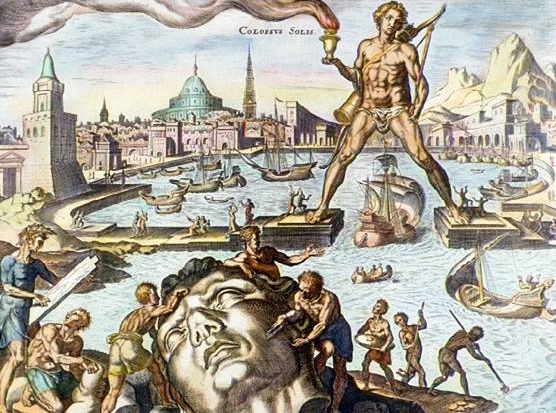
but in a politician posing for photos outside his office it rather reminds me of the defensive posture of a goalkeeper getting ready to save a penalty.
But then Sajid Javid, the new Home Secretary and latest practitioner of the power pose, probably needs to think like a goalkeeper, given that his department is currently spending most of its time in its own penalty area.
Come to think of it, at least for the male members of Javid’s team, this might be a more appropriate stance:
And what of Theresa May, who has also been known to adopt the power pose? If I was a woman, I might think twice about wearing a relatively tight skirt and stretching it to its limits as I bestride the stage. Especially at a conference full of leery old men whose attention is drawn to my abdomen and thighs as they wonder whether the garment will finally give up and start heading inexorably north with every twist of the hips. Or, heaven forbid, rip apart. OK perhaps for Stormy Daniels, but not for the Prime Minister of Great Britain.
It does sometimes amaze me that our politicians are trained to the hilt in such subjects as positive body language and how to handle media interviews, yet so many of them seem to lack the skills they really need, namely how to see the wood from the trees and, most important of all, how to lead.
Which is different from hesitating, posing, bullying, equivocating and denying the self-evident, methinks.
PS as of 3 May 2018: Since I posted this, a friend commented thus on Facebook: “A diplomat friend who must remain nameless told me that the pose was taught on a government course called “dealing effectively with the media”. Also specified what colour tie or scarf to wear for different types of announcement. Your tax money at work.”
Also there have been photos all over the social media mocking the pose. Nothing to do with this post, I’m sure, but I suspect that no self-respecting politician will ever use it again. What will be next? The Full Tarzan perhaps.
On one level, I don’t have much sympathy for Britain’s Home Secretary, who has just resigned. Amber Rudd is a politician. Dealing with multiple issues simultaneously is part of the job of a senior minister. But as numerous commentators have pointed out, she appears to be taking the rap for the failings of her predecessor, Theresa May.
And Mrs May, as you would expect, has done her best to blame her predecessors for the destruction of the landing cards that would enable the Windrush generation to prove their entitlement to remain in the UK. And so it goes on. If there is a credible alternative to mea culpa, most politicians will try to shift the blame.
Matthew Parris, in Saturday’s London Times, produced a superb description of the activities that compete for the attention of a politician like Rudd. Parliamentary debate, select committees, press, TV, constituency, countrywide travel, schmoozing fellow MPs, late nights going through papers and signing off on stuff.
All that, and constant sniffing of the electoral wind to divine what the voters think. The equivalent, Parris says, of driving a train while facing the passengers. He summarises the dilemma thus:
“I’m not inviting sympathy for these people. They chose the career. I’m asking you to consider that our ghastly British government — that lurching, panicking, sightless, deaf, incoherent, blundering thing — is the product not always of the personal failure of a politician we could name and throw rotten tomatoes at, but of the inherent impossibility of exercising notional control over a complicated modern state, while at the same time keeping one finger firmly on the fluttering pulse of popular “feeling”, whatever that is.”
Not so much sniffing the wind, perhaps. Given the toxic nature of public debate in 2018, more like subjecting your nose to a never-ending fart. Whatever the Home Secretary did or didn’t do, her actions and those of her successor are guaranteed to excite spit and derision from one source or another.
She has presumably resigned on the principle that the buck stops here. She has paid the price for “unintentionally” misleading Parliament. But if the person at whom the buck stops is so bombarded by commitments, decisions and information that she is working 18-hour days, it’s little wonder that she doesn’t know which way is up, especially when issues of right versus wrong take second place to political expediency.
The immediate reaction to Rudd’s resignation is that it puts Theresa May in a spot. She assembled her cabinet to maintain a balance between Leavers and Remainers. Rudd was a Remainer, and if there is no credible candidate for the job of a similar persuasion, the balance of power has gone. By the time you read this, we will know how the PM sorted that little quandary – or not.
More significantly, the Home Office, within whose remit there are pockets of excellence – the security services for example – but areas of disastrous incompetence – the oversight of policing and borders being the biggest – is too important to fail.
If its junior ministers can’t be delegated authority as well as responsibility, as seems to be the case, then it has become too large and complex to be entrusted to a single politician who has to work herself to death and needs the wisdom of Solomon to maintain some semblance of control and coherent direction.
It stands to reason therefore that this critical government department should be broken up into more manageable pieces. And that the people who lead those pieces should not be burdened with superhuman workloads that would cause any self-respecting senior civil servant to go on strike in protest.
If being a politician is a job, as seems to be the case with most of our members of parliament, and not a calling, then the job description should be designed to give the maximum chance of success without turning the incumbent into a withered husk.
Once she gets over the shock of her sudden loss of status and power, and the adrenaline rushes subside, I suspect that Amber Rudd will breath a sigh of relief at being able to reclaim her life.
So for that reason, on another level, I also have little sympathy for her. She has been liberated.
Spring is finally here, and it seems as if half the people in my country are engaged in “projects”: cleaning, renovating, buying homes and selling them. At least that’s how it appears as fleets of delivery vans take to the road and the DIY shops are packed with builders’ bums and memsahibs hunting for bedding plants. The rest of us, I guess, are busy knifing each other. But enough of that negativity. It’s a glorious sunny day.
I imagine there’s much to be said for coming from an old aristocratic family and owning a massive country house stuffed with antique furniture and old masters on the walls. But I wouldn’t fancy the endless repairs, and the streams of members of the public flowing through the house in order to pay for them.
There is, however, one benefit I would treasure. And that would be not feeling the need to update the furniture from time to time. After all, you don’t throw the priceless Chippendale armchair that collapsed under the weight of a corpulent guest onto the skip and replace it with stuff you buy in Laura Ashley or IKEA. You repair it, just as your family has for centuries.
And you probably put up with the fact that the carpets one of your ancestors brought from China after taking part in the sacking of the Peking Summer Palace are looking a bit motheaten. Thanks to the parsimony of the landed gentry, many English country houses exist in a state of graceful degradation.
In contrast, at this time of year middle class homes seem to be in a continual state of renovation. New bathrooms and kitchens, extensions, conservatories and loft conversions. As soon as a sofa starts looking threadbare, it’s sent to the municipal dump or offloaded on offspring who haven’t yet got the idea of graceful living, or if they have, are prevented from enjoying it by ageing parents who choose to spend their money on themselves.
Said parents then go to Debenhams, or, if they have the money, to one of those makers of exquisite “handcrafted bespoke furniture”, who advertise in the glossy magazine sections of national newspapers.
I speak of these matters because I’ve just happened on one of those ads, which features a sitting room whose centrepiece is a huge TV screen surrounded by elegant wooden cupboards which presumably contain hidden treasures within. Apart from the TV, all you can see is a few books, a few DVDs and a couple of spotless sofas – one leather and one probably cloth. Both white, and spotless. Not suitable for mud-laden Labradors and puking babies, you would think.
No consideration given to the possibility that your 60-inch TV will soon be obsolete, and that you’ll have to rip out the whole edifice to make way for the latest 80-inch model. Not a problem though, because the patrons of this interior designer probably update their décor every two years anyway.
Such ads are of academic interest to me. Our house has never been a show home. Judging by the furore caused by the shocking building standards of Bovis, one of Britain’s leading housebuilders, that’s probably a good thing.
But hey ho, spring has arrived, and in my part of the UK we’re bathing in sunshine. It’s warmer than Palermo and Antalya. A good opportunity for us (or rather my wife, to be strictly accurate) to launch our annual assault on the patio with the pressure hose.
As my contribution to the seasonal frenzy, I’m resolved once again to do something about the squirrels that periodically colonise our loft. The other day we had to pay large sums to an electrician to replace a length of cable that the little buggers had chewed through.
What to do? Google is full of suggestions. Traps smothered in peanut butter? Fine, except that you would have to go into the loft every day in case one of them starves to death. And then you have to drive at least ten miles to release them into the wild – or rather suburban Surrey – so that they can invade someone else’s loft. A high frequency noise generator? That might work, it but would probably drive the dog insane in the process. Or, perhaps I should say, more insane than she already is.
The last time we had this problem, a pest controller suggested we buy a pellet gun. That might work, but I don’t see myself in the role of Amon Goeth, the camp commandant in Schindler’s List, who would take occasional pot shots at inmates from his balcony. Shooting squirrels is not my idea of fun.
No, I think the answer is to broadcast a recording of Andre Rieu and his orchestra performing the Blue Danube on a continual loop. That should drive them out pretty quickly. It’ll probably drive me out too, so perhaps we’ll schedule the torture for when we go on holiday. When we come back we can then can seal up the entry holes with hardened steel barriers from a contractor who builds security systems for US embassies.
Despite the squirrels, it’s a joy to see the garden in bloom, and to listen to the dawn chorus performed by representatives of the country’s fast-diminishing bird population. As the day goes on, less welcome noises permeate the neighbourhood – pressure hoses, chainsaws, strimmers, mowers and the occasional crash coming from a plot nearby whose owner has decided to demolish a perfectly decent house and build a carbuncle in its place. By this means they will probably sell out and pocket the profit, though perhaps not as much as they hoped given that house prices seem to be on the move downwards.
You can put up with quite a lot when a sunny day finally arrives after a winter of endless rain, snow and clammy darkness. Even though hardly a week goes by when I don’t think of moving to another country, any country, before the Brexit drawbridge slams down, the truth is that when spring arrives, I can’t think of any place I would rather be than in the country where I was born.
I also can’t believe that there is any problem afflicting Britain – and there are many – that we can’t solve if we put our minds to it. Illogical, I know, and Brexit tests that conviction to the limit.
But I guess that’s what sun-induced endorphins do for you. Come the next rainy day, I might change my mind.

