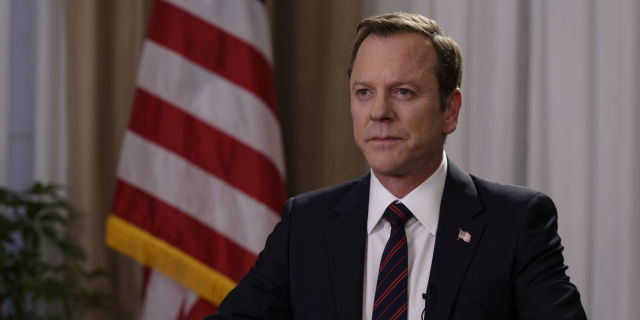
I’m a sucker for disaster movies. Asteroid strikes, volcanoes in LA, the earth freezing over – I can’t get enough of them. I’m also into political drama. Our Friends in the North, House of Cards (British version), A Very British Coup, Homeland and, more recently, The Post.
So if you present me something that features disaster and politics, you can be pretty sure that I’ll at least give it a try.
Thus it was with Designated Survivor, a series on Netflix that features Keifer Sutherland as an accidental president of the USA. Accidental – and here’s where the disaster comes in – because some fiend manages to blow up Congress just as the elected president is giving his State of the Union address. The result: the president, vice-president, both houses of Congress and the Supreme Court meet a fiery end.
The last man standing, the eponymous Designated Survivor, is Tom Kirkman, a junior member of cabinet, who is required to sit out the event in a safe place so that there will be someone available to take over the presidency in the unlikely event that everyone else in the line of succession is wiped out. Not so unlikely it turns out, though I suspect that the framers of this procedure anticipated that the disaster would be a nuclear strike on Washington.
My wife and I watched enthralled as the new president struggled throughout Series One to stabilise the government while the fiend, who turned out to be a wealthy alt-right businessman with a serious chip on his shoulder, continued to wreak havoc.
Now we’re into Series Two, and Kirkman’s job doesn’t get any easier. He has to deal with all kinds of nasty threats, both political and military. So far he’s come though them with flying colours, thanks to his valiant praetorian guard of enthusiastic millennials and thirtysomethings who occupy most of the key roles in the White House.
At this point I should note that this the most absurdly unrealistic White House saga of all time. Kirkman is a man of cast-iron integrity, the like of which the United States has probably not seen since Washington, or certainly since Lincoln. He is absurdly bi-partisan, and he’s determined to stay that way.
His aides are impossibly young and attractive. None of the grisly relics and venal trolls that haunt Trump’s White House. Unlike Trump’s rabble, they will, as one of his elves says, walk through a wall for him.
Apart from unfailingly doing the right thing, even at the risk of his presidency, Kirkman has one quality in uber-spades: empathy. Empathy that enables him to charm and cajole political opponents, and inspire puppy-like loyalty among the millennials.
Playing Kirkman must be a special challenge for Sutherland. How do you give a character who is so ridiculously virtuous, so impeccably courteous and so meltingly people-focused some bite, especially when you’ve just come from wasting everybody in sight in 24? He does so pretty well. Kirkman does get angry, but it’s righteous anger. He has a strange and rather distracting tic, a sort of semi-sigh that he lets out every time he faces some crisis or moral dilemma, of which there are plenty. Tics aside, though, he carries it off, though I do wish he would stop calling his daughter little pea.
But here’s the point.
Tom Kirkman is so virtuous that he makes Josiah Bartlet from The West Wing look like Gollum from Lord of the Rings. What does that make Donald Trump appear by comparison?
That question offers a clue as to why a gnarled old cynic like me would sit through episode after episode of a political drama that’s so at odds with reality.
The reason is simple. Designated Survivor is balm. The fact that it’s well-plotted and fast-paced is important, but relatively incidental. Watching Tom Kirkman and his idealistic cohorts struggling to do the right thing is a reminder that US administrations don’t have to be as incompetent, corrupt, partisan, and self-interested as Trump’s White House.
Look back at any president over the past 70 years, and you will not find anyone as squeaky clean as Kirkman. Politics is dirty and US presidents do dirty things some of the time. But until Trump, even the most notorious presidents, even Nixon, managed to get some things right and to comport themselves with a modicum of dignity.
Tom Kirkman may be impossibly moral, but to watch a drama in which the president is effectively the AntiTrump is like taking a warm bath in an alternative reality. A reality in which people go into politics for the right reasons – all that soppy stuff like serving those who put them there and making the world a better place.
When the real president is spewing his narcissistic vomit on Twitter, firing his staff like a medieval potentate, causing fear and uncertainty both within his own country and outside it, and pandering to every special interest prepared to grease his palm with campaign dollars, it’s comforting to think that there might be another way, even if it’s in the imagination of a TV scriptwriter.
And yes, there was another way before Trump, however imperfect, and there might be after him.
Or, as Paul McCartney sings in the Beatles’ White Album:
Once, there was a way to get back homeward
Once, there was a way to get back home
Sleep, pretty darling, do not cry
And I will sing a lullaby
Golden slumbers fill your eyes
Smiles awake you when you rise
Sleep, pretty darling, do not cry
And I will sing a lullaby
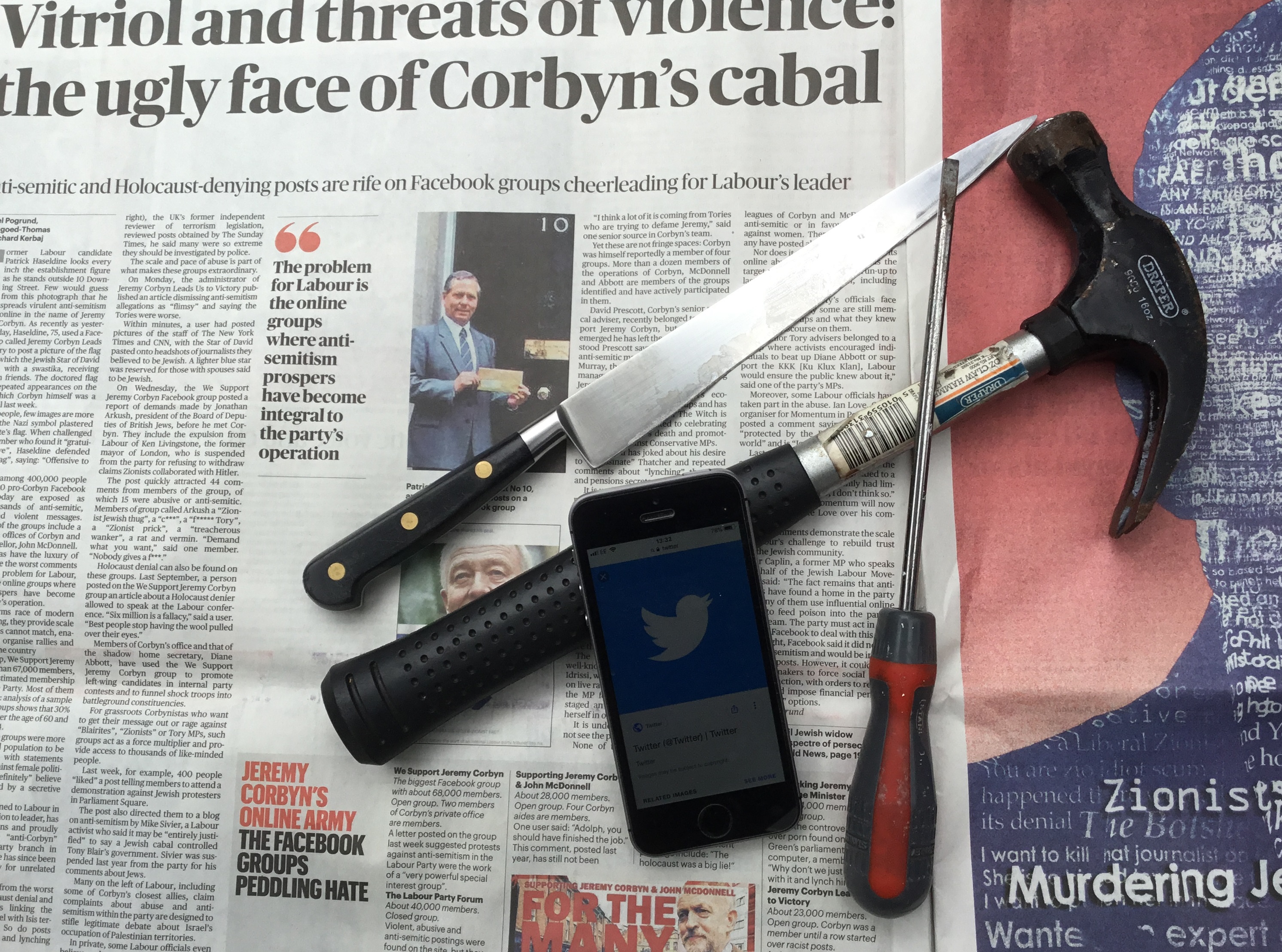
If Jesus was crucified today, you can be sure that his supporters would be crowding round the cross with mobile phones, intent on capturing his last agonies for posterity, and instantly publishing the videos on YouTube.
These days, it seems, no act of martyrdom is complete without the video. If it doesn’t show the last moments, at least it portrays the aftermath – the anger, the wailing of friends and relatives, the blood-stained dirt.
The other day I watched a video from Gaza showing Israeli soldiers shooting at a young Palestinian running down a road. The moment he stumbled and fell, he became surrounded by a group of people. Some were rushing to carry him to safety. Just as many were there, phones aloft, recording the young man’s agony.
I had no idea at the time of the context of the shooting – of why the soldiers were standing on that hill as the young man was running towards them, of why the person who made the video was standing within yards of the armed men, of who he or she was. I suspect that most of us respond to a video clip of this kind in the same way. We watch. We react emotionally, and rapidly assimilate the content into a pre-existing view of the world. Later we might think again, question and try to understand the implications of what we’ve seen. Or not.
But it’s pretty clear why that video ended up on YouTube. To support the narrative of oppression, of the strong crushing the weak. To stir up the outrage and hatred of the oppressed for the oppressor. And to persuade ordinary people elsewhere in the world, drip by drip, video by video, outrage by outrage, of the cruelty and injustice of the State of Israel. People like me.
Away from the dusty streets and fields where armed men and women confront those whose only weapons are phones and rocks, other men and women watch the videos. In my country, they include people whose parents and grandparents wanted to ban the bomb, protested against apartheid in South Africa, and who camped out at Greenham Common to protest against aircraft that were capable of delivering death to half the planet.
Today’s fashionable causes include the corrosive effects of globalisation, the threat of climate change, cruelty to the animals we feed upon, the gap between rich and poor. And the pervasive power of Zionism.
Opposition to “Zionism” is an ideology with many intertwining beliefs. That every Jew is a supporter of the State of Israel and all its evil works. That every Jew believes in the creation of Greater Israel, the land of milk and honey, free from the inconvenient presence of non-Jews who happen to have occupied for centuries the land earmarked by God for His chosen people. That the economies and the political levers in the United States, Britain and other powerful nations are controlled by a network of wealthy and influential Jews, descendants of those who long ago set out to achieve world domination. That Jews are no better than the Nazis, colluded with the Nazis and invented the Holocaust to further their purpose.
The targets are legion. The Jewish political lobbies. Binyamin Netanyahu. The Rothschilds. Sheldon Adelson. George Soros. Evil people whose hand is to be found behind most of the ills of the modern world. And the evidence – blood libel, the Protocols of the Elders of Zion, the arguments of the Holocaust deniers – is but a click away on the internet.
Jews are an easy target. In the tree-lined streets of Islington, the elegant boulevards of Budapest and the concrete banlieus of Paris, there are plenty who believe that the Jews are one for all and all for one. That they are defined by their Jewishness, not by their humanity. That they are a supranational brotherhood.
The State of Israel, which has its fair share of bigots, fanatics and survivors of trauma whose beliefs have been imported from the many countries from which its citizens trace their descent, is the current epicentre of the animus. Yet long before its creation, Jews were the object of suspicion, fear and resentment.
So am I to damn the memory of the vibrant woman who was a dear friend in the 70s, and who happened to be Jewish? Or of the old barrister – an exiled scion of what was once a flourishing community of Jews in Alexandria – who bailed out my father in his time of need, and never asked for the money to be returned?
And what of Einstein, Mendelssohn, Mahler, Trotsky and Vasily Grossman, the unflinching chronicler of the Red Army’s struggles in World War 2? Were they all the creatures of the Rothschilds and the Warburgs, supporters of the bankers’ designs on the world? Along with the fugitives from pogroms and genocide washed destitute up on Ellis Island or Liverpool Docks, hoping for a new life away from the viciousness of the old?
Am I to maintain that the blame for the actions of Israeli soldiers on a hill in Gaza should fall upon Jews everywhere as they peacefully celebrated the Passover? The answer seems so obvious to me that I struggle to understand why so many people who have grown up supported from the cradle onwards by a welfare state, who have never been deprived of a job by a Jew, shot at or beaten up by Jews and possibly never even met a Jew, should be so embittered as to abuse and threaten every Jewish MP, journalist or other public figure they can find through the convenient agency of Twitter, Facebook and YouTube. When my generation protested against the Vietnam war in Grosvenor Square, there was no sense that every American we met was a murderous imperialist. And it has to be said that there are many critics who do not believe that the State of Israel’s actions, however savage, should besmirch an entire people.
If anti-Semitism is held to be a common creed within the left of British politics, we should also mention those who select a different target.
Muslims seem fair game for the right. They’re branded as terrorists, misogynists, tyrants and fratricidal fanatics. An even bigger threat than the Jews, because there are two and a half million of them in the UK, as opposed to a quarter of a million Jews. And the Muslims are breeding like rabbits, aren’t they?
We are told that the current international terror threat level is “severe”. That within Muslim communities there are thousands of covert ISIS supporters waiting for a suitable moment to unleash their bombs, knives and hired trucks to deliver mayhem upon the rest of us.
So, apart from fear, what is the ideology that leads some of us to earnestly desire that our Muslims depart these shores and never return?
Less insidious, perhaps, than that employed against Jews, most of whom cannot easily be accused of failing to integrate into society. Muslims, on the other hand, as the narrative goes, are not like us. They have no loyalty to Britain. They keep themselves to themselves. They want to dictate to us how we are to live, how we dress, how we treat our women. They hate gays. No, I take that back. They hate all of us. They deserve to be punished. So let’s have a Punish a Muslim Day.
The outlets for Islamophobia are much the same as for anti-Semitism: Twitter, Facebook and other social media, subtly exploited by politicians, and amplified by editors and columnists of influential newspapers.
How many of those who vent their spleen against Islam have been to a Muslim’s home, attended a Muslim wedding, visited a mosque, chatted with an imam? Pitifully few, I suspect.
Hatred from a distance, either by groups or individuals, has always been a feedstock for toxic political discourse. The common theme is that actions of a minority within a minority group are leapt upon and construed to be supported by all within the group.
In countries where pent-up resentment is widespread, political institutions and the rule of law are sometimes not strong enough to resist the tide. It feels as though we in Britain getting to that point.
It’s easy to blame the editor of the Daily Mail, Russia’s Internet Research Agency, Cambridge Analytica and the home-grown trolls and politicians who preach a divisive gospel for contributing to the stirring up of hatred that migrates from -isms to individuals – from Zionism to Jews, from Islam to Muslims. But for these messages to hit home, people first need to be willing to hate.
You could argue that it was ever thus. Hatred comes in various shapes and sizes. State-controlled hatred, as orchestrated by the Nazis. Enmity between rival communities, religious sects and tribes. These emotions have always been part of the human story. It would be a mistake to characterise anti-Semitism in the UK as the exclusive preserve of the left, and Islamophobia of the right. At an individual level, they occur across the social spectrum. But it’s at the two extremes that you will find them wrapped up in coherent ideologies.
How has the social media has changed the traditional dynamics of hatred? In several important ways, it seems to me.
It offers a relatively unmediated canvas on which to paint fake news, out-of-context quotations, distorted facts and figures. It allows the widespread proliferation of hatred against individuals that in times gone by would only have surfaced in the form of poison pen letters, physical gatherings or the printed media. In one sense, it’s a return, but on a vastly wider scale, to the era of self-published political pamphlets and religious tracts that abounded within the first couple of centuries after Gutenberg’s invention of the printing press.
It allows leading politicians – and not just Donald Trump – to attempt to discredit mainstream media that don’t see things their way. In the UK, rightly or wrongly, the BBC is the perennial punchbag for those who accuse it of political bias. These days, the Beeb’s critics use the social media to reach the widest possible audience. The cumulative effect is that we trust our conventional news outlets less, and we believe those who tell us convenient “truths” more. In many countries the intimidation of the mainstream media goes further. Journalists are muzzled, locked up or murdered.
What we call the social media provides the technically savvy – who stay ahead of the mediators and sit beyond the reach of legal jurisdictions in countries whose populations they target – to offer a menu of hate objects: people, groups or governments. It allowed ISIS, once a localised group of Sunni insurgents in Iraq, to portray itself as the latter-day Caliphate and attract support throughout the world.
Not only do those who promote causes have half the planet as their canvas, but they are able to stir up emotions very quickly. Martin Luther’s Ninety-Five Theses took two months to reach most parts of Europe. Articles in the New York Times take up to a day to reach their audience, and much longer to prepare because of the quality control procedures the newspaper imposes on its journalists. But an inflammatory tweet or video can be posted in seconds and viewed by millions in an hour. Long enough to start a riot in Pittsburgh or cause an honour killing in Lahore.
The shock caused by alleged Russian interference in the 2016 US elections, and the revelation of what unscrupulous political consultancies are doing with the data we freely share on Facebook, are leading to all manner of hand-wringing among both governments and individuals.
We want answers. How can we stop fake news? How can we temper the hatred? How can individual governments function effectively when the opinions of their citizens are being shaped by cynical manipulation from beyond their borders?
How do we walk the line between freedom of speech and responsibility for the consequences of free speech? Greater regulation of the social media platforms in the countries in which they operate or – more importantly – are controlled? And should that regulation include the requirement that those companies have legal responsibility for the content that they proliferate? Should we apply political bludgeons, such as Malaysia’s legislation imposing criminal penalties on those who spread fake news?
Light touch, heavy touch? Liberal democracy or authoritarian rule? Ask a hundred people, and you will get a hundred different answers.
One thing is clear to me. The term “social media” is a misnomer. What was originally sold as a platform for peer-to-peer interaction ceased to exist once Facebook, Instagram, YouTube and all were required to make money. At that point they turned into broadcast media, dependent on advertising revenue no less than any TV network, barring state-owned institutions such as the BBC.
But unlike Fox, CNN and ABC, which exercise a high degree of editorial control over their content, the social media allows anyone – including me – to be a broadcaster. How broad the casting is depends on the content, and how expert the originator – be they Donald Trump, ISIS or some lifestyle guru – becomes in harnessing the dark arts of target profiling and search engine optimisation. Which is where the likes of Cambridge Analytica come in. Or at least, for those who can afford them.
Hatred must surely be resolved by political means, even though at present there seems to be a dire lack of political will to bring about solutions without recourse to extreme measures. But we who are not politicians can also play our part, both as voters and as online voices.
Whatever governments might or might not do to regulate the social media, we should never forget that when we tweet, post photos on Instagram and share our holiday pictures on Facebook, we share a space with merchants of hatred. And those who profit from that space depend on our presence. Without it, their wealth shrivels up.
Disengaging from the social media is, if we do so in sufficient numbers, a way of sending a message to the shareholders of the dominant companies. But for many people it’s not an option. Those who do business through the platforms, who believe their life is enhanced by reaching out to others and rekindling friendships, would be afraid that their lives would be diminished, both financially and emotionally. But there are other things we can do.
We can call out hatred whenever we see it. Report it to those who own the platforms. Refer it to the police if we believe that the law is being broken. Complain to the leaders of political parties who harbour hatred and encourage its use.
We can rebut the lies, show our disapproval through wit, and, if necessary, contempt. And if we allow ourselves to express our anger, it should be against behaviour, because people are one-offs, but behaviour can be replicated. More easily said than done, I know, and these are rules I’ve broken on occasions, especially where Donald Trump is concerned.
Hatred, on the other hand, is different from anger. It consumes both the hater and the hated. It’s a precursor to self-destruction, violence and war. What’s more, it’s beyond the ability of the social media – which usually acts as an amplifier – to address. It can only be resolved when people meet people, not online, but face to face. It’s through such interactions that people forgive, and diplomats, negotiators and politicians find ways to resolve the causes of hatred.
That’s why we should never abandon the old ways of doing things. Because as far as I know, nobody has yet made peace through YouTube, Facebook and Instagram.
If I was Donald Trump, or Theresa May for that matter, I would be looking to ask one critical question about the character of the people I’m proposing to appoint to high positions in my government.
Will they, at some stage, turn out to be leakers? And if not leakers while they’re in office, will they spill the beans to damaging effect when they’re turfed out?
This thought occurs every time I look at a photo of a new appointment to Trump’s White House team, including the glowering, walrus-moustached functionary he’s just appointed as his National Security Advisor.
Before I started on this post, I decided to ask Google and Bing if they could point me towards any learned study that defines character traits shared by people who blab. Unfortunately, in their suggested answers to the queries “what makes people leakers” and “anatomy of a leaker”, both search engines think I’m asking about leaders, not leakers. A nice distinction.
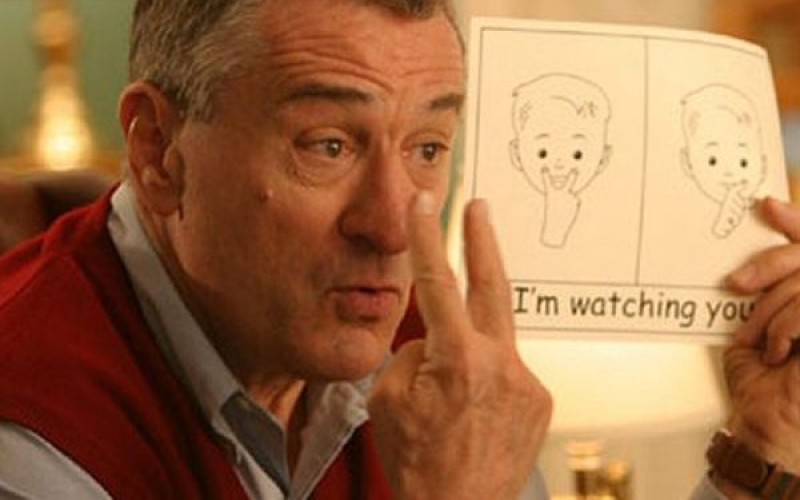
So, in the absence of a personality test, and not having the assistance of Robert De Niro’s crazed former CIA operative in Meet the Fokkers, I’ve defined five types of people who would not gain admittance to my Circle of Trust.
The True Believer
The True Believer is attracted to the leader whose declared values and ideological outlook appears most closely to match their own. When they discover that all is not what it seems, that the object of their veneration turns out to be cynical, opportunistic and with the principles of a crocodile, the love turns to hatred. They feel betrayed, conned and manipulated.
The Malicious Courtier
Malicious Courtiers have prospered by doing down everyone who might threaten their fiefdoms. Their political instincts are acute. They love nothing more than a turf war, and they delight in briefing against their enemies and potential competitors. They often brief against other leakers.
The Game Player
The Game Player is highly intelligent, amoral and has an inbuilt sense of superiority over colleagues. They relish the chaos that a well-chosen leak can cause. They take the risk because it’s an assertion of their power. Psychopath? Quite possibly.
The Goldminer
The Goldminer might use all manner of motivations as a smoke screen, but their primary motivation is to make money. They take notes, write diaries, waiting for the moment when they can flounce out of the job in mock outrage and make a fortune through interviews and the inevitable book full of juicy revelations.
The Moralist
The Moralist is a variant on the true believer. The betrayal, in their mind, comes not from an individual, but from “the system” that they work to uphold, but that they realise – either gradually or in a moment of revelation – is morally bankrupt. For them, the end doesn’t justify the means. When they spill the beans, their action often comes at considerable personal risk.
The challenge for Trump, May and other leaders is how to predict the circumstances under which an appointee is liable to become a leaker. Unless, of course, leaking is part of the job description, as appeared to be the case when spin doctors working for Tony Blair and Gordon Brown became the best source of scuttlebutt about the neighbours in Downing Street.
Not being an occupational psychologist, I have no idea as to whether these definitions have any objective validity. I’m drawing them from my own life experience, which in turn is informed by a lifelong interest in history and politics.
It should be quite possible, though, to develop techniques, through assessment, background analysis and psychometric testing to identify who is most likely to spill the beans, and under what circumstances.
The trouble is that if you eliminate all potential leakers, you deny yourself the services of talented people. For example Jon Ronson, in his book The Psychopath Test, contends that psychopaths don’t necessarily end up as serial killers. Many are perfectly law-abiding, he claims, live amongst us undetected and have qualities that employers find valuable.
It must be unbelievably frustrating for Trump to know that his administration leaks like a sieve. You could argue that he has nobody to blame but himself. He presides over what looks more like a ruler’s court than a government. His own capricious behaviour, and his bizarre appointments – Scaramucci, Bannon, Gorka et al – must surely encourage others to leak through ambition, envy or as a matter of principle.
About the only people who can probably be relied upon not to leak are the generals, who have spent their careers dedicated to the sacred ethos of need to know. Among the rest, there will be some whose loyalty is to the president rather than the state, and others who regard themselves as public servants rather than Trump’s retainers. In either case, their sense of loyalty will be conditional, not absolute.
What should we make of famous leakers, from today’s crop, such as Christopher Wylie (Cambridge Analytica), Edward Snowden (NSA), and Julian Assange (Wikileaks) to Mark Felt (Watergate’s Deep Throat) and Daniel Ellsberg (Pentagon Papers)? And what are the motivations of the anonymous leakers who provided Michael Wolff with much of his material for Fire and Fury, his portrait of Trump’s White House?
Ego, wealth, power, envy, personal values or perhaps even lust?
Whether or not my definitions are close to the mark, I find that the psychology of leaking is a fascinating subject. In fact it’s about time someone with a couple of years to do the research came up with a book on the subject. Jon Ronson perhaps?
Back in the White House, I wonder if in his darker moments Donald Trump feels envious of past tyrants like Stalin and Saddam Hussein, who had their own gruesome ways of dealing with leakers. Not to mention his mate Vladimir Putin, who, his critics allege, thinks nothing of sending a dose of nerve agent, polonium or some other exotic poison to eliminate his loose-tongued compatriots.
I suppose the fact that the “leader of the free world” hasn’t yet graduated from venomous tweets and blunderbuss lawsuits to more extreme tactics is some cause for comfort. Leaking is a chequered profession, but who knows? Perhaps a leaker will end up bringing down the President. Plenty more to come on Donald Trump, I suspect.

If you were spooked by the video of Russia’s new and “unstoppable” intercontinental ballistic missile rising out of its silo like a venomous sea-snake, don’t read on.
Most of us, most of the time, manage to put to the back of our minds the knowledge that our lives could end in an instant through any number of events that are beyond our control, and beyond the ability of humanity to prevent: earthquakes, volcanoes, asteroid strikes, hurricanes or tornadoes.
We have been equally sanguine about the prospect that a full-scale war between the two largest nuclear powers, the US and Russia, could end humanity and much of the rest of life on the planet. Even a conflict between “lesser” nuclear powers – India and Pakistan for example – would, according to one estimate, cause the death of a substantial proportion of the human race – two billion people.
I now have five big books in my library that deal with different aspects of the story of how we got to here. All intersect to some extent in warning of the ever-present threat of nuclear conflict, but each deals with the subject from a different perspective.
Hiroshima Nagasaki, by Paul Ham, deals with the development of the atomic bomb, events leading up to its use against Japan, and the aftermath of the bombings, both for the victims and for post-war politics.
Eric Schlosser, in Command and Control, describes the complexities of the systems that are supposed to prevent an accidental war, starting with the crude measures that were in place after Hiroshima and Nagasaki. He also provides a catalogue of terrifying near-misses that could easily have triggered a catastrophic nuclear exchange.
In The Dead Hand, David E Hoffman tells of the efforts of Reagan and Gorbachev to reduce the nuclear arsenals of the US and the Soviet Union, and of the efforts of their successors to limit proliferation after the collapse of the latter. The Dead Hand refers to the process and technology in place to ensure that if the leadership of the nation attacked was decapitated in a nuclear strike, a devastating counter-attack would take place with no means of stopping it.
Armageddon and Paranoia, by Sir Rodric Braithwaite, a retired British diplomat, focuses on the politicians, soldiers and scientists involved in the arms race. He provides much valuable insight into the Soviet/Russian participation. And as you would expect, he is strong on the political thinking on all sides that underpinned the Cold War.
My latest tome is The Doomsday Machine, by Daniel Ellsberg, who differs from the others in that he was once an insider at the heart of the American military establishment. As a consultant with the RAND Corporation and subsequently an advisor to US Department of Defense, he personally influenced policy decisions relating to US nuclear war planning.
He’s the same Daniel Ellsberg who leaked the Pentagon Papers, which revealed the lies that successive governments told their public about the progress of the Vietnam War.
Before 1969, when his career as a political activist began with the Pentagon Papers, he spent more than a decade during which he was privy to most of the government’s most sensitive defence secrets. His involvement in nuclear war planning included studies of the command and control structures in place throughout the 1950s and early 1960s.
The Doomsday Machine takes its name from a phrase first coined by Herman Kahn, a leading physicist at RAND, and subsequently adopted by Stanley Kubrick in Dr Strangelove, his movie about a nuclear war started by a rogue air base commander. When they watched the movie, Ellsberg and a colleague agreed that what they had just seen was “essentially a documentary”.
In the movie, the Doomsday Machine was a device that launched an automatic and irrevocable retaliation against a nuclear attack, thus precipitating global catastrophe. Although Ellsberg was not aware of it at the time, it turned out that both the US and the USSR effectively possessed such a device. Later research indicated that the climatic effect of thousands of nuclear detonations, known as the nuclear winter, would do the job.
Through his recollections, backed up by his own notes from his time at RAND and the Defense Department, and citing declassified material, Ellsberg chronicles the development and practical consequences of US planning for nuclear war which originated with the area bombing strategy in World War 2.
Rather than provide a precis of the book, I’ve selected a few highlights that have broadened my knowledge of the story:
In 1945, scientists working on the first atomic bomb took bets on whether the explosion would ignite the atmosphere and thereby incinerate the planet.
In the 1960s, the US violated its treaty with Japan by keeping nuclear weapons on Japanese territory.
Hydrogen bombs are warm to the touch, as Ellsberg discovered in a close encounter on an air-base.
The nuclear football is a fraud. Since Eisenhower’s presidency the authority to launch a nuclear attack as been delegated, on some occasions to the level of local commander. Ellsberg believes that this is still the case today.
Until the early Sixties, the US war plan anticipated and all-or-nothing attack involving thousands of nuclear warheads. In 1961, the US Airforce estimated that the number of casualties from such an attack would be 350 million people within six months. That estimate was upgraded in the early Eighties to all humanity, thanks to the theoretical nuclear winter caused by a thousand firestorms throwing ash into the stratosphere.
Local air base and missile site commanders regularly circumvented procedures designed to prevent the unauthorised nuclear attacks. Methods included using multiple zero launch codes and obviating the requirement for two officers to verify the attack command.
Presidents have repeatedly claimed that nuclear weapons have never been used since Nagasaki. They are wrong. On twenty-four occasions since 1945, US officials have implicitly or explicitly threatened the use of nuclear weapons. Potential targets have included North Korea, China, Vietnam, Russia, Iraq, Iran and Libya. As Ellsberg points out, you use a gun if you point it at someone’s head, even if you don’t pull the trigger.
The US war plan in the 1950s did not just involve the destruction of Russia, which was seen as the primary enemy. Other Iron Curtain countries were targeted. China, which at the time was not a nuclear power, would also have been obliterated, despite the fact that in the early 60s it was at loggerheads with Russia. In the event of all-out war in Europe, the US accepted that most of their allies in western Europe would be wiped out, even if they were not involved in the conflict.
An Air Force officer in the 1960s seriously proposed firing a thousand rocket engines in the opposite direction to the earth’s rotation. In the event of a Soviet attack, he believed, this would be sufficient to temporarily halt the rotation and cause the incoming missiles to miss their targets. No matter that such an event would cause hurricanes and tsunamis beyond the imagination of the most extreme disaster movie script writers.
Most significant of all, Ellsberg contends that the purpose of America’s nuclear arsenal has never been, as successive American administrations have contended, to act as a deterrent against attacks, but to serve as a means of limiting the damage of retaliation against a US first strike against the Soviet Union or Russia.
He concludes by urging nuclear nations to disable their Doomsday Machines. This he claims, can be achieved by dismantling the hair-trigger systems that launch missile attacks on receipt of an automated warning that the other side has launched their missiles. By doing this, the possibility of errors and unauthorised attacks can be minimised. He’s realistic enough to know that the chances of total disarmament are minimal, but dismantling the systems that trigger “launch on warning” would at least be a major step along the way.
As he rightly points out, a decision that might wipe out humanity would be the act of insanity, but he acknowledges that the war plans that would result in such destruction were designed by sane and rational people, himself included.
At the time of writing, Donald Trump’s administration is embarked on an upgrade of America’s nuclear arsenal. Vladimir Putin’s is brandishing his new and “invincible” missile. And Kim Jong Il is believed to have restarted his plutonium plant, in spite of a meeting with Donald Trump in two months time in which the elimination of Kim’s weapons is supposed to be on the agenda.
With so many nations possessing nuclear weapons, and the likelihood that each, to a greater or lesser extent, has delegated authority to unleash them, it seems only a matter of time before someone is insane enough to launch the first weapon. Whether that launch triggers a massive exchange sufficient to end all life on the planet, or merely a significant portion thereof, remains to be seen.
Although Ellsberg appears to be a firm believer in the most apocalyptic nuclear winter theory, he doesn’t acknowledge that there is no current scientific consensus on the extent of the phenomenon. Some believe that the effect of smoke particles in the stratosphere will be relatively short-lived and unlikely to extinguish human life on the planet. I for one would prefer to look at the worst case, and have no desire to find whose assessment is correct.
But at a time when the world seems less stable than for half a century, he must be right in his assertion that nuclear war remains a clear and present danger.
One final thought. The UN Secretary General was quoted in yesterday’s New York Times as saying that climate change is “the most systemic threat to humankind”. Whatever he means by systemic, I would judge that nuclear war is the greater threat.
As far climate change is concerned, an event that potentially reduces the average temperature of the planet by up to 20C for a couple of decades, thereby causing crop failure and mass starvation that wipes out those who survive the conflagration, would be one way of removing human input in the process altogether.
Left to the birds, the bees and the cockroaches, the planet would no doubt return to its natural cycles without the presence of any beings sentient enough to bemoan their contribution.
Facebook is a great tool for keeping in contact with people you once met, once knew and might never see again. Does the fact that it allowed your personal data to fall into the hands of a bunch of amoral pirates in pinstripes and the political thugs that hire them mean that you should cast Zuckerberg and his legions into the outer darkness of your world?
There’s a tornado of opinion on Twitter and other social media that says you should.
If you’re prepared to forsake all those pictures of grinning babies, cuddly pets and silly videos, not to mention the ads for stuff which mysteriously appear after you’ve searched for products or services on some website that you wouldn’t expect to have any connection to Facebook, then go ahead and delete it.
But while you’re at it, delete all the cookies lurking on your computer that help other companies mine your data without your being aware of it. In fact don’t use your computer at all, because the cookies will soon reappear once you continue using those sites that are so much more convenient than your local high street.
If there is a problem, Facebook is not it. At least, it’s not THE problem. In fact, millions of people don’t have a problem at all with online ads and emails that try to anticipate your next purchase. Do I object to Amazon prompting me on newly-released books, or special offers of products that keep our elderly dog mobile? No. Am I bothered that every second email I receive is trying to sell me something? Yes, but irritated more than outraged.
At least the days when I would be inundated with spam offering me Viagra and Cialis appear to be over. Perhaps the originators have figured out that I’m too old or clapped out to find any use for such products, which would be rather insulting.
Would I be bothered if I was bombarded with Brexit propaganda, possibly as the result of my following Nigel Farage on Twitter in an effort to avoid building an echo chamber? Yes, I probably would, especially if it meant that Twitter had been hacked, because all the trolls would be offered Novichok nerve agent, bomb-making kits and combat knives. But then again, they can get lots of horrible stuff on the dark web anyway, and Twitter probably has been hacked, so have at it, chaps.
I like to think I’m smart enough to figure out when someone is trying to influence my political beliefs. What’s more, as we’re increasingly flooded with fake news, Russian bots, manipulative attack ads and all the other tools of the online trade, it seems logical that here in the UK, and even in the US, where there seems to be a bottomless well of gullibility, we’re getting better at figuring out when someone’s pulling our chain. In other words, slowly but surely, we’re developing an immunity to what worked in the political campaigns of 2016.
As for all those product ads, we get them because clearly they work. And the money they generate keeps internet whales like Google and Facebook afloat, not to mention all the minnows that swim alongside them.
If disengaging from the web is a step too far, which it would be for most people who have come to depend on it for all manner of reasons, there is another option, even if it doesn’t rise above the level of devilment.
Spend half an hour a day liking stuff you don’t like on Facebook, and searching for products that you have no intention of buying. If nothing else, that would give you the satisfaction of watching the crap you’ve put out there recycling back to you – a sort of disinformation game, if you will. If enough people regularly sent bum steers out into the internet, then there could be a significant degrading of the data industry’s much vaunted pinpoint accuracy.
I’m not suggesting you do this with politics, by the way, especially on sites where your disinformation tactics are available for public view. Come the revolution, which seems ever more likely as our democratic institutions appear to be under increasing threat, you might find yourself on the wrong side and suffer accordingly. And you might also lose a lot of friends. Besides, politics are too important to play games with, even if others are more than happy to play games with you.
Ultimately, we all need to get smarter about the implications of what we do on the web, especially when we click on those smiley faces and like buttons. The good news is that episodes like the Cambridge Analytica scandal serve to make it harder for would-be successors to do the same thing again. You would also hope that as the average age of internet users gets ever lower, our youngsters are getting more savvy, both through education and – just as important – word of mouth through their peers.
What’s more, particularly in the case of the US, we perhaps overestimate the power of political manipulation via the internet. I read one recent op-ed from the States suggesting that a large number of Trump voters didn’t even have the internet. They relied on the likes of Fox News to shape their opinions in the 2016 election.
The irony is that if Trump inadvertently manages to lift a substantial number of his followers out of poverty, they might find that the internet they sign up to for the first time is significantly different from the wild west that helped him get elected, thanks to regulatory pressure brought to bear on today’s giants. And by that time, a significant proportion of Fox News addicts will no longer be around. None of which bodes well for Trump’s chances of re-election in 2020, if he survives that long.
The one lesson I learn from these recently-revealed shenanigans is that the internet is not too dissimilar to the natural world. It has predators and prey. Just as species evolved with mental and physical countermeasures that protected them from being preyed upon to extinction, early humans developed tactics to avoid being eaten by sabre-toothed tigers.
Now evolution seems to be playing its part again. Will we be smart enough to avoid eating the wrong internet fruit, and building shelters against the virtual beasts that want to devour us, or will significant numbers of us be left behind, if not to die but at least to languish in hopeless poverty, useful only for the vote we cast every few years?
Big question, which I’m not smart enough to answer. But at least I remember – without much sentimentality – life before the internet, and I have to say that I’ll take today over yesterday any time. As for tomorrow, it won’t be that long before I’m too old to care.
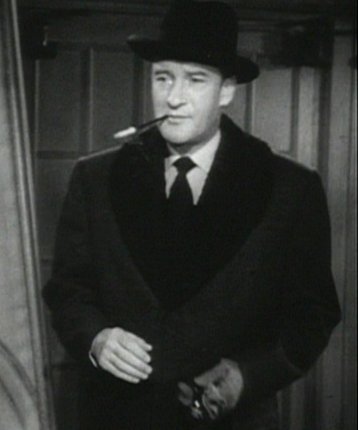
George Sanders
A few perspectives on a couple of the dramatis personae in the Cambridge Analytica furore.
First, Carole Cadwalladr has played a blinder. Speculation on CA’s role in recent political developments has rumbled away for some time, but Carole had led the pack. She has written other pieces on the subject in the Observer over the past year, on which I commented at the time:
Are we really Bannon fodder in an information war?
Brexit, Trump and the role of Big Data – one conspiracy theory worth investigating
Jamie Bartlett, in his BBC series on Silicon Valley, also did a jaw-dropping interview with a person who was involved in Trump’s online campaign in 2016, in which Facebook and CA featured prominently.
But up until now, official comment, and even media coverage (apart from the Observer’s) has been on the lines of “yeah right, very worrying, but the elections are over, so let’s move on”. Admittedly the UK’s Information Commissioner has been investigating electoral malpractice in the EU referendum, but at what appears to an outsider to be at a snail’s pace. Until yesterday.
But now the whole thing has exploded, and everyone’s excited. Will Cadwalladr, a journalist many of us have never heard of, turn out to be the Woodward and Bernstein of the current decade? Maybe not, but all power to her nonetheless. This must be her career-defining moment. She surely deserves a medal for showing that the traditional skills of investigative journalism – integrity, determination, meticulous research and the protection of sources – are not dead.
Then there’s Alexander Nix, the Cambridge Analytica kingpin.
Once upon a time, Hollywood used to characterise the English – using actors like George Sanders – as cads and villains. I’ve never met Mr Nix, but if, as is highly possible, someone eventually decides to make a movie on the whole Trump/Bannon/CA saga, I would definitely exhume Sanders to play him. Not that I’m suggesting that the gentleman in question is a cad or a villain, you understand. It’s just his manner that brings Sanders to mind.
Mr Nix was educated at Eton. In the old days, scions of Britain’s elite private schools, of which Eton is one, would go into politics, run the empire, join the army or husband their family wealth, and sometimes all four of them. A few would become adventurers and some of them ended up in jail. Winston Churchill – an aristocrat who lacked the essential ingredient of wealth – might well have been tempted to embark on a less illustrious career had he not managed to acquire a seat in Parliament after his heroics during the Boer War.
These days Old Etonians still end up in politics. David Cameron and chancer-in-chief Boris Johnson are recent examples. But a good number go into other fields in which their finely-honed communication skills and excellent all-round education – topped up at Oxbridge, of course – serve them well. Advertising, public relations and corporate finance, for example, where they can capitalise on their well-tailored suits, excellent manners and impeccable connections, but where morality sometimes takes second place to self-interest.
As I said earlier, I don’t know Mr Nix, but to hear him boasting to Channel 4’s undercover reporters about his contacts in MI5 and MI6, and the mysterious Israeli contractors to whom he has access, you sense that here’s a person who is quite happy to wade through dirty waters, yet who is confident that none of the muck will splash back at him. A bit like Mark Thatcher, actually, but probably more intelligent, and a good deal more charming.
I may not know him, but I’ve met people in my time who gave a passable impression of pirates in pinstripes even if they were perfectly upstanding individuals. And a few seemingly upstanding individuals who ended up revealed as pirates in pinstripes. Not surprising, given that I went to one of those smart schools.
It’s not for me to speculate whether Alexander Nix and his Tigger-like sidekicks who featured in the Channel 4 programme will end up in some kind of trouble. That’s for officials such as the Information Commissioner, now that they’ve been presented with potential evidence that will be hard to ignore. Until anyone can prove otherwise, he and his associates deserve the benefit of the doubt. As I hasten to point out, just because someone might look, talk and walk like George Sanders, that doesn’t mean they’re a cad.
But I return to what I wrote six months ago, as Carole Cadwalladr was posting dispatches on the path that led to the bombshell she’s just detonated:
… if it was legally permissible to do so, I would be happy to see certain individuals put in a darkened room and asked some very hard questions in the harsh glare of a spotlight.
Common sense says that the government would go to any lengths to avoid such an inquiry, since it could quite possibly undermine the legitimacy of the referendum, and therefore of the government’s subsequent acts.
But it’s conceivable that as more information emerges about the possible subversion of the US election, and especially if that information also relates to the British referendum, the government might find itself forced to react, no matter how traumatic the consequences.
Well, more information has emerged, so one would hope that those hard questions will now be asked, whether or not they are posed in a darkened room.
Oh, and all is never quite what it seems. George Sanders, the archetypal English screen nasty, was born in Russia.
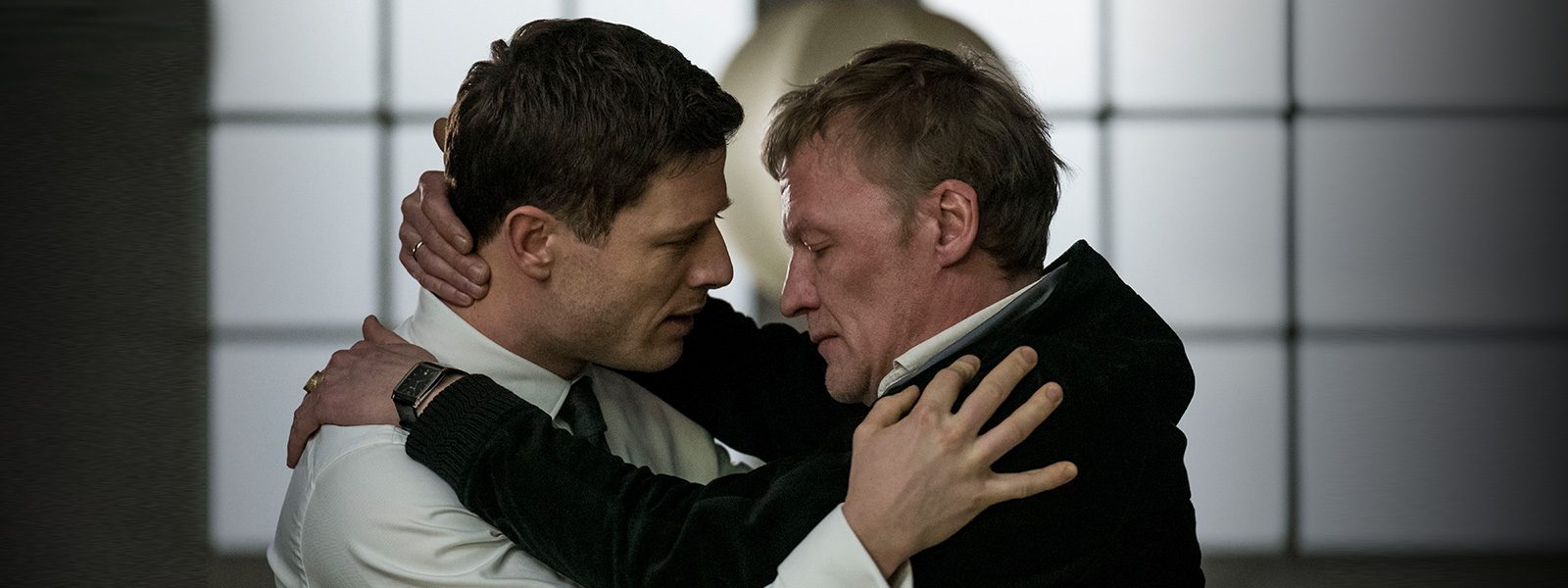
The timing was perfect.
My wife and I watched the first six episodes of McMafia, the BBC’s flagship series about the Russian mafia, before we set off for a month in South-East Asia. By the time we got back, the denouement was waiting for us.
Then, as we got to Episode 8, when the tit-for-tat assassinations intensified, came the attack on the Skripals in Salisbury. How fiction intersects with reality remains to be seen, but as the McMafia narrative played out, the involvement of government officials in the web of intrigue added an extra element of spice.
So first, a few thoughts on the fiction.
The makers of McMafia clearly had a taste for travel. The series lists some very sexy locations – Britain, Croatia, Russia, Israel, Istanbul and India. I guess there weren’t many people queuing up for the gig, though poor old James Norton had to go everywhere except Mumbai. Tough life.
The actors were terrific, and despite the received wisdom, I include Norton. It must be hard to play the relatively inert centrepiece around which all the crazier characters revolve. He does cold-eyed well. Having said that, he will never play James Bond, for the simple reason that he runs like an ostrich.
As for the others, there were some fine performances, notably David Strathairn as the Russian-Israeli ship owner, Aleksey Serebryakov as Dimitri Godman, the exiled head of the Godman family, and Merab Ninidze, who played Dimitri’s arch-enemy in Moscow.
Norton’s character, Dimitri’s son Alex, plays a role similar to that of Michael Corleone in The Godfather. Like Michael, Alex is making a life outside the family business, trying to build a career in the legitimate world – in Alex’s case as a merchant banker. But just as Michael’s family loyalty sucks him into the gangster world, so does Alex’s, to the horror – in both cases – of their respective partners who have no connection with organised crime.
Looking at the series in retrospect, the plot was well-crafted, and came to a suitably apocalyptic conclusion. Mischa Glenny, on whose book it’s based, is a serious historian and journalist. One suspects that he knows what he’s writing about. The portrayal of Russia as a hub of criminality around which various gangster franchises revolve rings true.
Here in Britain – at least until recently – we have happily hosted oligarchs whose fortunes are of dubious provenance, mostly arising out of the wild west of Yeltsin’s Russia. We ask a few questions about their wealth but don’t get too many answers, so we leave it at that, because we like the fact that they spend their money in our country.
So the presence Britain of the fictional Godmans, a family whose paterfamilias created a fortune out of nothing, and then fled Russia because he made too many enemies, is entirely believable.
An interesting facet of the story is the involvement of the Russian government, or rather of elements thereof. We know from the outset that Vadim Kuliakov, the Godmans’ nemesis, is aided and abetted by an FSB agent, Ilya, whose shadowy presence as Vadim’s advisor and protector pervades the series.
But it’s only towards the end that Ilya’s fragile place in the FSB hierarchy become clear. And as other officials become involved in Alex Godman’s business dealings, the government looks less like a monolith, and more like a seething mass of rival factions. Something to note when considering the Salisbury attack.
In fact, by the end of the series “the government” looks rather like the Greek pantheon. Rival gods, whose presence is everywhere in the perception of the protagonists, but whose motivation is thoroughly human, who pull strings and occasionally intervene to dramatic effect, and certainly not in concert with each other.
Which leads one to wonder how closely this maps on to the real picture. Is Putin a Russian Zeus, presiding over a squabbling family of gods who acknowledge his supremacy but frequently act in their own interests without the knowledge of the ultimate Godfather?
Or is Russia’s president the all-seeing, all-knowing string-puller in whose domain nothing happens without his specific approval?
In McMafia, the first picture emerges. Putin’s name is never mentioned, and the gods only seem to intervene when the mortals get out of hand. But you definitely get the impression that there are several competing deities at play.
Back in the real world, Putin has consolidated his power by eliminating his rivals, so you could argue that there’s no room for an Apollo, a Hera or an Aphrodite strong enough to go freelance. Which leads to the British government’s conclusion that the Salisbury attack was Putin’s work. Either that, or the action of some real-life Mafia godfather. But no godfather who wishes to remain so would contemplate an act that might compromise the position of the capo di tutti capi.
Does Hitler’s Germany offer any clues? A regime presided over by a seemingly all-powerful leader, yet riddled with rivalries between ministers, each determined to carry out the Fuhrer’s “will” and each with their own interpretation thereof. What some historians claim was Hitler’s deliberate policy of maintaining deniability has enabled his apologists to assert that he was unaware in detail of Himmler’s implementation of the Holocaust. Others maintain that evidence of his direct involvement will have once existed but was destroyed in the final conflagration.
Laurence Rees, in his recent history of the Holocaust, argues that there was no master plan awaiting the right moment to be put in effect, but that the whole thing developed over time – ideology buffeted by economic and military circumstances. In other words, the Nazis improvised the Final Solution as they went along.
How might these arguments map on to Putin’s role – or lack of a role – in the Salisbury attack?
Putin is no Hitler. But one wonders whether his reputation as a master strategist isn’t overplayed. We have often overestimated the competence of Russia’s leaders in the past, as we did before the collapse of the Soviet Union. Equally, the idea that he is merely an opportunist who takes advantage of weakness where he sees it in order to further his Russia First agenda probably doesn’t do him justice. The reality perhaps lies somewhere in-between.
If he was behind the poisoning of the Skripals, Putin would most likely see the execution of the hit as a screw-up. I would have thought that the kind of assassination that best suits his purposes is one which leaves people guessing about the perpetrator, but causes them to assume that it was him because of the Russian state’s traditional expertise in murdering those that displease it. In Ancient Greece, an earthquake would have indicated Zeus’s displeasure. In 2018, the death of a Russian traitor can only have been Putin’s revenge in the eyes of the fearful.
So you would have expected that the action against the Skripals would result in their deaths, and would probably not cause damage to forty other people in the process. A nice clean hit, in other words. Deniable, but sufficient to put fear in the hearts of would-be traitors. Instead, it was a botched job.
As for the theory that the Russian mafia somehow got hold of a deadly nerve agent, you have to ask why they would bother to use it when a more conventional method of killing might suffice, especially on sitting ducks like the Skripals. Mafiosi use bullets and bombs. States tend to use more bizarre techniques. Not just the Russians, by the way. Consider the CIA-inspired assassination attempts on Castro, which included an exploding cigar and an attempt to infect his diving suit with tuberculosis.
What now? We puff up like angry roosters. We bluster. We expel a few diplomats. The Russians retaliate, and a few months or years later things settle down, just as they did after Litvinenko’s murder. Fine. We have to do these things to demonstrate that we matter, even if we’re weaker and more isolated than at any time in living memory.
Should we make it harder for Russians to visit and settle in Britain? Perhaps, but not yet. Aside from the ultimate deterrent lurking in our submarines, about the only real power we still possess is soft.
For all our flaws, Britain is still a country ordinary Russians love to visit. Here they see an alternative to Putin’s Russia. A country that is diverse and culturally vibrant. Where secret policemen are not waiting on street corners ready to pounce on those who step out of line. Where an element of free speech is still tolerated. And where everyday corruption is still limited.
So you could argue that every Russian who visits us has the opportunity to enjoy experiences not available in their homeland. And some will return home asking why they have to live in a police state. Just as the coming of satellite TV and eventually the internet alerted citizens of repressive countries in the Middle East to pleasures unavailable to them at home, and caused them to put pressure on their leaders to grant them greater social freedom, is it inconceivable that prolonged exposure to the west is changing Russia’s cultural DNA?
Maybe, maybe not. But in this sense, every western country in which liberal democratic values still prevail and where Russians are free to visit and live is a threat to Putin. Which is one reason why he seeks to disrupt our democratic institutions, and also the reason why, as one of his retaliatory measures against the expulsion of his “diplomats” he has closed down the British Council, one of the primary instruments of British soft power.
Soft power is no defence against tanks, nukes, cyberweapons and avenging assassins. But in the long run, it’s perhaps as good as any method of ensuring that Putin’s legacy is eroded, and that he will be succeeded by a leadership that represents a people who don’t regard us as a traditional enemy.
We will not change Putin. But he will not live forever. And at some stage he might well make a fatal mistake which will discredit him in the eyes of his people. Surely our most effective counter until then is to seduce his people.

Last week I flew a drone for the first time. No, not an aircraft-sized instrument of death operated from a trailer in Arizona that inflicts oblivion upon targets in Syria and Afghanistan. My drone was about the size of an Amazon delivery parcel. It had four rotors, and sounded like a swarm of angry hornets. It was made in China.
It actually belonged to a friend in Borneo, who fired it up for my benefit. As the little gremlin rose into the sky, its camera pointed back at us, my first thought was “I want one!”. I usually react that way when I see a sexy gadget.
I returned control to my friend before I landed it in his swimming pool. Fifteen minutes later I started thinking what I might use it for. I have no buddies in prison who are in need a mobile phone or a stash of drugs, so that’s out. Nor do I have any desire to buzz a Boeing 747 on approach to Heathrow.
But I do play golf, so I’m quite attracted to the idea of bringing it to the golf course so that it can hover over me while I tee off – a great way to improve my swing. On a slow day, I could also send it a couple of holes ahead to drop a polite note on the comatose players who are holding everyone up asking them to get a bloody move on. It would also help me to find my ball. And there’s nothing in the rules of golf saying that you can’t use drone-assisted distance checking.
Then there are the neighbours. I’m not a committed busybody, but it would be quite fun to fly over a few gardens on a summer’s day to see what they’re up to. Well once, anyway, before the injunction arrives.
If I was a disaster fetishist, I could use it to investigate the cause of wailing sirens in nearby streets. I could also fly it to the top of a tree in order to persuade a stranded cat to return to earth, thus saving the owners the effort of calling the fire brigade.
I jest of course. In truth, I really have no sensible reason to acquire a drone. I’m not into wildlife photography. Nor can I think of any other legal and peaceful application that wouldn’t cause acute annoyance to others.
I certainly wouldn’t take kindly to other people’s drones either. In our road, people are always buying stuff online, especially the family who live opposite me, for whom we regularly operate as a last-lap courier service. The prospect of a drone carrying an Amazon package past our front window five times a day would not appeal. And that’s just one house. Imagine a constant stream of angry hornets flying up and down quiet streets frightening the leaf blowers.
In fact, if I was American, even though I would vote to repeal the Second Amendment – the one that entitles you to bear arms – I would make an exception for any weapon that could down a drone, without harming humans of course.
I don’t seriously believe that we’re moving towards a time when drones are routinely used to watch our every move, as in Dave Eggars’ The Circle. But once our police and local councils start using them to catch us doing naughty things – such as allowing our dogs to defecate in the park without picking up the mess – as they surely will, who knows what other liberties they will take?
So all things considered, I’m unlikely to be getting a drone, even though my birthday is rapidly approaching. And anyone contemplating flying one near my house should be aware that I have purchased a catapult, and I’m in active discussions with friends in Beijing who think they can help me procure a device that sends a unidirectional electromagnetic pulse powerful enough to fry the electronics of any device that comes within a hundred feet of the Royston residence.
If that fails, I’ll just have to wait until someone invents an affordable suicide drone – a little bugger that takes out anything with propellers hovering nearby. Come to think of it, that would be quite a useful device for deterring squirrels from making whoopee in our loft.
I reluctantly accept that drones can be quite useful in an emergency – to send the paramedics the right blood should I cut my arm off with a chainsaw, for example. Or to whizz over an ampoule of anti-venom in the event that I get bitten by a poisonous snake while brushing up the leaves (which is a really silly thought given that we live in suburban Surrey and I rarely brush up leaves).
But should anyone be generous enough to buy me one, I can confidently predict that within a couple of months it would join all the other cool but ultimately useless gadgets languishing in my garage, such as the bread-maker and the espresso machine.
If it had some versatility, such as being able to mow the lawn in upside-down mode, I might think differently. But encountering a device as lethal as Boadicea’s chariot racing up and down the garden would probably give the dog a heart attack, which would be somewhat counterproductive.
I’d probably be better off getting a step counter. At least that might have a few months of useful life before my resulting knee and hip replacements rendered it redundant.
Which leads me to the rather gloomy conclusion that most gadgets have unintended consequences.
My laptop screen has an elegant crack radiating in three directions from just right of centre. It’s there courtesy of Ryanair, who very kindly insisted that they put my bag in the hold on a return flight from France last year. When they made the bag grab, I foolishly assumed that if I buried the laptop under six inches of clothing, nothing untoward would happen. My wife suspected otherwise. She wanted me to bring it into the cabin under my arm.
I’m not sure which was more painful – discovering the crack, or my wife telling me she told me so.
Which serves to remind me that laptops are fragile things, and if, like me, you rely on one to do your work, watch the world and communicate with people out of the immediate vicinity, you’d better handle it with care. The only comfort is the knowledge that unlike the tiny devices that the youth rely upon to remind everyone else that they exist, a laptop is difficult to drop down the loo.
That said, it’s also difficult to do much when Microsoft decides to update your operating system if, equally foolishly, you allow it to do so at a time of its choosing rather than yours.
A few days ago I turned on my laptop to find that the cursor had acquired a life of its own. Not only that, but the ghost in the machine had decided that I’m too old to see the icons on the start-up screen in their normal size, and had blown them up to at least four times the normal size.
As I struggled to gain control, rather like a desperate pilot in one of those Air Crash Investigation reconstructions, the cursor went its merry way around the screen, opening apps at random. After thirty alarming minutes of trying to zap rogue apps I concluded that I was under the control of Russian hackers. I shut the machine down by pressing the off button, which is the equivalent of knocking it unconscious. The same thing happened again on start-up. And again.
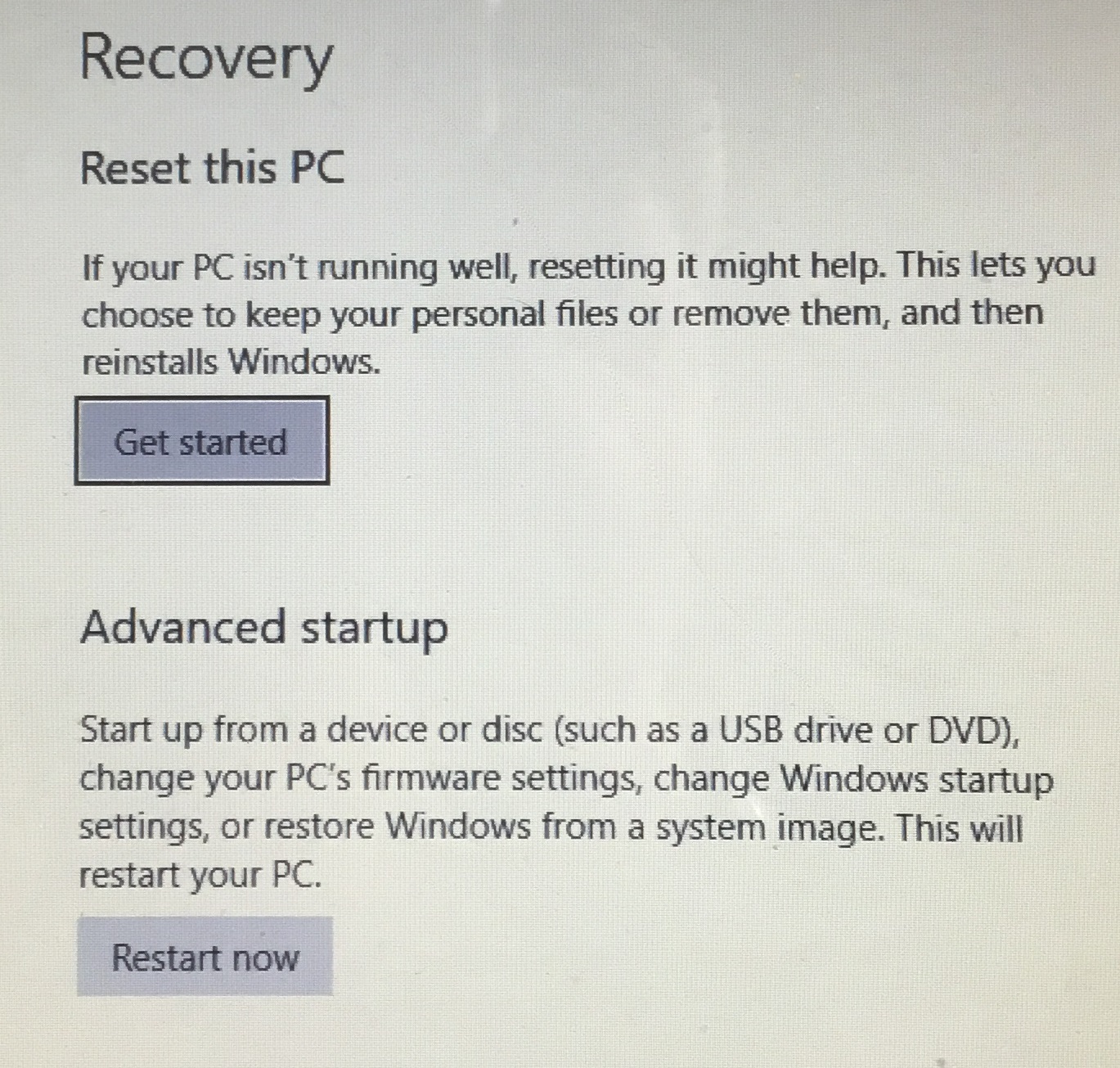
By this time I thought that my Russian hacker was driving me into a mountain. Finally, I managed to pull the laptop out of its deep dive by starting System Restore. This is supposed to reset everything to the state it was in at some earlier point in time. In my case, two weeks ago. I’ve done this twice before with this laptop, and on both occasions it worked.
Not this time. After two hours of showing me the stupid little wheel going round and round, it finally admitted that it couldn’t do it, but would I like to do a System Reset? Under this procedure, you don’t lose your files, but all the apps you’ve loaded yourself get wiped. How it differs from System Restore, I have no idea.
By this stage I reckoned I had two choices. Proceed with the reset, and treat the loss of all my apps as a form of virtual colonic irrigation, or take the machine to the local computer repair shop, who would charge me a non-refundable fee of £80 just for opening the damned thing.
I’m the kind of guy who, before the age of satnav, when he got lost would drive around for miles without stopping to ask for directions. I therefore chose the colonic irrigation. It worked. It took several hours to reload apps that I still needed, such as Microsoft Office. You would have thought Microsoft would have figured how to avoid slaughtering its own in its bonfire of apps, but no.
A few hours later, after digging around for passwords that other software providers required but that I hadn’t needed for centuries, I was up and running again.
Some things were mysteriously different from before. My beloved wallpaper no longer appeared on start-up, though it did occasionally reveal itself to me during the start procedure. All my unrecovered documents, which I occasionally delve into, were gone. But at least the thing worked, and the Russians appear to have been sent packing back to St Petersburg.
At this stage I thought that all this hassle might have been my fault. Perhaps I’d accidentally done something that unleashed this Pandora’s Box of mayhem. Then I happened upon a Facebook post by a friend who was complaining about his experience of the latest Windows 10 update. And below his post were a number of comments from fellow sufferers. It seemed too much of a coincidence that my laptop appeared to have dropped into a software washing machine at the same time as these other people were enduring their own little hells.
But each hell was different. And then it occurred to me that it must be fiendishly difficult for any software maker to avoid screwing up any of the zillions of computers out there, each with a unique collection of apps, data and history. In other words, your laptop and mine might share 90% of their DNA. So would you expect the same medicine to work on both human and chimpanzee? Probably not. Likewise with computers.
This is rather a worrying thought, since in most societies there is barely a single aspect of our lives that doesn’t depend on a computer to keep things on track.
It’s fine when the systems we rely on are like dairy cattle herds, living to a routine and producing their milk under tightly managed conditions. One cow might get sick, but the herd still produces with little noticeable impact.
Our own computers, on the other hand, are like wild beasts. They bear the scars and injuries of a lifetime in the jungle. They go where they will. They mutate randomly, and they’re vulnerable to forces outside their control.
If that’s the case, would it not be sensible for those who provide us with our software, when they upload updates, to give us the kind of warnings you get with medication, to the effect that this update works for most people, but there’s a small risk that you will be invaded by mad Russian hackers who will rampage around your laptop opening, closing and doing God knows what else with your apps? Or worse still, rogue algorithms that don’t answer to Putin or any other human turning your machine into porridge?
Whether these periodic agonies that send us howling like wolves at the new moon are the result of rank incompetence, or a sinister wheeze of the part of the computer industry to get us to buy more hardware or replace what we have after ludicrously short periods of use, I wouldn’t care to guess. My laptop is three years old, and is beginning to resemble our dog, who, at the age of fourteen, is getting somewhat wobbly.
Apple’s recently-revealed decision to deliberately slow down their phones though a software update in order to preserve battery life certainly suggests that some companies believe that it’s OK to sell us products that have the lifecycle of a gnat. Perhaps we should be used to this by now, as we buy washing machines that become irreparable after a year or three, or boilers that have only ten years of useful life, whereas older models used to last for thirty. The less you pay, the less use you get, it seems.
But it would be nice to know how much life we are likely to get from our computers before they collapse under the weight of increasingly memory-hungry updates and all the stuff we install at our own initiative. And it would be nice if the software vendors managed to provide us with updates that improve our experience of their products without putting our machines into intensive care.
Much of the time, in common with the vast majority of fellow technical illiterates, I shrug my shoulders and accept the occasional meltdown. After all, when they work, most modern products work fine. But just occasionally I get pissed off, hence this post.
Here’s a thought, though. If “planned obsolescence” is now the norm, wouldn’t it be good if the same principle applied to some of our politicians, who seem to hang around forever for no useful purpose?

Durian plants at the Kota Kinabalu Sunday Market
A few days ago, before I swapped Borneo for the chilling embrace of the Beast from the East, I posted a piece about the island’s wildlife. While memories are still strong, time perhaps to write a few words about human life. Less wild, though no less interesting to this inveterate people-watcher.
Sabah, which is on the northern part of Borneo, is a province of Malaysia. Its permanent population is a mix of ethnic origins: Malay, Indian, Chinese and native Sabahan. The predominant narrative about Malaysian demographics is that the Bumiputra – a word which loosely translates as “sons of the soil”, in other words descendants of the original populations of Malaya, Sabah and Sarawak – get most of the government jobs. The Chinese are the business dynamos, and the Indians dominate the professions, such as law and accountancy.
From a casual glance at street hoardings, that would certainly seem to be the case in Borneo. Malaysian law positively discriminates in favour of the Bumiputra in a number of areas, including access to further education, though how this is different from negatively discriminating against Indian and Chinese Malaysians is beyond me.
Be that as it may, the narrative doesn’t do full justice to the reality on the ground. There are plenty of poor Indian and Chinese Malaysians, and not all Bumiputra occupy cosy government jobs. And for that matter, there are plenty of representatives from the less advantaged ethnic groups in parliament.
How Sabah fits into this mix is quite interesting, particularly in terms of religion. In 1960, according to Wikipedia, approximately 38% of Sabahans were Muslim, 33% animist and 17% Christian. In 2010 the numbers were 65% Muslim, 26% Christian and 6% Buddhist. In other words, animism has virtually died out. The rise in the Muslim population is said to be because of immigration from the peninsula, and mass conversion programs – hence the demise of animism.
The ethnic mix has also changed. Perhaps it’s no coincidence that the indigenous population – in other words, the people who lived in Sabah when we wicked Brits arrived – is now in a minority. No surprise, I suppose, since colonisation often results in the decline of the original population.
But enough of the demographic stuff, except to add that the influence of a conservative shade of Islam, as in the rest of Malaysia and virtually every other south-east Asian country I’ve visited which have significant Muslim populations, is manifest. More often than not, Muslim women wear the hijab, whereas forty years ago, I was once assured, this was far from the case.
The presence of the lavish mosque in the state capital of Kota Kinabalu, built with funding from Saudi Arabia, provides a clue as to why the change has taken place. So it’s worth remembering that not everybody subscribes to Western values, or takes kindly to our more esoteric holiday dress sense.

Kota Kinabalu was our second stop in Borneo after our close encounters with French birdwatchers and the abundant wildlife of the rain forest.
Western tourists tend to think of Kuala Lumpur, Penang and Langkawi when Malaysia comes to mind. KK, as it’s known locally, comes a poor forth. Yet it’s a fast-growing tourist destination, not so much because of the delights of the city itself, but also as a jumping-off point for journeys into the interior. Wildlife, as always, awaits, and if you’re reasonably fit you can climb Mount Kinabalu, which rises 13,000 feet above the forest.
If you do, you would be advised not to take your clothes off when you reach the top, as a young group of tourists discovered a couple of years ago when they got into trouble for doing exactly that. The mountain is sacred to the local inhabitants, who claimed that the spirits sent an earthquake to register their displeasure. This is definitely something I would have avoided, since the sight of me unclothed would most likely have triggered the equivalent of an asteroid strike.
There’s no shortage of posh hotels in the city, which is more than can be said about Sandakan, Sabah’s original capital. Both towns were devastated at the end of the Second World War in the fighting between the Japanese and the Australians. In KK, the only pre-war buildings still in place are a lonely clock tower and the original post office.
The modern city has a familiar mix of malls, office blocks and traffic jams. The airport is the second largest in Malaysia. It’s newish and swanky, an investment that might have something to do with the fact that an average of eight thousand Chinese visitors from the People’s Republic are said to arrive every week.
The coming of mass tourism from China is a phenomenon wherever you go in the region. If ever you needed evidence of the shift in economic gravity between west and east, this is the most striking. Most of the visitors from mainland China come in large tour groups. There seems to be few independent travellers. They arrive at airports, decant into buses that take them to hotels. And every day the same buses take them en masse on organised tours.
Just about every hotel we’ve stayed throughout the region on a regular basis over the past ten years reports a huge increase in Chinese guests. Which is good for the hotels because they have guaranteed business. But not so good for the local communities, because the visitors are often on limited budgets, and tend not to spend as much as European or American tourists might.
I can only see positives in the large number of Chinese exploring beyond the mainland, even if I instinctively reach for my noise cancelling headphones when I find myself among large groups of them. At present, they tend to keep themselves to themselves, but this is possibly because of language barriers. This too is changing. I often encounter travellers from Shanghai and Shenzhen who speak excellent English. The more Westerners learn mandarin, and the more Chinese learn English, the less we will regard each other with wariness and suspicion.
When we visited Kota Kinabalu, we were lucky enough to be able to stay with some old friends who had moved from the UK eighteen months ago. Our host knows the city from childhood; his father had worked there as a bank executive for a number of years.
Of all the joys of KK to which we were introduced, the Sunday market was the most memorable. If you haven’t encountered an Asian market before, you could certainly start with this one. It runs for about a mile down Gaya Street. You can hardly move through the throng, but if you’re looking for stuff to take home, you’ll find reasonably priced clothes, fabrics and local art, not to mention the usual tourist souvenirs.
Locals come for fruit – including the delicious-tasting but foul-smelling durian that’s in season right now – vegetables and all manner of exotic living things: baby turtles, frog spawn, cats, dogs, geese, chicken and other species that I failed to identify. You can actually buy durian plants, which I thought would be a nice addition to our friend’s garden collection. He politely disagreed.
After picking up a couple of gifts for our baby grandson, we finally had our reward – breakfast in a cacophonous restaurant that sells the best lakhsa in town.

Lakhsa addicts
Lakhsa is about as traditional Malaysian cuisine as you can get, rivalled only by the ubiquitous beef rendang. It’s basically noodles, tofu, seafood and chicken in a spicy broth. In this place, it was doled out on an industrial scale via waitresses who screamed out our orders across the throng to the serving station. Which partly explains the cacophony.
Will I visit Borneo again? You bet. Next time I want to see some pygmy elephants in the wild and say hello to a few more orangutan and proboscis monkeys. I love the people who live on the island, but I have to say that the animals have the edge – those that you don’t find sitting in cages at markets, that is.
Andrew Sullivan’s beautifully crafted article in New York Magazine on America’s opioid epidemic is essential reading, even if you have no personal experience of the phenomenon, or if as an unsympathetic non-American you view it as just another symptom of that country’s decline.
Sullivan starts with a brief history of the poppy, the source of opium and all the synthetic compounds that offer us blissful relief from pain – both physical and spiritual – and thereby seduce us into the hell of addiction. He talks about how opioids work and offers reasons why so many Americans have found themselves in their thrall.
Perhaps his most important contribution to the discussion is to suggest that a solution lies not in “wars on drugs”, but in a deeper understanding of the causes:
To see this epidemic as simply a pharmaceutical or chemically addictive problem is to miss something: the despair that currently makes so many want to fly away. Opioids are just one of the ways Americans are trying to cope with an inhuman new world where everything is flat, where communication is virtual, and where those core elements of human happiness — faith, family, community — seem to elude so many. Until we resolve these deeper social, cultural, and psychological problems, until we discover a new meaning or reimagine our old religion or reinvent our way of life, the poppy will flourish.
His article leads me to three thoughts.
First, this is not just an American problem. To a greater or lesser extent, it’s everywhere. Sullivan’s description of American doctors who have little financial incentive to look deeply into the causes of the pain their patients present, and who dole out opioid prescriptions as a cure-all, should resonate with users of Britain’s National Health Service, whose guidance limits general practitioners to eight minutes per consultation. The temptation to prescribe rather than to deep-dive must be overwhelming.
Second, it would hardly be surprising if America’s rivals saw the US as a huge but diseased tree that only needs a few nudges to keel over. One super-power, Russia, seemingly believes that it can weaken and debilitate its greatest rival by subverting its democratic processes.
Does another, China, believe that by failing to clamp down on the mass-production and illegal export to the United States of fentanyl, by far the most potent and dangerous of all the opioids, it will make its own contribution to decline of the world’s most powerful economy? I find it hard to believe that one of the world’s most intensive surveillance states is incapable of stemming the flow of illicit fentanyl from within its borders if it wishes to do so.
If one was a patriotic American of a paranoid bent, one might be forgiven for thinking that stealing technology was only part of the plan.
And third, opioids are here and now. The next crisis will probably be antibiotic resistance caused by over-prescription. It’s already started, and it might soon dwarf the effects of opioid addiction.
One would hope that the drug companies are ploughing their opioid profits into antibiotic research. But to what extent are they? And are governments doing enough to prepare for and mitigate a clearly foreseeable crisis?
I don’t know the answer to either question. But it worries me that we seem to be living in an age in which the next quarter’s profit forecasts and the latest political opinion polls seem to be more important than the disasters lurking around the corner, and in which governments struggle to fix their cash-strapped health systems, while paying insufficient and ineffective attention to issues that threaten to blast the health both of people and corporations out of the water for years to come.
For all that, I comfort myself in the knowledge that should I be laid low in the hopefully distant future by some disease that used to be treated by a course of humble antibiotics, the equally humble poppy will still be there to ease me out of life with the minimum of pain and suffering.

I am not, or was not until recently, a fan of going out to seek the glories of nature. Like many couch potatoes, I prefer others to do it for me. I love the Attenborough programmes – the Blue Planet and all – for their miraculous photography, and for revealing things about the natural world that we might never otherwise know. And no doubt, when he’s old enough, we will take our grandson to the zoo, where he will be as thrilled by the elephants, tigers and giraffes as my kids were.
When I’m abroad, I find it easier to rouse myself to go out and visit the works of man (or should I say people, Mr Trudeau?) than to commune with wildlife. Give me churches, mosques, temples and amphitheatres any day. To indulge in nature, you have to go to inconvenient places where you risk falling off cliffs, being struck by bits of flying lava or eaten by lions. Buildings don’t usually threaten your personal safety, but some do speak to you as eloquently as the natural world.
That said, the glories of Borneo lie not in buildings but in the endless rainforest, packed with mammals, birds, reptiles and all manner of creepy crawlies. It would have been churlish not to pay homage to them.
So when we arrived in Sandakan, one of the two main cities in Sabah, at the end of our current jaunt through the Far East, we resolved to leave as soon as possible. It’s an ugly city, built by the British as the main point of export for hardwood and rubber, fought over and destroyed by the Japanese and the Australians in World War 2, and rebuilt around a number of hideous concrete buildings that dominate the skyline.
But beyond the town lies the Kinabatangan river. It flows from the interior, through patches of virgin rainforest, past palm oil plantations and ends up winding its way through impenetrable mangrove forests through to the sea.
About 90 kilometres up-river sits the Sukau Eco Lodge, which, as the name suggests, is very eco. Just about everything is recycled. This was where we came to commune with whatever wildlife chose to show itself during our three-day stay.
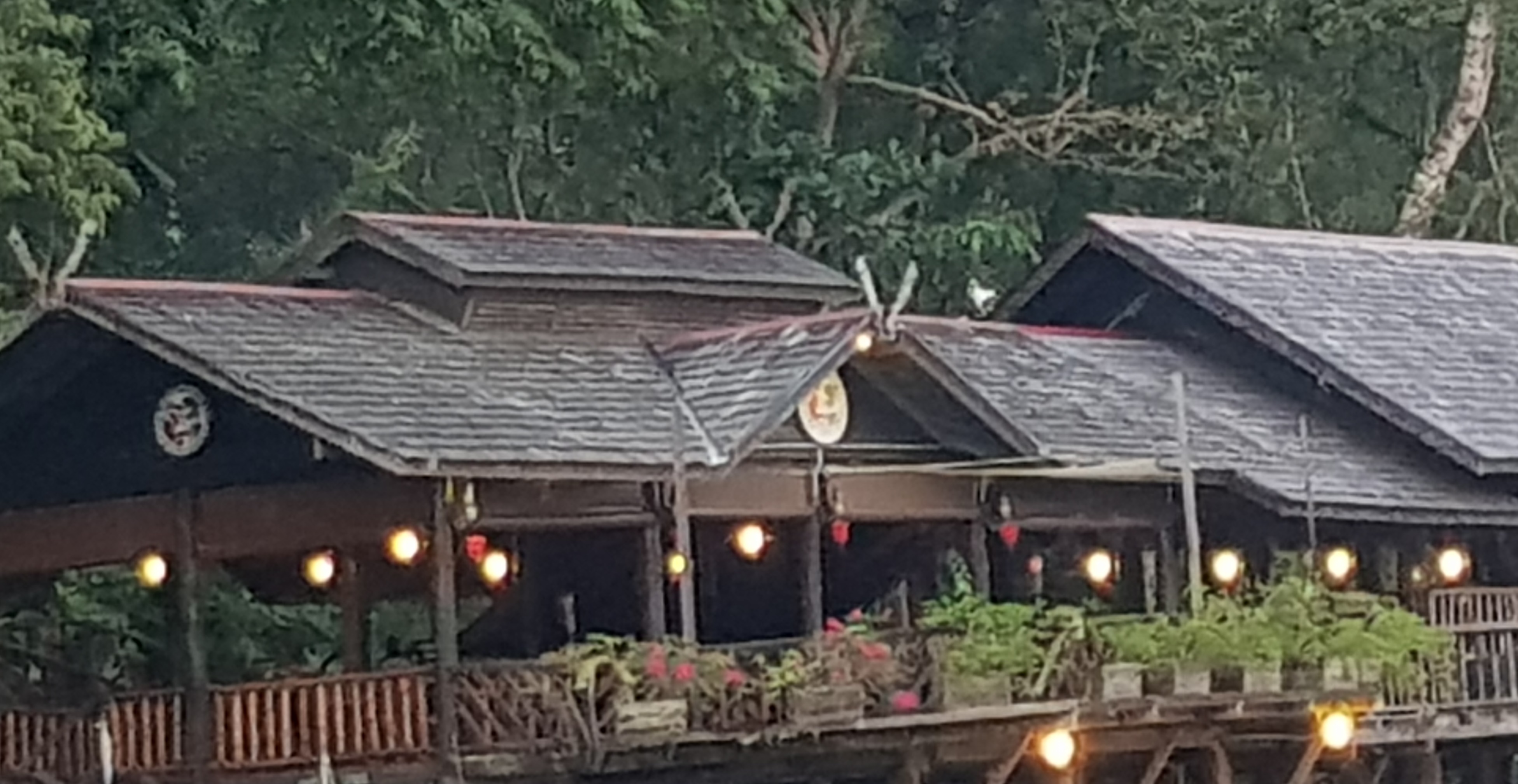
You get there by boat, which takes about two hours, assuming there’s nothing to capture your attention on the journey. Each tour party is accompanied by a guide, whose job is to point you towards everything worth seeing on the tree-lined shores.
“Are zere Hotteurs here”? It took a few seconds to figure out that the elderly French gentleman was asking about the presence of otters. To which the answer was yes. But we didn’t see any.
Our tour party was dominated by French birdwatchers. I’d thought always the French were mainly interested in blasting birds out of the sky and then eating them. These folks proved me wrong. Armed with high powered binoculars, cameras that must have cost thousands, they ventured forth on the river, grimly determined to see every orangutan, proboscis Monkey and hornbill that hung out in the dense vegetation on the banks.
As I said earlier, I’m not a naturist, and certainly not a birder, or twitcher as we call them in England. Until now, my interest in birds has been limited to the robins in my garden and the red kItes hovering over my local golf course. I’m not sure that this trip has changed that. But I was amazed by the powers of observation both of Raman, our guide, and the Gallic Six. A large bird would flap at a stately pace over the river, and Raman would shout “sea eagle”, “heron” or “crested hornbill”. How on earth he made such an identification of what was merely a dark shape on the horizon is beyond me. But sure enough, as they landed on nearby trees, he turned out to be right.
And if he didn’t spot them, the French did. It was so taken with the enthusiasm of my fellow tourists that every time I saw an animal with wings, I wanted to scream out “look – a bird!” even if the creature turned out to be a humble pigeon. Not a humble pigeon as we know them in Trafalgar Square, mind you, but an Imperial Pigeon. Definitely a cut above. But it still looked like a pigeon to me.
But even if the pigeons didn’t produce gasps of admiration, most of the birds were heartbreakingly beautiful – herons, hummingbirds, hornbills, egrets, parakeets, birds of paradise, kingfishers and all.
Then there were the small animals. We went into raptures over a squirrel. Again, not the grey pest that hangs off every tree at home, but a black squirrel, or a red one that glides from tree to tree. Even a Pygmy squirrel, which looked much like a mouse to me, sent shivers down the spine.
Birds, however, are quite ephemeral. You see them, and a few seconds later they’re off to pastures new.
For my wife and me, the highlights of the four trips we made on the river – at different times of the day to catch different species – were the primates.

The boss species in terms of size and star quality were the orangutans. There aren’t that many left in the wild, so we were lucky to see a sleepy-looking female foraging for figs, and then a family of three, mum and two kids, just hanging around at odd angles off the branches of a tree overhanging a limestone cliff.
They are beautiful creatures. They have a sweet, slightly melancholy, demeanour. By all accounts they’re smarter than gorillas. Certainly they look less grouchy.
Then the proboscis monkeys, so named because the male has a long droopy nose like an elephant’s trunk gone wrong. The longer the nose, the more virile he appears to his adoring harem. The females aren’t so blessed. She has an upturned nose. They are only to be found in Borneo. Like the orangutan, they’re endangered, but they hang out in reasonably large numbers along the river.
Unlike the orangutan, which is a relatively solitary animal, the proboscis form family groups. A dominant male, surrounded by women and children. Very Saudi I thought, remembering patriarchs in the shopping malls of Riyadh with wives and kids in tow. Very Malaysian too, according to our guide. We saw plenty of them, hanging out along the river, jumping from branch to branch or just sleeping. Or at least the women and the kids do, while the alpha male hangs impassively form a nearby branch.
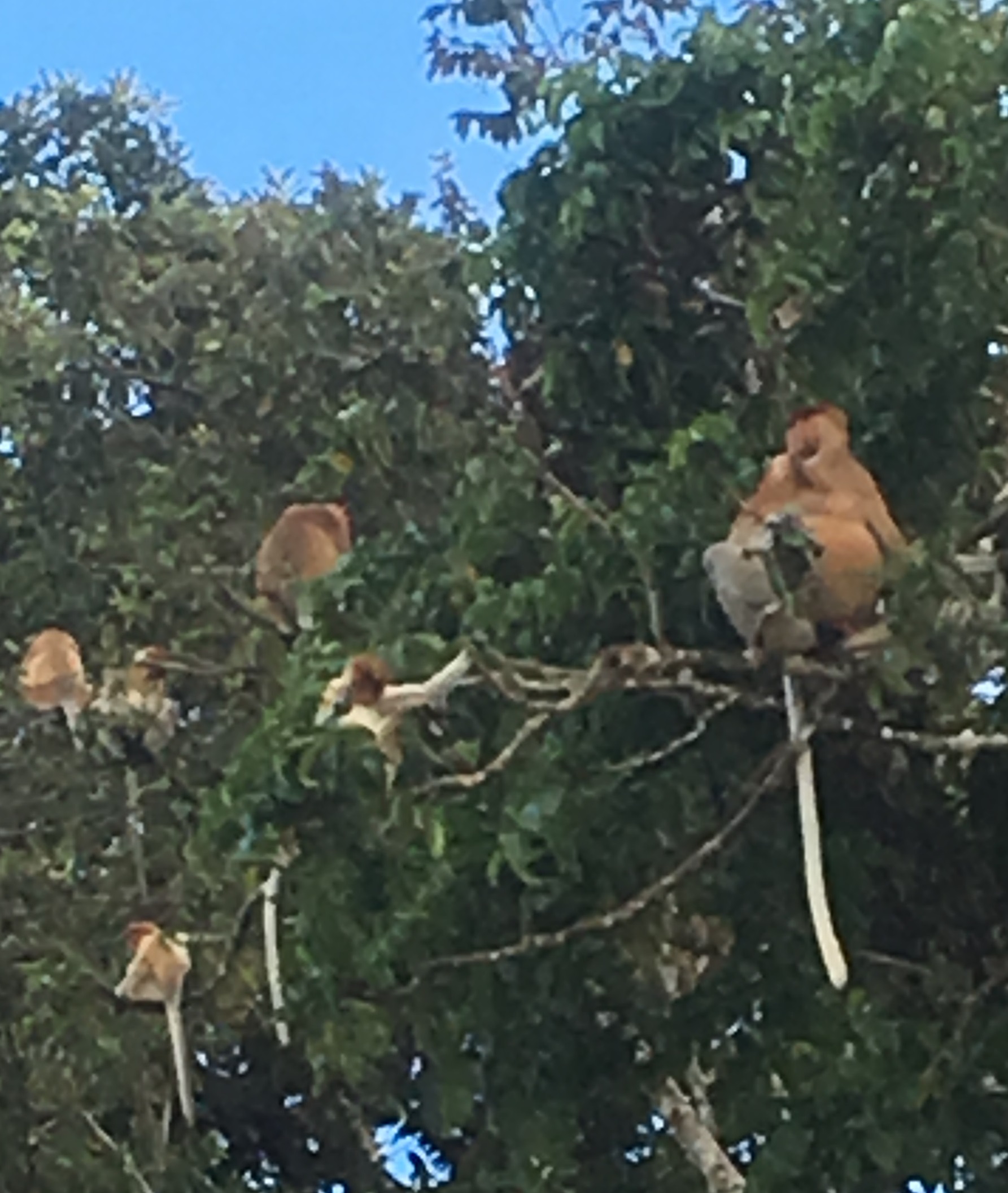
Proboscis family
More common than either species is the long-tailed macaque. Smaller, quite aggressive, often fighting each other, and not fans of the human race, at least in Borneo. I’ve met these before. Near Ubud, in Bali, there’s a monkey forest packed full of them, waiting for bananas to be thrown at them by the visitors, who buy them in bunches from street vendors.
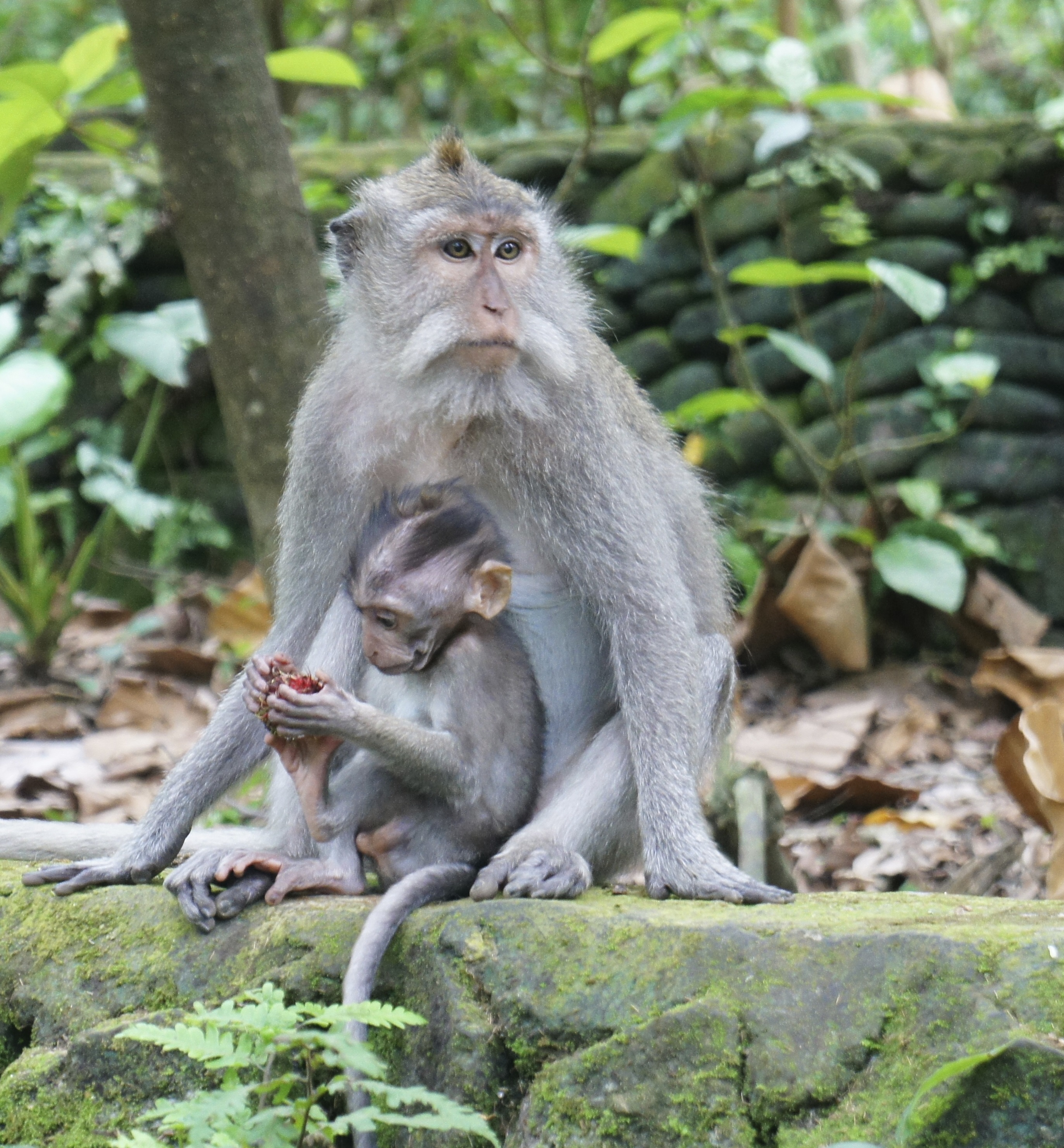
Macaques in Bali
My anthropocentric perception of macaques is that they’re the primate equivalent of football hooligans. Arguing with each other, ganging up, backing down and generally behaving in a threatening manner, particularly towards the other team.
The fourth species we saw was the silver leaf monkey, which was somewhat overshadowed by the others. The only thing of note our guide said about them was that most of their young start with red hair, and go silver at about a year old. Some, however, stay a silvery red, but fit right in with their silvery brothers and sisters. No ethnic cleansing here, I’m glad to say.
Hornbills, eagles and crocodiles we saw. Leopards, elephants and pythons we didn’t. The good thing about the bit of rain forest we visited is that it’s a reservation. No tourists are allowed to set foot in it. It’s mercifully protected from the scourge of the palm oil plantations that have destroyed so much of the Borneo rain forest.
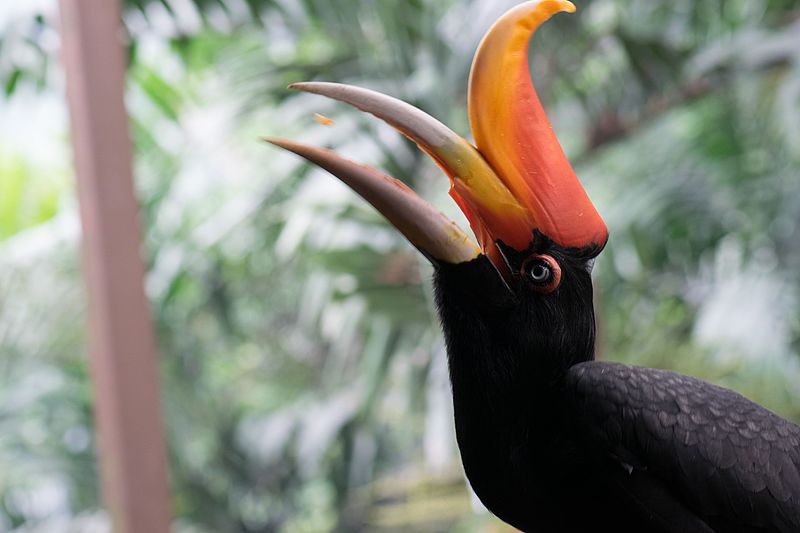
Rhinoceros Hornbill
The Eco Lodge where we stayed is full of enthusiastic, dedicated Malaysians who love their jobs. You can see a pretty neat video on their website here. It recycles everything, including the large quantities of sewage resulting from their generous provision of three meals a day. Four squat green cylinders at the back of our villa appeared to be the end stage of the process, even though they were odourless and seemingly inert.
There’s a long boardwalk into the rain forest where you can look at birds, insects, trees and any passing furry mammals. Much to the delight of the French contingent who spent considerable time taking photos of a scrawny little orchid that grows at ground level. This apparently is quite rare. Usually orchids in this forest transplant themselves into trees.
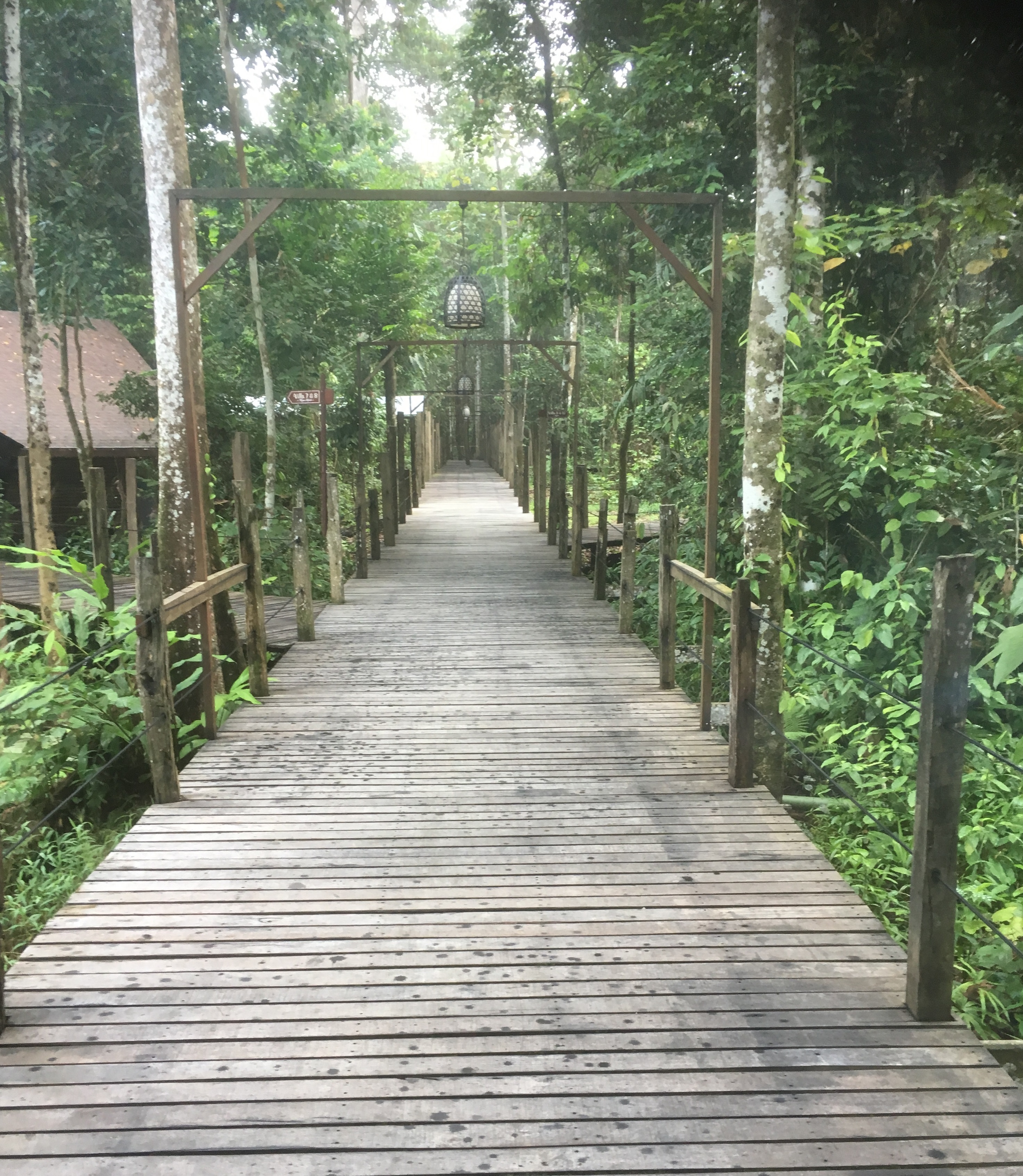
The rain forest walkway
I wanted to shout out every time I saw something flying past – such as one of the large black and white butterflies that abounded in the forest. In fact, I became quite competitive. I wanted to be the first to make a significant sighting, but the damned French always got there first. Rather like Martin Sheen and his buddies chugging up the Mekong in Apocalypse Now keeping an eye open for Viet Cong, our comrades trained their binoculars to pick up the slightest twitch or tree disturbance that indicated the presence of their beloved hornbills, kingfishers and herons.
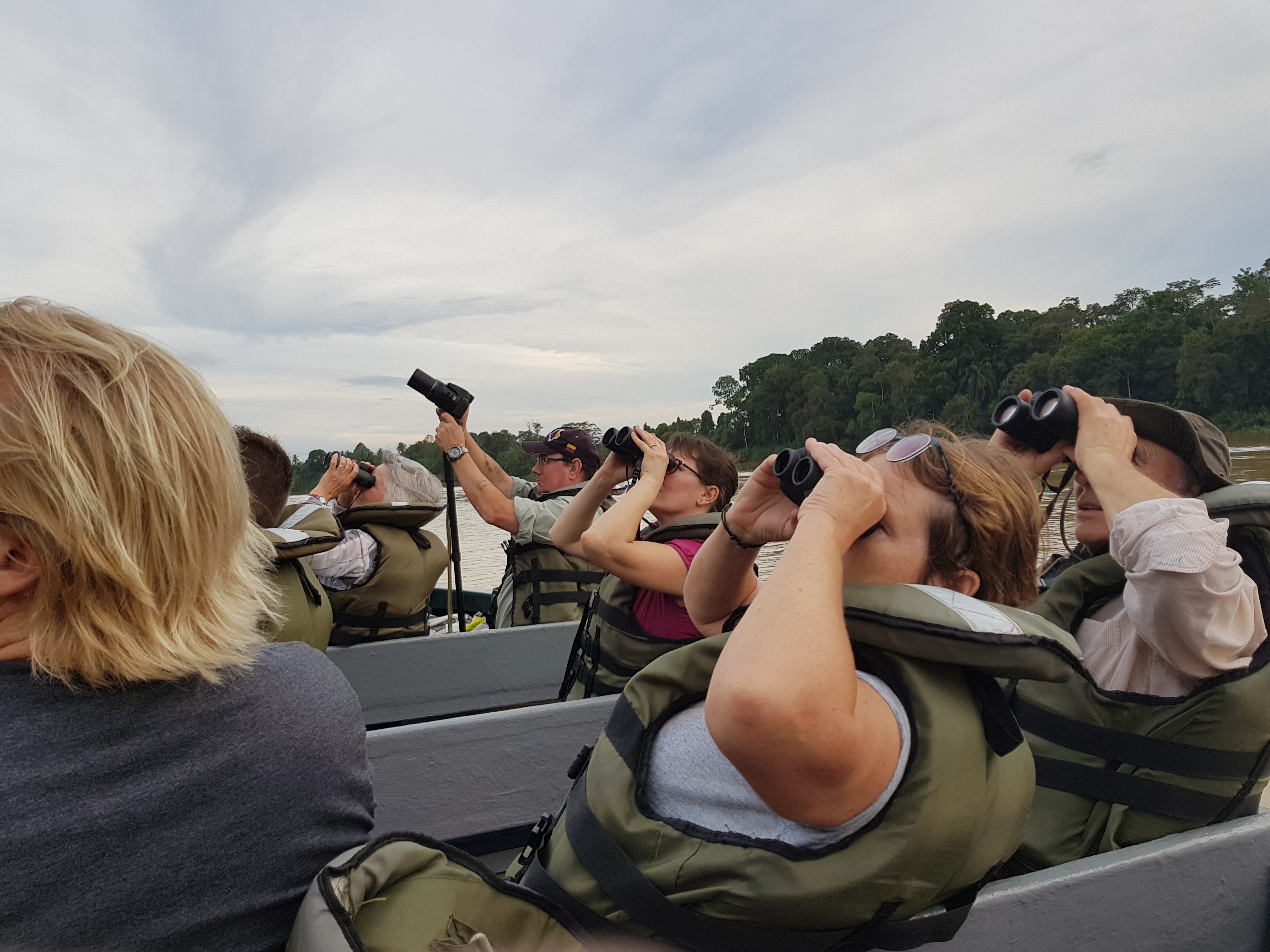
In a way, it was quite a sanitised experience. We were spared the less pleasant aspects of the rainforest – no hacking through the jungle at the mercy of leeches, poisonous snakes and other nasties. And the rainforest was spared our intrusion. Yet sitting on the balcony at night, we felt very close to the various creatures cackling, cawing and crowing away in the darkness close by. And cruising down the river, we saw enough creatures to satisfy even the insatiable French without ever getting close enough to bother them.
Borneo is the third largest island in the world. We only scratched the surface. But the villagers we saw looked very different from the “natives” pictured crowded admiringly around a refrigerator in the 1930. I always thought of Borneo as a land of head-hunters. Maybe there are a few left, but certainly not in the coastal areas.
Large parts of the island are now dedicated to palm oil cultivation. Now I’m not consumed with guilt over the effects of colonisation, but I couldn’t help thinking that all those millions of hectares of rainforest burnt down to produce Nutella wouldn’t perhaps have suffered that fate if it wasn’t for us Brits, who in the 19th century thought we would find gold and silver, and settled for hardwood and rubber instead.
Fortunately, in the Malaysian part of Borneo, indiscriminate forest clearing is no longer happening, and the government has set up rain-forest reserves. The rain forests can return, given time. South of the island, in Indonesian Kalimantan, “accidental” fires still break out, to be followed by palm oil plantations. A couple of years ago, when on holiday in Thailand, we felt the effect of these fires. For about a week, the area where we were staying was covered by a smoke haze that led most of the locals too wear face masks. I came home with a chest infection that took a month to clear.
To the north, there’s an increasing awareness that eco-tourism is a major income generator. If there’s no ecology, there will be no tourists. So things are changing for the better, even if local villagers on the river continue to toss their waste into the water with little regard for the consequences.
Has Borneo turned me into an eco-warrior? Not quite, though I have been dreaming in recent days of hornbills and pterodactyls. But anyone wanting to see nature in all its glory could do worse than adding this beautiful island to their schedule. The locals are delightful – friendly and welcoming. The food’s great – this is, after all, Malaysia. And the wildlife is beyond amazing.
If our trip taught me anything, it’s that you don’t need to rely on what you see on TV while munching your popcorn. The glories of nature are out there, and you don’t need to be an intrepid explorer to witness them. And you don’t need to destroy ancient habitats in the process.
So whether you’re young or old, and if you’re tired of malls, temples and museums, go forth to Borneo, and catch up with some of your cousins.
(By the way, I had to cheat with some of the photos, because my IPhone couldn’t hack it. So thank you Wikipedia Commons for the pics of the orangutan, proboscis and hornbill)
I’ve just spent a few minutes digesting the transcript of an interview in slate.com with a CNN analyst, in which the sage tells us that things are looking up for Donald Trump in the one area that seems to matter more to the president than any other: his popularity.
I won’t go into the details of why. The whole thing is rather nerdy, especially to someone like me whose prime motive for taking an interest in the United States these days is down to the fact that the oligarchs running the country are capable of ending my life as well as that of everyone else on the planet. And more likely to than ever before.
It seems that the hopes of the anti-Trump forces are focused on this year’s mid-term elections. If the Democrats can take the Senate or the House of Representatives, they have a good chance of stymying his legislative programme (to the extent that such exists), just as the Republicans frustrated Obama.
If they can take both, then the prospect that they can impeach the rogue moves from unlikely to possible – though still not very likely, unless we learn more about Trump’s misdeeds in the interim.
Now I’m a simple person, and it seems blindingly obvious to me that the Democrats can caterwaul all they like about healthcare, immigration, inequality and the fact that the leader of the free world likes to grab pussies and romp with porn stars, but none of this righteous outrage will make a blind bit of difference to Trump’s prospects unless the Democrats can come up with an anti-Trump.
Someone with charisma, impeccable personal values, free from the taint of corruption, preferably youngish as a contrast to Trump’s senile malevolence. Someone with his own hair, because we know how much these things matter to Americans. Unfortunately such a person will probably have to be a he, because the Democrats aren’t likely to take a chance with a woman until the misogynistic old pussy-grabbers die off, which will take at least a couple of general election cycles.
The candidate will need to be sufficiently mainstream not to frighten the financial horses. He’ll probably be mealy-mouthed about guns, Israel and the religious right. Above all, he’ll need to inspire faith, enthusiasm and optimism. And here’s the important bit: he can’t be boring.
Almost certainly, if he exists, he’s unlikely to emerge before the mid-term elections, which means that the Republicans are highly likely to retain a modicum of control of Congress.
All of this is important, because in 2020, the election will not be about the economy. It will be about personality, and the credibility of that personality. In normal times you would expect the incumbent President to win, unless, like Jimmy Carter, he’s seen as a bit of a disaster.
But Trump is different. Even if he manages to wriggle out of his Russia difficulties, the chances of his putting his foot back in his mouth and choking himself over the next two years and ten months have to be pretty high.
Should he do so, then the opponent who is least like him surely has a great chance to win.
The election will be about personality because Trump has successfully elevated personality over politics, and image over ability. Which explains why the Democrats, desperately clutching at straws, touted Oprah Winfrey as potential candidate after her speech at the Golden Globes. An inspiring person, yes, but could you imagine her with a finger poised on the nuclear button, or giving Putin a piece of her mind? (Actually, the answer to the Putin question is likely to be yes, because she’s unlikely to be in his thrall.)
The same probably goes for other celebs tipped for political careers: Tom Hanks, George Clooney and so forth.
So the Democrats, and all of us non-Americans who hope for a speedy termination of Trump’s presidency, are left with who? The old warhorses – Biden or Sanders? Perhaps. After all it would be unlikely that a 74-year-old Trump would be able to accuse them of being past it. Or maybe they’ll be tempted to skip a generation and go for a young wannabe like Joe Kennedy, who delivered the response for the Democrats to the president’s State of the Union speech.
It’s possible that the 2020 primaries will throw up some hidden gem of a candidate, as they did in 2008 with Obama. But if so, that person is leaving it rather late to raise their profile. So it seems that the Democrats’ only chance will come if Trump self-destructs.
But perhaps all this is academic.
I read a news story this morning, admittedly from an esoteric source, about a guy who claims to be a time-traveller from 2030. He states definitively that Trump will be re-elected in 2020. He makes other predictions that suggest that the world will not be in cinders in twelve years’ time, which is a bit of a relief. He also says that time travel exists today, but that it’s only used by “top secret organisations” – reptiles controlling the CIA, I would imagine. Apparently, his claims have been verified as “not lies” by a polygraph machine. So what is not untrue in the perception of the person being tested must be true, right? Very Trumpian.
The mind boggles. Perhaps the Democrats could borrow Abe Lincoln for a few years before sending him back for his rendezvous with the assassin’s bullet. Except that Abe was a Republican, so he wouldn’t get a look in against The Donald.
If the top secret organisations are indeed using time travel, I’m surprised they haven’t lifted The Saviour out of Nazareth on an assignment to bring forth the End of Days. That would certainly appeal to Mike Pence. However, I suspect that JC would be so horrified by his gun-toting, immigrant-hating, camels-passing-through-the-eye-of-a needle American disciples that he’d make a quick getaway back to Gethsemane.
Should time travel already have been invented, you can certainly bet on Trump controlling it rather than the Democrats. So if there appears to be no successor nasty or amoral enough to take on his legacy in 2024, he could always bring PT Barnum over for a sabbatical from his circus business.
On the other hand, by that time The Donald may have succeeded in suspending the constitution and installing himself as President for Life, assuming the viagra doesn’t get him first.
Even if we can’t do anything about it, we really need to have the opportunity to prepare for such an unpleasant possibility. So I would suggest that our time traveller needs to undergo a slightly more rigorous interrogation than he has experienced thus far. If he keeps going on about paradoxes preventing him from revealing all, a spot of waterboarding would surely do the trick.
This is madness, of course. But hardly less mad than the current state of politics in America. Whatever happens between now and 2020, the dominant theme will be “It’s the personality, stupid”.
The more outlandish the better, no doubt. Lord help us all.
There have been times over the past few months when I’ve felt myself succumbing to a malaise. What’s the point in adding my voice to the chorus of disapproval – in my echo chamber at least – at the antics of Donald Trump, whose malevolent acts and attitude spreads way beyond the shores of the United States?
What’s the point in ranting about the incompetence of the British government in its handling of Brexit, and the vicious attacks by the likes of the Daily Mail on anyone who sees things differently from its bombastic editor?
Why continue to be angry about the role of allegedly responsible countries in prolonging the suffering in Syria? And why rage about the relentless encroachment of Israeli settlers, and the detention of a 16-year old girl for slapping a soldier after the death of her relatives?
And if we can’t be bothered to raise our voices about these issues, how will the people of Yemen and the Rohingya in Burma get an ounce of our sympathy?
The other day, someone came up with a phrase to describe the malaise: outrage fatigue.
It would be quite possible to spend all day absorbing stories on any of these subjects. And then what? Do you shout and scream, and bore your friends (who are starting to think you’re boring enough already)? Do you march until your feet are sore? And if, like me, you blog, do you post endless polemics in basically the same themes?
Or do you retreat into yourself, thinking “what the hell, there’s nothing I can do anyway. Nobody but a few journalists, lobbyists and twitterati really give a shit about this stuff. How foolish to think that Trump can be brought down, Brexit stopped and all the affronts against human decency elsewhere magically resolved”?
I’m not at that point, but there are times when I fear that that’s where I’m heading.
Then I come across On Tyranny: Twenty Lessons from the Twentieth Century by Timothy Snyder. He’s a professor of history at Yale University. The book is about what we can learn from the rise of fascism and communism, and what we can do to prevent the transformation of democracies into tyranny in our century.
It’s mercifully short. His first, perhaps unintended, lesson, is that you don’t need to write a 500 page tome to get a powerful message across. My volume is a mere 126 pages. Oh joy.
Each of his twenty lessons begins with a succinct piece of advice. Number 18 for example:
Be calm when the unthinkable arrives
Modern tyranny is terror management. When the terror attack comes, remember that authoritarians exploit such events in order to consolidate power. The sudden disaster that requires the end of checks and balances, the dissolution of opposition parties, the suspension of freedom of expression the right to a fair trial, and so on, is the oldest trick in the Hitlerian book. Do not fall for it.
He then goes on to talk about the Reichstag Fire, after which Hitler seized the opportunity to impose a one-party state and round up those who opposed Nazism. And Putin, who used the attacks on a Moscow theatre and the school in Beslan to seize control of private television and do away with elected regional governors.
Though Snyder didn’t cite recent events in Turkey, President Erdogan’s rounding up of journalists after the attempted coup also comes to mind.
Throughout this slim volume, Snyder quotes extensively from writers with direct experience of the twin tyrannies of fascism and communism, such as Hannah Arendt, Vaclav Havel and Eugene Ionesco. His arguments are eloquent and compelling.
Although you sense that his lessons are principally aimed at Americans, whose democratic institutions he sees as being under threat by Trump and his henchmen, they are just a relevant to democracy still worth of the name, including my own. Perhaps for that reason he doesn’t mention Trump by name anywhere in the book – simply referring to him as the president. He writes for all of us who have not yet fallen under the yoke of authoritarianism.
On Tyranny serves as something of a morale booster. Snyder reminds me that if people like me, and millions like me, simply lie down and accept that might is right, and that we should always accept the will of the people, no matter how fraudulently that opinion was manipulated, then we shouldn’t be surprised if the tyrannies of the last century are repeated during this one. Buy it, read it, and then read it again.
Another book reminds me that no matter how old and decrepit we are, we are still capable of small acts of resistance against those who would wish to control our lives. Hendrick Groen, if he actually exists, is an 85-year-old resident of an old people’s home in Amsterdam. He, or whoever uses the pseudonym, has written a sequel to The Secret Diary of Hendrick Groen, 83 ¼ years old. It’s called On the Bright Side.
In the new book, which the publisher describes as a novel, Groen describes the adventures of his Old But Not Dead Club, as they sally forth despite their various ailments to destinations chosen by each of the eight members in turn – restaurants, museums and cultural events. Back at the home they carry out a quiet campaign of subversion against the authoritarian instincts of Mrs Stelwagen, the manager.
Like the first book, it’s touching, funny and full of gentle yet biting social commentary. It’s also a poignant reminder of how the older we get, the more our world shrinks and our power as individuals slips away.
What both books tell me is that while we have the power, we should be sure to use it. So I’m afraid that I shall have to continue to bore my diminishing circle of friends for a while yet.
Outrage fatigue will have to wait.
The recent case of Hadiza Bawa-Garba, a British hospital doctor convicted of manslaughter and subsequently barred for life from practising after causing the death of a child through her errors and omissions brings to mind one fundamental factor: Jack Adcock’s death was, at least in part, the result of failures in communications.
Matthew Syed in The Times painstakingly relates the circumstances of the death of the 6-year-old back in 2011. Before discussing the case itself, he talks about the aftermath of three aircraft accidents that happened in the United States because pilots were so busy attending to a critical problem that they ignored other factors that led to the planes crashing:
When cognitive load is high, decision-making can be compromised. “Situational awareness” is the term used to describe the capacity of a crew to keep track of the multiple factors that together impinge on safety, the various pieces of the jigsaw that collectively provide perspective. When multiple demands are placed on a team, situational awareness can be undermined; pieces of the jigsaw (even seemingly obvious ones like the alarm) are missed.
This is why the aviation industry did not respond to these crashes and near-misses by blaming the professionals involved, but by learning key lessons. It led to a reformed approach to teamwork, the introduction of new checklists and a range of other changes, including strategic checks and balances. These accidents were tragic, but they also acted as a pivot to make air travel safer.
He goes on to describe the circumstances of Jack’s death, and in particular the demands on Dr Baba-Garwa’s attention:
– The consultant and another senior doctor responsible for the paediatric ward were absent
– She was required to work for 13 hours without a break
– She was responsible for six wards over four floors
– She carried out a series of life-saving interventions over the period, continually moving from patient to patient
– The IT system was down for four hours, so one of the doctors she supervised had to phone for blood results, making her unavailable
Nonetheless, a jury in 2015 found that her mistakes were sufficiently bad that they found her guilty of manslaughter. She was given a two-year suspended jail sentence. Earlier this week the Appeal Court upheld the General Medical Council’s application to have her name erased from the medical register, after an earlier tribunal ruled that she should be allowed to return to practice after a one-year re-training period.
It’s a complicated case, and if you’re sufficiently interested, you might want to read the Appeal Court judgement. Also read Matthew Syed’s article, which is both a mitigation and a warning about the dangers of a blame culture in the National Health Service.
I share his concerns. Medical negligence cases in the UK and in the United States are normally dealt with through civil lawsuits. Criminal prosecutions are very rare, and usually deal with deliberate acts – such as those of the mass murderer Dr Harold Shipman – as opposed to errors and omissions. Dr Bawa-Garwa was by testimony of her peers and supervisors an extremely competent doctor. Her career was ruined by one set of failures made in a short-staffed hospital amid a firestorm of competing claims to her attention. She continued to practice to a high standard without incident during the four subsequent years it took for a tribunal to suspend her.
I wonder whether public interest was served by this valuable resource being cast into the outer darkness.
Two other questions occur to me. First, if Jack hadn’t died, but the errors committed had been identical, would Dr Bawa-Garwa have been suspended? Second, if the doctor had been a male registrar with outstanding communication skills (think of Dr Ross, George Clooney’s character in ER), who apologised to the bereaved parents, would the same sanctions have been applied to him? In other words, did the fact that the offending doctor was female, black and a Muslim make it more likely that the parents would seek “justice” for their son?
I know that I’m entering dangerous territory here. I’m not accusing the parents of racism or Islamophobia. How could I? I don’t know them. I’m merely questioning whether an unconscious bias might have been at play in this case. How many of us, in our hearts, would not agree that we would be less nervous, for example (and this was not an issue in the case of Dr Bawa-Garba), if we were being treated by a doctor whose command of English was not as good as ours? No matter that the doctor concerned might be the best in the world, we might still be nervous. It’s the “not like me” factor at play.
Which leads me to a story about communications.
A few years ago, I was doing a workshop on the subject for a group of doctors, nurses and administrators in a highly-regarded Saudi hospital. One of the delegates, a consultant surgeon, spoke about an operation that went bad. A young girl was paralysed as a result.
After the operation, the surgeon asked his team to meet the parents and discuss the outcome, and the reasons for the failure of the operation, one of which was a critical error by the team.
In the meeting he explained the circumstances to the devastated parents without hiding any aspect of the operation. He told them how distraught they were at the outcome. He then asked the parents to speak about their daughter. The father stood up and spoke for half an hour. He was understandably emotional. He spoke about his daughter, her schooling, her hobbies and her aspirations in life, now severely circumscribed. The surgeon and his team didn’t interrupt them. They just listened.
When the father finally sat down, the surgeon offered his sincere apologies and sympathy for the child. He asked the father whether there was anything else they could do for the family. No, replied the father. He said that he was grateful to be listened to, that the fate of his daughter was the will of God, and that he would not be taking any action against the hospital.
Leaving aside the fatalism that is more common in Muslim countries – acceptance of the will of God – would the family’s attitude have been different if the meeting had not taken place? Almost certainly. The bereaved wanted more than anything else to be listened to. The surgeon, by his action, met that need. Not only did he listen, but he humanised his team in the perception of the parents. These were human beings, fallible like all of us, who made a mistake in an attempt to improve the daughter’s life.
I couldn’t teach that guy anything about communications. In fact I suggested that he should run the workshop instead of me.
Perhaps if Dr Bawa-Garwa had been part of that team, she would have been able to diffuse the understandable anger of Jack’s parents, and, in the process, overcome any unconscious bias on their part. But she would most likely argue that she didn’t have the time. Not even the time to express condolences to the family. Was that the mistake that had the greatest impact on her subsequent career?
Which brings me to another thought, again on communications. I’ve just finished an impressive and deeply moving book by a palliative care consultant, Katherine Mannix. In With the End in Mind, Dying, Death and Wisdom in an Age of Denial, she presents a collection of cases from her experience.
Her clear message is that in an age when we’re programmed to ignore or even deny the inevitability of death, effective communications can overcome the fear of death, not only on the part of the dying themselves, but also among their loved ones. Dr Mannix is not only an expert in palliative care – treating the symptoms, particularly pain, that can cause an agonising end. She is also a practitioner of Cognitive Behaviour Therapy (CBT). She uses her skills to help overcome the destructive loops of reasoning that make it more difficult for patients and loved one to accept the inevitable. The elimination of blame and recrimination, for example. The focus on living to the end rather than dying. Attention to the needs of the patient beyond desperate medical intervention that might prolong life, but that bring no quality in the living.
What’s abundantly clear from the book is that she and her colleagues work wonders, not only because of her clinical expertise, but through her superb communication skills.
Again, would she have been able to practice those skills so effectively if she had been in Dr Bawa-Garwa’s shoes on that fateful day? Perhaps not, but isn’t that an indictment of a system that allows a doctor just back from maternity leave to take on the responsibilities normally assigned to a consultant and a fully staffed team of doctors, and to have to work with a team of nurses – mainly from agencies – who have no experience of the paediatric ward in which they were placed as temporary staff? Not only that, but of a system that fails to equip all its clinical staff with the necessary skills to communicate effectively with patients, staff and loved ones?
To return to Matthew Syed’s article, there have been hundreds of comments by doctors arguing that standards of care cannot easily be improved if clinical staff are afraid that each mistake they make – and there are many in a huge organisation such as the NHS – will result in the end of their careers. Here’s one such comment:
Sir, Throughout my career as a consultant in intensive care I was regularly forced to make compromises in the care my team delivered (letters, Feb 9). There is no doubt that patients died as a result. If there are no beds available in intensive care, or too few doctors and nurses, then patients are refused admission, discharged too early or transferred elsewhere while potentially life-saving elective procedures are cancelled. Was I to blame for avoidable deaths or should I have downed tools in protest at being asked to do a job without being given the resources to make it possible?
You could argue that he was lucky, and Dr Bawa-Garwa wasn’t.
It seems blindingly obvious that in such situations, the emphasis should be on learning first, and consequences for those who make the errors second. Only in extreme cases should sanctions end careers. I’m not medically qualified, so I don’t know how Dr Bawa-Garwa’s actions rate on any kind of scale of negligence. Nor, I suspect, did the lay jurors who convicted her of manslaughter.
Any system that inhibits the honest and open investigation of errors and omissions with a view to improving clinical practice must be looked at with an extremely sceptical eye. The potentially devastating consequences of the case to the NHS – in terms of doctors covering their backsides by ordering tests to confirm their clinical judgements, difficulties in recruiting doctors in this branch of medicine because of the personal risk involved, and a time-consuming increase in paperwork – are spelt out in another Times article by Jenni Russell.
Finally, one more thought. The doctor’s career is over, unless further legal appeals succeed. Are there parallels?
Let’s say I’m driving down a motorway on a rainy night, trying to get home to my family, and I lose patience with a line of slow moving cars on the middle lane, and a couple of cars blocking the outside lane. I decide to overtake on the inside, and I crash into a truck that I didn’t see because of the poor visibility. I cause a pile-up, and people are killed and injured. I’m prosecuted, and convicted for dangerous driving. I go to jail for a couple of years, but eventually I get my licence back.
Is it fair that Dr Bawa-Garwa should never be allowed to resume her career after one fatal error, whereas I would be able to get my driver’s licence back? We both may have made one mistake that we will regret for the rest of our lives, but the doctor is unable to make amends by saving lives in the future.
Just a thought.
Many thanks to my wife, whose medical knowledge and interest in the case have been a great help to me in writing this piece.

Sulaiman Habib Hospital, Riyadh
Wait outside any well-appointed private hospital in London, and you will find among the patients entering and leaving large numbers of men in western clothes who would look just as natural in the traditional thobe worn by Saudis and the citizens of other Gulf countries.
With them are women, covered from head to toe in black robes. Some have their faces covered, some don’t. Britain’s hospitals do a roaring trade treating the ailments of their wealthy Arab patients.
You might think that a lack of decent hospitals in their home countries leads them to seek help in London. This is not necessarily so. Although some go abroad for treatment of serious conditions because they believe that they can find the best-in-class care for that illness. For others a minor ailment or the perceived need for cosmetic surgery is an opportunity for a holiday outside the country, not just for the patient, but for family members. In other words, health tourism.
But back in Saudi Arabia, the majority of people can’t afford such travel. They are reliant on the services they find in the Kingdom, either from government hospitals or from the many private hospitals and clinics.
This latest piece in my RetroSaudi series is about healthcare in the Kingdom – as it was thirty years ago when I first wrote about it, and as it is today. My intention is not to provide a learned analysis of a big subject. As in 1987, I can offer observations and impressions, as well as a few oddities that made me laugh back then.
Since I started returning to Saudi Arabia in 2008, I’ve gained a deeper insight into the country’s health system through work I’ve done in a number of hospitals. Even in the 80s I was not entirely removed from the system, because my wife ran emergency rooms and outpatient clinics throughout our time there together.
Before I launch into my observations from 1987, I should say that Saudi Arabia is blessed with talented and dedicated doctors, nurses and health administrators, many of whom were trained abroad, and an increasing number through domestic universities . It’s always been a pleasure to meet and interact with them.
Healthcare may have been patchy in the past, and still is in some areas, but not for the lack of people who want to do their best for their patients.
Then (1987)
Saudi Arabia is a country whose citizens pay more deference to the medical profession than to any other group except the religious sheikhs and the royal family. Health, or rather illness, is such a preoccupation that the newspapers devote thousands of column inches to the subject every week.
Taking self-harm to extremes
Aleph ouch!
Typically, Tuesday’s copy of the Arab News devotes several features to medical breakthroughs. In a country where officially homosexuality and drug abuse are non-existent, the plight of the hapless blood recipient receives most attention, since this is the only explanation given for the spread of AIDS in the country.
Few countries – apart, perhaps from my own – pays so much attention to diet, with so little effect. The daily syndicated advice columns, “Harvey Frankenburger’s Diet Tips” and so on, are devoured by the pear-shaped masses, and then presumably ignored.
There is also a plethora of human (or inhuman) interest stories along the lies of: “Woman, 90, gives birth to monkey after 10-year pregnancy”. The weirdest stories seem to originate from the Middle East or the Indian subcontinent, which is hardly a surprise since many people in both regions are firm believers in magic. What is surprising is that so many papers report the stories as fact.
I never found out what the mermaid post-mortem revealed
Why this obsession with medicine? Some would say that the lack of external stimulation in a person’s life drives their attention towards the ailments, real or imagined, that blight their existence. The opposite of getting on with it, I suppose.
Certainly, in my experience, the appearance of a pimple or a bad bout of indigestion is often cause not only for a visit to the emergency room but for at least three days of sick leave. But then many Saudis have never really felt that they need sick leave. It’s enough to say “I’m tired”, for everybody to understand that the person suffers from an ailment that is as likely to originate in the mind as in the body, and is therefore definitely worth a couple of days off.
Despite their occasional bouts of hypochondria, Saudi men have a macho image of themselves. The older generation, who remember the days before hospitals and hand-outs, see themselves a strong as lions, contemptuous of physical comfort. The idols of the youth, on the other hand, are pop stars and footballers, not hunters and desert-dwellers. Sadly, the physical condition of city-dwellers leaves much to be desired. A reluctance to do physical work, brought about by the availability of foreigners to do the rough stuff for them, has taken its toll on the average citizen of Jeddah or Riyadh. Out of their glamorous sports cars step pitifully skinny guys you could knock down with a feather, or else alarmingly large ones you could never imagine being able to climb in, let alone out, of a Ferrari or a Porsche.
So what do the Saudis do to preserve the health of their pampered citizens? Quite a lot, actually.
Ten years ago the main public hospital in Jeddah was Bab Sherif, housed in a tenement-like building dating from the mid-50s. It was an institution in which, if you survived the surgeon’s knife you still had to contend with the eccentricities of the nursing staff, with raiding parties of cockroaches in the bedding, not to mention motheaten feral cats stealing your lunch.
That assumes, of course, that you managed to get there in the first place. First you had to make your way across potholes deep enough to stop a tank after D-Day, driven in an ambulance by an out-of-work racing driver who managed to avoid each obstruction, human or otherwise, by a hair’s breadth. By the time you got to the hospital there was a decent chance that you would be dead on arrival through fear. This perhaps explains why the patients of Bab Sherif viewed their lot so positively. They had already survived the worst.
The only occasion I visited the hospital was for the obligatory donation of blood in exchange for my driver’s licence. This involved sticking my arm into a hole in the wall. On the other side an unseen medical technician was waiting to insert the needle. I can only assume that the needle was clean, since I didn’t subsequently develop AIDS or hepatitis. But I did worry for a while.
Today they’ve replaced Bab Sherif with a multitude of gleaming public hospitals and private clinics. Business is booming. Every day the newspapers shout out the latest achievements of Saudi healthcare: test-tube babies, kidney transplants and all. The Saudis are so proud of their healthcare system that descriptions of complex medical seminars appear on the front pages.
Imagine the Daily Mail or the Washington Post running a headline on its front page such as “Causes of dimuscular ventricalities of the pericardial sac discussed”. The prestigious private hospitals, of which there are many, import world-renowned doctors for well-publicised visits, and treat them like rock stars. You half expect them to be accompanied by minders with tee shirts over their beer guts bearing messages like “Magdi Yacoub and the Fibrillators, Middle East Tour 1987 – the Show That’s All Heart”.
Dr Bakhsh was a hospital beloved of expatriates
The private hospitals are hideously expensive. They give you a blood test and X-ray for any complaint. But at least they give you a modicum of choice about your treatment. They’re also not shy about announcing their acquisition of sexy new equipment.
One area of medicine that the Saudis haven’t come to terms with is primary healthcare. There are no neighbourhood clinics, health visitors or doctors who will come and visit you. Only hospitals. Often enough, unless you’re a road accident victim, you come to them, not them to you.
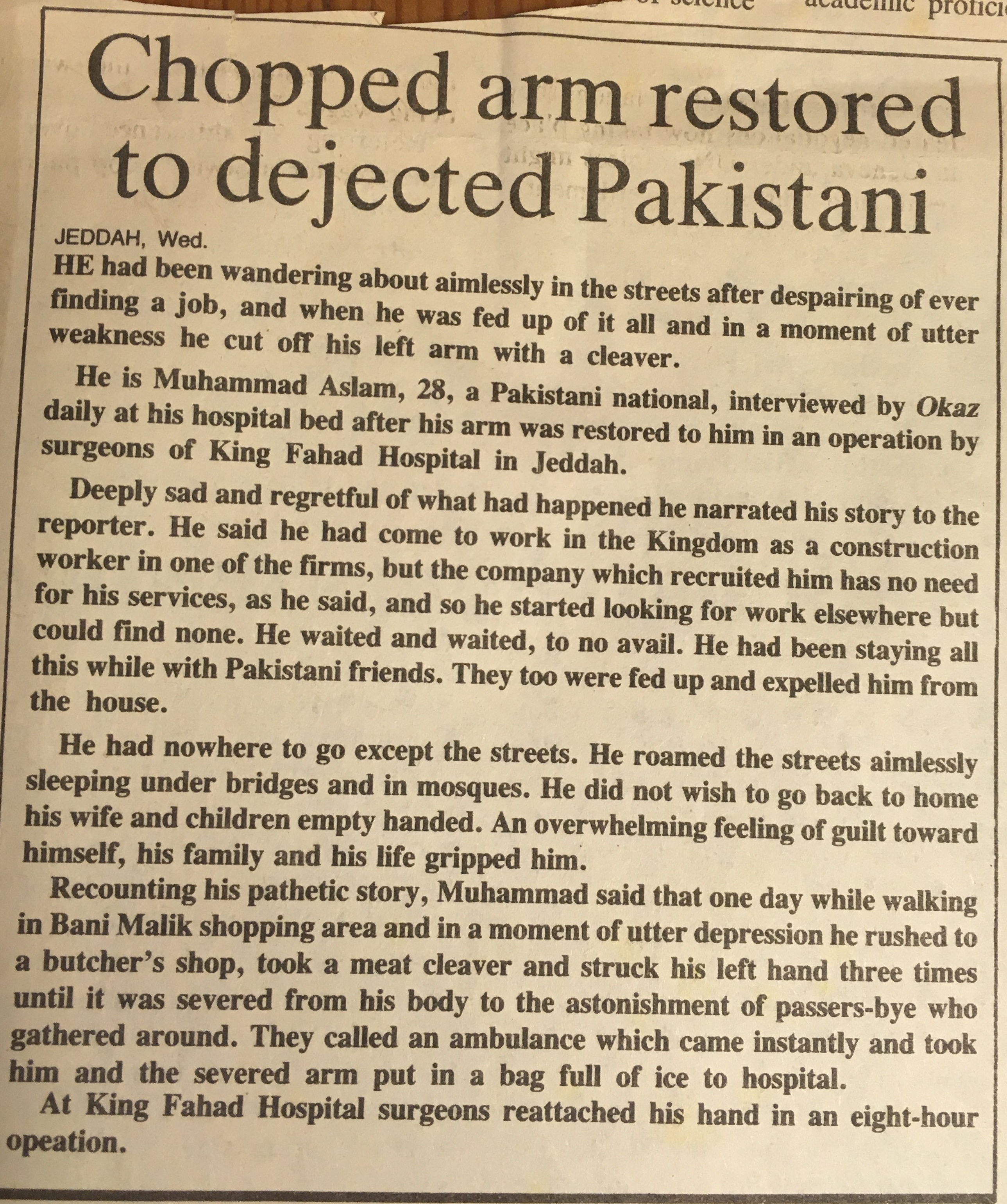
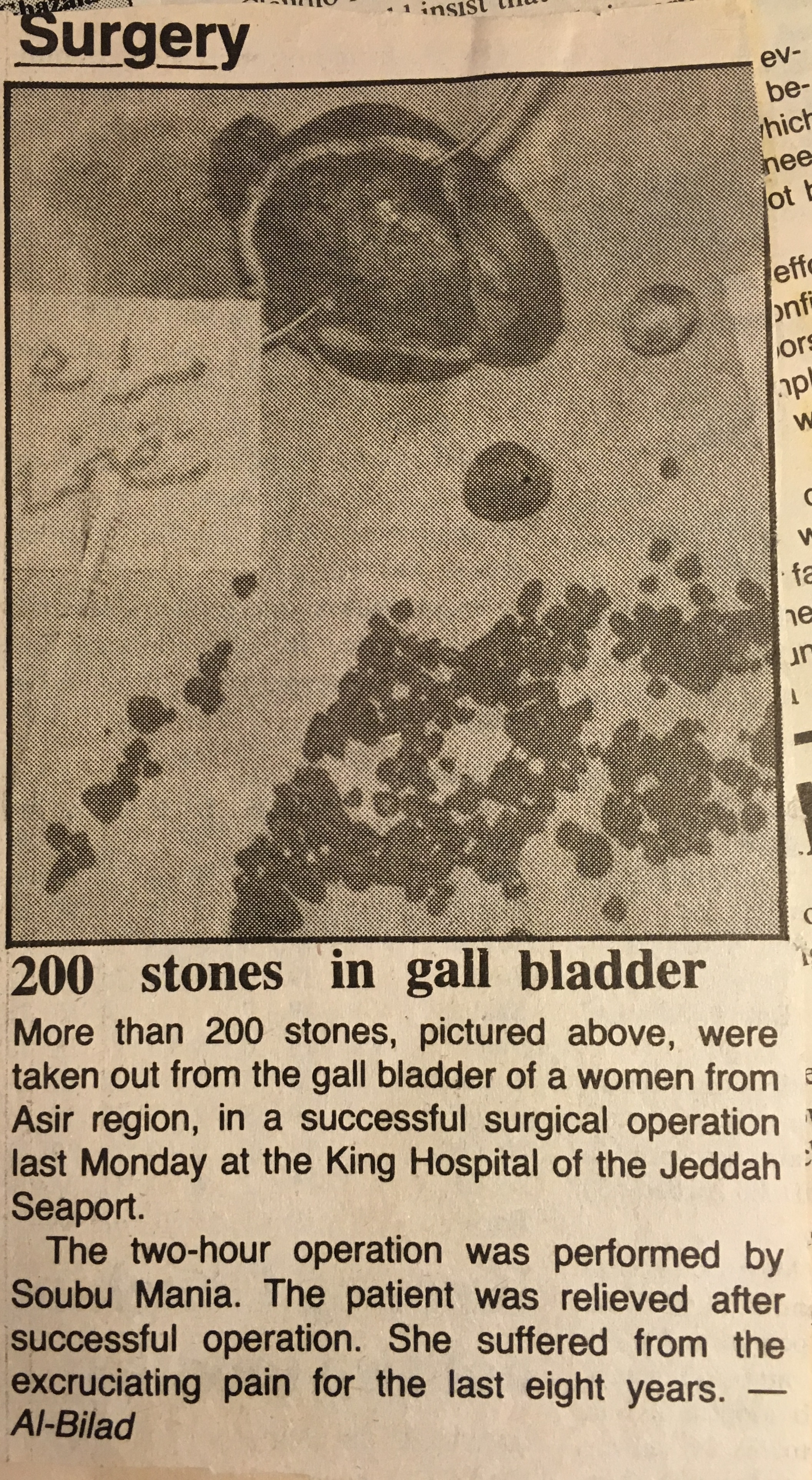
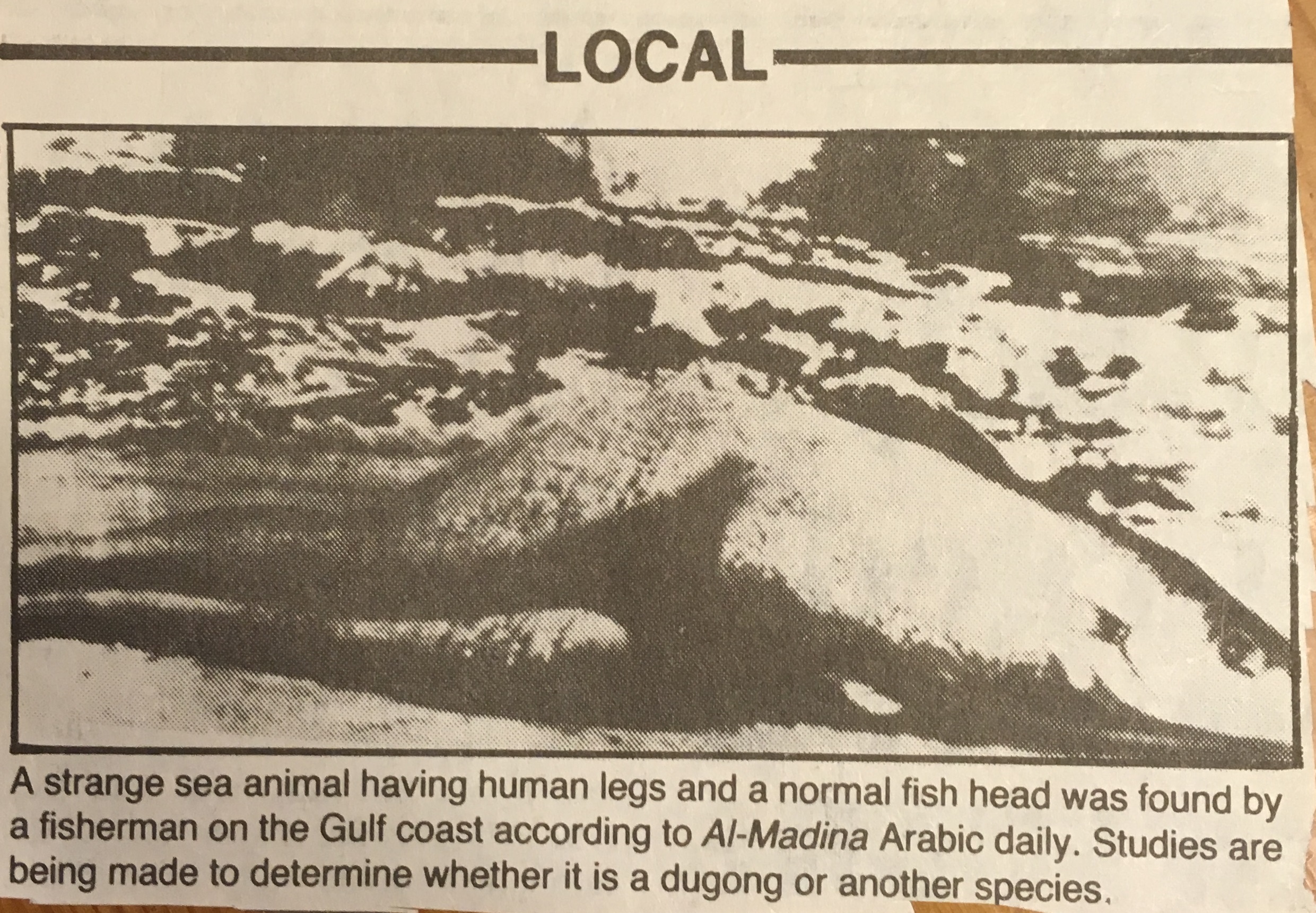
Now (2018)
Two things strike me when I revisit what I wrote in 1987. First, that I was writing with a somewhat supercilious expatriate consumer’s perspective. And second, there was almost nothing about women’s health. It’s all about the men.
Having spent several recent years running management and personal development workshops in the Saudi health sector, I know quite a lot more now. In those days I rarely met a Saudi woman, let alone had a lengthy conversation with one. But working with hospital staff – both male and female – has been a revelation. The women I’ve met are smart, enthusiastic and highly motivated, often more than the men.
Thirty years on, you would have expected the gaps to have been filled, and that with the huge sums the government has invested in healthcare, there would be a uniformly high standard of care, whether private or public.
Sadly that doesn’t seem to be the case. While there are a number of first-rate private hospitals, there are also some pretty awful ones. Medical negligence cases abound, and in one or two cases the government has had to step in and close the worst offenders.
In the government sector, again, the care is not uniform. The best hospitals are those operated by the military. They provide a high standard of care, and they train large numbers of Saudi doctors and nurses. Government hospitals in towns and villages are not, I’m told, of the same standard.
Healthcare for expatriates depends on what they can afford. Ten years ago the government decreed that every foreign worker should have private health insurance. But as with schemes elsewhere, there are different levels of coverage, and therefore of care.
That obligation has now been extended to Saudi citizens in the private sector. And for good reason, since the cost of treating lifestyle diseases – obesity, diabetes and heart disease – is, as we well know in the United Kingdom, cripplingly expensive.
Saudis have other health issues to contend with. For cultural reasons, consanguineous marriages – unions between close relatives – are still common. Although the government promotes screening for genetic conditions that might make close marriages inadvisable, they still take place on a regular basis, to preserve wealth, as well as family and tribal bloodlines.
As for women, two factors contribute heavily to health problems. First, Vitamin D deficiency resulting from the lack of sunlight among those who are required to cover up when venturing outside and don’t have the opportunity to catch the sun at home. And second, sports for women have been actively discouraged until recently. While women from wealthy families have always pushed back against this, and found their own ways to exercise in private, and those in rural areas still work in the fields, there are still many women in towns and cities whose only exercise is wandering around shopping malls.
Depression is another problem. Women who are aware either through experience of travelling or studying abroad, or through a regular diet of satellite TV, often feel trapped in their home lives, unable to live even moderately independent lives compared with their sisters in the West, or even their female neighbours in the Gulf. This is changing, as the government introduces a degree of social liberalisation, and encourages women into jobs. But often they are constrained not by wider society, but by their own families, whose conservative values do not allow them to contemplate their wives, daughters and sisters living lives beyond their control. This post from a female blogger living abroad powerfully describes the symptoms.
Saudi Arabia has other challenges that other countries do not have to face. The biggest is the potential for epidemics brought about by the massive influx of pilgrims during the Haj. It’s a melting pot for bugs imported from thirty countries. That there has been no outbreak of a serious infectious disease in living memory is a tribute to those who manage the whole process – doctors, civil servants and volunteers.
In recent years the Saudis have had to contend with MERS, a nasty and often lethal coronavirus that keeps popping up in clusters around the country. Again, however, they have managed to prevent a general outbreak.
Leaving aside the epidemics and the chronic ailments of the Saudi population, would I, if struck down on a visit to Riyadh by some critical condition, be confident that I would receive the best care in one of the Kingdom’s high-status institutions? The answer is yes, provided I was lucky enough to find my way to a National Guard hospital, or to the King Faisal Specialist Hospital in Riyadh. If you don’t believe me, ask Frank Gardner, the BBC journalist who in 2003 was shot down by Al-Qaeda operatives in Riyadh, and whose life was saved by the Faisal Hospital.
If I found myself in a car accident halfway between Jeddah and Riyadh, perhaps I wouldn’t be so lucky. But not for the lack of trying on the part of the helicopter rescue crews I met in Jeddah on a regular basis, should I have the fortune to be within their range.
The Saudi healthcare system is definitely getting there, but it’s a big country, and sadly there are times when you need to be at the right place at the right time. But I guess that’s the same just about anywhere. It’s only a question of degree.
Other pieces on Saudi healthcare:
https://59steps.wordpress.com/2010/08/15/learning-from-swine-flu/
https://59steps.wordpress.com/2014/04/21/saudi-arabia-getting-twitchy-about-mers-coronavirus/
Debate on Bureaucracy, Arab News, Jeddah c1987
It’s time to return to the RetroSaudi archives. This time the spotlight shines on Saudi Arabia’s bureaucrats. But first, a modicum of context.
Government bureaucracies appear to be under attack both in the US and Britain, though for different reasons. In the US, government workers are disgruntled at hiring freezes and at the scrapping of regulations that they perceive to be beneficial to the country, if not to the interests of Donald Trump’s corporate supporters.
In my country, supporters of Brexit are taking pot-shots at the civil service for allegedly resisting attempts to portray post-Brexit Britain as paradise. No wonder government workers in both countries are feeling a little insecure right now.
In Saudi Arabia, the challenges are different. Not so much a problem of bias. In an autocratic system, civil servants do and say what the government asks, or face the consequences. More a matter of bloat. 70% of Saudis in employment work for the government. If that percentage was replicated in the UK, we would have 21 million public servants out of a total working population of around 30 million. The actual number is around 6 million.
So if they are to transform their economy into one that looks like those of the West, you could say that the Saudis have two choices: cut down on the number of government employees, or increase the number of Saudis working in the private sector, which is heavily populated by foreign labour. In fact they are trying to do both, and have been doing so for the past thirty years, though with limited success.
Something has to give, because the huge numbers of public employees are a massive financial burden on a country struggling to balance the books in an era of low oil and gas prices
With those factors in mind, here’s what I wrote about one particular aspect of the Saudi bureaucracy thirty years ago – the watchdog whose job it was to keep the bureaucrats on the straight and narrow:
Then (1987)
Some are born bureaucrats, others have bureaucracy thrust upon them. In Saudi Arabia, the profession of pen-pusher is an honourable one. Indeed, the swelling ranks of the desk-bound have been instrumental in boosting many a government department’s sagging Saudisation numbers.
So the Saudis swamp their offices with pen-pushers in order to boost the percentage of native employees to an acceptable level. But what to do with the throngs of workers with grand job titles and few responsibilities?
A clue lies in the fact that security passes at airports require a huge number of signatures for approval, and that forms these days come in quintuple sets. Upon each signature and each form, a job depends. Another reason for the multiplicity of forms and approval levels is that the bureaucracy doesn’t trust itself. Delegation is definitely not the norm.
A Public Control Board answerable exclusively and directly to the King, exists primarily to scare the living daylights out of the bureaucrats, and thereby curb some of the worst excesses of the subjects of its attention: waste, corruption and failure to adhere to procedures. In theory anyway.
It’s staffed by hungry investigators, many of them other Arab countries, including Egypt and Jordan, whose arrogance is matched only by their ignorance of the process of government. It spends millions of riyals inquiring into discrepancies in ministry accounts as minuscule as ten riyals. So deep and detailed is their probing that those who are targeted fear not only for their reputations, but those of their great-grandfathers. No stone is left unturned, except those that their masters prefer to lie undisturbed.
The result of these orgies of paper-chasing is not that corruption has been stamped out. That continues no more and no less. Major acts of malfeasance that could embarrass the wrong people are simply ignored or covered up. The Control Board has created cells in every department, whose main mission is to produce and store warehouses full of documents in preparation for the moment when it strikes like a scorpion lurking in the dust.
Since the blame for any discrepancies is usually, whenever feasible, shifted on to the broad shoulders of a foreign contractor, the contractor, not the bureaucrat ends up getting penalised, which the Control Board considers a satisfactory result. It isn’t of course, because most contractors factor such penalties into their original prices. With the result that in most cases the government is paying way more than it needs to.
Now (2018)
I was perhaps a little unkind about the work of what is now known as the Control and Investigation Board. Since the 80s they have done some important work, not least in bringing to justice some of those responsible for the shoddy civil engineering projects that contributed towards the catastrophic flooding of Jeddah in 2009.
That said, the warehouses full of paper diligently collected for fear of the watchdog’s scrutiny will have come in pretty useful last year, when Crown Prince Mohammed was preparing for his round-up of family members and eminent businessmen accused of siphoning off funds from government contracts over an extended period. The scorpion struck, but not where everybody expected.
As for the bureaucrats, no doubt they will still be quaking in their boots, not so much because of the bean counters scrutinising petty transactions, but for fear of an early morning visit from the Crown Prince who, like Sheikh Mohammed of Dubai, has acquired a reputation for surprise visits to government offices at times when no self-respecting civil servant would dream of being present. At 9am, for example.
The civil service has continued to grow since 1987, but two factors have slowed the hiring. First, more services are on-line, so less bureaucrats are required to service the lines of supplicants outside ministry offices. Second, the government has realised that it can no longer fund legions of civil servants with nothing to do all day except play with their smart phones.
So there have been concerted efforts to diversify the economy and encourage a more vigorous private sector that will hire more young Saudis, including women. Not an easy task when you take into account the natural inclination of business owners to hire large numbers of foreign staff who cost far less than it takes to provide young Saudis with a living wage.
The bureaucrats have a role to play in sorting out the conundrum of how to get the youth into work without damaging the competitiveness of the businesses they want to encourage. The tactics in recent years have been some carrots (subsidies for employment and training) and plenty of stick (less visas for foreign workers, levies on employment of foreigners, higher visa fees and wholesale deportation of illegal workers). All of which results – at least for the Ministry of Labor and its associated agencies – in more work for the working man (and occasionally, woman) to do.
The joys of being a bureaucrat continue to endure. Shorter working hours than in the private sector, which gives them plenty of time to run small businesses on the side. Social status and perceived job stability, which make it easier for them to marry their sons and daughters into other respectable families.
But as Mohammed bin Salman and his young western-educated cohorts tighten their grip on the mechanisms of government, the days of the cushy number might be coming to an end. Which, for many civil servants, might be no bad thing.
After all, what’s the point of spending the majority of your working life bored out of your skull?.
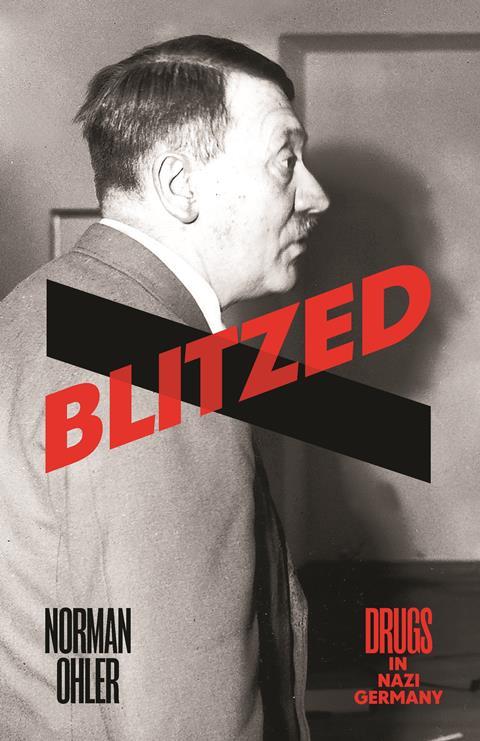
As a student of the Second World War, it was always a mystery to me why in 1940 the German armed forces, outnumbered by the combined forces of Britain and France, and with inferior equipment, managed to cut through France and reach the Channel with such devastating speed.
There have been many explanations, of course, ranging from the static tactics that the defenders inherited from the previous war to a lack of fighting spirit from two nations that suffered so grievously between 1914 and 1918.
The idea that the German invasion force was doped up on methamphetamine, from commanders such as Rommel and Guderian down to the tank crews that formed the spearhead of the advance – and thereby was able to sustain the attack for several days without sleep – is a new one to me.
That, though, is the theory put forward by the German writer Norman Ohler in his book Blitzed. He spends the early part of his narrative describing how in the 1930s Germany, deprived of natural resources by the loss of its colonies after the First World War, became expert in synthesising pain-killing and performance-enhancing drugs – cocaine, morphine and methamphetamine.
The latter was widely marketed as Pervitin. Whereas the Nazis saw cocaine and morphine as decadent drugs beloved by Jews and other undesirable elements, Pervitin seemed to be the wonder drug. It was available without prescription, and was used enthusiastically at all levels of German society – by housewives needing a lift, students preparing for exams and athletes competing in the 1936 Olympics.
Army commanders in a number of units fed the drug to their troops during the invasion of Poland, though not systematically. The results, in terms of alertness, aggression and endurance, convinced the High Command to sanction the use of Pervitin by all units, including the air force, in the forthcoming invasion of France and Belgium. They ordered huge quantities of the drug, ignoring the dangerous consequences of overdose, as well as the debilitating exhaustion that eventually caught up with users.
The invasion force rampaged through France at lightening speed. Tank crews were able to press onwards for three days without sleep. The British and the French were stunned by the speed of the advance. They were constantly on the back foot, unable to catch up.
In one passage, Ohner describes Rommel blasting through French units:
He (Rommel) had no apparent sense of danger – a typical symptom of excessive methamphetamine consumption. Even in the middle of the night, he stormed on and attacked solid positions while still in motion, firing all barrels like a sort of berserker, constantly catching his adversaries on the back foot. The French despaired at the sight of the unleashed monsters coming at full speed towards their artillery. What on earth were they supposed to do? There were no instructions on how to defend yourself in that situation; they’d never practiced it in manoeuvres.
Towards the end of that first week of the attack there was a ghostly scene that casts a sharp light on the German advance: in the early hours of 17 May 1940, Rommel, no longer answerable to any of his superiors, tore along the road from Solre-le-Château, right in the north of France, towards Avesnes. As chance would have it, the 5th Infantry Division, parts of the 18th Infantry Division and the 1st Infantry Division of the French Army had struck their bivouac on that very spot. Rommel didn’t hesitate for a second. He dashed through them, crushing everyone and everything, fired broadsides, and over the next ten kilometres he pushed hundreds of vehicles and tanks, along with the dead and wounded, into the ditches on either side and rattled on with blood-smeared tracks, standing between two officers from his staff in the armoured command post vehicle, his cap pushed to the back of his head, leading the attack.
Drugs, Ohner believes, also played their part in letting the British off the hook at Dunkirk. Guderian was ready to wipe out the encircled British and French forces, when he received the order from Hitler to halt. It seems that Goering, a morphine addict, persuaded Hitler to let the Luftwaffe finish off the campaign form the air. Both saw the army with its Prussian military ethos as potentially disloyal. The Luftwaffe, on the other hand, was a Nazi creation. Best that they should have the honour of delivering the coup de grace.
Except that they failed to do so. Over ten days, as Guderian and his tank divisions looked on, the British and a number of French units were evacuated from the beaches. Was Goering pumped up into a grand delusion by the morphine flowing in his veins? That’s certainly Ohner’s theory.
I’m always interested to encounter German perspectives on the Second World War. One of my favourite movies about the war was Downfall, which depicted Hitler’s secretary’s account of the Fuhrer’s last few days in his Berlin Bunker. It was lit up by a magnificent performance from Bruno Ganz as a raging, deluded, self-pitying leader as he descended into his self-created hell.
As Norman Ohner relates Hitler’s drug dependence, starting with the bizarre injections administered by his doctor, Theodor Morell, and ending in almost complete physical collapse as he became increasingly dependent on opiods, cocaine, vitamins and untested hormones derived from animal organs, Ganz’s portrayal seems more faithful to his subject than ever.
Dr Morell became the Fuhrer’s his shadow, never allowed to leave his side, always ready with a battery of syringes and concoctions to revive the Fuhrer when needed, which was usually every day. Morell himself became wealthy through hawking his treatments around the Nazi leadership, and eventually by massive sales of vitamins to the armed forces.
Using archives in the US and Germany, Ohner plots in painful detail Hitler’s increasing reliance on Morell’s treatments from 1936, when they first met, until the last days in 1945. Morell was short, fat, vain and ambitious, toadying to his master and arrogant to others, as is so often the case with an autocrat’s courtiers.
As I read the story of the Fuhrer’s slow decline, Bruno Ganz’s performance kept coming back to me, especially as Ohner describes Hitler in his terminal state, hand and leg shaking uncontrollably, with track marks caused by incessant injections, drooling at the mouth, with food stains on his clothing. The picture on the cover of the book shows him in June 1944 around the time of Valkyrie assassination attempt, bug-eyed and stooping, hardly a picture of vigour.
Until just before the end Hitler was pathetically grateful to Morell for his treatments, claiming that the doctor had saved his life on several occasions. A few days before the end, Hitler dismissed him, enraged because Morrell couldn’t get his hands on the usual medications. The doctor managed to get out of Berlin, and was captured by the Americans, whose interrogators found him too drug-addled to provide them with any meaningful information. Two years later they dumped him, penniless at Munich Station, and, after being rescued – ironically – by a half Jewish Red Cross nurse, he died in hospital a few months later of chronic heart disease.
Blitzed is Norman Ohner’s first work of non-fiction. It’s gripping and fast-paced, and infused with plenty of black humour.
Until I heard about the book a couple of years ago, I was under the impression that the major pharmacological advance of the Second World War was the discovery of penicillin, which saved thousands of lives of servicemen who in earlier times would have died from infected wounds.
The Nazi use of methamphetamine was almost as significant. It echoes to this day. Various drugs, including amphetamines and marijuana, were used without official sanction during the Vietnam War. More recently, ISIS fighters have been prolific users of captagon, another form of amphetamine. Did that explain how ISIS marched into Mosul against overwhelming odds? Shades, perhaps of the German blitzkrieg in France.
The extent to which other armies use performance-enhancing drugs is not widely known, but it would not be surprising if the Americans, Russians and Chinese are not experimenting with a new generation of drugs that enhance resilience and cognition.
One thing’s for sure. Until such time as all the fighting is done by robots, humans required to risk their lives on the battlefield will always find it hard to refuse a chemical helping hand, be it in the form of a mug of rum before facing the machine guns at the Somme, or a wonder pill to turn them into supermen in the face of overwhelming force.
I can’t say I blame them, though the thought of submarine captains, drone pilots and those who man missile silos off their heads at critical moments is profoundly disturbing. And the same goes for presidents of the United States.

When I was a boy, I used to wonder why my mother was slightly, well, odd. Not odd as in mentally unstable, or even eccentric. Just different from the mothers of my friends, who used to radiate confidence in social situations, parties and school events. She dreaded them because she felt “one down”. Visits from my friends were tolerated, not embraced.
There was a low hum of melancholy that persisted in her throughout the good times as well as the bad. Of the latter, there were many. On rainy days, she would, in the words of my younger brother, be “depressed of the weather”.
I used to think that her low-key personality, her lack of joie de vivre, arose from an insecurity as a result of my father’s career, which flourished for the first years of their married life, and then came crashing down, largely because of some reckless business decisions.
As I grew up, I came to realise that that her melancholia ran much deeper, back to childhood. Her father died young, and her mother married again. She always felt that her mother preferred male company and wanted to enjoy her second marriage without the inconvenient presence of a female rival for the attention of the new man in her life.
So my grandmother packed her off to a boarding school, selected, sight unseen, on the recommendation of a friend. My mother didn’t speak much about it, except that it didn’t provide her with much of an education. Fortunately, for the last two years of her schooling, she went to live with my great aunt, a teacher, and attended as a day pupil an excellent church school.
Her brother, in contrast, went to a boy’s boarding school, from where he went to Oxford, en route to a watery grave at the hands of a German U-boat.
I didn’t think too much about the effect on her of the boarding school to which she was dispatched, a hundred and fifty miles from home, and which my grandmother never visited.
Then I read a remarkable book that made me realise that her years away from home might have responsible for her innate sadness and lack of confidence in later life.
The book is Terms and Conditions: Life in Girls’ Boarding Schools 1939-1979, by Ysenda Maxtone Graham. I bought it the other day on a whim, thinking that it might be an interesting counterpoint to my experience as a school boarder, which lasted from the age of eight to seventeen.
My school days were relatively benign, perhaps because my parents went to great lengths to select institutions where they thought my brothers and I would flourish. They discounted any schools that used corporal punishment, interviewed the headmasters and took an interest in every aspect of the education and wider experience that the schools offered.
My sister, on the other hand, didn’t go to boarding school, but ended up at the same day school as my mother, where she excelled. If she still feels that she drew the short straw, as I believe she did at the time, Maxtone Graham’s book might convince her otherwise.
The author interviewed dozens of former pupils of British girls’ schools that to a greater or lesser extent flourished from the end of the 19th through to the late 20th centuries, after which many were wiped out by the decision of cash-strapped boy’s schools to go co-educational.
The stories her interviewees tell range from hilarious to horrifying. The worst of the schools were ghastly. Cold, loveless places ran by vindictive, opinionated, unmarried women who cared less for the welfare and development of those in their care than for the maintenance of order and routine.
Draughty former country houses, linoleum floors, the pervasive smell of cauliflower. Dormitories so cold that hot water bottles froze. Sadistic teachers who delighted in belittling their charges, and who knew precious little about the subjects they were supposed to teach. An obsession with “games” – netball, cricket, hockey and lacrosse, to be endured whatever the weather. Pupils weeping with homesickness, some of them sent away at the age of four by their parents in India, not to see them again for a year.
For all but a few elite schools, the objective of the “education” provided was the prepare their pupils for a life of marriage and motherhood. They would be taught deportment, domestic skills and a modicum of conventional subjects such as English, French and Maths. Precious little science.
The trajectory for these girls from middle and upper-class families was finishing school, a secretarial job at the Foreign Office or Sotheby’s followed by marriage to Mr Right, who would be a doctor, a lawyer, a diplomat or a member of the landed gentry. Or, better still, a peer of the realm with a large estate.
University? Not possible with the education they received. Those who had such aspirations found them knocked swiftly on the head by fathers who believed that careers were not for their daughters. Princess Diana was a product of such a school. She left without a single qualification, and on occasion would refer to herself as thick. Subsequent history, I think, showed that she was far from stupid.
Not all schools were such hellholes of mediocrity, but many were. There would be the occasional chinks of light – inspiring teachers who left their pupils with a lifelong love for poetry, Shakespeare and art. And in amongst the indifference or sadism of the staff, kindness and compassion.
Yet despite their horror stories, many of those who contributed to the book talk of happiness and the life-long friendships they made. Of the joy of roaming the grounds of the grand country houses where the schools were located. During the Second World War, some relocated to country seats still in the possession of aristocratic families – Chatsworth and Castle Howard, for example. Some, now in their eighties, have magical memories of those places.
Aside from the grim mediocrity of so many of the institutions, there were the convents, ran by nuns who again varied from cruel to nurturing. And then there were the academic schools, Cheltenham Ladies College, Roedean, Badminton and Benenden, whose main purpose was to churn out Oxbridge candidates through regimes of iron discipline and intellectual rigour. Unlike the others, for whom a pupil gaining admission to university was in one case cause for a plaque on the wall in gold leaf, these schools were spectacularly successful.
But I don’t get the impression that they were places of joy. And more or less across the board, bullying among pupils could be vicious and sustained. As an example:
At Downe House in the early 1950s the classroom called 4B was ‘the divorce classroom’. It had doors on each side, which made it ideal for the purpose. When a clique decided they didn’t want to be friends with you any more there was a formal divorce process, and it all took place in 4B. The 13-year-old Amanda Theunissen was formally divorced in this way. ‘I suddenly found that the other girls weren’t laughing at my jokes any more. That was the warning sign. This was how the divorce process worked: you were called down to 4B. A you came in through one door, all the girls who had been your friends walked out through the other. That was it. From that moment on you were an outcast. You were allowed to go around with the one disabled girl and the two foreigners who weren’t princesses’
Amanda has never felt as utterly unprotected as she did at that moment. There was no one to appeal to. The story makes us weep, not only for Amanda, but also for the disabled girl – ‘she had something wrong with her arm, and greasy hair, and wore thick round glasses’, Amanda said – and for the non-royal foreign girls, who had never been invited into the clique. Their loneliness and homesickness can only be imagined.
As anyone who has daughters will know, girls are capable of unspeakable cruelty without having to lay a finger on their victims.
Maxtone Graham finishes the book by observing that for all the awfulness, discomfort and emotional deprivation, women emerged from the experience with resilience, stoicism and a sense of duty and social responsibility, as well as loyalty to the life-long friends they made. Somehow, she says, they managed to transcend the emotionally buttoned up-culture that afflicted their counterparts in the boy’s schools.
She says that she can recognise one of their breed just by looking at them and talking to them. I think I can too, both in my mother’s friends, now departed, and in a few of my contemporaries.
Which brings me back to my mother. She was a product of that system. She was an intelligent woman who today might have gone to university and forged a career. She was widely read, a lover of the theatre, of nature and of animals. She had impeccable manners. She knew how to cook, sew, lay a table and ask for the salt. But how much more could she have achieved with an education that encouraged her to dream?
As things turned out, she met my father, a lawyer, and raised four children. Her only “proper job” was serving in the WRENS (the Women’s Royal Naval Service) during the Second World War.
Looking back now, three years after her death at 94, I wonder whether she was one of the bullied ones. Someone whose confidence was wrecked by an experience like that of Angela Theunisson, or perhaps by many similar tribulations. By exclusion, mockery and cruel practical jokes. Perhaps also, like other girls from families of relatively modest means, she was looked down on because of her perceived low social status.
I’ll never know. But if I’d read Terms and Conditions before she died, I would have asked her more about her school days. Losing a father when young, and then a brother during the war, and being – as she must have seen it – packed away, can’t have been easy. Though perhaps not unbearable enough to induce a lifetime’s melancholia.
But thanks to Ysenda Maxtone Graham and her contributors, I have a strong sense that I’ve found the last piece in the jigsaw of her life.
When you die, would you prefer to be disposed of with the minimum of fuss, your mortal remains removed from sight until they emerge encased in a wooden box for the short period between your funeral and incineration or interment?
And when a loved one dies, would you prefer not to think of their last hours, of their passage to nothingness or the hereafter?
The way of death favoured in most western societies is described by the Irish writer and broadcaster Kevin Toolis as the Western Death Machine. It’s designed, he says, to help us think as little as possible about death’s inevitability, and, in particular, our own death.
Shortly after Balithin, my Irish mother-in-law, died, I happened upon My Father’s Wake, Toolis’s meditation on the art of dying.
After experiencing Blaithin’s wake (about which I wrote in The Passing of a Matriarch), I wanted to know more about the Irish way of death. Toolis didn’t disappoint.
The central theme of his book is the rituals and traditions that accompanied the death of his father. Unlike Blaithin, he died at home. But like her, he was surrounded by loved ones until and beyond his last breath.
Sonny Toolis was like many Irish people of his generation – an exile who came home for his last years. He spent much of his life working in the UK, but never lost his attachment for his home village in an island off the wild Atlantic coast of County Mayo. Dookinella was a ruin – a victim of the emigration that depopulated the west of Ireland from the fifties onwards. But Sonny resolved to save the family home. Every summer he would bring the family back to the island, and bit by bit he brought the house back to life. It was there that he died.
The subtitle of the book is How the Irish Teach us to Live, Love and Die. From that you might deduce that it’s an Irish version of Eat, Pray, Love, Elizabeth Gilbert’s description of how she overcame bereavement to find spiritual nourishment and romance in Bali.
Far from it. Kevin Toolis, by his own admission, has spent much of his career in journalism as what he describes as a death hunter. During the troubles in Northern Ireland, he would seek out the families of victims of bombings and shootings. He would ask them in minute detail to describe the circumstances of their bereavement. How the victim died, how the bereaved felt, what they did on hearing the news.
He followed the same path in the Middle East, meeting fathers of suicide bombers in Palestine, and relatives of children wiped out in Israeli bombing raids on Gaza. His book is laced with experiences of death.
The same attention to detail informs his description of the rituals of the wake – the keening of the mourners, the touching of the body in its open coffin in the front room, the endless supply of tea and sandwiches for the stream of visitors, relatives or strangers alike, who would come to pay their respects.
Many of the rituals, Toolis contends, go back beyond Christianity. Throughout the narrative he refers to Homer’s descriptions of the deaths of warriors – of Hector and Patroclus – and to the deeply held belief that the dead’s future in the afterlife depends upon their treatment by the living. A proper burial, with all the proprieties observed.
In rural Ireland, those proprieties include the overnight vigil, in which groups of men take turns to be with the body at all times. As Toolis writes:
For our forebears, a wake and funeral were rites of closure that complete the ancestral life-death cycle, resolve grief and restore the natural order of the universe. Our ancestors believed that the dead needed the intervention of the living – prayers, food, spells – to help a departed soul make safe passage into the afterlife and find eternal rest. The dead had to be accompanied, waked, by living watchers as part of that journey through at least one solar cycle – day, night and then day – in the aftermath of their death. Hidden inside such a ritual is another ancient belief that somewhere in these hours of mingling darkness a portal opens between the living and the supernatural worlds through which the soul of the deceased departs.
Believing that the restless dead have powers to unravel the world of the living also makes a wake a dangerous place. Anthropologists define wakes as liminal rites, a stage where the forces of life and death contend for dominance, a place for powerful magic. Our forebears were afraid that the portal was not just one way; when the passage to Hades opened hordes of the unquiet dead could cross back to invade the living world. The watchers, as old as the quorum that watched over Hector’s body in Troy, are not just there to guard the soul of the departed but also to man the Gates of Chaos against an insurgent tide, a satanic horde ready to break through and crush us all.
I didn’t understand the depth of tradition that led one of Blaithin’s sons to spend the night next to her body. He was doing what that tradition demanded, perhaps unaware that his vigil would have been understood by Homer’s contemporaries.
My Father’s Wake has passages that are not for the fainthearted, particularly the descriptions of his time as a tubercular twelve-year old in a ward full of male lung-cancer patients, and of his visit to an AIDS hospital in Malawi.
But it’s a deeply humane book, far from being a technical manual for those who want a “good death”. It’s a lyrical journey through his own life and that of an ancient community on an island where a ruined Franciscan monastery sits near a Neolithic burial ground and a tiny burial ground for those whom the church refused to bless – stillborn babies, non-believers and suicides.
Kevin Toolis wants us to believe that we will better face death when we learn how to die. The Irish wake, he argues, with its tradition of mourning rites, the presence of the dead among the living, the free expression of emotion and the participation of the wider community, is a good place to start.
Having attended two wakes in Ireland – those of my wife’s parents – I agree with him, up to a point. I can’t say for sure that I’ll be ready when my time comes. Nor do I find it easy to accept – as he didn’t when one of his brothers died in his twenties – the untimely death of a loved one. My head might tell me that the deaths of those who don’t make it through to old age are part of the natural order of things. Yet my heart still rages against the unfairness of it. The result, perhaps, of a sense of entitlement to a long life that was never shared by previous generations, and still isn’t in many parts of the world
But should that time come again, I would surely find My Father’s Wake a comforting companion in grief. And yes, after you’ve stroked the hair or kissed the forehead of a lifeless beloved, death doesn’t seem so extraordinary. Not forbidden territory, just the end of a journey on which we all travel.
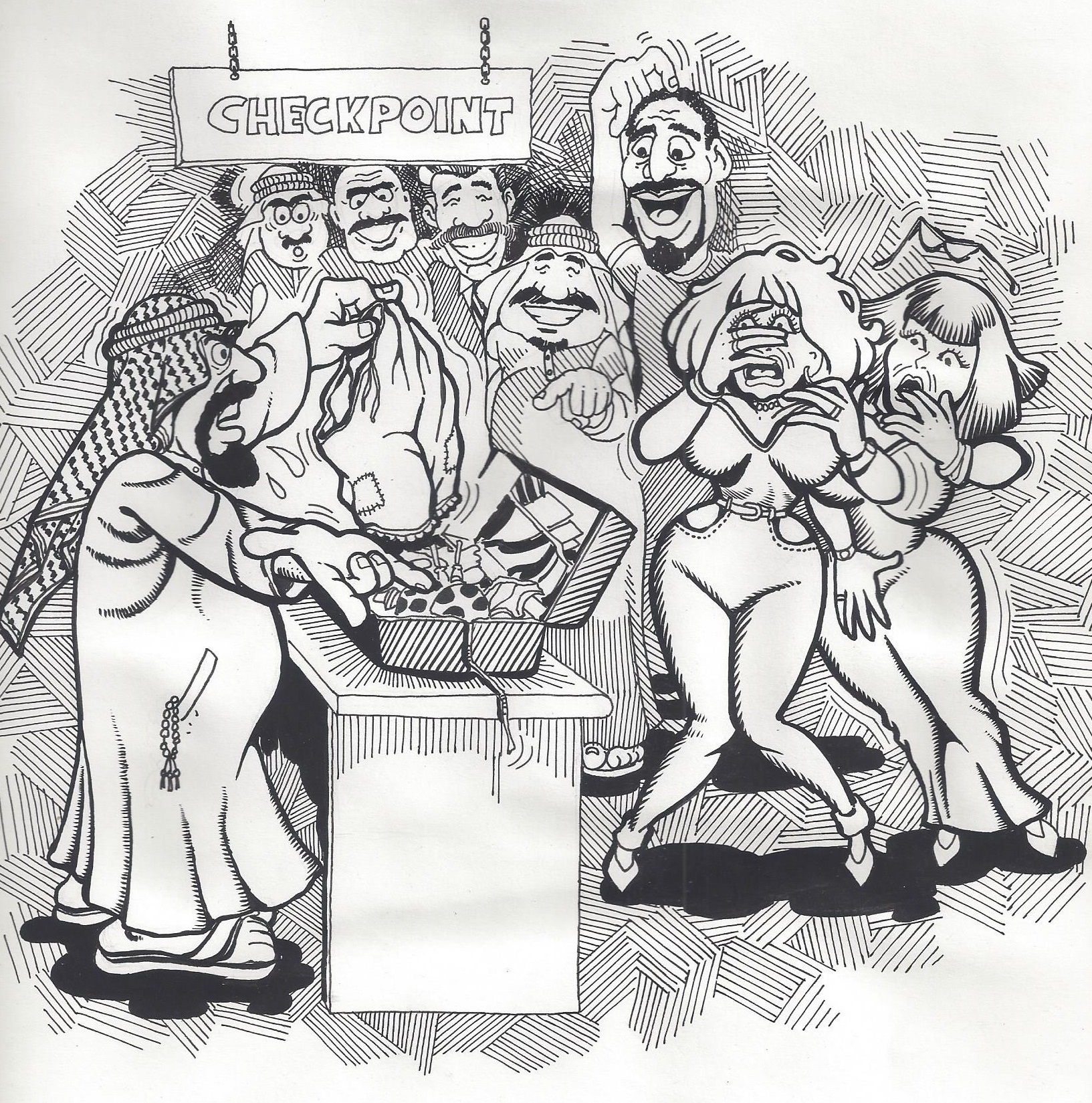
My RetroSaudi series continues with a look back to the time-honoured ordeals to be endured on arrival in the Saudi Arabia thirty years ago. After endless queues at immigration, there was the customs inspection, a process that sometimes brought with it unexpected consequences for the unwary.
Then (1987)
The ordeal known as “going through customs” can vary in quality between tedious and terrifying. Those arriving in Saudi Arabia for the first time are often surprised to find that there are no green gates that they can sail through bearing a virtuous expression. Only a line of passengers waiting to endure the ritual of the baggage check. In Saudi Arabia you’re guilty of smuggling until proven innocent.
Customs officers do not respect privacy as they do (to some extent) in other parts of the world. The bag search is vigorous and very public. They’re looking for six things: pornography, weapons, drugs, subversive literature, alcohol and pork. Many of the problems arising from the ritual uprooting of personal belongings spring from differing interpretations of the meaning of these types of contraband.
Booze is relatively clear-cut – relatively. Any attempt to convince the inspecting officer that the brown liquid in your shampoo bottle is for washing your hair might be stymied by the fact that the officer knows what scotch and brandy smells (and tastes) like. Less obviously, there have been attempts to ban baby’s gripe water on the grounds that it contains alcohol. The idea of expatriates at parties quaffing bottles of gripe water can surely only be the product of a febrile imagination.
As for pork, since all other types of meat are available in Saudi Arabia, an alert official can be fairly sure that the smoky-smelling parcel cleverly hidden under the mattress of a baby’s basket is indeed a 2lb pack of best streaky bacon intended to serve as three months of survival rations for the child’s pork-starved parents, and not the fermenting contents of the baby’s diaper.
As for the other prohibited items, things become a little more complicated. A bible, for example, might be considered highly subversive if the officer suspects that the passenger is intending to use it to convert Muslims. The ornamental dagger you bought in Yemen would be available in the local souk, but it’s definitely a weapon if it appears in your suitcase.
Pornography, on the other hand, is very much open to interpretation. I once saw an article in a foreign newspaper featuring a picture of an elderly matron in a wheelchair. Her body from the waist down had been covered over with black marker pen to spare us the excitement that might stem from the sight of her calves. Playboy, Men Only and that ilk are verboten. Cosmopolitan and Vogue seem to be acceptable if they are discovered in female baggage, but not if they are in the possession of a man, as I once discovered when I packed a fashion magazine for my wife. I was made to sign an undertaking that I would never import such filth again.
Personal photos are eagerly examined and any near-the-knuckle snapshots of a loved one on the beach at Cannes are likely to be confiscated. I once narrowly escaped a long jail sentence for allegedly insulting Islam. Why? Because one of my photos showed me at a toga party wearing two white towels in – as I thought – the ancient Roman style. It turned out that my costume closely resembled the towels worn by pilgrims in Mecca. Fortunately, the officer applied a measure of common sense, and sent me on my way with a severe warning.
Of course not everyone is subjected to such scrutiny. Some officers give you a cursory search. Two common ways to encourage this – or so I’m told – are studied nonchalance that suggests you have nothing to hide, and the dirty laundry trick: covering your belongings with a layer of used underwear. This is particularly effective for women, since men in this part of the world have an aversion for women’s bodily functions. Not surprising, since they never have to do the laundry.
Now (2018)
The cartoon above is one of several that a Filipino friend drew for me at the time. Although even then no woman would dare to enter the country wearing the clothes he depicts, it does reflect the fact that female foreigners would rarely arrive dressed in the traditional black abaya. Not so today.
Those things that were banned then are still banned now. But in recent years the ritual humiliation of having your personal effects pawed through is no longer de rigeur. In fact over the past ten years I can’t remember an occasion when my bags were searched on arrival at any of the Kingdom’s international airports. They go through an X-ray machine, which wasn’t the case thirty years ago, so I imagine that as in any other airport that uses the same technology, anything obviously suspicious would be picked up.
Also I suspect that these days the Saudi customs officers have bigger things to worry about than copies of Vogue and Cosmopolitan. Drugs for example, as well as explosives and firearms, none of which tend to arrive in people’s Samsonite suitcases.
But in case you’re tempted to take a chance, you’d do well to remember the British girl who was recently sentenced to three years in an Egyptian jail for stashing a hundred or so capsules of Tramadol in her baggage.
Their brothers in Saudi Arabia are unlikely to be any less severe, given that the penalty for importing prohibited drugs is death.
Ian McKellen as King Lear
We should all take some comfort from the possibility that before obeying Donald Trump’s instruction to unleash fire and fury on North Korea or any other recipient of the American nuclear arsenal, the military officer responsible for launching the missiles will ask a second question: not only is the order legal, but is the balance of the Commander-in-Chief’s mind disturbed?
For that, we have to thank Michael Woolf and his paean to the President. Thanks also to a battery of psychiatrists, newspaper columnists and White House leakers, we’re treated to a flurry of speculation over his mental health every time he slurs his words, repeats himself and invents a new word on Twitter.
I suppose it was almost inevitable that it would be America’s turn to have a president whose mental faculties are questionable. After all, we’ve had an abundance of leaders in other parts of the world who have been impaired by the effects of dementia, and occasionally alcohol, since World War 2. Think of Brezhnev, Chernenko and Yeltsin, of Churchill in his final years in office, of King Fahd of Saudi Arabia (after his stroke), of Mao Zedong and Mugabe in old age.
We should also remember that there are other factors that impair performance in executive office. It’s not just dementia sufferers who damage their countries through their actions. Nobody would say that Theresa May is lacking her full faculties, yet there are many (me included) who would say that she lacks the skills to be an effective prime minister. Other recent high-profile failures include Francois Hollande of France, Gordon Brown in the UK and, arguably, George W Bush.
No matter that their personalities were vastly more palatable than Trump’s, and that they were fundamentally decent and well-meaning individuals; the question to ask is did they damage their countries more through unsuitability for office than Trump – who is seen by many as both mentally ill and incompetent – is likely to do over the next three years?
Of course, the more unfettered their power, and the more powerful their country, the more harm a leader can cause, whether through incompetence or mental impairment. Donald Trump can cause infinitely more damage than Theresa May for both reasons. Whereas the bar is set high for the removal of a president, all it takes for May to lose her job is for a majority of her colleagues in Parliament to declare that they have no confidence in her. That’s one reason why May is more likely to fall before Trump.
Theoretically, Donald Trump can bring the world’s economy to its knees with a serious misstep. He can also trigger conflict in any number of regions without actually directly involving his country. It’s some consolation that he is constrained from precipitate action by separation of powers enshrined in the US constitution. His freedom to act is also curbed by the growing counter-weight of China and Russia.
But his ability to take the ultimate step – to spark a nuclear war and thereby wipe out most of humanity – is not so constrained in the event of an imminent threat – whether real or imagined. Which is why we should be pleased that every incoherent rant and tweet increases the likelihood that the person who really does have a button on their desk will think extremely carefully before pressing it.
All the more important, you might think, when a missile alert that scares the pants off the residents of Hawaii turns out to be a bungled drill.
Last week I met my first grandchild.
As new-borns often do, he was mewling softly, seemingly unable to work out whether he wanted feeding or putting down to sleep. He had a slightly surprised expression on his little face. Surprised perhaps at his new-found independence, at the lack of a ribcage to push against, at the absence of constraints preventing him from kicking out his legs or moving his arms without resistance.
It was the first time I’d held a new-born baby since I took his mother in my arms, twenty-seven years ago. I’d forgotten how tiny they are, how vulnerable, and how our instinct to protect them kicks in so powerfully.
Over the past few weeks, as his arrival came closer, I’d been wondering what the life he’s joining has in store for him. What hurdles he will have to straddle that I never had to face. Will he, as I wrote on the congratulations card we gave to his parents, become a rock climber, a politician or an England footballer?
I was joking, of course; I wouldn’t wish any of those occupations on him, except possibly rock climbing.
A few random thoughts, then, about his future.
As the first child, his parents will learn from him as well as he from them. He will be the victim of their mistakes as well as the beneficiary of their exclusive love. Nothing new there, but in other respects his life will be different from that enjoyed – or otherwise – by previous generations.
He has a great chance of living for a hundred years. Even if he needs a little help on the way from the medical profession, advances in cancer treatment, gene therapy, prosthetics and preventive medicine will stack the odds in his favour. The rest will be down to him.
By the time he’s been through the school system, it should be reasonably clear what sort of skills he will need if he is to avoid being sidelined by the robotic revolution. But he’ll need to understand that the ground will be constantly shifting. Agility will be at a premium.
The dividing line between mind and machine will steadily dissolve. He will laugh at our smartphones and our clumsy keyboarding. He will be able to record his dreams as easily as we are able to take video clips.
He may well spend some of his life living and working abroad. Depending on how things work out post-Brexit, he may need an Irish passport – for which he will thank his Irish granny – if he is to work in the near abroad. But if he’s smart enough, there’s no reason why he shouldn’t work anywhere in the world. He will only be inhibited by energy constraints, war zones and resource shortages.
He will have great demands placed upon his attention span. If he can concentrate on a single activity for sustained periods, he will have a big advantage over those who are unable to filter out unwanted input and omnidirectional noise. That noise will only become louder in the decades to come.
He will not be able to take his gender for granted. The boundaries between male and female will become ever fuzzier. By the time he gets to be a parent, the boys are as likely to be wearing pink as the girls wear blue.
He will live by stricter rules that dictate his interaction with others, at school, at the workplace and in his social life. His ability to use common sense where no rules exist will become increasingly circumscribed.
He will be watched and monitored – by cameras, health sensors and big data. He and his generation might eventually feel that the only safe space will be where he can avoid the watchers.
He might never need to drive a car, even if he could afford one. By the time he’s ready to apply for his driver’s licence, driverless cars will be pervasive. Even if they’re not the norm, the software used in their development will protect those who choose to get behind the wheel.
He will need to live with casual danger. Terror attacks have been with us for the past fifty years, and are likely to be a feature of the next fifty. Low-tech violence is unlikely to go away, particularly if the gap between rich and poor produces increased social unrest. And then there’s the changing climate – more violent weather.
With a fair wind, he will live to see people on Mars, the end of cancer as a deadly disease, and unlimited energy through wind, tidal, solar or nuclear fusion. The potential downsides – asteroids, volcanos and the aftermath of Trump’s button among them – can wait for another day.
Most important of all are the gifts that his parents will bring to him.
It’s often said that children should learn before anything else the difference between right and wrong. No longer. Add to the equation the distinction between truth and lies, and the meaning of objective and subjective.
These concepts are at the heart of critical thinking. If his mum and dad can help him to understand them, and by their example and encouragement to acquire the resilience he will need if he’s to overcome hurdles not yet imagined, then they will have done their job.
Welcome to the world, little one. Have a good life. Be the light, not the darkness, and even if times get hard, never forget three little words: amor vincit omnia.
This is the last part of my 2017 Retrospective series. In this one I explore global issues and trends in extracts from my posts over the year. Subjects include robots, big data, book-burning, echo chambers, political language, dog breeding, Harvey Weinstein and Kim Jong-Un. A pretty eclectic mix, I hope you’ll agree.
This piece, on the automation of politics, was written before the emergence of Theresa May’s alter ego, the Maybot:
Let’s say we have access to a giant database of every political speeches delivered by a prominent politician anywhere in the world over the past two hundred years. By no means impossible. The same goes for the millions of words written by journalists and other political thinkers during the same period. Not so unlikely. Google and others are in the process of digitising almost everything that’s ever been written.
So we have the raw materials. Now we need the factory. A software engine that builds customised opinion.
To create our message we set parameters. What style of delivery do we want? Populist? Cerebral? Aimed at what demographic group? Is there a speaker whose style we might want to emulate? Lincoln? Hitler? John F Kennedy? Boris Johnson (God forbid)? (From Pamphlets, polemics and the coming of RoboTrump)
It would be nice to think that we’ve become wise to the information warriors like Steve Bannon. I’m not sure, but there’s certainly a commercial opportunity out there:
The very fact that the tactics used to put Trump in the White House and drag the UK out of the European Union are becoming increasingly known and understood is some assurance that they will not be so effective next time round. The element of surprise will have been lost.
Still, the idea that we will continue to be helpless cannon fodder in the war between manipulative narratives isn’t very comforting.
But that helplessness is in itself a market opportunity. Just as for years companies like Norton, McAfee and Kaspersky have made money by protecting us from malware – worms, viruses and so forth – new players might emerge who will help us to protect our data, and help us to prevent ourselves from being manipulated without our knowing it, by more clearly identifying the provenance of information we receive and the destiny of the information we provide. (from Are we really Bannon fodder in an information war?)
The digital age offers opportunities most book-burners would have dreamed of. Thank goodness we still have paper:
Until the age of Gutenberg, very few of us owned more than a handful of books. The vast majority possessed none. Nowadays, an ordinary person like me can easily assemble a thousand books.
But if all our written words are in bits and bytes, like the contents of our brains they can easily be erased. If not destroyed, they can archived or embargoed. If Donald Trump’s propagandists decide to re-write history, or the People’s Republic of China resolves to hide stuff from its people by building a Great Firewall, it is easier for them to do so than it was for the Nazis with their book burning, or for the Mongols who coloured the waters of the Euphrates black with the ink of volumes from the House of Wisdom.
Which is why we need books. Paper ones that can be hidden in monasteries, under floorboards and in attics. The more there are, the more some will survive natural or human catastrophe. (From Celebrating World Book Day (the British version))
The manipulation of anger:
I can understand that if you are angry about one thing, you can easily be persuaded to be angry about another. And I reckon that that’s what Cambridge Analytica and their ilk are good at. And as people transfer their anger from one issue to another, their anger deepens and they find it harder to think of positives to balance the negatives. Which probably explains why when I get het up about Brexit, my thoughts turn to Trump. And then I think about how my shiny new IPad only charges up to 83%, and why our elderly dog seems determined to trip me up by constantly lurching into my path, and how members of my family constantly interrupt me when I’m in full flow.
Yet when I look further into myself, I realise that Trump and Brexit are only marginally responsible for my anger. They’re merely targets of opportunity. And the psychoanalysts of Big Data are simply discovering the obvious: that as you approach old age, you go in one of three directions – you get angrier with the world you think you see more clearly, you get happier by blotting out what’s staring you in the face, or you subside into a resigned indifference. (From Is Big Data turning me into Mr Angry?)
Why we must break out of our echo chambers:
But since Trump became president, the echo chamber, full of the sweet sounds of reason, has started to feel like a pressure cooker. The voices of reason were sounding like angry wasps trapped in a fish bowl. Over the past couple of weeks, since the Comey firing, the wasps have turned into buzz-saws. And now, with the allegations about Trump playing fast and loose with America’s most sensitive intelligence, the buzz-saws are morphing into swarms of shrieking harpies.
Before I lose my hearing altogether, I should break the chamber. I should try going out a bit more.
Maybe I should seek out a few hominids bearing tattoos of the cross of St George. I should sit down with them over a pint or two, and try to understand them as human beings rather than symbols of extremism. I would discover that they love their mothers. That they have nothing against blacks personally (or for blacks, substitute effing foreigners, Muslims, Jews, Pakis and so on) – it’s just that they think we should send the bastards home. (From Doctor, doctor – my echo chamber is sending me deaf!)
A perspective on the Manchester bombing, and how the internet fuels our reaction to such events:
In short, we can no more control the internet as it is now than we can the proliferation of other weapons of mass destruction.
But we need to recognise it for what it is. And that means you, me and everyone else who willingly posts, likes and transacts – not just the shadowy organisations we entrust with keeping us safe. We have personal responsibilities. Just as we wouldn’t dream of touching live electrical cables or lighting bonfires in our lounges, we need to understand the implications and risks of what we do on the internet.
The second reality is the importance of context. Nobody who has just lost a child in a bombing wants to be told that their loved one – statistically speaking – stood a far greater chance of dying through a knife crime, a drug overdose, a car accident or through natural causes. But our politicians have a responsibility to remind us that the chance of death through terrorism is still small. And governments should avoid public displays of action that cause people to be focused on terrorism to the exclusion of all other risks. (From Life after Manchester – pointing fingers or facing realities?)
Thoughts on the deterioration of political oratory:
Years ago I stumbled on to a language called Simplified English. It’s purpose is to ensure that in an international environment you should easily be able to learn a thousand words of English – enough to prevent catastrophic misunderstandings in fields such as aviation. Hence if you look out on to the wing of the aircraft taking you to Majorca, you will see the words “No Step” emblazoned on a part of the wing that is not built to withstand a technician jumping up and down on it like a demented gorilla.
The point about Simplified English is not just that there is a limited vocabulary, but that only authorised words and phrases can be used. Could it be that the sloganators have latched on to this in their inventive choice of words for the likes of Mrs May?
Certainly, monotonous though she may be, she is at least clear, in her gnomic kind of way. Unlike Boris Johnson, who sprays words about with the glee of a two-year-old boy peeing in a paddling pool.
I fear that from now onwards we shall have to endure both styles of discourse: politicians like May being clear and saying nothing, and incontinent orators like Johnson and Donald Trump saying the first things that come into their heads in incoherent lumps of brown, disconnected verbiage. (From Political oratory in 2017: the battle between clarity and incontinence)
California plans to stop its citizens from acquiring dogs unless they come from shelters, much to the fury of those who seek pure-breeds:
As Martin Luther King might have said if he had been a dog lover, we should surely be valuing our animals for their character rather than the colour of their fur. What’s more, perhaps if we had a bit more human miscegenation, we wouldn’t be giving ammunition to the racists and bigots who, nearly fifty years after Dr King’s passing, continue to infest our public life on both sides of the pond. (From Building the perfect dog – or not)
The first of three posts on the abuse of women by men with power:
Weinstein will no doubt be followed in the moral dock by others in his field. He may be the most powerful executive named and shamed, but he won’t be the last. After all, the casting couch has been around since the dawn of Hollywood. We can expect a wildfire of accusations against all manner of famous people in the coming months. And I have no doubt that some of his peers who are energetically casting him into the outer darkness will themselves, like Robespierre, the grand inquisitor of the French Revolution, end up at the guillotine.
When the shame storm has played itself out, will America enter a new era in which sexual exploitation becomes a career killer? I doubt it. At least not as long as Donald Trump rules the roost, and not as long as Hollywood continues to feed the public appetite for depictions of murder, rape and sexual exploitation. (The Sun God of Morality feasts again)
After Weinstein, attention shifts to Kevin Spacey:
Will the disgrace of a hundred Kevin Spaceys serve to rewire our brains, and change the habits and attitudes built up over a hundred generations? I don’t think so.
For me, the issue is less about how men treat women, though that’s part of it. It’s more about how people treat people. How the young treat the old, and vice versa. How the rich treat the poor. How we treat the mentally ill. How we treat people with different faiths, ethnic origins and skin colour. How we treat the uneducated and disadvantaged.
These are the perennial questions, against which the experiences of a multitude of actresses, political interns and other victims of pathetic, bullying men pale somewhat into insignificance.
Solve the bigger problem, and we’d go a long way towards reducing the lesser one that is exercising us all today. (From The Outing Storm)
As predicted, the outing spreads. I question the effect of what might turn into a form of cultural chemotherapy:
Or how about we accept that we live in an imperfect world, in which imperfect acts have been carried out ever since we came down from the trees? That we have laws that forbid us from going beyond existing societal norms. And that when norms change, laws usually follow.
That we recognise that there’s a line to be crossed, and that no matter who crosses it – President, Congressman, Member of Parliament, actor, teacher or garbage collector, gay or straight, transgender or intersex, the consequences will be the same: disgrace in one form or another. That line might move forwards, backwards or sideways as each generation succeeds the previous one, but it will always be underpinned by one fundamental principle: respect for the individual. (From Rooting out the pussy-grabbers)
An impressive new book by Laurence Rees on the Holocaust causes me to speculate where and how the next one will arise – as it surely will:
Countries that are relatively immune to international outrage – probably because they possess nuclear weapons and have sufficient resources to satisfy a dominant majority, but not everyone – would quite conceivably carry out programmes of extermination with impunity. Indeed, if Germany had developed nuclear weapons before the US, it’s likely that within short order there would have been no Jews left in continental Europe, rather than scattered survivors.
As the waters inundate coastal cities, and reduce arable land to salt marshes, or as the great rivers, exhausted by diversion to parched regions, dry up, who would bet against extreme solutions to protect the powerful many at the expense of the weaker few? Or even the powerful few against the weaker many. (From A new Holocaust history and an old question: could it happen again?)
And finally, no review of 2017 would be worth its salt without some reference to Kim Jong-Un and his nukes:
Aside from the potential toll in lives – and that’s a big aside, especially if the conflict turns nuclear – we have to consider the economic consequences of a second Korean war. We may think that the deaths of a million nameless Asians is sad, even horrific, but of little consequence to those of us who have never visited Korea or Japan.
But the potential economic shock should get our attention. South Korea’s economy is the thirteenth largest in the world. Japan’s is the third. Think of the disruption to supply chains that a conventional war – let alone a nuclear conflict – might cause. We have come to rely on our Samsung phones, our Toyota cars and all the components manufactured in both countries that are essential to the technology that keeps us ticking just about everywhere in the world.
Think also of the insecurity that would follow a nuclear detonation in anger. A taboo, once broken, is no longer a taboo. The unthinkable becomes thinkable. Soon enough those who have never sought nukes might think again.
This would not be a local war. In its consequences, it would be a global war, and perhaps a foretaste of worse to come. So you could argue that we should be more concerned than we appear to be. (From North Korea – some game of poker)
And that, dear friends, is what I had to say about 2017. Six parts and extracts from a hundred posts barely scratched the surface.
Time to return to the here and now. 2018 awaits.
Aside from politics, I found much else to amuse, surprise and infuriate in 2017. In this look back on the year just ended, I focus on Britain, my country, with all its glories, foibles and problems. The subjects range from squirrels, safe spaces and care homes, through to Mary Beard, Princess Diana and Boris Johnson.
To begin with, a few words on the weird vocabulary that seems to be reserved for the royal family:
The rest of us don’t make gaffes. We commit hate crimes. We’re shamed on Twitter. Or possibly we’re offered a job with the Daily Mail.
Which goes to show what a sweet life our Royal Family lives. Not only do they live in palaces and fly around the world in the utmost luxury, but they get to have their very own words, and if they’re very old, they can say what they bloody well want (except the Queen, of course). And the rest of us aren’t that badly off, living as we do in a country where we can mock our rulers without being locked up for our pains.
I don’t suppose this post will have done my chances of a knighthood any good. But if I’ve helped a Japanese tourist wandering in the vicinity of Buckingham Palace to interpret a chance remark by a nearby courtier that “Ma’am’s made a quip about Philip’s gaffes”, then I’ll happily sacrifice the gong in the cause of international cultural understanding. (From Mind the gaffe, Ma’am, he quipped….)
National disaster loomed when we ran out of iceberg lettuces:
The iceberg lettuce shock horror is just a little reminder about how ridiculously high our expectations of the continuity of life have become, and how we take for granted the benefits of global trade without counting the cost. We in the West are a privileged enclave of the planet. We, above all others, have it all.
Should we feel guilty because our luxuries often come from countries whose people don’t share the benefits that trade, wealth and political power have bestowed on us? Not necessarily, because globalisation has helped raise living standards in producing countries as well as in those that consume the produce. But we should be aware that nothing is forever. (From The tip of the iceberg?)
Yet more diet advice for Britain’s fat, wheezing, arthritic population:
If we can fix all the other factors that cause us to keel over before our time, or leave us meandering without purpose or enjoyment through protracted old age, then maybe, just maybe, I would spend much of my day stuffing myself with raw carrots, quinoa, and endless plates of fresh fruit salad.
Until then, I shall continue to eat just as much fruit and veg as suits me on a given day, as well as all the other stuff that’s more likely to send me to an early grave. Nor will I measure calories or buy myself a step counter.
And if thereby I can avoid the dreaded seventh age of man described by Shakespeare as “second childishness and mere oblivion/Sans teeth, sans eyes, sans taste, sans everything”, so much the better. (From Ten portions a day? Yeah right…)
Prince Charles wants to bring back red squirrels by feeding their grey cousins with Nutella-flavoured contraceptives. In defence of invasive species:
The greys are with us for ever. Just as the snapping turtle has invaded Italy and Asian carp have made it to the Great Lakes after decades of effort to stop them, the squirrels have reconfigured the environment.
Much as I understand a desire to reset the clock to an age when Nutkin roamed freely, for me it’s a foolish aspiration. Almost as foolish as the desire to recreate a Britain without the current crop of human immigrants. How far back do we go? Do we look to restore our wildlife population to where it was in the days of industrial grime – the last time the reds had ascendancy, or way back to the Ice Age, when mammoths roamed through Godalming? Same goes for the humans, for that matter.
I’d far rather we spent the money protecting our trees against the parasites that are killing them, and helping more endangered species to survive and thrive without destroying competitors.
We should rejoice in the miraculous dexterity of our squirrels, enjoy the glorious flowering of our rhododendrons and welcome the ridiculous loquacity of our green parakeets. (From Saving Squirrel Nutkin)
In Bristol, students would like to expunge the name of a tobacco-hawking slave trader from prominent buildings in the city:
Only after we have expunged every tyrant, kleptocrat and robber baron with blood on their hands (and nicotine on their fingers in the case of Wills) from our cities, streets and buildings should we rest content that we’ve set the record straight, happy that their names will moulder away, never to be mentioned again unless with contempt.
Come to think of it, many of our city and street names have unpleasant connotations, not to mention our villages. Names like Piddletrenthide and Buttocks Booth are affronts to public decency. And towns ending with -caster or -chester are constant reminders of Roman oppression. Perhaps we should rename them all to avoid future disagreements. Numbers would be best. Change London to Metro One, Birmingham to Metro Two, Manchester to Metro Three and so on. Though on second thoughts that might not work. You’d have Brummies arguing with Mancunians, and the Scots would have to re-name their cities once they leave the UK. (From Let their names moulder in the graveyard of infamy…)
Yet another life-style book, this time from Sweden, hits the bookstands:
For those of us in our declining years, what can be more tedious than working ourselves into a frenzy in order to meet the expectations of fashion magazines, lifestyle-conscious acquaintances and the authors of silly little books?
Better surely to buy your socks from Marks and Spencer and your cholesterol from Waitrose, to avoid pine furniture like the plague, and to collapse every night into your comfortable sofa in front of a fifty-inch TV watching endless American crime shows and the hygge-free adventures of Scandinavian psychopaths, while your arteries fur and your brain fills up with sticky plaque.
Mind you, these books make great Christmas gifts, especially if you don’t particularly care for the recipient. Which is probably why they all end up in the charity shops shortly after New Year.
No doubt I shall be rewarded for my cynicism. At some stage in my dotage I fully expect to receive for Christmas A Little Book of Dementia which will tell me how to live a happy life as my mind turns to mush. That one will never end up in the charity shop, because I’ll be reading it anew every day. (From What the world really needs is yet another lifestyle book)
TV sports channels want to bring their cameras into dressing-rooms:
Do we really want to see a bunch of sweaty guys in jock-straps sitting around picking their noses, or slumped trance-like with their Bose headphones clamped over their ears?
And how would the occupants feel about constantly having to be on their best behaviour? No frolics in communal baths, sweary rants about the referee, or insults hurled in Spanish or Croatian about the nutter who got sent off after thirty minutes.
I suppose there would be some side benefits – for the players, bigger endorsement fees for aftershave and shampoo, photo opportunities in Calvin Klein underpants. And at half-time, we viewers would be spared a few minutes of droning analysis from the commentary box.
If the practice extended to rugby, perhaps we would be treated to graphic demonstrations of the effects of body-building on the human torso. And yet more commercial opportunities, such as beer sponsorship. (From Cameras in sports dressing rooms? Spare us, please….)
Some care homes have been found to have punishment rooms, where naughty old people have been incarcerated. I find the prospect quite attractive:
I’m not quite at the stage when my children might think fit to wheel me into a care home. But if and when that time comes, I would demand to see the punishment cells. You see, I always thought that I’d cope with prison pretty well, so long as my fellow inmates left me alone. Four walls, barred window, a ton of books and some writing materials? Heaven!
Now assuming I was reasonably compos mentis by the time I checked into my geriatric Hotel California, it wouldn’t take long before I was howling for some peace and quiet. I know this from my observations of my mother’s care home. It was very benign, but the life of the inmates was punctuated by continual interruptions.
Well-meaning people trying to encourage you to dance and take part in quizzes, though mercifully not at the same time. Residents suffering from mild dementia patrolling the rows of incumbent sleepers, inspecting their personal belongings and engaging in meaningless conversations – mostly with themselves. The occasional tourettes-like outburst from one lady who wanted to stand up when she was sitting down, and sit down when she was standing up. (From Punishment rooms in care homes? I can think of worse ordeals)
My local health centre burns down:
Britain’s National Health Service is not perfect. Much has been written and spoken in recent years about the effects of under-funding. Successive governments have tinkered with it to no great effect. It has had its share of failure and mismanagement.
But it’s still our largest public institution. And even as it struggles to deal with a rapidly aging population, and keep on an even keel despite haemorrhaging staff thanks to organisational flaws and the effects of Brexit, it can still come up with the goods. As it did in my town over the past couple of days. (From A local disaster, and life goes on – despite the politicians)
The hundredth anniversary of the third battle of Passchendaele in the First World War. My grandfather was there. An extract from his diary:
August 23rd: Gunner Stewart was killed at 5 o’clock this morning during the strafing at Burnt Farm, and we buried him at Bard Cottage Cemetery at 3 o’clock this afternoon. It seems awful that a strong healthy man should be alive and well in the morning and under the sod in the afternoon, such is war. We cleared up shells, furzes etc at the old position, and the Huns strafed us again, one shell fell near the orderly room and wounded three men. They put a lot over during the night too, they were very persistent!
August 24th: I got up at 5am and went up to an Observation Post (O.P) in an old Hun dug out on Pilcham Ridge, and had a very interesting day. I passed a grave with this inscription, “Here lies the body of an unknown Highlander”. I saw the ruins of Zangemarck church in the valley and also Zounebeke and Polecapelle churches in the distance, all in the occupation of the Huns. I returned to the Turco farm position at 7.30 pm, and had a fairly comfortable night in our new dugout in the ruins. (From Passchendaele, August 1917 – a survivor’s diary)
My input on the debate about safe spaces at universities, sparked off by a row between two academics on the ethnic origins of Roman Britons:
When a young person goes to university, he or she enters an adult world. And in that world it is impossible to avoid ugliness, extremism of all stripes, and challenges to the mental status quo. If students are unprepared for that, then perhaps they should stay at home for another three years, or otherwise lock themselves into secure institutions so as to avoid the company of anyone other than fellow believers in whatever they hold to be true.
No platform? Fine, if you really believe in the fantasy of safe spaces. But there are platforms and platforms. Would you prefer one in which ideas can be confronted by ideas, or the one Donald Trump uses when he encourages police chiefs to rough up crime suspects? Or perhaps you’d prefer the one in which reasoned debate rises to the level of: “Show me evidence of Black roman centurions. Show me evidence of black norman barons. Show black picts. Everything you write is BS you tw@.” (From Mary Beard – civil defender in an unsafe space)
Commemorating events is important, but only up to a point:
If remembrance is an industry, she (Diana) has become an industry on her own, like Rudolf Valentino, James Dean, Elvis Presley and Jimi Hendrix before her. And I get the sense that the current froth is being orchestrated by a bunch of people who don’t give a rat’s arse about the person, only about the commercial opportunities.
Twas ever thus, I suppose. In terms of industries, Diana has a limited shelf life. In a hundred years’ time, she will be a historical curiosity, much as Valentino is today. Passchendaele, Auschwitz, Hiroshima, the Indian Partition, 9/11, Mosul and – before long, who knows, perhaps Pyongyang – will continue to resonate. Those are the events we should be commemorating, because they remind us of humanity’s catastrophic mistakes. And as long as we remember them, we have a chance of learning from them. (From The commemoration industry, and why the Dianafest makes me queasy)
The generalisation of racism in the United Kingdom:
When I came home to the British workplace, I felt I was far better equipped than some of my colleagues to function effectively in a multinational workplace. Yet I’d be lying if I said that I’d never, perhaps in a moment of irritation, generalised about a race or a nationality. It’s when we start thinking or talking in a disparaging way about “the Germans”, “the Pakistanis” and “the Japanese”, that we stray into racist territory. It’s a short step from there to “the Jews” and “the Muslims”, except that those who hold a grudge against them are accused of being anti-Semitic or Islamophobic. But for me, it’s the same currency. (From Racism in the UK – let he who is without sin cast the first stone? Sorry, not good enough)
The Snowflake Generation is cruelly named. The young are well capable of rising to challenges. An example from history:
I’m reading an extraordinary book that provides a context from recent history. In The Unwomanly Face of War, Nobel prize-winner Svetlana Alexeivich tells stories collated from interviews with hundreds of women who served in the Soviet military during World War 2. She talks to pilots, machine gunners, snipers, medics and partisans. The tales of courage, suffering and deprivation related by women – many of them teenagers – who fought at the front alongside the men – are awe-inspiring. They were snowflakes turned into steel. Sometimes we underestimate the young. (From As Britain puts up the barriers, will the snowflakes turn into steel?)
We baby boomers, on the other hand, take the blame for everything. But we had our moments of activism:
The Xers might have been relatively inactive on the political front, but we baby boomers, boy, did we have causes. Vietnam, Nazis, Margaret Thatcher, apartheid, nuclear weapons – all came into our sights. I remember a massive protest against the racial theories of Hans Eysenck, whom the activists of the time managed to prevent from speaking at my university. No-platforming? Been there, done that.
The President of the National Union of Students in my era was Jack Straw, who subsequently morphed into a Labour politician and ended up as a leading Blairite minister. Another leading light was Peter Hain, who followed the same path. He was an anti-apartheid campaigner, and he got to be Secretary of State for Wales. Not much apartheid in Llangollen, unless you count the Welsh nationalists who used to burn the second homes of the English interlopers. Our NUS leader, a chap called Gerald Hitman, eventually went off to become a property developer. So much for youthful radicalism.
I see no reason to believe that most of the current crop of student activists will in the course of time end up being anything other than members of the entrenched elite, just as their predecessors did. Even Dave Spart grew up. Now he has a good chance of becoming our next prime minister. (From In defence of snowflakes)
A carpet tycoon described Boris Johnson, our Foreign Secretary, as a genius. I beg to differ:
During the third century CE, faced with a serious shortage of revenue, successive Roman Emperors – partly because of all the money they spent on luxury imports from the East, and partly because there were no more territories that they could easily conquer and denude of their wealth – debased the currency, adding bronze to their silver coins. In some cases they were reduced to silver plating (as in the example above). I have a few in my coin collection. It gives me a thrill to hold in my hand direct evidence of the decline of the Roman empire.
If Lord Harris’s view of Boris Johnson’s brilliance is widely held by others, then the debasement of the idea of genius is evidence of a similar decline in the Conservative Party. (From Boris Johnson is a genius – and I’m a banana)
And finally, thoughts on life expectancy:
Personally, if someone came to me and gave me the choice of not knowing when I would die, or the certainty that I would live to 87, I’d take the latter, even if I might feel differently as the time approached.
Whether you leave this life quietly and hardly noticed, or your passing is accompanied by a cast of thousands, as long as you live your full span, then your loved ones should be grateful that you were so privileged, when others in the past and still today are cut down before their time by untreatable disease, war and the capricious intervention of accidents. (From The Passing of a Matriarch)
I humbly offer these extracts as defence against the accusation by my friends that I’m only interested in Trump and Brexit.

British politics in 2017 was dominated not so much by Brexit, but by the conditions that gave rise to it in the first place: social and economic inequality, resentment over immigration, fears for the National Health Service and discontent among a generation that believes that it is being denied the opportunities its predecessors enjoyed.
To be sure, Brexit was the focal point for the media rabble-rousing, encouraged by ideologues, demagogues and internet trolls of dubious origin, that whipped many of us into a froth of anger, resentment and fear. And at the same time, it started to dawn on us what a difficult and perilous undertaking we had embarked upon, and how unequal our politicians appeared to be to the task of completing it.
I wrote plenty in 2017 about our general election, our politicians – incompetent or otherwise – our negotiations with the European Union and much else besides. I’m not going to bother revisiting this stuff. Instead, I repeat the sentiment that I expressed at the beginning of the year: that we should never take our political institutions for granted.
With that in mind, on 3 January 2017, exactly 365 days ago, I posted some thoughts that still apply as much to Britain as to anywhere:
Last night I stood in the garden looking at the sky. Despite the light pollution that prevents suburb dwellers from ever seeing the milky way, two light sources shone through with thrilling clarity: a crescent moon, and beneath it Venus, so big that it could never be mistaken for a star.
No flat-earther or post-truther could deny the existence of the moon, even if there are some who claim we never went there. A reminder perhaps that as we face a muddled and uncertain year, there is some clarity to be found. The moon will wax and wane. Venus will come and go in the night sky, always outshining its neighbours.
Back on our planet, the events of the past year have left many of us more fearful and confused than usual. Yet there are signs that new clarities are emerging that might enable us to deal with the so-called known unknowns. Here are a couple:
Regardless of whether the cyber-attacks on US institutions during the presidential election campaign originate from the Kremlin or from some thrill-seeking teenager in a bedroom, there can hardly be any government that is now unaware of how vulnerable their political structures, commerce, infrastructures and armed forces are to a malicious and determined hacker. The threat has been out there for years, but in 2016 it moved to centre stage. And it’s apparent to not only to five-star generals and paranoid presidents, but to every user of the internet whose personal information has been stolen, whose email has been hijacked and who has been defrauded. And that’s billions of people. We have woken up. Forewarned is forearmed.
This is the new arms race. Multipolar, and far more significant than North Korea’s attempt to impress the rest of the world with its notional ICBMs. Can we defend ourselves? No more easily than we can shoot down every missile and dodge every bullet. But at least we know the danger, and hold to account those tasked with keeping us safe. We can also go some way towards protecting ourselves by using the same level of common sense that prevents us from leaving our wallets in cars and our doors open to strangers. When was the last time you changed your passwords?
The second clarity is that no political order, however old, entrenched and seemingly stable, is incapable of being subverted, or at least threatened with subversion. Whatever value judgements we might make about Western democracies, absolute monarchies and authoritarian oligarchies, all can be changed beyond recognition or even swept away.
That much is obvious to anyone who has read just a single history book. But reading about the end of empires and ancien regimes is one thing. Facing dramatic change in political systems we grew up with and take for granted is quite another. The former is academic, the latter is personal experience.
If Americans believe that the separation of powers cannot be breached, if the British believe that the independence of the judiciary is inviolable, and if citizens of the European Union believe that it will never fragment back into its component parts, 2016 has taught them that nothing is sacred, and nothing lasts for ever.
The threats to the status quo are clearer than ever, which is cause for optimism. Not because the status quo must be defended at all costs, but because the implications of change have been so widely debated. Whatever elected officials in the US, Britain and the EU achieve over the next few years, we will not be able to say that we sleepwalked into disaster. We still have the opportunity to speak up, protest and take legal action against those who attack the institutions and freedoms we value.
And if we don’t value them enough, we can blame nobody if they disappear.
This year the hackers will still hack and the demagogues will do their best to subvert and infringe. But at least we see them coming.
The hackers did keep coming. At times it seemed as though little could be done to stop them. As for the demagogues, some were discredited, and others were emboldened by the arch-demagogue across the pond. Many who opposed them did indeed speak up, protest and take legal action. In the United Kingdom, the conditions that sparked Brexit continued to dominate the domestic agenda.
About the only certainty that I can foresee in the year to come is that by the end of it the words you’ve just read will be just as valid as they are today.
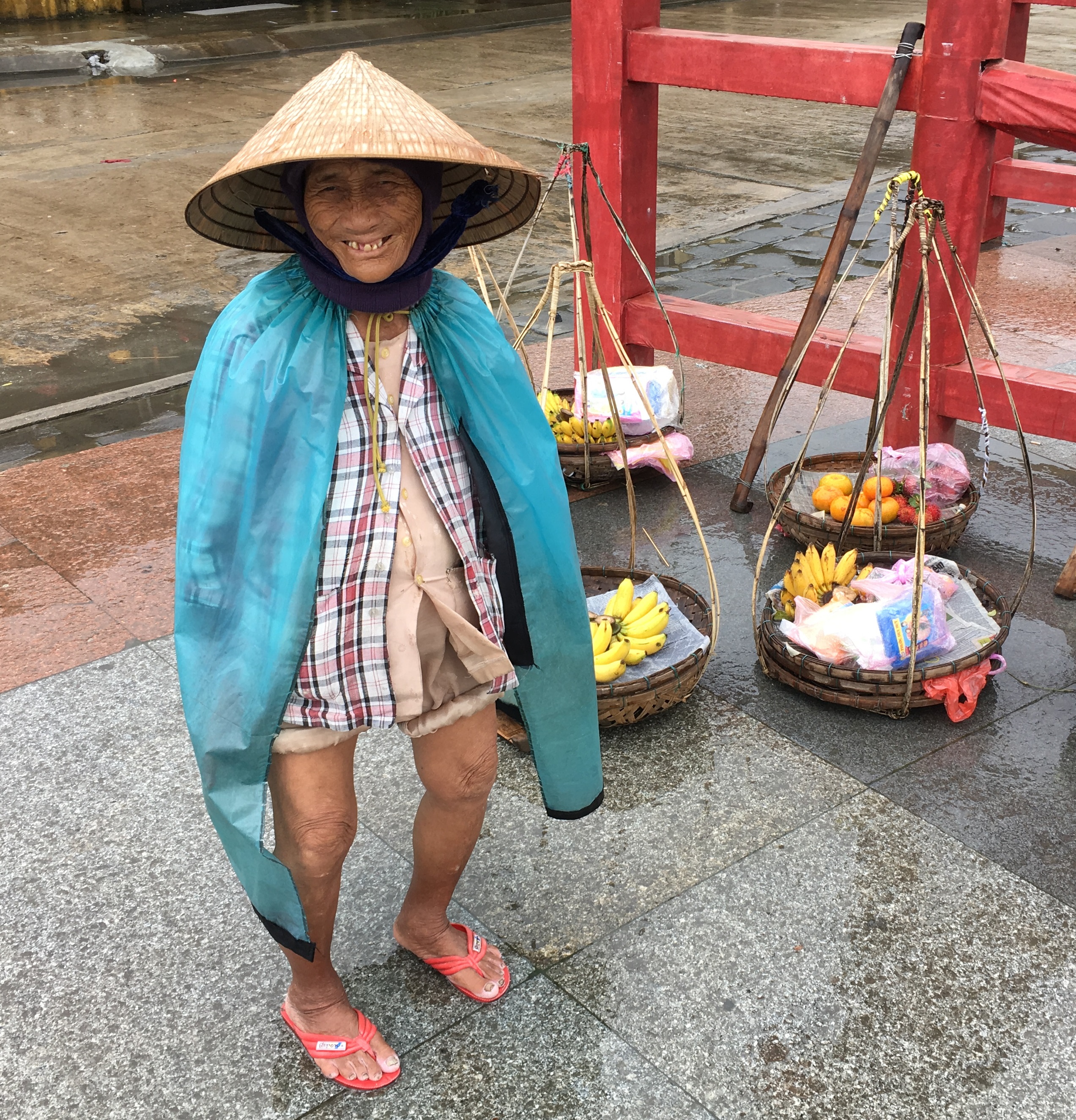
My foreign journeys in 2017 were limited to four countries – France, Thailand, Vietnam and Ireland. Actually, two trips to France, one of my favourite countries, two to Thailand and one lengthy visit to Vietnam, which I’d never visited before. But travel is not just the places you visit. It’s also the process of getting there. And that got very interesting during the year, especially if you happened to be flying from the Middle East to America or Britain, or if you were attempting to go just about anywhere on an American domestic flight, in which case you risked all kind of indignities, starting with not being able to fly at all.
Our trip to Vietnam started in Ho Chi Minh City, also known as Saigon. There we sampled some of the famous Vietnamese cuisine, courtesy of a friend who knows where to go:
In the evening, we met up with Chuong, who used to work with my company in Kuala Lumpur. He took us to a restaurant that specialises in cuisine from Na Trang, a coastal town about two hours north of Saigon. The first dish was jellyfish. For my wife, this was an experience too far. Translucent strips that looked like worms. I ate some. She didn’t. It was fine, but I doubt if it would be wildly popular among the good people of Surrey.
I was curious to see if the famous deep-fried scorpions showed up next, but no such luck. I’ll try just about anything once, but some things only once. The chicken feet in Hong Kong, for example – chewy and tasteless, but very popular throughout the region. I’m sure there are parts of Asia where you can get battered cockroach or fermented snake entrails, but they might be a mouthful too far even for me. Perhaps my taste buds aren’t properly oriented towards the refined end of Asian cuisine. (From Postcard from Vietnam – Part 1: Ho Chi Minh City)
In Hanoi, rather than stay at one of those boring four-star hotels, we decided to join the backpackers – albeit the middle-aged variety:
The balcony in our fifth floor room gave me vertigo for the first time in years. A good place for suicide – or accidental death – since the railings only came up to my knees. That apart, the room was comfortable, had good internet and one of those rare air conditioners that actually works in heating mode.
You could describe the Hotel Chic as a backpacker hotel for the middle aged. Our fellow guests were mainly Westerners – a smattering of Americans, French, and a family of three from Denmark who each looked like Mel Smith (the late British comedian) in grumpy mode. Outside, from the early hours until late, the locals supped their pho, which is a noodle soup beloved of all Vietnamese, squatting on tiny blue plastic stools you would normally see in infant schools back home. (From Postcard from Vietnam – Part 2: Hanoi)
And finally a trip to Hoi An and Hue, in the centre of the country, where I reflected on the remarkable qualities of the Vietnamese people, who suffered so much at the hands of the West, yet are prepared to let bygones be bygones:
I spent three weeks in Saigon, Hanoi and Hoi An with half an eye on the antics of the angry narcissist in Washington. Wherever we went, we found people who have more right than any disgruntled citizen of the United States to feel anger at the events of the past, yet treat their foreign guests with kindness, grace and humility.
The years are slowly putting distance between the guns, the helicopters and the landmines, and the beautiful country that Vietnam is today. I fervently hope that when my generation has passed on, it will be known more for its diversity, its landscape, its culture and its people than for the cold war quagmire that still shapes the politics of superpowers past and present. (From Postcard from Vietnam – Part 3: Hoi An and Hué)
Later in the year, the US Department of Homeland Security banned passengers on foreign airlines flying to the US on certain routes from bringing laptops and tablets into the cabin. The UK rapidly followed suit. What next, I wondered:
…if you happen to be travelling from Kuala Lumpur, will you be allowed to bring a perfume atomiser under the 100g limit? After all, Kim Jong Un’s half-brother was snuffed out with a hankie impregnated with VX gas. Someone running up the aircraft spraying that stuff would leave half the passengers in their death throes within minutes. So no containers of any liquid, no matter what the size.
Are we approaching the point where anyone with a brown skin and a name that sounds vaguely Muslim (or North Korean) will only allowed on the aircraft handcuffed and sedated? Yes, I know this post is getting silly, but the serious point is this: where do you draw the line? Or rather, where do you draw the line without making air travel unpalatable to the majority of passengers, and seriously antagonising a good proportion of them?
Or to look at it another way, are we so nannied that we’re unable to face the reality that there are many ways to die in an aircraft, and being blown up is by no means the most likely cause of death. Flying is risky. But not half as much as driving a car while eating a cheese sandwich or talking on a mobile phone. (From Laptop ban in aircraft cabins – the contagion takes hold)
Then United Airlines covered itself in glory and lawsuits by literally bumping a passenger off a flight so that one of its own staff could have the seat. Well, in addition to bumping the guy, they had him physically dragged off, causing him head wounds in the process:
If I was happily settled into my seat, having anaesthetised my legs to allow them to fold up into a stress position behind the seat in front of me, looking forward to my complementary dog biscuit, I might be mildly pissed off to be told by a couple of paramilitary flight attendants that my presence was no longer welcome, and then to be dragged out bleeding by a SWAT team from the airport security force.
And if I was a doctor, I might wonder at the gall of an airline that would be quite happy to call out on the intercom “is there a doctor on the plane?” and expect me to revive a passenger in trouble, yet equally happy to haul me out of my seat as if I was a terrorist, or a drunk on a stag trip. (From United Airlines PR disaster – Mr Munoz will go far)
Where do we draw the line on what we write about countries we visit, whether for work or pleasure? Should we self-censor, or let it all hang out? Depends if we want to visit that country again:
Most of us don’t solemnly go through a list of countries we might like to visit and cross off those that offend our principles. We get on the aircraft with the intention of seeing for ourselves, because we don’t trust the opinions of others. We might then make our judgements, and regale our friends back home with horror stories of what we encountered at our destinations. What counts is not the morality of our hosts, but our personal experience.
But there’s another factor that makes me at least think twice about visiting a country. It’s rooted in emotion. A sadness that what was once welcoming and outward-looking is no longer so.
Take the United States as an example. I have many friends there, and over the decades I’ve been enriched by its cultural influence. I think of America as an old friend.
But on recent visits I’ve felt as though the old friend has changed. It starts with immigration. Suspicion. Scant attention to the social niceties. An intimidating atmosphere that demands compliance on pain of rejection or arrest. Once in, I’ve sensed a harshness of opinion that tolerates no discussion. It’s almost as though the society – or communities within it – is shutting down free speech even if the constitution continues to guarantee it. Sacred cows roam the streets, and it’s taboo to speak against them – national security being the biggest and ugliest. (From Go travel the world, but watch out for poisonous oysters)
Now we’re getting silly. Only in America would lawyers believe that there’s a price for anything, including permanent disfigurement behind an aircraft seat:
A couple of American law professors have been grappling with one of the most pressing problems of the modern age: how to stop people getting into fights over reclining seats on aircraft. According to the London Times, they claim that the most equitable answer is for people who wish to push their seats back into the precious space occupied by passengers in the row behind to offer them drinks or snacks.
I think they’re on to something, even if it would take some serious cultural reorientation for one passenger actually to speak to another on a flight unless it’s to complain about their behaviour or, worse still, to threaten to kill them. (From Peace in the skies – legal eagles find the answer)
I’m fascinated by the way people pack for journeys. So much so that I’ve come up with a set of archetypal packing techniques. But my own offspring defy classification in their methods:
As for my offspring, their packing is a mystery known only unto themselves. Why would you need six bottles of shampoo and conditioner for a two-week holiday? They pack enough make-up to paint the entire cast of Hollywood movie. Stringy things of dubious provenance and purpose. Multiple sunglasses, creams, potions, and enough electronic devices to keep them in a digital bubble of Facebook, Instagram and instant messaging for the duration of their holiday. My policy with them is don’t look, don’t ask.
If there’s one invention that can’t come too soon, it’s teleportation. Failing that, I’d live with a miraculous transformation into the ranks of the billionaires. After all, they don’t need therapy every time they go on holiday. (From The psychotic’s guide to packing)
The countryside in the south of France is not as glamorous as the coastal regions. Yet it has its own quiet charm:
For me, France is not about the cities, the grandiose monuments and the flashy resorts. It’s about what exists beyond the globalised culture of the cities. It’s what’s often referred to as La France Profonde – deep France. Indefinable, intensely individualistic. Not ostentatious, but quietly proud.
Yet it sometimes feels strangely empty. There are many small villages where you will often see more names on the war memorials than people in the streets at this time of year.
Sign of the times, I guess, but still sad. But what would you prefer? Starbucks, or the Shabby Chic Corner down a medieval backstreet in Issegeac, owned by Delphine, a charming Parisienne who serves a sponge cake topped with caramelised pears that nearly reduced this cake-lover to tears?
No contest.
A short visit late in October to the Bay of Arcachon, near Bordeaux, where the allure of British visitors doesn’t seem to extend. We encounter the Candidate for Frexit, and one or two people who don’t suffer fools – especially English ones – gladly:
Unfortunately our attempt to secure a coffee and snack at the restaurant overlooking the bay were contemptuously dismissed, on the grounds that it was after 3pm, and wasn’t it obvious that we close for three hours during the busiest time of the day?
We had more luck at Arcachon, which has a promenade of hotels and cafes on the beach-front. It could have been an August day, with the beach full of kids making sandcastles in the sun, and the well-dressed boulevardiers strolling down the pavement with the usual variety of dogs in tow.
I was conveniently reminded that I’m a stupid Englishman when I expressed surprise that the guy in the ice cream van was also selling churros, which I’ve rarely seen outside Spain. Pourquoi? You bought a mango ice cream, and mangos come from China, he replied. Silly me. (From Postcard from Bordeaux)
And finally, towards the end of the year, to Ireland, the homeland of my in-laws, for the funeral of my wife’s mother. This post was an opportunity to say goodbye, but also to compare cultures of death in England and Ireland:
When my mother died three years ago, it took three weeks to book the church and the crematorium, and for the four of us siblings to agree a date for the funeral.
In Ireland, things work very differently. Funerals are held within a maximum of three days from the person’s death, regardless of who can or cannot attend. And so it was with Blaithín.
I arrived at the family home the night before the funeral. The wake had taken place on that day. Blaithín lay in an open coffin in the front room. A stream of visitors came to the house to pay their respects. Tea, cakes and sandwiches were on hand.
If you’ve ever seen movies in which an Irish wake is portrayed, you might immediately think of men like Milo O’Shea or Brendan Behan with cloth caps supping Guinness long into the night, occasionally bursting into song. That may still happen deep in the country, but not in Navan.
When I arrived late at night I looked at the condolence book, where visitors had signed their names. There were two pages of names, which seemed quite a lot. But that was by no means all. I looked further and found another six. Around two hundred people stopped by in the course of one day. Each would stay for between ten minutes and half an hour, say goodbye to Blaithín, pay their respects to the family and leave.
By the time I arrived, my wife and her brothers and sisters sat in a state of numb exhaustion.
Then there was the funeral itself. The rituals started with the removal of the coffin. The priest came into the house, said a prayer, and after the relatives had had the chance to say goodbye, the coffin was closed, and carried out to the hearse. (From The Passing of a Matriarch)
A sad way to end the year. But as one life ends, a new one begins. In the next couple of days, God willing, my wife and I will become grandparents for the first time.
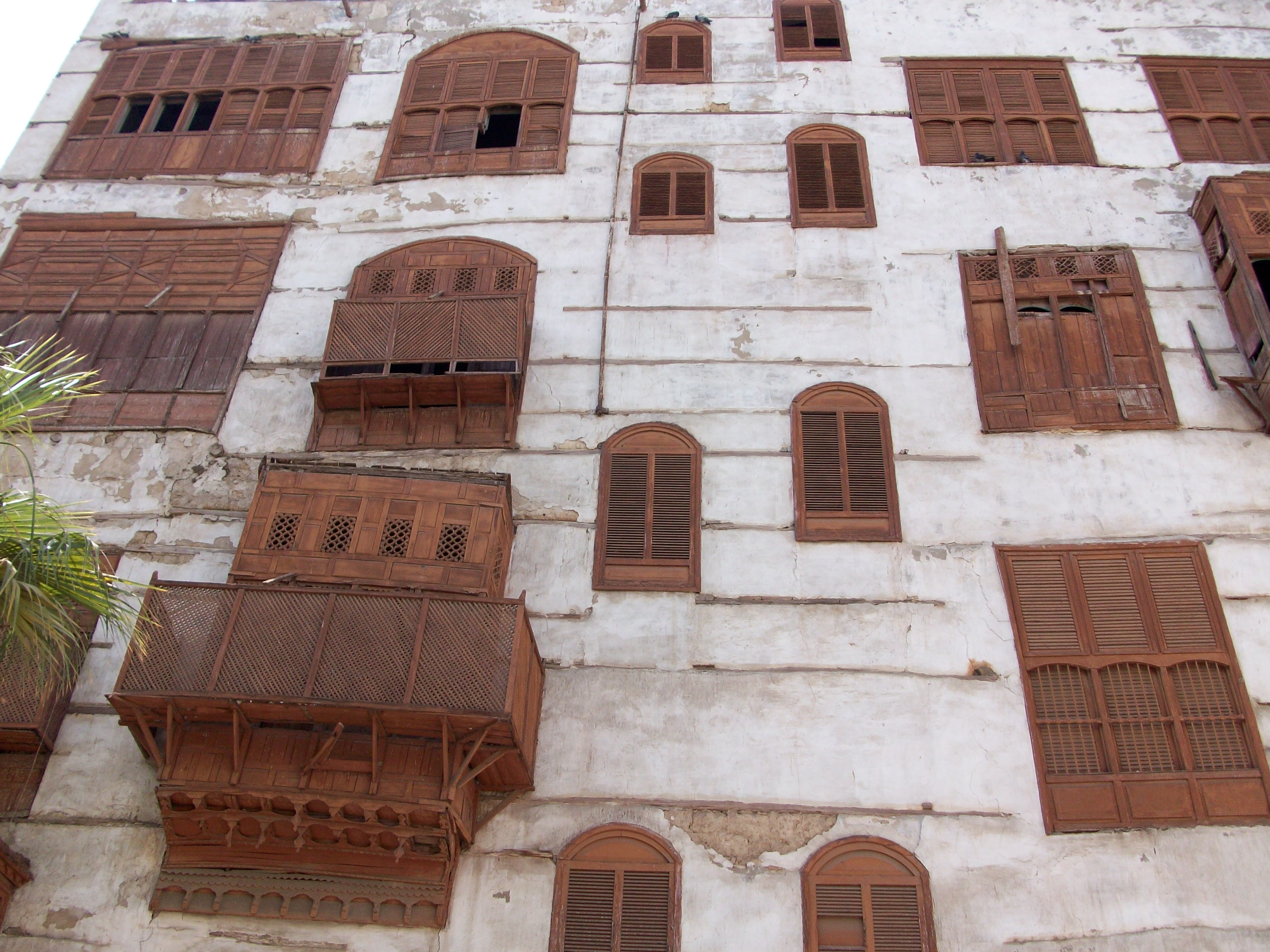
In 2017 I didn’t even try to get into the labyrinthine mix of politics and slaughter in Iraq, Syria and Yemen. Others have covered those stories far better then I could have done.
I chose to focus primarily on two countries close to my heart: Turkey and Saudi Arabia.
In April, a movie funded by an Armenian billionaire, since deceased, stirred up passions on a perennial bone of contention: Turkey’s treatment of its Armenian population during the First World War:
We may remember the Armenian genocide as the forerunner of the Holocaust and other mass killings that scarred the last century. We may disapprove of the Turkish state refusing to acknowledge the enormity of committed by its Ottoman predecessor.
But perhaps we should also ask ourselves whether the United States, Britain or France would allow three million people to cross their borders, and, if they did, what kind of impact the influx would have on their politics, cultures and economies.
Which goes to show that no matter how unambiguous the historical narrative presented by movies like The Promise, there’s always another side to the story. Unfortunately, in the age of fake news and limited attention spans, we don’t always go in search of it. (From The Promise – one country’s certainty is another country’s lie)
I read two books by Turkish novelists: The Three Daughters of Eve by Elif Shafak, and The Red-Haired Woman by Orhan Pamuk. Neither disappointed:
Despite Turkey’s recent move towards religious orthodoxy and authoritarianism, Istanbul in my experience is still a place defined by diversity of thought. Shafak in her writing represents that diversity. Long before the arrival of the Ottomans, in Constantinople religious disputation was a way of life. Arguments over the nature of The Father, the Son and The Holy Ghost have indelibly seeped into its ancient walls.
If there is a future Islamic world in which heterodoxy thrives, in which respect for difference wins out over the suppression of The Other, then I suspect that Turkey, and in particularly Istanbul, will be the source of that mindset. Despite the country’s long history of bouts of religious and ethnic intolerance, if Shafak and Pamuk are to be believed, the spirit of inquiry and uncertainty still survives.
It will outlive presidents, ISIS and the preachers of Medina. One day perhaps, we in the West will stop looking at Islam through fearful eyes, and will once again recognise that it, like other faiths, has many shades of belief, and that among the faithful there are as many uncertain seekers after truth as are to be found in churches, temples and ashrams. (From Three Daughters of Eve – a telling window into the heart of Istanbul)
A TV series on ISIS gave an insight into the mindset of the murderous cult’s foot-soldiers:
What we in the West have not witnessed first-hand is the emotions of the participants – courage bolstered by common belief; fear, bewilderment, shock at the reality of their predicament. We only have the stories of those who survived to draw on, but based on what we know, The State has achieved the nuanced portrayal that Kosminsky hoped for.
I was not shocked by the narrative, perhaps because I’m familiar with nearby states where much of the ISIS ideology prevails, albeit without the jihadist fervour. Saudi Arabia, for example, in which a significant proportion of the population shares the Salafist beliefs of the ISIS cadres, where women are kept apart from men, though not to the same level of extreme impracticability. (From Peter Kosminsky’s The State – four characters in search of jihad)
In June, Saudi Arabia and three other neighbouring countries imposed sanctions on Qatar, ostensibly because of its support for terrorist organisations. As I write this, the standoff continues.
It’s easy to look on the current contretemps as a spat – a cat-fight in which rhetoric plays as important a role as claws scratching faces. Rhetoric is something in which the Arab world excels, often with no discernible consequences. Declarations of undying amity frequently precede actions that belie the sentiments. Likewise, blood-curdling threats are not always carried out.
But this is different. It will be seen by many Qataris as bullying. If the impasse leads to bloodshed, it will create yet another cycle of martyrdom. The temptation on the part of the Iranians and Turks to intervene might become irresistible. And the Gulf region will experience an instability and insecurity that makes the turmoil in Bahrain seem like a minor squabble. (From Qatar- swift resolution or lengthy siege?)
One of Saudi Arabia’s concerns was about Qatar’s Al-Jazeera TV station. The anti-Qatar alliance would like it closed down. The opposite should happen:
Al-Jazeera is and always has been a concern to countries that feel threatened by media outlets that they do control. I’m not speaking of English-language outlets – it’s not the English-speaking audiences that they worry about, or at least not as much. As an Arabic channel, it is – or was until it was blocked by several neighbouring countries – pervasive, powerful and influential.
Whatever the rights and wrongs, the claims and counter-claims, whatever its biases, and regardless of the extent to which its editorial policy is dictated by the Qatar government, Al Jazeera is unique.
It should not be shut down. It should be replicated, emulated and competed against across the Middle East. Not just so that other stations can offer counter-narratives, though that can only be healthy, even if some of the narratives might be repellent to viewers of its English output. (Standing up for Al Jazeera)
The implications of Crown Prince Mohammed bin Salman’s plans for a technology-focused zone to the north-west of Saudi Arabia:
It would be hard to see young Saudis in places like Riyadh being content to miss out on all the fun to be had elsewhere. And the ban on women driving has been lifted throughout the country. But NEOM, if it happens, would be the first example of an entire area being sectioned off into a zone where different social and economic rules apply, even if, as Bloomberg anticipates, it ends up being populated more by robots than people. If it works, the principle of “one country, two systems” could become a model for further zoning. (From Saudi Arabia’s NEOM)
I kicked off RetroSaudi, a series based on stuff I wrote about Saudi Arabia thirty years ago, comparing my observations then to the current state of the country:
My purpose in writing about Saudi Arabia is not to bash the country or its people. Yes, there’s plenty to criticise, and no lack of people lining up to deliver their disapproval. I leave that field to them. Underlying everything I write is an affection for the good people I encountered, and memories of many happy years I spent there.
On the other hand, I’m not looking to excuse the inexcusable, or pretend that the dark side doesn’t exist. It did then and it does now. (From RetroSaudi: Introduction)
King Abdulaziz, the founder of Saudi Arabia, had a sure political touch. What would he have thought about about his grandson’s policies?
Would Abdulaziz – the man who on his deathbed made his two eldest sons swear not to fight each other – be looking down in horror at the arrests of brothers and cousins?
Perhaps. He certainly would have admired the ruthlessness of the current Crown Prince. But I suspect that he would be reserving judgement until the consequences of Mohammed bin Salman’s actions become clear.
Finally, a story about Abdulaziz. When the King had the first telephone line installed between Riyadh and Jeddah, the religious sheikhs denounced this innovation as the work of the devil. He asked them whether the devil would tolerate the words of the Koran being transmitted through the phone. They had to admit that he would not. So the King arranged to call the sheikhs in Riyadh from his palace in Jeddah. And he recited the Koran. Hence perhaps the significance of the phone in the picture above, and evidence that he was not just a warrior king, but a man with political finesse when need be. (From RetroSaudi: The Founder)
Saudi Aramco is about to be floated on a yet-unnamed stock exchange. A story from the days when the company was controlled by US oil companies:
There are many other legends about Aramco in the days when it was an exclusively American enclave. Every new family was given a leaflet called “The Blue Flame” with detailed instructions on how to safely distill their own spirits at the back of their houses. Those who did were not always as safety-conscious as the booklet advocated. They included a householder who happened to be away one evening when his prefabricated house exploded. Legend has it that the camp engineers constructed a new house on the site by the following morning. (From RetroSaudi: The Company Town)
I wrote this in 1987 about firearms in Saudi Arabia. Today, the country bristles with weaponry.
Out in the desert, the bedouin have carried weapons for centuries, but their firearms are usually more suited for suicide than offensive action; many started life in the hands of the British around the time of the Indian Mutiny. Every two or three years the authorities announce a weapons amnesty, but it’s a meaningless gesture to the gnarled old sheikhs, for whom the family flintlock is as much a status symbol as an instrument of destruction. Not so a hundred years ago, when armed robbery was a popular pastime among the bedouin, particularly if the neighbour’s camels happened to be there for the taking. (From RetroSaudi: gun’n’poses)
A post in which I asked whether a socially liberal and politically autocratic Saudi Arabia will be sustainable in the long run:
Finally, one can understand MbS’s thinking in locking up critics, and anyone who he thinks might be a critic. But he needs to realise that it’s not a viable long-term option for preventing dissent. There also needs to be dialogue and reconciliation, especially with members of his own family. (From What should Mohammed bin Salman do?)
What I wrote thirty years ago about the British in Saudi Arabia still applies today. But the numbers have dramatically reduced.
Some British families talk endlessly about property and investments. The future is everything, sometimes at the expense of the present. They dream of thatched cottages, cricket by the village green and other vanishing symbols of a long-gone age that they never knew. It’s only when they buy their cottages that they notice juggernauts rolling past their front doors like battalions of tanks on Salisbury Plain.
Others never make it home. I know of one guy who worked away from his family for thirty years, sent all his money home, educated his kids and provided them with a comfortable home. On his way to the airport for his final flight home, the poor chap had a heart attack and died.
Which suggests a lesson for all workers in a foreign land: make the most of the life you live. You may never get to enjoy your hacienda on the hill. (From RetroSaudi: The British)
The same goes for the Americans – a much smaller population today. When I referred about blustering salesmen back then, I could have been talking about Donald Trump.
I don’t want to go into observations about Americans in Saudi Arabia that might seem cliched, but I probably will. I like many of the Americans I’ve met here. But I’ve had to forgive them for many things.
For slip-roads and left-hand drive; for thinking they founded Saudi Arabia; for thinking the world owes them a living; for sending back US-educated Saudis who sound like Texans; for using long words when short ones suffice, and teaching the Saudis to do the same; for interminable and impenetrable acronyms; for being so aggressively ignorant of their host country, or so cloyingly curious about the things that aren’t important; for forcing me to change my spelling; for being so maddeningly hierarchy-conscious; for their blustering salesmen who promise more than they deliver.
I do thank them for a few things. For mistaking education for talent (in my case); for some rewarding friendships; for the fast food outlets they franchised in Saudi Arabia; for the strength of the US dollar; and for employing me in the first place. (From RetroSaudi: Americans)
One of the biggest issues facing the monarchies of the Gulf – corruption:
Ultimately, I can’t see an end to corruption and the wasta culture as long as the ruling family continue to believe that the country ultimately belongs to them. And for that to change, they will have to start acting as accountable custodians rather than conquerors.
At a time when democracy in my country and in the United States is falling apart, I’m not about to lecture anyone on the need for transparent governance and the rights of citizens. Saudi Arabia will have to find its own way forward, and it’s unlikely that their model will closely resemble ours.
But if it wants to imbue in its people a sense of ownership, then, as Jeremy Corbyn constantly reminds us Brits, it will have to convince its citizens that the state is there for the many and not for the few. In a region of nation states beset with similar concerns, that could take a long time. (From RetroSaudi: Corruption – and its little brother)
The conclusion to a piece on a campaign to exterminate street dogs in the Eighties:
But dogs are resilient creatures, and should the gleaming new cities built over the past fifty years ever crumble back into dust, no doubt the dogs will return to scavenge through the remnants. Except that the gene pool will be wider. The desert dog will be joined by feral chihuahuas. (From RetroSaudi: Dogmageddon)
A formidable ambassador passed away this year:
All these activities were serenely presided over by the ambassador. For the early part of my time in Jeddah, he was Sir James Craig, who died recently. Before he left, he wrote a scathing end-of-term dispatch to his masters in London about his posting, in which he accused the Saudis as being “feckless, incompetent and unconscientious”. It was supposed to be confidential, but someone leaked it. And of course, copies were smuggled back to us in Jeddah, much to our delight. Not that we agreed with him, you understand.
The Saudis did forgive him though, possibly because they admired his mastery of Arabic, both classical and colloquial, and his love of the Arab culture. He maintained strong links with them well after retirement.
His successor was not so deeply appreciated, partly because of his unfortunate habit of nodding his head violently when making a point. This was highly counter-cultural. Saudis, used to keeping their heads still for fear of losing their ghutras, thought he was rather undignified. Little things make a difference in diplomacy, I guess. Moral of the story: don’t appoint a moorhen as ambassador to a Middle Eastern country. (From RetroSaudi: Embassies)
The biggest killer in Saudi Arabia:
The most common and obvious crimes happen thousands of times a day in full view of everybody, on the roads. While the citizens of Saudi Arabia may lag behind the rest of the world in the achievements of its specialist criminal fraternity, they make up for it on the road. Dangerously and flamboyantly. (From RetroSaudi: Crime)
Perspective on Trump’s embassy move to Jerusalem:
It means nothing in the sense that it will not change the Israel-Palestine impasse. Few countries will follow Trump’s lead. In political terms Israel’s possession of the city is no more legitimate today in the eyes of most of the world than it was before Trump issued his fatwa.
And if Jerusalem’s ancient walls were sentient, I suspect that they would be having a hollow laugh at Binyamin Netanyahu’s triumphant crowing, just as they would have done at Saladin’s glee.
Nothing is permanent in Jerusalem. Saladin passed on. Over the following eight hundred years, and up to the present day, there were more conquests, sackings, periods of peace, changes in control. No faith or political entity could truthfully be said to own the city. (From Jerusalem – Nothing and Everything)
A piece about the yearning for advice on religious matters great and small, and the rise of internet fatwas:
I don’t blame those who turn to religious authorities for certainty in a volatile, confusing world. And many of the sheikhs I’ve met are positive, moderating influences. But sometimes I can’t help thinking of the scene in the movie The Life of Brian, when the accidental not-the-messiah appears on his balcony and tries to send away the mob of would-be followers by screaming out:
You don’t need me!
You don’t need anyone!
You’ve got to think for yourselves!
You’re all individuals!
A subversive message indeed. (From RetroSaudi: Agony Uncles)
And finally, not my words. An extract from a Christmas sermon by my sister (an Anglican priest) on a visit to Palestine a couple of years ago:
We were whisked into three taxis by smiling Palestinians but after a mile or so the taxis turned off the main street. All three taxis stopped and the drivers got out. I began to feel uneasy- worrying about hijackings and mugging but after a few minutes the drivers were back in the car and took us off to the check point. When we got out of the taxis they laid before us boxes of cake and encouraged us to share the cakes with them. They smiled and laughed and did not want any money apart from the taxi fare. They thanked us for coming to visit Bethlehem and asked us to tell the world what life was like living under the shadow of the separation wall and the Israeli occupation. They had an exuberance and love of life that was so infectious despite having very little- it made me realise that sometimes those who have nothing can be free because they have nothing to lose. (From On Christmas Day: so much from those who have so little)
If ever a region – or rather its people – deserves a break in 2018, it’s the Middle East. But for that to happen, there needs to be a lot less posturing, a lot less killing and a lot more wisdom and goodwill.
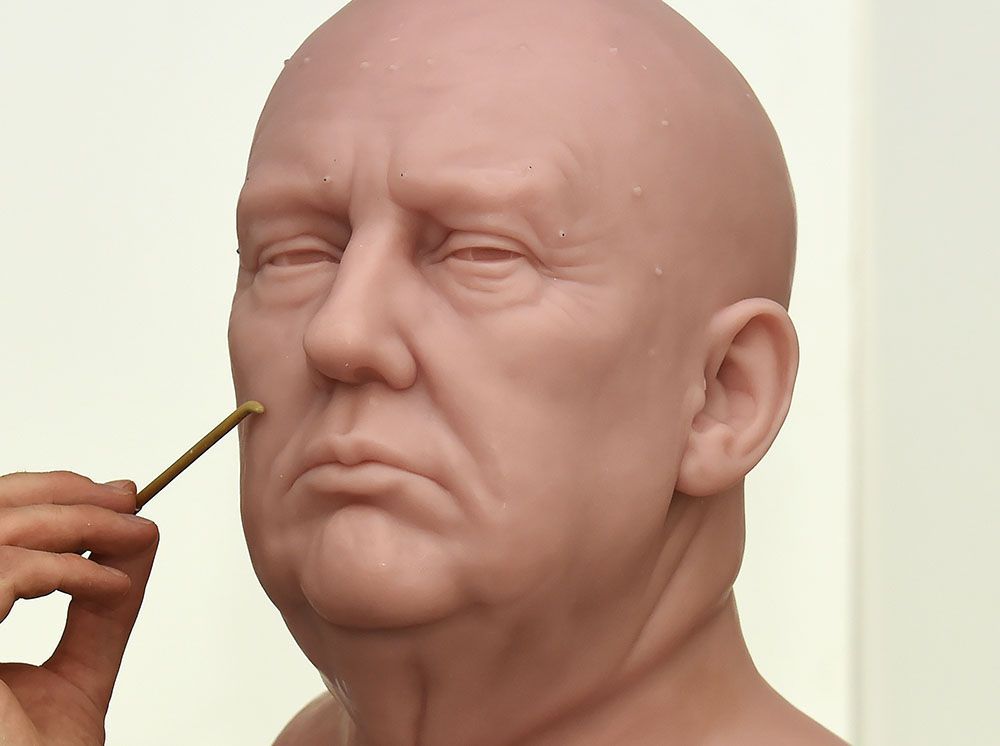
I could have written much more about Donald Trump this year, but in the end I realised that there were so many people focused on him that I would find it hard to say anything that wasn’t already being said. But I suppose that as a Brit who frequently visits America, I have my own perspective, so here’s a selection of stuff I did write on the character I liked to call The Walrus (as in the Carpenter).
In January he was inaugurated. The Steele Dossier first raises its ugly head:
So on the day Obama says goodbye, The Walrus (aka Trump) has to deny an “unsubstantiated report” that he has indulged in an extensive dalliance with the Russians. Which bit is not true, I wonder? Getting two prostitutes to pee on his bed? Or bribery? Or extensive contacts between members of his team and Russian intelligence? If the Russians have video evidence of his antics at the Ritz Carlton, it’s a fair bet that the two girls performed more, shall we say, personal, services for the cameras than just a bout of voluntary incontinence.
Lies, all of it, goddamit! As The Donald says, it’s fake news. But what if there’s a teeny-weeny grain of truth in the allegations made by our present-day George Smiley?
No doubt the religious right will forgive him for his sexual weakness – if the report is true of course. After all, there must be a few pastors and God-fearing brethren out there who have fantasised about some of the stuff allegedly on offer in Moscow. (From Dirty Linen in Moscow)
On Inauguration Day, I was in Da Nang, Vietnam. The parallels between Trump and Lyndon Johnson were irresistible:
If Trump had to make the decision to throw everything against the Viet Cong today, the protests, the personal vilification and the political pressure that led to Johnson standing down in 1969 would be amplified many times on the social media. There would be so much abuse thrown at him that he would take years to fire his customary retaliatory tweets at all the critics who would take aim at him.
Johnson, himself thin-skinned, endured the opprobrium for four years before he threw in the towel. Would Trump, who is a more fragile individual than LBJ ever was, last that long? I doubt it. It would probably be a matter of how long before he tried to do something irrational and catastrophically stupid, at which point one would hope that more grounded people around him would either thwart him or declare him no longer competent to continue in office.
How long? My guess is a year, maybe two. (From Postcard from Da Nang, on the eve of an inauguration)
When Trump signed his first Executive Order banning people from a number of Muslim countries from entering the United States, I wondered what a close friend of mine, now passed, would have made of the decision:
Steve was a Republican. I last saw him in Seattle shortly before he passed away. It was during the Bush-Kerry election campaign. The Bush posters were outside his house, and American flag flew proudly in the yard.
He was a kind man who was never less than supportive of the young Saudis who were determined to break free of their reliance upon Westerners, yet proud and happy when they went to study in his country. In no sense did he share the attitude of superiority that many of his colleagues felt towards “the Arabs”. There wasn’t a racist bone in his body, and though he wasn’t particularly religious himself, he was never less than respectful to the religion of his hosts.
I thought of him when chaos unfolded in the wake of Donald Trump’s intemperate and ill-considered Executive Order banning citizens from seven Muslim countries from entering the US. He would have been appalled by Trump, and appalled at the fall-out from Trump’s latest order. “Completed staff work”, he would have muttered. (From Trump’s immigrant ban – management by thunderbolt)
By February, people were starting to wonder (if they didn’t already) whether there was something wrong with the President:
Dementia doesn’t deal an even hand. It can hit you at any age, though more frequently when you enter your eighth decade. Harold Wilson resigned as British Prime Minister at sixty. He is said to have been concerned about his declining cognitive powers, and subsequently developed Alzheimer’s. Donald Trump is seventy, the same age as Reagan when The Gipper first came to the White House.
In his recent press conference, Trump lurched from subject to subject, free-associating with gay abandon. As for empty phrases and fillers, do “great”, “sad”, “loser” and “failed” qualify? I guess we’ll have to leave it to the shrinks to figure out whether he too shows signs of pre-dementia.
Given his frequent bizarre logic leaps, it’s scary to think that he’s only at the start of his term, not nearing the end as Reagan was when his decline became evident. Even if it turns out that Trump shows no sign of incipient dementia, it’s hardly likely that at his age he’s at the peak of his mental powers. (From Alzheimer’s – which of us is heading for the sunset, and do we want to know? Depends on who we are…)
As Trump puts his team together, there’s cause to wonder whether a new kind of presidency is emerging:
Are we looking at an entirely new style of presidency, wherein Trump continues to behave like a man running for election, and his senior cabinet members – with the support and connivance of Mike Pence – get on with the business of government despite him, rather than because of him?
In other words, a collective presidency – government by cabinet – while the man himself rants and raves in a bubble of sycophancy in the White House?
Whatever one thinks of the policies, a degree of consistency and coherence applied by his less ideological team members is surely more to be desired than Steve Bannon’s destructive testing of the world order, and the chaotic leadership Trump has shown thus far. (From The collective presidency – Trump’s accidental innovation?)
Will the cult of personality Trump seems to be building destroy his businesses as his brand becomes increasingly toxic?
I appreciate that I have an outsider’s view. I’m not American, and I would never, ever set foot in a Trump-branded hotel or holiday resort. The last thing I need on a holiday or business trip is to encounter a garish portrait of the leader in the vestibule. I’ve been to too many places in the Middle East where monarchs and dictators similarly beam (or glare) out at you in halls and reception areas.
But how many of the seventy million or so voters in the United States who didn’t go for Trump would touch one of his properties with a bargepole over the next four years? Far less than would have done before he entered the presidential race, I suspect. The brand is becoming toxic. (From Information War: toxic brands bring down the castles too)
Trump’s demise, if it happens, will be very different to that of Brexit, which I fervently hope for:
If you’re a Brit, and a political junkie like me, you might think that the Brexit entertainment would be a welcome alternative to all the stuff going on across the pond. There have been times when I and many others have seen Trump and Brexit as intertwined abominations. Now I’m coming to see that the differences are as significant as the similarities. Brexit is a slow, muddy river of depression, whereas Trump is a manic white-water ride.
Or, to use a different analogy, Trump may well be a supernova, flaming out in a gigantic explosion that will light up the sky. My country, on the other hand, seems to be a dying star, slowly degrading. This year: Brexit. In 2018: Scottish independence. Any time soon: renewed conflict in Northern Ireland. No longer united, no longer great. Our politicians are the opposite of Trump – risk-averse and predictable. They are boring us into submission. (From Parallel Washingtons come together – a delicious confluence)
The idea that Big Data was responsible for Trump’s election starts gaining traction:
… the idea of Dataism falls apart somewhat when you consider that the Masters of the Data Universe saw fit to achieve the election to the most powerful office in the world of the ultimate collection of screwed-up algorithms – an ignorant, unpredictable podgeblaster called Donald Trump – who is quite capable of reducing all our treasured data to little more than particles of radioactive silicon. It doesn’t seem so inevitable when you consider that a significant minority of our planet’s population have no connection to or interest in the great river of data, and are concerned only with getting enough to eat and protecting themselves from earthquake and famine. And when you consider that even if Trump doesn’t blow up the world, that minority will still have to contend with the effects of climate change as cities are swamped and fields turn to desert. Indeed, the minority might become a majority in the not too distant future.
Should the unthinkable not happen, and wildly unstable biological algorithms fail to bring us to our knees, we may yet become subordinated to unconscious intelligence and ultimately eliminated. So be it. (From I’m not a number! Hold on, I’m an algorithm – allegedly….)
Thoughts on the President’s beloved Wall:
I love walls. Many of them are beautiful, though not in the way Donald Trump predicts about his wall.
For me, walls that define and protect boundaries are symbols of failure. They are steeped in emotion – hubris, fear and sadness. Think of the famous walls that remind us of those emotions: Hadrian’s Wall, the Land Walls of Constantinople, the Great Wall of China.
All of them failed in their objectives. Hadrian’s successors couldn’t protect Britannia from the encroaching Saxons, let alone the Picts and the Scots to the north. The walls of Constantinople crumbled under the onslaught of the Ottoman cannon. And China’s wall, a landmark five thousand miles long, visible still from space, couldn’t keep out the Mongols.
Yet the bricks are still there for us to admire, as we contemplate the downfall of those who defended them. (From Note to Trump: the only beautiful walls are monuments to failure)
Trump fires Comey, and all hell breaks loose. But will the Russia affair bring him down?
If Trump has anything to hide, I would be very surprised if there weren’t multiple Deep Throats ready and waiting for the appropriate moment to release the bombshell that brings him down.
Management by fear works for tyrants who are able to surround themselves with loyalists and put apparatus in place to weed out traitors. The United States is not at that point and hopefully never will be. So Trump is making enemies and doesn’t have the means to deal with them. Which suggests that Russia notwithstanding, his leadership style will eventually be his undoing. Every major media organisation in the US that he has insulted over the past year is watching and waiting for his next misstep. (From Trump fires Comey – management by thunderbolt, not Russia, will bring him down)
Unlike Theresa May, the President is never boring:
The danger for the Conservatives is not that Theresa May is likely to implode in a Trumpian inferno. More likely that the electorate will become steadily more disenchanted with the consequences of Brexit, or die of boredom with her uninspiring persona.
Trump, on the other hand, could never be described as boring. His qualities are the very opposite to those that May trots out several times a minute. He’s doesn’t appear strong, despite all the dice that are stacked in his favour. And as for stable, well that’s a matter of opinion, or more likely of clinical diagnosis.
When all is said and done, we shouldn’t be surprised if Donald Trump manages to slash and burn his way through to 2020, and maybe beyond. What America and the world beyond will look like by then is anybody’s guess. (From Trump on the slippery slope? A view from the other side of the pond.)
A comparison between Sejanus, the feared henchman of the Roman Emperor Tiberius, and latter-day chiefs of staff in the US and the UK:
Imagine a day in the life of the unfortunate Reince Priebus, Trump’s chief of staff. Surrounded by a web of poisonous relationships between scheming courtiers who hate each other. Walking corridors where staff nervously eye their mobile phones, occasionally muttering “POTUS is tweeting again…Jesus!” Constantly dealing with outrage and confusion over Trump’s utterances, and fending off lawsuits triggered by his flawed executive orders. Bombshells to the left and tantrums to the right.
How calm the waters of Downing Street must feel in comparison. But (Nick) Timothy and (Fiona) Hill will have their crises too, especially when the Brexit negotiations start unravelling. And Theresa May will not be content to be seen as a pliant plaything in the hands of two ambitious ideologues. (From A courtier’s life is not a happy one – ask Nick Timothy, Fiona Hill, Reince Priebus…..and Sejanus)
Trump goes to Saudi Arabia – with Melania in tow:
Trump and Saudi Arabia are made for each other. I’m pretty sure the President is finding much to admire, and perhaps even more to envy.
The Saudis, for example, respect the elderly. At 70, Trump is years past the retirement age of the average Saudi, so he definitely counts as worthy of deference.
They love KFC and MacDonalds. They love big buildings. In their gilded palaces, the décor will make him feel as though he is in Trump Tower. The chairs are built for Trump-sized rumps.
In Saudi Arabia, women know their place in traditional society. When the head of the house goes shopping, his wives follow him several steps behind – a practice with which Melania Trump would be familiar, judging by the recent picture of her following him down the steps of Air Force One. (From Trump in Saudi Arabia – much to admire, even more to envy)
Sean Spicer falls on his sword:
The president doesn’t really want anyone to speak for him. I get the impression that he would be far happier giving the occasional rambling interview with the fake news media, and then lambasting them with his late-night tweets. If he has something big to say, he can always call his faithful to a rally, or deliver some set-piece rant at a G7 conference, or speak to the nation from the White House lawn.
Who needs people like Spicer, who don’t have the brains to keep up with him? I suspect that Trump secretly envies Kim Jong Un, who in all his public appearances is surrounded by officials who capture his every thought by slavishly scribbling away in the little notebooks that each of them carries. What’s more, they never fail to giggle at his jokes. (From Alas poor Spicer, we knew him well)
So does Scaramucci:
The most extraordinary aspect of Scaramucci’s stunning impact on the US political stage is that to me at least – and most likely to the vast majority of people like me who watch the reality show from afar – his existence was unknown a week ago. It’s as if some TV producer invented him for Trump’s benefit and our amusement, like some new character parachuted into the Truman Show, or a contestant inserted into Love Island half-way through the series.
What’s next? Caligula’s horse? The Terminator? Coco the Clown? Your guess is as good as mine. One thing’s for sure, if he continues to recruit such colourful characters, Trump will put Broadway out of business. (From Anthony Scaramucci, the latest arrival on Love Island)
Looking on the bright side:
Donald Trump will eventually expire. By that I mean that his presidency will sooner or later end, unless the lunatics in the asylum manage to make him dictator for life. In that event, the demented heffapsycho still has a limited shelf life.
We’re still in the European Union. And will be until March 2019, unless the bleeding obvious jolts enough Members of Parliament out of their career-protecting ideological delusions and persuades them to call a halt to the whole thing. (From Mr Grumpy looks on the bright side)
Trump recognises Jerusalem as Israel’s capital. And so?
It means nothing in the sense that it will not change the Israel-Palestine impasse. Few countries will follow Trump’s lead. In political terms Israel’s possession of the city is no more legitimate today in the eyes of most of the world than it was before Trump issued his fatwa.
And if Jerusalem’s ancient walls were sentient, I suspect that they would be having a hollow laugh at Binyamin Netanyahu’s triumphant crowing, just as they would have done at Saladin’s glee.
Nothing is permanent in Jerusalem. Saladin passed on. Over the following eight hundred years, and up to the present day, there were more conquests, sackings, periods of peace, changes in control. No faith or political entity could truthfully be said to own the city. (From Jerusalem – Everything and Nothing)
And so it goes on, as my late mother used to say. Donald Trump is the writer’s gift that keeps on giving.

Another year over, but how to mark its passing? Like so many other writers, I usually post some thoughts on the catastrophes, triumphs and lessons learned in the previous twelve months, as well as a few pious hopes for the year to come.
But this year – the year of Trump, May, ISIS, bombs, storms, elections and fake news – deserves special treatment. So I’ve decided to compile a 59steps retrospective. Bits of stuff I’ve written on various subjects organised into themes. It would be grossly Trump-like to describe them as The Best of 59steps, because that presupposes that they’re all good in the first place. But I do think that some of the stuff I wrote deserves a recap in light of what followed.
The idea came to me through reading everything I wrote this year. The exercise served to remind me – as if I really needed reminding – what an extraordinary year we’ve just been through. And I wrote lots about it. A hundred-odd posts and at least 150,000 words, enough for one of those books you buy that you never quite get to finish because you lose the will to live at Page 376.
Quite a lot of stuff, and not so easy to reduce to a few pithy words to describe my main preoccupations: American politics, and inevitably Donald Trump; British politics, with our Brexit struggles and floundering governance; the Middle East, and especially the efforts of Saudi Arabia to transform itself; cyberpolitics and the social media; thoughts on places I visited; and finally an “any other” bin which includes a mix of history, social commentary and other stuff from my personal experience.
Some of the subjects overlap. I find it hard to write about Trump, for example, without making reference to parallels where they exist in other parts of the world. So if you’re patient enough to read the next few posts, don’t be surprised if I stray off subject from time to time.
I make no apology for the fact that some of these posts will be quite long reads. It’s been a long year, full of interesting events and worrying trends. Not all negative, but anyone from my neck of the woods who thinks that the world today is a safer, more settled place than it was 365 days ago must be naïve, senile or barking mad.
With that thought, I wish you a happy, safe and fulfilling New Year!

