A new geopolitical settlement has emerged in the Middle East since the 2011 Arab uprisings. This realignment remains largely overlooked, even though much of what ails the region today can be better explained through it, instead of the traditional rivalry between Saudi Arabia and Iran or the sectarian tension between Shia and Sunni.
The countries of the region can be divided into two camps: one that seeks to advance its foreign interests through the support of Islamists, and one whose foreign policy is guided by opposition to the rise of Islamists.
Countries in each of the camps are not necessarily aligned with each other so they do not form together on one side. This, understandably, makes it hard for policymakers and observers to view the region as such. But it is this realignment that could provide clarity to the United States as it recalibrates its approach in the region. Support or opposition to Islamists informs the foreign policies of the Middle East’s main powers. For some of those countries, it is the single greatest foreign policy driver.
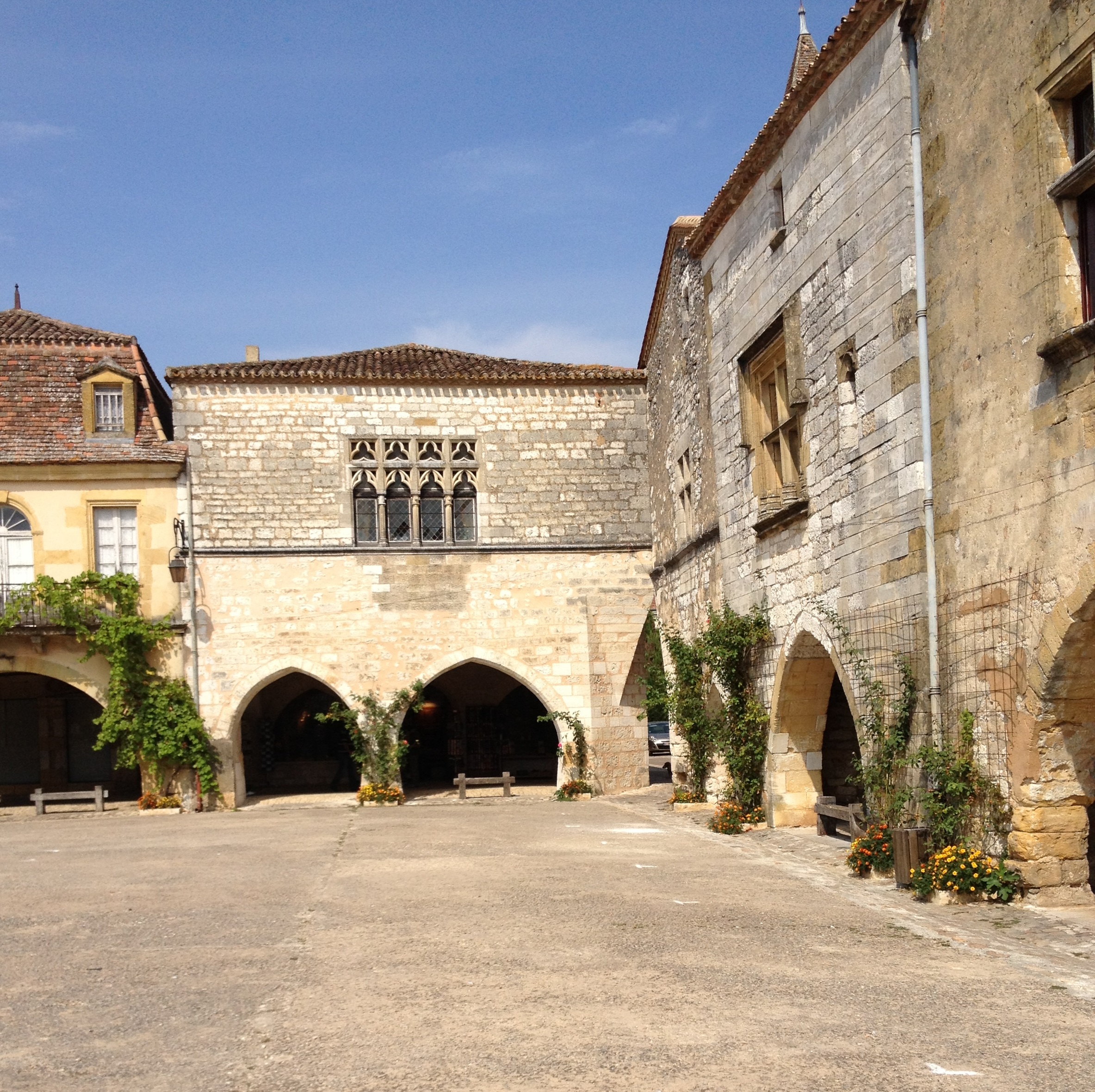
Monpazier
Enough of politics for a day or so. Time for a little meditation on rural France.
Where can you meet a German notary able to quote paragraphs of Julius Caesar’s Gallic Wars in Latin? Or go to a concert of Russian folk music in a tiny country church set in a farm yard, performed by a virtuoso accordionist and a singer with an ear-splitting operatic bass voice? Or get the best croissants in the world?
How about a place where old people still regard the Saturday market as the highlight of their social week, where hardly a mobile phone is in sight? Or a place whose silence is only interrupted by one’s own tinnitus?
Where you go to the local square for a meal, and find a guy with a piano on wheels playing Bach? Where some of the villages are so old you can imagine the inhabitants of the top floor pouring their nightly slops over the timber-framed eves?
Or maybe a place where every summer an English theatre company performs Shakespeare plays in those medieval squares?
If the croissants are a bit of a giveaway, so perhaps are the vans in the market advertising the owner as a “cremier”, or a “fromagier”.
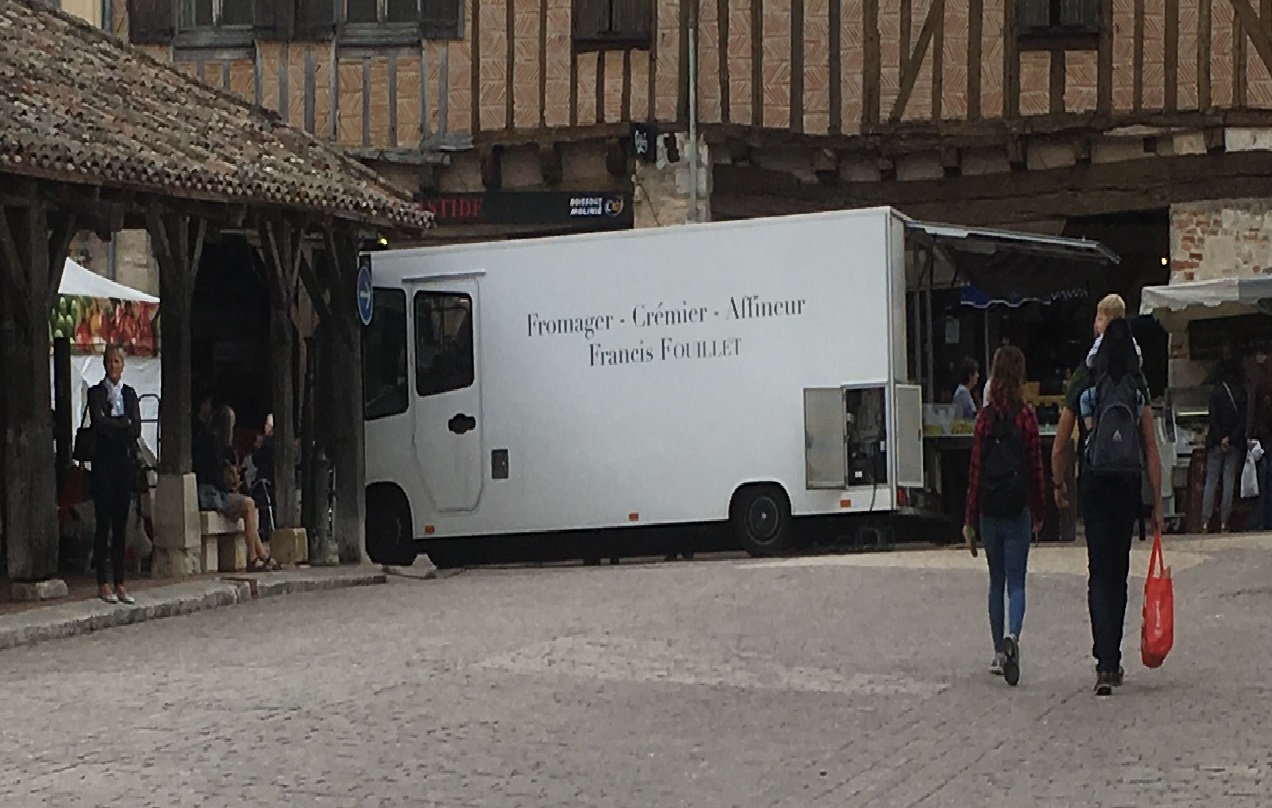
Villereal
Yes, we’re in France. My wife and I have escaped across the channel for a couple of weeks while we are still considered fellow Europeans rather than traitorous secessionists.
By France I don’t mean the Pas de Calais, overrun at this time of year by golfers from the English home counties. Nor Paris, where the waiters pretend not to understand you if you don’t speak French, especially if you have an American accent. Nor Brittany, whose beautiful coastline is buffeted by Atlantic winds.
Not even the gorgeous vineyards of the Bordeaux region, or fragrant Provence, the playground of celebrities and mafiosi, and sometimes celebrity mafiosi. Nor Lyon, where the geese quake with fear at the imminent prospect of being turned into foie gras. And not Marseille, the ancient gateway to the French empire, whose people are as diverse as the empire was wide.
If you said the Dordogne, where the Volvo count is high, and where the Brits buy their stone cottages and spend the winter days dreaming of Marmite, you’d be close. But not close enough.
Just a little further south lies Lot et Garonne, full of character but less full of people. Where we stay is in an area just south of Bergerac. It’s famous for its fortified hilltop towns and villages, which are known as bastides.
The region was a battleground in the Hundred Years War, between one bunch of Frenchmen who came from France, and other Frenchmen who identified as English. Hence the fortifications.
Aquitaine, along with much of Western France, was once an English possession at a time when we English had our one and only stab at creating an empire. Unfortunately, we were considerably less successful as England than we were as Great Britain. Not only were we incapable of subjugating the Scots and the Irish, but by the mid-16th century, all our French territories had gone.
Nowadays, we seem to be the best of friends. You get the impression that our hosts have even forgiven us for Trafalgar and Waterloo. But you never know what feelings lurk in their hearts. But still, we’re good for business. We buy up and renovate their ruined farmhouses and barns, we guzzle their wine and we gorge on their magnificent cheeses. And we arrive in our droves at Bergerac Airport courtesy of Ryanair.
Our favourite stamping ground is around a small group of bastides to the north of the department – Monflanquin, Villareal, Castillonnès and Monpazier. If you also include the town of Issigeac, which is just over the county line in Dordogne, it would be hard to find a more delightful set of villages within a thirty square mile radius anywhere else in France.
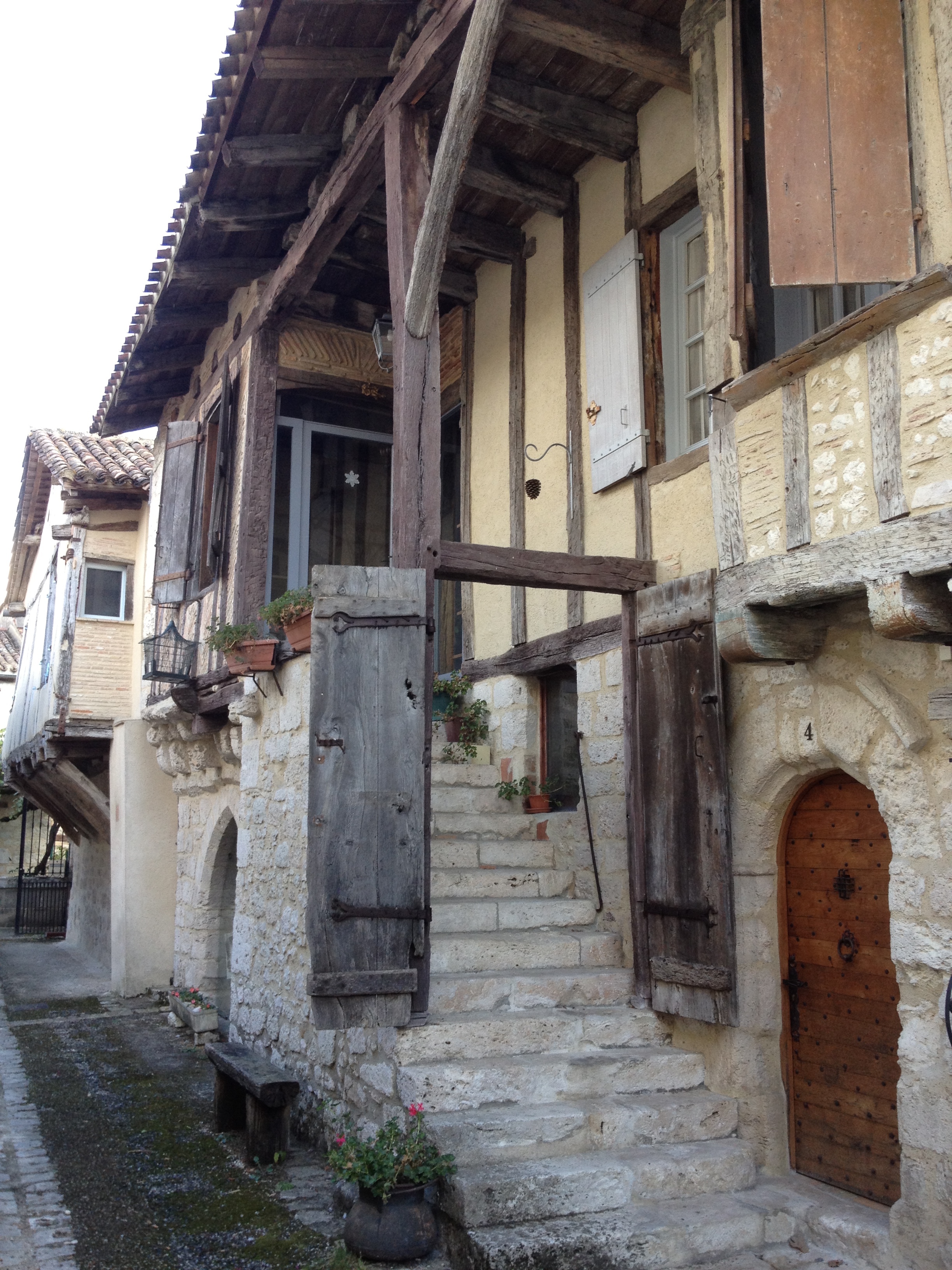
Issegeac
A number of the bastides run producers’ evenings in addition to their regular daytime markets. The deal is that local food producers form around the side of the market square, and the municipality provides tables and chairs where you can enjoy the local produce – brochettes, snails, frites cooked in duck fat, cold plates and delicate apple pastries. You can buy wine, cheese, tins of foie gras and a whole bunch of other stuff you would be unlikely to find on Godalming High Street, or Peckham for that matter.
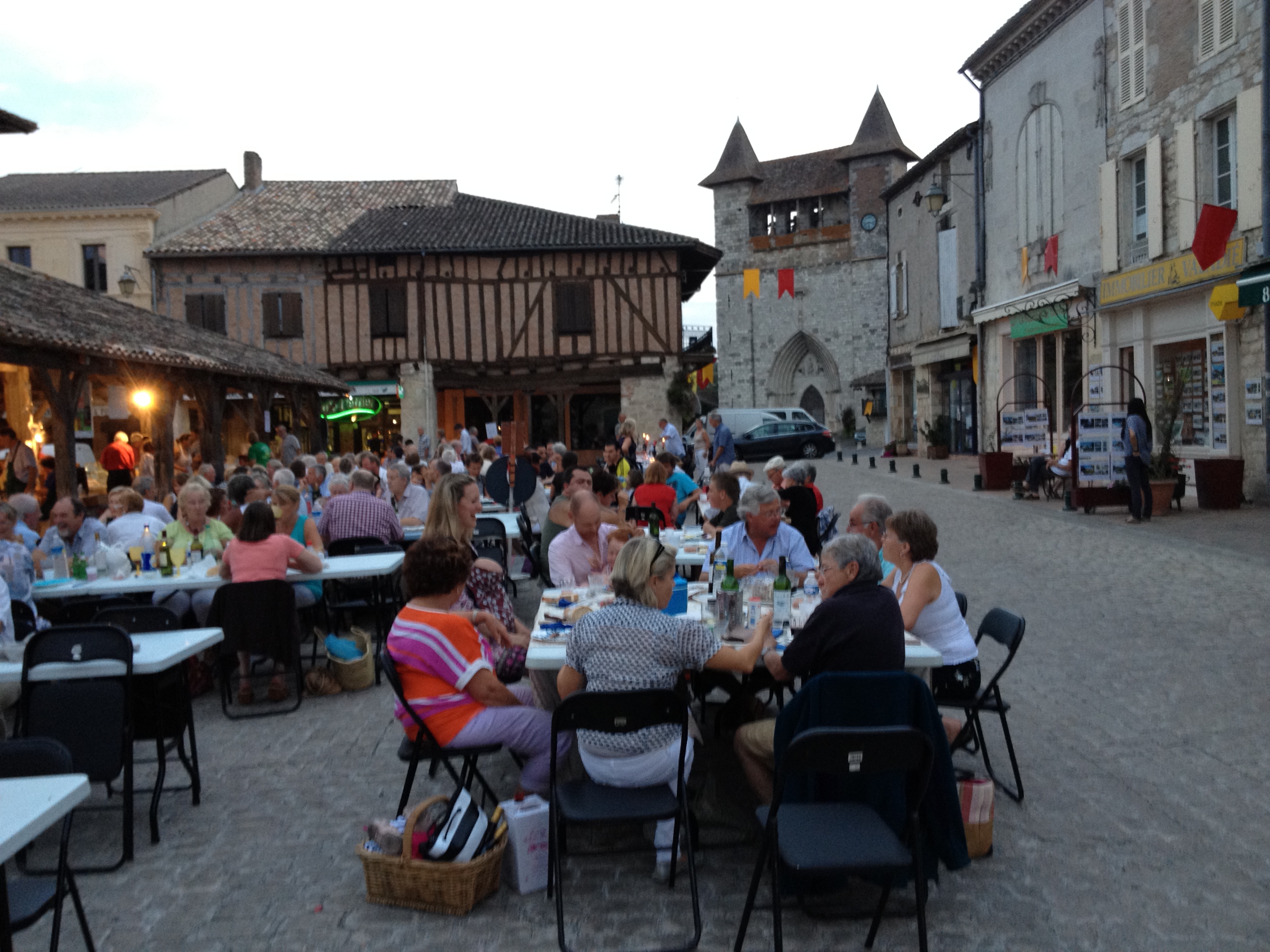
Villereal Night Market
It was at one of these events that we met our Latin-quoting German friend. He and his companions were about to move on to a boat that they planned to take up and down the River Lot. We Brits sometimes think we’re the only foreigners to visit the area. Not so. I’m not sure about the numbers, but in the summer you’re just as likely to hear nearby conversations in German and Dutch.
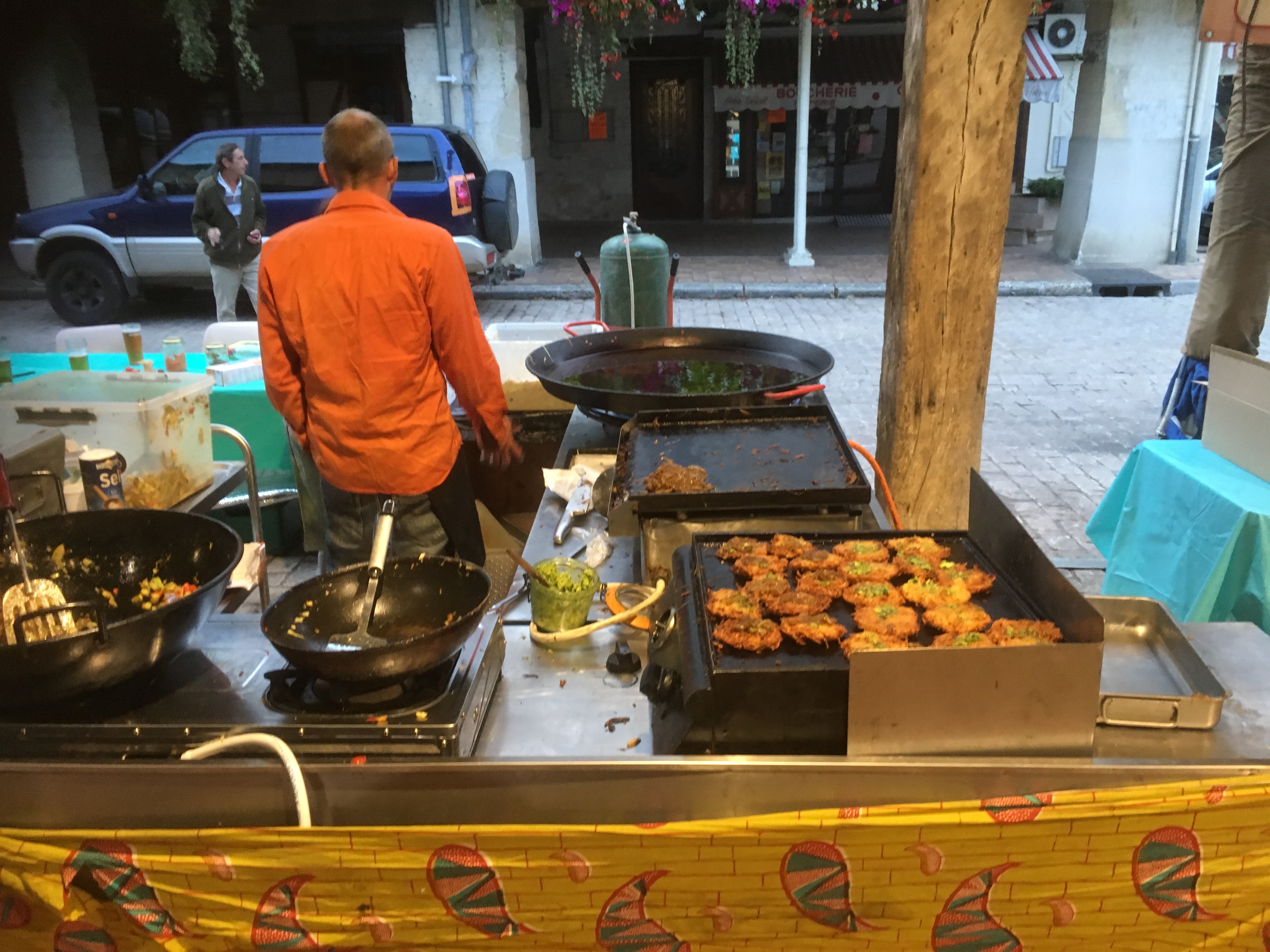
Villereal Night Market
The regular daytime markets are a joy. In my part of England we’re surrounded by hypermarkets, and our high streets are full of Caffe Neros and charity shops. Not a butcher or a greengrocer in sight. Nor even a bookseller, unless you count WH Smith. The last independent book shop in our town closed last year.
The French don’t do bookshops outside of the larger towns either, but just about every village has a brocante, where you can buy oddball antiques. In some markets, you can buy old books, maps and posters. But most of them are focused on the basics of life. Clothes, fruit and vegetables, fromages, charcuterie, fresh meat. Veganism has not yet caught on in rural France. At most markets, stallholders in vans do a roaring trade in spit-roasted chickens and freshly cooked slices of ham.
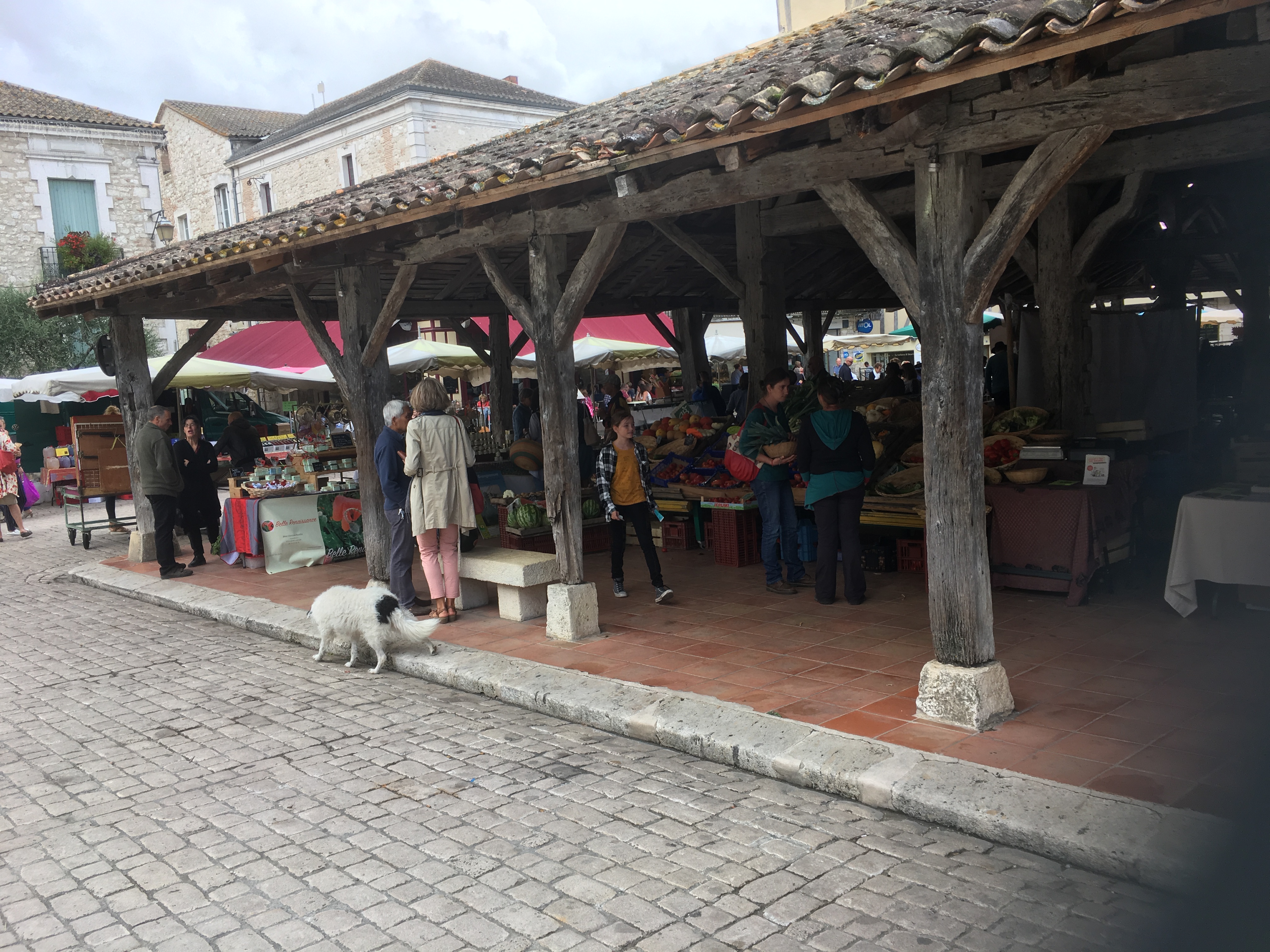
Weekly Market
There are cafes around the squares where you can meet and shoot the breeze, often with live music outside. Lots of old people shuffling around with small dogs doing their weekly shop. All generations gather, with, as I mentioned earlier, barely an Apple or Samsung in sight. And where in England, tell me, would one sub-teen, when meeting a couple of others of the same age, delicately shake hands with them?
For teens, itching to get out from under their parents’ grip, I wouldn’t describe the area as paradise. There are campsites, lakes for swimming and a couple of cinemas. It’s about as far from Magaluf and Newquay as you could possibly get, partly explained by the lack of coastline and the absence of large towns.
Millennials who want to walk on the wild side are not especially well catered for either. It’s a good place to make babies though. Plenty of time for that.
Whether by accident or design, Lot et Garonne, like the Dordogne, is set up for families, young couples, middle-aged couples. Preferably those with a bit of money. Outside the holiday season, it’s quiet. Very quiet. Drive through some of the villages at this time of the year, and half the houses are shuttered up. It’s not just the foreigners who have second homes here. The urban French do as well.
As in other parts of France, plenty of Brits live here all year round. Talk to them about Brexit (we have had several conversations), and most spit blood, not least because those who have been here for a while don’t get to vote in British elections. They deeply resent that they didn’t have the opportunity to have their say in the EU referendum despite the profound implications for them. It’s quite possible that if they and their fellow expatriates in Spain and other parts of Europe did have a vote, the outcome of the referendum would have been different. But enough of bloody Brexit.
For those who are looking for a bit of culture, you need to look fairly hard, or wait for the unexpected. There are little museums dotted about, mostly dealing with local history. A few very posh shops sell art way beyond my pocket, and Ryanair wouldn’t let me travel with six-foot picture anyway. If you’re into Shakespeare, there’s an English theatre company, Antic Disposition, that does the rounds of the area every year, performing in village squares. This year’s play was Richard III. Not quite as appropriate as their Henry V, which we saw in London last year, with the cast kitted out in First World War French and British uniforms. Richard was far too busy trying to deal with the House of Lancaster to worry about the French.
As for the unexpected, the guy with the piano entertained us one evening when we were at dinner in Manflanquin. It turned out that he’d been hired by the restaurant next door, so he set up in the corner of the square and effectively played for everyone, which included us, three kids on skateboards and a dog in the almost empty square. He’s a music teacher from the academy at Pau. This is what he does in his holiday time.
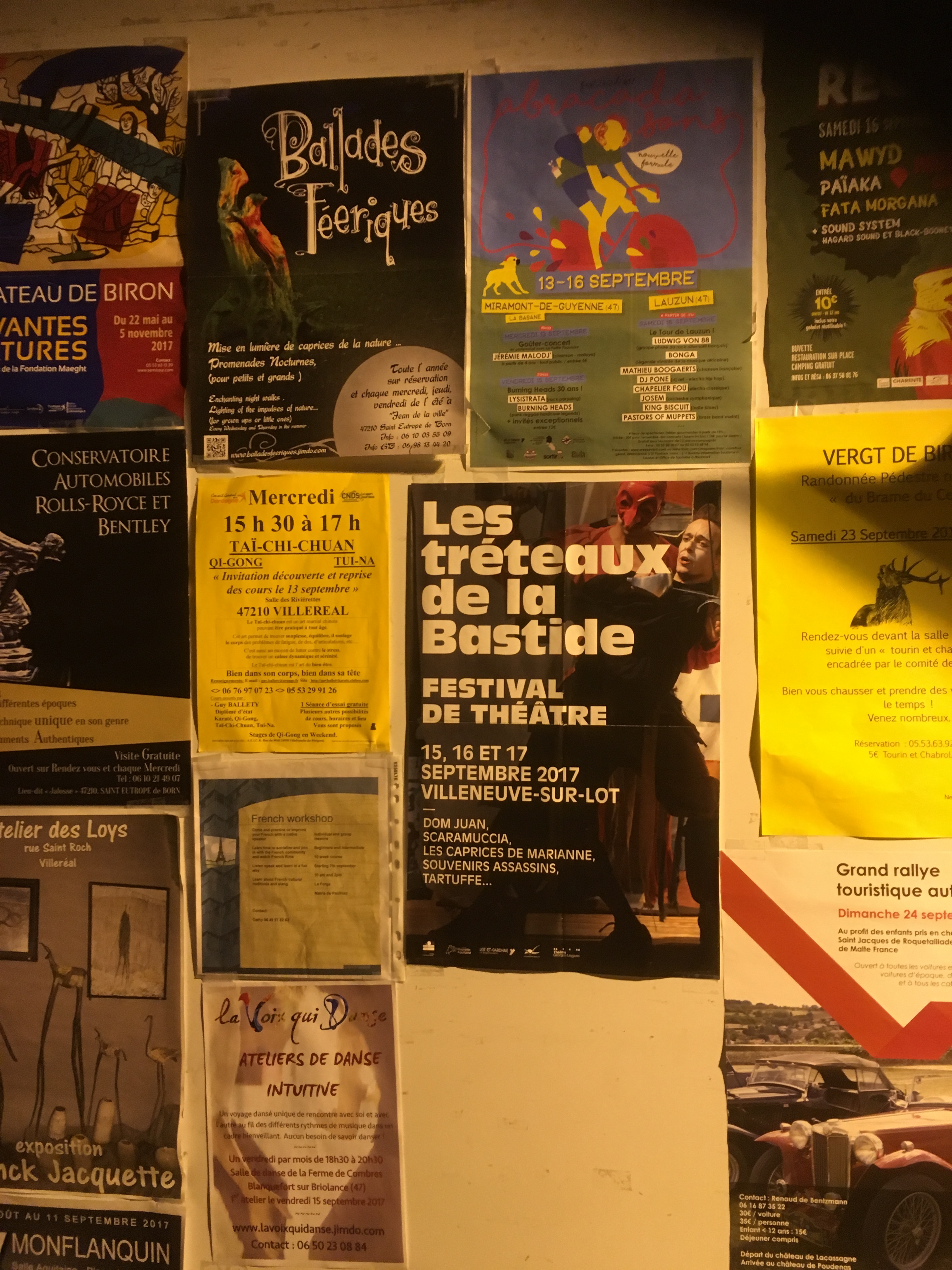
Look at the notices in the village squares, and you will find all kind of quirky events. One such was the concert we went to in a tiny church outside Villereal. This was where the Russians did their thing. Valery Orlov, the pianist/singer, dressed like a boyar from the time of Ivan the Terrible, went through a series of folk songs with a booming basso profundo you’d expect to hear from an Orthodox choir in Novgorod. His partner, Slava Kouprikov, is a virtuoso accordionist. He has a dazzling technique that deserves a wider audience than the hundred-or-so people who came to see him. It was good to be reminded that Russia is more than Putin, nukes and grasping oligarchs.
For the past twenty years we’ve been coming to France. For a while, when our kids were young, we went to Charente, where there were rivers in which they could swim, water parks, endless supplies of frites, funny old shops where you could find all kinds of oddities from the French colonies, and plenty of other kids with whom they could play.
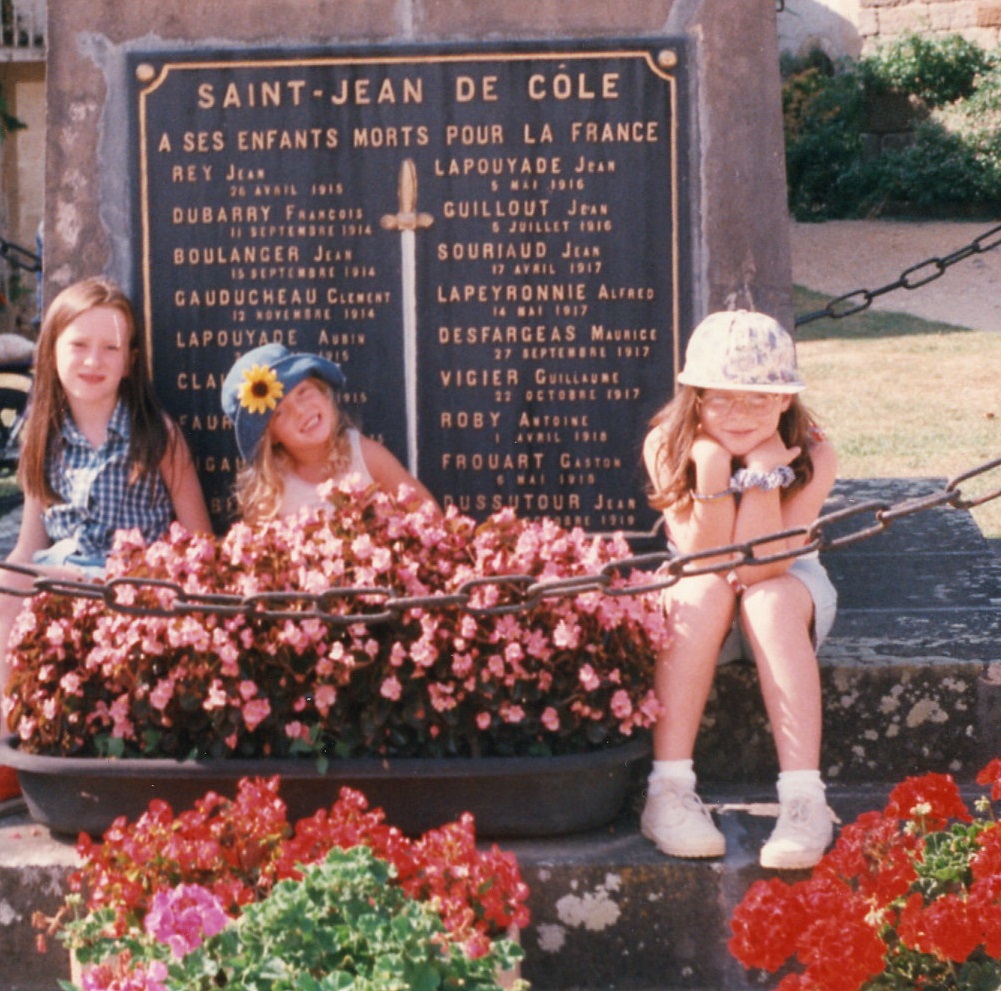
Charente 1997
Now the kids are grown up, we suit ourselves. We avoid the high season, so most of the people we encounter are, like us, middle aged, or younger couples without children. I’ve lost count of the times we’ve looked in estate agent windows, and thought how nice it would be to own a holiday home. And every time we got home, we thought no, it’s hassle, and we want the flexibility to go where we please rather than being tied down to one location.
Will that change when (god willing) the grandkids start arriving? Maybe, but there’s always a concern that we might be contributing to the depopulation of the region.
It’s not that these towns and villages are empty. The farming industry seems robust enough, and tourism brings jobs. But as I see so many villages that used to have local shops, and especially boulangeries, and now have none, I keep thinking that they should not be like this, and that they should be more than ornaments for summer tourists to admire. That the old people should not need to be driven by their children to markets miles away. That the beautiful churches dating from the twelfth century should be open for worship more than once a month – the fact that there are so many suggests that the medieval population might have been considerably larger in some of the small villages.
It’s much the same in rural England. Pubs are closing, village grocery shops don’t have enough business to survive. Everyone goes to Tesco. In France, Intermarché, Leclerc and other big stores have had the same effect.
But there are few regions in England that boast so many well-preserved villages with squares bordered by buildings dating back to the middle ages. And not so many where food is treated with reverence, and consuming it is a lengthy pleasure.
For me, France is not about the cities, the grandiose monuments and the flashy resorts. It’s about what exists beyond the globalised culture of the cities. It’s what’s often referred to as La France Profonde – deep France. Indefinable, intensely individualistic. Not ostentatious, but quietly proud.
Yet it sometimes feels strangely empty. There are many small villages where you will often see more names on the war memorials than people in the streets at this time of year.
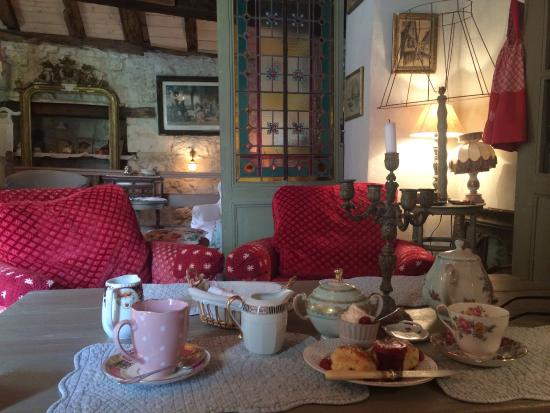
Sign of the times, I guess, but still sad. But what would you prefer? Starbucks, or the Shabby Chic Corner down a medieval backstreet in Issegeac, owned by Delphine, a charming Parisienne who serves a sponge cake topped with caramelised pears that nearly reduced this cake-lover to tears?
No contest.
Sir Michael Marmot, a distinguished expert on ageing, claims that the UK trails the rest of Europe in our rate of increase of life expectancy. Between 2011 and 2015, he claims, the populations of countries such as Denmark, Estonia, France, Spain and the Netherlands are living longer, and ours isn’t.
I would put this another way, and say that this is one of the few areas in which we lead the continent. Except that, once again, the Germans won on penalties. Their increase was marginally slower than ours.
Some parts of the media have jumped on these statistics as evidence that our National Health Service is failing the population. They may be right, though I wonder whether we have arrived at a point where an increasing number of people question the benefit of living for many years in decrepitude and dementia.
I certainly have no intention of staggering on beyond the average life expectancy of the British male (79), if that means mouldering away in a care home, incapable of remembering anything beyond what I had for breakfast.
When my mother died at 94, she had been in a care home for four years. By the time of her death, she was reduced to trawling her long-term memory for nursery rhymes. She didn’t know who was in the photos in her room, and she didn’t know me. Her world was reduced to one small room. Years before, she declared herself ready to go, and signed a living will, which stated that if she contracted a life-threatening illness, she was not to be resuscitated. And so, eventually, it went.
So could we be entering an era when we stop advocating life preservation at all costs, and with the consent of the patient, allow nature to take its course? I don’t know, and I don’t share Sir Michael’s expertise. I only know my own preferences, which don’t extend to taking a trip to Switzerland, but do involve dying in my own bed if possible.
I have a friend who sincerely believes that there is a covert government policy of letting the old die off as early as possible. That way, the national treasury benefits from reduced pension, benefits and health care costs. I’m not sure that’s the case, but I would be surprised if there weren’t a few callous actuaries in Her Majesty’s Treasury rubbing their hands with glee at the savings to be made because we’re not staying alive as long as the Estonians. Probably not the same ones who are rejoicing at the savings to be made in health, education and infrastructure costs when the Estonians, Poles and Lithuanians leave the country in droves after Brexit, but that’s another story.
If we really are choosing an earlier death over medically-prolonged decrepitude, is that such a bad thing? Ask me when I’m decrepit and nearing death. But I certainly believe that medically-assisted death at a time of my choosing is definitely not a bad thing, provided the safeguards to prevent involuntary euthanasia are in place. Better by far than making a botched effort myself.
Time, perhaps, to revisit our laws. Until medical science can guarantee a physically healthy, dementia-free journey into the nineties for the majority of the population, we should perhaps stop celebrating increases in life expectancy. After all, surely it’s not about length, but all about quality. And more money available for the rest of us. No, no – forget I said that.
There have been two interesting and at first sight very different perspectives on Brexit in today’s Sunday Times.
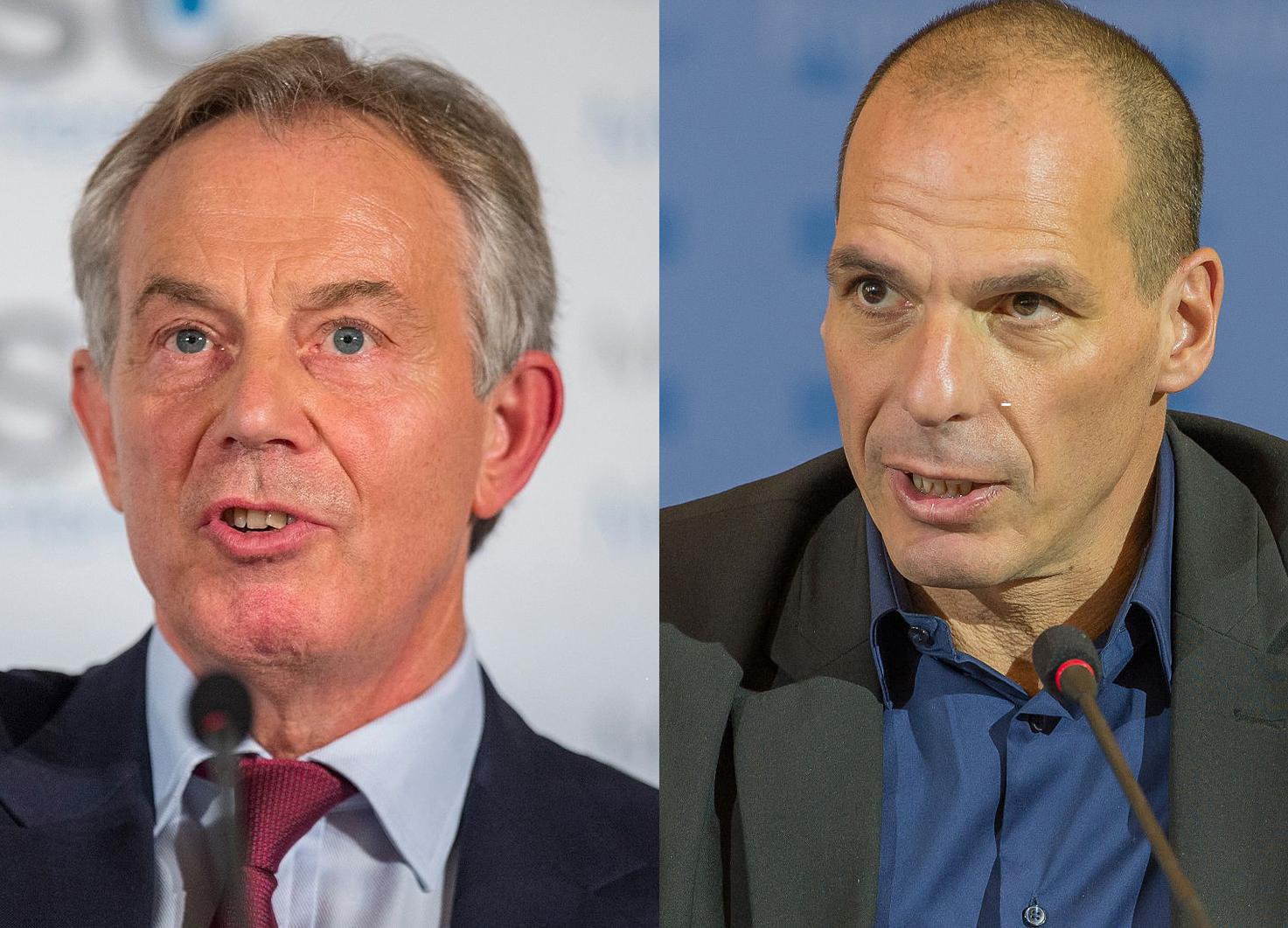
First, Tony Blair argues that there are sufficient mechanisms within the terms of Britain’s EU membership to enable us to control immigration without having to leave. More specifically, he quotes the case of Belgium, which invokes the right to require EU citizens to register on arrival, and points out that we can require them to leave if they are still economically inactive after three months.
Here’s Blair’s piece, which is also to be found on his Institute website. The full paper is here.
A few tweaks with the consent of the EU, he says, and bingo – no reason why we shouldn’t stay if the main reason why most people voted leave was to curb immigration. Non-EU immigration is another matter, and is not affected by Brexit. A very relevant question, however, is how many people who voted to leave because of concerns over immigration were actually aware of the difference.
One potentially significant aspect is that just over a week ago, Blair met Jean-Claude Juncker, the European Commission president. Is it possible that they discussed the former PM’s paper, and can we expect some unofficial murmurs of approval from Juncker? If so, it would be hard for politicians in the UK not to take it seriously.
Then there’s Yanis Varoufakis, Greece’s former finance minister, and a battle-scarred veteran of negotiations with the EU. He believes that Barnier, Verhofstadt and the other EU negotiators have no intention of conceding an inch to Britain’s demands. In fact, he says, they are not negotiating at all. The EU’s game plan is to grind us down, partly by destabilising us with disparaging comments on our negotiators, and by strategic leaks, such as Juncker’s unflattering comments after his dinner with Theresa May back in April.
These tactics, says Varoufakis, mirror those deployed against Greece during its debt crisis. He believes that our best option would be to bypass the negotiators and go straight for the Norway option: leave the EU, but remain in the customs union and single market, and continue to contribute to the EU budget. He believes that it would be politically difficult for the EU to turn us down. His article is here.
It’s an interesting perspective, but the Norway option would require Britain to unwind its current position on freedom of movement. The 60-odd Brexit diehards in parliament would react in horror. It’s not incompatible with Blair’s proposals on immigration, though. As far as I can tell, they could apply to the Norway option as easily as they might if we remained full members.
Varoufakis makes the point that such an arrangement would give Britain the time to work out its relationship with the EU in the long term without the tyranny of the ticking clock. It could work, but at the cost of a number of political careers.
One additional thought occurs. From Margaret Thatcher onwards, generations of eurocrats have been infuriated by our demands for opt-outs, exceptions and rebates, and our lack of buy-in to the principle of “ever-closer union”. Some, though not all, have been weeping crocodile tears since we decided to leave. They can’t wait to be rid of us.
If, as Varoufakis argues, the EU negotiators are determined to stonewall us, then what bargaining chips to we really have?
One big one, it seems to me. We can threaten not to leave at all. The prospect of years to come putting up with us awkward Brits would surely concentrate a few minds.
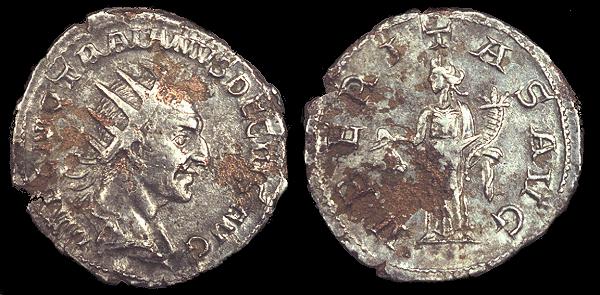
Currency debasement – silver-plated coin of Trajan Decius (249-251 CE)
I know very little about Lord Harris of Peckham except that he used to make carpets, and when he made his pile, he got interested in education and politics. No doubt it was for services to carpet-making – red ones presumably – that he was knighted, and subsequently invited to join the House of Lords. Nothing to do with his habit of regularly shelling out money to the Conservative Party, of course.
It seems as though he’s disappointed in the current crop of senior Conservatives. In an interview with the London Times, he said that Theresa May is weak, Michael Gove is boring, and that Boris Johnson is “a genius” but lazy.
All of which suggests that rather than helping to set up a chain of academy schools, His Lordship ought to have given a helping hand to Oxford University, the institution that helped to educate May, Gove, Johnson and a goodly number of their predecessors, including David Cameron, author of the Brexit fiasco. Something is clearly amiss with their liberal arts programmes if Oxford continues to produce weaklings and dullards, though they might respond that they are also responsible for the genius that is Boris Johnson.
While I broadly agree with Harris in his assessment of the government’s capabilities, I do wonder about the criteria by which he declares Boris to be a genius. Could it be that he’s impressed by the Foreign Secretary’s wit, so frequently deployed with maladroit quips about prosecco, President Ergogan’s relations with a goat, the “part-Kenyan” Barack Obama and African warriors with “watermelon smiles”?
Perhaps he’s impressed by Johnson’s classical education, which enables the great man to trawl erudite analogies from ancient history and quote Latin and Greek bon mots at the drop of a hat? If so, you would think that he’s also an admirer of the stately hedge fund operator turned MP, Jacob Rees-Mogg, who regularly tweets in Latin, and who is being touted as the Next Big Thing in the Conservative Party.
If a classical education gives you an intellect above others, then I must revise my opinion of myself. More likely though, I will only be truly appreciated when I’m gone, rather like the Roman emperor Vespasian, whose last words were reported to be “I think I’m turning into a god”.
Boris does deserve credit for being way ahead of his time as a purveyor of fake news. While working for the Daily Telegraph in Brussels, he came up with a stream of reports on the activities of the European Commission that fellow journalists regarded as untrue. Hardly surprising, then, that he was happy to be associated with the claim that leaving the European Union would free up £350 million a week for the National Health Service.
He also deserves credit for being fast on his feet as a speaker. He needed to be after the EU referendum, when twenty minutes before announcing his candidacy for leadership of the Conservatives, he learned that his erstwhile supporter, Michael Gove, had pulled the rug under his candidacy by announcing that he, Gove, would be running. Gove’s bid came to nothing, leaving us with the strong and stable Theresa May as our Prime Minister.
During the third century CE, faced with a serious shortage of revenue, successive Roman Emperors – partly because of all the money they spent on luxury imports from the East, and partly because there were no more territories that they could easily conquer and denude of their wealth – debased the currency, adding bronze to their silver coins. In some cases they were reduced to silver plating (as in the example above). I have a few in my coin collection. It gives me a thrill to hold in my hand direct evidence of the decline of the Roman empire.
If Lord Harris’s view of Boris Johnson’s brilliance is widely held by others, then the debasement of the idea of genius is evidence of a similar decline in the Conservative Party.
Or, to put it another way – borrowing from the wit and wisdom of Ian Hislop, the editor of Private Eye – if Johnson is a genius, then I’m a banana.
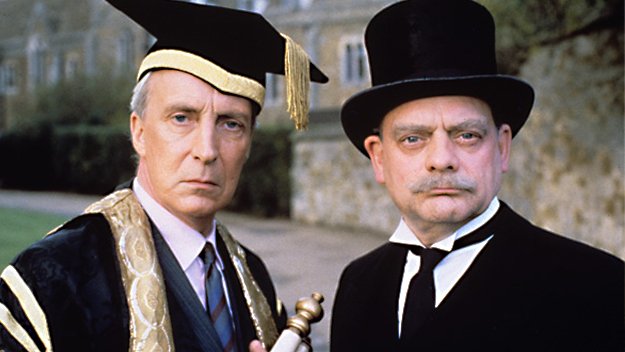
Ian Richardson and David Jason in Tom Sharpe’s Porterhouse Blue
I have some sympathy with Britain’s university vice-chancellors. They have been told by Jo Johnson, the Universities Minister (who has never run a business), that in future they will have to justify why their salaries should be higher than that of the Prime Minister (who has also never run a business).
You see, over the past thirty years, universities have been encouraged to think of themselves as businesses. The business of churning out graduates is only a part of their purpose. Academics like my brother, who was a professor of statistics at a major London university, have been under increasing pressure to justify their existence by bringing in large sums of money for research. Many these days seem to see teaching students as an encumbrance. They regard research as their primary function.
The top universities form partnerships with private sector companies. Faculty go off and form companies. Some become very rich, beyond the dreams of Jo Johnson and Theresa May. Mike Lynch, for example, who left Cambridge to found Autonomy, and is now a serial entrepreneur. Other companies – such as Cambridge Analytica, the people who weaponised Facebook for Donald Trump – avail of university research by poaching the researchers.
Hackers from China and Russia are busy attacking our universities in an attempt to suck away their intellectual property. There must be some useful work going on to attract their attention.
The government expects these institutions to be powerhouses, not the cloistered collections of other-worldly scholars and eccentric misfits you would find on the pages of Tom Sharpe’s Porterhouse Blue. And yes, many of them do look more like businesses these days.
So why do our politicians (most of whom have never run businesses) think that the CEOs of universities, which is what vice-chancellors are, should have their salaries capped, when they are encouraged to think of themselves as businesses, and when their products – in the form of graduates and knowledge – are arguably many times more valuable than the output of WPP, the advertising agency whose CEO was paid £63 million for his efforts in 2015?
Oxford and Cambridge came first and second in a recent world university ranking. Does our government think that the people who run them might not be in demand by universities in the States who could hire ten prime ministers with the salaries they pay their top academics?
I fear that benchmarking the salaries of senior academics against those of government ministers is a serious case of apples and oranges. I have no idea whether the vice-chancellor of Oxford is worth three times as much as the prime minister, though in the case of the current incumbent of Downing Street there should be no point of comparison, because I wouldn’t pay Theresa May at all for the damage she’s inflicting on the country.
There are plenty of other executives in the public sector who are paid considerably more than Mrs May – local council chiefs, senior civil servants, head teachers, heads of quangos. Why are the government picking on vice-chancellors?
If you’re of a paranoid disposition, you might think that the Russians are busy trying to destabilise our universities with their fake stories, thus making it easier for their hackers to steal our intellectual property.
I think the answer is simpler than that. It’s politics. Senior academics are targets of opportunity for a government that is desperate to latch on to any means of gaining a quick popularity fix. You could actually say they are practicing the politics of envy. An irony, really, given that that phrase was one of the favourite sticks with which Margaret Thatcher and her cronies delighted in beating the nasty socialists over the head.
Despite my sympathy, I have no brief for university vice-chancellors. I’m sure some are worth their salaries, and others not. But I’m even less enthused by second-rate politicians, especially by those who lead our rudderless, one-eyed government. Perhaps it would help if we paid them what vice-chancellors get.
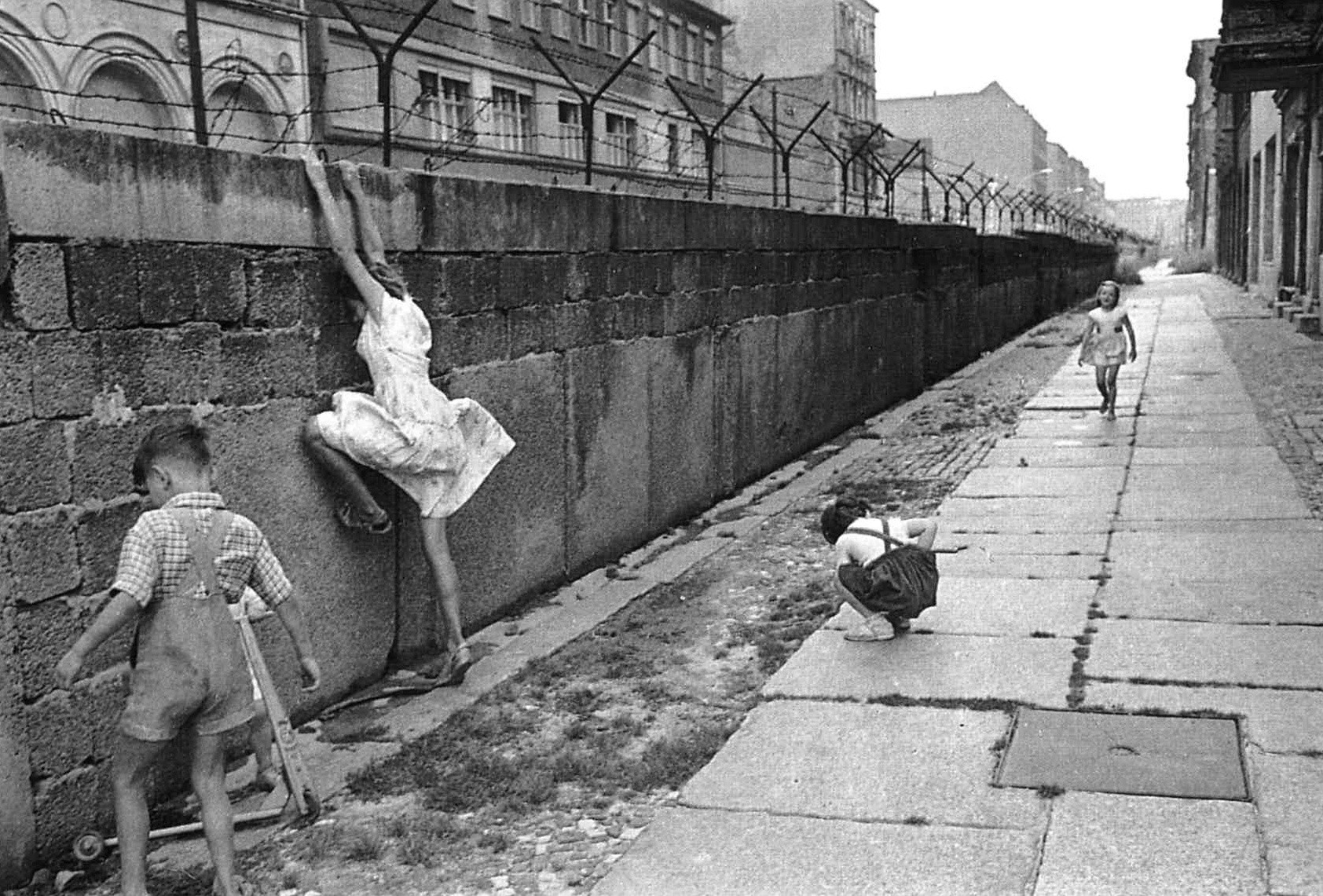
Wednesday’s leak of a policy paper detailing the UK’s post-Brexit immigration proposals have provided a field day for newspapers of every political persuasion. As an opponent of Brexit, I’m always willing to think the worst of the incompetents who run our country, but on this occasion I think it fair to point out we’re not looking at a done deal. It’s a paper, and it’s far from set in concrete. It seems to have been written, however, by people who do not see that immigration is only part of the national ecosystem. That would be the Home Office then.
As for the content, some bits would appear to have been plucked from Saudi Arabia, others from Singapore. Neither countries are particularly analogous with Britain. At some stage I may well write a critique, but probably not until the paper is actually published. Simon Preston’s comments on the proposals in the Guardian, though, pretty well reflect my view thus far. Whatever mangled version is finally imposed on us, my thoughts keep coming back to those who will have to live with the consequences – especially the young.
A couple of days ago I wrote In Defence of Snowflakes, about the millennial generation in the UK and the United States being unfairly accused – among other things – of lacking resilience. My basic argument was test them, and they’ll step up.
There are many similarities between the culture and societies in which the young of both nations are growing up. A common language is one of them. But there are so many differences that one can only go so far in making observations – as I did yesterday – that apply to each. The biggest divergence is that the US has the most powerful economy in the world, the most powerful military and the most enemies. We, on the other hand, have an economy owned primarily by foreign interests, a vanishing military still clinging on to a few nukes, and we’re making new enemies close to home by the day without the power to deal with them.
As things stand, with the nation tumbling into political chaos on the brink of Brexit, we in Britain are a busted flush, you might think. The Americans have a reasonable chance of flushing away their busted Trump. We, unfortunately, would appear to have no trumps left.
For different reasons, in both nations the millennials and the generation following them are going to need some resilience. In spades.
But for the moment, I’m going to leave the youth of America to their own devices and focus on the outlook for my own country’s young people.
Here’s a positive scenario. We get through the temporary economic blip of Brexit. We do loads of trade deals. There’s more demand for British goods and services. Our university system is tweaked to make it easier for kids to study the subjects that the government thinks will be useful to the country – IT, science, medicine, engineering, and harder for them to choose subjects that have no obvious purpose other than arts for art’s sake – English, Classics, philosophy, theology, history.
A thousand small businesses spring up, inventing things, disrupting, employing fresh young graduates. Apprentice schemes offer a decent alternative to those who have practical skills. Wages rise, tax receipts rise, and there’s more money to invest in the National Health Service, housing, education and the military. Where skills shortages exist, such as in the fruit orchards and the beet fields, the government allows us to import cheap foreign labour from the EU. Zero-hours contracts slowly peter out, because employer have the confidence to hire full-time staff.
Slowly but surely, living standards rise again, and we ask ourselves why we didn’t we leave the EU years ago.
Now for the negative. Recognising the reality of its weak negotiating position, the government caves into most of the EU’s demands. We have a hard Brexit – no membership of the single market or customs union. There are no quick trade deals, and those that are concluded are not in our favour, because those with whom we negotiate realise that we need them more than they need us. The huge financial settlement we are obliged to pay the EU negates any benefit from leaving for at least five years. Many foreign-owned businesses close their offices and factories, and move to Paris, Frankfurt and Dublin.
Scientific cooperation with EU academic institutions declines dramatically. Foreign academics have no desire to come to Britain, because our major universities are no longer recognised as primary centres for international research.
The economy tanks. New measures to restrict the flow of immigration are irrelevant, because unemployment rises steeply. Who wants to live in a country with no jobs?
There’s no new money for the NHS. Demand for health services declines as the flight of EU citizens lessens the load. As wages stagnate, the number of British nurses actually increases, since a poorly-paid job is better than no job. But no funds are available for upgrading facilities, treatment and infrastructure. You want decent cancer treatment? Get private health, if you can afford it.
There’s no new money for schools. Apprentice schemes wither on the vine. Universities, deprived of their lifeblood of foreign students, begin to go out of business, starting with the former polytechnics. Companies cut their training budgets, as they always do when times are hard.
The housing market tanks, which means that the wealthier baby boomers can no longer rely on the value of their homes to pay for their care, and have less to leave to their children and grandchildren, who sorely need a helping hand to buy their own homes and escape the grind of “just enough, but no more”.
The divide widens between those with “proper jobs”, who have graduated from “proper universities”, and those who drift into employment because they have to rather than want to. As does the consequent gap between rich and poor.
A sense of impoverishment, disappointment and bitterness is pervasive. Social unrest grows, as does political extremism at both ends of the spectrum. Need a scapegoat? Pick on the minorities.
Which of these scenarios we believe will comes to pass depends on where we stand on the Brexit divide. The actual outcome may not be as rosy as the first scenario, or as grim as the second. It may be even worse, especially if Donald Trump and Kim Jong Un decide to redefine the most common meaning of the word boom. Should that be the case, the resulting catastrophe might be enough to allow our more sensible politicians to pull out of Brexit without losing face. A global disaster is no time to be sailing merrily out of port on an unknown journey.
But come what may, we are going to be relying on those currently in their second and third decades to run with the opportunities or to pick up the pieces. Either way, resilience will be at a premium.
One final thought. As I write this, I’m reading an extraordinary book that provides a context from recent history. In The Unwomanly Face of War, Nobel prize-winner Svetlana Alexeivich tells stories collated from interviews with hundreds of women who served in the Soviet military during World War 2. She talks to pilots, machine gunners, snipers, medics and partisans. The tales of courage, suffering and deprivation related by women – many of them teenagers – who fought at the front alongside the men – are awe-inspiring. They were snowflakes turned into steel. Sometimes we underestimate the young.

In a smug tweet yesterday, Piers Morgan compared his fortitude in returning to work with three broken ribs with the frailties of the so-called snowflake generation. A cheap shot, in my opinion.
In my last post I wrote about how racism arises out of our tendency to generalise. We make sweeping statements about cultures, ethnic groups, nations, social classes and economic groups. The use of the definite article is the key. We talk about the Arabs, the Jews, the Indians and the immigrants. We ascribe behaviour of a few to the many.
We do much the same with generations. Baby boomers are selfish wealth-hoarders. Generation X are greedy materialists. And millennials are snowflakes – precious souls who can’t take the heat, who go to pieces at the slightest sign of pressure, who throw tantrums when confronted with views different from their own.
Such definitions tell me that ninety percent of these disparaging words are written by one percent of the people about one percent of the people. If we’re talking about Western society – or more specifically those of the United States and the UK, one wine-quaffing baby boomer with a nice house and two cars in the drive does not represent a generation. There are plenty of sixty- and seventy-somethings who exist in a state of anxiety and loneliness, divorced from their spouses and ignored by their children. And there are plenty more who spend their declining years ranting at immigrants, pumping fists at Trump and UKIP rallies. Yet more look forward to lives in care homes paid for by selling their homes.
Generation X are just as diverse. A few of them basically own us – Jeff Bezos, Mark Zuckerberg and Elon Musk, for example. Another bunch rule us – the feckless demagogues and the two-brained fools who foisted Brexit on us, of which in the UK Boris Johnson, Michael Gove and Jacob Rees-Mogg are prime exhibits. The rest are just trudging through life like everyone else, with varying degrees of success.
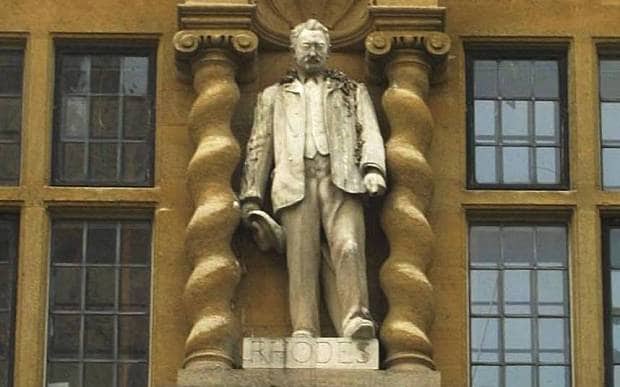
As for the snowflakes, you would think that the small minority of student activists who run abound trying to tear down statues of nasty colonialists (such as Cecil Rhodes, above) and no-platforming speakers with objectionable views are at the centre of the universe, such is the media coverage they gain through their efforts. The rest of their fellow-students quietly get on with their studies, or carouse away without the slightest thought of politics.
Nothing new there. The Xers might have been relatively inactive on the political front, but we baby boomers, boy, did we have causes. Vietnam, Nazis, Margaret Thatcher, apartheid, nuclear weapons – all came into our sights. I remember a massive protest against the racial theories of Hans Eysenck, whom the activists of the time managed to prevent from speaking at my university. No-platforming? Been there, done that.
The President of the National Union of Students in my era was Jack Straw, who subsequently morphed into a Labour politician and ended up as a leading Blairite minister. Another leading light was Peter Hain, who followed the same path. He was an anti-apartheid campaigner, and he got to be Secretary of State for Wales. Not much apartheid in Llangollen, unless you count the Welsh nationalists who used to burn the second homes of the English interlopers. Our NUS leader, a chap called Gerald Hitman, eventually went off to become a property developer. So much for youthful radicalism.
I see no reason to believe that most of the current crop of student activists will in the course of time end up being anything other than members of the entrenched elite, just as their predecessors did. Even Dave Spart grew up. Now he has a good chance of becoming our next prime minister.
As for the accusation that the snowflakes lack resilience, I doubt that our soldiers who endured Afghanistan would agree. Nor would the recent crop of Olympians who have reaped a bigger crop of medals than any of our athletes before them.
As the proud parents of two millennials, we can certify that they’re far from snowflakes. They work hard, they’re determined, and while they’re pissed off at effects of the 2008 financial crisis on their financial well-being, they’re still getting on with their lives.
There’s also the point that in order to develop resilience, people need to be tested. It’s been seventy years since we had a war that engulfed the whole population, and the last thing we would wish for is a similar experience to harden our twenty-somethings. Yes, folding under the pressure of A-levels and job interviews is very different from enduring battle, bombs and the threat of invasion. But for most of the millennials, protected by parents and raised in the bosom of the welfare state, there have been few existential obstacles that they have had to deal with, other than their mobile phones falling down the loo.
I have every confidence that my kids’ generation will rise to any challenges that come their way. And I doubt if the old people of Houston muttered about snowflakes when young people braved the floods to rescue them.
So let’s stop dissing our poor, sensitive millennials. Let’s stop paying worried attention to the op-ed journalists who grumble about them, and the younger writers who use their own neuroses to diagnose a generational phenomenon. And let’s remember that in other parts of the world there are youngsters too busy staying alive to worry about the generational shortcomings that exercise us privileged Westerners.
As a member of an age-group that once believed in causes other than our own comfort and prosperity, I celebrate the idealism of the millennials, even if I disagree with some of their views. The art of the possible – the collision between reality and zeal – can wait.
The kids are alright. At least I bloody well hope so, because soon enough, I’m going to need them to wheel me to the geriatric day care centre.
So let’s talk about racism, particularly in the light of the row Sarah Champion, Member of Parliament for Rotherham, ignited when she published an article about the recent criminal prosecutions of gangs of Asian origin for grooming and sexually abusing young white girls.
She was accused by many in the Labour Party of making a racist comment, and fired from her position in the Shadow Cabinet. In yesterday’s London Times she defends herself, making the point that provincial towns and cities in Britain are very different from London, which she claims is Labour’s centre of gravity. In towns like Rotherham, which she represents, there are cultural and ethnic enclaves far more pronounced than any in London, and it’s in those enclaves that such criminality has sprung up. There have been no prosecutions of gangs of abusers in the capital.
We’ll stop there for a moment. Either now or later please visit Margo Catts’ blog, in which she writes about racist attitudes in the United States. Timely really, in the light of the comment by a policeman in Georgia who was attempting to reassure a white whose companion he was arresting for drink driving: “don’t worry, we only shoot black people”.
Margo, like me, spent time in Saudi Arabia, a country where a multitude of nationalities earn their living side by side. You want to see racism in action? Go to Saudi Arabia, where just about every ethnic group looks down on another.
If you’re British, you might remember a sketch from the sixties lampooning the class system, in which there are three guys lined up, one tall, one medium height and one short. The tall one says “I’m upper class. I look down on him because….” And so on.
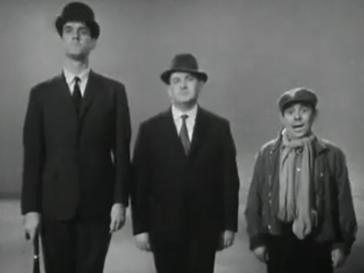
In Saudi Arabia, you’d need a three-dimensional version. Whites call the Arabs ragheads. Arabs call whites kuffurs. Egyptians think Saudis are stupid. Pakistanis think Arabs are stupid. Arabs think Bangladeshis are dishonest. And people from just about every ethnic group dump their prejudices on those at the bottom of the pay scale: Yemenis, Somalis, Filipinos, Baluchis – the folks who build their tower blocks, clean the streets, change the children’s nappies and kill the cockroaches.
Note that I’m not saying “the whites” and “the Arabs”. That would be a gross generalisation, and unfair to a lot of people who respect their neighbours regardless of their ethnicity and occupation. But racism is there, in attitude and behaviour. And it’s so prevalent that if you’ve lived there for a while you don’t notice it until you stop and think.
Which brings us back to Margo’s article. She makes the point that we are not born racist. Racism is learned behaviour. She goes on to say:
Accepting racism is racist. Refusing to talk about racism is racist. Pushing racism off as a problem that happens in some other segment of society or geography is racist. It’s way past time for white people to stop telling people of other races that we’re not racist, and start talking honestly with each other about how we actually are. Start making it clear that we won’t accept it from each other. In exactly the same way we ask Muslim communities to police themselves for potential radicals, it’s time for polite, don’t-be-political white people to start making it clear that we won’t tolerate racist thinking or expression in our own ranks.
Absolutely right, in my opinion. But she’s not just talking about whites. She tells the story of her bus in Riyadh, full of white women, being stoned by a bunch of Saudi kids just out of school. Racism isn’t a one-way street. It’s not just about the most socially and economically powerful discriminating against the less powerful. It happens between peer groups. It happens up and down whatever scale you chose to use.
Is Britain any different? We all, to a greater or lesser extent, have learned prejudices, gained from childhood or from our experiences – or other people’s experiences – later in life.
I don’t consider myself to be racist, yet in Margo’s terms, I probably am. One of my earliest memories is of sitting in nursery class at the age of five. A black guy came into the classroom, and the teacher told us not to be afraid. It was the first time I had ever seen a black person. I was fascinated, not afraid. But looking back, being told not to be afraid might have made me afraid. Might the teacher’s concern have instilled the first germs of racism in me?
Maybe, but twenty-five years later, the experience of Saudi Arabia actually did the opposite. Far from shutting myself away from contact with other ethnic groups, and calling my hosts ragheads, I went the other way. I took an interest in those around me who didn’t share my culture, religion and skin colour. I talked to Saudis, Pakistanis, Indians, Sudanese and Filipinos about themselves, their lives in their home countries, their likes and dislikes. And the more I talked and listened, the more I found I had in common with them.
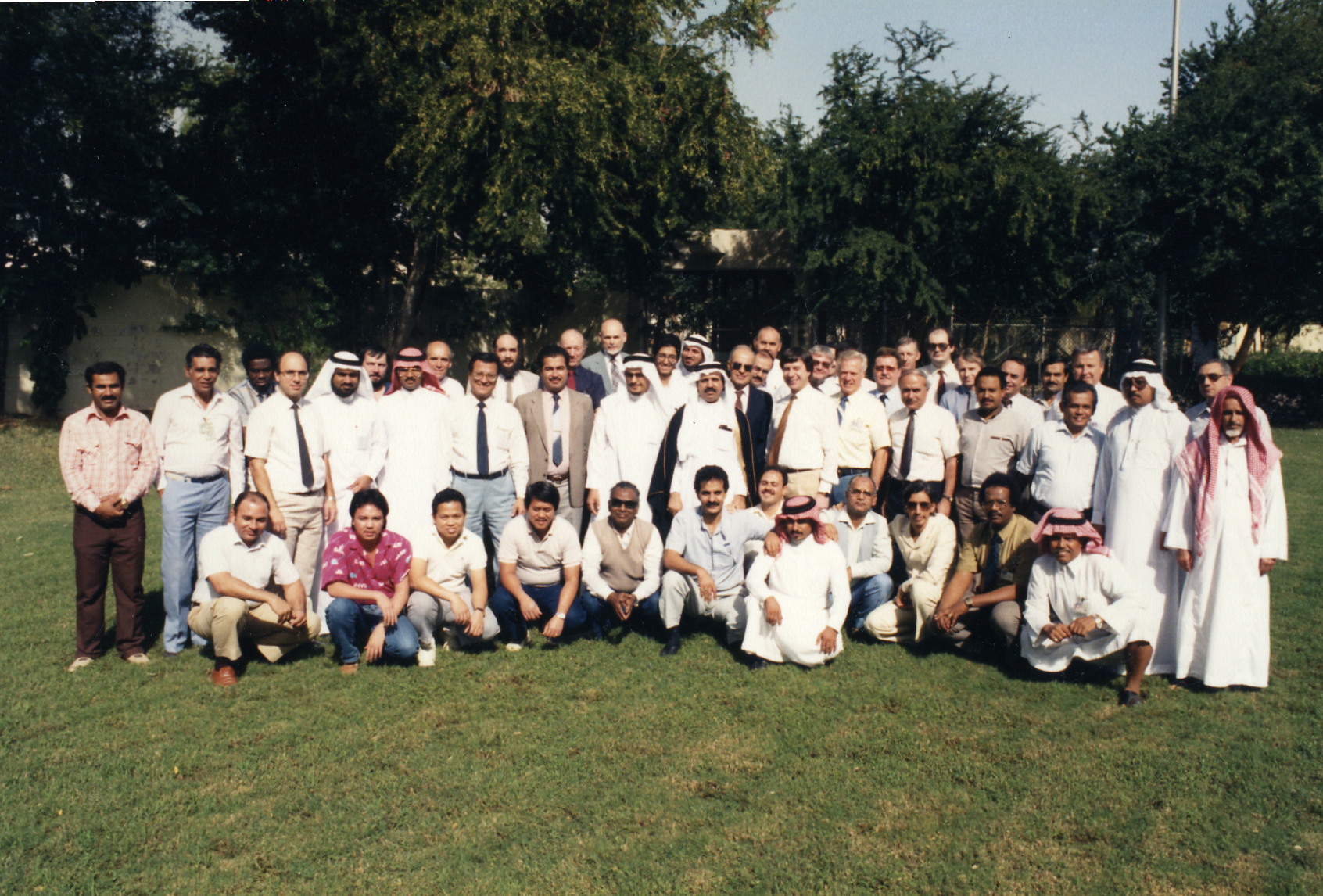
My workmates in 1985 – 12 nationalities!
When I came home to the British workplace, I felt I was far better equipped than some of my colleagues to function effectively in a multinational workplace. Yet I’d be lying if I said that I’d never, perhaps in a moment of irritation, generalised about a race or a nationality. It’s when we start thinking or talking in a disparaging way about “the Germans”, “the Pakistanis” and “the Japanese”, that we stray into racist territory. It’s a short step from there to “the Jews” and “the Muslims”, except that those who hold a grudge against them are accused of being anti-Semitic or Islamophobic. But for me, it’s the same currency.
So was Sarah Champion being racist when she was referring to gangs of sex abusers of Pakistani origin? If she was failing to highlight gangs of white people – Latvians, Brits and Albanians perhaps – who have also been prosecuted for similar organised crimes, then possibly yes, by singling out a specific ethnic group and ignoring others. But to my knowledge, no other gangs predominantly from a different ethnic group have been prosecuted in recent years.
Were her remarks a slander against the entire British-Pakistani community? No more, I believe, than singling out white football hooligans who chant racist slogans at football matches is a slander against the entire white English population, from the Archbishop of Canterbury through to the fishermen of Cornwall.
Likewise, is it a slander on our Egyptian, Sudanese and Somali communities to allege that female genital mutilation is still widespread within those groups?
As for the gangs of abusers in Rotherham, Oxford and other British cities, would we not describe them as racist if their excuse for their behaviour – behaviour, by the way, that might be considered by some of their peers as an honour crime if they tried to practise it on women within their own ethnic group – was that white girls were “easy meat”, “fair game” or “have loose morals”?
My point is that we live in a racist, phobic society, just as do the Saudis. None of us is entirely immune. Not Guardian readers in the home counties, not taxi drivers in Rotherham, not little old ladies in Cheltenham, not fruit-pickers in Norfolk. Racism is not just vertical. It’s horizontal. It’s diagonal. And it’s pervasive.
It’s easy to say “let he who is without sin cast the first stone”. But that won’t do, I’m afraid. Recognising our own prejudices, be they mild or extreme, should not stop us from calling out gross criminal behaviour such as grooming, drugging and gang-raping young teenage girls, and – if it helps us better understand and deal with the problem – from identifying the ethnic origin of the perpetrators.
When Sarah Champion said “Britain has a problem with British Pakistani men raping and exploiting white girls”, she was referring to a specific phenomenon that occurred in her city and several others. If she had said, “Britain has a problem with men sexually exploiting women”, she would have been immune to criticism by her own party, but open to ridicule for stating the obvious.
Yes, she may have strayed close to the line of generalisation that she could have avoided if she’d said “gangs of British Pakistani men…”. But was she wrong in identifying the phenomenon, even if her concern was awkwardly expressed? That’s for you to judge.
I for one believe that, as a woman who spent four years as the chief executive of a children’s hospice in Rotherham, and as the leading light behind a website (www.dare2care.org.uk) dedicated to fighting child abuse in all of its forms, Sarah Champion deserves the benefit of the doubt.
As for the rest of us, we need to recognise the awful truth about the world in front of us, including the world we see when we look in the mirror.
Perhaps when we stop saying “I’m not a racist, but…” we will be making progress.
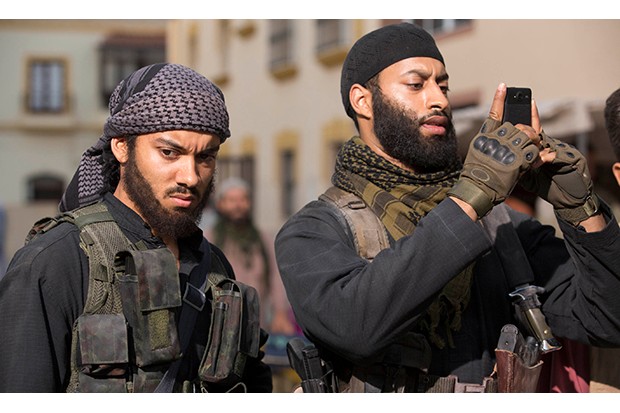
Ep2. Stars Sam Otto as Jalal and Ryan McKen as Ziyaad.
Peter Kosminsky’s four-part ISIS drama, The State, caused a predictable stir when it was screened on the UK’s Channel 4 last week. It’s the story of four young Brits, two men and two women, who join the calpihate in Syria. If you haven’t seen it, you should.
One Times reader said that it should be shown in every secondary school in the country. If the aim is to prevent radicalisation, I’m not sure that such an approach would succeed, any more than Schindler’s List and Downfall would be likely to turn youngsters away from neo-Nazism. A TV series and a couple of movies are hardly an effective antidote to the torrent of stuff flooding the internet extolling the virtues of jihadism and alt-right politics.
Nonetheless, Kosminsky succeeded in his aim to provide a more nuanced view of the people who started heading east three years ago. By casting them as human beings rather than one-dimensional ogres, he reminded us that these are sons and daughters, and that a good few of those who crossed the jihadi Rubicon found themselves caught up in a world they neither expected nor found easy to handle.
I use the past tense because so many of the foreign fighters and jihadi brides are now dead – pulverised by bombs and mouldering in the rubble of Mosul, Raqqa and other former ISIS strongholds. Those who have survived are either hiding out in the desert, have slipped back to their countries of origin or are somewhere in the river of migrants making their way across Europe. The state, as a coherent territorial entity, no longer exists.
The fictional state is set in the early days, conflict-ridden but initially triumphant. The four, newly arrived and full of idealistic zeal, enter a world that has been extensively documented both in the world’s media and by the organisation’s own propaganda resources.
Kosminsky captures all the elements with which those who have closely followed the real-life drama are familiar: the end-of-days ideology, the spirit of martyrdom, the savagery, the plight of the Yazidis, the short-lived jihadi marriages and the origins of the insurgency in post-Saddam Iraq.
What we in the West have not witnessed first-hand is the emotions of the participants – courage bolstered by common belief; fear, bewilderment, shock at the reality of their predicament. We only have the stories of those who survived to draw on, but based on what we know, The State has achieved the nuanced portrayal that Kosminsky hoped for.
I was not shocked by the narrative, perhaps because I’m familiar with nearby states where much of the ISIS ideology prevails, albeit without the jihadist fervour. Saudi Arabia, for example, in which a significant proportion of the population shares the Salafist beliefs of the ISIS cadres, where women are kept apart from men, though not to the same level of extreme impracticability.
But apart from the obvious scenes of extreme cruelty, there were other vignettes that I found repellent.
The woman’s house where the female arrivals were first taken, for example. It was like a nunnery in a Salafist Glastonbury, ran by a couple of Margaret Atwood’s Aunts from The Handmaid’s Tale – smiling but steely. Then, once the women were married off to jihadi fighters, the knock on the door from the same Aunts announcing the “good news” of their husbands’ martyrdom – a disturbing and dissonant scene.
Some while ago I wrote a piece in which I described the British jihadis as backpackers with attitude. I think I was right in identifying the sense of adventure with which the youngsters took off for Syria, but backpacker analogy breaks down to the extent that for most of them there was no coming back, either through intention or in reality. Some have. Are they the lucky ones? Only time will tell.
One of the four characters in The State does make it back. She makes her decision after watching her young son gradually turning into one of the “young lions of the Caliphate”. On her return, she has a choice: either cooperate with the security services as an informer, or see her son taken into care for ever.
She’s perhaps the most interesting of the four. As a junior doctor, she fights numerous obstacles to be able to work in the local hospital. Early in her stay, she takes part in a promotional video in which she extols the IS ethos in much the same way as any earnest young ideologue might when preaching world revolution – passionate and seemingly rational.
Why, you wonder, would someone who has dedicated her career to saving lives and healing, be so enamoured with a culture of cruelty and endless slaughter? As it turns out, she has moral limits which impel her to escape.
Of the two male characters, the stronger is the one who seeks to emulate his martyred brother, but who finds out that the circumstances of his death were not as he imagined. Like the doctor, he swam against the tide – in his case by purchasing a Yazidi mother and her young daughter in the slave market with the intention of protecting rather than exploiting them. His story, unlike that of the doctor, ends badly.
As a drama, it was intense and compelling. So much so that I couldn’t watch it on consecutive nights as screened. What made it perhaps worse was that at the time I was ploughing through The Holocaust, Laurence Rees’s masterly new history of the Nazi genocides. The parallels between the sadism of the camp guards at Auschwitz and Treblinka and that of the executioners of ISIS are obvious, even if perpetrators desired a very different ideological outcome.
If I have a criticism of the series, it’s that we were not given a context for the journey on which the four leading characters embarked. What were the factors that motivated them? Perhaps it would have taken Kosminsky more than a single episode to explore that aspect. But since he set out to portray them as human beings rather than cartoon monsters, the picture felt incomplete. Each of the characters would have had their own reasons for embracing jihad. It would have been interesting to have understood their choice before we joined them on their fateful voyage. For more on this aspect, see Stuart Jeffries’ review in the Guardian.
The series ends with one of the characters dead, and with the remainder facing an uncertain future. The future of the entity they joined is equally uncertain, but it’s hard to imagine that the franchises it created will fade away any time soon. As one analyst recently noted, ISIS, in its various forms, is now an international terrorist organisation.
It will be part of our social and political furniture for some time to come.
I’m not a great fan of anniversaries. Yes, I get caught up in them like everybody else. Significant birthdays. Opportunities to commemorate great events such as world wars, especially those that are within living memory.
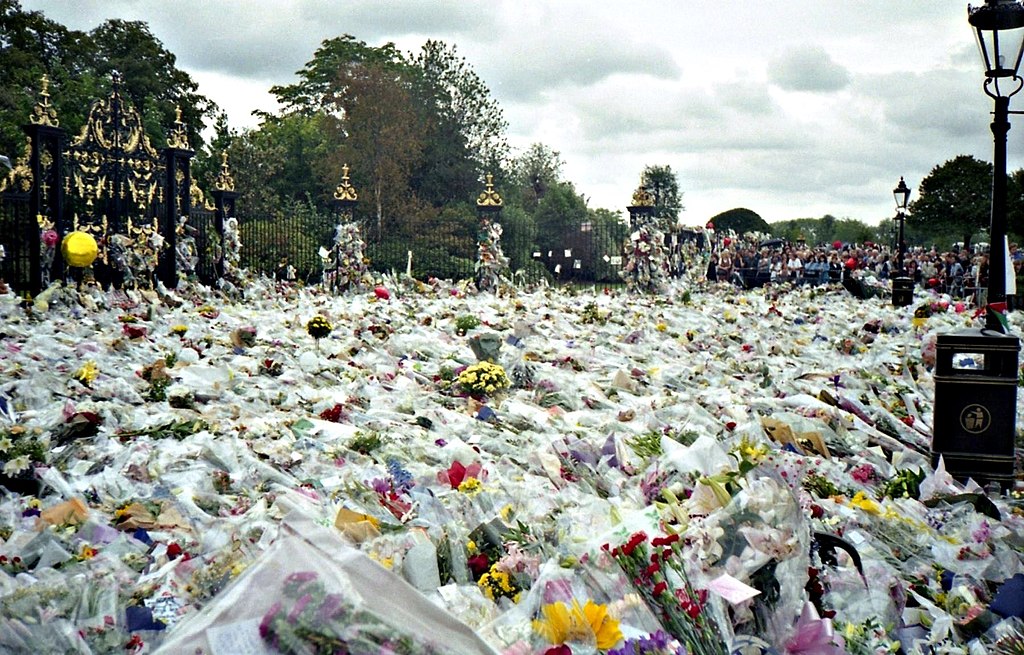
But the current fuss around the twentieth anniversary of Princess Diana’s death gives me a queasy feeling. TV documentaries, books, newspaper articles, “untold stories”, new perspectives, endless picking over the emotions of the bereaved sons, earnest analyses of the unprecedented emotional incontinence shown by the British public at her funeral. Will we be regaled with this stuff every five years? Isn’t it enough for William and Harry to remember their mother in their own way without being sucked into a media binge not of their making?
In times gone by, we would mark significant intervals – every twenty-five years maximum. Now, it seems, every decade is an opportunity for ritual remembrance. And mostly what we remember are bad things. Commemorating happy events tends to be in the private domain. We celebrate the longevity of marriage, the arrival of offspring. The main exception in our quirky little country is that we go bananas whenever the monarch staggers over the finishing line to another first – longest reign, longest marriage, most prime ministers who have bent the knee and so forth.
The constant orgy of remembrance makes sense when we think of it as an industry. Newspapers need copy. Broadcast media need programmes. Greetings cards card designers need new ideas to sell to their retailers. Historians ride on the coattails of commemoration. It’s an economic activity, and an awful lot of jobs depend on it.
All of which is fine by me. God knows, as artificial intelligence eliminates more jobs every year, we need industries that employ people. The business of human experience is one that will be hard for a computer to emulate. And anything that serves to educate people about history is surely a good thing.
Yet there’s something about the Dianafest that leaves me feeling manipulated. Yes, her death was a major event at the time. And yes, she was a media magnet like no other member of our royal family. But she was also the prototype for every troubled celebrity since who has maintained their public profile by feeding the media monster with their tales of woe. She manipulated the media, and they returned the favour. They are still doing so.
If remembrance is an industry, she has become an industry on her own, like Rudolf Valentino, James Dean, Elvis Presley and Jimi Hendrix before her. And I get the sense that the current froth is being orchestrated by a bunch of people who don’t give a rat’s arse about the person, only about the commercial opportunities.
Twas ever thus, I suppose. In terms of industries, Diana has a limited shelf life. In a hundred years’ time, she will be a historical curiosity, much as Valentino is today. Passchendaele, Auschwitz, Hiroshima, the Indian Partition, 9/11, Mosul and – before long, who knows, perhaps Pyongyang – will continue to resonate. Those are the events we should be commemorating, because they remind us of humanity’s catastrophic mistakes. And as long as we remember them, we have a chance of learning from them.
It’s not for me to tell others who and what else to remember. When we look back to Diana, I suspect that many of us are as much mourning the passing of twenty years. That “where was I when…” recollection brings us back to an earlier life that for better or worse will never return.
An entirely different feeling than for those who knew her, loved her and think of her every day.
“Steve”, a friend said to me the other day, “I’ve noticed a change in your writing over the past year”. “Same style, same quality” – he knows how to soften me up before delivering the punchline – “but angrier”.
Not surprising, I replied. I am angry. Angrier than at any time in my adult life, actually. I’m angry that so many people in the US got suckered by Trump. I’m angry at the millions in my country who fell for the Brexit con. And angry at the abject incompetence of the governments on either side of the pond.
But why so cross, I wonder? After all, I’m in my sixties, and it won’t be too long before I join the dribbling millions festering in care homes, indifferent as to whether we are governed by Theresa May or Coco the Clown so long as we get our regular wipe-downs and scrambled egg for tea.
I’m not there yet, but I am at an age when many people, after a lifetime of being disappointed by successive governments (or indeed by life itself), shrug their shoulders and accuse them all of being a bunch of lying bastards.
But my anger burns bright. It’s kindled by every idiocy from Trump, and by every bumbling attempt from our Brexit negotiators to pretend that things are going along fine, thank you very much.
Every day I scan the newspapers and the social media, in the vain hope that someone has come up with a definitive piece of evidence that will bring Trump’s presidency to an end, or that a majority of MPs will surprise us all by putting the interests of the country before party and career and bringing down Brexit.
I like to think of myself as a rational human being, despite the anger. The things I’m concerned about – injustice, cruelty, institutional greed, political deceit, intolerance – spring from rational judgements, or so I believe. In other words – if you’ve read Daniel Kahneman’s Thinking, Fast and Slow – Type 2 thinking rather than Type 1, which is all about fast reaction and gut feeling. The difference between righteous anger and petulance, perhaps, if you could define what righteousness actually means.
No doubt the good Professor Kahneman would be able to rip my self-image into shreds by exposing my biases and assumptions. If you’re interested in how people tend to ascribe bias to others rather than themselves, Margo Catts, an author and blogger of my acquaintance, has written an excellent piece, I am a Racist, about the cultural sub-texts that inform attitudes and behaviour.
But I don’t believe I’m easily manipulated, except possibly by members of my family. Am I being complacent about not being susceptible to the arts of persuasion? Perhaps.
It’s odd really. I don’t go to rallies where speakers whip up mass emotion. I don’t go to the pub and get into booze-fuelled arguments about politics. The only people I talk to about such matters are close family and friends, not all of whom agree with me. Mine is a relatively solitary anger. And yes, it’s probably reinforced by people I’ve never met. So where’s this amplification coming from?
In the second part of Secrets of Silicon Valley, a documentary recently on the BBC, writer Jamie Bartlett delves into the power of Big Data, the ability of tech firms to use our digital footprints to know us better than we know ourselves, and the role of the digital media in electing Donald Trump. I’ve written a couple of posts about this stuff here and here. But Bartlett’s interview with a Stanford University professor who also worked for Facebook caused me to stop and think.
The professor described how Facebook ran an experiment with their users to see how easily they could be emotionally manipulated. In a nutshell, they found that by pushing more negative stuff in their direction, they generated more negative emotions, and vice versa for positive stuff. In other words, they were capable of amplifying the emotions of their users. The point being that such a technique is an ideal tool for demagogues like Trump.
So, I began to wonder, does this explain why I can’t look at a copy of the Daily Mail without going into a seething rage at its rampant attempts to manipulate? Am I myself being manipulated by some tech god who knows exactly what presses my nuclear button? Just as Amazon knows what kind of books I like?
And if I happen to be a Daily Mail reader, will the same all-seeing tech god soon be able to send me a personalised version of the Daily Mail, with all my nuclear triggers lined up on one page?
Yes, I’m pretty sure we’re heading that way. The ability to pull – to select the content we want – has been around for a while. Hence the much-vaunted social media echo chamber effect, in which we surround ourselves with the like-minded. But as Trump showed, we’ve given so much of ourselves away in our busy internet lives that companies like Cambridge Analytics can seek us out like targets for precision-guided missiles – one individual at a time.
So who’s manipulating me? Certainly not the likes of Cambridge Analytica, the data analytics firm whose role in the Leave and Trump campaigns was highlighted in Bartlett’s documentary. I don’t look at ads on the social media. Fake news spread by Russian bots? I like to think I can spot a fake story from a mile off, so unlikely.
Then we come to the mainstream print and online media. Well I have to admit they’re a prime suspect. But they’ve been around for a long time – or at least the print media has – so what’s new? There have always been Rupert Murdochs telling us what to think.
But what’s different is that the social media gives us access to a far wider choice of media than we ever had before. When I was a kid, my parents had two newspapers delivered to their doorstep every day – the Telegraph and the Daily Mail. The enlightened school I attended in my teens made most of the other high-circulation British papers available for us to read – the Times, the Guardian and even the Daily Mirror. I was lucky – that was a privilege not available to most of my contemporaries.
Fifty years on, I can access (to a greater or lesser extent depending on paywall arrangements) – newspapers in the US – the New York Times, the Wall Street Journal and the Washington Post for example, in the UK, in the Middle East and virtually any other place in the world.
In addition, I can subscribe to on-line sites that are more than one man and a dog outfits: Huffington Post, Politico, Slate and a host of others that I deem not to be a waste of time. And should I be so inclined, I could gorge myself on Breitbart and InfoWars.
And then there are bloggers, many of them who write as a sideline, but whose reputations come from their professional achievements. Lawyers like Laurence Tribe and David Allen Green. Academics like Mary Beard and her current Darth Vader, Nassim Nicholas Taleb.
Most of what I read is measured and well argued. I may disagree with some of the stuff, but at least the authors are writers, not ranters. Are they manipulating me? Possibly, yes, but theirs is a typical Type 2 manipulation, by argument rather than through a punch in the gut.
And finally we have the 140-character merchants, of which the master is Donald Trump. On the anti-Trump side, the supreme exponent is Simon Schama, whose hatred of Trump and all he stands for knows no bounds. Schama is a prince of the Age of Reason – an eminent historian and creator of many fine documentaries. I admire his work enormously. The interesting thing about him is that he seems to have invented an alternative personality dedicated to trashing a man whom he sees as the worst president in history. After a couple of his tweets I’m ready to man the barricades.
There are others like him, and I confess that I’ve not been averse to posting the occasional acerbic tweet about people of whom I disapprove.
So back to the original question. Am I angrier because all the loud voices and persuasive arguments are firing me up? I don’t think so. I’m angry because there’s much to be angry about. No more, no less.
But I can understand that if you are angry about one thing, you can easily be persuaded to be angry about another. And I reckon that that’s what Cambridge Analytica and their ilk are good at. And as people transfer their anger from one issue to another, their anger deepens and they find it harder to think of positives to balance the negatives. Which probably explains why when I get het up about Brexit, my thoughts turn to Trump. And then I think about how my shiny new IPad only charges up to 83%, and why our elderly dog seems determined to trip me up by constantly lurching into my path, and how members of my family constantly interrupt me when I’m in full flow.
Yet when I look further into myself, I realise that Trump and Brexit are only marginally responsible for my anger. They’re merely targets of opportunity. And the psychoanalysts of Big Data are simply discovering the obvious: that as you approach old age, you go in one of three directions – you get angrier with the world you think you see more clearly, you get happier by blotting out what’s staring you in the face, or you subside into a resigned indifference.
But here’s the thing Big Data will struggle to understand. I’m never happier than when I’ve got something to moan about.
Lay a mirror on soft ground and then jump on it several times. It will fracture, yet remain recognisably a mirror. Each piece will reflect at a slightly different angle, but it will be impossible any more to see a single image with any clarity.
This, six months into the Brexit divorce process, is where we in Britain seem to be. In order to understand the nuances and complexities of each aspect of the separation, it’s getting to the point where you need a degree in Brexit studies.
Ask a politician from either of the largest parties what they think, and their answer will depend on whether they’re speaking on or off the record. Even if they’re on the record, they still don’t speak with the single voice of an agreed party line. Off the record, there are as many opinions as there are species of jellyfish in the sea that separates us from our neighbours.
Look to the political and financial media for guidance and you will be equally confused by the diversity of opinion. Ask an academic, and he or she will point you towards a learned paper that the next academic will rebut. Go to the social media and you will soon need medication for schizophrenia. We have never been further from consensus on the defining issue of our time.
As we endure another eighteen months of uncertainty, of business decisions delayed, of opportunities lost, it’s worth thinking about what might we have achieved had we not imposed this hairshirt of self-searching upon ourselves. Would our economy have continued to be the strongest in Europe, as opposed to the weakest, as it appears today? Are our diminished prospects, set against the resurgent economies in other EU countries, down to Brexit, or are we simply at different stages in a cycle?
I’m not qualified to judge. But two things are clear to me.
First, the Brexit negotiations are a massive distraction for our government and for the civil service that underpins it. We are undergoing paralysis by analysis. Brexit is sucking in resources and dominating agendas. We are in a holding pattern, unwilling to make big decisions on infrastructure, defence, education, health and all the other major aspects to which a so-called first-world country should be paying attention. We don’t even know whether we’re in austerity or whether the purse-strings are about to be loosened, so we don’t know what we can afford and what we can’t.
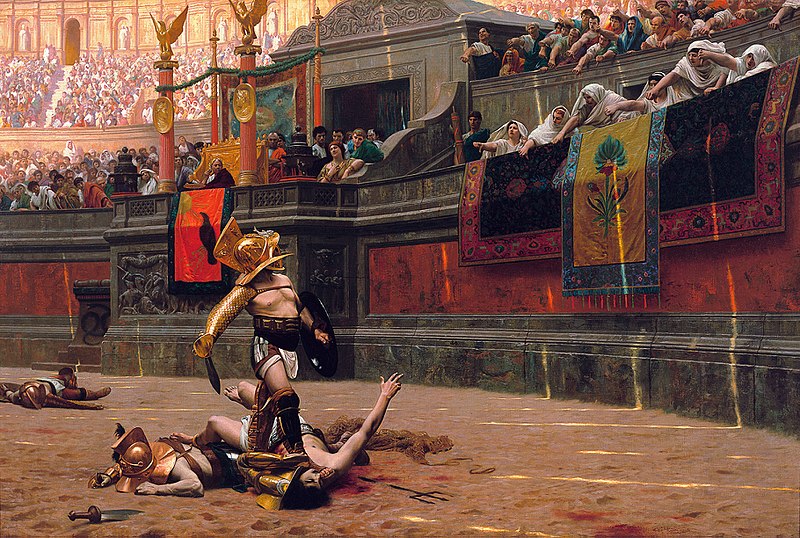
Second, the negotiations are proceeding as they might have done in front of thousands at the Colosseum in second-century Rome. Sound, fury and raw emotion from a baying audience, with David Davis as Maximus and Michel Barnier as Commodus in a remake of Gladiator. And yet they can equally be compared to day two in a five-day cricket match. Nothing decided, swings in momentum, plenty to play for.
While the sound and fury seems fast and furious, the actual discussions appear to be progressing at a snail’s pace, with weeks between each meeting of the principal decision makers. The clock may be ticking, but at times it resembles the newly-disabled Big Ben.
The whole exercise seems no less self-destructive than it did in July of last year. If the political will doesn’t yet exist to call a halt to it, then the second-best option would be a referendum on the terms of the negotiated package. If the deal is manifestly in our interests, and seen as such by the electorate after an informed – and I mean informed – debate, then so be it. Let’s go with it.
But if there is no deal, or if the deal that our negotiators arrive at is so full of ifs, buts and fudges that it’s tantamount to no deal, then we should be allowed to reverse the decision we originally made. This assumes that our elected representatives do not have the courage to put the interests of the country before party and personal career, and, if need be, make that decision for us.
I, and millions of others who are deeply concerned at the chaotic path we are currently treading, have no choice but to wait, watch and continue to express our concerns. I may think differently in eighteen months’ time, but I doubt it.
For what it’s worth, I’ll take cricket over gladiators any time.

Since this is the holiday season in the UK it’s time to dust off a piece I wrote in another blog a few years ago about packing psychoses. I’m going nowhere this month for the first time in years, so I can cheerfully offer this little self-analysis guide to all you unfortunates who at this moment are readying yourselves for your annual nightmare. I will not be among you, but I will be thinking of your suitcases.
Sad person that I am, for me one of the more interesting aspects of travel is the packing habits of others. Over years of holidays and business trips I’ve watched people pack, or watched the results of their packing from afar.
Packing is an art. There are whole cultures around this seemingly mundane activity that sometimes provide a window into deep psychosis. How you pack depends not only on what you want to pack, but where you’re going, why you’re going, and what sort of neurotic you are.
Here are some of those cultures:
The Reasonable Packer
The Reasonable Packer is someone who doesn’t pack the entire wardrobe, takes a reasonable amount of stuff with them – enough to give them a modicum of choice of what to wear while away. If it’s a four-day business trip: two suits three ties five shirts and a couple of tee shirts. Plus underwear of course. The Reasonable Packer always take into account at least one accident – soup on the suit, coffee on the tie or ripping argument with a protruding door handle, for example. Or perhaps something more spectacular, like the time I ended up face down in an atrium pond after mistaking it for a glass floor. Reasonable is boring and sensible, which I guess describes many of us most of the time.
The Expansive Packer
The Expansive Packer wants to cover all the options. You’re going somewhere you’ve never been before. What do you pack? If you’re a guy, everything from a tuxedo to your scraggiest back-packer stuff. If you’re a girl, everything from the slinky black dress to bum-clinging shorts and at least six bikinis – after all you want a different outfit for every day, no? Almost inevitably, Expansive Packers end up wearing a tenth of what they bring with them, and eventually realise what idiots they are for packing so much. They vow never to do it again – until the next trip.
The Defensive Packer
Defensive Packers are at best cautious, and at worst downright paranoid. Think of everything that can go wrong, and prepare for the worst conceivable disaster short of death. At least two mobile phones. A whole medicine chest for everything nasty you could conceivably encounter. Three different sprays for bites. Tamiflu for bird flu. Snake venom antidote. Drugs to bung you up and drugs to get you going again. Pills for every kind of headache. Mosquito nets for use in a five-star hotel. If they could get away with it, the Defensive Packer would bring pepper spray, tasers, a nice selection of kitchen knives and an Uzi submachine with enough rounds to handle a 30-minute fire fight. Every journey is a venture into the terrifying unknown. And they will be prepared.
The Anal Packer
The Anal Packer – and please don’t be reading any unseemly meaning into the phrase – is the person of an anally retentive disposition who starts with a list prepared at least three weeks before going anywhere. By D-day minus three, they’re packed and ready to go. Everything immaculately folded. Everything in its place. Shirts in one place, trousers in another. Shoes pre-cleaned and wrapped to prevent anything nasty rubbing off on the clothes. The worst thing you can do if you have an anal packer as a partner is demand that they shove something of yours in their bag at the last moment – it could possibly mean the end of a beautiful relationship. The Anal Packer with Defensive tendencies is the scariest traveller known to humanity. Avoid their bags like the plague.
The Chaotic Packer
The Chaotic Packer is the opposite of the Anal Packer. This one wanders around over several hours scrunching up anything that comes to mind into the bag in no particular order. The kind of person who’s pleased that there seems to be plenty of space left at the end of the process, and then thinks oh shit, I forgot to pack any shoes – or worse, underwear. Inevitably it becomes necessary for a large friend to sit on the bag while Chaotic uses the strength of Hercules to pull the zip. And of course what emerges at arrivals is a burst bag with naughty bits hanging from the fissures for all to see. Do not approach Chaotic Packers while they are about their business. The randomness is terrifying to behold.
The Diva Packer
The Diva Packer never does the job for herself. She has flunkies to assemble enough bags for at least ten consecutive Oscar ceremonies. She’s the one who strides through departures with leaving a line of struggling assistants in her wake. You and I don’t see the Diva Packer too often because she travels first class. But wannabe DPs are often to be found among us plebs exiting through the normal channels. Recognise them by their immaculate matching bags, elegant hats and sour faces.
The Furtive Packer
The Furtive Packer is someone with something to hide. It could be that extra carton of cigarettes, or some expensive purchases that take them way over the duty free limit. It could be stuff that is banned in the country they’re travelling to. I remember someone who travelled regularly to a Middle East country known for its wide range of prohibited goods. Anything from alcohol to women’s magazines with scantily clad models was and still is strictly verboten. Even Christmas puddings with a hint of brandy would not escape the eagle eyes and probing hands of the customs officials. Her tactic was dirty underwear – lots of it. The Furtive Packer derives a serious thrill out of getting away with it – you can usually recognise them by the smirk on their faces as they stride out through arrivals.
The Caravanserai Packer
The Caravanserai Packer is often to be seen at Middle East airports, where there are many foreign workers coming or going. Their hallmark is big bundles of stuff wrapped in cloth and held together by string, and electronics in the original boxes – TVs, microwaves, samovars – you name it. You see them queuing up at check in with tens of bags, and wonder how they avoid paying at least the price of the original ticket in excess baggage – until you see their entourage of wives and children lurking nearby. Getting caught behind a Caravanserai Packer at check-in is a nightmare. The whole process can take up to half an hour, and there always seems to be some complication that results in the check-in agent having to disappear for a ten-minute consultation with his superior. Take your place behind them at your peril.
My packing culture? Something between Reasonable and Expansive. I have a thing about books – I always overestimate what I will have time to read and end up packing a whole library. No Kindle for me, I’m afraid. And I also have a Defensive streak. I’m paranoid about failing laptops and disappearing phones. So wherever I go I bring two laptops, two phones and an external hard disk.
My wife? She’ll probably kill me for saying this, but she talks Reasonable and ends up somewhere between Expansive and Chaotic. She also has an annoying habit of commenting on stuff I pack – “what do you need that for?”, and “why don’t you bring those lovely shorts?” – the lovely shorts I bought fifteen years ago and kept in the hope of regaining my former sylph-like figure, but can now barely pull over my backside. Not forgetting those things of hers that mysteriously find their way into my suitcase, only to be discovered at the other end. I always take a deep breath when asked those ritual questions at the airport about “have you personally packed the contents of your bag?”. Come to think of it, not a bad way to be rid of your spouse – just sneak in a little canister of some noxious chemical that’s bound to be picked up on the X-ray and they’ve gone for thirty years. Not that my wife is in the habit of adding anything more lethal than a pair of spiky heels or a hair-straightener.
As for my daughters, their packing is a mystery known only unto themselves. Why would you need six bottles of shampoo and conditioner for a two-week holiday? They pack enough make-up to paint the entire cast of Hollywood movie. Stringy things of dubious provenance and purpose. Multiple sunglasses, creams, potions, and enough electronic devices to keep them in a digital bubble of Facebook, Instagram and instant messaging for the duration of their holiday. My policy with them is don’t look, don’t ask.
If there’s one invention that can’t come too soon, it’s teleportation. Failing that, I’d live with a miraculous transformation into the ranks of the billionaires. After all, they don’t need therapy every time they go on holiday.
Here’s an argument you’re unlikely to see in an opinion column in a mainstream media outlet anywhere in the world. You may see it out in the wilds of the internet, but I haven’t come across it yet.
It’s been seventy-two years since a nuclear weapon was last used against a human target. Most of the victims and witnesses of the bombings of Hiroshima and Nagasaki are now dead. We rarely hear their voices. And if we do, most of us don’t listen, or comfort themselves with the thought that such horrors won’t happen again. Until now.
Those who believe in nuclear disarmament are many. Those who campaign for it are few and ineffective. It would be naïve to expect any power to disarm when countries like North Korea are building new arsenals.
It’s almost inevitable that at some stage there will be a nuclear detonation, either as an act of war or as a terrorist attack. There is too much scope for proliferation. There are too many opportunities for misunderstanding and too many chances of breakdowns in command and control systems.
If we assume that nuclear war in the future is inevitable, then it would be better that it happens on the smallest possible scale, even at the cost of a few million lives, rather than through the global apocalypse that would take place in a confrontation between the largest nuclear powers.
A limited nuclear conflagration would be sufficient to remind a current generations that the use of such weapons is unacceptable. It might conceivably generate sufficient revulsion that no nuclear power would contemplate their use for at least another seventy years.
If we have qualms about the deaths of millions, we should consider that in the last century our leaders were quite prepared to sacrifice tens of millions. The world rebuilds. The survivors remember, and then they die. Memories fade.
So, as a kind of immunity booster to prevent nuclear disinhibition, let’s take out North Korea. Or more specifically, Kim Jong Un’s weapons sites and his command and control infrastructure. Who knows? Perhaps – despite Kim’s rhetoric – his military will crumble, much as Saddam Hussein’s army folded in the 1991 Gulf War.
Those who baulk at such an action on the grounds that human life is sacred are kidding themselves. Concern for the sanctity of life has not stopped us killing each other for all of recorded time. What matters is that the majority survive. If a minority has to be sacrificed for that end, then so be it.
If the action shatters the world economy, we will rebuild. We always have, after even the most catastrophic wars.
I don’t subscribe to this argument. It’s cold, callous and laden with risk. Its most fallacious assumption is that a small nuclear war would prevent a larger one. Indeed, a small one might be swiftly followed by a larger one, especially of one of the major powers perceives an existential threat. The taboo will have been broken.
As Donald Trump threatens North Korea with fire and fury, are there people around him who are advancing such calculations? Perhaps not using the exact logic I’ve described. But “destroy to rebuild” is a well known Bannonite concept, though those who promote it are more concerned about the future of America than that of the rest of the world.
And is he listening to them? Hopefully not.
But I wouldn’t rule out that at some stage someone with their finger on the nuclear button will go through a similar thought process, and God forbid that there is nobody around with the power to stop them.
What do academics do on their summer holidays? Most of them probably go on holiday like the rest of us. I’m not so sure about Mary Beard, who seems endlessly busy. When she’s not teaching at Cambridge, where she’s Professor of Classics, she’s blogging, writing books and educating us on TV about subjects including Pompeii, the Roman sense of humour and the myth of Romulus and Remus.
This summer you would be forgiven for thinking that she’s forsaken the olive groves of Greece and obscure museums in Southern Italy to remain at home and partake in an epic Twitter shit-storm about ethnic diversity in Roman Britain.
I should have thought that the answer to the question “was Roman Britain ethnically diverse?” was blindingly obvious. Even before the Romans arrived, we had Picts, Scots and Celts (or maybe not, depending which geneticist you believe). We had descendants of people who walked to Britain via the land bridge that connected us to the continent a few millennia earlier, and people who arrived in boats: Picts, Scots and Celts (or maybe not, depending which geneticist you believe). And probably a few Neanderthals into the bargain.
And when we became Roman Britain we were part of an empire that dwarfed the current European Union. Traders, legionnaires, slaves and administrators from all corners of that empire found their way to our shores.
But what is blindingly obvious to a dilettante like me – and compared with Mary Beard, I do consider myself to be a dilettante despite having attempted to study classics at school, university and ever since – is not enough for academics. They need evidence, theories rigorously tested and peer-reviewed. They need to publish learned papers and books, and collect citations from other scholars and authors.
What kicked off the shit-storm was a BBC programme that featured a black person as the head of a typical family of the time. This led to a bunch of in-growing toenails who identify themselves as alt-right questioning whether a black person would have lived in the country at the time. There followed an argument which – if you need to characterise it in terms of political personalities – seemed to be between folks to the left of Corbyn and to the right of Farage, with lots of others in between putting their oars in.
And, as she describes in her blog piece Roman Britain in Black and White, Mary ended up in the thick of it.
Not for the first time. She has an unfortunate habit of attracting online trolls that swarm around her like midges in the Scottish summer. Ignorant, rude and full of -ists – sexist, misogynist, ageist, uglyist and fattist for starters. And Mary found herself the target of much of this stuff for suggesting that some of the shit-stormers didn’t know much about Roman Britain. The beginnings of an academic feud broke out when Nassim Nicholas Taleb, author of The Black Swan waded in. As she describes the encounter in her blog:
Taleb himself was slightly less insulting, slightly. He accused me of talking bullshit and started to turn the whole thing into a bit of academic warfare/oneupmanship: ‘I get more academic citations per year than you got all your life!’ he wrote at one point.
I think I was courteous throughout, though I guess that is for others to judge. I think Prof Taleb did get annoyed when I said that I had read his ‘pop risk’ book, not the others. But I was actually trying to make clear that I had some knowledge of his work, though not a lot.
Taleb’s boast about his citations was very Trumpian, I thought. As in thin skin, big ego.
As I write this, the row is continuing. Mary is unfailingly polite. Others less so. I’m rooting for her. I love her work and her attitude to life. Taleb is a clever guy, and yes, The Black Swan sits in my library. But I ploughed through it with a sense of cultural obligation rather than the joy that came from reading Mary’s work. He’s not the kind of person with whom I would sip sherry in an oak-panelled study. Mary definitely is, though I suspect she’d prefer a glass of wine.
Regardless of whether you consider that braving the insults of all the -ists is an act of stubborn feminism on her part, or more generally a gesture of resistance to trolls everywhere – even famous ones – you have to say that she lives in an unsafe space, in stark contrast to the much-vaunted safe spaces so aggressively promoted by institutions and student organisations across the learning industry.
Though I’d like to think that most of the participants in the “debate” are consenting adults and not inhabitants of Broadmoor, I wonder what the unholy joust tell us about these so-called safe spaces, and the widespread practice of “no-platforming” of people whose views might upset the sensitive souls who like to think of their academic institutions as refuges rather than introductions to the grim and grimy life beyond.
Given that almost all of those whom safe spaces are intended to protect are likely to be users of one of more social media applications, how are they immune to the views of the no-platformed, when such views are so widely discussed on sites like Facebook and Twitter?
If a discussion about ethnic origins in Roman Britain can degenerate into what seems like a campaign waged by one eminent academic against another, with the hounds of hell yapping on the sidelines, how are the Twitter followers of Mary Beard, some of whom must include her students, to find a safe space from all the nasties out in the real world? The answer surely is that they can’t.
And what kind of example is Nassim Nicholas Taleb setting to his students with his bombastic contributions to the discussion? He may not care, but his reputation as a human being, if not as an academic, will surely have been damaged by the fracas.
When a young person goes to university, he or she enters an adult world. And in that world it is impossible to avoid ugliness, extremism of all stripes, and challenges to the mental status quo. If students are unprepared for that, then perhaps they should stay at home for another three years, or otherwise lock themselves into secure institutions so as to avoid the company of anyone other than fellow believers in whatever they hold to be true.
No platform? Fine, if you really believe in the fantasy of safe spaces. But there are platforms and platforms. Would you prefer one in which ideas can be confronted by ideas, or the one Donald Trump uses when he encourages police chiefs to rough up crime suspects? Or perhaps you’d prefer the one in which reasoned debate rises to the level of:
“Show me evidence of Black roman centurions. Show me evidence of black norman barons. Show black picts. Everything you write is BS you tw@.”
Twas ever thus, I’m afraid. And sad to say, for most of us the only safe space is under the sod, where we will silently wait for future historians to dig us up and draw conclusions about our ethnic origins – and no doubt much else besides.
I apologise in advance if any reader is offended by some of the language used in this post. But since it comes from the US government’s head of communications, it must be OK, mustn’t it?
Anthony Scaramucci, Donald Trump’s new chief spin doctor, is making his mark already. By mimicking his boss’s every gesture, he’s quickly emerged as Trump’s mini-me. He first got my attention a few days ago when, in an interview with the BBC’s Emily Maitlis, he claimed that the United States is a “disruptive start-up”. And by definition, the president is CEO of that start-up.
As someone who has both started companies and invested in start-ups, I have to say that the last person I would chose to run one would be a 71-year-old with questionable mental equilibrium, a history of business failures, an addiction to trash-talking TV and a tendency to spend an inordinate amount of time on the golf course.
To be fair to Scaramucci, he was talking about the Founding Fathers, whom he described as a bunch of rich guys who got together to disrupt the colonial status quo and create a new nation. He then compared them with Trump and his acolytes, who are bent on disrupting the nation yet again.
A good analogy, sort of. It will certainly go down well with his boss, who believes that he belongs on Mount Rushmore, and that he is more “presidential” than any other president since Lincoln.
The only problem is that Trump’s idea of disruption is to breathe life into the corpse of the coal industry, to deprive millions of health care in order to fund tax cuts for the better-off, and to extend the concept of partnership with Russia beyond anything contemplated by his predecessors.
His disruption will do nothing in the long run to help the citizens of West Virginia, Alabama and Wyoming. All they have to look forward to is more unemployment as artificial intelligence sweeps away more of their jobs, and more tornadoes and hurricanes as climate change becomes more physically evident.
Then came the interview with the New Yorker – summarised here in all its linguistic glory on Vox.com – in which he ripped into Steve Bannon and Reince Priebus with a ferocity that has led some pundits to ask whether his volubility was chemically induced.
Be that as it may, his outburst gave me my biggest laugh of the week. How could you not laugh when “The Thick of It” was being replayed for real in the White House? Also the efforts of the US media to come up with acceptable euphemisms for “Steve Bannon sucks his own cock” had me in stitches.
This, my friends, is a senior government official in the most powerful nation on earth!
The language itself doesn’t shock me. Anyone who has seen Joe Pesci in full flow in movies such as Goodfellas and Casino will be familiar with Scaramucci’s fellatio-rich, fuck-laden metaphors. Language aside, there’s another link between Pesci’s characters and The Mooch, as the new star is now referred to by his friends and admirers (if he has any). It’s the chippy aggression that so often seems to emanate from vertically challenged men.
This is apparent in body language, too. Anyone who has watched Nigel Farage making himself taller by popping up on to his toes like a threatened meerkat when he wants to make what he thinks is an important point will recognise the same tic in Scaramucci.
I laugh at Tommy in Goodfellas and Scaramucci for the same reason. Their language is so outrageous, so full of male insecurity, so laden with resentment at the accident of birth that forces them to look upwards when making eye contact with those they consider peers. “You looking at me, cocksucker?” And so on.
Now that he’s seen off Reince Priebus, The Mooch is clearly settling in for the long term, which, in White House terms, is at least ten minutes. According to the New York Post, his wife is divorcing him because of his “naked ambition, which is so enormous that it left her at her wits’ end,”. She doesn’t approve of Trump, apparently, which suggests that they must have had some cosy conversations at home. So that clears the decks for eighteen-hour days in the service of his master.
Since the new communications director moved into the White House, the reality show has continued apace. The President rants at the Senate for failing to repeal Obamacare, pours contempt over his Attorney General, regales boy scouts with risqué anecdotes, encourages police to rough up crime suspects and decides to ban transgender people from serving in the armed forces.
The most extraordinary aspect of Scaramucci’s stunning impact on the US political stage is that to me at least – and most likely to the vast majority of people like me who watch the reality show from afar – his existence was unknown a week ago. It’s as if some TV producer invented him for Trump’s benefit and our amusement, like some new character parachuted into the Truman Show, or a contestant inserted into Love Island half-way through the series.
What’s next? Caligula’s horse? The Terminator? Coco the Clown? Your guess is as good as mine. One thing’s for sure, if he continues to recruit such colourful characters, Trump will put Broadway out of business.
A hundred years ago today, Harry Hickson, my maternal grandfather, entered the First World War. After months of training as an artillery officer, he made his way to the Western Front, where he encountered the Third Battle of Ypres. Over the subsequent four months over a quarter of a million British and Commonwealth troops were killed or wounded, and about the same number on the German side. My grandfather survived.
This is my small contribution to the commemorations of the campaign, better known as Passchendaele, taking place today in Britain and Belgium. Over the past few years I’ve posted edited extracts of Harry Hickson’s war diary at significant anniversaries. But for my family this is perhaps the most significant, because it marks the day on which Harry was first exposed to what we rather casually refer to as the horrors of war.
This is his account of August 1917, unedited. It may not be the most exciting account of the events of that month, but it reminds me, sitting at home on a Sunday morning and looking out on my suburban garden, that for all my worries about the future of my country and the continent to which it belongs, life in Europe today is infinitely better than it was for my grandfather’s generation. May it continue to be so.
“August 1st: It is still raining and very uncomfortable in tents. I stayed all day in camp. Tonight in mess the Colonel announced that the big offensive in the Ypres Salient started yesterday and was quite a success. I wonder whether that we are bound for.
August 2nd: It is still raining and very miserable in a camp of tents. This morning the lorries left Havre and went on up country. I went to the ordinance here and got a torch and a protractor for map work, they have a very good stock here. At 10 o’clock tonight we left Havre by the Gard Maritime station, the battery is training there. Our adventures are beginning. I wonder where we are going and what is going to happen to us.
August 3rd: We arrived at Rouen at 6 o’clock this morning and had breakfast at the Hotel de L’Angleterre – a very expensive place. I reported to the R.T.O at 9.30am and received my instructions. I then visited the Cathedral there, a very lonely old place. And afterwards had lunch at the Officers Club in the Rue de Jeanne d’Arc. We entrained again at 3.15pm and continued north.
August 4th: Today is the 3rd anniversary of the outbreak of war. I wonder how much longer it will last, we little thought it would last as long as this. We passed Abbeville and Boulogne early this morning and arrived at Calais at 10.30am. We only stayed there about half an hour and then proceeded via St. Omer to Hazebrouck. We stayed there about an hour as I believe the Bosche were shelling Poperinghe and eventually arrived at Hopoutre, a suburb of Poperinghe, at 4.30pm. Just as we got there the Bosche put over a shell, which landed about 100 yards away, it gave me quite a start. The first I had ever experienced that was really fired at me, so to speak. Then came the parting of ways, for the battery was to split into two sectors, much to my regret. We detrained at Hopoutre and lorries were waiting for us there. Flint took the Right Section of 401 S.B to 306 Siege Battery and I took the Left Section to 309 (H.A.C) Siege Battery. We travelled through Pop to Trois Tours Wood where the headquarters of the battery were. There I met Major Edmondson who is in command and some of the officers. My first impressions are good, the battery is manned by H.A.C officers and men, all good stout fellows I’m sure, and the major seems particularly nice. We are in the XVIII Corps of the 2nd army under Lieutenant General Sir Ivor Maxse. The Brig General Heavy Artillery is Brig Gen Brake R.A. we are in the 65th Heavy Artillery Group under Lt Col Webb R.G.A. I slept in my first dug out under a bank in Trois Tours Wood and had a very comfortable night.
August 5th: This morning I went with major Edmondson and a party of 401 up the line to a new forward position at Turco Farm, to get ready for the guns coming, by the way the guns are 6″ howitzers and very good ones with the quick release gear for loading. The Bosche were strafing rather badly and I got the wind up, but no one was hit. I saw my first dead men today, two poor fellows evidently killed in the big advance, they had an uncanny fascination for me which I can’t account for, I had to keep looking at them. We returned to the dug out to sleep and I watched the bombardment at night, it was quite a thrilling sight.
August 6th: This morning I went on duty to an intermediate battery position just in rear of the railway near Orielen and stayed there all day. The Bosche put over a few nasty ones during the day, and Sergeant Saunders was hit in the leg. I slept in a tin shed near the guns and did not feel very safe!!
August 7th: Today I took part in several shoots and stayed on duty in the battery till 6pm, when I returned to Trois Tours and had a bath and change of clothes, both of which were very welcome. Major Chamberlain was hit in the arm but not very badly, Major Stewart left 309 S.B and was sent to No. 18 Siege Battery with 12″ guns. That is the big fellow which fires at night close to here and keeps us awake. However, I had a very comfortable nights sleep.
August 8th: I had a really slack morning writing letters etc, and after lunch went over to the battery position near the railway. I had a very busy afternoon with shoots etc. Bdr West and Gunner Hatton were wounded, but not badly I’m glad to say. A very heavy thunderstorm came on after tea and upset things completely. I slept on the floor of a dug out and had a very hard restless night, hardly any sleep at all. I think I was rather scared really, I haven’t got used to this fighting and facing death constantly properly yet.
August 9th: This morning I did a very good shoot with aeroplane co-operation. Then we prepared to move the battery position. I returned to Trois Tours at 8pm and had a very comfortable night with no strafing. I was feeling awfully tired and done up.
August 10th: I have had a very busy day at the battery. One section went forward to the new Boront Farm position. I slept at the battery position near the railway.
August 11th: Today I went up to the new position at Boront Farm and was very busy building dug-outs etc ready to occupy it. A violent thunderstorm came on after tea, but we had a cheery dinner in the new dug-out. The other section with a supply of ammunition was expected up and I went to look for them about 11pm as they had not turned up, but they did not appear and I lay down on the floor of the dug-out. I woke up about 1am to find I was lying in about 3″ of water and felt very cold and wet!! I shifted quarters to another dug-out and finished the night quite comfortably. The guns and ammunition were bogged on the way up.
August 12th (Sunday): It was a lovely morning, sunny and bright. We did a very successful aeroplane shoot and got and O.K on the 13th round and several more OKs and Y’s during the shoot. We had lunch in the open as it was so lovely, and in the middle of it the Bosche strafed us badly with high explosive shells and shrapnel. The first shell landed only about 20 yards from us all (officers) and killed one man and wounded several, it was a horrible experience. One man’s stomach was ripped right open, an awful sight. I had my first letter from Dolly today, it helped to cheer me up a little, the awfulness of war seemed very realistic today, I am sure more of our wounded men will die they looked ghostly as we carried them away. The Huns strafed all afternoon.
August 13th: We had a fairly quiet day today. I saw a very exciting aeroplane fight, a Bosche plane forced one of our RE8 planes almost to the tree tops when another RE8 came along and shot the Bosche down and he crashed. They were quite close and we gave a big cheer. The Huns shelled us badly at night with gas shells and we had to wear our respirators. Another long letter from Dolly.
August 14th: Another wet day, but we have done a bit of shooting – 576 rounds. This afternoon 306 and 184 Siege Batteries were badly strafed, I hope Flint nor any of my old men weren’t hit. We were bombarding Polecapelle from 8.30 to 9.30 tonight, a terrific din. The Huns had a go at us tonight, splinters were hitting our dug out and we retired to some trenches on our flank from 1.15am to 2.30am when things quietened down a little. There men were killed, they belonged to the K.O.L.I.
August 15th: It was a lovely day today with just occasional showers. We continued our bombardment scheme as per yesterday. I came back to Trois Tours (which we have still retained) at 6pm for 24 hours rest, I feel I need it too. After writing several letters I had some hot rum and went to bed at 9.30pm. The Huns were strafing No.18 S.B’s position close by, but I had a topping night’s sleep, in spite of our heavy bombardment nearly all night. The attack was carried on this morning, zero hour was 4.45am.
August 16th: I woke at 8 o’clock this morning and had a cup of tea, then went to sleep again till 9.30 and had breakfast in bed!! What a luxury! I saw batches of Hun prisoners came into the cages and spoke to some of them. I returned to the battery position about 5 o’clock and carried on with shoots till 8.30pm. The Bosches gave us another bad strafing and we retired to a trench and dug ourselves in for the night. We slept on duckboards, and very hard they were, but fairly comfortable and fairly safe but the darned Huns sent a lot of gas over and we had to wear our helmets again.
August 17th: It was a lovely sunny day again and we did no shooting till 2.30pm. The Huns put a few over at tea time and killed Gunner Jogden, a very fine fellow. They also put over more gas about 9.30pm. I slept in the dugout and had quite a comfortable night.
August 18th: It was another lovely day and we did no firing till 11.30am. I wrote several letters. This evening I left the battery at 5 o’clock and came back to Trois Tours. Some Canadian officers came in and had a yarn and we got the gramophone going. I had some hot rum and got to bed about 10.30pm, the rum helps me to sleep. A Hun plane dropped bombs quite close during the night and the wood was shelled about 1.30am.
August 19th (Sunday): I woke at 8 o’clock this morning as usual and had a cup of tea then slept again till 10, and had a bath and breakfast. It was a lovely day and I sat outside and censored letters. Returned to duty at the battery at 4pm, and had quite a comfortable night in the dugout.
August 20th: Another lovely day, this morning I did another successful aeroplane shoot with 5zs 4ys and 2MOKs. Tonight I moved the right section of guns up to the new position at Turco Farm and got them in position for firing. I don’t like the position very much, it seems rather exposed. Slept in a small dug out near the guns.
August 21st: The Bosche gave us a terrible strafing this morning from 9am to 12.30. They did what they call and area shoot and we were in the middle of it! They use all the calibres from field guns up to 8” and we estimate they put over at least 1200 rounds, it was an awful experience. We were lucky enough to escape with only two men wounded. The afternoon and evening were fairly quiet and the men built dug outs. I went down to the Burnt Farm position for dinner and returned afterwards and slept in the small Battery anchorage dug-out. The Huns strafed badly with H.E shells during the night, and put over great quantities of gas shells from 12.30am onwards. We had to wear our respirators from 12.45-2.15am and at intervals up to 4am when it was fairly clear.
August 22nd: Another big bombardment started at 4.45 this morning. We found Sergeant Welham was badly gassed last night and he was taken to the dressing station at Essex Farm, we have lost a good man in the Sergeant. We got an officers dug out made in the ruins of Turco Farm and some billets for the men. I returned to the Burnt Farm position at 11pm for a good sleep but the Huns strafed badly during the night and I couldn’t sleep.
August 23rd: Gunner Stewart Jn was killed at 5 o’clock this morning during the strafing at Burnt Farm, and we buried him at Bard Cottage Cemetery at 3 o’clock this afternoon. It seems awful that a strong healthy man should be alive and well in the morning and under the sod in the afternoon, such is war. We cleared up shells, furzes etc at the old position, and the Huns strafed us again, one shell fell near the orderly room and wounded three men. They put a lot over during the night too, they were very persistent!
August 24th: I got up at 5am and went up to an Observation Post (O.P) in an old Hun dug out on Pilcham Ridge, and had a very interesting day. I passed a grave with this inscription, “Here lies the body of an unknown Highlander”. I saw the ruins of Zangemarck church in the valley and also Zounebeke and Polecapelle churches in the distance, all in the occupation of the Huns. I returned to the Turco farm position at 7.30 pm, and had a fairly comfortable night in our new dugout in the ruins.
August 25th: I have had a fairly easy day on the guns, the Huns strafed us again but not badly, I was orderly officer at 6 pm and did a “night lines” shoot from 9 to 10.30pm, then a bombardment shoot from 11pm to 1 am, when the Huns strafed us again, in retaliation I suppose. The bombardment was a lovely sight at night.
August 26th: I was wakened again at 5.30 this morning to do an aeroplane shoot, which was quite successful. Spent the rest of the day making dug outs etc. I returned to Trois Tours at 6 pm, and paid the men who were there, we keep a certain number back there all the time for a spell and clean up. After dinner I got the gramophone going and went to bed at 10 pm, feeling very tired. Some shells fell quite close during the night and it rained very heavily too.
August 27th: I woke at 9.30 this morning and had breakfast in pyjamas, then had a bath and general clean up till lunch. I wrote a letter of condolence to Stewart’s mother, he was one of my original men in 4015.B. I returned to the Turco Farm position at 4 pm in pouring rain and got wet through, especially at the knees. I found the battery had a “stunt” on, and after tea went on the guns and got very wet. The major lent me dry socks and I slept in my wet clothes! I hadn’t any to change to.
August 28th: I spent the morning wading in mud on the battery position, it was most uncomfortable, and occasionally we could see some poor fellows boots sticking out of the mud and the know the rest of him was only just covered. We cleared up empty cartridge cases etc. Did a blind shoot in the afternoon, very windy and showery. I was Orderly Officer at night and did a shoot about 10 pm. Slept in a small dug out with P. H. Edmondson the major’s brother, and had a very cosy night. It was a lovely moonlight night too.
August 29th: We spent the morning getting the gun trails settled on the platforms, very showery. Did a blind shoot in the afternoon and afterwards drained the position. Comfortable night in dug out.
August 30th: The Huns started strafing us at 8 o’clock this morning with 11″ and 8″ shells, big fellows, which made a great shindy. We cleared off to a flank and let them go ahead, so had no casualties and no guns were hit. They continued till tea time and put over from 300 to 400 rounds, and the road was very badly cut up. We did a shoot in the evening and I had a comfortable night.
August 31st: We did three counter battery “stunts” during the day, I hope we relieved some of our batteries of the Bosche attentions. The Huns later on retaliated with more of their 8″ stuff, which isn’t a bit pleasant. I was Orderly Officer and ammunition arrived for us about midnight, and also had to turn out for “night lines” shoot at 4.30am. Then I had to report at 7 am so had very little sleep.”
In memory of the soldiers of all nations who perished during that awful month, and of my grandfather, who was spared.
Jordan Spieth is not a war hero. He’s not an angry politician, a grasping hedge fund manager, a revolutionary or an iconoclast. He’s a 23-year-old Texan from a privileged background who happens to be one of the best golfers in the world.
Yesterday he showed his character by coming back from a near-catastrophe in the final round of the Open Championship. He could have blown it, as he did in the Masters two years ago, and forever after carried around the burden of being known as a choker. But he didn’t. In a stunning sequence of holes, he made good the early damage and won the tournament.
You may not follow golf, in which case you might not know Spieth. And if you don’t know him, you almost certainly won’t know Matt Kuchar, his compatriot, who threatened to take the championship away from him in that final round, but ended up being steamrollered. From start to finish, Kuchar kept a smile on his face that at the death must have hidden gut-wrenching disappointment.
Spieth, as many people pointed out before and after his latest achievement, is grounded. He’s modest, generous with his praise of others, and unfailingly polite. He’s also a man with nerves of steel. He needed them to come through a crisis that would have unhinged most golfers, be they hackers like me or professionals who are supposed to be immune to adversity.
People who excel in any field, and especially sport, can often be quirky individuals. Sometimes they hide their demons from their public until they implode, like Tiger Woods. Perhaps Spieth, who is on the verge of matching Tiger’s achievements at a ludicrously young age, will also go into a downward spiral at some stage in his career. I hope not. He certainly doesn’t seem to have had the dysfunctional childhood that left its mark on Tiger. There are no pushy parents in evidence. He has a sister with learning difficulties whom he adores.
He and Kuchar are patently decent, dedicated and talented human beings. I have met many Americans like them, not necessarily such high achievers but with the same personal qualities.
When I say that for me both men exemplify a face of America that I’d almost forgotten over the past year, it’s not because they are role models for white America. Decency is to be found everywhere in the country, among rich and poor, black and white, in the projects and the country clubs. It’s to be found in the characters of John McCain and Barack Obama, and in a host of ordinary people across the political and social spectrum.
The problem is that since last summer the personality traits of Donald Trump have come to exemplify a different America. Vain, resentful, greedy, boorish, bullying, bombastic. For millions who view the country from afar, the personality of the president is becoming indistinguishable from the character of the nation.
So I thank Jordan Spieth and his colleague Matt Kuchar for reminding me that there is another face of their country – one that will hopefully survive four years of reputational damage at the hands of the ultimate ugly American.
I haven’t written about Donald Trump for a while because there’s only so much you can say about reality TV. But I can’t resist sharing a few thoughts about the great man’s communications team.
Sean Spicer, the man who probably doesn’t know the difference between Russia and Prussia, has resigned as the master narcissist’s Press Secretary. Not before time, many would argue. The job of making truth out of lies would have challenged someone of far greater mental dexterity – someone who is capable of dancing around reality as opposed to smashing through it like a runaway dump truck.
His successor, Sarah Huckabee Sanders, doesn’t appear to be much more intelligent, but she’s more adept at stonewalling without the f**k you attitude that Spicer displayed in abundance. She also benefits from the lack of televised press briefings in recent weeks. When she defends the indefensible, she can do so in the knowledge that her words don’t provide fodder for mockery by the likes of Melissa McCarthy.
Sanders’ other advantage is that she seems to lack her predecessor’s titanic ego. Spicer would be well advised when planning his future career to work on his emotional intelligence. You could say the same about his boss, except that Trump is unlikely to have a future career, and his current emotional imbalance is probably beyond redemption.
The fact is that being a member of Trump’s communications team is an impossible job. The new director of communications – one Anthony Scaramucci, whose wonderful surname, incidentally, would not be out of place in one of Mozart’s comic operas – is unlikely to find that his new role will turn out to be a career-advancing move.
There’s a simple reason for this. The president doesn’t really want anyone to speak for him. I get the impression that he would be far happier giving the occasional rambling interview with the fake news media, and then lambasting them with his late-night tweets. If he has something big to say, he can always call his faithful to a rally, or deliver some set-piece rant at a G7 conference, or speak to the nation from the White House lawn.
Who needs people like Spicer, who don’t have the brains to keep up with him? I suspect that Trump secretly envies Kim Jong Un, who in all his public appearances is surrounded by officials who capture his every thought by slavishly scribbling away in the little notebooks that each of them carries. What’s more, they never fail to giggle at his jokes.
From the communicator’s point of view, how do you make a coherent narrative out of the shifting sands of the president’s reality? Best, surely, to stick to reporting his comings and goings rather than trying to interpret the oracle.
Anyway, the black comedy will no doubt continue, though I grieve for the sudden decline in Melissa McCarthy’s career prospects. When the dust has settled, Spicer will no doubt write the first memoir of the Trump era, which will enable him to present his version of the truth before those of the other courtiers who are still hanging on to their jobs. After the book, his trajectory will surely be downwards. He has had his fifteen minutes of fame.
As for this avid follower of the Trumpian madhouse, one moment of sublime comedy has changed my perception of the president’s utterances forever. After Andy Serkis’s appearance on Stephen Colbert’s show, I will never again be able to read a Trump tweet without filtering it through the voice of Gollum.
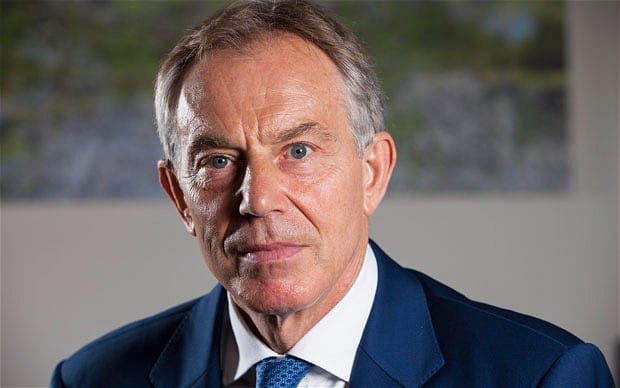
A couple of days ago Tony Blair, one of Britain’s longest-serving prime ministers, published a statement on his website arguing in favour of a re-think on Brexit. It was coherent and well-argued, as you would expect from a former lawyer and politician whose communication skills put those of the current crop of British political leaders in the shade.
As far as this reader is concerned, he was preaching to the converted. Others, including the influential London Times journalist Sathnam Sanghera, heartily endorsed his views on Twitter. But plenty of others didn’t, not because of the arguments themselves, but because they think Blair is a war criminal.
The thought process presumably goes that if a person is a war criminal, nothing they have to say about anything is worth considering. Which would probably have surprised the Americans, who happily employed Werner von Braun to design the US space program despite his dubious past as the creator of the V2 rocket, built with armies of slave labour.
But Blair has never been convicted of war crimes by any jury under British or international law. While it’s true that there are many people who would like him – and George W Bush – to be put on trial, that hasn’t happened and is unlikely to in the future.
So if I believe in the rule of law and my country’s justice system, I have to regard him as innocent until proven guilty. What’s more, I accept that his actions in taking us to war with Iraq in 2003 were based on good faith. Not a very fashionable view in blame-obsessed 2017, I know.
I also accept that for all the reasons that were endlessly chewed over in the Chilcot Report and elsewhere, the venture was a disastrous mistake, not only in its execution but in the subsequent administration of Iraq.
Fourteen years on, there are plenty of people who say they opposed the war from the start, but not so many who admit that thought it was the right course of action. In the same way, you would have been hard pushed to find many British people after the Second World War who would admit that they supported appeasement. My father was certainly one of those people who applauded Neville Chamberlain when he returned from his meeting with Hitler in 1938 with a piece of paper that allowed the Fuhrer to dismember Czechoslovakia in return for “peace in our time”.
I will happily confess that I supported the decision to go to war with Saddam Hussain. Not because I bought into the neoconservative guff about bringing democracy to the Middle East, but because I thought that Saddam was murderous thug who killed his own people and would continue to do so if given the opportunity. And I didn’t buy into the argument that it was all about the oil. Whatever the motive, knocking an evil bastard off his perch was fine by me.
How wrong I was, and how wrong Blair and Bush were. And how gloriously clear hindsight is. If calculating the extent of political and military errors is a numbers game – how many Saddam killed versus how many died as the result of the invasion and all the horrible events thereafter – the wrongness of what happened is an open and shut case.
It didn’t appear so at the time. A man who had actively sought nuclear and chemical weapons, and who had gassed thousands of his own people, was a menace who had to be stopped.
Anyway, there it is. Mea culpa. Nobody in their right mind would have taken Saddam out in the knowledge that his overthrow would trigger a vicious civil war, cost hundreds of thousands of lives, and lead to the instability that leached across Iraq’s borders into Syria and beyond.
But how much of the responsibility for the subsequent chaos can you lay at Tony Blair’s door? Was he responsible for Iran’s manipulation of the newly-empowered Shia, for the oppression in Egypt, Tunisia and Libya that blew like an exploding pressure cooker in 2011? Was it his fault that the blundering Bush administration slavishly followed the de-Nazification policy after WW2, and disbanded the one organisation that could have maintained some semblance of order in the shattered Iraqi state? Did he ignite the subsequent wars in Libya and Syria?
Iraq 2003 was certainly a way point in the sequence of events that led to Mosul and Raqqa, but it was by no means the starting point. For that you need to look much further back.
I doubt if anyone who blames Blair for all the consequences of the 2003 invasion could be persuaded to take notice of what he says on Brexit. Which is a shame, because what he says makes plenty of sense.
In my humble opinion, it’s time to forgive him for his huge mistake, just as the British public eventually forgave Winston Churchill for the disastrous Gallipoli campaign that cost thousands of British, Australian and New Zealand lives. I’m not comparing him with the hallowed Winston, but there are few politicians still on the stage with Tony Blair’s stature and experience.
Whether we like him or not, the least we can do is to consider his arguments on their merits, rather than dismiss them on the basis of the biggest mistake of his life.
I know there are plenty of people who share my views on many political issues, but probably not this one. So be it.

A couple of days ago my local medical centre burnt down. It happened in the middle of the night. Nobody was in the building, because it doesn’t operate 24/7. Had the fire occurred three months ago, it could have incinerated patients in a hospice that was on the third floor. But perhaps not, because the staff might have dealt with the fire before it spread.
The blaze was so intense that people in nearby homes were evacuated and taken to the church hall nearby. Throughout the night and the next day, people came to the church with food and supplies for those who were temporarily homeless.
The medical centre was home to two general medical practices, a physio unit, an outpatient clinic and a pharmacy. For the past few years I’ve visited the centre three or four times a year – for doctor appointments, physio, annual check-ups that the National Health Service provides for people of my age. I have my retinas screened, my aorta measured, and when I had a serious back problem, the physio unit set me on the road to recovery.
The staff are courteous – some of them are volunteers manning the walk-in centre. The doctors are conscientious, even though these days I rarely get to see the person who is nominally “my doctor”, because she’s on a short working week. The centre has looked after my family for the best part of thirty years.
Every year or two there have been improvements – more screening programs, better communications, better trained staff. Thirty years ago, the receptionists behaved as though they were doing you a favour. Nowadays, they are kind, helpful and efficient. I don’t need to beg for a prescription from the doctor any more. The order goes straight down to the pharmacy. Regular prescriptions are available for me to collect without my needing to ask for them.
When I need to see a doctor, I rarely have to wait more than a day. While it’s true that my first GP, now long retired, had the time to talk about trivialities, with the result that I felt I knew him as a person far better than the current crop, that was then and this is now. A different ethos, more business-like and less personal, prevails. A maximum of eight minutes per consultation and only one problem can be discussed. Very different from the days when doctors would tease out the real problem hiding behind the apparent ailment.
But still, I have no complaints about the medical centre. Wait a minute – what am I talking about? It’s excellent. Why are we so grudging in giving credit to public services?
But now it’s gone. Did I appreciate it while it was there? Probably not. I took it for granted, just as many of us take for granted all the public services and civic amenities in the cities, towns and villages where we live – the schools, the police, the fire services, the libraries, the museums, the garbage collectors and the local council. We complain when things go wrong, but how many of us express our gratitude when things don’t go wrong?
The twenty-four thousand patients who use the centre will be accommodated elsewhere until things get back to normal. The GP practices will relocate to temporary premises. Other units will take up the slack. Many of us will perhaps not be thinking of the personal trauma that people suffer when their place of work is destroyed. We’ll just wait to be told of the temporary arrangements.
Why am I writing about such an everyday drama? After all, nobody died. Lots of people are inconvenienced, yes, but this was not Grenfell Tower. There is no whiff of scandal. It was most likely an unfortunate accident.
It’s not because the fire services were excellent. They usually are. Nor because people gathered round to help their neighbours. Commendable, yes, but I live in a country where people typically respond to emergencies with great generosity and compassion.
I write this because this fire, so close to home, cuts through the narrative running in my mind in an endless loop.
Not a day goes by – and on some days not an hour – when I’m not thinking about the state of my country. Not a day when I don’t search for evidence that the course we embarked upon a year ago might be reversed, when I don’t think of the dumb-headed politicians that helped to create the mess. The lies, the con tricks, the barmy ideologues on right and left who try to convince us that black is white, only matched by the self-serving antics of those in power across the Atlantic. The second-rate minds grappling with the biggest self-inflicted disaster for a couple of generations.
But then something happens to remind me that my immediate destiny doesn’t depend entirely upon the dullards running the country. There are a large number of institutions we all depend upon to live our normal daily lives. Mostly they still work – they have not been degraded to the extent that some politicians would like us to believe.
And as evidence, I present my experience after the fire.
I was due to have a blood test at the medical centre this morning. I assumed that I would have to wait a few weeks while the GP practice got itself organised. I was wrong. Last night, less than 48 hours after the fire, I got a call asking me to show up at a nearby health centre for the test – this morning.
I showed up. The test took place on time, and down a corridor I could see the staff from my practice busily setting up in their temporary accommodation. The centre I visited is three miles from home. The one that burnt down is a mile away.
Imagine the disaster recovery planning and the dedication of staff that allowed this to happen so soon after the catastrophe.
Britain’s National Health Service is not perfect. Much has been written and spoken in recent years about the effects of under-funding. Successive governments have tinkered with it to no great effect. It has had its share of failure and mismanagement.
But it’s still our largest public institution. And even as it struggles to deal with a rapidly aging population, and keep on an even keel despite haemorrhaging staff thanks to organisational flaws and the effects of Brexit, it can still come up with the goods. As it did in my town over the past couple of days.
Other institutions are also working. Again, not perfectly, and certainly not to everybody’s satisfaction. But by and large they’re holding the line.
So as I sit here with the tiny puncture mark in my arm already almost invisible, I’m profoundly grateful to the people who enable me to take for granted all the things that support a settled existence.
Images of people evacuating the ruins of Mosul’s Old City – stripped to the waist so they can’t hide suicide vests – remind me how bloody lucky we in Britain are – and will continue to be unless our politicians manage to screw up our future.

Here’s a thought about blogging, or more specifically, blogging about politics in countries other than your own.
I have no problem with writing freely about my home country, the UK, about the United States with its wretched president, and about more or less any other western country that attracts my wrath or, just occasionally, my admiration.
If the contempt I pile upon Donald Trump results in an immigration official in New York or Los Angeles asking me to go to a room for a conversation that results in a swift return whence I came, that won’t be fine by me, but it won’t be the end of the world either.
It is, after all, the consequence of countries insisting on looking at your utterances, be they on a blog like this or on Twitter, Facebook or LinkedIn, and then determining that they don’t like your attitude towards their country or their president.
Immigration screening techniques have become much more sophisticated than they were in the years immediately following 9/11, when I would often be selected for special attention at US immigration purely on the basis of a large number of Arabic visas in my passport.
In other parts of the world, practices were cruder still. I remember standing in long lines in one Middle Eastern country in the immediate aftermath of the Arab Spring, while immigration officers took passports to a side office and did Google searches on the names of the travellers.
When I mention to friends that I no longer take for granted the ability to enter countries like the US because of what I write about Trump and other political figures, they tend to laugh. What they’re saying is that I’m pond life. My blog is read by relatively few people, so isn’t it absurdly vain of me to believe that my humble scratchings are important enough to attract the attention of great nations?
Probably, I say, yet isn’t it also the case that much-vaunted security services such as the NSA and GCHQ dedicate themselves to searching out the obscure, the assassins and the terrorists lurking in the backwaters of the internet? How much easier is it for them to raise their eyebrows at the rantings of someone who makes no attempt to hide his political views?
Of course I don’t see myself as a threat to anyone. I just write stuff. I don’t incite riots and revolutions. I go to some lengths to avoid tarring countries and societies with the same brush that I use to criticise the behaviour of individuals.
And yet there are countries, some of which I know quite well, that would not take kindly to the kind of unflattering remarks I regularly make about politicians in the UK and the US, if those comments were directed at them. These are countries where bloggers are threatened, locked up and even stripped of their citizenship.
So herein lies a dilemma. There are parts of the world that are full of open-hearted, generous people. They also happen to have political establishments that are capable of acts of great cruelty and stupidity, for whom the primary objective in the way they govern is to preserve their pre-eminence – whatever it takes.
Is it therefore right that I should condemn those regimes in the same way as I criticise my own leaders? You would think so, even though there are plenty of journalists lining up to point out their deficiencies. But if I do, what might be the effect on people in those countries whom I’m honoured to consider friends, with whom I have regular conversations on the social media? Will they end up being tarred with my brush, damned by association with me, even if those conversations are devoid of political content?
Perhaps I’m being over-cautious. And perhaps I’m applying double standards. If I encounter regimes that offend my values, should I not call them out?
Maybe, but whereas there are millions of people who think the way I do about Donald Trump or Theresa May and can say so without fear of being rounded up, this is not the case everywhere in the world. Criticism of leaders can have consequences.
If I’m somewhat circumspect on occasions, it’s not because I’m afraid of the tap on the shoulder in immigration. It’s because I’m well aware that the more insecure a regime, the more paranoid it becomes, and the more it has the potential to create connections and intentions where none exist. Consider, after all, the lethal climates of suspicion in Stalin’s USSR, Saddam’s Iraq and Gaddafi’s Libya. And I don’t want to be the unwitting cause of damnation by association with me.
A bigger picture is that though I’m appalled at the detention of political figures and dissident writers in China, Russia, and the Middle East, I’m also aware that such acts are a small part of pervasive political apparatuses created to keep individual rulers and oligarchies in power.
In some cases, to stop abuses of power would require those regimes to be brought down. And should that happen through internal revolution, whether or not aided and abetted by third parties, there is a danger that, as in Libya and Iraq, the suffering caused in the chaotic aftermath could be greater than that inflicted by the outgoing regimes.
Better surely to encourage evolution through reform rather than revolution, even if in some cases there’s the risk that the mildest reforms are taken as weakness and trigger some form of revolution anyway.
Perhaps I feel a little guilty that I was prepared for so many years to work in foreign countries abroad while turning a blind eye to the repugnant behavior of their governments. Was I not conniving with those regimes? And would I not be a hypocrite by saying nothing at the time and waiting until I’d left to unleash a barrage of righteous indignation in their direction?
Hypocrite or otherwise, the fifteen years I spent working abroad enabled me to meet many wonderful people, some of whom are still friends. Those people have given me an understanding of cultures and societies that I would not otherwise have gained. Some have benefited from their governments, others have not.
Either way, it’s been my experience that the closer you get to any society, the harder it is see it in terms of black and white, of moral absolutes.
Maybe that’s why I’ve never wanted to be a journalist or a politician.

The closure of Al-Jazeera, demanded of Qatar by Saudi Arabia, Egypt, Bahrain and the United Arab Emirates as the price for lifting their embargo, would be a serious setback to freedom of speech in the region.
During my second stint in the Middle East, between 2008 and 2014, it was my news channel of choice after the BBC. No other channel reflected more closely the ethos of my principal home broadcaster, which was not surprising since many of its journalists had been recruited from mainstream broadcasters in the UK.
I am speaking only of the English channel – my language skills are not up to understanding the Arabic version. Many Arab friends tell be that the Arabic channel is very different in tone and editorial policy. And if any of those friends come back to me to say I don’t know what I’m talking about, and do I realise how toxic and subversive the Arabic version is, I would respond by asking how it could be more toxic and subversive than other channels freely available in the area through satellite and the internet that preach hatred, sectarianism and yes, sometimes violence.
That’s not to say that Al-Jazeera is objective. Nor is the BBC. You can be objective in the way you cover a subject, but lack of objectivity can still be found in the choice of subjects. Thus, I learned plenty about the sufferings of the Palestinians, but not so much about the plight of low-paid foreign workers in Qatar and the other Gulf states.
Al-Jazeera is and always has been a concern to countries that feel threatened by media outlets that they do control. I’m not speaking of English-language outlets – it’s not the English-speaking audiences that they worry about, or at least not as much. As an Arabic channel, it is – or was until it was blocked by several neighbouring countries – pervasive, powerful and influential.
Whatever the rights and wrongs, the claims and counter-claims, whatever its biases, and regardless of the extent to which its editorial policy is dictated by the Qatar government, Al Jazeera is unique.
It should not be shut down. It should be replicated, emulated and competed against across the Middle East. Not just so that other stations can offer counter-narratives, though that can only be healthy, even if some of the narratives might be repellent to viewers of its English output.
More than for any other reason, it should be allowed to continue broadcasting because regardless of its editorial policy it is a product of the Arab world that is an advocate for the Arab world. As such it offers a counterweight to the non-Arab media that flood the region.
It also offers non-Arabs a window into the region that few other broadcasters manage to provide. The BBC is an honourable exception, but by and large, none of the other stations – such as CNN – come close to opening the eyes of the West to a region that is far more complex, enlightened and fascinating than the standard portrayals of wars, political oppression and social exploitation suggest.
In fact, I would not swap one Al Jazeera for ten Fox News channels. Its loss would be a heavy blow to a region that is suffering enough already.
As a fully paid up member of an apparently endangered species, I object to being considered irrelevant. Even more, that people like me are incapable of coming up with big ideas.
Recently, I spent a fascinating half-hour wading through comments on an article in The Guardian newspaper by Giles Fraser. He’s a Church of England priest who seems to identify with the Corbyn wing of the Labour Party.
In his piece Rejoice! Centrism in British politics is dead and big ideas are back he suggests that the consolidation of British voters around two fairly extreme opposites on the left and right is an encouraging development. The centre is weak or non-existent, he says, and in countries where it holds sway, such as France, it is the vehicle for the control of the state by what he calls the elite – business interests and other establishment stakeholders who would like to keep things just as they are, thank you very much.
Big, nation-changing ideas, apparently, come only from the edge of politics.
In my opinion he’s talking out of the nether regions of his cassock. But what’s really interesting is the 600-or-so comments on Guardian his piece. As you would expect, the contributors reflect the paper’s readership, which tends to range from those on the far left to the liberals (with a small L) in the centre.
Some of them do a far better job than I could of demolishing Fraser’s arguments. The first comment I read list virtually accuses him, as the representative of the established church, of hypocrisy:
giles fraser is right: let’s have big ideas, let’s be radical, let’s scrap the entitled centrist elite. Let’s start with the Church of England, famously ‘the Conservative Party at prayer’…. for starters, disestablish it, abolish the 26 Bishopric presences in the House of Lords, convert St Paul’s into a shelter for homeless and asylum seekers, sell off church lands, appropriate church investments, which are vast, for the public good, divest the clergy of their privileges…. after all. we no longer want elites, do we Giles?
A little unfair to tar him with the high Anglican brush, perhaps, particularly as he was relieved of his post at St Paul’s for his support of the occupation by homeless activists of the cathedral’s grounds a while ago. And also unkind given that he now works in one of the most deprived areas of London.
Another comment reflects to an extent my views, soggy, wishy-washy centrist that I am:
Reasonably certain the majority of the general public do not hold views that could be easily classified as Right or Left, they’ll hold some views that are liberal and some socially conservative, based largely on their personal experiences and prejudices.
Centrists will appeal to them in a way ideological purity never can. I agreed with half of what Jeremy Corbyn said and loathed the rest, likewise with Theresa May, and couldn’t vote for either in the end. Those of us who don’t consider ourselves political partisans have no cause to rejoice if what you’re saying is true. We can look forward to a permanently divided and angry Britain.
Here’s someone with an analytical bent:
Centrist-style politics is merely a matter of electoral mathematics. Most systems, including most human systems, follow Gaussian distributions, with most entities in the system clustering around a central average. Electorates are no different. In political systems like ours, with two big parties vying for power, it makes complete sense for the two parties to fight for the centre of the distribution, stressing their “centrist” credentials.
What could be happening is that because of Brexit and/or other forces at work, the midpoint of the electoral distribution is shifting to the “left”. This might explain Labour’s electoral results; ideas that the “Centre” would have rejected a few years ago they now embrace. In my lifetime, I’ve seen one such shift, to the “right”, the one that brought Thatcher to power. Now maybe the centre is shifting back again to the “left”.
Or, because of the fractiousness of Brexit, maybe the central dome of the distribution is splitting into two smaller domes, one drifting rightwards, the other leftwards.
Whatever it is, in electoral systems like ours, the party that wins has to appeal to the central voters, otherwise it has no chance of winning elections – which I presume is why they are there, to win elections.
And finally someone you would imagine is a Corbynista:
Really good piece. The comments about Macron apply equally to Barack Obama as well. Socially liberal (see LGBT rights etc.) but economically as neo-liberal as any world leader in history. Have no doubt that his vehement opposition to Brexit ahead of the vote was that he wanted to sneak TTIP through the (emboldened) EU. Much of my objection to the liberal reaction to Trump’s election success (which I obviously deplore as a socialist) was the strange idea that we had lost a left wing US president. As Fraser explains, this outlook is partly due to the ever rightward shifting of the political landscape, which is fuelled in no little part by the growth of centrism. Leon Trotsky said it best: “Centrism can never be a program in itself”. It is designed instead to embolden the right and make the left appear extreme.
Others question the meaning of ideology, of centrism and probably of God for good measure.
While quite a few of the comments caused my eyes to glaze over, it’s still impressive that so many people feel strongly enough about the issues Fraser raised to put digital pen to paper. You could wave them away with the thought that they’re just the chattering classes, university-educated urban lefties indulging in a bit of ideological masturbation.
But in comparison, if you take a look, as I do occasionally, at the comments attached to political articles in the mainstream US press – the Wall Street Journal, the Washington Post and the New York Times, you might be surprised at the low-grade quality of many contributions. Views, incoherently articulated, that would make Corbyn and Farage blanch, with contributors taking great delight in abusing each other. Very similar to a trip round the wilder shores of Twitter, in fact.
But then what do you expect in a country where the president delights in mocking a journalist for the blood on her face after a facelift (allegedly)?
Even though I profoundly disagree with what many of the Guardian readers said about Fraser’s piece, it’s good to see a bit of civilised and often well-argued debate, even if it is between readers whose views represent only part of the electorate. And if that sounds patronising, well, I suppose that bears out his theories on the centre.
For what it’s worth, I find it a ridiculous suggestion that “the centre” is incapable of producing big ideas. The much-despised Blair government, for example, came up with devolution for Scotland and Wales, and gave the Bank of England control over interest rates. These were changes that had a profound impact on the political landscape and on the economy. They were ideas that no subsequent government has attempted to roll back.
In the United States, Lyndon Johnson, who, as a Southern Democrat could hardly be described as a leftie, was responsible for the Great Society legislation, the most radical set of civil rights laws since the Emancipation. And I find it somewhat insulting to describe Emmanuel Macron as a tool of business interests because of his education at one of France’s top technocratic institutions and his professional background as a merchant banker. Is Fraser suggesting that Macron is incapable of coming up with game-changing ideas because he used to be a banker?
Also the suggestion that millions of voters who, like me, have no tribal loyalty to left or right, are incapable of detecting when a supposed elite is trying to manipulate us is both insulting and patronising.
The best ideas come from independence and freedom of thought, not from minds enslaved by ideology. Ideology, where it’s useful, should be our servant, not our master.
For all that, it’s encouraging to see that there are some places where people can debate without calling each other scum, subversives and traitors.
And, inept as our leaders are, and however disastrous the path they’re leading us down, it’s a small consolation that we don’t have a leader who’s more inept than any of them, and spends much of his time vomiting poisonous insults on Twitter.
We may be in deep trouble, but we haven’t got to that point yet.
The story of Westminster and Chelsea Council’s relentless drive for cost savings will no doubt be explored in more detail in the forthcoming public inquiry into the Grenfell Tower disaster.
The fragments of information emerging, such as the “nudge email” urging the cladding contractor to be aware of the need to present “good costs” to the responsible councillor, remind me of painful experiences at the hands of corporate purchasers during my own career.
Over forty years, first as an employee, and subsequently as a business owner, I have seen all manner of methods companies and public bodies use to reduce costs, both through bidding processes and by unilateral demands for price reductions.
In the Middle East, I’ve seen whole teams of people adhere to Western-designed tender processes full of rigour and forensic examination of the goods and services on offer, only for the final decision on the winning bidder to disappear into a black hole of informal and undocumented discussions between the stakeholders. A week, a month or a year later, the name of the winner emerged. And you knew that the result was more or less predetermined. What you didn’t know was the distribution of the slice of the bid value to be divided up between the powerful figures who made the ultimate decision.
I also heard rumours of a major building contract let to a prime contractor, and the work performed by a subcontractor at the bottom of a multi-layered supply chain for ten percent of the main contract price. Whether the rumour was true of not is only a matter of scale. The system was well-established.
It was not for me to describe such practices as corrupt, but they were widespread. And I do recall being given a formulaic set of words to be used when discussing the delicate matter of the buyer’s “commission”. Fortunately I was never in a position to use them.
When I and a partner started our own business, the level of business we did with our clients was initially too small to come under the purchasing radar. The middle managers who used our services would determine whether we did business with their organisations, and the purchasing departments, if such existed, simply followed orders, and did what was necessary to put us into their systems as suppliers.
As our business with our larger clients grew from tens of thousands to millions, our growth happened to coincide with that of increasingly aggressive purchasing departments. Whereas in the early days we would have a relatively relaxed relationship with purchasers, and could expect to be dealing with the same people for several years, over time, those relationships changed.
New people came on board, assertive and aggressive. They treated us as suppliers rather than partners. They kept us at arm’s length. In many cases they blocked our access to the end user, thus depriving us of the opportunity to gain insight into what was required beyond formulaic statements of work.
That was not to say that the process was always transparent. If we were in an ongoing relationship with the client, we would sometimes be asked to write the specification for a new project. It would go to the purchasing department and be used as the basis of a competitive tender.
In that case, we would have a potential advantage because we would be familiar with the client’s needs, and the competitors would not. If we were bidding as an outsider, the art was to know whether or not we were making up the numbers or had a genuine chance of getting the business.
As the nineties turned into the noughties, the purchasers became ever more aggressive in pursuit of cost savings. Some large companies outsourced their purchasing to consultants, who would devise all manner of torturous wringers through which their suppliers would have to go, especially when long-term framework agreements were up for grabs.
In some cases, the purchasers took the back seat, as high profile executives came up with their own tactics, which often amounted to bullying. In one case, a major tech company phoned my partner and “advised” him that he required us to deliver a ten percent reduction in our prices. Immediately. Otherwise, the executive said, we would lose all of our multi-million revenue from his company.
I also remember a friend telling me that his company, a management consultancy, was subjected shortly after the 2008 financial crisis to similar tactics by the Cabinet Office Minister at the time, who allegedly banged on his desk and said “I want money!”. His suppliers were ordered to come back with cost savings within 24 hours. Slightly less subtle than an email nudge.
Which takes us into an era when companies and government use their power over their suppliers with increasing ruthlessness. Small businesses that depend on large ones for their revenue, are ground down, their profits eroded, often without a care on the part of the purchasers for the well-being of those who run and work for those businesses.
Large companies also use their purchasing power to squeeze margins by unilaterally extending payment terms. Ask any business about the effect of having to wait an additional three months for the money they’re owed, and they’ll tell you it can be catastrophic.
One of the major culprits of corporate bullying are the supermarket chains. Stories of small suppliers been squeezed to the edge of existence by Sainsbury’s, Tesco and their ilk are legion.
The bullies will always defend themselves by saying that they are driven by market forces. The supermarkets work on low margins, and know that the loyalty of their customers is only as good as their competitive prices. They might make noises about their suppliers being partners, but in the end all they care about, provided quality standards are met, is price. And all their shareholders are concerned about is return on investment.
Much of the political talk following the recent general election, and especially in the wake of Grenfell, is of the gap between rich and poor. But the behaviour of large organisations in their relationships with smaller ones should equally be of concern. Small companies, denied the ability to make a profit that enables them to maintain reasonably-paid, stable workforces, resort to hiring people – often from EU countries – on zero-hours contracts that pay the minimum wage.
Their growth is stunted by being unable to invest in expanding their businesses without having to resort to bank finance.
So we have a system wherein successive governments make great play of their support for small businesses, yet tolerate a business environment in which the powerful bully the weak in the name of competition. It’s a sacred nostrum in the West that small businesses are the engine of economies. But if those businesses are never allowed to move beyond the level of corner shops, all the work and tax-payer-funded resources invested in establishing a robust small business sector are wasted.
Inequality will not be solved merely by asking the wealthy to pay more tax, or by increasing corporate taxes on large businesses, as some politicians claim. And introducing a national living wage will not lift millions out of poverty. It will help some, but it will not help the unemployed, who remain so because potential employers who rely on business with larger organisations are deterred from expanding because they know that sooner or later they risk being exploited and possibly crushed by predatory customers, who say to them “if you don’t like the terms we’re offering, screw you – there are plenty of others who will take what we give them”.
I can claim a little experience on this subject. Apart from running a business for a number of years, I also once served as a non-executive director of one of the larger Business Links, an organisation funded by government to promote the growth of small businesses. Watching the constant gyrations in government policy in that field is another story altogether.
I don’t know how blame will finally be apportioned for the failings that led to the Grenfell Tower disaster. But I do know that our culture of squeezing and bullying suppliers won’t escape attention. And I also know that unless we introduce some controls over macho purchasing practices, there will always be suppliers who will be tempted to go against their better instincts in order to win business.
I for one would be happy to pay more for my milk, vegetables and meat if I knew that by doing so I was helping those farmers who ultimately supply them to move beyond the edge of viability, to employ more people and give those people a decent living. In fact I would be happy to pay more for more or less any goods and services if I knew that the money I paid was distributed fairly down supply chains rather than gobbled up by those at the top of the tree.
As we lurch into Brexit, we more than ever need a vibrant small and medium business sector. Without it, we will be reliant on government jobs paid for by an ever-diminishing tax revenue, or on large businesses who use their dominant market positions to exploit the lower-paid in the name of competition.
And if we don’t address the issue of predatory purchasing, slowly but surely our economy will hollow out. The gap between rich and poor will continue to widen. And we can look forward to a level of social instability last seen in the 1930s.
This time last year, on the morning when Britain voted to leave the European Union, I was almost uncontrollably angry. One year on, everything I felt then I still feel: that the referendum shouldn’t have happened in the first place, at least not without a higher bar for success, that promising it had been an act of cowardice on the part of the ruling party, that the electorate was duped and that the consequences were unknowable but almost certainly negative.
Subsequent events have given me no confidence that things might, after all, turn out OK for the United Kingdom.
We are walking away from a political entity in which two major members – France and the Netherlands – by rejecting right-wing extremism in their recent elections, have reaffirmed their commitment to the union. The EU economy is getting stronger, while ours is getting weaker. Our most powerful ally beyond the EU is under the control of an unpredictable sociopath whose loyalty is extended no further than to the last person who flatters him.
Any expectations we might have had about doing a quick trade deal with the US, or any of the other major trading nations, must now seem fanciful.
We face a lonely future. No sunlit uplands, only the prospect of many years of economic under-performance. And if our economy under-performs, where will the money be found for all the post-austerity investments we so urgently need: infrastructure, health services, education, defence and social care? More debt – assuming that there are institutions willing to lend to us – more taxation or a combination of both.
I would be willing to believe that we would have a fair chance of making Brexit work if our political leaders were up to the task. But we are asking a mediocre bunch to do the impossible, and persuade 27 countries and an entrenched central bureaucracy to give us a deal that leaves us no worse off and more socially coherent than we would have been if we had never embarked on this project.
Why do I describe our politicians as mediocre? For me a successful politician needs three qualities in equal measures. These are campaigning skills, personal magnetism and ability to govern.
In the recent general election, the Conservatives were out-planned, out-thought and out-messaged by Labour. In terms of personality, Jeremy Corbyn wiped the floor with Theresa May. He came over in most of the key media events as warm, empathetic and reasonable, whereas May appeared cold, inflexible and emotionally blocked.
Theresa May has experience in government, but her track record as Home Secretary suggests competence rather than stellar ability. As Prime Minister, she has failed to unite her party, and has appeared irresolute and in thrall to her now-departed senior advisors. Her ministers are, with the notable exception of Boris Johnson, anonymous to the extent that it would be hard to imagine any of them as a credible successor. As for Johnson, he’s a chancer with a talent for self-promotion who might have been viable if it were not for his reputation as an incorrigible buffoon.
We have no way of knowing whether Jeremy Corbyn would be capable of governing effectively. Reports of his chaotic performance as leader of the opposition may be exaggerated, but it seems clear that he’s in his element as a campaigner, something he’s done for all but the last two years of his long parliamentary career. How would he deal with the daily grind of government? That remains to be seen.
Lurking behind his affable aura are others who appear far less cuddly. Chief among them is John McDonnell, the Shadow Chancellor, whose rhetoric is a throw-back to the golden age of mobilisation of the masses, agitprop and street protest. I know his ilk – I rubbed shoulders with them at university. There was a quality of hardness and intimidation about them then that I see in McDonnell now.
As for the policies of the parties, it was more of the same from the Conservatives, barring blunders of presentation on social care that sent a chill through the Tories’ most loyal constituency – the home owning elderly.
Labour’s package was a mixture of promises to energise our young voters, and old dogma scraped from the 1960s. The offer to scrap university tuition fees was bound to be a winner, and I support it. As for the re-nationalisation of rail companies and utilities, I fail to see how further reorganisation of our essential services would result in better outcome in the hands of a government apparatus that has become unused to running things directly over the past thirty years.
Either way, the minority Conservative government will limp on at least for the next few months until Theresa May faces one challenge too many to her authority. At that stage there may well be another election, and Corbyn my well get his chance.
It’s entirely possible that by then, opposition to our leaving the EU will have hardened to the point where it would be impossible for either party to ignore. Though both parties would campaign on various flavours of Brexit, an ace in the hole would be available for whichever of them is courageous enough to play it.
If, say, the Labour Party included the promise of a new referendum on Brexit – perfectly reasonable given what we know now and didn’t in June 2016 – it would pick up all those voters who have always known what a disaster Brexit will be, as well as a substantial number of Leavers who regret their original votes.
Add these voters to the under-25s, many of whom for most of their adult lives have been trained by the social media to put their emotions – likes and dislikes – before cold logic, and the newly-cuddly, Glastonbury-friendly Labour party would sweep the country. Corbyn may despise the EU’s capitalist institutions, but he cannot ignore the fact that Brexit was overwhelmingly opposed by the young, educated voters who subsequently turned to him in the recent election.
For the Tories to go for that option would be unthinkable. For Theresa May, or any of her potential successors, it would be a career-ending U-turn.
I might not like everything on the Labour agenda, but the prospect of a new referendum in which we voted to stay within the EU would override my concerns over their more questionable policies. Whether the vote took place immediately after the election or at the end of the negotiation is immaterial. Better a Britain in the EU with Labour in power than outside it with either party in control.
That prospect is the only chink of light I see in an increasingly gloomy outlook for my country. Otherwise, as the EU negotiators who represent member states who see no reason to curry favour with Britain grind away at us in the months to come, the only way forward is a slow decline.
I hope I’m wrong, and that we don’t face a future of friendless irrelevance. Much will depend on how things pan out with the EU negotiations. But we shouldn’t forget that if it becomes even more obvious that we’re plummeting towards a crash landing, we still have an ejector seat.
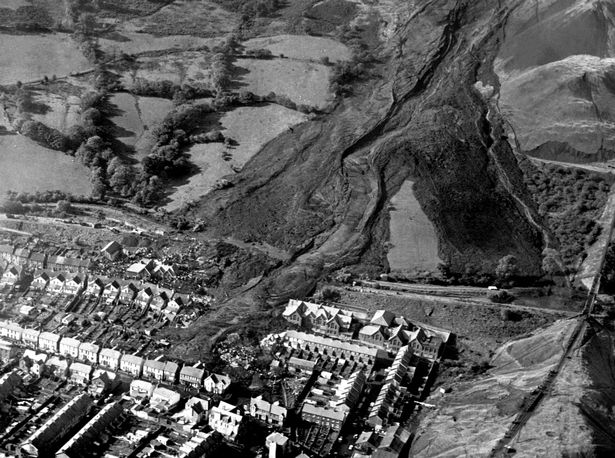
Aberfan Disaster
Theresa May must be thanking her lucky stars that the awful Grenfell Tower fire didn’t happen two weeks earlier. Had that been the case, by now we would probably have been getting used to a Labour government.
It’s human nature that even before all the victims have been identified, people are popping up everywhere to point the finger of blame.
There’s been talk of corporate manslaughter. Mrs May’s new chief of staff has been accused of not acting on a report warning of fire risks in tower blocks from when he was Housing Minister.
Exits from the tower were reduced during the refurbishment. The Fire Service gave standing instructions to residents to stay put in their apartment if a fire broke out elsewhere in the building. Fire station cutbacks allegedly increased the time it took for the fire engines to arrive at the scene.
There have been rumours about the cause of the initial fire that I won’t bother to repeat because they probably have more to do with social and political narratives than with the fire itself.
Some media commentators have blamed austerity for the disaster. David Aaronovitch of The Times looks back at a string of disasters in the Eighties that involved mass casualties – the Bradford City stadium fire, the Herald of Free Enterprise fire, the King’s Cross underground fire and the Hillsborough disaster. Given the lessons learned from these events, he says, we shouldn’t be here. As he describes them, the common threads in these disasters were that:
“by and large they arose from the use of old, near-obsolete and dangerous infrastructure, from under-investment in improvements and a generally negligent attitude toward health and safety.”
He could have added that there’s another common thread. Just as was the case with Grenfell Tower, there was no lack of people warning about the potential for these kinds of disaster. Go back further than the 80s to Aberfan, where an unstable spoil tip in a Welsh mining village slipped down a hill and engulfed a school.
At Aberfan, the concerns of the locals about the tip were dismissed. It was only when an “expert”, the Borough Engineer, wrote to the National Coal Board with his concerns, that the NCB took notice. But such actions as they subsequently took did not prevent the disaster.
All too often, we rely on experts to allay fears based on what is plainly obvious. Anyone who went to a major football stadium before Hillsborough would be able to tell you of the risk of crushing. And it shouldn’t have been up to a fire officer to point out that allowing thousands of people to gather on an antique wooden stand full of inaccessible rubbish was a recipe for disaster.
So here, unfortunately, is what seems to be a universal human trait. Even in a society that accepts the need for strict health and safety regulations, we trim, we get by, we take risks and we ignore hazards. Regulations can’t cover every eventuality. They are built on what we know, not on what we don’t know. And even when we know about a new risk, it can take an inordinate amount of time to update the regulations. It’s only when a catastrophe forces us to learn lessons that we take rapid action.
It has always been thus in the aviation industry. Most of the technological weaknesses in aircraft are first identified because of crashes. Investigations reveal the causes; manufacturers and operators fix the problems. The one problem they can mitigate, but never fix, is human error.
It will be no consolation to the families of those who died in Grenfell Tower to know that the deaths of their loved ones will probably make similar disasters less likely.
But there will be man-made disasters in the future. Some will come seemingly out of the blue, only for people to tell us after the fact that they told us so beforehand. Others are staring us in the face – infrastructure vulnerable to cyberattacks, major floods caused by climate change for which we have not prepared, nuclear detonations.
We are not, contrary to what Aaronovitch says, back in the Eighties. We are where we have always been, balancing foresight with expediency, and sometimes getting it wrong. And infrastructure that is old isn’t necessary dangerous. If that were the case we would need to demolish the majority of our churches, palaces, Georgian terraces and Tudor farmhouses, and with them the cultural soul of our country. In fact, young infrastructure is often more dangerous than old, because it’s more complex and not designed to last.
If you exclude the threat from terrorism, our country is a safer place today than it was in the Eighties. The very fact that a disaster like Grenfell Tower stands out is because it’s relatively rare. Unfortunately, there’s one thing the designers and the regulators can’t anticipate every time. Us.
We are fallible, stupid, vain, complacent, greedy, selfish and negligent. We are human. We have some positive qualities too, as all those who rushed to assist the survivors of Grenfell Tower have shown.
But if you know anyone who has never taken a risk, cut a corner or accidentally put someone else in danger – and got away with it with a sigh of relief – then you know a very rare person.
So the blame storm rages away, almost as fiercely as the fire that consumed the tower. The rich and the poor blame each other, as do the left and the right. In a disaster of this magnitude we can always find someone to blame. Whether or not we are justified in pointing the finger, this is how many of us make sense – our sense – of what happened.
No doubt there will be an inquiry. People will be held responsible and recommendations made. But whatever sanction the state might impose on such parties as may be identified as culpable, I suspect that it will be nothing compared to the punishment they will exact on themselves, knowing that they have contributed to all those needless deaths.
With that in mind, when you drive your car a little too fast on the motorway, or take your eyes off your kids in the shopping mall for just a little too long, you might want to spare a thought for those who took a risk and didn’t get away with it, or looked away when they shouldn’t have done, and say to yourself “there but for the grace of God go I”.
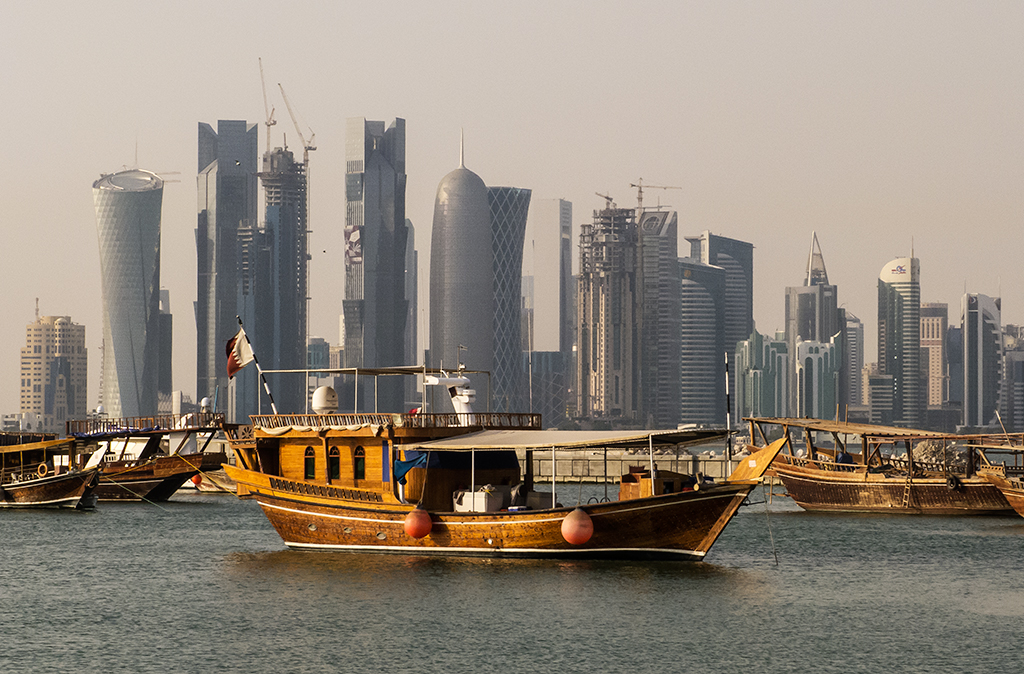
One or two people have asked me in recent days about the background to the rupture between Qatar and its neighbours. They know I have lived and worked in the region, and that I’ve written a fair amount about Saudi Arabia, the Emirates and Bahrain over the past seven years. Qatar less so, though you’ll find one or two pieces if you search this blog.
None of this writing makes me an expert on the current situation, and I wouldn’t presume to be an authoritative source on the subject any more than someone whose views on the United Kingdom are based on experience of my country that dates from before the seismic events of the past two years.
That said, I’ve read plenty of analysis, ranging from a dissection by Hassan Hassan, an eminent political commentator, of the geopolitical aspirations of the Middle Eastern power blocs involved in the action, to Christina Lamb’s excellent piece in today’s Sunday Times, which dwells on the human as well as the political aspect of Qatar’s new-found isolation.
Hassan’s explanation is rooted in this description of a new reality in the region:
Qatar, Hassan claims, is firmly in the camp of those who, like Turkey, support the Islamists. Saudi Arabia, Egypt, the UAE and Bahrain are in the other camp. This may come as a surprise to those who believe that Saudi Arabia, considered by many to the principal exporter of the ultraconservative theology that is shared by many of the Islamist factions. They forget that Saudi Arabia has been under attack for over the past two decades by violent forces determined to bring down its rulers – first Al-Qaeda, and now ISIS.
The states seeking to isolate Qatar are united in their fear of the Muslim Brotherhood. Qatar sits uneasily on the other side. It has good relations with Turkey and with neighbouring Kuwait and Oman. Although it has contributed troops to the coalition fighting the Iranian sponsored Houthis in Yemen, its relations with Iran are far less adversarial than are Saudi Arabia’s.
What particularly irks those who have taken action against them is Qatar’s refusal to disavow the Brotherhood. Its media empire, most notably Al-Jazeera, has infuriated both Sisi in Egypt and his allies with its perceived bias in support of Islamist causes, not least the uprising in Egypt that brought Mubarak down.
Lamb speaks of Qatar’s Janus-like foreign policy, its investments in the West contrasting with its harbouring of Taliban exiles and of Yusuf Qaradawi, spiritual head of the Brotherhood. She also describes the defiance of ordinary Qataris as they come to terms with their status as pariah of the Gulf.
After the initial shock of the blockade, Qatar has turned to defiance. Shops were replenished — with the exception of the Saudi chickens — while the ministry of commerce issued a video showing well-stocked shelves. “We can live for ever at the same standard,” said Al Thani, noting that only 16% of Qatar’s food imports came through the land border crossing with Saudi Arabia.
The toll on thousands of people caught on the wrong side of the border for work, studies or mixed marriages has nevertheless been great.
“The Saudis want to control us,” said Wafaa Al-Yazeedi, chairwoman of a state hospital in Doha, who has raised her son and two daughters alone since divorcing her Bahraini husband. Children in the Gulf take their father’s nationality, which means they are now facing expulsion.
“They can stop our food, our water but they can’t take our children,” she said, tears rolling down her face. “To do this in our holy month of Ramadan. Even if this is resolved, we will never forget.”
With these highlights I haven’t really scratched the surface of a highly complex story, let alone mentioned a further joker in the pack – the US, with its investment both in Qatar and in two of the three power blocs. What is going on in Washington – with Trump yapping away on Twitter about Qatar as a sponsor of terrorism and Tillerson in the State Department urging swift resolution of the crisis – is anyone’s guess.
But on some things I do have a view.
First, the Saudi/Egypt/UAE/Bahrain alliance will be betting on a speedy capitulation by Qatar. They will know that the longer the impasse remains, the greater the chance that Qatar will be drawn into Iran’s orbit out of a sense of self-preservation. The prospect of Iran gaining a foothold in the Gulf would horrify the Saudis. It could even be a casus belli.
Second, there have been suggestions that the Gulf alliance would like to see the overthrow of the current Emir. This would be an almost unprecedented event, in that it would have been so blatantly inspired by foreign actors. Other rulers have been deposed – in Qatar itself and in Oman – but any foreign support by their neighbours or by powers further afield (the US for example), has been shadowy and unproven. Both overthrows were seen at the time as internal affairs motivated by the desire to modernise what were backward nations. In fact the neighbouring monarchies have typically been inclined to support their brother rulers under threat – as they did with Kuwait in 1991, and more recently in 2013 when the Al-Khalifa family in Bahrain seemed to be on the verge of downfall.
Third, if Sheikh Tamim survives but is forced to give in to the demands of his neighbours, it will be a humiliation in a region where face is of paramount importance. Relations between him and his fellow rulers will never be the same again. And it’s quite possible that his resentment will be reflected in the wider population, who have for so long been fed the line that they are part of one big happy family of Gulf Arabs.
All of these factors suggest to me that one outcome is quite possible – the replacement of Sheikh Tamim by members of his family more likely to make the required concessions. Other developments, such as a military takeover by the Saudis and Emiratis, are less likely because of the long-term damage they would cause to relations between the Gulf Cooperation Council members, including Kuwait, which has shown more sympathy to the Qataris than the others.
It’s also possible that the current regime will tough it out. Its economic well-being as a major gas producer is unlikely to be jeopardised by the sanctions imposed by its neighbours. As long as it can keep its population onside, the inconvenience of what is basically a state of siege is unlikely to cause the country to grind to a halt.
But if the economic interests of wealthy Qataris start to become threatened, then the Emir and his allies will start to feel the pressure to cave in.
It’s easy to look on the current contretemps as a spat – a cat-fight in which rhetoric plays as important a role as claws scratching faces. Rhetoric is something in which the Arab world excels, often with no discernible consequences. Declarations of undying amity frequently precede actions that belie the sentiments. Likewise, blood-curdling threats are not always carried out.
But this is different. It will be seen by many Qataris as bullying. If the impasse leads to bloodshed, it will create yet another cycle of martyrdom. The temptation on the part of the Iranians and Turks to intervene might become irresistible. And the Gulf region will experience an instability and insecurity that makes the turmoil in Bahrain seem like a minor squabble.
The US, which has a military and economic footprint across the Gulf and Saudi Arabia – including 10,000 troops and a major airbase in Qatar – would be advised to tread carefully. Whether in the hands of Donald Trump it is capable of a coherent policy is highly questionable.
It’s understandable that we in Britain, with our chaotic political situation and the imminent Brexit negotiations, and Americans, obsessed with Trump’s problems at home and North Korea abroad, might overlook the argument between a tiny Gulf state and its neighbours.
We shouldn’t. It’s important and potentially dangerous.
Political incorrectness alert: this post contains content that some readers might find offensive, especially if they are beyond retirement age and facing the prospect of spending the rest of their lives in a care home.
Good. That’s that sorted.
I’m delighted that the directors and employees of a care home company in the West Country have been convicted for their policy of locking up awkward residents in a punishment room. I’m not sure what is likely to shock the British public more – that the grumpy recalcitrants were banged up in a damp cold room with no toilet and only a half-inflated airbed for company, or the fact that these unfortunates actually paid for the privilege.
But ever since I read about this story, I’ve been thinking. Perhaps punishment cells for the elderly do have a part to play in their care. Before you choke on your Waitrose guacamole, hear me out.
I’m not quite at the stage when my children might think fit to wheel me into a care home. But if and when that time comes, I would demand to see the punishment cells. You see, I always thought that I’d cope with prison pretty well, so long as my fellow inmates left me alone. Four walls, barred window, a ton of books and some writing materials? Heaven!
Now assuming I was reasonably compos mentis by the time I checked into my geriatric Hotel California, it wouldn’t take long before I was howling for some peace and quiet. I know this from my observations of my mother’s care home. It was very benign, but the life of the inmates was punctuated by continual interruptions.
Well-meaning people trying to encourage you to dance and take part in quizzes, though mercifully not at the same time. Residents suffering from mild dementia patrolling the rows of incumbent sleepers, inspecting their personal belongings and engaging in meaningless conversations – mostly with themselves. The occasional tourettes-like outburst from one lady who wanted to stand up when she was sitting down, and sit down when she was standing up.
I can imagine that I would react in one of two ways. Either I would become demented in very short order and join the mumblers and the ranters, or I would be become irritated to the point of violence. So the idea of a punishment cell to which I could retreat after pouring tea over my neighbour, putting rat poison in their cake or groping the carers would actually be quite attractive. And if I wanted to make the swiftest possible exit from this world with a nifty dose of pneumonia, the colder and damper my place of confinement the better.
Of course it would help if there was also a room with slightly less spartan conditions where I could be locked away with my books without the chance of my expiring within 48 hours. But I’d probably want to stay there indefinitely.
A really imaginative care provider might also provide a cooler, where I could sit like Steve McQueen in The Great Escape chucking my baseball against the wall, fantasising about breaking out of the home on my mobility scooter and coming to grief in the privet hedge at the back of the garden after a thrilling chase by the care workers dressed as camp guards.
Speaking of Nazis, you could also have the Max Mosley option (for an extra charge of course) wherein you are locked in the punishment cell in the company of a couple of jackbooted dominatrices, there to whip you until you expire with the excitement of it all.
The way I see it is that if you are going to pay good money for the privilege of being incarcerated by a gang of psychotic profiteers, you might as well enjoy the experience, even if it’s the last you have on earth.
With that in mind, unless I’m lucky enough to keel over before I reach the portals of the Sunset Retirement Home, I’m going to compile a list of all the nasty, petty, spiteful things I could do to upset the owners and the staff. And I shall keep it in my pocket, in case I forget them by the time I get there.
Come to think of it, no need. I’ve been practising on my long-suffering wife for years.
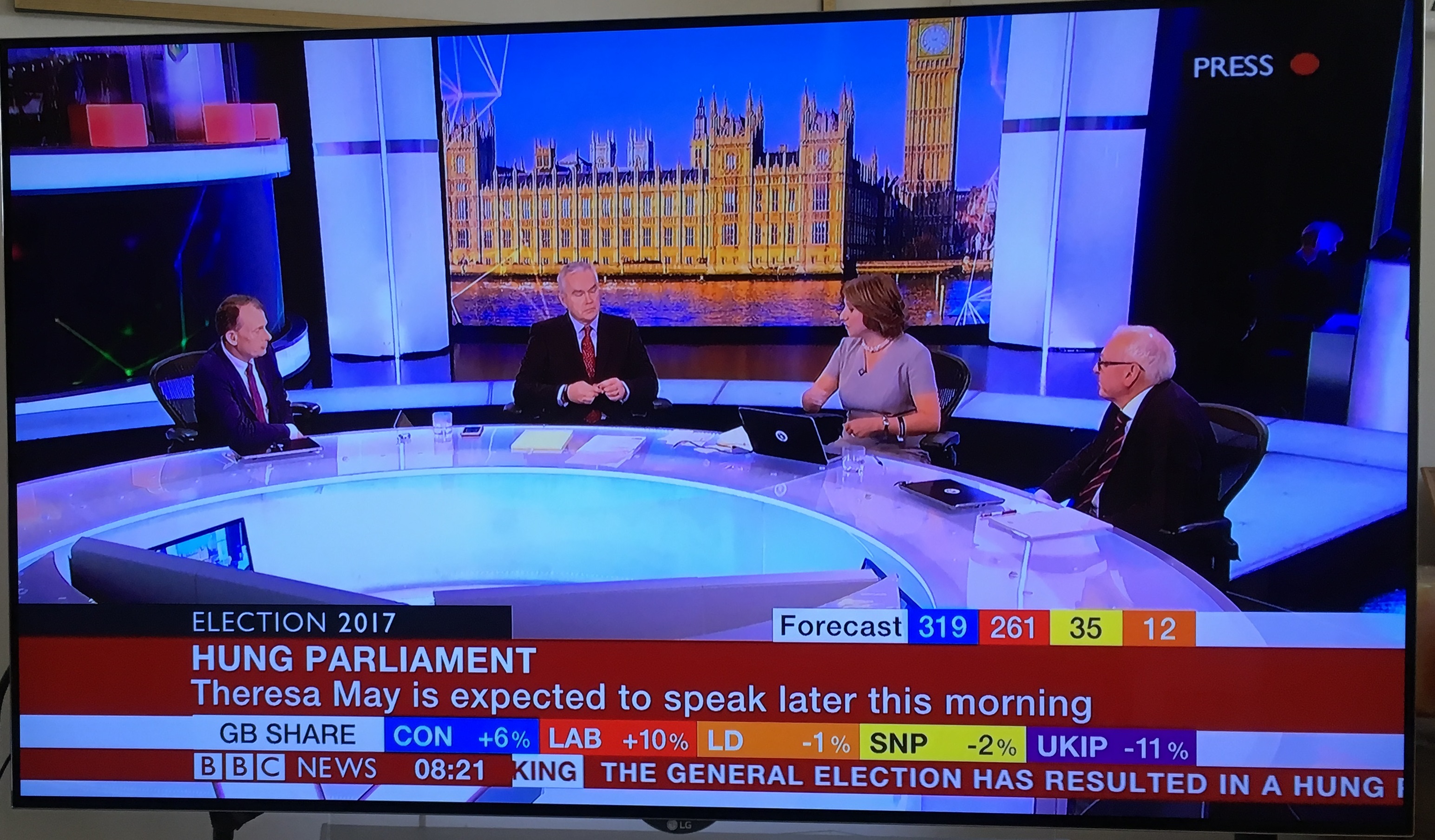
A few thoughts in the immediate aftermath of Britain’s general election:
First, Jeremy Corbyn’s Labour did far better than expected. They ran an excellent campaign. But they benefited from the implosion of the Conservative campaign, and more specifically from Theresa May’s dismal personal performance. To use a sporting analogy, they took advantage of an unforced error by the other side.
I suspect that had Labour gone into the election with a leader who was not subjected to the virulent Corbyn-phobic messages churned out by the Daily Mail and other right-wing media, they would have performed even better. In other words, under someone like Yvette Cooper or Andy Burnham, Labour might actually have won a majority.
Second, the UKIP vote share was pulverised. Would it be too much to hope that Nigel Farage and his friends will disappear from our TV screens, from the mainstream media and from the social media? Will they fade away into the obscurity they deserve? Unfortunately, though the BBC can’t justify giving him as much air time as before, Farage will no doubt be as busy on the social media as ever before as the self-proclaimed guardian of Brexit.
As for the opinions that UKIP drew upon in their previous success, they will be well represented by the right wing of the Conservative party, as they always were in the past. Plus ca change, plus c’est le meme chose.
But fat chance Farage will disappear unfortunately. Even as I write this, he’s already talking to the Beeb.
Third, once the exit polls showed the likelihood of a hung parliament, pundits on the BBC were telling us that the EU would prefer to negotiate with a majority British government, whichever party was in power. This will not happen, but we should be less concerned about the EU’s preference than by our own approach from here onwards. It’s pretty obvious that a minority government will have a hard time maintaining May’s “no deal is better than a bad deal” policy.
Watch out for some serious wiggling on the issue of our participation in the customs union and single market. Hard Brexit? Don’t bet on it. Referendum on the ultimate deal? Don’t bet on that either. But the chances are that the negotiations will be the proverbial bugger’s muddle, which will increase the chances of a deepening disillusionment across the electorate over the wisdom of continuing down the Brexit path. Hopefully.
Fourth, the Scottish Nationalist’s reverses would seem to have put the kibosh on a second independence referendum any time soon. Good news – the last thing we need is another bloody referendum on any subject other than Brexit.
Fifth, one of the most telling comments by David Dimbleby during the BBC election coverage: the Greens get 2% of the votes and one seat; the SNP get 3% and thirty-five seats. Fair? Equitable? That’s for you to judge. Time to revisit proportional representation.
Sixth, indications are that Theresa May won’t resign. Not surprising, given that negotiations on Brexit are due to start in less than two weeks, and the Tories wouldn’t be able to find a new leader in time. If she resigned, it would mean the postponement of the negotiations.
However, if I was in her shoes I would go. I would consider the outcome a personal failure. And if she was the CEO of a major company whose profits suddenly and unexpectedly collapsed, she’d be out on her ear in five seconds flat.
Seventh, the person I feel most sorry for is Nick Clegg, who lost his seat. He’s a decent man whose misstep on student fees was punished disproportionately. Theresa May’s U-turns during her tenure as Prime Minister puts Clegg’s “betrayal” into the shade. Good luck to him. He still has a career ahead of him.
It’s going to be an interesting few months. Get ready for another election soon. This parliament will not last until 2022.
 59steps