Skip to content

I’m not a number! Hold on, I’m an algorithm – allegedly….

by

I rarely drink wine. One minus point. I love Marmite, but I don’t eat a spoonful a day. Half a plus point. I drive a diesel car. Six minus points. I eat five a day, but not ten a day. One plus point. I walk at least twenty miles a week. Three plus points. I pour cream over my porridge. One plus point for the porridge, one minus point for the cream. I spend too much time on the web reading about Donald Trump. Two minus points for raised blood pressure. I fly into a rage whenever anyone mentions Brexit. Three minus points.

A hundred other facts about my lifestyle, my genetic preconditioning, my upbringing, my opinions and my relationships with others can be reduced to a set of numbers. Numbers which can be used to sell to me, to persuade me to vote for one party or another, to predict how long I’m going to live and to work out whether I’m a threat to national security.

If you read books like Yuval Noah Harari’s Homo Deus, you might end up convinced that there is no god and we have no souls. Moreover we don’t even have an essential self to which we can be faithful, and efforts to strip away the non-essentials of life in order to connect with that self are therefore futile.

We are, according to the script, biological algorithms. Lots of them, cohabiting, interacting and occasionally fighting with each other. If anyone could actually figure out how these algorithms work, it would be possible to predict our behaviour, to modify it and ultimately control it.

Plenty of research into brain function and biological structure is leading us to that conclusion. According to Harari and the scientists whose work he cites, we are conscious, but machines are not – yet. And anyway, our consciousness may turn out to be irrelevant when machines become infinitely more intelligent than we are. Because consciousness is merely the end product of an algorithm, right?

Machines don’t care about global warming, the end of our species, and whether or not I live to be ninety. They don’t care about life, liberty and the pursuit of happiness. They only care about what they’re ordered to accomplish. In fact, as far as they’re concerned, there’s no such thing as care. Only instructions. And since they’re now capable of learning without any prompting from us, who knows what conclusions they might come to which will impact on us humans who have grown dependent on them?

We should therefore be careful what we instruct them to do. And, in a myriad of ways, be careful what we wish for.

Harari claims that we are witnessing the birth of the first new religion since humanism. For him, a religion is purely a belief system – the divine doesn’t come into it. Humanism is all about us. We are the pinnacle of life. Our lives are sacred, and we have an inalienable right to self-expression, self-development and self-fulfilment.

Our new religion is Dataism. We are part of an infinite, interconnected web of numbers. Of codes, genetic or artificial. We should be sharing our codes with others – humans and machines – and by doing so we will produce health and happiness for the many. By integrating with machines, we will become super-humans. Eventually the super-humans – or at least those of us with the wealth and the power – will evolve into an oligarchy, whereas the rest of us will potter along, seduced into passive compliance by machines that know us better than we know ourselves.

By implication, those of us who decline to share our data – our likes and dislikes, our strengths and weaknesses, our DNA – will become marginalised, and perhaps actively ostracised. If we are reluctant to join the data revolution, we will not share in its bounties. We will live in metaphorical mud huts, swept away by seasonal floods and subject to disease and disaster from which we have no protection.

Observers of Big Data cite Brexit and Donald Trump as fruits of our ability to predict and influence behaviour using numbers. The data owners use Facebook likes to understand us better than we understand ourselves. They target us with messages – fake or otherwise – that reinforce our prejudices. They make promises that chime with our fears – big walls, taking back control, stopping immigration, banning Muslims. Insert these messages at a cellular level – not at groups of people but at individuals living in Pennsylvania, Michigan and Sunderland. The votes thus garnered then tip the balance and produce the desired result.

All this sounds pretty logical if you have no faith in any particular god, and you live your life surrounded by things that connect with each other without your having to make any particular effort – Laptops, IPads, Facebook, Amazon, online banking, Skype. And you could argue that even the millions of people for whom belief in the divine – in a God who make rules, who approves and disapproves, and who hands out brownie points to the devout – provides a fundamental structure for living, are being seduced by Big Data without even being aware of it.

But the idea of Dataism falls apart somewhat when you consider that the Masters of the Data Universe saw fit to achieve the election to the most powerful office in the world of the ultimate collection of screwed-up algorithms – an ignorant, unpredictable podgeblaster called Donald Trump – who is quite capable of reducing all our treasured data to little more than particles of radioactive silicon. It doesn’t seem so inevitable when you consider that a significant minority of our planet’s population have no connection to or interest in the great river of data, and are concerned only with getting enough to eat and protecting themselves from earthquake and famine. And when you consider that even if Trump doesn’t blow up the world, that minority will still have to contend with the effects of climate change as cities are swamped and fields turn to desert. Indeed, the minority might become a majority in the not too distant future.

Should the unthinkable not happen, and wildly unstable biological algorithms fail to bring us to our knees, we may yet become subordinated to unconscious intelligence and ultimately eliminated. So be it.

I’m not one of the privileged few who will ascend to super-humanity. And no scientist will be able to unravel the contradictions of my personality in my lifetime. If it comforts me to believe in some form of divinely inspired code of behaviour, I shall continue to do so. If my lifestyle leads me to live a shorter life than those who measure their blood pressure, their heart rate, their food intake and the number of steps they take in a given day, then to hell with the data. And to hell with everyone else’s data. What will happen will happen.

Not that I don’t care. I find these theories fascinating. I find data fascinating. I’m endlessly interested in the quirks of human nature – also known as psychology. And since it’s given to me – and not to the machines that make my life easier – to care about people poisoned in Syria, about madness in the White House and sociopaths in the Kremlin, about family, friends, dogs, dolphins and endangered butterflies, I shall continue to do so without reflecting too deeply on why I care.

And don’t anybody try and tell me that from the perspective of a lowland gorilla, a Chinese river dolphin and any other endangered creature, life will be even more tenuous when the machines take over. It might even get better when the top predator shuffles off. At least machines are unlikely to use rhino horn as an aphrodisiac, to eat their way through a continent’s supply of buffalo or make jewellery out of elephant tusks. Yes, they might end up turning the planet into one vast industrial estate, but we’ll be long gone by that time.

Right now I have far more important things on which to pay attention. Glorious sunshine encouraging the leaves to emerge pristine in sharp colours on my trees. The two robins in my back garden visiting me to show me how to build a nest. The pleasure of my wife’s company and that of my children. Sergio Garcia’s heartwarming triumph in the US Masters. And profound gratitude that I’ve clocked up so many years and lived through so many crises without being blown up, gassed, starved or tortured to death. Yet not enough years to stop caring about those who haven’t been so fortunate.

If all that luck is down to an algorithm, I can live with the thought. And store it away with all the other algorithms.

I don’t know about you, but what I see every day is miracles and tragedies, joy and grief, contentment and sadness. If all that stuff is just an illusion, at least it’s my illusion. And that’s good enough for me.

Let their names moulder in the graveyard of infamy…

by

Julius Caesar

In these dark times, it’s cheering to read of public-spirited citizens who wish to redress the wrongs of the past. Yesterday’s Huffington Post featured a campaign in the good city of Bristol to re-name any building bearing the accursed name of Wills. For it was Henry Overton Wills III – whose fortune came from his family’s slave owning, tobacco planting and cigarette manufacturing business – who endowed much of Bristol University and gave his name two of its most prominent buildings.

As I understand it, the instigators are undergraduates, shining examples of those hard-working, idealistic young people who spend their lives studying or supporting worthy causes such as this one.

And they’re quite right. Shame on the city to have accepted money from such an evil example of colonial capitalism. Better if they’d called the Wills Memorial Building, the largest gothic structure in the city, the Carcinoma Building, in memory of all the poor people who inhaled their benefactor’s noxious products. And the university hall of residence also named after the venal panjandrum, where one of my daughters spent a riotous year, should have been called Servitude Hall.

Why stop there? Pull down the statue of Cecil Rhodes from Oriel College, as the students of Oxford have advocated. No building should be named after a land-grabbing, racist, blood diamond merchant, should it? Replace it with a statue of the Zulu king Cetshwayo, the victor of Isandlwana. At least he gave our imperialist ancestors a bloody nose.

But I believe that the campaigners are aiming too low. We should expunge the name of Victoria, Queen Empress of half the planet – in whose name unspeakable atrocities were committed – from Victoria Falls, Victoria Station, the Australian state of Victoria and a hundred more institutions, buildings and monuments. If Lenin can be removed from every public square in the former Soviet empire, why not tear down the statues of the bug-eyed monarch wherever her subjects placed their baleful imprint?

And what of the beastly Hanover dynasty, whose scions snuffed out Scotland’s finest at Culloden, and under whose aegis Georg Freidrich Handel wrote operas employing unfortunate men forcibly castrated in their youth? Should we really be celebrating George I, who allegedly murdered his first wife’s lover, and George III, who lost America and paid the penalty by going mad? Get rid of Georgetowns, and rename everything else Georgian with a more appropriate moniker. Teutonic perhaps.

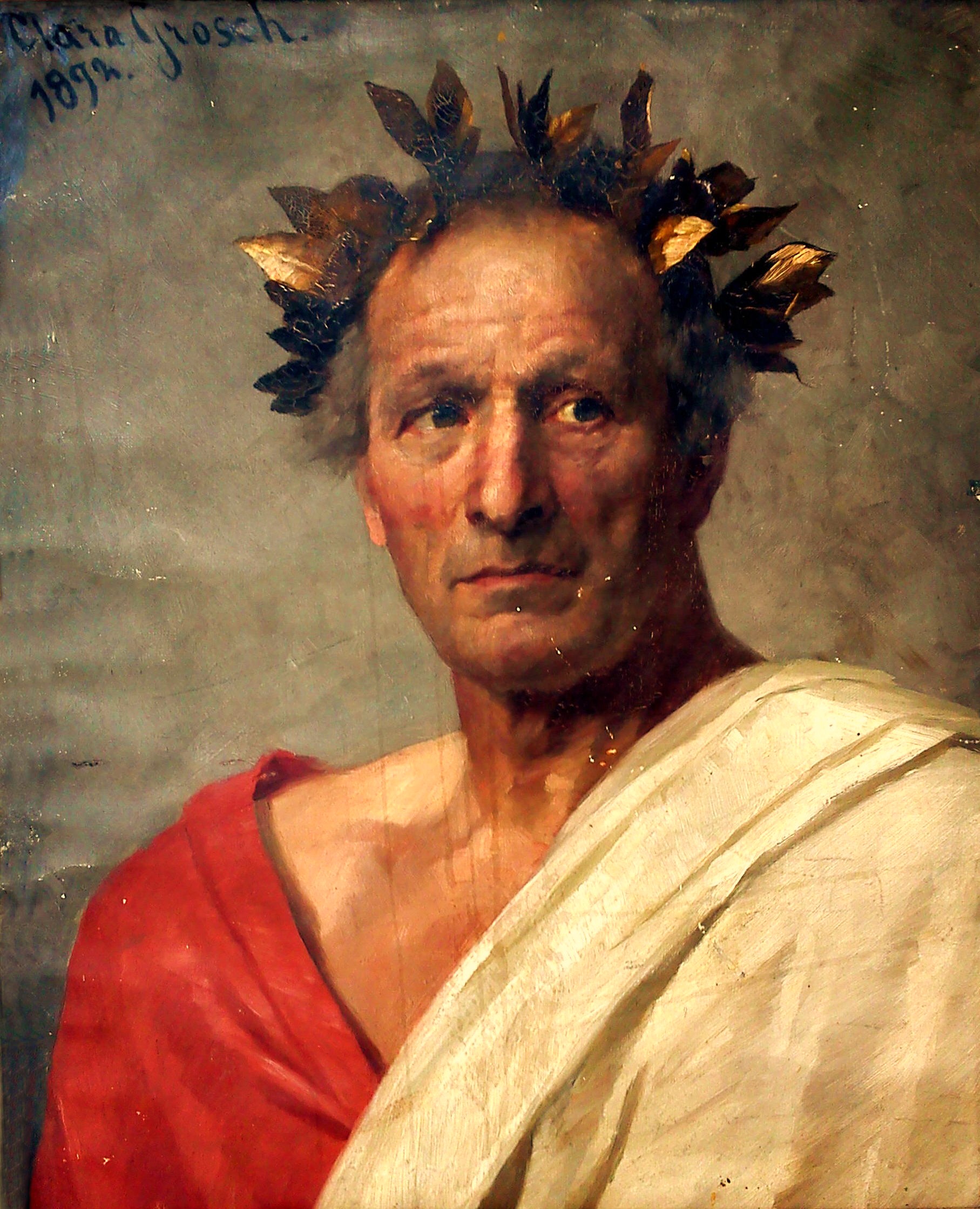
As for our classical “heroes”, cursed should be the name of Alexander the Great, the Macedonian thug who wiped out the enlightened civilisation of Cyrus the Great and his illustrious successors. The Egyptians should rename Alexandria immediately. And Julius Caesar, whose genocidal achievements approach those of Adolf Hitler, should never be commemorated again. No more Tsars, Kaisers and Shahs. And who wants to eat a salad named after the man who slaughtered a million Gauls and enslaved a million more?

Only after we have expunged every tyrant, kleptocrat and robber baron with blood on their hands (and nicotine on their fingers in the case of Wills) from our cities, streets and buildings should we rest content that we’ve set the record straight, happy that their names will moulder away, never to be mentioned again unless with contempt.

Come to think of it, many of our city and street names have unpleasant connotations, not to mention our villages. Names like Piddletrenthide and Buttocks Booth are affronts to public decency. And towns ending with -caster or -chester are constant reminders of Roman oppression. Perhaps we should rename them all to avoid future disagreements. Numbers would be best. Change London to Metro One, Birmingham to Metro Two, Manchester to Metro Three and so on. Though on second thoughts that might not work. You’d have Brummies arguing with Mancunians, and the Scots would have to re-name their cities once they leave the UK.

Oh well, you know what I’m getting at. If you work hard enough, you can be offended by any name, so best not to have any. What a harmonious country we’d live in then! Free of historical controversies. Looking only forward to a glorious future untainted by the polluting influence of the past.

We’re not quite there yet, but there’s always hope, especially with activists like me fighting the good fight. With that in mind, I’ve decided never again to buy a cappuccino from Caffé Nero, in solidarity with murdered mothers and victims of arson. Nor shall I ever buy a can of Campbell’s soup, in sympathy with exploited Cornish tin miners and all the MacDonalds massacred at Glencoe.

Actually, we should really be proactive, and work on words that might in future be mistakenly associated with the infamous. So it goes without saying that I shall never again play bridge until the World Bridge Federation renames the trump card. And no more dancing round the maypole for that matter.

Every little helps, wouldn’t you say?

Bling for Elephants

by

I really wonder about us humans sometimes.

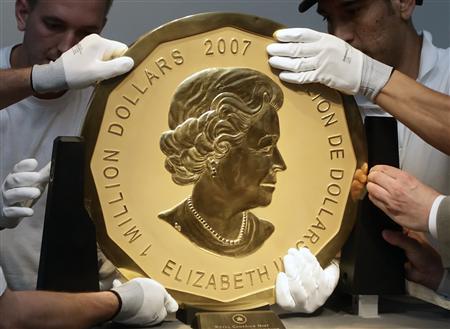
Yesterday, burglars broke into a museum in Berlin and stole a gold coin. Not just any gold coin. This was a monster weighing 100 kilos. It was cast in 2007 by the Royal Canadian Mint. Its nominal value is one million Canadian dollars.

Three questions come to mind.

First, why would anybody in their right mind create such an artefact, and call it a coin? It’s not as if you’d take it into a MacDonalds – on a fork lift truck presumably – and use it to buy a couple of Big Macs.

Second, why would anybody, having made the thing, stick it in a museum, where it can be stolen by Ocean’s Eleven? It will be melted down apparently, which would be entirely understandable given that the value of the gold is about four times the nominal value. In other words, turned back into ingots. And ingots, as most of us who have seen Goldfinger know, are kept in places like Fort Knox, where they’re stored behind six foot thick steel doors and protected by at least a dozen companies of Navy Seals with enough weaponry to defend a medium-sized city.

And finally, what’s the point? Apparently five were originally minted. For whom, and for what purpose? As bling for ceremonial elephants? As portable wealth for Mexican drug barons? I could understand someone using a spare stash of gold to create something aesthetically pleasing – a statue of the Buddha, perhaps, or a golden calf. But a coin?

But then I had a thought. I would bet at least a quarter-pounder with cheese that one of the proud owners has it mounted in a secret treasure room within his golden palace overlooking New York.

One of the world’s most ridiculous, vulgar and pointless lumps of metal would be perfect for the ridiculous, vulgar and pointless waste of space masquerading as the leader of the free world, would it not?

East West Street, Martin McGuinness and the sanctity of the rule of law

by

It’s been a week that has caused me to revisit some long-held certainties.

I’m not referring to the attack on Westminster. An incident of this kind was entirely predictable, just as was its exploitation for political purposes by various ne’er-do-wells. It was not the first, and it will not be the last. I would have said the same in the 1970s as each IRA atrocity unfolded.

Two other events led me to spend an inordinate amount of time thinking about whether we can truly say that we’re governed by the rule of law in the face of apparent evidence to the contrary.

On Sunday morning I went to a lecture in London by Phillipe Sands. He was speaking about his book, East West Street. If you’re not familiar with it, here’s a brief review that I wrote few months ago:

A deeply moving account by Phillipe Sands, an eminent barrister and professor of law, who pieces together the history of his Jewish family from their origins in Lemburg (also known as Lvov and latterly Lviv). He intertwines the lives of four men and their families. Three of them lived few streets away from each other: his maternal grandfather, Leon Bucholtz, along with Hersch Lauterpacht and Raphael Lemkin. The latter two were lawyers who subsequently had a profound influence on the development of international law. The fourth person was Hans Frank, Hitler’s viceroy in Poland and the other occupied territories in the East.

As a member of the team of lawyers preparing for the Nuremberg trials of the Nazi leadership, Lauterpacht created the concept of crimes against humanity. Lemkin first coined the term genocide. Although Lemkin’s concept was not universally accepted by the four powers represented at Nuremberg (for fear that the term being used to describe earlier historical events of which the victors were not proud) the two lawyers were authors of two enduring planks of international law, even though they didn’t see eye to eye on the details. Lauterpacht was focused on crimes in terms of their effects on individuals. Lemkin believed that prosecutions for war crimes should be conducted on the basis of crimes against groups.

In Sands’ narrative, all roads led to Nuremburg. For Frank, the trial ended with the death sentence. At the time of the trials neither lawyer was aware of the fate of their extended families and Frank’s part in it. Only subsequently did they and Leon Bucholtz discover that their loved ones were among more than two thousand residents of nearby Zolkiev who rounded up, shot and buried in a forest outside the town. Other family members ended up at the Treblinka death camp.

When we talk blithely about a world turned upside down in the wake of Trump’s election, we should read this book and consider the fate of Lemburg/Lviv/Lvov, a city that over thirty years ended up by treaty or through invasion within the borders of three separate states, and whose population suffered endless turmoil.

You don’t have to be Jewish and to have been robbed of a normal family history to appreciate the legacy of Lemkin and Lauterpacht. Thanks in large part to the work of two outstanding lawyers, tyrants, warlords and their foot-soldiers know that today there is an International Criminal Court waiting for the opportunity to reward them for their efforts.

Although East West Street is an invaluable primer of the origins of international criminal law, in essence it’s a book about individuals and their stories, eloquently told by an author who has through his work encountered more than his fair share of inhumanity. To that extent, you sense that Lauterpacht, with his emphasis on the individual, is the greater influence on Sands as he weaves together the strands of human tragedy and survival in this impressive and compassionate book.

Listening to Mr Sands speak for an hour – in complete sentences as lawyers do – didn’t add significantly to what he had written in the book, but it did convince me that I was in the presence of an impressive and compassionate man.

I would have liked to have asked him one or two questions, but I rarely hold my hand up in such gatherings. I’m what Daniel Kahneman refers to as a slow thinker. Unless I’m well-versed in a subject, I like to reflect for a while before speaking, and in that forum – where the majority of those who did speak up seemed more interested in expressing their views than on getting Mr Sands to elaborate on his – I had nothing to offer on the spur of the moment.

But the effect of the talk was that in the subsequent few days I’ve thought of little other than war crimes, crimes against humanity and genocide.

I might have asked him where you draw the line in deciding to prosecute for genocide. How large does the targeted group have to be? Also, what was the rationale in excluding actions against political groups from most definitions of genocide?

More specifically, what of the Burmese persecution of the Rohingya? Does that amount to genocide? If so, does it make it less likely that a prosecution of Aung San Su Kyi might succeed because she is a Nobel Peace Prize winner? Or might it be that she lacks the power over her partners in government? But as a member of that government, is she culpable in failing to speak up, and failing to try to restrain those who do have the power?

Concerning war crimes, do you have to be on the losing side to be prosecuted? Which begs the question of whether the International Criminal Court is truly an independent body, or subject to the political sensibilities of those nations that have the power to bring alleged perpetrators to justice?

And I would have been interested to know whether Mr Sands believes that people trafficking and other violation of human rights constitute crimes against humanity? And what of female genital mutilation?

I have a fair idea that he would describe the International Criminal Court as a work in progress – that successful prosecutions are the art of the possible. He might also say that laws are written by people, and reflect the imperfections of humanity. And to those who argue that they’re written by God, he might comment that they still need to be interpreted – often imperfectly – by humans.

But far be it for me to put words in his mouth. No doubt he would have some more deeply considered opinions.

Then came the second event – the death of Martin McGuinness. A man never brought to trial for his activities as an IRA commander. Deliberately, so it seems, because the British government of the time apparently felt that he had leadership qualities that would be essential if a peace deal were to be reached in Northern Ireland.

So did the government suspend the rule of law in McGuinness’s case? And what of the lives the IRA took, including the twenty-one people on a night out in a couple of Birmingham pubs – an event that happened in my home town? Would Mr Sands argue that their killing – and those at Warrington, Enniskillen and the Baltic Exchange – amounted to a crime against humanity?

When, in fact, is it allowable to subordinate justice to a greater political good – as appeared to be the case when under the Good Friday Agreement murderers were allowed to serve shortened sentences?

Since McGuinness’s death, the great and the good have lined up to praise his contribution to the peace process, while some also took care to remember his earlier deeds.

Of all the quoted reactions, the most heartfelt arguably came from Norman Tebbit, the politician whose wife was crippled by the Brighton bomb during the 1988 Conservative Party Conference, and who was badly injured himself. He said: “He claimed to be a Roman Catholic. I hope that his beliefs turn out to be true and he’ll be parked in a particularly hot and unpleasant corner of Hell for the rest of eternity.” A howl of anguish and fury if ever there was one.

The moral dilemmas around the treatment of those who have been complicit in terrible crimes did not start and will not end with McGuinness. What respect for justice did the victorious allies show when they spirited some useful war criminals out of Germany in 1945? Was it right that the worst oppressors of the apartheid regime in South Africa were forgiven their crimes through the Truth and Reconciliation process? Were the US and Britain wrong, as Pakistan once claimed, to decapitate the Taliban leadership, thereby eliminating those with sufficient stature to negotiate a peace agreement? Should we be talking to “Caliph” Baghdadi of ISIS as part of an effort to end the conflict in Syria and Iraq? Or with the murderous Kim Jong Un in order to neutralise North Korea’s nuclear capability?

A notable absentee from Martin McGuinness’s funeral was Tony Blair, one of the main architects of the Northern Ireland peace process. His misfortune was that his political trajectory went the opposite way to that of the former IRA commander. If his career in government had ended before he took Britain to war in 2003, he would now be one of our most respected former Prime Ministers, mainly remembered for the Good Friday Agreement and his positive interventions in Sierra Leone and Kosovo. As it is, since the Iraq war he has been dogged by accusations ranging from bad faith to war crimes. Does he deserve to be excoriated while McGuinness is escorted to his grave with plaudits from his former enemies?

All of which reminds me that the rule of law, that cherished foundation upon which we are told liberal democracies are built, is to an extent a fictional device. It bends under the influence of power and expediency. Which is why we need lawyers like Phillipe Sands, who operates in the realm of the possible, yet in East West Street also gives voice to the victims who found their own ways to deal with the injustices visited on them both collectively and individually.

Justice is not blind, and the rule of law is not sacred, it seems, even in those countries that boast most loudly about their high moral standards. And sadly the victims with perhaps the most cause to howl cannot do so. Because they’re gone. The rest of us, victims or not, carry on and hope for better days.

Laptop ban in aircraft cabins – the contagion takes hold

by

Following on from my last post about the US ban on devices larger than phones in cabin baggage, it wasn’t fake news. Britain is following suit, so it must be true! Canada is thinking about doing likewise, so I suppose it won’t be long before every country indicates its preference for having explosive devices blow up in the holds of their aircraft rather than in the cabin.

Again, I have to ask whether this initiative is based on real intelligence – the stuff gleaned by spooks – or as the result of some enthusiastic helper in the White House trying to convince us – and particular the American public – that we really are in danger because of some evil new technique dreamed up by ISIS, Al-Qaeda, the Iranians or whoever.

I don’t know, and I can’t know. But I will offer the observation that as soon as you treat spook-derived intelligence as an opportunity to advance your political agenda rather than deal with it on its own merits, then you increase the chance that people will think you’re crying wolf. Fake news begets fake intelligence, right?

This must be tough to bear for the spooks who, whatever games their political masters get up to, are without question dedicated, professional and patriotic – in my country and America, at least. All the worse when their masters turn on them should the “one in a hundred” plot succeed.

In my dark moments I’m starting to wonder where this will all lead.

What will those devilish scientists beavering away in a tunnel somewhere under Raqqa come up with next? Perhaps some explosive that can impregnate a physical book – you open the book and it automatically detonates. Then think of a cheese sandwich. What horrors might lurk inside the filling? So no books allowed, and no food.

And if you happen to be travelling from Kuala Lumpur, will you be allowed to bring a perfume atomiser under the 100g limit? After all, Kim Jong Un’s half-brother was snuffed out with a hankie impregnated with VX gas. Someone running up the aircraft spraying that stuff would leave half the passengers in their death throes within minutes. So no containers of any liquid, no matter what the size.

Are we approaching the point where anyone with a brown skin and a name that sounds vaguely Muslim (or North Korean) will only allowed on the aircraft handcuffed and sedated? Yes, I know this post is getting silly, but the serious point is this: where do you draw the line? Or rather, where do you draw the line without making air travel unpalatable to the majority of passengers, and seriously antagonising a good proportion of them?

Or to look at it another way, are we so nannied that we’re unable to face the reality that there are many ways to die in an aircraft, and being blown up is by no means the most likely cause of death. Flying is risky. But not half as much as driving a car while eating a cheese sandwich or talking on a mobile phone.

For goodness sake, one of the risks of living is that at some stage we might die. Hopefully this nonsense will pass before we become afraid to step out of our homes unless we’re dressed in a flak jacket and a Kevlar helmet.

Before that baleful eventuality comes to pass, you have to reckon that the more the safety experts do to protect us by anticipating threats to the nth degree, the greater the chance that international travel as we know it today will shrivel and die. It will once again become a pastime only for the wealthy. The rest of us will take the train or go on our holidays to Bognor Regis or Coney Island.

Is this the post-globalisation world that the protectionists and isolationists wish upon us? Probably not, and as soon as the airlines start imploding you can rely on them to fight back. They will put pressure on Trump, May and all the other political leaders who justify ever more ridiculous measures with the mantra that that they have our safety at heart.

If it brought some small measure of sanity back to the experience of flying, I for one would gladly sign a disclaimer stating that I am aware that the aircraft I travel in is at risk of being crashed into a skyscraper, blasted out of the sky by a surface-to-air missile, blown to smithereens by a bomb in the hold (or the cabin), because that’s reality.

As things are, I don’t care if I can’t have my laptop or tablet in the cabin if that’s what it takes to reduce the chances of my violent death from one in a million to one in ten million.

But I’m not convinced that that will be the outcome. And I refuse to live my life – in an aircraft or anywhere else – with the grinning spectre of Osama bin Laden constantly in attendance.

New US security measures – a Muslim ban by a thousand cuts?

by

I really wonder whether in some US government departments there is an inability to distinguish between intelligence and intelligence. By which I mean the difference between received intelligence and innate intelligence, between paranoia and common sense, or between emotion and logic.

The Transportation Safety Agency’s ban on airline passengers carrying any electronic device bigger than a mobile phone in cabin baggage on certain flights into the United States is a case in point.

The ban applies to airlines flying non-stop into the US from ten airports in the Middle East. But not to US airlines. The focus appears to be on the security procedures of the airports concerned, and by implication, the trustworthiness of ground staff and airline employees.

Understandable, given the explosion over Sinai two years ago that brought down a Russian airliner flying from Cairo, about which I commented at the time. But I’m not sure the airport authorities in Dubai, Qatar and some of the airports affected will take kindly to their security procedures being compared with those in Cairo.

So by the new rules, an American Airlines flight from Abu Dhabi to New York is OK, because it’s American. But an Etihad flight is not. Not so logical when you consider – as the journalist Yaroslav Trofimov pointed out on Twitter this morning – that flights from Istanbul and Dubai are not OK, but those from Dakar and Caracas are.

Also not so logical when you imagine that a terrorist intent on blowing up a plane with some fiendish and as yet unidentified method will be motivated to find a route that takes them on to an American flight. Presumably they would be undeterred by the prospect of being offered one of AA’s awful pizzas at the end of the journey, on the basis that the flight wouldn’t make it that far.

You could understand the TSA’s thinking (or that of the NSA, the FBI, the CIA, the White House or whoever else is behind the decision) reckoning that a rush of people suddenly changing their flights to US airlines would raise a useful red flag for extra special screening. But that “intelligence” would only have a limited shelf life.

The bureaucrats or their political masters have surely taken into account that no flag carrier of a Middle East country to the best of my knowledge has ever been targeted by a terrorist intent on attacking America or American citizens, with the exception of El Al, which flies out of Israel. Tel Aviv, apparently, is not on the list.

The media chatter is centred on two possible motives for the decision. Buzzfeed quotes a “former US official” as saying that the measure is “a Muslim ban by a thousand cuts”. Trofimov says that “The new US restrictions will make many wonder whether the real aim is to hurt Gulf carriers like Emirates and Qatar and Turkish Airlines”. Two outcomes for the price of one, perhaps?

The whole exercise strikes me as irredeemably dumb, unless it has been prompted by some intelligence of the paranoid, spooky sort. It will piss off the thousands of law-abiding kids from Saudi Arabia and the other Gulf countries whose student fees prop up many US educational institutions. It will confirm in the minds of millions of people in the affected countries that they are not welcome in the US under any circumstances, as if the previous attempted bans haven’t already done so. And it will certainly make me think twice about travelling to America on a US airline, and not just because of the pizza.

As I write this I’m imagining a Doonesbury cartoon with two American bureaucrats in discussion:

“We need to do something about the Muslims”

“Why?”

“Because they hate us.”

“So what are we going to do?”

“Let’s ban a bunch of them from coming here.”

“Then they’ll hate us even more.”

“That’s fine. Then we can ban the rest of them. Problem solved!”

I’m sure Doonesbury would come up with something subtler, but hopefully you get the gist.

I do wonder how it is that a country with so many fine minds has ended up with a government run by so many stupid people.

It’s almost as though all that intelligence has cancelled itself out. On the other hand, perhaps it’s fake news, in which case I’m the dimwit.

A messy divorce just got messier – now we have a custody battle

by

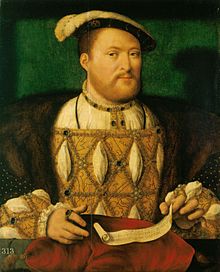
The Brexit business has often been compared with a divorce. It feels more so than ever today. The sort of English divorce you’d find in a novel or a TV drama, though perhaps not quite as dramatic. Not so much cruel and calculating as in Henry VIII’s abandonment of Katherine of Aragon, more full of Victorian rectitude and hypocrisy.

It’s an old story. You’re frustrated with your marriage, and you want to get away. You have all kinds of fantasies about how wonderful it will be to have the freedom do your own thing. You know there will be bitterness and a financial cost, but what the hell – the sunlit uplands await. Until the uplands turn into a valley of loneliness. The children take sides, and new relationships are fleeting and superficial. When you get into something permanent again, surprise, surprise: the same old problems surface. And it turns out that the real problem lies not in your spouse, but in you.

I’ve never been divorced, and nor do I expect to be in the future. That’s not to say that my wife and I see eye to eye on everything, but we do try to resolve our issues without threatening each other with eternal damnation. Besides, I’ve always felt that if you have any respect for your other half, you will think carefully about the suffering you might inflict on them by walking away. It’s not all about you, and it’s not a zero sum game.

When the partner who walked away sees their suffering ex in the street, they might say “look at you! Now you know why I divorced you”. Which reminds me of the Leavers who – as the demagogues in France, the Netherlands and Germany, inspired by our example, threaten and agitate – tell the EU “we’re leaving you because you’re doomed anyway”, but neglect to acknowledge that by our decision we British contributed to the doom by kicking them half-way down the stairs in the first place.

So now, having endured two referenda in four years, each divisive and painful in its own way, we may have to endure another in a couple of years’ time. It’s the turn of the Scots again. And what of Northern Ireland? It’s as if on top of the main divorce there’s a custody battle breaking out – not that one would be so insulting as to describe Nicola Sturgeon and her party as angry adolescents wanting to go to the reluctant parent across the North Sea. But a Scottish re-run definitely adds a further dimension.

As David Allen Mills, lawyer, blogger and fellow son of Brum put it in a post earlier this week:

So far, Brexit must seem like a doddle.

But yesterday, the Scottish First Minister made her move.

Now we wait for Sinn Féin’s move.

The SNP and Sinn Féin have been watching and waiting and preparing the whole time.

The SNP and Sinn Féin have thought hard about how to exploit this political opportunity.  Only a fool would underestimate either entity.

So soon the proper politics of Brexit will begin, with the UK government facing skilled and determined politicians taking full advantage of the power and leverage presented by the government’s policy of a ‘clean’ (ie, hard) Brexit.

Was this what the 37% bargained for on that shiny summer’s day last year?

It’s pointless blaming our soggy politicians for this mess. After all, we elected them. They reflect our morals. They mirror our prejudices. Though watching the BBC’s Question Time last night, I struggled to find a participant who reflected my values.

Not Joanna Cherry, a relentless blabbermouth from the Scottish Nationalists, all sophistry, sly smiles and lawyerly smugness. Nor Jacob Rees-Mogg for the Conservatives, a patronising courtier defending his indefensible political mistress. Or Labour’s Angela Eagle, valiantly deflecting references to the Corbyn-shaped elephant in her room. And certainly not Tim Martin, a real-life pub landlord who told us that all the answers to our problems lie in treating government as a business (heard that before somewhere, haven’t we?). About the only panellist who made any sense was Matthew Parris, a Times columnist who has more emotional intelligence in his little finger than the rest of them put together.

As I sat hurling expletives at these third-rate talking heads, I started wondering whether I’m showing the first signs of Pick’s Disease, a form of dementia affecting the frontal lobes. One of the symptoms is that you become disinhibited in your use of language. But so far, it’s just a dialogue between me and the telly. Should you encounter me shuffling down the high street muttering abuse at traffic wardens, dog-walkers and showroom dummies, feel free to call the men in white coats.

Still, all is not lost. Before long (assuming Wales bugs out also) we’ll be England again. Even though the bankers and the eurocrats may soon be gone, we can still hammer the Scots, smite the Welsh and pacify the Irish – at rugby anyway. And, if the latest accusations from the White House about wire-tapping are to be believed, we are still capable of capitalising on new business opportunities. To those other staples of the English economy – charity shops, estate agents and actors who talk like Americans – we can add a new offering: outsourced espionage.

The sunlit uplands lie before us. Can’t wait. Now, where was that Sudoku puzzle? I need to practice for the GCHQ entrance exam.

Parallel Washingtons come together – a delicious confluence

by

There are times when fact and fiction gloriously intertwine. For me, one of those times is this week.

My wife and I are usually one step behind in our adoption of personal technology. I held on to my old text-and-talk Nokia handset long after IPhones and Blackberries started wiping out the mobile Neanderthals. We got into satellite TV pretty early, but stubbornly resisted on-demand long after Breaking Bad and other Netflix staples became meat and drink for our offspring. They didn’t see the need for TV when they could lounge in bed with their favourite box sets on their IPads.

Then our elder daughter gave us a kick up the technological backside by giving us an Amazon Firestick and a Netflix subscription for Christmas. We sat looking at the package for a while, until younger daughter’s intended, who knows about these things, set the whole thing up on our TV.

It would be wrong to say that on-demand TV has changed our lives, or opened up a new world. After all, a TV show is a TV show. But it did put in place the first piece of this week’s delicious confluence.

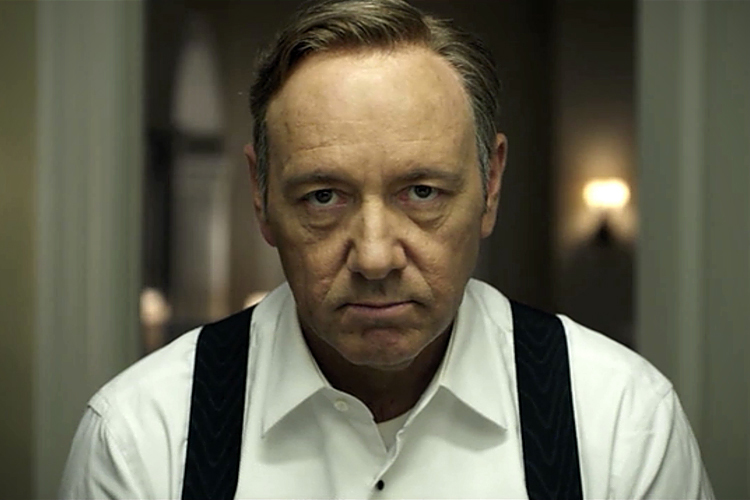
That piece, praise be, is the American version of House of Cards. So far, we’ve seen eight episodes of Series One. It took about twenty minutes of the first episode to forget about Francis Urquhart, the anti-hero of the original 1990 British drama. Frank Underwood, the manipulative House majority whip, is more than a match for his predecessor.

What better time than now to watch Kevin Spacey’s character blackmailing, using and abusing his way to power, creating fake stories and cynically undermining the rule of law? Can Underwood’s machinations be worse than the conniving, plotting and squirming that must currently be going on in the corridors of the White House?

And when, as it surely must, the story of Donald Trump’s tenure – brief or otherwise – is turned into a movie or TV series, who better to make it than the team who created House of Cards?

There are two other tributaries running into our great river of narrative. In the UK, we’re into the latest series of Homeland. Carrie Mathison has got herself into yet another pickle. Her erstwhile colleague Peter Flynn, his body and mind all but destroyed by the poison gas administered by a bunch of terrorists in Germany, has discovered a conspiracy involving a shadowy private company that operates out of a large and anonymous building in DC. These guys, it seems, have acted as agents provocateurs in order to whip up a storm of paranoia about – guess what? The threat to America posed by Islamist terrorism.

A bomb goes off in New York. A young Muslim is duly blamed. But he’s a patsy, it seems. And amid the frenzy, the President-elect, a woman who doesn’t buy into this threat nonsense, is whisked away into a secret location “for her own safety”. To her it feels like a kidnap. To us it looks like a coup. And to cap it all, at the end of this week’s episode, an FBI agent who’s investigating the bombing gets whacked by an operative from the shadowy company.

All of which happens during the week when we learn, courtesy of Wikileaks, that the CIA can do all kinds of magic hacking tricks that allow them to watch us munching Maltesers while we’re watching Homeland. And also when we stumbled upon an old story about a windowless concrete skyscraper in Manhattan called the AT&T Long Lines Building. Apparently it’s home to a secret National Security Agency surveillance base. Not so secret now, I guess.

Shadowy companies, shadowy buildings, conspiracies, the Deep State, Iran, North Korea, Islamist terrorism – you name it, you’ll find it in Homeland. Poor Carrie and the hapless Flynn are stuck in the middle of it all.

But hold on. Are these not critical components of the real-life drama playing out in Washington right now? With the added bonus, of course, of a President so deranged that he makes Carrie look as normal as an accountant. Not even the makers of Homeland anticipated that little twist.

Still, nobody’s been whacked yet, at least not in DC. Elsewhere, though, Russian diplomats and intelligence officials seem to be dropping like flies. Nothing to do with the Steele dossier on Trump’s links with Russia – heart attacks can happen to anyone, can’t they?  And I must say that I’ve never in any of my frequent visits to Kuala Lumpur airport spotted any young ladies with white handkerchiefs ready to clean the faces of passing North Koreans.

All in all, in my household we’re having a whale of a time watching fiction and fact, real life and fantasy, flowing into a soupy river of doubt and incredulity.

It would be even more fun if it wasn’t for the underlying realities: that people are being rounded up, deported, insulted and excluded, that mosques and Jewish graveyards are being desecrated, and a that a lunatic who spends hours watching inane TV shows and sends poisonous tweets at three in the morning is now in charge of the asylum. If the madness was confined to Washington, we wouldn’t need Homeland and House of Cards to keep us amused. The greatest reality show on earth beats everything else.

If you’re a Brit, and a political junkie like me, you might think that the Brexit entertainment would be a welcome alternative to all the stuff going on across the pond. There have been times when I and many others have seen Trump and Brexit as intertwined abominations. Now I’m coming to see that the differences are as significant as the similarities. Brexit is a slow, muddy river of depression, whereas Trump is a manic white-water ride.

Or, to use a different analogy, Trump may well be a supernova, flaming out in a gigantic explosion that will light up the sky. My country, on the other hand, seems to be a dying star, slowly degrading. This year: Brexit. In 2018: Scottish independence. Any time soon: renewed conflict in Northern Ireland. No longer united, no longer great. Our politicians are the opposite of Trump – risk-averse and predictable. They are boring us into submission.

Nobody is likely to make Brexit: the Movie. It wouldn’t sell. But Trump? Now there’s a story. Or rather multiple stories, or even alternative stories.

The drama in Washington will continue to unfold over the coming months. For us, it will run alongside the rest of Homeland and several more series of House of Cards. I can’t wait.

Will Trump’s world really turn out to be even more gruesome than those of Carrie Mathison and Frank Underwood?

You might think that; I couldn’t possibly comment.

Information War: toxic brands bring down the castles too

by


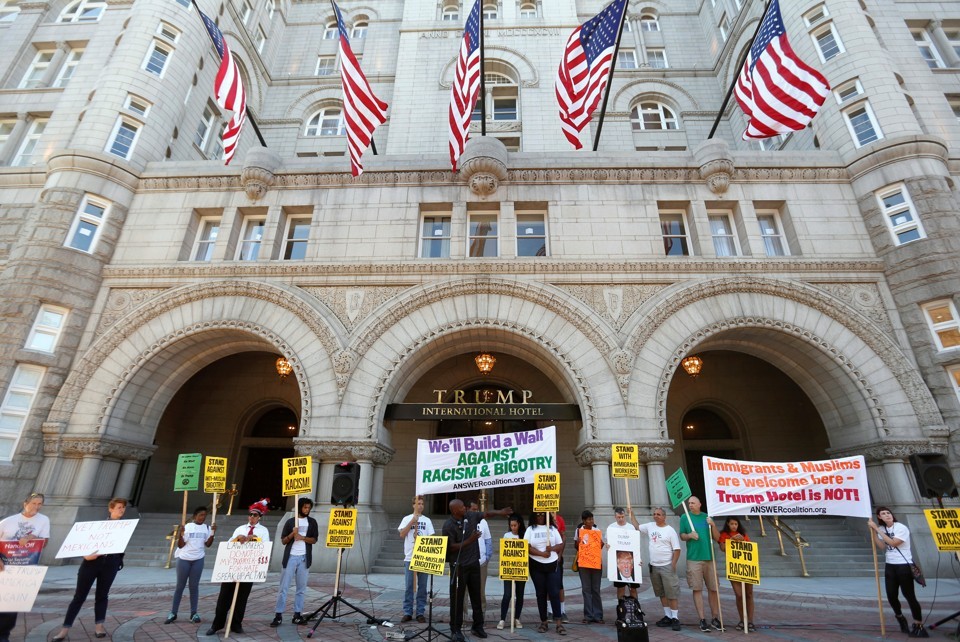
trump-hotel

A couple of days ago I posted about an information war waged by private and state actors in the United States, Russia and other countries in which we citizens of liberal democracies are cannon fodder. I ended by suggesting that we’re not as helpless as we think.

This article in the UK’s Independent – once a newspaper, now a website – shows how those who oppose Trumpxit, or Brexump – whichever term you prefer to use for the populist coalition in the UK and the US – can influence the dominant agenda.

Breitbart is losing advertisers, partly because companies don’t wish to risk reputational damage by being associated with an epicentre of the extreme right. Why are they worried? Because they’re being harried by pressure groups, but also because they see push-back in the social media by people who object to Breitbart’s rabid editorial stance.

No doubt Breitbart could haemorrhage cash for years before folding, because it’s as much a mouthpiece for its backers as it is a business. As long as it serves an ideological purpose, it will most likely continue regardless of losses.

But advertisers get skittish about being associated with websites that employ writers perceived to advocate paedophilia, even if Milo Yiannopoulos ended up being fired after appearing to cross that line. Rightly so, because they don’t want to alienate readers who may have voted for Trump, but have no time for narcissists on the right’s lunatic fringe. And for the same reason, companies that through the efforts of careless media buyers unwittingly end up being promoted on jihadi websites recoil in horror.

Breitbart will survive the loss of its advertisers. But what about businesses more closely associated with their owners? The Trump Organisation, for example.

The other day, I heard an advertisement on the radio singing the praises of Trump’s Turnberry resort in Scotland as a wedding venue. I’d never heard Trump’s name on a radio ad in the United Kingdom before. And I wondered how many young couples would want to risk their wedding day being forever associated with a man whose reputation in Scotland is arguably worse than in the rest of the UK. Bullying crofters to sell their land, and lecturing the Scottish Parliament about offshore wind farms spoiling the view from his golf course – The Donald doesn’t go down well with the locals.

I appreciate that I have an outsider’s view. I’m not American, and I would never, ever set foot in a Trump-branded hotel or holiday resort. The last thing I need on a holiday or business trip is to encounter a garish portrait of the leader in the vestibule. I’ve been to too many places in the Middle East where monarchs and dictators similarly beam (or glare) out at you in halls and reception areas.

But how many of the seventy million or so voters in the United States who didn’t go for Trump would touch one of his properties with a bargepole over the next four years? Far less than would have done before he entered the presidential race, I suspect. The brand is becoming toxic.

You could counter-argue that for all the little people like me who wouldn’t go near a Trump-branded business, there must be just as many wealthy individuals who will buy apartments in his properties or do deals with his organisation in foreign countries in the hope of influencing him. Highly likely, but what leverage they will gain is debatable, since the antennae of his opponents in the media and Congress are finely tuned to detect the slightest hint of a conflict of interest.

So what if the unthinkable happens? The man himself is too busy tweeting and fire-fighting in the White House to pay attention to his offspring’s attempts to run his business. The business slowly withers, or perhaps one of his lenders pulls the plug on his loans, precipitating a potential collapse. Nobody, apart from those close to him, knows how fragile or robust his organisation actually is.

Castles rise, and castles fall. Think back to Robert Maxwell. An egotistical and – to many people – profoundly unpleasant man. The owner of a powerful publishing empire, seemingly impregnable in his office at the top of Maxwell House. Behind the scenes, heavily in debt, frantically trying to shore up his business by raping employee pension funds. His demise was swift and shocking. Few people saw it coming. Not even the increasingly nervous banks to which he was in hock had the whole picture, until he disappeared from his pleasure boat in the Mediterranean and his body was found floating in the sea shortly thereafter.

The potential parallels with Trump – at least in terms of the personality of the man and the opacity of his business interests – are obvious, but not exact. Unlike Maxwell, Trump is too big to fail. At the very least his business would be rescued before it imploded. Quite possibly it would be bought out and re-branded.

But the man himself would be emasculated. Seen to be a failure. And the damage to his ego could have dangerous consequences given the office he holds. He would probably find someone to blame – a conspiracy, perhaps. But his credibility would be damaged, and in his remaining years as president he might find his worst instincts curtailed by the powerful players who had hitched themselves to his wagon and were fearful of going down with him.

All this is pure speculation. But not idle. The young Scottish couple who wouldn’t dream of getting married in his golf resort, and the American holidaymaker who avoids his hotels like the plague might yet create a butterfly effect. Damage to his brand could end up triggering a hurricane that rolls over his business and thereby derails his presidency.

Just a reminder that little people like you and me, if we are willing to withhold our custom from those of whom we disapprove, do matter, and can make a difference.

Celebrating World Book Day (the British version)

by

img_1127

Today is World Book Day. Or at least it is in Britain. Elsewhere in the world, UNESCO’s celebration of the written word takes place on 23 April, which coincides with the birthdays of Cervantes and Shakespeare.

Apparently, we did a Brexit some time ago. We chose today because the day on which everybody else celebrates books is also St George’s Day, when England football fans and various nationalist factions proudly wave the red-crossed banner. That day in April also coincides with the school holidays, so that our teachers would miss out on an opportunity to persuade our youth to take an interest in stuff beyond what the National Curriculum forces them to read.

Here in Shakespeare’s homeland, outside the classroom you’d be hard pushed to find any evidence of this worthy event. So, as my contribution to World Book Day, I’m sharing some thoughts on one of my favourite subjects.

I spend much of my time closeted in my little study – working, reading, writing, and sometimes just thinking – often sitting back with a foot up on the desk. I’m surrounded by books, CDs, documents and mementos. Each object means something – a gift, an artefact I bought in a foreign country, an heirloom. Each picture on the wall – mainly cartoons – reminds me of a period in my life.

But the stars of my sanctuary are the books. I love them, I devour them. I buy them in huge quantities. I read them at night, during the day, on holiday. Sometimes I review them in this blog. For every book I review I read ten, maybe twenty.

Yet every so often, when I think about everything I’ve read, something nags at me.

Like me, my father was a book obsessive. His tastes were more eclectic than mine. He was into history, anthropology, science, philosophy, psychology, mathematics and spiritualism. He was also a walking Wikipedia on the royal houses of Europe.

Take away maths, spiritualism and royal families, and my interests are similar, though perhaps more focused on specific sub-sets of those areas.

When my father died, my brother and I took on the task of disposing of his books. He’s is a statistician, so the maths books, for example, went to him. I took the history. My other siblings took some according to their interests, and we gave the rest away.

I’ve read some of them, but others remain unread, as I struggle to keep up with the tide of new stuff I keep buying. New is not necessarily better, and no doubt there are some gems among my father’s library yet to be discovered and appreciated.

Today, when I run my eye down my bookshelves, I wish I had asked him a few questions about his reading. I would have liked to have known if his experience of reading was the same as mine.

How much of the stuff he read did he retain? If I had pointed to one of his books, could he have told me one specific feature that made it worth reading? Or was the act of reading a journey, full of attractive scenery to be enjoyed, sometimes admired, and then forgotten? Or, if not forgotten, relegated to the subconscious, to emerge from time to time? Which of his books changed his life, and why?

Perhaps his answers wouldn’t have been much use to me. After all, everyone is different, and presumably everyone approaches reading in their own way.

So here’s the problem. When I ask the same questions of myself, the answers are not clear or particularly comforting. How many have actually made a difference to me? Not many. How many have informed my views on life? Very few. In what way have the tens of thousands of hours I’ve spent reading been useful – to me or to anyone else?

If I was a surgeon, reading surgery books might have made me a better surgeon. Likewise, if I was a lawyer, an engineer or a politician. But if I just love reading for the sake of it, what’s the point? I read stuff, I fill up with knowledge, and then I die. Is it a one-way street – everything in, nothing out?

Wouldn’t the time I spend reading books be better used exploring the countryside, helping refugees, making money or trying to become our Prime Minister?

When we eat, our bodies take what they need to stay alive, and excrete the rest. The act of excretion is very obvious. Yet what enters the brain – through reading, observing, talking and listening – doesn’t have such a clear purgatory path. It stays there. Scientists tell us that our brains are constantly organising and making sense of the input. Stuff gets deleted, archived, recalled to serve us when needed. Through a mysterious process it gets added to the patchwork of our knowledge and experience.

So I’m good at quizzes. I’m able to drag out obscure pieces of information to illustrate a point. I can make connections between today and yesterday. What I remember of the books I read is highly selective. I could tell you plenty about the stuff I read last year, less about what I read the previous year, and so on. The exceptions are those books that I regard as life-changing. Books that made me think differently, do things differently, and make specific decisions about my life.

And as I said, there aren’t many of them, and the rest fade away. But the forgotten books still sit there in my bookshelves. They’re there to be dipped into, sometimes re-read. And occasionally, miraculously, an idea, or a passage from a book long forgotten, jumps out and presents itself, ready to inform a conversation or provide context to a new book, idea or concept.

When I look at all those volumes, ordered by author, subject or era, I sometimes get a sense of overkill.

I have three biographies of Winston Churchill, and maybe thirty other histories covering his era. Did all those volumes enhance my understanding of the man? And if they did, for what purpose? I’m not a historian who quotes a hundred references as the sources of their work. Surely one bloody biography would have been enough. And could I, as the result of this exhaustive reading, tell you how Max Hastings, Roy Jenkins and Richard Holmes differ in their views of the great man? Not easily.

Am I an expert on Winston Churchill, on Byzantium, on Ancient Rome, on the Islamic world or on the Cold War arms race – all subjects that I’ve delved into quite deeply? Far from it, even if I might be better informed than some of my neighbours.

Do I see the world differently after reading Kahneman’s Thinking, Fast and Slow, Gladwell’s The Tipping Point or Hofstede’s Cultures and Organisations? Yes, but not to the point that I’m ready to abandon all my worldly goods and become an itinerant seeker after the truth.

And what of fiction? Was I changed by The Dice Man, Catch 22, the Sugar Street trilogy, Midnight’s Children, Cities of Salt and The Circle? Enriched perhaps. Thrilled, moved and enlightened, certainly. But impelled to become a politician, a priest or a suicide bomber? Fortunately not.

What also of all the other stuff I read? Thousands of newspaper articles. Hundreds of op-eds on Brexit, Trump, Syria and climate change. And all the ephemera that attracts my passing interest – stuff on Facebook, clickbait, stories about celebrities, obituaries, oddities and fake news. Mostly in one lobe and out the other, though sometimes passing through the critical processing unit that uses the snippets to make sense of something previously mysterious.

All this stuff – for what? When I could have been climbing mountains, making new friends, helping refugees, teaching, demonstrating against dumb politicians and their stupid policies. Or perhaps trying to change people’s lives with a self-help book or a ground-breaking economic theory. With the former, it’s a question of more of. The latter is beyond my capacity, I’m afraid.

I do, however, have an outlet, and you’re reading it. Mine is a small voice among millions – more like hundreds of millions. No matter. It’s my voice. But in case you think I’m writing just for you, think again. Actually, it’s more for me. A way of forcing myself to process stuff rather than just letting it slip by into the subconscious without more than a passing attempt to make sense of it.

I review books, not just because I want other people to read what I think is worth reading, but because reviewing a book forces me to think about what I’ve read. Did it make sense or didn’t it? Did it move me, delight me or enlighten me? If it bores me, you won’t hear about it.

In that respect, I’m a one-man book club. The discussions are mainly with myself. Perhaps I would gain more through sharing ideas with others, just as I do when talking politics with friends and loved ones. But I don’t, perhaps because so many conversations about stuff that is important to me end up tainted by anger and frustration about the way things are. Nobody wants an angry man in their book club.

Going back to my father, what was his output from a lifetime’s reading? The books themselves, certainly. But beyond them, very little that is tangible. A few diaries, scribbled down and sometimes impossibly obscure. A few notebooks that to anyone but himself – now deceased – are as undecipherable as Linear B.

But of course that wasn’t the whole story. He was a great conversationalist. He had his family, and he had many circles of friends. He was wise in some respects and foolish in others.  In all his conversations over a long life, he was informed by stuff he read. And others – certainly me included – were informed through him.

And perhaps if someone looked at me, they might say similar things. Which I suppose is my way of groping towards a reason for spending all those thousands of hours immersed in books.

But in truth, there is no reason, no high-minded purpose. I read for the sake of it – for the love of it. Whatever knowledge or modest store of wisdom I have acquired is the accidental by-product of an internal compulsion.

And sooner or later the vast grey repository of bits and bytes, of memories ordered or disordered, of patterns, theories and perceived experience, will be gone. But the books will still be there. Someone else might read some of them – either my children or someone picking up a bargain in a charity shop. The millions of words I’ve written will still be out there. And perhaps the conversations themselves will be recycled again and again – some idea might inspire someone else, who might in turn put their spin on it and pass it on. The butterfly effect.

This, after all, is how humans have always worked – through oral histories, ancestral knowledge and inherited traditions. It’s still how we work, despite our adventures with the written word. Do opinions form on subjects like Brexit or immigration because you and I have read European Union directives and all the other countless documents that underpin the institutions of state? There may be books informing our views, be they works of Karl Marx or some scurrilous demolition of a public figure. But in the main, unless we’re academics, we form our opinions based on our own experience, the second-hand experience conveyed by TV and the movies, and on conversations between the like-minded.

And, of course, the internet. What sits there is a direct descendent of the great libraries – the ancient scriptures, the Library of Alexandria, the House of Wisdom in Baghdad, the Ashmolean and the Library of Congress. All of them are imperfect attempts to assemble in one place the accumulated wisdom of the world. The internet – or rather those warehouses full of servers humming away among remote corn fields – has the chance to go one better. Before long. every written word that has survived fires, floods, termites, earthquakes and deliberate destruction will be available to be read online – at a price.

Until the age of Gutenberg, very few of us owned more than a handful of books. The vast majority possessed none. Nowadays, an ordinary person like me can easily assemble a thousand books.

But if all our written words are in bits and bytes, like the contents of our brains they can easily be erased. If not destroyed, they can archived or embargoed. If Donald Trump’s propagandists decide to re-write history, or the People’s Republic of China resolves to hide stuff from its people by building a Great Firewall, it is easier for them to do so than it was for the Nazis with their book burning, or for the Mongols who coloured the waters of the Euphrates black with the ink of volumes from the House of Wisdom.

Which is why we need books. Paper ones that can be hidden in monasteries, under floorboards and in attics. The more there are, the more some will survive natural or human catastrophe.

And we need libraries – not just the web – where in normal times people can educate themselves, open their minds or just entertain themselves.

And we need people brave enough to self-publish on paper as well as online, so that a small number of commercial publishers can’t be the sole arbiters of what is suitable for us to read.

Even if we don’t have it in ourselves to write books, we need to buy them, think about them, talk to others about them and share them.

No matter that most of the words go in one lobe of the brain and out of the other. We are like panhandlers searching for gold. For every ton of alluvial gravel we sieve through, we might find a few grains of precious metal. And for some of us, those little nuggets can change our lives.

Good reasons, I suggest, to celebrate World Book Day.

Are we really Bannon fodder in an information war?

by


steve_bannon_by_gage_skidmore

If I start rabbiting on about global conspiracies, fake news, an evil genius behind Donald Trump and the UK Leave campaign, an information war and bots battling bots, you might sigh, and think the old boy’s gone slightly loopy. Or you might think “seen that, read that, got the tee shirt”. And read no further.

But hold hard. I’m getting a bit tired of all that stuff too. It’s done, isn’t it? Brexit is happening. Trump won. Game over.

I’m not so sure. I’ve been pondering a recent article by Carole Cadwalladr in The Guardian (for those of you who aren’t familiar with the title, it’s British, mainstream media, liberal, therefore “failing”).

The piece is worth reading, because it pulls many strands together into a reasonably coherent. over-arching narrative that explains why and how a former IBM computer scientist appears to have influenced voters in the UK and the US sufficiently to tip the balance in favour of Trump and Brexit. Not only that, but why the techniques he and his companies developed have profound implications for all of us going forward.

It’s a long piece, and not an easy read. I had to go through bits of it several times to get a proper grasp of what she’s saying.

If you don’t have the time or patience to read the original, here’s a summary of her main points:

Robert Mercer is a billionaire hedge fund owner who has bankrolled several organisations in order to promote his right-wing, libertarian views. He is a former IBM employee with a deep understanding of Big Data.

He’s a buddy of Steve Bannon and an investor in right-wing news site Breitbart. Another of the companies in which Mercer has invested is Cambridge Analytica, who have amassed profiles of over 220 million Americans based on data hoovered up from Facebook. Using artificial intelligence and working with information gathered from the likes we click on a daily basis, CA is able to help politicians tailor messages that tap into and manipulate the emotions of targeted voters.

Cambridge Analytica worked for Trump, and also provided support for Nigel Farage’s Brexit campaign – the latter for no charge. It is basically, according to Jonathan Albright, a professor of communications at Elon University in North Carolina, a propaganda machine.

The company inherited a number of its techniques from another company in which Mercer is involved – the SCL Group, from which it was spun off in 2013. The two companies retain close links.

According to Cadawalladr, the relationship between the two companies is thus:

“Emma Briant, a propaganda specialist at the University of Sheffield, wrote about SCL Group in her 2015 book, Propaganda and Counter-Terrorism: Strategies for Global Change. Cambridge Analytica has the technological tools to effect behavioural and psychological change, she said, but it’s SCL that strategises it. It has specialised, at the highest level – for Nato, the MoD, the US state department and others – in changing the behaviour of large groups. It models mass populations and then it changes their beliefs.”

So these guys are manipulating search results on Google, and flooding the online media with individually-targeted ads and links to right-wing websites. The objective is to influence us personally, and at the same time reduce our access to “mainstream media” that might propagate a contrary view by replacing them with the likes of Breitbart. If you’re in the UK, imagine you had no choice of traditional newspaper except for the Daily Mail and the Telegraph. In the US, imagine life without the New York Times and the Washington Post.

More from the Guardian piece:

“This is a strategic, long-term and really quite brilliant play. In the 1990s, Bannon explained, conservative media couldn’t take Bill Clinton down because “they wound up talking to themselves in an echo chamber”.

As, it turns out, the liberal media is now. We are scattered, separate, squabbling among ourselves and being picked off like targets in a shooting gallery. Increasingly, there’s a sense that we are talking to ourselves. And whether it’s Mercer’s millions or other factors, Jonathan Albright’s map of the news and information ecosystem shows how rightwing sites are dominating sites like YouTube and Google, bound tightly together by millions of links.

Is there a central intelligence to that, I ask Albright? “There has to be. There has to be some type of coordination. You can see from looking at the map, from the architecture of the system, that this is not accidental. It’s clearly being led by money and politics.””

So what have we here? a cyber-Bilderberg group? Perhaps.

Meanwhile, we have the Russians with their “information warfare troops”, busily promoting fake news, not in order to get people to believe these stories, but to spread confusion among their nation state rivals. If you don’t know what is true or false, it follows that you will distrust everything you read.

Back in the West, Mr Mercer and his friends in the White House are operating on the old Goebbels principle that if you repeat a lie often enough, people will believe it.

In addition to Cambridge Analytica and SCL, Mercer and Bannon have a third tool for manipulation called the Government Accountability Institute. It uses Mercer’s money to research stories that the mainstream media can no longer afford to work on. It places these stories, that support the right-wing narrative, with mainstream media such as the New York Times. It even has a computer scientist who trawls the dark web in search of dirt.

Then there are the bots. Automated accounts on Twitter and other sites designed to look and feel like real people. The Russians and their western counterparts are extensive users of bots that lie dormant until activated to achieve a specific end. Apparently one third of tweets in the UK referendum campaign were posted by computers, not people. In the US election, the bots were five-to-one in favour of Trump.

The kind of big data that Mercer’s affiliates are using for political purposes are also starting to be used by hedge funds. Track emotions and trends on Twitter, and with a bit of AI wizardry you can predict market changes and gain an edge over your rivals.

Cadwalladr’s piece is suffused with technical terms that have military overtones: psyops, cognitive warfare, bio-psycho-social profiling, weaponised narratives. Not surprising, because many of these techniques began life in the Pentagon and the Kremlin.

So there we have it. Political and financial manipulation. Targeting the likes of you and me by “knowing us better than we know ourselves”. Squeezing out the mainstream media. Spreading confusion and despair. Provoking anger. Changing national narratives. Information warfare.

Welcome to the new politics.

So what are we ordinary members of the public – with one vote, no power, no influence and no money to speak of – to make of all this stuff?

When I talked to my wife about it, she was unsurprised. Because, as she pointed out, there are a thousand and one novels out there with stories of conspiracies, plots to undermine the world order, sinister masterminds, and abundant spy stuff.

And yes, ever since James Bond started saving the world, we’ve been fascinated by Spectre, Ernst Stavro Blofeld, Goldfinger and the rest of Fleming’s rich repertoire of power-hungry evil geniuses.

Yet in the days of early Bond, I used to laugh at the idea that any non-governmental organisation would be wealthy and powerful enough to launch satellites, hijack space shuttles, build monster submarines and create command centres deep in the jungle that could bring death and destruction upon the world.

Not now. We have private companies planning to go to Mars. We have billionaires designing hyperloops to take us from Los Angeles to San Francisco in twenty minutes. We have massively powerful billionaires with retail empires and payment systems. We have hedge funds packed with Nobel-grade mathematicians. We have an IT billionaire leading efforts to eradicate malaria. Those who make their money in one area are not afraid to spend it in another – like Gates, Thiel, Musk, and Bezos. Not to mention the shadowy Robert Mercer.

As I’ve said more than once before in this blog (here for example), I’m not a great fan of conspiracy theories. I subscribe to the Principle of the Obvious: if something looks like a pig, walks like a pig and oinks like a pig, it probably is a pig, unless you can prove to me conclusively otherwise.

The problem is that if, like me, you’re a fully paid-up sceptic, you can ignore stuff that turns out actually to be a conspiracy. Like Watergate. If, on the other hand, you’re a true believer, and you map the theories on to your world view, you will end up believing that Hillary is part of an alien cabal, or that a Democrat paedophile ring operates out of a pizza shop in Washington DC.

But if you sit halfway between the extremes, and you are determined to keep an open mind on who killed Kennedy or caused 9/11, you risk being thrown into a state of total confusion when you are bombarded by theories that are diametrically opposed to each other. You start saying to yourself “I don’t know what to believe any more”. You have been softened up.

And then somebody comes along and starts banging on about immigration, and sends the same messages over and over, using words and phrases that you use yourself on the social media and among friends, and using stories that help make sense of your own experience. You become a believer.

How is this different from traditional politics? The difference is that until now politicians would broadcast to the multitude in the hope that their message would get through to you. Now they have the tools to speak to you – and only you.

Ever noticed how you search a travel website for a weekend in Paris, and suddenly you are bombarded on Facebook with offers of flights to Paris? Even if you’re not on Facebook, the fact that you’re interested in Paris is out there. It can be used to build a profile of you. You have spare cash. You like travelling in Europe. Maybe you would like to buy a property in Provence. Maybe you would like a Euro-denominated bank account. As if by magic, these things are being sold to you.

Have you ever done one of those silly online quizzes that tells you what sort of animal you’re like, or tells you your mental age? Have you asked what happens to your answers? Probably not. It’s just for fun, isn’t it? Think again.

What about data protection, you ask? Then ask yourself how often you’ve registered with a website and pressed the agree button without reading the terms and conditions relating to the sharing of your data? I know I have.

Have I worked you up into a lather of paranoia yet? Perhaps you’re paranoid already. Perhaps you don’t use the internet for anything – at least voluntarily. The trouble is that you can only escape the net if you live in a cave. Infrastructures depend on it.

Having wound you up, let me now go into sceptic mode and pour some cold water upon your fevered brow.

I don’t believe we’re yet in thrall to the likes of Bannon, Mercer and the shadowy information warriors in the Kremlin. If their techniques are so powerful, how is it that they haven’t used them to pacify the suicide bombers of ISIS, and to turn the Afghans against the Taliban? How is it that the internet users of the Middle East, in Saudi Arabia and the Gulf States for example, have not been transformed into docile lovers of the West who conform to western definitions of “moderate Islam”? How is it that Russia is still perceived as a threat to western values? How is it that Israel is not more widely respected for its democratic values?

The answer is that information warfare is a patchy weapon at best. An Afghan tribesman without access to the internet is unlikely to be impressed with cyber-propaganda. A Saudi who believes in tradition, family and deeply-embedded religious practice will not easily be persuaded to abandon those beliefs because of a few YouTube videos urging the government to allow women to drive, or advocating the end of the death penalty. For every video and tweet sending a message of liberal reform, there are at least as many trying to hold the line.

In countries that tolerate a degree of debate online, for every narrative there is a counter-narrative. Information warfare, after all, can’t take place unless there are opposing parties. In the United States, if Mercer and Bannon stole a march on the Democrats in 2016, you can be sure that Trump’s opponents are busy creating counter-measures right now. 2020 might be a different story altogether.

As for Trump himself, if his dealings with the Russians before the election, and his lies about them thereafter, turn out to be sufficiently serious and proven, all the efforts of Mercer and Bannon will not save him.

The very fact that the tactics used to put Trump in the White House and drag the UK out of the European Union are becoming increasingly known and understood is some assurance that they will not be so effective next time round. The element of surprise will have been lost.

Still, the idea that we will continue to be helpless cannon fodder in the war between manipulative narratives isn’t very comforting.

But that helplessness is in itself a market opportunity. Just as for years companies like Norton, McAfee and Kaspersky have made money by protecting us from malware – worms, viruses and so forth – new players might emerge who will help us to protect our data, and help us to prevent ourselves from being manipulated without our knowing it, by more clearly identifying the provenance of information we receive and the destiny of the information we provide.

Governments can also play their part by tightening data protection laws and prosecuting offenders. Should the consequences of Brexit and the Trump presidency turn out to be as disastrous as some predict, you would hope that they will act on the lessons learned.

And we can help ourselves. By being sceptical, by encouraging others not to accept stuff they read without a pinch of salt. By teaching ourselves to question before we judge. By reading the small print on internet sites we use. And by using the tools we have at our disposal – be they online or physical – to protest, complain, influence or simply register our disapproval.

Castles rise and castles fall. We are not helpless or powerless. At least not yet.

Saving Squirrel Nutkin

by

squirrel-nutkin

I admire Prince Charles, the heir to Britain’s the throne, for his support of environmental causes, his views on architecture and his monumental patience in waiting for his accession. Unfortunately I can’t muster up much enthusiasm for his latest initiative.

His Royal Highness doesn’t like grey squirrels. The little creatures that dart here and there at the bottom of my garden belong to an invasive species. They strip bark from broad-leaf trees, making the trees vulnerable to pests and parasites. They carry a nasty virus that they transmit to our native red squirrels. As a result there are 3.5 million of them, and only about 170,000 red ones still hanging in there around remote parts of the country.

They were first introduced from America to the United Kingdom by Victorian landowners, who little anticipated the consequences. The same landowners who brought rhododendron plants from the hills of the Himalayas – another species that dominates my back yard in leafy Surrey. Nature’s way of paying us back for our nefarious colonising, you might think.

The plan that Prince Charles is endorsing is to build thousands of little traps full of Nutella laced with a contraceptive. The squirrels will not die. They will merely stop reproducing. In five years, according to the government boffins who have come up with this chemical condom, the population will decline by 90 per cent.

Certainly that would be a more benign method of reducing the grey squirrel population than previous efforts to dissolve their innards with warfarin. And definitely less creepy than the suggestion I once received from a council worker who came to our home to advise us how to get rid of a squirrel that had burrowed its way into our attic and was busy chewing cables. He suggested I buy an air rifle and take pot shots at the little bugger when it appeared on the rooftop.

Leaving aside the thought that for some members of the population, buying up air rifles to kill small animals might become an addictive pleasure not confined to the slaughtering of squirrels, I can’t help thinking that we’ve been here before.

Aren’t we just a little guilty of moral hypocrisy when we talk about a “kind” way of reducing populations? Kind, as in China’s one-child policy, Indira Ghandi’s sterilisation programme and, horror of horrors, Hitler’s forced sterilisation of physical and mental defectives?

Unless you’re a fervent animal rights activist, you’d probably say no – human life is sacred. Wiping out a few million vermin is not the same. You would definitely take that view if you believed that as the top species, everything on the planet – beast, plant or microbe – is there for our sustenance, use and enjoyment. If it’s OK to clear a field of weeds so that we can cultivate wheat, how can it be wrong to get rid of a few million grey squirrels so that our broad-leaved trees can continue to decorate our countryside, and we can enjoy the sight of cuddly Squirrel Nutkin regaining his old habitat?

But I’m still not convinced. After 90% of the greys have taken their medicine and died of old age without further offspring, what then? The wheat field, if unattended, quickly regains its weeds. Do we keep lashing out the Nutella until the squirrels finally disappear? I doubt if that final solution will come to pass. Even if a small enclave remains, you can be sure they will go forth and multiply. Also, can we be sure that Nutkin will return? What if something even more destructive than the grey squirrel moves in to fill the vacuum?

I fear that the damage is done. The greys are with us for ever. Just as the snapping turtle has invaded Italy and Asian carp have made it to the Great Lakes after decades of effort to stop them, the squirrels have reconfigured the environment.

Much as I understand a desire to reset the clock to an age when Nutkin roamed freely, for me it’s a foolish aspiration. Almost as foolish as the desire to recreate a Britain without the current crop of human immigrants. How far back do we go? Do we look to restore our wildlife population to where it was in the days of industrial grime – the last time the reds had ascendancy, or way back to the Ice Age, when mammoths roamed through Godalming? Same goes for the humans, for that matter.

I’d far rather we spent the money protecting our trees against the parasites that are killing them, and helping more endangered species to survive and thrive without destroying competitors.

We should rejoice in the miraculous dexterity of our squirrels, enjoy the glorious flowering of our rhododendrons and welcome the ridiculous loquacity of our green parakeets.

We should also treasure the hard-working, courteous immigrants who contribute so much to our economy and enrich our culture. Biodiversity should not be confined to the animal kingdom.

As for the poor old squirrels, the damage they cause is but a zillionth of the devastation we humans have wreaked since the industrial revolution. Perhaps we should be considering liberal doses of Nutella ourselves.

And anyway, did the greys destroy their original habitat? Try visiting the United States to find out. If you’re allowed in, that is.

Ten portions a day? Yeah right…

by


broccoli-head-lo

Last night my wife and I enjoyed a delicious dinner consisting of baked plaice, carrots, cabbage, broccoli with cheese sauce and a single potato. Healthy, huh? Well maybe.

Except for the fish and the cabbage, everything was leftovers. No apologies for that. We had people over a couple of nights ago, and we don’t chuck out food if we can possibly help it.

But here are the downsides. The potato had been roasted in oil. The carrots were glazed with butter and a little sugar. And the cheese sauce was made from full-fat cheddar. All of which the nutritional Nazis would probably claim negated the benefit of the three – possibly four if you include the spud – portions of fruit and veg we consumed.

Still, in the morning I had a banana halfway through a round of golf. So using the widest interpretation of “five a day”, I hit the target. All the ingredients were fresh – nothing frozen. However, if I’d consulted one of the gauleiters of the gut, I know in my heart that I would have been found wanting.

And now comes advice from University College London that I should really ramp up my consumption of plant products to ten portions a day. If, that is, I want to live a long life free of heart disease, cancer and diabetes.

All things considered, I propose to ignore that advice.

If I lived in a society that was custom-built so that the elderly could live a decent and fulfilling life without having to be as rich as Croesus, I might reconsider.

But I don’t, so I won’t.

As things stand, there are innumerable other factors that contribute to a less-than-optimal lifespan. Pollution, pesticides, stress, loneliness, alcohol abuse, worry about the future and a sense of bitterness for reasons real or imagined at aspects of society over which we have no control.

And should we be “lucky” enough to make it into our ninth or tenth decades, many of us can look forward to aches and pains, drugs and operations, being accused of bed-blocking in an underfunded health service and spending endless years parked in a care home staring into space as we descend into dementia.

If we can fix all the other factors that cause us to keel over before our time, or leave us meandering without purpose or enjoyment through protracted old age, then maybe, just maybe, I would spend much of my day stuffing myself with raw carrots, quinoa, and endless plates of fresh fruit salad.

Until then, I shall continue to eat just as much fruit and veg as suits me on a given day, as well as all the other stuff that’s more likely to send me to an early grave. Nor will I measure calories or buy myself a step counter.

And if thereby I can avoid the dreaded seventh age of man described by Shakespeare as “second childishness and mere oblivion/Sans teeth, sans eyes, sans taste, sans everything”, so much the better.

I reserve the right to change my mind when the end approaches, but right now, I’d rather have a relatively short but sweet life than a long sour one.

The collective presidency – Trump’s accidental innovation?

by

mattis-trump

A quick thought about Trump.

The man is a ground-breaker in many ways – in his nastiness, his cavalier approach to the truth, his way of communicating and his constant self-contradiction.

His apologists tried to convince us before the election that his trash talking was just campaign tactics, and that he would become dignified and measured on taking office. They were wrong. What you saw then is what you get now – for better or for worse.

But here’s the odd thing. His most critical appointees – Mattis at Defense, Tillerson at State and now McMaster at the National Security Council – all appear sane, sensible and capable individuals.

Mattis in particular has not been afraid to deviate from the Trump line – especially on NATO. McMaster has a reputation for telling his bosses what he thinks they need to hear, rather than what they want to hear. None of them appear to share Trump’s rose-tinted affection for Vladimir Putin. Their hand is strengthened by the reality that Trump cannot afford to lose another senior appointee.

Are we looking at an entirely new style of presidency, wherein Trump continues to behave like a man running for election, and his senior cabinet members – with the support and connivance of Mike Pence – get on with the business of government despite him, rather than because of him?

In other words, a collective presidency – government by cabinet – while the man himself rants and raves in a bubble of sycophancy in the White House?

Whatever one thinks of the policies, a degree of consistency and coherence applied by his less ideological team members is surely more to be desired than Steve Bannon’s destructive testing of the world order, and the chaotic leadership Trump has shown thus far.

If this is the future of the Trump presidency, it would be truly ground-breaking. It might even give him a decent chance of making it to 2020 without being kicked out of office.

Alzheimer’s – which of us is heading for the sunset, and do we want to know? Depends on who we are…

by

reagans_early_1990s

The Guardian has an interesting report on the latest Alzheimer’s research. According to psychologists from a renowned Massachusetts medical institute, “rambling and long-winded anecdotes” and “worsening mental imprecision” are early signs of dementia.

The researchers analysed the work of novelists Iris Murdoch and Agatha Christie, and found significant changes in the language they used in their later books. They also looked at transcripts from Ronald Reagan’s press conferences:

“Ronald Reagan started to have a decline in the number of unique words with repetitions of statements over time,” said Sherman. “[He] started using more fillers, more empty phrases, like ‘thing’ or ‘something’ or things like ‘basically’ or ‘actually’ or ‘well’.”

His successor, George Bush the Elder, showed no such impairment at a similar age.

That Reagan’s descent towards dementia was evident in the last years of his presidency comes as no surprise to those of us who remember his hesitant press conferences as the Iran/Contra affair unfolded. Given that he was seventy-eight when he left office, you would have expected his faculties to have become somewhat autumnal. On the other hand, try telling the 93-year old Henry Kissinger that his intellectual powers are on the wane.

So here’s the thing. Dementia doesn’t deal an even hand. It can hit you at any age, though more frequently when you enter your eighth decade. Harold Wilson resigned as British Prime Minister at sixty. He is said to have been concerned about his declining cognitive powers, and subsequently developed Alzheimer’s. Donald Trump is seventy, the same age as Reagan when The Gipper first came to the White House.

In his recent press conference, Trump lurched from subject to subject, free-associating with gay abandon. As for empty phrases and fillers, do “great”, “sad”, “loser” and “failed” qualify? I guess we’ll have to leave it to the shrinks to figure out whether he too shows signs of pre-dementia.

Given his frequent bizarre logic leaps, it’s scary to think that he’s only at the start of his term, not nearing the end as Reagan was when his decline became evident. Even if it turns out that Trump shows no sign of incipient dementia, it’s hardly likely that at his age he’s at the peak of his mental powers.

If Paul Flynn – the 83-year-old British MP – is right in his description of the President’s intellectual capacity as “protozoan”, it seems likely that increasingly over the next four years, others will need to do his thinking for him. People like Steve Bannon, for example.

But enough of this scurrilous and disrespectful nonsense – Alzheimer’s is no joking matter. I wouldn’t wish it on anyone. What’s more, Flynn is mistaken. Trump is far smarter than the average protozoa. He even knows where Sweden is – which is more than can perhaps be said for some of his supporters. And he has great words.

Fortunately for those of us who are paid-up members of the Ramblers’ Club, the Massachusetts researchers point out that a tendency to digress is not necessarily evidence of incipient dementia. What is significant is whether our manner of speaking and writing changes over time.

No problem for me then. When I was eleven, my head teacher described me as pompous. If he met me today, I’m sure he would say that I haven’t changed a bit. My wife would certainly concur. And as for long-winded – always have been and probably always will be.

The same went for my father. He was a lawyer. He was sharp as a pin up to the day he died. He was one of those rare people who spoke in paragraphs – rivers of speech delivered without a hint of hesitation, from which multiple, perfectly-ordered subordinate clauses cascaded. You might think he rambled, but only if you were brought up believing that three hundred words without a full stop are beyond the capacity of a human to understand.

I suppose it would be useful to know if one was about to tip into full-blown Alzheimer’s, though for most of us I can’t think why. Since every new wonder drug expected to reverse the decline seems to end in failure, there doesn’t seem much point in knowing ten years earlier that our eventual fate is an oblivion that can’t be prevented.

Unless, of course, we happen to be the President of the United States, and we are about to press the nuclear button when we think we’re telling the elevator to take us to the top of Trump Tower.

Pamphlets, polemics and the coming of RoboTrump

by
max-headroom

Max Headroom in his pomp

The other day I read somewhere that the legal profession is being transformed by artificial intelligence. No need for paralegals to spend hours assembling contracts and other legal documents from reams of boilerplate. Computers can do that for you in a fraction of the time.

Is this also the future of political writing? Is the writing on the wall for speech-writers, spin doctors and political journalists?

Even before AI has its evil way, long-form political writing is becoming a rarity.

Whatever you might think about Tony Blair – and I have a lot of time for him despite the Iraq debacle – these days it’s rare to see a political figure writing five thousand words on any subject. I’m not sure whether all the words in his Brexit speech were his, though the sentiments clearly are. I share them.

And, by the way, I utterly reject Boris Johnson’s advice to “rise up and turn off the TV next time Tony Blair comes on with his condescending campaign”. Britain’s smug and blatherous Foreign Minister is the last person to be lecturing Blair on condescension.

Blair is not the only public figure to wax eloquently at some length about a topic close to his heart. This week, Mark Zuckerberg published his “manifesto” on the future of Facebook. I have read both documents from start to finish. I’m not sure how many of Zuckerberg’s followers, or indeed those who take an interest in Tony Blair, will also have done so.

This is not to look down on those who like their current affairs in no more than thousand-word chunks. That’s what we’ve come to expect. Stuff that is any longer tends to be lumped under the category of “long reads”. You can still  find lengthy pieces written by journalists – in Vanity Fair, for example. But let’s face it, they’re minority fare.

Out of the current crop of British politicians, I’m not sure if you would find many capable of writing five thousand words. Even if they could, it’s unlikely that they would consider such extended writing a worthwhile use of their time. Johnson and Michael Gove perhaps; both are journalists by trade. Theresa May? Philip Hammond? Jeremy Corbyn? I very much doubt it. Across the pond, it’s questionable whether Donald Trump would be able to concentrate on a single subject long enough to write five hundred words.

To be fair, politicians don’t need to put pen to paper. They have speech writers and article writers on their staffs.

Would any of them be capable of writing an eleven-page essay on the possibility of alien life, as Winston Churchill did in 1939? Maybe not. He earned his corn as a writer, and was a man of immense curiosity. Unlike the current crop, who, as Blair suggests, seem to be focused on one subject – Brexit – to the exclusion of all else. Or, in America, whose Trumpian obsession is the threat to national security.

In Churchill’s time, you would most likely find any number of politicians able to write polemics at least as long and eloquent as Blair’s. The political pamphlet was a tradition sired by the invention of the printing press five hundred years earlier. But that’s not the modern way. Trump is determined to bypass the media and continue appealing directly to the voters via TV, and the online media, especially Twitter. About the only people who write at length on matters of public interest – other than civil servants and journalists with “failing” publications – are judges. And very few of us take the trouble to read their judgements. We rely on the media to summarise them for us. To be told, in other words, that they are enemies of the people.

Which takes us back to the question of whether we are approaching a time when political journalists, campaigners and speech writers will soon become redundant. Are we approaching the point at which most political writing is generated by artificial intelligence?

Unlikely? I’m not so sure.

Let’s say we have access to a giant database of every political speeches delivered by a prominent politician anywhere in the world over the past two hundred years. By no means impossible. The same goes for the millions of words written by journalists and other political thinkers during the same period. Not so unlikely. Google and others are in the process of digitising almost everything that’s ever been written.

So we have the raw materials. Now we need the factory. A software engine that builds customised opinion.

To create our message we set parameters. What style of delivery do we want? Populist? Cerebral? Aimed at what demographic group? Is there a speaker whose style we might want to emulate? Lincoln? Hitler? John F Kennedy? Boris Johnson (God forbid)?

And then there are the issues we want to address. Let’s say we select “Is Russia a threat to to the West?”. Our software looks for everything said about the subjects and selects words and phrases that are relevant to the subject and support our views. We pre-set our position according to a five-point scale: strongly against, against, indifferent, in favour and strongly in favour.

The software has already learned our writing style – our typical sentence construction and our favourite turns of phrase. We can set the draft to “my style”, “Lincoln’s style”, “Obama’s style” and so on. If we want to lift whole passages from someone else’s writing, we can select “quote” or “paraphrase”.

Perhaps we want to make a joke or some humorous reference. No problem. We simply go to the settings and select “racist”, “sexist”,” literary”, “religious”, “W.C Fields”, “Jack Benny”, “Bernard Manning” or any other mode to suit your taste.

Finally, we set the length of the speech or the article. Artificial intelligence does the rest.

And there we have it. No need for an expensive writer to slip in references to enemies of the people at the drop of a judge’s wig. No need to find some hack to ask not what your country can do for you. Just get Google or a similar entity to dip into the vast cauldron of digital verbiage that’s already out there and assemble the perfect speech or op-ed. Well, if not perfect, then at least 90% of the way there, and ready to be polished into the final product.

Some tasks might be more challenging than others. It would probably test the full capacity of IBM’s Deep Blue supercomputer to emulate a Donald Trump speech  – the great leader free associates from one subject to another with dazzling unpredictability.

But I imagine that future versions of the software could incorporate an insanity setting that would incorporate whatever personality disorder Mr Trump suffers from. And if a computer can create jazz, it can do Trump.

There would remain the problem of the receiver struggling to digest five thousand words of computer-generated blather. But just as our phones turn voice to bytes and back to voice again, we will – again courtesy of Google – be able to decode the blather back into small messages that we can understand. Even better, we should be able to apply receiver settings according to our own beliefs. As in “Trump = fascist, racist, bad, pussy-grabbing”, or “Tony Blair = liar, warmonger, has-been”. Or even “New York Times = failed, fake news”.

No need to think for ourselves, then. The receiving software fashions the incoming data according to what we want to hear.

The implication, of course, is that because we will quickly come to realise that computers are doing the writing for people, we might stop believing anything anyone says unless we see the person saying it on Fox News. Even then – if a newspaper can mistakenly print a picture of Alec Baldwin instead of Trump – surely with all our Hollywood digital wizardry, we’re not far off from being potentially taken in by an entirely credible RoboTrump. Anyone remember the fabled Max Headroom from thirty years ago? We’re entering the age not just of fake news, but of fake politicians.

Which leads us to a future that perhaps we are not anticipating. Not robots so smart that they work together to eliminate humanity. Instead, robots trained by their human masters, beating the crap out of other robots. What is truth? It’s what you tell the robot you want it to be.

In March 1927, the well-meaning founders of the British Broadcasting Corporation gave the organisation a motto: “Nation shall speak peace unto Nation”.

Since we seem to be heading towards a world in which nothing is believed unless it’s on the internet, perhaps we need to create a motto for the new arbiter of fact and opinion:

“Robot shall speak rubbish unto Robot.”

On Valentine’s Day – time to celebrate the marathon, not just the sprint

by

cactus

As my wife is well aware, I’m no fan of Valentine’s Day, though I fully understand the need of certain sectors of the economy to make a little money in these austerity-blighted times. She says she’s no keener than me on the annual love ritual.

I’m not sure though. Does she secretly yearn for the single red rose, the box of chocolates and the declaration – courtesy of Hallmark Cards – of undying love? If so, I’m afraid she’s been disappointed for most of our 30-odd years of marriage. But not in other ways, hopefully. And every year, I trot out the same corny mantra that every day with her is Valentine’s Day. She, to her great credit, pays me the courtesy of laughing. Or smacks me over the head.

And anyway, Valentine’s is about young love and sweet infatuation, isn’t it? Surely those of us who have been married for a while can come up with something far more meaningful – namely the celebration of an enduring union.

Yes, I know – that’s what wedding anniversaries are supposed to be all about. A year-round commercial opportunity, one could argue, and God forgive the hapless spouse who forgets the day.

But the difference between Valentine’s and anniversaries is that the former is a communal event, and the latter is something to be celebrated one-on-one. Unless the anniversary is one of those landmarks – a 25th or a 50th perhaps – nobody apart from the happy couple, not even their offspring, pays much attention unless they’re prompted. At least that’s largely been our experience.

So I sometimes wonder why we don’t have a day when we celebrate long marriages, complete with its own patron saint. Of endurance, or survival. Or maybe lost causes. If so, then everyone whose marriages last longer than the seductive blink of an eye would be able to celebrate together, just as young lovers do on Valentine’s. What would be the symbol? A cactus perhaps, or a new pair of slippers from Marks and Spencer.

I first got this idea when I acted as the warm-up man for an evening with John Gray, the author of  Men are from Mars, Women are from Venus. He was talking about relationships, so I had to come up with some wheeze that transformed the audience into something more than recently re-animated corpses. Personally, I’ve always thought of myself as a native of Uranus (silly joke, I know) but lots of people in Bahrain had read Gray’s books and appeared to have bought into the theory, and there were about five hundred people at the gig.

So I asked everyone to stand up – always a good way to banish the lassitude. I then asked those who had been married for five years to sit down. That left half still standing. I repeated the exercise to eliminate those who had less than ten years under their belts. And so on until we reached thirty years. By that time there was a tiny handful of couples still on their feet. I then told the survivors to leave the room, since they didn’t need Grey’s help, before inviting everyone else to give the Darby and Joans a big round of applause. It went down a treat, and everyone was smiling when I introduced the great man.

The point is, these people were celebrating the success of their marriages as a group, and they had a lot of fun recognising the achievements of others who had stayed the course.

So what we need to do is co-opt the saint and name the day. We can thereby publicly appreciate the quieter joys of being together with another person. The ups and the downs. Their annoying habits. Our phenomenal reserves of patience and forbearance. Perhaps even the coming divorce, which could be made easier by the recognition that all those years were not wasted.

If this is a stupid suggestion from an undemonstrative Englishman, so be it. But I reckon that spending a day celebrating the denial of a living to divorce lawyers and providing a fresh injection of business to restaurants and cactus growers far outweighs the risk of overburdening our local hospitals with the consequences of over-exuberant mass celebrations of marital survival.

And it’s easy to fall in love, but far harder to stay with the same person for ten, twenty or thirty years. That’s worth celebrating, perhaps on a summer’s day rather than in the middle of (in Britain at least) a cold and miserable winter.

As for me, on this Valentine’s Day I and my loved one are in different countries. As has always been the case when we’re apart, I look forward to seeing her again. And I’m sure it’s the same for her.

It’s a feeling that’s far more precious than a bunch of flowers and a bottle of Prosecco. And I shall hold on to that thought as I brace myself for the inevitable questions about all the things I was supposed to do (but didn’t) while she was away. Only kidding dearest – can’t wait to have you back.

Amadeus and the Cult of Godless Virtue

by
85-k59

The writer (centre) as Emperor Joseph in Amadeus, backstage – Jeddah 1985

I mean no disrespect to those who live virtuous lives according to their religious beliefs. But in these idolatrous times, I suspect that just as many people subscribe to concepts of virtue that may have their roots in religion but as far as they’re concerned have nothing to do with God.

Godless virtue goes like this:

My body is a temple. I eat the right things, go to the gym five days a week, don’t smoke, drink very little alcohol, don’t sleep around and avoid shoving noxious chemicals up my nose. I will thereby increase my chances of living a long life.

My mind is my Holy of Holies. I study hard, get multiple degrees and devour self-improvement books. I set myself goals. I network, practice my soft skills and always keep my eyes open for the main chance. I seek the material rewards of success, and achieve a measure of personal fulfilment. Thereby I succeed in my chosen path, and because I treat my body as a temple, the path is long and happy.

I don’t do God. My priests are secular: the health columnists of the newspapers, the lifestyle gurus of Instagram. They, and the peer pressure of my fellow gym bunnies, cyclists and shiatsu fans, keep me on the straight and righteous path. It’s all about me. I, as my parents and peers encouraged me to believe, am the centre of the universe.

And then, as I plod along as a fully paid-up member of the Cult of Godless Virtue, bang! Along comes a Maradona, a Steve Jobs, an Oscar Wilde. Someone who does everything the wrong way, wrecks body, mind or both, yet achieves things that make them immortal. Things that I aspired to, but are far beyond my limited capabilities.

I spit, I curse, I howl with frustration, disappointment and envy. How can this idiot, this dysfunctional abomination, get to do all the things I can’t?

Right, I think. To hell with the Health Section of the Daily Mail, and with Weightlifting for Dummies. Enough of the half marathons, the meditation and the aromatherapy. You let me down. So from now onwards I’m going to live a life of excess, debauchery and emotional incontinence.

And blow me – my life of mediocrity continues regardless, and I live to a ripe old age, although suffused with bitterness and anger. Nobody will remember me, while the truly talented have flamed out years ago. Their fame lives on, and I am one of life’s afterthoughts.

And that, in essence, is the story portrayed in Peter Shaffer’s Amadeus.

Except that in the late 1700s there were no deals to be done with the humanistic priesthoods of wellness and self-development. There was only God. And in Amadeus, currently in revival at London’s National Theatre, Antonio Salieri, a composer of limited gifts, does his deal with Him. Make me rich and famous, give me the power of music, and I will serve you all my life.

But then, at the court of the Habsburg Emperor, where Salieri is comfortably ensconced, appears Mozart. A foul-mouthed freak whose music has a divine quality that Salieri can never match. So the devout Italian renounces his pact with God, and proceeds to destroy His dissolute instrument.

Schaffer’s play has Salieri in his dotage, decades after Mozart’s death, confessing to his part in the divine Wolfgang’s demise. A bitter old man, resigned to his tenuous place in history as a high priest of mediocrity.

I have a special relationship with the play. I saw it at the National on its first run in 1979, with Paul Scofield playing Salieri. A few years later I acted in a production in Jeddah, Saudi Arabia, in the role of the Emperor Joseph. I’m biased, but I still think that the performances of the actors who played Mozart and Salieri, Paul Jones and David Frontin, were equal to those of their professional counterparts.

Then came the movie, which earned F Murray Abraham (better known today as the cynical CIA careerist in Homeland) an Oscar for his Salieri. And now the National’s revival, with Lucian Msamati playing Mozart’s embittered rival.

Msamati is magnificent, every bit the equal of Scofield and Abraham. Adam Gillen as Mozart is less impressive than Simon Callow and Tom Hulce, his predecessors. A bit shouty, lacking in light and shade. But his is a role with less scope to make his own. If you’ve seen the movie and previous stage productions, what you remember of Mozart is his silly laugh and his scatological humour, rather than his childlike passion and squalid ending. In Shaffer’s hands Mozart is a hysterical allegro, but Salieri is a symphony of malevolence.

That said, the production is a delight, with the thrilling musical set pieces of the original staging at the National. One feature that elevates it is the role of the black-clad musicians, who not only play their instruments but buzz around the action like avenging demons. They give a sense of movement to a drama that in less imaginative hands could be seen as a patchwork of dialogue and big operatic moments.

As for the Emperor Joseph, whose part I played, Tom Edden’s performance reminded me of warm nights in Jeddah, as passing aircraft stooped the actors in their tracks. And of Joseph’s standard conversation-stopper – “well, there it is!” – that I still use today.

When I read about David Beckham, that paragon of personal virtue, who never won a World Cup, cursing the powers that be for not giving him a knighthood. I think of Amadeus. When I think of Hillary Clinton and Donald Trump, whose fiery eclipse is yet to come, I think of Salieri and Mozart. Not an exact parallel, I admit, given Trump’s age, but at least I can probably claim the distinction of being the first person to compare The Donald to The Wolfgang.

Amadeus reminds us that the virtuous don’t always get their reward. And that undeserving shits so often surpass them.

These days, whether the devout like it or not, God isn’t perceived to be the only game in town.

Even if dissolute geniuses don’t implode before their time, and, like Keith Richards, defy the odds by reaching their natural spans, the only consolation for those who live long lives of mediocrity might seem to be the prospect of reward in the next life, and punishment for the wastrels. But for those who belong to the Cult of Godless Virtue, immune from divine allegiance, no such comfort is to be found. So sad, as Trump might tweet.

Well, there it is.

PS: Amadeus runs at the National Theatre until March 18. Catch it if you can. If not, or if you’re reading this from Timbuctoo, the movie is still out there. It’s a classic.

The tip of the iceberg?

by

iceberg_lettuce

If my grandmother was around today she would be laughing. The creation of a national crisis in Britain out of a shortage of iceberg lettuces is indeed laughable.

It would be easy to come up with a class warrior rant: Chelsea tractor owners whinging about not being able to find their favourite lettuce in Waitrose. Gym bunnies and followers of Gwyneth Paltrow going into a decline because there are no zero-calorie accompaniments to their yokeless omelettes.

Then there’s the eco-warrior angle. Supermarkets flying plane-loads of the stuff from California, thus creating tons of carbon emissions that fuel the climate change that caused the bad weather in Spain that sparked off the shortage in the first place.

I’m too cynical to be a warrior for any cause, though I’d dearly love to see the demise of Brexit and an end to Donald Trump’s excesses, And as a cynic, I have to ask whether the whole lettuce brouhaha isn’t a confection whipped up by our print media in a desperate attempt to find headlines other than murder, mayhem and incipient disaster.

Is there really mass hysteria among of shoppers, chefs and sandwich makers? Are ladies who lunch having a fit of the vapours over the potential absence of a couple of their favourite leaves?

The supermarkets clearly think so, which is why they are raiding California’s lettuce farms, and charging their customers twice the price for a little bit of hothouse-grown, pesticide-soaked nutritionally worthless vegetation harvested by low-paid workers who will shortly be shipped to the other side of Trump’s shining wall on the hill.

I’m not convinced that Britain’s consumers give a fig about the temporary absence of a few lettuce leaves on their salads. After all darlings, we still have rocket, shredded cabbage, slivers of carrot and nuts from halfway across the world, don’t we?

And for those of us who can’t stand salad, the containers are still flowing into our ports full of Argentinian beef, New Zealand lamb and Chilean wine. Our airports are still chock-a-block with shipments of flowers from Kenya, strawberries from Israel and apples from South Africa.

The iceberg lettuce shock horror is just a little reminder about how ridiculously high our expectations of the continuity of life have become, and how we take for granted the benefits of global trade without counting the cost. We in the West are a privileged enclave of the planet. We, above all others, have it all.

Should we feel guilty because our luxuries often come from countries whose people don’t share the benefits that trade, wealth and political power have bestowed on us? Not necessarily, because globalisation has helped raise living standards in producing countries as well as in those that consume the produce. But we should be aware that nothing is forever.

Which is where my long-departed Granny comes in. She grew up in an era when what reached the table largely came from the country where it was consumed. Foodstuffs were available according to the season. Fresh lamb arrived in the spring. Root vegetables went into hotpots in the autumn. And lettuce was something you ate in the summer.

During and after World War 2, she and millions of others lived through food rationing. When her daughter, my mother, got married in 1947, my future parents went to Ireland on their honeymoon. There they had bananas for the first time in eight years.

This is not intended to be a variant of the Secret Policemen’s Ball sketch, along the lines of “Luxury! I used to dream of iceberg lettuce when I lived in a hole by the side of the road”.

But my grandmother would laugh because she knew what it was like for the things she took for granted – not just food, but safety, security and the lives of family members – to be taken away.

Only the very elderly in Britain have lived though that experience. The rest of us should perhaps prepare ourselves for the possibility that the absence of lettuce is merely the tip of an iceberg that is yet to come. Whether the reasons are political, economic, environmental or a combination of the three, don’t be surprised if one day soon we’re dreaming of salad in the winter.

Postcard from Vietnam – Part 3: Hoi An and Hué

by

old-lady-2

This is my third and final postcard from Vietnam. Actually, to call them postcards is a bit of a fiction, because I waited until I was back in the UK before posting them. Discretion was the better part of valour – I had no idea about official attitudes towards foreign bloggers, and my beloved wouldn’t have forgiven me if our trip had been cut short because someone in authority didn’t like what I was writing.

The final leg took us to Hoi An, in the middle of a long country that stretches a thousand miles from the temperate north to the tropical south.

A millennium ago, Hoi An was a port city at the heart of the Champa Empire, a great maritime trading nation. The Cham dominated the South China Sea, and developed links as far as Japan. Eventually they were overcome in successive invasions by the Khmer, the Vietnamese and the Chinese. The remnants are to be seen in the Hindu temples of My Son, sadly much diminished after being carpet-bombed in the Vietnam War.

This National Geographic article tells more of the Cham and their lost empire.

On our way to Hoi An from Da Nang airport, we passed miles of white marble sculptures – the products of nearby Marble Mountain. Just as on the road to Ubud in Bali, where there are thousands of wood carvings for sale, and in the carpet souks of the Gulf, where there are many times more hand woven rugs than the owners will ever sell in a decade, you wonder how the creators make a living. The market for three-ton statues of the Buddha must be somewhat limited.

marble-mountain

In a sense, the presence of this vast unsold inventory of stock symbolises a fault line between the old economies and the new. No business in the US or Europe would keep making stuff without a good idea of when they would be able to sell it. The concept of “just in time” – that first emerged in Japan – may be used in the Canon factory we passed near Hanoi, but not among the family businesses of Da Nang.

Other anachronisms abound. For example, when we stopped for a coffee on the journey between Ha Long Bay and Hanoi, it took one person to take the payment, another to receive the order and a third person to make the coffee. Our hotel room is cleaned not by one person, as would be the case in Thailand, but by four. Long working hours, or two jobs, are common. And few homes that open out on to the street – even in rural areas – don’t have some sort of business running out of their front yards. Young people often give their wages to their families, and do a second job “to earn something for me” as one hotel receptionist we met in Hoi An market told us.

So when Donald Trump tells America that US companies should stop outsourcing to countries like Vietnam, he should be aware that he would be further impoverishing the relatively poor. He will also drive up prices in the home market, because one American worker costs at least as much as four Vietnamese. Good luck with that, Mr President.

Strangely enough, Trump’s protectionist policies might end up helping the Vietnamese. If China jumps into the breach and takes America’s place in the Trans-Pacific Partnership (the trade agreement that Trump has just rejected), the country’s proximity to China would be to its advantage. The political domino fell forty years ago. The economic one may be about to fall in China’s direction.

It would not necessarily be to the liking of many ordinary Vietnamese, who, even in Hanoi, seem to have an admiration for American culture and technology, if not for the policies of the US government – much the same as in large parts of the Middle East, where love of American music, movies, fashion and consumer goods coexists with contempt for the Great Satan itself.

For us, Hoi An was a place to relax and enjoy. The food is superb, and the city was gearing up for Tet, the Vietnamese New Year. Thousands of qumqat trees, yellow chrysanthemums, decorations and red lanterns lined the streets leading to the old city. Scooters improbably loaded with people, presents and qumqats weaved their way through the streets in a kind of motorised Tai Chi exercise. Inside the Ancient Town, seasonal markets were selling enough sweets to create a thousand diabetics. For the tourists, there were the usual offerings of leather goods, souvenirs and clothes.

img_1044


img_1060

hollyhock1

There are many places worth visiting in Hoi An, but not on the scale of Hanoi. The Ancient Town is tiny by comparison, so half a day is more than enough to visit the Japanese Bridge – a relic of the trading relationship between Japan and the Champa – the Cultural Remnants Museum and a few of the older houses dotted around the streets.

japanese-bridge


hoi-an-dragon

cultural-remnants

img_0950

To visit some of the attractions you need a book of entry tickets. Yet in contrast to the UK, where some stone-faced jobsworth would be standing by to block your path, when I forgot to bring my tickets, the sweet lady on the door of one of the museums smilingly waved me through.

Perhaps January was not the best time to visit. It was cool, and it rained most days. But no matter. Shorts and tee-shirts were infinitely preferable to minus 8C and four layers of clothing back home.

Our one trip out of Hoi An was to Hué, via the Hai Van Pass. Thirty-eight years ago, Hué was the scene of one of the most savage battles of the Vietnam war. The city was virtually destroyed in the Tet Offensive, when the Viet Cong and the North Vietnamese Army attempted to drive the South Vietnamese garrison out of the city. They failed, but at a massive cost. American firepower eventually turned the military tide, but the shock of the Tet Offensive also turned opinion in America against the war.

Hue was also the site of a brutal massacre by the northern forces. Several thousand residents, many of them administrators and teachers, were shot and bludgeoned to death. For obvious reasons you will see no reference to this event in the war museums. But fear of similar treatment is said to have greatly added to the panic in 1975 when the north finally invaded and took the south.

We were not looking for war relics – we’d seen enough of them in Saigon and Hanoi. Before the brutal events of 1968, Hué was the capital of the last imperial dynasty. It was that heritage that I wanted to explore.

Yet the war kept raising its ugly head. At Hai Van pass, overlooking a spectacular mountain range, we stopped for a coffee, along with just about every other tourist heading the same way. There was the usual collection of small shops selling cheap cigarettes, pearls and trinkets. Behind the shacks lurked the grey-black concrete of a gun emplacement – there presumably to control the pass in more troubled times.

guns-at-hai-lan

img_0976

And in the exquisite Linh Mu Pagoda, the spiritual heart of Hue, was an old blue car. As the placard explained, this was the car that Thich Quan Duc, a Buddhist monk, drove to Saigon, before he arranged himself in the lotus position and immolated himself in protest against the repressive policies of President Ngo Dinh Diem. I remember his gesture well. A gruesome addition to the grim stories coming out of South Vietnam on a daily basis as the war was ramping up.

img_0993

buddha

img_1015


pagoda-grounds

After an hour or so at the temple, with its shrines, statues, bonsais and bells, we went on to the tomb of Kai Dinh, the second-last emperor of the last dynasty. This is a spectacular confection built in the 1920 using traditional architecture. The mausoleum itself is as lavish as Uncle Ho’s was functional. The empire at that time may have been a French protectorate with little political power, but no effort or expense was spared in giving Kai Dinh a good send-off. The tomb and its anterooms are quite stunning, with intricate inlaid panels of marble and polished stones.

img_1025

img_1028

Outside, you would have thought that the rows of stone soldiers who guarded the tomb were a tribute to the terracotta warriors of Xi’an, were it not that latter were discovered decades after Kai Dinh’s tomb was built.


img_1040

At the centre of all the finery sat photographs of a rather sad-looking young man who must have realised that for all the ceremonial and the kow-towing, the time was nearly up for the emperors of Vietnam, if not for the absolute rulers who succeeded them.

img_1036

And that concluded our short glimpse of Vietnam. One of the world’s few remaining one-party states, yet a people brimming with energy, industry and entrepreneurial spirit. The China model with a smile? Perhaps. It would be hard to find a people more welcoming to the hordes of visitors flocking to their country.

three-little-maids

I spent three weeks in Saigon, Hanoi and Hoi An with half an eye on the antics of the angry narcissist in Washington. Wherever we went, we found people who have more right than any disgruntled citizen of the United States to feel anger at the events of the past, yet treat their foreign guests with kindness, grace and humility.

The years are slowly putting distance between the guns, the helicopters and the landmines, and the beautiful country that Vietnam is today. I fervently hope that when my generation has passed on, it will be known more for its diversity, its landscape, its culture and its people than for the cold war quagmire that still shapes the politics of superpowers past and present.

Postcard from Vietnam – Part 2: Hanoi

by
img_0807

Temple offerings

This is the second of three posts about our recent trip to Vietnam. The first post was about Ho Chi Minh City, also known as Saigon. This one covers the week we spent in Hanoi, which is Vietnam’s capital and second-largest city.

No wonder there was once a North and South Vietnam. In style, you could compare Hanoi (elegant) and Saigon (commercial and a bit grubby) to Paris and Marseilles. Two very different cities, with very different climates, nearly a thousand miles apart in a straight line from north to south.  We left Saigon in 33C. Hanoi was a chilly, rain-swept 12C.

Our hotel was called Chic, which it isn’t. In common with many of the buildings in Hanoi’s Old City, it’s no more than a few metres wide, but about seven stories tall. A bit like this building opposite:
img_0789

The balcony in our fifth floor room gave me vertigo for the first time in years. A good place for suicide – or accidental death – since the railings only came up to my knees. That apart, the room was comfortable, had good internet and one of those rare air conditioners that actually works in heating mode.

You could describe the Hotel Chic as a backpacker hotel for the middle aged. Our fellow guests were mainly Westerners – a smattering of Americans, French, and a family of three from Denmark who each looked like Mel Smith (the late British comedian) in grumpy mode. Outside, from the early hours until late, the locals supped their pho, which is a noodle soup beloved of all Vietnamese, squatting on tiny blue plastic stools you would normally see in infant schools back home.

As in Saigon, the scooters are everywhere – on the pavements and on the road. So mostly you’re walking on the road, pretending to be calm as cars and scooters weave around you. The streets are narrow, so nobody gets up any kind of speed.
img_0900

The Chic Hotel is the painting and decorating souk – all around us are shops selling the wherewithal to upgrade your home. Fifty yards away is the wood carving souk, just a bit around the corner is the bag souk, and mercifully farther away is the scooter souk where you can get your Lambretta repaired.

The Old City

The Old City is two or three square miles of streets and alleys packed with small businesses catering both to locals and the thousands of Westerners who head there. Real backpacker hotels – $5 a night for a bed in a dormitory – compete with “boutique hotels”. I’m not sure what boutique means outside Vietnam, but here it means small, and pretty basic compared with the five-star joints that dot the elegant boulevards a few miles away.

Tourist guides talk much about Hanoi’s French architecture, and yes, there are many tree-lined boulevards and Haussmann-style buildings, most of which are used for government offices. But for me, the French influence is just as great in the old quarter, where a Gallic veneer has been painted on a street scene that pre-dates the colonial era. Buildings are tall and narrow. Inside them you could imagine characters from Les Miserables starving in garrets or artists hanging out in opium dens. Down below, narrow intersecting thoroughfares that would have been perfect for the barricades.

The only barricades these days are broken-down cars. They attract traffic police like angry hornets, waving their batons and whistling away as they try to impose order on the swarms of scooters.
img_0795

The Decorating Souk

One of the strange things about the Old City is the absence of dogs and cats. One possible reason that most of them end up in the cooking pot. I’m sure that’s not the case.

But a clue lies in a small cage that you would normally use for carrying a cat. It sits outside the restaurant we dined in one night. In the cage two chihuahuas bark incessantly. One has only one ear. The waiter said that the guy next door keeps them in the cage all day. When I bent down to say hello to them, the barking turned to tail-wagging enthusiasm. Which leads me to believe that you wouldn’t want to be a dog in Hanoi.

The only other living animals in evidence were a cage full of songbirds on the first floor of a nearby apartment, and a couple of cocks that competed with each other to keep the neighbourhood awake. All the rest were dead – chickens mostly, ready for the pot.

Of course I’m wrong about the living animals. There were humans in abundance. Locals, and backpackers observing other backpackers observing locals.

Another curiosity is that there are no waste bins. So you drop your litter on the street, or hang on to it until you get back to your hotel. Little old ladies walk down the streets with their baskets collecting cardboard and other recyclables. It seems that the shopkeepers do much of the sweeping up round their premises. But what about everywhere else? Someone clears the stuff up, but it’s not obvious who. There is a municipal garbage service, but it’s not much in evidence.

Then there are the loudspeakers, slung up on lampposts every twenty yards or so. For what purpose? The dissemination of rousing messages from the Party? Maybe. They certainly remind you that Big Brother is speaking, if not obviously watching.

He’s definitely around, though. When we check in to any hotel, one of the first things I do is log in to the BBC website to catch up with the world. This worked fine in Saigon, yet in Hanoi, the Beeb is blocked. Strange, given that both cities are supposed to be part of the same country.
img_0906

Yep, he’s still around!

The food is glorious. If you’re brave, you can go for the street food, where the ingredients sit in trays, cooked or partially cooked, awaiting immersion in boiling cauldrons. Or if you’re more timid, there are any number of small restaurants where the same stuff is most likely hiding in the kitchen.

This being backpacker heaven, there are plenty of places that cater for western tastes – Trump-fare as you could call it. But you can eat morning, noon and night without touching a burger or a rib.

Beyond the Old City, Hanoi does indeed resemble nineteenth-century Paris. Wide open spaces and, decorative lakes, but spiced up by ancient pagodas and remnants of the pre-colonial era: the ramparts of Hanoi’s Citadel, and the Flag Tower – a stone watchtower built in the early 1800s by the last imperial dynasty.
img_0781

Thap Rua Temple

Before we sampled the boulevards, there were a couple of local attractions to take in. A short walk away from the hotel lies St Joseph’s Catholic Cathedral, built in a style that wouldn’t be out of place in any medium-sized French or Irish town. Grey, imposing and reasonably maintained. Inside, pretty bare. No relics or murals, just some nice stained glass and the inevitable stations of the cross. An estimated 8% of Vietnam’s population is Christian, so the missionaries clearly did their job.

The government is secular. It doesn’t endorse any particular religion, but doesn’t encourage any religious organisation that potentially threatens the supremacy of The Party. Unlike many of the other countries in the region, there’s precious little evidence of Islam. We hardly saw any hijabs, and just one mosque – in Saigon.

Hanoi Hilton

Just beyond the cathedral lies a more famous Hanoi landmark: Hoa Lo Prison, fondly (or not) remembered by incarcerated US airmen during the Vietnam war as the Hanoi Hilton.

Here we enter the world of post-truth. Most Westerners we saw tended to gravitate towards the relics of the American incarcerations. Looking at the pictures of cheerful guys playing volleyball and enjoying a slap-up Christmas dinner, you would believe that the pilots shot down over North Vietnam were living in a holiday camp. And indeed the pictures show men who were far from battered and emaciated. Yet accounts by the likes of John McCain tell a story of cruel and brutal treatment.
img_0786

img_0788

But physical evidence – tiny cells, leg irons, torture equipment, the guillotine room – tell a pretty convincing story about the stuff that happened there – even if American POWs were not the primary recipients. If you believe the narrative, most of the atrocities were committed by the French, who built the prison in the 1890s. The political prisoners who were kept there were not treated well – that much is obvious.

After visiting several museums in Vietnam over the last few days, one becomes cautious about every story told. The museums are not there to offer an objective view of history. Their purpose is to send a political message – of patriotism and party. No opportunity is wasted to reinforce the ideology.

That said, if I captured a bunch of guys intent on blowing my country to smithereens, would I be inclined to be gentle with them? I hope so.

The bigger point is that by providing a more balanced narrative along the lines of “yes we sinned, but we were more sinned against”, perhaps the government would send a more credible message to the millions of foreigners who visit the country every year. But they probably don’t see the need. It’s more important to them that their own people buy into the party line.

Perhaps Donald Trump should visit the Hanoi Hilton. There he might discover that torture might “work” in the short term. But the Vietnamese political prisoners who survived Hoa Lo emerged with renewed determination to overthrow the perpetrators. What goes around comes around.

Ho Chi Minh Mausoleum

Our next visit was all about patriotism and Party – Ho Chi Minh’s Mausoleum, and the museum dedicated to the great man’s life. The Mausoleum sits inside a huge compound that includes the Presidential Palace (off limits to us tourists), the little house on stilts where Uncle Ho lived for much of his presidency and beautifully manicured grounds.
img_0817

Ho Chi Minh Mausoleum

img_0802

Uncle Ho’s fish

When you enter the compound, you are herded into a long line that eventually takes you into the grey granite mausoleum, where the guards in white uniforms enforce a strict rule of silence. Like Lenin and Mao, Uncle Ho lies in state, bathed in soft light. He looks pretty good – no signs of any embarrassing decomposition. We are not allowed to linger. Twenty seconds, and we’re gone.

We filed past Ho’s offices where he met with the Politburo, his cars, including a monstrous black limo donated by the Soviets, and his little house, complete with books, wind-up phones and a tin helmet for use in bombing raids.
img_0798

The President’s garage

Then onwards to the museum, full of photographic tableaux of Ho the intellectual in Paris, the agitator, the guerrilla leader, the manual worker and finally the statesman and war leader who died before his country could be unified.

Outside, giant video screens showed singers, dancers and a tenor singing rousing patriotic songs.

It’s easy to be cynical about this stuff. But for the thousands of school kids and young adults thronging the compound, this is their country and their history as they receive it. Whatever I might think of the ideology he espoused, Ho Chi Minh is national icon, the man who founded modern Vietnam. And Vietnam is a country at peace, something his compatriots dreamed of for decades.
img_0811

Uncle Ho among the clouds – Ho Chi Minh Museum

Compare this confident, fast-developing Vietnam with another nearby nation: North Korea, an ingrowing toenail of a country. Need I say more?

Ha Long Bay

Next up was The Tour. Wherever you go in Hanoi’s Old Town, you can’t walk thirty yards without coming across a shop selling tours. By bus or train, to Sapa in the North or Ha Long Bay to the East. They’re ridiculously cheap. We took a one-night trip on a boat around Ha Long Bay, which is possibly Vietnam’s most beautiful tourist attraction.
img_0834

Ha Long Bay

For about seventy-five dollars, you get a four-hour bus ride, your own cabin in a small cruise boat, and visits to various attractions around the limestone islands that sit a couple of kilometres offshore. Even in the grey weather, it’s beautiful. You can kayak, visit a fishing village (and buy their pearls if you’re so inclined), fish for squid, visit a massive cave and, of course, eat. Four meals crammed into twenty-four hours. Good stuff too. Wave upon wave of local dishes – squid, shrimps, chicken, beef, rice, noodles. Foodie heaven.
img_0893

The rooms were clean, and the staff were well organised and attentive. Definitely worth a side trip, even if you’ve visited similar places in nearby countries – Phang Nga in Thailand (also known as James Bond Island), for example.
img_0899

We spent much of the evening discussing Donald Trump with a bunch of Americans, and Brexit with a disenfranchised British couple who live in Spain. You can’t escape politics, even in paradise. If Trump had a single fan among them, they were keeping very quiet about it. Not surprising perhaps – one of them commented that most of his supporters never leave the country except to serve in the armed forces.

The journey from Hanoi to Ha Long took us through urban sprawl into open country, through mountains and finally to the sea. Every so often what was to be seen from the bus threw up mysteries.

What happened to the railway line that ran for tens of miles parallel to the road but was clearly disused? Was it bombed during the war, or never completed in the first place? And why did one village have three karaoke bars within a hundred yards of each other, and another had none at all?

And the houses – was every house in Vietnam designed by the same architect? Or was no architect involved? And why does the standard house rise to four or five stories, but is only the width of one room? How was it that some stretches of the road had party exhortations on every lamppost, and others had none?
 

poster

This message brought to you by Saigon Beer

What of the cemeteries, stretching for miles, interspersed between fields where crops were grown around the occasional tomb? And what happened to the guy lying, possibly dead, on the side of the road with another guy standing over him? Minor mysteries that will remain so.

On the return trip, we compared hotels with the other westerners. One family was staying at the Elegant Hotel, another at the Charming, and we at the Chic. A touching trio of aspirations. Then there’s the Hotel Golden Rice, which led me to wonder whether in honour of the new US president someone will innocently re-name his establishment Hotel Golden Showers. Perhaps not, but it would certainly fit right in.

Hanoi Army Museum

Back in Hanoi, our last museum trip was to the Army Museum. This was similar to the War Remnants Museum in Saigon, but wider in scope. We were treated to war artefacts dated back to the stone age. As in Saigon, the grounds are full of more modern weapons of war. They include helicopters, a Russian MiG 21 fighter and the remains of a B-52 bomber shot down during the American war.
img_0921

img_0918

img_0911

Hanoi Flag Tower

In the pictorial displays, Unclo Ho again dominated. Only occasionally did the image of General Vo Nguyen Giap intrude. The victor of Dien Bien Phu, the battle that ended French Indochina, and mastermind of the tactics that eventually caused the Americans to abandon South Vietnam, is remembered in a few photos and a bust. Clearly the greater glory belongs to the architect, not the builders.

As we got ready to leave Hanoi, I took a last look out from the balcony that threatened imminent death. For our final night, we found ourselves on the second floor, a bit closer to the sad-looking tree that bent out over the street. The fruit that was not evident from a greater height turned out to be almonds.
img_0903

A more famous almond tree sits in the grounds of Hoa Lo Prison, and serves as a testament to the resourcefulness and determination of those who were incarcerated there.
almond-tree

Was the one outside our hotel planted after the French war? Whatever its origins, for me it was a reminder that to come close to understanding a country can take years  – and a pair of open eyes. Three weeks in Vietnam is barely enough to scratch the surface.

Next stop – Hoi An.
Postcard from Vietnam – Part 1: Ho Chi Minh City

by


img_0750

Captured US fighter – with interesting spelling

Time for a momentary break from politics, not that I can resist writing about the idiots on both sides of the Atlantic for too long.

This is the first part of a travel journal covering a three-week trip to Vietnam. Normally I would have posted updates as we went along. But not knowing the extent of the authorities’ tolerance of blogging, I decided to save these words until I returned home. The photos are mine, which explains why some of them are not exactly stunning.

For my kids’ generation, Vietnam is just another stop-off on the Asian trail – Cambodia, Thailand, Bali, Borneo. The  war that ended in 1975 is history to them, just as Hitler’s war is to me. The Vietnam they visit is a place to party, to do extreme sports, to eat weird stuff, love the scenery and take selfies. Country sampling, basically. Visit, taste and leave.

Not for us. “Going to Vietnam” had an entirely different meaning forty-five years ago. Saigon, Da Nang, Hue and Hanoi were names that dominated the nightly TV news. I remember the Tet Offensive, the My Lai massacre, General Westmoreland and the frantic flight from Saigon as the North Vietnamese tanks approached the American Embassy almost as if they were yesterday.

Now the quagmire – bombed, mined, napalmed and saturated with Agent Orange – is a tourist destination. To misquote Paul Simon, how would we be received in Graceland? I am of the same generation as the hundreds of thousands of young Americans who went there to fight. To a casual observer, I could be one of them.
From everything we’d heard, the answer was that we would be received with kindness. Just as in 1985, forty years after World War 2, as a British visitor you would have received a warm welcome in the rebuilt cities of Germany. So it worked out in modern Vietnam.

We planned to visit the War Museum in Ho Chi Minh City, but that was intended to be the extent of our war tourism. I would far rather see the Vietnam that preceded the war – the bits that weren’t blown to smithereens. The country’s Buddhist temples, its Chinese influences and its French colonial heritage. We were not looking for a beach holiday.

After a food-fuelled twenty-four hours early in January during which my shape progressed from emperor penguin to giant sloth and finally grizzly bear, we arrived in Ho Chi Minh City.

I’ve developed an instinct for looking at a crowd at arrivals and working out the delay. Visa collection on arrival in any location tends to be lengthy process involving several steps, each involving the passing of money. Not backhanders, just payment for this and that. So many dollars for the photo, so many for the visa itself, and before departure so many for the pre-authorisation letter from the Vietnamese Embassy. People crowded around various windows waiting for their names to be called.

In some countries, this exercise is characterised by arrogant officials herding you from one place to another using the verbal equivalent of cattle prods – either that, or leaving you to figure out where to go. No so in Vietnam. The officials were polite and helpful within the limitations of their command of English.

This is a two-hour scenario, I thought, and I was right. On a scale of one to ten, with Saudi immigration at Jeddah International Airport at ten, this was about four. Bearable, even if a bit frustrating.

Traffic, jellyfish and wandering Wallanders

Finally, out into the streets of Ho Chi Minh City. Or should I call it Saigon? Who would I offend by using the city’s old name? Not too many, it seems. Saigon is written everywhere. I wonder at what stage the city will formally revert to its pre-liberation name? Cities named after communist leaders tend to revert after time, as happened with as Leningrad and Stalingrad. So, for the purpose of this post, we’ll use Saigon.

The Majestic Hotel, our base in Saigon, is a colonial-era palace overlooking the Saigon River. It’s full of art deco windows and wood veneer. It has uniformed flunkeys and great service. It’s a bit incongruous being guided to one’s room by a bellboy who would have looked the same before unification, when outside wherever you look there are posters of enthusiastic soldiers of the republic, and red flags bearing the hammer and sickle. Vietnam is a communist state, but as in China, the trappings of the old-style communism haven’t got in the way of doing what’s necessary to attract the tourist dollar.

Now for the traffic. In Saigon, just as in many other cities in the region, the scooter is king. Yes there are plenty of cars and trucks, but the scooter is the people’s transport. Our room had a balcony that looks down on one the major arteries. It was some sight. The scooters navigate their way through oncoming traffic with balletic precision. Pedestrians walk out into the traffic with suicidal calm. The scooters and cars just weave around them.

saigon-traffic

At night, the rumble of traffic becomes a low roar. It seems that the heavy trucks are allowed to hit the street at a certain time in the evening, but are confined to the outside lanes, thus allowing other vehicles to make their way unclogged. The trucks are like an armoured column, crawling along as scooters race past them like metallic gadflies.

In the evening, we met up with Chuong, who used to work with my company in Kuala Lumpur. He took us to a restaurant that specialises in cuisine from Na Trang, a coastal town about two hours north of Saigon. The first dish was jellyfish. For my wife, this was an experience too far. Translucent strips that looked like worms. I ate some. She didn’t. It was fine, but I doubt if it would be wildly popular among the good people of Surrey.

I was curious to see if the famous deep-fried scorpions showed up next, but no such luck. I’ll try just about anything once, but some things only once. The chicken feet in Hong Kong, for example – chewy and tasteless, but very popular throughout the region. I’m sure there are parts of Asia where you can get battered cockroach or fermented snake entrails, but they might be a mouthful too far even for me. Perhaps my taste buds aren’t properly oriented towards the refined end of Asian cuisine.

saigon-beer

Saigon’s finest

Everything else, including the Saigon beer, was more than palatable. A deep-sea fish with an unpronounceable name, chicken noodle soup and various other bits of protein wrapped around fresh produce including mango stalks, green banana and bamboo shoots. One thing’s for sure – Donald Trump would not like Vietnamese cuisine. Far too much green stuff and not so much flesh. Which is probably why Trump looks like Trump, and why there’s hardly a wobbly local to be seen.

Back at the Majestic, Scandinavians everywhere! At breakfast, every second guest looked like Wallander. Apart, that is, from the two charming Japanese ladies who sat next to us. They had come from Tokyo for a two-night stay, much as we Brits would go to Paris. Saigon is only two hours away, so ideal for a city-break.

War Remnants Museum

Our first trip was to the War Remnants Museum. There were plenty of remnants on view – tanks, aircraft, artillery and bombs in the grounds of the museum; smaller weapons inside. But the human evidence was more compelling.

We was expecting the museum to tell the victor’s story, and we were not disappointed.

No matter. Extensive documentary evidence showed the cruelty of the Americans and the French before them. There was little on show that I hadn’t seen before, except the reconstructions of the prisons in which opponents of the French and the South Vietnamese regimes were kept, tortured and in some cases executed. Those who took part in the war on the losing side would probably argue that atrocities were carried out by all parties. But here, unsurprisingly, only one side’s misdeeds were on view.

img_0754

Prison Cages

img_0755

A reminder of the French influence

Gallery after gallery showed photographs of the destruction of the landscape and of the human cost on both sides. There was a whole section dedicated to the numerous journalists who lost their lives, many of whom were American.

I suppose that as someone who has witnessed several wars from afar, each with its own unique set of horrors, I’ve become somewhat desensitised. The exhibition left me saddened but not shocked. I’m ashamed to say that the strongest emotion I felt was amazement. When I was looking at the weapons of war deployed by the American military, the staggering number of troops deployed and the weight of ordnance detonated, one thought kept coming back. How on earth did the Americans and the South Vietnamese lose?

img_0748

img_0749

img_0752

img_0756

The obvious answer is that the Vietnamese were fighting on their own soil. But you also have to take into account that Vietnam is almost as large as modern Germany. Much of the terrain was inhospitable to the warfare for which the American forces were prepared. And this was a country whose population at the time was 50 million. America and its local ally were not defeated by a tiny nation.

The other extraordinary aspect of the war was its aftermath. The scars, both human and environmental, are still there if you look for them. Yet modern Saigon is a metropolis of 10 million people. The entire population has risen to 90 million over forty years. The war did not destroy Vietnam, and it doesn’t seem to have created generations of battle-scarred psychotics. The ability of societies to reconstruct and rise again in little more than a generation –  as in Germany, Japan, South Korea and Vietnam – is extraordinary. Which I suppose is a message of hope in a dark time for Syria and Iraq.

img_0783

Agent Orange – from the Museum handbook

We decided not to go to the Cu Chi Tunnels, where the Viet Cong created an entire fighting infrastructure over 75 kilometres of tunnels. I would have been too fat to fit into them without having to be taken out again in small pieces. And I had no desire to fire off a few rounds with an AK-47.

History Museum

So we headed for the gentler pastures of the History Museum. Vietnam has more to tell than thirty years of war.

The experience was enlightening if not wow. It started off well, with an exhibition of costumes from the imperial era. Which era was not entirely clear. But for sure, the uniform of the court lieutenant of the guards (second class) was far superior to anything you would see in Buckingham Palace. And the Emperor’s costume, artfully displayed just beneath a golden statue of Ho Chi Minh, was magnificent.

img_0768

Nguyen Dynasty Imperial Costume Collection, Museum of Vietnamese History

Moving on, we were guided through rooms full of Neolithic and bronze age artefacts (very similar to European versions) through various eras in which the heroic Vietnamese people struggled to overcome their Chinese feudal masters. The ideological focus of the narrative was as you would expect.

official-narrative

The authorised version!

Then came the various native dynasties that eventually gave way to the French colonialists. There were miniature dioramas of battles between the locals and the Chinese, the Mongols and the Thais. In all of them the Vietnamese – of course – came out on top. Which causes one to wonder why they kept on being colonised. A mere technicality, I’m sure.

diorama

img_0769

And that – apart from a rather bizarre mummy of a woman from the nineteenth century, and a beautiful collection of ceramics left to the state by a South Vietnamese gentleman in 1995 – was that.

It was worth the visit, but I left with the impression that the wars of independence in the country since the beginning of the Christian era were as important to the national narrative as the periods of peace. Most interesting was the first one, led by the formidable Trung Sisters. They overthrew the Chinese yoke at around the same time as Boadicea was laying waste to much of Roman Britain. Unfortunately, the sisters ultimately suffered the same fate as their Mercian counterpart, but only after three years of dominion. From which I conclude: never underestimate the women of Vietnam. Charming as they are, they have an inner Trung waiting to spring out when the occasion demands.

Apart from drive-bys past the other tourist attractions – the former US Embassy, where the last helicopters took off as the city fell, the Catholic Cathedral and the Post Office – we were done with Saigon. Were three days enough? Probably not, but it’s not the prettiest city in the region. It has all the noise and pollution of Bangkok without much of the Thai capital’s charm. But whatever its shortcomings, the delightful people we met more than made up for them.

Finally, a discovery. The Vietnamese language only uses words of one syllable. Is that a lesson for the rest of us polysyllabic windbags?

Next stop: Hanoi.

Trump’s immigrant ban – management by thunderbolt

by
zeus-thunderbolt2

Zeus with thunderbolt

“Completed staff work!” Those would be the first words out of my old friend Steve Smith’s mouth whenever an impetuous decision led to an unanticipated snafu. Steve was an employee of the US Federal Aviation Administration. They were words that had been drummed into him over decades, and for good reason.

His area of expertise was air navigation. In that field, any new systems and operational procedures needed to planned and tested exhaustively, because the consequences of failure to consider all aspects of the proposed change could be hundreds of lives lost in an aviation disaster.

I met him in Saudi Arabia, where he worked as an adviser to the government under the auspices of a United Nations technical assistance programme. We had a Saudi boss who was dynamic, determined and hard-headed. And a little impetuous. But he did listen to his advisers on things that really mattered, and there were no snafus that brought an aircraft down.

In other matters, he would sometimes make decisions that led to his staff, including me and Steve, tearing their hair out in an effort to reconcile the contradictions and explain the inexplicable. And it would be at those moments when Steve would repeat his favourite phrase.

Steve was a Republican. I last saw him in Seattle shortly before he passed away. It was during the Bush-Kerry election campaign. The Bush posters were outside his house, and American flag flew proudly in the yard.

He was a kind man who was never less than supportive of the young Saudis who were determined to break free of their reliance upon Westerners, yet proud and happy when they went to study in his country. In no sense did he share the attitude of superiority that many of his colleagues felt towards “the Arabs”. There wasn’t a racist bone in his body, and though he wasn’t particularly religious himself, he was never less than respectful to the religion of his hosts.

I thought of him when chaos unfolded in the wake of Donald Trump’s intemperate and ill-considered Executive Order banning citizens from seven Muslim countries from entering the US. He would have been appalled by Trump, and appalled at the fall-out from Trump’s latest order. “Completed staff work”, he would have muttered.

From the evidence at hand, cogently presented here by CNN, Trump doesn’t care about completed staff work. He cares about the transaction, and the wave of gratification he receives from adoring supporters to whom he made his promises, now kept, during the election campaign. He will bathe in the acclamation of the yes-men who surround him. If thousands of people are suffering because his actions were not thought through, so be it. What he lives for is the moment he signs the order and waves it in front of the cameras with a triumphant snarl.

I know that world, both as an employee and as a business owner. More than once I’ve dealt with a potentate whose court is a nest of intrigue, fear and envy. Whose ego, and the need to feed it, is paramount. For whom the transaction and the gesture is all, and the consequences are minor details.

It was said of a British judge who was notorious for handing out death sentences, that when his clerk placed the black cap on his bewigged head, and he delivered the formulaic words: “you will be taken hence to the prison in which you were last confined and from there to a place of execution where you will be hanged by the neck until you are dead”, he would have a spontaneous orgasm. An extreme example of taking pleasure in a transaction.

I’m not saying that Trump gets that kind of a kick every time he signs an Executive Order. But it’s pretty clear that for the man who wrote “The Art of the Deal” (or didn’t, depending on whom you believe), the supreme moment of gratification is the transaction. He is Zeus, hurling the thunderbolt.

When things go awry, he will leave it to his minions to sort out the mess. The rivalries and the off-the-record briefings will come to the fore, as his courtiers seek to avoid the blame. There will be back-sliding, excuses and resignations. There will be renewed efforts to blame “the other”. He will become embattled, embittered and mentally destabilised – and quite possibly dangerous.

I hope I’m wrong, because if it all ends in tears for him, they will be nothing compared to the tears shed by victims of his unfitness for office throughout the world. Just as tears are being shed today at every airport in the United States.

The greatest reality show on earth, because it’s actually real

by
trump-signing-order

Trump Signing Keystone Pipeline Order

Donald Trump is orchestrating the greatest reality show of all time. I thought things were pretty lively on the social media in the weeks running up to The Walrus’s inauguration. But what has transpired since then has given me more entertainment than any political event I can remember.

It will turn nasty and gruesome of course, but for the moment all the President has to do is wave a new executive order bearing his scrawly, psychotic signature, and he unleashes a storm of vitriol from the Greek Chorus waiting in the wings to dis every tweet, every lie and every obsession.

We can only imagine the scene in the Oval Office as he snaps out an order at Sean Spicer, his hapless press secretary, to go out and kill the media, Then two days later the bruiser comes over all sweetness and light. The poor man clearly had a tutorial from Dr Jekyll and Mr Hyde before starting his job.

Establishment figures pontificate and grumble. Journalists deliver impassioned polemics in the New York Times. John Brennan, the outgoing CIA Director, tells Trump that he should be ashamed of himself. News hounds lurk around every corner scraping the walls for snippets of scandal, conflict and eccentricity within the new administration. As Malcolm Gladwell said to the BBC the other day, what a time to work for the Washington Post!

This is not just a reality show par excellence, it’s the only reality show – because it’s real, and it affects more than just simpering wannabe celebrities. It’s utterly compelling, and as far as one can tell it will keep us entertained for the next four years or until we all turn into radioactive dust.

Even Brexit feels like an inconsequential side-show. As a loyal European who is passionately anti-Brexit, I suppose I should today be celebrating the British Supreme Court’s judgement that Article 50 should not be invoked without Parliamentary approval. I am, of course, but I have the awful feeling that even if we stayed in the EU our shockingly incompetent government would make a hash of kissing and making up. Although Boris, by reputation a great kisser, would be first in the queue to smooch with Mrs Merkel.

Nothing, unfortunately, will stop our cowardly politicians from running like lemmings over the cliff.

And nothing will stop us from cozying up with the bully in the White House. So off goes Theresa May to Washington. Friday is a little early, I would have thought. Not enough time for Mr Trump’s Ritalin dosage to stabilise. It will be an interesting contrast in styles, though. Prim and proper Mrs May takes tea with the snarling brat. A joy to behold.

But May will just be a trifle (or possibly a tea-cake), as all eyes remain focused on The Walrus. Which of course is what he wants. And we’re all playing into his hands.

My contribution to the anti-Trump chorus is modest compared to that of people far more accomplished and well known than me. It seems that he’s given us all licence to rant. Alec Baldwin, John Oliver and another Brit masquerading as Jonathan Pie are all building careers courtesy of The Donald – in Baldwin’s case a second one.

Most impressive of all is the output from one of my favourite historians. Simon Schama’s public persona is of a learned renaissance man. Witty, full of insight and the creator of TV series that are a joy to watch. He has always struck me as the epitome of reason.

Presumably he has a Green Card, so unlike the rest of us he can say what he likes without fear of his ESTA being revoked. And boy, does he say it. Over the past few months he’s been going at Trump on Twitter like a battering ram. Most of his tweets are variations on a single theme: that Trump is demonstrably and certifiably insane. His invective is so magnificent that it’s bound to earn him several mentions in the Oxford Book of Insults (should the OUP ever get around to producing one).

Here’s a selection:

simon-schama-tweets

And another:

schama-2

And that’s just over the past couple of days.

If Trump can induce such a striking personality change in people like Simon Schama, he’s well on his way to fulfilling one of his campaign pledges already – he’s creating an industry of Trump insulters, not only in America but across the world. Jobs galore!

Yet another early success for the leader of the free world.


Postcard from Da Nang, on the eve of an inauguration

by
Pic: Steve Royston

Wreckage of a B-52 bomber shot down in North Vietnam – Hanoi Army Museum

My wife and I are “celebrating” the inauguration of the most powerful man on earth from a hotel in Vietnam.

We’re just twenty miles from Da Nang – a city that once had the busiest airport in the world. Busy not because of tourists like me coming and going between Hanoi, Saigon and the country’s beautiful hinterland. Busy because four and a half decades ago, Da Nang was the hub of America’s war machine. Transport aircraft re-supplying the materiel required to keep half a million troops fit and fighting. Bombers heading for Hanoi, Cambodia, Hue and a hundred other targets. Fighters on missions to strafe villages suspected of being Viet Cong hotbeds. Helicopters ferrying troops back and forth from the combat zones.

Vietnam is for many of Donald Trump’s compatriots the symbol of America’s overreach. It was a war that America, with its vast deployment of resources, couldn’t lose, but did. I wonder how President Trump would have handled such a war. Would he have stayed out, and let the domino fall? Or would he have let the military do what it had to – just as Lyndon Johnson did – to deliver the expected victory. After all, this is a man who told one of our failed politicians the other day:

You know, we’re gonna have a great military, we’re gonna have a much greater military because we’re gonna have – you know right now it’s very depleted, we’re gonna have great military, but we haven’t let our military win.

Lyndon Johnson let the military win, or tried to, by giving his generals more or less what they asked for in terms of men, materiel and moral support. They failed.

Or would Trump have pulled back from escalation, recognising an imminent mistake? Just as he condemned George W Bush’s expedition in Iraq, saying:

It was one of the worst decisions, possible the worst decision ever made in the history of our country. We’ve unleashed – it’s like throwing rocks in a beehive. It’s one of the great messes of all time.

We will never know, but if his priority is to crush ISIS, would he have taken the same view of the Viet Cong, who in 1964 were an insurgent group threatening the status quo in South Vietnam?

One thing’s for sure. If Trump had to make the decision to throw everything against the Viet Cong today, the protests, the personal vilification and the political pressure that led to Johnson standing down in 1969 would be amplified many times on the social media. There would be so much abuse thrown at him that he would take years to fire his customary retaliatory tweets at all the critics who would take aim at him.

Johnson, himself thin-skinned, endured the opprobrium for four years before he threw in the towel. Would Trump, who is a more fragile individual than LBJ ever was, last that long? I doubt it. It would probably be a matter of how long before he tried to do something irrational and catastrophically stupid, at which point one would hope that more grounded people around him would either thwart him or declare him no longer competent to continue in office.

How long? My guess is a year, maybe two.

Should the new president get sucked into a quagmire of his own making, let’s hope that the men in white coats don’t wait until 2.5 million people, including 58,000 Americans, lie dead. Or worse, until a catastrophe a hundred times greater is about to come to pass when he reaches for the red button.

Good luck America, and good luck to the rest of us.

This post is dedicated to Steve Smith, a friend and former colleague who served his country in Da Nang, and sadly is no longer with us.

Dirty Linen in Moscow

by
golden-calf

Worshipping the Golden Calf

So on the day Obama says goodbye, The Walrus (aka Trump) has to deny an “unsubstantiated report” that he has indulged in an extensive dalliance with the Russians. Which bit is not true, I wonder? Getting two prostitutes to pee on his bed? Or bribery? Or extensive contacts between members of his team and Russian intelligence? If the Russians have video evidence of his antics at the Ritz Carlton, it’s a fair bet that the two girls performed more, shall we say, personal, services for the cameras than just a bout of voluntary incontinence.

Lies, all of it, goddamit! As The Donald says, it’s fake news. But what if there’s a teeny-weeny grain of truth in the allegations made by our present-day George Smiley?

No doubt the religious right will forgive him for his sexual weakness – if the report is true of course. After all, there must be a few pastors and God-fearing brethren out there who have fantasised about some of the stuff allegedly on offer in Moscow.

That he got a helping hand from the Tsar during the election campaign is more or less a given. Trump can easily deny being aware of Russian efforts on his behalf. But if his people did have frequent discussions with Putin’s spooks, then the implications are very clear. He’s Putin’s patsy.

But financial shenanigans? That’s entirely another matter. The American right – religious or not – takes Mammon very seriously. As for the pastors, The Walrus’s position on the Golden Calf should be pretty obvious to anyone who has seen the inside of Trump Tower. He’s a worshipper.

What happens next? The nine days between now and the inauguration should be very interesting. Will it be President Pence and Vice-President Ryan who take the oath? Only if Trump is dragged off screaming, kicking and, of course, tweeting. If the report prepared by a former British spook can be substantiated, his demise will be slower and more painful for all concerned.

Beware, Mr Trump. Our spooks don’t mess around. Not these days anyway.

Mind the gaffe, Ma’am, he quipped….

by

the-queen-and-prince-philip-2

Ma’am is an interesting word. If you didn’t know otherwise, you might think it’s Arabic. The apostrophe should signify the mysterious vowel that you can only pronounce if you nearly swallow your throat. At least that’s how it seems to those of us who are not confident Arabic speakers. It’s also the word flunkeys use to address the Queen.

The Daily Mirror reported yesterday that a soldier nearly shot our monarch when she was having a late-night wander through her garden, also known as the grounds of Buckingham Palace:

The Queen was once found strolling palace gardens at 3am by a guardsman, who told her: “Bloody hell, Your Majesty. I nearly shot you”, it has been claimed.

According to an account of the astonishing encounter, Her Majesty quipped in response: “That’s quite all right.

“Next time I’ll ring through beforehand so you don’t have to shoot me.”

Other reports said that the guardsman expected to be reprimanded for his breach of protocol. I’m not sure why. The “bloody hell” bit was entirely appropriate. Most likely she’s heard that phrase many times during her long marriage to the Duke of Edinburgh. In such an intimate encounter, perhaps he later thought that he should have called her Ma’am.

Be that as it may, the Royal Family has a special relationship with a number of words, of which ma’am is but one.

It’s short for Madam. In Britain, it’s mainly used to address the Queen and other female royals, although in recent years it’s been adopted by superior officers in the police and armed forces. In America, its use is wider. In customer service, for example, and by John Wayne in Westerns.

We Brits, on the other hand, if we are serving a female customer, have traditionally addressed her as “Madam”, sometimes with a slight Blackadderesque sneer in our voices, especially if we are addressing someone whom we perceive belongs to the lower orders.

So much social nuance in the presence or absence of one little apostrophe.

Another curiosity is the use in the royal context of “quip”. According to newspaper convention, the royals don’t make jokes. They quip. The only other place you would find this word outside the dictionary is on a Scrabble board.

There’s social nuance in quip too. A quip is the kind of inoffensive attempt at humour issuing from Ma’am and other members of the royal family. The sort of humour that’s may not be very funny, but provokes squeals of hysterical laughter from the general public when it comes from the mouths of our social superiors, or the side of the mouth in the case of Prince Charles.

Anything stronger, and potentially offensive, particularly when spoken by the Duke of Edinburgh, is known as a gaffe. It could often be interpreted as racist, as in references to people with slitty eyes, and sometimes as personally offensive. The sort of remark that would have provoked a duel among the upper classes two hundred years ago, and these days, particularly when the recipient is drunk, might result in a Glasgow Kiss – the term often used in Scotland to describe using your head to flatten another person’s facial features.

But the Duke of Edinburgh is a National Treasure, so he can say what he likes, and does. Anyone attempting to rearrange his face is likely to get shot.

The Duke has a couple of other things going for him that enable him to get away with his risqué humour. In the era of Trump and Farage, political correctness is under threat. Calling a spade a spade, especially if the spade happens to be of non-Caucasian ethnic origin, is quite the coming thing.

At 95, he’s also the patron saint of grumpy old people who think they can say anything rude or offensive, and be forgiven on grounds of their age. My mother had a friend who, as she entered old age, used to say some outrageous things. Everyone thought that this was very funny. She was considered a dotty old lady. These days old people are not called dotty. They are suffering from dementia.

All the evidence suggests that the Duke most definitely isn’t afflicted by that condition. He’s as sharp as a pin. And he’s been coming up with his special brand of witticism since way before he entered the ranks of the aged. So you could argue that he has no excuse beyond his royal immunity.

The rest of us don’t make gaffes. We commit hate crimes. We’re shamed on Twitter. Or possibly we’re offered a job with the Daily Mail.

Which goes to show what a sweet life our Royal Family lives. Not only do they live in palaces and fly around the world in the utmost luxury, but they get to have their very own words, and if they’re very old, they can say what they bloody well want (except the Queen, of course). And the rest of us aren’t that badly off, living as we do in a country where we can mock our rulers without being locked up for our pains.

I don’t suppose this post will have done my chances of a knighthood any good. But if I’ve helped a Japanese tourist wandering in the vicinity of Buckingham Palace to interpret a chance remark by a nearby courtier that “Ma’am’s made a quip about Philip’s gaffes”, then I’ll happily sacrifice the gong in the cause of international cultural understanding.

Get well soon Ma’am.

Clarity in the heavens, and maybe a little more here on Earth

by

moonvenus

Last night I stood in the garden looking at the sky. Despite the light pollution that prevents suburb dwellers from ever seeing the milky way, two light sources shone through with thrilling clarity: a crescent moon, and beneath it Venus, so big that it could never be mistaken for a star.

No flat-earther or post-truther could deny the existence of the moon, even if there are some who claim we never went there.  A reminder perhaps that as we face a muddled and uncertain year, there is some clarity to be found. The moon will wax and wane. Venus will come and go in the night sky, always outshining its neighbours.

Back on our planet, the events of the past year have left many of us more fearful and confused than usual. Yet there are signs that new clarities are emerging that might enable us to deal with the so-called known unknowns. Here are a couple:

Regardless of whether the cyber-attacks on US institutions during the presidential election campaign originate from the Kremlin or from some thrill-seeking teenager in a bedroom, there can hardly be any government that is now unaware of how vulnerable their political structures, commerce, infrastructures and armed forces are to a malicious and determined hacker. The threat has been out there for years, but in 2016 it moved to centre stage. And it’s apparent to not only to five-star generals and paranoid presidents, but to every user of the internet whose personal information has been stolen, whose email has been hijacked and who has been defrauded. And that’s billions of people. We have woken up. Forewarned is forearmed.

This is the new arms race. Multipolar, and far more significant than North Korea’s attempt to impress the rest of the world with its notional ICBMs. Can we defend ourselves? No more easily than we can shoot down every missile and dodge every bullet. But at least we know the danger, and hold to account those tasked with keeping us safe. We can also go some way towards protecting ourselves by using the same level of common sense that prevents us from leaving our wallets in cars and our doors open to strangers. When was the last time you changed your passwords?

The second clarity is that no political order, however old, entrenched and seemingly stable, is incapable of being subverted, or at least threatened with subversion. Whatever value judgements we might make about Western democracies, absolute monarchies and authoritarian oligarchies, all can be changed beyond recognition or even swept away.

That much is obvious to anyone who has read just a single history book. But reading about the end of empires and ancien regimes is one thing. Facing dramatic change in political systems we grew up with and take for granted is quite another. The former is academic, the latter is personal experience.

If Americans believe that the separation of powers cannot be breached, if the British believe that the independence of the judiciary is inviolable, and if citizens of the European Union believe that it will never fragment back into its component parts, 2016 has taught them that nothing is sacred, and nothing lasts for ever.

The threats to the status quo are clearer than ever, which is cause for optimism. Not because the status quo must be defended at all costs, but because the implications of change have been so widely debated. Whatever the elected officials in the US, Britain and the EU achieve over the next few years, we will not be able to say that we sleepwalked into disaster. We still have the opportunity to speak up, protest and take legal action against those who attack the institutions and freedoms we value.

And if we don’t value them enough, we can blame nobody if they disappear.

This year the hackers will still hack and the demagogues will do their best to subvert and infringe. But at least we see them coming.

To hell with Andy Murray, Britain should honour mediocrities – like me

by
salieri2

F Murray Abraham as Antonio Salieri

It’s New Year’s Eve. As the fireworks start to turn my neighbourhood into an imitation Aleppo, the dog sits shivering in the downstairs loo, and I sit mournfully at my desk, reflecting on another failure. I have been passed over yet again for an honour. Andy Murray and an array of anonymous worthies all got gongs in the New Year Honours. And I got nothing.

I’ve clearly been cozying up to the wrong people. I’m not even sure who I should be cultivating to get my moment with the monarch or one of her offspring, and to be able to put OBE or MBE after my name, or even to refer to myself hereafter as Sir Steve. Is it as it was in the old days, when some benign tutor used to sidle up to their students and tap them up for a career in Her Majesty’s Secret Service? Or is there a network of people whose job is to watch what you do and send your name to the Prime Minister? Is there a Commissioner of Gongs to whom you can write recommending your brother, sister or next-door neighbour? Or write under a pseudonym recommending yourself?

Whatever the process, I, the author of countless missives of bad prose (631 actually) should surely have been rewarded by now for sheer tenacity. Week after week for many years I have written nonsense in many forms, praying for that viral post that will turn me into a blogging superstar. Alas, it never comes. More likely that my wife will win the lottery. After all, she has a one in a billion chance, whereas I seem to be competing with at least that many bloggers to reach my rightful audience.

And what of my campaigns? I’ve spent the past year desperately trying to persuade Americans not to elect Donald Trump. Surely that deserves the Nobel Peace Prize. And ever since July, I’ve been barking away like a loquacious solitary drinker in a crowded pub about the evils of Brexit, while all those around me think I should be taken away to a secure institution.

If my literary efforts are not to be recognised, perhaps my sporting achievements should be. After all, if all those obsessives who flew the flag for Team GB in Rio get their names on the list, I should certainly be cited for my services to mediocrity. I am the exemplar of worthless golf. I’ve hacked away at the same course for the last fifteen years in search of the perfect round, yet never came close.

I know far more about the natural history of the outer reaches of my course than any local David Attenborough. I can tell you in which piece of impenetrable long grass adders lurk, where the red kites hang out, where the crows dump the balls they scoop up from the practice range, where you get bombed by kamikaze ladybirds and in which part of the rugged terrain you are likely to fall into a foxhole and never emerge. If dinner ladies and council clerks get their medals, surely I, as a representative of the millions of bad golfers digging up turf every week, should have my moment of glory. For services to agriculture, perhaps.

If not for blogging and golf, at the very least I should get my gong for destroying the entire canon of Delia Smith recipes and besmirching her reputation with everyone who comes to dine with us. For services to the National Health Service.

On second thoughts, maybe I should remain anonymous. Fame isn’t all it’s cracked up to be. For my generation at least, it seems that the more famous you are, the greater the chances of your dying at an age fairly close to mine right now. I’m also mindful of a story about my grandmother. She was a silent movie actress before she retired to look after my father and uncle. After she stopped acting, she got a series of tax demands, each of which she ignored. When the gentleman from the Inland Revenue finally came knocking, she told him that Madame Arcati (or whatever her stage name was) was deceased, and that they should stop bothering her forthwith. Which they did. The moral of the story was stay under the radar, and if it looks like you’ve been rumbled, deny everything.

If greatness is eventually thrust upon me, perhaps it would be better if it happens when I’m in my eighties, when it would be very difficult for me to partake in orgies, benders and nose candy. How wonderful to be Hendrick Groen, the Dutch inmate of an old people’s home who wrote a diary describing his life of increasing decrepitude, of accidentally poisoning fish with the remnants of the afternoon tea and quietly enjoying the sight of a large care worker who sits on a plate of cup cakes and rises with them firmly imprinted on her ample backside. Whether or not the writer isn’t who he claims to be is irrelevant. He’s produced a best seller, and given my generation new hope. When we finally get carted off to our care homes we might still get to have some malevolent fun at other people’s expense.

Until that day, I will be content to bask in my mediocrity. The William McGonagall of countless blog posts. The Salieri of deathly prose. And then, one fine day, after I’ve gone, I will be recognised as a shining beacon of thankless endeavour. An inspiration to all those who try and fail. Again, again and again.

For who would have thought that words like these made the great McGonagall immortal:

The Railway Bridge of the Silvery Tay

Beautiful Railway Bridge of the Silvery Tay!
With your numerous arches and pillars in so grand array
And your central girders, which seem to the eye
To be almost towering to the sky.
The greatest wonder of the day,
And a great beautification to the River Tay,
Most beautiful to be seen,
Near by Dundee and the Magdalen Green.

Beautiful Railway Bridge of the Silvery Tay!
That has caused the Emperor of Brazil to leave
His home far away, incognito in his dress,
And view thee ere he passed along en route to Inverness.

Beautiful Railway Bridge of the Silvery Tay!
The longest of the present day
That has ever crossed o’er a tidal river stream,
Most gigantic to be seen,
Near by Dundee and the Magdalen Green.

Beautiful Railway Bridge of the Silvery Tay !
Which will cause great rejoicing on the opening day
And hundreds of people will come from far away,
Also the Queen, most gorgeous to be seen,
Near by Dundee and the Magdalen Green.

Beautiful Railway Bridge of the Silvery Tay!
And prosperity to Provost Cox, who has given
Thirty thousand pounds and upwards away
In helping to erect the Bridge of the Tay,
Most handsome to be seen,
Near by Dundee and the Magdalen Green.

Beautiful Railway Bridge of the Silvery Tay!
I hope that God will protect all passengers
By night and by day,
And that no accident will befall them while crossing
The Bridge of the Silvery Tay,
For that would be most awful to be seen
Near by Dundee and the Magdalen Green.

Beautiful Railway Bridge of the Silvery Tay!
And prosperity to Messrs Bouche and Grothe,
The famous engineers of the present day,
Who have succeeded in erecting
The Railway Bridge of the Silvery Tay,
Which stands unequalled to be seen
Near by Dundee and the Magdalen Green.

Which goes to show that there’s hope for all of us.

mcgonagall_highland

A few if only’s for 2017 – indulging the inner demagogue

by

I don’t believe in New Year’s resolutions. But I do have a wish list for the coming year. Most of the items are unlikely to be achieved, but I wish them anyway. Some relate to Britain, my home country. Others apply more widely.

I make no pretence of impartiality, and I doubt if there’s a single person who won’t disagree with at least one item on the list. But what the hell – time to unchain my inner demagogue.

So in 2017, I would like:

To know exactly what hold Vladimir Putin has over Donald Trump. I’m not the only person who has noticed the Walrus’s unwavering support for the Vozhd, while so many of his other “policies” change with the wind, or vary according to the time of day when ;he tweets. We will know someday, and the consequences will be interesting. The sooner the better.

To find a country in the Middle East that is not fighting, funding fighting or being fought over. Hard to do. Oman probably comes closest right now. The region is in a more desperate state than at any time since I started visiting it thirty-five years ago. It’s a miracle that there are any sane people left – yet there are plenty. They need to be able to speak up without fear of persecution.

Nigel Farage never to be seen on our TV screens again. If that happens it will be because he is discredited, or because the British media finds him boring. Either reason will be evidence that the political climate is improving. Unless, of course, he fades away because the media stumbles upon an uberFarage to take his place.

The swift demise of Brexit before it can do further damage to the UK and the European Union. The game has been going on long enough. We are not the only country that is largely dissatisfied with the EU in its current form, but the only one that is preparing to stomp out without giving it time to reform itself.

A rapid decline in the circulation of the Daily Mail. I don’t want to see all those journalists and printers thrown out of work. And hateful though I find it, I don’t want the Daily Mail to be shut down – we are not Turkey. But any newspaper that attacks the independence of the judiciary by describing three of our most renowned judges as “Enemies of the People” deserves to be spurned by its readers. There probably needs to be a right-wing counterpart to the Morning Star, and the Daily Mail fits the bill. But far better that it should have a similar circulation and be equally irrelevant.

Young adults to realise that the only safe space is the one they create for themselves. Deep down, I think most of them know that. If we encourage our youngsters to seek refuge from the real world, the shock they experience when finally entering it will be all the greater. I suspect that in the decades to come the quality that our millennials will need more than any other is resilience, and this is precisely what we are not helping to instil by bubble-wrapping them in illusory safe spaces.

No more laws, anywhere, that dictate what clothes people should or should not wear. That includes burkinis, speedos, religious symbols, Nazi regalia and any other stuff that makes a statement, including wearing nothing. Laws are not the only things that can effectively dictate what people wear. Fashion, taste and culture are equally powerful, and they change over time, whereas laws stay on the statute book until repealed.

More careful use of the words “liberal” and “conservative”. The one is often used as the opposite to the other. But what, pray, is conservative democracy? The sort practised in China and Russia? Liberals are often labelled as bleeding hearts, wishy-washy, weak. When people talk about liberal beliefs, it’s an implied insult to all those people who don’t share them, and are thereby condemned as illiberal. There are liberal conservatives, and conservative liberals. The terms are pretty meaningless, except to those who like putting people into neat little boxes.

The repeal of all blasphemy laws. It won’t happen, I know. But blasphemy law is institutionalised religious intolerance. If just one country turns against criminalising what its citizens believe in and see fit to express, it will be a step in the right direction. If there is a God, surely he will deal those who offend him in his own good time without the assistance of his imperfect servants on Earth.

An end to the death sentence. Everywhere. If you acknowledge killing a person as a legitimate judicial sanction, it’s not hard to expand the penalty for crimes way beyond murder, as is the case in several countries. And it’s easier to defend extra-judicial killing on the grounds that those who are killed deserve it anyway, something that President Duterte of the Phillipines well understands. If we haven’t moved beyond an eye for an eye by now, in what way are we morally superior to ISIS and their ilk?

To decriminalise all drug use. So-called wars on drugs have never achieved their objectives. They have made a small number of violent people very wealthy. They are the source of criminality wherever they exist. If we are allowed to kill ourselves through drinking, smoking, polluting and eating MacDonalds, why not through other chemicals? There are enough laws that sanction those who harm others through their personal habits to cover the use of drugs. The resources we use to control drug crime could be put to far better use – combating people trafficking, for example.

To legalise voluntary euthanasia. Should my life start slipping towards mental oblivion or unremitting pain, I would want the right to call a halt. I don’t understand why it is legal in most countries for a woman to abort her foetus before it has the chance of life, yet illegal for someone whose life has become intolerable through illness to die at a moment of their choice.

A ban on betting ads during televised sporting events. Or any other events, for that matter. Gambling corrodes our society as much as alcohol, tobacco and all those other products that aren’t advertised on our TV screens. Either ban gambling ads or un-ban everything else. On-line gambling is simply an opportunity to lose money faster than you did when you had to go to the bookies. Taking risks is part of life. But doing so when the odds are always stacked against the risk-taker is stupidity.

Every Hollywood superhero movie to make massive losses. Hollywood is addicted to blockbusters. Marvel comics are not the only source of thrills and spills. Life is not about a choice between good and evil. Nor is it about truth, justice and the American way. It’s way more complicated, way more grey. If the studios start losing their shirts on such rubbish, then maybe they’ll start making more movies that appeal to adults.

The successful return of Tiger Woods. Tiger was a great golfer whom I would watch before any other. Watching his life disintegrate was beyond saddening. He may not be the most lovable sporting hero, but he inspired millions. He deserves a second coming.

To save our hedgehogs, ash trees and horse chestnuts. I still grieve for the chestnut we lost a few years ago. Mitigating the effects of climate change takes time, but saving once-common species from extinction we can achieve more quickly. Same goes for bees, whales, tuna, cheetah and all the other species we are threatening through negligence, greed and ignorance.

To celebrate the lives of talented people who pass away. I don’t believe that people die before their time, so long as in their time they achieve the most that they can. If I had a career like David Bowie’s, I’d take his sixty nine years. Few of us achieve anything close to our full potential. But we spend too much time mourning the departure of those who do. Instead, we should rejoice in what they gave us.

Life’s really very simple isn’t it? Just express all your prejudices in a few sentences, and you have the answer to all the world’s problems. If only.

Thanks to everyone who has visited 59steps this year. I wish you love and happiness in 2017. May the best of your dreams come true.